Category: Opinion

  • Why Azerbaijan is so silent about Palestine?

    Why Azerbaijan is so silent about Palestine?

    One of the countries that took an indifferent and silent position during the recent Palestine-Israel conflict was the Republic of Azerbaijan. The government of Azerbaijan has had long and close relations with Israel than the Arab countries such as the UAE, Bahrain, Sudan, etc., and the level of these relations is not comparable to other Islamic countries that have recently normalized their relations with Israel.
    During the recent war between Azerbaijan and Armenia, Israel provided covert and special international and military support to Azerbaijan. In such a way that the countries and factions opposed to Azerbaijan’s actions in Europe and the United States did not find the strength to seriously confront Azerbaijan’s actions against Armenia.

    Therefore, the main reason for the silence of the Republic of Azerbaijan in the face of Israeli crimes in the West Bank and Gaza Strip and even their association with the Zionist media can be considered the debt of this government to the Zionists.
    The Azeri media was not neutral in this battle either, and mainly with targeted analyzes and writings, they called the policies of “Joseph Biden” and “Hamas” the cause of the war against the Zionists, and described this war as a useless and erosive war that is nothing but destruction and killing.

    Some of the causes of this alliance can be categorized as follows:

    1- The need of the Republic of Azerbaijan to gain the support of Israel against the countries and opposition factions in Europe and the United States.

    2- Alignment of political and social attitudes of the two governments: Both governments consider Islamic thought as their ideological enemy and in this regard have had extensive intelligence and security cooperation. Actions against Iran’s nuclear and security issues are an example of cooperation between the two governments.

    3- Alignment of nationalist thoughts of the two governments: The Republic of Azerbaijan considers Armenia as a racial enemy and the Zionist regime considers the Muslims as their racial enemy and has planned to eliminate and resolve their enemy.

    4- Economic relations: Israel supplies 40% of its crude oil needs through the Baku-Ceyhan pipeline (a port on the shores of the Mediterranean Sea in Turkey) and in return sells military weapons to the Republic of Azerbaijan, according to the Stockholm International Peace Research Institute (Sipri) 60% of the military weapons of the Republic of Azerbaijan are supplied through Israeli factories. These weapons include drones, missiles, radar systems, ammunition, etc., which played an important role in Azerbaijan’s military superiority in the recent war with Armenia.

    The discrepancy and the silence of the government of Ilham Aliyev in the face of the recent developments in Palestine will certainly have many consequences for the Republic of Azerbaijan and others, one of which is the exposure of the hypocritical face of these governments. During the war with Armenia, Aliyev’s government and its supporters repeatedly provoked the feelings of Muslims and abused them for their own purposes by reminding the desecration of Muslim mosques by Armenians in the past. This is while they did not take any position against the desecration of Al-Aqsa Mosque by the Zionists!

    Of course, no more is expected of such rulers and governments with such records. But nations, Muslims, and observers of these truths are expected to understand and analyze such facts, regardless of race or religion, in such twists and turns.

  • Where Is the Yemen War Heading? Part 4

    Where Is the Yemen War Heading? Part 4

    As mentioned earlier, regional conflicts at this point of time are divided into military and mostly political, and in the case of Yemen, after Josef Biden took the office, the field of politics has become more important. In recent months, the United States and Saudi Arabia have railed the war in a way that diverts their goals from the military to the political arena, so that they can be achieved politically.
    Because during the 6 years of war, the Saudi coalition, in addition to not being able to defeat the resistance movement in Yemen, has also suffered several heavy defeats, such as Ansar Allah operations in Al-Jawf, Saadah, Marib and Al-Dhale, etc. In this regard, at the beginning of a new round of talks in Yemen, “Mohammad Abdulsalam” spokesman and head of the Ansar Allah negotiator team also noted that “What the enemy has not achieved on the battlefield will not achieve on the negotiation table.”

    But achieving this goal is very difficult because the United States and Saudi Arabia have entered the field with a well-coordinated plan that can be described as follows:

    1- Pulses of negotiation and proposing the theory of end of war.
    2- Outward differences between US and Saudi politicians, but inward coordination and preparation of a joint program.
    3- MSM attacks on the strengths of the resistance and hiding the weaknesses of the Saudi coalition.
    For example, you can see CNN’s special report on the fighting in Marib, how the widespread presence of al-Qaeda and ISIS terrorist groups under the command of the coalition is covered up, and on the other hand, the Ansar Allah attacks are falsely pictured as the attacks on civilians and on refugee camps! Or how the Saudi coalition numerous airstrikes are not covered, but in contrast, Ansar Allah missile and drone strikes are highlighted.

    For those who know the process from the rise of al-Qaeda to the US and NATO invasion of Afghanistan and Iraq, and the rise of ISIS to the occupation of Syria and Iraq; The developments in the region in recent months, from the escalation of Israel conflict with Iran to the war Marib, are also very important.
    However, the coincidence of the Yemeni meeting and talks with the recent meetings of Iranian and Saudi officials in Iraq has brought the equations to a new level in the region, and new dimensions are emerging.

    These dimensions can be summarized as follows:

    1- Bringing the issue of Yemen to the Security Council:
    In recent months, the United States and the Saudi coalition have made several proposals including peace plans, an end to the war, etc. in Yemen, which Ansar‌ Allah has rejected each time because it does not include removing the siege, the lack of a real ceasefire plan, as well as a political solution to Yemen’s problems.
    Have they not heard Ansar Allah’s clear demands for a way to end the war in Yemen? Or do they not know the solution to the end of the war? They certainly know; But why do they propose an incomplete plan and conditions that contradict the red line of Ansar Allah?
    Because portraying Ansar Allah as belligerent, inflexible and a factor in the continuation of the Yemeni war is on the agenda. They want to show the issue of the Yemeni war without a solution, and take it to the Security Council and confront the resistance with the Security Council resolution and increase the international pressure to achieve their illegitimate goals.

    2- What is the Security Council resolution?
    On April 14, 2015, the UN Security Council adopted a resolution on Yemen imposing arms embargoes on the parties to the Yemeni war, as well as banning Ansar Allah leader and Ahmed Abdullah Saleh, the eldest son of Ali Abdullah Saleh. According to the resolution, the Security Council approved the inspection of ships bound for Yemen, recognizing Mansour Hadi as Yemeni president, and calling for Ansar Allah to withdraw from Sanaa and other Yemeni cities.

    However, the implementation of this resolution has been hampered for various reasons, and now the United States and Saudi Arabia intend to complete their shortcomings by removing this resolution and issuing a new one, and to confront the resistance in Yemen with an international consensus.
    The cessation of hostilities without full ceasefire, the complete removing of the siege of Yemen and the failure to specify a political roadmap are among the reasons that led to the rejection of the plans of the United Nations, the United States and Saudi Arabia by Ansar Allah.
    The United States has recently acknowledged Ansar Allah’s superiority in Yemeni social and political power, but this is in order to persuade the rescue government to form an interim government, and what has already been tried and tested in Afghanistan, Libya, etc., to be implemented in Yemen as well.
    Therefore, the issuance of a new resolution on Yemen, without considering the issues of removing the siege, a complete cessation of hostilities and a clear political roadmap, will only make Ansar Allah, who is now the winner of the war to a definite loser of the war!

    3- The latest situation of the Yemeni war:
    Currently, Ansar Allah has succeeded in breaking the first line of defense of the Saudi coalition in the west of the city of Marib and is stationed in the areas of Tala’at al-Hamra, Idat al-Raa and Wadi Nakhla, which are about 10 km away from the city of Marib.
    Considering the developments in the Marib province, it can be said that Ansar Allah is using the Marib operation as a pressure lever to gain points in removing the siege of Yemen, and they are not in a hurry to go through the process, despite sufficient power and opportunities. In fact, the deployment of al-Qaeda and ISIS terrorist groups and heavy coalition airstrikes on Marib is not an obstacle for Ansar Allah. And the elimination of terrorists in previous Ansar Allah operations, such as operations in Al-Jawf, Saadah, western and southern districts of Marib province, etc., has been done easily. And that some local media and some analysts say that Ansar Allah have difficulty or is not able to liberate Marib, is a false analysis.
    Ansar Allah needs the activation of other southern and northern fronts of the city to liberate Marib, and the reason is not Mansour Hadi’s campaign from Shabwa, Abyan and ‌all other provinces to Marib or calling on al-Qaeda and ISIS militants to fight Ansar Allah; Rather, it is the Saudi coalition’s defensive wall to the west of the city, with a collection of terrains, barbed wires, a minefields, and explosive traps, etc., which created by the engineering units of the coalition. It’s interesting to know that this clever action was built on three lines with the help of American and Israeli advisers.

    The opening of the battlefield in other areas is also ruled out until the negotiation channels are established in Oman and Iraq. Of course, this is not certain, because the southerners have recently had important movements in Abyan, Aden and southern Al-Hudaydah, and their confrontation with the forces of Mansour Hadi and Ansar Allah is not unlikely.

  • How drone operations change the tide in Iraq’s war?

    How drone operations change the tide in Iraq’s war?

    The important point in Iraqi Resistance groups attacks against American soldiers in Erbil airport on April 15 and Ain Al Asad Airbase on April 16 is using drones. However, there is a history of using drones by the Resistance groups and Uthbat al-Thaerin group released footages of US embassy in Iraq which was captured by a drone on April 3, 2020. Nevertheless, using drone against American soldiers caught them by surprise.

    When the enemy is in your lands, the best tactic is guerilla warfare which has been used in many wars such as Vietnam and second world wars efficiently.
    Among the guerilla warfare used in Iraq in the past year were rocket attacks and hit and run attacks on US logistical convoys and bases.

    These small attacks might look useless at first but in long term they are useful. Target, result, number, range of these attacks are among the parameters should be taken into account in guerilla warfare in Iraq. Investigating the results of these attacks show US heavy damage which can serve the mission of Iraqi Resistance groups to reject US from Iraq.

    We can see it in Yemen, where Ansar Allah used its strength in guerilla warfare against Saudi coalition and could stop the coalition in the sixth year which also causes UAE and Sudanese forces to retreat from Yemen due to heavy casualties followed by Ansar Allah advances in provinces Al-Jawf, Ma’rib, Al-Baydha, Saadah and Al-Dhaleh.

    Now the question is that how drone attacks turn the tide in Iraq?

    Drones are used in Yemen due to high precision in targeting the enemy’s positions and this is more important in Iraq. Since US air supremacy in Iraq makes it easy for them to discover the rocket attacks which limits Iraqi groups.
    The drone attacks are among the best attack and forget tactics which provides high mobility and reduces the preparation time which dazzles the enemy, i.e., USA.

    Increasing drone attacks in Iraq imposes more damages to USA and finally accelerates USA exit from Iraq which is the Resistance groups’ primary mission. It will be more clear in near future!

  • A Fortune in Afghanistan: Lithium Mines

    A Fortune in Afghanistan: Lithium Mines

    Nawur is the largest district of Afghanistan with population of more than 120 thousand, most of which are Hazaras and Shiites which was safe from racial and religious discords and conflict. It lays in north of Ghazni province with a lithium mine in it.
    Oil and mine ministry of Afghanistan launched studies to investigate the possibility of extracting lithium in different provinces of Afghanistan whose has not been published however some US and Afghanistan engineers claim exaggerating that Nawur’s lithium mines equal Saudi Arabia oil reservoirs.

    Lithium has different applications including aerospace, energy storage (batteries), medicine, etc. industries.
    Chile with eight million tons, Argentina with two million tons and china with one million ton are countries with highest lithium reservoirs.

    The amount of lithium reserves in different countries in 2018

    The amount of lithium in countries such as Afghanistan and Iran are unknown due to lack of extraction technology and only US research organizations claimed Nawur is rich in lithium mines. It is said Blackwater is after exploiting gold, lithium and gas in Afghanistan and Erik Prince, the CEO, has traveled to Afghanistan numerous times to sign contracts.

    Nawur area is between provinces Maydan Wardak and Dykundi and after Kochis immigration (tribes allies with Taliban) in these provinces, there is a high chance Taliban focuses on these mines. As the area was attacked heavily by Taliban in October 2015 to exploit the gypsum mines.

    Geographical location of Nawur district in Ghazni province
  • Suspicious Activities of the UAE in Iraq!

    Suspicious Activities of the UAE in Iraq!

    The focus on UAE’s activities in Iraq started when Qais Khazali, secretary of Asa’ib Ahl al-Haq, claimed recently that an Emirati security team entered Iraq to train Iraqi intelligence service forces. It was rejected by the intelligence service but still started a debate to question UAE activities in Iraq.
    Khazali had an important remarks regarding UAE’s activities in Iraq before which accused them to bring governors to power who are closer to them however it was done through tribes by nominating them including Dhi Qar. Qais Khazali also accused UAE for interfering in Iraq’s election 2019.

    Iraq’s administration did not condemn the UAE-Israel normalizing relations during the Arab League summit in 2020. In addition, Al Kadhimi’s administration has not taken any clear stance regarding the normalizing the relations with the Zionist Regime.

    Mutual meetings and travels of UAE and Kurdistan officials, president Barham Saleh travel to UAE in February 2021, continuous meetings between UAE ambassador and tribes chiefs and interrupting border ports functions are other UAE’s activities in Iraq which are strange and point at a certain goal.
    It became so critical that even Ashab al-Kahf group, which is a Resistance group to confront US military presence in Iraq, announced that they will reward anyone who provide information about spying or economic troops of UAE, Saudi Arabia, USA, UK and Palestine’s Fath movement up to $20k.

    Considering the normalized relations between UAE and Zionist Regime and UAE allowing Israel to settle in Socotra island of Yemen and selling weapons in Libya, it is concluded that it is possible Zionists are backstage of UAE’s activities in Iraq. Iraq’s Resistance movement therefore has security issues caused by UAE to deal with in addition to US military presence in Iraq, which is supported by Israel and their domestic supporters.

  • Saudi Arabia and Turkey relation; from drone to Khashoggi

    Saudi Arabia and Turkey relation; from drone to Khashoggi

    On March 16, Erdogan mentioned Saudi Arabia and Greece military relations and without giving further details conditioned Saudis’ request for new drones to decreasing their relations with Turkey’s traditional enemy, i.e., Greece.

    Since this request is said after several years of cold relations due to Khashoggi murder, it is a new chapter in Arabic states and Turkey relations partially due to USA new administration lack of support for the Saudi, inefficient Chinese ammo, etc., in Yemen war and also Saudi coalition recent defeats in Yemen.

    If there is an agreement between Erdogan and MBS, other Arabian states such as UAE and Egypt will increase their relations accordingly which causes in Turkey’s economy boom and is necessary for Justice and Development Party (AK Party). Therefore, both sides look at this negotiation as a solution to their domestic and international issues which brings the importance of the relation between Turkey and Saudi Arabia to the next level.

    The main topics of Turkey and Saudis talks are:

    1. Contract for selling Turkish drones.
    2. Wrapping up Khashoggi murder case.
    3. Saudi Arabia and Greece relation.
    4. Persuading other countries to increase their relations with Turkey.

    And possibly the regional incidents such as Turkey interference in Yemen and confronting the Resistance axis countries.

    Nevertheless, Iran’s and Resistance axis’ reaction in diplomacy in Yemen could influence the Saudi-Turkey bilateral relation.

  • Anniversary of Taliban and US agreement

    Anniversary of Taliban and US agreement

    USA-Taliban agreement, which was called an achievement by both sides, has turned into an obscure problem after a year and worsens the crisis in Afghanistan. Taliban’s opposers, accuse them for not being obliged to the agreement and the Afghanistan administration does not comply with US obligations to form a temporary administration. The new US administration is revising the agreement, as usual!
    Most of the media and analysts of Afghanistan believe that the agreement between USA and Taliban increased power of Taliban, since the ceasefire process and the privileges for the central government are so weak and vulnerable. Therefore Taliban, abusing the agreement, shows off as the anti-occupation hero and restores its social figure.

    What have been implemented so far from the agreement is the following:

    1- About six thousand Taliban prisoners were released by the central government. Ashraf Ghani said he was against his part of the agreement and did it under US pressure.

    2- Bombing stopped in part of the Afghanistan, which were bombed due to Taliban presence.

    3- 13,651 of the central government employees joined Taliban since the agreement was signed.

    4- Many countries including USA recognized Taliban and started to contact with the group. At the moment three countries have official relations with Taliban and some countries like Turkmenistan are signing contracts and having close relations with Taliban.

    5- In despite that Taliban was obliged not to operate in major cities, but many districts in provinces Qandahar, Helmand, Zabul, etc., were occupied by them. As an example in the past year, Arghistan in Qandahar, Atghar district in Zabul province and southern and western regions of Helmand were occupied by Taliban and USA did not show any reaction.

    6- The political and social situation is in the favor of Taliban since the agreement and some political figures, who had a position due to opposing Taliban, are now ignored or immigrated abroad.

    7- Number of US troops in Afghanistan went down from 13 thousand to 2,500 after the agreement and helped Taliban stance of anti-occupation.

    US new administration has not clearly declared its stance about Afghanistan but reassigning Zalmay Khalilzad as US special envoy in Afghanistan affairs and his recent trip to this country regarding forming the temporary administration shows continuation of Trump policy regarding Taliban.
    Some western analysts believe Joe Biden considers federal government for future of Afghanistan and he believes there is no way for Afghanistan to be united.
    Nevertheless, Westernized people of Afghanistan, who were against a temporary administration, should now follow US policies.
    It is said US is trying to hold a summit in Turkey with presence of leaders of all the movements and Taliban and confirm the formation of a temporary administration. The task of this temporary administration is said to protect the achievement of recent years from army to social freedoms and human rights until a transparent election is held. In the next step, USA is merging the Taliban into the government and removing them from other countries like Pakistan to make Afghanistan a dependent and close ally to USA.

    But will this American dream come to reality or the tribal and religious discords divide Afghanistan? The evolution of incidents in Afghanistan answers that question.

  • Where is the US-Saudi relations heading?

    Where is the US-Saudi relations heading?

    Jamal Khashoggi, a journalist critical of and opposed to the Saudi Crown Prince, went to the Saudi consulate in Istanbul, Turkey, in October 2, 2018 for an administrative job. He was mysteriously killed and his body was never found.

    The CIA blamed bin Salman for the killing after the incident, but the Trump administration, because of secret agreements with the Saudis, never took action against Saudi Crown Prince.
    But new US President Joseph Biden promised to punish Saudi leaders for Khashoggi’s assassination during his campaign, and now, despite the release of a report by the U.S. Director of National Intelligence that Muhammad bin Salman was fully responsible for the assassination, the Saudi Crown Prince was removed from sanctions!
    “We want to hold the Saudis accountable for their human rights abuses,” Biden said. If they want to interact and maintain relations with us, they must respect the human rights framework.
    However, the Biden government’s Treasury Department has so far limited itself to boycotting General Ahmad al-Assiri and Saudi Arabia’s Rapid Intervention Force, issuing the first warning to the Saudis.

    The reasons for Biden’s decision to impose sanctions on the Saudis and to remove Bin Salman from this punishment could be the following:

    1- This creates a vague situation in US-Saudi relations and jeopardizes US interests in Saudi Arabia. In a way, Biden has not canceled Trump’s arms deals with Al Saud for the sake of US economic interests, and has only issued a review order, indicating that Biden intends to take advantage of the Saudis again in this regard. Most of Trump’s contracts with Al Saud will take effect in 2025, and Biden will definitely play with this card in future negotiations with the Saudis.

    2- US officials in both the Trump and Biden administrations considered Saudi Arabia as a vital US partner in the so-called fight against terrorism in the West Asian region and said it was impossible to put them aside. In fact, the United States desperately needs Saudi Arabia to confront Iran and the Islamic resistance.

    3- Biden trying to show that he is a patience man in foreign policy. In a way, it can be said that Biden is following the political siege of Bin Salman in Saudi Arabia with a series of measures such as the apparent lifting of sanctions against Ansar Allah and the embargo on Saudi officials regarding the assassination of Khashoggi.
    US media outlets reported on the content of a telephone conversation between Biden and King Salman on regional issues and the end of the Yemeni war; But White House Public Relations Officer Kate Bedingfield said: “Biden told Saudi King Salman on February 25 that the United States would not tolerate his crown prince behavior.

    Therefore, US pressure for the release of ousted Saudi Crown Prince Mohammed bin Nayef and even his return to the post of Crown Prince is possible. Democratic politicians in the United States also see bin Nayef as a viable option for Saudi Arabia’s crown prince.

    In general, what emerges from the recent development between the Biden administration and Saudi Arabia is that US policy toward the Saudis has changed, but this change only includes the Democrats’ preferred program in the structure of the Saudi government, not the weakening of the Saudis in the region.

  • Behind the Curtain: The Transfer of American Troops From Iraq to Syria

    Behind the Curtain: The Transfer of American Troops From Iraq to Syria

    Most of US military convoys pass through the illegal Al-Waleed crossing in northwestern Iraq near the Syrian border. The American forces mainly establish their bases in Deir Ezzor and Hasakah which we will mention the reasons in the following. The Al-Omar oil fields, Ain Diwar area and the Qamishli oil fields in al-Hasakah province are also among the most important areas where US troops have entered and established bases in recent weeks.

    Leaving Iraq is the only way to stay safe

    After Iraqi parliament passed a resolution to expel US troops from Iraq, some Iraqi factions considered diplomatic talks with the United States to be the key to the US withdrawal from Iraq. This delayed the withdrawal of the US troops and this solution was not effective.
    But on the other hand, Iraqi Islamic resistance groups, which did not see the diplomatic talks and political solution as a fruitful way, said that if the American troops did not gather their bases on time and leave Iraq, they would face the military option of resistance. So, a few months after the US military did not withdraw, small and large groups announced their intention to attack US military convoys and bases in Iraq, posting videos of the attacks on social media and showed their seriousness.

    IED attacks on US military logistical convoys in Babil, Diwaniyah, Hillah, al-Lahis in Basra, Baghdad’s Yusufiyah district, Samawah, mortar attack on US Victory base in Baghdad, attack on the US base in al-Harir and rocket attacks on US military base in Erbil Airport and Ain al-Asad Airbase, etc. are some of the surprise attacks by newly formed resistance groups such as Saraya Oliya al-Dam, Qasim al-Jabbarin group, Ashab al-Khaf, etc. against the United States in Iraq.

    Regarding the attack on Erbil Airport by the Saraya Oliya al-Dam group, the BBC reported that “Iraq is no longer safe for the Americans.” Evidence also shows that the US military is very vulnerable to this type of surprise attack, and that is why they have been warned about relocation on Iraqi roads by CENTCOM.
    Therefore, the decision taken by the US military is the gradual withdrawal of its troops from Iraq and the transfer to Syria in order to avoid these attacks. This means that the resistance approach to targeting American interests in Iraq and the military option has been effective and responsive, and the political solution and consultation with the Americans will go nowhere. Because one of the most important reasons is the lack of determination of the Iraqi central government to end the presence of the American occupiers in this country.

    Entering Syria is the only way to survive in the region

    After CENTCOM put the gradual withdrawal of troops from Iraq on the agenda, entering Syria to maintain US bases in the region, countering Turkish influence in northern Syria and reviving ISIS in the south are major reasons why the US is so eager to increase its presence in Syria.

    The US military is importing logistics and military equipment through the illegal al-Waleed crossing in northwestern Iraq, as well as another crossing of the same name in southeastern Syria near the Jordanian border. The oil-rich areas of eastern Syria in Hasakah and Deir Ezzor are among the areas the United States is keen to visit because of the smuggling of Syrian oil, as well as its support for the Syrian Democratic Forces (SDF), which opposes Bashar al-Assad government.

    In recent months, numerous convoys of oil tankers looting Syrian oil have been facilitated with the support of US forces.
    Clashes between SDF and the Syrian Army, as well as clashes with ISIS continue in east of Syria, while the US support for SDF in eastern Syria and Turkish support for groups such as Hayat Tahrir al-Sham and Ahrar al-Sham in northern Syria, turning Syria into a battlefield and it has become clear that the prolongation of the war will cause more serious damage to the Syrian government and it has already displaced hundreds of Syrian citizens.
    Therefore, it is in America’s interest to continue the conflicts in these areas, and there is no real plan to end the disputes in this region.

    Another reason for the US presence and strengthening of bases in the south is that with the problems of Bashar al-Assad’s government, such as the civil war and economic sanctions, and several years after the destruction of ISIS in Syria, this Takfiri group has found a good opportunity to regroup, rebuild their organization and revitalize. The Al-Tanf border area, a few kilometers from the al-Waleed crossing, is the location and gathering place of these terrorists, which is still supported by American forces, and some American equipment has been placed in this area. In addition, the transfer of Takfiri forces from the northeast to the south also raises the possibility of ISIS new activity in southern Syria, and it is necessary for the resistance to take a preemptive approach in this regard.

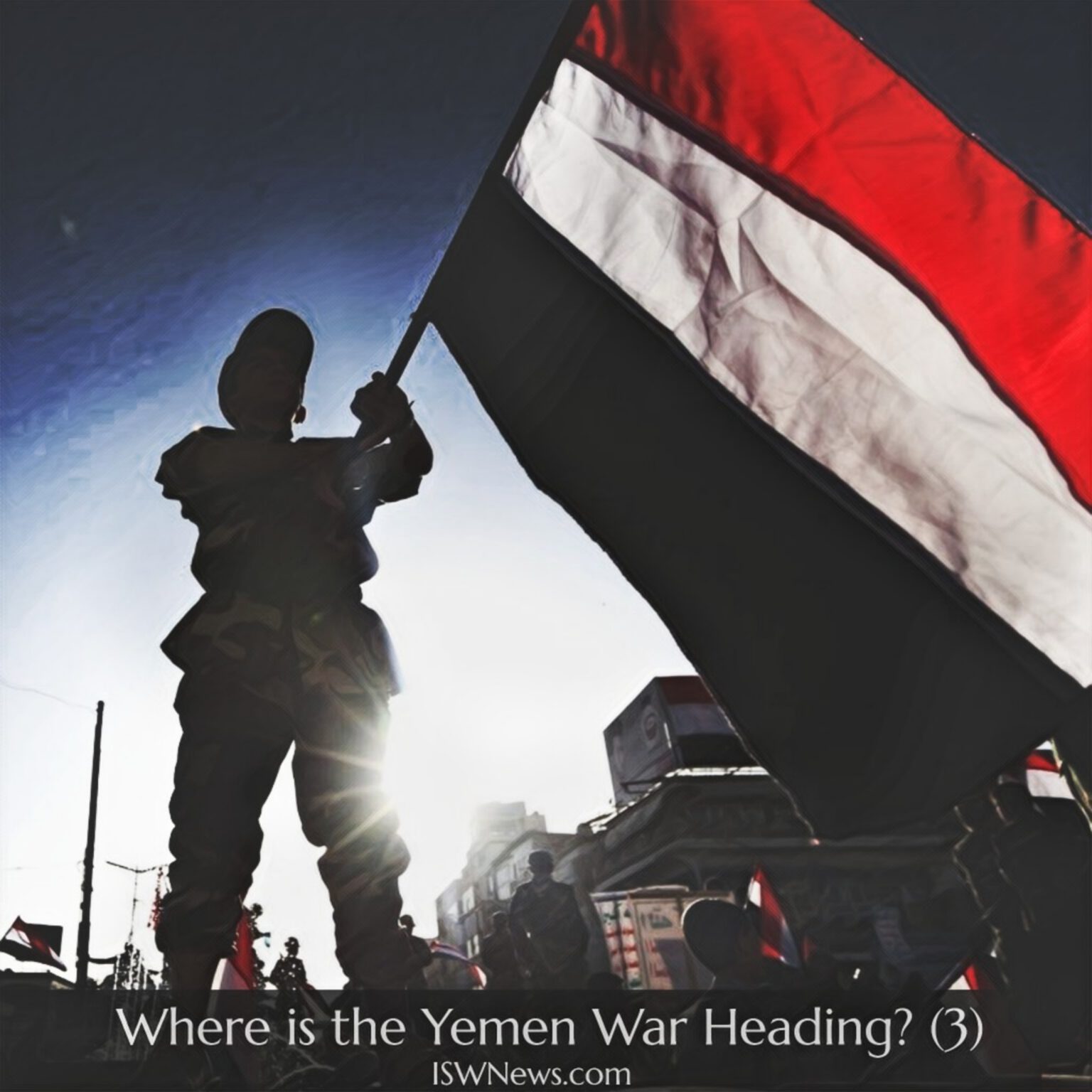
  • Where Is the Yemen War Heading? Part 3

    Where Is the Yemen War Heading? Part 3

    Joseph Biden, US president, remarks regarding the Yemen war and to stop military support for Saudi coalition shows new goals of the West in Yemen which can be dangerous and have severe consequences. Recent evolutions in Yemen steers the war as follows in summary:

    1- Joe Biden recent remark regarding Yemen:
    “Diplomacy is back. We are going to rebuild our alliances. We are going to re-engage the world. This (Yemen) war has to end and to underscore our commitment, we’re ending all American support for offensive operations in the war in Yemen, including relevant arm sales. We’re going to continue to help Saudi Arabia defend its sovereignty and territorial integrity and its people.”

    Biden’s remarks regarding ceasing the war in Yemen is new policy of the West. Saudis tried a lot to bring US to Yemen war during Trump administration to compensate for their loss and it was going on by putting Ansar Allah in terrorist group and sanctioning the leaders of the movement. However, by transferring the power in US, the policy changed toward using diplomacy. How will be the future of Yemen war with this new policy?

    Biden assigned Timothy Lenderking as US special envoy in Yemen affair who has a long history in US foreign policy in west of Asia. His last position was deputy of secretary of state in Iran and Iraq affair, which was not irrelevant to Yemen. He said in his previous remarks interviewing Qatari Al Jazeera: “Saudi Arabia and the UAE failed to achieve their goals in Yemen, despite high costs and US aid, and this is a sad fact. Iran is responsible for the failure of this operation because it supports, trains and equips the Houthis (Ansarallah) with military equipment. We feel frustrated by the non-compliance of the parties involved in Yemen with the provisions of the Swedish agreement, and the Yemeni people feel even more frustrated.”

    Biden understood that he cannot achieve anything in Yemen without Iran. This does not mean Ansar Allah depends on Iran, but it means to give privileges to Iran regarding its nuclear plan as a lever to get something in Yemen and Iran is the best mediator to talk to Ansar Allah. In fact, Biden’s policy is that a nuclear deal becomes an introduction to other deals with Iran over the region and other issues.

    As stated in previous articles, arm deals with Saudi Arabia and UAE have two sides which shows US policies in dealing with dependent countries. On one side US gets what is interesting for it and on the other side it breaks its obligations. It is a general policy of USA which includes everyone except Zionist Regime. Therefore, Trump’s deals with Al Saud and Al Zayed were suspended by Biden and supporting war turned into stopping war. The West’s thinktanks believe Saudi coalition has worn out in Yemen without achieving the mission of establishing a dependent government in Yemen to ensure their interests. West’s policy has been always about conflict, federal administration, dividing, etc., in Yemen which shows itself better over time.

    2- Saudi Arabia reaction to Biden’s stance was only focusing on the part regarding US support for Saudis sovereignty on Saudi Arabia which does not mean the relation between two countries turned cold, but it means that Biden does not support Saudis’ stubborn policies. Biden mentioned to support Saudi coalition renewal and it means that Biden follows Democrat’s policy of establishing an Arabic-Zionist coalition but does not follow a unilateral policy.

    Mansoor Hadi resigned administration welcomed the part of Biden’s speech over the importance of diplomatic effort to solve the crisis in Yemen.

    After Riyadh agreement, the presence and power of Muslim Brotherhood in the resigned administration was limited significantly and it opened the Southerners hands in future of Yemen which is not favored by pro Mansoor Hadi.

    Therefore, they find dealing with Ansar Allah to limit Southerners power is more effective. But their severe dependence on Saudi Arabia and insisting on winning the battle with Ansar Allah made them to leave the negotiation.

    3- Southern Transitional Council led by Aidarus al-Zoubaidi visited Russia recently and talked about increasing Russia’s role in Yemen and normalizing relation with the Zionist Regime after establishing South Yemen. Russian officials stressed on the Riyadh agreement and importance of Southerners in future negotiation of Yemen.

    Again; now that there is talk about diplomacy, where is the Yemen war heading?

    We first analyze the structure and situation of present movements in Yemen:
    A) Rescue administration which is supported by Ansar Allah and 16 parties including General People’s Congress and is ally of Islamic Resistance in west of Asia.
    The areas controlled by Ansar Allah include provinces Sanaa, Amran, Saadah, Rimah, Hajjah, Mahwit, Dhamar, Ibb and most of areas in al-Baydha, al-Hudaydah, Al-Jawf (more than 75%) and al-Dhale, Taiz, Marib and Lahij (between 5-50%). Almost 65% of Yemen population live in the area controlled by Ansar Allah and at least 52% of Yemen population support the Rescue administration and Ansar Allah.

    B) Mansoor Hadi’s resigned administration (supported by Saudi Arabia):
    Mansoor Hadi forces, who are under full support of Saudi coalition and Islah party (Muslim Brotherhood), control provinces of Shabwah, Hadhramout, and parts of Marib, Abyan, al-Baydha, al-Jawf, Taiz, Lahij, al-Dhale, Mahrah (between 5-50%) and other areas. There lives less than 35% of Yemen population in these areas and there is no clear census on how much of people actually support the resigned administration and Southerners due to the distribution of their forces.

    C) Southern Transitional Council (supported by UAE):
    Southerners control almost all of Aden province and most of provinces Lahij, al-Dhale, Abyan and parts of Mahrah, al-Hudaydah and Taiz. Southerners want to divide Yemen into south and north and are supported completely by UAE and southern parties. Remainder of Ali Abdullah Saleh movement inclined toward Southerners after discords with the resigned administration.

    D) ISIS and Al Qaeda terrorists:
    These two groups, which work both independently and as part of Saudi coalition, control limited parts of Yemen and their supporters are estimated to be less than 3% of Yemen population.

    Considering the above summary and situation of Yemen war after six years, Ansar Allah is the largest movement in Yemen in terms of military power, social and political acceptance and the Yemen’s future politics won’t form without their presence.
    USA understood this fact and is now ending this costly war and started the diplomacy. They indeed will follow same pattern as in Iraq and Afghanistan to form a united government in Yemen. The final mission of USA is to form a united government as it was implemented in Iraq and Afghanistan and we have seen the catastrophic result. This kind of government puts the target country in continuous chaos and discord and under threat of secession which is what USA desires. The plans of federal state or united administration should be put away in the negotiations since Ansar Allah has the majority of religion, politics and social of Yemen and still has the upper hand in military power and even in case of a failed negotiation can win over entire of Yemen, however, if Iran and the Islamic Resistance break the siege of Yemen.

  • Opinion: Power transition in US, blood shedding in middle east!

    Opinion: Power transition in US, blood shedding in middle east!

    The power transition in USA, when interpreted intermediately, means ISIS will be resurfaced and attacks increase in Syria and Iraq.

    But when it is deeply interpreted we should seek changes in Saudi Arabia and Turkey.
    The same way that if regional and international powers were not influencing, we wouldn’t see ISIS to grow that fast in 2014, today if their interests were not in chaos, we wouldn’t see ISIS to resurface again.

    It is naive if the incidents of last ten years of west of Asia is observed and think the recent ISIS activities in east and center of Syria, suicide attack in Tayran square of Baghdad, ISIS attack to Saladdin and drone attack to Riyadh are observed but not considered part of a big puzzle.
    This time the game is so obvious that the other side didn’t wait to confront ISIS and moved to the source.

    When Riyadh air defense system activated yesterday and Ansar Allah rejected any attack to Riyadh, the other option was south of Iraq!
    An unknown Iraqi Resistance group released a statement and took the responsibility of the attacks and called it a retaliation to Saud family intrigue (in supporting Baghdad suicide attack).

    Obviously Iraqi Resistance cannot do such attacks standalone and should be done from south of Iraq, as in the case of attacking Aramco. However this was only a warning.

    In any case, Iran showed in recent months that is willing to be unpredictable or show out of control behavior to change the regional and international enemies calculations. This attack is considered in the same direction of nuclear advances and maritime sovereignty in Persian Gulf.

    We should wait and see what policies Biden administration will take, specially with the advances blows of the conflict sides which won’t be easy. The region won’t have calm days.

  • Historical meeting of presidents of Russia, Azerbaijan and Armenia; New chapter of collaboration in Caucasus

    Historical meeting of presidents of Russia, Azerbaijan and Armenia; New chapter of collaboration in Caucasus

    It was an interesting meeting specially after a 44 days war, in which more than six thousand people killed in Karabakh and then Aliyev and Pashinyan met like two good boys with their boss Putin and listened to him.

    Following this four hours meeting, three countries unveiled a joint statement to create a list of joint projects to open the borders. There are not much details regarding the new agreement but it is in the same direction as the previous Karabakh ceasefire agreement.

    Pashinyan spokesperson said before the meeting that important projects already are being investigated and talked over, one of which is to permit Armenia to cross Nakhchivan and transit to Iran, as well as using the railroad built in USSR era which was used to connect Yerevan to the southern regions of Armenia.

    According to this trilateral agreement, each country forms a committee of specialists led by the vice PMs to make a list of joint projects for the leaders of the countries.

    Russian paper Kommersant released a railroad map of Caucasus two days ago, which was the same railroad built in USSR era and was closed since the first Karabakh war in 1990. It is going to be open with the new agreement.

    Regarding opening this important railroad, which is one of the articles in Karabakh ceasefire agreement, we have mentioned in previous articles. Following Karabakh ceasefire agreement, some claimed the southern corridor means to cut Iran-Armenia border, which was wrong from the beginning.

    This railroad will connect Armenia to Russia through Azerbaijan and will be used for transit to Iran as well. On the other hand Azerbaijan will connect to Nakhchivan area and Turkey through Armenia.

    This new agreement will have huge impact on different aspects of Caucasus area and each side will get benefited. Although Putin said that the agreement will be useful for all the countries of Caucasus but obviously not on the same level.

    Russia and Turkey undoubtedly will get the most of it. Russia restored its hegemony after a 30 years period of weak presence in the area and Turkey as a new player in the Karabakh, has greatly strengthened its foothold in the region and will strengthen its ties with Central Asian countries by connecting the Caspian Sea; Azerbaijan, while regaining its vast occupied territories in the south of Karabakh, was directly connected to the Nakhchivan region and of course to Turkey, and largely overcame the previous problems; Armenia will also benefit from direct connection to Russia and better connection to Iran, and by opening its western border with Turkey will benefit from trades with this country too. And finally, Iran, as the civilization and cultural owner of the Karabakh region, will have the least benefit from the events in Karabakh and the reopening of a new transit route; and Iran political and economic influence in the Karabakh region will be greatly reduced.