Category: Opinion

  • Erdogan’s invasion north of Aleppo; What will be the reaction of Syria?

    Erdogan’s invasion north of Aleppo; What will be the reaction of Syria?

    After the Syrian war subsided and a period of unofficial ceasefire between Russia, Iran, the United States and Turkey in the north of the country passed, Erdogan rekindled the fire under the ashes by laying his hands on areas north of Aleppo.

    It was in late May that the Yeni Şafak newspaper revealed the intention of the Turkish army to carry out operations in all northern regions of Syria, focusing on Tal Rafaat, Ain al-Arab, Ain Issa and Manbij. But Russian moves and joint Russian-Syrian-SDF military patrols in northeastern Syria reduced the Turkish army’s operations to the towns of Manbij and Tal Rafaat in Aleppo province and canceled operations in northeastern Syria.

    As usual, Turkey weighs the aspects of the issue with the viewpoint of Russia and the United States before starting any operation in Syria, and then goes on an adventure. In fact, the US behind-the-scenes satisfaction and Russia’s indifference to the situation in northern Aleppo have drawn all of Turkey’s attention to the reaction of Iran and the Syrian government. The reason for this is also clear! The Russians and the Americans have been so involved in the Ukraine war that issues such as Turkey’s cooperation with Sweden and Finland in NATO membership, Black Sea shipping, and wheat exports, etc. can help them a lot!

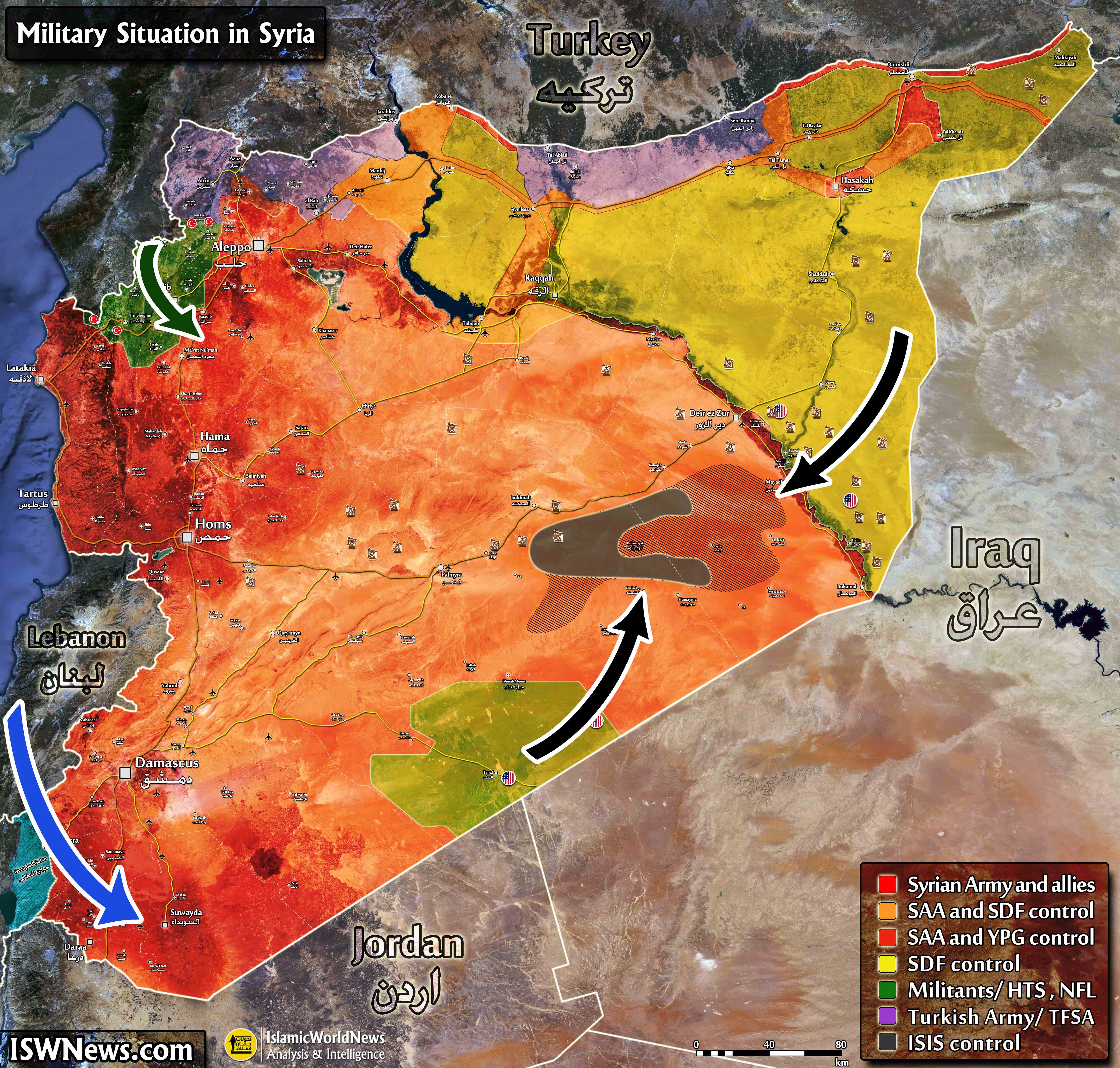
    Map of northern Syria and areas controlled by the SDF and occupied by the Turkish army – Click to view full size

    Looking at the latest developments in the region and the latest military map in northern Aleppo, several important issues are of interest. These are as follows:

    1- What’s Turkey’s military goal in northern Syria?
    According to Erdogan, Turkey’s main goals by conducting military operation in northern Syria are to prevent the growth of Kurdish groups based in northern Syria, to keep the PKK away from the territory of the Republic of Turkey and to establish a 30-kilometer-wide security zone in the remaining 458-kilometer-long strip of land between the region of Afrin and the town of Qamishli in the east.
    But that’s not all! Erdogan’s main goals by the operation are to revive the nationalist sentiment among voters and boost his declining popularity a year before the presidential election in June 2023; so, it’s to gain points to win the presidential and parliamentary elections. And reducing the risks of the presence of Syrian refugees in Turkey and their transfer to northern Syria is another goal of this operation.

    2- Who will confront Turkey?
    The military power of the Syrian army alone is not enough to confront Turkey, and they need the Russian army. The view of the main supporter of Syria, namely Russia, is such that he will not enters into wars and conflict unless it jeopardise its interests. On the other hand, the Kurds living in northern Syria have so far not been very supportive of the positions and actions of the Syrian government and its allies. Therefore, in the eyes of the Russians, Kurdish groups are not worth that much for them to be the source of confront with Turkey.
    The relations of the Kurds in the north of Aleppo with the United States have weakened after Trump betrayed them during the 2019 conflicts, and also the United States no longer has military bases in the north of Aleppo that can protect Manbij and Tal Rafaat from Turkey.
    In the meantime, eyes are on Iran and the resistance groups. So far, no clear position has been taken by Iran and the leaders of the resistance groups on a possible Turkish operation in northern Aleppo, but their response is important.
    If Kurdish groups lean towards Iran and the Syrian government, the support of Iran and the Syrian government will surely change Turkey’s agenda. The support of the Iranians will undoubtedly draw the Russians to the region, and Turkey will have to change its plan. It is not clear how this will change, but Turkey with no doubt will avoid a direct military confrontation with Iran. But if the Kurds remain skeptical about their relationship with Iran and the Syrian government, they will certainly be under Erdogan’s boot, and Tal Rafaat and Manbij, and wherever they are based, will face the fate of Afrin, Tal Abyad,etc. It should be noted that according to the field sources of “Islamic World News” from northern Syria, the resistance forces are actively present around Deir Jamal, and yesterday the Russian army deployed a large number of its forces at Minnagh airbase in south of Azaz. These moves reinforce speculation about cooperation between Russia, Iran and the Kurds in northwestern Aleppo province.

    3- Axes of possible Turkish operations:
    Despite Erdogan’s statements about attacking Tal Rafaat and Manbij, the details of their military operations in northern Syria have not yet been finalized, and Ain al-Arab and Ain Issa are also possible targets for Turkey.
    In general, the Turkish army will not have much trouble capturing Kurdish positions north of Aleppo unless Syrian and Iranian forces enter the battlefield. They can attack Tal Rafaat from the south of Azaz and west of Marea and blockade Tal Rafaat by cutting off the road to Aleppo. After this, work will remain on the capture of Minnagh Airbase and about twenty villages, which of course pose a threat by Turkey and its militants against the Shiite towns of Nubl and Al-Zahra.
    On the Manbij front, attacks can begin fromt the al-Dadat area north of Manbij and the al-Arimah suburb west of Manbij, and continue along the Euphrates River. Turkey’s advance on this axis will strengthen its position on the northern front of Aleppo and will let Turkey to prepare for another campaign n towards Ain al-Arab.

    Click to view full size
  • Erdogan does not abandon attempts to restore the Ottoman Empire

    Erdogan does not abandon attempts to restore the Ottoman Empire

    Ankara’s “noble ideas” regarding Syrian refugees conceal a diabolical plan to resume major hostilities throughout northern Syria. The Turks have learned a couple of military lessons in Syria, for example, now the Turkish General Staff knows that its army is not capable of single-handedly crushing even the remnants of the Takfiri or defeating the guerrillas from the YPG. Moreover, the Turkish army will be afraid to enter into direct conflict with Assad’s forces, in whose ranks Hezbollah and the IRGC operate. For this reason, the Erdogan-Bahceli tandem decided to create a million-strong army of refugees who will have to join the ranks of the Jabhat al-Nusra and Turkoman groups. Moreover, even strong disagreements between these rebels will not interfere with the Turkish expansion plan. After all, the former are concentrated in Idlib province, which makes their main goal the fight against Assad in the nearest areas, such as Aleppo, Hama and Latakia. As for the second, the Turks will transfer pan-Turkists to the northeast of Syria for the war against the Kurds and a number of Arab tribes (for example, Shammar).

    In parallel with the military actions, the Turks will continue the policy of assimilation, which was previously seen in the north of Aleppo and Idlib. Ankara is building schools, mosques, state institutions, police stations in Turkish, moreover, Turkish passports have been issued to all Syrians without exception, where Arabic names have been changed to Turkish. Moreover, even despite the loyalty of Syrian rebel groups and jihadists to Ankara, priority in any issue or dispute is always given to the armed forces consisting of Turkomans.

    Erdogan very timely announced a plan for the “resettlement of refugees” and a new intervention in the northeast of Syria, since it is known that Russia is reducing its armed forces due to military operations in Ukraine. The vacuum left by the Russians will be occupied by the Syrians and Iranians, with whom, from the point of view of the NATO Middle East outpost, it is impossible to conduct dialogues, since they are the “main enemies” of the resurgent “Ottoman Empire”. The Kremlin’s current problems in Eastern Europe have become one of the main inspirers of Erdogan’s new Syrian campaign. The second reason is the close military-political alliance with Zionism.

    After all, in fact, Erdogan’s goal is not the SDF or even Assad, Ankara is trying to prepare as much as possible for future wars against the Islamic Republic of Iran. Erdogan’s adviser has already unveiled a plan according to which Turkey will become the most important partner of Zionism in aggression against Iran. At the beginning of the year, Ankara intensified its occupation in northern Iraq, advancing 200 km deep. According to local sources, the Turks have 36 military bases in northern Iraq. The Iraq campaign is only part of Erdogan’s overall anti-Iranian strategy under the leadership of Zionism. Syria and Iraq are key parts of the Axis of Resistance alliance, and creating additional problems for them in the form of Turkish occupation is a Zionist plan to weaken the alliance.

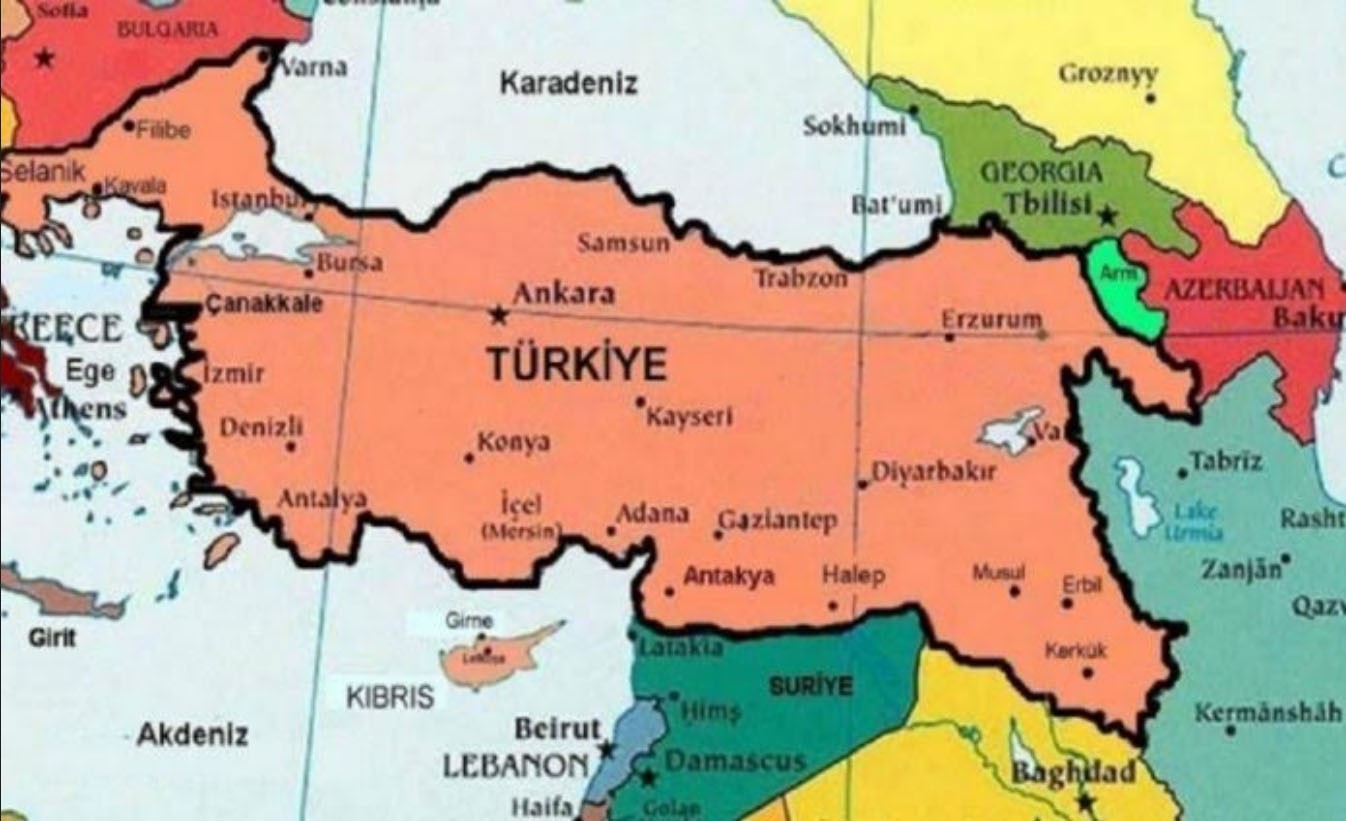
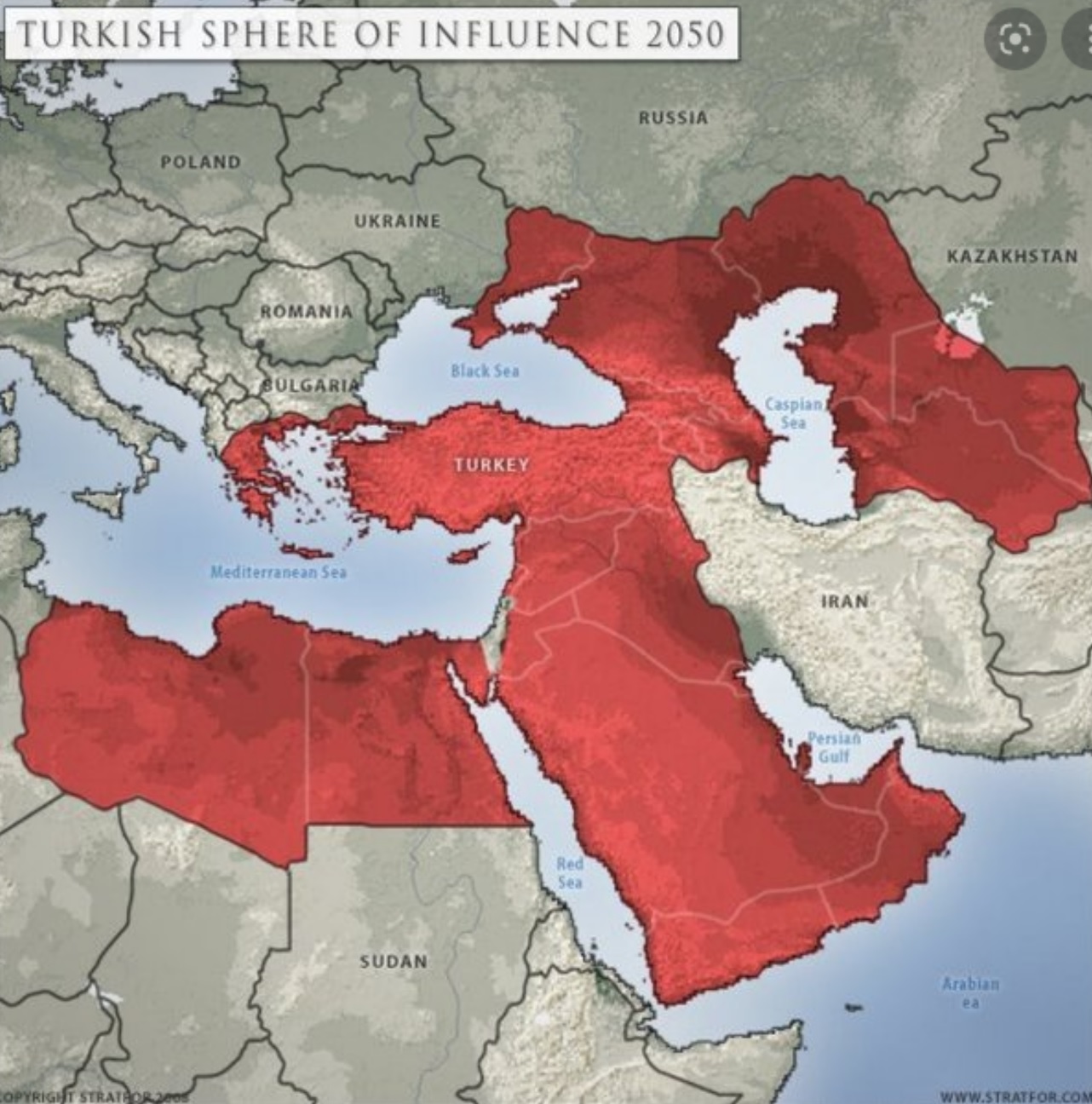
    Turkey is not at all embarrassed to be the tip of the Zionist spear, it is worth remembering Thomas Friedman’s map of Ankara’s geopolitical ambitions, where almost the entire Islamic world is captured by the “new Ottomans”, with the exception of the Zionist colony, which, judging by map, will peacefully coexist with the modern “Ottoman port”.

  • Opinion: Armies for the liberation of Al-Quds

    Opinion: Armies for the liberation of Al-Quds

    The first thing to realize is that great battles are coming, where the main enemy of the Ummah will be doomed to total defeat and this time Big Satan will not be able to help his main lackey. Why do we need “armies”? The fact is that modern military art has reached such a stage of tactical development when all the leading combat forces of the planet have come to the conclusion that any military unit or organization should include in its tactical arsenal the ability to act as partisans and as a regular army with all the nuances. Accordingly, despite the vast experience of Hezbollah and the Palestinian resistance, they need two things: 1 – an additional front against Zionism, 2 – an increase in the size of the operational center or coordination structure for the transformation from guerrillas to militia.

    Now, as for the strategy. Given the abomination of the Zionist regime, it is necessary to prepare for all scenarios, and the most disgusting thing that Zionism can do in this situation is not even the use of nuclear weapons (we will still go to Heaven, InshaAllah), it is the use of its “Muslim” allies to protect its colony. Here I mean the military units of the junta of Egypt and the guard of the King of Jordan. Earlier, Zionism had already tried to conclude an agreement according to which the Sisi regime would have to “provide security” in the West Bank of Jordan. As for the army of Abdullah’s autocracy, they are already “holding hostage” Palestinian refugees and controlling the transition to the West Bank. The fact that most Palestinians in Jordan lack combat experience should not confuse observers(mass marches indicate a willingness to fight the occupiers – this is the main thing), because after the inevitable collapse of Abdullah’s autocracy, the borders will disappear, which means that the Islamic resistance forces of Iraq[1] located next door will be able to train Palestinians and provide all kinds of military assistance. The presence of British and American military bases in Jordan gives a strong argument in favor of the fact that Abdullah will cling to his throne to the last.

    But apart from these dictatorships, there is another insidious enemy that will certainly come to the aid of Zionism – the autocracy of Saudi Arabia. Yes, we can recall their failed aggression against Yemen. But it is obvious that when the question of the survival of the main ally of the Banu Saud regime in the face of Zionism arises, the criminal regime of Riyadh will do everything to support its main ally in the face of destruction. The Saudis can at any moment mobilize 50,000 militants on the border with Iraq or Jordan, which include their military, various mercenaries and local puppets from among the Arab tribes in Jordan and Iraq. Earlier, Riyadh had already practiced similar tactics in 2014, when, allegedly to counter ISIS, they concentrated 30,000 guards to “protect” the borders. (in fact, the Saudis tried to occupy part of Iraq) In my opinion, the forces of Hashad al-Shaabi of Iraq will have to block a possible Saudi intervention directed against the Palestinians of Jordan.

    After all, from the point of view of tactics, it will be much more convenient for them to stop the Saudis. In principle, the foundation of the local “liberation army” has already been laid in Iraq, which is a symbiosis between Hashad al-Shaabi and the forces of the Islamic Resistance. These organizations are quite capable of fighting on two, and even three fronts[2]. For example, Hadi al-Ameri (head of the Fatah alliance and one of the leaders of the BADR organization) said that “The vanguard of the liberation of Jerusalem comes from here, from Iraq. The banners that will liberate Jerusalem are coming from Iraq.” It is worth recalling that BADR is the main core of Hashad al-Shaabi (almost 70 percent of combat groups). Another Iraqi organization, Harakat Hezbollah al-Nujaba, which, in addition to membership in Popular Mobilization Forces, is present in the Coordinating Council of Resistance Factions, released a clip on the day of al-Quds, where a ballistic missile was shown.

    Thus, we are witnessing the implementation of the Martyr Muhandis’ plan to create ballistic missile systems in the western part of Iraq. At the end of the topic about the “regional liberation army of Al-Quds”, you can also point out about the coordination between Hezbollah and Hamas in Lebanon, where these parties are creating a “Palestinian-Lebanese army”. In Syria and Yemen, by analogy with Iraq, the foundation of the “Al-Quds army” has already been created. Egypt and even Libya may be a surprise.

    1- The Iraqi factor is a reality for Jordan and even the West Bank. After all, earlier the representative of Kataeb Sayyid al-Shuhada explained why the Islamic Resistance of Iraq has the right to strike at the Abdullah regime(first of all, this is a signal for Western military bases), also a year ago the leader of Harakat Hezbollah al-Nujaba Sheikh Akram al-Kaabi noted that his organization has the opportunity to penetrate into the depths of the Zionist enemy. It is logical to assume that we are talking about special operations through the West Bank.

    2- in addition to a common front with the Palestinians against Zionism in the direction of the West Bank, the Iraqis will be able to cover the rear of the Palestinians of Jordan from the Saudi “stab in the back”, and expel the Turkish interventionists from Iraq and Syria.

  • Anbar is a new victim of Zionist intrigues

    Anbar is a new victim of Zionist intrigues

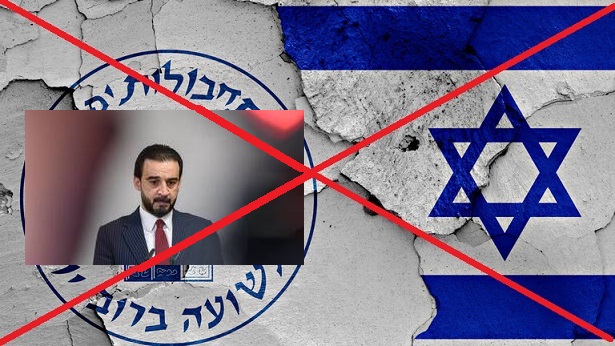
    The so-called “recognition of Zionism” has reached such a stage that Iraq is in danger of disappearing as a country. The fact is that the separatist tendencies emanating from the ruling “Sunni” tandem Halbousi-Khanjar are directly related to the process of “normalization”, moreover, the colonialists are ready to plunge the Palestinians themselves into this provocation.

    It is no secret that the current speaker of the parliament is a supporter of the creation of “Sunni autonomy” throughout Western Iraq, the same can be said about his former “main opponent” (Khanjar). According to media leaks, since 2016 Anbar has been being prepared for the resettlement of Palestinian refugees.

    The division of Anbar into two parts , the Iraqi and the Palestinian, will be the most important condition for Iraq’s accession to the “deal of the century”. It is obvious that the forces of evil are planning to settle Palestinians in the Anbar desert mainly from the West Bank, thus Zionism is trying to “solve” the problem of local resistance and the revival of the intifada forever. Now it is clear why the special services and politicians of Jordan regularly meet with the Mossad and pay a visit to the heads of the Zionist colony, the parties discuss the stages of the implementation of the operation to “resettle” the Palestinians.

    The scariest thing in this story is that in Iraq itself there are influential forces supporting the project of creating a “new homeland” for Palestinians in Anbar. For example, the former speaker of parliament Mahmoud al-Mashhadani said that in the so-called “triple alliance”, “Sunnis”1 and Kurds have no problems with “normalization” of relations with “Israel”. The Sunni politician also said that in addition to the Palestinians, it is planned to send more than 500,000 Iraqi Jews to Iraq!!

    Actually, the creation of a new concentration camp for the Palestinians is one of the goals of the Zionists who move around Iraq under the guise of American occupiers.

    1- The main actor from the “Sunni side” is Halbousi. It is his name that the Iraqis associate with all the actions of the pro-Zionist direction.

  • Syria: Protest in the south, war in the north!

    Syria: Protest in the south, war in the north!

    The difficult living conditions in the southern regions of Syria, especially in the province of Suwayda, have become a recurring but new excuse for disrupting Syrian security. In February, protesters in Suwayda blocked the Damascus-Suwayda highway holding placards and chanting anti-government slogans. This recurring theme is significant as the protests turned into armed activities.

    According to ISWNEWS field sources, after the start of the demonstrations in the towns of Shahba, Majdal, etc., north of the city of Suwayda, Israeli-linked security cells took control of the demonstrations and rallies. But with Hezbollah surveillance, a number of Israeli-linked cells were arrested by Hezbollah security forces.

    On the other hand, according to the usual routine of the Syrian media, the incident was silenced and the security forces of the Syrian government did not get involved. But after investigating and interrogating the protest leaders, Hezbollah found clues in the city of Suwayda and an armed group linked to Walid Jumblatt, the Druze leader of the Progressive Socialist Party in Lebanon.

    Similar security activities were observed in Daraa province, and on February 9, an explosion and several armed assassinations took place in Daraa.

    In general, the suspicious activities in southern Syria signal a security warning to the Axis of Resistance, which is being carried out at the behest of Israel and by groups affiliated with Walid Jumblatt. In this regard, Hezbollah drone operation against Israel, which was carried out by flying ‘Hassan drone’ to a depth of 70 km in the territory of occupied Palestine and the inability of the Israeli army to counter it; It is a clear warning and message to the Zionist sedition in southern Syria. A message that was well received on the Israeli side.

    In Deir Ezzor province, new organized activities have been carried out by the ISIS terrorist group in the past months. The scenario in this area is related to several issues:
    1- The escape of more than 200 ISIS members from the Ghowairan prison in Hasakah city. The probability of their transfer to the deserts of Deir Ezzor and Homs is very high.
    2- Continuous intelligence flights of American aircraft in the skies of Deir Ezzor province.
    3- In recent months, the Syrian government with the help of Iranian advisers, has established close relations with the tribes of Deir Ezzor province. This is certainly not to the liking of the United States and the SDF.

    According to the above-mentioned points, the intelligence and operational forces of the resistance are expected to start security operations in the coming days in the provinces of Suwayda, Daraa and Deir Ezzor.

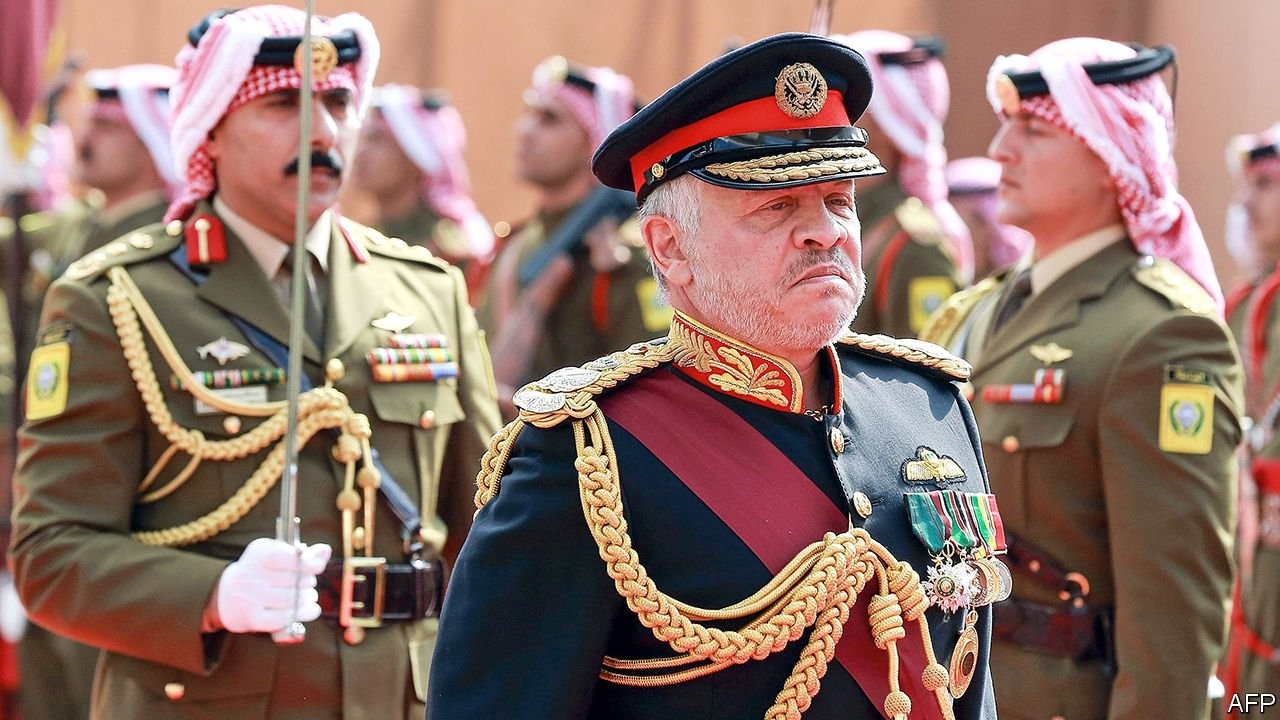
  • Jordan’s autocracy is preparing for war on all fronts

    Jordan’s autocracy is preparing for war on all fronts

    It is no secret that in addition to the acute social crisis, political tension is also growing, when a number of prominent opposition parties, where the main force is the Islamic Action Front, announced the suspension of their participation in the elections to the provincial councils and the municipality of Amman for 2022. In addition, the Ikhwans (Muslim Brotherhood) of Jordan rejected the constitutional amendments introduced by the loyalists of the king in parliament.

    A kind of sabotage of ostentatious elections is not the only problem for Abdullah II, because no one has forgotten the story of deputy Osama Al-Ajarma, who openly challenged the king, calling him a pig and threatening to “put a bullet in the forehead.” Now the former deputy was sentenced to 12 years, and the reason for Osame’s removal from parliament was his pro-Palestinian position.

    Abdullah is well aware that the main opposition force within the kingdom is in the Palestinian refugee camps. In order to prevent a new uprising, the autocracy, on the one hand, wants to “appease” the Palestinians.
    For example, Jordanian Foreign Minister Ayman Safadi confirmed that his country would continue to work to mobilize political and financial support for the Palestinian Refugee Relief and Works Agency (UNRWA). But on the other hand, the King demonstrates readiness for harsh measures in the event of a riot. So information leaked to the media that the US State Department approved several potential arms sales to allies in the Middle East, including Jordan, the United Arab Emirates and Saudi Arabia. The hint is clear, if the Palestinians organize themselves for a revolution, they will definitely be opposed by armed loyalists of the Hashemite autocracy.

    As for foreign policy, here Abdullah II is puzzled by the neighborhood with Iran’s allies located in Syria and Iraq. On July 25, 2021, in an interview with CNN, King said that allegedly “his country was attacked by Iranian-made UAVs.” These words of the dictator could be regarded as a banal attempt by the monarch to beg the United States for funding for “air defense”, however, the fact that the official Amman participated in the murder of Sardar Soleimani and Muhandis suggests that the autocracy of Jordan is on the list of targets of “inevitable revenge”.

    Later in early August, a member of Kataeb al-Shuhada in an interview with the BBC pointed out that Jordan is also considered as a target of the Islamic Resistance forces of Iraq, because of the participation of the autocracy in the attacks of the Americans on Hashad al-Shaabi. As a kind of response to the forces of the Islamic Resistance of Iraq, the official Amman had a hand in the return of the “desert hawks”, an Iraqi separatist group based in Anbar.

    Do not forget that Jordan is among the pro-American countries interested in creating a “strong Sunni bloc of Iraq” that would be able to challenge the officials Baghdad and Iran. In addition to supporting the Iraqi insurgency, a decent amount of US military equipment has arrived in Jordan over the past year to strengthen local military bases. This is how Washington and Zionism demonstrate to Tehran that “without a fight” they will not give up the king, who is among the key allies of imperialism in the region.

    Jordan’s autocracy will definitely not be able to constantly evade the serious internal crisis that threatens the entire region, nor will it be able to avoid conflict with external challenges. The artificially created Transjordan was conceived by the British as an “alternative homeland” for the Palestinians. In fact, from the first day of the appearance of the newly appeared emirate, with the support of the British and Zionists, it turned into a large prison for Palestinian refugees, moreover, in the process of creating the Transjordan Emirate, twenty-one percent of Palestine was occupied.

    King Abdullah knows perfectly well that the temporary period of the Hashemite kingdom has come to an end, but he does not stop trying to delay the inevitable end by pseudo-reforms and strengthening his personal army, but even in the West they have accepted the imminent fall of autocracy. The proof of which is the secret leak of information about Abdullah’s accounts in a Swiss bank. Against the backdrop of a growing social crisis, such a throw-in will warm up the discontented masses.

  • The Al-Aqsa Martyrs Brigade is the cause of Zionism’s anxiety

    The Al-Aqsa Martyrs Brigade is the cause of Zionism’s anxiety

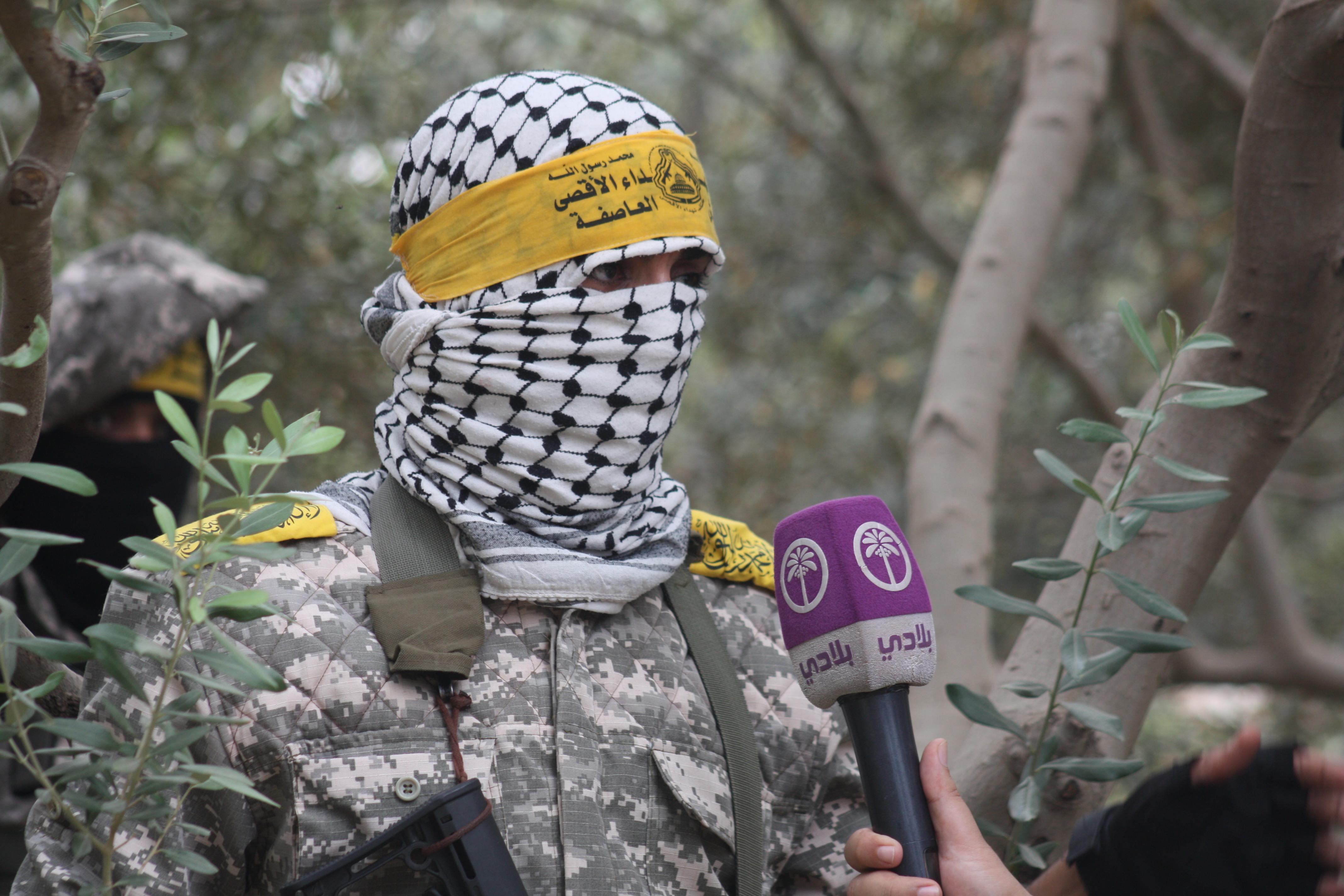
    On February 2, 2022, the Al-Aqsa Martyrs Brigade announced a general mobilization in response to the murder of three of its leaders by Zionists in Nablus. The local branch of Saraya al-Quds expressed support for the Martyrs’ Brigade and organized guerrilla attacks against the occupiers. Thus, the Palestinian factions of the West Bank have created an “operational room” to coordinate and expand the front against the occupiers.

    As for the Al-Aqsa Martyrs Brigade, this organization dates back to 2001, when a number of Fatah field commanders led by Raed al-Karmi founded their combat brigades. Former Fatah members took such a step in connection with the betrayal of the PLO leaders. Over time, the organization split into several factions, which opened their branches, including in the Gaza Strip.

    The evolution of the Al-Aqsa Martyrs Brigades began after establishing close contacts with Hezbollah and the IRGC. Since that time, the brigades have become a single force with the prefix “Islamic Resistance”. Honoring the memory of the names of martyrs Imad Mughniyeh and Qasem Suleimani showed that once small groups of former Fatah members adopted the “Islamic ideology of resistance.”

    During the “Al-Quds Sword” war, the commanders of the Al-Aqsa Martyrs Brigade welcomed the head of the al-Qassam Brigade, Muhammad Deif, which implies a new landmark of the jihad of the Martyrs Brigade, namely the departure from Fatah and joining the Axis of Resistance camp. Thus, the alliance with Hezbollah and the IRGC gave a second wind to the former loyalists of Arafat, and if yesterday they were a small group of guerrillas, now the Al-Aqsa Martyrs Brigade is part of the Islamic Liberation Army.

    After Fatah’s lower-level commanders made a conscious choice in favor of resisting the occupiers, they were able to carry out a hidden “revolution” in the West Bank. Firstly, the bold decision of the commanders split Fatah into resistance supporters and collarabocionists, and secondly, the Al-Aqsa Martyrs Brigade became part of the strongest regional Alliance, in addition to a permanent participant in the coordination center of the Palestinian resistance in the West Bank and the Gaza Strip.

    The echo of the last war for al-Aqsa still lingers in the West Bank, when Zionist terrorists capitulated after leaving the third shrine of Islam. That victory gave a strong impetus to the local resistance forces and now the military formations of the liberation movements are preparing new strikes against the enemy.

  • Review of Saudi coalition operations in Marib and Shabwa provinces

    Review of Saudi coalition operations in Marib and Shabwa provinces

    On November 12, 2021, an order was issued by the Saudi coalition command, which surprised many analysts and the media. In an unexpected move, they ordered the withdrawal of coalition forces from most parts of al-Hudaydah and the west coast of Yemen. According to this order, all the forces of the “National Resistance”, including the forces under the command of Tariq Saleh, Tihamah, Amaliqa and joint forces, evacuated the northern and eastern areas of al-Hudaydah and the western areas of al-Durayhimi, al-Jah and al-Tuhaita.

    The most reasonable theory was assumed the fact that this retreat is done to strengthen the Shabwa and Marib fronts, and these retreats will continue until the Hays-Khukhah region in Hudaydah province.

    Ansar Allah rapid advance on the Marib and Shabwa fronts had confused and weakened the Saudi coalition ground forces, and the coalition had not been able to stop Ansar Allah by sending al-Qaeda and ISIS militants. They needed trained and experienced forces to protect the city of Marib and keep Ansar Allah away from the city of Ataq, the capital of Shabwa province. With the Sudanese fleeing and the killing of mercenaries and elements of al-Qaeda and ISIS, there was no choice left for the coalition except al-Amaliqa (Giant Brigades) and Tariq Saleh forces.

    According to the latest estimates from the Yemeni fronts, the Saudi coalition divided its forces on the west coast as follows: Tariq Saleh forces remained south of al-Hudaydah province to prevent possible Ansar Allah attacks, and some of them moved to the northern and western fronts of Marib.

    The Tihamah forces, along with Tariq Saleh forces, carried out an operation called the “Golden Arc” around the town of Hays, which did not yield any specific results. The joint forces and the Amaliqa forces also entered the city of Ataq to retake western areas of Shabwa province.

    This transfer of forces was the result of a secret agreement between the Saudis and the UAE. The UAE appears to have achieved the keys of Shabwa province in exchange for helping the Saudis to keep the Marib city. Of course, this issue will be protested by the tribes loyal to “Mansour Hadi”, and there is a possibility of a clash between Mansour Hadi supporters and the southerners in Shabwa province.

    In any case, Amaliqa and joint forces under the command of Saudi Arabia and with the special support of the UAE entered the battles of Shabwa. In the first step, the UAE enticed the sheikhs of the tribes of Usayilan and Bayhan, and this led to the cancellation of peace agreements between Ansar Allah and tribes of Belharith. Thus, Ansar Allah set up a defensive line in the southern highlands of Beyhan and Ain district and prepared itself to counter a large-scale military operation by the Saudi coalition in the area.

    From January 11, the conflict was transferred to the north of the Harib district, and finally the Harib district center came under the control of Saudi coalition on January 24.

    According to the latest news from the Shabwa and Marib fronts, Ansar Allah’s first defensive line in the south of Beyhan remains stable. But the situation in the district of Ain is in favor of Saudi coalition.

    The Saudi coalition in the south of Marib seeks to break Ansar Allah’s second line of defense from the al-Ma’laa heights to Haniyeh mountain, as well as advancing on the axis of Abdiyah district. If this line is also broken, Ansar Allah’s positions in al-Juba district will be weakened and the way will be opened for the coalition to move forward. The fall of these areas will eventually force Ansar Allah to retreat from the al-Balaq heights and the southern areas of the city of Marib. Because they will be under a quasi-siege from the north, east and south.

    Simultaneously with the transfer of most of the Amaliqa forces to the central regions of Yemen, other forces under the control of the Saudi coalition, such as the Joint Forces and Mansour Hadi forces, have been deployed on the southern fronts of Marib. On the other hand, the Minister of Defense of Hadi government, Mohammad Al-Maqdashi, has visited the southern fronts of Marib, which marks the imminent operation of Mansour Hadi’s forces to retake the al-Balaq al-Sharqi heights, and Ansar Allah must prepare for a heavy battle on this front.

    In general, for Ansar Allah, the future is not very pleasant for the battles of the Marib and Shabwa fronts. Ansar Allah’s delay on the western and southern fronts of Marib, for a variety of reasons, provided an opportunity for coalition forces to regroup And the Saudis brought the UAE back on the battlefield with impressive concessions. The unification of the UAE and Saudi Arabia and the use of Amaliqa forces, etc. will turn the Marib war to an erosive one. This will save the Saudis from being removed from the Yemen equation in the short term, and will increase the UAE influence in the central regions of Yemen. But Ansar Allah also has effective leverages that can thwart the Saudi coalition plans as in the past. Time will prove everything.

    Click to see the full size map
  • The events in Lebanon have shown that Hamas is entrusted with the mission of the “Holy Campaign”

    The events in Lebanon have shown that Hamas is entrusted with the mission of the “Holy Campaign”

    It is the “new ones”, since the Palestinians themselves do not hide that until today the main reason for arming was self-defense. The enmity between supporters of Hamas and Fatah, the danger of infiltration by representatives of Jabhat Nusra or ISIS, difficult relations with some Lebanese parties, mutual distrust with the Lebanese army, all these reasons forced the Palestinians to seek a way of self-defense. However, a lot has changed today.

    The murder of the legendary Sardar Soleimani changed a lot in the IRGC’s strategy to destroy imperialism in the region. Now the bright representatives of the Axis of Resistance will have to take on more functions and capabilities. For example, one of the plans of the IRGC strategists is to create a “front of camps”* – that is, the formation of an anti-Zionist bridgehead in Lebanon and Syria, where the main striking force will be the Palestinians under the command of the IRGC quartet – Hezbollah – Palestinian Jihad – Hamas.

    The role of Hamas is to facilitate the conditions of mobilization, because due to the high rating of the Islamic Movement among millions of Palestinians, Hamas has an advantage over a number of other Palestinian organizations, therefore they are assigned to play a leading role in the future campaign for the liberation of al-Aqsa.

    That is why Hamas is making detailed preparations for future battles with the occupiers. Weapons depots are just one of the well-known facts, the time is not far off when Hamas will conduct tests using various types of weapons by analogy with the exercises in the Yarmouk camp in Syria at the turn of 2008-2009.

    It should be added that despite the still existing problems between Assad and Hamas, the pro- Western government of Lebanon and disagreements within Hamas (there is still a group of politicians rejecting efforts to create a resistance front in refugee camps), it is worth pointing out that these minor nuances are not able to hinder the implementation of the strategy for the liberation of Palestine.

    Moreover, the murder of the legendary Soleimani and Muhandis only pushed the various political forces within the Axis of Resistance to a broader coordination. The Islamic Republic of Iran has promised a number of surprises for the Zionists and it will keep its word. The described scenario of events is just one of the many options during the campaign to liberate al-Quds, and there are about thirty such scenarios!


    * This plan has always been relevant, for example, back in 2015, the representative of Hamas, Mahmoud Zahar, known for his close ties with Iran, called on the Palestinian camps of Lebanon and Syria to open a new front against Zionism.

  • How did Ansar Allah turn the tides in Yemen war in its favor?

    How did Ansar Allah turn the tides in Yemen war in its favor?

    On November 12, the Saudi coalition command issued an order regarding the Yemeni war, signaling Ansar Allah success in defeating the Saudi coalition operation on the west coast of Yemen.

    The Saudi coalition operation to capture the west coast of al-Hudaydah began on November 2017 with the aim of cutting off Ansar Allah access to the sea, from the two axes of the south of al-Hudaydah province and the north of Hajjah province. The UAE provided the main support to the operation, and coalition forces advanced into the eastern and northeastern strip of al-Hudaydah within a year.
    With Ansar Allah resisting on the coast and increasing airstrikes of coalition, civilian casualties increased, and finally representatives of Ansar Allah and the resigned government of Mansour Hadi signed the Stockholm Agreement on December 18, 2018.

    As we mentioned in the analysis of the battles in the west coast of Yemen, Ansar Allah’s strategy against the Saudi coalition was a long-term and erosive one. The hit and run attacks and the use of various tactics plunged the Saudi coalition into an erosive war, which eventually led to the withdrawal of Saudi-led forces from the al-Hudaydah fronts in the past week without firing a single bullet.
    Following the withdrawal, there was speculation about a secret agreement, the UAE betrayal of Saudi Arabia, etc., but none of these speculations were true. The command of the Saudi coalition stated that the main reason for the withdrawal from al-Hudaydah was the preservation of Marib, and announced the sending of reinforcements to prevent the city from falling to Ansar Allah.

    Marib has now become a barrier against the flood of Ansar Allah attacks, the collapse of which could overthrow the remainings of the Hadi government in Yemen, like the flood of al-Aram that destroyed the Marib Dam! We know very well that the liberation of Marib is another heavy defeat for the Saudi coalition, and in addition it removes the southerners obligations to their agreement with Mansour Hadi because they do not have to give concessions and shelter to a weak and failed government.
    In this regard, the UAE has planned to dominate the east and south of Yemen by increasing the position of the descendants of the former Yemeni sultans. In al-Mahra, they support Sheikh Abdullah bin Isa Al-Afrar (son of Sultan al-Mahra and the island of Socotra) and in Shabwa province, Sultan Awad bin Al-Wazir Al-Awqli (head of the al-Awql tribe) and seek to weaken the position of figures affiliated with the resigned government of Mansour Hadi.

    Ansar Allah has now reached the entrance gates of the most key point in central Yemen, the city of Marib. And on the other hand, it has recaptured the west coast of Hudaydah “without firing a single bullet”.
    These field victories have increased Ansar Allah power in negotiation table, but now the Saudis have lost interest in a negotiation. They have practically turned their backs on the negotiations with heavy airstrikes on Sanaa and the killing of civilians and Ansar Allah prisoners.
    According to Ansar Allah officials, the Saudis rejected Ansar Allah’s conditions for removing the siege and stopping the attacks in the talks, and closed the door to negotiations with the Iranians. The Saudis are making extensive preparations to defend their last major stronghold in Marib, and future developments in Yemen will determine Marib fate.
    It is not clear what positions Ansar Allah will take before or after the capture of Marib. What is clear is that the majority of the people, the tribes, the parties, etc., support Ansar Allah and this will sooner or later hand over the power of Yemen to the Resistance.

  • Opinion: It’s time to admit Turkey has no chance in Iraq

    Opinion: It’s time to admit Turkey has no chance in Iraq

    More than a month remains to wait until the culmination of the situation with the withdrawal of Americans from Iraq. The leader of Kataeb Sayyid al-Shuhada has already announced the recruitment of volunteers to participate in the holy war against the occupiers. The Yankees will leave, it’s a matter of time, but what about Turkey?

    As far as Kurdish sources know, Ankara has 36 military bases in northern Iraq, plus the presence of Mossad and the Barzani dictatorship. In the event of a large-scale conflict, all of these three will act in a coordinated manner. On the other hand, the Islamic Resistance of Iraq has allies from among the Kurds* and local Arab tribes.

    Perhaps someone in the Baghdad parliament believes that the Turkish occupation will end with the departure of the Erdogan-Bahceli tandem, in case of their defeat in the next election. But here it should be recalled that the essence of Turkey is Kemalism, and foreign policy is based on the principles of exporting pan-Turkism. It does not matter who will be present in the leadership positions of Turkey, since any politician will implement an expansion plan in the region, the only difference is in the methods of conducting foreign policy. And do not forget that Turkey is a member of NATO. The North Atlantic Alliance not only provides full support to its members during any armed conflict, but also embodies the presence of imperialism.

    For Iraq, on the one hand, the situation is complicated by the factor of the army’s dependence on the Pentagon, as a result of which clashes with the Turks can be excluded. On the other hand, the apathy of the “Ministry of Defense” unleashes the hands of the Forces of Popular Mobilization, which are able to solve the Turkish problem alone. If Ankara, with the help of diplomacy and American influence on Baghdad, manages to restrain Hashad al-Shaabi from entering the war for a certain time, then the initiative of the organization of the “liberation war” can be intercepted by various proxies of the Islamic Resistance.

    But! The Turkish General Staff is also aware that membership in NATO in the event of a war with Iraq does not give a trump card, because firstly, the Pentagon has a sad experience of fighting the Islamic Resistance, and secondly, the Americans deliberately continue to reduce personnel in the region, Afghanistan is an example of that. Moreover, guerrillas affiliated with the committee of resistance factions periodically attack American bases in northeastern Syria, from which it can be concluded that Americans in Syria will become a legal target of the Iraqis in the event of an open war with the Turks. Ankara still has time to get out of the occupied territories peacefully, so far the Islamic Resistance of Iraq has set a date for the battle only for the Americans if they do not withdraw their troops. But the next in line will be representatives of aggressive pan-Turkism.

    * For example, there are at least several Kurdish detachments within Hashad al-Shaabi. Through them, a connection has been established in Sinjar with local PKK cells, who are happy to join the fight against the Turks. Well, one more important point, the two Islamic Parties of Kurdistan also oppose the Turkish occupation

  • Opinion: Al-Tanf Base; Joint Headquarters of Terrorists!

    Opinion: Al-Tanf Base; Joint Headquarters of Terrorists!

    At around 23:34 local time on the evening of October 13th, Israeli warplanes used the airspace of the US-occupied Al-Tanf area to launch an attack on the Tadmur area and a telecommunication tower, during which a Syrian soldier was killed and three others were wounded. Following the attack, the Syrian Allied Operation Room issued a statement saying that it would retaliate the attack and will avenge the blood of the martyrs and the wounded.

    A few days later, on the evening of October 20th, the positions of the US military and its militants at Al-Tanf base were targeted by suicide drones. Shortly afterwards, images leaked from the base showed that at least three points at the base had been targeted and destroyed by drones. The scale of the damages to the base forced the CENTCOM to react, and they issued a statement blaming Iran for the attack, saying that five suicide drones were used in the attack and that no American forces were killed neither injured.
    The US-backed Maghawir al-Thawra militants also carried out a ridiculous propaganda by transferring a number of civilians to the targeted areas and publishing pictures of crying children, which not only did not deceive anyone, but also made fun of the group’s official Twitter account.

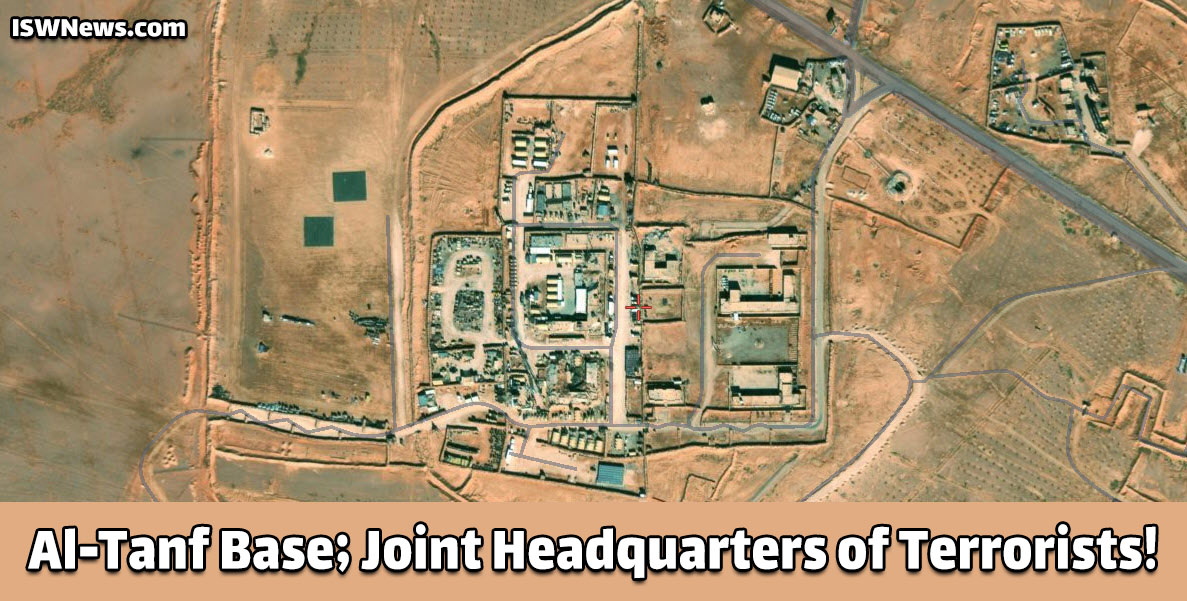
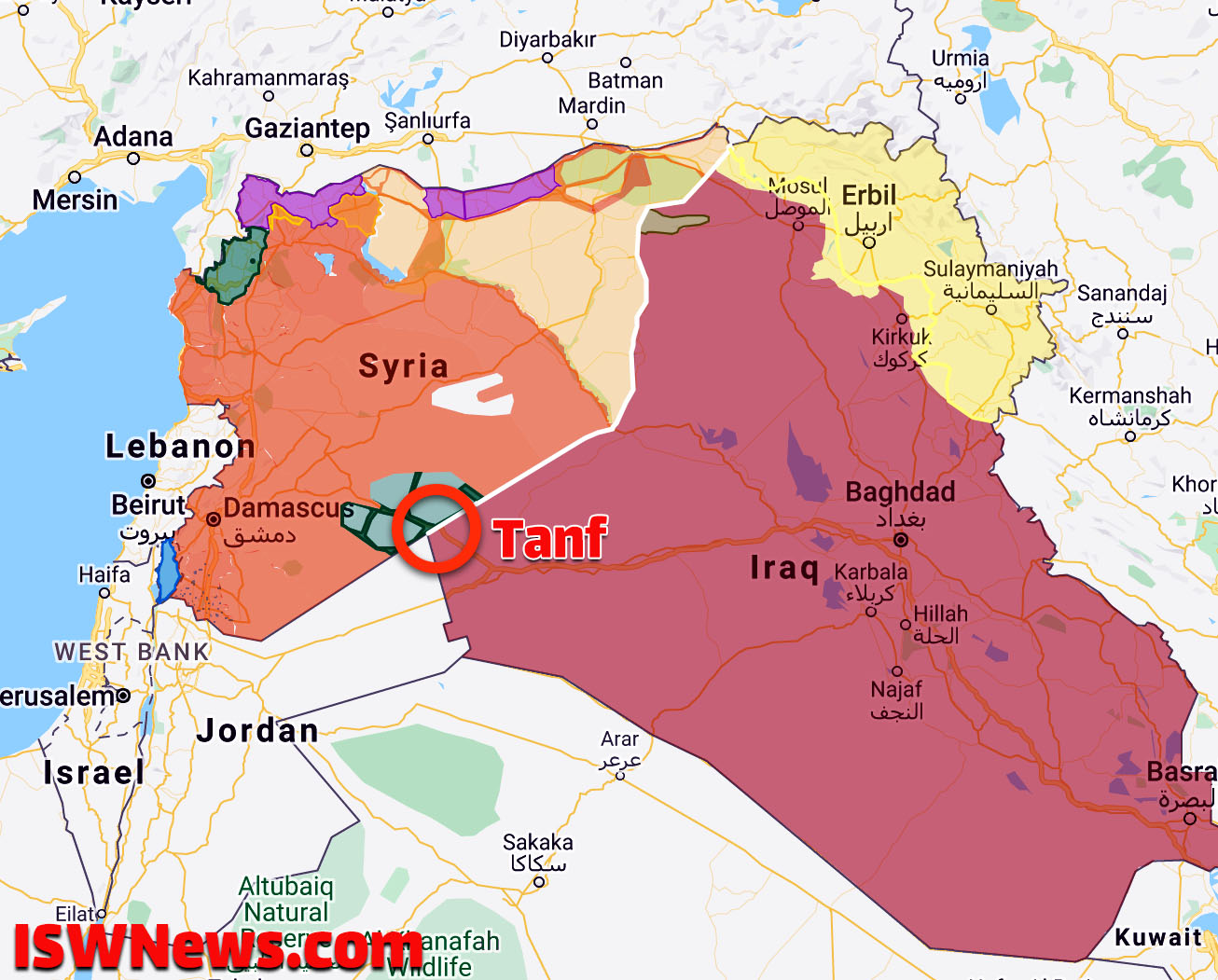
    And where is the Al-Tanf base?

    Al-Tanf base is located in the border triangle of Syria, Iraq and Jordan. The location of the base on the border between Iraq, Syria and Jordan and the Al-Waleed border crossing on Iraq and on the Baghdad-Damascus road has made Al-Tanf base one of the most important and strategic US bases in the West of Asia.

    The base plays a key role in training, providing weapons and intelligence support to Syrian opposition militants, and seeks to destabilize the Iraqi-Syrian border and influence the Iran-Mediterranean communication route by moving and providing widespread support to ISIS operatives. Documents and reports from the Iraqi-Syrian border guards show that US forces stationed at the base are playing an important role in transporting ISIS terrorists from Kurdish militant prisons to various parts of Iraq and Syria.

    Al-Tanf region in the border triangle of Syria, Iraq and Jordan

    The Al-Tanf area has been occupied by US forces for years, and contrary to what US say, due to their presence in the area, it has become an insecure place for the Syrian and Iraqi governments and a place for sedition and attack on Syria and Iraq sovereignty; An area where Syrian Army forces and Iraqi resistance groups are not allowed to approach within a 55-kilometer radius. By occupying this region, the United States believes that it has blocked Iran’s direct land access from Tehran-Baghdad-Rutba to Damascus; But is that really the case? The answer is clear: Absolutely not!

    In addition to these issues, the use of airspace of the Al-Tanf region by Israeli regime warplanes in recent attacks and attacks on Syria in recent years prompted the Syrian Allied Operation Room to decide to retaliate against these attacks.
    In the past, we have seen attacks in Syria against the positions of the American occupiers, but the drone strike on Al-Tanf is the first of its kind and can be considered as a turning point and the beginning of such attacks. Eye for an eye! Attack against attack. In a way that Israel and the United States understand that for every aggression and attack, there will be a painful and reciprocal attack and response. This will be the key to entering the field of deterrence against the United States and Israel in Syria.