Category: Opinion

  • Why is Russia trying to give concessions to the Kurds against the will of the Syrian government?

    Why is Russia trying to give concessions to the Kurds against the will of the Syrian government?

    Since the beginning of the Syrian crisis, Russia, as a permanent member of the Security Council, has played a positive role in resolving the crisis. Until 2015, which was the time of Russia’s military intervention in the US-led war against Syria as one of the most important members of the Axis of Resistance, the role of this permanent member of the Security Council was merely to veto US and European resolutions against the Damascus government. Russia in cooperation with China has vetoed six of the seven Security Council resolutions against Syria since the crisis began in early 2011.

    Russia’s influence, however, increased dramatically after it entered the arena of the Syrian crisis in 2015, and in addition to the political sphere, it also extended to the military and economic spheres. There are various reasons for Russia’s involvement in the Syrian crisis, including the existence of a Russian naval base in the Syrian port of Tartus, confrontation with the US monopoly system, economic benefits including the activities of Russian oil and gas companies before the crisis in Syria, and Russia’s efforts to explore for gas in the Mediterranean to compete with competitors such as; Turkey, Israel, Greece and Egypt for exporting to Europe, as well as turning Syria into an economic gateway to the Middle East.

    Russia’s entry into the political and economic processes of Syria after the crisis subsides, preserving the structure or Bashar al-Assad?

    Now that the crisis has subsided and sovereignty has been established, the important challenge for the Syrian government and its allies is to rebuild and build political processes to unite to overcome the economic and political crisis. Russia is trying to play an effective role at this time as well.
    In this period, unlike during the war, Russia has commonalities with the Westerners, and that is the emphasis of both sides on the implementation of Resolution 2254, which in 2015 was not vetoed and approved by the Security Council, unlike other resolutions. The subject of this resolution is the creation of a political process in Syria for the transition period and the formation of a new constitution and political structure.
    The biggest weakness of this resolution is that it does not mention the fate of Bashar al-Assad.
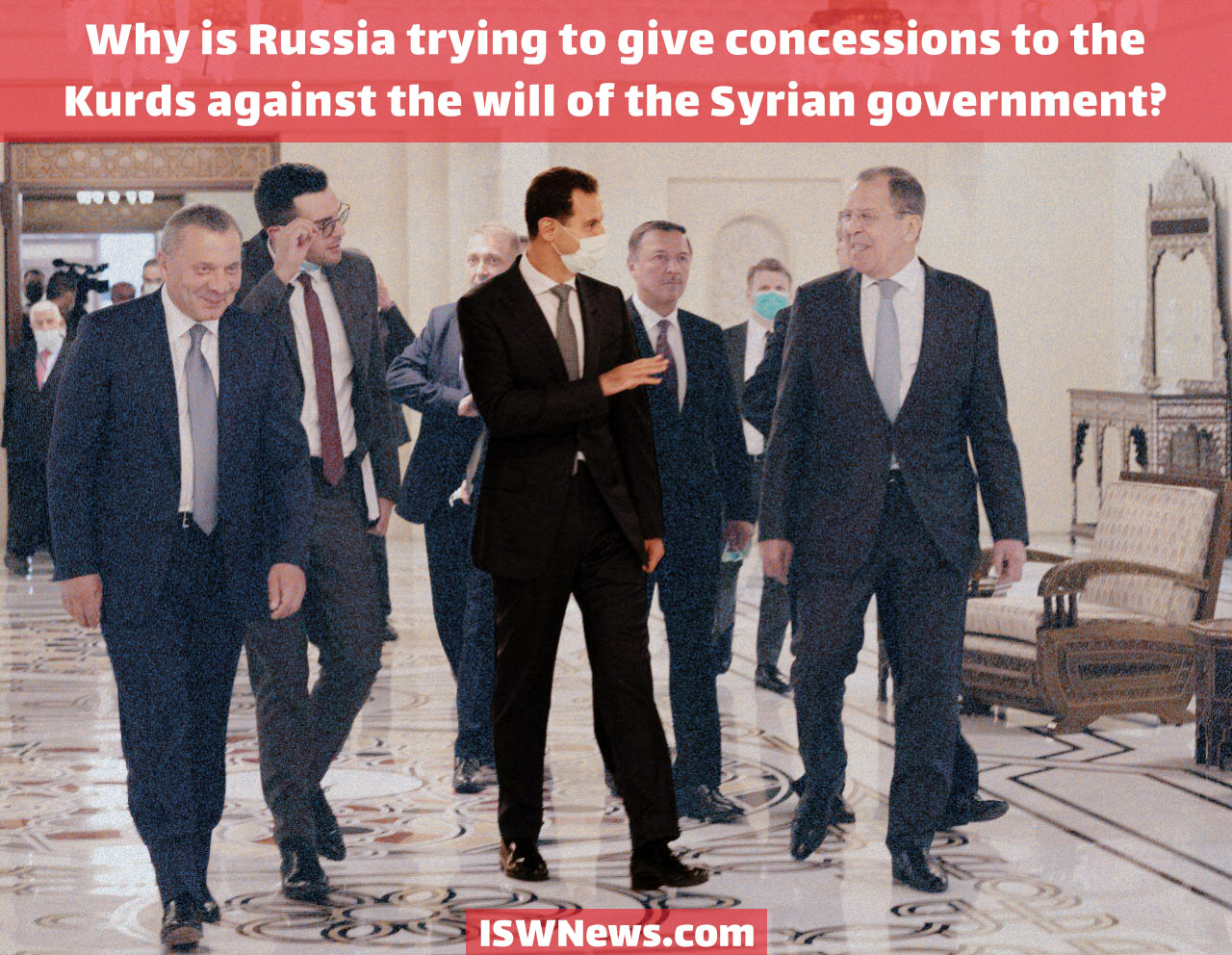
    Russia also seems to agree with the policy of maintaining structure and changing the individual in order to attract capital for the reconstruction of Syria and to make a deal with the West. This is exactly the opposite of Iran’s position, which is to emphasize the preservation of Bashar al-Assad as a symbol of resistance and unity in Syria despite political reforms. Russia’s position was also reflected in the recent visit of a high-level delegation to Syria, emphasizing the need to hold elections under the new constitution, which, of course, was opposed by the Syrian government.

    Efforts to become international mediators and oil deals, most important Russian incentives to resolve Bashar al-Assad dispute with Kurds

    Another issue that Russia is trying to resolve in the Syrian political process by playing the role of mediator is the differences between the Syrian government and the Kurds. After the crisis in Syria began, the Kurds tried to secede from Syria and form an independent government, using the weakness of the government as well as US support; This issue was reduced to the formation of an autonomous region after the Turkish invasion and the lack of US support and support from the Syrian army. In fact, the Kurds realized that they could not survive without the support of the Syrian government. After the disappointment of the United States, the Kurds turned to Russia to solve their problems with the Syrian government and gain concessions from it, so that they might be able to use its influence in the Syrian government to gain concessions in the autonomous region.

    In this regard, a week before the Russian delegation’s visit to Syria, two Syrian Kurdish parties traveled to Moscow and signed an important five-point agreement there. The agreement, which was ratified by Russia, emphasizes the creation of a decentralized political system (creation of autonomous regions), work on Resolution 2254, the entry of Kurds into the Syrian constitutional negotiations, and the integration of Kurdish forces into the Syrian army. The agreement was one of the main points of Lavrov’s meetings with Bashar al-Assad and Syrian Foreign Minister Walid Muallem. Why Russia is trying to resolve the differences between the Kurds and the Syrian central government by granting them concessions does not seem to have a complicated answer. One of the reasons for this is the existence of oil resources in the Kurdish regions, which Russia has also signed agreements with the Syrian government to explore and extract, but due to the presence of the Americans, it is not possible to implement these agreements. In fact, the Russians are trying to drive the United States out of the region and gain economic benefits by making peace between the Kurds and the Syrian government.

    Russia is also trying to become an influential and trusted mediator in the world by resolving such issues politically. Another reason that can be mentioned in this issue; Russia’s efforts to build trust with the West to cooperate with Russia’s policies include efforts to rebuild Syria. In fact, Russia sees this as a concession to the West that they are willing to invest in Syria in return.
    So far, Russia has not been able to succeed due to the opposition of the Syrian government, but it remains to be seen whether in the future, with increasing economic pressures and in the absence of a cohesive economic and political presence of an important ally such as Iran, Bashar al-Assad’s government will be able to resist Russian policies or not.
  • Ethnic war is raging in Karabakh region

    Ethnic war is raging in Karabakh region

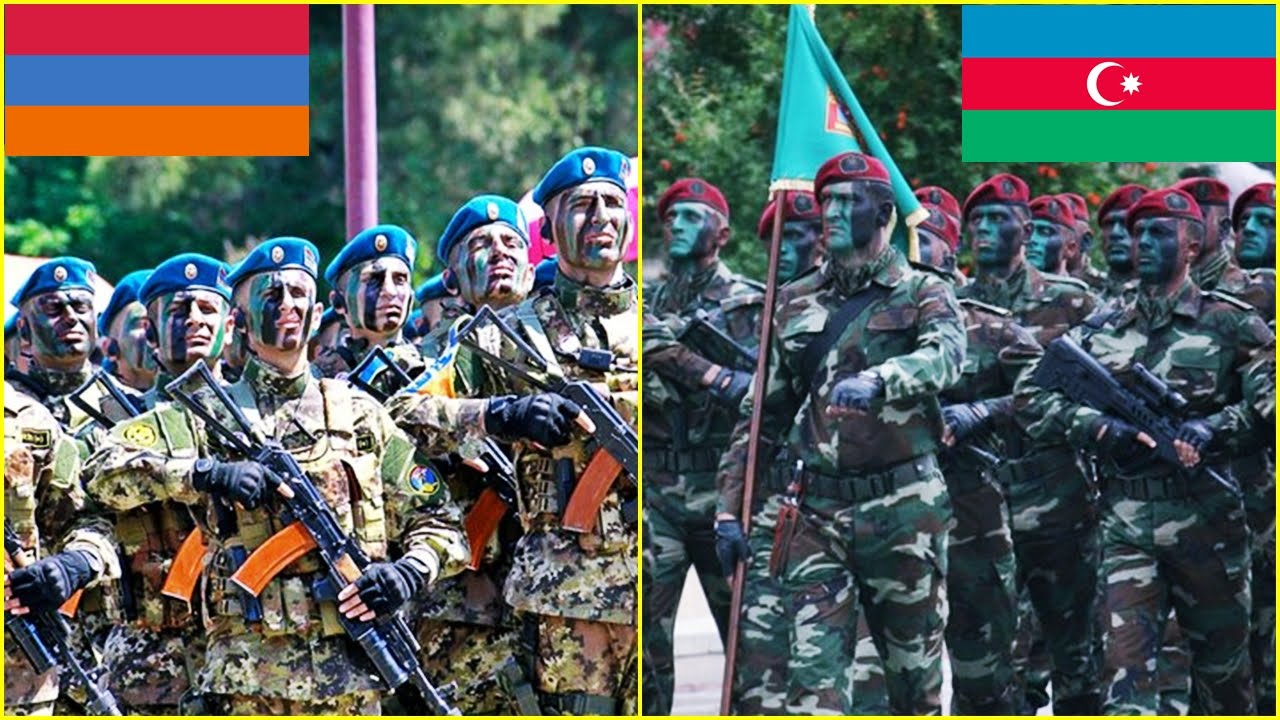
    The limited military operation of the Armenian army in July on the mountainous area of Tavush (Armenia) and Tuvuz (Azerbaijan) once again drew the attention of political and media circles to the Caucasus region. Both sides still claim that the other side has started military mischief. During the conflict, Azerbaijan and Armenia attacked each other’s military bases and units on the contact lines and behind the contact lines, and an unknown number of both countries were killed. It opened the way for people and political activists to take to the streets and areas close to the battle lines.

    The same public demand has become a lever of pressure on the country’s leaders after a week-long conflict has subsided, and they are trying to get out of the situation they are in.

    The untimely presence of Turkish forces in the Republic of Nakhchivan and the mainland of Azerbaijan and the air and ground military exercises may have been a show of strength at the beginning, but the general movement of the Republic of Azerbaijan shows that this is not a purely propaganda option. The country’s television and state media have suddenly adopted a new policy. They have revisited their archives and resumed broadcasting their country’s films and TV-series produced during the Soviet era and after independence. Mythical and warriors subjects such as Kuraoglu, the Qachaq Nabi, national heroes such as Brigadier General Hezi Aslanov (World War II) and films about World War II and the presence of Azeris in these battles and of course the Karabakh war are at the top of the schedule and all of a sudden, lustful films has faded!

    There are also invitations to singers and lesser-known TV personalities who are especially popular. The message of this kind of propaganda can be to strengthen nationalism in the richest country in the Caucasus, in order to erase the criticism of the opposition from the minds of the people over time and to strengthen their spirit of struggle and readiness for a new war.

    But the country’s propaganda machine is not content with just that and the joint military exercises with Turkey, the Bitalion match in Russia and the military maneuvers, put the Azerbaijani army in the spotlight.
    Scenes of mountain battles and offensive operations that draw viewers to the television to both lighten the burden of losing the military position in Tuvuz and to strengthen their mental readiness to enlist and support politicians in a possible war.

    The country’s political analysis program continues to emphasize the raising of the “Turks’ flag” and the assistance of Turkish forces in any war, and in the political analysis program Bizim Planetiz, which is broadcast on AZTV, the readiness of Turkish forces in battles, including the Syrian Turkmen, to take part in an ethnic war with the Armenians is mentioned.
    Of course, the Azeri side has also approached the Pakistani army for such battles, and the political and military support of this indebted country to Azerbaijan, which is expressed every day, is not unexpected.

    Azerbaijani President Ilham Aliyev has not been content with this and has declared the Nagorno-Karabakh region a place for Armenian terrorist groups from all over the world to infiltrate his country and Turkey. He emphasizes that Armenia is spreading fascist ideas. All this news, in addition to the violation of the ceasefire by Armenia along the contact lines between the two sides, is also broadcast daily on Azerbaijani television. Of course, on the Zangzur front, the capture of an Armenian army by the Azerbaijani army and his confessions have been complemented by the propaganda plan of Azerbaijan.

    Azerbaijani media have even accused Iran of cooperating with Armenia and Russia to send military equipment, citing the transfer of Russian-made Kamaz trucks through Iran (Norduz terminal) to Armenia as examples of such actions, while these images are not relevant this year. Any passing vehicle must be disinfected before crossing to prevent the transmission of the Corona virus. Of course, there are also reports of trucks carrying Russian weapons passing through Georgia to Armenia.

    All of these are speculations that are published daily on state television and in the media with the government.

    However, it has been reported that an unknown number of Turkish-backed terrorist groups in Syria (al-Qaeda-linked Central Asian Turks) and al-Qaeda-affiliated Caucasian forces have been transferred to Azerbaijan which shows that Turkey is overseeing this and they will be mercenaries for future military operations.
    Last week, news broke from northern Aleppo, Syria, that troops from the Samarkand Brigade had been sent to Azerbaijan, which made a lot of news on social networks.

    In general, the Syrian militants, given the experience of irregular warfare, can play a good role behind enemy lines or in the mountainous areas of Karabakh region.

    Psychological warfare, along with military preparations and the deployment of Turkish troops on the territory of the Nakhchivan Republic, strongly prove the predictions of an imminent military operation by Azerbaijan against Armenia.

    This new war could take place on different fronts during the last days of summer or the beginning of autumn, and end before the heavy snowfall of the Caucasus.

    The result of such wars, in which the Caucasian ethnicities are on one side and religious differences on the other, is nothing but loss and t helps strengthen Salafist fundamentalism, grow extremist nationalist sentiments, increase al-Qaeda’s influence in the Caucasus, create a crisis hub for US-EU intervention in the form of NATO, weaken Iran and Russia, and other unknown goals.

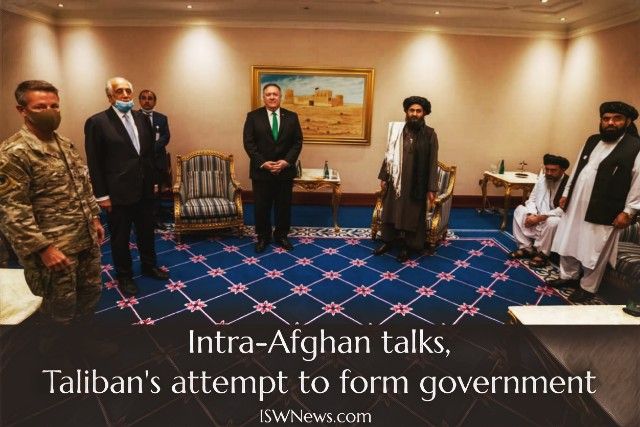
  • Intra-Afghan talks, Taliban’s attempt to form government

    Intra-Afghan talks, Taliban’s attempt to form government

    According to the US-Taliban peace agreement, intra-Afghan talks were to begin ten days after the signing of the Taliban-US peace agreement on February 29, 2020; But the process of releasing Taliban prisoners, a precondition for the Taliban to begin negotiations, has been delayed for more than seven months. Following the delay, representatives of the two sides finally met in Qatar last Sunday and officially resumed initial talks.

    In the meantime, foreign countries have each had an impact on these negotiations, among which the United States has a greater influence and is directly involved in the negotiation process.
    And according to the framework designed in these negotiations, it can be said that the Afghan government is not able to move forward without the approval and coordination of the United States.
    “We agree with the Taliban that no foreign parties should be present in the negotiating room, but they may be needed at some point in the negotiations,” Abdullah Abdullah said in an interview before the initial talks with the Taliban.

    Other important issues raised by the parties in the negotiations include the following:

    1- Ceasefire: which Abdullah Abdullah has mentioned as the first issue in the negotiations with the Taliban and despite the reduction of violence agreed between the US and the Taliban, the clashes continue and the Afghan government strongly condemns this issue. Sustainable casefire is one of the main demands of the Afghan government.

    2- Islamic system: which “Mullah Abdul Ghani Baradar” has mentioned as one of the main goals of the Taliban. Of course, most political currents in Afghanistan emphasize the implementation of the “Islamic system” in this country, but their definitions are different from this statement, and perhaps this is the most important reason for the continuing war in Afghanistan so far.

    3- Provisional government: which is mostly mentioned by the Afghan media and has not been seriously discussed in the negotiation process so far. But it could become the Taliban’s newest and most important negotiating tool in the peace talks.

    4 – Reduction of foreign forces: This issue is also one of the US commitments in the peace agreement with the Taliban, which according to the latest statements of US officials, the US is reducing the number of its troops from 8,000 to 4,500.
    The US military withdrawal from Afghanistan, in addition to the triumphant gesture it portrays for the Taliban, will make some influential powers, such as Iran and Russia, more positive about the Afghan peace talks.
    In fact, the US withdrawal from Afghanistan will alleviate some of Iran’s concerns about the security of its eastern borders, and with this, the level of hope for a full-fledged peace in Afghanistan will increase.

    Another issue highlighted by the media in recent days was the shift of the Taliban negotiator from “Shir Mohammad Abbas Stanekzai” to “Mawlavi Abdul Hakim”, which was attributed to internal Taliban disputes. This change not only does not reflect the internal differences of the Taliban, but also shows the coordination and intelligence of the Taliban during the negotiations. Because Abdul Hakim is a more dominant figure in the field of negotiations with Afghan internal groups and more suitable for resolving disputes with them.
    One of the reasons Stanekzai chose to negotiate with the United States was his fluency in English and foreign policy issues, but what matters to the Taliban in negotiating with Afghan groups is the ideology and thinking they have fought for years to differentiate themselves from other Afghan groups. According to Taliban officials, no one but Mawlavi Abdul Hakim is able to defend their positions in the internal negotiations.

    In general, both the central government and the Taliban have come to the conclusion that war is not the right solution to the conflict, and that negotiation is the best way to bring peace to Afghanistan.
    Based on past statements by Taliban officials and the change in the composition of the Taliban negotiating team, it can be said that the group does not intend to withdraw from its positions in the inter-Afghan talks from “forming a government” and it seems that issues such as “permanent ceasefire” And “severing ties with al-Qaeda” are Taliban’s tools for achieving this important goal.
    Therefore, it is very likely that the Taliban will call for elections in Afghanistan in the negotiations, because they consider the majority of Afghanistan as their supporters. Also, the Taliban will definitely never approve of Ashraf Ghani’s government as the organizer of the elections and will demand the formation of an interim government or an independent election committee to hold the elections; Because they believe in fraud and manipulation of votes in the third and fourth presidential elections in Afghanistan and will not enter the predetermined land by the Westernist government of Afghanistan.

  • Azerbaijan on the break line!

    Azerbaijan on the break line!

    Heydar Alireza oglu Aliyev, the third President of Azerbaijan, took office on October 3, 1993, to end the military defeat of the country against the Armenian army and Artsakh militias in the Nagorno-Karabakh war. The presence of Iranian advisers and Afghan fighters (Gulbuddin Hekmatyar’s Islamic Movement Party), Chechens, Kyrgyz and Uzbeks in the battles of this war was the result of his foresight to draw the other side to balance the battlefield. With the presence of these forces, the battles were stabilized in favor of the Azeri side and little progress was made on the battlefield of Karabakh. The number of troops trained for combat in the mountains and rugged terrain was even higher than before.

    By changing the military situation, Azerbaijan was maneuvering on political options and trying to combine military and political victories. It is safe to say that the second half of 1994 was a miserable year for Haidar Aliyev, and that all his aspirations to draw new ground for battle were fading.

    This time the new tactics of the Armenian army and guerrillas in the war were unveiled. The large-scale offensive, accompanied by armored attacks, heavy artillery fire, and heavy artillery attack and attacking to main supply roads created new conditions in the war.

    The city of Aghdam fell with the same tactic and the Armenian forces reached the plains of Azerbaijan from the mountains and there was no significant obstacle in front of them to be able to stop their advance.
    Wrong assessment of the Armenian advance into the interior of Azerbaijan led to the concentration of forces and equipment on the middle front of the battle to prevent them from continuing to advance in the central regions of the country. But the Armenian forces moved the war to the other side.

    The regiment of Armenian forces poured from the Agdam front to the south of Nagorno-Karabakh and the Rayons bordering Azerbaijan with Iran. About 10 months after the noisy election of Heydar Aliyev, this time it was the turn of Gabriel’s and Fuzuli defenders to test themselves against the attack of about 10,000 Armenian troops and about 5,000 Armenian guerrillas (Artsakh). The invading forces were supported by artillery fire and armored forces (tanks and personnel carriers), and their large presence led to a bloody battle. The battles in the forested areas and surrounding hills soon reached the town of Fuzuli, and between August 16 and 23, 1994, most of the Fuzuli district fell to Armenian forces and were occupied. Rayon Jabrayil suffered the same fate and in a short time Azerbaijan lost the rhyme on the battlefield. Air support only delayed the withdrawal of Azeri troops and guerrillas.

    The advance of the Armenians was so rapid that the Azeri forces chose the option of delayed and retreating operations. About 20,000 civilians lost their homes and fled to the Iranian border and the Aras River. Of course, these people were the last ones who were willing to evacuate their homes due to the fall of the defensive positions. Military and paramilitary forces were also behind them, and Iranian territory was the only place they could take refuge. Governor of Fuzuli also came to Iran with these refugees. Horadiz-Mil Moghan Dam (joint dam) on Aras acted as a bridge to cross. In addition, trucks, small boats, horses, and mules transferred people through Aras into Iranian territory. After a while, the Horadiz dam was under siege and occupied by the joint forces of Armenia and Artsakh. But there were still other Azeris behind the border.

    During all this time, the artillery fire of the Army of the Islamic Republic of Iran played an important role in evacuating the remaining civilians and the military so that they could cross the Aras River with BTR trucks, tanks, and military and civilian vehicles. Of course, news about the construction of floating bridges by army and IRGC engineering units on Aras was published unofficially. There are rumors about the martyrdom of Iranian Revolutionary Guards and Afghan Mujahideen in this battle, which has not been confirmed yet, and only the inscriptions of a few gravestones of the victims of the Nagorno-Karabakh war in Kheradlan (a city near Baku) show this fact.

    After capturing northern Aras, Armenian forces attempted to blow up the Horadiz-Mil Moghan dam, which was opposed by Iran and the threat from the Iranian side caused them to withdraw from this action.
    Relief aid from the Red Crescent and the Iranian Relief Committee in East Azerbaijan Province (according to the country’s divisions at the time) was sent to Azerbaijani refugees on Iranian soil. Rescue teams provided temporary shelter for the wounded by setting up tents and setting up a camp.

    Ambulances also transported the seriously injured to Ardabil and Tabriz hospitals. Azerbaijani President Heydar Aliyev upon entering Iran and visiting the refugee camp, blamed the Fuzuli governor and his military and paramilitary commanders for the defeat and called for the removal of incompetent personnel.

    Azerbaijani military and paramilitary forces due to the dire situation on the battlefield, in the shortest time transferred to Azerbaijan with all their weapons via the corridor provided by Iran in the Bile Savar border crossing to prevent the advance of Armenian forces to the east (Imishli and Saatli Rayons). Dozens of Iranian trucks were also tasked with transporting refugees back.

    The remarkable point in this battle and defeat was the loss of the communication line of Zangilan road and its only communication route was supplied from Iran and a population of 60,000 people was besieged.
    Under these circumstances, Aliyev’s government was still needed Iran’s helpa. Of course, Azerbaijan planned an operation to retake the lost areas north of Aras, which was given the green light by Iran. Azeri planes entered the occupied territories from Iranian airspace and heavily bombed the area around Horadiz.
    Even Iranian artillery units assisted Azerbaijan in the military operation against Armenian forces, and surveillance from the Iranian side caused heavy casualties to the Armenians. Joint Armenian forces withdrew from a significant part of Rayon Fuzuli, but the towns of Jebrayili and Fuzuli and the line of contact with Zangilan remained in their hands.

    Shortly afterwards, Zangilan fell and the process of displacing refugees to the Iranian border was repeated. Of course, the President of Azerbaijan later expelled the Iranian advisers who were training his country’s forces from Azerbaijan so that religious beliefs would not be formed among the armed forces of this country.
    Heydar Aliyev’s political project led to a political defeat and a forced ceasefire after the Minsk summit. After the end of the war, his government turned to the economic strengthening of Azerbaijan, the extraction of oil and gas from the Caspian Sea and the distortion of the history of the Nagorno-Karabakh war, to the point that the recapture of the occupied territories of Fuzuli was only the result of efforts by the Azerbaijani armed forces. But most people in this country never forget about Iran’s humanitarian aid and military help to Azerbaijanis.

  • Opinion: An overview of Caucasians recruitment

    Opinion: An overview of Caucasians recruitment

    After the independence of the Republics of Azerbaijan and Armenia in the early years of 1990s, the former tensions between the two countries took an international aspect, and with entering of foreign countries into the diplomatic field for resolving the disputes between Baku and Yerevan, there were conflict in interests between the three main players in the Caucasus, Iran, Turkey and Russia; of course smaller footprints of Saudi Arabia, the Zionist regime and the US can be seen in the events of that time.
    The process of interaction between the different political groups in the Karabakh crisis, that also had a direct impact on the formation of political structure in the two countries, finally weakened the position of both countries of Iran and Turkey in the policy of Caucasus and led to the strengthening of Russia’s role.

    In recent weeks, the news about joint maneuvers between the Armenian and Russian forces and between the forces of Republic of Azerbaijan and Turkey, caused mixed reactions in Iranian media and this article tries to provide a comprehensive analysis based on the political situation of both countries of the Republic of Azerbaijan and Armenia.
    Although the Azerbaijani nationalists have always considered Russia as an absolute supporter of Armenia and have considered Moscow an enemy, but Moscow officials have shown in recent years that they are not reluctant for expanding their relations with Baku.

    It should be acknowledged that the Republic of Azerbaijan, in addition to having more population and trade exchange than its western neighbor, has many potentials including influencing on and impacting from Russian Muslims, and this country is still economically dependent on Moscow in the post-independence era.
    Therefore, this remarks of the former president of Azerbaijan “Ayaz Matlabov” that the solution for solving the Karabakh conflict is improving relations with Russia, can be considered partly correct; but it should be admitted that the dust of fear of Russia remains still on the body of Azerbaijani society.

    The news about holding of a joint drill between the Armenian and Russian forces in the political atmosphere of the Republic of Azerbaijan, spread this fear among the people once again; but after a few days, it became clear that the Russians were reluctant for holding the drill and in fact the news were a media bluff.

    But what surprised the media, was the publication of real images of a joint military exercise between the Azerbaijani and Turkish forces in the Nakhchivan Autonomous Republic; because the positive signal of Moscow to Baku was answered with a disappointing response.
    In general, the foreign policy of the Republic of Azerbaijan during the recent three decades has been based on maintaining relations with all of neighbors; because Baku officials know well that stabilizing their country’s position is only possible by maintaining a balance between the foreign powers including Russia, US, Turkey, Iran and the Zionist regime; and if any of political actors be strengthened, it leads to a sharp reaction by others.
    Holding the joint drill with Turkey can be considered with the aim of increasing power of Ankara, but it should not be forgotten that in recent weeks, Aliev has confronted with those internal opponent parties that are often supported by Turkey or are pro-Turkey. Therefore, it seems that this drill has been done for reassuring Ankara, so that Turkey does not to support Azerbaijani opposition parties.

    It is noteworthy that the Karabakh conflict, although is considered as the most important dispute-point between the two republics of Armenia and Azerbaijan; but in comparison to more important regions such as Syria, Iraq and Libya that are the center of conflict of interest between Russia, Turkey and Iran, is not so important; therefore, these recruitments cannot be considered too serious, but we may soon see making positioning in favor of Russia in Baku.

    YOUR SUPPORT IS CRITICAL TO KEEP ISWNews ALIVE!


    I’d like to thank readers for their confidence and support. Thanks to your support we can continue to perform our duty on reporting the important events in the region. So If you like our contents, please don’t feel embarrassed to contribute and help our project, for as little as 1 Dollar. Your contribution, however small, will help ensure our project continuity. Thank you.


  • Unconditional aid offer, French Trojan horse for Lebanon

    Unconditional aid offer, French Trojan horse for Lebanon

    Lebanon today is the product of the decision of victorious sides in the World War I, France and Britain in territorial dividing as the two great colonizers of the lands of the defeated Ottoman Empire after the World War I.

    Weakness of power structure, the heritage of the French colonial for Lebanon

    The Britain even tried to take the Syria out of the hands of France by determination of Feisal, the older son of Sharif Mecca at that time as ruler, that after a short time of Feisal ruling on Syria, the Lloyd George’s plan was foiled. However, France was able to take guardianship of Lebanon and Syria, but lost the Palestinian guardianship that Lloyd George had selected it for the Zionists habitation. However, France was able to take guardianship of Lebanon and Syria, but lost the Palestinian guardianship that Lloyd George had selected it for the Zionists habitation.

    After occupation of Lebanon by France and its trying for highlighting the Christians in Lebanon for increasing the infiltration and governing the colonial Lebanon easily, the political rivalry between Muslims and Christians began. In the one side, the Muslims emphasized on their Arab identity and even wanted to join an Arab country (the great Syria, or an super-Arab country including Iraq, Syria, Jordan, and current Israel); and in other side, the Christians that saw themselves powerful in the case of alliance with the Europeans, and some of them did not even accept being Arab; However, Lebanon under the guardnership of France, found an almost French structure, so that even after the declaration of independence in 1943, the French traditions remained in various parts of Lebanese sovereignty, especially in the economy part. Despite the conflict and civil war after the declaration of independence from France, the Lebanese were able to reach an agreement on their suitable political model in the Saudi city of Taif, after 15 years.

    According to the Taif treaty, the Lebanese political system became a special kind of democratic governance that in it, in addition to the people votes, the religious dependences are also very influential in the hierarchy of political power; this method of governing is a subset of consensus democracy. In this agreement, it was stipulated that the presidency should be given to the Christians, the prime minister to the Sunni Muslims, and the parliament speaker to the Shiites. This system in division of the power, that emerged due to the civil war with the intervention of colonialism, was turned to a crisis for Lebanon; the issue that Lebanese president Michel Aoun also mentioned it in the recent crisis, and announced the solution for going out of it, as implementing some reforms in the structure of government and the quality of dividing the power.

    Neglecting of economic development, among the political conflicts

    The Lebanon’s economic structure is also defective, due to its inefficient political structure; in the one side, the dependent view of the March 14 fraction led by Saad Hariri in the economy field, and in the other side, the continuous political conflicts did not allow Lebanon to move towards the economic development. Therefore, Lebanon, despite its potentials in agriculture field and having oil and gas resources in its territorial waters in Mediterranean sea, has moved to foreign aid, including Saudi Arabia and the US, international loans and internal borrowing, and finally the tourism resources. And because of this, is almost a mere importing country.

    Saudi aids, that had been almost cut off for imposing political pressure to change the Lebanese government’s approach to Hezbollah at the time of under prime minister of Saad Hariri, that was supported by Saudi Arabia and the US. On the other hand, the International Monetary Fund at the time of current Lebanese government headed by Hassan Diab, refused to lend to Lebanon, arguing that Lebanon debt is high and this country can’t repay its debts; that of course its main reason is rejecting of pressure for disarming the Lebanese Resistance.

    Therefore, the shortage of exchange resources and increasing in foreign debt to more than 150% of GDP led to an economic and social crisis in Lebanon; the crisis that its range still continue. This economic crisis with happening the explosion in the port of Beirut in recent days, is leading this crisis-stricken country to a human crisis, because in addition to the lack of financial and industrial sources for replacing the destroyed items, there is no alternative port for importing the needed materials; also, it’s been announced that the financial damage of this fire is about 10 to 15 billion dollars.  

    The necessity of creating a land corridor for Iran’s entering to the flow of providing goods in Lebanon

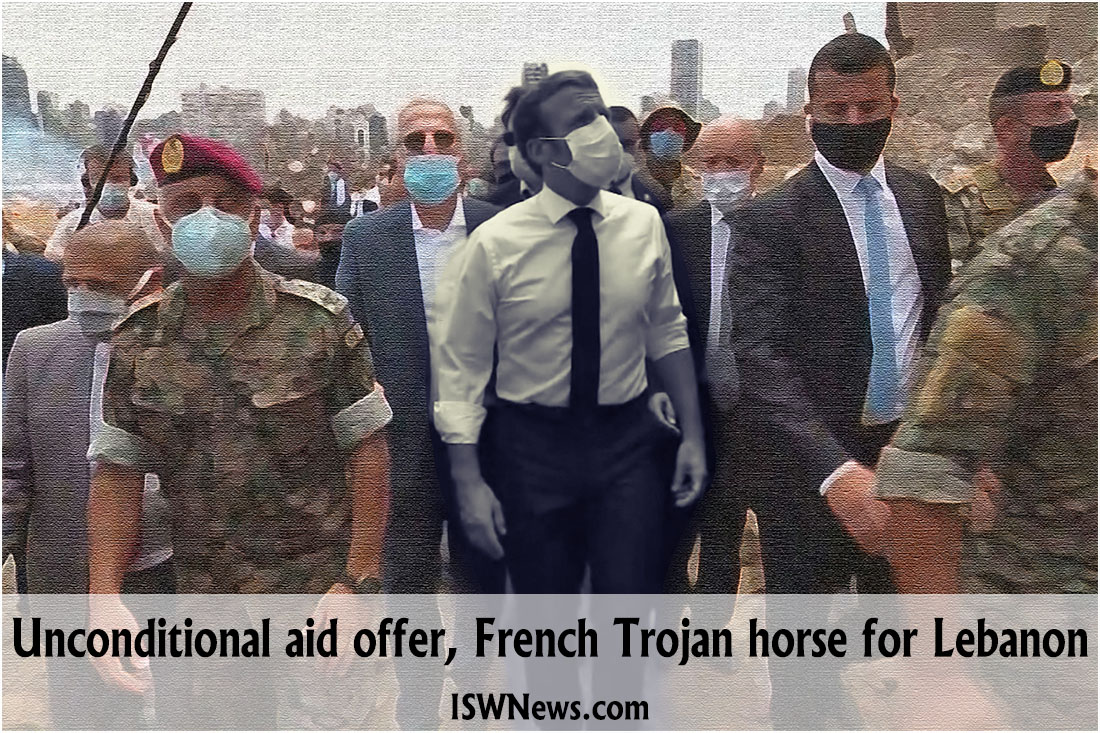
    Now, France has been the pioneer of aids, for full using of this situation in Lebanon and probably returning its traditional influence in this country; and Emanuel Macron   the French president has announced during the visit to Beirut that he is ready to meet the Lebanon’s financial and commodity needs for reconstruction.

    If the Lebanese government accepts the France suggestion for meeting its financial and commodity needs, it will naturally should accept their terms about putting pressure on the Resistance groups; and if it rejects the France suggestion, it will face with a great amount of financial and commodity needs, that if these needs won’t be met, they will face a human crisis. Therefore, the entering of Iran is necessary, for removing the pressure of public opinion from the Lebanese government and the Resistance.

    Perhaps Iran’s entering to financial field be difficult, but it can help Lebanon in field of providing some goods and services, that this issue also depends on creating a safe corridor for transporting of goods. Because air transportation is not cost-effective for any kind of export, and also Iran is weak in this field because of sanctions against its aviation industry, creating a land corridor can be a good way for connecting Iran’s economy to Lebanon and other Mediterranean countries, including Syria. The studies show that the al-Bokmal crossing in east of Syria is currently controlled by Resistance forces. In the case of reviving, it can be a good land bridge for connecting Iran to the Lebanese economy and even the Europe and Africa by the Mediterranean.

  • Opinion: Siege of Yemen, From Beginning to End

    Opinion: Siege of Yemen, From Beginning to End

    Arrival of Iranian tankers at Venezuelan harbors and breaching the embargo of the country is a huge leap in Iran’s foreign policy and a blow to US arrogance which can be helpful in future, specially about Yemen.
    Yemen had become the main battlefield between the Resistance and the West and both sides are reluctant to accept defeat in this arena.

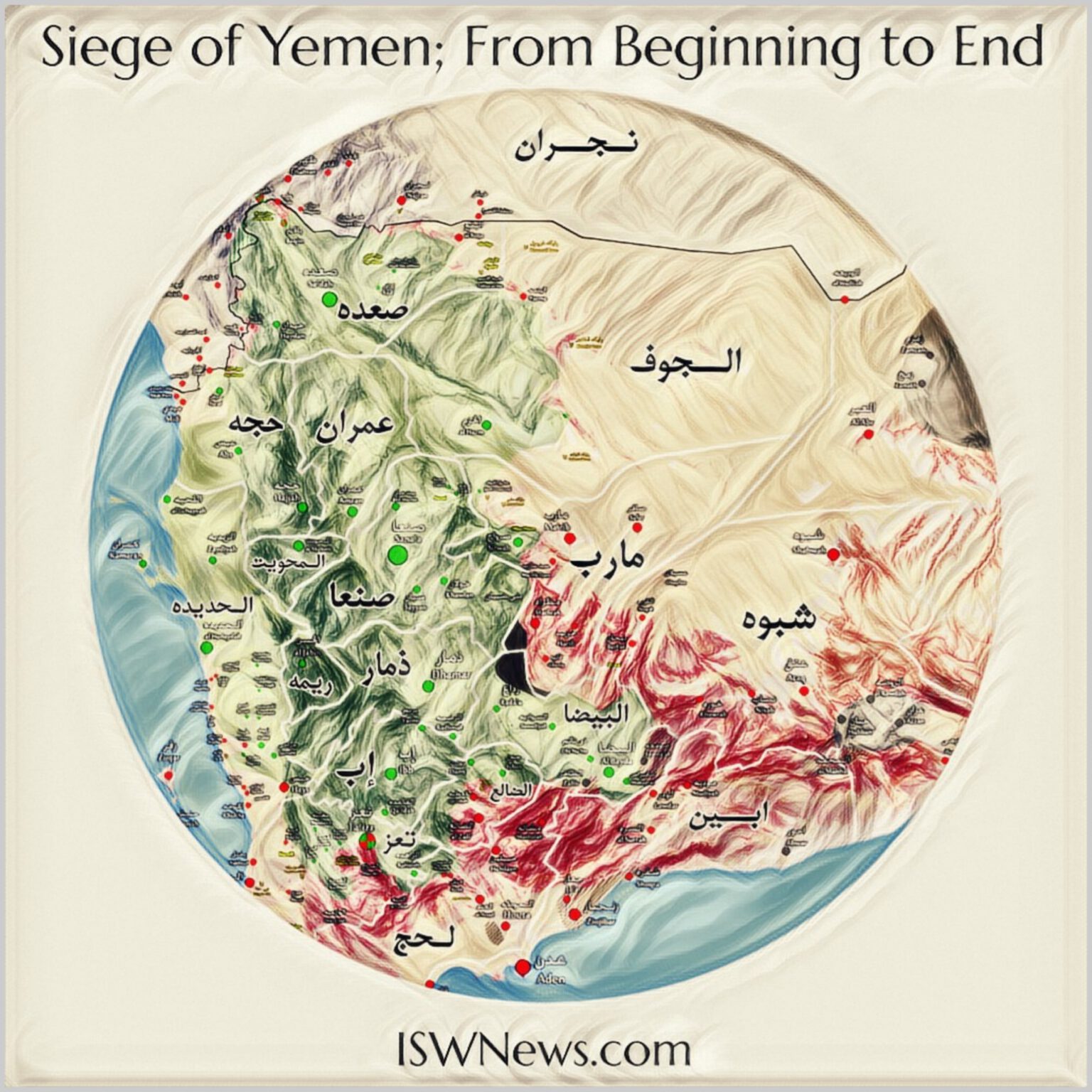
    The Resistance could destroy the cores of terrorism in Syria, Lebanon, Iraq and Gaza with help of Iran and its allies and now the only active front with main threats is Yemen. Therefore Saudi Arabia and UAE besieged Yemen from all aspects to cut Iran’s helps to Ansar Allah from the beginning of the assault. They even controlled or formed allegiance with Somalia, Djibouti, Sudan and Eritrea which could be helpful for Iran to support Ansar Allah. Americans hindered Iran aids using political tricks. All these oppressing acts resulted in unfair siege of Yemen and its people in several years.

    We examine some points regarding this topic:

    1. Iran’s mistakes in foreign policy toward horn of Africa:
    Sudan, Djibouti, Somalia and Eritrea were among states that Iran expanded relationship with to enhance maritime transportation safety in the Red Sea and Gulf of Aden.
    After the start of Yemen war, these countries changed their course an incredible amount of 180° and against Iran’s interests, started to follow Saudi coalition on sieging Yemen.
    Even though these countries cutting ties with Iran was considered as joke by many but it just shows Iran’s policy was not correct in horn of the Africa and resulted in Yemen full siege.

    Iran’s mistakes are:
    a) Ignoring US influence on horn of the Africa:
    In addition to political and power influence, USA has a huge base “Camp Lemonnier” in Djibouti which hosts many warplanes and American soldiers.
    b) Taking wrong stances toward Somalia civil war.
    c) Media and political passivity against UN and Saudi Arabia accusations regarding transporting weapons to Somalia and training Ansar Allah troops.
    d) Opening relationship with low level and weak politicians such as Omar al-Bashir.

    2. Guarantee of Iranian politicians to the United States to stop sending aid to Yemen:
    The only evidence is former US secretary of state, John Kerry, remarks at the council on foreign relations on Iran, on 24 July 2015 who said: “A few months – a couple of months ago, I guess it was, when you saw a convoy coming down out of Iran heading towards Yemen, I was on the phone in an instant to my counterpart, and made it very, very clear that this could be a major confrontation, that we were not going to tolerate it. And he called me back, indeed, within a short span of time and said, “They will not land, they are not going to unload anything, they are not going to go out of international waters,” and then they went home.”
    In fact such decisions without strategy helped Yemen’s siege.

    3. Ansar Allah negotiation with Saudi coalition to lift the siege:
    Saudi coalition, who didn’t expect Yemen’s brave resistance, had to negotiate with Ansar Allah to achieve its political goals at the same time with military missions. The negotiations are:
    a) In Geneva, June 2015.
    b) In Muscat, September 2015.
    c) In Switzerland, December 2015. Which were all unsuccessful.
    d) In Saudi Arabia, spring 2016. It was the first negotiation in Saudi Arabia and was unsuccessful finally due to obstruction by resigned government of Mansour Hadi and Ali Abdullah Saleh.
    e) Kuwait negotiation which was not successful due to assigning Ali Mohsen al-Ahmar as vice president of Mansour Hadi resigned government.

    After failure of talks in Kuwait and rejection of US and UN plans by Mansour Hadi resigned government, the plans by Persian Gulf Cooperation Council and National Dialogue Conference were introduced which was accompanied by UN security council resolution 2216 which entails “forming a committee to monitor drafting the new constitution”, “timetable to hold general election” and “holding of a referendum”. National talk conference emphasized on forming a federal government of several areas by Yemeni groups agreement and resolution 2216 also accepting these two plans emphasized on political solution and ceasefire.

    These plans failed as well and battle in west o f Yemen coasts from Bab al-Mandab Strait to south of Al Hudaydah and north of Hajjah province intensified.
    On December 14, 2018, the resigned government and Ansar Allah agreed on ceasefire, exchanging POWs, lift of siege of Taiz and west of Yemen areas in Stockholm, Sweden.
    In this agreement the control of Al Hudaydah harbors were left to local joint forces and the income of oil export from Marib oil field was done by Sanaa central bank and the siege of Sanaa airport and Taiz to be lifted. But due to political discord and UN passivity in supervising the obligations of Mansour Hadi resigned government, Ansar Allah limited their obligations on joint forces controlling the harbors.
    After this, there were significant turn in the war by Ansar Allah’s drone and missile attacks on Saudi Arabia oil infrastructure, operations of north of Saadah and Al Jawf. After being passive and on weak side, Saudis started Muscat talks.

    What has been released unofficially from Muscat talks, from delegates of both sides talks (Muhammad Abdulsalam and Khalid Bin Salman), Khalid Bin Salman direct call with Mahdi al-Mashat and UN convoys meeting with Ansar Allah officials, the following are topics of talks:
    a) Ceasefire in southern border of Saudi Arabia and DMZ along border.
    b) Lifting siege of Yemen and reopening Sanaa airport.
    c) Limiting Ansar Allah’s drone and missile attacks to Saudi Arabia.
    d) Ansar Allah cutting ties with Iran in return for Saudi support for Ansar Allah.

    Ansar Allah leader in his meeting with UN special convoy Martin Griffiths, rejected cutting ties with the Resistance and conditioned any ceasefire to lift of siege of Yemen.
    As Ansar Allah stopped attacking Saudi Arabia oil infrastructures in return for several medicine cargo planes landed in Sanaa and some ships conveying oil products released.
    At the moment, most of the previous negotiations have failed which is due to the West pressure on Saudi Arabia, discord between Saudi coalition, continuation of air strikes and siege of Yemen.

    YOUR SUPPORT IS CRITICAL TO KEEP ISWNews ALIVE!


    I’d like to thank readers for their confidence and support. Thanks to your support we can continue to perform our duty on reporting the important events in the region. So If you like our contents, please don’t feel embarrassed to contribute and help our project, for as little as 1 Dollar. Your contribution, however small, will help ensure our project continuity. Thank you.


  • Changing the battlefield to inside! A glimpse of the recent developments in Azerbaijan-Armenia conflict

    Changing the battlefield to inside! A glimpse of the recent developments in Azerbaijan-Armenia conflict

    The discussions and headlines of each of the two countries were focused on domestic topics which brought up discords between political movements and reduced the tension between both countries. It seems each government is trying to point the arrow toward their domestic adversaries to stabilize their own powers.

    Following the tensions in border area Tavush-Tovuz, the union of adversary movements and parties in Azerbaijan entitled “National Council” supporting the ruling party emphasized on unity against Armenian enemy. Even some Islamic figures, who have been sentenced to long time imprisonment, issued statements stressing “fight until the last blood” from behind the bars which showed an unprecedented unity.

    However less than three days, Ilham Aliyev in his speech, which was released on presidential website, talked about the memories of the era Azerbaijani Popular Front Party was ruling and complained about their irresponsibility which is not related to the current situation whatsoever. This shows that attacking domestic opposition is more important for the president specially since he could remove figures close to Russia under the current crisis shadow.

    These statements caused Azerbaijani Popular Front Party to change their stances, that was released just four days ago, and criticizing the government again. Aliyev did not stop there and attacked other leaders of National Council groups and scattered his supporters until that the opposition started conducting protests against the government which eventually resulted in arrest of some high officials of opposition parties.

    The last scene of managing the crisis is to imposing the limits on commuting to fight Corona epidemic which actually neutralized the opposition groups since people won’t come out.

    The political situation in Armenia was the same and similar situation happened in Yerevan. Before the crisis there were protests against the ruling party and now the government reduced opposition pressure under the shadow of foreign threat. Armenian PM accused Aliyev of provoking the tension to suppress the opposition on the first day of conflict but Azerbaijani media accused Pashinyan of the same thing, and the incidents of past two weeks show both countries are on the same route.

    It can’t be overlooked that other scenarios such as war could help the extreme groups to reach power and worsen the crisis.

    YOUR SUPPORT IS CRITICAL TO KEEP ISWNews ALIVE!


    I’d like to thank readers for their confidence and support. Thanks to your support we can continue to perform our duty on reporting the important events in the region. So If you like our contents, please don’t feel embarrassed to contribute and help our project, for as little as 1 Dollar. Your contribution, however small, will help ensure our project continuity. Thank you.


  • Disclosure: Behind the scenes of Karabakh and the Islamic Republic of Iran + Video

    Disclosure: Behind the scenes of Karabakh and the Islamic Republic of Iran + Video

    Ilham Aliyev in a meeting with high commanders of army in a military base two weeks ago talked about treachery of a “Azerbaijani Popular Front Party” in 1992 which gained power by giving the town Shusha to Armenia in Nagorno-Karabakh war. Although talking about it is not a new subject in Azerbaijan media and many analysts knew it already, however, digging what Ilham Aliyev stated has an important aspect which involves Islamic Republic of Iran and Azerbaijan media won’t talk about that aspect never.

    Ilham Aliyev speech regarding Azerbaijani Popular Front Party treachery


    Azerbaijani Popular Front Party
    In the last years of Soviet era, political and racial crises in addition to conservative policies if communism, prepared a situation for radical movements and parties to expand including “Azerbaijani Popular Front Party”. The leadership was a hardcore fan of Pan-Turkism since the beginning and inclined toward Turkey. Calling northwestern provinces of Iran “Southern Azerbaijan” and slogan of “one nation, two governments” are among their inventions.

    With the help of reforming and daring behaviors Azerbaijani Popular Front Party could absorb the Azerbaijani refugees rejected from Armenia which enabled the movement to have a more important role in Karabakh conflict.
    The ever increasing tension in Karabakh and transforming into an armed crisis in the last days of communism sovereignty, emphasized on the importance of having army for everyone. Azerbaijani Popular Front Party, the biggest and most important party of the time, could get armed just before the independence of the Republic.

    The evolutions suggested Azerbaijani Popular Front Party is the main candidate for the leadership of the newly independent Azerbaijan Republic but the parliament reassigned Ayaz Mutalibov, the last communist leader of Azerbaijan, with the condition to abolish communism party and swear to the new republic.

    While the newly formed government did not have an army and tensions increasing everyday in Karabakh, there was the necessity for an armed party, therefore Azerbaijan divided between former communist politicians in power with Azerbaijani Popular Front Party and its armed supporters controlling the critical areas.

    There was a harsh competition between the government without army (former communists) and the army without government (Azerbaijani Popular Front) and each side was trying hard to compensate for their weakness. It is obvious that such a critical situation is in favor of Azerbaijani Popular Front, since they can increase their power using their armed supporters. At the same time, Ayaz Mutalibov government was negotiating with Armenians over Karabakh, which was an alarm for Azerbaijani Popular Front, since after the crisis is overcome the government would naturally turn toward armed militia to disarm them.

    Iranian peace and foreign coup
    On 7 May 1992 presidents of Armenia and Azerbaijan met in Tehran. In the joint statement of three countries presidents it was mentioned that there will be a seven days ceasefire and delegates of both side start negotiations in Karabakh with supervision of Iran FM.

    Signing the agreement of Karabakh- Tehran, 7 May 2020


    Obviously Caucasian political sides did not like it, as Iran took the upper hand to solve the issue of Karabakh, having more influence than Turkey and USA. As mentioned above, Azerbaijani Popular Front also did not want the conflict to be solved by Ayaz Mutalibov government. Beside their political future was in danger with their extreme anti-Iran policies, therefore, on 8 May 1992 (just one day after the agreement in Tehran), 2,500 militia affiliated to Azerbaijani Popular Front left Shusha town around 20:00 and the remaining forces could not defend against 700 Armenian soldiers and the town and surrounding villages fell.

    Azerbaijani Popular Front Party hoped that many protests would rise in different parts of the country and the government would resign under pressure of people and the parliament, but it didn’t happen so leaders of Azerbaijani Popular Front Party tried another plan. Azerbaijani Popular Front Party recalled their forces from the front lines to the capital for a coup which caused Armenians to occupy more lands.

    Despite of no evidence of foreign influence in the coup, the new government leans toward Turkey and USA greatly and ditched Iran out of Karabakh conflict entirely.
    Iran’s FM deputy traveled to Baku after the incidents but new officials of Azerbaijan showed no interest in Iran role in Karabakh conflict and repeated their claims over northwestern provinces of Iran.

    Heritage of “Azerbaijani Popular Front Party” rule
    Azerbaijani Popular Front Party era, since the very beginning, faced many challenges. Leaving border stations by Azerbaijani Popular Front militia to do the coup, left them to Armenians and with ground connection between Armenia and Nagorno-Karabakh Autonomous Oblast, gave Armenia upper hand. Before Armenia was only the supporter of Armenians of Karabakh on the paper but now the lost villages and towns were victims of political ambitions of Azerbaijani Popular Front Party, which never taken back.

    Having open relationship with Israel and cold relationship with Iran are among the important changes in foreign policy of that time.
    One year later, not only Azerbaijani diplomats sent to Turkey to seek military aid returned empty handed, but Turkey even did not stop exporting electricity and wheat to Armenia and this put a lot of pressure on ruling party by Azerbaijan media until some political movement even demanded reform in relationship with Iran and asking Islamic Republic to supervise solving the issue of Karabakh.
    Therefore, in order to control the public mind, the State minister of Azerbaijan raised the myth of Iran’s support for the Republic of Armenia during the Nagorno-Karabakh conflict, but nevertheless, the sending of humanitarian aids to refugees of Azerbaijan never stopped by Iran.

    Click to see the full size map


    YOUR SUPPORT IS CRITICAL TO KEEP ISWNews ALIVE!

    I’d like to thank readers for their confidence and support. Thanks to your support we can continue to perform our duty on reporting the important events in the region. So If you like our contents, please don’t feel embarrassed to contribute and help our project, for as little as 1 Dollar. Your contribution, however small, will help ensure our project continuity. Thank you.


  • Who is Ahmed al-Audeh?

    Who is Ahmed al-Audeh?

    Ahmed al-Audeh announced the formation of a new army in south of Syria in a funeral ceremony on June 23, following the killing of a number of the Fifth corps (former militants) members, by a roadside bomb.
    He said: “Soon, Houran will have one body and one army. This is not just for the defense of Houran, but rather it will be the most powerful tool for defending Syria.”

    These strange remarks are said in the situation while the Fifth Corps is a part of the Syrian Army, and the southern parts of Syria is completely under the control of the Syrian Army, and speaking about the formation of a new army can be considered as a rebellion.

    But what is Ahmed al-Audeh military background?

    Al-Audeh started his military activity as a Syrian opposition figure and lost three of his brothers during the years of fighting against the Syrian government. Although, he changed his stances against the militant groups several times and finally, joined to the Syrian army.

    His most prominent stance changing was when he fired the Syrian Army forces from his hometown Busra al-Shaam town on Marcc 2015, as commander of Shabab Ahl al-Sunnah group Jibhat with help of al-Nusra and the al-Muthanna movement. But later he turned against Jibhat al-Nusrah and al-Muthanna and expelled them from the town.

    Also, Ahmed al-Audeh was succeeded to strengthen and stabilize his position in south of Syria, by connecting with the “MOC” room. Military Operations Center “MOC” is a commanding headquarter in Amman, capital of Jordan, that was established in 2013 and 2014 by the US, France, Britain, Jordan and some of Persian Gulf states, such as the United Arab Emirates, for planning and managing the armed groups in Syria and specially in south of Syria.

    In 2016, a coup took place among al-Audeh affiliated armed groups and his armaments and heavy weapons were controlled by his opponents and he escaped to outside of Basra al-Shaam. But with the support of the Southern Front militants, he returned and took the Basra al-Shaam under his control again.

    His return had not so much stability and in 2017, a clash was started between the two main groups in the eastern region of Daraa, Shabab al-Sunnah and al-Yarmouk, that was leading by Bashar al-Za’bi and led to heavy casualties for the both sides.

    After the Syrian army took the regions of al-Lajah and Busr al-Harir under its control and approached to Busr al-Shaam region during its large-scale operation for liberating the south of Syria in mid of 2018, the negotiations were started with Ahmed al-Audeh in Busra al-Shaam city and under supervision of Russian deligation; and finally, after the Syrian army entering to Busra al-Shaam, the peace agreement was reached with Ahmed al-Audeh.
    According to the agreement, the Syrian army entered the southern cities and regions, and the armed groups accepted the government control on the southern regions of Syria.
    Al-Audeh also surrendered his heavy weapons to the army and joined the Fifth Corps that is under supervision of Russia and the Syrian army command handed him the commanding of the Fifth Corps in the southern region.

    It’s worth mentioning that Ahmed al-Audeh that has a degree in English literature, has always acted as a mediator between the oppositions and the Syrian army, after joining the Fifth Corps of the Syrian army; and in various times, when the tensions have been increased between Syrian army and compromise regions, he has entered and calm the situation down.

    YOUR SUPPORT IS CRITICAL TO KEEP ISWNews ALIVE!


    I’d like to thank readers for their confidence and support. Thanks to your support we can continue to perform our duty on reporting the important events in the region. So If you like our contents, please don’t feel embarrassed to contribute and help our project, for as little as 1 Dollar. Your contribution, however small, will help ensure our project continuity. Thank you.


  • Russia presence increase in Libya focusing on Wagner forces

    Russia presence increase in Libya focusing on Wagner forces

    Russia started to seriously support the government formed in northeast of Libya(Tobruk) militarily, diplomatically and financially since 2015.
    In Libya, LNA under command of Khalifa Haftar is fighting with the UN supported government in northwest of Libya, i.e., GNA in Tripoli.
    In addition to supporters of LNA including Egypt, UAE and Saudi Arabia, Russia’s support in training troops, arming and consulting the commanders and leader of LNA increased significantly since 2017.

    The main contribution is carried out by Wagner forces who positioned several hundred mercenaries in training camps, airbases, front lines, energy sites and other infrastructures since 2018 in addition to their forces.

    In conflicts of 2019 and early 2020, Russian Wagner forces contributed significantly to Haftar’s advances toward west and Tripoli. According to sources, in early 2020 between 800 to 1,200 Russian forces helped Haftar who are being supported aerially by Russian warplanes arrival.

    Al-Jufrah airbase lays in a strategic area in center of Libya which has a key role in logistics of LNA in operations in west of Libya and toward Tripoli. Several squadrons of Libyan air force were in this base since the time of Gaddafi. Russian warplanes and Wagner forces increased their activities in this base in 2019 and 2020.

    On 6 June 2020 images of al-Jufrah airbase was released in social media which showed Russia activities increased in Libya.

    Al-Jufrah airbase


    Analyzing the images of mid May 2020 tells us that Russian forces are preparing the landing of airplane in al-Jufrah airbase base. Pantsir-s1 SAMs are installed to intercept Turkish warplanes. New ground weapons, ammo, vehicles and tents can be seen including a shelter for a Mig-29, which is most probably for incoming airplanes.

    Mig-29


    In 2017 Russian Wagner forces were mainly engaged with training and arming LNA but in Fall of 2019 there were signs of Wagner forces engagement in Tripoli battle. According to local sources, Wagner forces alongside LNA forces and other supporters of LNA were placing snipers, anti-armor missiles, surveillance drones, SAMs and guided anti-aircraft cannons inside and outside Tripoli for future operations.

    Although since last April Turkish backed troops (including Syrian mercenaries and GNA) pushed back LNA from most of their advances, but al-Jufrah base was a HQ for Wagner forces to reinforce and refresh. In May GNA and Turkish militants attacked south of Tripoli front lines and on 24 May hundreds of Wagner forces retreated.
    According to released images, Russian forces retreated to Bani Walid town, 180 km out of Tripoli with heavy equipment and on 25 May they moved to Jufra base.

    The images show many Russian forces and heavy equipment are entering Jufra base on 28 May.


    In above images Russian Pantsir-s1 SAM and 130 mm arsenal with equipment, vehicles, personnel and tents are shown.

    Conclusion
    Incidents of recent months show that war in Libya is in a new phase and level of conflicts increased from local to regional.
    Russia’s active role in Libya with more troops resulted in LNA significant advances and to gain a geostrategic place in Libya but also showed that proxy forces have limits and are not enough lonely.
    Haftar attack to Tripoli, which was boosted by Wagner forces, increased Turkey’s concerns since fall of Tripoli means Turkey is rejected from Libya and economic and strategic loss. Therefore, as Turkey was waiting for an opportunity to increase its presence in Libya, Haftar’s failed attack gave them the reason to send thousands of their Syrian mercenaries and increase the air supports, neutralizing LNA advances.
    On the other hand, although Russia strangely declines its presence in Libya, but new images of Russian Ilyushin planes in Khadim base shows Russia is planning to stop Turkey’s influence in Libya and verbally deny their presence in Libya won’t stop Turkish presence and advances.

    And unfortunately the war is still continuing…

  • Examining incidents of south of Syria; footsteps of a new intrigue! (Map Update)

    Examining incidents of south of Syria; footsteps of a new intrigue! (Map Update)

    Following Syrian army advances in south of Syria and liberating vast areas and later implementing national reconciliations and cleansing southern militants, there was a rather peace until recently in May and June that tensions have increased abruptly and even resulted to casualties. In fact, the last two months had the highest casualties in the last two years.
    In May 43 people including 25 Syrian soldiers and 17 5th corps forces killed which is unprecedented in the last two years. In June more than 27 of former militants (5th corps) lost their lives.

    After implementing national reconciliations, some of militants moved north, some participated in cleansing process and returned to normal life and some formed a new unit under Russian supervision as 5th Corps under command of Ahmed Al-Audeh (a prominent commander of militants) and joined Syrian army.
    According to national reconciliations, the protection of some checkpoints between and inside cities was assigned to 5th Corps forces, and these forces, along with other security units of the Syrian army, took responsibility for establishing security in various southern areas.

    It is worth mentioning that the control and establishment of security in Busra al-Sham and the surrounding villages in the east of Daraa has been entrusted to the forces of the 5th Corps, and the establishment of security in the western and northern areas of Daraa has been entrusted to the 4th Division and other Syrian army units.

    5th Corps performed its task properly and the security status in south of Syria was quite good however in recent month there are activities by groups which shows signs of a new intrigue. The intrigue which on one hand is targeting the 5th Corps and Syrian army by bombing and assassination and on the other hand stimulating discord between them.

    As an example, last month a caravan of 5th Corps and Syrian army was attacked by a roadside bomb and killed nine former (reconciled) militants and one soldier or in another ambush out of Tafas town in May, seven former (reconciled) militants including two commanders were killed beside Syrian soldiers.
    In addition to these activities, former militia groups in south of Syria became active and distribute statements against Syria’s administration and provoke people to stand against the government.
    In important southern areas such as Busr al-Sham, Daraa al-Balad, Tafas, etc., protests and marching have increased and situation is getting closer to what it was at the beginning of the war. Protesters demand release of prisoners by the government and even killing of 5th Corps forces by militia themselves is used as a reason for protest against government

    The most significant point in all the demonstrations and protests is that the protesters chanted anti-Bashar al-Assad slogans and called on the Syrian regime to withdraw Iranian forces and the resistance from the south of Syria! And they even say that the attacks against the forces of the Fifth Corps were carried out by the forces affiliated with Iran and the Syrian regime! And in all the above cases, Russia has been excluded from the circle of protests!

    It should be noted that all these discords and protests against Syrian government and army by militants are done as if Russia is not an ally of Syrian government! But an ally of southern militia! This shed light on where this movement originates from.
    The pro-militants media outlets are spreading these claims that the Syrian army and Resistance forces are angry with the rise of the 5th Corps, which is under Russian supervision, because Russia is recruiting more members of the ex-rebels and intends to increase its power and influence in southern Syria.

    However, it is important to note that all these discords and protests against Syrian government and army by militants are done as if Russia is not an ally of Syrian government! But an ally of southern militia! This shed light on where this movement originates from.

    declared his intention to form a “new army in Houran” after the incident. In the mourning tent, in front of delegations of mourners for those killed in the bombing, Audeh said, “Soon, Houran will have one body and one army. This is not just for the defense of Houran, but rather it will be the most powerful tool for defending Syria.”

    In addition, Ahmed Al-Audeh, current commander of 5th corps, in eulogy of martyrs of 5th corps declared his intention to form a “new army in Houran” after the incident. He said: said, “Soon, Houran will have one body and one army. This is not just for the defense of Houran, but rather it will be the most powerful tool for defending Syria.”
    Those who know Al-Audeh and his background know what he means by a new army…

    In general, footsteps of a treacherous endeavor to form a new proxy as a buffer between Israel and, Syrian and resistance forces can be seen.

    In general, according to the explanations given above, in different layers of the field developments and scattered demonstrations in southern Syria, footsteps of a treacherous endeavor to form a new proxy as a buffer between Israel and, Syrian and resistance forces can be seen.

    One probable scenario is that Israel and western coalition is trying to intrigue using their lobbies in Russia and their influence on militants of south of Syria (through Jordan) to create a buffer force between their border and Syrian army and resistance forces. 
    – This can be done by occupying south of Syria by different militant groups, similar to previous years that Al-Nusrah Front and other militant groups did it.
    – Or by increasing the influence of Russia in south of Syria through forces close to Russia, since Russians are never threat to Israel and Israel prefers Russians close to its border than Resistance and Syrian army.
    – Or even using a corps and army such as what said by Al-Audeh which is the best option for Israel.

    In optimistic cases, it can be predicted that southern militants start disobeying after two years and provoke new riots and using the opportunity of the last two years from national reconciliation and Russia to defeat Syria and Russia alliance.

    Click to see the full size map