Category: Opinion

  • Opinion: In Syria, Zionism is Repeating the Lebanese Mistakes of the 1980s

    Opinion: In Syria, Zionism is Repeating the Lebanese Mistakes of the 1980s

    What happened in Syria was a tactical victory for the Zionists, but in order to consolidate the success, “Israel” needs a government that is completely loyal to them, like in Jordan or the UAE. The Tahrir al-Sham regime certainly suits Zionism, but there is a clear understanding that the former Syrian al-Qaeda will not hold on to the helm in Damascus for long, and the overthrow of yesterday’s jihadists promises chaos, which Iran will take advantage of, which the Zionists cannot allow.

    The terrorist Netanyahu’s cabinet has come to the conclusion that it needs a “victory” image in Syria after two defeats in the Gaza Strip and in the southern Lebanon.

    Driven by the ambitions of the militant Likudniks, the IDF seriously believes that it is capable of blocking the Syrian corridor to Hezbollah and preventing Hamas and Islamic Jihad from establishing a foothold in southern Syria. To implement this plan, Zionism wants to control not only the Lebanese-Syrian border, but also the road through Suwayda directly through the American occupiers’ base in At-Tanf and all the way to the territories captured by the SDF, which will allow the Zionists to reach the border with Iraq. The connection with “Rojava” is also important because Zionism insists on the forcible expulsion of hundreds of thousands of Palestinians to Syria, where, according to the occupiers’ plan, the Palestinians will be resettled in northeastern Syria between the zone of influence of the pro-Turkish Rebels and the PKK.

    David’s Corridor; Possible Zionist Plan to Occupy Southern and Eastern Syria / Click to view in full size

    Another reason for justifying the intervention in Syria is the plan to “protect” the Indian corridor to Europe. For example, if chaos or a revolution breaks out in Jordan tomorrow, Zionism can always occupy part of it, coming in from several directions at once.

    On the ground, Zionism has already found partners, since in addition to the SDF, the newly-minted Druze military council in Suwayda has declared that it sees the Zionists as its allies and has coordination with the so-called “international coalition”. Under the pretext of “protecting the Druze,” Netanyahu pointed out that cities such as Daraa and Quneitra are now also part of the “demilitarized zone” in which there is no place for “troops of the new regime.” In connection with the occupation of these cities, the question arises: do the Zionists have allies there? Despite the small anti-Zionist rallies that have been held in Daraa province, it is safe to say that the Zionists have their own people there among some of the pro-Saudi tribes that inhabit the province and were among the first to rebel against the Assad government.

    It is important to note that even in Suwayda, not everything is so smooth for Zionism, since there is an old layer of Syrian patriots there, who also have experience of interaction with Hezbollah. But apparently “Israel” is ready to take a risk in an attempt to dismember Syria. Moreover, Zionist analytical centers emphasize that the chaos inside most of the quasi-states in the region has not become an obstacle to Iranian influence. Bright examples are Lebanon, Yemen, Bosnia and even Djibouti. Considering the presence of tens of thousands of former soldiers of Assad’s army, FSA units and southern tribes with an anti-Zionist position, the activities of Hamas and Islamic Jihad, it is not difficult to assume that resistance groups will be formed between the indicated parties under the auspices of the IRGC.

    Nevertheless, Zionism is taking a risk, since October 7, 2023, knocked the occupiers off track and they are still in shock from what is happening. Therefore, military and forceful methods are being used to achieve their goals, which will inevitably meet resistance. Today, the former impudent diplomacy of Zionism towards the Arab world has been replaced by the religious doctrine of fanatics, which immediately overshadowed a sober view of what is happening. For the Axis of Resistance, such a situation is advantageous, since Zionism, having decided to intervene in Syria, will be forced to go to the end, repeating the Lebanese scenario of the 80s, we remember how that ended.

    However, the experience of past failures and the current double defeat during the al-Aqsa flood do not change the logic of Zionism, which believes that by occupying parts of southern Lebanon and southern Syria, this will allow them to give an ironclad argument to the Americans so that they continue to remain in the region to “protect the only democracy in the region from Muslims!”

    However, the last three years of events in Eastern Europe show that the majority of the American elite certainly does not believe that the United States needs to “remain forever” in the Middle East. Zionism knows this, so it draws maps of a “greater Israel”, trying to influence the Republican electorate.

  • Winners and Losers of the Al-Aqsa Flood

    Winners and Losers of the Al-Aqsa Flood

    In connection with the fact that the Axis of Resistance is a purely defensive alliance against the aggressive expansion of Zionism and its regional allies, therefore the current war should be interpreted based on defense tactics, and not vice versa, as pseudo-experts of the Arab or Turkish media are trying to do.

    Fact number one. Hamas, Hezbollah still exist and continue to prepare for the next battles, Iranian aid is functioning properly and will continue until the complete defeat of the enemy. Conclusion – Zionism has failed in its tasks of eliminating its main enemies.

    Fact number two. In Syria, there are still more than a hundred thousand citizens loyal to the IRGC, who have been undergoing combat training in the Islamic Republic all these years. Therefore, regardless of the future of Syria, whether it will be a “democratic country” or a Takfiri emirate, the Syrians will find a way to revive and expand the corridor from southern Lebanon to Tehran.

    Fact number three. The victims of the IRGC and Hezbollah on the battlefield, the activity of the Houthis and the Iraqi resistance at the height of the “al-Aqsa flood” once again strengthened the opinion among the Palestinian public that only Iran and its allies are ready to sacrifice themselves on the path to the liberation of al-Quds. Therefore, the naive attempts of Qatar and the Ak Party in Turkey to break the alliance of Hamas and Iran have failed.

    Fact number four. The Jordanian Muslim Brotherhood failed to come to the aid of the Palestinians, limiting themselves to senseless rallies and cheap populism; the blood of the children of the Gaza Strip is on their conscience, among other things. Having an impressive social base, the “Islamic Action Front” preferred to avoid a revolutionary struggle against the Hashemite autocracy and to rely on a “political struggle” to the detriment of the Palestinians of Gaza. The Jordanian Ikhwans had a year to carry out a revolution and thereby create a new front to distract the Zionists from the genocide of Gaza, but they preferred to shout “solidarity” in their streets. In general, even if Zionism ever attacks Jordan with the goal of creating a Palestinian enclave there, and the local Ikhwans rebel, they will not find much authority in the eyes of the world pro-Palestinian community. Because everything must be done on time, especially in politics. The Muslim-Brotherhood of Jordan have definitely disappointed everyone, including Hamas.

    Fact number five. Tahrir al-Sham managed to disgrace itself during its short term of rule. The Syrian jihadists lost immediately when they decided to “be friends” with the Zionists and personify an anti-Iranian policy. For many observers, Tahrir al-Sham is simply a Trojan horse of Zionism in Syria. Ignoring the Zionist intervention in southern Syria also shows the nature of the jihadists, who don’t care what happens near Damascus. They are more interested in agitating the Syrian people to fight against Iran. In the context of the Palestinian tragedy, Tahrir al-Sham is the main loser, since it simply exposed its essence.

    Fact number six. Erdogan’s populism regarding the Palestinian tragedy has become the main weapon of the opposition against him. No matter how hard the Ak party tries to position itself as the “main defender of Palestine”, but facts remain facts, trade with the Zionists is happening without problems. Mistrust of Erdogan’s government will only grow not only among Palestinians, but also in Islamic circles in Turkey. We all remember the many rallies throughout Turkey, where pro-Palestinian activists exposed the Turkish government’s trade with the Zionists.
    It is obvious that the activity in Syria is intended to replace the impotence of Turkish policy in the Gaza Strip in the eyes of its electorate. Erdogan may have increased Turkey’s global role, but he has clearly lost in the Gaza Strip. Evidence of his defeat is the statement of the spokesman for the Al-Qassam Brigades, Abu Ubaida, who thanked the “Axis of Resistance” but ignored Erdogan.

    Fact number seven. Qatar is a symbol of parasitism on the Palestinian cause. Doha disgraced itself a year ago when it “threatened to cut off oil supplies” to EU countries in connection with their support for the Zionist genocide of Palestinians in the Gaza Strip. Naturally, it was a cheap bluff. After the collapse of the Assad government, Qatar immediately organized a media picture praising Syrian al-Qaeda, and news from Syria overshadowed the Zionist crimes in Gaza and Lebanon. Moreover, Qatari propagandists are trying their best to denigrate Iran in the context of the al-Aqsa flood. This is done so that among the Arabic-speaking audience there is an impression that “Hamas hoped for Iran, but it did not come to the rescue”, that is, a false superficial media picture designed to hide the cowardice of the Gulf states in relation to the Zionists and the betrayal of the Palestinians.

    Now let’s look at the losers of the al-Aqsa flood. In addition to the Zionists, who are gradually becoming international pariahs, so are all those who rejoiced in the victory of the jihadists in Syria. Public opinion in these countries has not yet realized the full gravity of the problems ahead, but the situation is unfolding in this direction.

  • In the Shadow of the “Revolution”, Syrian al-Qaeda Openly Aids Israel

    In the Shadow of the “Revolution”, Syrian al-Qaeda Openly Aids Israel

    There is little surprise in what is happening, since even before the fall of the Assad regime, in Idlib, FSA representatives allied with Jabhat Nusra or Hayat Tahrir al-Sham openly expressed sympathy for the Zionists and expect such cooperation to continue in the anti-Iranian direction.

    After viewing the screenshots, many readers will ask themselves the question – “the opinion of the marginalized may not reflect the policy of the organization.” This will be the correct train of thought, but here I will ask a counter question – “why did the leaders of Tahrir al-Sham not reject the words and opinions of the marginalized and did not even bother to call for an explanation from the people in that very video (first screenshot)?”

    As for the verbal attacks of the so-called Ahmed al-Sharaa against Iran, this foul language has several goals:

    1 – to appease the Persian Gulf autocracies so that they start pouring millions of dollars into the emirate of Tahrir al-Sham.
    2 – to show himself as a “good guy” in the eyes of the United States and the Zionists. Behavior similar to the late Morsi, who naively believed that such an approach could help him “come to an agreement with the West.”
    3 – to maintain his authority in the eyes of the Takfiri international.

    The former head of Syrian al-Qaeda understands that there are thousands of fanatics with an anti-Shiite agenda in his ranks, al-Julani himself is the same, but in connection with the need to build a new dictatorship, he understands that it is important for him to be pragmatic. No one will allow him to start a war with Iran, so the leader of Tahrir al-Sham can only verbally agitate against the Islamic Republic to please his electorate.

    The ideological inspiration for contacts between Syrian jihadists and Zionism could have come from two sides at once – the US Republicans and the Saudis. The former have long described Tahrir al-Sham as an “important asset”1 of American policy in Syria, while the latter are known for their active movement toward normalizing diplomatic relations with the occupiers of the holy land. Both sides are known for their Iranophobia and hatred of the Ja’fari madhhab2. An important detail is the fact that the so-called “Syrian Foreign Minister” made his first visit to Riyadh.

    It is obvious that in the near future various facts of secret cooperation between the Zionists and the former Syrian al-Qaeda will be revealed, and by the way, such cooperation will not be limited to an alliance against Iran and its friends. “Israel” is well aware that inside Syria there are various actors sympathetic to Hamas and even having a similar ideology. Therefore, the Mossad will in every way prevent the Islamic Resistance of Palestine from establishing contact between the “brotherly” Syrian organizations and the Axis of Resistance. In the meantime, the Americans are happy to watch what is happening and claim that “Syria has become a hostile territory for Iran.”3

    1 – The former U.S. special envoy to Syria said in an interview excerpt published Friday that Al Qaida’s Syrian offshoot is an “asset” to U.S. strategy in Syria. Ambassador James Jeffrey had told PBS News in March 2021 that the Islamist rebel group Hayat Tahrir al-Sham was “least bad option of the various options on Idlib, and Idlib is one of the most important places in Syria, which is one of the most important places right now in the Middle East.”

    2 – In late November 2024, a video emerged of Republican Senator Lindsey Graham making unflattering remarks about Shiite Muslims, accusing Shiite doctrines of “anti-Semitism” and attributing outright lies to Shiites. Graham also pointed to the “need to suppress” Shiites in the Middle East.

    3 – In an article published in The Wall Street Journal, Barbara Leaf, US Assistant Secretary of State for Near Eastern Affairs, said Syria has now become “hostile territory” for Iran.

  • Al-Julani’s Anti-Iranism as a Format of Pro-Zionist Discourse of the New Rulers of Syria

    Al-Julani’s Anti-Iranism as a Format of Pro-Zionist Discourse of the New Rulers of Syria

    Al-Julani made another mistake when he started lying about Iran to Western and Arabian media and portraying himself as a defender against “Iranian influence.” The leader of Tahrir al-Sham is not a very intelligent person, so it is quite possible that he thinks that the “Alawite Baath” and the ideology of Velayat al-Faqih are the same thing. If the former leader of al-Qaeda knows the difference, then he is simply a provocateur and a liar whose goal is to gain access to funding for Arabian autocracies and to receive covert recognition from the Zionists.

    Discussing the “Iranian threat,” al-Julani attributes to the Iranians plans to threaten Arab autocracies and support Syrian drug trafficking. Again, his words are based on the propaganda of the Arabian media and, accordingly, there is no factual basis. Again, his words are based on the propaganda of the Arabian media and, accordingly, there is no factual basis.

    The leader of the so-called “salvation government” is so fixated on Iran that he ignores decades of open relations between the Gulf states and the Zionists, and the topic of occupied Palestine does not bother him at all. On the contrary, his words to Western diplomats that “if Israel does not stop attacks against Syria, this could cause the return of the Iranians” should be seen in the context of a conciliatory tone towards the Zionists and a readiness for “peaceful coexistence” with the occupiers.

    Discussing the return of the Iranians, the head of the “salvation government” simply admits that only the Islamic Republic and its allies are truly against Zionism, and if the occupiers want to sleep peacefully, then, according to al-Julani, Zionism must simply recognize Tahrir al-Sham as a “legitimate neighbor.”

    The Syrian Takfirists have gotten involved in a dangerous game, on the one hand they are trying to flirt with everyone in a row against others, but ultimately they will face bitter consequences, since it is impossible to govern a country based on the puritanical logic of the Middle Ages coupled with naive views on foreign policy.

    Ahmed al-Sharaa is already irritating representatives of the national Syrian coalition, with his inclination to rule alone, and disappointment in him by regional powers is not far off, because Tahrir al-Sham will certainly not be able to “please everyone.” Especially when the Saudi establishment has taken it upon itself to “help” the former al-Qaeda in terms of governing Syria.

    Information about the activity of the Saudi diplomatic mission in Syria has leaked to a number of media outlets, writing about the presence of 40 experts who are present in important hotels in Damascus. The Saudi team in Syria assures that their task is to collect information about Saudi jihadists who are still present in the ranks of Tahrir al-Sham and to coordinate with the Turkish and Qatari sides in the matter of “stabilizing” Syria.

    However, the anti-Iranian attacks of Mohammad al-Julani and the first disagreements with the Turks regarding the Kurdish issue suggest that this is only the beginning of big problems that the future promises in Syria due to the dictatorship of the former al-Qaeda.

    Ahmed al-Sharaa has already made friends with the Biden administration, and at a meeting with officials from Washington, al-Julani assured that “Syria will be independent,” which confirms the reasoning about the logic of jihadists to build a balance. But the presence of a Zionist neighbor, the lack of experience in governing a state, and the radical essence that is temporarily hidden inside Tahrir al-Sham form a complex form of problems that al-Julani is not ready to cope with right now.

    I would emphasize that he is not going to solve these problems, he only needs one thing – to build a second Idlib and live the life of a small emir.

    to be continued….

  • A Brief Essay Regarding The Russian Federation View On Syrian Downfall

    A Brief Essay Regarding The Russian Federation View On Syrian Downfall

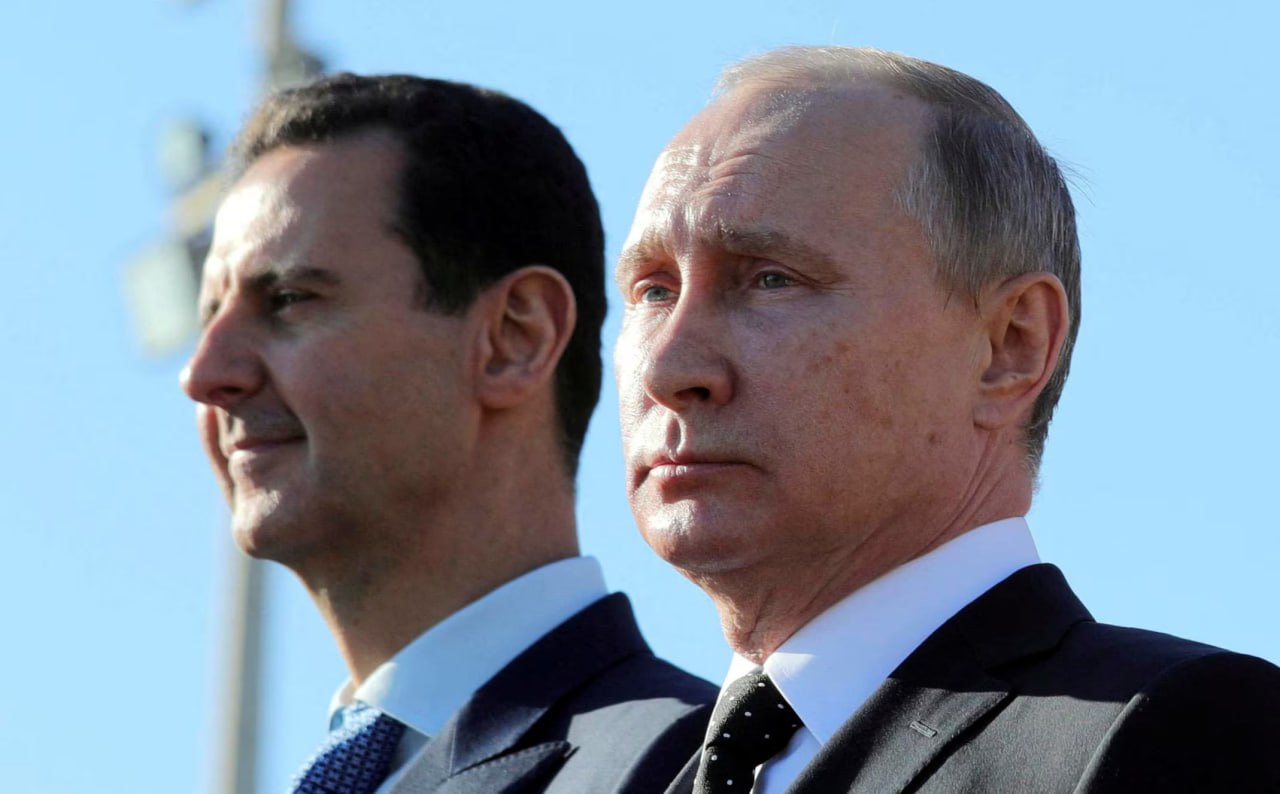
    Observers note that the Kremlin is a little irritated by Assad’s intransigence in relation to Erdogan’s “conciliatory tone,” which suggests that perhaps one of the Kremlin’s influential towers simply played along with Turkey in order to force Assad to engage in dialogue.

    Can we believe that the Russians are really tired of Assad and that they are actually indifferent to the fate of Syria? The answer is yes. The Russian-Ukrainian conflict is not the only reason why Moscow realizes the futility of its presence in Syria. The Kremlin has long understood that “the Assad regime is hopeless economically and has a crumbling army.”

    Moreover, all the key figures of the Russian military group in Syria no longer have any influence. Shoigu was thrown out of the Kremlin elite, the Wagner PMC was declared an enemy of Putin, the generals who led the first successes of the Syrian army have now been retired or are in Ukraine. Today, Russians are simply not interested in Syria and they sincerely do not understand what they should do there. Times have changed.

    As an argument in defense of the Russian-Syrian alliance, many may recall the words of Hakan Fidan that “the Russians have not shown interest in reconciliation between Ankara and Damascus”, to which I will answer that the Turkish authorities in the dialogue with the Russians could simply not know who they are talking to.

    After all, inside the Kremlin there is a wild struggle between two groups, one is headed by Putin’s comrade-in-arms from his work in the GDR – Chemezov, against whom the former head of the FSB – Patrushev speaks out. In the confrontation between the two Kremlin towers there are no liberals or “Western agents”, it is something like different views on the development of their country and the future of the country, both Kremlin towers have the same view on Ukraine and Syria, and the difference is only in the details. Both sides consider it necessary to end the two conflicts.

    Thus, the diverse Syrian opposition may have caught Assad’s army by surprise, but for the Russians this moment certainly did not come as a shock. Are there any areas of collusion? It is difficult to give a categorical answer now. However, it was strange for many to discover that Jabhat Nusra sees Russia as a potential partner in post-Assad Syria. There is clearly something to think about here.

    In conclusion, I will recall Putin’s phrase regarding Assad, at a meeting with Erdogan in 2017 – “Erdogan, don’t get me wrong. I am not Assad’s defender, I am not his lawyer.” Such an attitude of the head of the Russian Federation already in those years demonstrated a decent gap between the Russian Federation and the Baath government in Syria.

  • Yemeni Army Gravely Shocks Israeli Regime

    Yemeni Army Gravely Shocks Israeli Regime

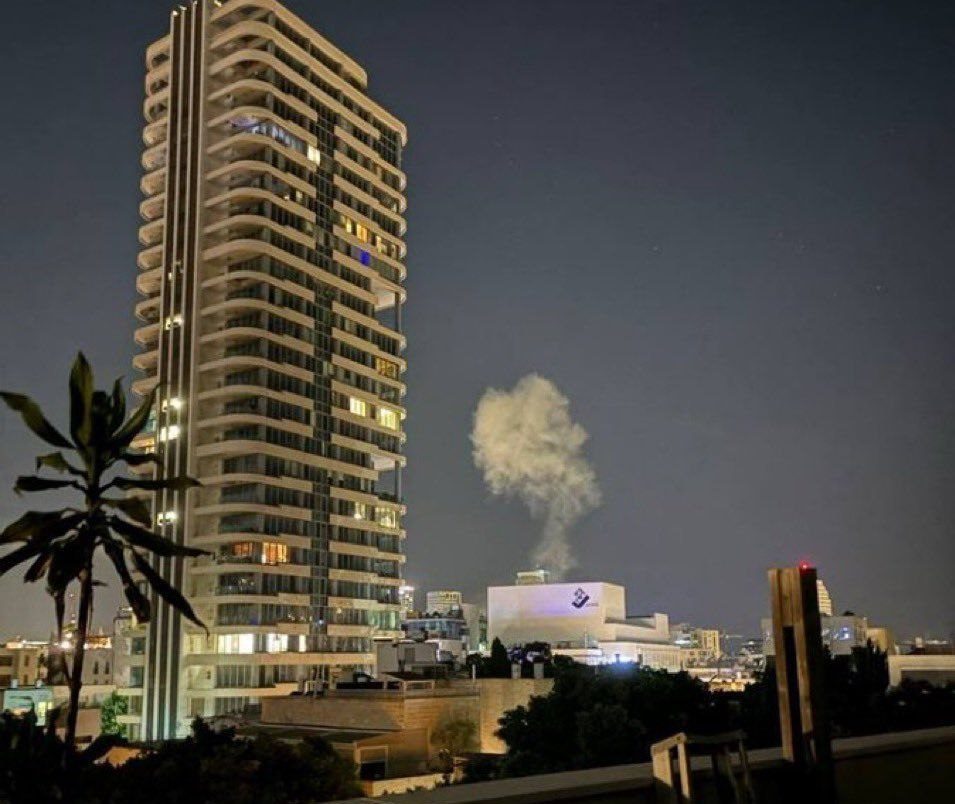
    The Yemeni Armed Forces targeted the heart of occupied Palestine, namely Tel Avi, on September 15 by launching a missile, and the air defense systems of the Israeli regime failed to intercept the Yemeni missile in spite of numerous attempts.

    The missile strike dealt a noteworthy shock to the political and military authorities of the Tel Aviv regime, and this issue has its roots in several fundamental factors:

    1- The failure of repeated endeavors to intercept the missile: Given the fact of the state of readiness of the regime’s army and their expectations for a Yemeni response to their crimes, as well as the multiple endeavors made by the Israeli army’s air defense systems to intercept, the missile pounded the heart of occupied Palestine. This failure is part of a series of failures that started with an intelligence failure on October 7, 2023 and came to an end with another failure to counter the suicide drones fired by the Lebanese resistance movement Hezbollah that targeted espionage facilities in Galilee mountainous region in northern Israel (according to Al Mayadeen TV channel).

    2- The material damage is not the main objective: In this case, the fallouts and material damages are not of great significance and are not the main objective of these strikes; rather, the most important goal is to challenge the air defense systems of the regime and disrupt the balance of power. What happened on Sunday deepens the confidence crisis in the military establishments and air defense systems of the Israeli army, when it comes to countering more severe and serious threats such as potential strikes from Iran and other Islamic resistance factions.

    3- The timing of the Yemeni army’s strike was very vital: Firstly, this missile attack happened almost simultaneously with Israeli Prime Minister Benjamin Netanyahu’s announcement regarding the expansion of military operations and confrontations in southern Lebanon, which is indicative of the possibility that a response to any escalation of tensions in the Arab country could lead to an all-out warfare on several fronts within the framework of the strategy called the “Unification of the Arenas.” Secondly, the missile strike coincided with the departure of the United States’ aircraft carrier Theodore Roosevelt from the west Asia region, indicating that the timing was not unplanned but carefully chosen.

    4- The crisis of trusting in the Israeli regime’s cabinet: The incumbent cabinet finds itself in a very embarrassing situation in front of the public opinion. The level of trust among the Israeli settlers in the political system and military apparatus of the regime is constantly declining, and for this reason, the regime resorted to propagate an account that aligns with the images and documents released, but it could not be effective in lessening the constant stresses of the settlers. The deterioration of security situation within the occupied Palestinian territories reinforces the feeling of insecurity among Israeli settlers in various areas, whether in the northern or southern front, or even in the heart of Tel Aviv and the occupied West Bank. The atmosphere that is taking shape inside the occupied territories is founded on the fact that the continuation of the current circumstances darkens the future for the settlers and fills it with threats from everywhere.   

    5- The deterrence of the regime has been challenged: Recent developments have raised fundamental questions among the residents of the occupied Palestinian territories concerning deterrence capabilities of the regime. Hezbollah put forward a threat and then implemented it, just as what Iran, Iraq, and Yemen have done in recent weeks and months, and resistance fighters in the Gaza Strip have shocked the regime in multiple occasions. These strikes cause doubts about the deterrence equation, which was raised by Israeli authorities. The issue paves the ground for the possibility that every time the enemy threatens and carries out an attack, the other side feels an obligation to respond to it. 

    6- The humiliation of Israeli military industries: The Yemeni Armed Forces’ hypersonic missile covered a distance of 2040 kilometers in 11.5 minutes in its journey to reach its target in Tel Aviv. This missile successfully hit its target despite numerous efforts and multiple firings of the Israeli regime’s defense systems, including the Arrow (Hetz) defense system. The embarrassing event may negatively affect the rank of the Israeli regime in the arms export markets, as purchasers may reconsider procuring defense systems from the regime following this failure.

    The missile strike by the Yemeni army on the heart of the occupied territories of Palestine is a significant incident in the ongoing war, which creates unprecedented challenges for Israeli officials in terms of public trust and crisis management amidst the lack of cohesion on the internal front.

  • Objectives, Consequences Of Possible Israeli Attack On Lebanon

    Objectives, Consequences Of Possible Israeli Attack On Lebanon

    Whenever public opinion in the world is focused on a place, the best conditions are provided for the implementation of grand plans, like a magician who draws the minds and senses of the audience to one side with one hand and executes his magic with the other. We are now at a time in history when the West Asia region is prone to great events. The 2024 Olympics in France have attracted the attention of the world and the media, providing the necessary breathing space for the Israeli regime to launch a military attack on Lebanon. A few days have passed since the visit of the prime minister of the Zionist regime to the United States, and speculation is growing about the goals of this trip. From influencing the US presidential elections to receiving financial and military aid, and most importantly, coordinating with the US to launch a military attack on Lebanon’s soil.

    It should be mentioned that in a military battle, more important than the subject of the war itself is the answer to a few basic questions. Questions that determine the beginning, duration, type, level, and end of a war. What is the purpose of the war? What is the way out of the war? What will be the consequences of war for both sides of the conflict? And… If Israel also starts a war against Hezbollah, it will have no choice but to answer these questions. What we are looking for in this article is to provide a general picture of the possible answers to these questions.

    As for the goals of the Israeli regime in this attack, it is certainly not possible to mention a single goal and suffice with that, because basically the realization of the goals is subject to conditions that make it possible to achieve them with ifs and buts. Inevitably, the initiators of conflicts always try to define a range of goals and seek to achieve the maximum of them, and if – for any reason – the maximum goal is not achieved, the other goals are expected to be achieved.

    The most important and maximum objective of the Israeli regime in the fight against Lebanon is the annihilation of the Lebanese Hezbollah. However, it should be noted that this objective cannot be achieved in any way. First, Hezbollah, beyond its military wing, is considered a deep-rooted intellectual and ideological movement in Lebanon, which even beyond the Shia community, has strong supporters in Lebanon among other religions, tribes, sects, etc. As a result, it is not possible to imagine a future for the destruction of a popular and ideological movement by relying on military means.

    From a military perspective, after 10 months of military warfare with its advanced and regular war machine, the Israeli regime has not yet succeeded in destroying the military and combat capabilities of the Palestinian Hamas movement in the Gaza Strip. It is a very small strip that has been surrounded by 360 degrees for many years and is located in a flat geography. The geography that is the most desirable place for the military operations of a well-organized and well-equipped army.

    Now, taking into account the border geography of Lebanon and the Israeli regime, which is mountainous, it can be assumed that the plan of militarily destructing the Hezbollah movement is nothing more than a dream, and the Israeli army will not be able to destroy a tried and tested guerrilla force with all its might. Israel will fight fighters who have decades of experience in a variety of desert, urban and mountainous confrontations, from urban and mountainous battles and the Lebanese plains to later breathtaking fights in the deserts, cities and mountains of Syria.

    Due to its lack of population and lack of geographical depth, the Israeli regime has focused on armor and air power. Both powerful arms of Israel will not be effective in a military conflict with Hezbollah. The Hezbollah movement is equipped with a variety of modern anti-armor weapons, and Israel’s armor in the plains and mountains of Lebanon will be only easy prey, as in the past 10 months, when every movement of the Israeli army in the Lebanese border line has been targeted. The air force of the usurping regime will also not be able to provide effective air support to the armored columns, because there are basically no visible military targets to destroy and bomb in the confrontation against guerrilla groups. From a military point of view, the destruction of Hezbollah is the maximum and at the same time the most unattainable objective for the Israeli regime.

    Another goal of the Israeli regime is to keep Hezbollah fighters away from Israel’s borders so that Israel can reorganize the ordinary lives of its displaced people in the north in light of the decline of the daily attacks on the north of occupied Palestine. This goal has been repeatedly expressed as the demand of the occupying regime, and international and Lebanese officials have been asked to help withdraw Hezbollah fighters to the back of the Litani River. This is not a maximum goal, but it remains to be seen whether it can be achieved or not. From a military point of view, it should be said that the retreat of Hezbollah’s guerrilla forces, which used a vast network of caves, tunnels, concrete positions, etc. is almost impossible. The experience of the world’s great armies proves this, and where the Red Army of the former Soviet Union in Afghanistan and the advanced and large American army in Korea, Vietnam, Afghanistan, and Iraq have been unable to achieve this objective, the small army of Israel will not be able to do so.

    But from another perspective, it is possible to realize this issue. The Israeli regime army’s main strategy is to rely on the destructive capability of the air force’s heavy and ultra-heavy munitions. In the first stage, the Israeli Air Force will brutally bomb all Lebanese military and infrastructure targets. The purpose of this is to increase pressures on the livelihood and lives of the Lebanese people in order to mount pressure of public and political opinion on Hezbollah and to force the Lebanese resistance movement to accept Israel’s conditions. On the other hand, the destruction of Lebanon’s infrastructure, which means the beginning of a period of post-war reconstruction, and naturally, governments that are engaged in providing infrastructure and development funding will not pose a serious threat to their neighbors. If this stage does not lead to the realization of Israel’s demands, in the second stage, the Zionists will start the equation of mass murder. The regime’s goal in killing people is to force the other side to surrender. But now, this equation is not one-sided, and the resistance is capable of implementing both of these methods.

    Addressing the consequences of the conflict is also an important part of the equation of war. On the one hand, Lebanon will be subjected to a heavy Israeli invasion and will certainly suffer a lot of losses. However, according to military analysts, Hezbollah is armed with highly accurate tactical missiles and a vast drone capability that is capable of accurately destroying any target in the small geography of occupied Palestine. As a result, if the Israeli regime starts a war on infrastructure or a genocide, Hezbollah will also be able to target Israel’s public and service infrastructure. Such a war would also be very deadly for Israel. At the same time, if Hezbollah has been able to acquire effective air defense systems in the past years, which is not unexpected, the Israeli regime’s war machine will also be contained in the sky to some extent, which will mean the complete failure of Israel’s military strategy.

    Hezbollah has made the necessary preparations to destroy the armored power of the Israeli regime, as the strength of the Israeli ground forces, and it has sufficient and effective weapons, but the containment of the air force is an undeniable necessity. Targeting Israeli airports does not seem to stop the air force’s activity, as Israel has designed the highway network in such a way that it can be used as an airport, assuming that it is possible to attack airports in future battles. In fact, Israel is a large military garrison. The most effective way for Hezbollah to change the balance of the confrontation is to stop Israeli attacks and force Israel to accept the terms of resistance, which is to strike at Israel’s public and service infrastructure. Concerning targeting military and commercial fleets at sea – Hezbollah is well capable of doing so – and destroying power plants, refineries, silos, and food warehouses, etc. Israel will be under a real siege and will be completely paralyzed.

    It seems that the Israeli regime is muddled about the initiation of war against Lebanon. The regime’s political and war strategies have not changed over the past decades, but the regional and military conditions of Israel’s enemies have undergone a serious change, and the resistance in the region has become highly equipped and capable. Under these conditions, Israel can start a war, but it does not have any plan to get out of it, and it may not achieve its goals, but it would also be forced to accept numerous demands.

  • The Voice Of Palestine Is Getting Louder In The West

    The Voice Of Palestine Is Getting Louder In The West

    While civil society and party activists in the Arab world have chosen the path of rallies, which, in their opinion, is enough to support Palestine, rapid changes are taking place in Europe.

    Paradoxically, but the fact remains that the Hamas operation “Flood of al-Aqsa” (Al-Aqsa Storm) did not awaken the Arab peoples from a flawed sleep, but civil society activists of various ideologies in the United States and Europe.

    Students in the United States still remain an influential pro-Palestinian force, while in the EU, in addition to the call from major political parties for the need to decolonize Palestine, resistance groups have emerged whose goal is to stop military support for the Zionists.

    Intellectual circles also did not stand aside and there is an example of France, where a local political scientist immediately supported the Palestinians, for which he was subjected to pressure from the Zionist lobby.

    Of course, against the background of powerful pro-Palestinian activity, the forces of evil, led by the Zionist lobby, are making a variety of efforts to prevent the truth from being heard. Moreover, we must not forget about the allies of Zionism in the camp of the European bureaucracy, which still supports the genocide of the Palestinians.

    In general, we see how the Palestinian issue has become the main topic of discussion in European capitals. Personally, I associate what is happening with the recognition of the fact of the collapse of Zionist imperialism and the willingness to rethink the foreign policy vector.

    The collective West, in an attempt to preserve the Zionist colony, got bogged down in the Middle East and had no other choice but to reduce its military presence in the Islamic environment to zero.

    Moreover, against the background of what is happening in Ukraine, the leading EU countries, Britain and the United States, due to ideological, economic and geopolitical reasons, simply cannot allow Kiev to defeat, but there is still a frozen conflict in Transnistria, a “crisis of democracy” in Georgia and the last “Soviet stronghold” in the person of Belarus. In all these countries, the influence of the Kremlin looms, and in the long term – China, respectively, the titans of Atlanticism do not want to fight with all at once, and even more so to endlessly risk in the name of a lame horse (Zionism). Therefore, the leading Think-tank of the West decided to gradually move away from the alliance with the right-wing Zionists and immerse themselves in the internal affairs of Europe.

    In conclusion, I would like to point out that unfortunately, at the moment there is no partisan activity from the majority of EU Muslims by analogy with British left-wing groups, but there is at least political activity (again, only in Britain and partly in France). Over time, Muslims will show more efforts and even get a chance to enter the European Parliament, so it’s worth thinking about the future now, for example, about developing a common ideology and a mechanism for persecuting Zionists around the globe.

  • Yemen Army’s Drone Attack On Tel Aviv; Would Israel Respond To It?

    Yemen Army’s Drone Attack On Tel Aviv; Would Israel Respond To It?

    After various scenarios were discussed about the origin (Lebanon or Iraq) and the type of the drone strike, it became clear that the modified Ansar Allah UAV was of the Samad-3 or Shahab class, and with a lighter warhead (to increase the range), it traveled a distance of about 2,100 kilometers through the Red Sea and the Sinai Desert and attacked Tel Aviv from the shores of the Mediterranean Sea. When the Yemeni army drone reached the coast of Tel Aviv, it descended to a height of a few tens of meters from the sea level to avoid being tracked by the Israeli army’s radars, and then the drone climbed to the height of the buildings and exploded.

    Read more: Military Knowledge: Sammad-3 Reconnaissance and Suicide Drone

    The Israeli regime’s response to Yemen:

    At the moment, statements by Israeli regime officials, including Yoav Gallant, the regime’s minister of war and army spokesman, and the Zionist media outlets indicate that Israel intends to respond to the drone attack on Tel Aviv. The response is unclear, but there is a possibility of a terrorist act to eliminate senior members of the Ansar Allah movement, an airstrike on areas under their control with the help of the US-UK coalition’s naval fleet, or a missile attack on Yemen.

    The “ground operation” is also one of the ideas of the leaders of the resigned Yemeni government (affiliated with Saudi Arabia and the United Arab Emirates) to stop the anti-Israeli operations of the Yemeni Armed Forces (the Ansar Allah), which has been proposed since the beginning of the Palestinian war. Of course, at first glance, it is clear that ground operations in Marib, Al Hudaydah, Taizz, and any other front in Yemen will have no effect on the Yemeni army’s missile and drone attacks against the Israeli regime. In the eight years of the Saudi-led coalition’s battle with the Ansar Allah movement, it also had no effect. A Yemeni journalist who supports the Saudi-led coalition also pointed to this issue in an interview with Kan TV (Israeli Public Broadcasting Corporation), saying: We are expecting an Israeli response, but the Yemeni public is satisfied. However, this response is not a solution to stop the activities of the Houthis (Ansar Allah). One of the Yemeni officials opposing the Houthis believes that the only way to stop the Houthis is through ‘ground military operations in Yemen.’

    Conclusion:

    The Yemeni army’s drone attack represents a new round of strikes by the Islamic resistance groups on the Israeli regime. The Ansar Allah movement has coordinated and shared its attacks on occupied Palestine with the Iraqi and Lebanese resistance, and has sought to cut off the maritime connection of the occupied ports with the Mediterranean Sea. This move, along with the blockage of the Red Sea, will cause severe economic pressure on the Israeli regime, which will increase the likelihood of the collapse of Prime Minister Benjamin Netanyahu’s cabinet.

    Read more: US Consulate Shakes Following Yemeni Army’s Drone Attack On Tel Aviv, One Israeli Was Killed! (Video)

    On the other hand, since the onset of the military operation of the Yemeni Armed Forces, the Tel Aviv regime has received several blows from the Yemenis and has not been able to respond to their attacks. These strikes include the seizure of the Galaxy Leader ship, dozens of missiles, suicide drones and unmanned surface vehicle (USV) hitting more than 100 ships affiliated with the Israeli regime and its allies, as well as more than 24 missile and drone operations against Israeli positions in occupied Palestine. According to Kan TV, the Yemeni army has used about 200 cruise missiles and suicide drones during these military operations in occupied Palestine, occupying a significant part of the capabilities of the Israeli army’s defense systems.

    The Israeli army has limited options to confront Yemen’s military actions due to its vast distance and limited access to long-range and mobile military weapons, and this was the main reason for the deployment of the naval fleets of the US-British coalition and the European Union to the Red Sea. Of course, if the Arab countries namely Saudi Arabia, Jordan, and Egypt cooperate, it would be possible for the Israeli regime to carry out regular and numerous airstrikes against Yemen, but the Arab states are currently reluctant to engage in a renewed conflict with Yemen and have limited their aid to the Israeli regime to economic issues.

  • Will we see an alliance of the Muslim Brotherhood of Jordan and Iran?

    Will we see an alliance of the Muslim Brotherhood of Jordan and Iran?

    Here, it is worth paying attention to Jordan, which the spokesman for the al-Qassam Brigades, Abu Ubaida, has repeatedly noted as an important strategic pillar of the Palestinians.

    It all started with a statement by Abu Ali al-Askari (spokesman for Kataeb Hezbollah – Iraq), in which the Iraqi resistance expressed its willingness to train 12,000 Jordanians to participate in the resistance to the Zionists. Earlier, the authorities of the Hashemite autocracy arrested three local residents on charges of smuggling weapons to the West Bank, after which Hamas demanded the release of the detainees. Some authors and journalists were quick to point out the presence of local Ikhwan cells that oversee their actions with Hamas and Iran, but no one provided concrete evidence.

    After these incidents, propaganda was organized in the pro-government media of the kingdom against local Ikhwans and Iran, both sides were attacked and accused of trying to “destabilize the country.” In an attempt to defuse tensions, the leader of the Islamic Action Front (the political wing of the Muslim Brotherhood of Jordan), Murad al-Adaylah, pointed out that Jordan’s Ikhwans allegedly had no relations with Iran after 2011. In connection with the disagreements on Syria.

    In my opinion, the head of the Ikhwans proceeded from two points. 1 – at the moment, his main task is to prevent a confrontation with the regime of Abdullah II, so as not to return to a situation in which the Brotherhood of Jordan will be banned. 2 – due to the small number of seats that the “hawks” of the movement gained in the recent internal vote of the Muslim Brotherhood, the party’s agenda remained moderate, which means that one should adhere to relative conformity and voice narratives convenient for the regime.

    In any case, all the justifications for the weak position of the Jordanian Brotherhood against the background of the genocide of the Gaza Strip look inappropriate, especially after Abu Ubaida’s calls to intensify resistance from Jordan to help occupied Palestine.

    The most important question in this whole situation is, will the members of the Muslim Brotherhood of Jordan respond to Kataeb Hezbollah’s proposal to organize a common resistance to Zionism? Time will tell, but the fact that a younger generation has grown up among the Ikhwans dissatisfied with the dominance of the old conformists is a fact. As well as the fact that among all the branches of the brotherhood there is a strong pro-Hamas line that sees the allies of the Palestinian resistance as like-minded people.

  • Opinion: Iraqi Separatism With A New Face

    Opinion: Iraqi Separatism With A New Face

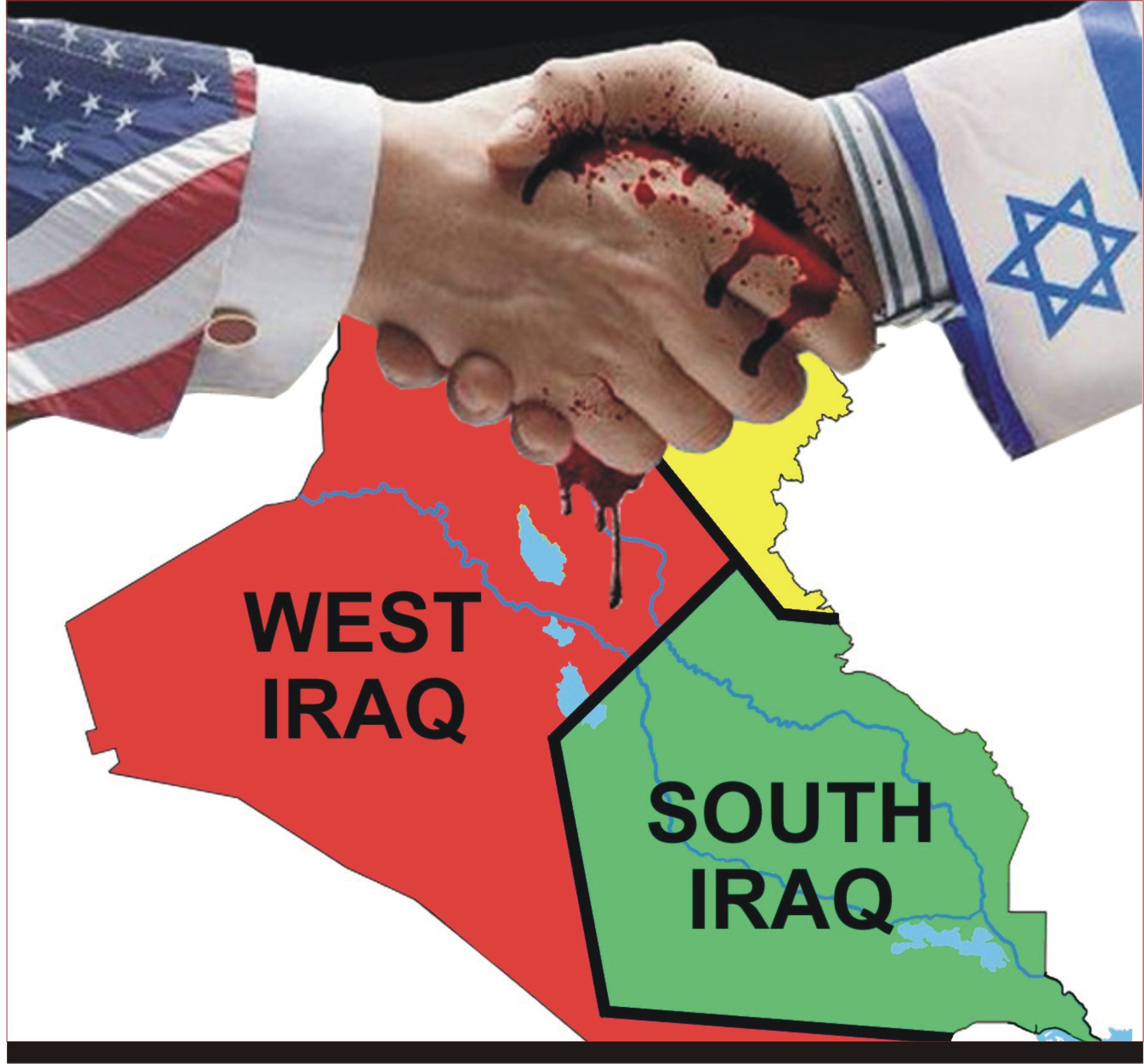
    Against this background, questions have arisen, who benefits from the new chaos in Iraq? The answer is, as before, to Zionism.

    It is no coincidence that Sheikh Thaer Al-Bayati is hiding in the so-called Iraqi Kurdistan, which is under the control of a long-time ally of the Zionists, the Barzani regime.

    Sheikh Abdul Fadil Muhammad al-Dulaimi, one of the prominent figures of Anbar province, pointed out that there are Zionist organizations that came from Erbil trying to influence the sheikhs of Anbar. As a rule, their goal is to prepare an atmosphere for the normalization of relations with the Zionist entity. It is not difficult to guess that the attempts to prepare the ground for the recognition of the Zionist colony and the slogans of separation of the Sunni regions from Iraq have a common curator.

    Another question is how strong are the local allies of the announced provocative plans? What if a number of sheikhs have just populism in their heads and an attempt to raise their personal rating within their tribe?

    In addition to benefiting from the expected chaos in the enemy’s camp (Iraq is an important link within the Axis of Resistance), the Zionists have another goal – the eviction of Palestinians from their land and the resettlement of refugees in Anbar province. Halbousi had already made a reservation at the end of last year that he was allegedly against such a plan, but earlier it was he who assured the Iraqi public that his party was “against any kind of separatism of Sunni areas,” and as a result, after a short time, Halbousi became almost the face of the as yet unrecognized “Sunni autonomy.”

    In any case, no one in Baghdad believes the words of the ambitious “boy” (the nickname Halbousi among the Sunnis of Iraq), plus his connection with the Zionists is still widely heard, and even the infamous Ali Hatem Suleiman can envy the separatist activity of the former speaker of the Iraqi parliament. By the way, his return to Anbar was approved by Muhammad Halbousi and his party. This was told by the ex-governor of Anbar, Ali Farhan. Which is also seen as an attempt to show Shiite Baghdad its strength. Even despite his dislike of the former leader of the Anbar rebels.

    By and large, it does not matter whether the Anbar rebels coordinate their actions with the Zionists and Neocons, or not, what is important is that in an infinitely unstable Iraq there is a tendency to civil war, and the implementation of such a scenario in any case will benefit the “temporary entity” and its allies.

    The regional allies of the Zionists are more active than others in putting their hand to the implementation of the “Autonomous Sunni Region” project. For example, the UAE and other Gulf autocracies are actively investing in oil and gas projects, namely the Okaz gas field in Anbar province. The Emirates create illusions of benefits from the project to create a “Sunni autonomy” for local sheikhs, and of course assure that there will be no internecine strife in the struggle for power. Naturally, this lies and the facts of the lack of a consolidated political structure within the framework of a more or less democratic system in Iraq prove that internal disagreements, even within Anbar, are extremely large and can escalate into armed conflicts. Accordingly, with “complete freedom” from Baghdad, all ten-year contradictions will result in endless armed chaos.

    Regarding the actions of the former speaker, it is worth explaining that Halbousi is trying to stay on two chairs, on the one hand, his “separatist ambitions” are in many ways similar to some kind of blackmail and bargaining in one person against the authorities in Baghdad. After all, the leader of Taqadum still cannot accept the decision of the federal court to remove the powers of the speaker of parliament from him. On the other hand, in a dialogue with the “coordination structure”, Halbousi assures that he does not support separatist sentiments and is ready to cooperate at the same level. In any case, over the past year, the former speaker of parliament has acquired an abundance of enemies, both within the Sunni community and distrust from the Shiite side.

    *- In June 2023, Halbousi signed a one-year contract with BGR Public Relations Group, one of the most prominent lobbying companies in Washington, where former Prime Minister of the Zionist entity Ehud Barak holds the position of chief adviser to the company.

    The opinions expressed within the content are solely the author’s and do not reflect the opinions and beliefs of the IWN.

  • Shift Of Policy By Islamic Resistance In Iraq; From Halting Attacks Against US To Increasing Operations Against Israel

    Shift Of Policy By Islamic Resistance In Iraq; From Halting Attacks Against US To Increasing Operations Against Israel

    Since February 2, when the Islamic Resistance in Iraq targeted American positions at the Al-Harir Air base located in Iraq’s Erbil province in a drone attack, there has not been any strike against US terrorist forces in Iraq. This temporary ceasefire was implemented just three days after a visit by commander of the Quds Force of Iran’s Islamic Revolution Guards Corps (IRGC) Esmail Qaani to the Iraqi capital Baghdad and his meeting with Iraqi resistance commanders.

    It is said that during a recent meeting with resistance commanders in Baghdad, Brigadiar General Qaani, while respecting the independent decision of the Iraqi resistance groups regarding halting or continuing attacks on US positions, presented clear and logical reasons for creating unity among Iraqi resistance groups and temporarily halting attacks against Americans, which was well received by the Iraqi resistance due to logical arguments and recommendations. The outcome of this meeting has led to the current calm situation.

    Considering the serious pursuit of the plan to expel American military personnel from Iraq by the use of diplomatic means by Iraqi Prime Minister Mohammed Shia’ al-Sudani, it seems that after the request for mediation by the Iraqi prime minister, the commander of the IRGC’s Quds Force traveled to the Arab country to prevent from further escalating the recent tensions and reaching an unpredictable situation.

    The behavior of Iraqi resistance groups indicates that although they have a negative view towards the process of the withdrawal of American forces through diplomatic means, they have conditionally given the Iraqi government a limited time to achieve a clear outcome.

    After halting attacks against American forces and not responding to recent American attacks outside the battlefield, which prevented the erosion of Iraqi resistance capabilities and focus, qualitative attacks against positions of the Israeli regime in various occupied Palestinian areas have increased. In recent days, attacks have been carried out against the Israeli regime, showing that the focus of the Islamic Resistance in Iraq is on vital facilities and infrastructure of the regime in the occupied Palestine.

    Nevertheless, by halting attacks and accepting a temporary ceasefire plan, the Islamic Resistance in Iraq has proven its goodwill, and now the ball is in Washington’s court. The movements and actions of the US regarding the issue of withdrawal from Iraq and also the situation on the battlefield in the Gaza Strip will have an impact on the nature and intensity of future actions by the Islamic Resistance in Iraq. Regarding the Israeli regime, it must be said that statements by senior officials of regional countries, resistance commanders, and some Western officials indicate that all parties are trying to prevent a widespread war; a matter that requires serious decisions and increased pressure on the Israeli regime to accept the conditions of the Islamic Resistance in Iraq and show readiness to agree a ceasefire in Gaza.