Article - Islamic World News

8 August 2026

Security Reconfiguration of the Persian Gulf Cooperation Council

The recent war deepened the internal rifts within the Persian Gulf Cooperation Council (GCC), revealing that its member states hold divergent approaches toward Iran, the United States, and the Zionist regime. Simultaneously, the vulnerability of the Strait of Hormuz and energy infrastructure exposed the limitations of the U.S. security umbrella. Consequently, the future of the Persian Gulf will be shaped less by strategic integration and more by rivalries, divergences, and individual states’ efforts to secure their interests through different pathways.

11 July 2026

Taiwan Strait Time!

The Iran war and the Strait of Hormuz crisis served for China as a practical test in the use of strategic chokepoints, demonstrating that disruption to vital global trade routes can impose heavy costs on rivals without direct warfare. This experience is likely to push Beijing toward reinforcing a strategy of encirclement and gradual control over Taiwan—an approach in which the world’s dependence on Taiwan’s semiconductor industry becomes a geoeconomic leverage point. Consequently, the Taiwan conflict may shift from a deterrence model based on military power toward one grounded in control over supply chains and critical global economic chokepoints.

30 June 2026

From Classical Confrontation to Geoeconomic Deadlock; Dissecting the Second Phase of the Iran-U.S. War

Recent developments in West Asia signal a transition from traditional confrontations to multi-layered rivalries unfolding across strategic energy chokepoints, where straits such as Hormuz and Bab al-Mandab have become focal arenas for the projection of power and pressure. Within this framework, the scenario of a U.S.-led naval blockade of Iran—employed as a tool for maximum pressure—alongside the possibility of a return to direct conflict between the two sides, has reinforced the prospect of escalating tensions. At the same time, Europe’s growing skepticism toward Washington’s unilateral approaches has cast uncertainty over the future of NATO cohesion. On another level, the involvement of Tehran-aligned actors such as the Houthis (Ansarallah) in Bab al-Mandab has highlighted the potential for expanding the maritime theater of competition and enabling Iran to leverage this asset indirectly. Taken together, these developments indicate that regional maritime security is increasingly becoming the primary arena for redefining the balance of power. Accordingly, this study aims to assess the feasibility, consequences, and sustainability of these scenarios, while elucidating their impact on the regional balance of power and the international security order.

27 June 2026

Maven in the Iran War

The Ramadan War demonstrated that artificial intelligence and systems like “Maven” have been moved to the center of U.S. military operations, aggregating field data to dramatically accelerate targeting and decision-making. At the same time, Silicon Valley’s role in modern warfare has become more prominent, with parts of the military’s intelligence and operational infrastructure being outsourced to technology companies. This transformation, alongside increased efficiency, has raised questions about targeting accuracy, civilian casualties, and the dependence of national security on private-sector actors.

17 June 2026

Turkey’s Engagement with Regional Actors in Shaping Energy Corridors

By simultaneously leveraging energy tools, transit corridors, and its influence in post-Assad Syria, Turkey seeks to transform Iraq into a component of its own geoeconomic architecture while reducing Iranian influence in Northwest Asia. The “Development Road” project, the redesign of energy cooperation with Baghdad, and efforts to position itself as a regional energy and trade hub constitute the main pillars of this strategy. The success of this policy could strengthen Turkey’s standing in European and West Asian energy equations; however, persistent political, security, and legal disputes among Baghdad, Erbil, and Ankara remain the most significant obstacles to the full realization of these objectives.

17 June 2026

Digital Infrastructure Diplomacy in West Asia

The shift of Saudi Arabia’s fiber optic cable route to Greece from the Zionist regime to Syria is part of Riyadh’s new strategy to redefine the regional order and reduce dependence on the UAE–Israel axis. By investing in Syria’s infrastructure, Saudi Arabia aims to transform Damascus into a connectivity hub between the Persian Gulf and the Mediterranean, thereby strengthening its geo-economic influence. This development also reflects the intensifying rivalry between Riyadh and Abu Dhabi, as well as the region’s gradual transition from energy geopolitics to data geopolitics and digital infrastructure.

14 June 2026

GCC in Turmoil Over the Strait of Hormuz

The Ramadan War exposed and deepened hidden rifts within the Gulf Cooperation Council — to the extent that Oman and Qatar focused on de-escalation and mediation, the UAE and Bahrain on intensifying pressure against Iran, while Saudi Arabia and Kuwait concentrated on a strategy of insulation and risk management. The persistence of these divergences could weaken the Council’s strategic cohesion and push its members toward different security and political coalitions. As a result, the GCC is becoming less of a cohesive security bloc and more of a collection of actors with varying perceptions of threat and regional interests.

14 June 2026

The Confrontational Geometry of the Zionists with the Resistance

The Ramadan War demonstrated that despite intense military pressure, the Axis of Resistance has transitioned from a centralized model to a more flexible, multi-layered network, and has managed to preserve its deterrence by distributing capacity among various actors. The simultaneous activation of the Lebanese, Iraqi, and Yemeni fronts, while increasing pressure on the Zionist regime, also reflected a strategy of “controlled escalation” and avoidance of an all-out regional war. In the post-war period, the future of the Axis of Resistance will oscillate between three paths: rebuilding and strengthening its networked structure, continuing a semi-coordinated crisis management mode, or gradual erosion and diminished operational cohesion. However, current trends suggest that maintaining a networked structure and multi-front deterrence remains the most likely path forward.

26 February 2026

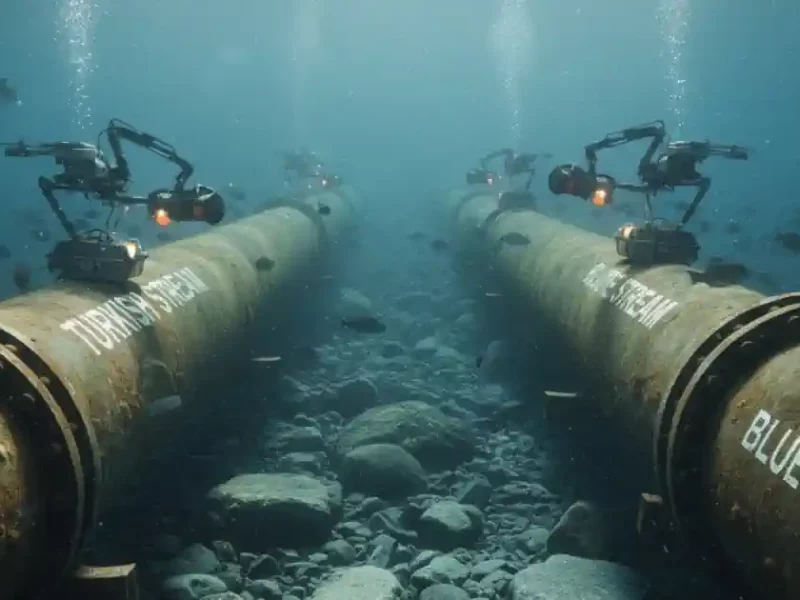
Kill All The Birds With One Stone: Why Kiev And Brussels Are Preparing To Destroy The TurkStream Pipeline

Russian President Vladimir Putin issued an urgent statement claiming that Russian special services had thwarted an attempt by Ukraine to blow up the TurkStream pipeline. Putin alleged that this attack was intended to derail peace negotiations and undermine the energy security of the entire region. What will be lost and by whom if the terrorist attack succeeds? Why are Trump and Erdogan also targets of this attack?

23 February 2026

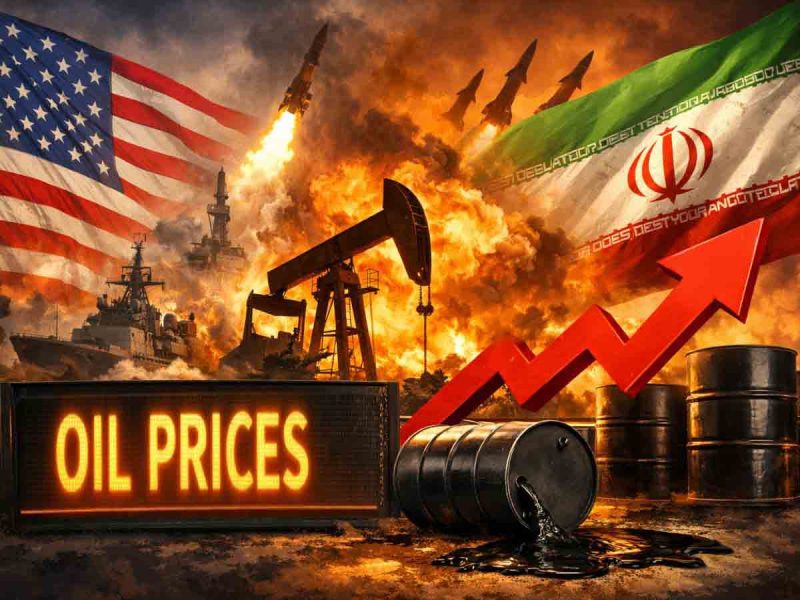
Washington and Concerns Over Increasing Oil Prices; the Impact of the Oil Price Surge on the Conclusion of the 12-Day War

Many analysts view oil price fluctuations in the Persian Gulf as a key factor in the war debate. Some believe that Trump’s worry about the oil shock resulting from the war in Southwest Asia played a major role in halting the conflict and maintaining the ceasefire. Accordingly, this report, drawing on reports and articles from leading think tanks and news outlets worldwide, along with recent developments in the war, will demonstrate that news about conflicts and exchanges of fire between Iran and Israel is largely driven by the risk premium—how the market perceives danger following the first incident that disrupts global trade—and the energy market’s assessment of the potential for escalating tensions. We will also show that this concern has been evident in market analyses and energy reports from the very beginning of the war.

16 February 2026

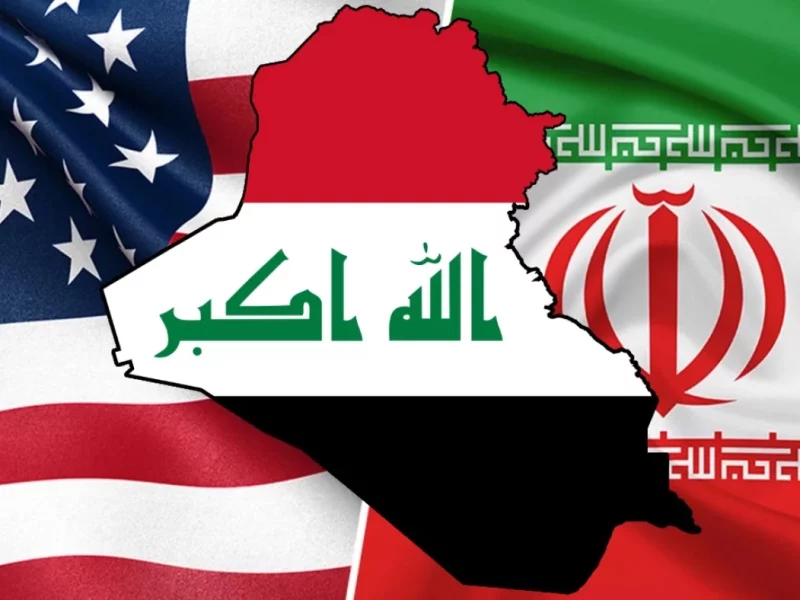
Invisible Flows; Economic Competition Between Iran and the United States on Iraqi Soil

In recent years, Iraq’s digital economy has developed into one of the country’s most vibrant and rapidly expanding sectors. Factors such as the increasing youth population, the government’s gradual adoption of electronic services, and Iraq’s potential to serve as a regional hub for transit and data exchange have attracted significant attention from both domestic and international stakeholders. While Western exploitation of Iraq’s oil industry posed certain challenges, the communications and information technology sector has now become a strategic focus for various groups and nations. Baghdad aims to achieve two main objectives: first, to generate financial resources to sustain its operations, and second, to influence and oversee data flows to enhance its social impact and bolster security efforts against external influences.

15 February 2026

The Role of Yemen in the Competition in the Horn of Africa

In recent years, Africa has become a key arena for competition among major and middle powers, each aiming to expand their political and economic influence. This trend is driven by motives such as the continent’s rich natural resources, including mines and rare earth elements, leading to intense rivalry and proxy wars like those in the Democratic Republic of the Congo and Rwanda. The main losers are often the host countries’ interests and their populations. Sudan exemplifies this trend, notably with the UAE’s involvement. The Horn of Africa—comprising Eritrea, Ethiopia, Djibouti, Somalia, and Ethiopia—holds strategic importance due to its proximity to the Red Sea and its role in global trade routes. Its closeness to Yemen and the Bab al-Mandab Strait further amplifies competition, especially among Saudi Arabia and the UAE.