Turkish intelligence service is fully aware of foreign services in Turkey and them contacting Iranian citizens and they concluded in near future there will be severe protests in Iran. In addition, a few weeks ago it was announced that the plan to assassinate General Soleimani was disclosed and neutralized. The assassinators said in their confessions that they were trained for military acts and how to use explosive. Security officials of Iran also spotted unusual weapon trafficking to Iran.
The operation rooms of riots inside Iran were in several locations, the main goal was to hit Iran near the beginning of winter to lead the country into a severe depression. They spend millions of dollars on the Saudi television channel “Iran International”. Before than Pentagon spent on Manoto, CIA on Radio Farda and US Foreign Minister on VOA and did not get the desired results. Even BBC does not have the desired influence and after a decade turned into a normal network among others.
Arresting Roohollah Zam, the head of Amad News, who was supposed to spread the program on the start date of the operation to the network in Iran, made Iranian officials to take it more seriously. Having information about the possible targets of the saboteurs including, besieging Bandar Imam Khomeini and Mahshahr as the main trading hubs of Iran, sabotaging Asaluyeh gas infrastructure as the main producer of gas in Iran for the cold season and powerplants and blocking the roads to Persian Gulf Star refinery as the main producer of gasoline in Iran; gave Iranian security officials a heads up.
Regarding the capital, Tehran, due to information overlook of security departments on the treacherous elements makes any plan difficult to implement in Tehran. Therefore they invested in other towns and as you saw the most damages were imposed in towns surrounding Tehran. Learning lessons from Syria, tried to first take control of the gates of Tehran and then disrupt the traffic in Tehran. Although there were some protests in Tehran but it was expected they enter the city and engage lower class districts.
This plan however had several annexes including engaging military and increase the death toll. Discovering RPG, cannon, machine gun, bombs, grenades, etc. wasn’t that surprising. They had orders to attack some police stations and military bases and after occupying them bring those weapons from there and say they found them inside. However in some cities such as Shiraz and Isfahan and some towns in Khuzestan, this happened and even in Mahshahr, trucks of goods were fired at.
Nevertheless, the information of Iran made the security officials to give them the opportunity to surface themselves before the plan is complete. This happened by increasing the gas price abruptly and the commanding rooms out of Iran activated and started riots in the streets according to their previous trainings. Having the list of more than 2,500 elements by Iranian security departments, the leaders of the network were arrested before Sunday morning(in the first 48 hours). With the new information another groups were also disclosed and destroyed and by cutting the internet, the communication between elements inside Iran and foreign was disrupted.
Category: Article
-
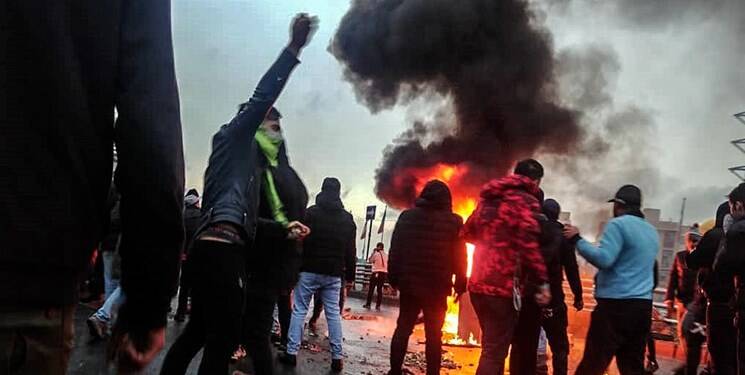
Iran’s Security Counter Attack to A Three Year Plan! / Behind the Iran’s Recent Riots, Part 2
-
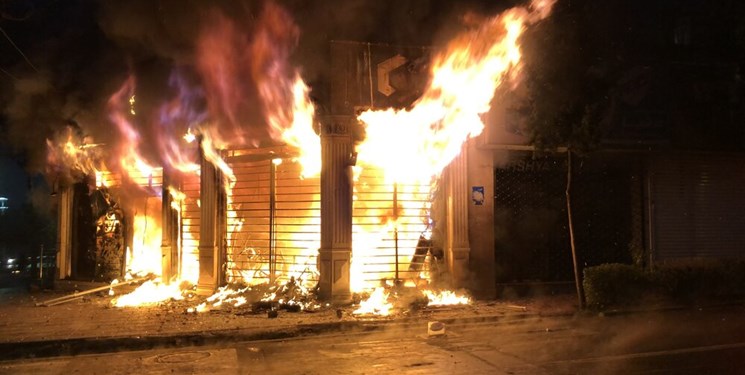
Iran’s Security Counter Attack to A Three Year Plan! / Behind the Iran’s Recent Riots, Part 1
It is a few weeks that we are talking about Spider and Nimrod plan(remember these names), which according to its designers is a sophisticated plan to turn down the government in Iran. Don’t forget the statement of the Saudi crown prince who said that we bring the riots to Iran. Muhamad Bin Salman never ignored the multi billion dollars he spent to turn over Iran’s government and he had great hope in the network designed by “MEK”and intelligence services of Britain and Israel.
The goal of “spider plan” was to use soft war to destabilize Iran up to three years. Some of the means to be used are political, economic, financial, cyber, media and juridical war against Iran to change the government of Tehran, according to Saudis, until (according to Saudis) the government of Iran does not support their allies, does not threaten the stability of neighbors and does not develop nuclear capabilities.
These are exactly what Adel al-Jubeir announced in a series of tweets on early october. He wrote in his twitter: I repeat the stances of Saudi Arabia again maybe (Iran’s leaders) have heard it; stop supporting terrorism. Leave the policy of riots and destruction and stop interfering in domestic affairs of Arab countries. Stop developing weapon of mass destruction and ballistic missiles and behave like a normal country not an outlaw and supportive of terrorism.
However, Saudi court follows three goals by the “spider plan”:
1. Turning people’s troubles into public demand for change of regime using media and social media,
2. Coordinate the social uprising and conducting vast protests against the government,
3. Engineering the revolution in Iran by defining the turning point of the revolution and preparing the substitute leaders for Iran!
The spider plan was followed in two parallel paths; the first which is for three years to destabilize the situation in Iran in short term and change the government in long term. The second is a short term goal for up to 12 months to send the message to Iran that they will pay for their interferences in the region and their opposite has the power of deterrence.
Another aspect of the spider plan is the military and security aspect of it. According to this part, some people should be hired and trained for military purposes abroad. The transportation usually takes place via Turkey and after people are selected they are sent to Turkey and moved to another country after it. They would spend several weeks there to learn how to networking and to be military trained and then send back to Iran. The plan was for more than two years and after incidents of 2017, they learned social movements are not enough due to security power of Iran and also lack of interest of most people.
In the last two months several important incidents happened. One was arresting the head of Amad News who had great information due to his relations and connections to several intelligence services, the second was Turkish President’s words who said that riots would reach Iran after Iraq and Lebanon! Erdogan did not sit still and gave Iran many first hand information probably; one of them is about observing Iranians who traveled to Turkey and then to a third country for training and they did not stay away from MIT’s eyes(Turkish intelligence service). According to reliable information, Turkey has provided a list of these individuals to Iran.
To be continued… -

Commander of Syrian Democratic Forces Is Terrorist!
Ferhat Abdi Şahin known as “Mazloum Abdi” is commander-in-chief of the Syrian Democratic Forces (SDF). He was a prominent commander of terrorist group PKK before US. entered Syria and being assigned as the commander of SDF.
He is officially member of Kurdistan Workers’ Party (PKK) since 1990. Terrorist group PKK has done a lot of crimes and massacres on civilians and soldiers of Iran and Turkey and is considered a terrorist group by those countries and international society.
Ferhat Abdi Sahin is wanted by Turkey due to his abundant terrorist acts against Turkish military troops.
– He was operation commander of PKK in Cilo area between 1991-1996, for that he is famous as Sahin Cilo. He even wrote a book “Diary of Hawk” and mentioned his terrorist acts.(Sahin means Hawk)
– Between 1997 to 2003, he was acting deputy of PKK in Europe and recruited for PKK in seminars, festivals, camps, etc.
– He was arrested by Syrian government several times between 2004 to 2009.
– He was assigned as chief of special forces and intelligence of YPG from 2013 and from 2015 under support of US. he is assigned as commander of SDF.
Another title of Ferhat Abdi is “Mazloum Kobani”, it means “oppressed Kobani”. It is not clear how he is called oppressed by doing so much terrorist acts!!!
Regarding activities of this person and other commanders of PKK in Syria’s battles and before it, it is very important to consider the type and presence of these forces in Syria.
The undeniable fact about the PKK is that the forces of this terrorist group have entered various YPG organs in different forms in recent years or the exchange of forces between these two group has taken place more frequently.
If we put the fact that YPG has not collaborated with Syria and Resistance axis under Iran’s leadership and also the influence of PKK on Kurdish groups of north of Syria, we can realize why most of the time relations between Syria and Kurds are flawed.
On the other hand, also we should pay attention to the fact that US. by using a deceiving name “Democratic” gathered Kurds of north of Syria under “Syrian Democratic Forces” name and under this title helped PKK forces with all kinds of training and weapons.
This move by the US. was so stupid and rude that even US. commanders themselves admit it and that can be heard from the USSOCOM commander-in-chief at the time of the formation of the Syrian Democratic Forces.
Gen Raymond A. Thomas interview in 2017.
In this interview he explains clearly how they knowingly whitewashed the US-designated terrorist group PKK and chose a new name for the forces of YPG and PKK to have a lawful and legitimate way to arm them.
Images of Ferhat Abdi Shahin attending PKK terrorists conference in Qandil Mountain on Iran-Iraq border:
Other images of this oppressed! during his active presence in the PKK: -

Reasons and Trend of Recent Protests in Lebanon
Few hours after gathering of people, some confrontations happened between people and security forces; forcing the government to put away the plan.
In the second day of the protests, i.e., on Thursday protesters blocked streets in Beirut and put tires on fire and demanded resignation of the government and engaged with security forces.
Lebanese government has difficulty for sufficient budget for next year and Parliament by passing bills on increasing the taxes of fuel, messaging apps, etc., tried to help the deficiency.
Increasing taxes, fires on western mountains of Lebanon and government linger in fixing the situation caused more people to protests. In the recent fire, 3 were killed and 8 injured. Lebanon has asked international help to extinguish the fire.
On Friday PM Saad Hariri accusing the parties collaborating with government, gave them 72 hours to find the solution out of current economic crisis.
Saad Hariri threatened other parties and asked them to be responsible. He threatened to disclose secrets and accused others that his reforming plans have not been successful yet.
On the other hand, Sayed Hasan Nasrollah in a speech yesterday, rejecting the solution of canceling the parliament or resignation of the government asked responsibility of politicians.
After the government’s promises and Hezbollah and President’s invitation for peace, there is a peace in Lebanon and protests are fading. Due to the agreement between Saad Hariri and Minister of Economy, the plans to increase the taxes are all canceled. -

Answering Key Questions about Yemen War – Part Five
Read “Part 4” here: Answering Key Questions about Yemen War – Part Four
14. How do you analyze AnsarAllah’s recent operation ‘Nasr Min Allah’? Has AnsarAllah’s strategy changed from defensive to offensive?
Ansar Allah’s recent operation with effective results took place while Ansar Allah’s military structure after a period of difficult situation due to severe battles, now has reached the stage to take offensive steps.
Ansar Allah’s military strength in drone, missile, air defense, etc. were very primitive in compared with Saudi coalition equipment and the war was managed using weapons left from Ali Abdullah Saleh era. However in the last 2 years we see a significant development in Ansar Allah’s capabilities. Recent operations of Ansar Allah, such as attacking Aramco, are complicated ones.
Considering Ansar Allah’s situation and strength, operation ‘Nasr Min Allah‘ is considered a large size operation but does not solve the war in Yemen alone. To have better result in the war Ansar Allah should operate more similar to this operation and north of Dhale operation.
Indeed all aspect siege and lack of infrastructure is difficult but Ansar Allah’s domestic oriented strategy enables to do such operations. Ansar Allah should hold some points in Yemen.
Saadah border area to keep the ground access to Saudi positions, al Hudaydah shores and Hajjah to have access to the world, Sanaa as capital, is the triangle Ansar Allah should hold.
To keep the independence and preventing Yemen dissociation, there are many targets in Yemen that need to be held by Ansar Allah; more important targets than Kitaf district and northern borders, targets such as southern shores of al Hudaydah to Bab Al Mandab, Aden and southern harbors and even Marib and east of Yemen.
15. Why Mansour Hadi’s government is called resigned and call AnsarAllah’s government legitimate?
On 21 September 2014, Yemeni people due to corruption, disloyalty and being manipulated of Abdrabbuh Mansur Hadi and his government by Persian Gulf states, uprised and protested against them and upon arrival of Ansar Allah to Sanaa, Mansour Hadi with his own decision and parliament’s permission resigned from presidency and his government were dismissed by the parliament and resigned.
In April 2015 Saudi Arabia and UAE forming a coalition against Yemeni people and in support of Mansour Hadi assaulted Yemen but this time Mansour Hadi claimed his resignation under pressure of Ansar Allah.
Ansar Allah in Yemen has not formed a government alone. Yemen Rescue Government with the parliament vote and decision of Revolution Council of Yemen was established in Sanaa and has the support of people and parties, therefore it is lawful.
16. Why AnsarAllah did not announce self-government and does not hold election?
Announcing self-government by Ansar Allah is exactly what enemies of Islam, i.e., USA, Israel and Europe want. Dissociating Islamic states is the plan which started from Sykes–Picot Agreement and is continuing so far. Therefore, Ansar Allah’s main task as the representative of Islamic Resistance in Yemen is to keep Yemen independent and prevent it from dissociation.
Regarding election by Ansar Allah, some analysts claim it is a weak point of Ansar Allah but we believe the other way.
First, AnsarAllah held the election for empty seats of parliament in April 2019.
Second, with every call of Ansar Allah, millions of people come to streets in Sanaa, Saadah and other cities controlled by Ansar Allah which shows the people support of Ansar Allah. Thus, AnsarAllah does not need to hold a discriminated election such as presidential election of 2011 to legalize itself. In the election of 2011, which was manipulated by Persian Gulf Council states, Mansour Hadi the only candidate became president of so called transition period. Mansour Hadi in this period of time, did not hold lawful and legitimate election and did not follow laws and was helping with dissociation of Yemen.
17. How is the relationship between Yemeni army and AnsarAllah and what portion of Yemeni army work with AnsarAllah?
Yemeni army underwent several separations and weakenings from Yemen revolution until Ali Abdullah Saleh intrigue but Ansar Allah’s support and loyalty of soldiers to the army, kept the backbone of the army.
After Mansour Hadi fled to Riyadh and forming a government in exile and when Saudi coalition conflict with Ansar Allah did not come to conclusions in the beginning of the war, the coalition prepared an army for Mansour Hadi and some military people with intrigue and temptation joined them and after forming of Southerners Transition Council, those who were biased about south of Yemen separated and joined Hizam Al Amni (security belt backed by UAE) and other militia. After Ali Abdullah Saleh intrigue and his death, part of the army entitled Presidential Guard and other names separated from Sanaa army and joined Saudi coalition. Among these incidents, supporters of Ali Abdullah Saleh blew the army the most.
Army has close ties with Ansar Allah and most of the army are supporters of the revolution and Rescue Government but cannot be quantified. -

Answering Key Questions about Yemen War – Part Four
Read “Part 3” here: Answering Key Questions about Yemen War – Part Three
10. Recent visit of Muhammad Abdulsalam, spokesperson and chief negotiator of Ansar Allah to Iran and meeting with Leader of Islamic Republic and Iranian officials, how do you analyze it?
Generally it is stated in analyses that this meeting was an official announcement of Iran-AnsarAllah coalition. But we know that the coalition of Ansar Allah and Islamic Resistance was formed from the beginning of Ansar Allah and its leaders were always following Velayat-e faqih (top Shia scholar and leader) and martyr Sayyid Hussein Badreddin al-Houthi had the same stance.
Important points regarding this trip:
– Leader of Iran Revolution emphasized on neutralizing the plan of dissociation of Yemen and Ansar Allah’s firm response to it by independent Yemeni-Yemeni negotiations.
– Muhammad Abdulsalam carrying Janbiya(Yemeni dagger) in meeting with Leader of Revolution, in addition to show the Yemeni gentility and courage and Iranians trusting Yemenis, is a symbol of Ansar Allah to jihad against enemies and show teeth.
– Assigning Yemeni ambassador in Iran; means Iran considers ambassador of Rescue Government as official political representative of Yemen and Mansour Hadi’s resigned government (due to the resignation of the President and Prime Minister) is out of office according to law.
– Three way negotiation between Iran, Ansar Allah and Europeans, which is more in the sense of Sweden’s agreement.
– Sayyid Abdul-Malik Badreddin al-Houthi’s letter to Imam Khamenei, whose contents are not clear and there are several guesses about it.
11. How was Iran and Ali Abdullah Saleh relationship? What are details of Ali Abdullah Saleh trip to Iran?
Ali Abdullah Saleh supported Saddam, Iraqi dictator, during the eight years of holy defense and after it, to control Yemeni Shias who under influence of Iran, tried to fix his relationship with Iran.
In that sense, Ali Abdullah Saleh visited Iran on 13 April 2000 and in his meeting with Leader of Revolution, there was words of general situation in the region and necessity of confronting Israel and USA. After this visit, Iran’s President visited Yemen in 2003. But these trips did not influence Saleh’s confrontation with Sayyid Hussein Badreddin al-Houthi’s revolution and due to martyrdom of Sayyid Hussein and Saleh’s support for Saudi family against Iran, the relationship went cold.
12. Who is Hani Ben Brek?
45 years old Hani Ben Brek is deputy of the Yemen’s Southern Transitional Council and the main coup maker in Aden.
He was born in Addis Ababa, capital of Ethiopia, to a Yemeni father and an Ethiopian mother and migrated to Aden at 16. Later he joined Yemen’s Al-Qaeda and went to Afghanistan to fight against USSR and after 3 years came back to Aden.
After that, Hani participated in Southerners confronting against Ali Abdullah Saleh and was arrested in 2010 due to planting a bomb in vehicles.
After parole, he joined ISIS alley and representative, Ansar al-Sharia, in Abyan and after ISIS defeat fled to Aden and took refugees in Aidarus al-Zoubaidi’s home. In 2017, Aidarus al-Zoubaidi established the Southern Transitional Council with support of Hani Ben Brek and request to separate from northern part of Yemen.
Using his cleverness and rhetoric speeches with the help of Emirates, he could take Aden from Mansour Hadi’s control.
Hani Ben Brek is fond of his assassinations and terrorist acts and call them Jihad. Media consider him the military and political arm of Aidarus al-Zoubaidi, head of the Southern Transitional Council.
13. Considering the recent evolutions of Aden and conflict between Emirati and Saudi proxies, how do you predict Yemen’s future?
Future of Yemen will form due to many different reasons such as operations, leaders of different movements decisions, foreign countries interventions, tribes stances and people’s trends. Thus there is no certainty.As mentioned in previous articles, conflict between Emirati and Saudi proxies were predicted and coalition between any of Yemeni movements is predictable.
Engagement between UAE and Saudi proxies, i.e., Southerners and Mansour Hadi’s government, has root in the contrast of their ideologies and ambitions.
Southerners want separation and revive Southern Yemen and Mansour Hadi wants Ansar Allah’s neutralized and control the whole Yemen. Therefore, reaching a solution even with Saudi coalition’s enforcement seems impossible.
They agree upon confronting Ansar Allah but have different goals and ways; their conflict was predictable.
What can be said as analysis of the current situation is that South of Yemen Transition Council has support of most of the people in south and UAE and used Mansour Hadi’s government incompetence to reject them from Aden and other southern cities.
Eastern tribes are also close to UAE and there’s possibility of them confronting Saudis.
Hadi’s government does not have any base after losing Aden and has an unstable and exilic condition. More political or military blows from either Ansar Allah or Southerners will result in their abolition.
On the other hand, Ansar Allah has an unknown situation in other fronts. Although their aerial capabilities has increased greatly but the operation to reclaim occupied lands has not started yet. Operations north of Al Dhale and recently west of Al Jawf shows Ansar Allah’s enough power to reclaim lost lands but Ansar Allah seems to be waiting for important changes in enemies campaign. -

Investigating Aspects and Reasons Behind UAE Withdrawal From Yemen War
Saudi coalition’s operations defeats in al Hudaydah, Sanaa, Saadah, etc. and failure in reaching the goals resulted in UAE decision on retreating Emirati forces from different fronts in Yemen. However UAE doesn’t consider it as a retreat but rather they say by training and replacing almost 90k troops from other countries (Yemeni, Sudanese, etc.), there is no need for Emirati forces.
In general it can be said that UAE is trying to reduce international pressure and reduce loss of Emirati troops by replacing them with Yemeni(Hizam al Amni) and Sudanese troops mainly.
Anyhow this retreat can have 4 main reasons:
1. UAE military defeat in different battles against Ansar Allah:
Saudi Coalition’s forces repelled from Ibb province borders and later Ansar Allah’s recent operation in north of Al Dhale and reclaiming western and northern districts of this province, in despite of several years of airraid and siege against Ansar Allah, showed the inefficiency of these expensive operations which seemed obvious to be successful by Saudi Coalition.
Troops led by UAE are usually located in south of Yemen, which have a lot of political issues, assassinations in Aden and Ansar Allah’s drone attacks.
UAE who bore the main ground battlefield, by opening this new front made UAE vulnerable against Ansar Allah’s missile and drone attacks and did not have the defense readiness against this style of Ansar Allah’s attacks. Also lack of troops, Sudan’s domestic issues and UAE’s interference in Libya, preoccupied Emirs of UAE that forced them to retreat.
Thus it is safe to say one reason for UAE to retreat is numerous defeats imposed by Ansar Allah.
2. Ansar Allah’s threats to attack UAE’s soil:
Ansar Allah’s success in developing drone and missile capabilities, extended Ansar Allah’s threats to reach UAE soil. Release of footages showing Ansar Allah’s drones attacks to Abu Dhabi airport, revealed the importance of these threats. Apparently the pressure of Ansar Allah’s threats to attack UAE is another reason for UAE’s retreat.
3. Internal conflicts of UAE:
The disputes between Emirs of UAE that sometimes are reflected in media are mainly about financial issues and to accuse each other of inability in leading the state. Some of the Emirs do not want to pay for the Yemen’s battle and call it a useless war.
Although the struggle for power is not serious but can be a reason UAE is retreating from Yemen.
4. Negotiation and reaching an agreement between UAE and Ansar Allah:
The main and of course strange reason proposed in some media and analysis is the negotiation and agreement between Ansar Allah and UAE; apparently due to recent words of Sheikh Naim Qassem , Deputy of General Secretary of Lebanon’s Hezbollah.
Regardless of political statements, no official sources from either side confirms such theory. Even in the case of a possible negotiation, the results cannot be the only reason of UAE’s retreat.
Negotiation is a deal, thus, what would UAE get in case of leaving battlefields and islands of Yemen?
Conclusion:
UAE’s retreat from Yemen has several obvious and non obvious reasons, which were mentioned here. Most of analyses showed Ansar Allah’s power decay in the wake of Ali Abdullah Saleh’s death but actually it is reversed by Ansar Allah’s leader’s plans and UAE’s retreat shows it.
UAE leaders have discerned that confronting Ansar Allah should be turned into a civil war. Thus their presence in the battle is an obstacle and expensive.
This retreat which has been broadcasted via some news and evacuating some islands and bases but it shows a sign of defeat anyways.
Ansar Allah and UAE negotiations, if exist at all, stabilizes Ansar Allah’s victories first and isolates Islah party with its Muslim Brotherhood tendencies under leadership of Mansour Hadi, who has no supporter other than Saudi. Therefore, it is not unexpected if Saudi requests a negotiation with Ansar Allah or evacuates Yemen. -

ISIS in Africa
Boko Haram in Nigeria:
Boko Haram, which means literally no western education, or formerly known as Jamā’at Ahl as-Sunnah lid-Da’wah wa’l-Jihād, is an ally of ISIS and active in Africa including northern part of Nigeria, Niger, Chad, Cameron and Benin.
This group was founded by Muhammad Yusef, a Nigerian wahhabi and supporter of flat Earth theory!, in 2002 under influence of Afghanistan’s Taliban and was an ally of al Qaeda before emergence of ISIS.Boko Haram’s chief, Abubakar Shekau, stated coalition with ISIS Khalifah in March 2015 and changed the name of the group to the Islamic State in West Africa or the Islamic State’s West Africa Province.
After 17 months of coalition between Boko Haram and ISIS, some differences between them caused Habib, son of Muhammad Yusef famous as Abu Mus’ab Al Birnawi, to be assigned as the head of West Africa State by ISIS and heat up the struggles. In despite of domestic confrontations, Boko Haram’s activities in west of Africa specially in north of Nigeria is still significant.Boko Haram’s crimes including but not limited to massacring hundreds in cities and villages of north of Nigeria (states Borno, Yuba, Kanu, etc.), abducting near 300 female students and selling them as slaves and … and suicide bombings.
Ansar al Muslemin in Sudan and Nigeria:
Ansaru or Sudanic Ansar al Muslemin, is a branch of Boko Haram founded in 2012 with leadership of Khalid Barnawi, a former member of Boko Haram.
Their activities are less extreme compared to Boko Haram. Ansar al Muslemin in Sudan is closer to al Qaeda in idealogy and does not follow ISIS like Boko Haram.
Ansar al Muslemin confronts foreign countries such as France and their supported elements than normal people but from time to time some of its members join ISIS and due to its weaker state, its members go to Nigeria, Somalia and other African countries.Somalian Al Shabab:
Harakat al-Shabaab al-Mujahideen is a group in Somalia which fights on behalf of al Qaeda and some of its allies and members follow ISIS. The core of these groups dates back to Somalia civil war and founded under Islamic Courts Union. This coalition was active in south of Somalia and later on divided into different groups and by emergence of ISIS, some of the groups formed coalition with ISIS.
The activity domain of terrorist Al Shabab is in Somalia and Kenya and African Union forces fight against this group and ISIS allies.African Union forces were established in Nigeria, Cameron, Burkina Faso, Kongo, etc. in 1963 with Ethiopia’s proposal and fights against ISIS and other groups but usually does not have the power to stabilize and control the advances against terrorists.
 Images showing recent engagement of ISIS with African Union forces
In other regions of Africa such as Egypt, Morocco, Burkina Faso, etc. groups under ISIS command and even independent groups similar to ISIS are active, discussing about which is beyond the scope of this article.
So, it was emphasized that Africa has the potential to host ISIS and similar terrorist groups which we will discuss more, in future articles. -

Will Middle East Region’s Incidents Spark The Third World War? Part Three
Will Middle East Region’s Incidents Spark The Third World War? Part Two
US drone shoot down over Iran’s airspace was an inflection point in Iran-USA relations which influences US credit, Trump’s political life and the region’s disputes.
Iran’s military power and its officials’ seriousness in handling threats was an end to US supremacy and Trump’s rhetoric and caused a vertigo in US policy in confronting Resistance axis.
Trump won the power by questioning US interferences in wars of Syria, Iraq and Afghanistan, with slogan of “make America great again”. Tension with Iran and mulit-billion dollars arm deals with Saudi and UAE brought a lot of pressure on him, recently.
US passiveness on the other hand made its local allies specially Israel, Saudi Arabia and UAE to panic and their media uproar against Iran like calling Iran axis of evil, was destroyed by Global Hawk shoot down.
To investigate more, we mention some points:
1. USA attacks Iran under miscalculation:
Considering Saddam attacking Iran, the threat of war against Iran is always alive. Trump to win the reelection, might miscalculate and perform an assault against Iran which naturally makes Iran to react. This kind of war usually escalates step by step. One actions follows by a reaction.
Iran’s answer could be as follows:
A) Iran using simple military equipment can close Strait of Hormuz on Americans. Naval war causes oil war.
B) 14,000 US soldiers in Afghanistan, 5,000 others in Iraq. Indeed they won’t be safe from Iran’s allies retaliation.
Ansar Allah has control over the Red Sea and Strait of Bab al-Mandab.
Hezbollah and other Resistance groups are at the gates of occupied Golan and south of Lebanon. they are waiting for Iran to act in Occupied Lands.
C) Al Udeid Airbase in Qatar, 5th Fleet in Bahrain, Dhafrah Airbase in UAE, Al Salem base in Kuwait are among valuable targets within Iran’s missile range.
2. USA presses Iran to negotiate and withdraw from military operation:
As apparent from US officials, assaulting Iran is delayed for now and economical pressure is continuing until negotiations.
Economical war and pressure against Iran until Iran reaches deterrence, similar to military field, will be effective.
3. USA retreats from its stances and stimulates another party to assault Iran:
This is the most sophisticated plan US presidents have performed so far. Seems to receive the order from the highest rank officials. Equipping Israel and Saudi Arabia by Europe and USA in recent years have increased significantly in recent years and in previous articles were addressed. Mujahedeen activities in Iran, separatist activities in Sistan and Baluchestan and Kurdistan provinces are predictable, since does not involve any loss for the West.
In total we should say that confronting Iran is expensive which deters sides from doing it even a super power like USA.
With a swinging relationship between Iran and USA over the history, from coup against Dr. Mosaddegh’s administration to shooting down Iran’s civil aircraft over Persian Gulf; by shooting down US ~180 million dollar drone, Iran slapped the West to remind them of its military power. -

Will Middle East Region’s Incidents Spark The Third World War? Part Two
Read here: Will Middle East Region’s Incidents Spark The Third World War? Part One
West’s economical pressures on Iran and recent oil tankers incidents in al Fujairah and Gulf of Oman, feeds the world’s minds enough to consider a military clash. As USSR, Libya, Syria, etc. have experienced it before.
Emirates officials and exclusive analysis programs on Arabic media, USA biased footages of Iranian forces near the oil tankers, all show a media wave against Iran.
 USA’s released footage of Iranians near the oil tankers, who are allegedly removing undetonated mines from the tankers; Iranian officials denied the allegations.
Considering all aspects, what are the scenarios in case of a military encounter?
1. USA starts a war against Iran.
In this case, either a pointwise or widespread war, all US’ bases in the region from Afghanistan’s Bagram to Iraq’s Al Assad are within Iran’s firing range.
Nuclear power plants, harbors, refineries, Iran’s bases in Syria, etc. are among what US will attack. (A more detailed scenario was explained in Part One).
2. USA forces evacuates the region and Arabic Coalition will engage with Iran.
In this case the foci of the war will be in Riyadh and Abu Dhabi and the Arabic Coalition falls in despite of Islamic Resistance’s heavy casualties.
Reasons are numerous for this scenario; Saudi as the head of the Coalition is fighting hard with Ansar Allah in its southern borders and in Yemen and Ansar Allah’s ground advance is seeking opportunity to distract Saudi to advance in “Saadah to Najran”, “Hajjah to Jizan”, “Dhale to Aden” and “Sanaa to Marib” axes.
Saudi Shiite after several decades of suppression and discrimination looking for just light ammo to claim Al Awamiyah, Qatif and Al Ahsa.
Iran’s allies in Iraq are Saudi’s other problem which causes war in their northern border.
In Emirates, as explained in previous articles, the story is even easier. They have many movements protesting war against Yemen and Iran who are subdued right now.
Other countries of the Coalition such as Sudan and Egypt do not have enough power to make things difficult for the Resistance.
Thus, the war between Iran and Arabic Coalition in despite of all the casualties imposed on the region and the Islamic Resistance, will definitely be the end of the Coalition. Anytime USA tries to play this scenario, its forces will leave the region first to be safe from Iran’s fire range.
3. Israel starts the war with Iran
Regardless of comparing between Iran’s and Israel’s military capabilities, the Israeli Regime does not have the strength to confront Iran. Presence of Hezbollah in north of Palestine, Resistance forces from Fatemiyun to Al Nojaba and Palestinian groups in Syria and also Resistance groups in Gaza, semi-siege Israel and open front from many axes. Missile capability of just one of these groups is enough to ground Israel, as it happened during the recent engagements in Gaza strip.
4. Last case, confrontation between two or three sides:
USA tries to ally with European countries such as war in Iraq and Afghanistan to prevent what happened in Vietnam. Thus, without European or Western Asian states coalition, US military act against Iran is not very likely.
To form this coalition, other issues such as Europe opposing Iran, having China’s and Russia’s pressure on Iran, providing enough oil in case of a war, bypassing Persian Gulf by Saudi and UAE, etc. should be solved first, which at least won’t happen in Trump’s administration.
In general what scares Trump’s administration from opening a war against Iran is how Iran would retaliate. It might happen in Bab al Mandab, Mediterranean Sea, Bagram or Al Assad, Riyadh, al Fujairah or Tel Aviv. This is military deterrence.
Negotiation with Iran is becoming a bargaining chip for US presidential candidates which is being employed by Clinton, Obama and Trump and Iran due to empty hands of JCPOA (Joint Comprehensive Plan of Action) and US disloyalty is not willing to negotiate again.
Therefore, economical pressure and sanction became the safest and most efficient way to confront Iran and became the main strategy after that negotiations are blocked in post-JCPOA era and after US is trying to convince others to oppose Iran.
Supporting terrorist groups in provinces Sistan and Balouchestan, Kurdistan, Khuzestan and Azerbaijan and on top of them MKO, cultural and media war before Iran’s election are next steps of US.
Will Middle East Region’s Incidents Spark The Third World War? Part Three -

A Prelude to the Role of Jordan in the “Deal of the Century” for Palestine
Read: “Deal of the Century” for Palestine!
According to census, Jordan hosts more than 2 million Palestinian refugees (including refugees of 1967 war) from 1948 which is the foundation of Zionist Regime of Israel. Jordan has promoted most of them Jordanian citizenship but their passport is different from other citizens and census show that more than 60% of Jordan’s 10 million population are Palestinians and their children and some live outside UNRWA camps.
At the moment some parts of West Bank is under govern of Jordan and King of Jordan is custodian of holy Quds. In previous years, Jordan’s King calling Quds issue the red line reacted to recurrent Zionist and Jewish hardliners assaulting Al Aqsa Mosque in presence of Israel Police.However it seems this stance is to have a political and spiritual credit in fear of Islamic movements. The reason is that the King suffices to a simple political protest to these assaults.
Jordan is also the gate of West Bank and has great influence on Israel but is the main reason West Bank is not armed. Not only because Jordan is an ally of the West and they require Israel’s security, but also previous experiences that Palestinians were armed in Jordan such as Black September issue is the main reason Jordan is not interested in armed Palestinians of West Bank.During the time that Fath Movement was powerful specifically the victory over Israel in Battle of Karameh, Jordanian Army forces could not confront the Movement and Palestinians had parts of Jordan’s capital, which resulted in heavy engagements between them and finally the Movement was ejected from Jordan.
Maybe some do not know that Jordan has some lands occupied by Israel. In Israel-Jordan peace treaty of 1994, Israel was committed to return Baqoura(Naharayim) and Ghomar(Tzofar) to Jordan but an annex allowed Israel to rent the lands for 25 years.Israel farmers use the lands and Israel Police can also enter the area. Under Parliament’s pressure and Muslim Brotherhood’s party of it, Jordan’s King announced after protest of 19 October 2018, that the rent agreement won’t be renewed.
Netanyahu fussed and said we will negotiate. Israel’s Minister of Agriculture also threatened that if Jordan tries to reclaim the areas, Amman’s drinking water (capital of Jordan) will be reduced significantly and then it is Jordanians who need us. The issue has not been resolved yet.
Jordan face numerous troubles in their economy. Lack of significant incomes and vast unfertile deserts on one hand and lack of secured energy source on the other hand make Jordan to have a weak economy. Recent situation in Iraq and Syria, which disrupted Jordan’s transit route, has worsened the economy, add to it more than 1.5 million Syrian and Iraqi new refugees entering Jordan.
Thus, from the point of view of Jordan’s benefits, demands normal relations with Syria and resume export-import with them but their policies are under heavy influence of the West makes it difficult. It is natural due to heavy investments of USA, England and European Union in Jordan plus political and military support of Jordan.
Palestinian and other refugees from one side caused Jordan’s economy to be bigger and have better boom but also imposed some costs on it, which are tried to be overcome by UNRWA funding specifically in education and health costs.US cut its 446 million USD support of the 1,200 million USD funding which is yet another disaster for Jordan. Now Jordan is more vulnerable and ready to give more points.
With this introduction we will proceed to Jordan’s role in the Deal of the Century in next article… -

“Deal of the Century” for Palestine!
It was stated before that it is a deal between money and investment on one side and security and land for Israel on the other side.
In a summit held recently in US that representatives of Arabic and European countries and USA and Israel were present, Mahmoud Abbas did not send anyone. Some of the economical plans discussed in this summit are as follows.
In total 26 short, medium and long term projects are planned to implement in Egypt, Jordan, Gaza and occupied Palestine.
Short term projects:
– Renovating energy transfer lines from Egypt to Gaza.
– Renovating fuel reservoirs of Gaza powerplant.
– Constructing small solar farms.
– Renovating Gaza electrical network.
– Constructing a water treatment facility in Gaza.
– Permanent Rafah passage for pedestrians.
– Rapid transit for patients and providing health infrastructure in Gaza.
– Import-export between Gaza, Israel and West Bank of Jordan River.
Medium term projects:
– Large solar farms in Gaza (protected zone).
– Building industrial parks (protected zone).
– High voltage electricity transfer from Israel.
– Providing natural gas for Gaza (G4G).
– 3G or 4G internet.Important: In the annex, it is stated that the protected zone in Gaza is protected by a force which is supported from outside Palestine! The goal of it is obvious even now.
Long term projects:
– Transportation system for West Bank and Gaza.
– Exploiting Gaza coast for natural gas.
– Expanding Gaza powerplant.
– Large desalination facilities in Sinai desert of Egypt.
– Joint industrial park between Egypt-Israel-Gaza
– Establishing touristic area in north of Sinai desert.
– 5G connection for Gaza.
These are some of economical part of the deal. Meaning investments for Palestinians and Arabs to put an end on their struggle with Israel.
Other aspects such as Jordan, West Bank and solution to have “two government” will come later. The most important part should be said now; fate of holy Quds.
In this plan, holy Quds will be submitted to Israelis entirely! and capital of Palestine or self-government will be village Abu Dis. This village is adjacent to old Quds and 2 km away from Al Aqsa Mosque.
Western sources claim that this part was suggested by Mohammed bin Salman, Saudi crown prince! Which caused Mahmood Abbas and all Palestinians groups’ harsh reaction.
Read: A Prelude to the Role of Jordan in the “Deal of the Century” for Palestine


