Hussain ibn Ali was a 7th century revolutionary leader who made a stand against Yazid ibn Muawiyah. Yazid was a tyrannical ruler who had illegally usurped power and was violating the basic rights and dignity of the people. Yazid wanted Hussain to pay allegiance to him, to lend credibility to his own corrupt rule. However Hussain refused to do so, based on his moral values and principles, and was killed by an army of over 30,000 whilst standing with a small number of 72.
After the Battle of Karbala, the forces of Yazid took the women and children of Hussain’s family as captive. They were paraded in chains through the streets of Kufa (Iraq) and Damascus (Syria) – where they were abused by crowds until eventually presented to Yazid and placed in prison.
Though Hussain has died, his movement still continued through his sister Zainab, and son Zain Al-Abideen. Hussain’s sister and his son defied Yazid in his own courtyard through famous sermons which unnerved even his closest allies. Eventually, Yazid had no choice but to free the captives as word spread across the region of the crime he had committed against Hussain ibn Ali and his family.
It is said that the Day of Arbaeen is the day on which Hussain’s family returned to the land of Karbala, to properly bid farewell to the fallen heroes and finally grieve for their loved ones.
The Day of Arbaeen, today
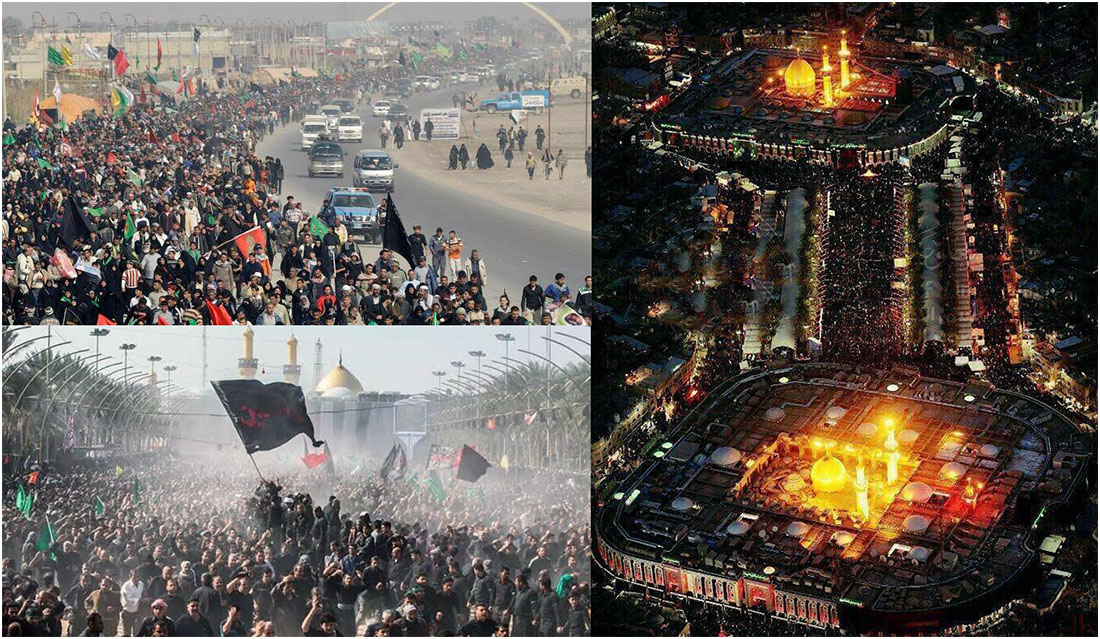
Today, almost 1400 years later, the Day of Arbaeen is mourned by millions of people around the world. It is marked as a day to pay tribute to the sacrifice of Hussain for social justice. Typically, on this day people organise large marches in cities across the world to symbolise the eternal nature of Hussain’s revolution and to show they stand for social justice, honour and peace.
In recent years – after the fall of the Saddam regime – a tradition of walking 80km from Najaf (the resting place of Hussain ibn Ali’s father) to Karbala has been reignited. Every year since, the number has been rising steadily from 17 million pilgrims to at least 25 million. People from all walks of life and all corners of the globe make the journey, despite the imminent threat of terrorists who have vowed to attack the pilgrims.
Along the 80km stretch from Najaf to Karbala volunteers distribute free food and drinks to those undertaking the pilgrimage, as well as offering places to relax, wash and sleep. Arbaeen Day is now the largest annual peaceful gathering in the world, with numbers set to increase significantly every year.
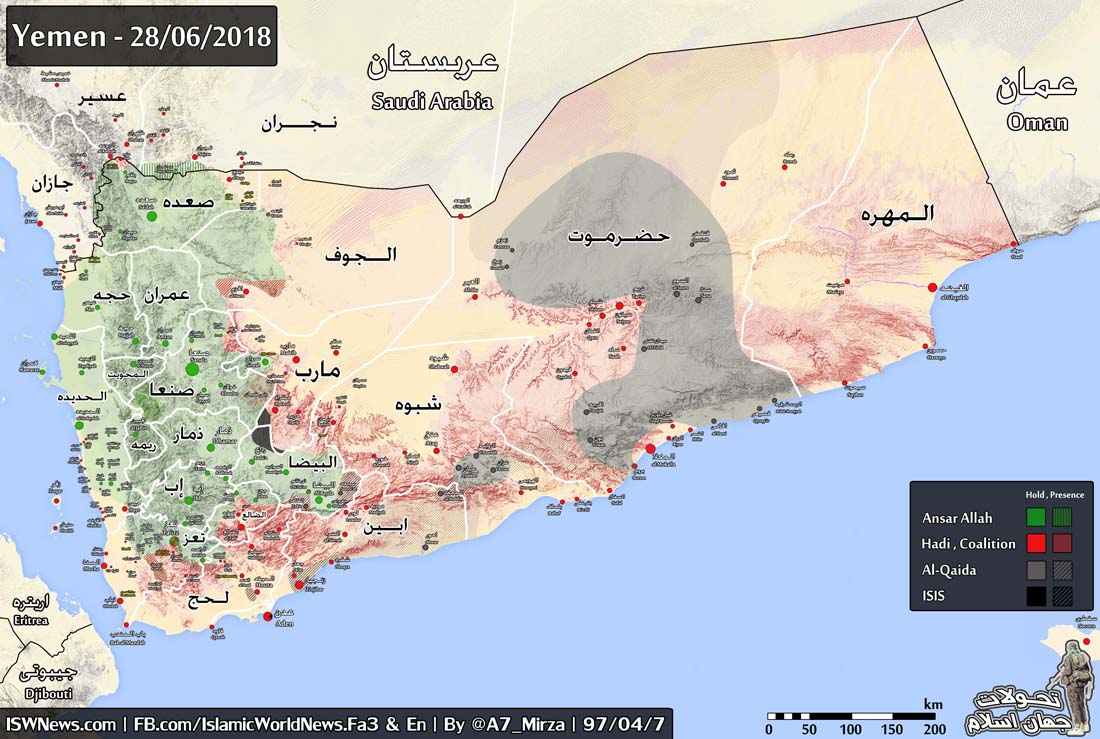
If we take a look at the evolutions of Yemen from Spring (March), we see Saudi Coalition is following three goals:
1. In west coast of Yemen (north of Hajjah and south of al Hudaydah)
2. East of Sanaa until south of Baydha
3. East, north and west of Sa’adah (axes such as Taiz and Jawf and we will address the details of the battlefield in this axis)
In summary, Saudi Coalition (with leadership of Saudi Arabia and UAE) want their benefits and opposing Iran influence, i.e., AnsarAllah movement.
To achieve it, occupying Sanaa and Sa’adah is considered the end of Iran influence in Yemen and a secure region according to their standards and supporting Mansoor Hadi and his forces are a mean to help with it.
Emirates seeks their benefits through supporting Southerners.
Other elements such as al Qaeda, ISIS and Saleh fans are useful for the Saudi Coalition as long as they fight with AnsarAllah.
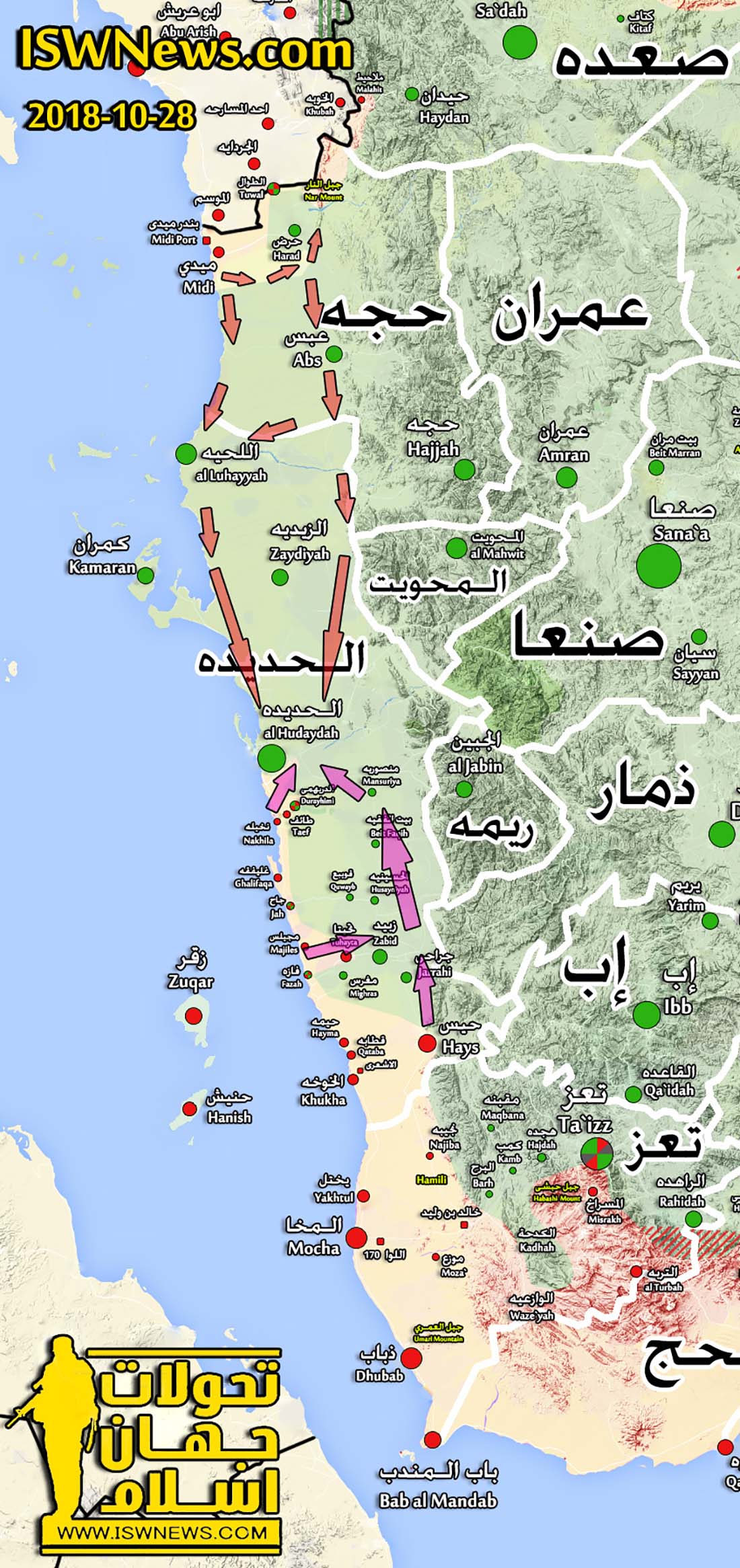
As mentioned before the goal of west coast battle is to cut AnsarAllah’s access to sea with two main axes:
1. South of al Hudaydah
2. North of Hajjah
1. South of al Hudaydah axis: (Purple arrow)
Al Hudaydah operation was started by leadership of Emirates in west coast using three streams (militia following Tariq Saleh, Southern and local forces) which was defeated by AnsarAllah by opening numerous fronts along coastal strip and dummy attacks to drain their energy.
After that Saudi using Mansoor Hadi’s forces in addition to current forces continued the operation with more strength.
Occupying Bab al Mandeb-Zobab-Mocha-Khukha-Hays; was paved in a slow pace operation by Saudi Coalition and “Fazah-Majilis-Tuhayta” and some other points are added to the list.
(We explained al Hudaydah operation aspect by Saudi Coalition also in this article: Discussion on Aspects of the Saudi Coalition Operation in al-Hudaydah).
2. North of Hajjah axis: (Red arrow)
In north of Hajjah, after fall of Midi and Hayran and northern borders, Haradh is almost under siege and Saudi Coalition arrow of attacks pointing Abas.
According to the goal of cutting AnsarAllah’s access to sea, the Coalition forces are going to in three directions after occupying Midi and Hayran:
1. To Haradh, 2. To Abas and then Ma’ras and then Zaydiyah and Zahra. 3. To Lahiya and then in coastal strip and finally reaching al Hudaydah.
Conclusion:
The joining point of the two operations is al Hudaydah city and the outcome is to cut AnsarAllah’s access to sea, thus AnsarAllah will resist with its highest power.
Saudi Coalition attack from north which is Hajjah can shake AnsarAllah’s defense in al Hudaydah for several reasons and on the other side, AnsarAllah is trying to make the war longer and by using heat defense is trying to drain the Coalition budget and power, which is supported by US and Israel design and Emirates and Saudi money and company of hired governments.
Article and map of 77 days ago for comparison: Here
? The most important changes in the past 77 days are as follows :
Northwest of Syria
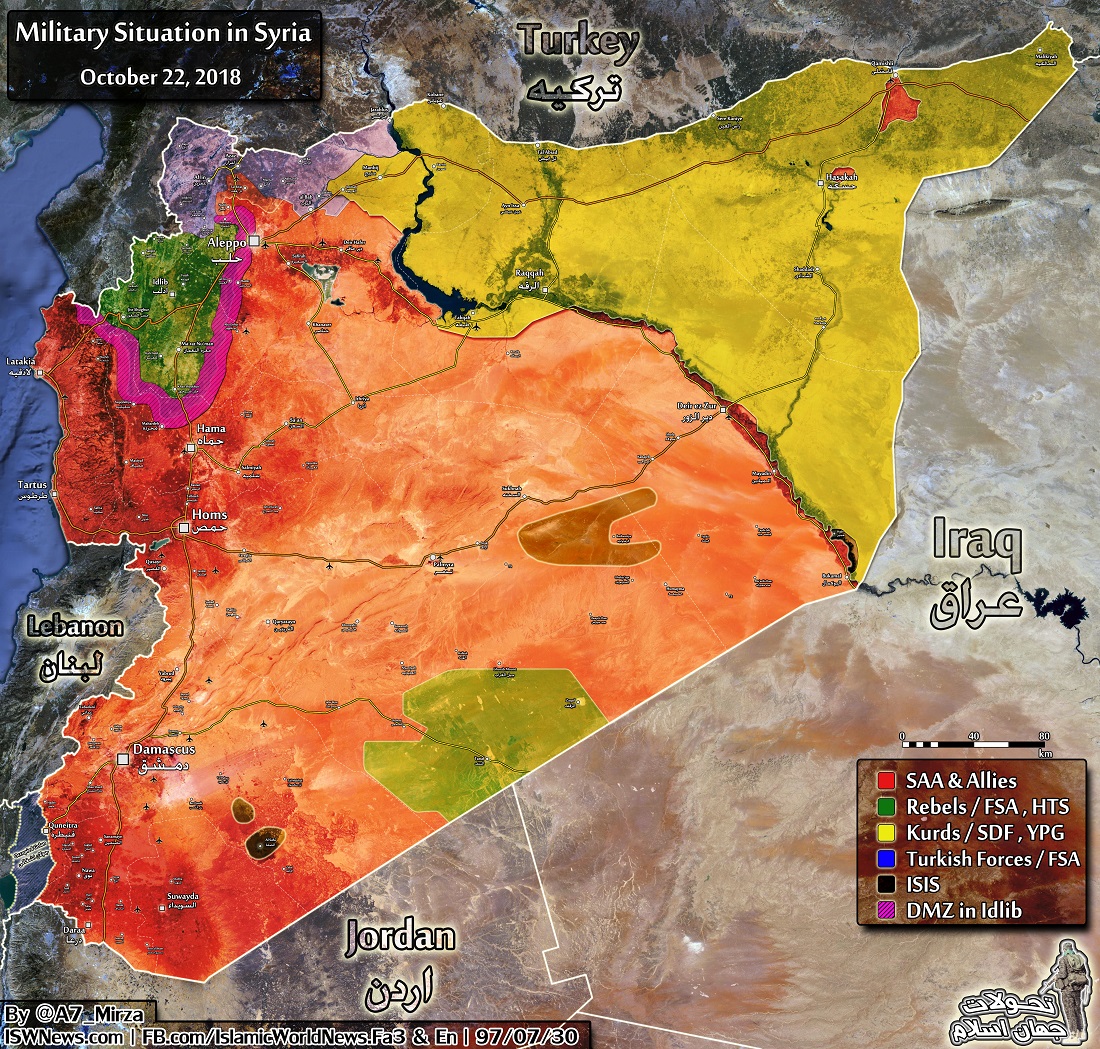
During the last two and half months there was no significant change in northwest map of Syria; nevertheless, the most noteworthy issue was Demilitarized Zone in the region.
As predicted, after clearing the southern regions of Syria (except region Al Safa) that is Daraa and Quneitra provinces, all the attention of Syrian Army and allies are toward northwest of Syria and Idlib province.
Therefore, preparation for the operation in Idlib against different terrorist groups started and more equipment and troops are brought to the region. Considering Syrian government and allies several warnings regarding reclaiming the whole Syrian land and reaching the incipient of the operation, Turkey and its militia bustles increased in order to prevent their last base from destruction.
If Idlib operation would have started and rebellious groups were purged, Turkey would face numerous problems.
Turkey’s concern about Idlib Operation can be explained from three aspects:
With the start of the operation, a large number of refugees will come to Turkish borders and to keep the region secure, accommodate refugees and etc. needs a lot of money. Right now there are 3.5 million refugees in Turkey and it is not interested in increasing this number.
The second is about the security threats of militant groups in the region if defeated flee to Turkey and considering their connections and relationships with Turkey, they are a severe threat for Turkey.
The third issue is that if the militia are purged out of Idlib region, Turkey has lost all the money and effort it put into instability during these several years and no goal is achieved.
Thus Turkey is trying to decrease the costs as much as possible and it can be observed from Erdogan’s policies recently.
According to the agreement, a DMZ is set with depth of 15-20 km between Syrian Army and militants in northwest of Syria and they are supposed to retreat from the DMZ and only Russian and Turkish troops to be there.
Two deadlines were set as 10 and 20 October for the implementation of DMZ.
So far (until 22 October) according to Turkey, Turkish supported groups such as Jabhat al-Wataniya lil-Tahrir(National Front for Liberation), have implemented the contents of the agreement within the deadline but since other extremist groups such as Tahrir al Sham, Hurras al Din,..etc did not comply with it thus Turkey requested to extend the deadline and Syria and allies agreed.
Turkey is negotiating with different militia groups in northwest of Syria.
South of Syria
Syrian Army operation in region Al Safa between Suweida and Rif Damascus provinces against ISIS cells started in the middle of Summer but due to some problems such as terrain of the region and ISIS operation near Suweida resulted in 29 women and children as hostages from village Shabaki, the purging is delayed.
Right now most of the region is reclaimed from ISIS and terrorists retreated to volcanic region of Al Safa.
ISIS terrorists recently executed a hostage that resulted in resume of negotiations to free the hostages. Therefore six of hostages have been released and negotiations to rescue the rest is continuing.
According to some sources after the final agreement, terrorists are supposed to move to Homs deserts from Al Safa region.
East of Syria
(East of Euphrates)
According to the statement by US Coalition, from 11 September the last step of SDF operation “Island Storm” with artillery and aerial support of US Coalition to purge ISIS terrorists from Hajin region started.
During the last several months, SDF focus was on southeast of Hasakah and border regions and Hajin operation faced several delays; however SDF have claimed to be operating in Hajin region several times, but no effective operation really took place.
40 days of operation start has passed and except reclaiming the village Baghuz Foqani, no significant advance happened by SDF and US alliance.
Hajin village is still under aerial attack of US alliance and no advance has reported. On the other hand, engagements in Baghuz region are continuing and lands are getting around between hostile sides.
(West of Euphrates)
Syrian Army and National Defense Forces could advance in deserts of Homs and Deir Ezzur province and according to latest news of Rashwaniya region, it is clear of ISIS terrorists.
Advances are halted in this region.
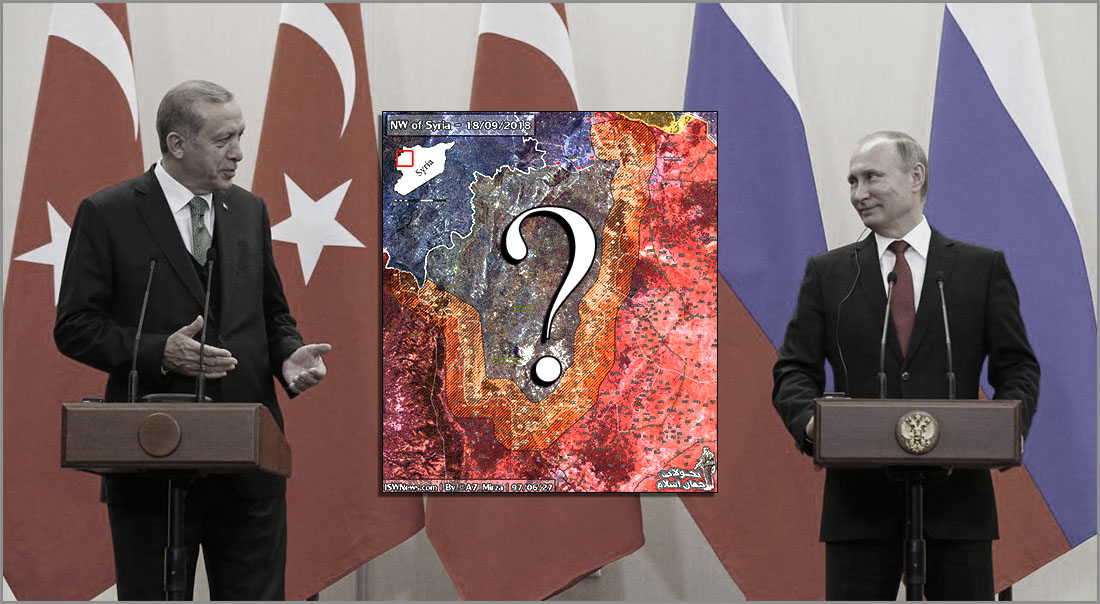
On September 17 it was announced by Turkey and Russia that demilitarized zone (DMZ) is going to be imposed in Idlib province; a news surprising many.
It’s two weeks after the news and one more week until it is implantation but local evidences tell something else.
After Russian and Turkish Presidents meeting in Sochi, they announced there will be imposed a DMZ of 15-20 km depth between frontlines of Syrian Army and militants in northwest of Syria and Syrian forces will retreat and only Russian and Turkish troops will position there.
It is noteworthy that details of this agreement never was published but what we mentioned above is the main part of the agreement which was announced orally by Russian and Turkish officials.
Photos of this agreement in social media cannot be trusted nor confirmed.
As it was predicted, after the announcement, terrorist groups such as Hurras al Din and Tahrir al Sham declined the agreement but it was public expectations that FSA’s subgroups which are directly under Turkish supervision and receive their financial and logistical supports from this country would submit to the agreement, but didn’t happen.
During past days, two main subgroups related to the Free Syrian Army, i.e., Jaish Izzah and Faylaq al Sham declining Sochi’s agreement, claimed they do not evacuate the DMZ.
On the other hand, we are observing Tahrir al Sham silence regarding the agreement and there are rumors that the silence is due to negotiations between the group and Turkey about MDZ and future of Idlib.
Turkey’s problem with Tahrir al Sham is first that subgroups of FSA are not obedient and second that Turkey cannot disarm different militant groups due to Sochi agreement by the deadline, i.e., 10 October, which means “ambiguous but hopeful future of Idlib”, which was mentioned before.
Let’s review briefly the evolutions in northwest of Syria once more
Syrian Army transported a lot for troops and equipment to northwest for Idlib giant operation with lots of noise. Everyone was expecting this grand operation; pro-militant media and western mainstream media did everything to prevent the operation and fabricated a fake story of chemical attack. But this time the histrionics were cancelled by Moghawemat and Russia. Russia and Syria put more pressure on Turkey and claimed that deadline is over and going to start the operation soon.
Turkey to prevent the Idlib operation and possible threats for this country such as flood of refugees and terrorists coming to turkey, returned to negotiations. Erdogan came to Tehran and everything was discussed. He went to Sochi then and it was announced: DMZ for 20 km and now the ball is in Turkey’s side!
If we look at the issue of Idlib from every aspect, it is a victory for Russia and Moghawemat.
Moghawemat knowing that militant groups cannot comply with this agreement, implemented this scenario for Turkey and its terrorists.
It is safe to say that DMZ is a trap for Turkey and its militants; since if the militant groups do not comply with it before the deadline, Syria and Russia have the right to start the operation lawfully.
On the other hand even if the agreement is implemented, it’s temporary and groups like Tahrir al Sham are still to leave and the land should turn back to Syria.
Although the first case is more probable, in either case Syria is the winner and Turkey is left with its terrorists.
Right now negotiations between Turkey and other terrorist groups are continuing and it needs more time to organize Idlib situation and probably Turkey asks for more time from Russia. Also it is possible that the DMZ changes such as decreasing the area of it.
Talking about straits is a long discussion which includes world’s geography; nevertheless, to understand the current situation in Yemen, we need to discuss several issues which shows the domain of AnsarAllah’s influence on the region.
As Iranian President, Mr. Rouhani, stated that Iran’s strategic depth (as head of Moghawemat (resistance)) is from Indian Subcontinent in east to Mediterranean Sea in west to Red Sea in south to Caucasus in north. This region contains many straits, closing each of them can change the world.
One of these points (straits), which is under control of Islamic Moghawemat, is Bab al Mandab Strait which connects Red Sea to Gulf of Aden in southwest of Yemen. Daily about five million barrels of oil and oil products are transported through this strait either toward Europe or Asia.
Indeed, Saudi Arabia’s economy depends on this strait and any attack by AnsarAllah to this strait is a huge blow to their economy. Maybe Saudi Arabia can bring its oil from Persian Gulf to Red Sea by pipelines but connection between Suez Canal and Asian regions, low capacity of western harbors of Saudi and etc. confirms the importance of Bab al Mandab Strait and Yemen western coast.
First question: Who can change the equilibrium in Bab al Mandab Strait?
AnsarAllah is a Yemeni movement and follower of Islamic Moghawemat which using same military strategies as Iran and Hezbollah use, could expand their influence range from Red Sea to Persian Gulf.
After US being threatened by Iranian President, AnsarAllah hitting Saudi Alliance’s warship in Red Sea, shows a bit its power and reaches on this strait.
However this is not a new action by AnsarAllah and in previous situations when Syria as part of Moghawemat was attacked severely by “USA-Europe-Saudi” Coalition (Will Middle East Region’s Incidents Spark The Third World War?), AnsarAllah showed some of its power by missile attacks against Riyadh and southern regions of Saudi Arabia. Therefore it can be said that if Hezbollah is Sword of Damocles on Israel’s neck, AnsarAllah is Sword of Damocles on Saudi’s neck.
Future of war in Yemen, will AnsarAllah reach the end?
In the conclusion of article (Latest Situation and Reports On Yemen April 22, 2018; Map Update) we mentioned that if the war becomes very difficult for one side, higher layers of war will be used and after operation in al Hudaydah by Saudi Coalition we observed that a new generation of Yemeni drones and short-range missiles emerged in western coast fights.
Reckoning and destroying the Alliance’s equipment and forces using UAVs and missiles to obstacle the Alliance’s operation in western coast had great effect however to completely stop the operation, AnsarAllah needs more accurate plan.
On the earth, recently Yemenis claimed to start operations in western coast and to reclaim occupied districts Durayhimi and Tuhayta. Putting aside the possibility of bluffing, if we put these claims beside recent threats claimed by General Mohammad Qaderi, Commander of Yemeni Coastal Guard that we will target Saudi and Emirates harbors and open a sea war, the future of war in western coast needs more thoughts.
Observing what we predicted in article “Discussion on Aspects of the Saudi Coalition Operation in al-Hudaydah”, Saudi Coalition attacking al Hudaydah and route “Jarrahi-Tuhayta-Zabid-Husseiniya-Beit faqih-Mansouria” simultaneously wants to strengthen its defensive line and to cut AnsarAllah’s reach to sea.
In other axes such as in north of Hajjah, due to operation in south of al Hudaydah, advancing is not fast and it seems the primary objective of the Alliance is al Hudaydah and then other regions of western coast.
Other axes such as Sadaa, Nihm, Taiz, Baydha have same situation, only in Baydha front, AnsarAllah fighting with al Qaeda, ISIS and the Alliance supported forces feels more under pressure and it is possible that the frontline becomes unstable in next months.
AnsarAllah like before using side attacks and blocking the coastal road and resisting in suburban areas, tries to erode Saudi Coalition’s power but considering the high substitution rate of the Coalition for their lost equipment and troops, this strategy might not work as effective.
Operations such as attacking military vessels and oil tankers, accurate missile attacks, drone reckoning and attacking flights and etc. are more effective on the war and AnsarAllah knows it better; as they used them more often in recent months.
Latest changes to frontlines in September:
In the last month, frontlines did not change significantly except the western coast in south of al Hudaydah is unstable and the claiming of either side is not stable usually.
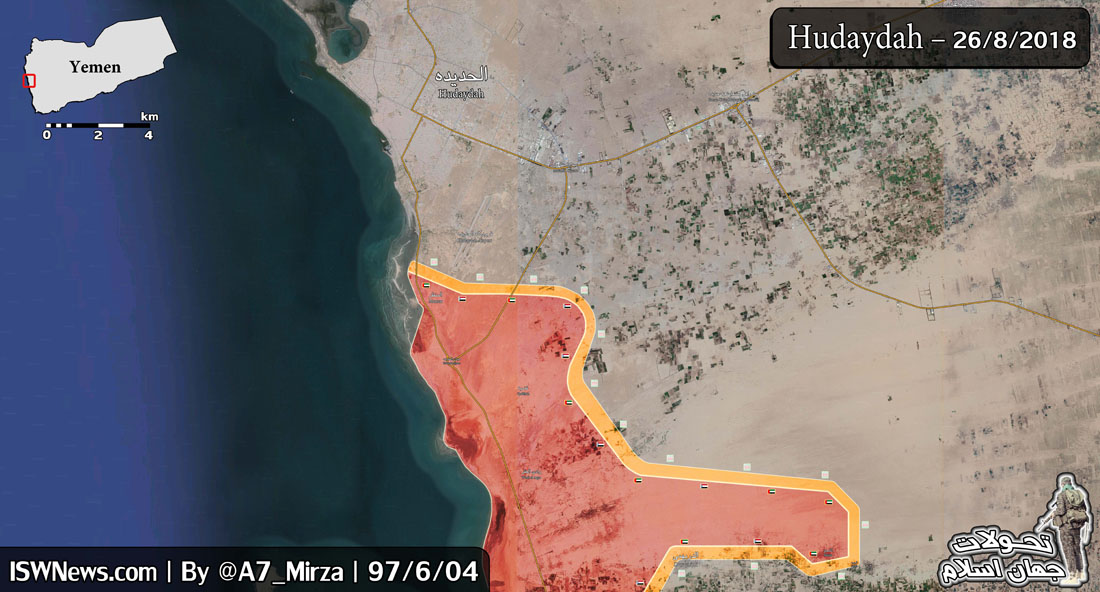
<Latest situation of south of al Hudaydah and main axes of engagement in September>
Saudi Coalition tried to capture the western coastal strip and broaden it in east. The Joint Operation Commandment of the Saudi Coalition knows that taking over al Hudaydah is not possible without occupying southern and eastern parts of it (including Sanaa-al Hudaydah road Durayhimi, Tuhayta, Jah, Fazzah etc.).
Last month, the Coalition’s heavy attack to south of al Hudaydah was defeated by strong resistance of AnsarAllah(also known as Houthis) and People’s Committees groups and heavy attack to the airport, in despite of vast media support did not achieve anything.
In the last month with new attacks by the Coalition, Tuhayta fell after heavy engagements and town Durayhimi is important in the defense line of south of al Hudaydah, and is under all-aspect attacks by Emirates led forces from 2 August.
At the moment, Durayhimi is almost under siege and if AnsarAllah and People’s Committees resist, Emirates back troops should retreat due to side attacks by AnsarAllah.
In other points, side light attacks are going and regions such as Fazzah, Jabilah and Jah are not fully controlled by either side.
2. Hajjah
In north of Hajjah after fall of Midi, attacks to Hayran and Harad from north and west have started which resulted in fall of Hayran. The goal of operation in this axis is to cut AnsarAllah’s connection to sea and western coasts, as mentioned earlier.
For Saudi Coalition the outcome of the operation in this axis, doing operation in al Hudaydah simultaneously, is to band AnsarAllah’s reach to sea.
Therefore, after occupying Midi and Hayran, Coalition has three moves: 1. to Harad, 2. to Abas and 3. to Lahiyah in coastal strip.
AnsarAllah in their recent attacks in the axis could not get those towns back yet, which we explain why later.
3. Sa’adah
In the same sense as operation in north of Hajjah, Malahit has fallen to the Coalition and they are moving toward heights Marran.
Heights Marran and Hidan until mount Baqem are defense line of Saadah from north. (In an analytical article previously Saadah was mentioned as one of three primary objectives of Saudi Coalition.)
According to latest news, Baqem is under control of Ansarallah.
4. Al Baydha
In this front that Mansoor Hadi and Al Qaeda forces from Coalition and Emirates are more active, there is no significant change and AnsarAllah is defending in northern al Baydha.
In recent days, Mansoor Hadi’s forces under support of the Coalition has started an operation to occupy districts Numan and Malajim from two sides but have not achieved anything yet.
5. Taiz, al Jawf, east of Sanaa and other fronts are as before.
Emirates’ activities in governorates Dhale` and Abyan suggests new deceit against AnsarAllah in future, in case Emirates stays behind closed doors in al Hudaydah, there is a high possibility they open a new front in south to put AnsarAllah under pressure.
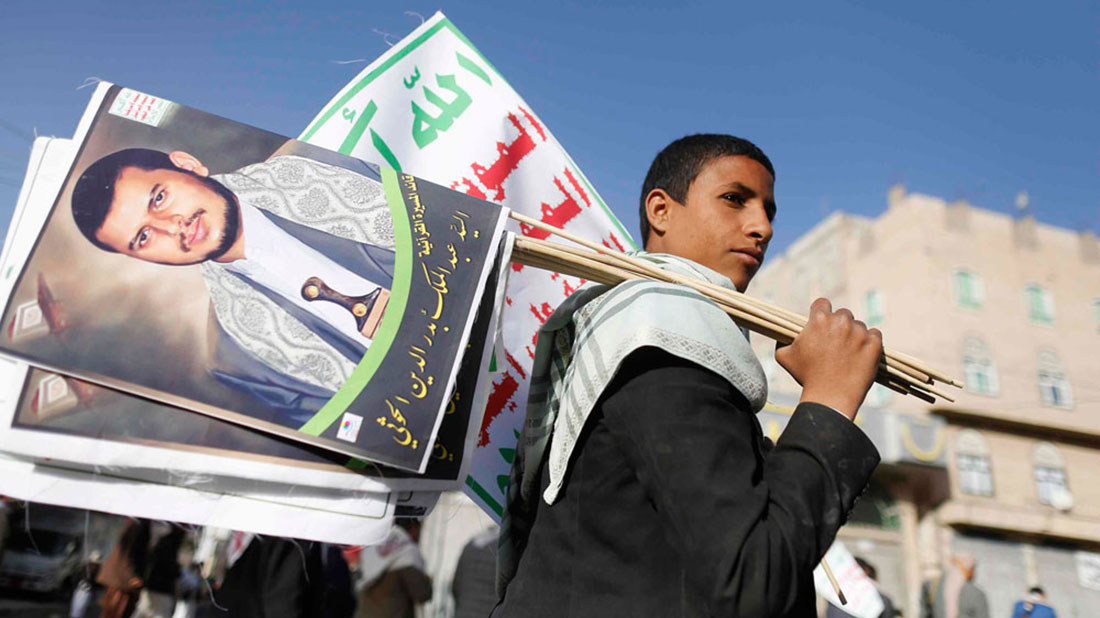
P.S. In despite of vast propaganda by media close to Saudi Coalition (and no response from other side’s media), it is noteworthy that AnsarAllah’s movement in Yemen is not omittable. An issue that after Ali Abdullah Saleh’s death many media and analysts mentioned.
AnsarAllah with a strong religious and people’s basis which were created by Martyr Hussayn Badrudin al Houthi, reminds us of Hezbullah which is Moghawemat’s iron fist in the region today.
Indeed AnsarAllah with help of the power of their believes in God and intensifying their roots among people and resistance spirit against aliens and assaulters, not only will keep their lands but also will liberate whole Yemen from occupation of Saudi fake Islamic Coalition, Inshallah.
The most important changes in the past 78 days are as follows :
South of Syria
The most important changes in battlefield of Syria in the past 78 days is indeed, complete liberation of south of Syria from terrorists of different groups.
Daraa province and specially Daraa city was considered the symbol of revolution by militia; where the evolution started and sparked a war that continued for seven years so far. The complete reclaim of Daraa and Quneitra provinces in south of Syria means an end or at least near end of this war.
It is good to know that more than 20 different terrorist groups occupied southern part of Syria during this seven years and each of these groups were connected to a tyrant of the Middle East or neighboring states such as Jordan or Zionist Occupiers and were supported by military or intelligence.
“ISIS, al Nusrah Front, Jaish al Islam, Jaish Yarmouk, Jaish al Hur, Ahrar al Sham, Liwa al `Izz, Syrian Revolutionaries Front, al-Harrah Martyrs’ Brigades Front, Um al Ousaj Martyrs’ Brigades, Kafr Shams Fidayiah Brigades, Mujahidi Samlin, Al-Nasser Salah al-Deen Brigades, Bani Umayya Brigades, Ababil Houran, Ahrar Jasem, Nazehin Brigades, Yarmouk Martyrs, Jaish al Hurr(Ashaer), Daraa Martyrs’ Brigades, Jaish al Awwal, Sabtin Brigades, Forsan al Golan” are names of main groups, who were active in Daraa and Quneitra provinces and purging these groups was Syrian Government’s top priority to reclaim its soil.
However Syrian and Russian artillery and warplanes attacked rebels’ positions in the region from several days before, ground advances starts on 22 June.
Lajat region reclaimed in only four days from rebels and different militant groups in south of Syria accused each other of betrayal and agreement with the government.
On the other hand, USA and Jordan after negotiation with Russia, stopped supporting terrorists of southern lands and claimed that they do not support them against Syrian Army’s operation.
Militia of south of Syria who were once relying on their western lords and allies, received the answer of their trust and were left alone by the same supporters that convinced more groups to negotiate and surrender.
Syrian Army and allies conducted military operation and negotiation at the same time. With more advances in Daraa province, militia’s defense broke and more villages demanded to negotiate and reject rebels.
Maybe before the start of the operation in south of Syria, no one could imagine that Daraa would be liberated by negotiations; but as the siege became tighter, militia present in southern part of city had no choice other than surrendering and evacuating the city.
Therefore, by national reconciliations in Daraa province, with entrance of Syrian Army to militia inhabited of Daraa and raising Syrian flag in Daraa al- Balad neighborhood, Daraa city is liberated from rebels after seven years.
In between, the important reclaimed regions by reconciliations are Busr al Sham, Ibta`, Dael, Tafas, Nawa, Jasem, Inkhil, Kafr Shams, Harrah.
Liberation of important and strategic height of Harrah was the key to enter occupied lands in Quneitra province for Syrian Army. Tal al Harrah and the radar base on it is the most important height in west of Daraa province which has overlook on Quneitra and Houran plains and also parts of occupied Golan.
Militia knowing the importance, resisted more in this region that others but eventually after several days of heavy fire on the height, militia were forced to retreat from Tal al Harrah.
With liberation of Tal al Harrah, way is paved for Syrian Army and militia present in Quneitra province by accepting the agreement and surrendering, put their weapon down and evacuated Quneitra province.
After that, the story of militia in south of Syria was practically over and now Syrian Army is focusing on the last occupied region in southwest of Daraa province, the lands occupied by ISIS.
Although Syrian oppositions and many others counted on ISIS to confront Syrian Army, but ISIS terrorists like other militants were defeated very soon.
Unlike predictions, ISIS defense line in southwest of Daraa province and Tasil town collapsed very quickly and Syrian Army and its allies could force terrorists to retreat from strategic height Jamou` and Tasil town due to fear being surrounded by using correct tactics and attacking from all aspects.
Syrian Army could clean Yarmouk Basin from ISIS completely in 12 days.
So all the southern part of Syria was liberated by Syrian Army and allies in 41 days from 22 June to 1 August.
It is noteworthy that due to reconciliations, during eight stages, about 10 thousand militia and their families transported from Daraa and Quneitra provinces to north of Syria and Idlib province.
Evolution of liberating Daraa and Quneitra provinces during a 41 days period
Another change in battlefield is the increase in ISIS cores’ activities in deserts of Suwayda and Damascus.
As mentioned earlier, these areas were reclaimed by Syrian Army before but during the agreement with ISIS to evacuate Yarmouk Camp in Damascus and transporting them to deserts of east of Suwayda, it seems that the Army’s previous claim regarding clearing these lands was not accurate or those lands were not cleared and stabilized properly or at least after the operation ISIS could infiltrate there.
In any case, the operation to clear the deserts of east of Suwayda has begun and it is expected these lands be clear once forever from ISIS terrorists.
Northwest of Syria
According to the agreement between Iran, Russia and Turkey, towns Fuah and Kafraya in Idlib province during a three days period from 18 to 20 June were evacuated completely.
The population of xxx and xxx before Syrian war was about 40 thousand people and during the siege in March 2015, with occupation of Idlib city by militia of xxx group, the population reduced to 25 thousand.
During these years, oppressed inhabitants of Fuah and Kafraya were hit by terrorist sharpshooters and occasional bombing by them. According to the census released by central media of Hezbullah, abour 1,900 of inhabitants during bombing by terrorists are martyred and more than 3,500 wounded.
During these three years, the towns were attacked several times and in one of them, terrorists of Jaish al Fath and Jund al Aqsa used 11 suicide bombing cars to break the defense lines but every time they were defeated by high defense of towns.
Evacuation of Fuah and Kafraya is important in terms of:
First, after significant achievements of the Army in south of Syria, enemy’s activities increased around the towns and there were rumors of retaliation attacks to the towns.
Second, Syrian Army’s next operation will be in Idlib province and the presence of people under siege in Fuah and Kafraya could be a weak point for Syrian Army and Moghawemat, so the evacuation had to be done as soon as possible.
It is noteworthy that during the last step of evacuation about 6,800 of inhabitants evacuated.
The most important change in east of Syria is vast advances of Syrian Democratic Force (SDF) in southeast deserts of Hasakah province and east of Deir Ezzor province.
The second stage of operation “Island Storm” started officially on 4 June with support of US Coalition in east of Syria against ISIS.
Regions between southeast of Hasakah and east of Deir Ezzor due to uneven terrain are safe place for ISIS terrorists; however, SDF with intelligence and military support of Iraqi forces and US Coalition, could detect key positions of terrorists and capture them thus force them to retreat step by step.
Finally in 4 August, SDF in a statement claim to clear all the deserts of east of Deir al Zur and the border with Iraq from ISIS terrorists.
When the threats of Turkey against Kurds of Afrin was at its highest levels, the Syrian government and Russia proposed a suggestion to SDF; according to that offer, in exchange of letting SAA’s forces enter Afrin, the Syrian government will repel the Turkish army attack against Afrin.
But the Kurds, made a grave mistake and with trusting the Americans completely, they refused the offer which was given to them by Syrian government & Russia.
The result was as expected, they were defeated completely and swiftly. and Afrin region went under the occupation of Turkey.
When they were refusing the offer maybe the Kurds were thinking to themselves that the Americans would stop the military operation of Turkey against Afrin. However, after a few meetings between the Turks and Americans, The Kurds witnessed Turkey’s warplanes above their cities, witnessed a vast population of Kurds being displaced from their homeland.
Now we’ve heard that the Kurds reached to an agreement with Syrian government, that not so long ago they refused. an agreement with more benefits for Damascus, after they lost control over Afrin and Manbij and their cities went under the control of Turkey.
But what has changed for the Kurds that they accept to have an agreement with Damascus?
Naturally the occupation of Afrin by Turkish Army was successful, when America & Turkey made a deal, and also the Kurds themselves gave their fate to Washington. And within a few months, the Americans made a deal over the important region of Manbij, and the Turkish patrols entered this region.
And now, with the coming Putin-Trump meeting, and the consultation about military operation in southern Syria, Daraa, there are news on new agreements between Russia & America about Syria, which can be devastating for Kurds.
Although the details about this agreement is not certain, However, one of America’s points is that they will pull back their troops from al-Tanf and its temporary military bases in Kurdish populated regions.
The Americans are seeing that Turkey is fully against Kurds having control over regions which are in its borders, The Americans saw the intense responses of Iraq and its army against separatist of “Iraqi Kurdistan”, and also regions like Tanf in Syria, isn’t a strong and permanent place for them to stay, Morever they see that even Arab populated regions that are under the control of Kurds, are showing more tendency, day by day, towards Syrian government, including Raqqah, Tabqah, and even southern Hasakah and DeirEzzor.
Add these up to political changes in America and this point that the military presence of America in Syria, under the name of “International coalition”, is considered & justified as a military operation against ISIL, and it is unknown that this justification continues after “Operation of Eastern Euphrates” against ISIL.
All these factors & constant pressure of Turkey, leaves the future of America’s support for the Kurds, very vague, and force them to have an agreement with Syrian government.
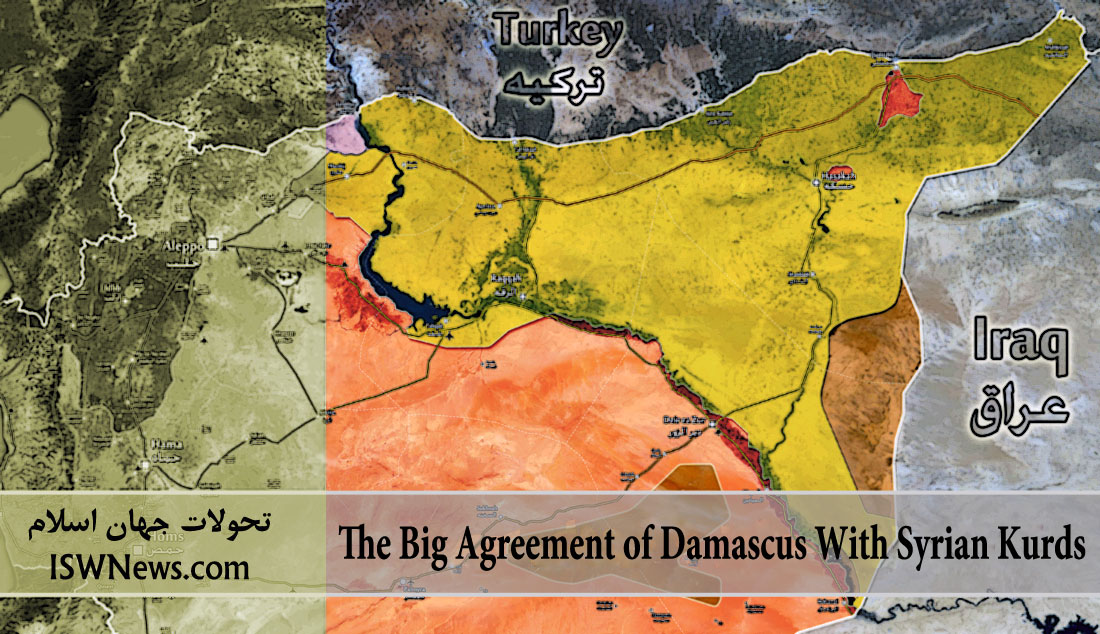
The agreement of Kurds with Syrian government:
Although this agreement is not final yet, but after a few rounds of negotiations in Damascus & Qamishli between Syrian government and DFNS (Democratic Federation of Northern Syria), now we are witnessing visits that are made by Damascus delegates in Raqqa province, which shows that negotiations are serious. Before this, military forces of America in Raqqa & DeirEzzor wouldn’t let this happen.
What is published as probable details about this agreement, are as follows:
1. Entrance of Syrian Army in Hasakah province and supporting Syria’s border with Iraq, and Trukey.
This includes SAA’s branches for military recruitment, and joint checkpoints with Kurd forces.
2. The Kurdish forces will join the Syrian Army, Syrian government will give salary & benefits to families of those who are killed fighting against ISIL; the time they spent on fighting against ISIL will be considered as their “Compulsory Military Service”.
3. Rising the flag of Syrian government in all the regions, bringing down all the Kurdish flags and symbols, including “Abdullah Öcalan” pictures.
4. Giving oil & gas rigs to Syrian Ministry of Oil.
5. Putting Kurdish language in official education curriculum.
6. Introducing a Kurdish person as minister of oil.
It is obvious that these conditions is advantageous to Syrian government, and it can restore the full control over Syria, by Damascus; we shall see that how many of these conditions will be implemented, specially that the Americans will be the main obstacle for this agreement.
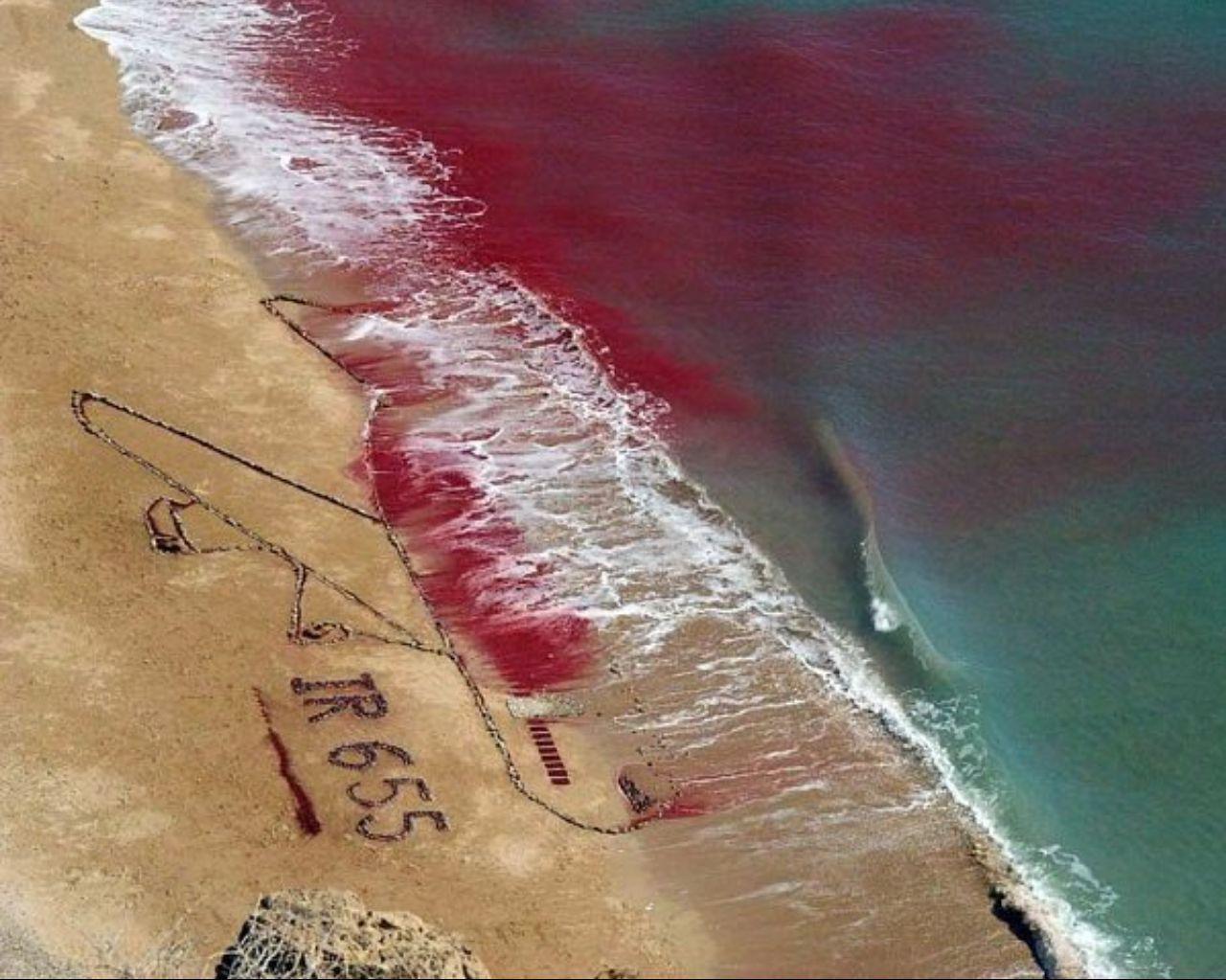
Flight 655, as a commercial flight, operated by Iran Air that flew on a Tehran-Bandar Abbas-Dubai route. While flying in Iranian airspace over Iran’s territorial waters in the Persian Gulf on its usual flight path, it was destroyed by the guided missile cruiser USS Vincennes.
This attack ranks tenth among the deadliest disasters in aviation history, the incident retains the highest death toll of any aviation incident in the Persian Gulf and the highest death toll of any incident involving an Airbus aircraft anywhere in the world.
According to the United States Government, the crew mistakenly identified the Iranian Airbus A300 as an attacking F-14 Tomcat fighter.
Contributing to the error was the fact that the aircraft did not respond to several inquiries to change course and did not identify itself clearly as civilian. The Iranian government maintains that Vincennes neglectfully shot down the civilian aircraft. The event produced a great deal of dispute and criticism of the United States. Several analysts have blamed U.S. military commanders and the captain of Vincennes for irresponsible and aggressive behavior in a tense and dangerous environment. The airliner was transmitting an identification friend or foe code for a civilian aircraft, but Captain William C. Rogers III in an interview insisted that he believed the code alone did not mean the aircraft was non-hostile. Captain Rogers described the attack as a self-defense measure to save his ship and the lives of the crew.
While issuing notes of regret over the loss of human life, the U.S. government has, thus far, neither admitted any wrongdoing or responsibility in this disaster, nor apologized, but continues to blame Iranian hostile actions for the event. The crew of the Vincennes were all awarded combat-action.
More than two decades later, the attack continues to pervade Iranian social psychology and fuel the strategic thinking of its military leadership. Many Iranians remember the event with a bitter sense of vulnerability. A foreign government, the United States, which was not in war with them, used brutal and lethal force against Iranian civilians.
For those with a longer memory span, it’s hard to dismiss some of these concerns especially when you recall that the irresponsible behavior of the USS Vincennes commanding officer earned him the Legion of Merits, “a military decoration of the United States armed forces that is awarded for exceptionally meritorious conduct in the performance of outstanding services and achievements.” For many Iranians, this is utterly incomprehensible.
In the past month three pivot, out of ten pivot, had more change and clashes.
– Northern Al-Hajjah pivot
– Southern Al-Hudaydah pivot
– Al-Bayda pivot
Al-Hajjah pivot:
In Yemen’s northern pivot, the coalition forces —after that Ansarallah left the Saudi Arabia soil and heavy bombardments against villages & border towns, like Khobah— invaded border crossings and cities across the main roads, which resulted the fall of “Midi” port (northern Al-Hajjah) and Al-Nar & Al-Shabaka heights (east side of Tawwal crossing) all the way up to northern Harad, into the hands of coalition. Right now Al-Nar & Al-Shabaka are retaken by Ansarallah, and once again the coalition forces have retreated from eastern Tawwal to Saudi Arabia’s soil, However, Midi is still under control of coalition.
Southern Al-Hudaydah pivot:
As we mentioned in our previous report, the aim of their operation in west coast of Yemen is to cut Ansarallah’s access to the sea. For achieving this goal, from the beginning of Yemen war, southern Al-Hudaydah have faced heaviest attacks from Saudi-led coalition, with pivotal role of United Arab Emirates.
In this pivot, the attacks by Saudi-led coalition, ISIL and Al-Qaeda are still going on in pivots which were described in previous report.
In Na’man district, Ansarallah retreated from its positions and now Malajim, Nati` and Qaniya are the contact lines between Saudi-led coalition and Ansarallah.
In Rada’a district, the enticed elements of Al-Qaeda & ISIL were killed by Ansarallah in its recent operations, and some of them are captured. ( For more information about this news, go to: Latest Updates on Yemen 25 June 2018; News of Fronts )
In other pivots, there is no report about notable clashes.
And about negotiations and the fate of the war:
The fate of the war in Yemen is dependant on Al-Hudaydah Operation.
Overall it can be said that Saudi-led coalition sword is double edged. The blunt side is the negotiations, and the sharp side is their military operation. So in light of this the negotiations are still going on with the mediation of UN’s Envoy, in one hand, and the military operation in Al-Hudaydah continues, on the other hand.
Previously, Ansarallah’s leader said that they are ready to give UN the control over the payments of government employees & revenues from Al-Hudaydah port, and he also said that if coalition stop its military operation in Al-Hudaydah coasts, they will stop their attacks in sea and secure the sea.
For completing the military victories, Ansarallah needs to achieve a political victory, which they have alot of troubles in the way of getting it.
One of these troubles is the International Consensus that has been created by lots of Saudi and UAE money & mercenary states of the region.
Ansarallah officials need to break this consensus and get themselves out of international limitations. (maybe this solution is the only channel right now that Iranians can help Ansarallah with it)
Ansarallah, in terms of military power, social support, security of cities, etc… is not in a bad position, but in Diplomacy War, sometimes they need the support of countries like Iran and sometimes creating an agreement with other fronts and even an election on a national scale.
Despite the things that are being said, Ansarallah has enough power to defend western coasts, and what led the UAE to Al-Hudaydah airfield is Ansarallah plan to swamp Emirates in order to drain their power.
The battle of Al-Hudaydah will determine the next stage of war in Yemen, and in future we shall see that Ansarallah can make Al-Hudaydah for Emirates sheikhs & Saudi crown prince, another Stalingrad, or that the fall of Al-Hudaydah will be the key to secession & colonization of Yemen.
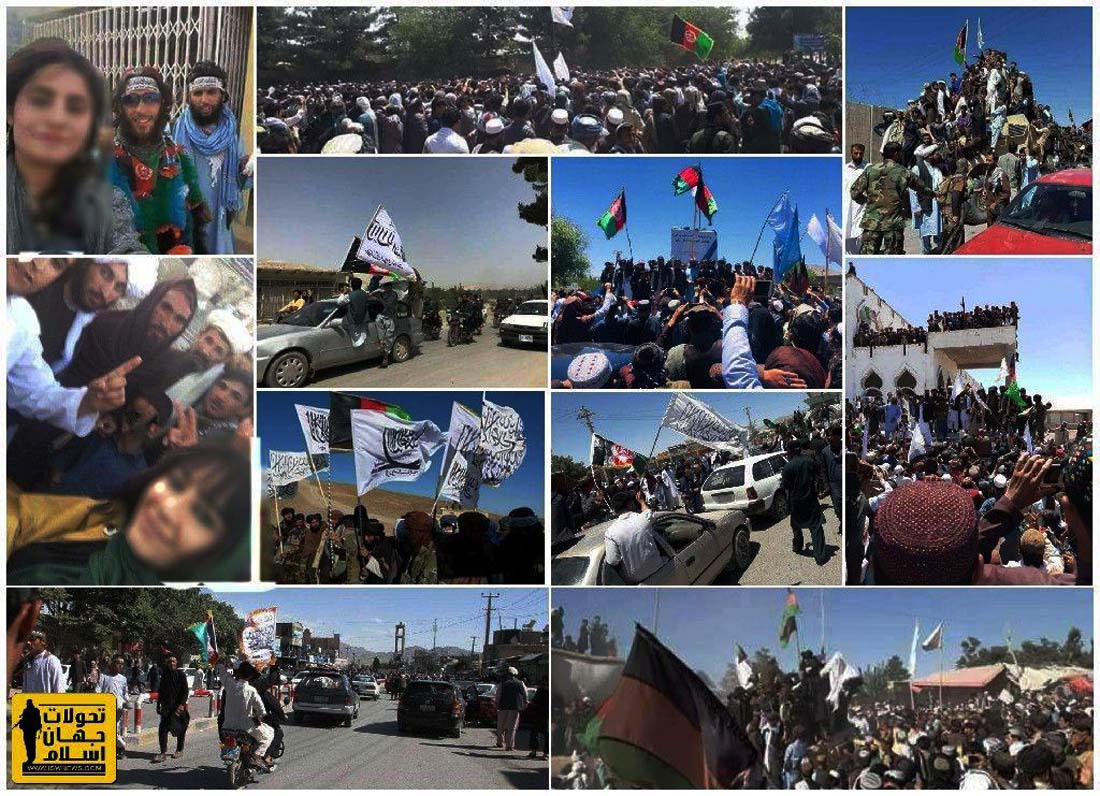
The ceasefire between Taliban and Afghanistan government, let alone its weird incidents, from rising Taliban’s flag in Kabul to mixed and unorthodox pictures, was something new for the people of Afghanistan in all these 40 years of war. this incident shocked Afghanistan’s government so much that it still honors the ceasefire while Taliban don’t and constantly ravaging army’s stations.
Another agreement with House of Saudi:
The agreement between Saudi and Afghanistan’s officials about Kabul-Ryadh direct airline, after Ashraf Ghani’s announcement of supporting Saudi-led coalition against Yemen, was another step, tightening Saudi-Sfghanistan relations. The opposition recognize these policies of governemnt to be an act of transporting Takfirism from Syria & Iraq to Afghanistan.
Taliban changing its approach?
Taliban is an organization with uncoordinated & disordered structure, which encompasses Wahabism and even hosilities that are driven from racism, and also recently they are categorized into two groups, moderate and extremist.
In these past months that America, which put Pakistan under a lot of pressure, managed to persuade Taliban into negotiations.
Taliban’s behavior have changed in these years, comparing to what was before.
Taliban claims that it must have control over half of Afghanistan. Taliban’s behavior have changed now, their behavior is moderate towards people, and claim that their goal is to Jihad against foreigners & their mercernaries .
And also they are empowering their diplomacy in foreign policy and seeking to establish good relations with Russia, China, Qatar and United Arab Emirates, etc… in order to gain legitimacy in the world.
However they have yet failed to leave their terroristic entity & their crimes against other religions & race, and this contradiction have made them, both now and in future, a infamous & notorious group in the history of Afghanistan.
The main essence for survival of Taliban is not them being supported by neighboring countries, but is is because of the weak structure of Wahdat Melli’s government, not being able to do its functions, and finally being colonized by medium and great powers, like America, Turkey, UAE and etc… which we will explain it in future.
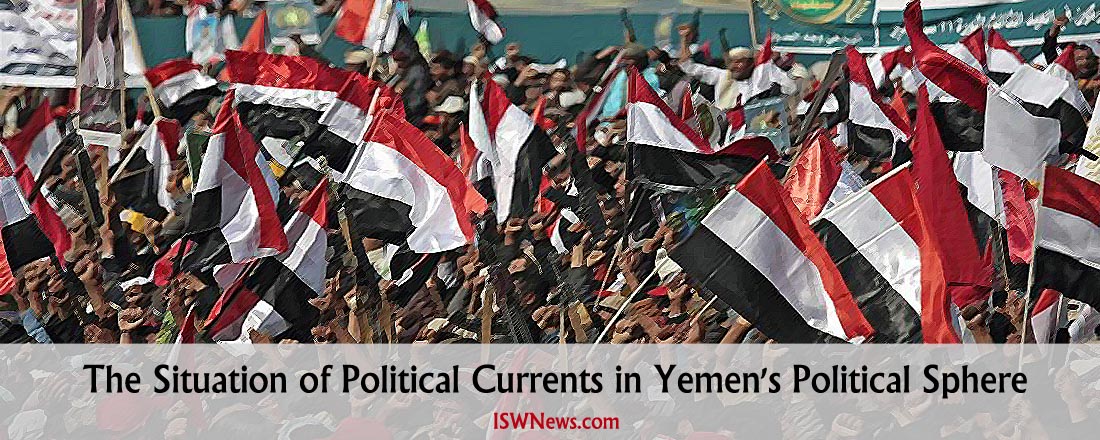
1. Zaidi ( including three groups, one is close to Iran, one to Saudi Arabia & Zaidi intellectuals ) 2. Republican ( with Arabic ethnical tendencies towards Egypt & United Arab Emirates ) 3. Muslim Brotherhood – Salafi ( close to Saudi Arabia, Qatar and Turkey ) 4. Southerners ( with unification, Seperatist, Sufi & Salafi tendencies )
Until 1962, the unipolar (political) system of Zaidi(1) was ruling in Sana’a.
From 1962 to 2000, the bipolar system of Saleh-Al-Ahmar(2&3) was ruling in Sana’a and with oppressing the two Zaidi(1) & Southern(4) current, Yemen seemed to be stable.
From 2000, Ali Abdullah Saleh, with the help of Zaidi(1) current, tried keep Muslim Brotherhood-Salafi(3) current away from power in order to make preparation for presidency of his son.
Ahmed Ali Abdullah Saleh. but the 2011 revolution led to his downfall.
The GCC’s, (Persian Gulf Cooperation Council) plan was an attempt to keep “Bipolar” system(2&3) in power and keep Zaidi & Southern current away from center of power.
However, with regards to downfall of Ali Abdullah Saleh, their efforts led to dominance of Salafi-Muslim Brotherhood current over Sana’a.
The dictatorship of Salafi-Muslim Brotherhood current in Sana’a, led to convergence of Houthi(1) & Saleh(2), and finally in 2014, Ansarallah entered Sana’a and the Salafi-Muslim Brotherhood current was ousted from Sana’a.
With Saleh’s death in 2017, the Zaidi(1) “Unipolar” system came into power once again in Sana’a, and the system put itself against these three other groups which despite their ideological & historical differences, are converged now.
Regarding to failure of all these four currents to rule over yemen alone, the chances for Ansarallah’s survival in Sana’a is very low. Although the repetition of past is not certain, but it is probable.
United Arab Emirates, which are in fact representing Britain, managed to make majority of southerners(4) & leftovers of Saleh’s system(2) dependant to itself. However, The Salafi-Muslim Brotherhood current(3) which is the main force in Hadi’s organization, is supported by Saudi Arabia and has issues with UAE.
But how the UAE managed to contain “Bin Salman” so that the initiative don’t fall into the hands of Salafi-Muslim Brotherhood current?
About this matter, it has been said that attacking non-military targets in Yemen and making it public in medias is one of the tactics of UAE. Even in the popular incident of “October 2016 Sana’a funeral airstrike” (مجزرة الصالة الکبری) in Kholan tribe which was held for father of former interior minister Jalal al-Rowaishan, around 17 commanders of Hadi’s army were killed. in similar cases, serious cases are ongoing against “Bin Salman” in international community, and UAE is using it as an instrument to control “Bin Salman”.
UAE’s scenario to continue the war, is to gain control over Yemen’s coasts & ports and to make Ahmed Abdullah Saleh, Ali’s son, ruler of Yemen. If this scenario happens, the Zaidi(1) current will be restricted to “Azal” region, the Salafi-Muslim Brotherhood(3) to “Saba” region.
The Britain which was ousted out of “Aden” in 1967, is coming back to this region, which is one of the strategic regions in the world. However, this time they are pursuing another goal and thats weakening “Shia Political Islam (Zaidi)” & Sunni Political Islam (Muslim Brotherhood)”. Britain knows it better that the ruler of “Sana’a”, will have control over “Aden” too, so Britain can’t leave Sana’a alone and give it to Zaidis or Muslim Brotherhood.