Category: Article

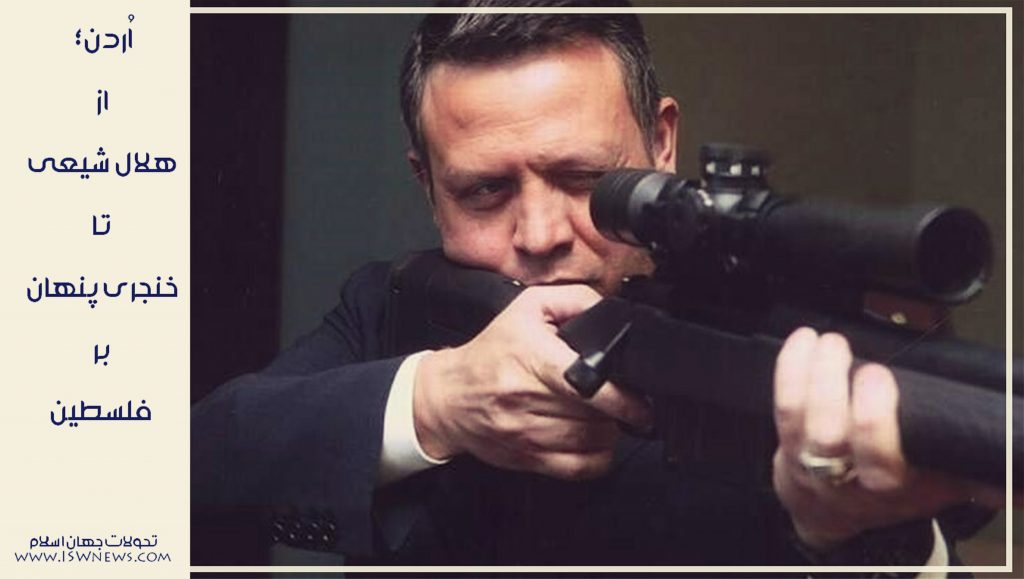
  • Jordan, From Shia Crescent to A Hidden Dagger in the Back of the Palestine!

    Jordan, From Shia Crescent to A Hidden Dagger in the Back of the Palestine!

    Jordan with its particularly sensitive and geographical situation –located in the east side of the Jordan river– came to existence less than a century ago (72 years) by “Winston’s Hiccup” ( also known as “Churchill’s Sneeze”), a country which originally was an outcome of dismanteling the Ottoman Empire after World War I in “Treaty of Sèvres”, it was known as “Trans-Jordan”, a British protectorate established in 1941, and later became independent in 1946.


    Jordan:
    Jordan is the name of a country, and a river in west Asia. neighbouring with Syria from north, Iraq from northeast, Saudi Arabia from east and south, Occupied Palestine & West Bank from from west, and Gulf of Aqaba from south.

    Its main cities are, “Aman” as its capital, located northwest of the country. alongside with “Arbad” and “Arzorgha” in north.

    The Hashemite Kingdom of Jordan, which is a “constitutional monarchy” , is divided into twelve “Governorate” and each governorate is run by an appointed governor by The King himself
    The executive branch is in the hands of the king, he appoints prime minister and ministers. every law needs approval of the king.


    The Jordan parliament is consisted of “Senate”, senate members are appointed by the king, and “House of Representatives” they are elected by the people. 2/3 of parliament can revoke the king’s veto.
    The king has control over Armed forces ,security and intelligence forces, declaring war, appointing and removing the judicial position.
    The population of Jordan is 9.5 million, which 3 million of them are refugees, and 2.2 million are Palestinian and the rest are Syrian ,Iraqi, Libyan, Yemeni, etc…
    The Jordanian government has legislated a law which allows non-jewish Palestinians to migrate to Jordan and become a citizen of Jordan.


    1- The Shia Crescent:
    The Shia Crescent is a term which was used by King Abdullah II of Jordan used it for the first time in his interview with Washington post (In December 2004), he claimed that Iran is behind it which starts from Yemen to Lebanon and puts them under his influence, aiming to rule over east Asia.

    After King Abdullah, Hosni Mubarak and the former king of Saudi Arabia were of those who used this term about Iran and the “Islamic Resistance” movement, and assumed it to be a real danger for them.


    The actions of Jordan which have been going on for more than 20 years, is not irrelevant to this matter:

    According to a statistic in 2008, the population of Shias in Jordan is more than 146.000, and in another statistic in 2009, 62.000 ( but now the number is unknown ). the Shias don’t have the right to establish any mosque or Hussainiya.

    The shias ceremonies are held in a very controlled locations and sometimes are cancelled. heretofore many people in Jordan are arrested or imprisoned because of spreading Shia. officials like “Jihad Al-Mohaisen” ( The head of the centre for studies and research & The adviser to minister of political development ), that showed tendency towards Shia and was expelled from any sensitive & government posts.


    2- A hidden dagger in the back of the Palestine:
    In Jordan because that the government is against forming a religious party & organizations, neither Shias or other groups don’t have any actual political power

    The extremist movements ( that the western media & intellectuals call it “Islamist” ), from the “Moderate” current ( the modern and moderate current ), “Muslim Brotherhood”, to “Traditional Salafies” ( an old and conservatist current in Jordan) and “Terrorist Salafies” ( their idealogy is close to Khawarij & ISIL) and “Al-Tahrir” ( a current that is based on framework of Muʿtazila), etc… don’t have a unified indentity and they reject eachother both in theory and practice.

    Also eacho of these currents have many difference & competitions within themselves so there hasn’t been any growth or coherence between them. Such chaos in these parties and groups, alongside the actions of King Abdullah II & foreign help, have caused that Jordan be safe from “Arab Spring” and “ISIL Insurgency”


    3- Some important points about Jordan:
    a) Abu Musab al-Zarqawi (Ahmad Fadeel al-Nazal al-Khalayleh), one of the leaders of Al-Qaeda (Iraq’s Branch), was the citizen of jordan, from the city of “Zarqa”.
    Alongside his terrorist activities in Iraq, he took responsibility for the terrorist attack in a Hotel in Amman Governorate (November 9, 2005), which led to the death of 57 people and 115 injuries.


    b) The Ma’an governorate in southern Jordan with the population of more than 100.0000, is filled with thousands of Salafi terrorists which most of them had military training and there is a high percentage of Unemployment in Ma’an. The Syrian & Iraqi refugees which fled war zones to Jordan, mostly migrated to this governorate.


    c) Jordan is a dry & desert country, and is suffering from serious lack of fresh water, and throghout history the lack of water has been one of the main reasons for limited & great wars.


    d) In recent years, there are so many cases of importing weapons on excuses like military exercise and maneuver. importing fighters like F16, F15 and also Apache helicopters and airdefense systems, etc…

    The Jordan’s military organizations has a independent center, named “Kadbi”, which is under the supervision of king Abdullah. The responsibility of this organizations is wide research and development in different military and trade fields, establishing military military exhibit and exercises, training intelligence specialists , … in Jordan. ( and maybe the idea of creating terrorist groups against Islamic resistance was given to King Abdullah by this organization to bring it up in his meetings with Arab & western officials ).

    The Jordanian military participate & cooperated in more than 50 war & international military operations around the world, including Afghanistan, Syria, Yemen, Darfur (Sudan) and etc… and its military has alot of experience and preparation, because of the financial supports.


    e) The project of creating a security border for the Zionist regime in recent years, is being supplied by countries like Egypt and Jordan for southern and eastern borders ( Sinai Desert, according to the agreement between Egypt & Zionist regime is emptied of military forces). From north, However, because of the Hezbollah’s presence and now for recent tensions between Syria & Zionist regime, the security of the northern border is fragile.


    Conclusion:

    The apparent and hidden role of Jordan in the region, specially in recent two decades, is interesting.
    In one hand, Jordan, by following its so called “moderate” Politics and creating a secular & flexible society (in terms of accepting refugees from all countries and coexisting with different school of thoughts) is always trying to show itself as a peace-seeking, trans-racial and trans-faction country.


    On the other hand for the sake of the Zionist regime, evacuation of West Bank & Gaza Strip by terrorist groups like ISIL is the best tactic, and what source is better than Jordan itself, which embraces refugees meanwhile among these refugees there are thousands of people with the history of working with ISIL and other terrorist groups, and can be funneled to West Bank in order to being their plan.


    Best solution to counter this potential of theirs is arming the Palestinian resistance groups in West Bank & Gaza so that they be able to fight both Israel army and Terrorists at the same time. With regard to these matters about Jordan and its potential & threat, we can’t overlook the role of Jordan in the past, now and even future of the region.
  • Iran Leader sets 7 conditions for the continuation of the JCPOA

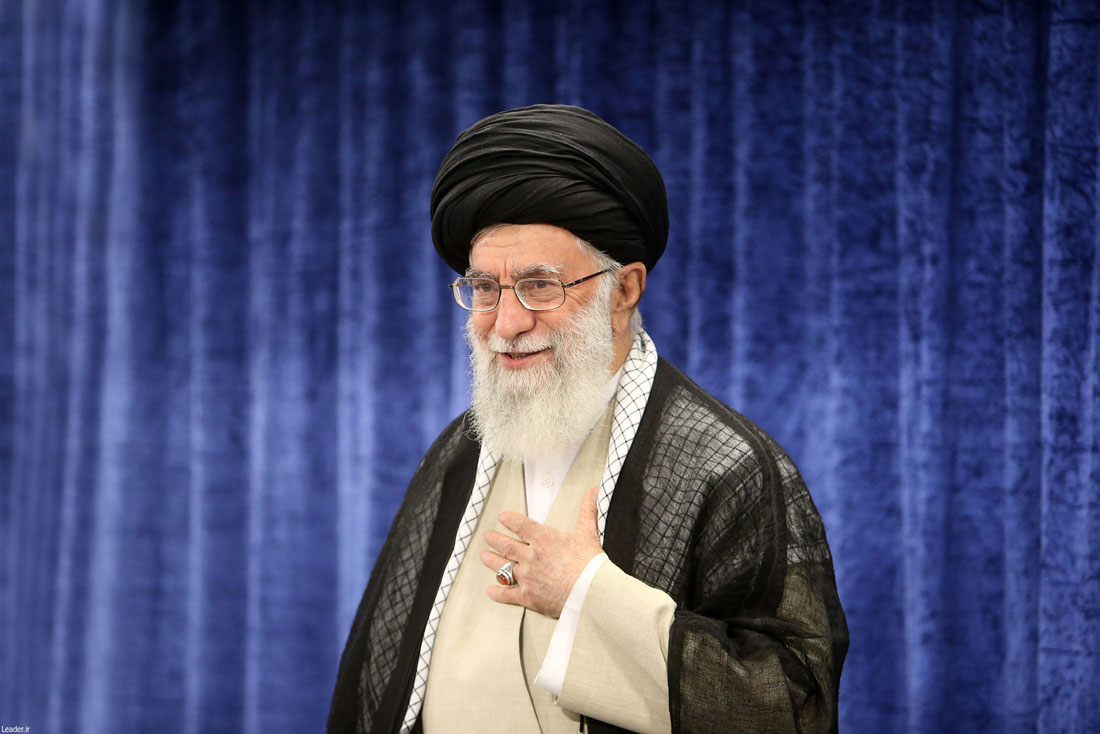
    Iran Leader sets 7 conditions for the continuation of the JCPOA

    He deemed the continuation of the JCPOA possible only if Europe provides seven concrete guarantees:


    1- During the last two years, the US violated the JCPOA several times, and Europe remained silent. Europe must compensate for that silence.


    2- The US has rejected the Resolution 2231; Europe needs to issue a resolution against the US’s violation of it.


    3- Europe must promise not to raise the issues of missiles and regional affairs of the Islamic Republic.


    4- Europe must encounter any sanction against the Islamic Republic and explicitly stand to US’s sanctions.


    5- Europe must guarantee that Iran’s oil will be completely sold. If the US can damage the sale of our oil, we must be able to sell as much oil as we want. Europeans must guarantee that they compensate for the loss, and that they buy Iran’s oil.


    6- European banks must guarantee transactions with the Islamic Republic. We have no conflicts with regard to these three countries; but we do not trust them, based on previous experience.


    7- If the Europeans hesitate in responding to these demands, our right to resume the closed nuclear activities is preserved.


    Also Imam Khamenei added: “There is much evidence. Some European companies have left. Some of them are leaving, or they say they are not sure if they will remain. The heads of European countries say different things. For our economy, we cannot rely on JCPOA and the Europeans. These three countries acted against their word some thirteen or fourteen years ago; in the nuclear negotiations, they promised and didn’t keep their promise, now they should prove that they won’t repeat the same untruthfulness and prevarication this time.”

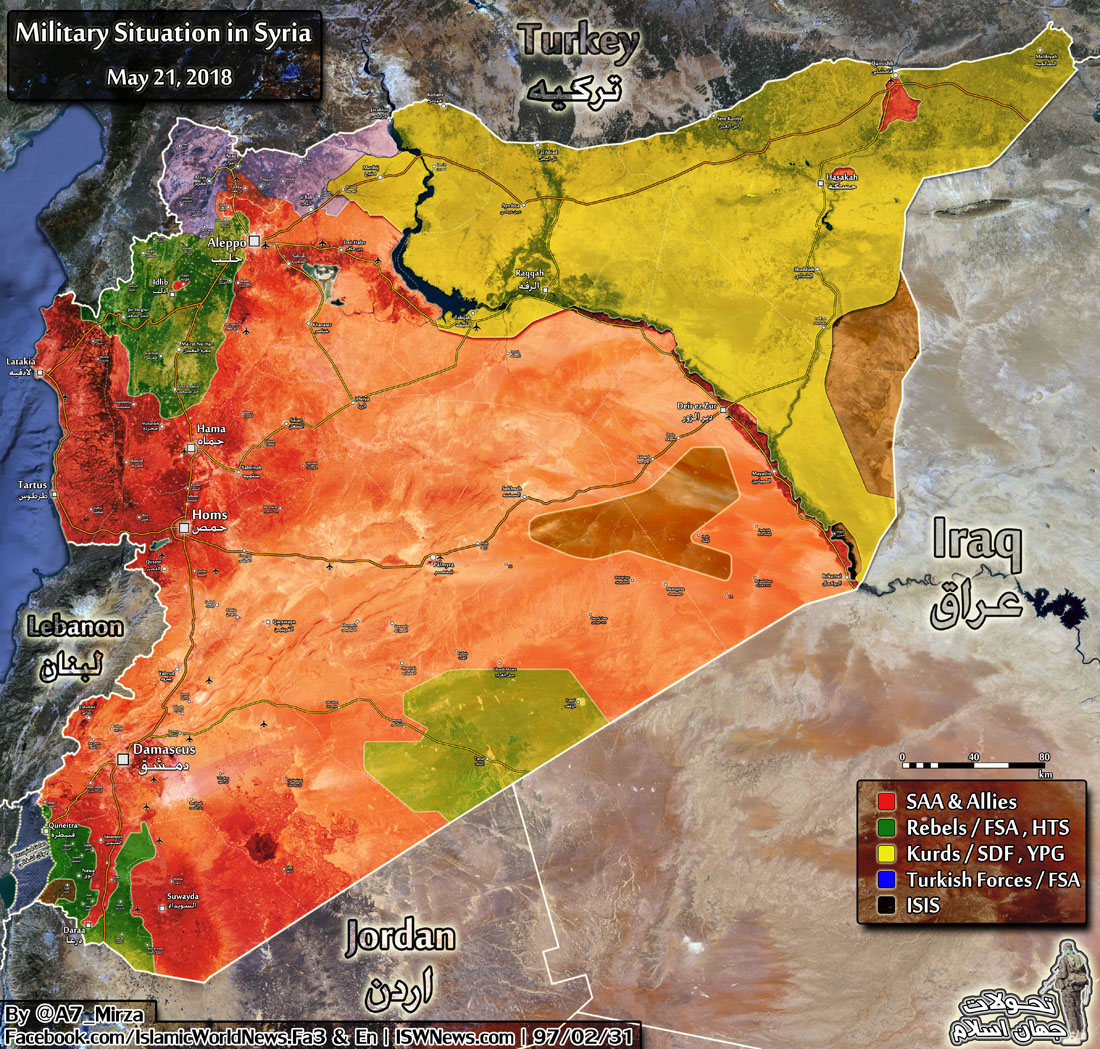
  • Latest Map of Fronts in Syria until May 21, 2018; Everything You Need to Know About the Past 97 Days

    Latest Map of Fronts in Syria until May 21, 2018; Everything You Need to Know About the Past 97 Days

    Latest HD map of fronts in Syria: Download

    The online map of Syria : Click here

    Map of 97 days ago for comparison: Here


    ? The most important changes in the past 97 days are as follows :


    Afrin region

    Without any doubt, the most important event and change in the northern part of Syria, is the occupation of “Afrin” region by the Turkish Army and Turkish-backed militias which are under the direct command of Turkey.

    In the recent writing of us, we mentioned briefly some of the reasons for the fall of “Afrin”; where the Turkey with opportunism and use of factors like, constraining Russia, the stubbornness and lack of discretion & foresight of the Kurds, and the low effect of the resistance axis forces, were successful and managed to kick the Kurds out of the northwest of Syria, and achieved its goals.


    With Russia giving an obvious green light to the Turks to fly their airforce freely over the “Afrin”, and the pigheadedness of the Kurdish commanders which were under the command of the United States, it was so clear and natural that the Syrian government and resistance axis forces hands would be tight in this matter. And the military & logistical donations of the resistance axis to “Afrin”, was the best attempt that they could do in that time. These supports in some periods could only decrease the pace of the Turkish army’s advances, nothing more.


    If we look back to the situation of Afrin a little while before the Turkey’s aggression, it wouldn’t be so hard to “make sense” of the “Afrin” event. where the operation of SAA was stopped at the gates of “Saraqeb” and the Turkish forces —with the green light that was given by the Russia—facing the resistance of the SAA and resistance axis to some extent, managed to deploy themselves in Al-Eis and its roundabouts.


    The Turkish forces, however, managed to capture Afrin city in March 17, 2018, 59 days after the initiation of “Operation Olive Branch”.

    Further more, with the militias advancing in southern Afrin, the “Shia” populated towns of Nubl & Al-Zahraa, were under the danger of a new siege, more than ever. Hence the resistance axis and SAA in an effective action, managed to gain control of some of the regions around these towns. With this move, practically, the “Operation Olive Branch” came to an end in northwest of Aleppo.


    About some of the most important achievements of Turkey in this operation, we can mention:

    The reconnecting of northern parts of Aleppo to Idlib;

    Expelling the Kurds(militias) out of northwest of Aleppo;

    Obtaining full control over the affairs of the people in the region;

    and finally gaining an important military & political leverage in order to use it against Syria in future negotiations.


    East of Syria

    In east of Syria, and in continuation of advances by US-backed forces, namely SDF, all of the oil wells in eastern part of Euphrates has fallen to the hands of SDF.
    Cooporating with Iraqi intelligence & military forces, SDF advanced on borderline and with capturing the Baghoz village, located in north of “border crossing” of al-Qaem-al-Bukamal, the SDF managed to encircle the remaining ISIS forces at eastern Euphrates in two northern & eastern pockets .

    Now continues the operation of US-led coalition & SDF against ISIS. The Syrian Democratic Forces, “SDF” are trying to capture “Hajin” village.
    The important village of “Hajin” which is said to be the main base for ISIS in east of Syria, is under the heaviest strikes from both air and ground forces.


    Also in southern part of “al-Mayadin” town, the SAA and its allies, in a series of intelligence operations, managed to liberate Al-Fayzat and Al-Tammah from ISIS.


    South of Syria

    “Liberating the entire Damascus and Rif Dimashq Governorate“, is something that in the eyes of the experts and people, was impossible.

    Yet the SAA with leaning to its allies & their victory’s outcomes and sacrifices of the warriors over all these years, thrived to achieve it over different battles and negotiations.


    On February 25, 2018, The SAA launched the final phase of its operation in eastern Ghouta of Damascus, which in the end led to clearing the eastern Ghouta completely.
    Making massive preparations and the vast presence of brigades & forces for this operation, shows the strong willingness of SAA and its allies to end the eastern Ghouta matter.

    Unfolding the will of the SAA and its allies, the so called “Internatonal Organizations” in order to make their final efforts to prevent the liberation of eastern Ghouta, have once attempted to make a 30 day ceasefire so that atleast it delays the SAA’s advances in eastern Ghouta.

    The Syrian Government, however, not only continued their operation, but also their will & determination strengthened even more.


    The speed of this operation was that high, that under the 30 days, about 75% of the eastern Ghouta was liberated and the militants were encircled in three separate region.

    Latest Updates on Eastern Ghouta of Damascus; the Ghouta is Divided into Three Parts!


    Ultimately, with SAA increasing its pressure, the militants of “Jaysh al-Islam” and other groups, were compelled to accept the “Compromise Agreement” and surrender to SAA.


    Hence the militants and those who didn’t want to stay in the region, in different stages and after surrendering their heavy and medium weapons, left eastern Ghouta.

    And in April 14, 2018, in an official statement of the armed forces of Syria, the SAA enetered “Duma” —the last den of terrorists in eastern Ghouta— and cleared it.

    Therefore after years, the security have once again returned to eastern parts of Damascus.


    How the SAA & Allies liberated Eastern Ghouta from Militants in their last operation in the area.


    It needs to be mentioned that with the liberation of eastern Ghouta, overall about 175,000 of southern Ghouta’s ihabitants left the region, including 21,000 militias and 40,000 of their families.


    After liberation of the eastern Ghouta of Damascus, other options for reconciliation and liberation, such as the siege of eastern Qalamoun, al-Dhumayr and the southern Damascus areas, were put on the government’s agenda.


    In the next stage, the militants of al-Dhumayr with accepting the “Compromise” left this region and the SAA aimed its attacks towards eastern Qalamoun regions and by going around of Al-Ruhaybah, the militias have once again came under pressure.

    Simultaneous with these events and alongside the operation in eastern Qalamoun, the operation in southern Damascus against ISIS, staterd.

    After the siege of “Al-Ruhaybah”, militants of eastern Qalamoun including the most important ones like, “Ahmad Al-Abdo”, “Aswad Al-Sharqia” (backed by United states-Jordan forces), and FSA, were compelled to accept the SAA’s suggested compromise agreement , and like other militias, give up their weapons and go to northern Syria.

    Therefore on April 25, 2018, Eastern Qalamoun was completely cleared of militias presence.


    After clearing Eastern Qalamoun, the southern Damascus was the last place which were occupied by the militias in Damascus province.
    The SAA with the help of its allies in April 19, 2018, started its operation to liberate the southern Damascus from the hands of ISIS terrorists.
    Because of the high density of wrecked buildings and the nature of ISIS, operation in this pivot continued with more difficulty and caution.

    It needs mentioning that the present militias in southern Damascus —with negotiations which was on in recent months, ultimately after the initiation of SAA’s operation against ISIS in southern Damascus— agreed on leaving the the region.

    Therefore the operation of evacuating the militias out of this region happened simultaneous with SAA’s operation against ISIS.


    The advances against ISIS in Hajar Al-Aswad & Yarmouk Camp were so “buidling to building”, that the ISIS terrorists were convinced that there is no way but to surrender. Heretofore the ISIS terrorists had rejected all the Syrian governemnt’s suggested compromises .


    Eventually, one month after the initiation of the operation in May 21, 2018, with an agreement, the ISIS terrorists managed to leave the southern parts of Damascus completely, hence with the liberation of southern Damascus all of Damascus and “Governorate of the Countryside of Damascus (Rif Dimashq Governorate)”, —after 7 years of different terrorist groups presence— were liberated.


    Latest Military Situation in Southern Damascus 21 May 2018; Yarmouk Camp Liberated, Rif Damascus Governorate Completely Liberated!


    West of Syria

    The siege of northern Homs (The al-Rastan pocket) was one of the other important middle parts of Syria, which was under the occupation of different militia groups, most notably Hay’at Tahrir al-Sham “HTS”.


    Liberating these regions returns the security to countrysides of Homs, Hama and Salamiyah in one hand, and would open the strategic “Hama-Homs’ road which was closed for years because of the presence of the militants, on the other hand.

    Also it would be a source for SAA’s manpower, and they could fight the terrorism in other parts of Syria.


    Because of the sensitivity of region, the peace talks failed many times, but ultimately—with massive deployments of SAA’s convoys to Homs, the news of SAA’s Imminent operation and militias fear of this matter— the militias accepted the agreement and left the region.

    For more information, look at this article: Reconciliation Agreement in Northern Homs or Military Operation?!


    From May 3, 2018, with militias giving up their heavy and medium weapons to SAA, the compromise agreement was executed officially.


    Generally, the operation for evacuating the militias from northern Homs, implemented in two stages:
    1) The SAA’s forces and the Russia’s military police with their entrance in eastern part of the “al-Rastan pocket” and raising the flag of Syria.

    2) The western part of the “Siege of Northern Homs” with the entrance of SAA to every single of villages and raising the Syrian flag in them (as a sign of liberated regions),

    and therefore all the northern regions of Homs was cleared completely from the threat of militias.


    It needs mentioning that during the evacuation stages, about 35,000 of militias with their families evacuated from the northern Homs, towards north of Syria.


    If you’re able, and if you like our content and approach, please support the project. Our work wouldn’t be possible without your help:

    BTC: 1BvrWhL7UQQgv6BNwCiV56YMaMcxJy5T5A

    BCH: qpm7pgnypm0v070mh032s0vmgyl972zgk5atqtttnw

    ETH: 0x29722b2D6c64Bb1d83568d6a5026B02170E12460

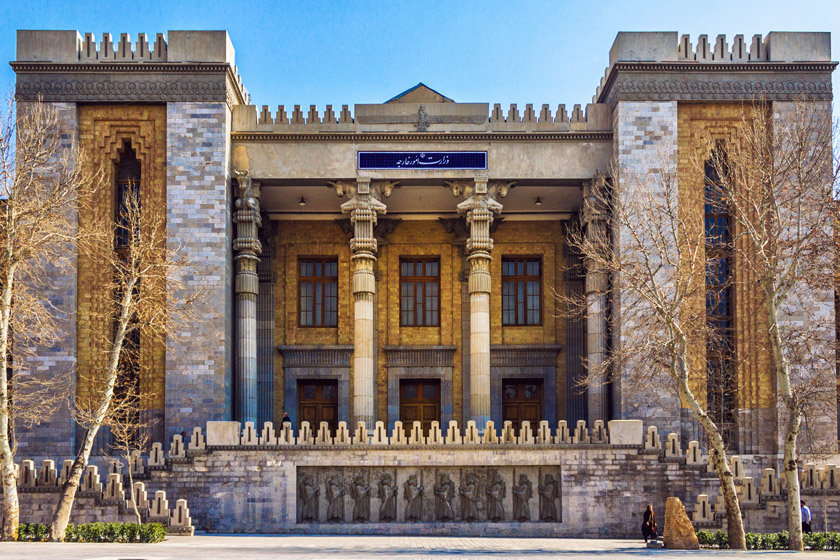
  • The Statement of the Iran’s Foreign Ministry in Response to United States Secretary of State Comments

    The Statement of the Iran’s Foreign Ministry in Response to United States Secretary of State Comments

    In a Monday statement, the Iranian foreign ministry said the cheap, baseless, insulting and interventionist remarks made by Mike Pompeo and the accusation he levelled against the great and civilized Iranian nation are indicative of US officials’ despair and desperation in the face of the Iranian nation. According to the statement, Pompeo’s remarks are also regarded as a cowardly attempt to deflect the world public opinion from Washington’s illegal move (its unilateral withdrawal from the JCPOA) and its breach of obligations under the nuclear deal, which is in contravention of international regulations and the UN resolution proposed by the US and adopted unanimously.

    Pompeo’s remarks once again portrayed information poverty, weakness in insight, analytical backwardness, and confusion in decision-making processes in the United States, and showed that the radical and warlike currents in America were neither know history nor able to learn from it.


    Despite the opposition of all countries, the American regime—with only a few petty regimes— which transgressed all of it’s political, legal and international obligations, is in no place to dictate conditions to a great country like Iran which adhered to it’s obligations.


    The America, which all the misery in our region, from Iraq, Syria and Lebanon, to Palestine, Yemen and Afghanistan, is because of its Interference and intrusions & its allied medieval dictatorships, is in no place to dictate Iran’s policies in its region.


    The fathers of Al-Qaeda & ISIL and hundreds of other terrorist groups which have jeopardized the peace and international security, are in no place to invert the truth about the stabilizing and anti-terrorism actions of Islamic Republic of Iran on elimination of terrorism from this region and the world, in order to follow its illusions on  hegemonic illusions.


    We recommend the leaders of American regime, specially U.S. Department of State, to learn from the fate of their past politics towards the nation of Iran, and stop their interventionist and defeated politics in order to divide nation from the popular system of Islamic republic of Iran, and not embarrass itself in front of world public opinion, anymore.


    The Islamic Republic of Iran, is a system that is rooted deep within the Islamic Revolution of Iranian people, which during the four decades of its full of bless existence, proudly stood against all the grim plots of the America and its allies, and prevailed. Also henceforth Iran will powerfully continue to live on and will defeat the new plots of America.


    The Islamic Republic of Iran, with denying every last one of these accusations and lies coming from this “So Called”new strategy of America, recognizes these shameful statements as clear intervention in internal affairs and an illegal threat against an United Nation member, and reserve any legal actions for itself. The responsibility for consequences of any abusive, illegal and forceful actions rests on United States of America.

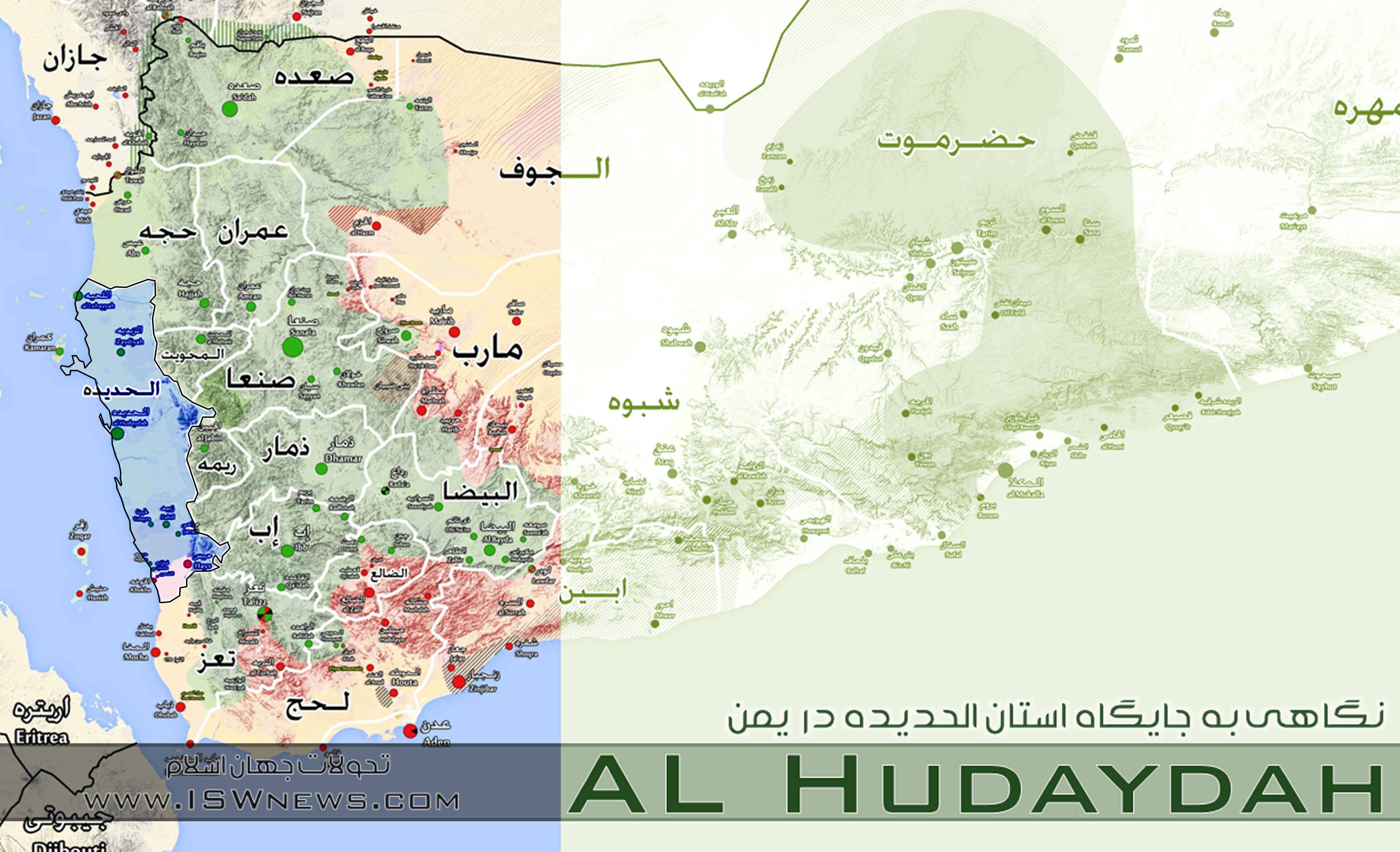
  • Know Yemen better: Looking at position for al-Hudaydah province in Yemen

    Know Yemen better: Looking at position for al-Hudaydah province in Yemen

    Al Hudaydah, Taiz and Hajjah are three western provinces of Yemen that located in the neighborhood of the Red sea.
    Currently, the Ansar Allah forces accessibility to Taiz coasts have been cut off, and also Hajjah coasts have not so much role in Yemeni maritime communications; And meanwhile, Al Hudaydah ports have a better location with the sea. Therefore, the Saudi coalition dominance over Al Hudaydah can complete the ground siege of Ansar Allah and also make impossible the very limited marine communications.

    A historical look to the Al Hudaydah:
    Al Hudaydah is located in the 226 km of Sanaa; with Mahvit, Sanaa, Dhamar and Ibb provinces from the east and with Taiz from south, from west with Red sea, from north with Hajjah province that is near the Saadah (the main origin of Ansar Allah and neighbour of the province of Saudi Arabia), is coborder.
    The geographical location, climate diversity, and plentiful wealth of this province caused the “mountain forces” to greed for occupying this region and using its vast farms.

    The mountainous were the tribes from the north of Yemen, that were imposing some form of racial discrimination against Al Hudaydah main residents. The same greed on Al Hudaydah lands and discrimination against its inhabitants led to the mountainous dominance on this region, forced displacement of its original inhabitants and excluding them from the political scene and decision making.

    The non-natives dominance on Al Hudaydah resources and to isolate of its inhabitants in the long time, has led to this region inhabitants voice not be heard in the international organizations and these inhabitants not be so much present in the political field.

    Thus, the province that is the second populous province of Yemen, lacks media persons proportional to its population size in the country and except few cases, lacks influential media persons.

    This situation has led to Al Hudaydah province media isolation, at least until before releasing the images of the famine and before Steven O’Bryan (envoy of the secretary general in humanitarian affairs and coordinator in crisis situation) visiting.

    The geographical blessings of Al Hudaydah has not led to any benefit for its inhabitants but it has caused many problems for them; as far as their historical war in the frame of the Zaraniq revolution (one of the Al Hudaydah tribes) that was happened against the Imam (Zaidi) government in the decades before the revolution of Sep 26th 1962, and has led to isolating and complete repulsing of them and finally interacting with them as a rebellious movement (not one of the 26th Sep revolution puzzle pieces); and same history has led to many people accuse the Ansar Allah that they want to intentionally destroy the Al Hudaydah.

    The Yemen war operation planning room has not confined to making the religious and ethnic divisions, and in some cases in the process of planning the operations have attempted to find historical similarities.

    For example, the dominance on Al Hudaydah (that is considered the key to Ansar Allah surrendering and the realization of the six-part system), is the path that the Ottoman kings (Sultan Abdul Majid I) considered for dominance on the north of Yemen and moving for occupying the Sanaa.

    Therefore, cutting the access and connection of  Ansar Allah with the sea, complete land blockade, moving to Sanaa, imposing political pressure and having upper hand in negotiations and… are the factors that have led to Saudi coalition command room to think about occupying the Al Hudaydah, the second populous province of Yemen.

    Al Hudaydah districts
    Al Hudaydah tribes
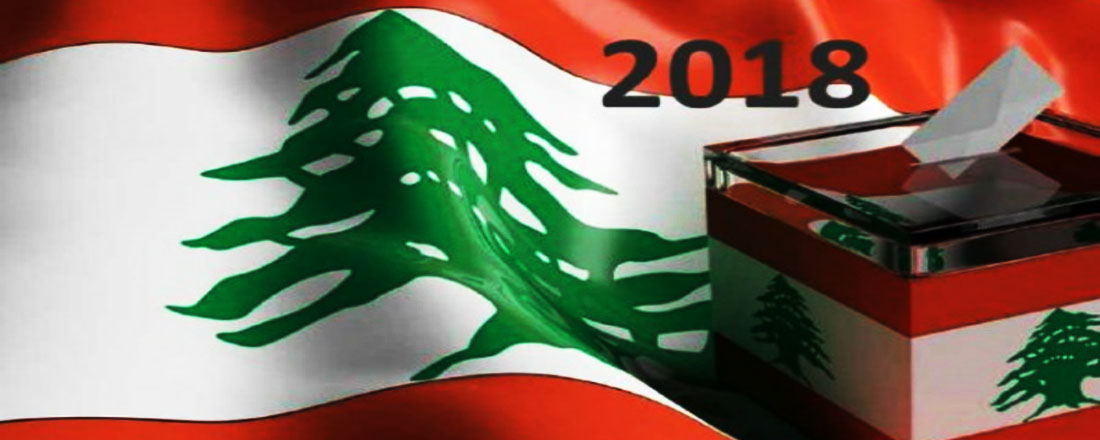
  • An Astute Glance at Critical Parliamentary Election of Lebanon

    An Astute Glance at Critical Parliamentary Election of Lebanon

    Islamic World News Analysis Group reports that it seems Lebanon is a rich and problem less country, which is partially correct but there are lots of political and social troubles in bride of Western Asia. One of these political problems is the parliamentary governing system which dominates everything from assigning the president and prime minister to legislation and vote of confidence among others. In another word the only opportunity that Lebanese are involved in the destiny of their country is parliamentary election but it is not very easy.


    History of Parliamentary Election in Lebanon

    Basically, election in Lebanon is an unreachable dream, since Lebanon is always engaged in civil or foreign wars and occasionally there is an opportunity to hold a political system but it is very rare. For example, after the election in 1972, the parliament was extended for 20 years due to civil wars and war with Israel. After the election in 1992 until 2005, election did not take place due to governing political situation. The only time that the election was held on its four years rendezvous was in 2009 but again in 2012 due to critical situation in Lebanon and Syria and domestic political conflicts between adherents and opponents of Syrian government, the election was postponed for another four years and in 2016, due to lack of president and political conflicts the parliament was extended temporarily. By assigning Michel Aoun as president in 2016, he chose 2018 as the election date but this election has several complexities.


    Election Law, a Tumult Which Finished

    A principal trouble in parliamentary election of Lebanon is the law of election. Based on the old law of election which was approved in 1960, Lebanon election is a majority election, which has a lot of drawbacks. The first drawback is dividing Lebanon into several election districts and hence conflict in Lebanon. The second is omitting the political minority, i.e., minor parties do not have any chance to enter the parliament. The third and the biggest drawback is the injustice inherited in it. For example, in a district if there are 10 seats to be occupied and one party wins 51% and the other 49%, the party with 2% more votes occupies all seats and 49% of people do not have any member of parliament. In this method, people elect individuals not the parties.

    In 2017 a new law was approved which corrects the older law of election. According to the new law, there is more justice among parties. For example, if one party wins 60% of votes and the other 40%, they share the seats according to their votes and there is no absolute dominance of one party.

    Map of Seats per each Districts According to the New Law


    Situation of Moghawemat Movement in Different Districts

    South of Lebanon

    Hezbollah and Amal Movement are very active in south of Lebanon, the political alliance of Hezbollah and Amal Movement have the highest fans and with Nabih Berri, the head of Amal Movement as head of the joint list under the title hope and loyalty, nothing other than absolute win for this alliance is expected.

    Alliance between Hezbollah and Amal Movement is Unbreakable and Unfilterable


    Baalbek-Hermel District, Center of Saudi-Emirates Plot

    Beqaa valley is a base of Hezbollah; however Amal Movement exist there too but people of Lebanon consider people of Beqaa in fight against Zionists in south of Lebanon as strategic army of Hezbollah in hard days. This has changed in recent years with the fight against extremist groups and the role of Beqaa as a base of Hezbollah in east of Lebanon has been emphasized more. But Beqaa in despite of their great sacrifice has a poor living condition and people of Beqaa do not have much role in the economy. This was a good reason for Saudi-UAE alliance to work on to destroy Hezbollah influence in this region. Even ambassadors of UAE and Saudi visiting Beqaa claimed that they aim to destroy Hezbollah in Beqaa.

    On the other side Hassan Nasrallah, secretary of Hezbollah, said that we do not let those who betrayed people of the region when extremists were attacking every day to be representatives of Baalbek-Hermel district. Sayyid Hassan Nasrallah said that I will come and speak for people of Beqaa personally if necessary but answer of people of Beqaa was positive and it let head of Moghawemat to be assured that Baalbek-Hermel is a base for Hezbollah.

    All of these signs show that in this region the majority of seats will be won by Hezbollah and a small of number of seats will be won by 14th March Movement close to Saudi-UAE alliance.


    Beirut and North of Lebanon

    In Beirut, Hezbollah has alliance with Free Patriotic Movement led by Michel Aoun president of Lebanon. This alliance has a high chance of win in Beirut since fans of Michel Aoun are increasing in recent years however due to unknown reasons the relation between Free Patriotic Movement and Amal Movement is not good. Although both are Hezbollah allies but verbal fight has increased between them and Hezbollah tried to be neutral in this conflict and fixes it after the election.

    But in north of Lebanon, Hezbollah and Moghawemat Movement do not have direct activities, since the region is under influence of 14th March, but chance of Hezbollah to bring members of parliament via Free Patriotic Movement is high.

    Hezbollah and Free Patriotic Movement Signed Their Alliance 12 Years Ago


    Conclusion

    Election in Lebanon has always a predictable result since the districts of influence of each side is known. From now the results can be guessed by 70% and say who stays in political system of Lebanon, but in the two districts of north and Baalbek-Hermel, we should wait and see who will be elected.

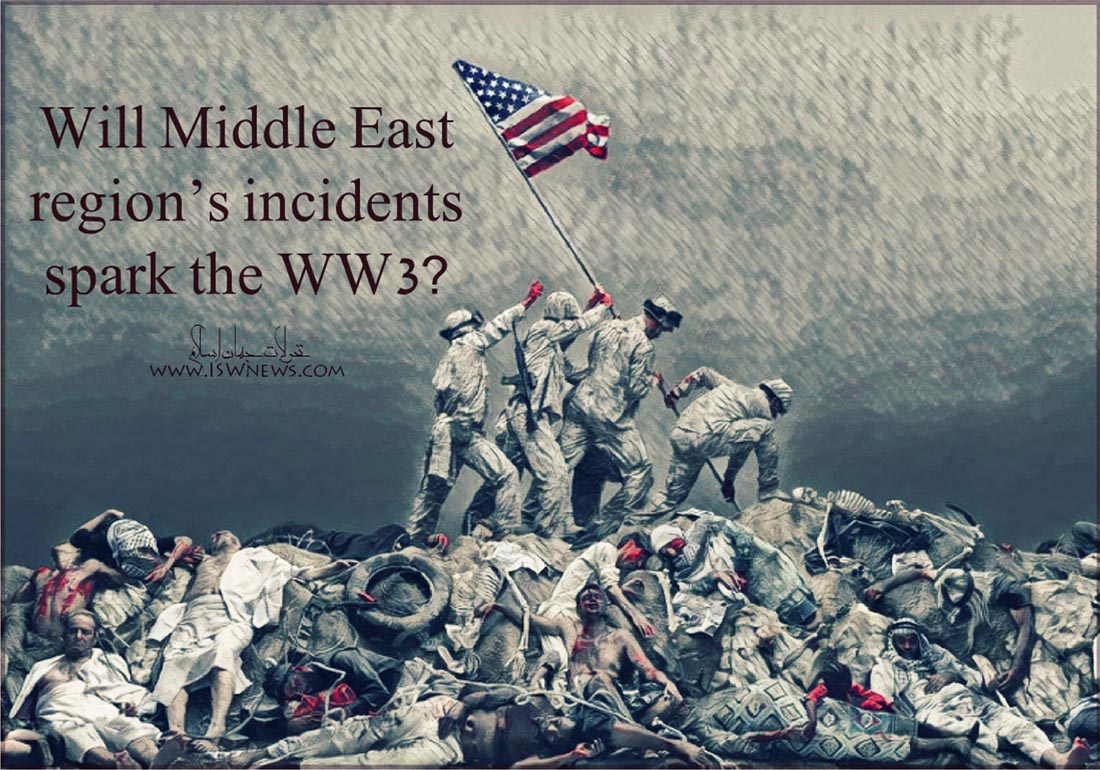
  • Will Middle East Region’s Incidents Spark The Third World War? Part One

    Will Middle East Region’s Incidents Spark The Third World War? Part One

    In recent years, countries with power and authority (specially in west of Asia) to achieve their goals form economic, political and recently military alliances.

    Shanghai Cooperation Organization, BRICS, NATO (to confront USSR and then Russia), Saudi-led Coalition (to confront Islamic Resistance, Moghawemah) among others are some examples and now in west of Asia and in post-Takfirism (extremism), western countries to implement a new plan.

    A plan that Prof. Aleksandr Dugin (Russian strategist) believes Sergei Skripal terror and chemical attack to Douma are introduction to third world war and Abdul Bari Al- Atwan (famous Palestinian analyst) says that according to recent Trump’s assertions, assault of the West will span beyond attacking T4(Tiyas) airbase and even Russian positions are threatened by USA and its allies!

    To enlighten different aspects of the recent incidents, answers to some questions out of many questions are examined:


    1. What will happen if war starts?

    In one plan, USA and the Zionist regime and other allies attack some of the bases in Syria (similar to the missile attack to Shu`ayrat airbase) that Syria answers in three ways:

    Foreign bases in occupied Palestine will be targeted or US bases inside Syria such as al-Tanf and Ayn Eissa and etc will be targeted, or even no military retaliation and only diplomatic solutions.

    If in these attacks Moghawemah(Resistance) forces are attacked too, probably a response similar to first or second will be used and if USA responses again, Moghawemah responses back and so on until one side stops, otherwise this results in a wide war spanning the whole world similar to the final years of war between Iran-Iraq which resulted in oil export difficulties from Strait of Hormuz in Persian Gulf. In this case, not only Strait of Hormuz but also Bab al-Mandab Strait and Suez Canal are threatened.


    2. Does Moghawemah(Resistance) have enough strength to answer USA and its allies or even the recent attack to T4 airbase?

    Considering the current situation (economic problems in Iran, Iraq being busy with elections and still dealing with ISIS, Syria engaged in a war and dealing with state decomposition, AnsarAllah under air raids and siege and Russia’s complicated and unknown stands) the answer is very difficult, however there is preparation for engagement at all levels. In addition, Iran’s Sword of Damocles, i.e. Hezbollah, is on the throat of Israel.


    3. In the case of a war, what will be the reaction of Saudi Alliance?

    There are two possibilities:

    First is that they participate in the war, in this case the harshest reaction of Moghawemah(Resistance) will be for Riyadh and Saudi bases after occupied Palestine. Considering troubles of Saudi including domestic protests (suppressions in al Awamiyah and Qatif), war with Yemen and cut relations with Qatar, their engagement with a bigger war will result in their removal from the region.

    In second possibility, they do not engage in war and only pay the West for the war. In this context, we refer to crown prince of Saudi who said there is a high chance of engagement with Iran in the next ten to fifteen years and indeed current situation is surprising for him. He is in a trip to Europe and negotiation with powers such as France. However Macron, president of France has always insisted on solving the problem by negotiation and demanded to limit Iran’s missile power and exiting it from the region.


    4. Which areas will be involved?

    The most immediate points to be attacked are US bases in north of Syria, occupied Palestine and other US bases in the region from Bahrain to Iraq are at higher level of reaction. Military ships and tankers also will not survive.


    5. What will be the result of war?

    According to studies of American Thinktanks during the time of George Bush (after Afghanistan war and during the military drill of millennium challenge) the cost of fighting with Iran is very high and it causes a high spike in oil price and up to 20 thousand of casualties for US and allies.

    On Iran’s side there is no study but indeed the casualties will be severe too.

    But it is noteworthy that US tried to attack Iran from 1979 revolution several times and they know that the situation has changed from early years after revolution and Iran-Iraq war time and even after Sadam’s fall. So the casualties should be more than 20 thousand or the oil price should go even higher and also it can result in Saudi and Zionist regimes’ extinction.

    This is not a slogan and by studying the recent situation of Saudi Arabia (with reasons mentioned in third question) and Zionist regime (due to Moghawemah preparation in Palestine and the narrow width of this region up to Mediterranean Sea), they are very likely to extinct.


    The confrontation between Moghawemah and the West is unavoidable and considering Russia’s effort to reduce the stress, passive assertions and silence of political and military officials, it is not very impossible that a severe war starts in a few days.

    Of course Trump’s threats and limited attacks and also sending messages via Russians and other pressure levers are to make Iran withdraw from victory and its position in the region specially in Syria, since the next step of Moghawemah is to end Israel in occupied Palestine and they have not seen themselves closer to extension in recent years than now!


    In the end, we can say that there is very high chance that US and Israel attack limitedly to Syria’s or Moghawemat’s positions. Beside military attacks, they will put political pressure to restart negotiations and these pressures might end up in “withdraw-missile negotiation-destiny similar to Libya” or it might end up in a severe war, which is called third world war(WW3) by Aleksandr Dugin or hot war by Abdul Bari Al- Atwan and the winner is the one who persists more.


    Read: Will Middle East Region’s Incidents Spark The Third World War? Part Two

  • United Nations facing the truth in Eastern Ghouta; Syrian war an unprecedented touchstone + Video of one of Ghouta citizens being martyred by militants.

    United Nations facing the truth in Eastern Ghouta; Syrian war an unprecedented touchstone + Video of one of Ghouta citizens being martyred by militants.

    Following the one-sided and faulty narrative of western governments and supporters of the militants, unprofessional, inhumane perspective, double and hypocritical standards that were clearly challenged in the synchronous events in eastern Ghouta-Damascus-Afrin right now, and previously in Aleppo-Mousel-Raqqa, are considered.


    Least of outcomes from this approach is downgrading the international organizations such as united nations, human right observer, amnesty international and even the red crescent to the level of a worthless tool in hands of warmongering western governments and their peers in western Asia and northern Africa.


    As expected, developments in Eastern Ghouta and its international reflection was similar to freeing eastern Aleppo. Although considering the documents and local militants in two regions we can say that social fabric of eastern Ghouta shows more support for militants, but still there are a lot of people in this region that oppose militants’ presence in their parts.


    Recent demonstration in eastern Ghouta’s towns which is growing in numbers each day, proves this fact.

    A fact that has almost zero reflection in western media and even international organizations. Because this portion of people, does not favor their version of story.
    So they’re censored out of the news just like the couple of million people in Damascus under daily mortars barrage, and also people of Salhab, Mahradeh, Fu’ah and Kafraya and rest of civilians in government territories.

    Even news from Afrin’s kurds that had more than 220 civilian causalities since the beginning of Turky’s operation in the past 50 days, got less coverage than Kubani.


    Official twitter account of united nations for humanitarian aid mentioned a bombardment of the safe passage for red crescent and UN aid convoy and also civilians without mentioning the attacker.

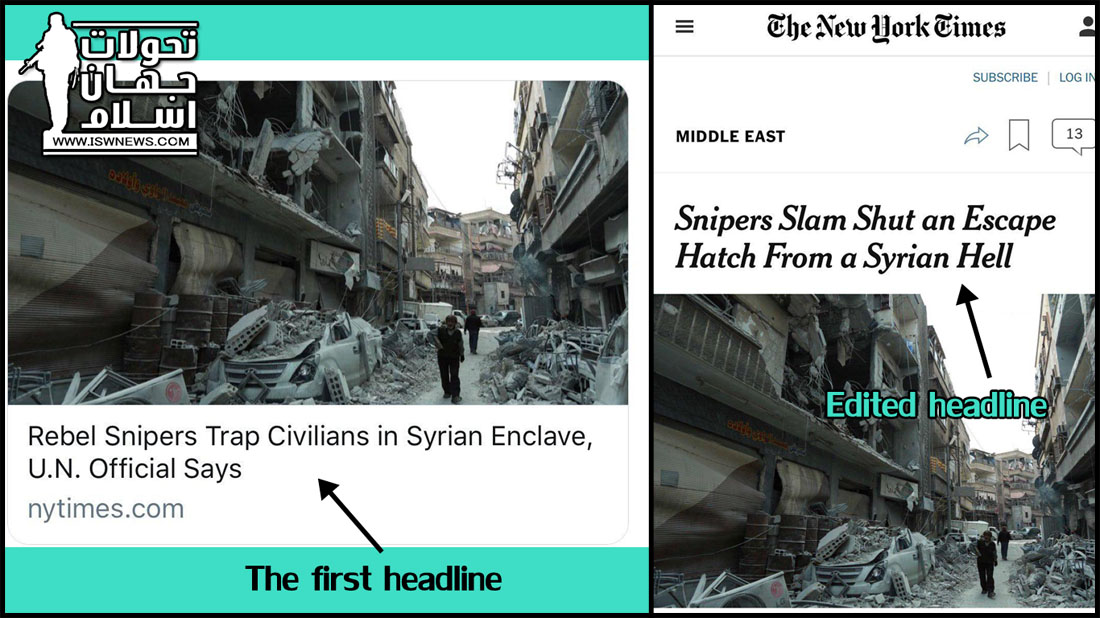
    Anne Barnard, New York time’s bureau chief in Beirut, while mentioning that tweet acknowledges that according to talks she had with authorities and also contacting people inside Ghouta, militants target the people who want to leave Ghouta with snipers, just like they did in Aleppo:

    Snipers Slam Shut an Escape Hatch From a Syrian Hell


    However according to NY times policy toward the war in Syria and supporting the militants, Barnard tries to cover that issue in her next twits with bringing up the baseless claims that Syrian government captures and punishes the people who exit Ghouta.


    A claim that was also made in western media during freeing of eastern Aleppo, but 130 to 160 thousand people safely exiting eastern Aleppo nullified it.

    Official statement of Jaish al Islam on prohibition of exiting their controlled territories with the excuse of preventing the mandatory immigration forced by Syrian government, proves that the militants use these civilians as a human shield.


    Update:
    As expected, ny times changed the title in an unprofessional manner and used the vague “snipers” word instead of “rebel snipers”:


    The video below shows yesterday’s demonstration in Kafr Batna one of towns in Eastern Ghouta, where people chant “ we don’t want the militants, we want Syrian arab army”


    Also, today in continuing the demonstration against militants in Kafr Batna, militants martyred one person by opening fire. The video below shows moment after bullet hit.


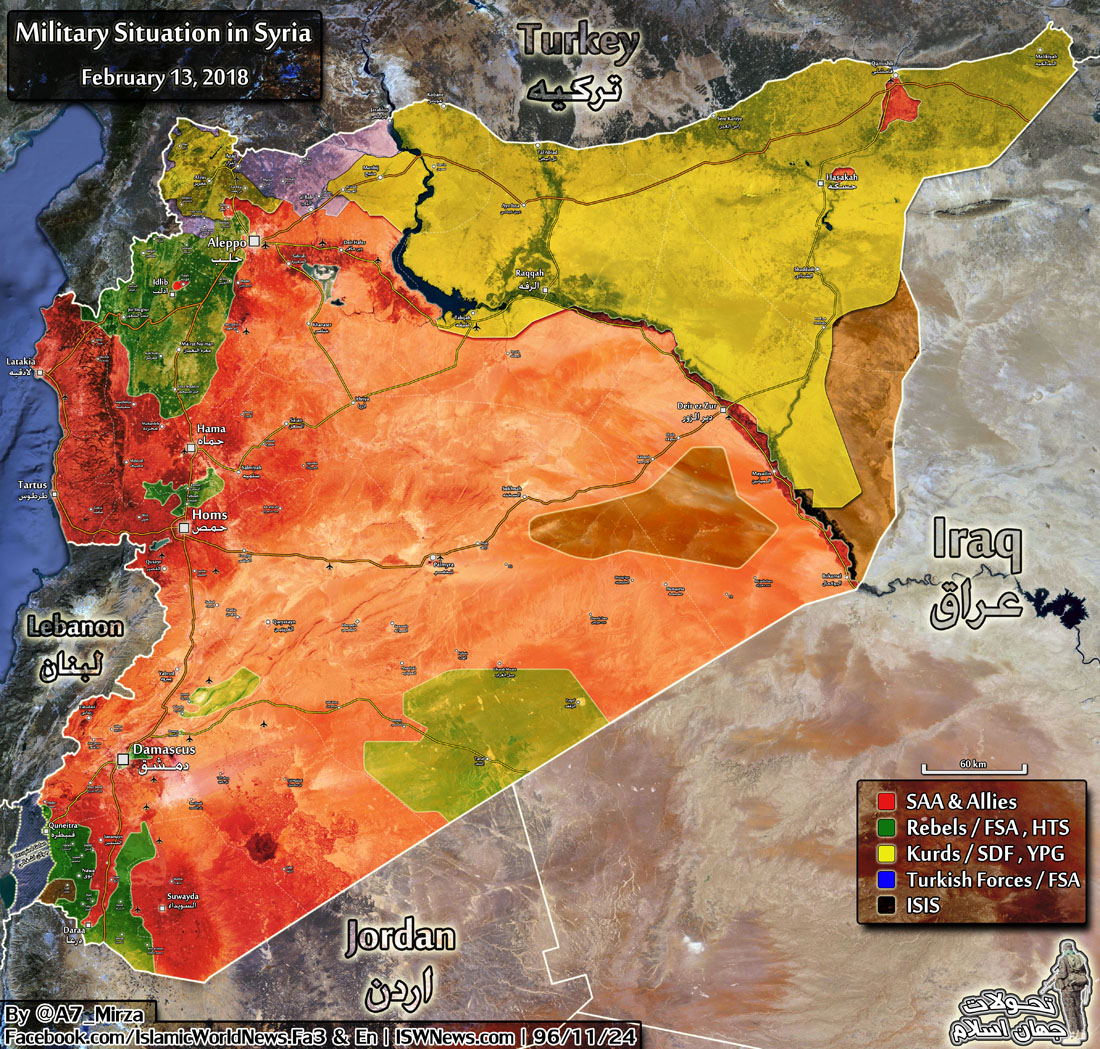
  • Latest map of fronts in Syria until 13 February 2018

    Latest map of fronts in Syria until 13 February 2018

    Latest HD map of fronts in Syria: download

    Map of 105 days ago for comparison: Here


    ?The most important changes during the last 105 days as follows:


    East of Syria:

    After liberation of Abu Kamal in 19 November 2017, a few villages between Abu Kamal and Salehiya and from Salehiya to al-Mayadin on the southern bank of Euphrates river are liberated by Moghawemah and Syrian Army troops thus the remaining bases of ISIS fall in east of Syria and ISIS are besieged in an area of 7,200 km2 in east of Homs and south of Deir ez Zor.

    After that to secure Abu Kamal, some of the deserts until Mu`ayzilah dam are also cleared up. This achievement happens after troops present in T2 area move toward north and Mu`ayzilah dam and some other troops join them from northern axis toward Mu`ayzilah and liberate the besieged area of about 2,000 km2.


    South of Syria

    The most important change in south of Syria is indeed the liberation of occupied areas by militia in strategic region of Beit Jin.

    In the last several years, these areas were safe place of terrorists and with the support of Israel and Jordan, by moving from Daraa to Qalamoun using the connecting roads and valleys, they were a serious threat to Damascus.

    After the operation in last year and liberation of Khan al Shih area in south of Damascus, several committees tried to negotiate with militia in Beit Jinn to avoid any bloodshed to liberate these areas and not harm civilian lives but they did not accept never or demanded out of question privileges.

    Finally in December 2018 when militia using obvious helps of Israel and using their observing posts detoured Syrian Army positions in Hadhar area using occupied Golan and attacked Hadhar to break the siege of Beit Jinn, Syrian Army follows the operation in Beit Jin with more determination and by defending militia attacks, increase their advances.

    The operation carried out using carrot and stick behavior and at each stage, Syrian Army using military activities and negotiations succeed to remove all the militia and their families from Beit Jin area and to raise Syrian flag on the heights and in January 2018, Beit Jin officially rejoins Syria again.


    Northwest of Syria

    As predicted by finishing ISIS in east of Syria (except some desert areas), the attentions and operations are now on Idlib and Hama governorates; therefor after implementing of the “de-escalation zone” plan in northwest of Syria and Turkish forces’ penetration to west of Idlib and Hama governorates, the operation of Syrian and Moghawemah forces in northeast of Hama and northern axis of Sa`an and Sheikh Hilal and inside Idlib governorate starts.

    In the region they advance from several axis; Moghawemat from Khanser and northeast of Hama and Syrian Army from north of Hama toward Abu Dohur airbase could liberate a vast area in a month.

    Overall liberated area from ISIS between Idlib, Aleppo and Hama governorates adds up to near 3,500 km2.

    Click here to Download the video of final steps of operation.


    Afrin area

    The other significant change is invasion of Afrin by Turkey and their militants.

    After the latest of Syrian Peace Talks in Astana which held with presence of different sides in Syria, Russian, Turkish and Iranian officials to investigate the situation of “de-escalation zone” plan, some Turkish troops establish in Idlib and south of Afrin area according to this agreement.

    But after Moghawemah and Syrian Army advances in northwest of Syria, which was according to the areas of “de-escalation zone” agreement as well, using some excuses and preemption, Erdogan invades Afrin.

    An attack which was not agreed on in the peace talk…


    Turkish operation condition is a mixture of Erdogan’s opportunity, Russian distraint, Kurdish and Moghawemat’s stubbornness and passivity, nevertheless Turkish invasion in Afrin is changing the area and if they occupy it completely, its impact on political future of Syria is inevitable and harsh.


    Further information can be found in the article “Russian game, Turkish opportunism and Iranian passivity in the north of Syria”

  • Investigating Four Decades War In Afghanistan

    Investigating Four Decades War In Afghanistan

    After assassination of Mohammed Dawoud Khan, the first president of Afghanistan, Democratic Republic of Afghanistan is established by Marxist People’s Democratic Party of Afghanistan (PDPA) in 1978. Marxist government enforces anti-Islamic rules which results in Mujahidin uprising and since government could not fight with guerrillas they ask for help from Soviets. Red Army after a long story invades Afghanistan in 1979 and withdraws in 1989 with almost 15,000 casualties and more than 50,000 injured.

    After this, communist government fights with Mujahidin for a few more years and finally after 14 years, Kabul is conquered by Mujahidin in 1992.

    From every aspect, invading Afghanistan by Soviet Union was a mistake and Imam Khomeini’s anticipation about Soviet is now applicable for US and their allies:

    “One day Soviet ambassador came to me and said Afghanistan government asks Red Army to Afghanistan, I told him it is a mistake by Soviet. Of course they can occupy Afghanistan but they cannot stay, if you think you can occupy there and calm them, it is a daydream. Afghanis are Muslims and are protesting government, even if you go there or any other powerful country, occupy there but cannot calm and control them and finally you are defeated.”

    After fall of government in 1992, Seven Party Mujahidin alliance do not agree on power and start to fight among each other for several reasons.

    Alliance of Peshawar Seven

    In 1985 an alliance forms between seven parties in Peshawar to form an Islamic government but later when they conquer Kabul in 1992, do not agree on power distribution and start fighting all over Afghanistan.

    These parties are:

    • Jamiat-i-Islami (Islamic group) led by Burhanuddin Rabbani and Ahmad Shah Massoud (mainly Tajiks)
    • Hezbi Islami (Islamic party) Hekmatyar branch led by Gulbuddin Hekmatyar (mainly Pashtuns).
    • Hezbi Islami Khalis branch led by Mohammad Yunus Khalis (mainly Pashtuns).
    • Islamic Union for the Liberation of Afghanistan led by Abdul Rab Rasul Sayyaf (mainly Wahabi Pashtuns).
    • National Islamic Front for Afghanistan led by Ahmed Gailani (mainly Sufi Pashtuns).
    • Afghanistan National Liberation Front led by Sibghatullah Mojaddedi (mainly Pashtuns).
    • Islamic and National Revolution Movement of Afghanistan led by Mohammad Nabi Mohammadi (mainly Pashtun).

    Image: Afghanistan after withdrawal of Soviet in 1989. Red: government, blue: Jamiat-i-Islami, olive: Hekmatyar, green and white: Khalis, yellow: Shiite parties, green: Nabi Mohammadi, violet: Sayyaf, pink: Gailani.

    Internal fight starts between different groups in Kabul and foreign countries, each supports one group.

    Pakistan supports Gulbuddin Hekmatyar, Uzbekistan supports General Abdul Rashid Dostum (a highly ranked official who leads National Islamic Movement party), Saudi Arabia supports Sayyaf’s group and other Wahabi groups close to them, Iran supports Shiite groups (Hizb-i-Wahdat (Islamic Unity Party) which roots in Nasr and Pasdaran and other groups) and Jamiat-i-Islami etc. who want the government of Rabbani.

    Hekmatyar allies with Sayyaf and later with General Dostum and has hardest confront against Dawlat and Jamiat-i-Islami. But in 1994, Massoud conquers Kabul and defeats troops of Hekmatyar and Hizb-i-Wahdat (Massacre of western Kabul and Afshar neighborhood happens during this time but criminals never determined and trialed but allegations are due Massoud and Rabbani’s troop and Sayyaf and Hekmatyar’s troops.). At the same time Mazari Sharif in northern Afghanistan is conquered by General Dostum.

    Coincidentally Taliban is established in Kandahar by support of Saudi Arabia, Pakistan etc. Taliban with Jihadi motto gathers a lot of troops and in first step conquers Kandahar. After two years by conquering Kabul, Herat and other eastern, northern and southern cities in Afghanistan claims the Islamic Emirate of Afghanistan which is accepted by Saudi Arabia, UAE and Pakistan only. The result of Taliban power is massacres, plunders and destroying historical places and other brutal crimes and only northeastern part of Afghanistan under the control of Ahmad Shah Massoud and Rabbani is safe.

    Massacre in Mazari Sharif and specially Hazaras who are mainly Shiite is one of most brutal crimes happened by Taliban. During the attack to Mazari Sharif, Iran consulate is attacked which results in death of 11 diplomats and journalists by Sipah-e-Sahaba, an ally of Taliban and Al-Qaeda.

    In 1996, after conquering Kabul by Taliban, General Dostum who feels the danger allies with Massoud. Later supported by Iran to promote peace and strives of Afghan leaders to unify different Shiite groups with Jamiat-i-Islami and supports of other countries, northern alliance forms:

    • Jamiat-i-Islami mainly Sunni Tajiks led by Ahmad Shah Massoud and Burhanuddin Rabbani.
    • Junbish-i-Milli (Islamic Movement) mainly Sunni Uzbeks led by Abdul Rashid Dostum.
    • Eastern Shura (council) mainly Sunni Pashtuns led by Abdul Haq and Abdul Qadir.
    • Harakat-e Islami mainly Shiite Tajiks and Hazaras led by Asif Mohseni and Sayed Mohammad Ali Jawid.
    • Hezb-e Wahdat mainly Shiite Hazaras led by Mohammad Mohaqiq and Karim Khalili.

    Northern alliance then saves northern and northeastern areas from Taliban (except Herat province).

    After 11 September 2001 attacks, USA accuses Osama Bin Laden. Bin Laden is born in a small area near Riyadh, Saudi Arabia and from the Soviet occupation of Afghanistan enters Afghanistan, after Soviet withdrawal, leaves Afghanistan and in 1994 comes back to Jalalabad and joins Taliban. Several terrorist attacks are attributed to him before 2001 attacks, such as attack to US ship in Yemen and US embassy in Tanzania.

    After Taliban does not surround Bin Laden to US, USA and their allies attack widespread Afghanistan in 2001 with the name “Operating Enduring Freedom – Afghanistan”. It is noteworthy that Ahmad Shah Massoud was assassinated two days before 9/11 attacks. He denied any foreign interference specially from US in Afghanistan when he meets US deputy of minister of foreign affairs.

    After heavy air raids performed by US and their allies, Kabul and some key cities are liberated by northern alliance in fall 2001. Mohammad Ismail Khan one of commanders of northern alliance and Herat ex-commander with support of Iran could take control of Herat again. Later on Kunduz is liberated and finally Kandahar is liberated in November 2001 and Taliban fell.

    After establishing the new government in 2004 by Hamid Karzai until now fights happen sporadically. During these years Afghanistan Army with support of NATO mainly operates several times to liberate occupied areas by Taliban but so far the total liberation of Afghanistan has not achieved. Taliban and some other separatist groups are still active in Afghanistan…

  • Investigating ISIS activities in Afghanistan

    Investigating ISIS activities in Afghanistan

    The issue of wars in Afghanistan in last decades and continuing them by Taliban needs a separate article, which will be addressed in near future. ISIS defeat in Syria and Iraq, makes the presence and activities of ISIS in Afghanistan important according to these points:


    Apparently ISIS main goal in ISIS Afghanistan (according to published maps by ISIS) is to dominate over Khorasan, which roots into their believes regarding apocalypse.

    But obviously there are more important goals, among others, threatening Shi’ites in Afghanistan and also Iran and Pakistan later. (Since Fatemiyoun and Zeynabiyoun troops have key role in defeating ISIS, weakening this strong point is in the schedule of ISIS commanders).

    On the other hand, bad financial situation, tribal disagreements, disappointments from Taliban or government and supports of intelligence services of western countries, are among the reasons ISIS survive in Afghanistan.


    As we also mentioned in “ISIS growth in Afghanistan” article, foreign members of ISIS in Afghanistan are mainly from Uzbekistan, Tajikistan, Kyrgyzstan, Pakistan, Iraq and Kazakhstan, who were active in “Islamic Movement of Uzbekistan” groups or ISIS in western Asia. (Islamic Movement of Uzbekistan who were active in Pakistan, as well, started their military activities against Pakistan army in March 2004 and were in coalition with Taliban and Al Qaeda.)

    Military tactics of ISIS in Afghanistan is similar to theirs in Iraq and Syria, which is Guerrilla (irregular) war. Unfortunately some of hideous activities such as Jihad Al-Nikah which attracts some people happen in their territories. (The devastating influence of these activities are not only to destroy the Islam credit but is more to destroy next generation, which is one of the goals of secularism and to increase the rate of illegitimacy in a thirty year religious war.)


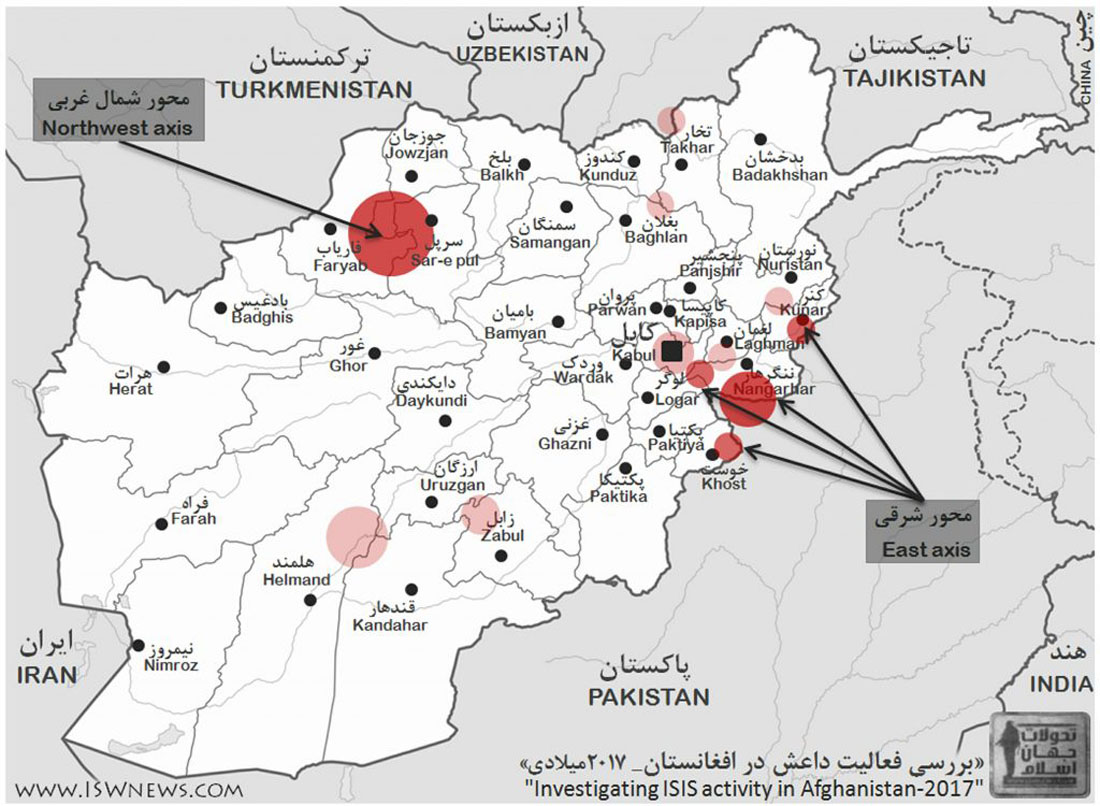
    By investigating ISIS activities in Afghanistan, they consider two major fronts for military operations:

    1- East front in Nangarhar, Khost and Kunar provinces, 2- Northwest front in Faryab, Jowzjan and Sar-e Pul provinces.

    In northern Afghanistan, Darzab and xxx cities in Jowzjan province, some regions of Bilcheragh in Faryab province and Sayyad city in Sar-e Pul province (XXX Shi’ite region is in the country of this city.) are under activities of ISIS.

    In eastern Afghanistan some regions specially in Nangarhar, Khost and Kunar provinces are reported to be ruled by ISIS but since that region is mountainous and impassable, it is difficult to occupy it.

    In general ISIS shows up in many different regions in Afghanistan but since people do not support them or they fight with Taliban or army, they did not develop further. In previous years Afghanistan defense ministry in companion with NATO performed operations to liberate aforementioned areas but due to harsh conditions in east and local forces’ lack of activity in northwest, ISIS could survive.


    P.S. Latest news from operation against ISIS in Afghanistan

    Afghanistan Defense Ministry reports that from yesterday an operation was started against ISIS in east and eight villages in Khogyani, Nangarhar province so far. Also the operation in northwest (Faryab, Jowzjan and Sar-e Pul provinces) will start soon.

    This operation starts while there are news that some of French and Algerian forces of ISIS after their defeat in Syria and Iraq have joined them in northern Afghanistan.


  • Muslims Defeated the “Islamic State”, Israel Is the Big Loser

    Muslims Defeated the “Islamic State”, Israel Is the Big Loser

    Most observers would agree that the United States has directly or indirectly contributed to the creation of most of the international terrorist groups that have been in the news for the past thirty years. The narrative of how Osama bin Laden and what was to become al-Qaeda were initially supported by the U.S., Pakistan and Saudi Arabia to drive the Red Army out of Afghanistan is well known. Washington did so with little regard for broader agendas, including removing the United States out of the Middle East and regime changing the existing secular and religious Arab states in the region.


    When the American supported Holy Warrior Mujahidin were successful beyond their dreams and succeeded in forcing the Soviets to withdraw during 1998-9, a weak Moscow-supported Mohammad Najibullah regime stayed in power, only to be defeated in 1992 by the Taliban, who were one component of the Islamist groups that were being supported by the U.S. and its partners. The Taliban soon demonstrated that they too were not willing to be tools of either Islamabad or Washington and eventually provided al-Qaeda and bin Laden with a home, the casus belli that led to the U.S. attack on Afghanistan after 9/11.


    The U.S. occupation of Iraq followed, based on a similar pretext, i.e. that Saddam Hussein was in league with terrorists and was preparing weapons of mass destruction that threatened the United States. The deliberate dismantling of Iraqi government mechanisms coupled with a collapse in its civil society resulting in extreme sectarianism led many Sunni Iraqis to join the next emerging terrorist group, the Islamic State (IS), also called the Islamic State in Iraq and Syria (ISIS) or Daesh. IS was as surely the product of the American interventionist tactics in Iraq as were al-Qaeda and the Taliban earlier in Afghanistan.


    IS’s appeal was largely due to its recreation of a territorial state, which it dubbed the new Caliphate. It is now facing final defeat at its last remaining enclaves in Iraq and Syria. Soon, it will only be a dark memory in those two countries, a legacy of ruined cities, mass executions, cultural vandalism and torture.


    It is not known if the Islamic State’s leader Abu Bakr al-Baghdadi is still alive, but the group, which proved to be particularly astute in its handling of internet generated propaganda, will certainly live on through radical websites and to an extent through its foreign supporters returning to their home countries to carry out terrorist acts. There were also be places in Africa and Asia where IS will continue to have a physical presence on the ground, to include Sinai and Libya. But, generally speaking, the group will cease to exist, even though one can anticipate that there will be successor organizations that will benefit from the IS example and follow a similar pattern to attract recruits.


    What has changed, however, is the manner in which IS was defeated. The United States helped create al-Qaeda and the Taliban and then played a major role in attempting to destroy them after they ceased to be useful. Washington did indeed play a part in the fighting against IS but it was generally in support of others like the Iraqi Army or Kurdish militias and it did not get seriously engaged due to misgivings about previous interventions and incompatible demands for regime change in Damascus. So IS was defeated by a coalition of Muslim states supported by limited but effective Russian air and sea power, not by some arrangement cobbled together by the United States. Now, the United States, which has lost what little leverage it had to participate at the head table in any discussions to come to a final settlement of the Syrian crisis is desperately seeking to remain relevant by leaving its troops in the area and operating through surrogates.


    But the big loser in the defeat of IS will likely be Israel. The Netanyahu government, whose overall strategy has been to weaken all of its neighbors by bringing about their fragmentation along sectarian and tribal lines, has assisted both IS and al-Qaeda fighters in Syria against that country’s legitimate government and has repeatedly attacked Syrian Army forces. It has been actively supporting Kurdish separatism in Iraq while urging the United States to attack Iran and is now colluding with Saudi Arabia to use both military and economic force to compel the Lebanese government to remove the political arm of Hezbollah from the country’s government and to disarm the group. This has created a crescent of battle-tested governments running from the Caspian Sea to the Mediterranean – Libya, Syria, Iraq and Iran – which now have particularly good reasons to hate the Israelis and their meddling in the region.


    It would be overreach to suggest that the four governments in question will act in unison against Israel because each has particular national interests that will drive its policies, but they certainly will not make any effort to be accommodating to either Israel or to the United States. The four nations are united by the experience of their war against IS, by their largely Shi’a populations, and by their appreciation of the Iranian effort that contributed so greatly to their successes on the battlefield.

    Once again, the United States has intervened in a conflict in the Middle East that was none of its business and, regarding which, no genuine interests were involved. And behind the scenes, Israel was encouraging the unrest for its own reasons. Washington can again walk away from the mess that it has created, but will it? Recent comments from Secretary of Defense James Mattis and from Nikki Haley at the U.N. that the U.S. will keep troops in Syria and will “fight for justice” would suggest that the adults have again left the room. But someday the United States will either have a reality check or run out of manpower and money and will go. Israel will have to stick around and is likely to find itself in a really unfriendly neighborhood.


    Source