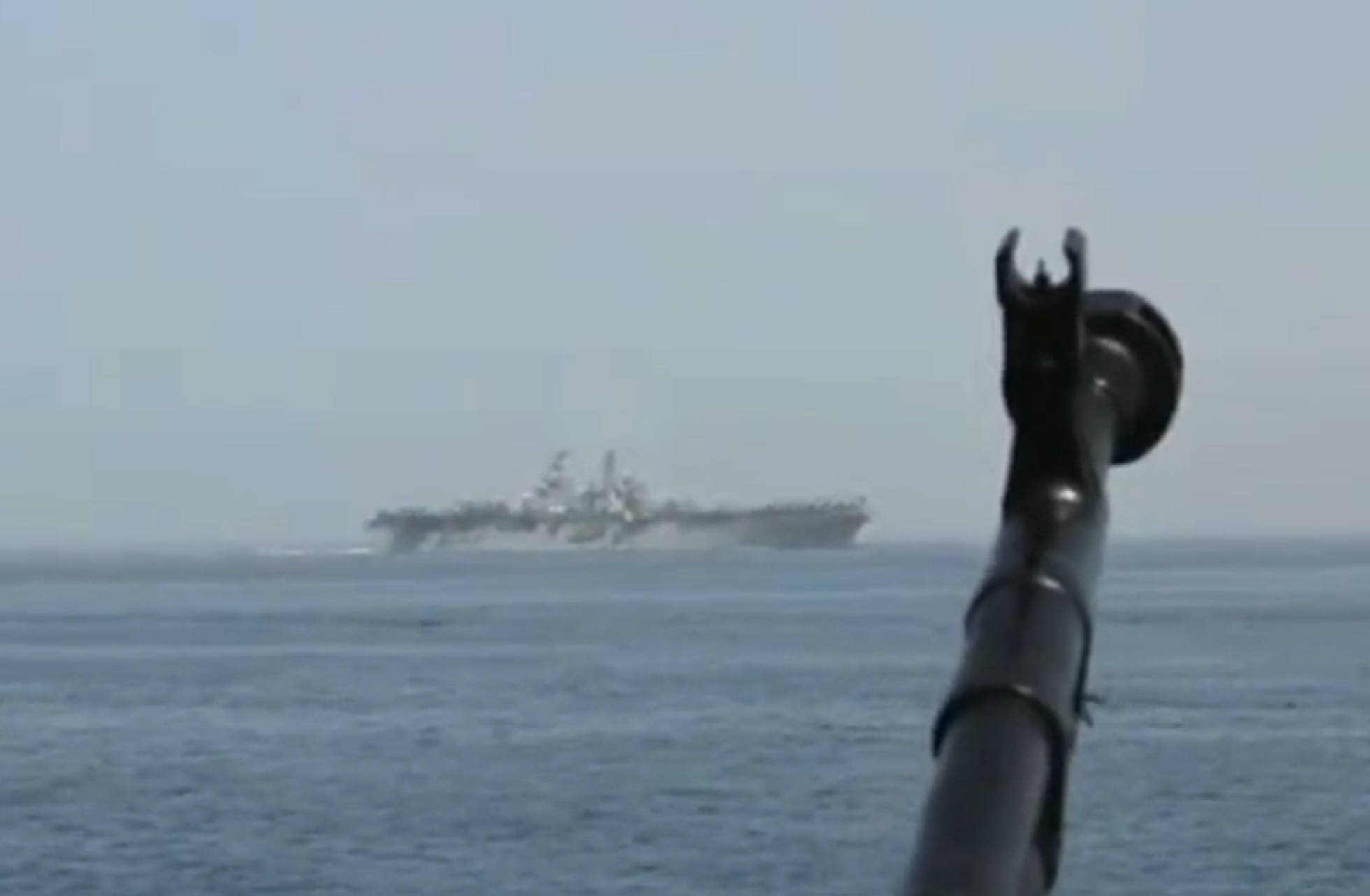
IRGC Navy Chief Rear Admiral Ali Reza Tangsiri said U.S. helicopters were forced to land on the back deck of the ship shortly after taking off, following the arrival of speed boats deployed by the Zolfaqar flotilla present near the scene.
In the footage, Iranian speed boats can be seen monitoring and chasing the American ship, which was identified as USS Bataan.
This was the first time U.S. naval forces infiltrated into the Gulf waters in around two years, Tangsiri pointed out, adding that the standoff took place on August 17.
Tangsiri stressed that security in the Gulf can be maintained by neighboring countries without the presence of any foreign forces.
The standoff came amid rising tensions between Iran and the U.S. Navy in the Persian Gulf. In July, the Pentagon deployed F-35 and F-16 fighter jets, along with several warships and additional marines to the Middle East, in order to deter Iranian naval forces who seized two tankers in the gulf earlier this year. The IRGC responded by holding a series of naval drills earlier this month.
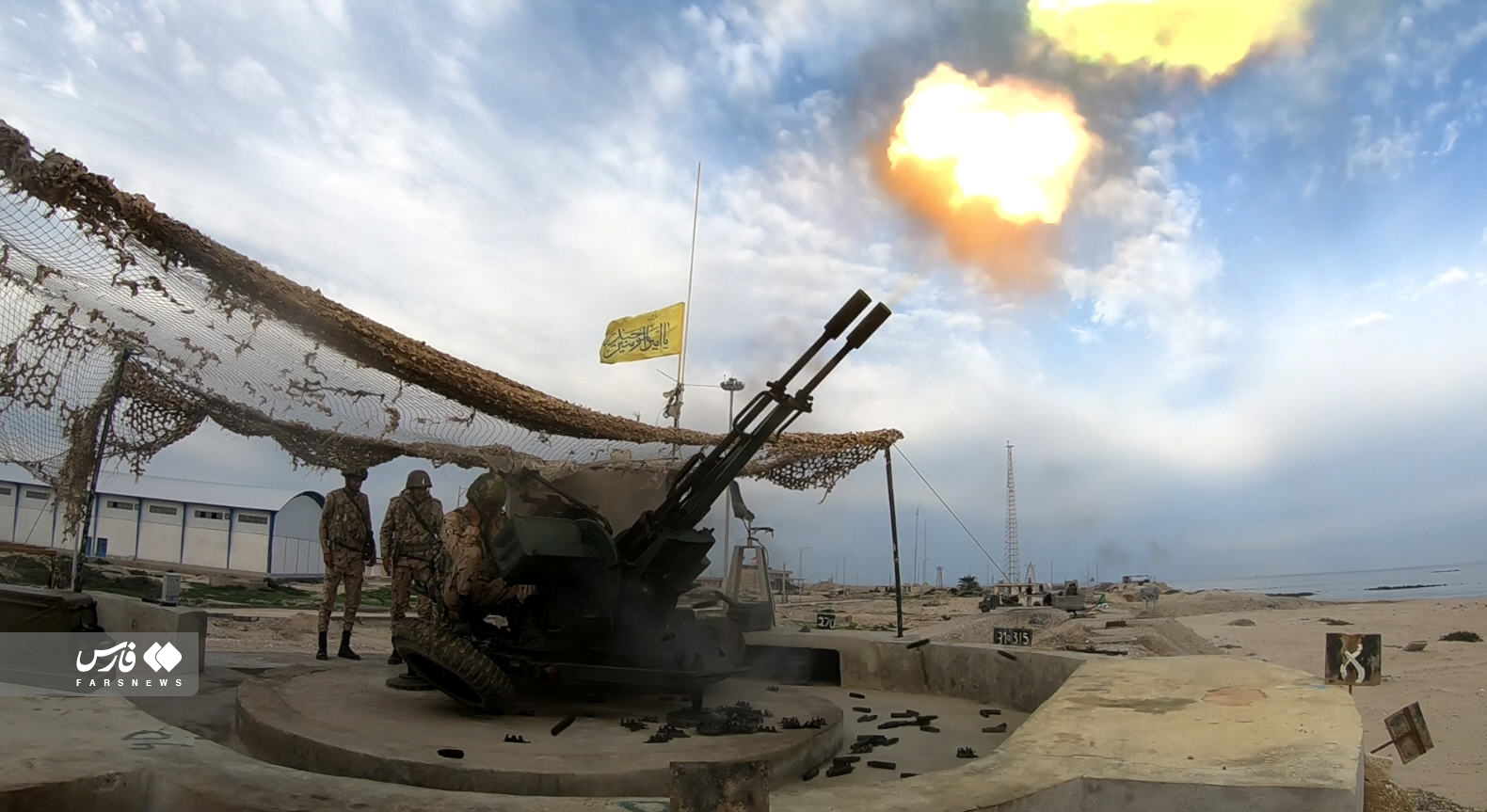
The military drills of Martyr General Nasrullah Shafi’i was held in order to pave the ground for estimating the abilities and preparedness of the Navy of the Army of the Guardians of the Islamic Revolution in the face of threats in the Persian Gulf.
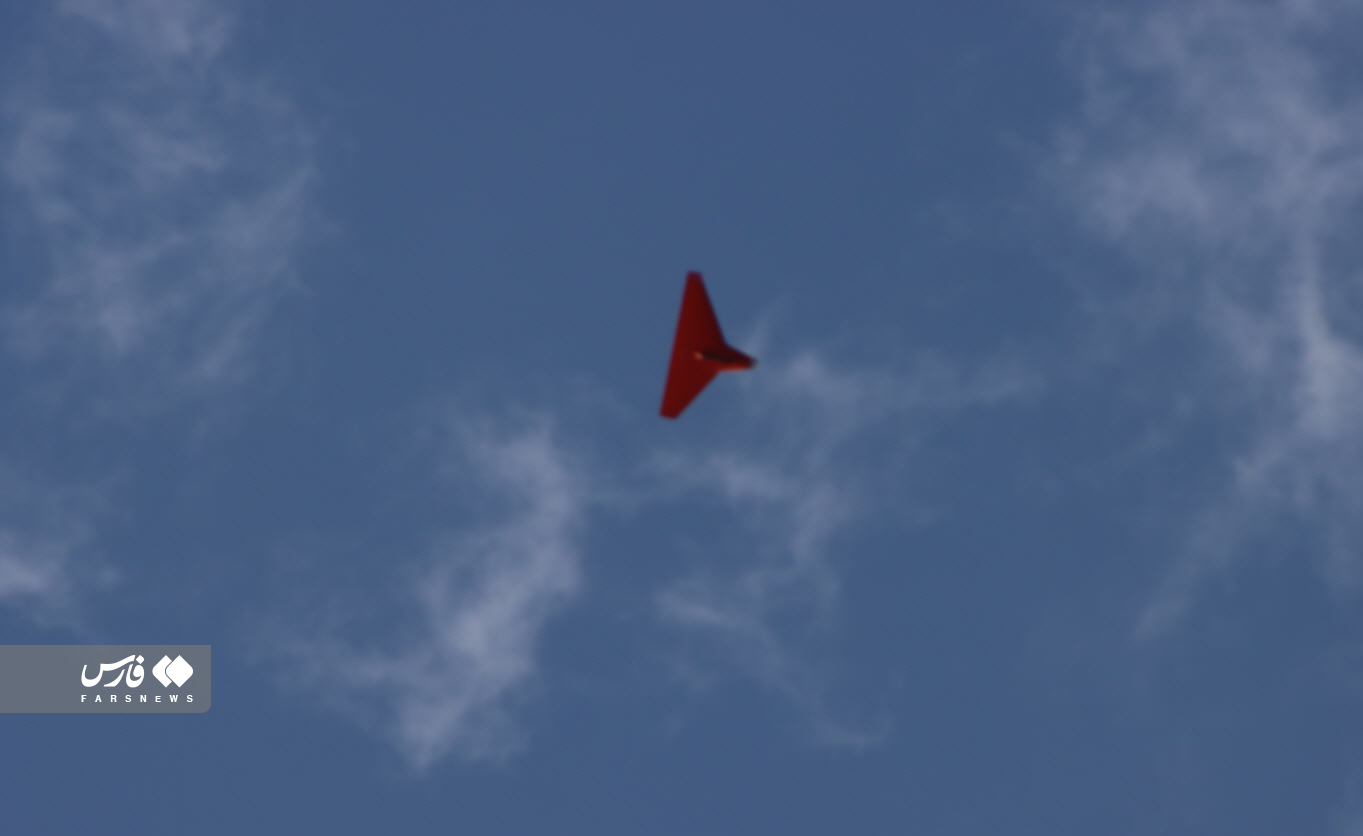
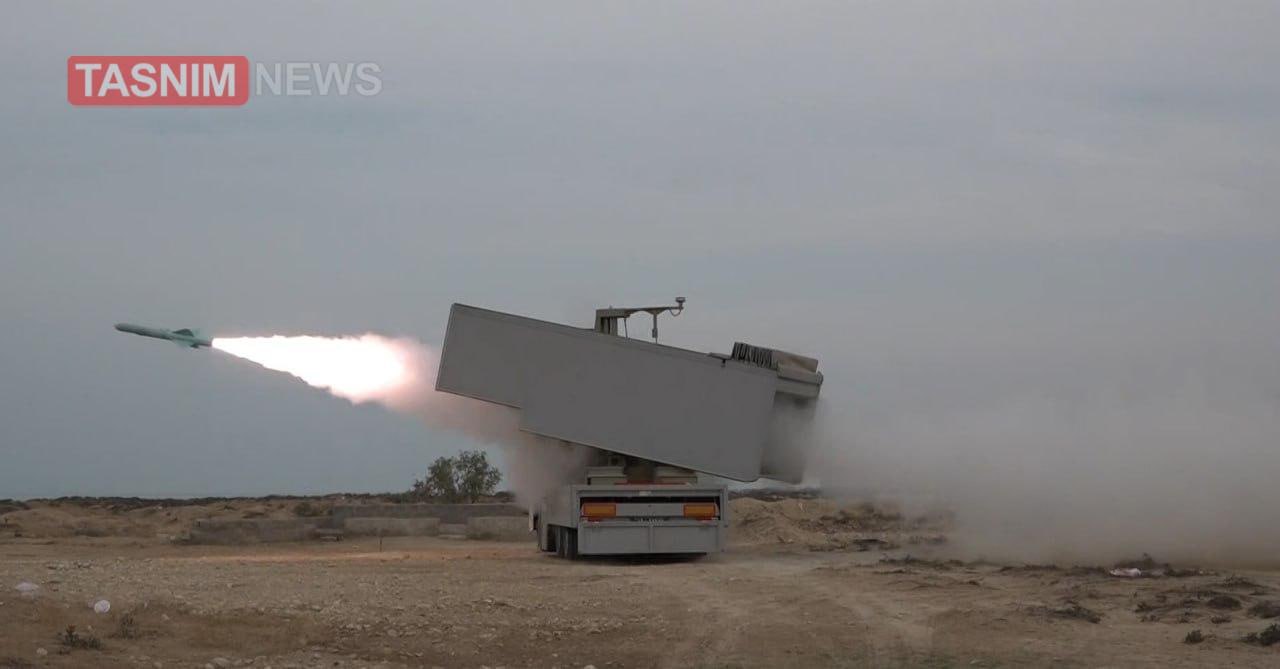
According to Commander of the IRGC Navy Rear Admiral Ali-Reza Tangsiri, the drills composed of the marine cruise missile systems of various classes; bomber and spotting drones capable of hitting multiple and simultaneous targets; unmanned intelligent subsurface systems; helicopter rocket firing, special rangers’ heliborne in moving and floating positions; the authoritative parade of the popular naval mobilization; and other defense power of the IRGC Navy, which showed completely appropriate performances.
Video report of the exercise of Martyr General Nasrullah Shafi’i
In the video above, the operation of Mohajer-6, Ababil-2, Ababil-3, Samad-3 (Shahed x) drones and Noor, Zafar, Noor and Ghadir anti-ship missiles and other missile systems and indigenous military equipment are shown.
Admiral Tangsiri said that the diversity and large-scale firing and explosions in the coastal areas of Farsi Island to display powerful defense, the use of smart subsurface arms to strike and destroy the foe’s naval and coastal bases and facilities, the broad organization and usage of the Orange Force of the hypothetical enemy in the range of the real foe have been among other programs of the military drills, which have been implemented appropriately.
The military exercise and other drills of Iran’s armed forces are being carrid out consistent with the plan to maintain preparedness of the land, sea and air forces of the army and IRGC to encounter external threats in various regions of the Islamic state, including the Persian Gulf’s waters, the Sea of Oman and the Strait of Hormuz.
According to Chief Admiral Alireza Tangsiri, Commander of the IRGC Navy, three vessels of this class were being built at the same time in three different facilities of the IRGC, the Ministry of Defense and the private sector. Finally, on 14 June 2022, one of the three vessels under construction was ready to be delivered to the IRGC Navy. Two more aircraft of this class are still under construction, but exact information on the progress of the projects is not available.
In the body of Shahid Soleimani catamaran corvette, aluminum is used instead of steel, which is a newer innovation in Iran’s military shipbuilding industry. The modern design of the body in the form of a catamaran increases maneuverability and better stability in the sea and rough waters. Also, the use of aluminum alloy makes the body lighter and longer life due to less corrosion against water. This ship is powered by 4 localized and indigenous engines; Which brings its maximum range to 5000 nautical miles equivalent to 9260 km. The floating weight of Shahid Soleimani warship is 600 tons.
With this range, the Shahid Soleimani warship will increase the Iranian navy’s operational reach beyond the Persian Gulf to as far away as 9,000 km, which would cover the entire Indian Ocean down to Cape Town.
Intelligence and reconnaissance monitoring, surface and subsurface and air traffic monitoring are among the duties of this vessel. The Shahid Soleimani warship is equipped with the most advanced indigenous electronic warfare systems.
Shahid Soleimani warship is the first Iranian warship equipped with vertical launchers that can fire antiaircraft missiles up to a range of 150 km or land-attack cruise missiles up to 700 km or beyond.
There are six box launchers on both sides of the Shahid Soleimani warship which can fire antiship missiles such as the Nasr, Nasir, Ghader and Ghadir with ranges of 35 to 300 km. Four of which are Qadir or Qadir with a range of 300 km and two of which are Nasr or Nasir with a range of 90 km. According to Iran’s experiences in enhancing the weapons of warships, there is a possibility that the six box launchers in this vessel will be changed to 12 box launchers like what Iran did to Separ corvette in the Caspian Sea.
Two Ghader cruise missiles and one Nasir cruise missile
Behind the command bridge there are a number of vertical launchers silos. These silos are located in two rows of four and one row of three on both sides of the ship. The big silos are 3.4 meters long together, which means the inner diameter is about one meter. According to Major General Bagheri, at the time of unveiling, it is possible to use cruise missiles and surface-to-surface missiles up to a range of 700 km in these vertical launchers (VLS).
Vertical launchers systems (VLS) on Shahid Soleimani warship
This vessel has 16 small silos (8 on each side) for use in the air defense sector, according to Chief Admiral Alireza Tangsiri, the range of the missiles used is more than 150 km. The air defense missiles with this range will be from the Sayyad family with a diameter of less than 60 cm.
At the front of the vessel, there is a 30 mm automatic cannon with a stealth design along with a thermal camera to control it, which gives the ship the ability to engage light vessels and cruise missiles in the last stage. Two chaff and flare launch pods are installed on the sides of the main cannon to deflect anti-ship cruise missiles and disrupt the sonar. It is also possible to upgrade this cannon.
We see two types of photos of a vessel with hull number FS313-01. In the first photo, the vessel has four 12.7 mm guns. But in the second photo, it has four 20 mm three-barrel Gatling guns. According to the image of this ship on the back of General Bagheri, the model with three-barrel Gatling is the same model added to the IRGC Navy, and the other image is related to the model at the time of its sea test.
Shahid Soleimani warship during the sea test with 12.7 mm gunShahid Soleimani warship during the unveiling and with 20 mm three-barrel Gatling gunsThe warship with hull number FS313-01 at the time of joining the IRGC Navy, with 20 mm three-barrel Gatling.
Probably, this 20 mm three-barreled cannon can be synchronized with different systems to engage with boats and missiles in the final stage of ship defense. Because in the test videos released from it, it is controlled remotely by the operator from somewhere else.
20 mm three-barreled marine Gatling gun without name – related to the Musalla exhibition in 1398 H.S
The helipad of this vessel is able to carry the Bell-412 heavy helicopter with anti-submarine capability, as well as all kinds of drones in the combat organization of the army, navy, and the IRGC.
Below the helipad, there is a crane for launching speedboats or drone boats, which are also capable of firing torpedoes and anti-ship missiles.
The back part of Shahid Soleimani warship and the location of speedboats
According to Admiral Tangsiri, 20,000 maps were used to build the ship and 100,000 sketches were made until the final design was reached. This vessel currently has a speed of 30 to 32 knots equivalent to 55.5 to 59.2 km/h. The initial construction time was less than 2 years. Tangsiri stated that the construction time of each vessel in Shahid Soleimani class is currently one year.
Iranian network’s interview with Admiral Tangsiri, Commander of the IRGC Navy about Shahid Soleimani warship (in Persian language)
Shahid Soleimani Catamaran Warship Specifications: Type: Multi-role catamaran corvette Class: Shahid Soleimani Commissioned: 5 September 2022 Length: 67 m Beam: 18-20 m Displacement: 600 tons Propulsion: 4 localized engines Speed: 32 knots Range: 5,000 nmi Missile arsenal: 6 x anti-ship cruise missiles 6 x ground attack missiles 16 x air defense missiles Guns: 1 x 30 mm autocannon 4 x 20 mm Gatling with remote control Aircraft carried: 1 × helicopter Boat carried: 3 x speedboats Origin: Iran
Click to view full size
Collection of posters of Shahid Soleimani Catamaran Warship in Russian (Военный корабль Шахида Сулеймани), Persian (ناو شهید سلیمانی), Chinese (沙希德·苏莱曼尼 双体船军舰), Hebrew (ספינת מלחמה קטמרן שהיד סולימאני), Arabic (بارجة الشهيد سليماني), Azeri (Şəhid Süleymani Gəmisi) and Kurdish (کەشتی جەنگی شەهید سولێمانی):
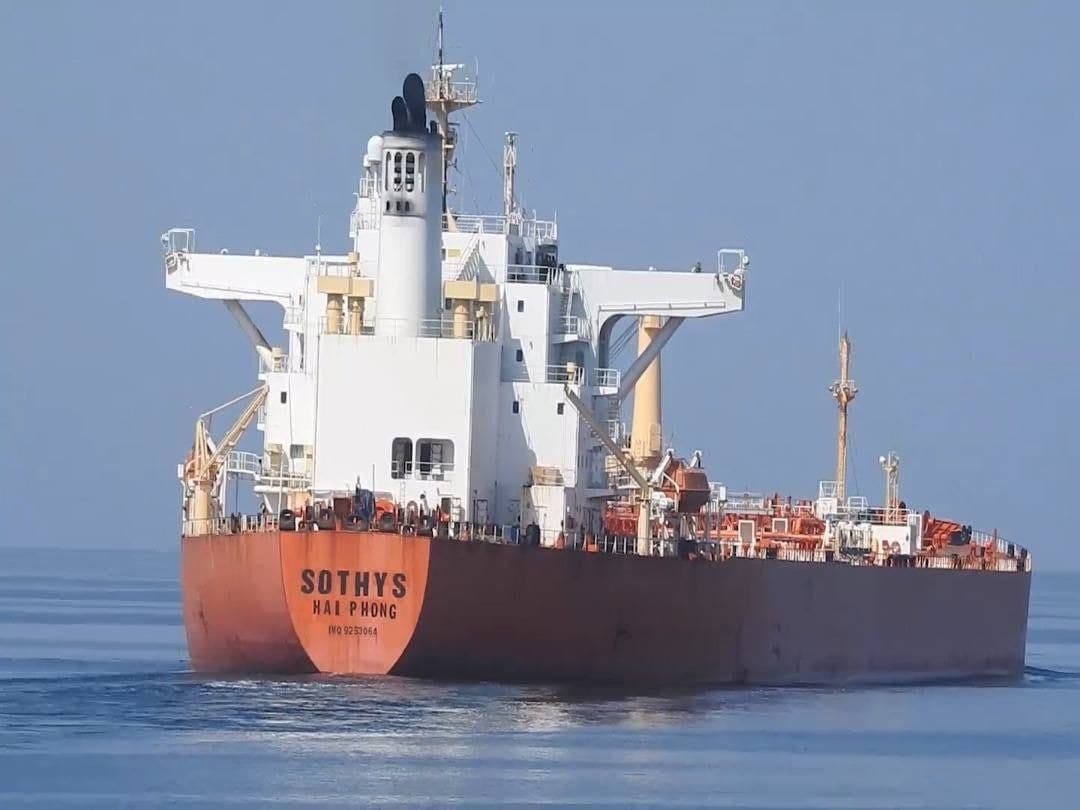
The Sothys left a position off Iran’s Bandar Abbas port and had reached international waters in the nearby Gulf of Oman early Wednesday.
“Admiral Tangsiri” the commander of IRGC Navy said in a meeting with “General Salami” the commander of the IRGC in this regard: “After a long period of intelligence work and continuous monitoring, when the tanker carrying the stolen Iranian oil was about 40 miles off the coast of Jask and in international waters, the selected units began to seize and transfer the tanker to the territorial waters and the coast of our country. With an airdrop operation and the deployment of IRGC special forces on SOTHYS’s deck, American warships approached the scene and took up the warlike position. To prevent our mission from being carried out, the Americans twice flew their drones and helicopters in support of the oil thieves. The Americans’ claim that “we had only monitored the seizure” is a big lie. The distance of American ships with our ships and forces was less than 30 meters. If they were to monitor, they could do so from a distance or even by using planes and drones.”
The operation to retrieve Iranian oil by the IRGC navy took place on October 25, which was met with a reaction and a state of war between American warships and helicopters. After that, on November 3, the IRGC described the incident and released documentary videos of the confrontation, which were accompanied by contradictory denials and claims by the United States.