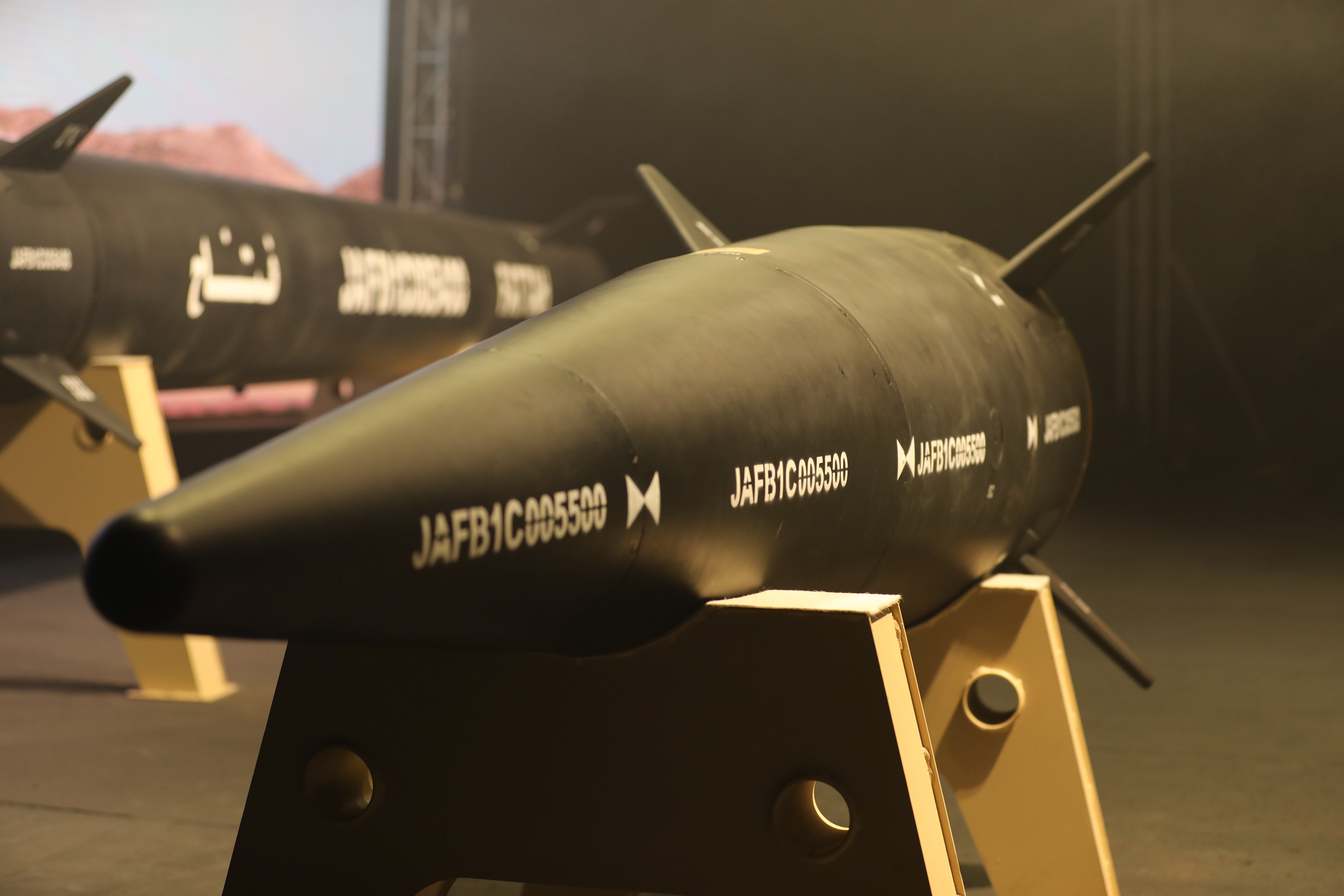
Brigadier General Amir Ali Hajizadeh made the announcement while attending a ceremony in the northern province of Mazandaran.
“Today, we have achieved all complex technologies in the field of the defense industry,” the commander said during the ceremony, according to the semi-official Tasnim News Agency.
Brig. Gen Hajizadeh also said that the Iranian people will hear more good news in the field of the country’s missile power in the near future.
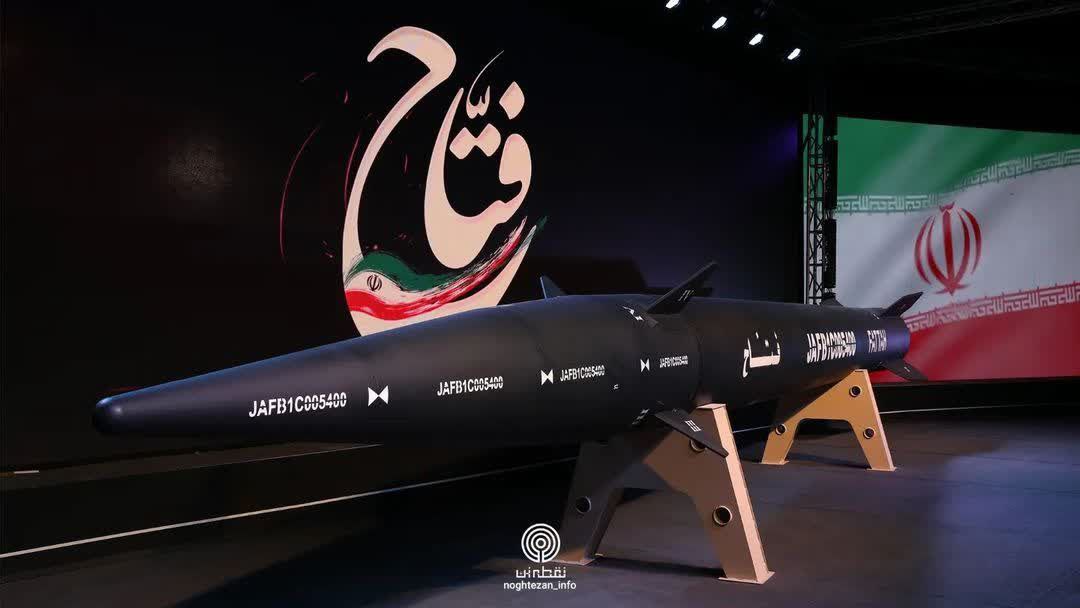
The Fattah, which was unveiled earlier this month, can travel at 15 times the speed of sound. The current version of the missile has a range of up to 1,400 kilometers, which means it can reach most U.S. bases in the Middle East as well as Israel from Iranian territory.
Hypersonic missiles like the Fattah reach their top speed at low altitudes in the atmosphere, which makes them extremely difficult to track and intercept.
Days after the unveiling of the Fattah, the United States imposed sanctions on a network of people and firms from Iran, China and Hong Kong that were allegedly associated with the development of Iran’s missile program. In addition, Israel’s Rafael defense contractor announced that it had been developing a first-of-its-kind anti-hypersonic missile defense system, dubbed Sky Sonic.
Iran expanded its missile program and made a number of breakthroughs in the field over the last few years, despite facing strict sanctions by the U.S. and other Western countries as well as repeated sabotage attempts by Israel.
Most ballistic missiles have the ability to reach speeds higher than 5 Mach, but they are not considered hypersonic because they follow a ballistic path and have bullet-like movement. In general, it is easy for air defense systems to detect a ballistic trajectory at any speed. But maneuvering in the final phase is an important characteristic that creates a fundamental difference in missile classification. A hypersonic ballistic missile is a ballistic missile that has the ability to maneuver before hitting its target while maintaining a speed of more than 5 Mach.
For example, the Khorramshahr missile has a speed of near 16 Mach in the intermediate phase outside the atmosphere and a speed of near 8 Mach when entering the atmosphere, but it lands directly on the target like a bullet, so it is just a ballistic missile.
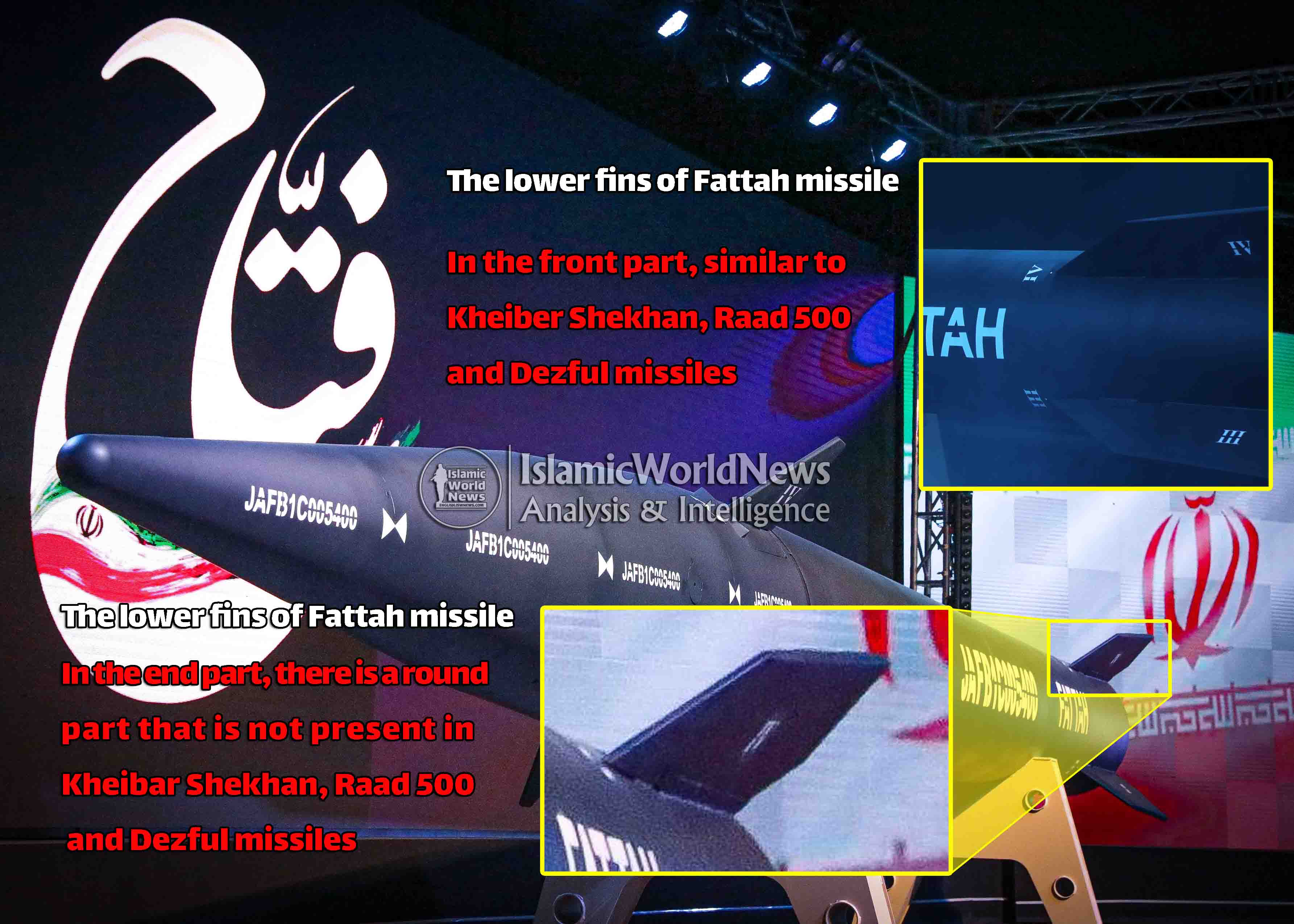
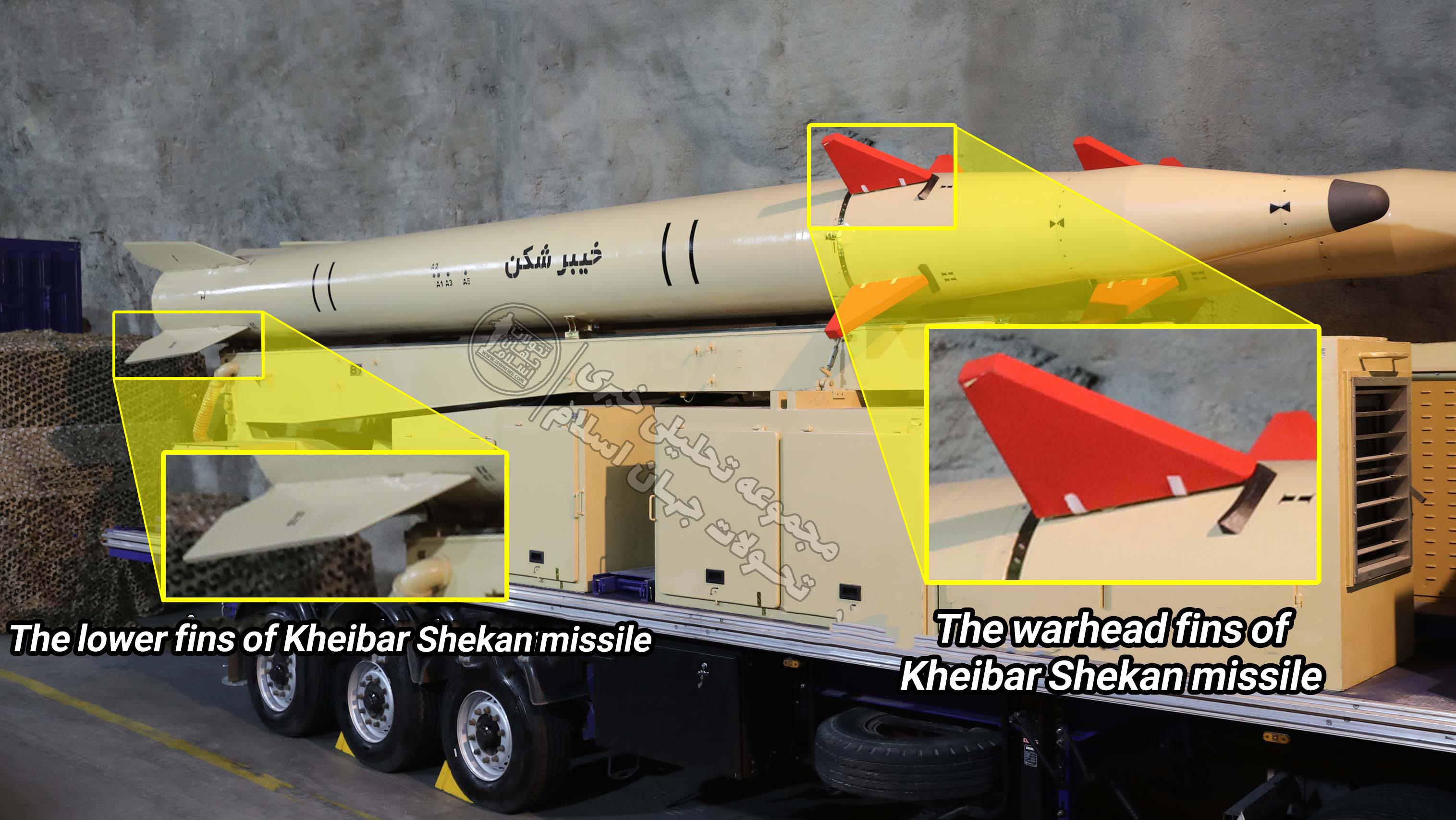
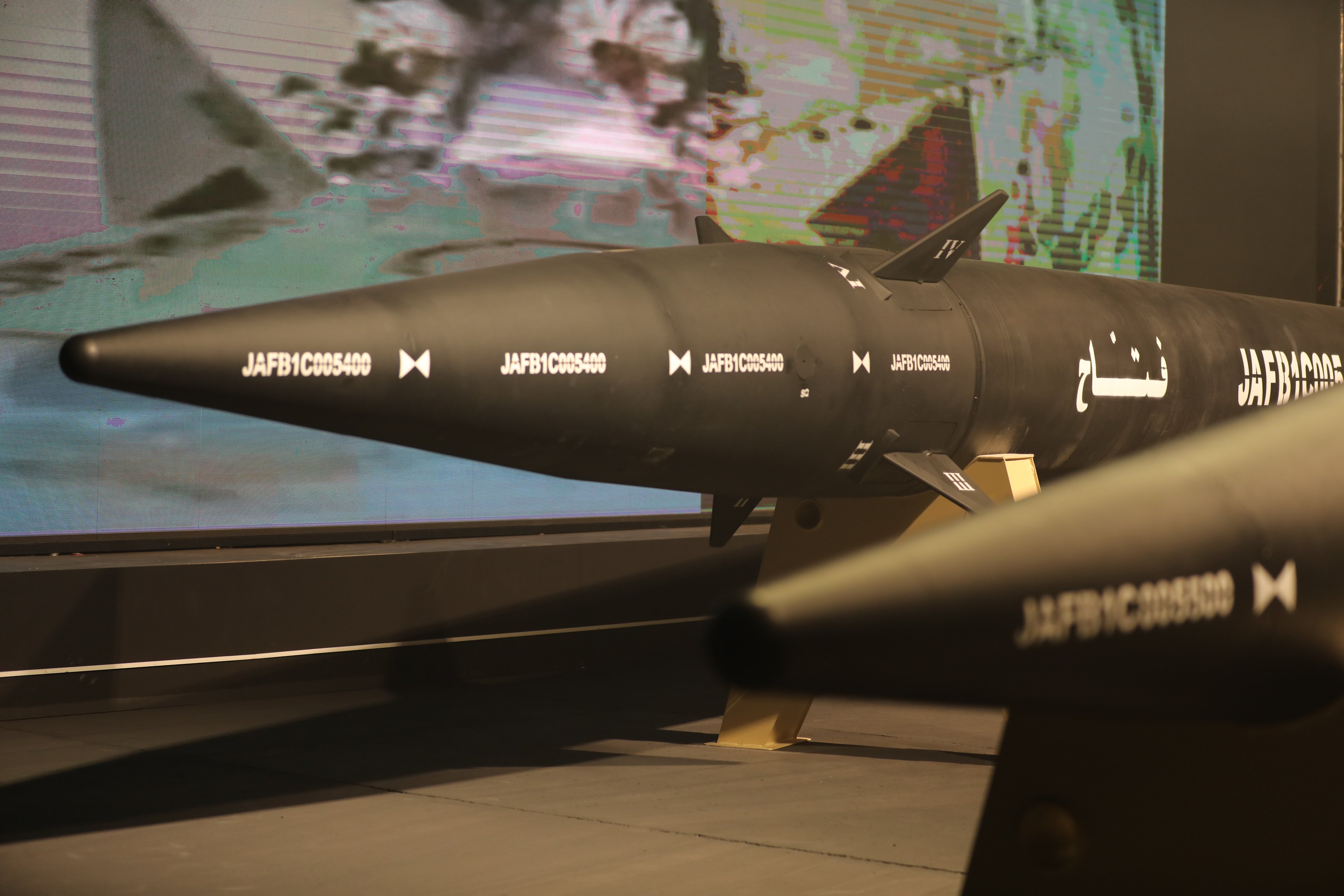
A review of the Fattah missile shows that this missile has a lot of similarity to the Kheibar Shekan missile in appearance. The tail fins and warhead have a lot of similarity to each other. The similarity is such that even the front ramp of the warhead control fins is the same. Therefore, it is assumed that the diameter of the Fattah and Kheibar Shekan missiles are also the same.
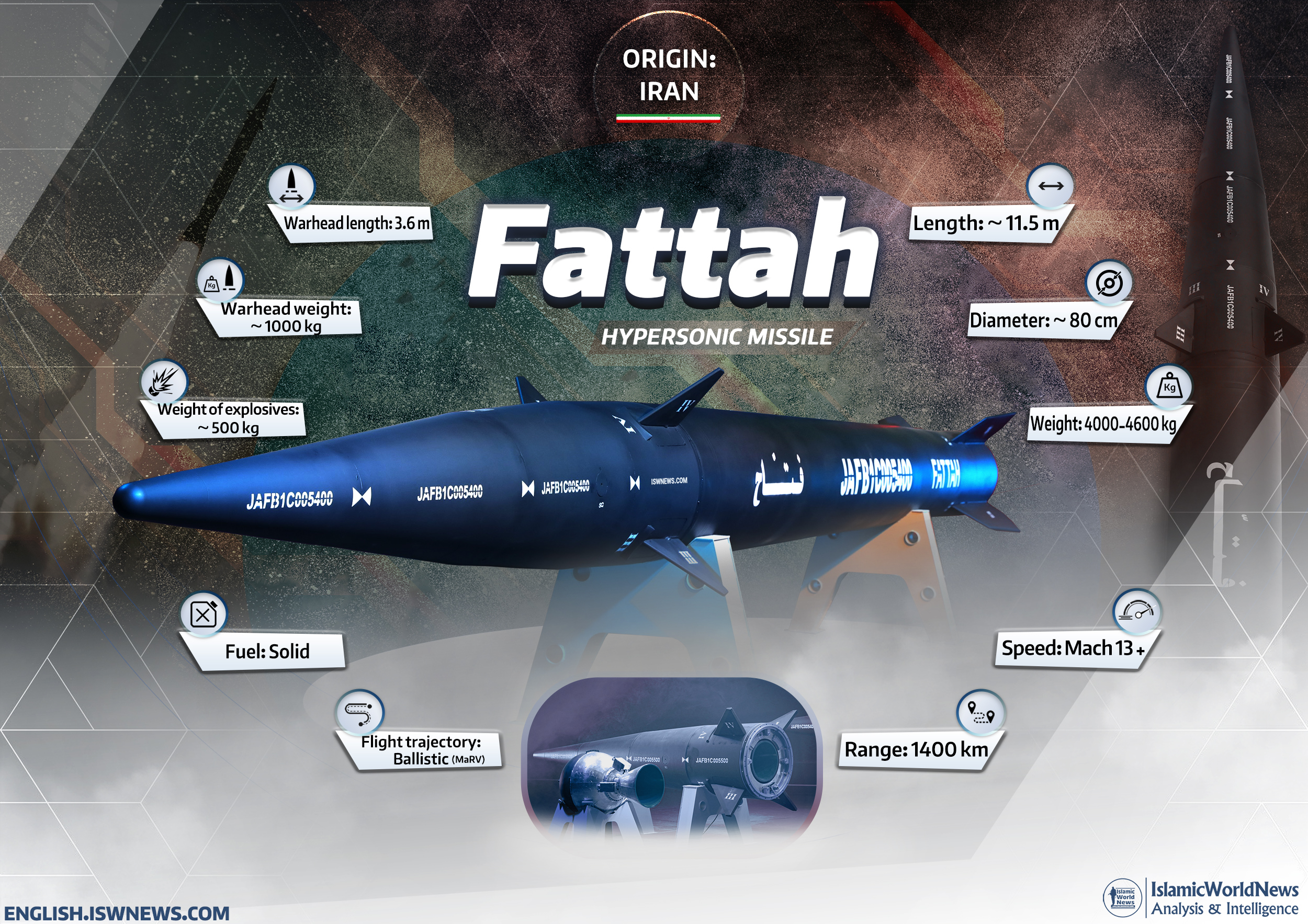
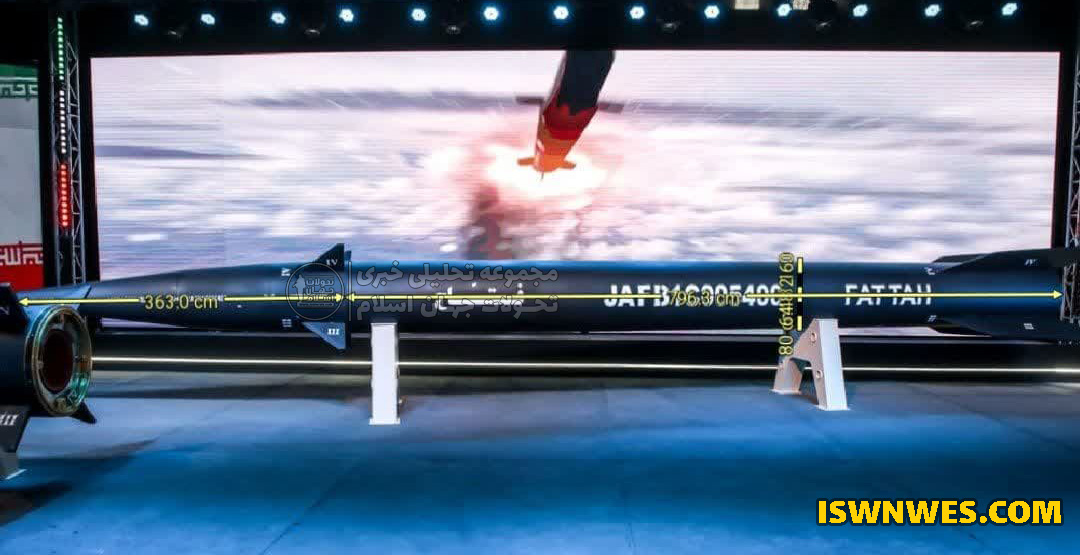
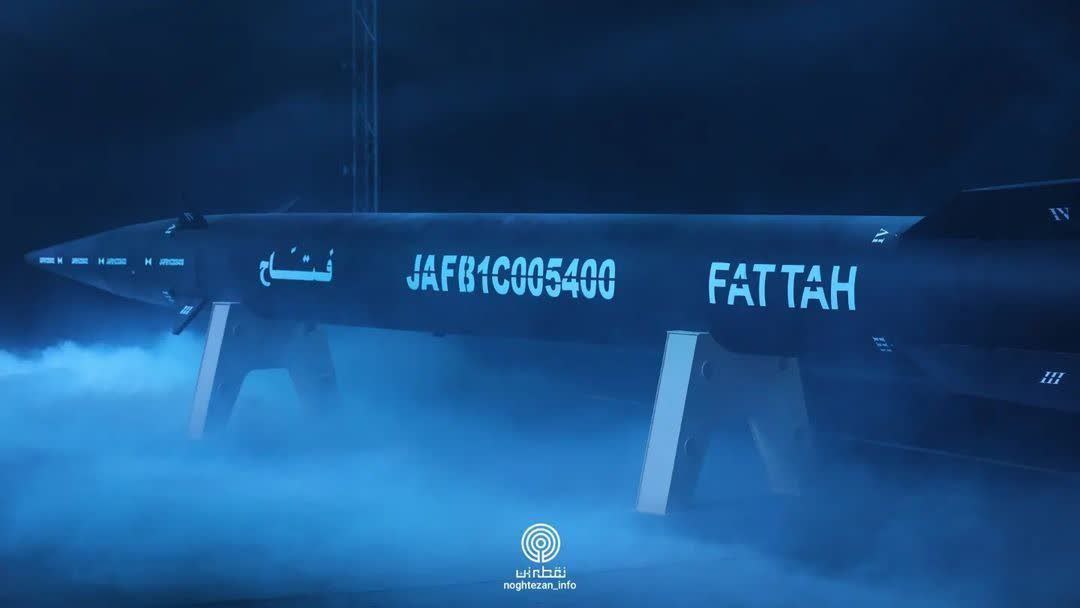
Given the great similarity between the two missiles and also the software reviews that were done, it can be assumed that the two missiles have the same diameter, equal to 80 centimeters. Also, considering that the length of the warhead has been announced as 3.6 meters, with a software review of the missile, the total length of the missile can be considered as 11.5 meters.
Estimation of the length of the Fattah missile
Another similarity between these two missiles is their range. In addition to the visual similarity of the Kheibar Shekan and Fattah missiles, the range of these two missiles is also similar to each other. The Kheibar Shekan has a range of 1450 kilometers and Fattah has a range of 1400 kilometers.
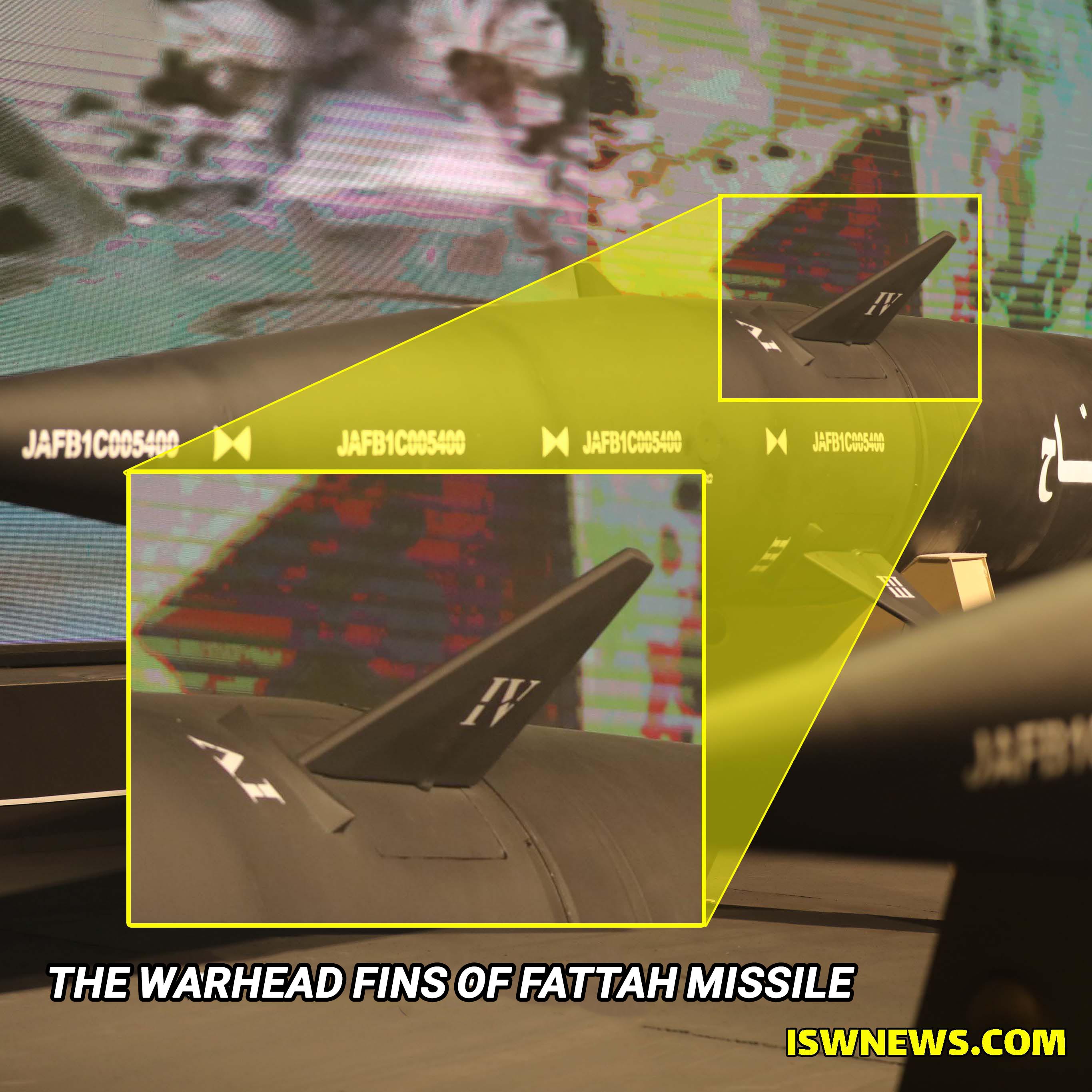
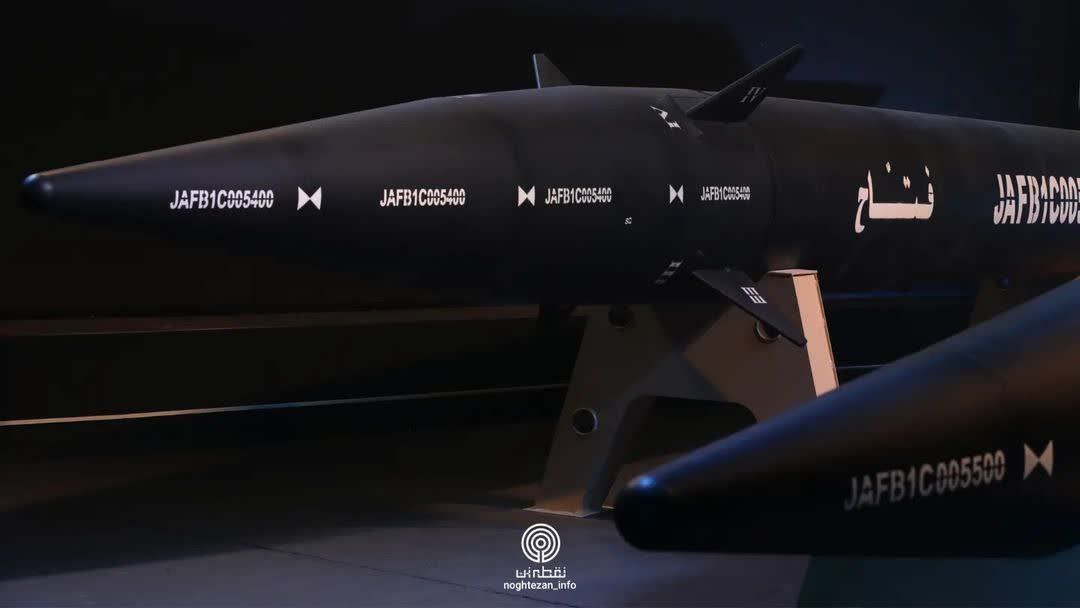
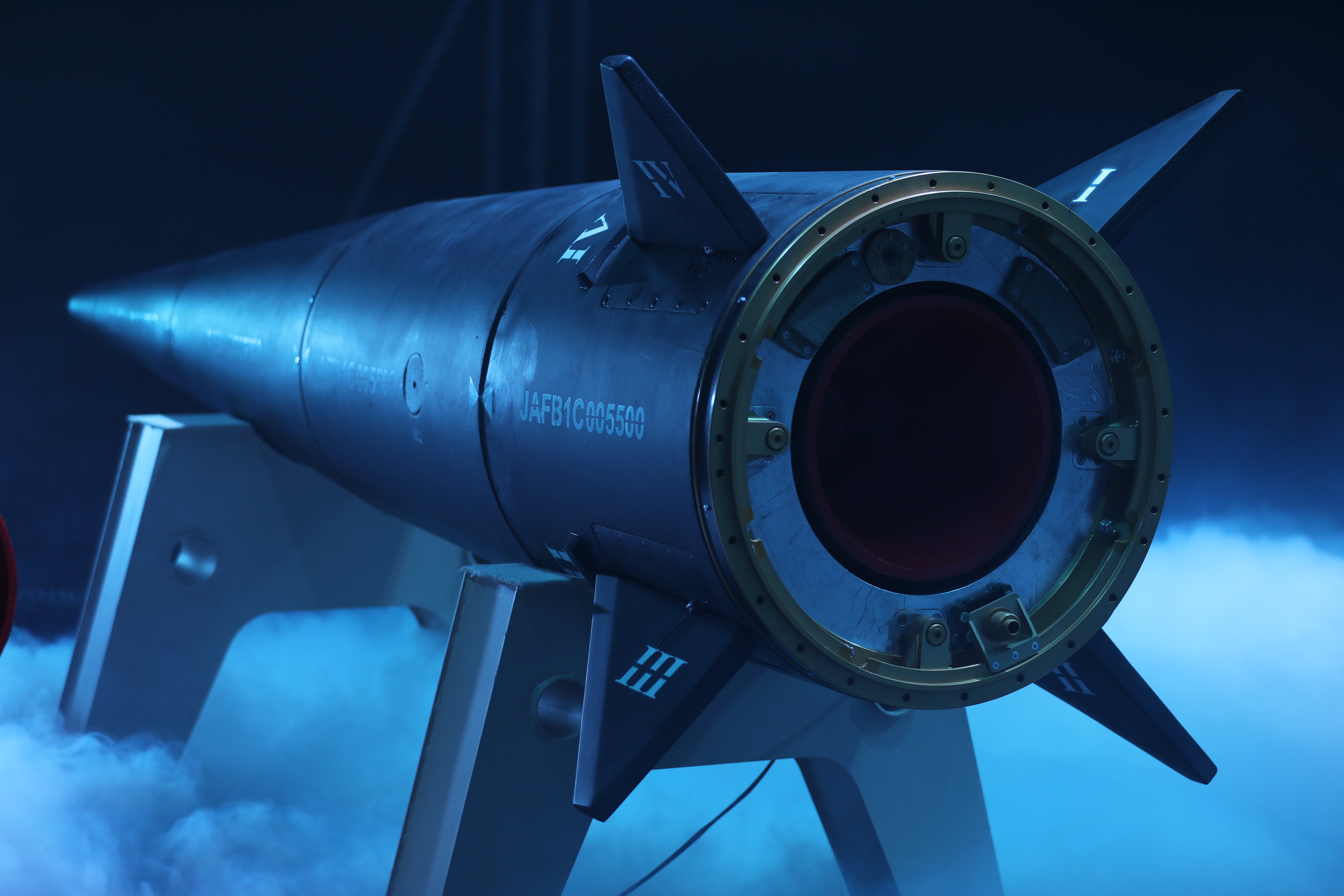
The missile body, along with the end fins and the fins on the cap, is entirely composite (carbon fiber). The body color is also of the radar wave absorbing type, which helps increase missile stealth. The use of warhead fins is when the missile comes down from an altitude of 30 kilometers and enters the atmosphere. Because at higher altitudes it has no effect on warhead maneuvering. This is useful for maneuvering near the target.
The warhead fins of Fattah missile
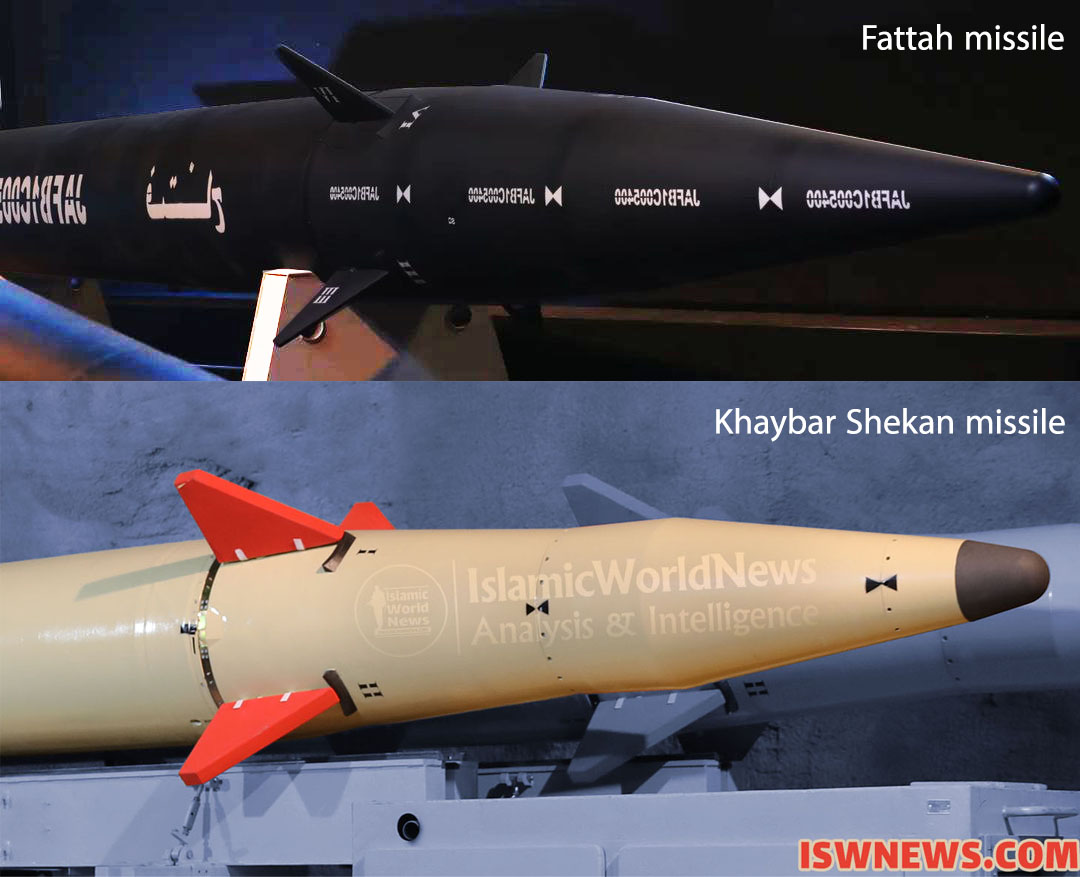
As it is clear, the aerodynamic shape of the Fattah and Kheibar Shekan warheads are the same, but due to the addition of an engine and fuel in the final section, it has been tried to maintain the aerodynamics of the warhead and reduce drag by making the missile tip longer.
Comparison of warheads of Fattah and Kheibar Shekan missiles
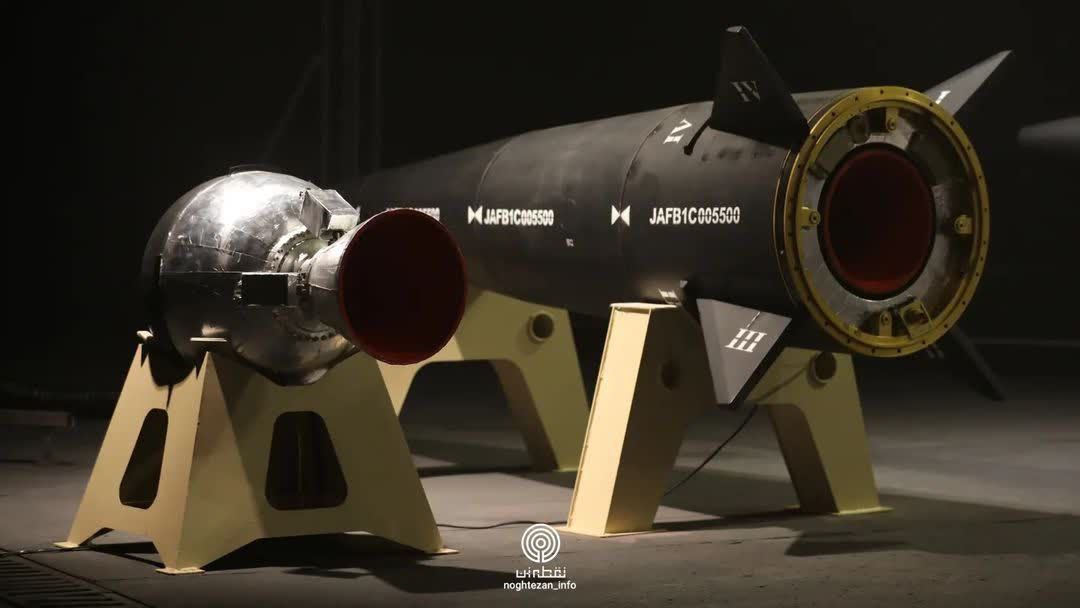
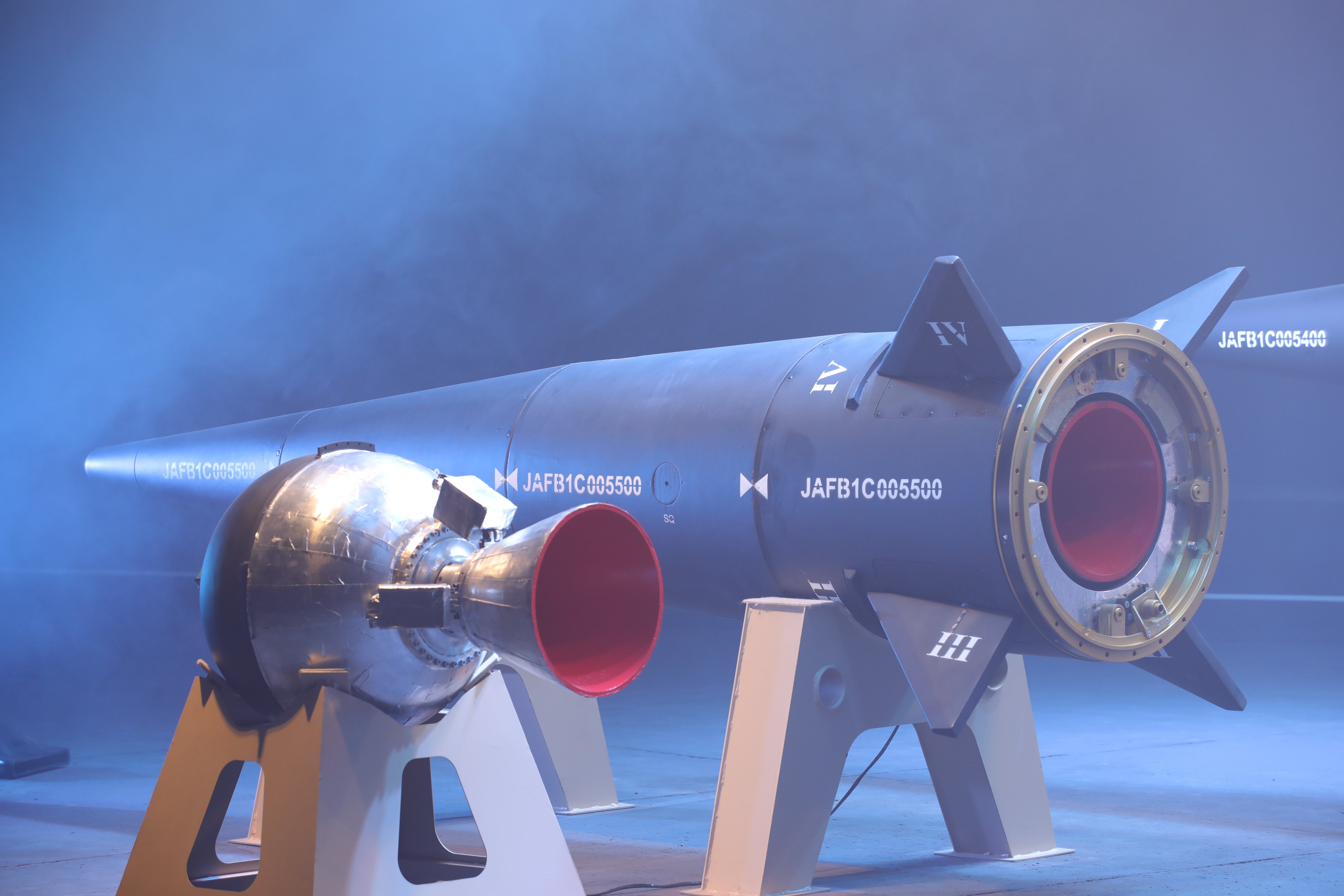
As mentioned, the warhead has propulsion with the ability of change thrust vector, and the presence of this engine allows the warhead to maintain its speed at a speed of more than Mach 5 when maneuvering near the target. When the warhead enters the atmosphere, its speed is greatly reduced due to the strong air resistance, and by performing heavy maneuvers with the help of its fins, its speed is reduced again; But with the warhead engine, it is possible to increase the speed to more than Mach 5. Also, with the thrust vector nozzle, it is possible to perform heavier maneuvers. It should be noted that this engine can be turned on when the warhead is separated from the missile, which increases the flight height of the warhead and greatly increases its range.
Fattah warhead engine with thrust vector nozzle
The next issue is how the Fattah missile works and whether it is hypersonic or not. This missile has a warhead with the ability to change thrust vector, which allows it to maneuver from the time the warhead separates from the body at an altitude of 300 kilometers above the ground. So after separating from the body, the Fattah missile’s warhead maneuvers with a low or depressed trajectory to escape anti-ballistic missile systems and changes or adjusts its path several times during flight. It should be noted that Fattah does not need much maneuvering outside the atmosphere; in addition to performing regular maneuvers to adjust its path, this missile has the ability to change its ballistic path shape. The next point is the ability to maneuver from a distance of 100 kilometers before hitting the target, which also puts it in the category of MaRV ballistic missiles.
So, Fattah follows a non-ballistic path both outside the atmosphere and when it is in Earth’s atmosphere and near its target. However, it should be noted that the mentioned capabilities alone do not make Fattah hypersonic. What puts the Fattah missile in the category of hypersonic ballistic missiles is that in addition to the mentioned capabilities, the missile’s speed at the moment of impact on the target is also higher than 5 Mach. This has been made possible by keeping the engine on for 50 seconds at different stages of flight to maintain warhead speed. As a result, by combining all of these features, we can consider Fattah as a hypersonic ballistic missile.
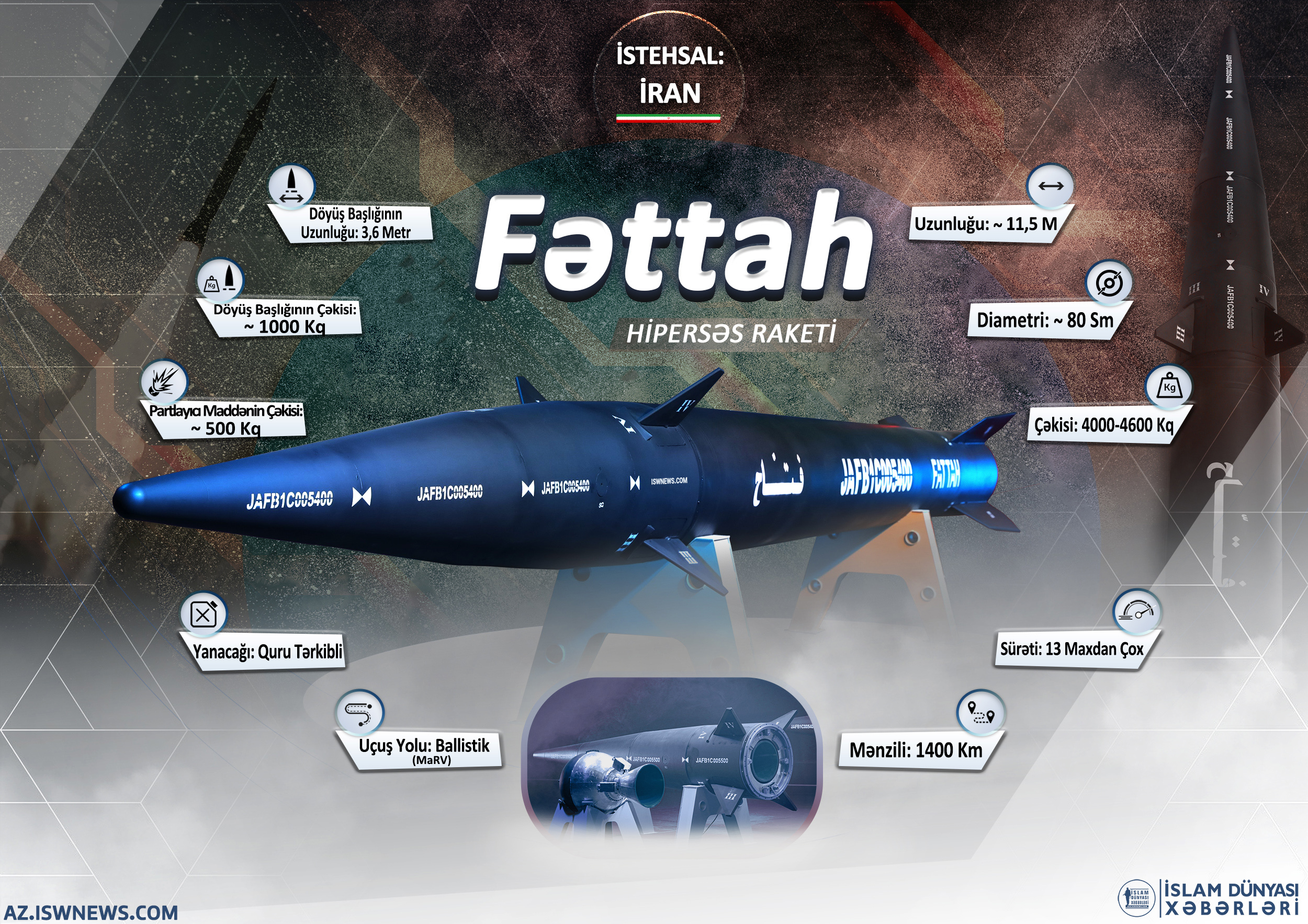
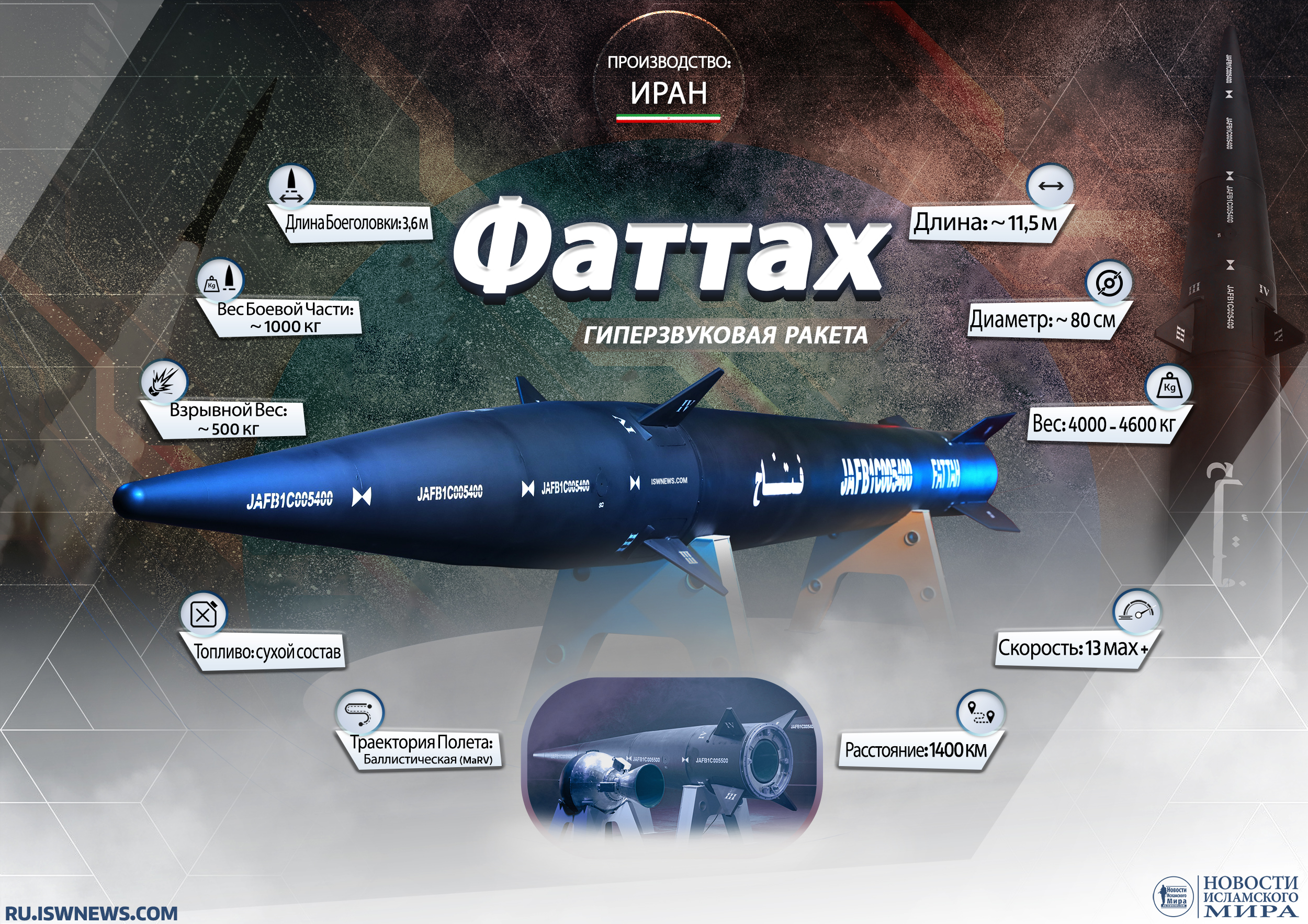
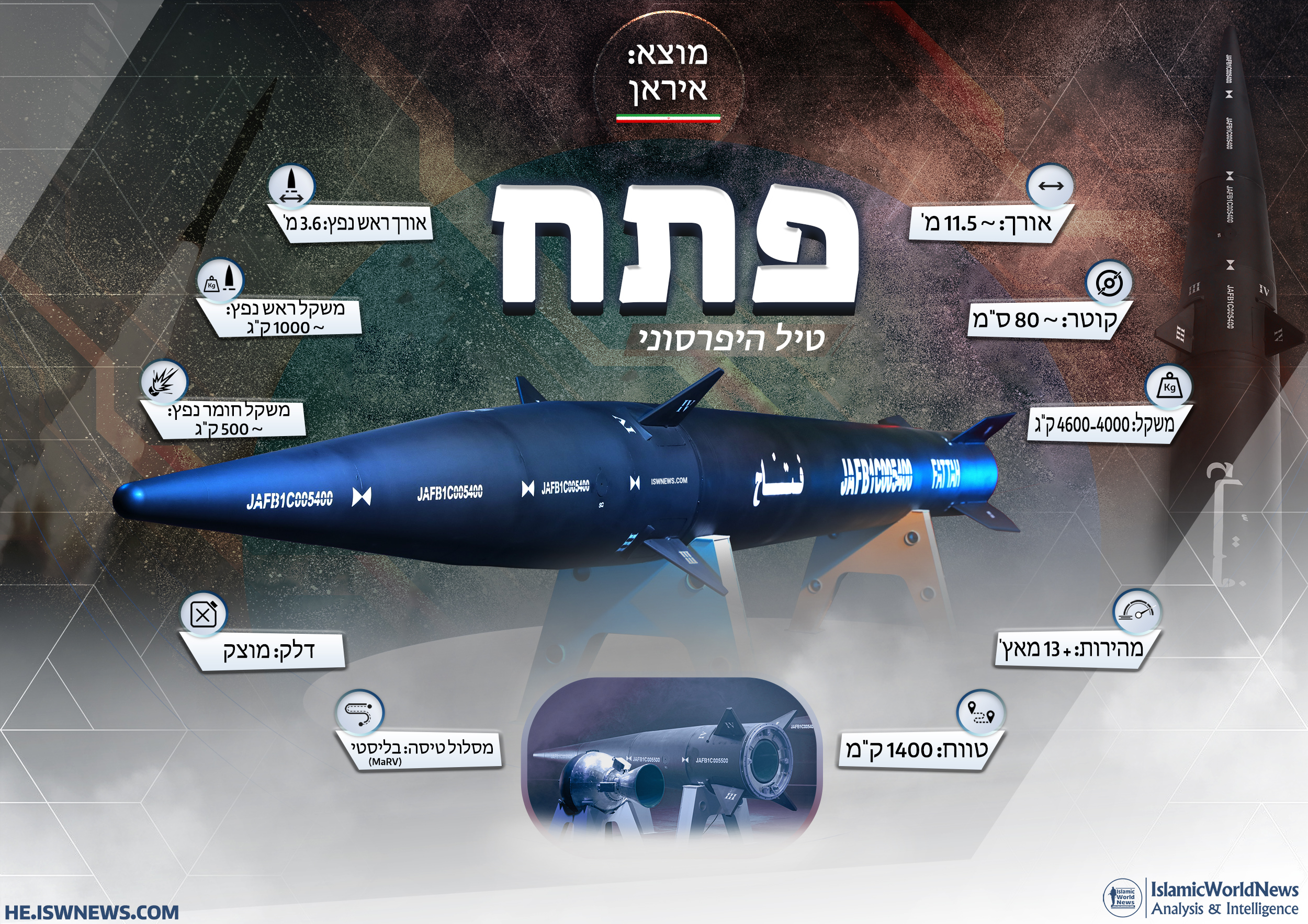
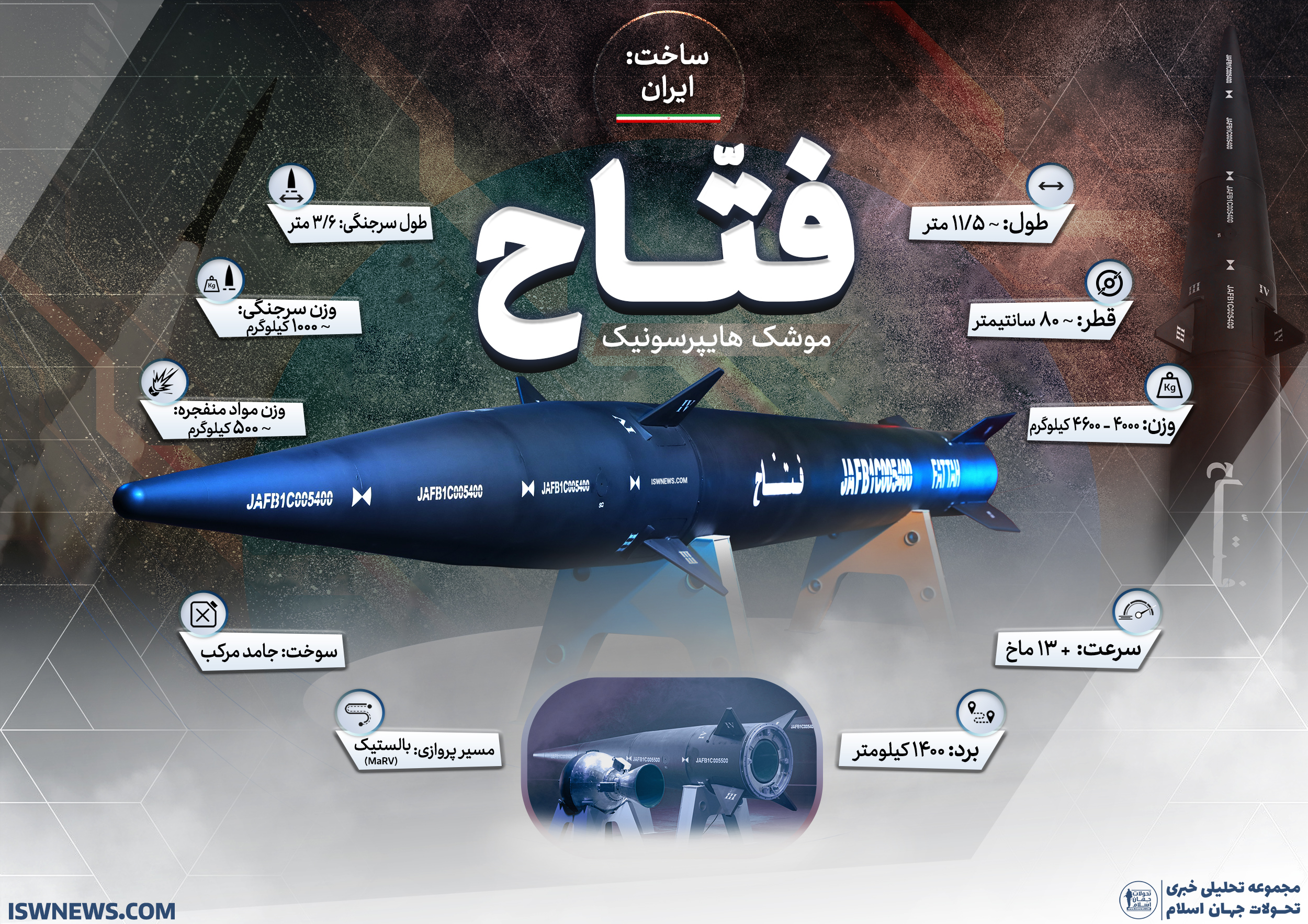
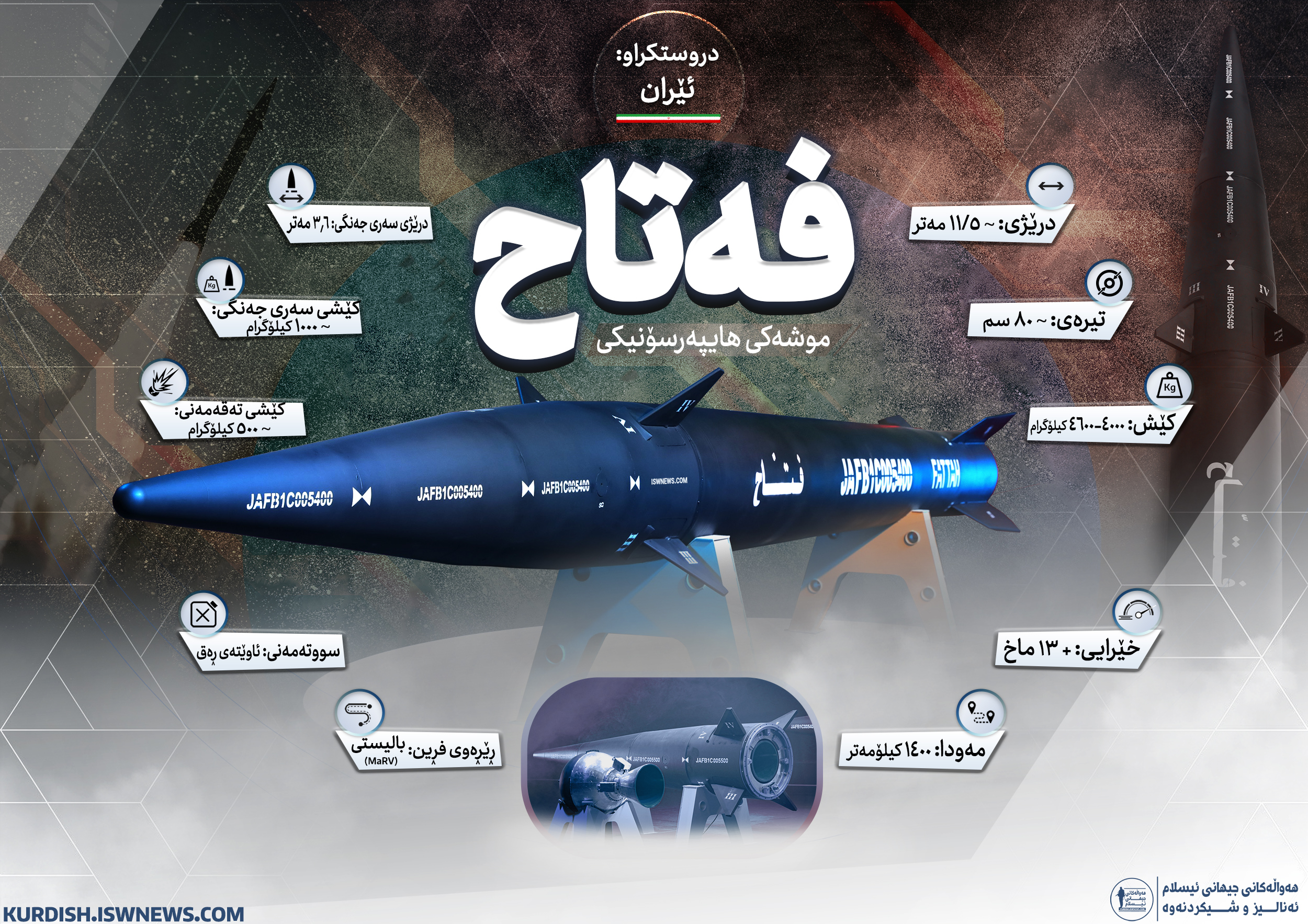
Fattah missile specifications: Length: ~ 11.5 meters Diameter: ~ 80 cm Weight: 4000 to 4600 kg Warhead length: 3.6 meters Warhead weight: ~ 1000 kg Weight of explosives: ~ 500 kg Speed: more than Mach 13 Range: 1400 km (increasable) Fuel: solid compound Flight trajectories: ballistic (maneuverability from the mid-phase) Origin: Iran
Fattah hypersonic missile – click to view full size
“Fattah hypersonic ballistic missile” posters collection in Persian, Russian, Arabic, Azeri, Kurdish and Hebrew:
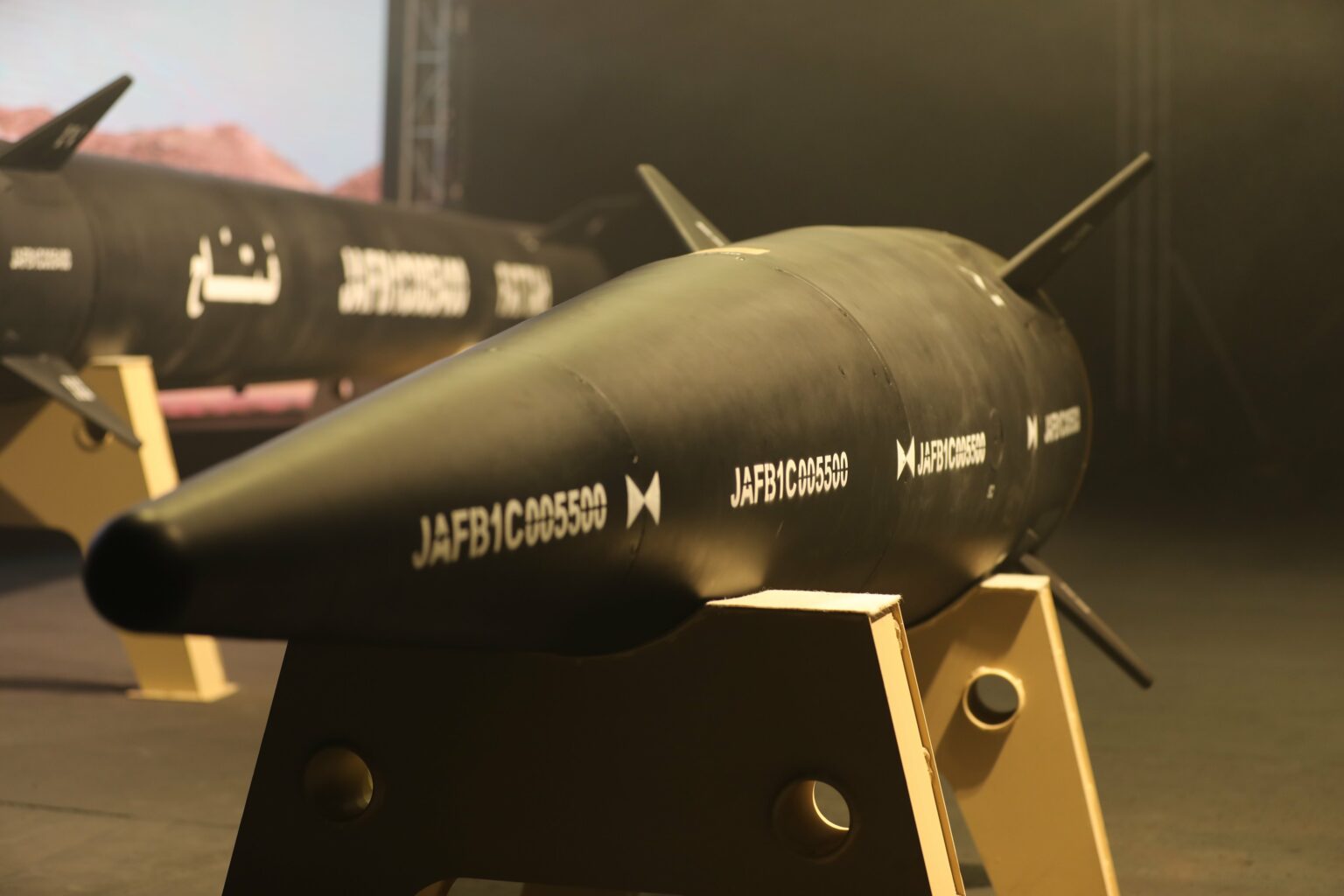
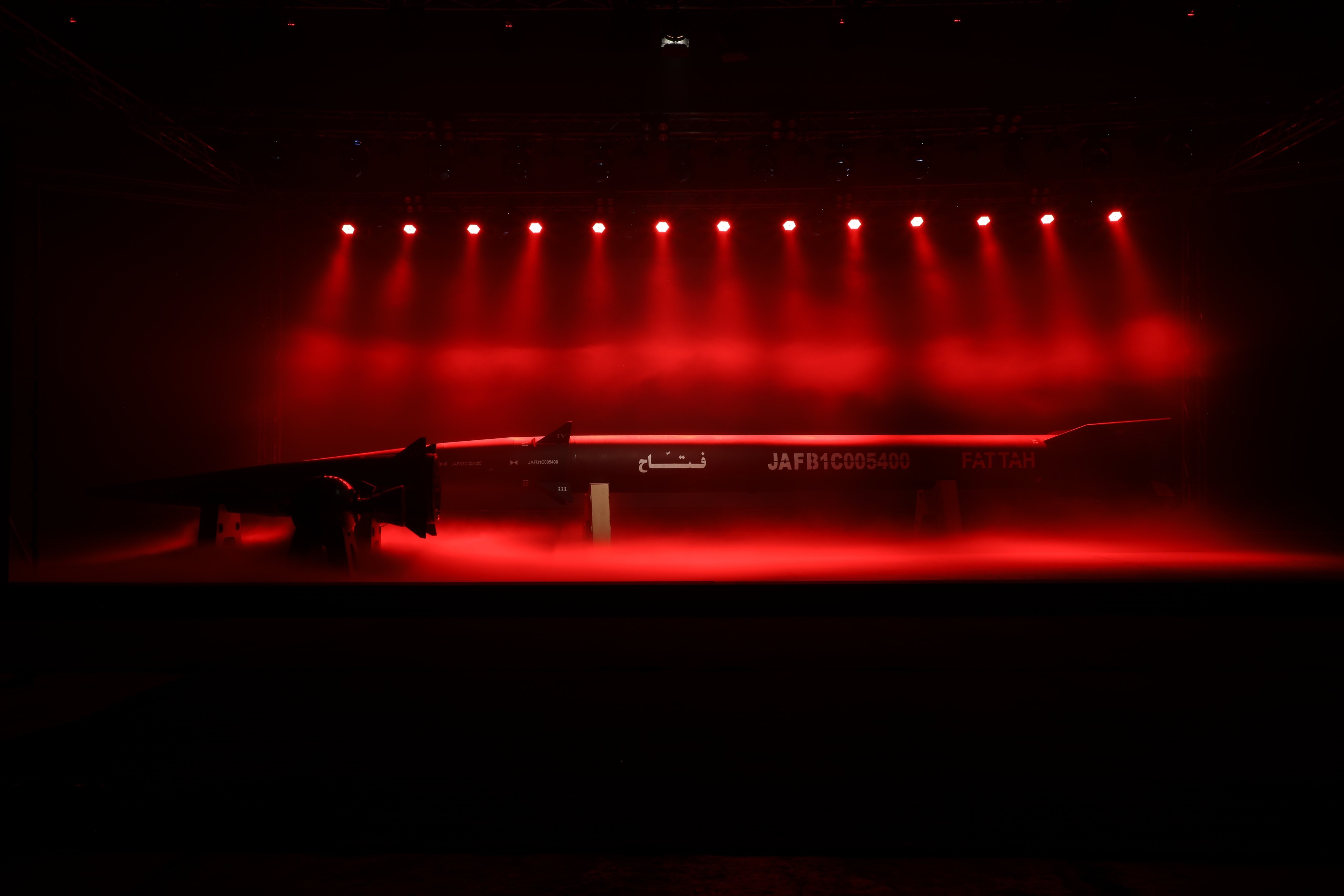
The state-of-the-art strategic achievement of the Islamic Revolution Guards Corps’ Aerospace Force was unveiled on June 6 in the presence of President Ebrahim Raisi and Commander-in-Chief of the Islamic Revolution Guards Corps Major General Hossein Salami as well as Commander of the IRGC Aerospace Force Brigadier General Amir-Ali Hajizadeh at the headquarters of the force.
The Fattah hypersonic missile possesses a range of 1,400 kilometers and it is capable of penetrating all missile shield systems and destroying them. This type of missile is among the state-of-the-art weapons and equipment that are currently being produced and utilized by countries such as the United States, Russia and China.
The hypersonic missile enjoys significant accuracy, very high speed, and extraordinary maneuverability as well as the ability to become undetectable and penetrate radar systems.
The Fattah missile has tactical capabilities due to its solid fuel propulsion system as well as its ability to reach very high speeds and also to perform various maneuvers inside and outside the atmosphere of the earth in order to overcome various types of air defense systems of enemies. The range of this missile is 1400 kilometers and it is said that its speed prior to hitting the target is 13 to 15 Mach.
Fattah hypersonic missile unveiling ceremony in Tehran, June 6 – click to view full size
Brigadier General Hajizadeh said at the unveiling ceremony of the Fattah hypersonic missile that the missile, which was unveiled today, is a rare missile in the world; in such a way that thanks to the unveiling of the missile, Iran turned into one of the four countries possessing the technology.
He went on to say that there is not any no anti-missile projectile, which can hit the Fattah missile, because of its technology; while there is an anti-missiles for other weapons such as tanks, ships, airplanes and so on, and even anti-missiles have been built for other missiles. According to the military official, there is no missile shield that has been very successful in the face of this type of missile; on the other hand, three missiles must be fired to hit one hypersonic missile, and of course, the price of one anti-missile projectile is 20 times more expensive than the targeted missile.
He further stated that the Fattah missile cannot be destroyed by any missile due to its movement in different directions and altitudes; because anti-missile projectiles move according to a specific vector, which have a lower speed comparing to the speed of the hypersonic missiles.
Advertising video of Fattah missile – A video of the launching steps and how it works until hitting the target
The IRGC Aerospace Force commander also emphasized that missile program in Iran has been supported and approved by the Supreme Commander-in-Chief Ayatollah Seyyed Ali Khamenei from the day one up to now. When we presented a report on the construction of the missile to the Supreme Leader, He designated the missile as “Fattah,” he added.
Hajizadeh noted that the cooperation between the Revolution Guards Corps and the government has never been as much as it is now; therefore, we are very grateful for the collaboration by the Ministry of Defense.
It should be mentioned that earlier in October 2022, Hajizadeh declared on the sidelines of the martyrdom anniversary of Tehrani Moghadam at the headquarters of the IRGC Aerospace Force that they are working on manufacturing a hypersonic ballistic missile, saying that the missile has a high speed and can maneuver inside and outside the atmosphere.
After awhile, he elaborated on Iran’s hypersonic missiles during his presence on a televised program in March 2023, noting that the speed of Iran’s hypersonic missiles is more than 12 to 13 Mach and the most important advantage of the hypersonic missiles is that the enemies will not be able to destroy them by using their missile defense systems and he confidently said that the foes will not be able to build a system to counter such missiles for coming decades.