With the creation of this 12-kilometer corridor, the land connection between Khan Yunis and Rafah was completely cut off.
The operation on the Morag axis is being carried out by the forces of the 36th Division, the Golani Brigade, and the 188th Brigade of the Israeli army.
Images of Morag Corridor published by the Israeli army
The Morag corridor, which the Zionists refer to as Philadelphia 2, is important for the Israeli regime in several ways. With the construction of this corridor, the operation to clear Rafah and fight resistance groups will become easier than before, and the Israeli army will begin the process of searching for resistance tunnels. Tel Aviv also plans to use this axis as a lever of pressure in negotiations with the Palestinian resistance.
The Zionists believe that by building this axis, the movements of resistance groups will be limited and the transfer of weapons or supplies by resistance groups will not be as in the past. From a military point of view, one of the main goals of building this corridor is to cut off the supply lines of Palestinian resistance groups between Rafah and Khan Yunis.
The Morag axis is also considered one of the most important agricultural areas in the southern Gaza Strip. The deployment of the Israeli army on this axis will deprive the Gaza Strip of its most important agricultural resources.
On the first day of this operation, the Zionists claimed that they had destroyed some of the infrastructure and bases belonging to the Al-Qassam Brigades and Al-Quds Brigades.
Today, the Israeli army issued a warning to evacuate the Rafah area. According to the Israeli army, the areas of Rafah, Al-Nasr, Al-Shawka, Al-Salam, Al-Manara and Qayzan Al-Najjar have been described as “dangerous war zones” and residents of these areas have been forced to leave their homes immediately.
Click to view larger
On March 21, the Rafah area also witnessed a ground operation by the Israeli regime.
Now that Israel has released a number of its prisoners, it is thinking about occupying and destroying the rest of the Gaza Strip. In general, the Zionist regime does not adhere to any agreement and uses any opportunity to massacre children, women, and the people of Gaza.
Today, Avichay Adraee, the Arabic spokesperson for the Israeli army, announced the immediate evacuation of border areas in Gaza adjacent to occupied Palestine. Residents have been instructed to move to the western parts of Gaza City and Khan Yunis. The Israeli regime has classified the areas of Beit Hanoun, Al-Khuza’a, and the outskirts of Abasan as “dangerous war zones,” urging residents to leave their homes without delay.
Israeli evacuation warning
As a result of these brutal airstrikes, more than 412 Palestinians have been killed and approximately 500 others injured.
A glimpse of new Israeli aggression on the Gaza Strip
The military actions began after negotiations between the Israeli regime and Palestinian resistance failed due to Israel’s unreasonable demands. During these negotiations, Israel and the United States requested that Hamas release all Israeli prisoners unconditionally, without offering any guarantees or commitments to end the conflict. Hamas representatives rejected this proposal.
In response to the ongoing situation, the Hamas movement has called on the United Nations and the Security Council to convene an urgent meeting and adopt a binding resolution to halt the Israeli aggression.
With the new irrational U.S. president taking office, Israel perceives an opportunity to escalate its actions against the Palestinian people and is taking advantage of this situation.
Under the ceasefire agreement, the Israeli army will gradually withdraw from various areas of the Gaza Strip over the coming days and weeks, in stages.
Initial Withdrawal: Israeli forces left the southern areas of Beit Lahia and Jabalia yesterday, re-establishing the connection between northern Gaza and Gaza City. Displaced residents in the north are returning home.
Next Steps: On the seventh day of the agreement, Israeli forces will begin withdrawing from the Netzarim axis in central Gaza. They will initially move from Al-Rashid Street to Salah al-Din Street, and by the twenty-second day, will retreat to the buffer zone on the Gaza border, reopening travel routes for Palestinians.
Final Phase: On the 50th day, Israeli forces will fully withdraw from southern Gaza and the Philadelphi axis, redeploying to a 1-kilometer-deep buffer zone along the Gaza border.
Avichay Adraee, the Arab spokesman for the Israeli army, released a map showing the locations of Israeli forces in Gaza. He noted that currently, movement from south to north Gaza is dangerous due to Israeli presence on the Netzarim axis. Starting next week, Palestinian civilians will be able to return to northern Gaza. Activities such as fishing, swimming, diving, and approaching buffer zones, the Rafah crossing, and the Philadelphia axis will remain prohibited.
In another separate incident, a tank commander with the 401st Armored Brigade’s 9th Battalion was also seriously injured by sniper fire in northern Gaza.
It should be noted that since the beginning of December, 16 Zionist soldiers and settlers have been killed in the occupied territories.
The IWN investigations indicate that the number of alleged Israeli deaths since the start of the ground attack on the Gaza Strip has increased to 395. The total number of “military” deaths, according to the Israeli regime’s claims, since the beginning of the war has reached 822.
Experts believe that the Israeli army does not have the ability to completely occupy the Gaza Strip, and most of these operations are carried out with the aim of clearing possible areas where Hamas forces are present.
Clashes continue in Rafah city and the southern areas of Gaza city, also known as the Netzarim corridor, amidst ceasefire negotiations.
Recently, the director of the American Central Intelligence Agency held talks with Israel, Qatar and Egypt to amend the details of the proposal. The Egyptian and Qatari mediators are pessimistic about the chances of reaching an agreement, and they estimate that Netanyahu does not want to reach an agreement before the US presidential elections.
On the other hand, after the discovery of the bodies of 6 Israeli prisoners in the Gaza Strip, internal pressure has increased on Netanyahu and his government to agree to a peace agreement with Hamas and return the Israeli prisoners.
Six Israeli dead prisoners found in southern Gaza Strip
On September 1, Israeli army announced that it recovered the bodies of six hostages, who were captured alive by the Hamas on October 7, from a tunnel in the southern Gaza Strip city of Rafah, shortly after they were murdered by their captors.
Hamas rejected the claim of the Israeli army. It is said that two of these prisoners were supposed to be released in the first phase of a possible ceasefire agreement and exchange of prisoners. It seems that Netanyahu will use this opportunity to continue the war in the Gaza Strip and put pressure on Hamas and achieve his so-called goals in the Gaza Strip.
Still, important problems such as the Philadelphia and Netzarim axis prevent a lasting ceasefire agreement in the Gaza Strip. Netanyahu and his hard-line cabinet are not willing to withdraw from these areas.
Actually, Netanyahu’s cabinet decision to remain in Philadelphia was a public blow to Defense Minister Yoav Galant and Chief of Staff Herzi Halevi, who recommended a temporary withdrawal from the strategic axis in order to free 20-30 prisoners.
As tensions persist in the Gaza Strip and internal divisions arise among Israeli officials regarding the strip, the Israeli Defense Minister is issuing threats to engage in a wide-scale conflict with Hezbollah on the Northern Front!
Israeli Defense Minister Yoav Gallant announced today while visiting the Netzarim axis, “While we are fighting in Gaza, we are preparing for anything that could happen in the north and we are ready to transfer the center of military gravity to the northern front immediately.”
Israeli Defense Minister Yoav Gallant in Netzarim corridor
The battles in the northern front have been going on for months and tensions along the northern borders have led to widespread evacuations of settlements. More than 250,000 Israeli citizens have been displaced by the war and the number of Israeli refugees increases daily.
The current situation in the northern front has caused the reverse migration of Israelis and huge political and financial losses to the Israeli regime. The security of the settlers in northern Palestine has been completely destroyed and it is difficult and unbearable for Israel to continue the current situation.
The Israeli army and Lebanese Hezbollah continue to exchange artillery fire on a daily basis. Hezbollah attacks Israeli army positions and bases in the region using light rockets, suicide drones, and anti-armor missiles. On the other hand, Israeli fighter jets target the eastern and southern towns of Lebanon using heavy bombs and Israeli drones conduct targeted assassinations against Lebanese resistance fighters and commanders.
Israeli warplanes targeting alleged Hezbollah targets in southern Lebanon
In recent months, Israeli authorities have repeatedly threatened Lebanon with a large-scale ground military operation. Gallant’s recent threat from the heart of the Gaza Strip is the latest example of these threats.
However, it seems very unlikely that the Israeli regime has the ability to fight on three fronts. Especially since the Israeli army recently opened a new front in the West Bank.
Therefore, the outcome of the ceasefire negotiations in the Gaza Strip is crucial for the Israeli regime and has a direct impact on the continuation of the war in the northern front. In fact, Hezbollah’s goal of waging war with Israel is about to secure a lasting ceasefire in the south. Hezbollah has announced the end of Israel’s aggression in the Gaza Strip as a condition for the cessation of the war and the end of insecurity on the northern front.
Israel stated that the purpose of the operation in the West Bank is to deal with the increasing insecurity of the last few months and to destroy the so-called Iranian terrorism.
It is said that the Israeli army has now classified the West Bank as the second most important and sensitive front after Gaza. This directive is currently in its early stages, and it is expected to take time to compile and finalize, but the Israeli military has organized a series of operations against resistance groups in areas of the West Bank. Israeli officials emphasized: “The operation in the West Bank is just the beginning.”
The Israeli operation is currently focused on the northern half of the West Bank and the cities of Jenin, Tulkarm, Tubas and Nablus. According to the Palestinian Ministry of Health, since the onset of the Israeli offensive in the West Bank, 39 Palestinians have been martyred and 145 others have been wounded.
However, after the start of military operations in the West Bank, the security situation in this area has worsened and anti-Israeli operations have greatly increased.
On August 31, an Israeli squad commander in the ranks of the Bislamach Brigade’s 906th Battalion was killed and three others were wounded during clashes with fighters from the Hamas Movement in Jenin. On September 1, three Israeli police officers were killed in a shooting attack near the city of Tarqumiyah. And the latest incident was today, on September 8, that three Israelis were killed in a shooting attack at the Allenby Bridge crossing between Jordan and the occupied West Bank.
Three Israelis killed in a shooting attack at the Allenby Bridge crossing
The recent developments in the West Bank clearly indicate that escalating pressure from the Israeli army on the people of the West Bank may have the opposite effect. Furthermore, the expansion of the conflict in this region could pose a serious threat to the security of Israel’s capital.
Many experts believe that the Israeli regime’s new military aggression in the West Bank, due to Netanyahu’s extremist and warlike cabinet, can eventually turn into something similar to the genocide that is going on in the Gaza Strip.
The Israeli aggression in Gaza has so far claimed the lives of more than 40,500 Palestinians, most of whom are women and children. The Israeli forces also killed more than 670 Palestinians in the West Bank since the start of the war on October 7.
The Tel Aviv regime’s military forces have extremely intensified their air and artillery strikes on the municipality of Bani Suheila and its adjacent areas, including al-Zaneh district, for 24 hours since Thursday August 22.
Following these assaults, the Israeli regime’s infantry forces advanced on the eastern axis of Bani Suheila municipality with air support, and now confrontations between Israeli military forces and Palestinian resistance fighters are ongoing around Al-Alam Square and Dar es Salaam Hospital in Khan Younis city, located in the southern Gaza Strip.
The Israeli regime’s forces advanced towards Deir al-Balah city in continuation of last week’s military operations on the Al-Qarara and Wadi as-Salqa axis in addition to the north of Khan Younis city. Israeli forces have also advanced to the schools of Deir al-Balah city as well as Mazra’a Street, and the two warrying sides are currently continuing clashes in the southern suburbs of Deir al-Balah city.
Israeli military forces are still stationed eastern axis of Hamad town in northwestern Khan Yunis city, and they have not succeeded in achieving any significant changes in this region.
The Israeli regime continues its military operations in the aforementioned areas while the regime’s army pulled out from the usurped territories last month after an operation in the Khan Yunis axis. The Tel Aviv regime’s army is not capable of setting up a long-term presence in the occupied territories and will have to withdraw from those areas sooner or later.
The Israeli regime’s ongoing military assaults take place following the failure of ceasefire negotiation in the Qatari capital Doha last week. It seems that the regime is carrying out aimless attacks such as the aforementioned ones and using them as leverage on the Palestinian resistance groups to achieve political gains.
As a result of the killing of the two Israeli troopers, the number of assumed Israeli military fatalities following the initiation of the ground aggression on the Gaza Strip has increased to 332. Furthermore, the total number of “military” casualties, according to the Tel Aviv regime’s alleged statements, since the onset of the war has reached 692, while there are unofficial reports that emphasize the real number of Israeli military fatalities stands at around 4,000.
Video of the ambush of the resistance forces against the Zionist army convoyTwo killed Zionist soldiers
The Netzarim Corridor is situated in southern of Gaza City. The title Netzarim has its roots in the name of the Israeli village of Netzarim, which was entirely evacuated by the regime in 2005 and handed over to the Gazans and then destroyed by the residents of the besieged strip. The Israeli regime shortly usurped this region during the three-week battle from December 27, 2008 until January 17, 2009, and again withdrew from the area following the termination of the military operation.
Over the course of the recent onslaught on the Gaza Strip, the Israeli regime’s army reentered this region with the aim of cutting off the land connection between Gaza City in the north of the Gaza Strip and the southern districts of the besieged enclave.
However, during the current confrontation, the Israeli military forces have expanded their presence with long-term objectives. In the ongoing aggression, the Israeli regime’s army erected four military posts on this axis. These four installations include a military post in the Juhur al-Dik area, a small military post on the Salah al-Din Road, a base in the Turkish-Palestinian Friendship Hospital, and a large military base in the al-Rashid Street near the coastal areas.
According to previous statements made by Israeli officials, the Israeli regime’s army is seeking to create a permanent security buffer zone along the Netzarim Corridor in the south of Gaza City, as well as across the borders of the Gaza Strip along with the occupied territories of Palestine. Thus, given the course of the clashes of the past few months and the objectives that the Tel Aviv regime has set for its military presence in this area, the possibility of Israel’s unilateral pull-out from the claimed buffer zones seems to be improbable.
The Israeli regime’s armed forces have kicked off new military operations in some regions since Saturday, and announced the compulsory evacuation of the areas of Al-Maghazi, Salah al-Din, Al-Farouq and Al-Amal neighborhoods, as well as blocks 973, 974, 978, 979, 1738 to 1745.
Fierce clashes continued in the areas of Wadi Salqa and al-Qararah, and Israeli military forces advanced from the al-Matahin intersection towards the town of Hamad, north of Khan Younis in southern Gaza over the past 24 hours, and some Israeli tanks are now deployed north of Hamad town.
Israeli tanks north of Hamad town
The Israeli regime claimed that its military forces launched the incursion because the Palestinian resistance movement Hamas and other resistance groups fired rockets from that area into the occupied territories of Palestine. However, it seems that the ground operations and the advances on the southern axes of the Gaza Strip, which are coincided with the ceasefire talks and international endeavors to reach a new truce agreement, are aimed at putting more pressure on the Palestinian resistance groups and squeezing more concessions in any possible ceasefire.
In this respect, some Hebrew-language media outlets claimed that the Israeli cabinet under warmongering Prime Minister Benjamin Netanyahu has ordered the regime’s army to exacerbate the intensity of the fighting in the Gaza Strip in order to enhance the regime’s upper-hand in the negotiations.
It is worth mentioning that the Israeli regime’s genocidal aggression on the Gaza Strip has left at least 40,099 people martyred and 92,609 wounded.
The previous operation lasted for eight days and the Israeli forces penetrated into the city of Khan Yunis again. During that operation, many residential buildings, cemeteries and service facilities were demolished by Israeli bulldozers and explosives. The Israeli army withdrew from the city of Khan Yunis once the operation concluded.
According to Hebrew sources, the recent operation is carried out with the aim of destroying Hamas forces in Al-Qararah and Wadi al-Salqa. The Israeli military launched the operation after receiving information about the presence of Hamas forces in the area. The operation involves air and artillery support.
It is highly unlikely that the new Israeli operation in the area will achieve anything significant.
The nature of guerrilla warfare by resistance groups in the Gaza Strip makes it difficult for the Israeli army to completely stabilize and secure the area. Due to this, the Israeli army has to leave the area after each operation in order to avoid casualties.
Despite the Israeli army’s efforts to secure areas of Gaza Strip, the extensive network of underground facilities makes this task seem impossible.
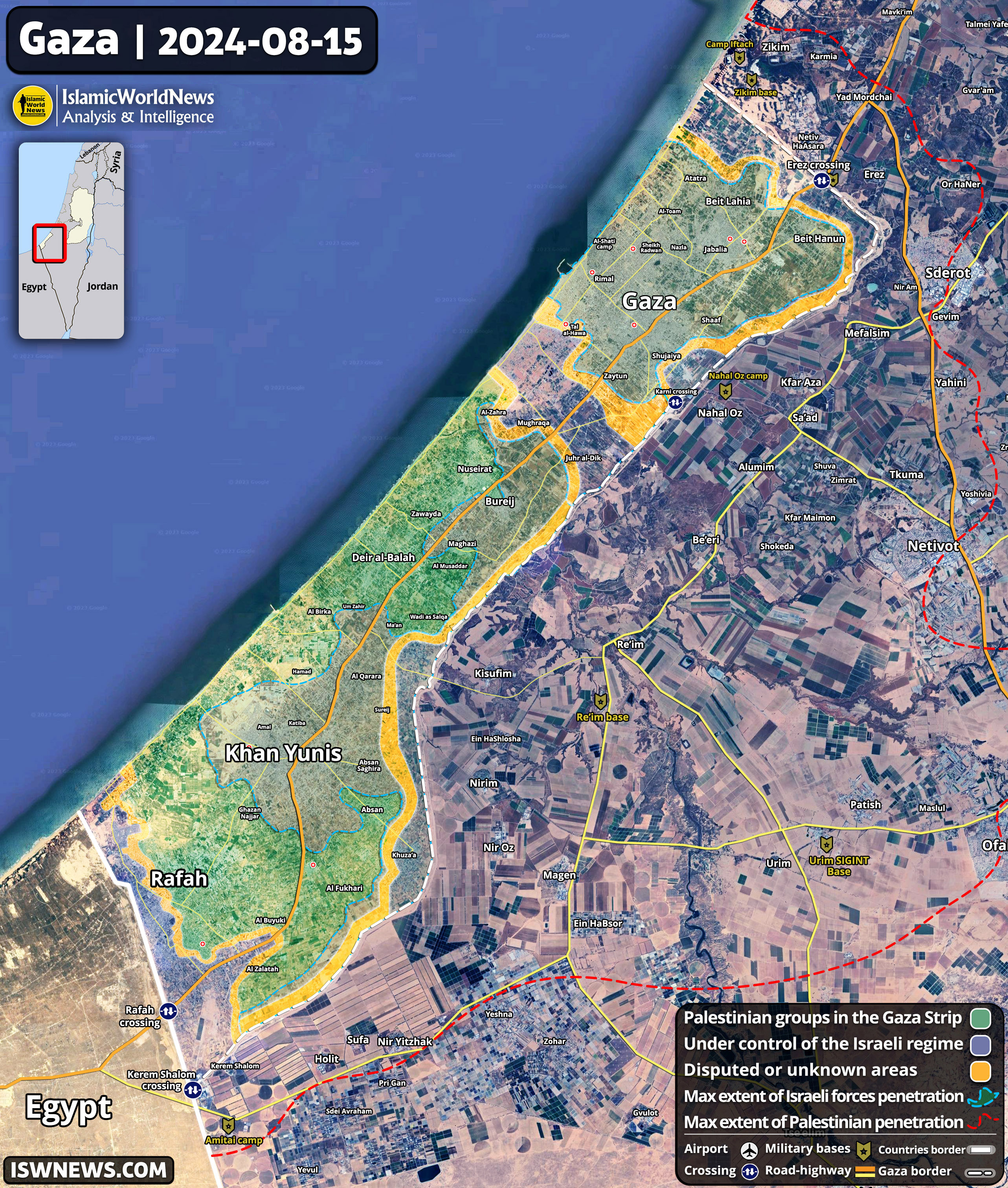
Gaza map
Fighting continues in the southern Gaza Strip in Rafah city without any significant progress. The military situation in Rafah has not changed much. Israeli forces have not been able to completely clear Rafah after weeks of fighting. Around 65% of the town is currently under Israeli control.
Fighting still continues in the central areas of Rafah, in Tal al-Sultan, around the Saudi project and in the southern areas of the city.
The situation in other parts of the Gaza Strip remains unchanged.
While Israel’s fruitless war in the Gaza Strip continues, the Israeli regime prepares itself to embrace Iran and its allies’ retaliatory attacks!
On July 30, a prominent commander of Hezbollah was assassinated in Beirut by the Israeli regime. The following day, on July 31 in Tehran, another terrorist act took place when Israel assassinated Ismail Haniyeh, the head of the Hamas political office. Ismail Haniyeh was killed in Iran while he was on an official trip to Tehran for the swearing-in ceremony of the new president of Iran, Massoud Pezeshkian.
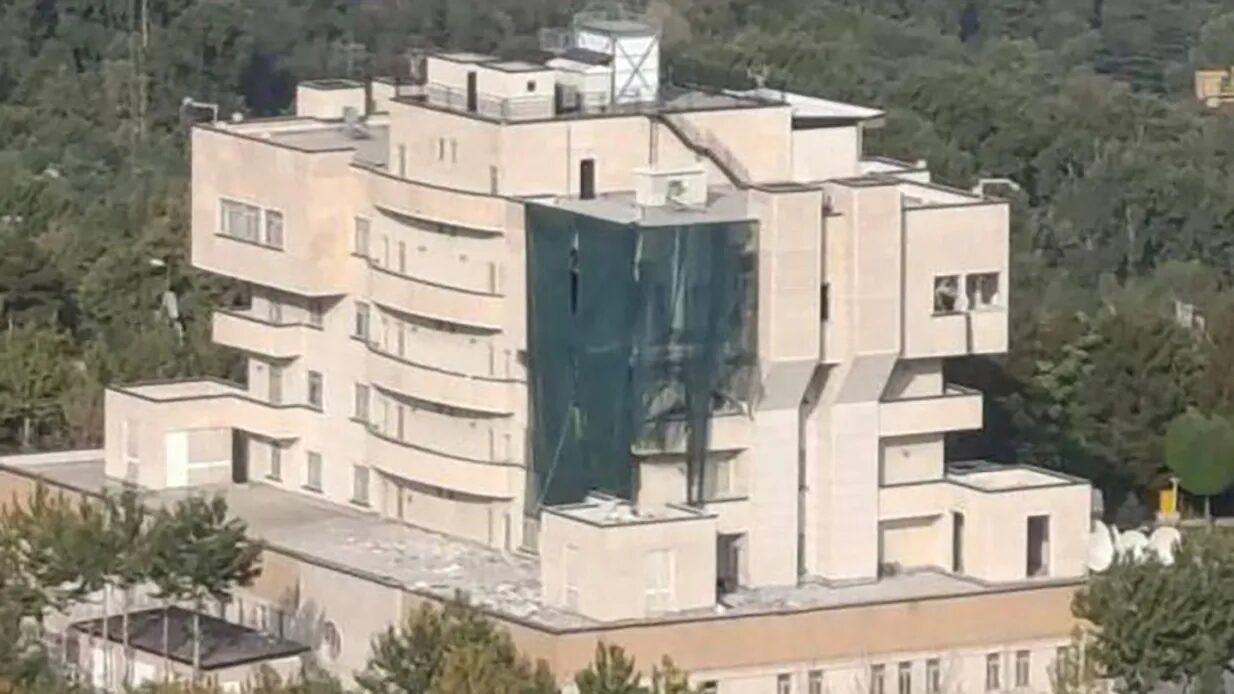
The building that was targeted in Tehran
The supreme leader of Iran, Ali Khamenei has promised that a severe revenge will be taken from the Israeli regime in seeking blood from this terrorist operation.
Hezbollah’s leader Hassan Nasrallah said that the war against Israel had entered a “new phase” and Israel should expect “rage and revenge.” In addition, the leader of Yemen’s Houthis, Abdul-Malik al-Houthi, vowed that the Israeli escalation will be met with a “military response.”
It is said that the Iran’s Supreme Leader has ordered a direct strike against Israel and the attack may be carried out jointly with other allies of Tehran, including Hezbollah and the Houthis.
Since then, the security and military situation in Israel has become very complicated.
The Israel Defense Forces stated that it is on “high alert” as the country braces for a response to the assassinations of Hezbollah’s military chief Fuad Shukr in the Lebanese capital, Beirut, and Hamas’s leader Ismail Haniyeh in the Iranian capital, Tehran.
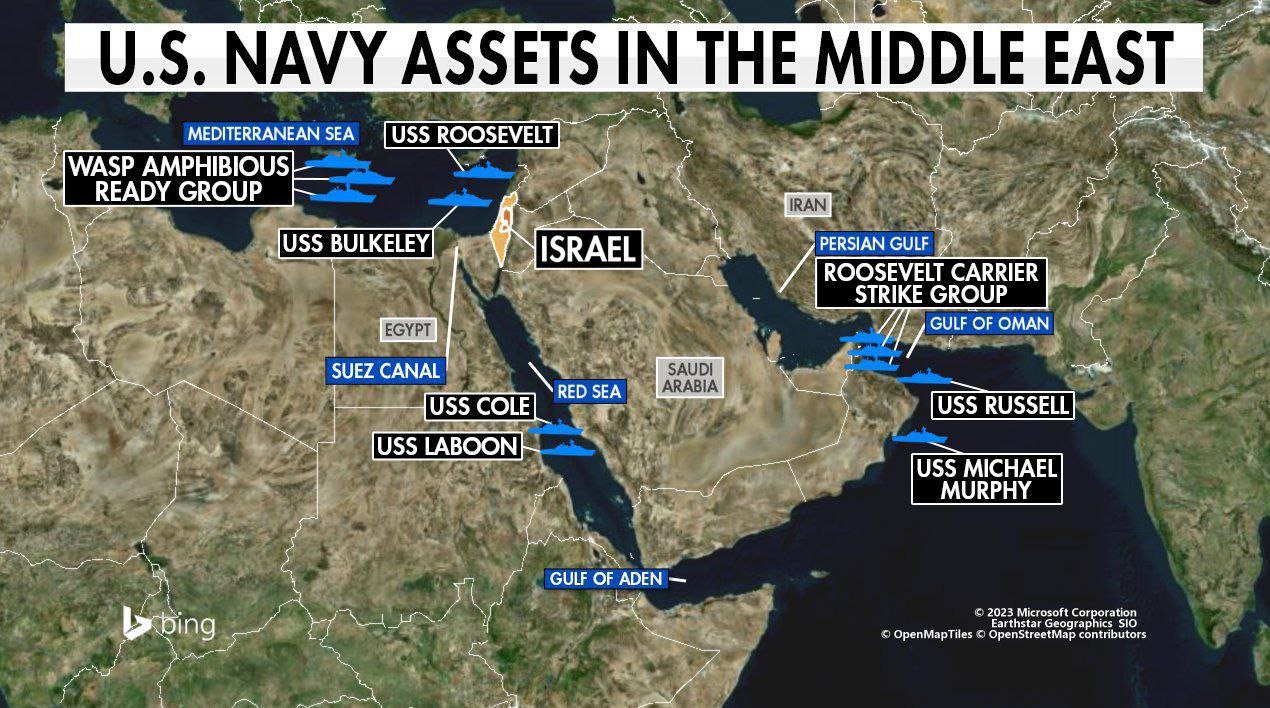
The US government has deployed additional ships and fighter jets to West Asia in support of Israel. Equipment from US and Israeli allies is also on high alert to defend Israel.
US Navy assets in the region
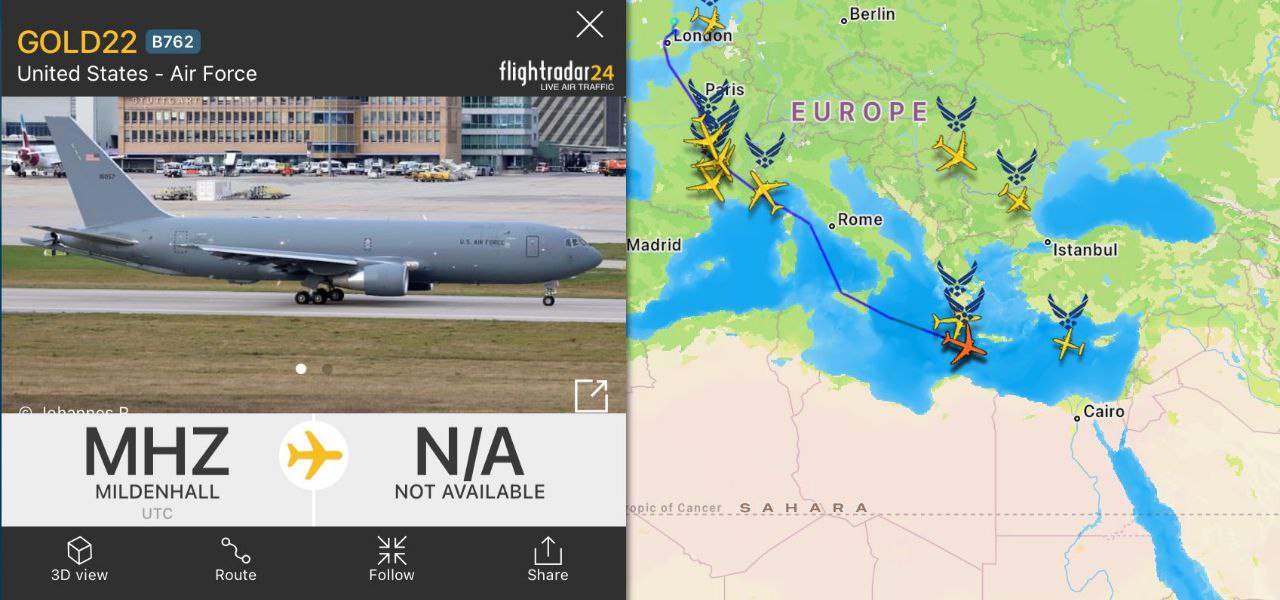
Last week, the US military sent 12 F-22 fighter jets from Lakenheath Airport in England to one of its bases in West Asia.
US military sending F-22s and tanker aircraft to the region
Yesterday, the spokesman of the US Ministry of Defense announced that Lloyd Austin, the US Secretary of Defense had a discussion with Israel’s Defense Minister Yoav Gallant about the country’s defense plans to protect Israel against possible attacks by Iran and its allies.
Austin emphasized that he has ordered the USS Abraham Lincoln Carrier Strike Group, equipped with F-35C fighters, as well as the USS Georgia (SSGN 729) to be deployed in the Middle East as soon as possible.
Yoav Gallant reportedly speaks with US Defense Minister Lloyd Austin daily to coordinate and update him on the latest developments.
On the other hand, Britain and France have asked Iran to refrain from attacking Israel.
Israel’s allies have used all diplomatic tools and economic pressures and even military threats to dissuade Iran from carrying out a retaliatory attack. Nevertheless, it seems very unlikely that Iran will withdraw from its retaliatory attack.
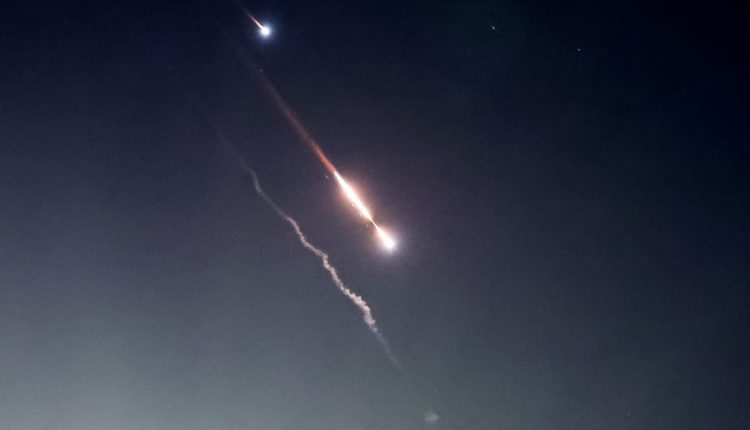
Last April, the Israeli regime attacked the Iranian embassy in Syria’s Damascus. The attack led to the death of several Iranian military advisers and high-ranking IRGC commanders. In response to this attack, Iran fired dozens of ballistic and cruise missiles and suicide drones at Israeli military targets in the occupied territories.
The history of Iran’s retaliatory operations shows that this country will attack Israel again. But it seems that this time the attacks will be stronger than before, comprehensive and with the participation of Iran’s regional allies.
Overall, the Middle East appears to be on the brink of an all-out war as a result of Israel’s recent acts and its ruthless offensive in the Palestinian enclave of the Gaza Strip. Israel’s crime in Gaza may lead to the downfall of this regime or even the destruction of the entire region!
This move follows a recent trend of intensified operations in this populated area, as the Israeli military forces received information on the presence of fighters affiliated with the Palestinian resistance movement, Hamas, in this region.
The 98th Division of the Israeli regime’s army is actively engaged in this operation in Khan Younis city, focusing on the eastern areas of Al-Qarara and Wadi al-Salqa towns.
The Israeli army has mobilized air support and artillery strikes to enhance the operational maneuver of the ground troops, reflecting the seriousness of the situation.
This latest assault comes following a previous eight-day campaign that kicked off on July 22, which also targeted Khan Younis city. During the previous operation, the Israeli armed forces caused extensive damage, demolishing residential buildings, a cemetery, and various service facilities using bulldozers and explosives.
As tensions flare up, the humanitarian implications of the Israeli regime’s military atrocities remain a pressing concern for the Palestinian civilians and international observers alike. The circumstances in Khan Younis are evolving quickly, and the continuation of the Israeli regime’s cruel actions cause catastrophe in this area.
The Palestinian Health Ministry in Gaza announced on Saturday that Gaza death toll reached 39,790 as the Israeli military forces killed 40 more Palestinians over the past 24 hours. At least 91,702 Palestinians have been wounded in the onslaught on the besieged area since Oct. 7, 2023.
The Information Office of the Palestinian Authority in the Gaza Strip announced the latest statistics of martyrs, wounded and damages of the war in the Gaza Strip.
The statistics are as follow:
The Israeli regime committed 3,388 massacres in the Gaza Strip during the 280 days of war.
So far, 48,345 people were martyred and missing in the Gaza Strip.
10,000 people are missing and 38,345 people were martyred and their bodies were taken to hospitals.
16,054 of the martyrs are children.
34 of these children died as a result of starvation.
10,700 of the martyrs are also women.
500 medical staff were killed.
75 people of rescue and relief forces were martyred.
158 journalists were martyred.
The Israeli regime has created 7 mass graves inside the hospitals of the Gaza Strip. The bodies of 520 martyrs were found in these seven mass graves.
159 refugee centers have been attacked by the Israeli regime.
88,295 people have been injured so far.
70% of the victims of this war are women and children.
17,000 children lost their parents or one of them since the beginning of the war.
3,500 children are at risk of death due to malnutrition and lack of medicine.
12,000 wounded need to be sent abroad for treatment.
10,000 cancer patients are struggling with death.
3,000 people suffering from various diseases need to be sent abroad.
1,737,524 were infected with infectious diseases due to displacement.
71,338 people were infected with liver inflammation due to displacement.
About 60,000 pregnant women are at risk due to the lack of medical care.
350,000 people with chronic diseases are at risk due to the lack of medicine.
Since the beginning of the war, 5,000 people have been arrested in the Gaza Strip.
310 of those arrested are from medical and therapeutic staff.
So far, 23 journalists have been arrested.
Two million people were displaced and homeless in the Gaza Strip.
197 government center was completely destroyed.
115 universities and schools have been completely destroyed.
328 other universities and schools were also damaged.
609 mosques have been completely destroyed.
211 other mosques were also damaged.
The occupiers have bombed and destroyed 3 churches.
150,000 residential units are completely destroyed and uninhabitable.
Another 200,000 residential units have also been damaged.
Since the beginning of the war, 80,000 tons of explosives have been dropped on the people of Gaza.
34 hospitals are completely out of service.
66 health and treatment centers are also out of service.
The invaders targeted 161 medical centers.
131 ambulances have also been targeted.
206 historical and ancient places have been targeted and destroyed.
The Israeli regime destroyed 3,030 km of the electricity grid in the Gaza Strip.
The initial direct damage of the war is estimated at 33 billion dollars.
Latest statistic of war in Gaza; day 280 – click to view full size