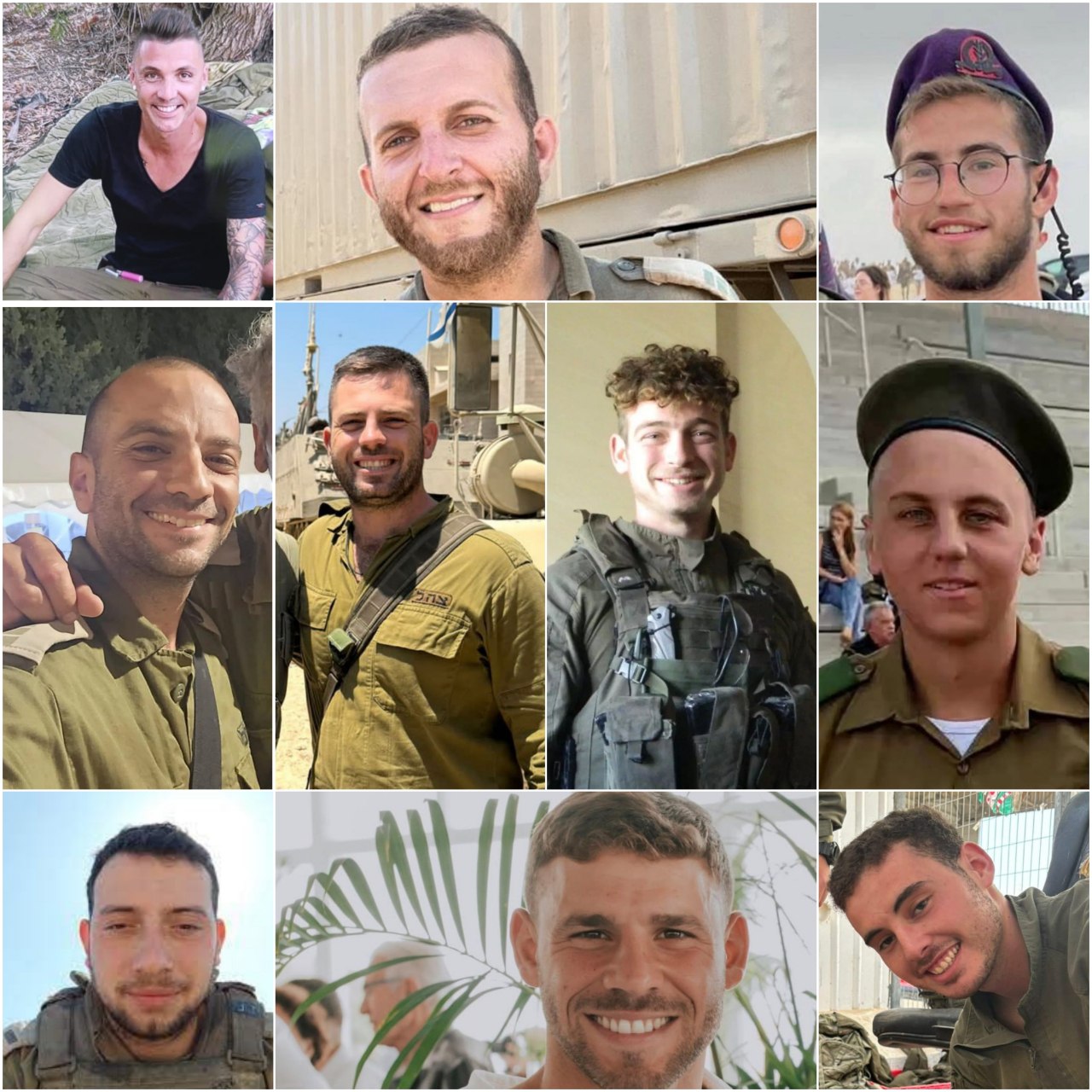
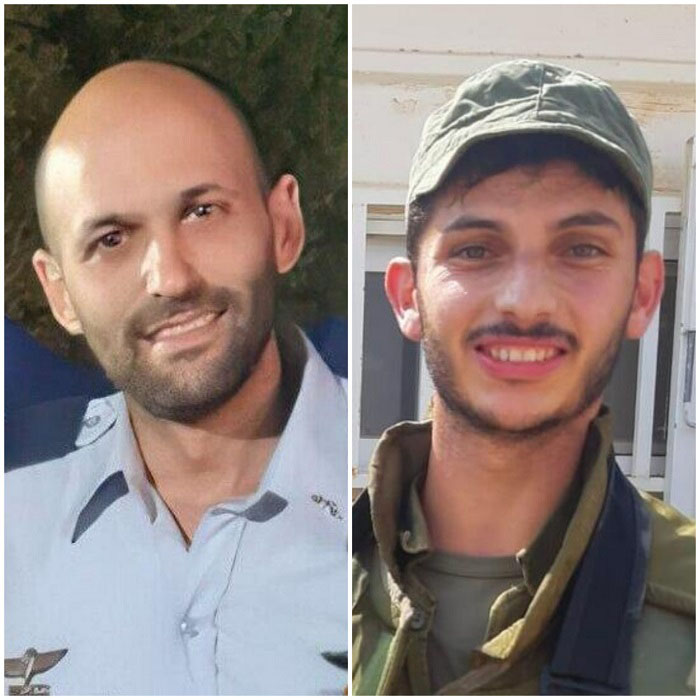
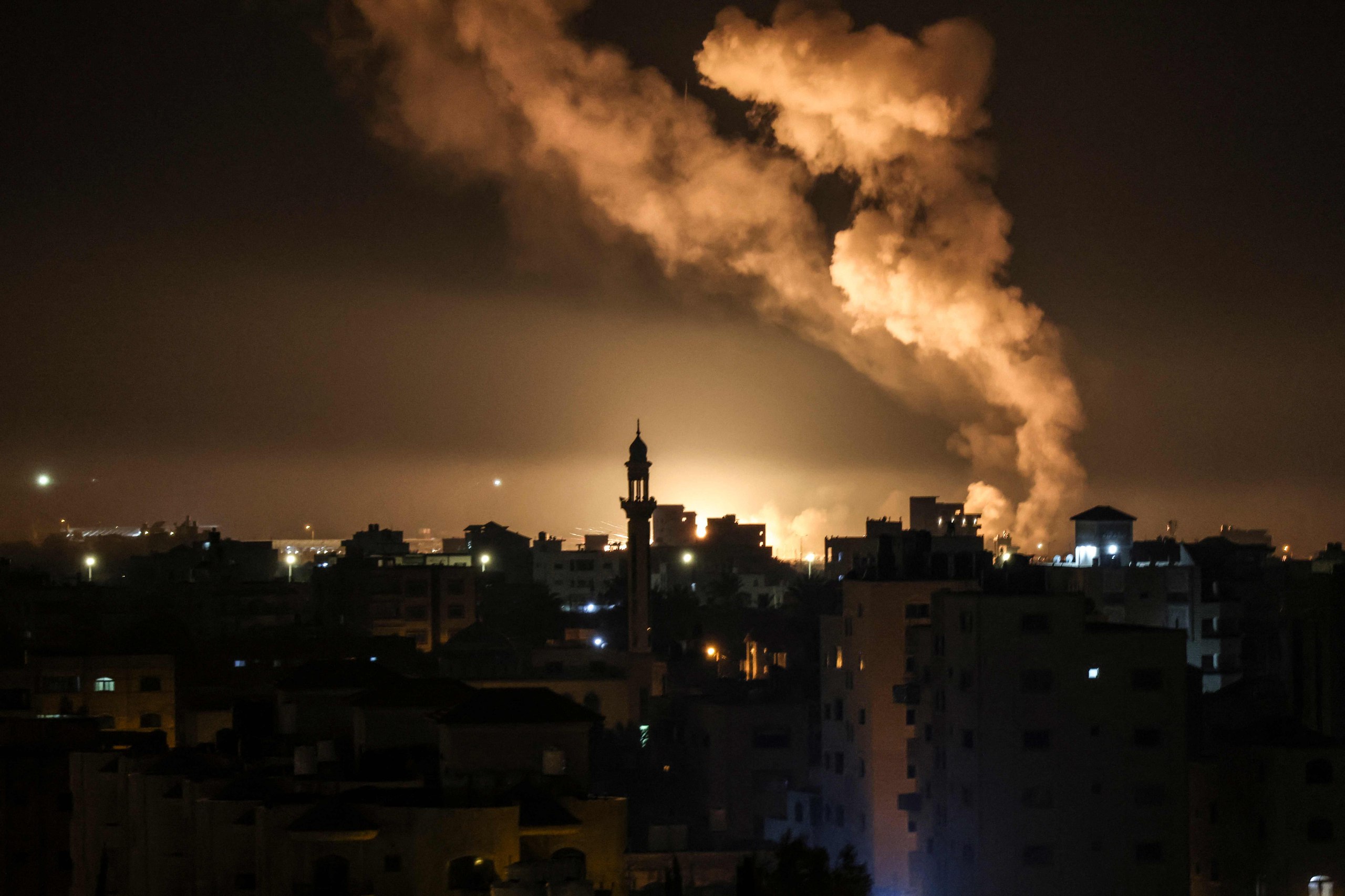
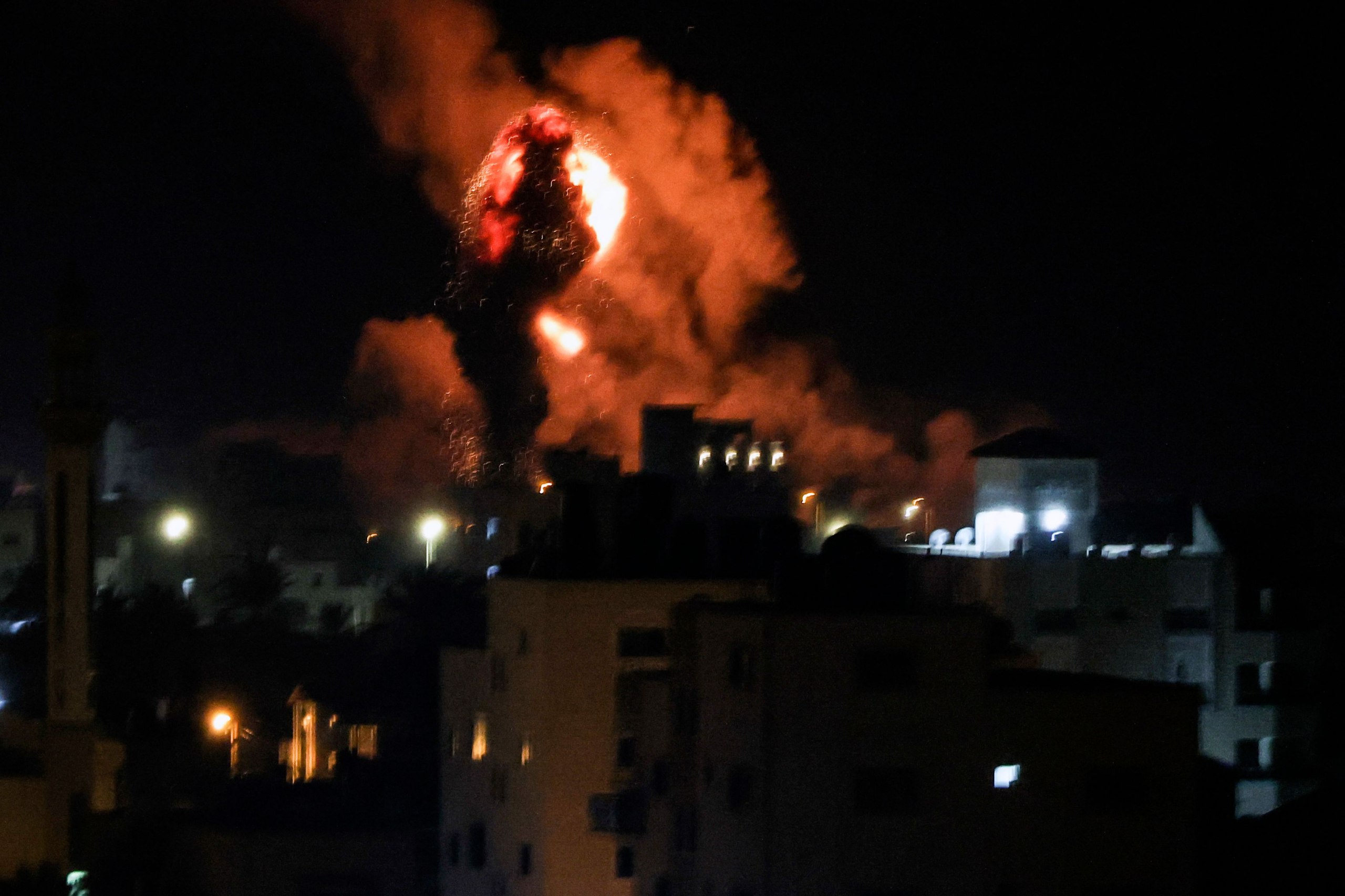
According to the Israeli army, 2 soldiers were killed in the north of occupied Palestine, 3 in the central areas of Gaza, 3 in the northern Gaza Strip, 1 in the southern Gaza Strip, and 1 in the occupied territories.
These latest deaths bring the total number of alleged Israeli fatalities since the onset of the ground offensive on October 27, 2023 to 324. The overall military death toll for the Israeli regime since the beginning of the conflict has now reached 682.
The Israeli invasion of Gaza, which began on October 7, 2023, has been marked by immense bloodshed and destruction.
The Gaza Health Ministry reports that over 38,584 Palestinians have been killed, with over 88,881 injured.
The fighting has devastated Gaza’s infrastructure, with over half of homes destroyed or damaged. Hospitals in Gaza are only partially functioning, and over 100 ambulances have been destroyed. The blockade of Gaza has also led to a collapse of telecommunications, leaving many residents unable to access evacuation maps.
This invasion marks a dramatic escalation of the longstanding conflict between the Israeli regime and the Palestinian nation.
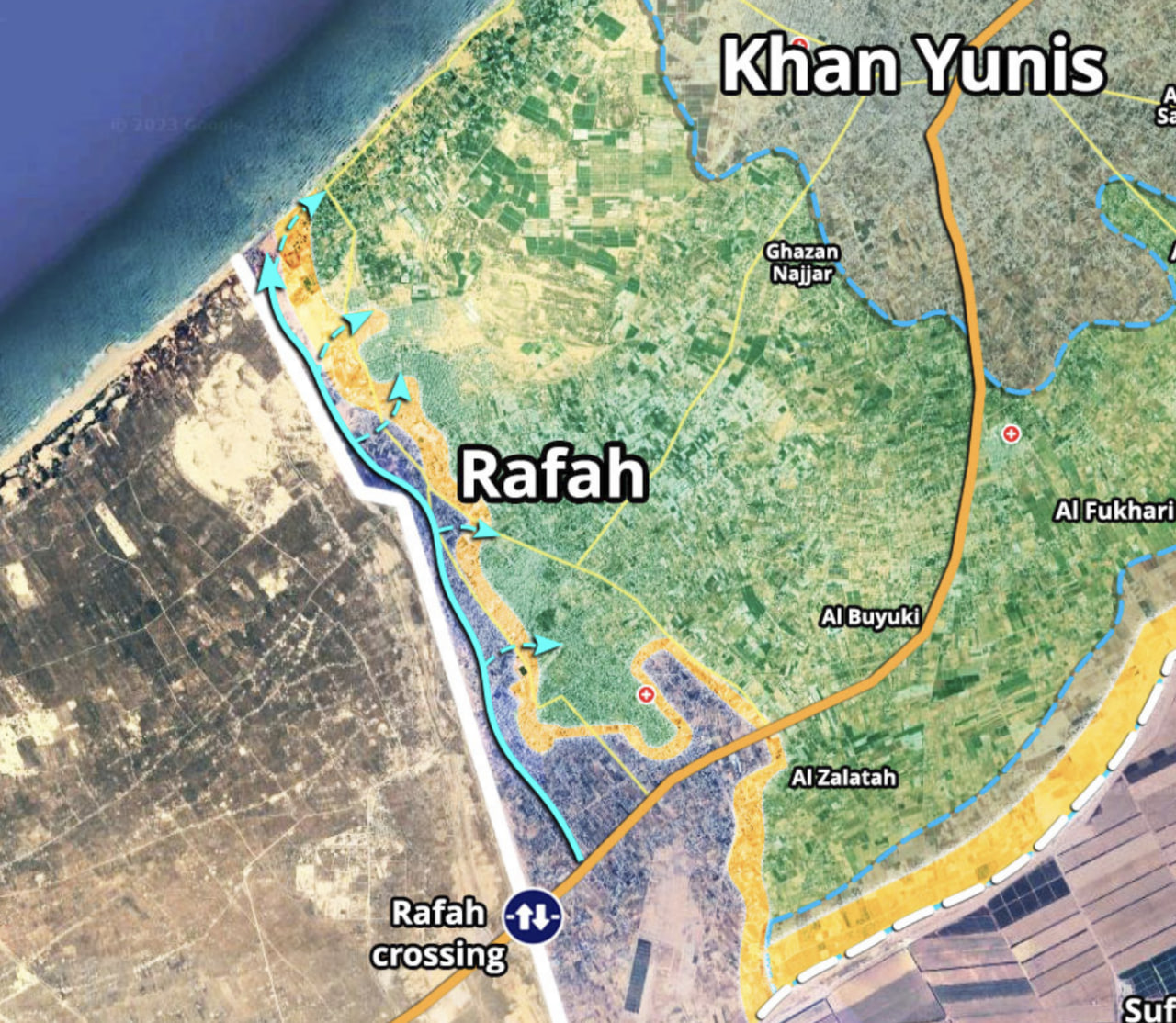
The Israeli regime’s army’s advancement to the shores of Rafah marks a pivotal moment in the evolving dynamics of the conflict, with implications reverberating across the region.
In Rafah, a city at the heart of the conflict, clashes persist in multiple fronts, spanning the southern, western, and northern axes. Recent confrontations have seen targeted assaults by Israeli forces on vital locations such as Tel al-Sultan and the Saudi Housing in the city’s northern sector. Concurrently, efforts to secure and clear areas in the western part of Rafah are underway, underscoring the intensity of the ongoing military incursion.
The advance of Israeli regime in Rafah and along the border line
Insights from field sources within the Israeli regime shed light on the tactics employed by the Israeli army in Rafah. Despite lacking the requisite strength for a full-scale assault, Israeli forces are employing tactical approaches involving limited raids, strategic retreats, and iterative movements to consolidate control over the region incrementally. This strategy indicates a push by Israeli forces to expand their territorial influence along the coastal perimeters of Rafah.
Reports indicate a significant evacuation of approximately two-thirds of Rafah’s population, highlighting the humanitarian impact of the genocidal war. Furthermore, with around 35% of Rafah falling under Israeli occupation, the plight of civilians in the region is exacerbated, underscoring the urgent need for international intervention and humanitarian assistance.
In a tactical deployment towards Al-Bureij refugee camp in the central axis, the Israeli regime’s army has advanced several kilometers to support military operations aimed at the release of Israeli captives. However, these advancements are deemed temporary, with expectations of Israeli forces withdrawing from these areas in the near term, reflecting the fluid and dynamic nature of the conflict landscape.
The intensifying clashes in Rafah underscore the precarious situation faced by civilians caught in the Israeli plot for the region.
Meanwhile, some reports point out to the fact that discussions regarding the reopening of the Rafah Crossing have hit a roadblock due to Israeli Prime Minister Benjamin Netanyahu’s rejection of involving the Palestinians in overseeing the vital crossing.
According to the Government Media Office in Gaza, the death toll from the attack has now risen to a staggering 210, with over 400 individuals injured. The majority of the victims are reported to be children and women, a tragic testament to the indiscriminate nature of the Israeli onslaught on the Gaza Strip.
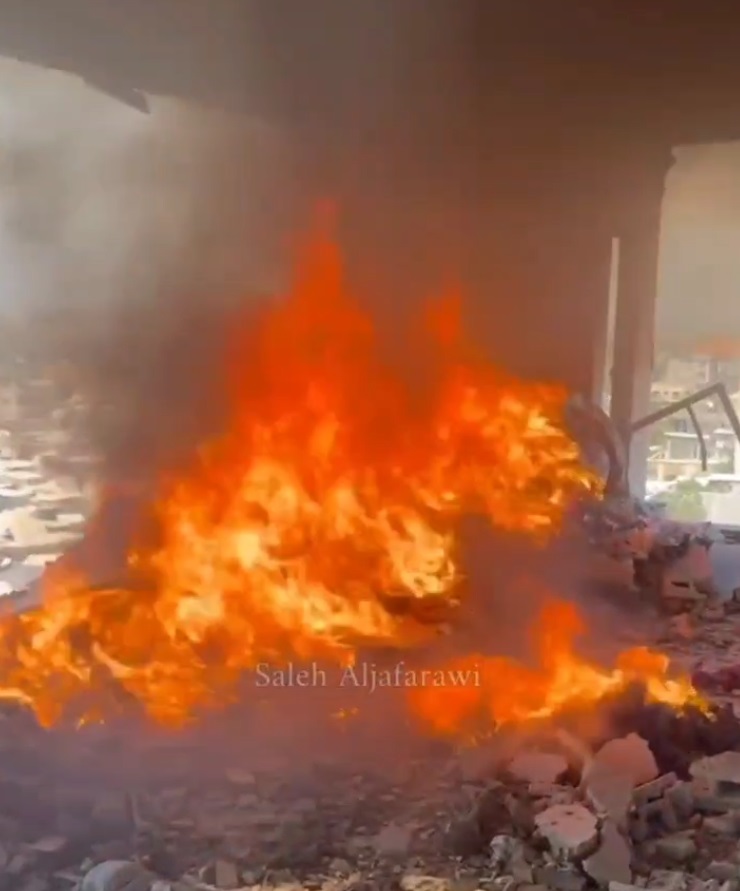
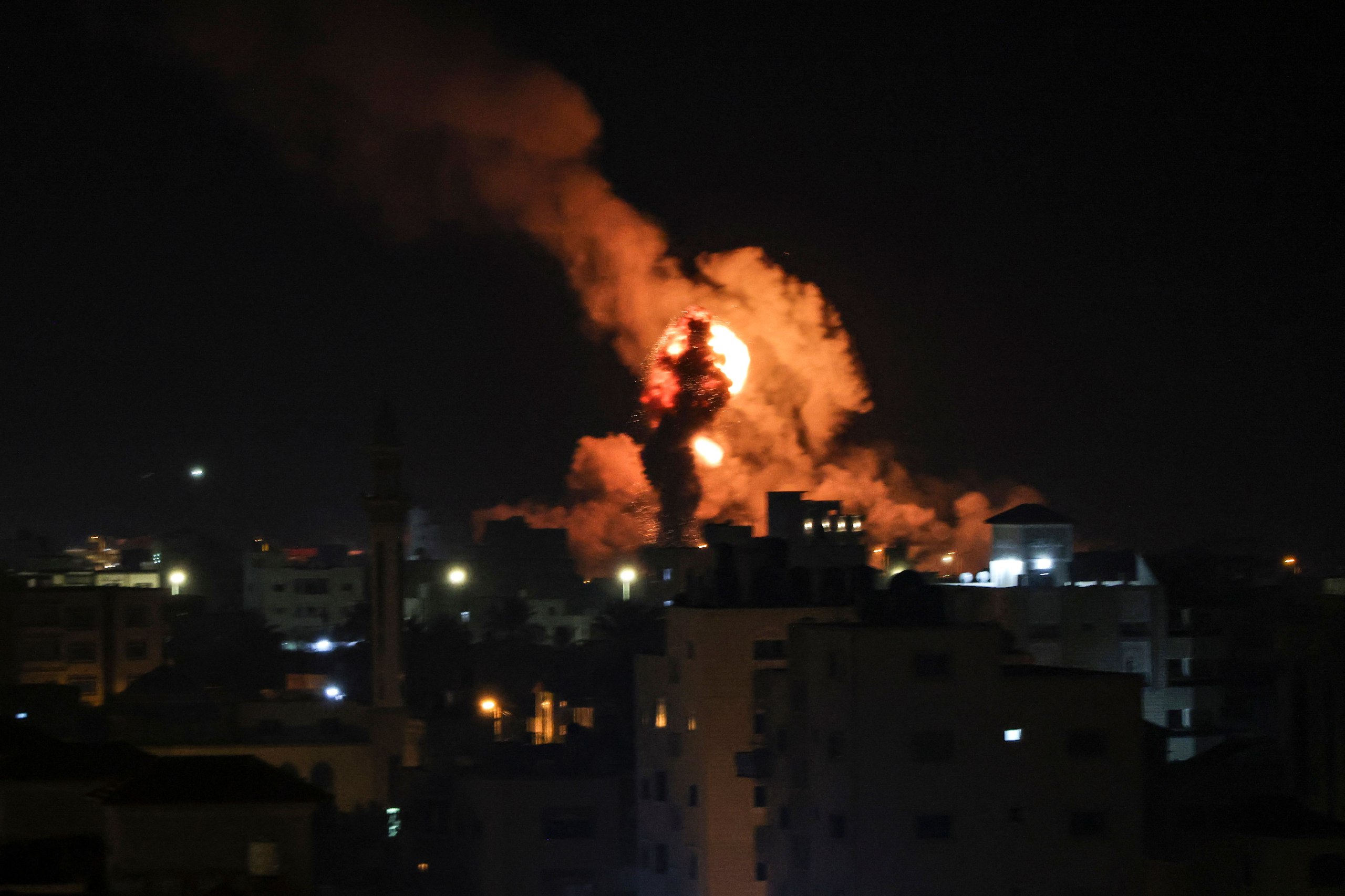
Moments of the brutal bombing of Nusirat by the Israeli regime
The Al-Aqsa Martyrs Hospital, already struggling to cope with the influx of casualties, has been overwhelmed by the sheer scale of the crisis. Patients have been forced to lie on the floor and in the corridors, as the facility lacks the necessary beds and medical supplies to adequately treat the injured.
Many of the wounded are at risk of death due to the severity of their conditions and the lack of resources, said hospital spokesman Khalil Al-Dakran, who has made a desperate plea for international intervention and support.
The bombing, which targeted the Nuseirat market and the area around the Al-Aqsa Martyrs Hospital in Deir Al-Balah, has left the community in a state of shock and anguish. Ambulances continue to transport the injured from various parts of the camp, which has been subjected to relentless Israeli bombardment.
Aftermath of Israeli genocide in Nuseirat camp
This latest atrocity is a devastating blow to the already beleaguered people of Gaza, who have endured the horrors of Israel’s ongoing genocide against the Palestinian population. According to the Gaza Ministry of Health, the Israeli onslaught on Gaza that began on October 7 has claimed the lives of at least 36,801 Palestinians, with 83,680 more wounded.
As the international community grapples with the gravity of the situation, the people of Nuseirat and across Gaza remain in dire need of immediate humanitarian aid and protection.
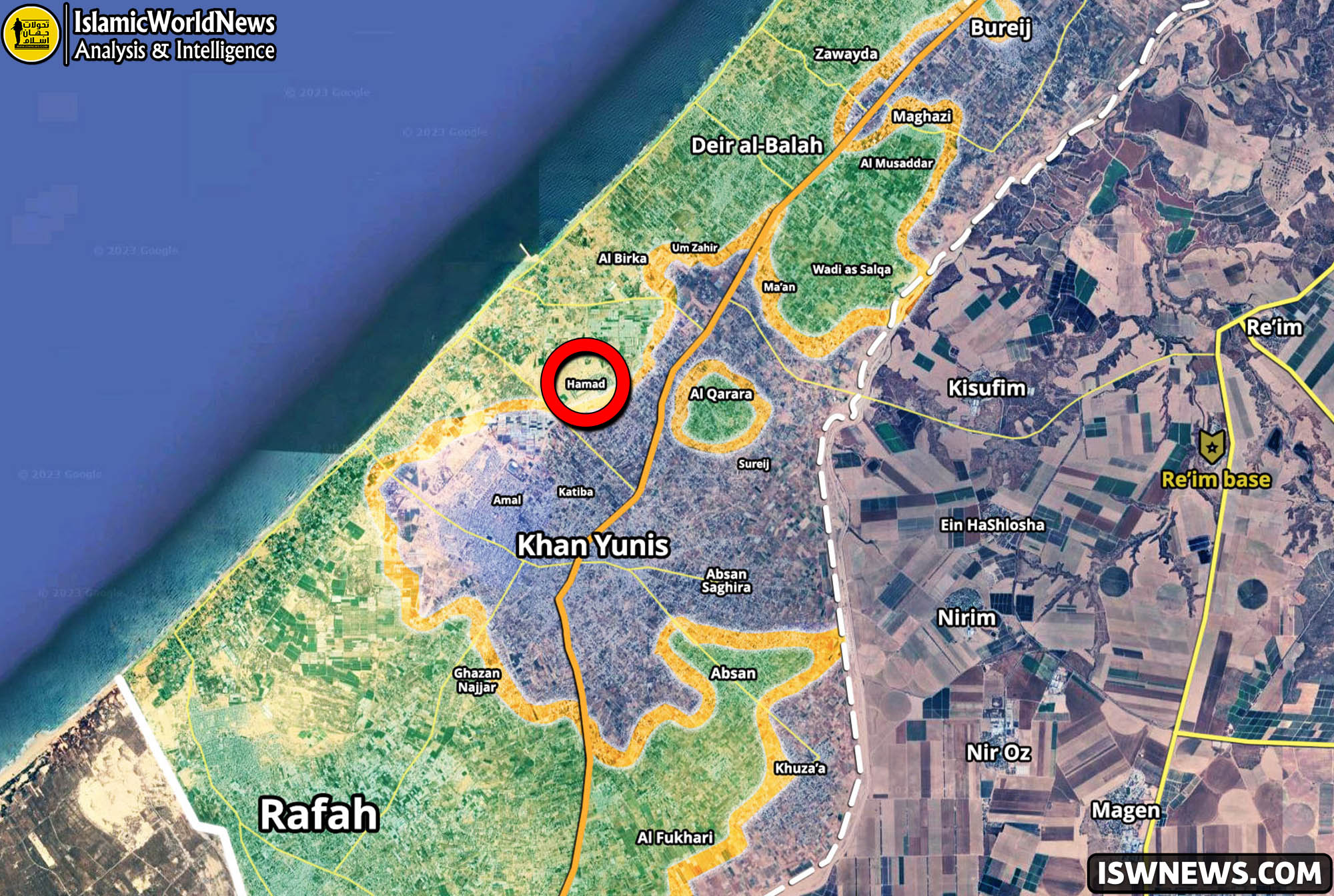
1- The Israeli artillery targeted the east of Al-Bureij camp, the west of Gaza City, the vicinity of Al-Shifa Hospital, the north of Al-Nuseirat camp, the middle of Gaza City, Beit Lahia, Jabalia, Al-Qarara town, Hamad town and Al-Shati camp.
2- Israeli fighter jets targeted areas in Rafah City, Gaza City, Jabalia, Al-Shati, Beit Lahia, Khan Yunis, north of Nuseirat camp and east of Gaza.
3- Saraya al-Quds announced that the fighters of this group targeted a vehicle of the Zionist regime near Al-Shifa Hospital.
4- Saraya al-Quds fighters targeted the gathering place of the Zionist army forces around al-Shifa Hospital in Gaza with a mortar attack.
5- The Palestinian Ministry of Health announced that the number of martyrs in the Gaza Strip has increased to more than 32,552 and the number of injured has reached more than 74,980.
On March 23, Izz ad-Din Al-Qassam Brigades announced the death of one of the Israeli captives in the Gaza Strip as a result of lack of food and medicine, stating that despite the fact that the captives survived the five-month-long attacks of the Israeli regime’s army unharmed, they could not escape the shortage of food and medicine.
The spokesman for the Izz ad-Din Al-Qassam Brigades Abu Obaida stated that we had previously warned that the Israeli enemy’s captives are suffering from hunger and deprivation conditions similar to those our people face. They suffer from a lack of food and medicine, and the lives of some of them are at risk due to illness. We announce the death of the 34-year-old Israeli captive named Yejiv Bukhattaf due to a shortage of medicine and food.
It is worth mentioning that Abu Obaida had announced some time ago that the number of Israeli captives who have been killed during the operations of the Israeli regime’s military forces in the Gaza Strip has exceeded 70 people.
1- Israeli regime artillery shelled the southwest of Gaza, north and west of Khan Yunis, east of al-Maghazi camp, north of al-Nuseirat camp, east of Rafah city since this morning.
2- The Israeli army announced the assassination of one of the field commanders of Hamas named “Mahmoud Mohammad Abd Haz” in airstrikes on the Gaza Strip.
3- Since this morning, Israeli forces raided Hamad town in north of Khan Yunis and arrested dozens of Palestinians and forced several other Palestinians to leave the area. At the same time as the Israeli attack, Israeli artillery also shelled areas in Hamad town, during which several Palestinians were martyred and wounded.
4- Fighters of al-Qassam Brigades targeted 4 battle tanks and 2 bulldozers of the Israeli army in Amal neighborhood located in the west of Khan Yunis city. Al-Qassam forces also targeted the gathering place of Israeli soldiers with rockets.
5- Sderot and Niram areas located in the occupied territories were targeted by Saraya al-Quds rocket attack. In addition to this attack, the soldiers of Saraya al-Quds targeted the gathering place of the Israeli regime soldiers in the north of Gaza with a mortar attack.
6- Kataib al-Mujahideen also reported targeting the gathering place of Israeli army forces in the southeast of Gaza.
7- According to some reports, the Israeli regime soldiers have withdrawn from the areas in the al-Zaytoun neighborhood and some Palestinians have returned to their homes.
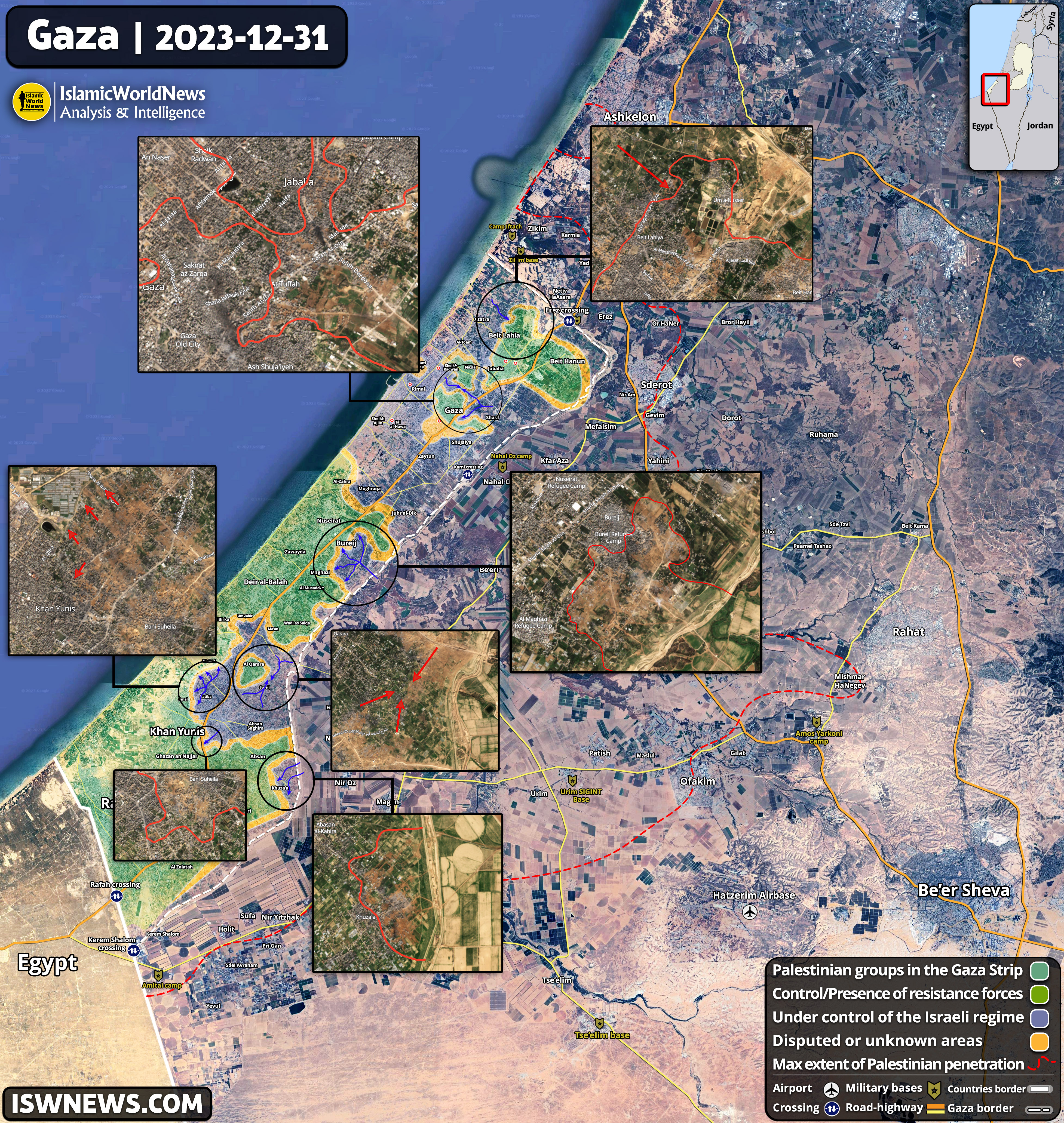
In the northern axis of the Gaza Strip, clashes continue in Jabalia refugee camp and central areas of the Gaza city, as well as in some areas of Sheikh Radwan, Al-Tuffah, and Al-Daraj. The Israeli regime’s military forces have been slowly advancing in the central part of the Gaza City over the past four days, clearing areas and creating new pockets of encirclement. In case this trend continues, it appears that the central areas of the Gaza City will soon come under complete control of the occupying Israeli army. In the Beit Lahia axis, the Israeli regime’s military forces have been advancing in the northern part of the region.
In the central axis of the Gaza Strip, Israeli military forces have entered Al-Bureij refugee camp for about four days and have expanded the scope of their advance. Currently, intense fighting is ongoing inside Al-Bureij refugee camp and to the east of Al-Maghazi town. It seems that the Israeli regime’s army intends to first fully occupy Al-Bureij camp and then move on to Al-Maghazi town and Al-Nusairat camp.
In the southern axis of the Gaza Strip, over the past week, the Israeli regime’s military forces have been slowly but continuously advancing in the urban area of Khan Yunis city and its outskirts.
In the southern outskirts of Khan Yunis in the Khuza’a axis, Israeli military forces have increased their scope of advance to some extent. In the eastern outskirts of Khan Yunis, in the Al-Sureij and Al-Qarara areas, the Israeli regime’s forces have advanced from two directions, completely occupied the Al-Sureij area, and tightened the encirclement of the Al-Qarara area. Partial advances have also been made towards Salah al-Din Street in western Bani Suhaila.
In the northern part of Khan Yunis, Israeli forces have expanded their scope of advance towards the north and occupied more areas. In this axis, the Israeli regime’s army has literally destroyed Khan Yunis and nearly half of its eastern and northeastern parts have been wiped off the map! A comparison and examination of satellite images before and after the ongoing invasion by the Israeli regime’s occupying forces in this area clearly shows that farms and urban structures have been deliberately destroyed and leveled by heavy bombardments and then by Israeli bulldozers.
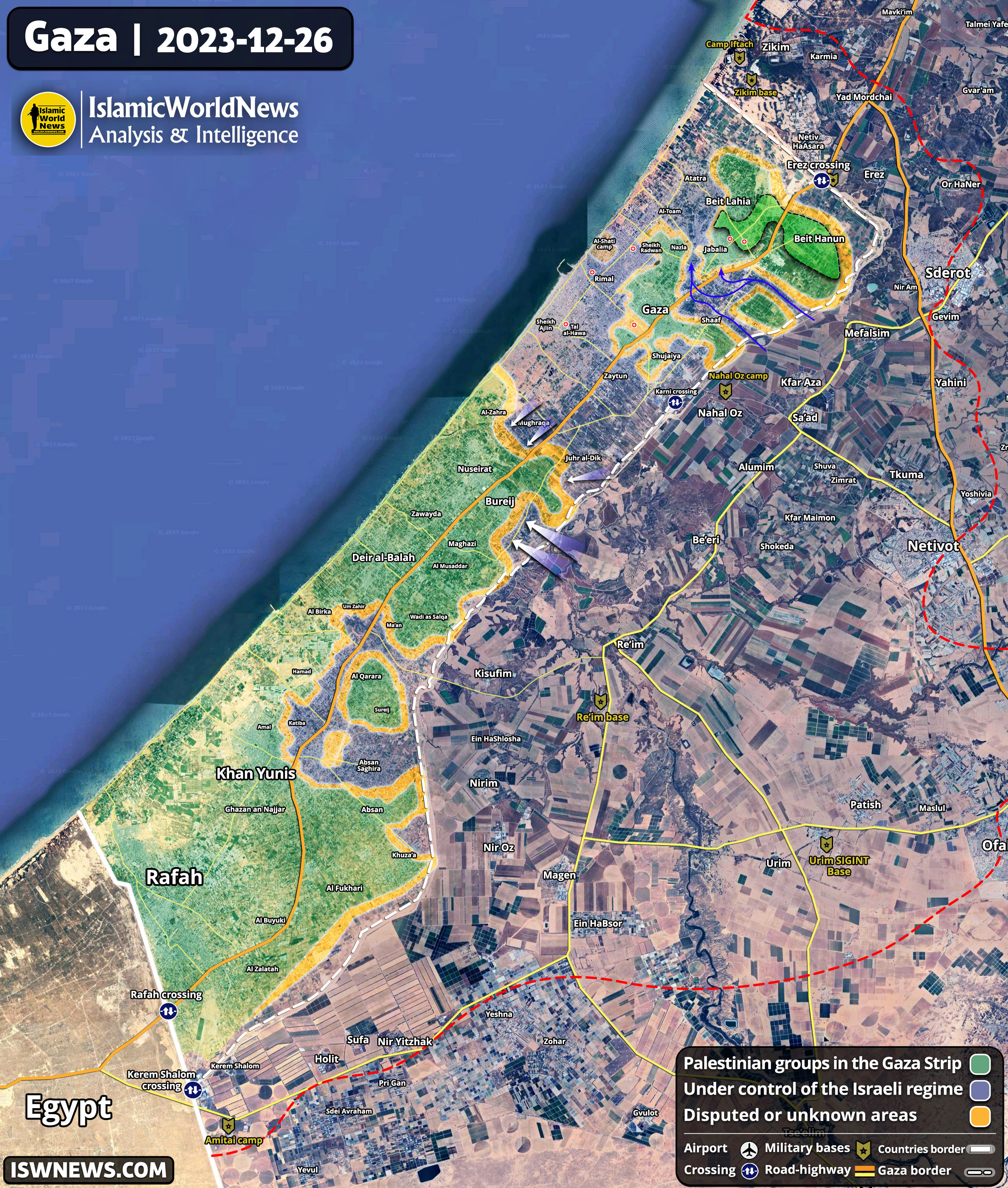
The latest military situation in the Gaza Strip – click to view in full size
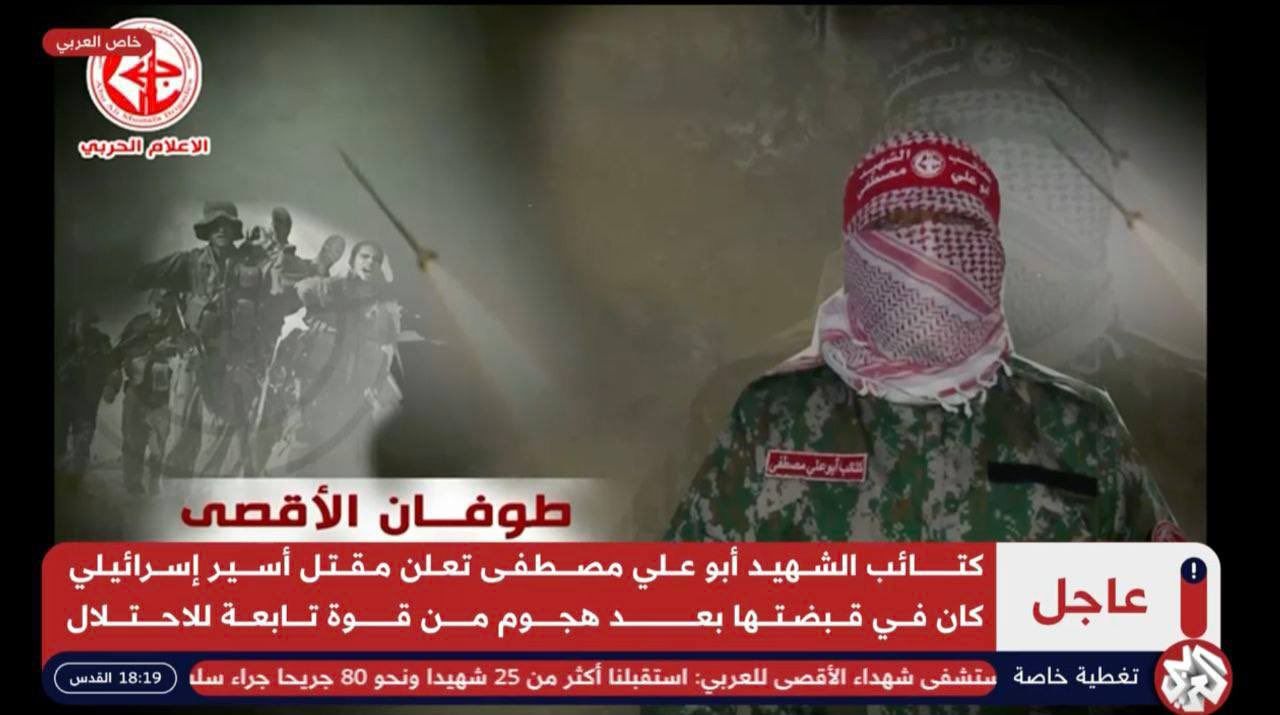
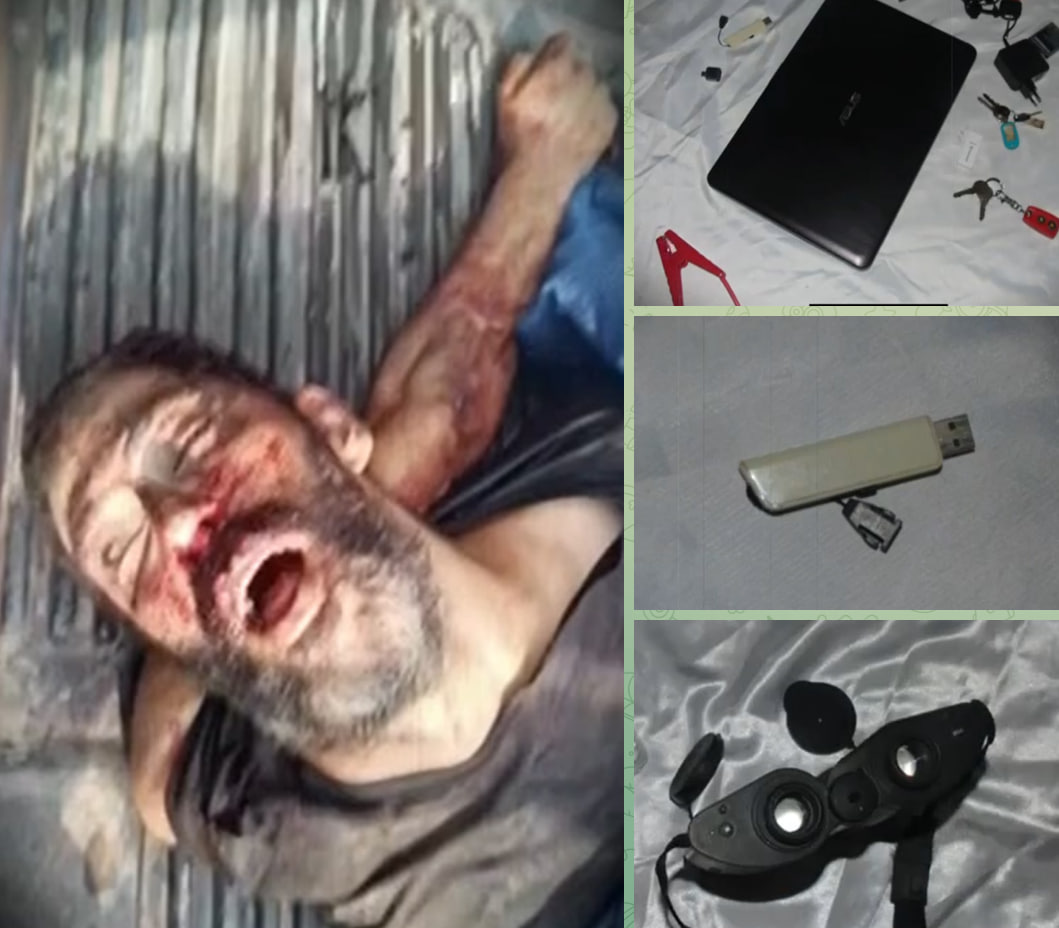
Abu Jamal, the military spokesman of the Abu Ali Mustafa Brigades, stressed in this audio statement that a group of Israeli special forces intended to free an Israeli captive soldier from the captivity of these Palestinian fighters, which resulted in a clash between the two sides and after the failure of their operation, Israeli fighter jets bombed the place, where this captive was held, and caused the death of the soldier.
The spokesman went on to say that the Israeli commandos fled after the failure of their operation and left a stretcher behind. Also in this operation, a laptop, several flash drives and other devices were seized from the special forces of the Israeli army by the fighters of the Abu Ali Mustafa Brigades. The corpse of this Israeli soldier is in the hands of the fighters of these brigades, while no details of his name and personal information have been published yet.
An screenshot from the video of Abu Ali Mustafa Brigades on failed Israeli army attempt to free its prisoner from the Gaza Strip
In the northern axis of Gaza Strip, according to the latest field information and videos released by field sources, the Israeli regime forces have retreated from Beit Hanoun and most of Beit Lahia, but the clashes continue around Jabalia and some areas of Sheikh Radwan. Also, Israeli forces have retreated from some places in Al-Shujaiyah area. On the other hand, the Israeli forces entered the Gaza Strip from two new axes from the south of Jabalia and reached the Israeli forces in the west of the Jabalia camp and tightened the siege of the Jabalia camp. It should be noted that until the moment of writing this text, the news of the complete withdrawal of the Zionist regime from the areas of Al-Rimal, Al-Zaitun, Al-Shujaiyah and other areas of Gaza City is not true and Israeli forces are present in different areas of the city. The map of the Gaza Strip will be updated or corrected if reliable field information of new changes is received.
In the central axis of the Gaza Strip, Israeli forces have entered the Gaza Strip from south of Al-Bureij during the last four days. Also, Israeli forces have taken control of most of Al-Maghraqa and have made advances in Juhr Al-Dik area. Currently, the most intense clashes are going on near Bureij and Nuseirat. In general, the middle front of the Gaza Strip is now the most active front of the strip.
In the southern axis of the Gaza Strip, there has been no significant change in the Khan Yunis front, and the control lines in this city have not changed compared to recent days.
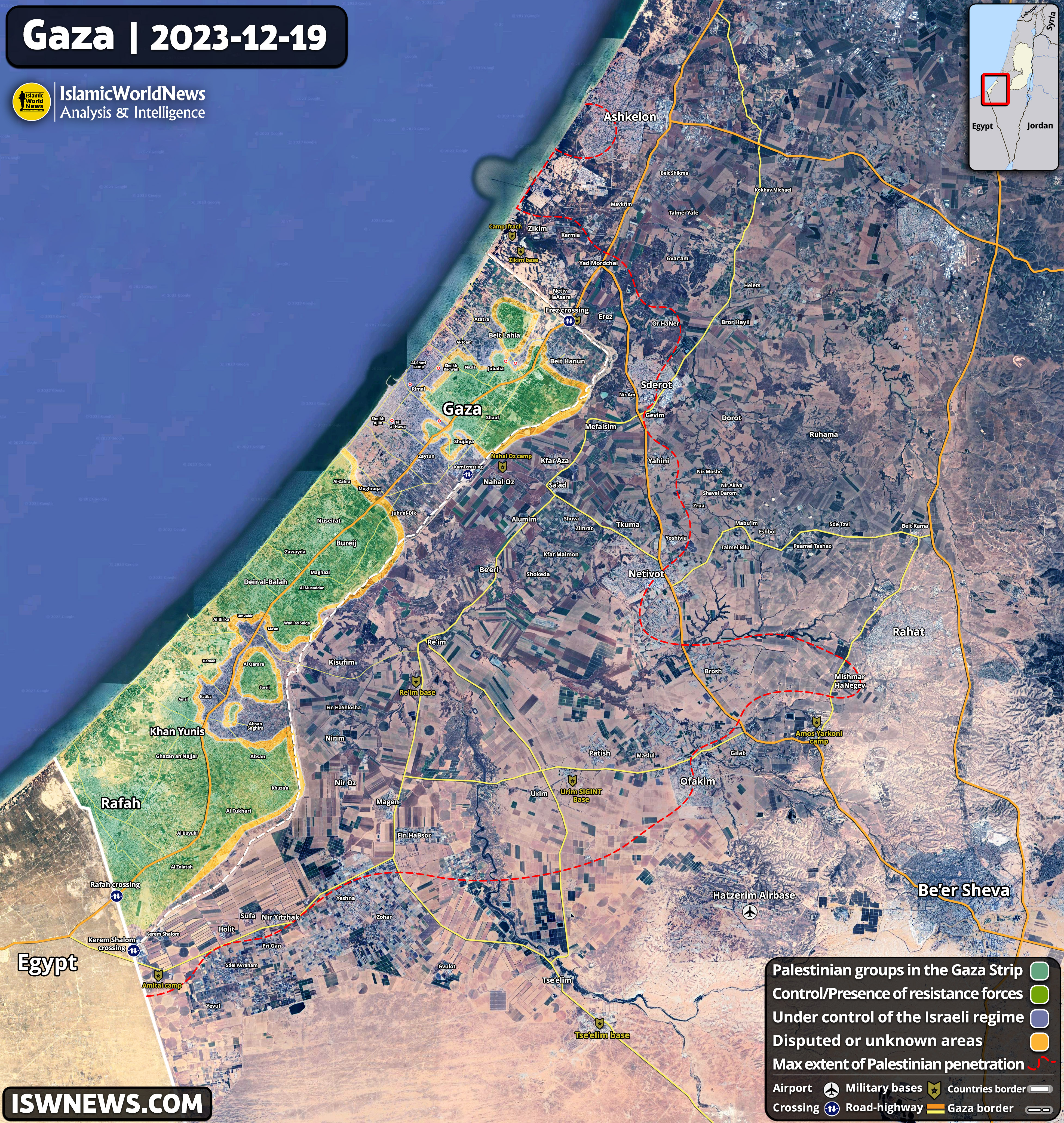
The latest military situation in the Gaza Strip – click to view in full size
The latest and most updated map of the military situation in the Gaza Strip; The 74th day of battles. During the last week, the Israeli army’s advances has slowed down and stopped in many fronts.
In the north of the Gaza Strip, clashes continue in Shujaiyah neighborhood and Jabalia refugee camp and the remaining areas in Beit Hanun Hanoun, Sheikh Radwan and Al-Rimal.
In the south of the Gaza Strip, clashes continue in the city of Khan Yunis. Today, the spokesman of the Israeli regime announced that the Israeli army has deployed an additional brigade in the Khan Yunis front. Also, the Israeli Defense Minister spoke about the expansion of military operations in the south of the Gaza Strip. Therefore, it seems that in the coming days, we will witness a significant increase in fighting in the south of the Gaza Strip, especially in the city of Khan Yunis.
The latest military situation in the Gaza Strip – click to view in full size
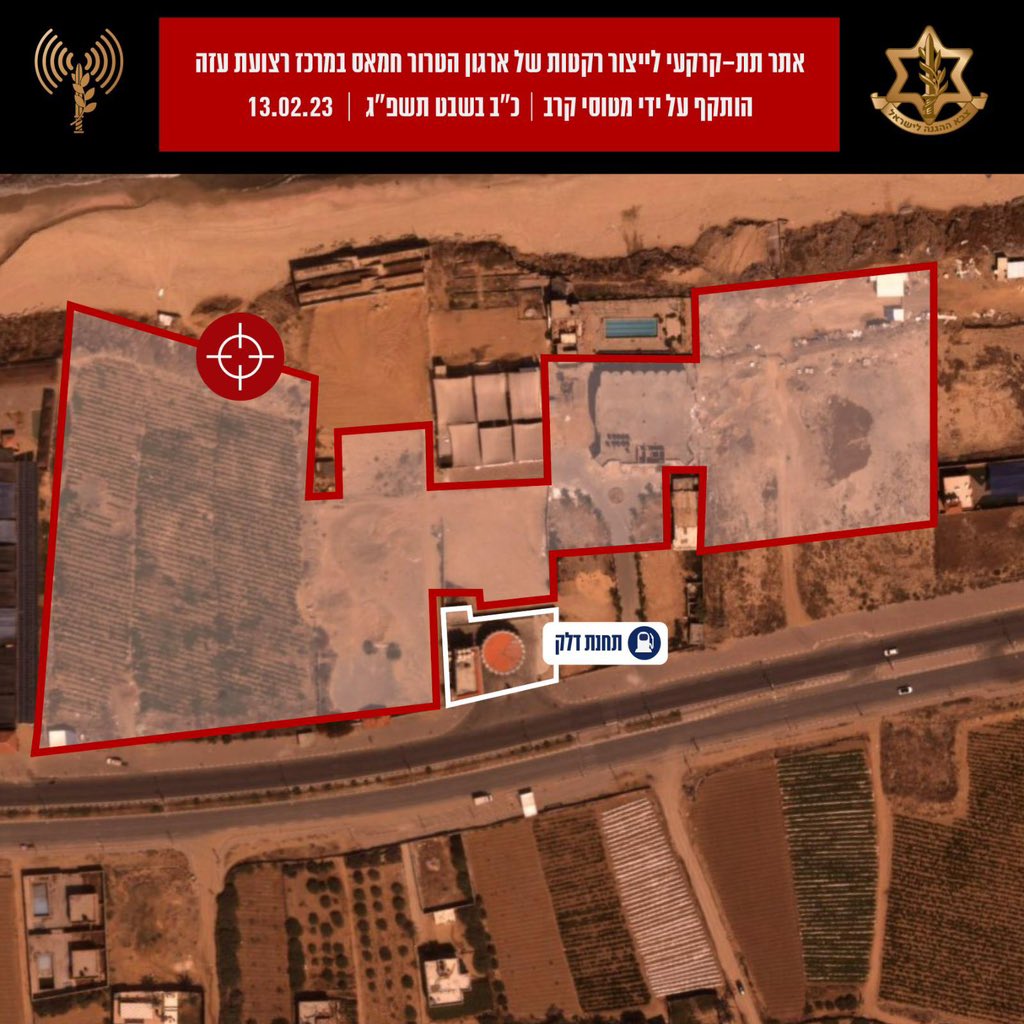
After the recent rocket attack by the Palestinian resistance on the Zionist settlement of Nahal Oz near the Gaza Strip, the Israeli regime aircraft attacked a Palestinian resistance base in the western suburbs of Gaza City with 10 missiles this morning. The Israeli artillery also targeted a resistance watch tower in the east of Beit Hanoun and a resistance base in the east of Khan Yunis. There were no casualties in this attack.
A picture of the targeted sites by the Israeli army in this morning’s attack on the Gaza Strip
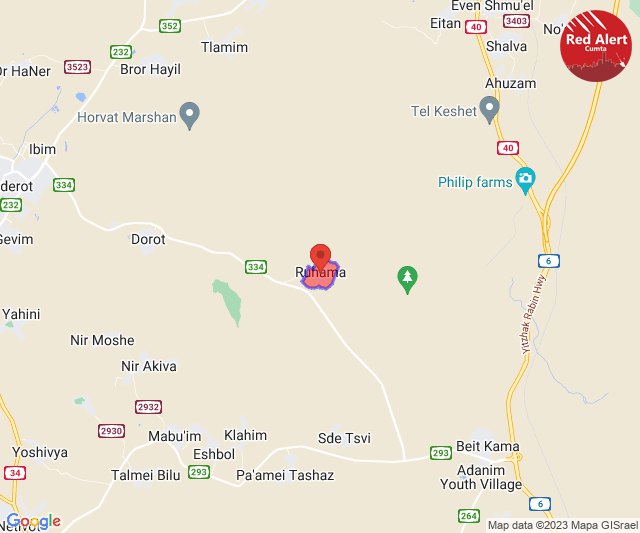
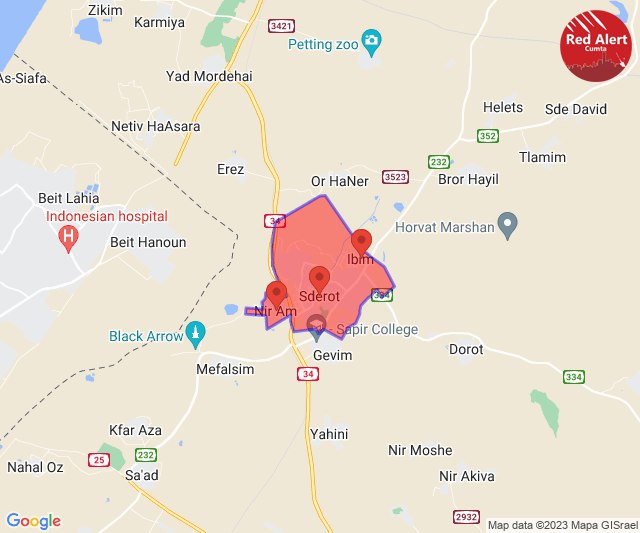
On the other hand, in response to the Israeli regime’s air and artillery attacks on the Gaza Strip, the Palestinian resistance groups also targeted the Zionist settlement of Sderot and Nir Am in the vicinity of this strip with several rockets, during which the alarm sounded in these areas.
Sounding the alarm in the Zionist settlements around the Gaza Strip
It is worth mentioning that on February 11, the Palestinian resistance groups fired a rocket towards the Zionist settlement of Nahal Oz, which was intercepted by the Iron Dome system.
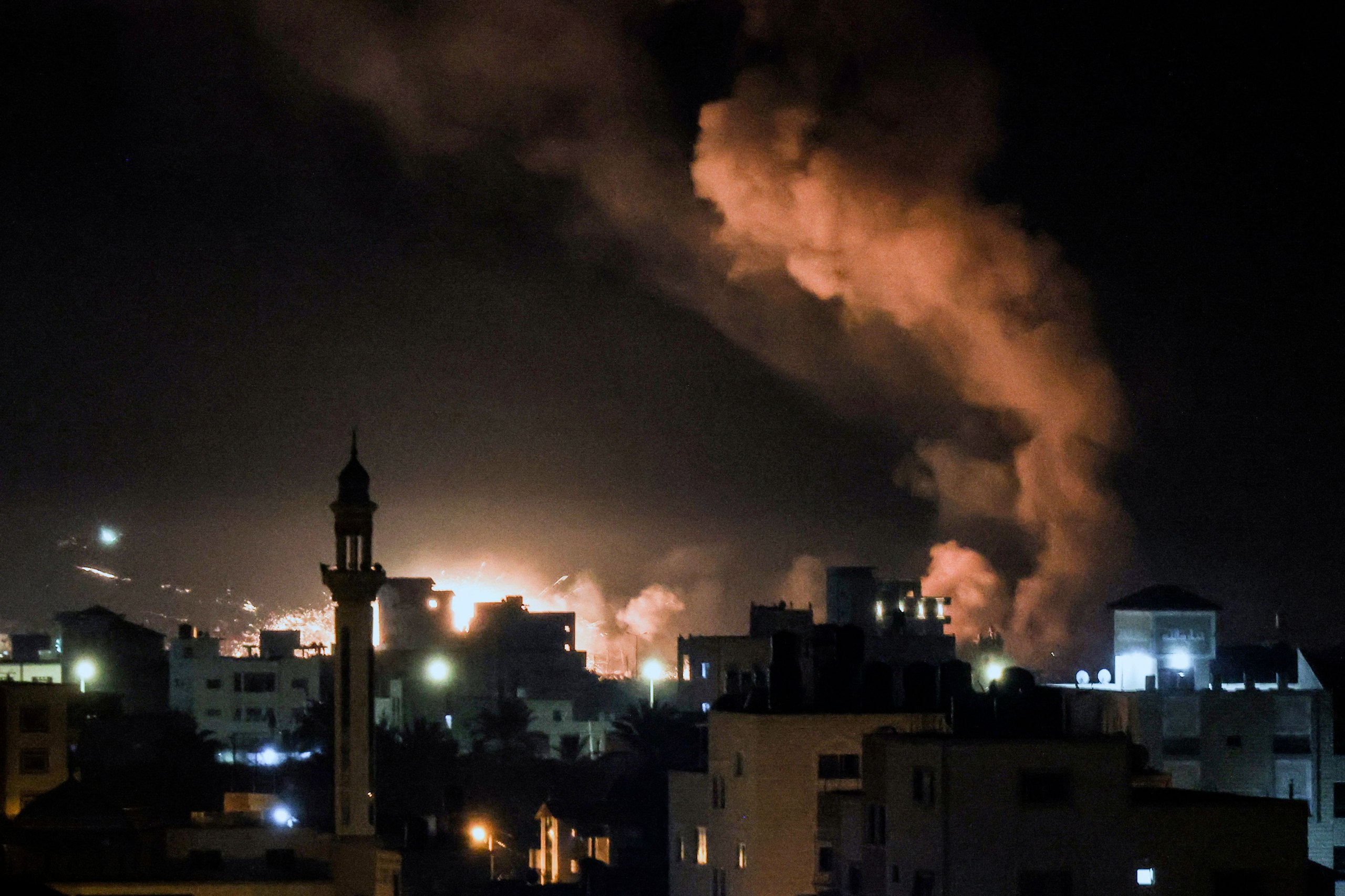
Images of the moment the Israeli army targeted the resistance bases in the Gaza StripVideo of the attack on Palestinian resistance positions in the Gaza Strip