Tag: Iranian Navy

  • Iran Unveils Drone-Carrying Fleet

    Iran Unveils Drone-Carrying Fleet

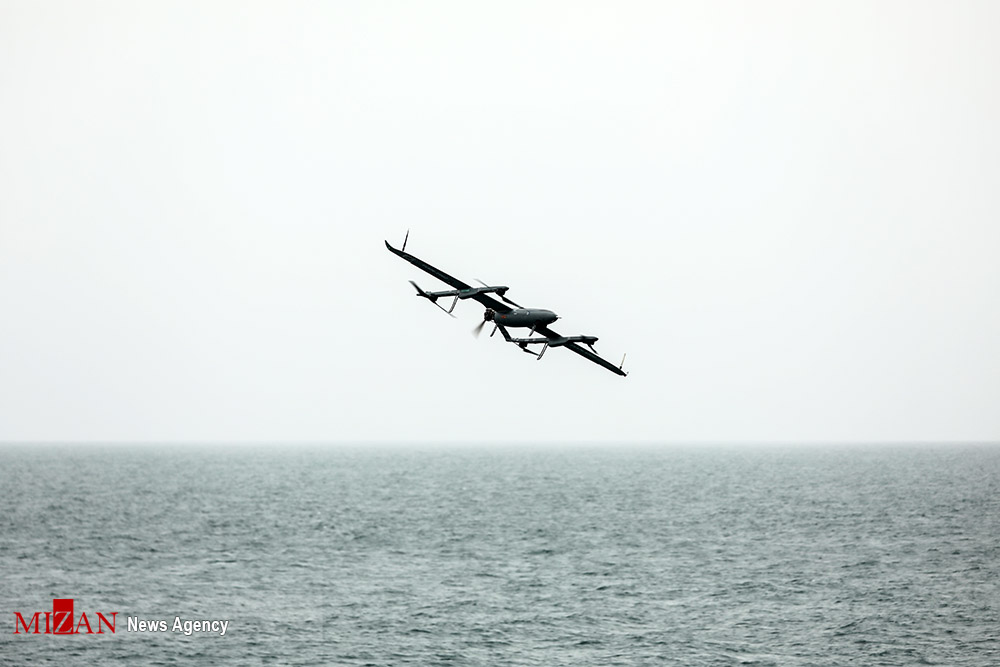
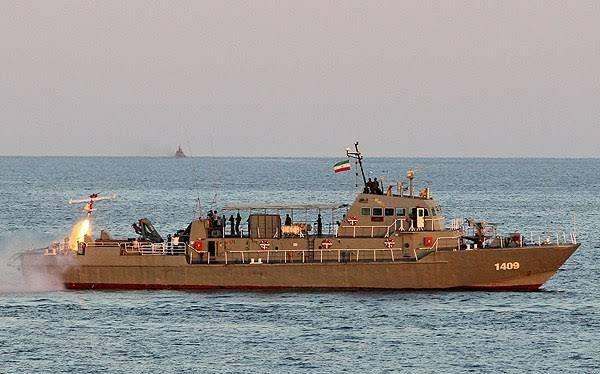
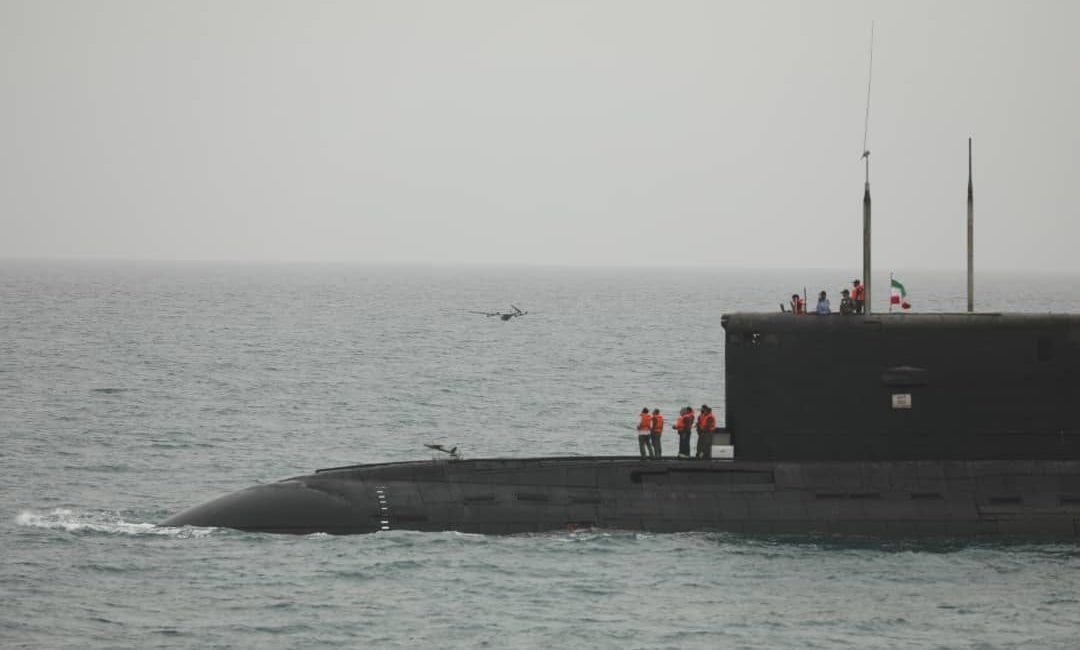
    In this ceremony which was held on July 15, the Lawan and Delavar warships were converted into drone carriers, and for the first time, several drones were launched from the Iranian Fateh and Tariq submarines.

    Drones such as Arash and Ababil 2 suicide drones, Pelican and Homa vertical take-off and landing drones, Karar combat and suicide reconnaissance drones, and Ababil 4 reconnaissance and combat drones were showcased and flew in this ceremony.
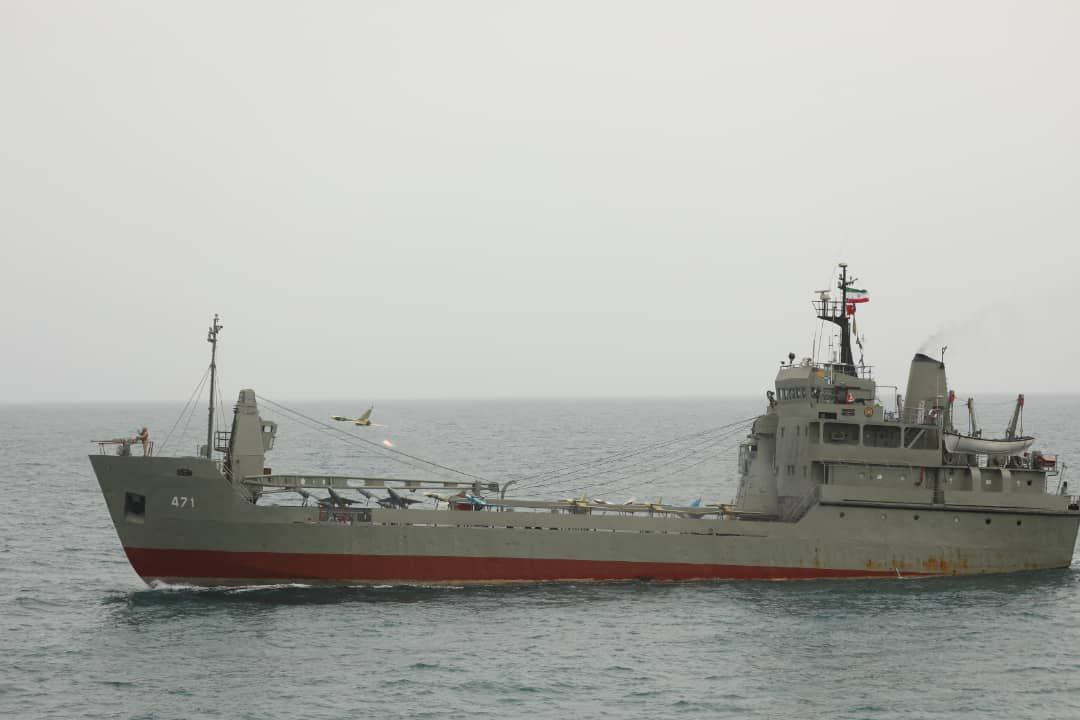
    The most important challenge for this drone carriers is the recovery of reconnaissance drones. The conventional method is to use nets; in this way, the drone hits a net installed on the ship at the lowest possible speed. This method is effective for small drones that have a short range, but it is not so favorable for larger drones. Larger drones like the Ababil 4 drone sit in a runway after taking off and completing the mission. In the unveiling ceremony, the Ababil 4 drone landed on the landing strip in Jask after taking off from the drone carrier.

    In the interview of Admiral Shahram Irani, important points were mentioned about the drone fleet, which can be mentioned as follows:

    • The possibility of repairing and producing drones inside the fleet
    • The possibility of combined operations in the form of flight groups of drones and swarm operations
    • The possibility of moving the command control center from one ship to another or subsurface guidance or using a flight unit for command.
    • The possibility of setting different targets for several different categories of drones
    • The possibility of using drones for electronic warfare
    • The possibility of flying 40 to 50 drones at the same time to support any mission and the possibility of replacing them quickly

    UAVs launched from submarines enable the detection of targets in the distance. For this reason, the range of submarine weapons, especially cruise missiles such as the Jask 2 missile, increases. But the main challenge for subsurface fleet use of UAVs is the launch and recovery of the UAV. If a submarine comes to the surface for every launch, the risk of detection increases greatly during the war. This also applies to the recovery of the reconnaissance drone. According to the commander of the Iranian Navy, it will be possible to launch drones under the surface in the future. Also, the possibility of discovering underwater targets will be added to drones.
  • Iranian Navy thwarted a pirate attack in the Gulf of Aden

    Iranian Navy thwarted a pirate attack in the Gulf of Aden

    According to the Iranian Navy media, the naval escort team of the army stationed on the Iranian tanker this morning on the way to the Gulf of Aden, before entering the Bab al-Mandeb Strait, clashed with pirates.
    The attack was carried out by four pirate boats approaching an Iranian tanker. The pirates then came under fire from the army and eventually fled.

    This attack is the second pirate attack in recent days against tankers and navy of the Islamic Republic of Iran in the Gulf of Aden.

  • Military Knowledge: Jamaran Frigate

    Military Knowledge: Jamaran Frigate

    More ships in its class are under construction to be added to the Iranian fleets in the Caspian Sea and the Persian Gulf. The ship is designed for a crew of 140. Jamaran combines anti-submarine assets with other systems of weapons capable of dealing with surface and air threats as well.

    It has 94.5 m length and maximum speed of 30 knots (56 km/h) carries 140 crew and helicopter. Jamaran was built using indigenous and foreign parts and collaboration of 120 universities and institutes. The engine is made by France but since the gearbox, shaft and propeller were not given against the contract, these parts including 12 m power shaft were designed and built by Iranian specialists.

    Jamaran Specifications:
    Length 94.5 m, Width 11 m
    Crew: 140
    Speed: 30 knots, 56 km/h
    Operational range: 3,000 nautical miles (more than 5,500 km)
    Aviation facilities: Helipad for a Bell 212 or SH-3 Sea King helicopter.

    Armament:
    2 × triple 324 mm torpedoes (Kuseh type)
    1 × 76 mm Fajr-27 auto-cannon
    2 × 20 mm Fath cannons
    1 × 40 mm Fateh anti aircraft cannon
    4 × surface-to-surface Noor, Qader, Qadir missiles
    4× surface-to-air Mehrab missiles

    Click to see the full size map
  • Several Iranian Navy personnel Martyred due to Friendly Fire

    Several Iranian Navy personnel Martyred due to Friendly Fire

    The Hendijan-class Konarak frigate was tasked with bringing the target to the fire range so that the Jamaran can test its cruise missile on that target. However, Konarak after completing its mission, due to not having enough distance from the target, was hit by a cruise missile fired from the Jamaran frigate.

    According to unofficial news, the Konarak frigate is currently sunk and a number of its personnel have been martyred and wounded.