Tag: Iranian Tank

  • Military Knowledge: Zulfiqar Main Battle Tank

    Military Knowledge: Zulfiqar Main Battle Tank

    History:
    The first prototype of the Zulfiqar tank is known as Zulfiqar-1. This tank was first introduced in 1994. According to studies, the design and construction of the tank were carried out by Brigadier General Mir-Younes Masoumzadeh, the first head of the Research and Self-Sufficient Jihad organizations of the Ground Forces of the Islamic Republic of Iran Army. It is likely that the design and construction of this tank took place from 1988 to 1994. Brigadier General Masoumzadeh maintained the position of presiding the Research and Self-Sufficient Jihad organizations until his retirement in 1999.

    The Shahid Kolahdooz Industrial Complex was inaugurated in 1988. This military industrial unit was affiliated with the Ministry of Defence and Armed Forces Logistics and its main goal was to produce armored equipment, especially the Zulfiqar tank. Despite its main goal, this complex also produces various types of railway wagons and heavy equipment due to its high industrial capacity. However, despite the main goal of creating this industrial center for the production of the Zulfiqar tank, the number of Zulfiqar tanks seen in service is not high at all. Some sources claim that 100 units of Zulfiqar-1 tanks have been produced; however, because the military industry is not being publicized, it is not easy to verify this number outright. 

    The information about the timing of the introduction of the Zulfiqar-2 tank is not complete and the available data is unclear. However, based on the existing research, it is likely that the Zulfiqar-2 tank was introduced between 1999 and 2004. High-quality images of the Zulfiqar-2 tank are not available. The turret of the Zulfiqar-2 has undergone significant changes and is longer in comparison to the initial version. At least one wheel has been added to the chassis of the Zulfiqar-2 compared to the initial version. It is likely that significant changes were made to the turret and crew size during the purchase, production, and deployment of T-72 tanks in the mid-1970s. The Zulfiqar-2 tank likely uses a similar automatic loader to the T-72 tank and the crew size has been reduced to 3 personnel.

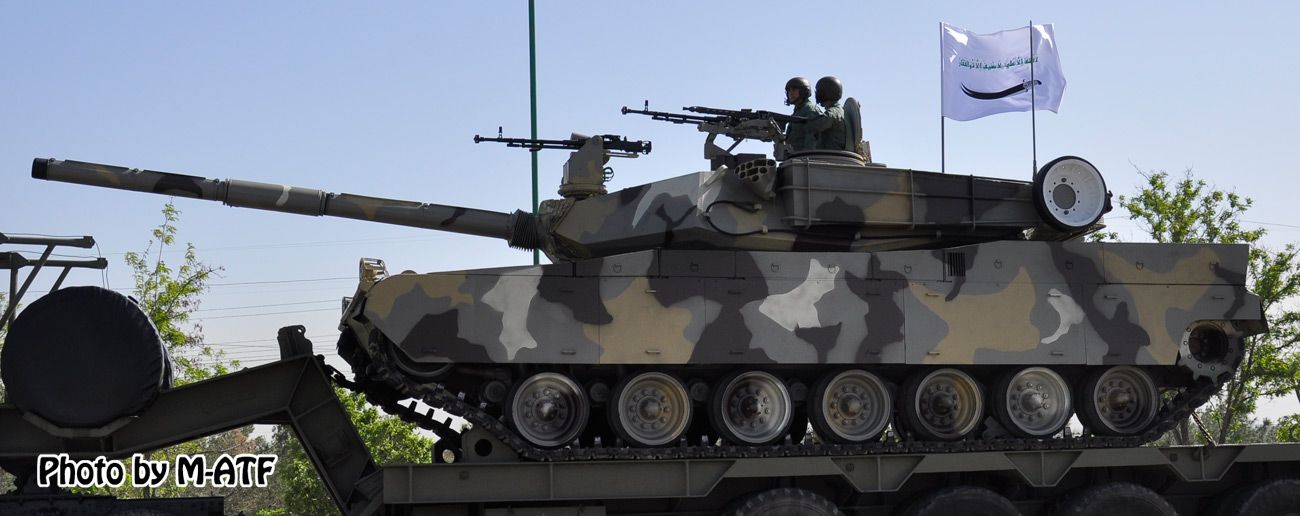
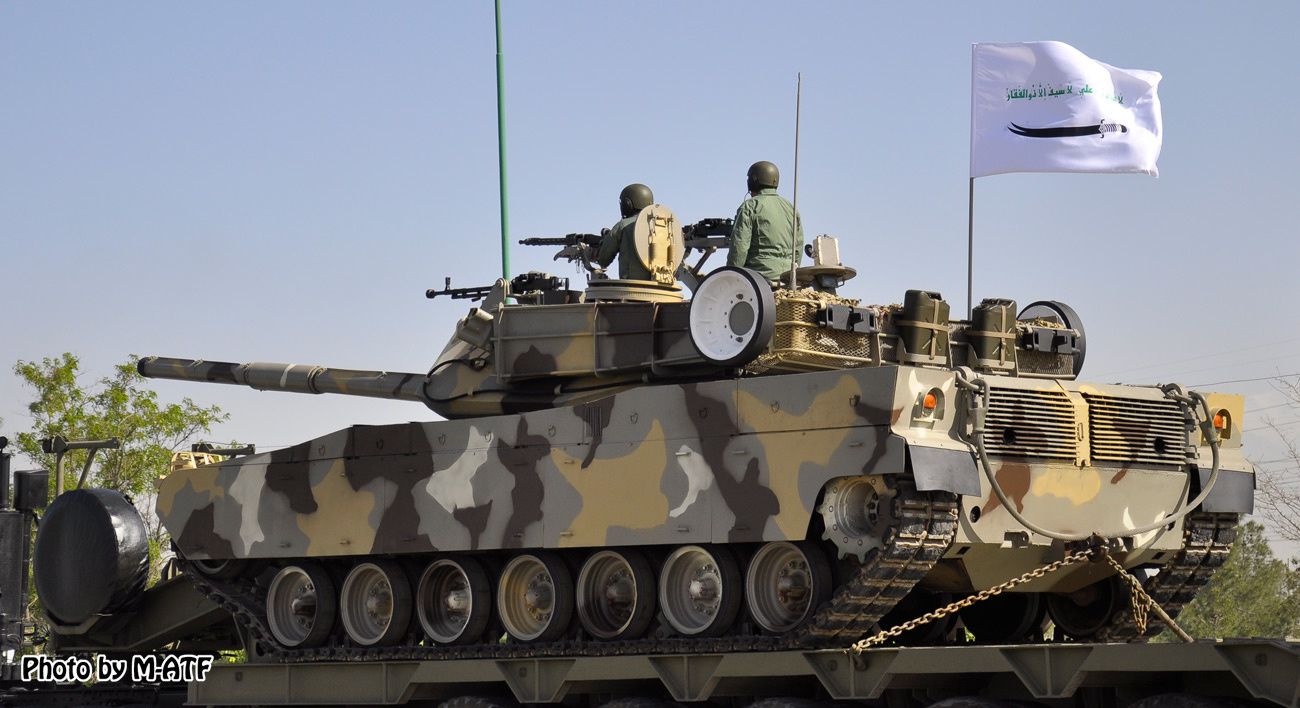
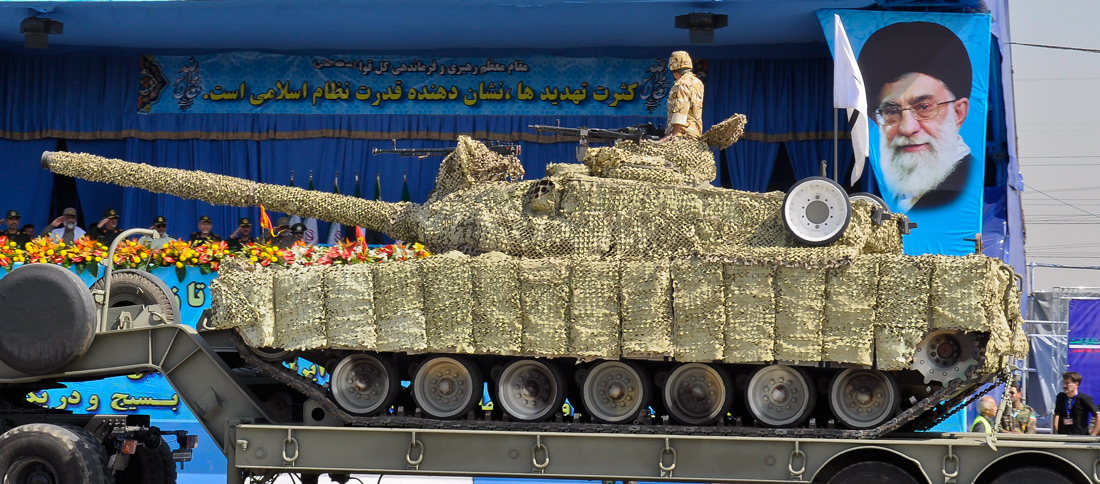
    The Zulfiqar-3 tank was first seen during the military parade in April 2011. This tank also uses the chassis of the Zulfiqar-2 and its turret has a strong resemblance to that of the Zulfiqar-2. In 2016, changes were made to the Zulfiqar-3, mainly related to the design of the front part of the turret. The version unveiled in 2016 is also referred to as Zulfiqar-3E.

    Design:
    As mentioned in the history section, the Zulfiqar-1 has fewer wheels in comparison to later versions. Despite claims that the chassis of the Zulfiqar-1 is similar to the M60 or M48, a closer examination of the chassis reveals that it enjoys an independent designation.
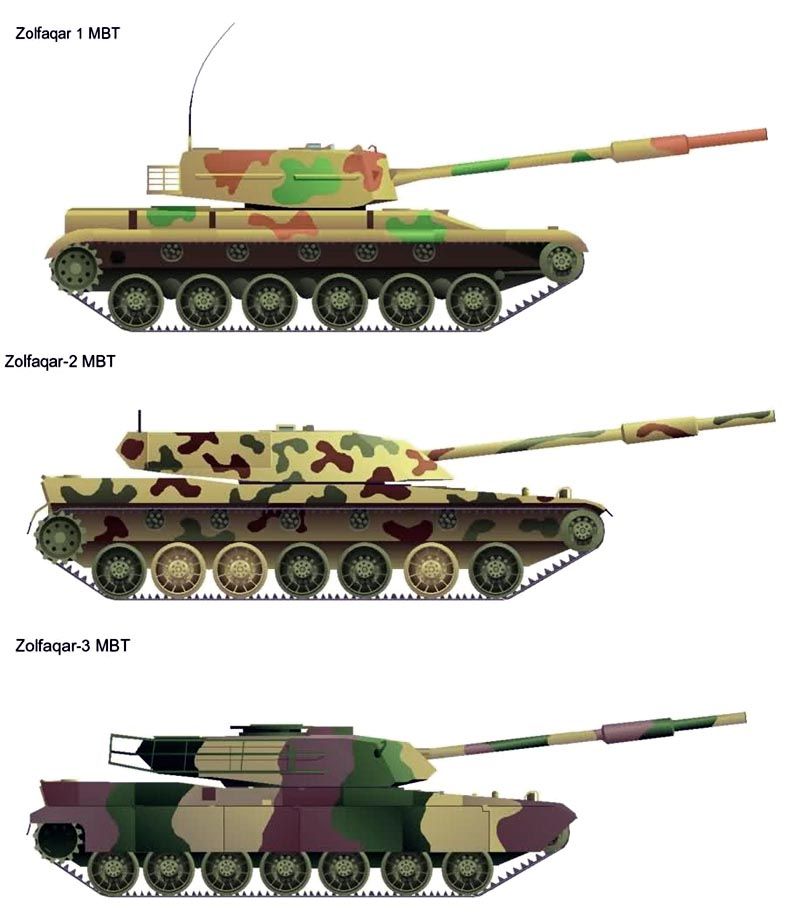
    A graphic image of three Zulfiqar tank models, in the new models, the chassis is longer and a wheel has been added to it.

    The Zulfiqar-1 chassis uses a more modern design than the M48, and the only similarity between the Zulfiqar chassis and the M48 is the number of wheels, which is 7. The chassis of M48 is made by casting method and at a glance, the difference between Zulfiqar and M48 chassis is obvious.
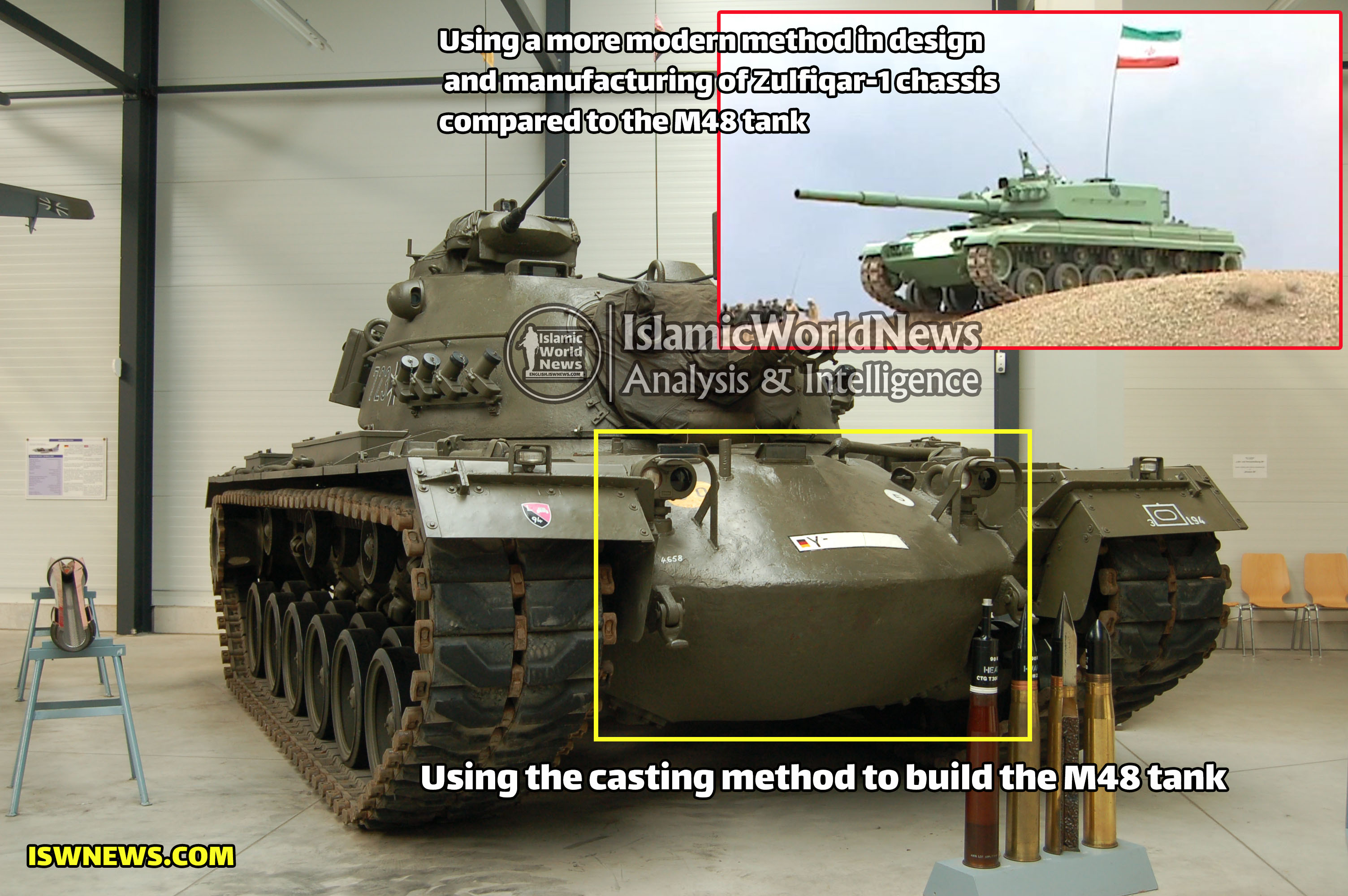
    The difference between the two chassis is quite evident

    Regarding the similarity of the Zulfiqar-1 tank with the M60 tank, it can be said that the most similarity can be seen in the chassis of these two tanks. Both have the same number of wheels and the same shape in front of the chassis. However, the chassis height of the Zulfiqar tank is less. For this reason, five wheels have been used instead of three supporting wheels above, so that the reduction of the chassis height does not interfere with the performance of the wheels and chains on rough roads. The reduction in height and the applied changes can also indicate a change in the suspension system. According to the mentioned points, the Zulfiqar-1 chassis, despite its similarity with the M60, has used an independent design.

    Due to the similarities between Zulfiqar-1 and M60 designs, many experts believe that the AVDS-1790 engine with 1000 horsepower belonging to the M60 tank was used in Zulfiqar.
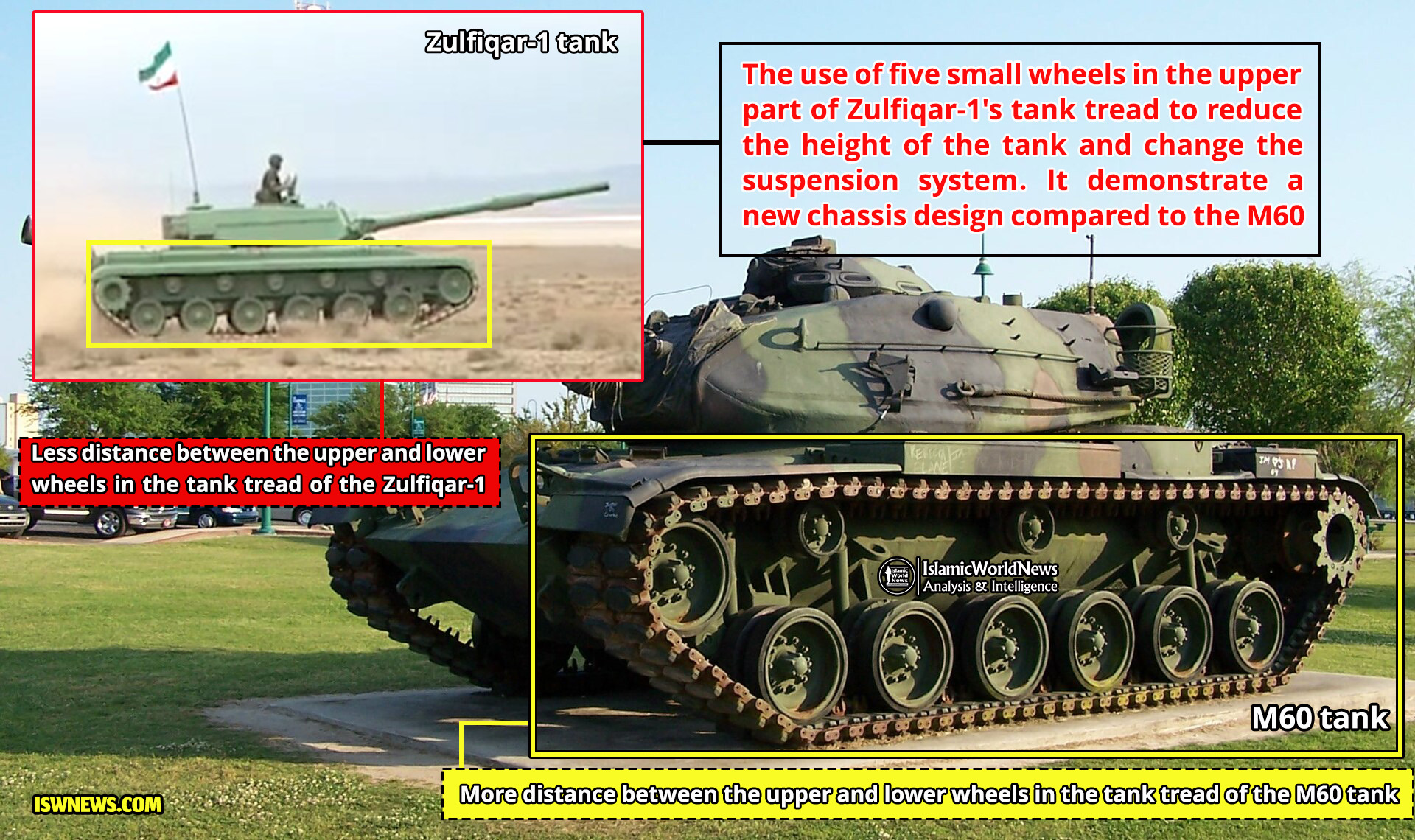
    The difference in the height of the tank chassis and the number of tank tread wheels in the M60 and Zulfiqar-1 tanks

    The designers of the Zulfiqar-1 tank have paid attention to reducing the height of the chassis to achieve greater stealth. For this purpose, small wheels are used more in the top of the tank tread. The reason for this is to prevent the interference of the wheels and chains on the roads with high unevenness and also reduce the damage of the wheels or chains during the movement.

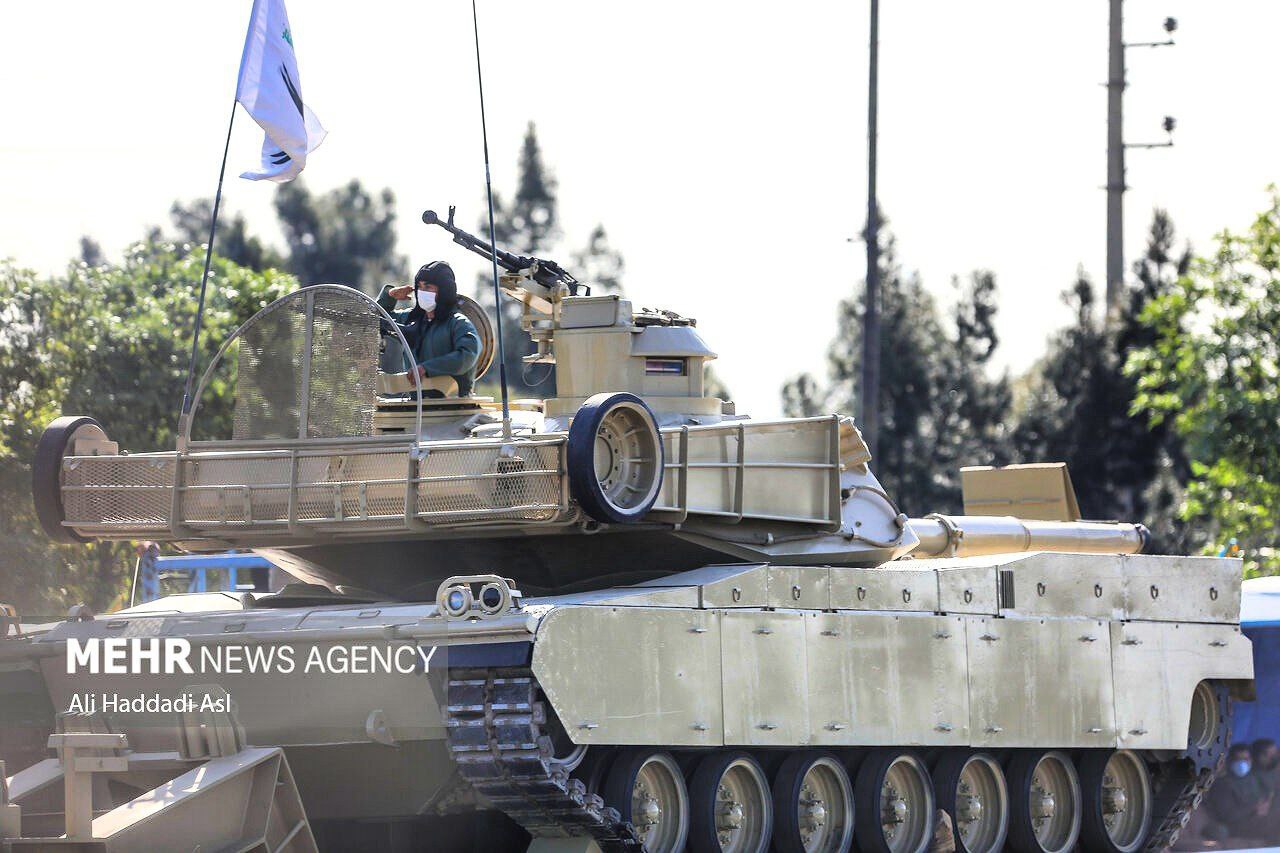
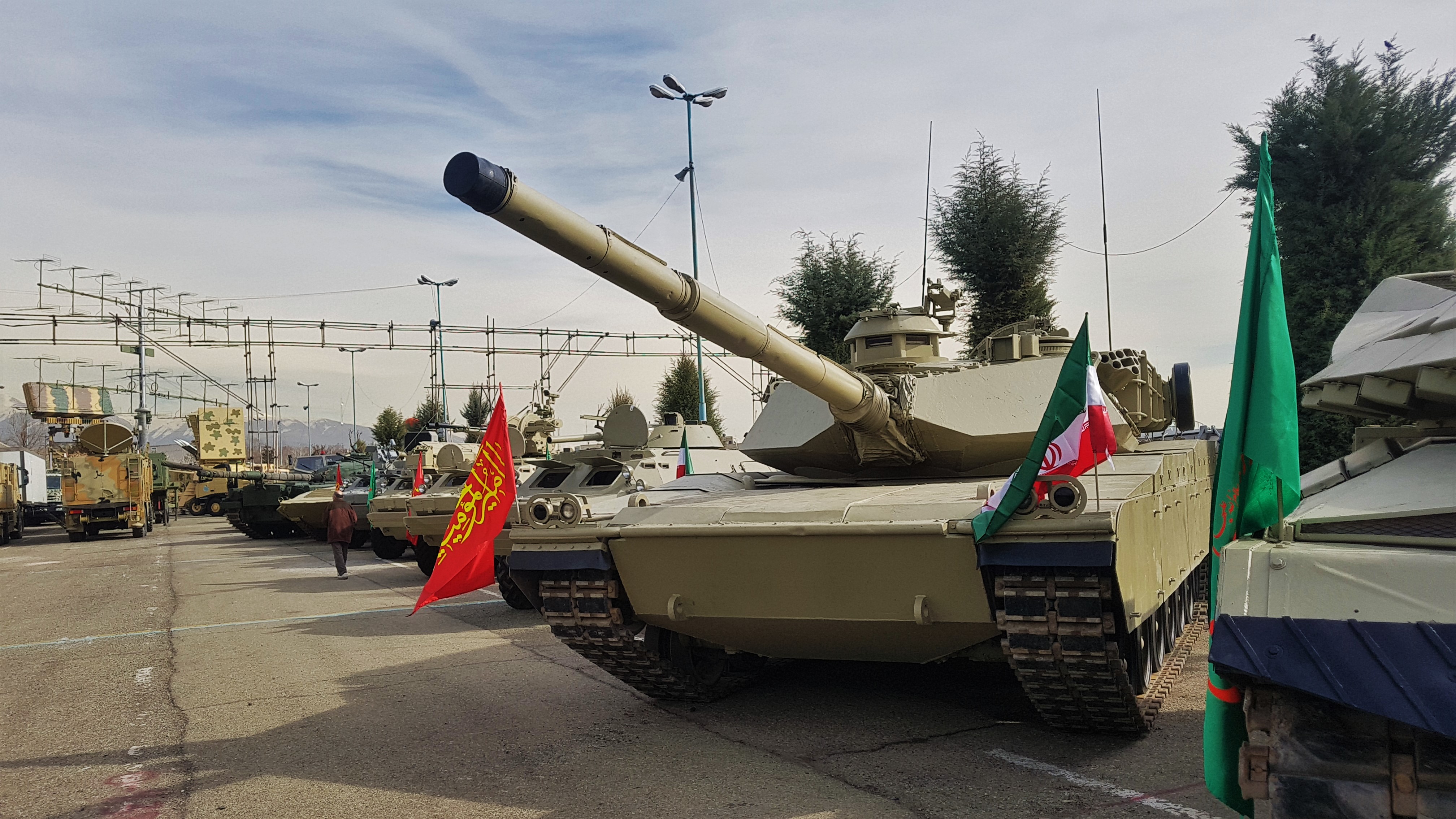
    The design of the Zulfiqar 2 and 3 chassis is very similar to the American Abrams chassis at first glance. It seems that in the process of designing the Zulfiqar 2 and 3 chassis, an attempt has been made to present a modern design based on the Abrams chassis.
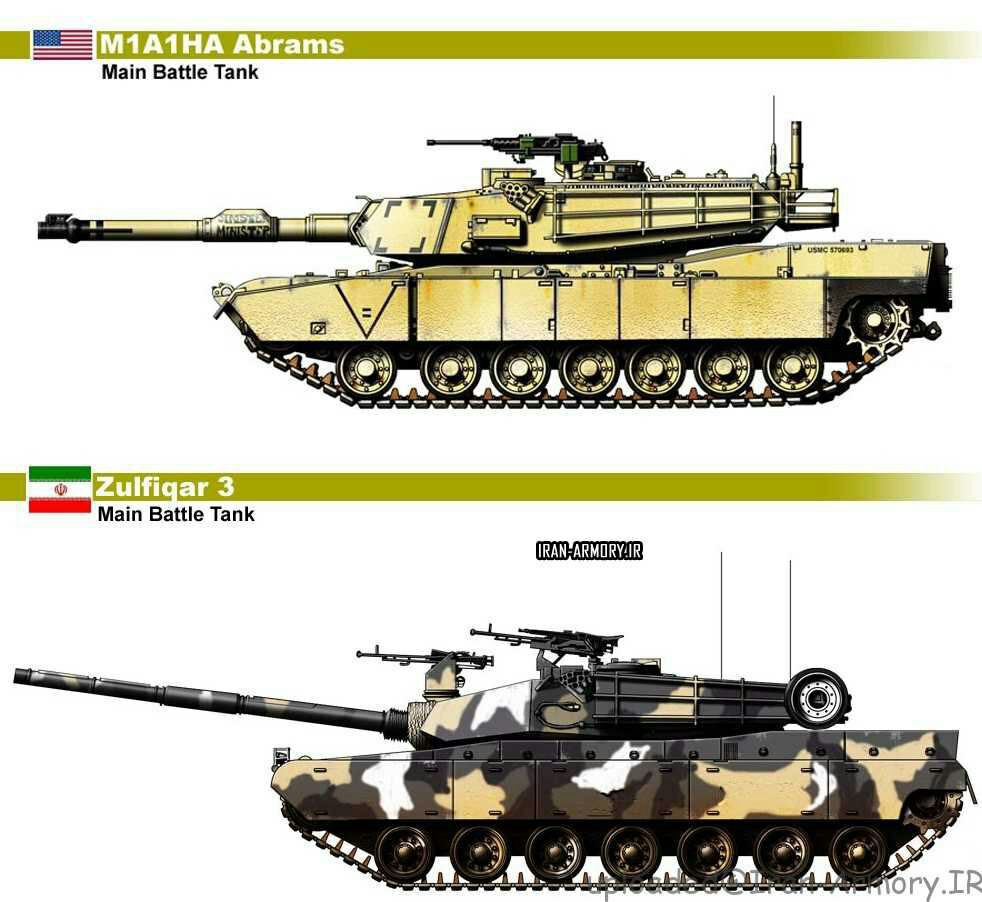
    Comparison of Zulfiqar-3 and Abrams tanks, which are similar in appearance.

    Review of Zulfiqar-3 tank:
    Zulfiqar-3 tank is an Iranian main battle tank. This tank is the result of eight years of holy defense experience and the construction of Zulfiqar-1 tank in 1993.

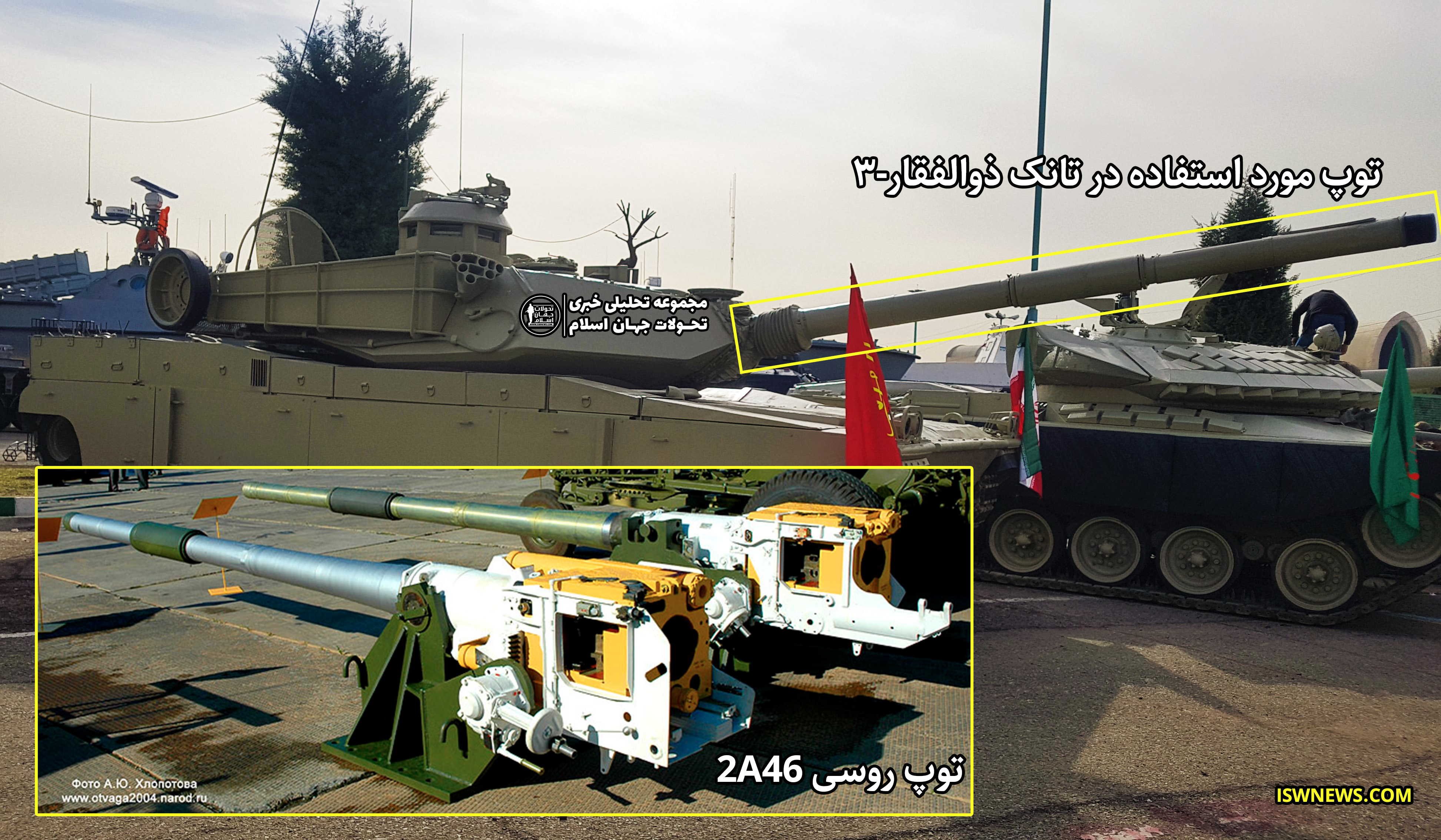
    Zulfiqar-3 tank uses 125mm 2A46 gun. According to the image documents, this gun was also present on Zulfiqar-1 from the very beginning. Most likely, at first, Iran tried to buy western types of guns, because the combat organization of the Iranian army is based on western tools, But due to Western sanctions against Iran, the Russian 2A46 125 mm gun was used. This gun was available on the captured tanks of the Iraq war, and considering the economic conditions of Russia after the collapse of the Soviet Union, it was possible to buy it from Russia.

    In the mid-1990s, Iran succeeded in buying and producing the T-72 tank from Russia. This tank was imported into the country as a kit and assembly operations were carried out in Iran. This caused Iran to use the automatic loading system of the T-72 tank in addition to the 125 mm gun in the next samples of Zulfiqar. Today, Iran itself is the producer of 125mm 2A46 gun under Russian license.
    The effective range of the gun used in the Zulfiqar-3 tank is about 3000 km. To increase the accuracy of this gun, the KAT-72 fire control system made in Iran has been used. This fire control system is the result of technology transfer and production of Slovenian EFCS-3-55 system. This system enables the Zulfiqar tank to shoot at a moving target at a distance of 2000 km while the Zulfiqar tank itself is moving. Also, the KAT-72 fire control system allows the Zulfiqar-3 tank to hit the first shot at a distance of 2,200 meters in a stationary state.

    This tank uses a laser range finder produced by SAIRAN company, which can measure the distance up to 10,000 meters with high accuracy. The fire control system also uses wind sensor, temperature sensor and gun deviation sensor.

    The Zulfiqar-3 tank uses a 360-degree periscope for the commander, a day and night vision site for the gunner, and a periscope for the gunner. Also, the tank includes 12 smoke grenade launchers (6 on each side).
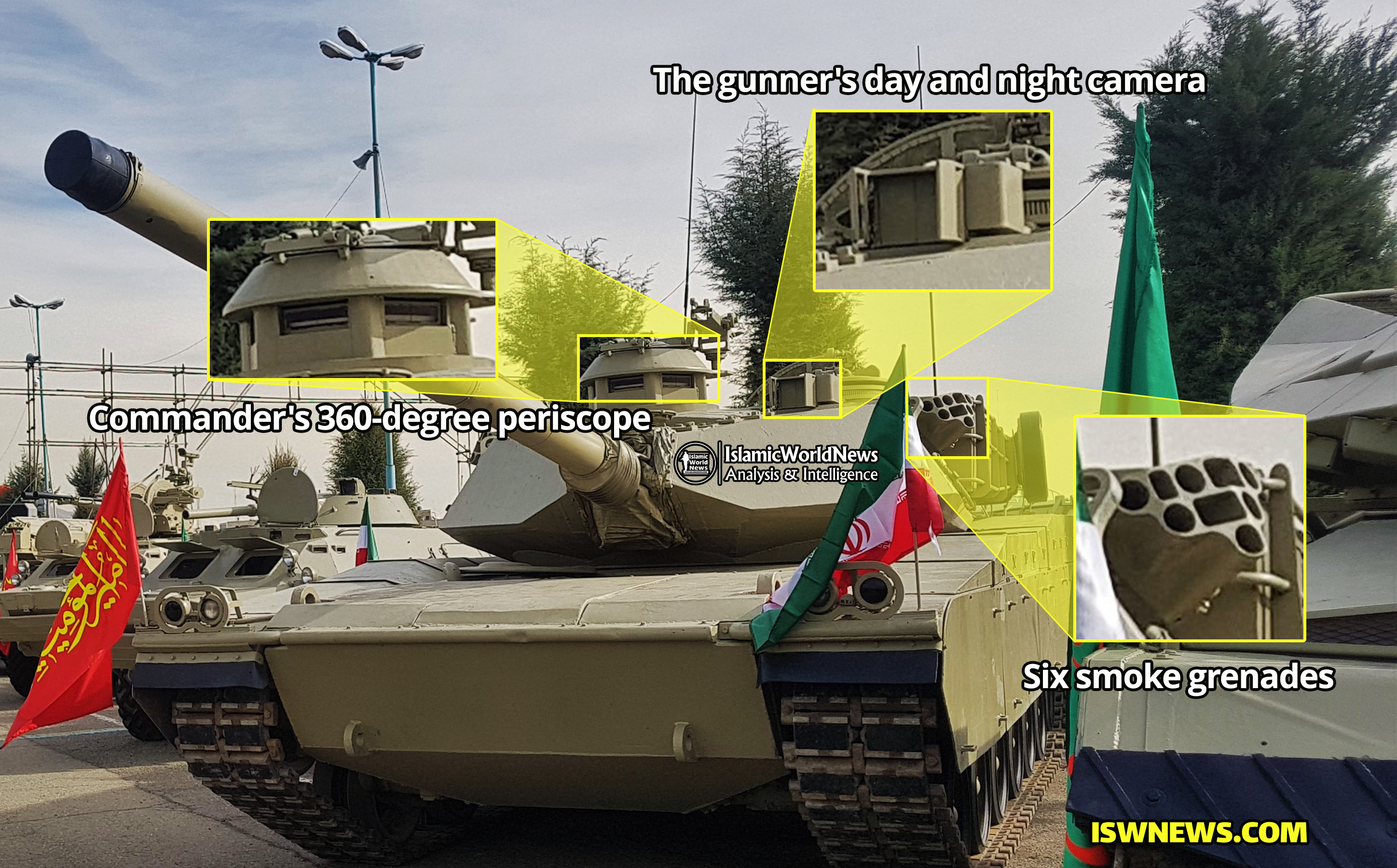
    Different parts of Zulfiqar-3 tank

    In the prototypes, in addition to the main 125 mm gun, a 12.7 mm Dshk machine gun for the commander and a 7.62 MG3 machine gun for the gunner are installed as secondary weapons on the tank. The machine guns have no remote control and the tank crew must get out of the tank to use them. But in more advanced models of Zulfiqar 3, a Dshk machine gun with remote control capability has also been added to this section.

    The point that attracts attention in this section is the use of three machine guns on the tank. In general, using this number of machine guns on today’s modern tanks is not customary and is considered excessive. Also, remote controlled machine guns are used in modern tanks today. Having a remote controlled machine gun for the gunner and commander in urban warfare can be much more practical than the current arrangement. Because it keeps the crew away from the enemy’s direct fire and provides a large volume of fire without rotating the turret in several directions.

    The machine guns used on the Zulfiqar-3 tank

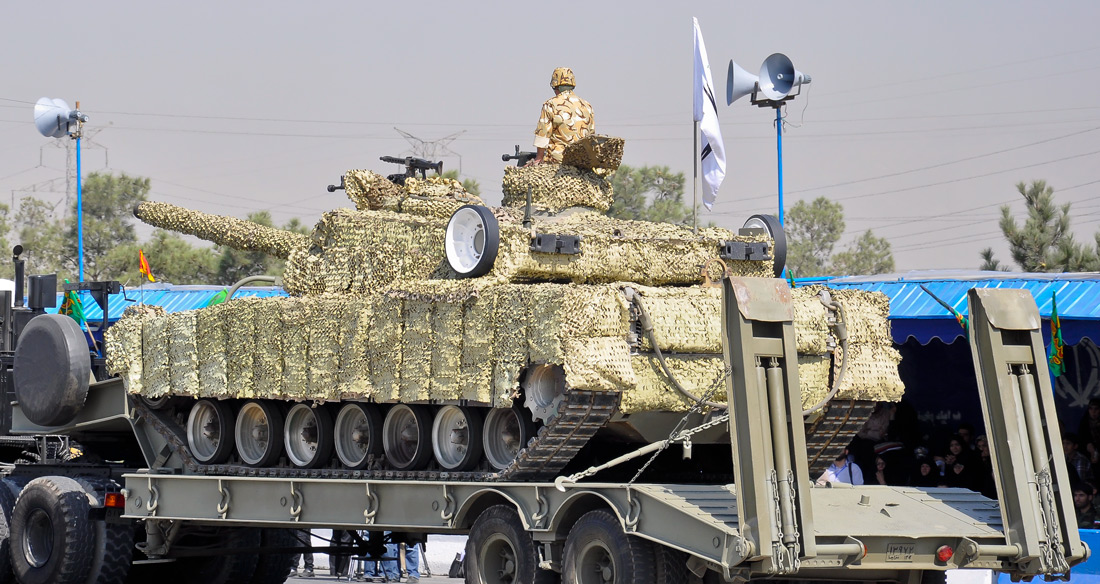
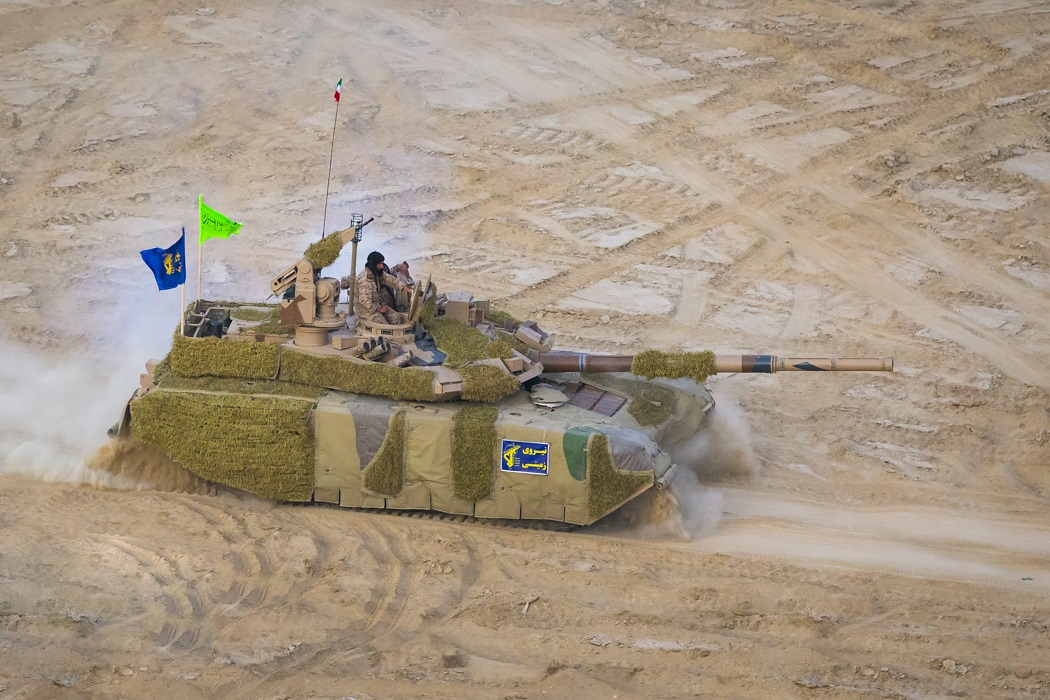
    In some published images of the Zulfiqar-3 tank, thermal camouflage nets have been used for greater concealment and to increase the degree of protection.

    The driver in the Zulfiqar-3 tank is located in the middle and almost below the junction of the gun and the turret. This location is similar to the location of eastern tanks. Regarding the periscope or surveillance camera for the driver, there is no item on the tank, but it is possible to install and use these items, similar to the Karrar tank.

    Read more: Military Knowledge: Karrar Main Battle Tank
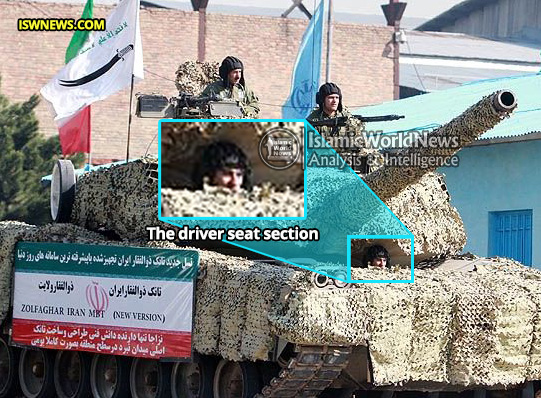
    Thermal camouflage nets and the location of the Zulfiqar-3 tank driver

    The exact specifications of the engine used on the Zulfiqar-3 tank are not available. But speculation predicts the existence of an engine with a minimum power of 1000 horsepower. Based on the power of 1000 hp, the M60 tank engine named AVDS-1790 and the Ukrainian 6TD engine with a maximum power of 1200 hp and the Russian V92 engine with a power of 1000 hp (used in the T-90A) are available for the Zulfiqar-3 tank.

    Zulfiqar-3 engine with 1000 horsepower and 52 tons of weight gives this tank a thrust to weight ratio of 20 horsepower per ton, which is a desirable number.

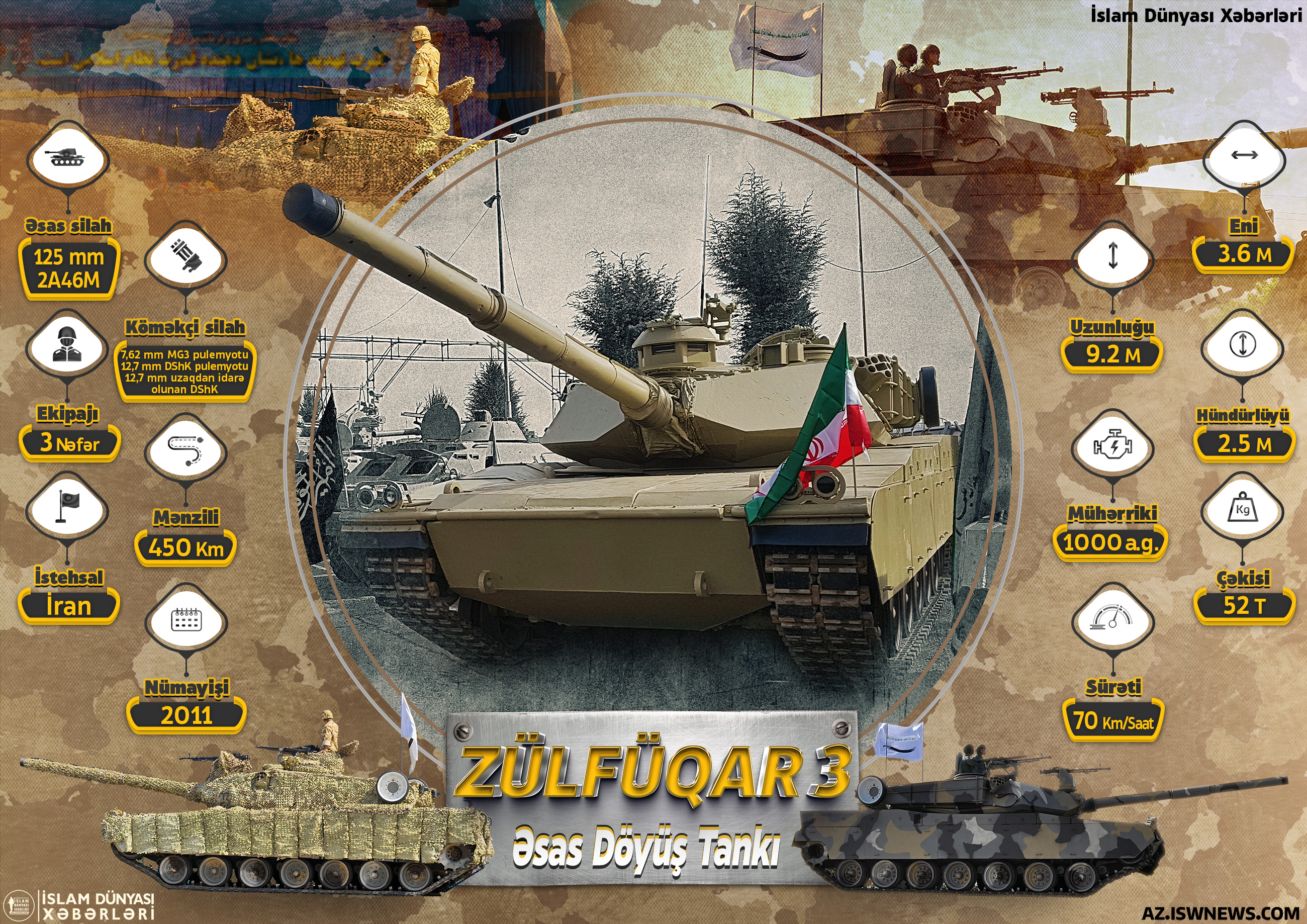
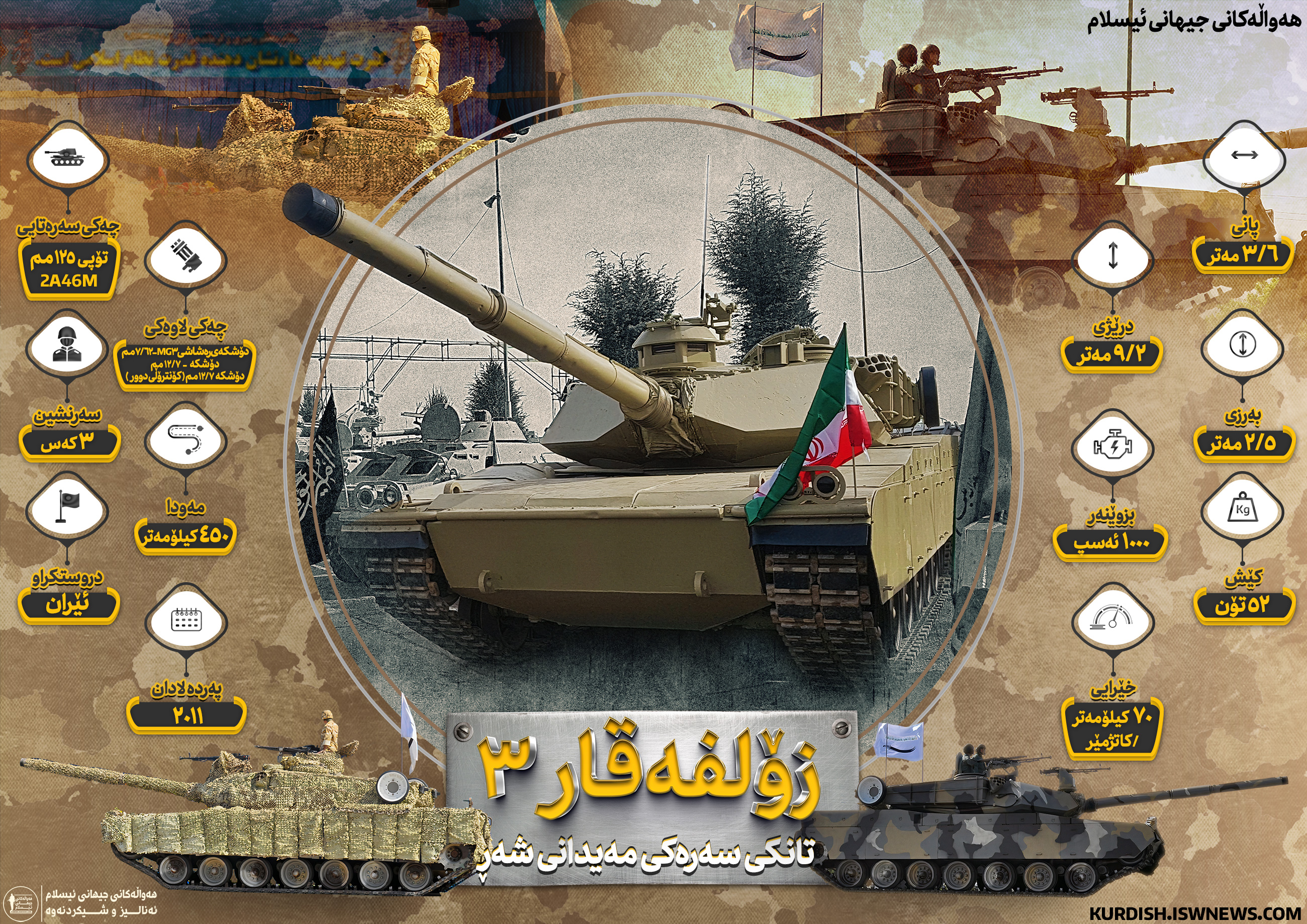
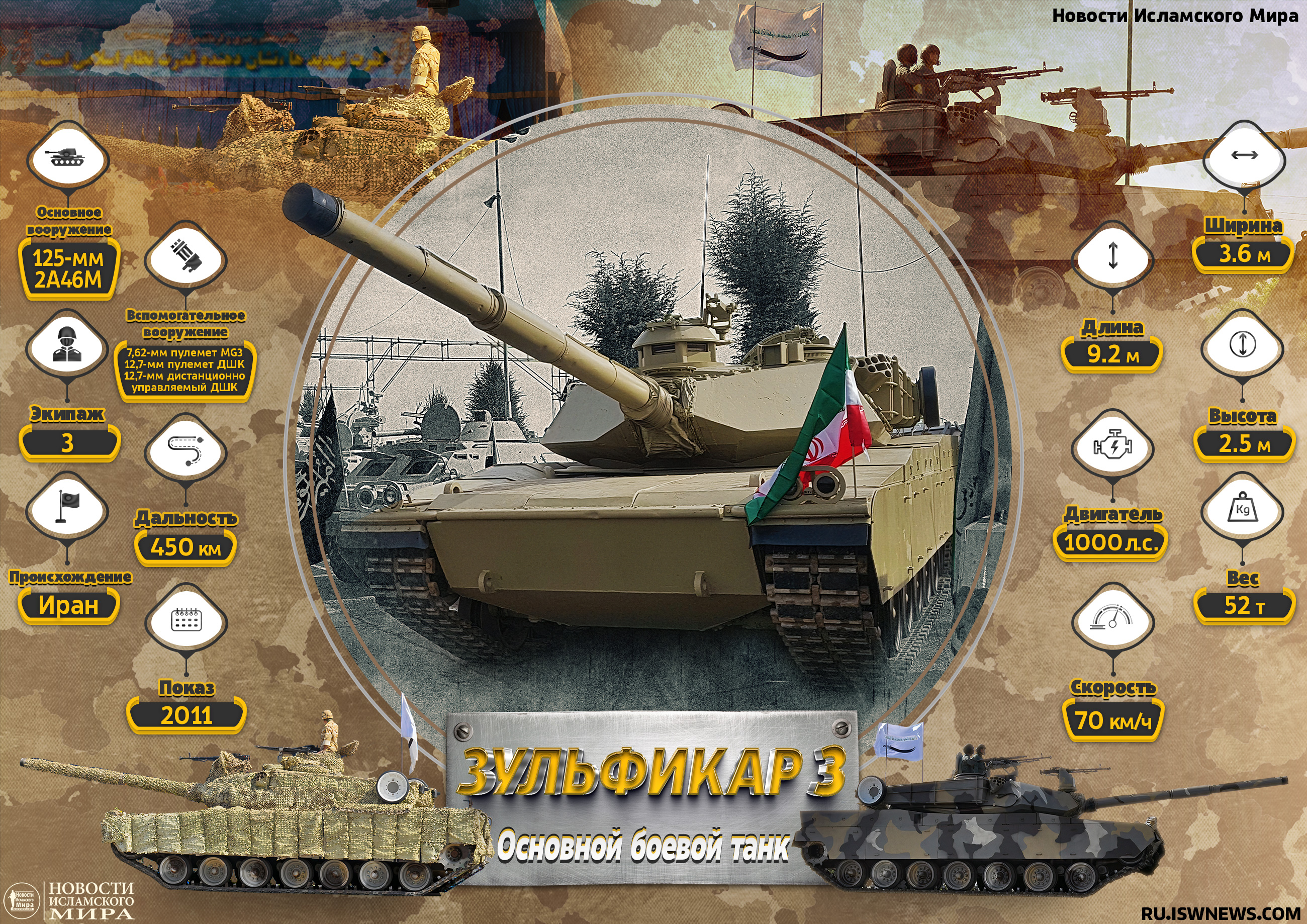
    Specifications of the Zulfiqar 3 tank:
    Type: Main Battle Tank
    Country of Origin: Iran
    Producer: Jihad self-sufficiency of the ground forces of the Islamic Republic of Iran Army
    Unveiled: 2012
    Crew: 3 (driver, commander and gunner)
    Length: 9.2 to 9.7 meters (including the gun barrel)
    Width: 3.6 meters
    Height: 2.5 meters
    Engine: 1000 horsepower
    Operational range: 450 km
    Speed: maximum 60 to 70 km/h on the road
    Mass: 52 tons
    Main weapon: 125mm 2A46M gun with stabilizer
    Secondary weapon: one 7.62 mm MG3 machine gun – one 12.7 mm Dshk machine gun – one 12.7 mm Dshk machine gun with remote control capability
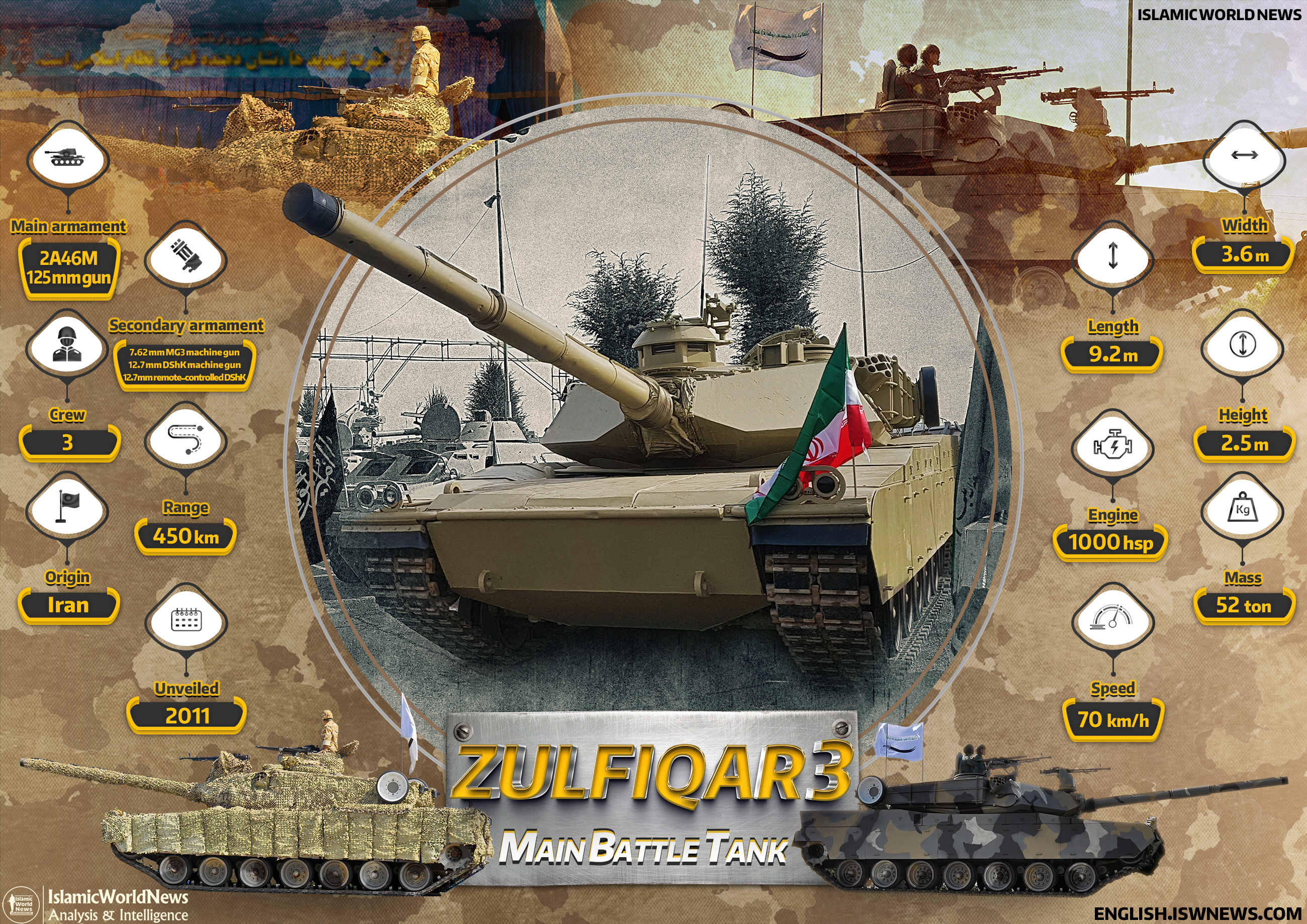
    Zulfiqar-3 Tank – click to view full size

    More images of Zulfiqar-3 tank:
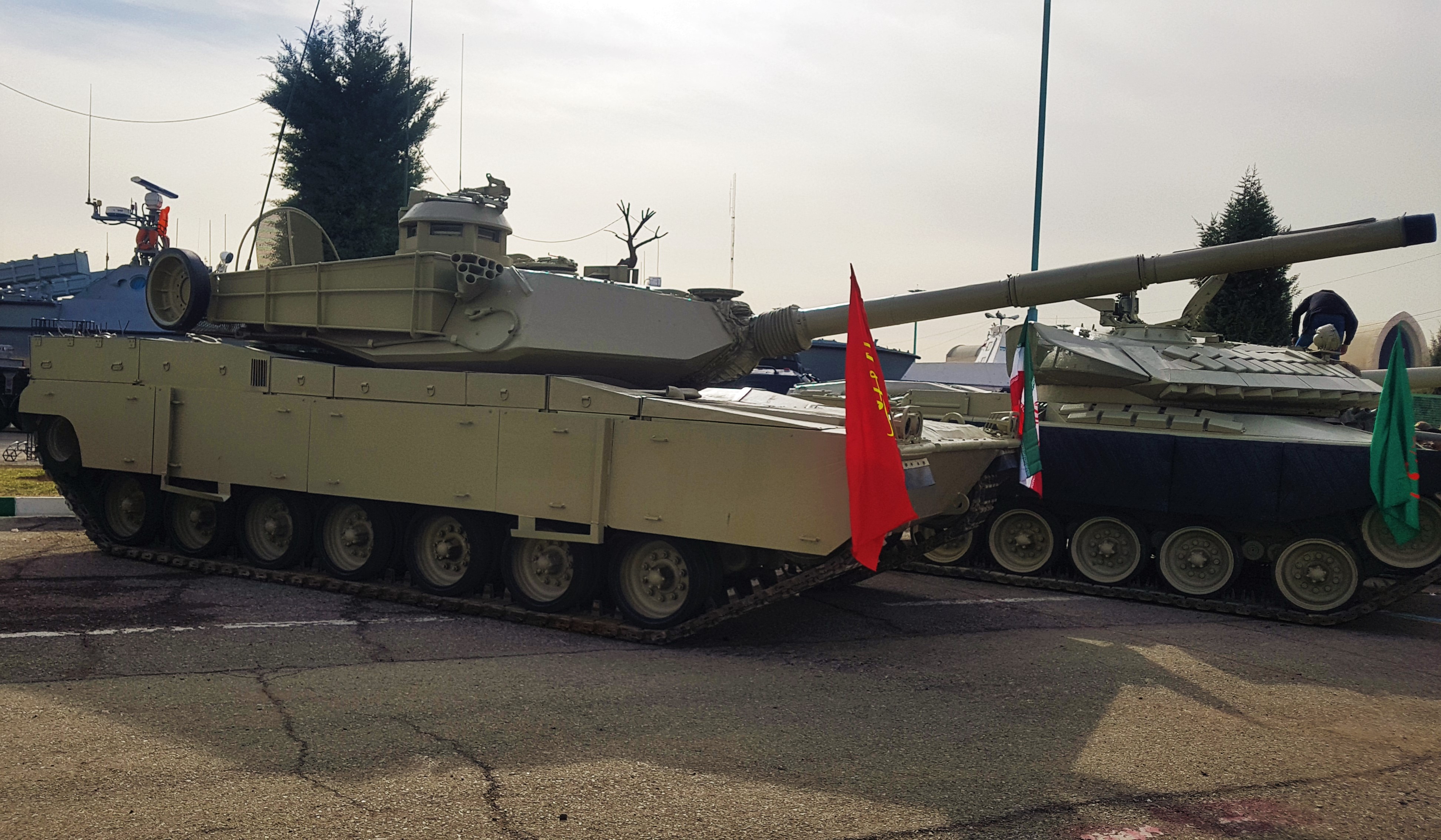
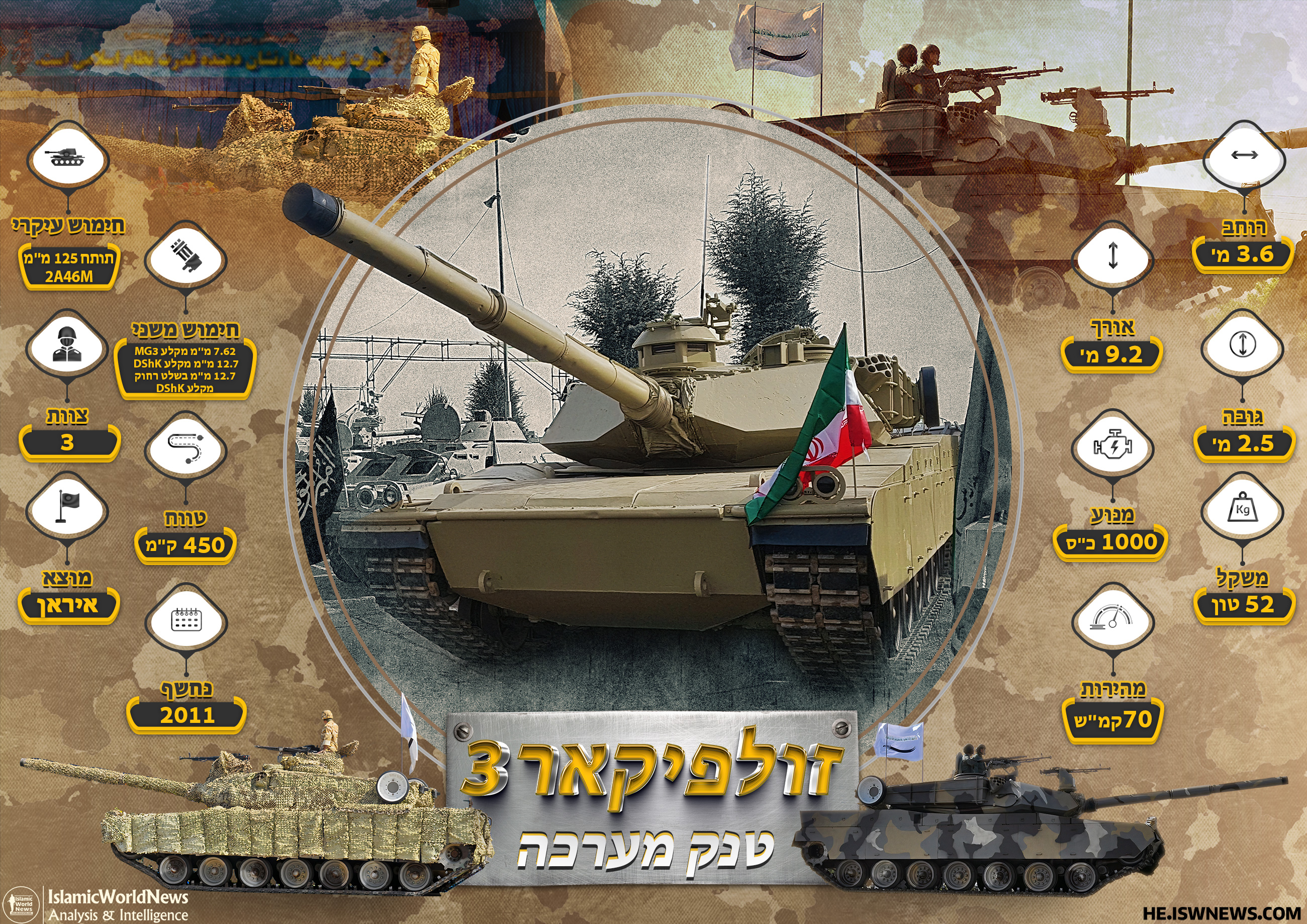
    Infographics of Zulfiqar-3 tank in Russian, Arabic, Hebrew, Kurdish, Azeri and Farsi:
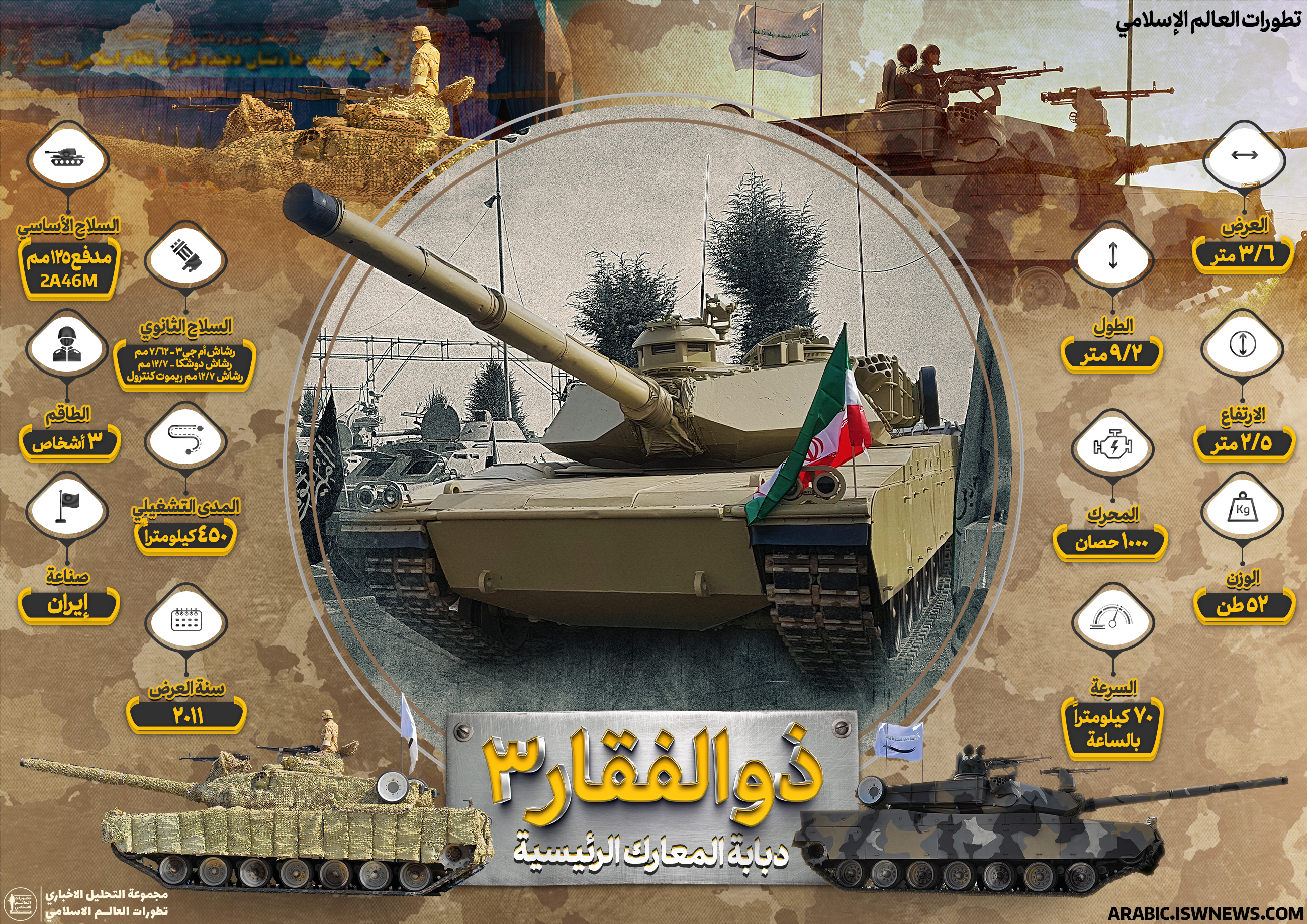
    Sources:
    ویژگی های نسل جدید تانک ذوالفقار+عکس
    Zulfiqar (1993)
    بدانیم که … (سایت دستاوردهای ارتش)
    تانک ذوالفقار

  • Military Knowledge: Karrar Main Battle Tank

    Military Knowledge: Karrar Main Battle Tank

    History:
    Due to Iran’s armored requirements and the increasing advancement of anti-armor weapons and armor technology throughout the world, there was a need for a tank at the level of modern tanks in the Islamic Republic of Iran Armed Forces. Despite allocation of limited budget, the armed forces embarked on upgrading the existing T-72S tank. Although in the past, Zulfiqar 1 and 3 tanks had been built as prototypes in the country, they were never widely adopted due to the inability to produce them in large numbers given the country’s budget limit.

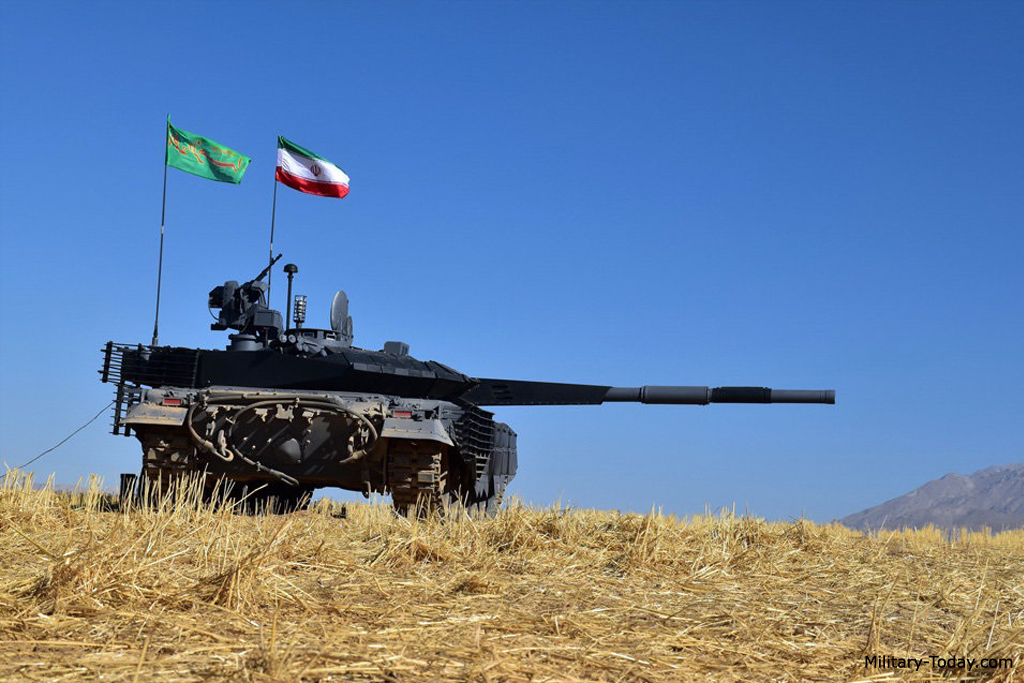
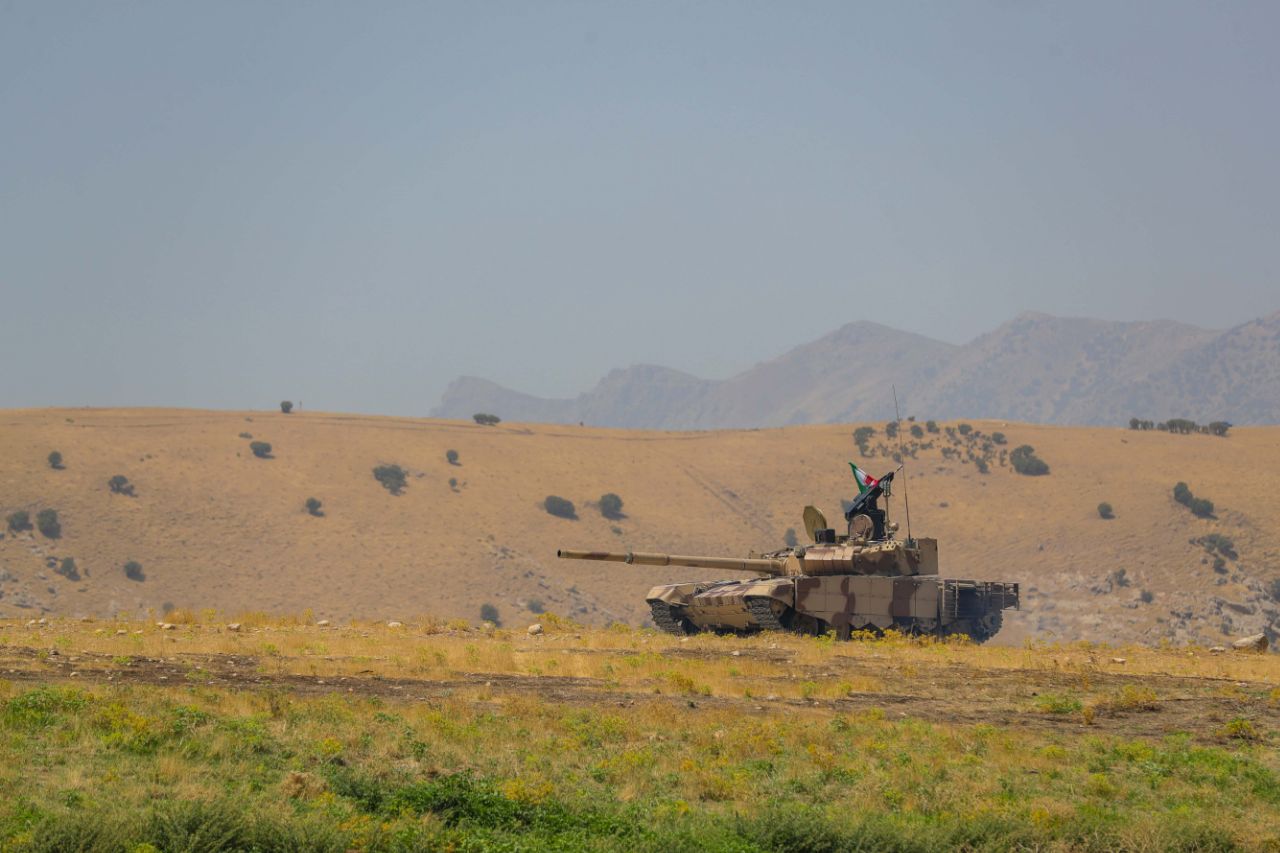
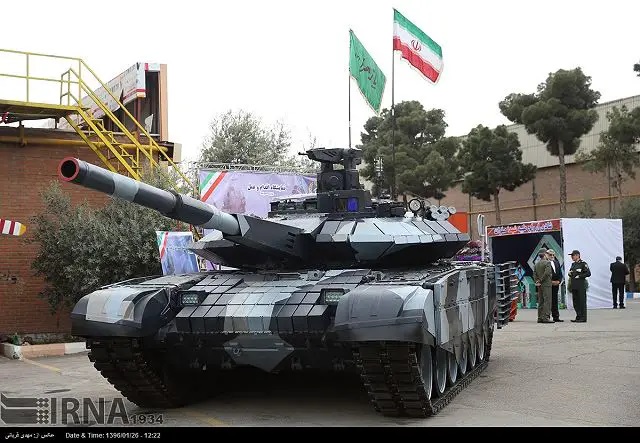
    The Karrar tank was unveiled on March 12, 2017, in a ceremony attended by the then-Minister of Defense, General Hossein Dehghan. It was emphasized in the ceremony that the production line for the Karrar tank is also located in the Bani Hashem Armor Industrial Complex in Doroud County, Lorestan province. However, the introduction of this tank into service began slowly several years later. The production line was reopened in August 2020, and since then, the delivery process has been faster than before. The operational version of the Karrar tank differs from the unveiled version.

    Design:
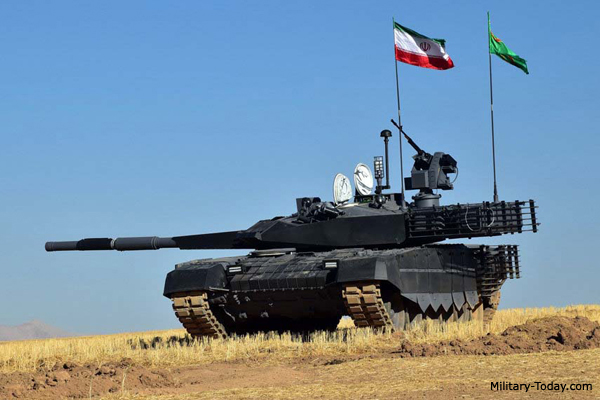
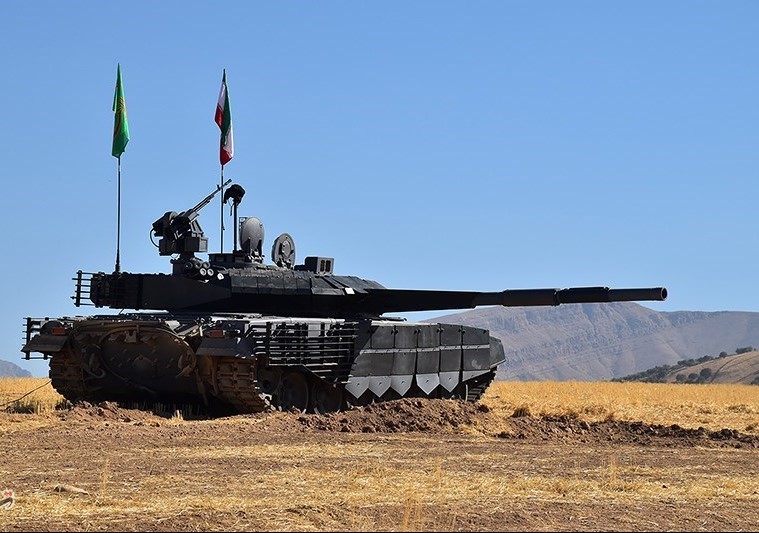
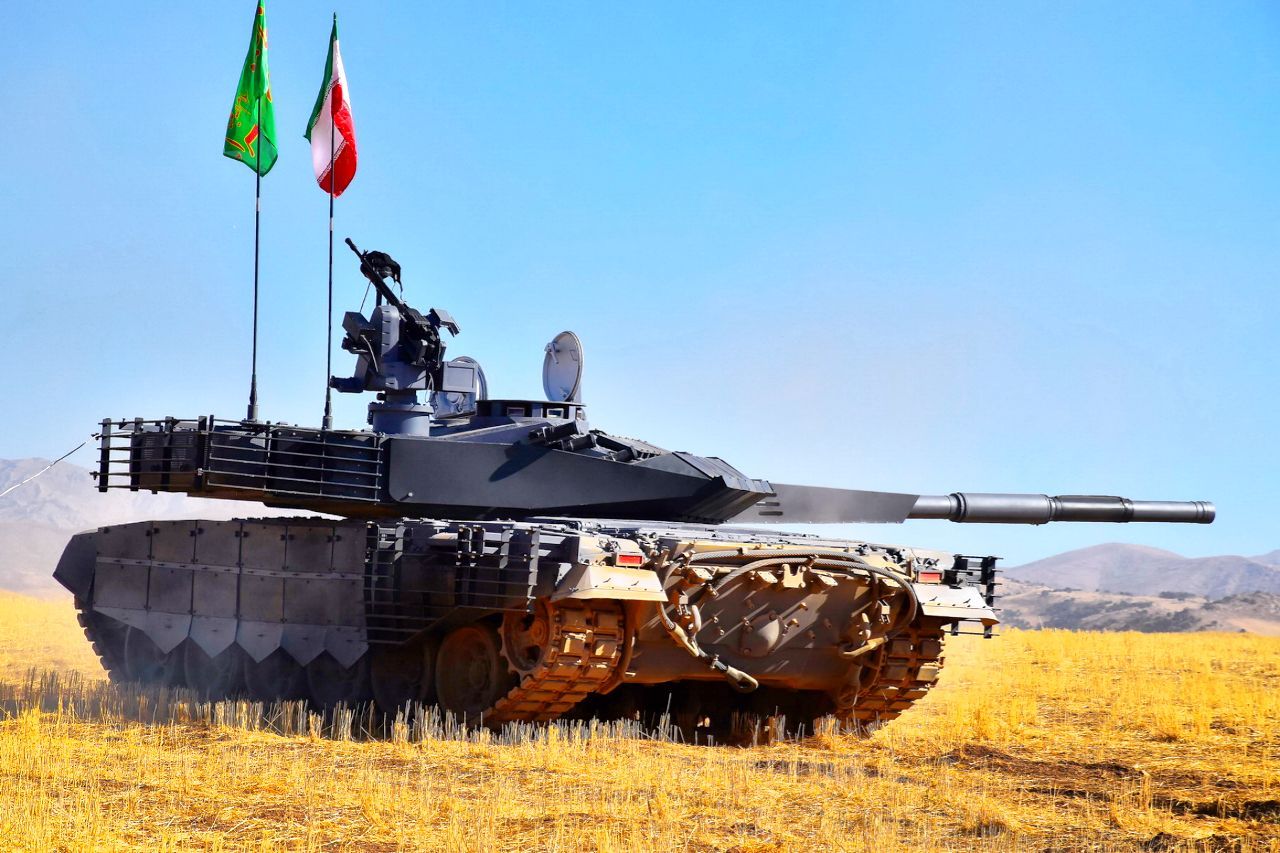
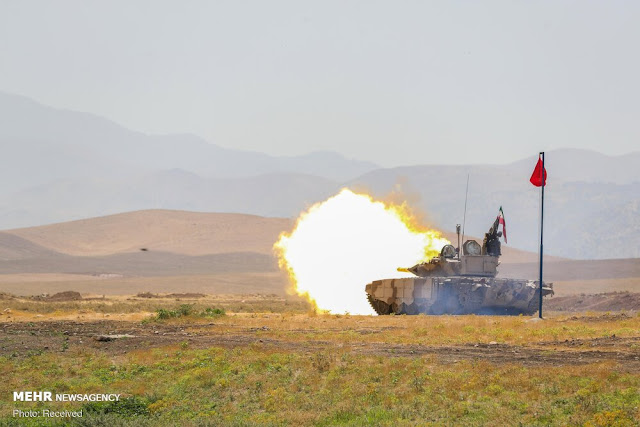
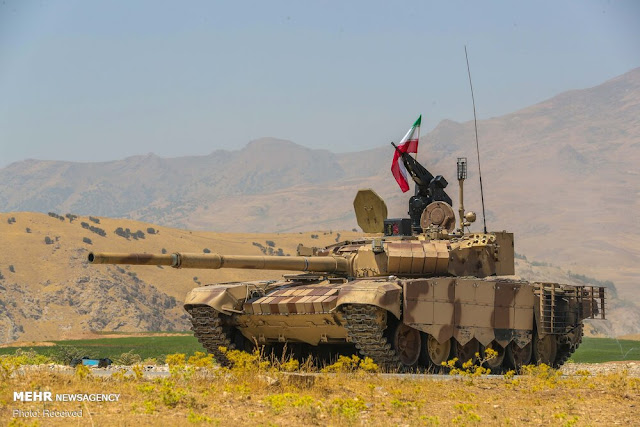
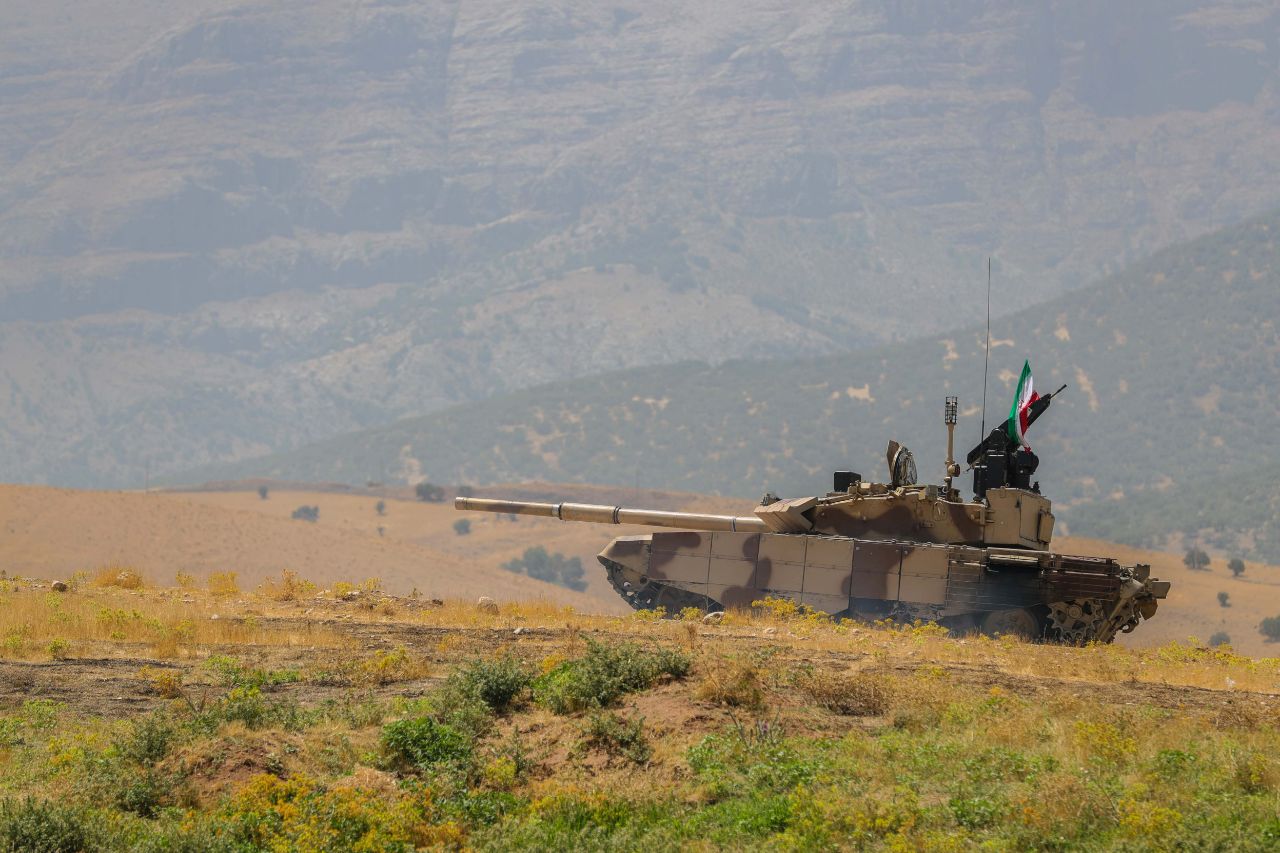
    The Karrar tank features a welded and modern turret with a 125mm gun and a remote-controlled 12.7mm machine gun, as well as a coaxial 7.62mm machine gun.

    There are 12 smoke grenade launchers with an 81mm caliber on both sides of the turret, with six launchers on each side. The use of smoke grenades on both sides of the tank provides a larger range for creating smoke screens to disrupt laser-guided missiles

    12 grenade launchers installed on Karrar

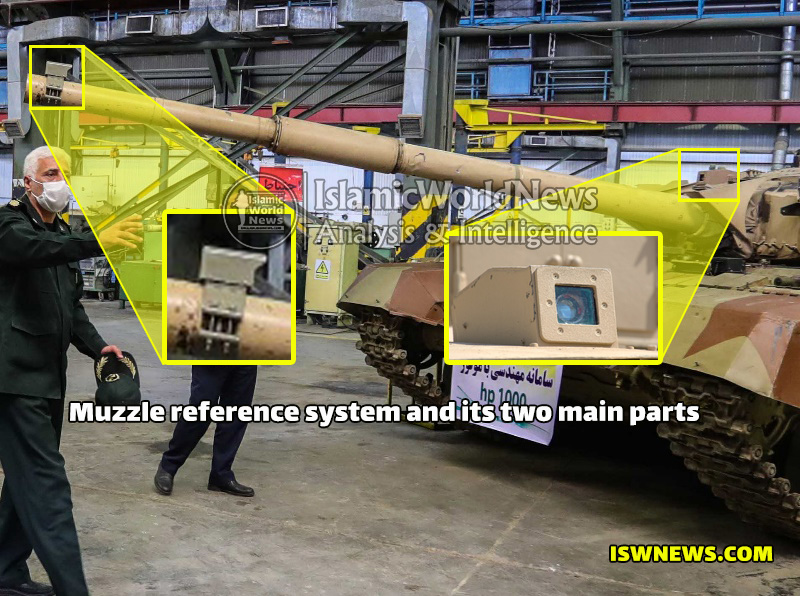
    The Karrar tank includes a fire control system that consists of various components such as a muzzle reference system and a weather station. The muzzle reference system consists of two pieces, one at the beginning of the gun and one at the mouth of the gun, which detects the smallest angle of the gun that is not visible to the naked eye. As a result, the accuracy of direct gun fire is greatly increased.

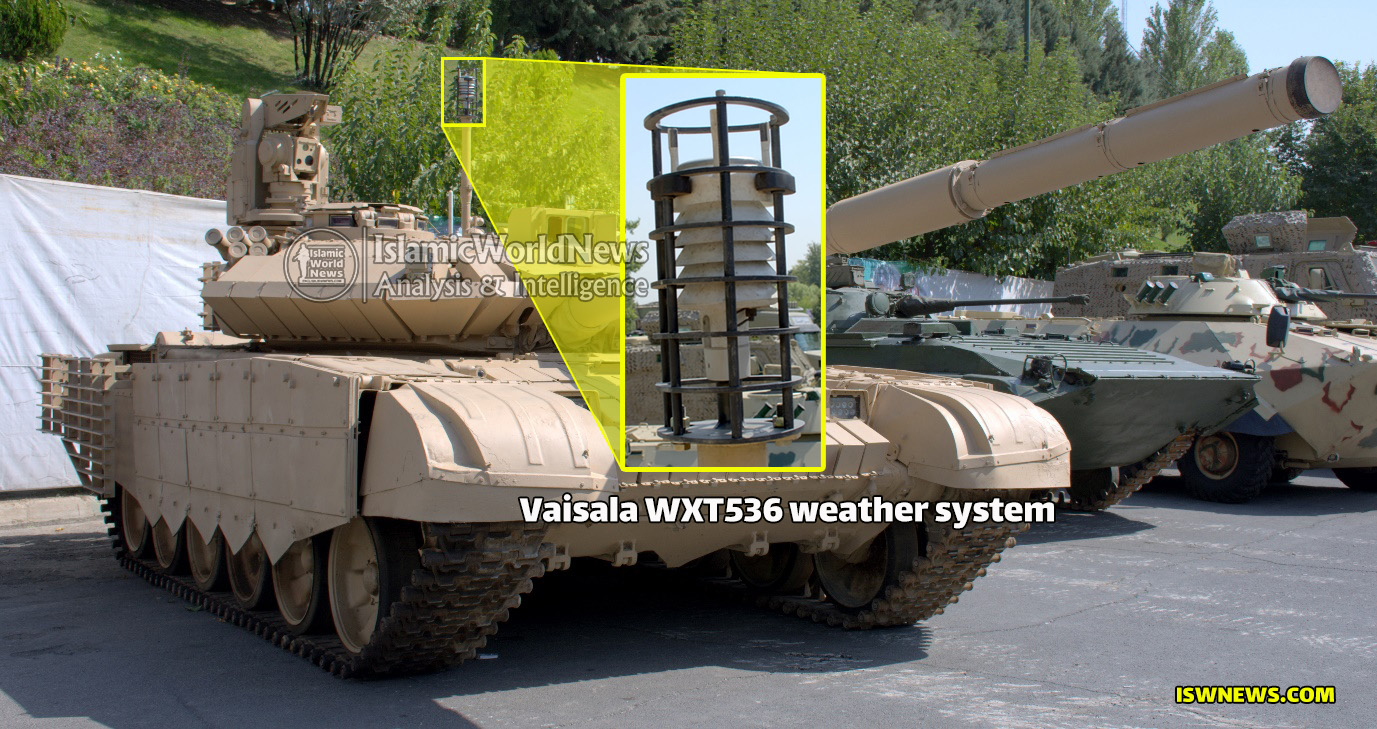
    The weather sensors, by performing calculations on variables such as wind speed, humidity, air temperature, etc., increase the accuracy of ballistic shots. The Karrar tank uses a Vaisala WXT536 weather station belonging to a US company.

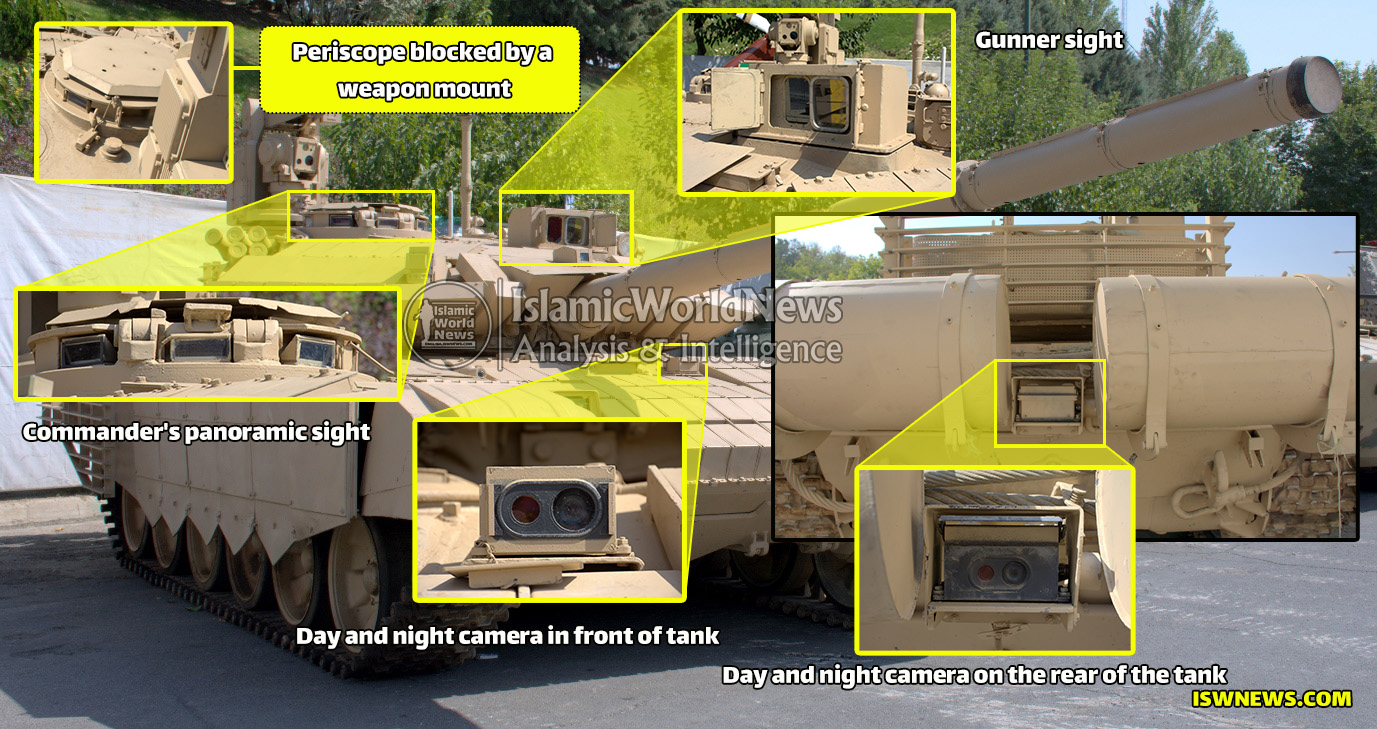
    The Karrar tank uses a day and night vision system in front and back of the tank. This system includes an IR/EO day and night vision camera in the front left window of the driver’s hatch and a day and night vision camera at the back of the tank between the external fuel tanks.

    The all-around surveillance system (360-degree periscope) of the commander of the tank is another available system on the Karrar tank. This system includes seven fixed periscope windows installed in the commander’s hatch. The all-around surveillance system provides the ability to install eight periscopes, but one of the positions is occupied by the remote-controlled machine gun base and it has been blinded, so no periscope is installed there.

    The Karrar tank utilizes a surveillance and targeting system for the gunner, which is located on the turret of the tank. The two doors of this surveillance system are manually operated and they do not have remote control. In addition, this surveillance and targeting system does not have a washer or snow remover, which is a major weakness. In war conditions, there is a possibility of dirt and snow accumulating on it, which will disrupt the performance of the surveillance and targeting system without a cleaning system.

    Karrar tank surveillance and targeting system collection

    Armament:
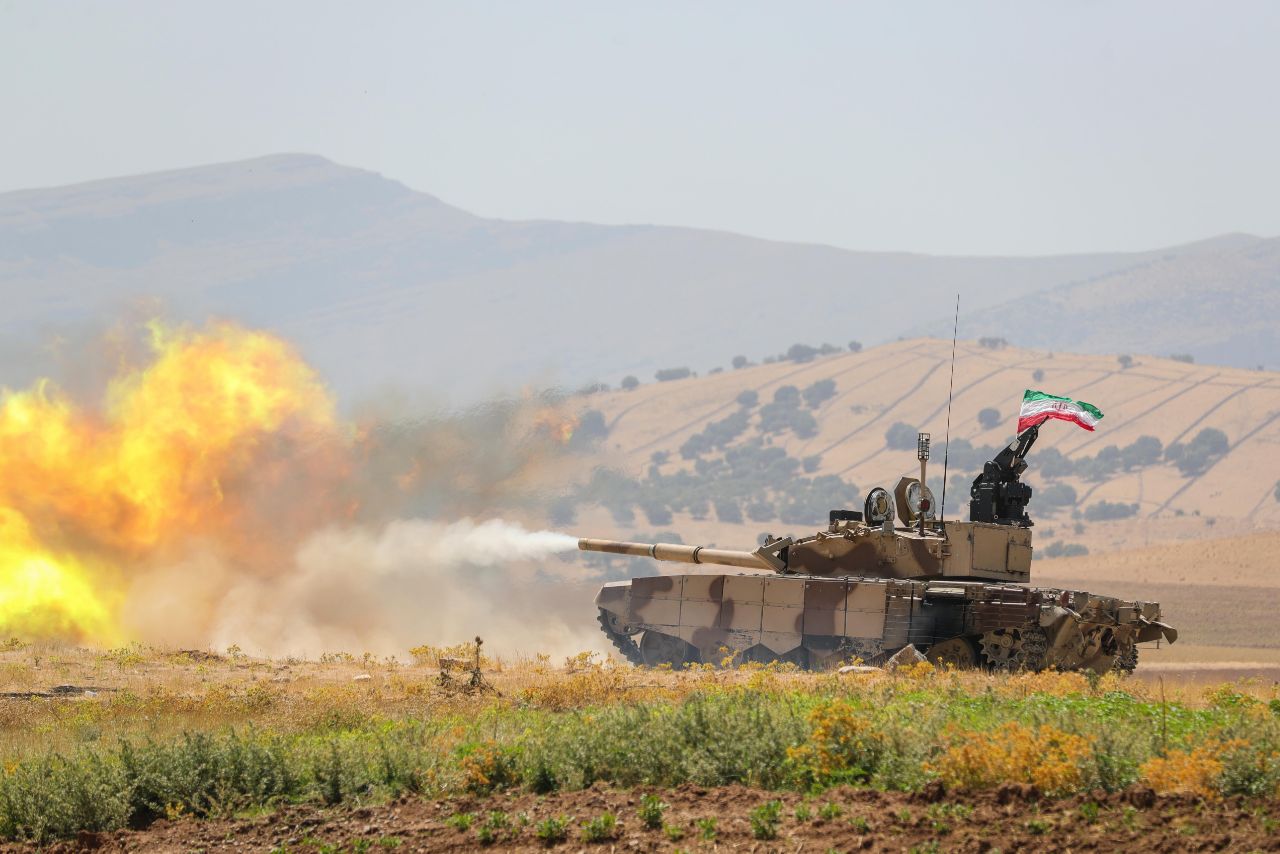
    As it was mentioned before, the main weapon of the Karrar tank is the 2A46 series 125mm cannon, which is the same cannon used in T72 and T90 tanks. This cannon can fire various anti-armor and anti-structure ammunition. It also has the ability to fire laser-guided missiles.
    The first version of the Karrar tank contained armor for the cannon, which was located at the connection point of the cannon to the body precisely on the cannon. The mentioned armor provided significant protection for the cannon against post-impact bullet cracks on the body.

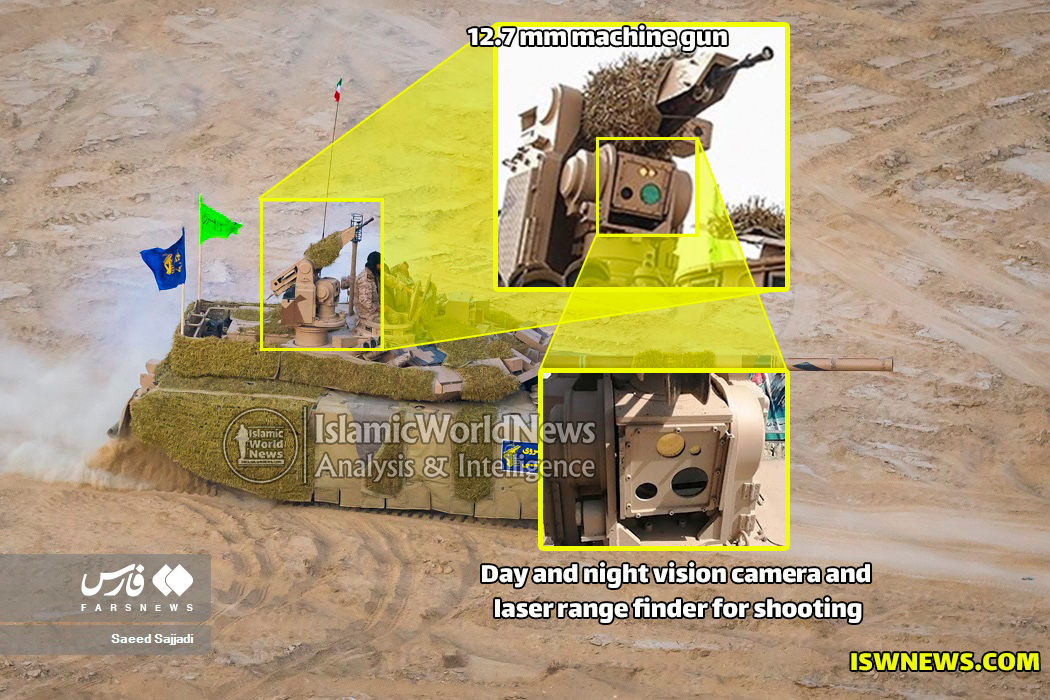
    The secondary weapon of the Karrar tank is a remote-controlled 12.7mm machine gun. This weapon has its own day and night vision sight and is guided by the tank commander. It is not clear whether this machine gun can be independently guided by the gunner or not, but the possibility of its guidance by the tank gunner is not unlikely.

    Remote controlled 12.7 mm machine gun

    Armor protection:
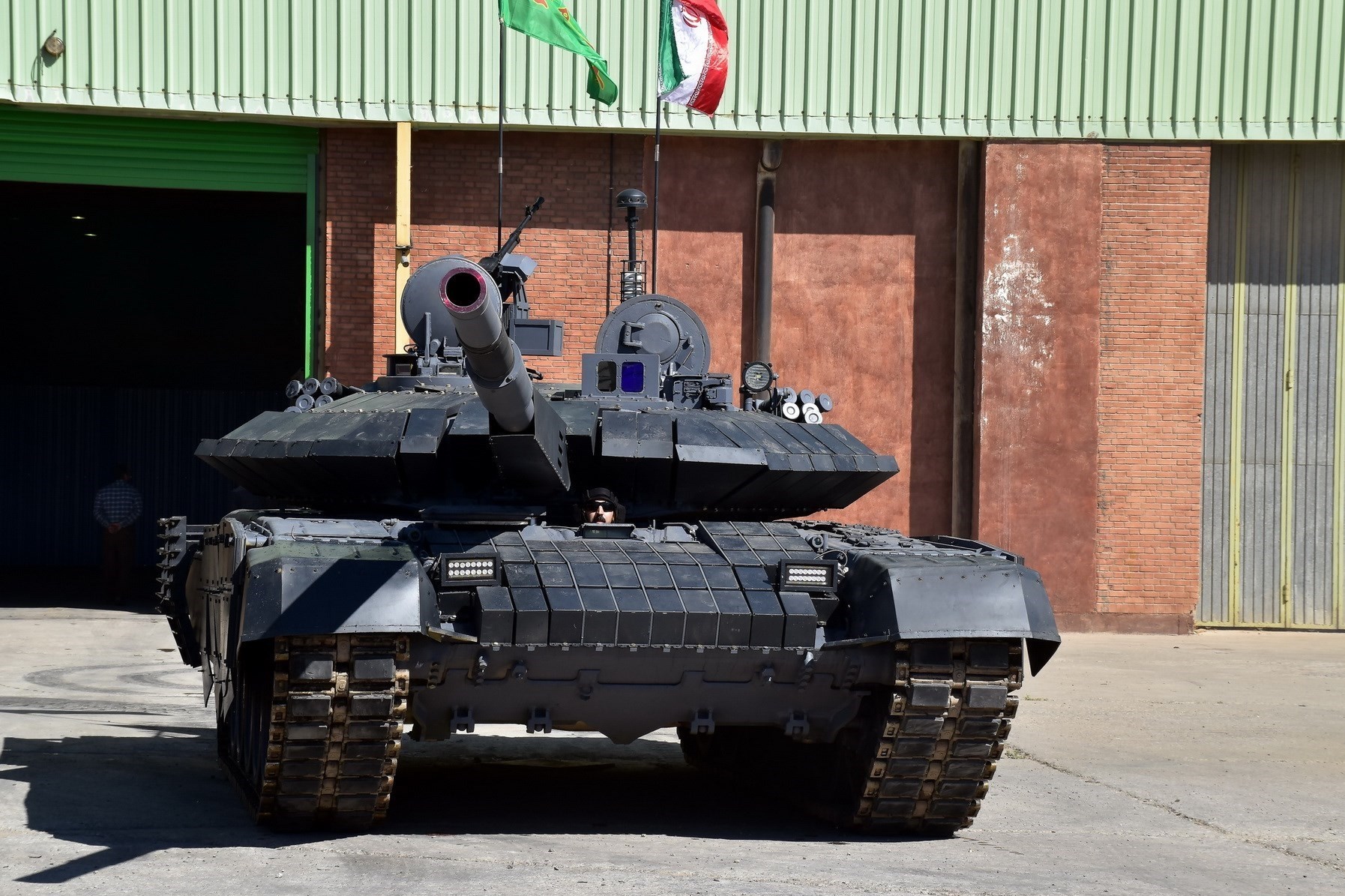
    In addition to the main armor, the Karrar is also equipped with reactive armor in the front part of the chassis to protect itself. According to the available images, in this section, Karar uses Kontakt-1 reactive armors that are produced in Iran.

    Read more: Military Knowledge: Kontakt-1 Explosive Reactive Armour

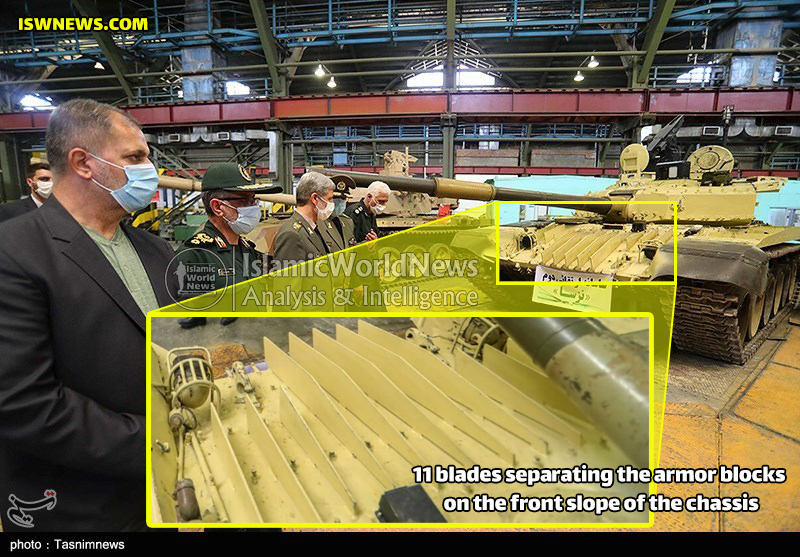
    In this section, the Karrar tank uses 11 separating blades to separate the reactive armor blocks on the front slope of the chassis. In addition to separating the blocks from each other and preventing the transfer of explosive effects to the adjacent blocks, these blades also cause the blocks to be arranged more regularly. Because the effect of explosion of the reactive armor blocks (explosion wave, heat and shrapnel) is more lateral, the separation blades are also placed laterally.

    In side protection, the Karrar tank uses armor similar to the Relikt plates. This section is a combination of 5 layers: two middle layers of vulcanized rubber, two steel layers reinforcing the rubber layer and a thicker steel layer, which is the last layer closest to the tank.

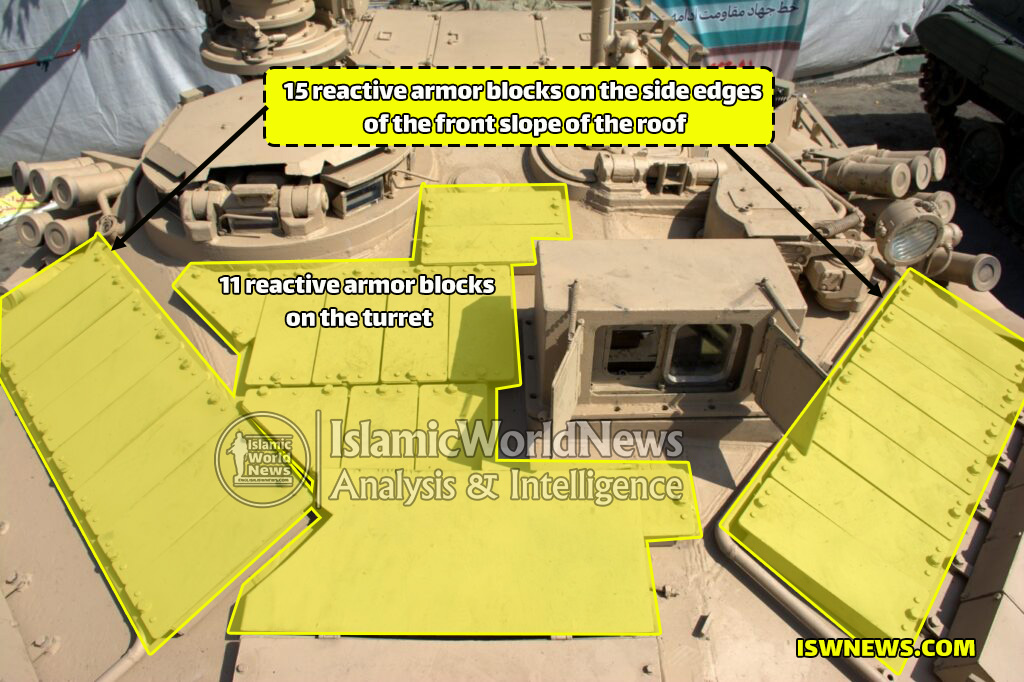
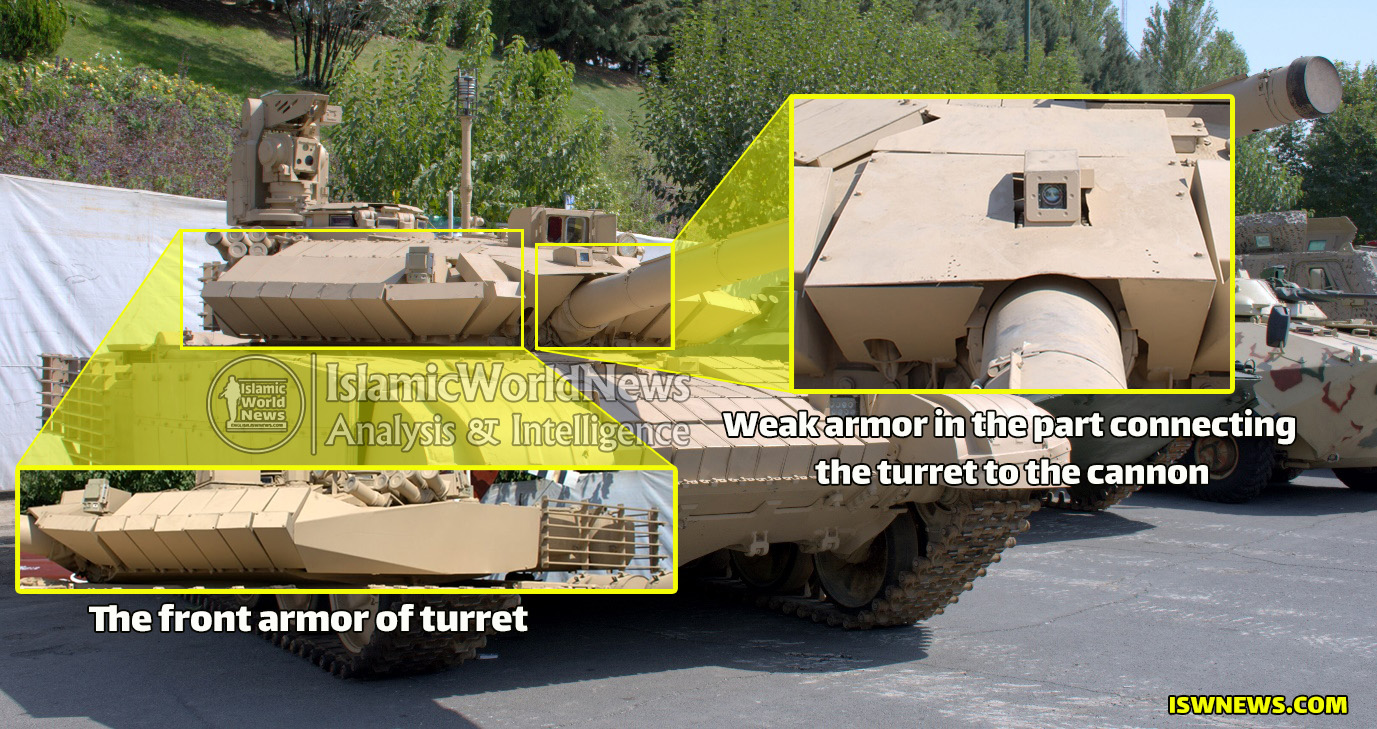
    In terms of turret protection, the design is very similar to the T-90MS tank. In this section, reactive armors with more resistance and similar to Relikt or Kontakt-5 reactive armor are used. The main difference between the Karrar design and the T-90MS in this section is the dimensions of the reactive armor. These plates are installed on the turret with a steep slope, the thickness of which increases in the end part. The number of blocks used in the Karrar tank turret is 58. 32 blocks are located on the front and side of the turret, which use different dimensions, and 15 blocks are used to cover the side edges of the front slope of the roof and 11 blocks are used to cover the central part of the roof.

    The main challenge to fully cover the turret is related to covering the part connecting the gun to the turret, the armor used must be able to move up and down along with the gun. It seems that this part of Karrar tank does not have enough protection.

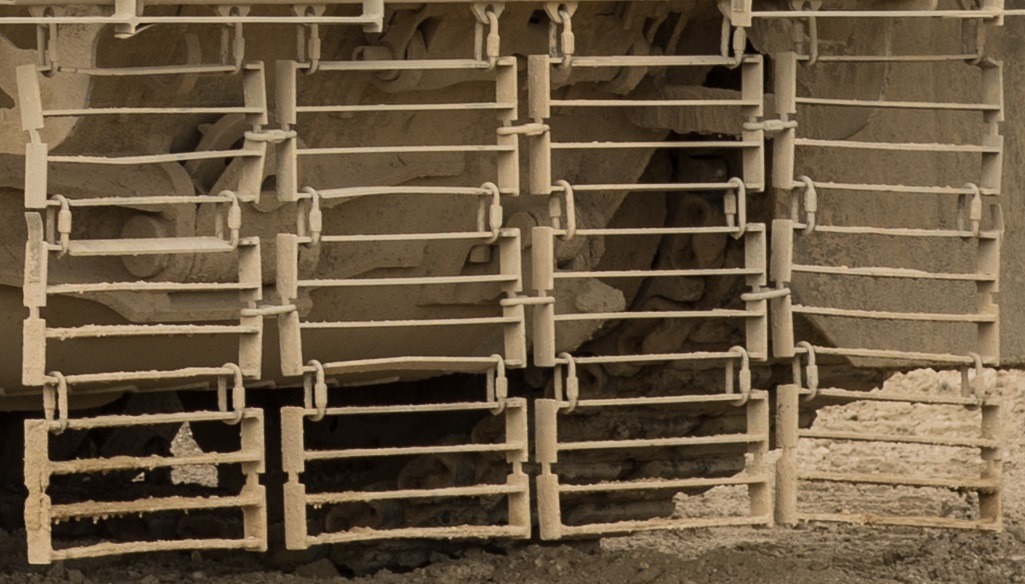
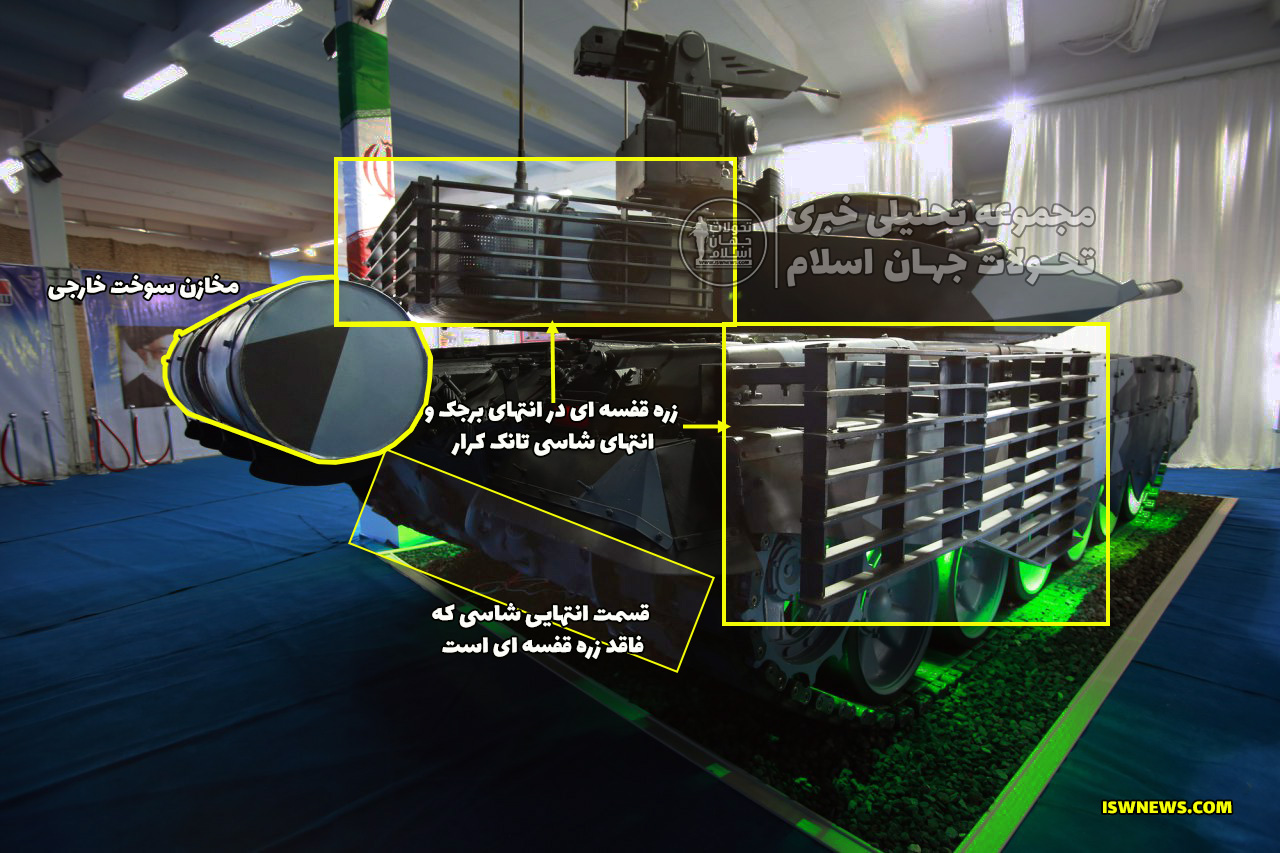
    Karrar tank uses cage armor (or slat armor) in the end parts of the body and turret. These armors cause early activation of the anti-armor missile warhead, and due to the distance they have from the main body and tank armor, it reduces the explosive effect of the missile warhead, which ultimately leads to a decrease in missile penetration. In addition to being cheap, this type of armor is a suitable option for use in areas that are less threatening, i.e. the back of the tank.

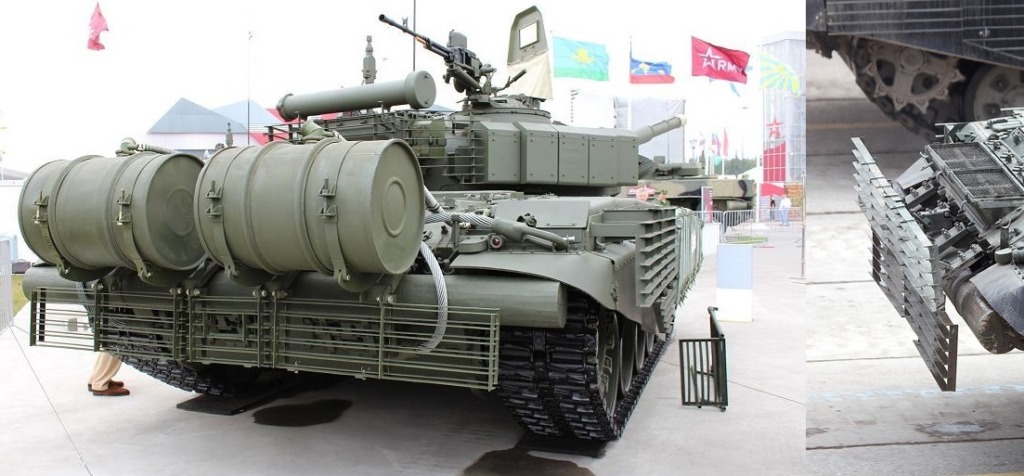
    In the rear part of the tank chassis, there are two barrel fuel tanks as external fuel tanks. This part of the tank does not have cage armor. The lack of armor in this section is due to three reasons: one is due to the low probability of hitting in open environment battles, and the second reason is the presence of external fuel tanks itself on Karrar, which does not allow the installation of cage armor, and the third reason is the possibility of cage armor hitting the ground and causing damages.

    It would have been better to install flexible cage armors based on the T72B3 tank. These armors can be moved in the presence of external fuel tanks, and when the fuel tanks are not installed, they provide the required protection for the tank. It is also possible to use armors that are flexible and do not have the problem of hitting the ground by modeling the cage armor of the Challenger-2 tank.

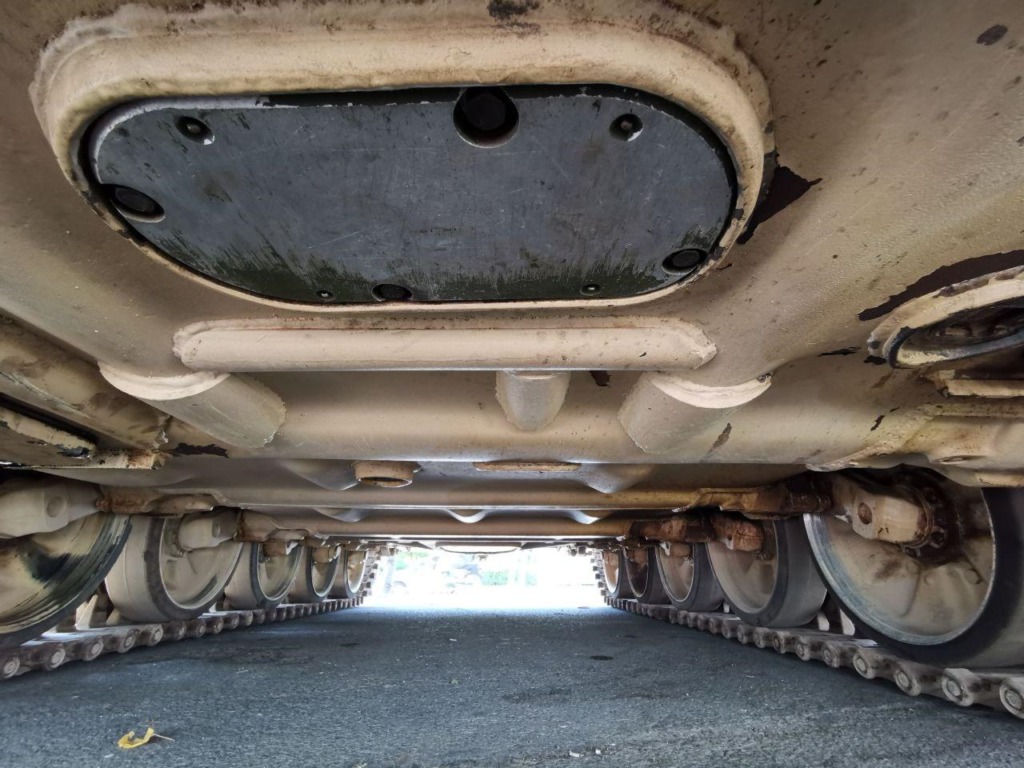
    One of the weaknesses of the T-72 series tanks, which is caused by its initial design, is the poor protection of the bottom part of the tank chassis. This issue still exists in the main chassis of the Karrar tank and no action has been taken to fix it. This issue becomes more important when we know that the tank’s main ammunition is stored in the floor of the chassis by means of the automatic loading system and in case of a mine explosion, the probability of the explosion of these ammunition is also very high. To fix this defect, this part can be strengthened by adding resistant and anti-shock plates in the front and lower parts, which are more sensitive.

    The bottom of the Karrar tank chassis, which does not have additional armor

    Protection system:
    Karrar tank uses a protection system with Soft Kill mechanism. This system, which is equipped with a laser beam detector and an infrared disruptor, includes four modules, in such a way that two modules are placed in the front part of the turret and two modules are placed in the rear part of the turret, and each one covers a specific angle.

    The laser beam detector used in the protection system module reacts to the radiation of the laser beam from the guidance system and to the laser beam of the range finder system and warns the crew. When the crew received the warning, they threw smoke grenades and created a smoke screen, causing disruption of the laser beam reflection from the tank body.

    The infrared disruptor used in the protection system module has a COB (Chip On Board) lamp with a 17×17 array. This system, by imitating xenon light radiation or thermal illuminator used at the end of anti-armor missiles, causes errors in missile guidance by the missile guidance system.
    This infrared disruptor has a general field of view of 60 degrees, a near infrared emission wavelength (Near IR), a preparation time of 60 seconds, a working continuity of up to 6 hours, a lifetime of 800 working cycles (each cycle includes 6 hours of work and one hour of shutdown), the power consumption is less than 80 watts and the working temperature is -20 to +55 degrees Celsius.

    This system is presented to disrupt the performance of missiles such as TOW and M47 Dragon or second generation armored missiles in general, but it will also be effective against missiles such as 9K111 Fagot, 9M113 Konkurs, etc. by making modifications.

    Karrar tank Soft Kill protection system

    Engine power and mobility:
    The maximum possible weight of the Karrar tank is stated to be 48.5 tons, and according to the evidence of the use of an engine with a power of 1000 horsepower on the tank, the ratio of power to weight of this tank is 20.6 horsepower per ton, as a result we see an increase in the mobility of the Karrar compared to the T72-S version.

    The type of Karrar tank engine has not been announced, but considering its 1000 horsepower and the fact that the T-90A model uses a V-92 engine with 1000 horsepower. It can be assumed that the Karrar tank engine is the same V-92 that was imported through Russia.

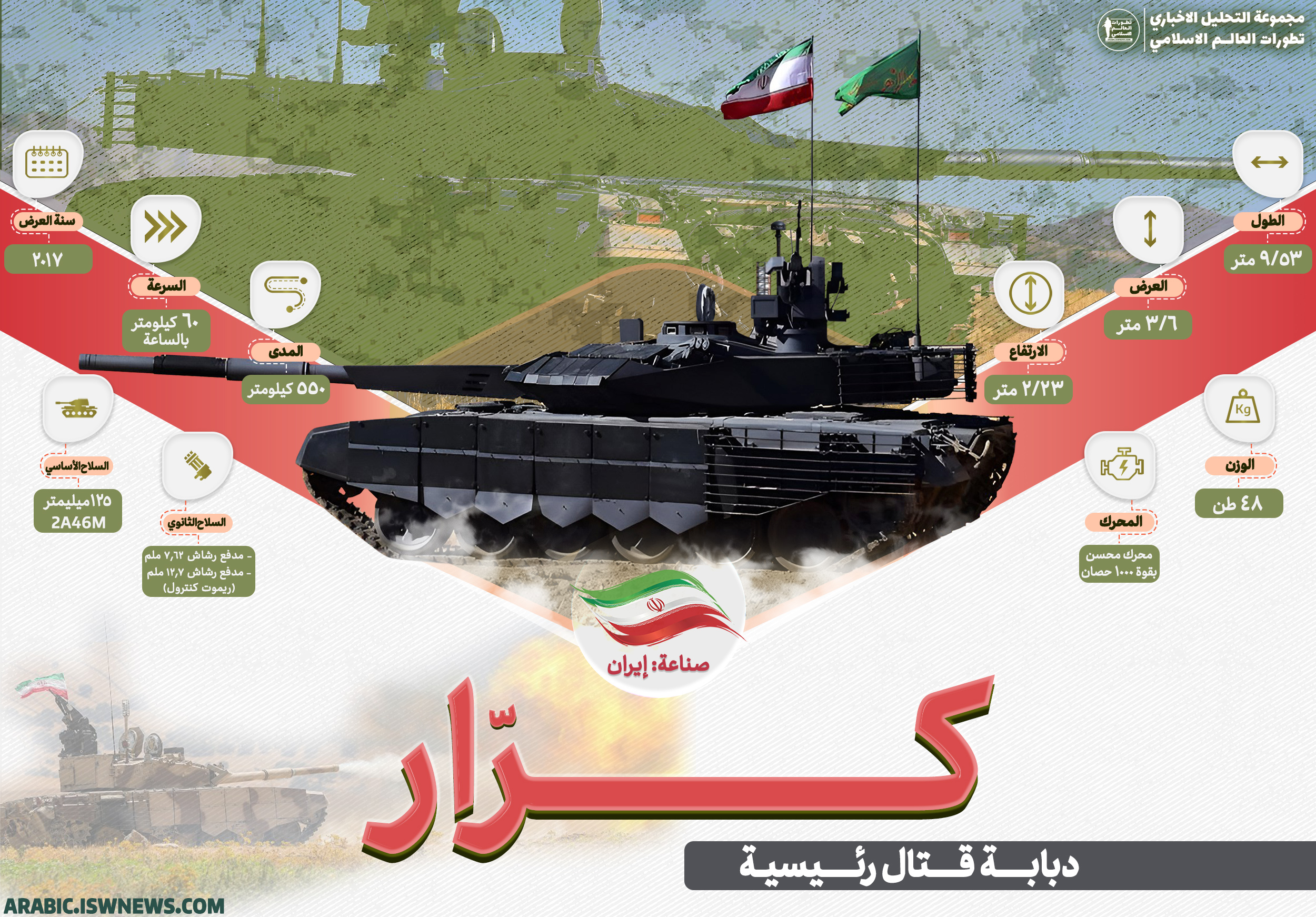
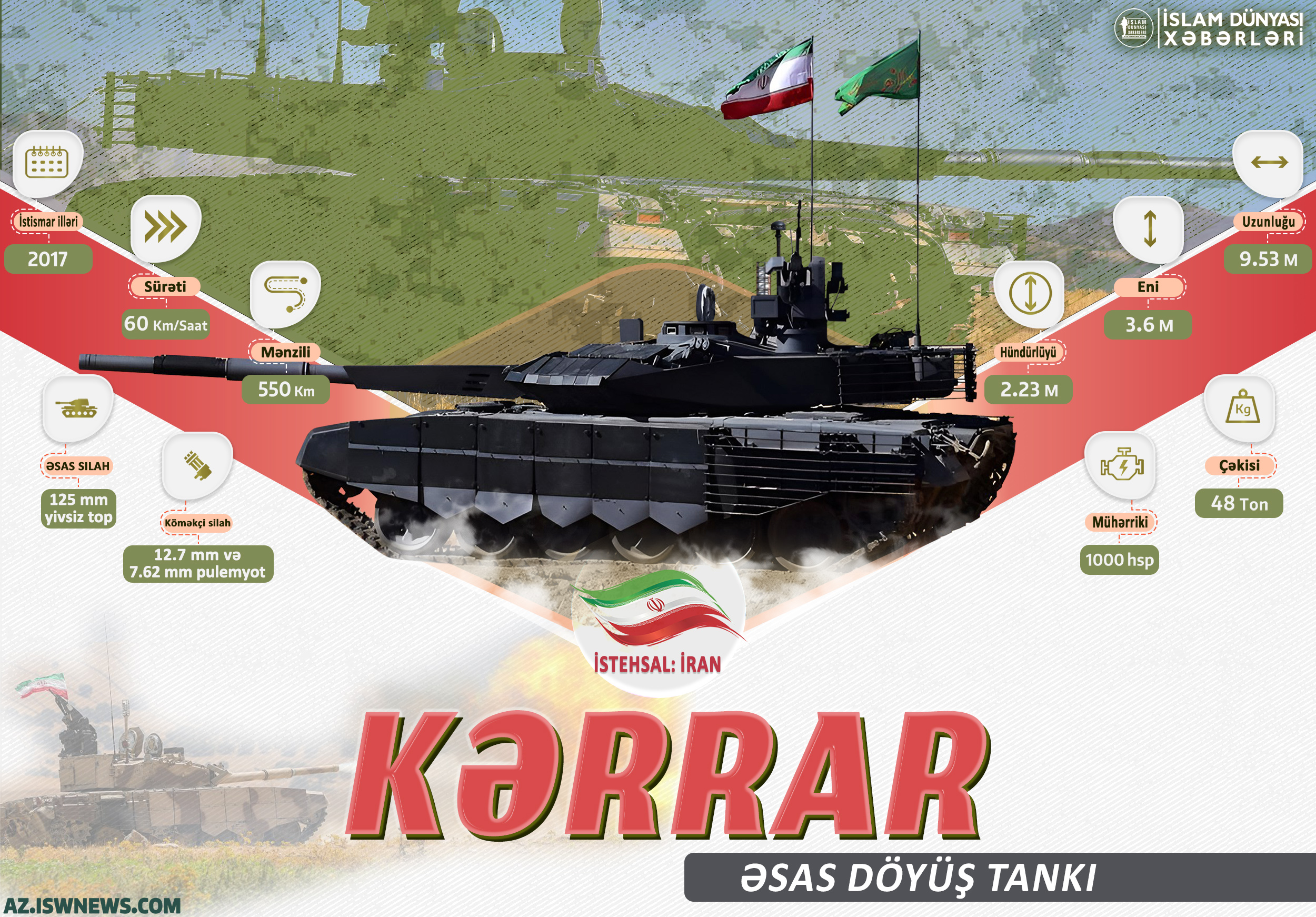
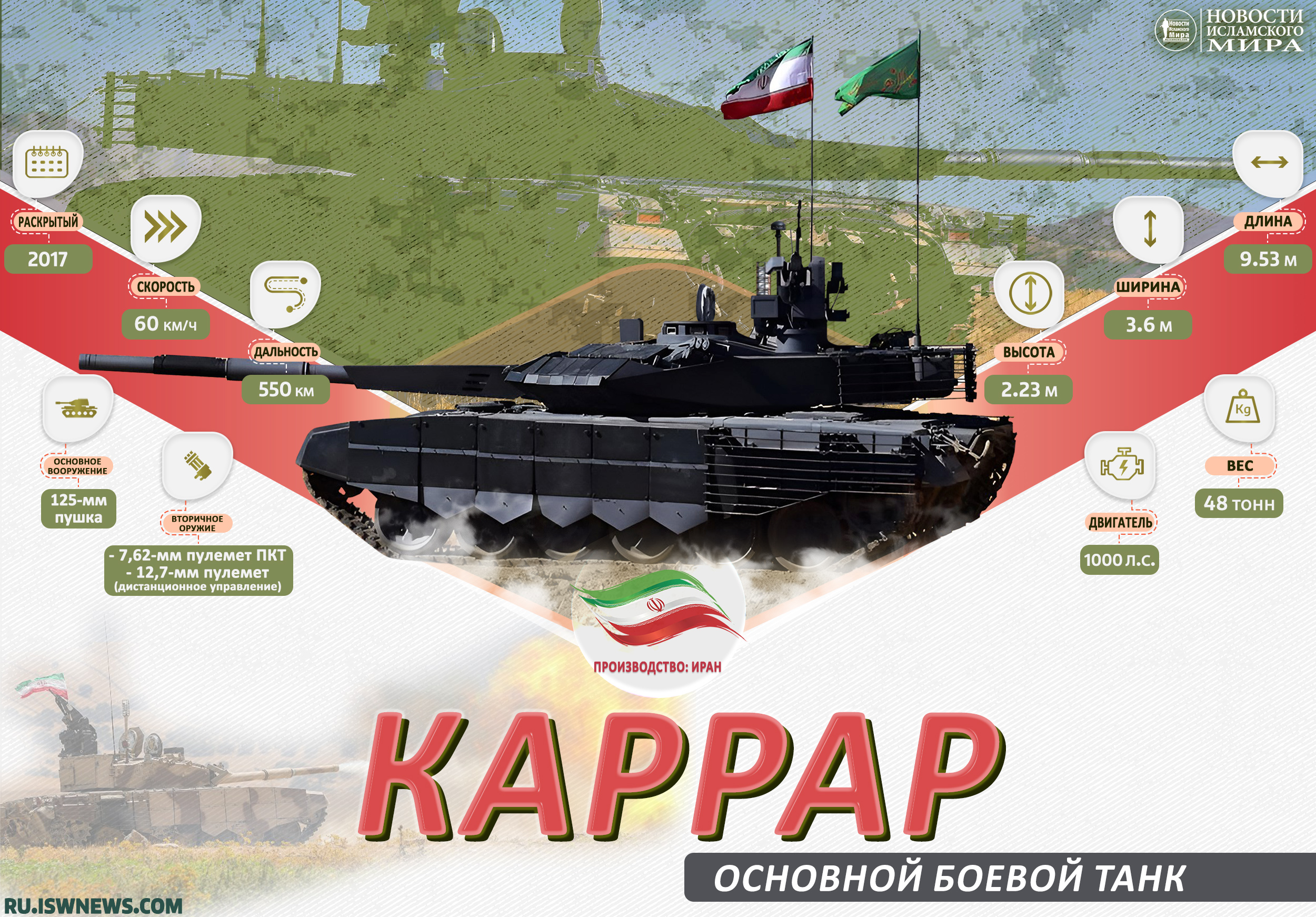
    Karrar tank specifications:
    Type: Main Battle Tank
    Produced: Since March 12, 2017
    Manufacturer: Bani Hashem Armor Industrial Complex
    Origin: Iran
    Length: 6.8 meters (hull) – 9.53 meters (with gun)
    Width: 3.6 meters
    Height: 2.23 meters (without remote-controlled gun)
    Mass: 46 to 48.5 tons (exact weight not announced)
    Crew: 3 (driver, commander and gunner)
    Engine: Enhanced engine with 1000 horsepower
    Speed: 60-70 km/h
    Operational range: 550 km (plus with 200-280 km more from fuel tank)
    Main armament: 125 mm 2A46M/M-2/M-5 smoothbore gun with stabilizer
    Secondary armament: Coaxial 7.62mm machine gun and a remotely controlled 12.7mm machine gun / 14.5mm machine gun

    Karrar Main Battle Tank – click to view full size image

    More images of Karrar tank:

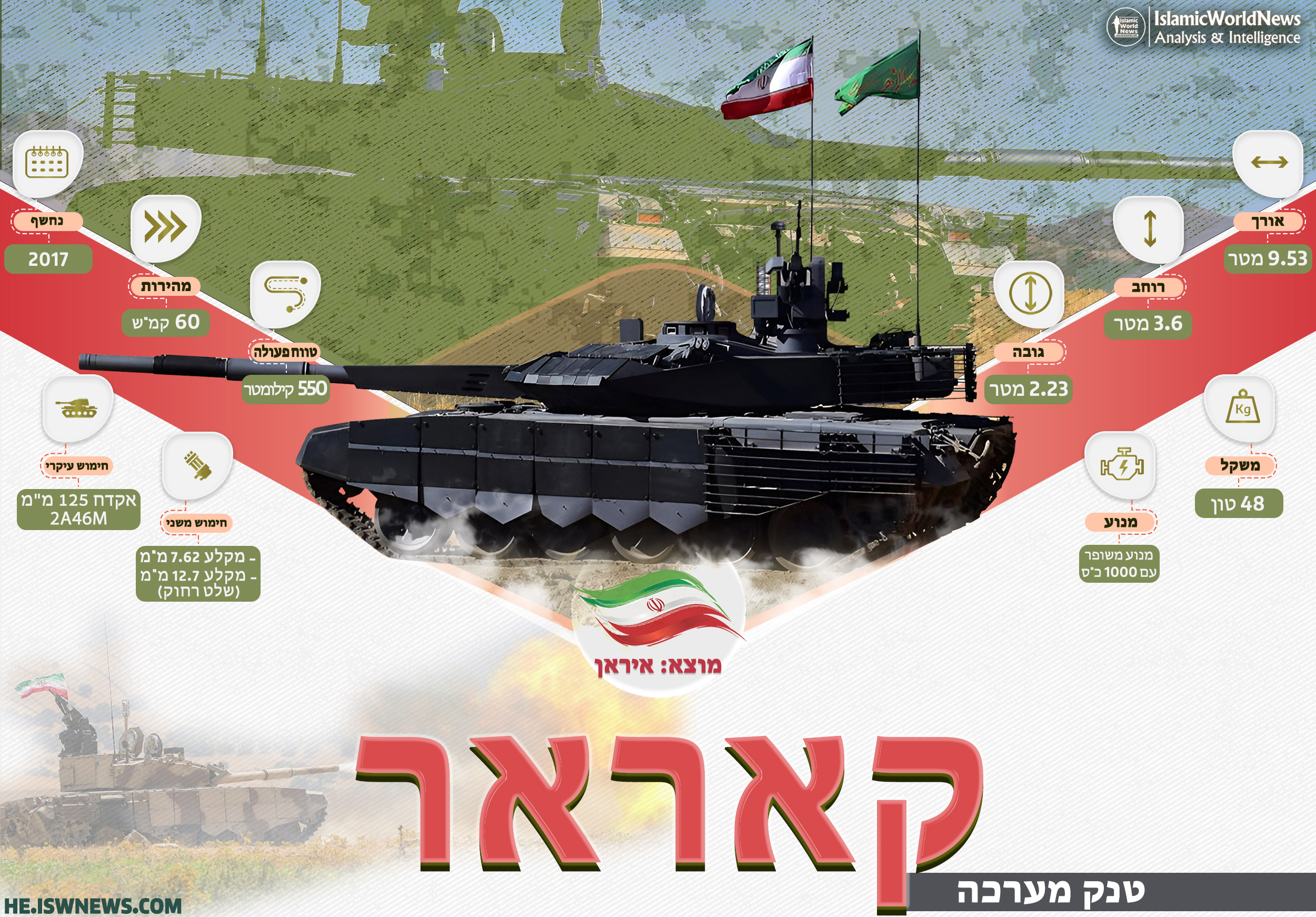
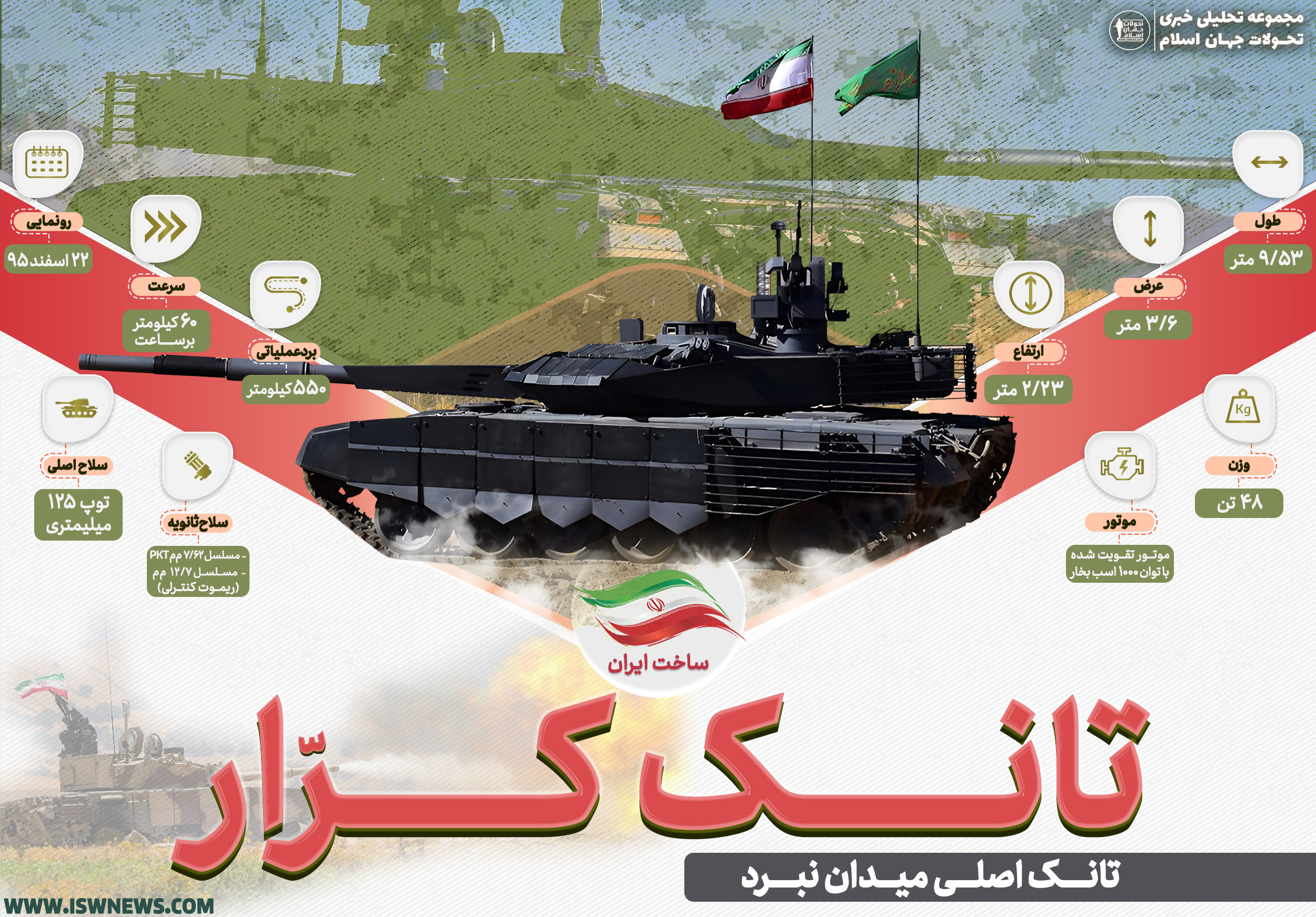
    Infographics of Karrar tank in Russian(Каррар танк), Arabic, Hebrew(טנק קאראר), Azeri(Kərrar Tankı) and Farsi(تانک کرار):

    Sources:
    کرار” نخستین تانک پیشرفته ایرانی رونمایی شد + ویژگی‌ها و تصاویر
    مشخصات فنی تانک کرار که وزیر دفاع رونمایی کرد/تولید یکی از پیشرفته‌ترین تانک‌های دنیا
    تانک کرار