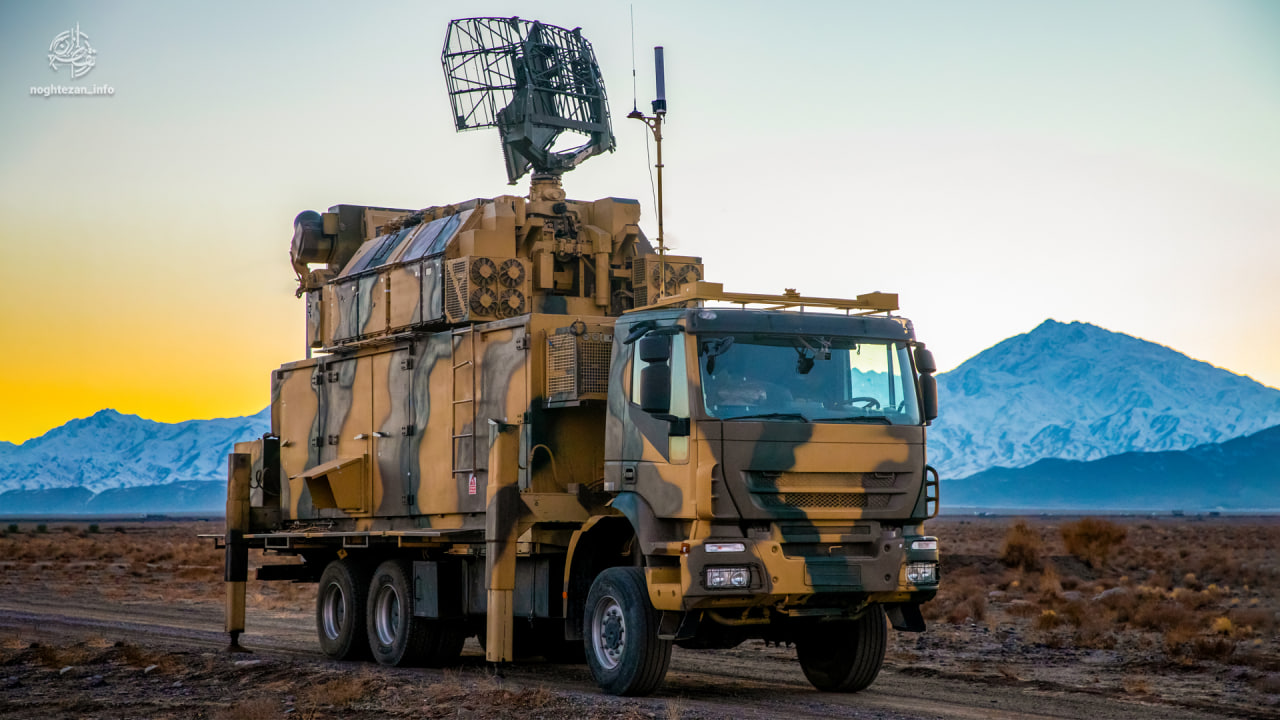
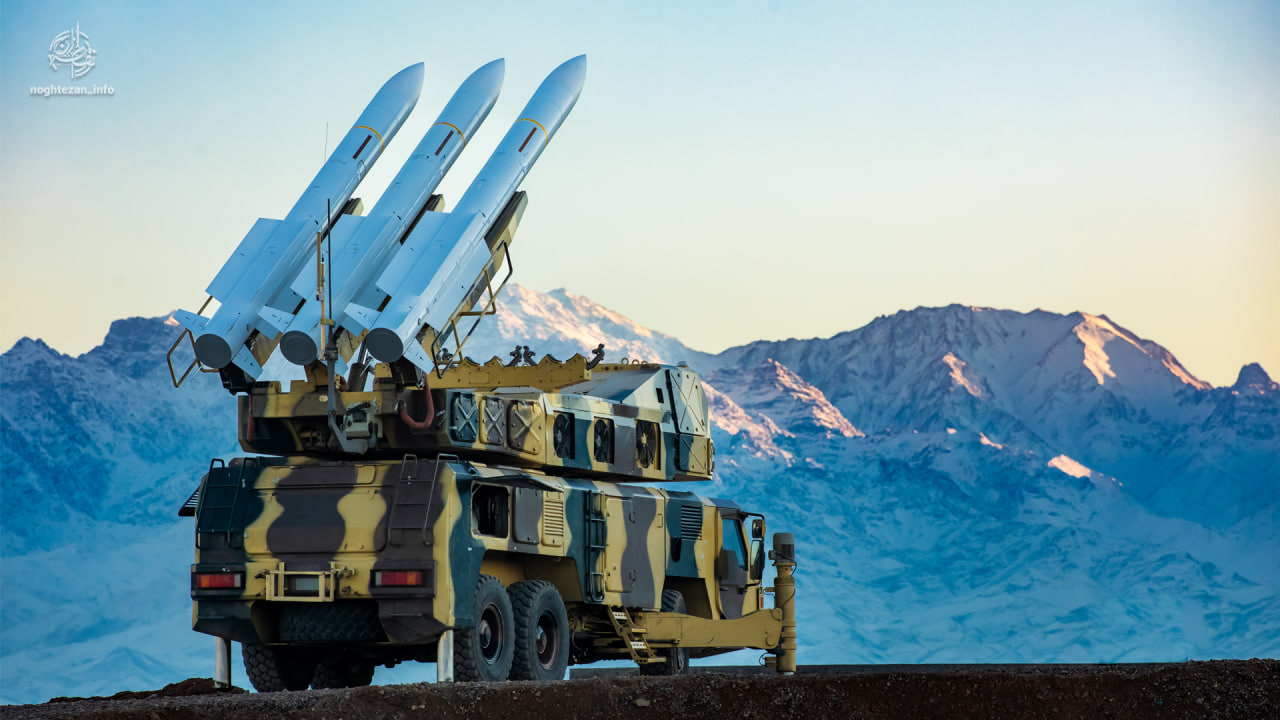
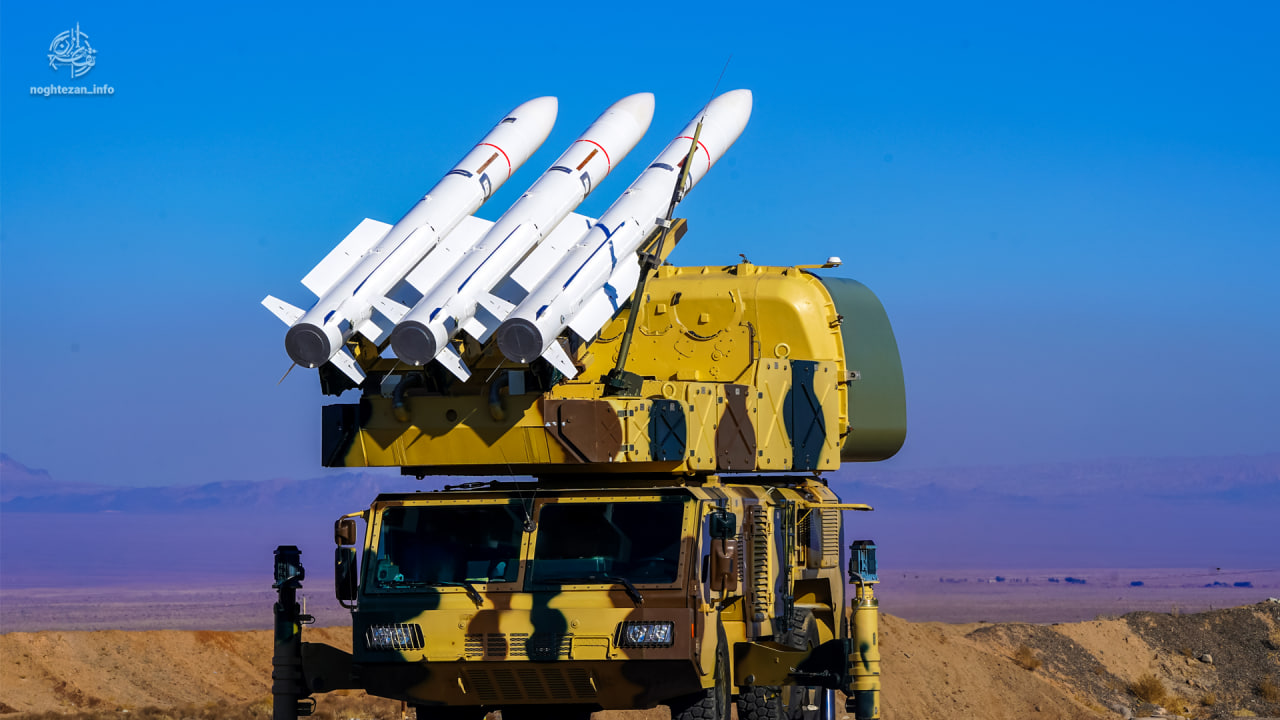
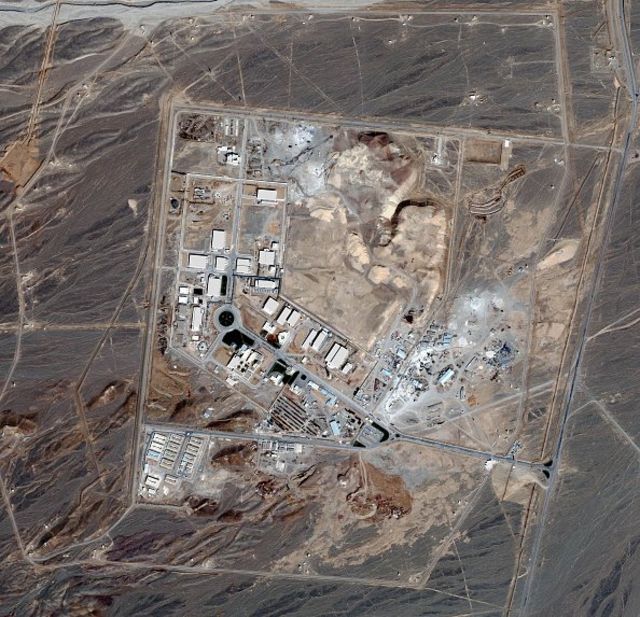
In this phase, the air defense units are conducting an all-around defense to defend the Shahid Ahmadi Roshan Nuclear Site, also known as Natanz site, against various air threats under critical electronic warfare conditions.
The Eghtedar 1403 exercise includes a range of Iranian long-range, medium-range, and short-range defense systems, as well as various radar and electronic warfare systems.
Published images reveal the presence of Tabas medium-range air defense systems, Sevom(3rd) Khordad long-range air defense system, Dezful short-range air defense system, and the Sepehr-14 passive electro-optical system for the Raad air defense system.
Iranian air defense systems used in Eqtedar 1403 drill
Additionally, for the first time, the mysterious 358 air defense missile was officially deployed in this exercise. The 358 loitering missile is renowned for its impressive track record of downing American and Israeli drones in the region.
358 missile deployed in Eqtedar 1403 drill
It should be noted that since January 4, the Iranian Armed Forces have commenced an exercise called “Great Prophet 19,” which will continue until January 9. The Eqtedar 1403 exercise is being conducted as part of the Great Prophet 19 exercise.
Despite Israel sabotages actions in Syria and while many Israeli attacks in Syria have gone unanswered, Iran has refused to withdraw its forces from Syria, and the Israeli regime’s efforts to drive Iran out of Syria have been virtually fruitless. This issue reached its peak in the last two years after the failure of the plan to prevent the export of Iranian oil and to reduce the sales of Iranian oil to zero, and we witnessed the culmination of this story in the case of sending Iranian tankers to Venezuela. This has once again led to the intensification of an intensified intelligence-security war against Iran, and the difference from previous years is that Israeli military strikes coincide with this intelligence war.
List of actions of Israel and its allies after the assassination of Martyr Haj Qasem Soleimani in turning military war into intelligence war: 1- Explosion in centrifuge montage hall of Natanz nuclear facility in north of Isfahan province on July 2, 2020. 2- Attacking Iran’s oil tanker “Sabiti” in the Red Sea and 60 miles away from Jeddah harbor on October 10, 2019. 3- Cyber attack to Shahid Rajaei harbor in Bandar Abbas on October 13, 2020. 4- Assassination of Iranian top scientist, martyr Mohsen Fakhrizadeh in Absard area, east of Tehran province on November 27, 2020. 5- Attacking Iran’s oil tanker “Shahre Kurd” at Syria’s shore on March 11, 2021. 6- Unsuccessful assassination of Rostam Qasemi, Quds Force economic deputy in Lebanon on March 2021. 7- Attacking Saviz ship in the Red Sea on April 6, 2021. 8- Second explosion in electricity network of Natanz nuclear facility on April 11, 2021.
Alleged Iran attacks on Israeli interest also are as follows: 1- Cyber attack to electric power company of occupied palestine towns Tel Aviv, Ashdod, Or Akiva, Haifa, Netanya, Rahofut on October 30, 2020. 2- Attacking Helios Ray ship in the Oman Sea on February 26, 2021. 3- Attacking Lory container ship in north of the Arab Sea on March 25, 2021. 4- Attacking Hyperion Ray ship near the UAE’s Fujairah port on April 13, 2021.
Regarding the statistics provided, it is noteworthy that this information includes information that has been made publicly available, and obviously many other operations have been carried out by the parties that have not been made public so far, or that the parties preferred not to speak publicly about it.
Given the trend of these developments, it seems that in the coming days we will see more confrontation between Iran and Israel in the field of maritime, cyber and especially intelligence-security. The scale of this war could also be extended to other countries, especially Syria, which makes the confrontation between Iran and Israel more difficult. Despite the political and economic hardships and constraints that the United States and the West have imposed on Iran during the difficult times of coronavirus, Iran will certainly not be immobile in the face of Israeli attacks and sabotage and will respond to Israel.
According to Behrouz Kamalvandi, spokesman for the Atomic Energy Organization of Iran, the incident did not cause any human injuries or pollution, and the cause is under investigation and information will be provided.
Israeli officials have not yet made an official response to the incident, and Israeli media outlets, including the Hebrew channel “Reshet Kan”, have reported on the possibility of an Israeli cyber attack on Iran’s nuclear facilities.
It is worth mentioning that the Atomic Energy Organization of Iran unveiled new achievements yesterday, on the occasion of the National Day of Nuclear Technology, including regaining the enrichment capacity of 16,500 SWUs and other projects in the field of export of nuclear products.
On July 7, 2020, the centrifuge assembly hall of the Natanz nuclear facility witnessed a sabotage. The perpetrator of this sabotage has been unofficially announced as Mossad and Israeli agents.