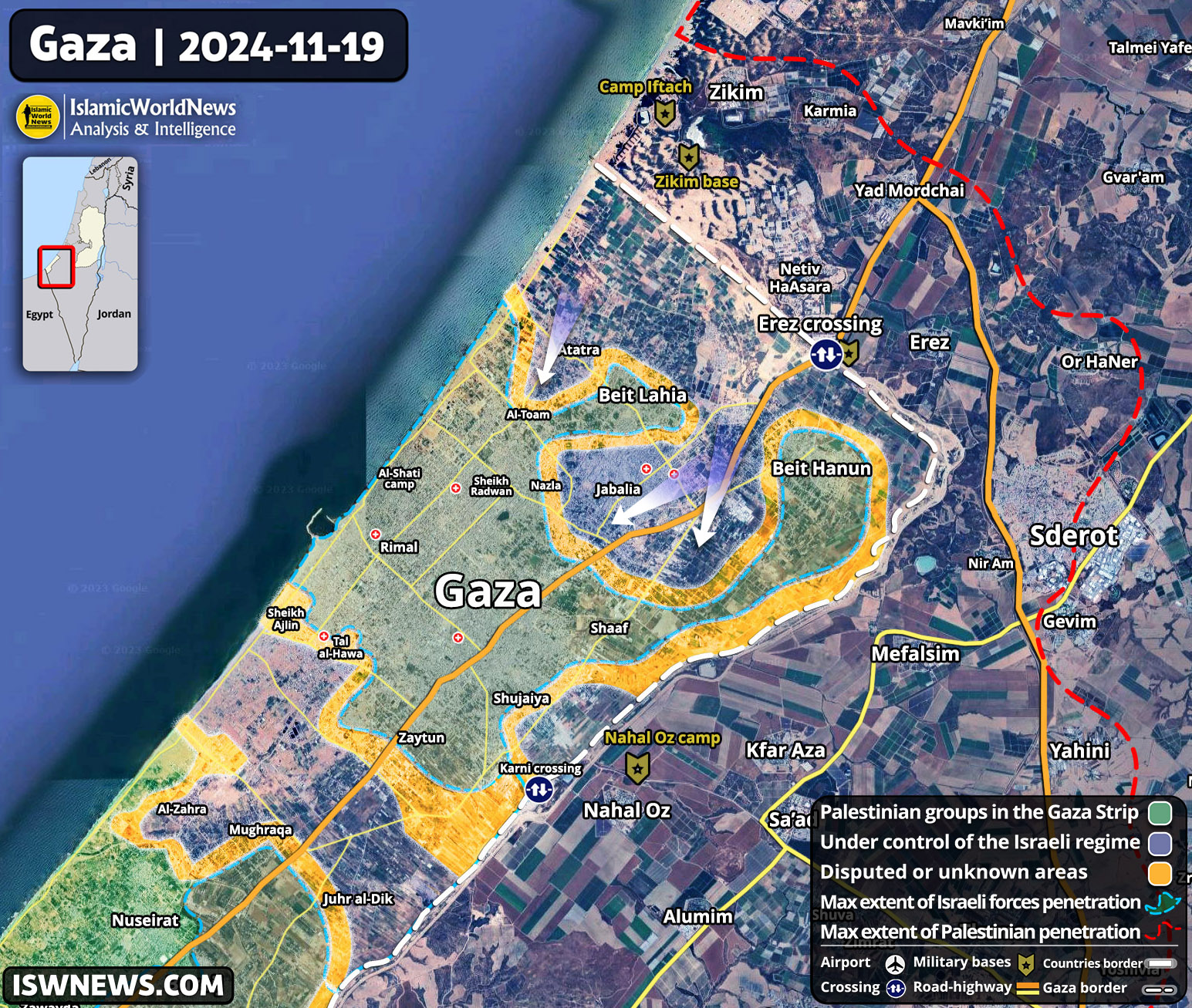
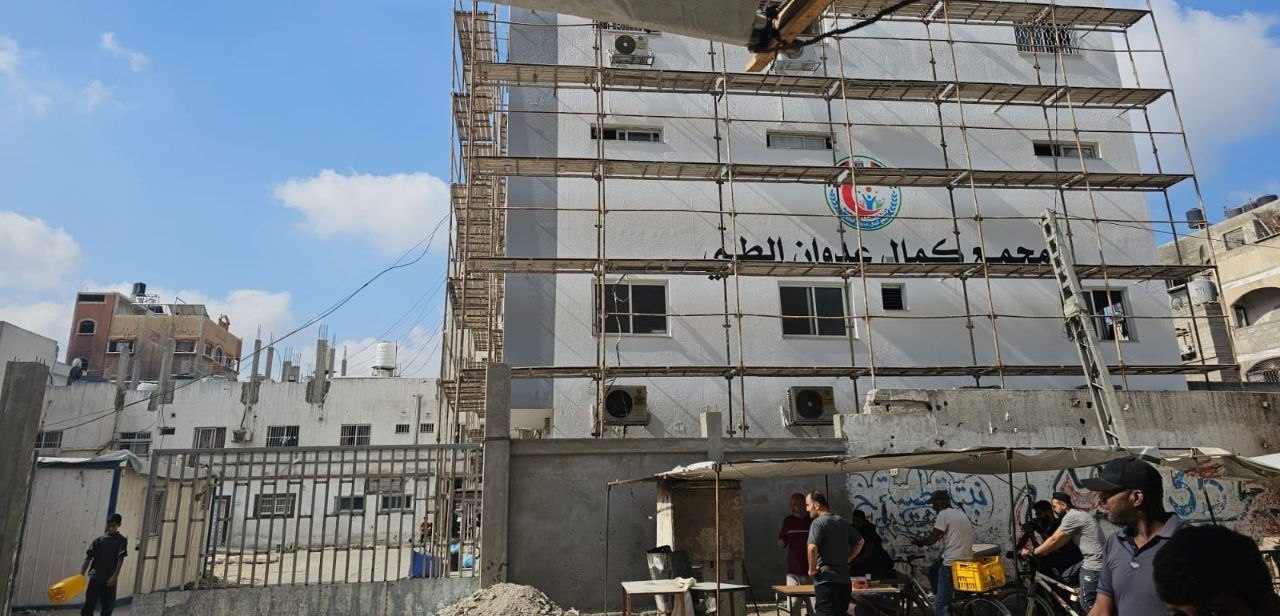
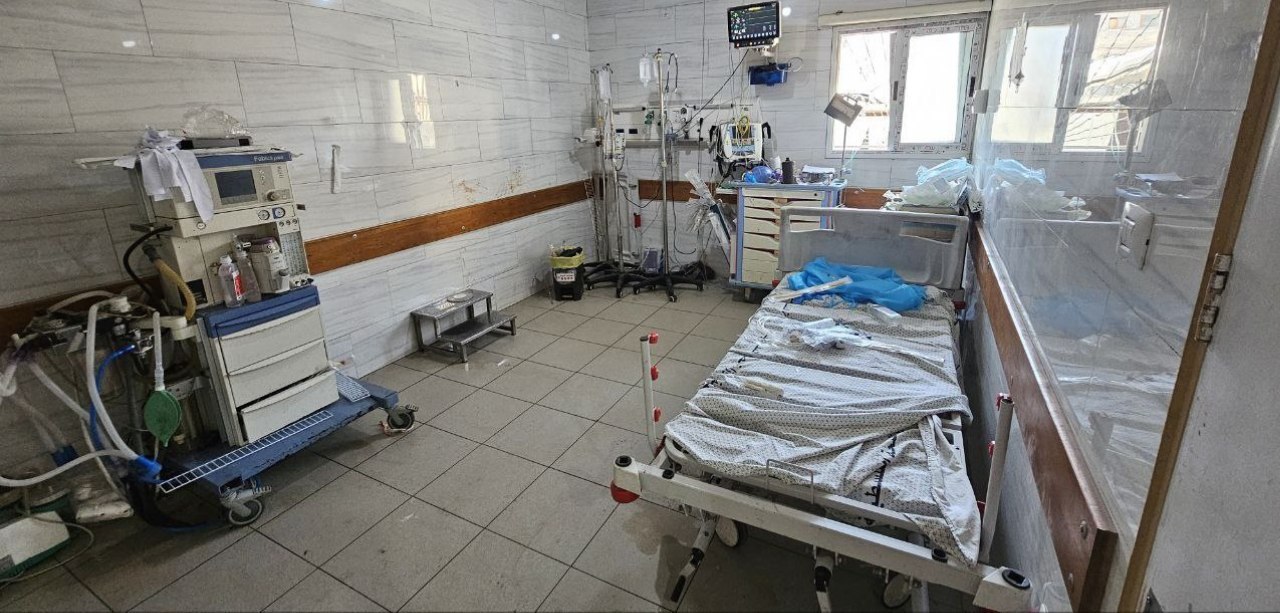
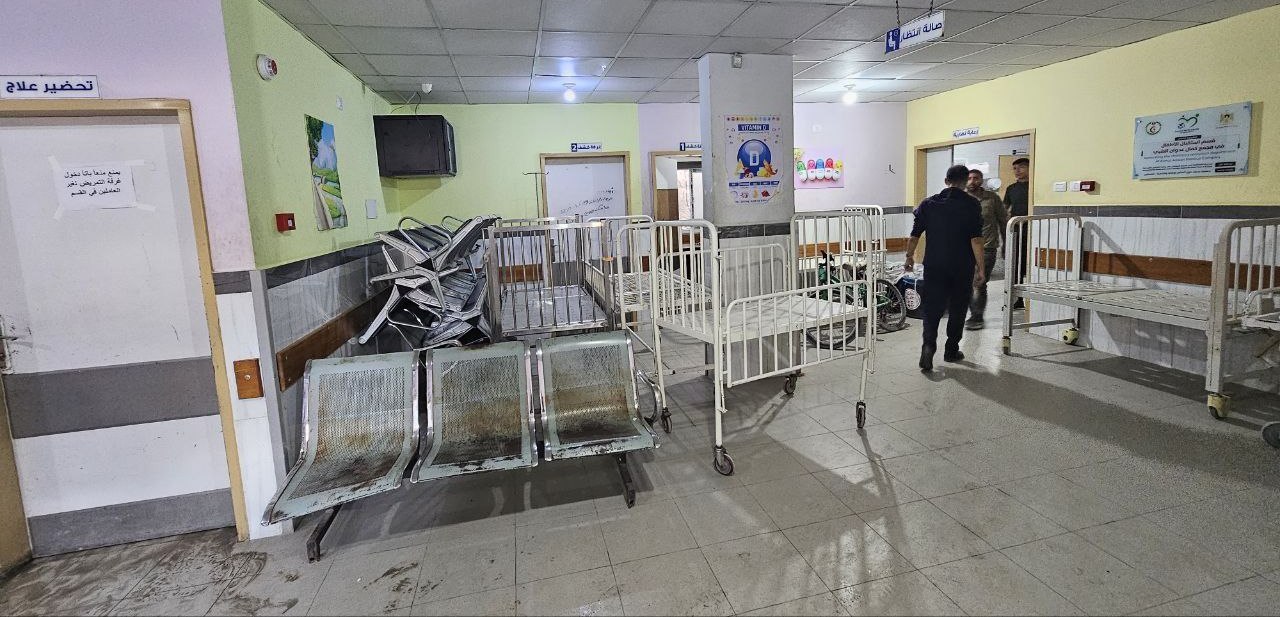
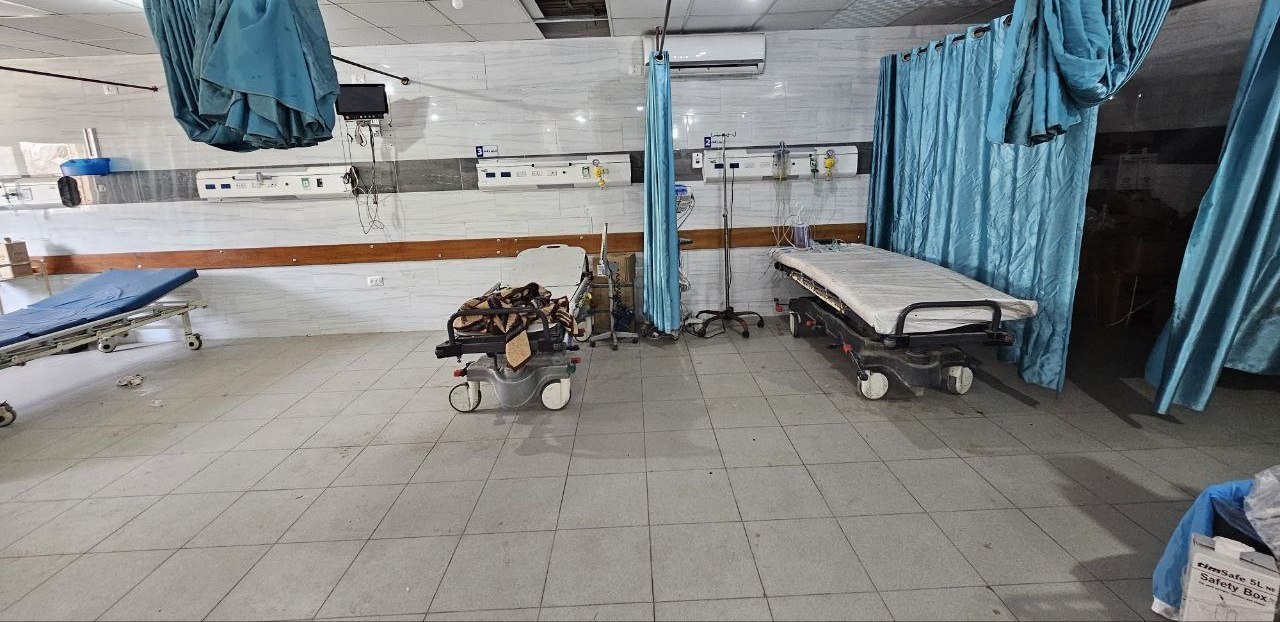
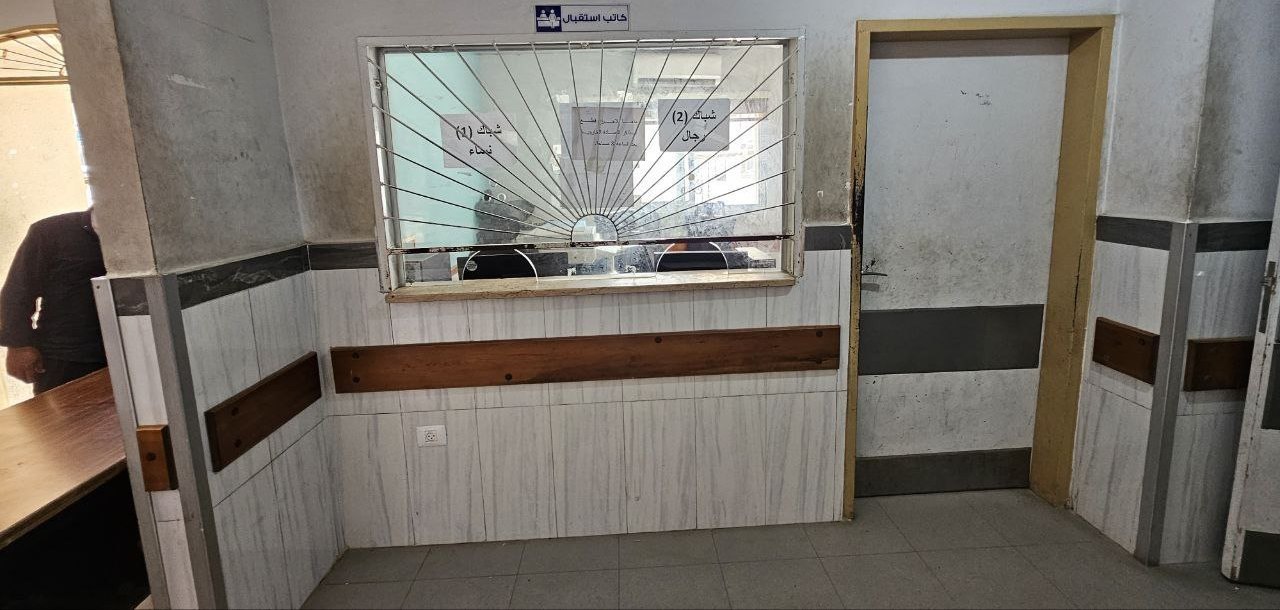
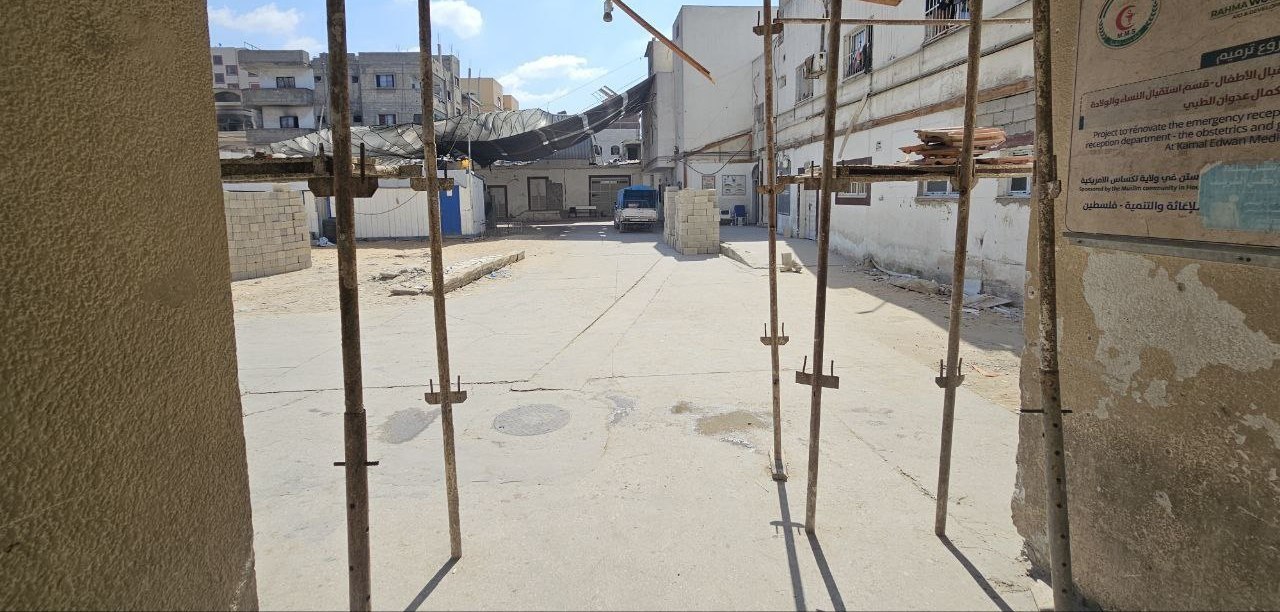
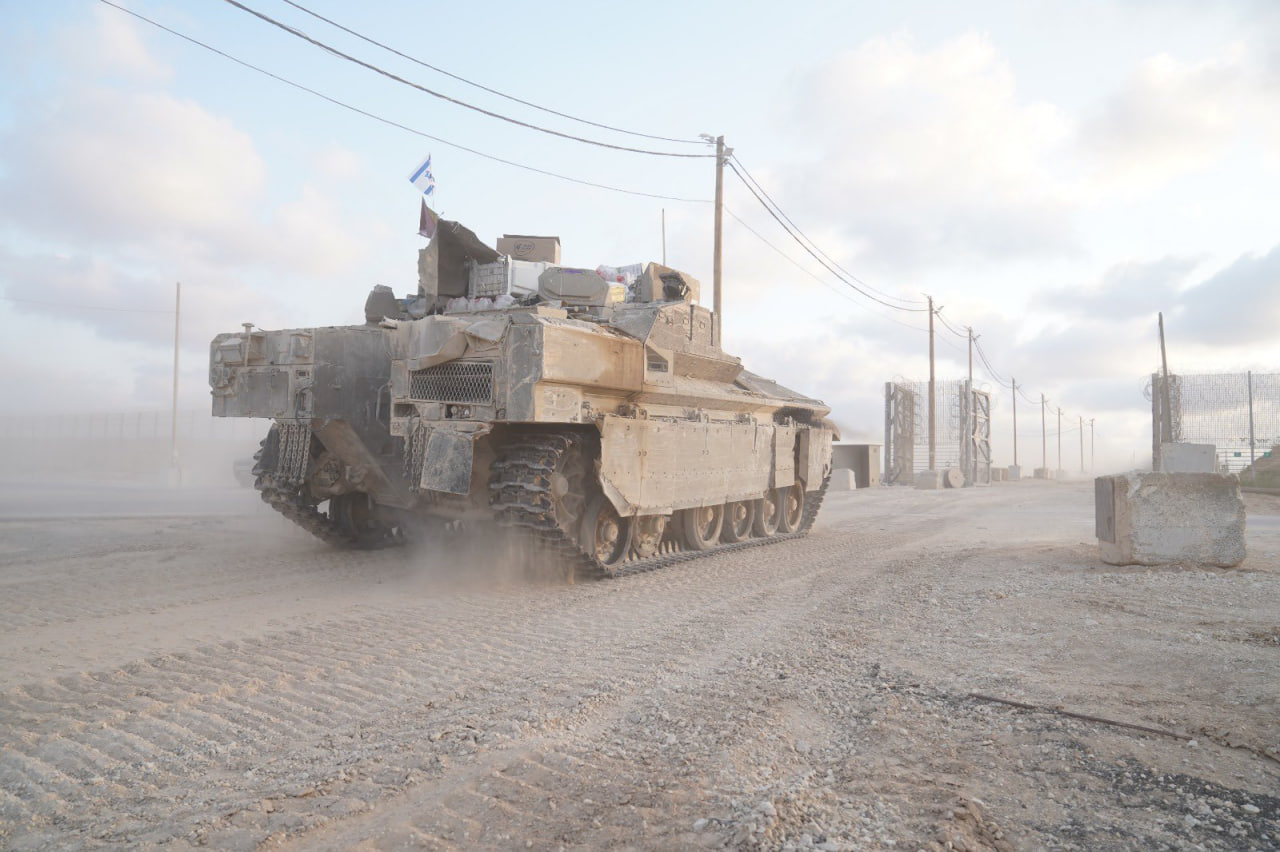
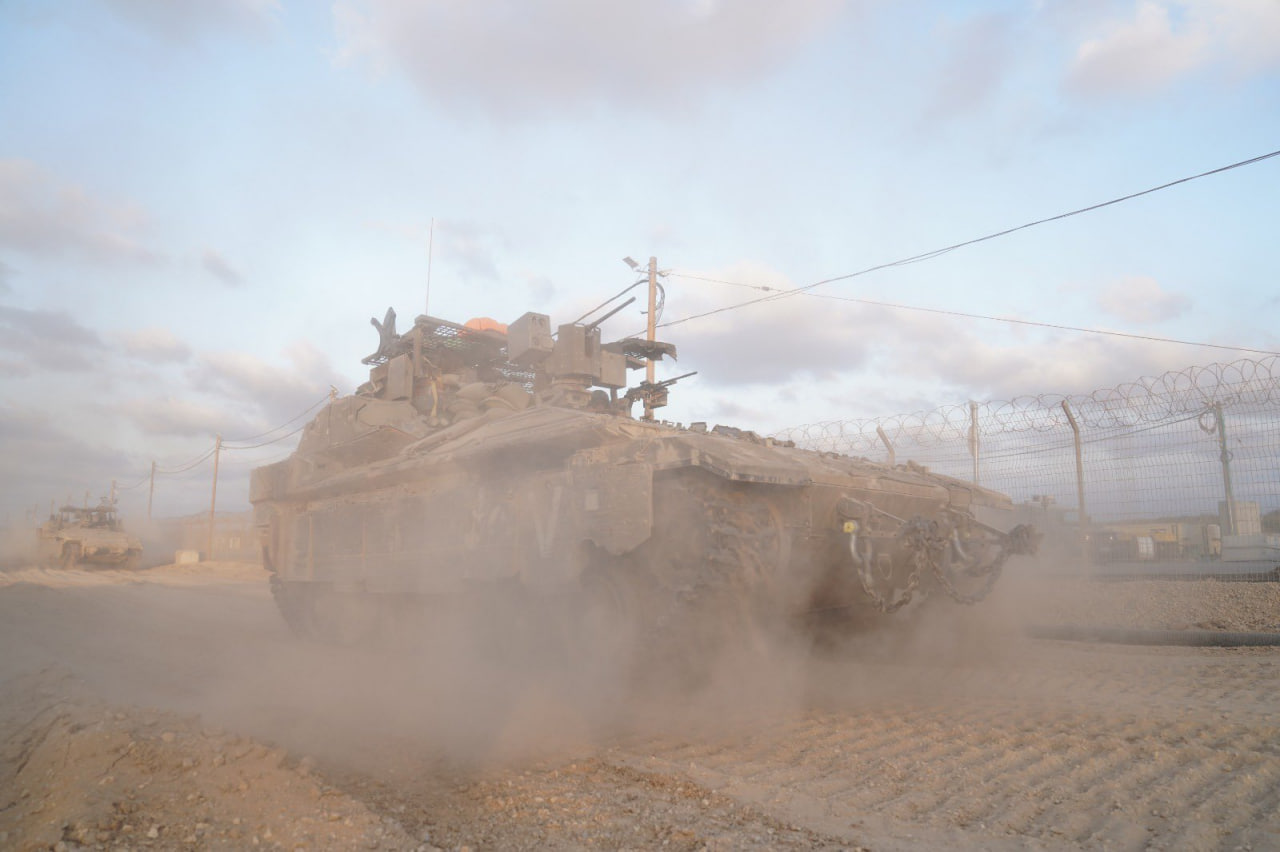
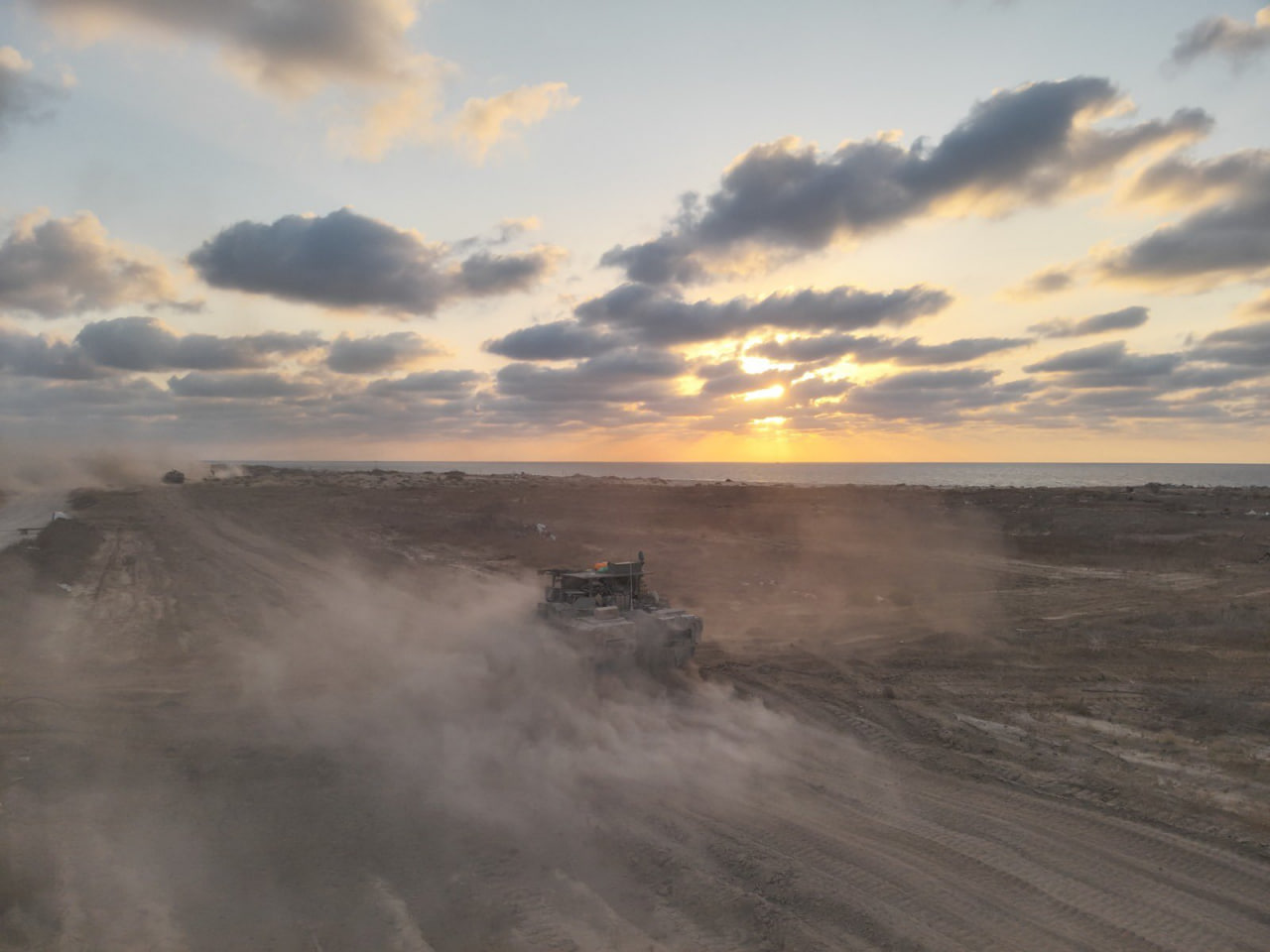
The Israeli regime’s troops, supported by artillery and under heavy air attacks, have begun their advances towards some areas in northern Gaza and in the first step of the operation occupied Kamal Adwan Hospital and its surrounding areas.
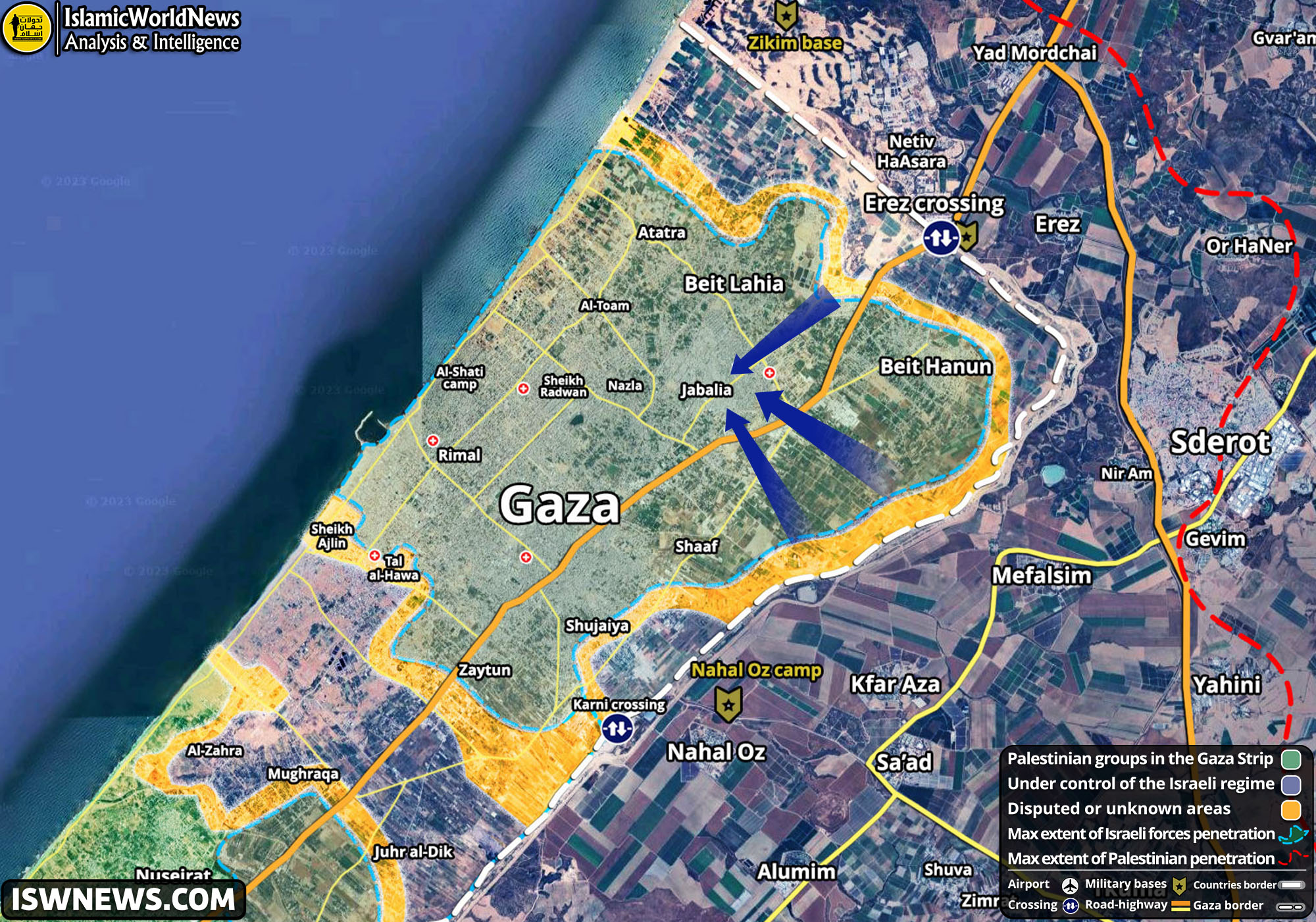
The Israeli army has Gradually expanded the scope of its military operations and dispatched its forces to the southern and eastern areas of the city of Jabalia. Advancing in the mentioned fronts, Israeli military forces have exploded and completely destroyed Palestinian homes with the aim of forcibly relocating them to the central and southern Gaza Strip. After the presence of Israeli troops in the south and east of Jabalia, the Israeli regime’s army focused on the western and northwestern areas of Jabalia.
Videos released by the Izz al-Din Al-Qassam Brigades, the military wing of the Palestinian resistance movement Hamas, show that clashes are currently taking place around Al-Saftawi Square and Al-Bahr Street in eastern Jabalia.
Latest military situation in the northern Gaza Strip – click to view full size
In recent days, Al-Qassam fighters targeted several Israeli army personnel, bulldozers, and tanks in the western fronts of Jabalia. Videos of some of these operations have also been released.
In the Beit Lahia front, clashes continue in the eastern and northern fronts. Over the past four days, Al-Qassam forces have targeted at least 11 Israeli troops, 2 Merkava tanks, one armored personnel carrier, and one bulldozer of the Israeli regime’s army in the outskirts of Beit Lahia. The Israeli military is trying to clear the path for ground forces to advance in this front through heavy air attacks.
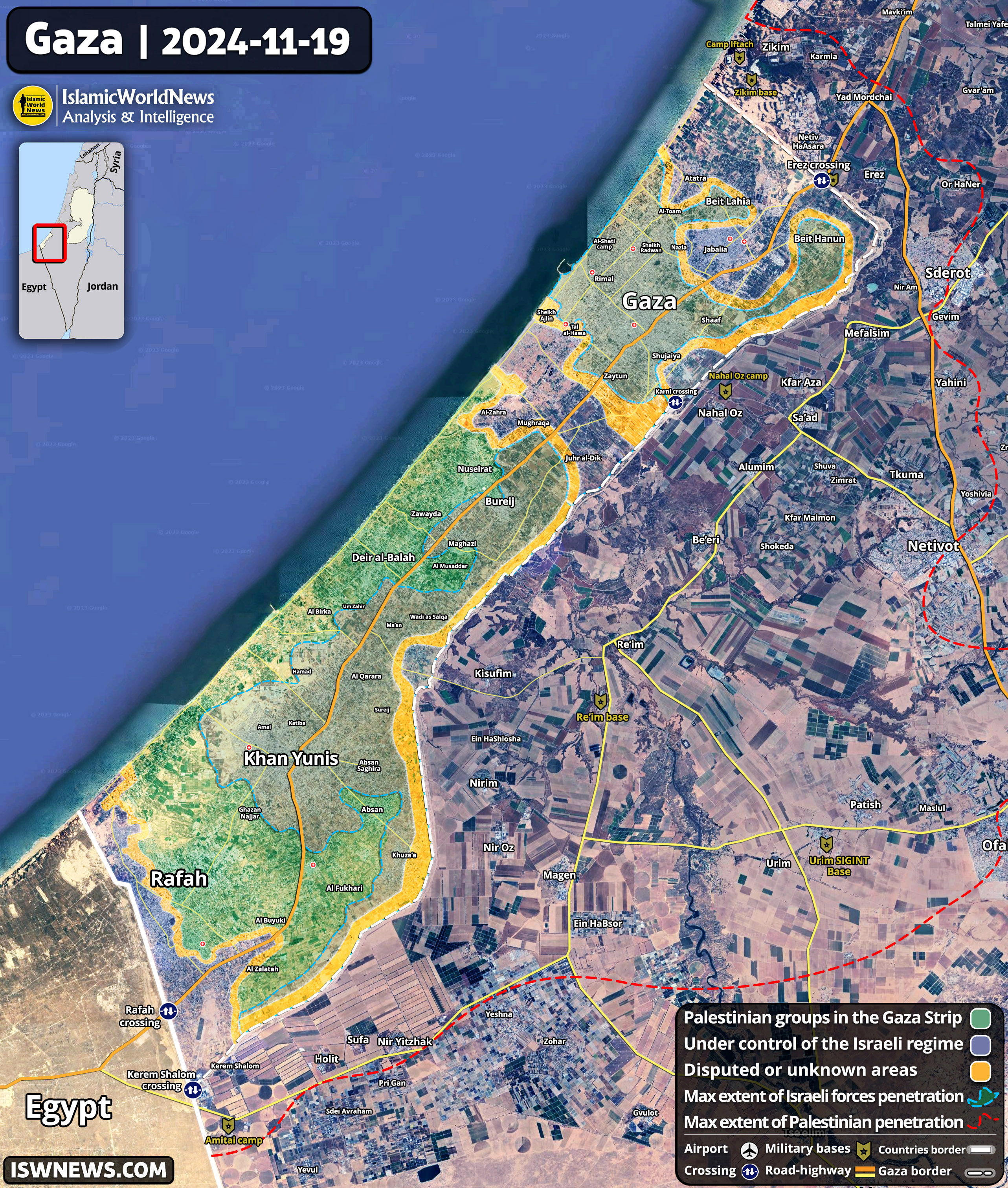
Following the recent military operations in northern Gaza, it seems that the Israeli regime’s army intends to expand the so-called buffer zone at the Gaza border to the middle of Gaza City. Previously, this buffer zone was located several kilometers from the Gaza border. The expansion of the buffer zone into the depth of the Gaza Strip effectively facilitates its permanent occupation by the regime’s forces.
The Israeli regime’s army has launched a large-scale invasion of the Gaza Strip since the evening of October 27, 2023. Since the onset of the Israeli operations in Gaza, 43,922 Palestinians have been martyred and 103,898 others have been injured. On the other hand, the number of casualties reported by the Israeli regime since the initiation of the ground assault on the Gaza Strip has reached 379 military personnel.
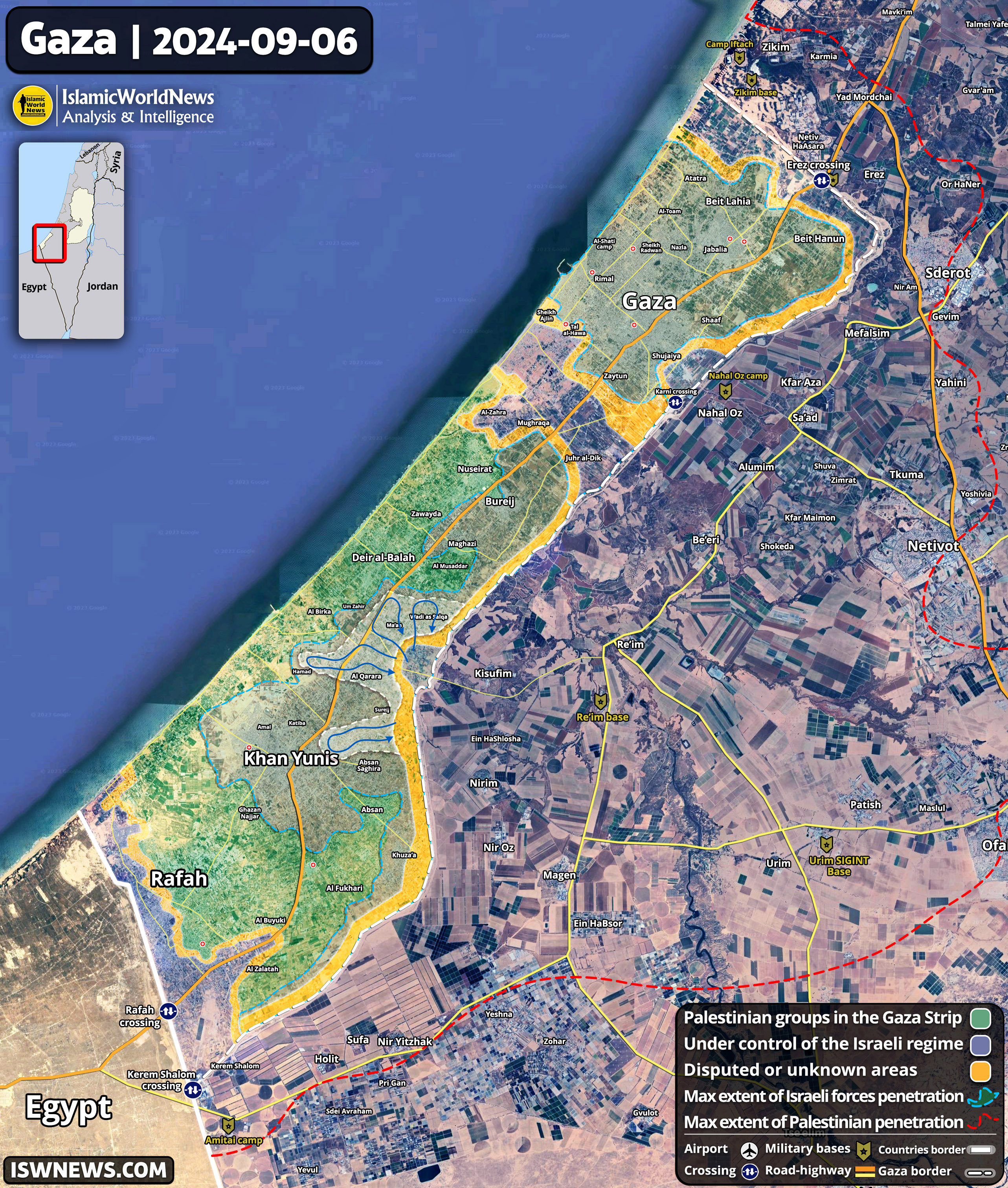
Latest military situation in the Gaza Strip – click to view full size
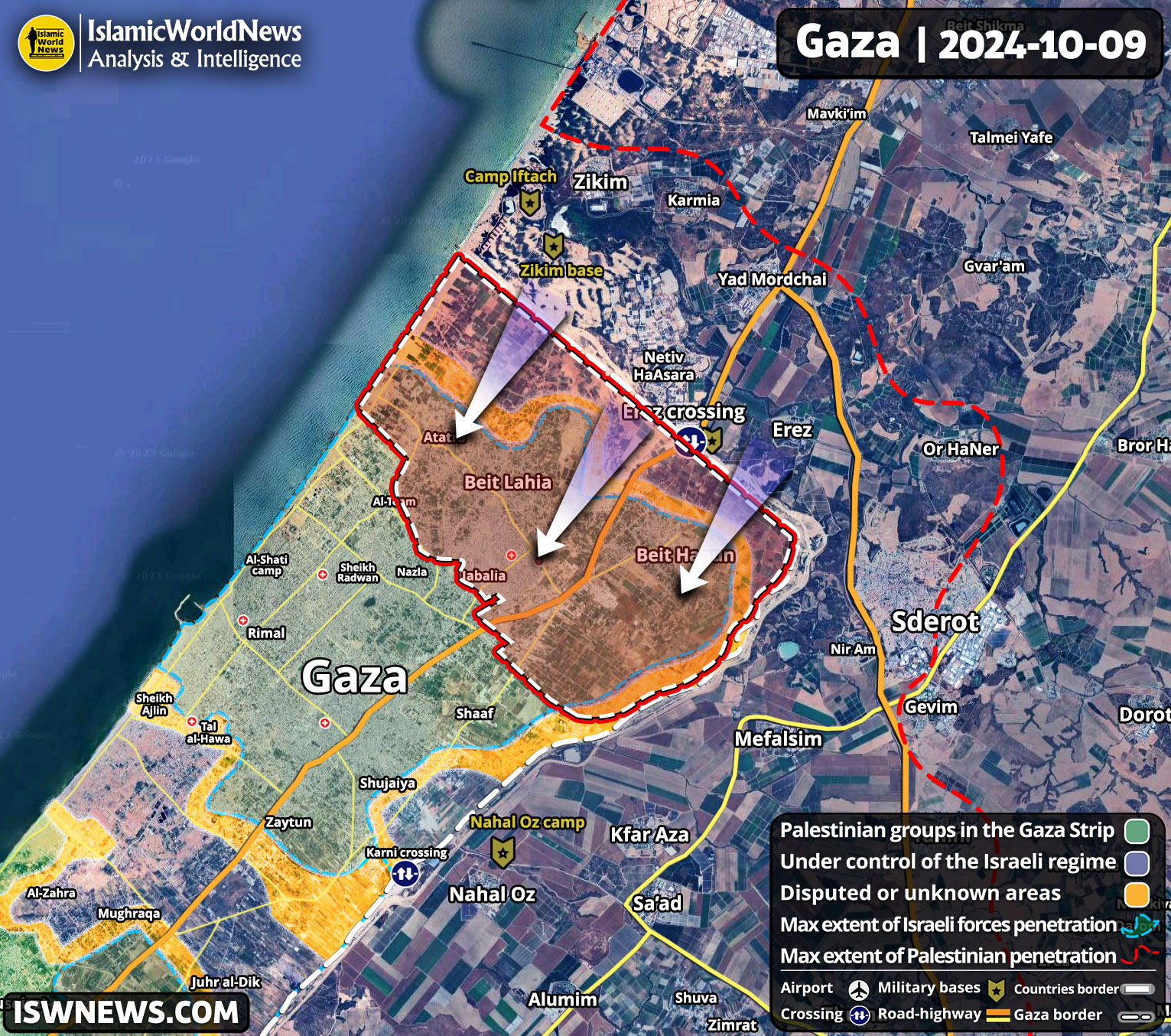
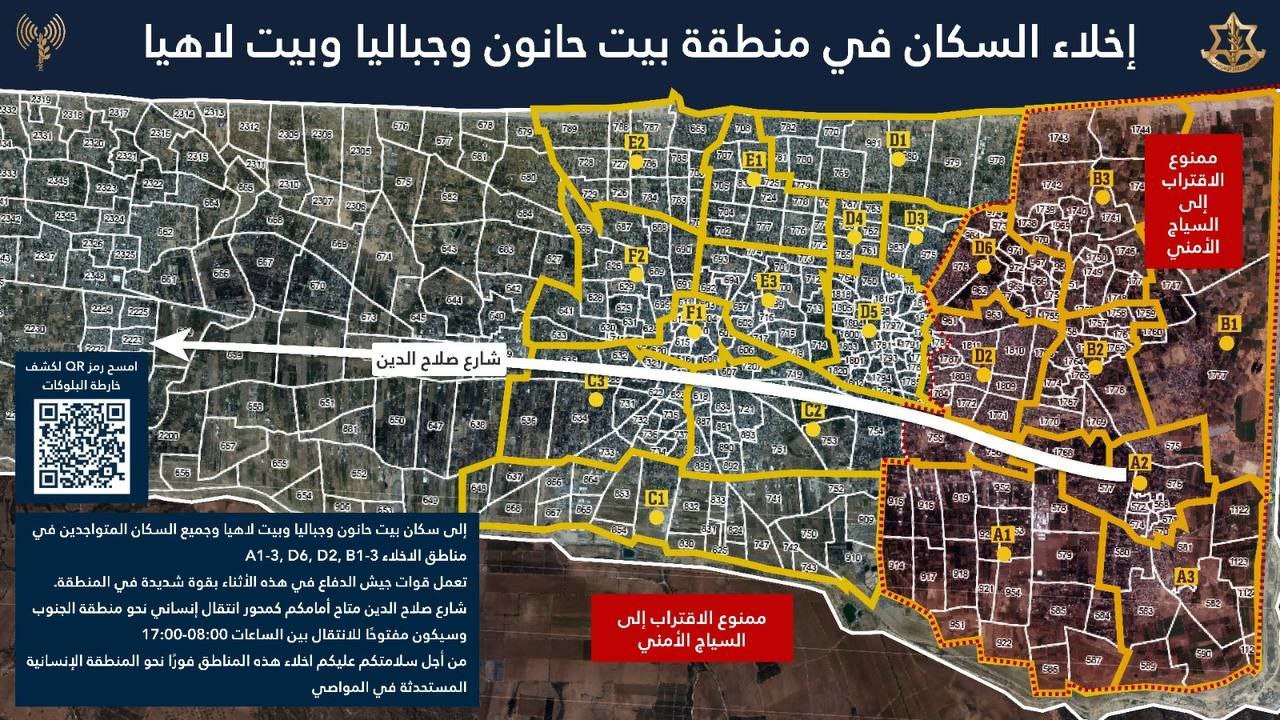
According to the statement, residents of Beit Hanoun, Beit Lahia, and Jabalia cities have been asked to leave these areas and move towards the southern regions of the Gaza Strip. The mentioned areas are expected to witness air and ground attacks by the 62nd Infantry Brigade of the occupying regime.
The spokesperson for the Israeli military announced three days ago that the 162nd Infantry Brigade would head to the city of Jabalia after accomplishing its mission in the city of Rafah and would kick off military operations in this area.
In addition, evacuation orders have been issued for Kamal Adwan, Indonesian, and Al-Awda hospitals as well. Doctors and medical staff at these health centers are forced to leave the area; otherwise, there is a risk that they may experience the massacre, which had taken place at Al-Shifa hospital by the Israeli regime’s forces.
Suspension of Kamal Adwan Hospital
The latest information on the battlefield indicate that the Israeli army has completely blocked the Abu Sharakh intersection; therefore, the occupying forces have completed the siege of the Jabalia camp, and the only exit route for civilians has been closed.
The areas of Al Difa’a Al Madani (Civil Defense), Al-Tawam, and Bir al-Najjah are also under air and artillery strikes by the Israeli military, and dozens of Palestinians’ homes have been targeted in recent hours. Moreover, neighborhoods and areas to the east, north, and west of the Jabalia camp have been reported to be under heavy artillery attacks.
The warning announcement released by
Following the onset of the Israeli ground assault in southern Lebanon, this is the fourth time that the Tel Aviv regime has issued a statement and conducted military operations in the Gaza Strip. This move indicates that despite the battle in southern Lebanon, the regime’s focus has not shifted from the Gaza Strip; rather, it is trying to exit as quickly as possible from the quagmire of the prolonged confrontation it is engaged in Gaza.
The recent attacks on the northern Gaza Strip may be the first major step towards breaking this deadlock that the Israeli regime is still facing in the besieged area. It appears that the Israeli army plans to expand the so-called buffer zone at the Gaza border to halfway into the middle of the city of Gaza. Earlier, that buffer zone was located a few kilometers from the Gaza border with the occupied territories of Palestine. The expansion of the zone into the depths of the Gaza Strip is expected to effectively pave the way for the permanent occupation of the strip by the Tel Aviv regime.
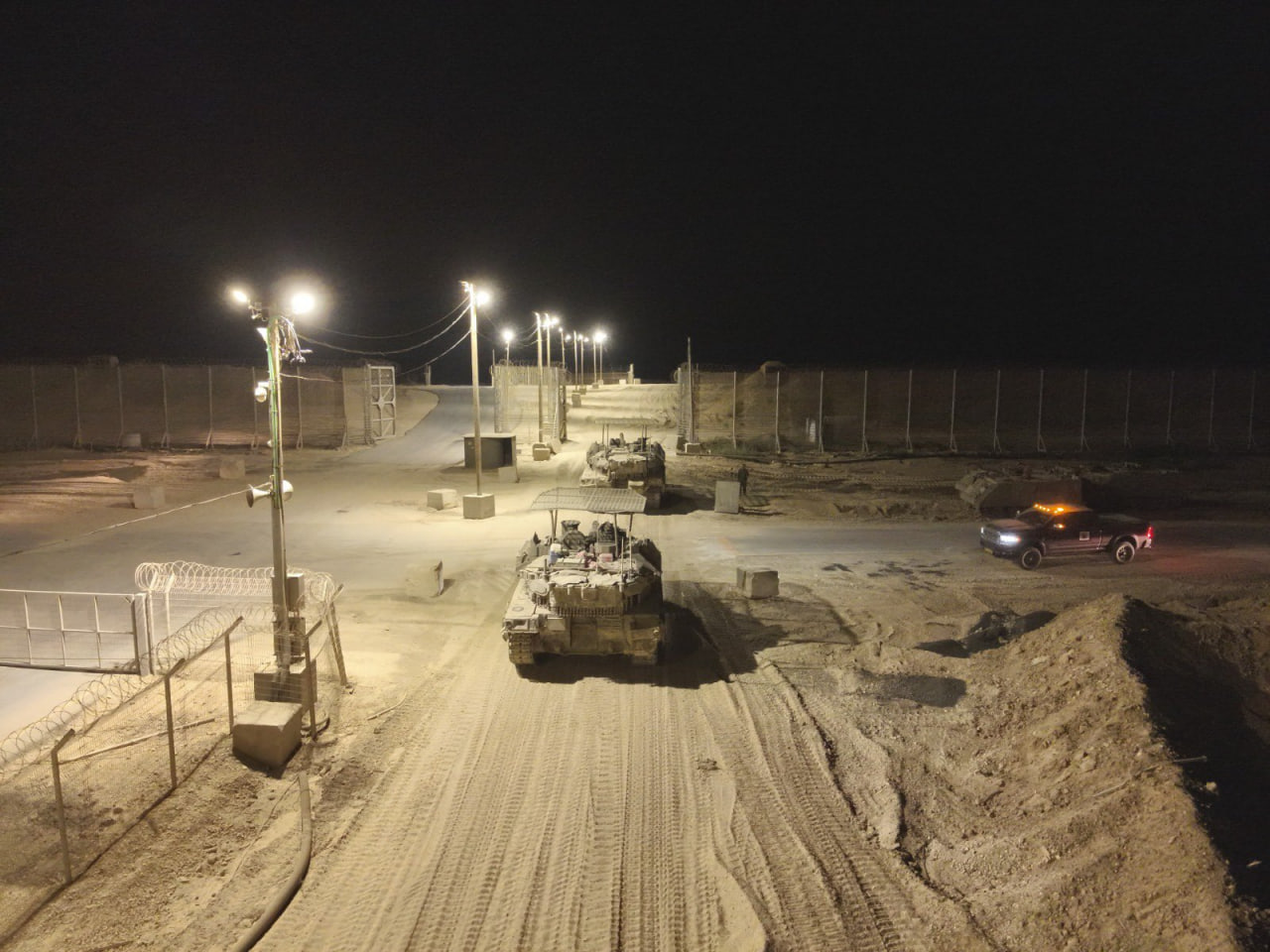
A spokesman for the Israeli military stated that the 162nd Division of the regime’s army (Ha-Plada, also known as the Steel Formation) moved to Jabalia after completing its mission in Rafah city and initiated military operations aimed at destroying the infrastructure of the Palestinian resistance in that area.
According to the Israeli military, the 401st and 460th Brigades of the 162nd Division are currently engaged in confrontations against resistance groups in the Jabalia city.
Ground operations in Jabalia kicked off just hours after intense aerial and artillery attacks by the Israeli regime’s military on that region.
Israel’s 162nd Division in Jabalia
It is worth mentioning that the 162nd Division left the axis of Rafah city after five months and transferred responsibility for that area to the Gaza Division of the Israeli army.
The Israeli army’s ground incursions in Jabalia take place after multiple previous attacks on the area, in which the regime claimed to have completely demolished the infrastructure of the Palestinian resistance there.
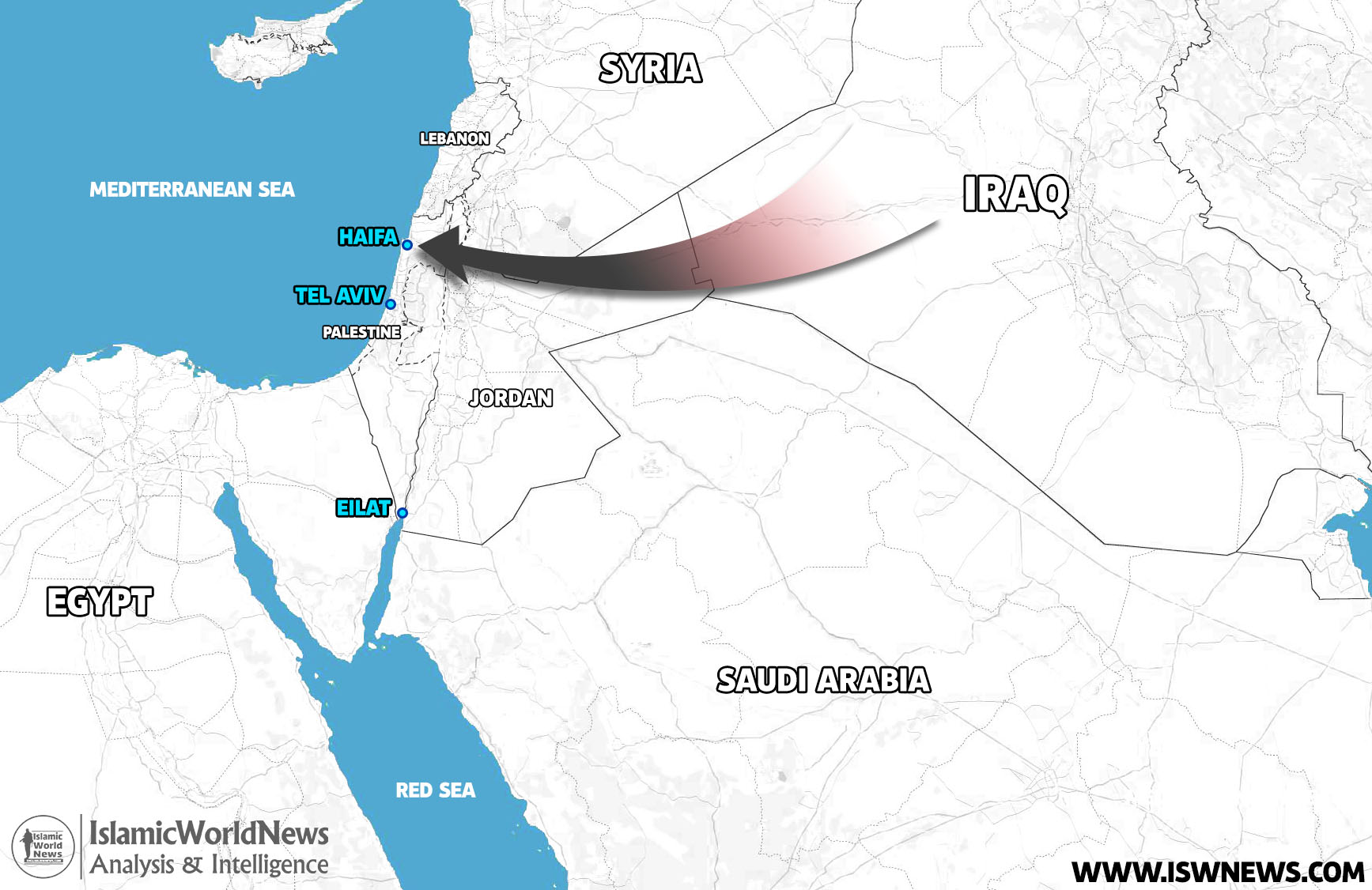
The IRI statement said: “To help and support the people of Gaza and in response to the crimes committed by the usurping regime against Palestinian civilians, including women, children, and the elderly, the fighters of the Iraqi Islamic Resistance attacked Haifa with a suicide drone. The Islamic Resistance emphasizes that the operation to destroy the enemy’s bastions will continue at an increasing pace.”
This is the 144th attack of the Iraqi resistance against the positions of the Israeli regime after the onset of the genocidal war on Gaza.
The Islamic Resistance in Iraq carried out tens of attacks on the Israeli-occupied territories as of April 25, 2024.
The Iraqi resistance group along with other resistance movements in Lebanon and Yemen have called for the end of Israeli aggression against the Gaza Strip and the delivery of aid into the besieged area.
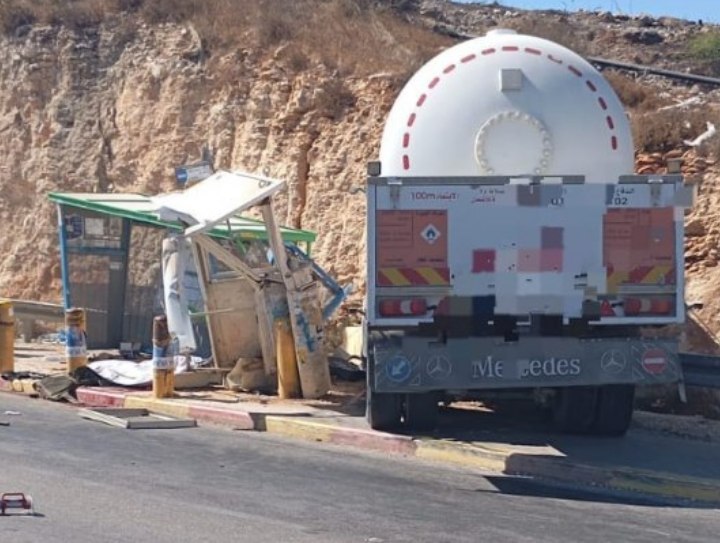
Hayel Issa Abdel Jabbar Dhaifallah, A 58-year-old Palestinian tanker driver from the Rafat town of Ramallah, rammed into the Israeli army outpost in the Giv’at Assaf at high speed and ran over the Israeli troops. As a result of this retaliatory operation, one Israeli trooper was killed and another was injured.
Minutes after the incident, local sources reported the martyrdom of the Palestinian attacker, but the Israeli regime’s Channel 14 TV reported that the executor of the operation was not martyred but was injured and taken to a hospital in al-Quds.
The moment truck rammed into an Israeli army outpost in the Giv’at Assaf at high speed and ran over the Israeli soldiers
The Palestinian resistance movement Hamas congratulated the heroic operation near Ramallah, underlining that today’s operation was a natural response to the atrocities committed by the Israeli enemy in the Gaza Strip and the West Bank.
It is worth noting that three Israeli occupiers were killed as a result of an armed operation by a Jordanian driver at the Al-Karameh border crossing, located in the border between Jordan and Israeli-occupied territories on September 8.
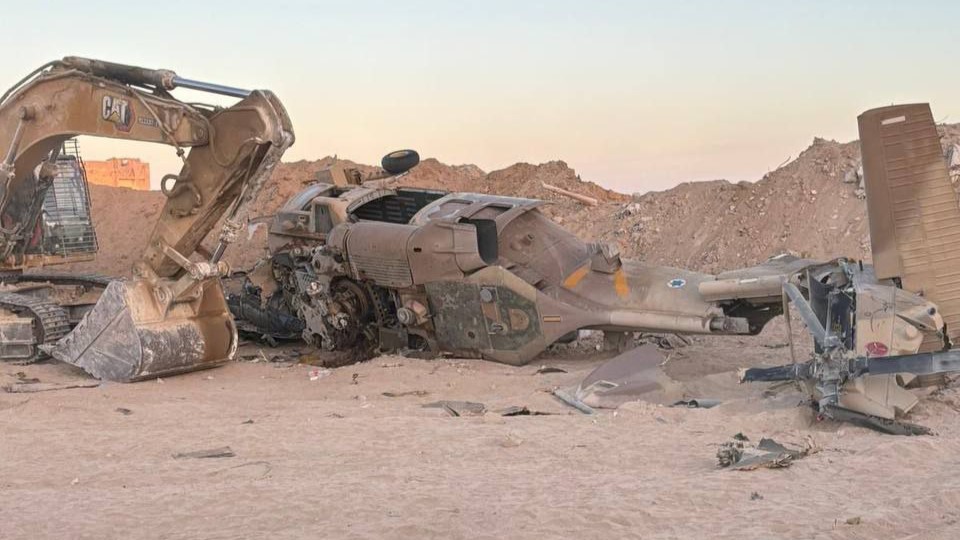
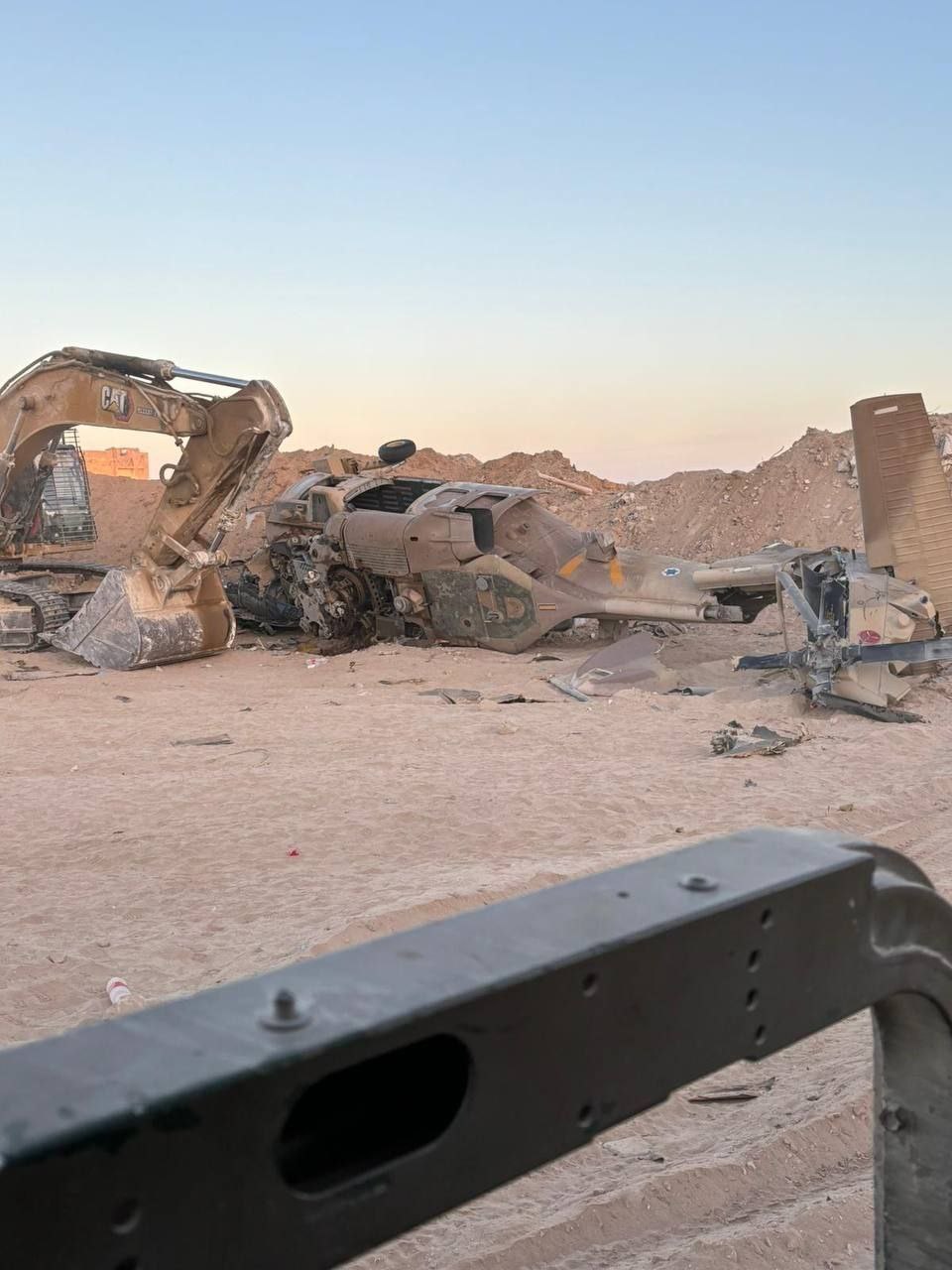
According to an initial probe by the Israeli air force, a UH-60A Yanshuf from the 123rd Squadron flew to Rafah with a Unit 669 medical team late on September 10 to evacuate a combat engineer seriously wounded in fighting in the area.
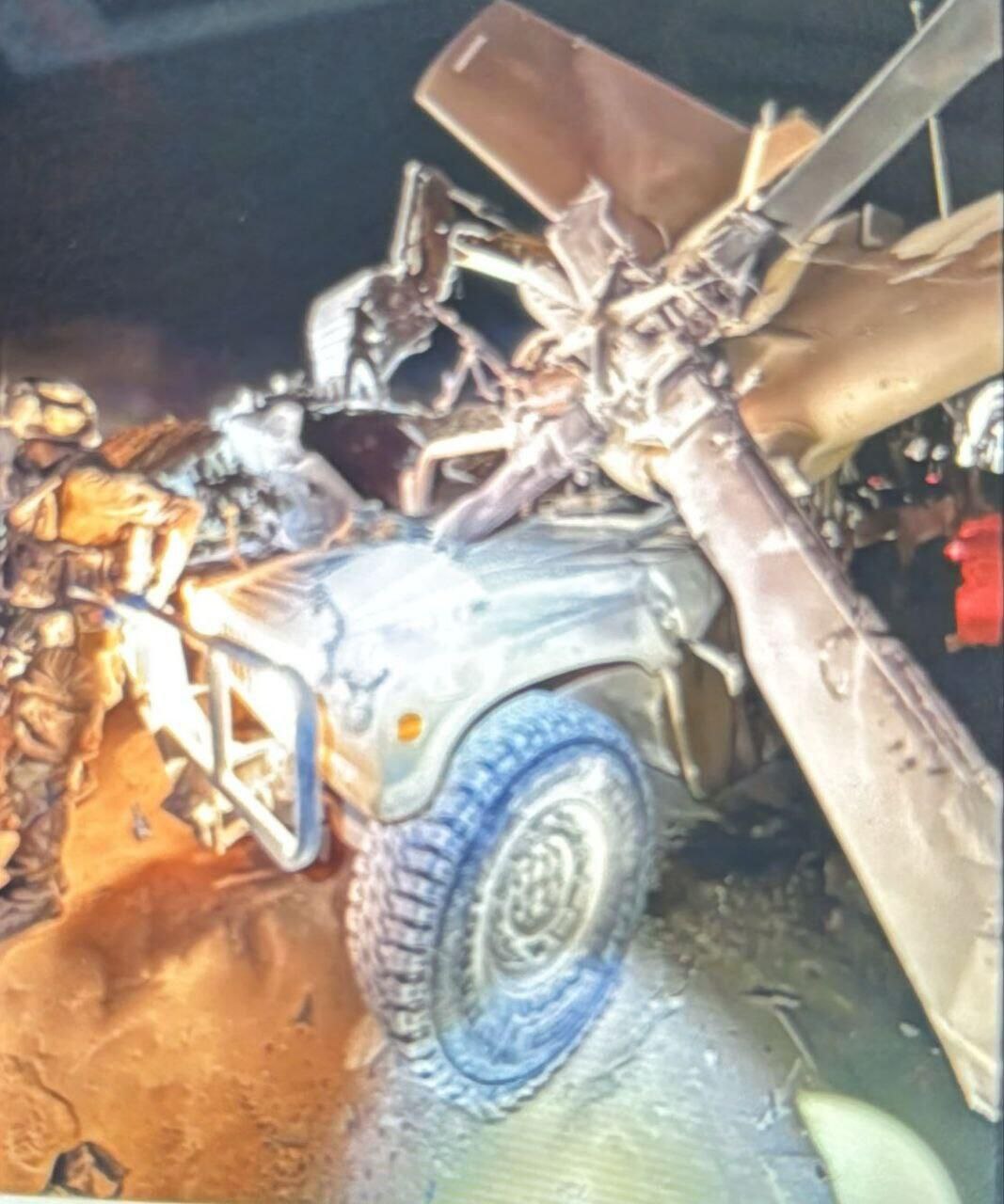
During the final landing stage inside an Israeli army encampment in Rafah, the helicopter impacted the ground instead of touching down correctly. The probe alleges that the helicopter was not hit by enemy fire, and the crash occurred moments before it was supposed to land, meaning it did not fall from a significant height.
The helicopter was still heavily damaged in the crash as evident by video footage that was posted to social networks later in the day.
Scene of the accident
As a result of the crash, two soldiers were killed and another eight were taken to hospitals, four of them in serious condition. Among the four seriously injured was the combat engineer who was injured separately.
Israeli forces’ casualties as a result of a helicopter crash in the southern Gaza Strip.
Israeli air force Chief Maj. Gen. Tomer Bar ordered a probe to determine why the helicopter impacted the ground in the encampment instead of landing correctly.
This was the second time Israel has acknowledged losing a helicopter since the start of the war on the Gaza Strip last October. The first helicopter, a S-65C-3 Yas’ur, was destroyed during a battle with fighters from the Hamas Movement in the Israeli settlement of Be’eri near the Palestinian enclave in the very first days of the war.
Hamas and other armed factions have not yet commented on the helicopter crash. More information on the so-called incident could surface in the upcoming few days.
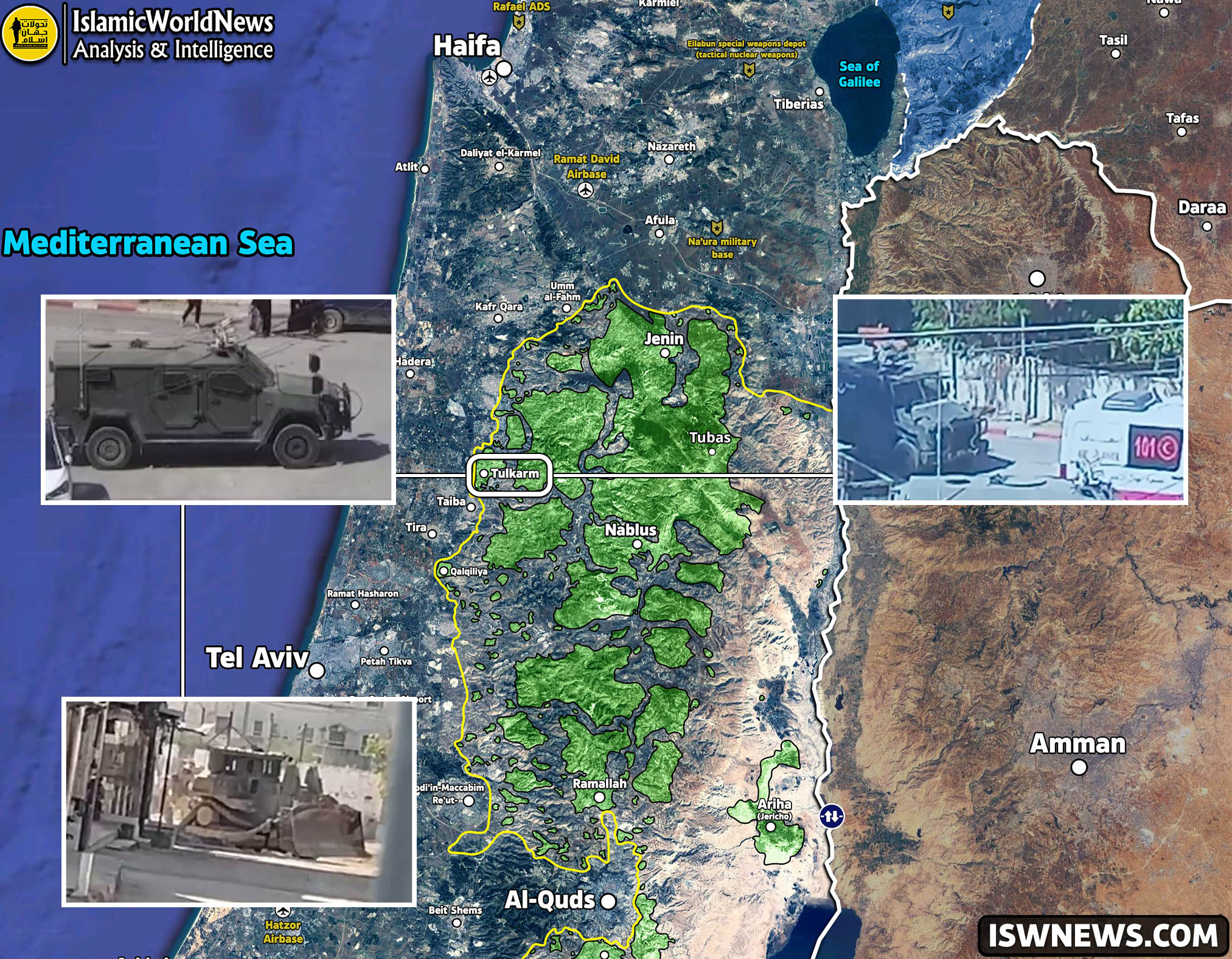
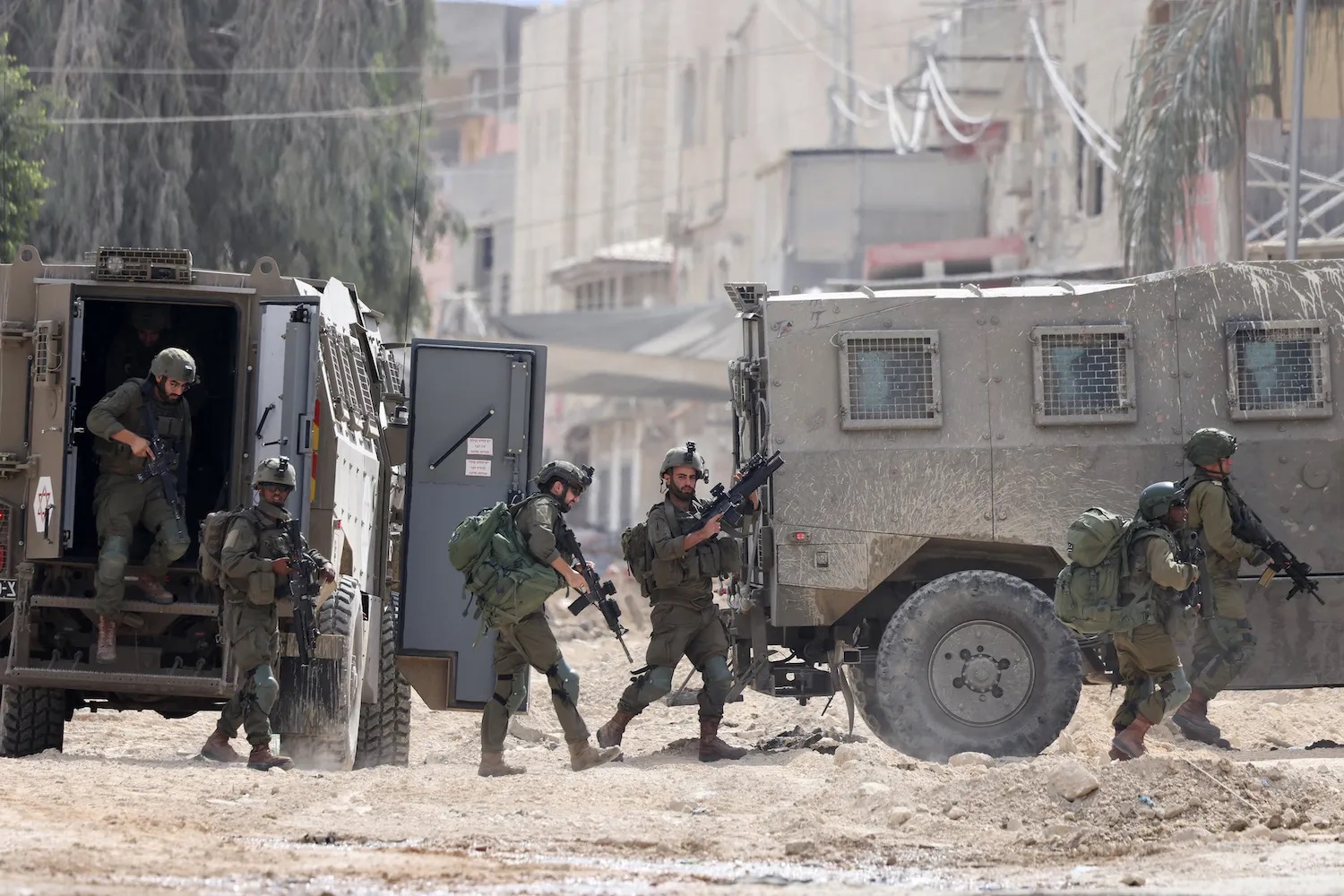
The Israeli forces launched a new operation in the Tulkarm city of the West Bank on September 10.
Following the military raid on the Palestinian city, resistance fighters started reacting to the aggression by the occupying forces; thus, armed clashes took place in this region.
The Al-Aqsa Martyrs Brigades (AMB), a coalition of Palestinian resistance fighters in the West Bank, announced a direct clash with the Israeli forces in Tulkarm.
The Al-Quds Brigades, the armed wing of the Palestinian Islamic Jihad (PIJ), also issued a statement declaring that its fighters exploded roadside bombs on the way of an Israeli military convoy, and targeted an infantry of the regime’s army.
The Israeli army issued a statement declaring that they kicked off an assault against the resistance groups in Tulkarm as part of a military operation in the occupied West Bank.
According to the Palestinian Red Crescent Society (PRCS), a Palestinian girl has been shot dead by Israeli troops and four others have been wounded so far.
The latest statistics showed that confrontations and exchanges of fire continued in the city, and blasts and shootings can be heard from some areas in Tulkarm.
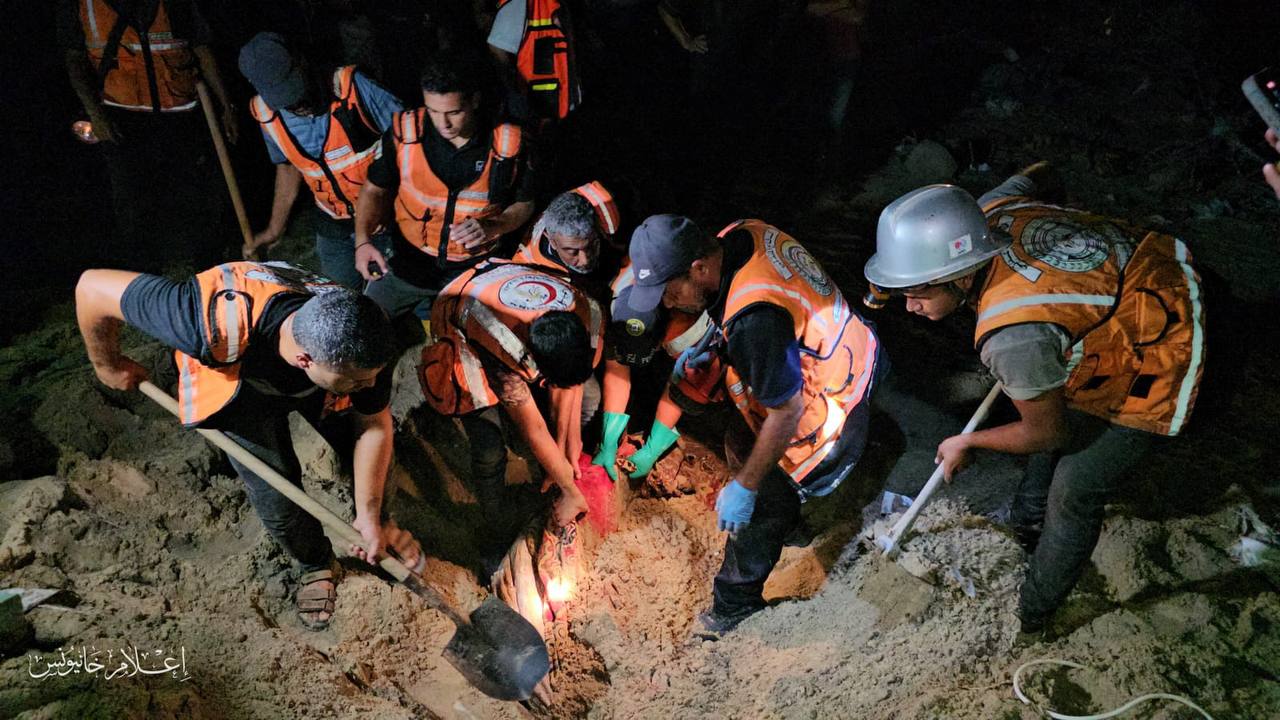
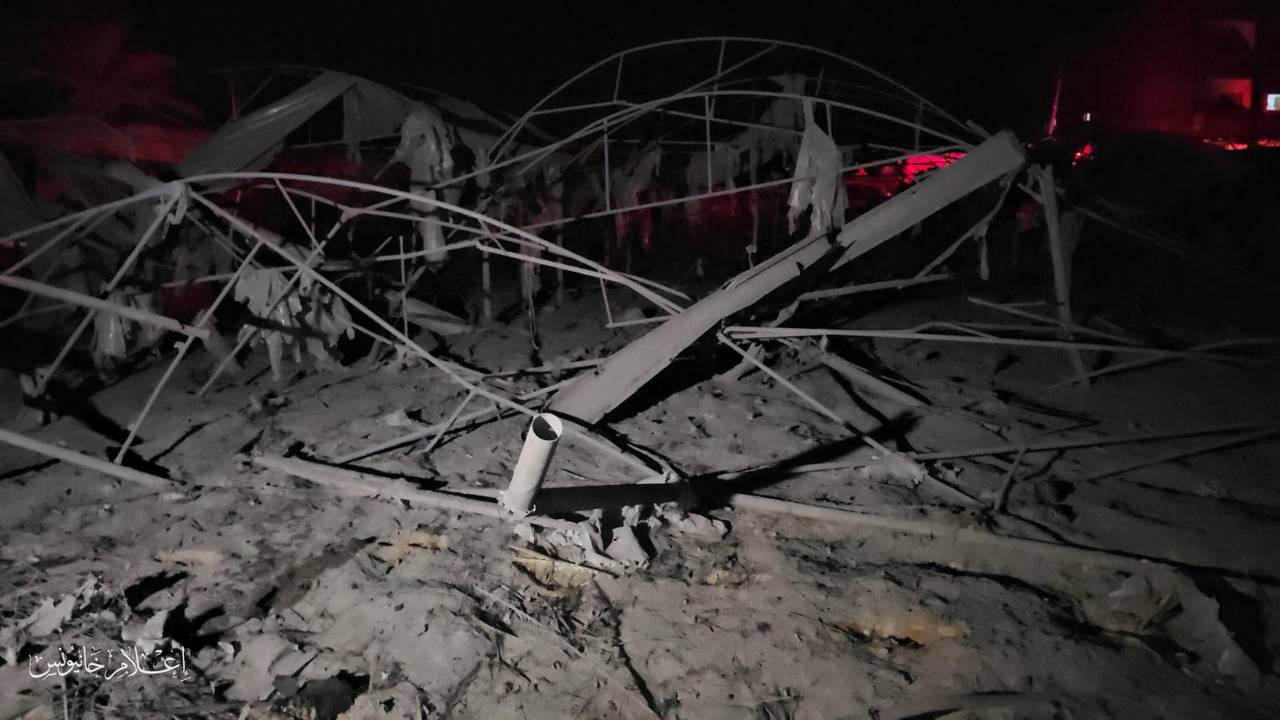
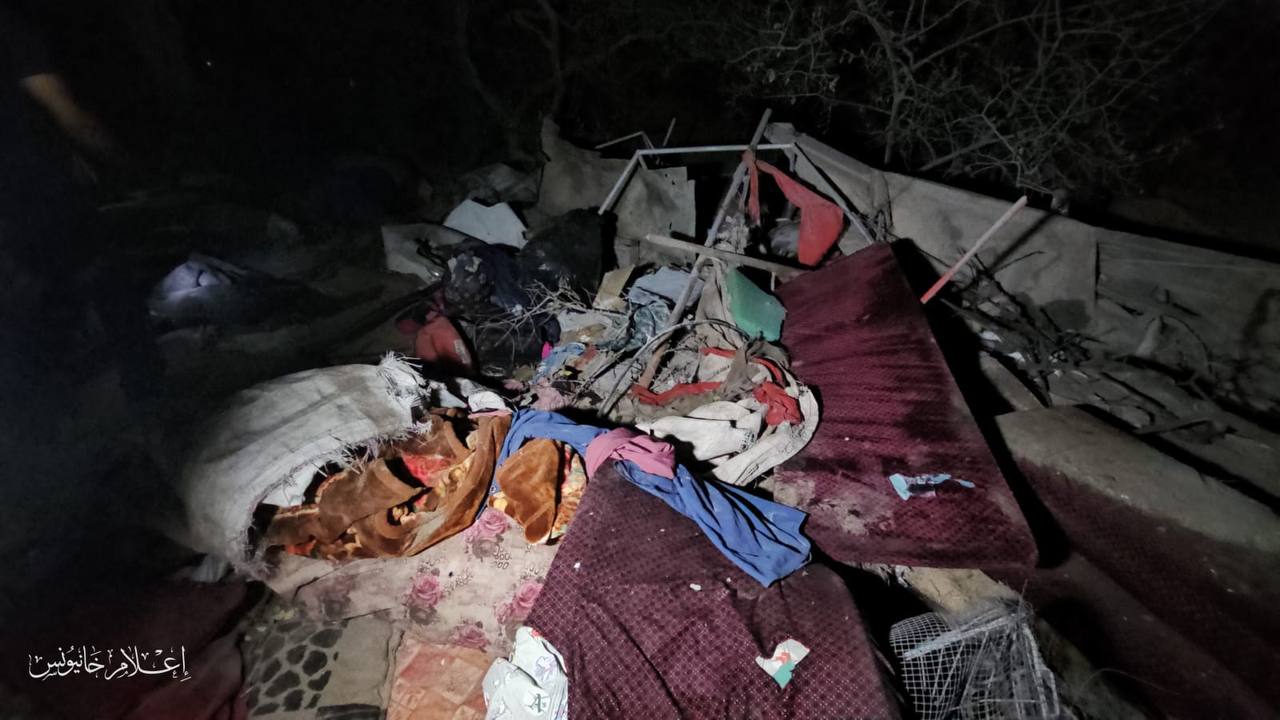
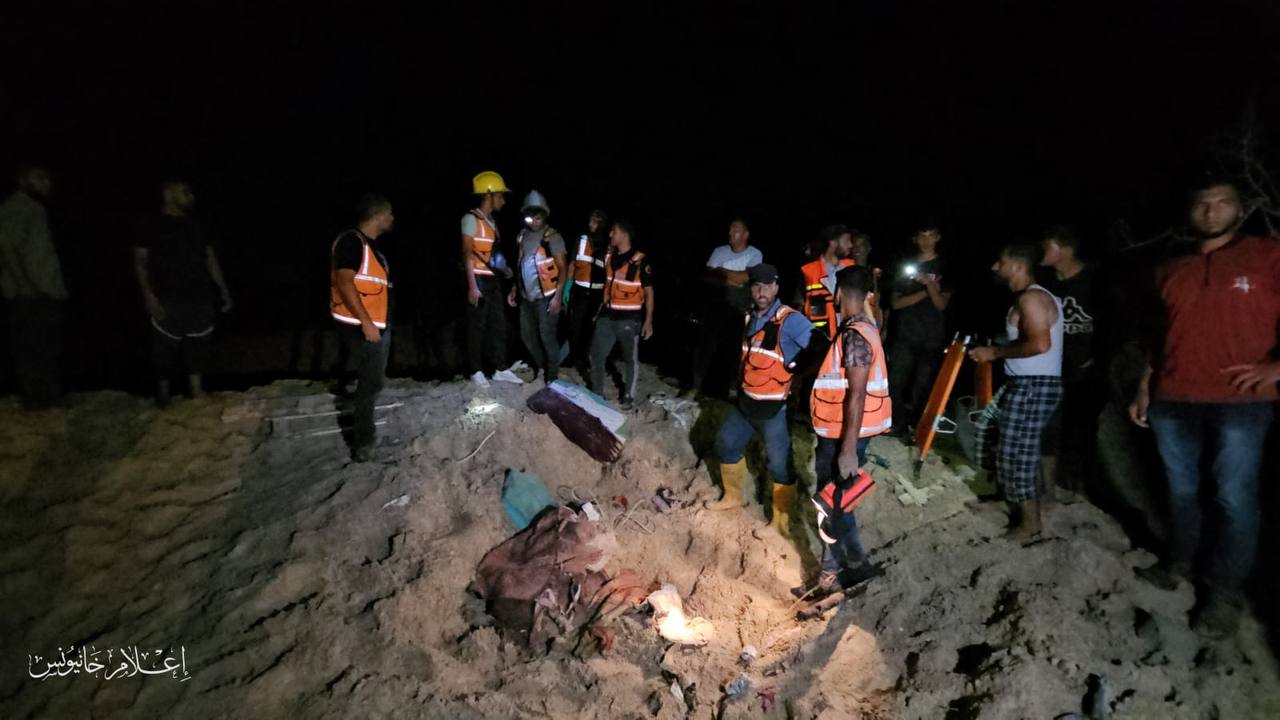
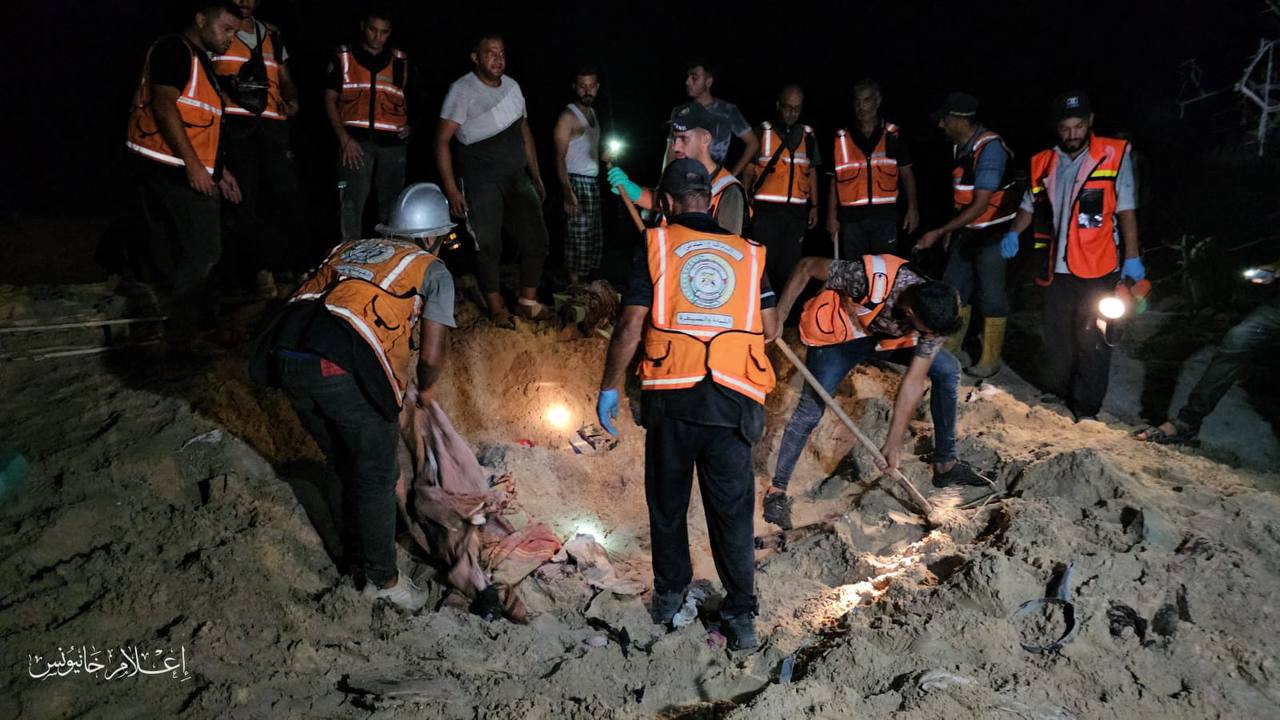
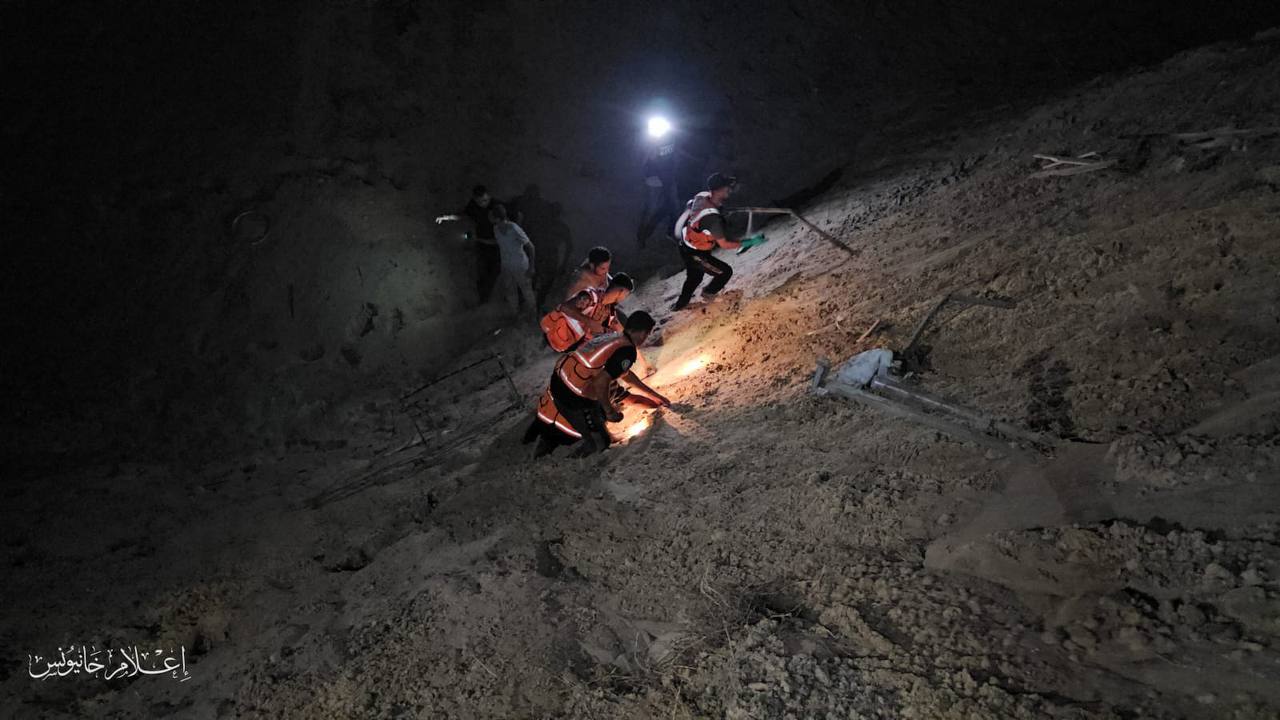
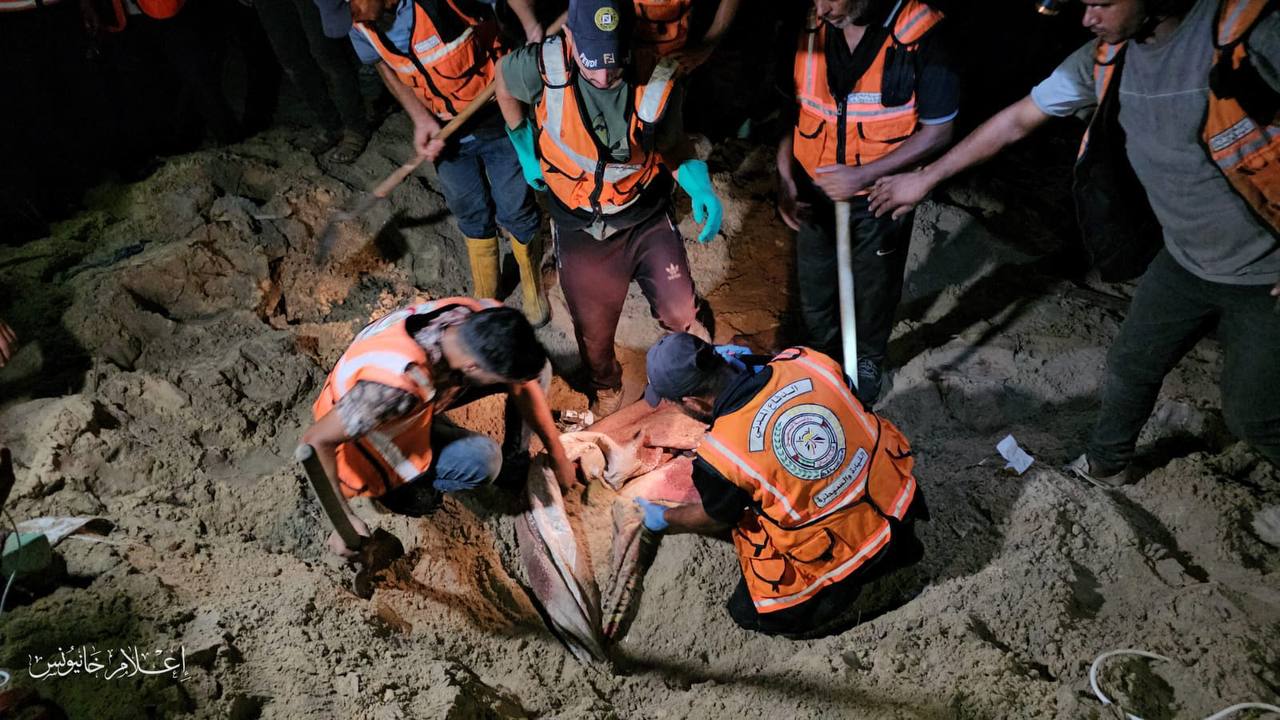
In a horrific crime, this morning, the Zionist army bombed the tents of Palestinian refugees in the Mawasi area of Khan Yunis city in the south of the Gaza Strip.
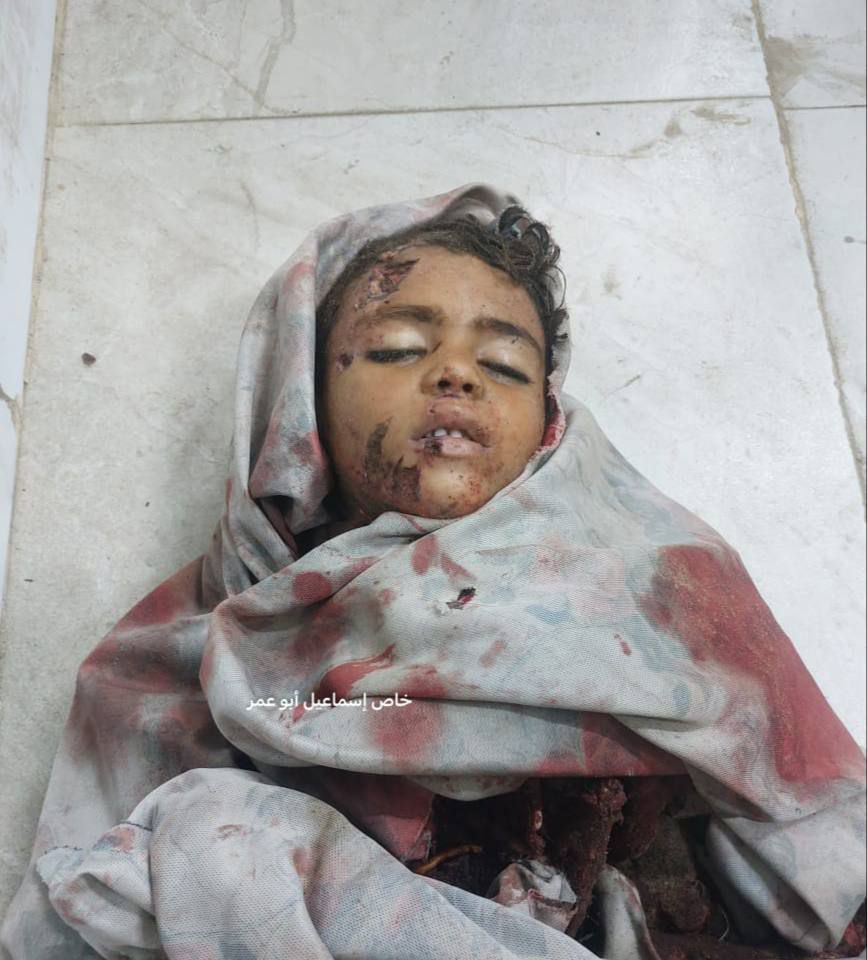
As a result of this heinous crime, at least 40 Palestinians were martyred and more than 60 others were wounded. A large number of martyrs and injured are women and children.
Preliminary investigations show that the Israeli army used 2,000-pound MK-84 free-fall bombs in this attack.
Aftermath of Israeli strikes in Mawasi
Hours after the attack, the Zionist regime claimed that the target of this attack was the senior commanders of Kataib al-Qassam, the military wing of Hamas, and as a result of this attack, “Samer Abu Daqe”, the commander of the Hamas Air Force, and Osameh Tabash, the head of the intelligence department in Kataib al-Qassam intelligence unit and Ayman al-Mabhouh, one of the senior commanders of Hamas, were killed.
According to Israeli army, the mentioned people were directly involved in the October 7 operation and participated in the attacks against the Israeli soldiers in recent months.
Islamic resistance movement Hamas and the Islamic Jihad movement issued a statement and strongly condemned the barbaric crime committed by the Zionist regime army in the Mawasi area of Khan Yunis.
Experts believe that the Israeli army does not have the ability to completely occupy the Gaza Strip, and most of these operations are carried out with the aim of clearing possible areas where Hamas forces are present.
Clashes continue in Rafah city and the southern areas of Gaza city, also known as the Netzarim corridor, amidst ceasefire negotiations.
Recently, the director of the American Central Intelligence Agency held talks with Israel, Qatar and Egypt to amend the details of the proposal. The Egyptian and Qatari mediators are pessimistic about the chances of reaching an agreement, and they estimate that Netanyahu does not want to reach an agreement before the US presidential elections.
On the other hand, after the discovery of the bodies of 6 Israeli prisoners in the Gaza Strip, internal pressure has increased on Netanyahu and his government to agree to a peace agreement with Hamas and return the Israeli prisoners.
Six Israeli dead prisoners found in southern Gaza Strip
On September 1, Israeli army announced that it recovered the bodies of six hostages, who were captured alive by the Hamas on October 7, from a tunnel in the southern Gaza Strip city of Rafah, shortly after they were murdered by their captors.
Hamas rejected the claim of the Israeli army. It is said that two of these prisoners were supposed to be released in the first phase of a possible ceasefire agreement and exchange of prisoners. It seems that Netanyahu will use this opportunity to continue the war in the Gaza Strip and put pressure on Hamas and achieve his so-called goals in the Gaza Strip.
Still, important problems such as the Philadelphia and Netzarim axis prevent a lasting ceasefire agreement in the Gaza Strip. Netanyahu and his hard-line cabinet are not willing to withdraw from these areas.
Actually, Netanyahu’s cabinet decision to remain in Philadelphia was a public blow to Defense Minister Yoav Galant and Chief of Staff Herzi Halevi, who recommended a temporary withdrawal from the strategic axis in order to free 20-30 prisoners.
As tensions persist in the Gaza Strip and internal divisions arise among Israeli officials regarding the strip, the Israeli Defense Minister is issuing threats to engage in a wide-scale conflict with Hezbollah on the Northern Front!
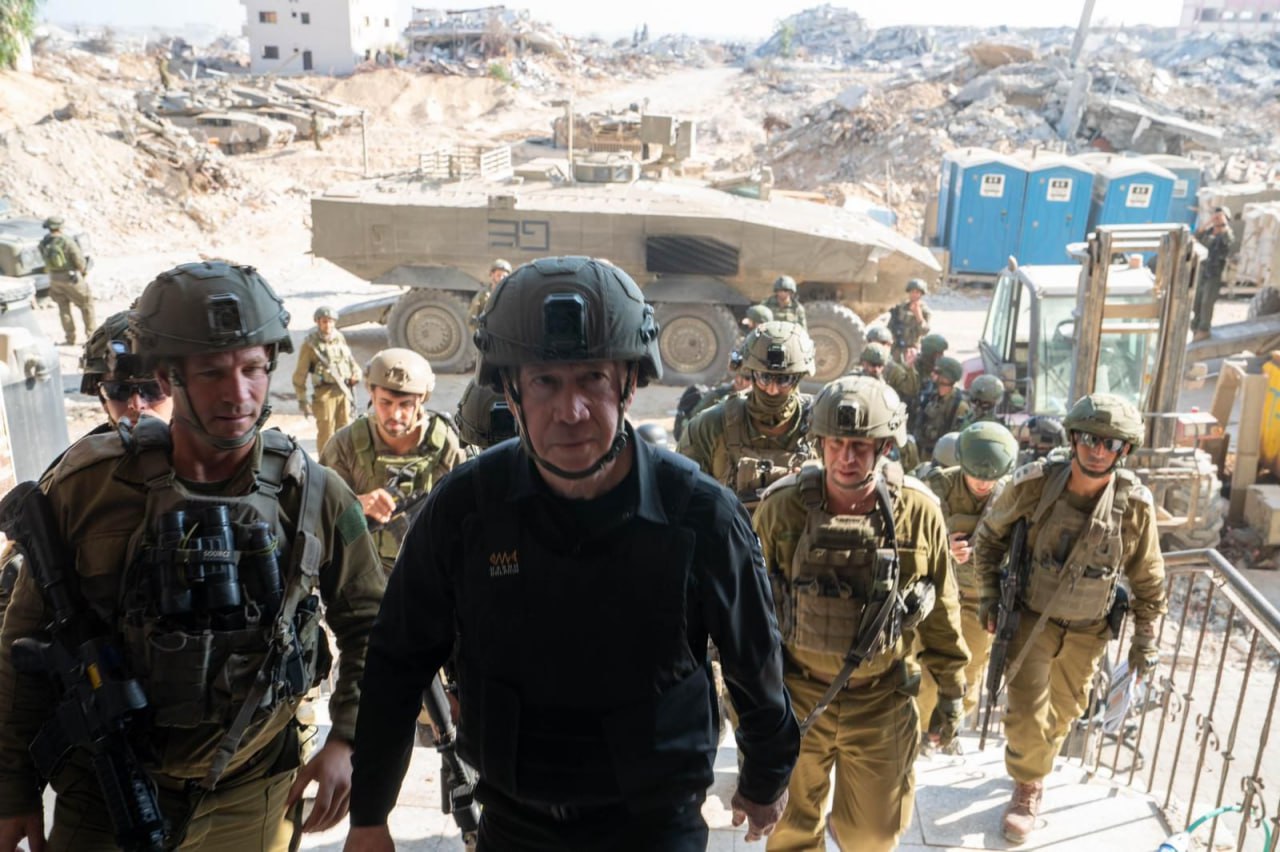
Israeli Defense Minister Yoav Gallant announced today while visiting the Netzarim axis, “While we are fighting in Gaza, we are preparing for anything that could happen in the north and we are ready to transfer the center of military gravity to the northern front immediately.”
Israeli Defense Minister Yoav Gallant in Netzarim corridor
The battles in the northern front have been going on for months and tensions along the northern borders have led to widespread evacuations of settlements. More than 250,000 Israeli citizens have been displaced by the war and the number of Israeli refugees increases daily.
The current situation in the northern front has caused the reverse migration of Israelis and huge political and financial losses to the Israeli regime. The security of the settlers in northern Palestine has been completely destroyed and it is difficult and unbearable for Israel to continue the current situation.
The Israeli army and Lebanese Hezbollah continue to exchange artillery fire on a daily basis. Hezbollah attacks Israeli army positions and bases in the region using light rockets, suicide drones, and anti-armor missiles. On the other hand, Israeli fighter jets target the eastern and southern towns of Lebanon using heavy bombs and Israeli drones conduct targeted assassinations against Lebanese resistance fighters and commanders.
Israeli warplanes targeting alleged Hezbollah targets in southern Lebanon
In recent months, Israeli authorities have repeatedly threatened Lebanon with a large-scale ground military operation. Gallant’s recent threat from the heart of the Gaza Strip is the latest example of these threats.
However, it seems very unlikely that the Israeli regime has the ability to fight on three fronts. Especially since the Israeli army recently opened a new front in the West Bank.
Therefore, the outcome of the ceasefire negotiations in the Gaza Strip is crucial for the Israeli regime and has a direct impact on the continuation of the war in the northern front. In fact, Hezbollah’s goal of waging war with Israel is about to secure a lasting ceasefire in the south. Hezbollah has announced the end of Israel’s aggression in the Gaza Strip as a condition for the cessation of the war and the end of insecurity on the northern front.
Israel stated that the purpose of the operation in the West Bank is to deal with the increasing insecurity of the last few months and to destroy the so-called Iranian terrorism.
It is said that the Israeli army has now classified the West Bank as the second most important and sensitive front after Gaza. This directive is currently in its early stages, and it is expected to take time to compile and finalize, but the Israeli military has organized a series of operations against resistance groups in areas of the West Bank. Israeli officials emphasized: “The operation in the West Bank is just the beginning.”
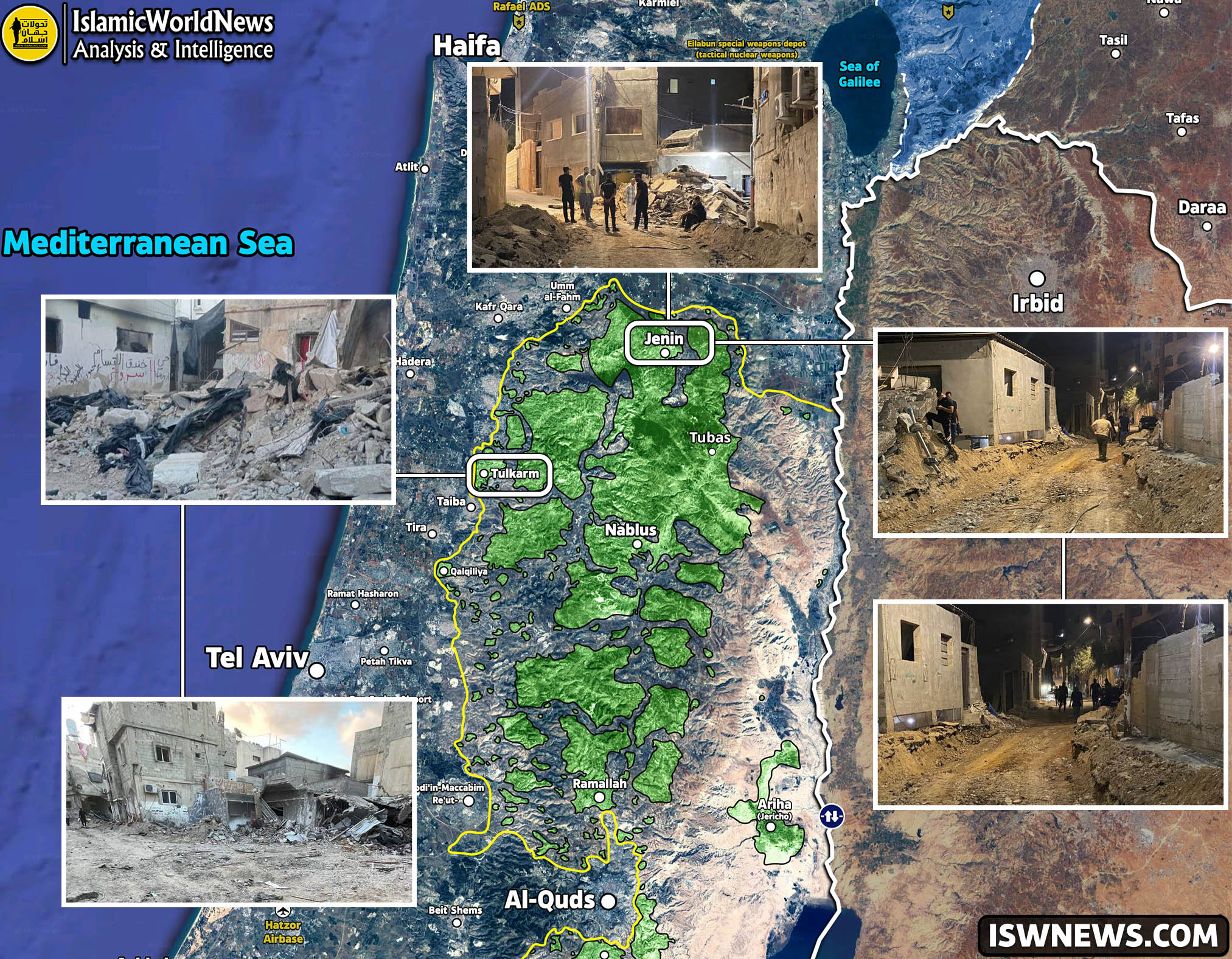
The Israeli operation is currently focused on the northern half of the West Bank and the cities of Jenin, Tulkarm, Tubas and Nablus. According to the Palestinian Ministry of Health, since the onset of the Israeli offensive in the West Bank, 39 Palestinians have been martyred and 145 others have been wounded.
However, after the start of military operations in the West Bank, the security situation in this area has worsened and anti-Israeli operations have greatly increased.
On August 31, an Israeli squad commander in the ranks of the Bislamach Brigade’s 906th Battalion was killed and three others were wounded during clashes with fighters from the Hamas Movement in Jenin. On September 1, three Israeli police officers were killed in a shooting attack near the city of Tarqumiyah. And the latest incident was today, on September 8, that three Israelis were killed in a shooting attack at the Allenby Bridge crossing between Jordan and the occupied West Bank.
Three Israelis killed in a shooting attack at the Allenby Bridge crossing
The recent developments in the West Bank clearly indicate that escalating pressure from the Israeli army on the people of the West Bank may have the opposite effect. Furthermore, the expansion of the conflict in this region could pose a serious threat to the security of Israel’s capital.
Many experts believe that the Israeli regime’s new military aggression in the West Bank, due to Netanyahu’s extremist and warlike cabinet, can eventually turn into something similar to the genocide that is going on in the Gaza Strip.
The Israeli aggression in Gaza has so far claimed the lives of more than 40,500 Palestinians, most of whom are women and children. The Israeli forces also killed more than 670 Palestinians in the West Bank since the start of the war on October 7.
The Israeli military operation continue in various areas of the West Bank, and the regime’s military is carrying out a series of attacks against the resistance movements and the infrastructure of the cities of Tulkarm and Jenin.
The regime’s forces clashed with the fighters of the Izz al-Din al-Qassam Brigades (IQB), the military wing of Hamas, in the Tulkarm refugee camp, and IQB announced that it had inflicted definite casualties upon the Israeli occupying forces during the confrontations. A few days after the Israeli assault in Tulkarm, the head of the services department of the Tulkarm camp declared that the Israeli regime had entirely demolished 100 houses during its latest attack on the region.
The official referred to the demolition of the two-kilometer-long electricity and communications networks in the Tulkarm camp, and clarified that 200 residential buildings in the camp are no longer fit for human habitation, and that the Israeli occupying forces destroyed 300 shops as well.
The city of Jenin has also witnessed armed clashes between the Palestinian resistance fighters and the Israeli military in recent days. The Israeli regime’s assault in Jenin was supposed to end on Tuesday evening September 3, but the regime’s army extended its military operation in the city.
The Hebrew-language media outlet Walla quoted military sources as announcing that the extension of the assault on the Jenin camp was taken place based on the intelligence attained about the military infrastructure in the camp.
Throughout the last 48 hours, Palestinian resistance fighters in the northern districts of the West Bank targeted the forces and equipment of the regime’s army. These clashes prompted the Hebrew-language newspaper Yedioth Ahronoth to acknowledge that the bombs of the resistance in the northern West Bank have caused a lot of damage to the Israeli army, despite their use of heavy machinery. Resistance fighters in Judea and Samaria refugee camps blew up certain buildings with powerful explosives, inflicting heavy casualties to Israeli forces.
According to the Palestinian Ministry of Health, since the onset of the Israeli regime’s most recent military offensive in the West Bank, 39 Palestinians have been martyred and 145 others have been wounded. The number of martyrs in the West Bank since the start of the genocidal war against Gaza, which began on October 7, 2023, has reached 691 and the number of wounded has mounted to 5,700.
There has been no change in the lines of contact, and the conflict between the Israeli military forces and Palestinian resistance fighters continue in the city of Rafah located in the southern Gaza Strip.
The Israeli forces are still present on the Netzarim axis in the south of Gaza City, situated in the northern Gaza Strip. The confrontations are also underway in the regions in the vicinity of Tel al-Hawa and around the Islamic University of Gaza (IUG).
Given the process of the confrontations in the course of the past month, it seems that the regime’s military is not only incapable of capturing the Gaza Strip entirely, but also has slight desire to do so, and the fights have long entered a post-attrition stage.
The battles on the northern front of Palestine, the skirmishes in the West Bank, the uncertain condition in the Israeli-occupied territories due to the likelihood of a retaliatory attack by Iran, as well as the unclear and indecisive process of the indirect talks between the warrying parties for a ceasefire in the Gaza Strip are among the reasons that have caused a relative tranquility in the circumstances in the besieged area.
The IRI statement said: “To help and support the people of Gaza and in response to the crimes committed by the usurping regime against Palestinian civilians, including women, children, and the elderly, the fighters of the Iraqi Islamic Resistance attacked Haifa port with a suicide drone. The Islamic Resistance emphasizes that the operation to destroy the enemy’s bastions will continue at an increasing pace.”
This is the 143rd attack of the Iraqi resistance against the positions of the Israeli regime after the onset of the genocidal war on Gaza.
The Islamic Resistance in Iraq carried out tens of attacks on the Israeli-occupied territories as of April 25, 2024.
The Iraqi resistance group along with other resistance movements in Lebanon and Yemen have called for the end of Israeli aggression against the Gaza Strip and the delivery of aid into the besieged area.