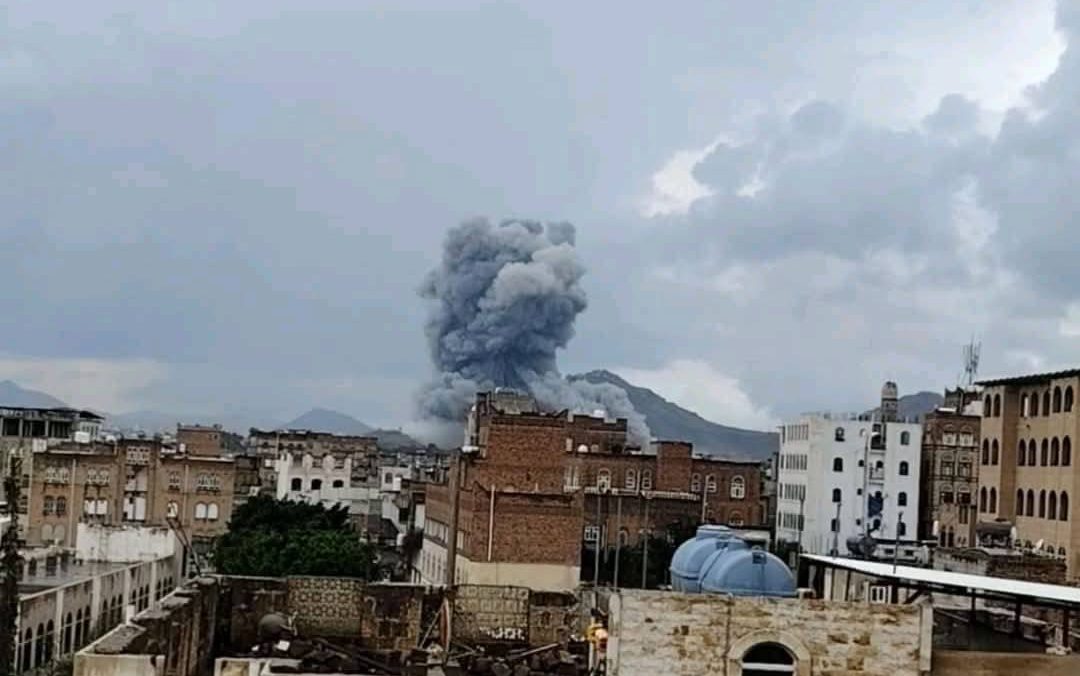
According to the statement, a number of ministers were also injured in the attack and are currently receiving treatment at a hospital in Sanaa. Yemeni media reports confirm the deaths of Foreign Minister Jamal Amer, Information Minister Hashem Sharaf al-Din, Justice Minister Ahmed Abdullah Ali, Youth and Sports Minister Mohammed al-Mawled, and Electricity and Energy Minister Ali Saif Mohammed.
Ahmed al-Rahawi had been appointed Prime Minister on August 23, 2024, by Mahdi al-Mashat, head of Yemen’s Supreme Political Council. His administration, operating under the slogan “Change and Construction,” had made notable progress over the past year in addressing economic hardships and managing the fallout from the ongoing conflict with Israel.
Following the assassination, Deputy Prime Minister Mohammed Ahmed Moftah has been appointed to lead the government.
The Israeli airstrike, carried out on Thursday, August 28, targeted senior military commanders and political leaders in Yemen. Although the attempt to assassinate the Chief of Staff and the Defense Minister was unsuccessful, the attack resulted in the deaths of the Prime Minister and several cabinet members. This operation marks the beginning of a broader intelligence and security campaign by Israeli agencies Mossad and Aman in Yemen, aimed at murdering key figures in the Yemeni government and the Ansar Allah movement.
The strikes hit multiple sites including the presidential palace, the Haziz power station in Sanhan district, a facility referred to as the Assar power station (not identified in Yemeni sources), and a fuel depot. So far, six fatalities have been reported, with 86 others injured.
Simultaneously, Yemeni air defense forces engaged the Israeli aircraft, launching interceptor missiles that successfully repelled some jets and disrupted the operation.
According to Israeli statements, the airstrikes were a retaliatory measure against ongoing missile and drone attacks by Yemeni forces. The Israeli regime claims the targeted sites were being used militarily by Ansar Allah.
The attack drew widespread condemnation from regional actors, including the Yemeni Foreign Ministry, the Political Bureau of the Ansar Allah Movement, Iran’s Foreign Ministry, Oman, Hezbollah in Lebanon, and various Palestinian resistance groups, all of whom issued statements denouncing Israel’s actions.
Israeli Airstrike on Yemen’s Capital
This marks the 15th aerial assault by the Zionist regime on Yemen since the escalation of hostilities.
Analysts suggest that by targeting civilian infrastructure and energy facilities, Israel aims to weaken Yemeni military pressure and shift focus away from internal challenges. The Israeli security apparatus is allegedly prioritizing the elimination of key figures within the Yemeni armed forces and the Ansar Allah political leadership, though these efforts have failed. Meanwhile, the U.S. Navy and Air Force are actively working to intercept Yemeni missile and drone attacks, utilizing regional airspace, including that of Saudi Arabia, to prevent strikes from reaching Israeli territory.
According to Major General Ali Muqbil Saleh, the Saudi-backed governor of Dhale, this decision was made to assist in the flow of humanitarian aid, reduce suffering, and ease civilian movement.
The Dhale-Sanaa road is a 240-kilometer route that runs from Dammam to Yarim in the Al-Bayda governorate and then passes through the city of Dhamar. This essential roadway connects the southern and central governorates of Yemen.
The closure of the Dhale-Sanaa road in recent years has caused significant hardship for southern Yemenis, forcing many to take long and difficult alternative routes. Although the Sanaa-backed government, supported by Ansar Allah, announced various plans to reopen all Yemeni roads following a ceasefire with the Saudi coalition in April 2022, the resigned government has prevented these plans from being implemented due to divisions and differing positions among southern Yemen groups.
This incident marks the 24th MQ-9 drone downed throughout the Yemeni conflict, with 20 of these drones being downed during the operation aimed at aiding Palestine, titled “Promised Conquest and Holy Jihad. “
AnsarAllah released the moment the MQ-9 drone targeted over the Sanaa province
The loss of these MQ-9s represents a significant cost for the US military, estimated at $736 million.
Ansar Allah has censored footage of the moment the missile strikes the MQ-9 drone to protect details regarding Yemeni weaponry. It is presumed that a 358 or 359 defense missile was used by Yemeni forces to bring down the drone.
During these aggressions, one airstrike was executed in the Al-Mahadhir area of the Sahar district, three airstrikes struck the Al-Sawari factory in the Matna area of the Bani Matar district, and two airstrikes targeted the Al-Yatma area in the Khab and Al-Sha’af district.
The attack on the Al-Sawari factory resulted in six fatalities and injured 20 civilians. The factory’s facilities were significantly damaged, and its products were set ablaze.
— In the Jarban area of the Sanhan district, they executed eight strikes. — Additionally, two airstrikes were conducted at Al-Deilami Air Base, a strategic location used by the Yemeni army. — In the Bani Hashish district, five strikes were performed in the Al-Khadhm and Al-Jumaima areas.
Despite US bombings against Yemen aimed at weakening the Yemeni army’s operations against Israel, these attacks have so far had no impact on the military capabilities of the Yemeni army.
The operation launched by the Yemeni armed forces to support the Palestinian resistance against the Israeli regime began on October 19, 2023. This effort led to the capture of the Israeli ship, Galaxy Leader, and the ongoing missile, drone, and airstrike attacks on over 190 ships linked to Israel. As a result, shipping by Israeli companies through the Red Sea route has been suspended.
In addition to these attacks on ships, the Yemeni army has conducted more than 85 missile and drone operations targeting positions held by the Israeli regime in occupied Palestine. Furthermore, an F-18 Super Hornet fighter jet and 19 American MQ-9 drones have been shot down during the Yemeni conflict with the American-British coalition.
Israeli warplanes conducted multiple airstrikes targeting the control tower, runway, and near the departure hall of Sanaa airport, two airstrikes on the Haziz power plant in Sanaa province, several strikes on Ras Katib power plant and Ras Issa port, and two airstrikes on Hudaydah port.
Footage captured the moment Israeli warplanes struck the control tower of Sanaa airport.
The attack on Sanaa airport resulted in the deaths of three airport employees and left 16 others injured, including the co-pilot of a United Nations plane. Additionally, one person was killed and three others went missing following the attack on Ras Issa port.
This marks the 4th time Israeli warplanes have attacked Yemen in recent months.
According to IWN investigations, many of the published images of the fire at Sanaa airport and Hudaydah port are either old or unrelated to today’s attacks on Yemen. Also, there was no attack on the Iranian embassy in Sanaa.
Seven Yemenis were martyred in the port of Salif and two were martyred in the Ras Issa oil facility. Seven people were also injured in the attack on the port of Hudaydah.
These attacks caused fires in the Sanaa power plants, leading to electricity cuts in some areas of the province.
Israeli strikes on Sanaa Fire at Haziz Power Plant in Sanaa Province after Israeli strikes
This marks the third Israeli airstrike on Yemen since the Gaza Strip conflict began, with Yemeni armed forces supporting the Palestinian resistance. Previous Israeli strikes targeted oil depots and the port of Hudaydah, but today’s attack expanded to include the Yemeni capital.
The Israeli military dubbed the operation “White City” and attacked two power plants in Sanaa and a port and oil facility in Ras Issa. These strikes suggest that Israel is aiming to pressure Yemen by targeting its energy resources, hoping to incite economic strain and internal unrest in areas governed by the Yemeni Salvation Government.
While the reduction in fuel and electricity supplies may create temporary challenges in energy provision, it is not expected to lead to significant public dissatisfaction or decrease the Yemeni attacks on violating ships and Israeli positions in occupied Palestine.
The military exercise began following the arrival of President of the Supreme Political Council of Yemen Mahdi al-Mashat into Al-Sabeen Square as well as the performance of revolutionary anthems and programs in honor of the Holy Quran. In addition to its previous weaponries and combat equipment, the Yemeni army unveiled new equipment such as Hani armored vehicles, Nadir boats, ground-to-sea Saeqa missiles, Sejjil cruise missiles with a range of 180 kilometers, Aqil ballistic missiles, Tufan ballistic missile system and various radars, and several new air defense missiles.
For the first time since the start of Saudi-led coalition war on Yemen, one of the F-5 fighters performed several maneuvers in this parade alongside Mi-17 helicopters of the Yemeni Air Force.
Images of four Mi-17 helicopters and one F-5 fighter jet in the Yemeni army paradeF-5 fighter maneuver in the September 21 parade in Sana’a city
The extensive collections of missiles as well as reconnaissance and assault drones were another difference in this parade compared to past military maneuvers and parades. The Ansar Allah movement displayed drones such as Waeid 1 and 2 (Shahed 136), Mersad 2, Khatef, and Saqar 2 (known as 358) air defense missile, Qasem missile, Badr 4 and so on in large numbers during this parade.
The grand display of Yemen’s stunning army weapons in this parade once again showed that no military operation or invasion by the Saudi-led coalition or even the US-led coalition can bring the people of Yemen to their knees. The all-out air and sea blockade will not prevent this country’s military advances because Iran and the Axis of Resistance are supporting the Yemeni people.
The people of Yemen were outraged by resigned president Abd Rab Mansour Hadi’s betrayal and his government’s collusion with certain Arab countries, especially Saudi Arabia, in 2014. The Yemeni people held extensive rallies against him in various cities of Yemen. With Ansar Allah’s entry into Sana’a city on September 21, 2014, Hadi resigned from the presidency of Yemen and his government agents were dismissed by the Yemeni parliament. After these developments and Ansar Allah’s success in taking control of the Yemeni government, Saudi Arabia and the United Arab Emirates (UAE) formed a coalition against the people of Yemen and Ansar Allah in support of Mansour Hadi; so, his allies attacked all over Yemen.
Images of the Yemeni army’s grand parade in Sana’a on the occasion of the 9th anniversary of the September 21 People’s Revolution
One interesting point about this year’s parade was the large presence of Hani armored vehicles which are actually updated versions of Al-Shabal 2 light vehicles belonging to Saudi-led coalition that Ansar Allah had seized in various battles. According to released images from the parade, Yemen’s army has managed to update 54 units of these vehicles.
Images of the missiles of the Yemeni army in the grand parade on the occasion of the 9th anniversary of the September 21 Revolution
In this parade, various ballistic missiles were displayed by Yemen’s armed forces. These missiles were displayed in large numbers indicating functionality and high storage number for these missiles in Yemen’s armed forces organization. These ballistic missiles are very similar to some Iranian samples. For example, Karrar missile is similar to Fateh-110 missile; Aqil missile is alike Qiam missile; Tufan missile is similar to Qadr missile. Of course, differences can be seen as well and it cannot be said with 100 percent certainty that all these weapons and equipment have been directly transferred to Yemen.
Saqar 1 and 2 loitering munitions and Barq 2 surface-to-air missile
Among other equipment seen in the parade is an anti-aircraft missile similar to Taer-2B missile named Barq-2. Other anti-aircraft missiles were Saqar-1 and 2, which were recently displayed during Russian Defense Minister’s visit to Iran and they did not yet have a name in Iran’s armed forces collection; therefore, they are more known as Missile 358.
Sejjil anti-ship missile was introduced as the newest member of anti-ship class by Yemen’s armed forces. Anti-ship missiles Al-Mandab-1 & 2 were also displayed alongside Rubij anti-ship missile. The anti-ship Sejjil missile, which was unveiled at this military exercise, is also similar to Iran’s Qadir missile.
Badr-4 missile; Masjoor-2 underwater mine; Quds-4 cruise; anti-ship ballistic Tankil missile were among other equipment unveiled at this military exercise in the Yemeni capital on the anniversary of Ansar Allah’s take-over of the government.
Images of Waeid 1 and 2, Qasef 2k, Rased, Rajum and Khatef 2 dronesA summary of the parade of different units of the Yemeni armed forces in Sana’a
This shows that the claim of complete destruction of the Yemeni army’s air and missile weapons in the early years of the war was a bluff and Yemen has been successful in preserving some of its valuable arms.
It should be noted that during the reign of former president Ali Abdullah Saleh, the Yemeni army had about eleven F-5 fighter jets, including the training and assault type, some of which were destroyed or damaged after the Saudi-led coalition’s attack on Yemen.
Others were transferred to unknown locations by the Ansar Allah movement and were hidden so that the Saudi-led coalition could not identify their locations and destroy them, and today’s operational fighter jets in Yemen are related to those ones, which have remained untouched.
Flight of the Yemeni army fighter jet over the sky of Sana’aFlight of the Yemeni army fighter jet over the sky of Sana’a
As part of Yemen peace talks with the mediation of Oman, a diplomatic delegation from Saudi Arabia headed by Saudi Arabia’s Ambassador to Yemen Mohammed bin Saeed Al-Jaber and along with some Omani and Yemeni diplomats arrived in the capital city of Sanaa.
Al-Jaber was welcomed by member of the Supreme Revolutionary Committee Mohammed Ali al-Houthi, Deputy Prime Minister of Yemen in defense and security affairs Jalal al-Rowaishan; then, the Saudi envoy met with the Yemeni president of the Supreme Political Council.
The first video of the meeting of the diplomatic delegation of Oman and Saudi Arabia with the head of the Supreme Political Council of Yemen
Mahdi al-Mashat expressed gratitude to Oman for its mediation and positive role in approaching point of views as well as efforts for establishing peace in the war-stricken country, underlining the decisive stance of the National Salvation Government concerning liberation and independence of his country, when he talked to the Saudi delegation.
According to local sources, the Saudi delegation’s trip to Sanaa is in line with their effort to hold talks with the authorities of the Ansar Allah movement to pave the way for fully reopening of airports and ports in Yemen, payment of salaries of all government employees and processes of political transition in the war-torn country. It is expected that the meeting will help speed up the process of implementing ceasefire and lifting the siege of Yemen.
Representatives of the Russian government travel to Sana’a to meet and confer with Ansar Allah authorities, according to local sources.
Following an Ansar Allah delegation’s recent visit to the capital of Russia, Moscow, a Russian delegation started a travel to Sana’a to meet and hold talk with Ansar Allah officials.
In line with the report, the Russian delegation has entered the Yemeni capital to speak about coordinating bilateral relations following the recent visit of UN special envoy for Yemen Hans Grundberg.
In accordance with this issue, Spokesman and one of the commanders of the Southern Resistance Group affiliated to Islah Party Adel al-Hasani said:
“A high-ranking Russian delegation has arrived in Sana’a, and that prior to the event a delegation from Sana’a visited Moscow. There is not any new incident here. The world collaborates with a unified force, which is Ansar Allah, while the Presidential Leadership Council (the presidential council of the resigned government) still continues to hold camera-based meetings. The facts and figures are apparent, even though some people do not like them.”
Dmitry Polyansky, the first Deputy Permanent Representative of Russia to the United Nations, in the recent meeting of the United Nations Security Council, criticized the United States, France and the United Kingdom for looting Yemen’s oil and gas resources, describing them as opportunists and calling for an end to the war and blockade of Yemen through dialogue.