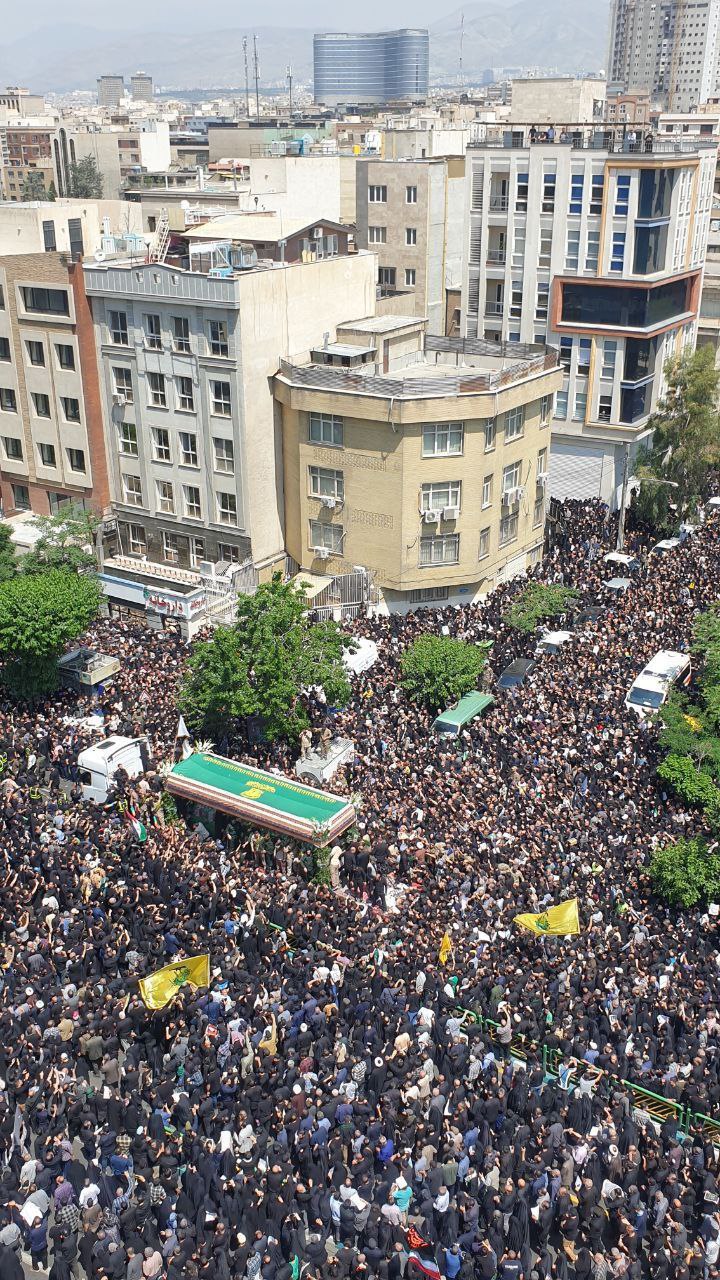
Supreme Leader Ayatollah Seyyed Ali Khamenei performed prayers over the bodies of President Raisi and his entourage at the University of Tehran on Wednesday morning, before the funeral procession took place in the city.
Khamenei performing prayers over the bodies of President Raisi and his companions
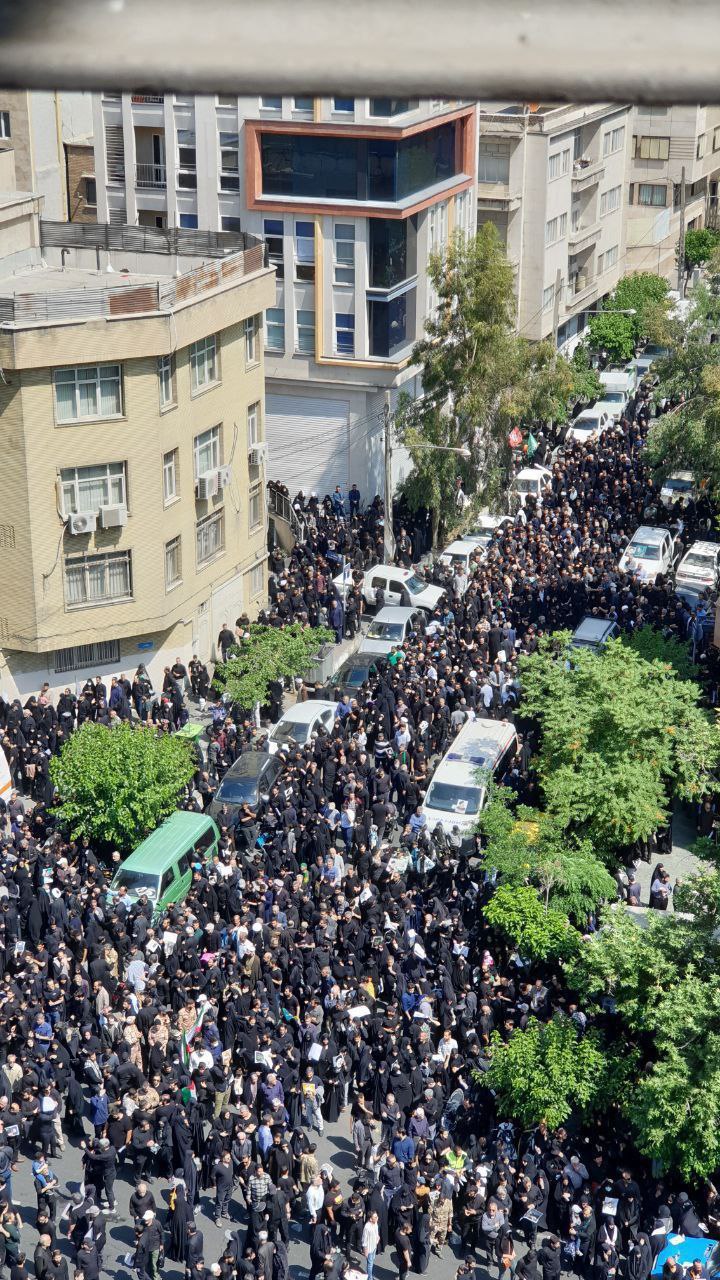
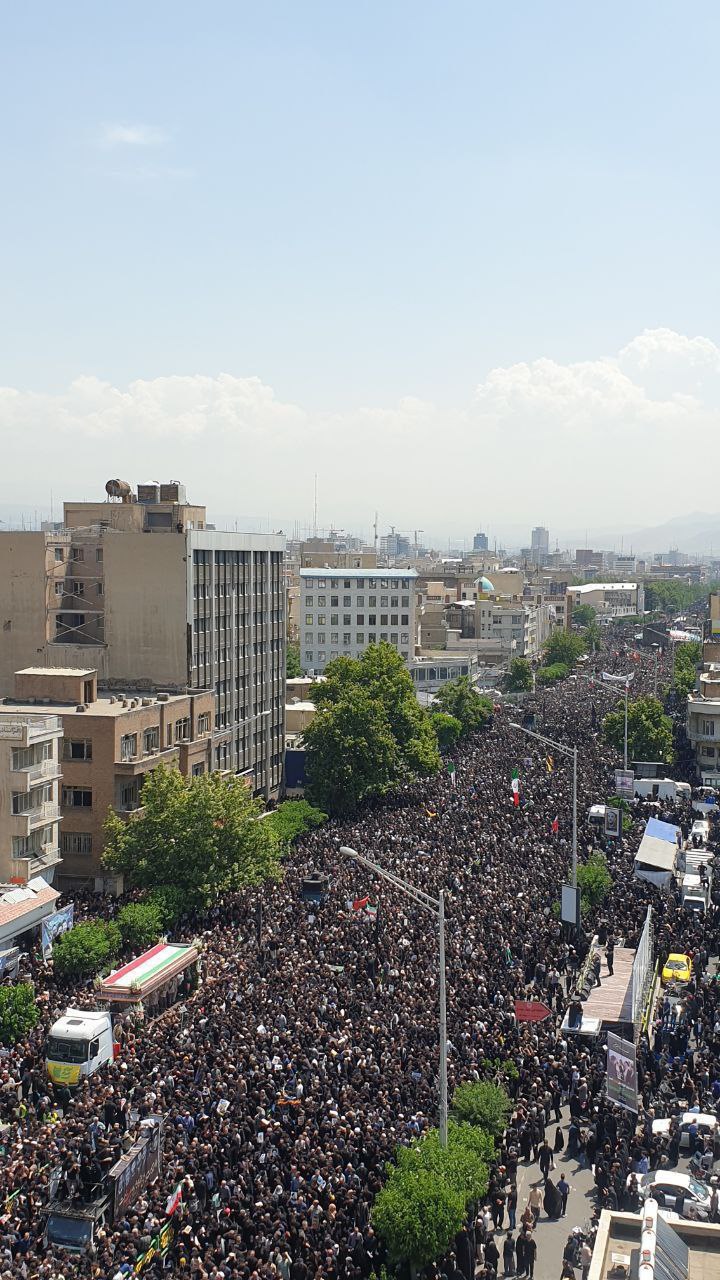
Numerous Iranian government officials, military leaders, and members of the public participated in the solemn procession.
Leaders from other countries, as well as religious and resistance figures, have expressed their condolences over the loss of these top Iranian officials.
More than 40 high-level foreign delegations, including around 10 heads of state and 20 ministerial-level representatives, will take part in the Wednesday afternoon ceremony to honor the martyrdom of President Raisi and his companions.
The head of the Hamas Political Bureau, Ismail Haniyeh, has praised the efforts made by the late President Raisi in addressing the Gaza crisis.
The head of the Hamas Political Bureau, Ismail Haniyeh speeches in funeral ceremony in Tehran
Prior to the Tehran ceremony, funeral services were held on Tuesday in the cities of Qom and Tabriz, where the bodies were transported before being moved to Tehran’s Mehrabad Airport.
President Raisi, Foreign Minister Hossein Amirabdollahian, the Friday Prayer Leader of Tabriz Mohammad Ali Al-e Taha, and the Governor of East Azerbaijan Province Malek Rahmati were returning from a dam opening ceremony near the border with Azerbaijan when their helicopter crashed in a mountainous region, resulting in the deaths of all on board.
A glimpse of funeral procession took place in the capital city of Tehran
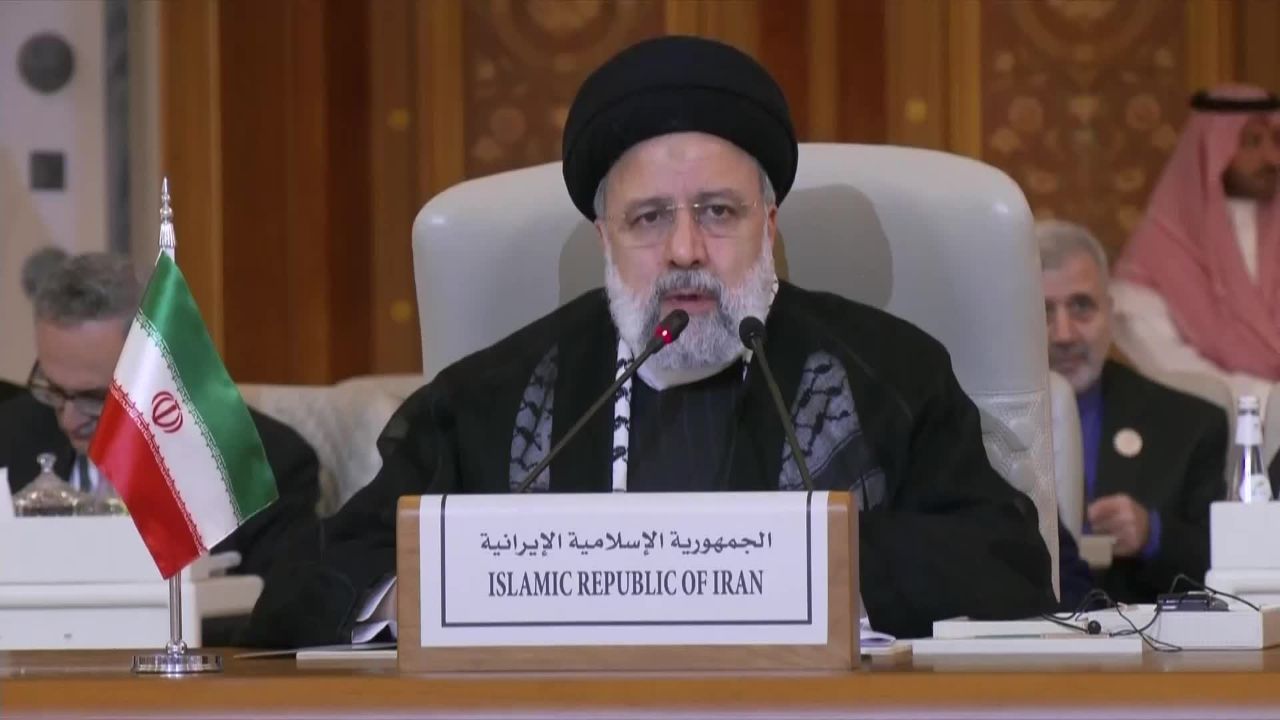
Iranian President, Seyyed Ebrahim Raisi at the joint Islamic summit in Riyadh:
▪️Today is a historic day for the defense of Al-Aqsa Mosque. We want to make a historic and decisive decision about what is happening in the Palestinian territories.
▪️The US is complicit in Israel’s crimes. Americans prefer the Zionist regime to the lives of thousands of oppressed people and encourage them to commit crimes against the oppressed.
▪️Today everyone has to decide which side to stand on.
▪️The worst role in the Gaza war is the role of America. America has practically entered the war in favor of Israel and sends many weapons shipments to Israel daily.
▪️I hope our meeting today will lead to the issuance of a resolution in favor of the Palestinian nation. We must immediately demand the withdrawal of the Zionist regime from Gaza. We must demand a cease-fire and complete lifting of the blockade of the Gaza Strip and the reopening of the Rafah crossing without restrictions or conditions.
▪️All countries, including Islamic countries, must ensure the security of Palestinians in the occupied territories.
▪️Trade and cooperation with the Zionist regime and the import of Israeli goods should be banned.
▪️We demand the formation of an international court for the Zionists and Americans involved in killing Gaza.
▪️Islamic countries should arm the Palestinian people.
▪️The sustainable solution to this crisis is to create a Palestinian state from the sea to the river. The passage of time is not beneficial and Israel must be confronted and the only solution is resistance.
▪️We send greetings to the resistant nation of Palestine and kiss the hands of the resistance.
▪️Muslims consider what is happening to be shameful for them, and if our meeting today does not have a result, it will cause the Islamic Ummah to despair.
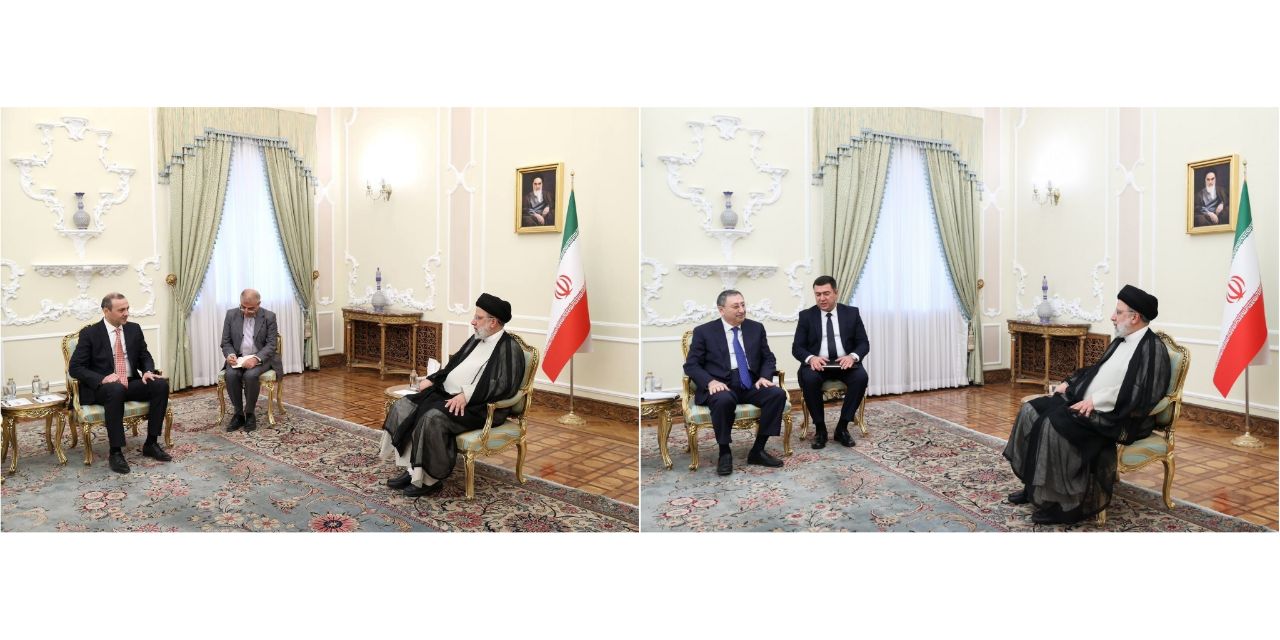
ISWNews Analysis Group – President Raisi held talks with assistant of Azerbaijani President Ilham Aliyev in special affairs Khalaf Khalaf and secretary of the Security Council of Armenia Armen Grigoryan, when the president and the two representatives discussed developments in the Caucasus region.
In the meetings, the Iranian president stressed the need to enhance relations between these northern neighbors and Iran with the aim of countering plots that aim to create divisions and disrupt the bilateral relations between Armenia and Azerbaijan.
Raisi went on to say that the Islamic Republic of Iran, as a powerful neighbor of both Azerbaijan and Armenia, is fully prepared to help resolve the two countries’ disputes and problems.
Emphasizing the importance of maintaining border lines and the existing geopolitical structure of the region, the president stated that Iran welcomes regional dialogues in the form of 3+3 or any other format that can contribute to resolving issues and opening up avenues for cooperation between Azerbaijan and Armenia.
He further noted that the countries in the region have the capacity to resolve regional problems and that the engagement of foreign countries into the region, under any pretext, is not in the best interest of any of the regional states.
Mohammad Jamshidi, the Iranian president’s deputy chief of staff for political affairs, said that in both meetings, the President emphasized that the Zangezur Corridor serves as a platform for NATO’s presence in the region and poses a threat to national security, which the Islamic Republic of Iran strongly opposes.
Simultaneously with these meetings, Chief of Staff of the Armed Forces of Iran General Mohammad Bagheri announced the readiness to send observers to the borders of Armenia and the Republic of Azerbaijan.
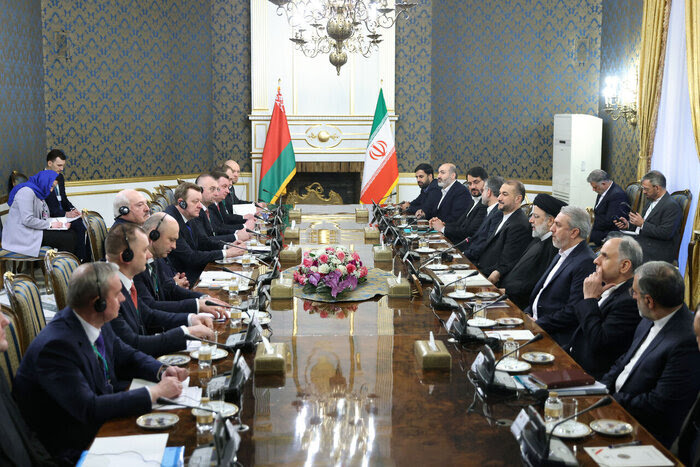
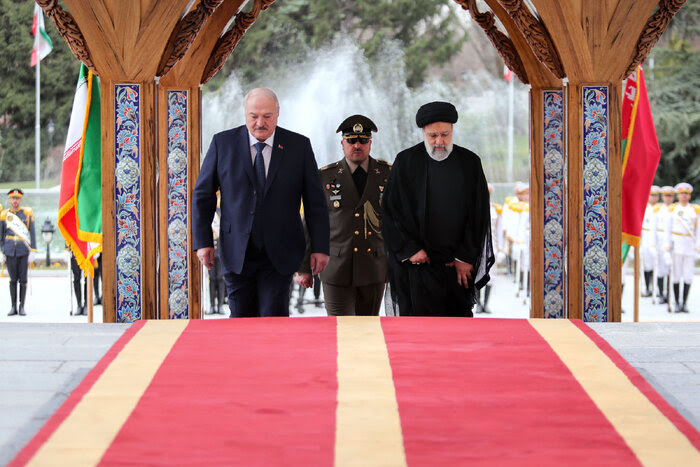
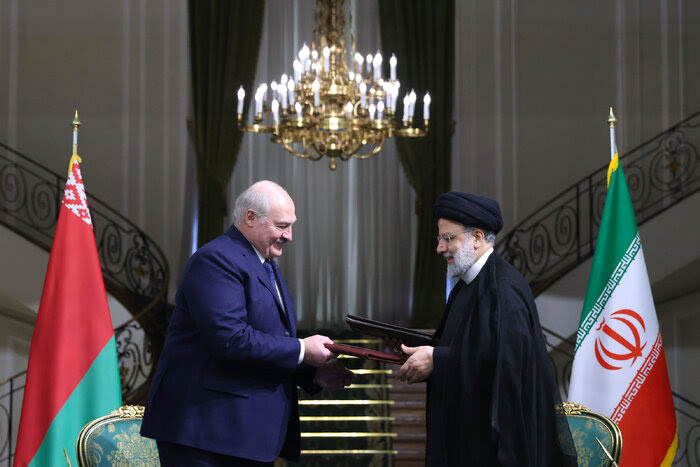
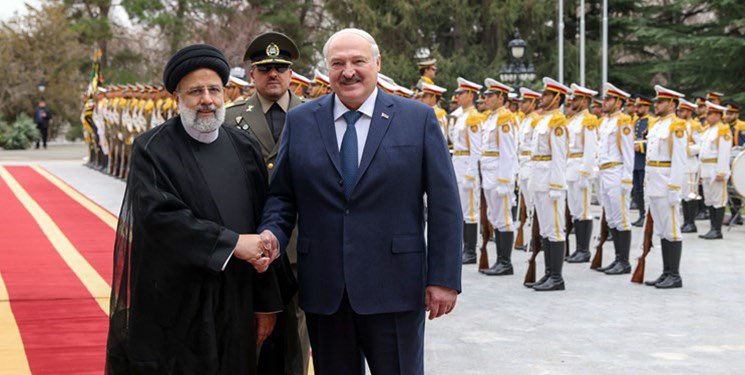
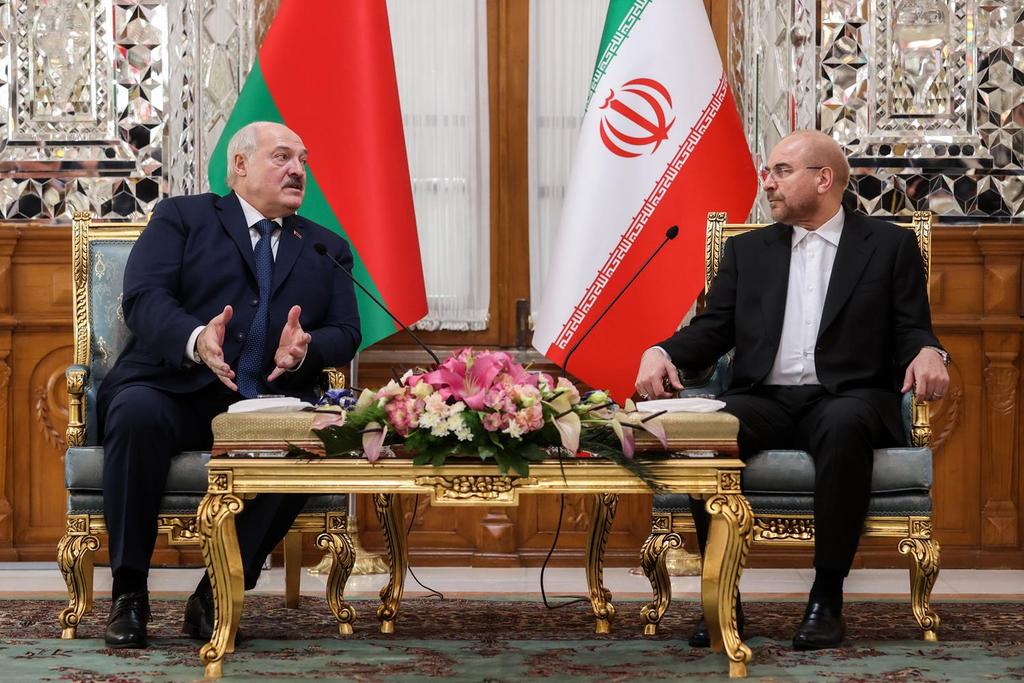
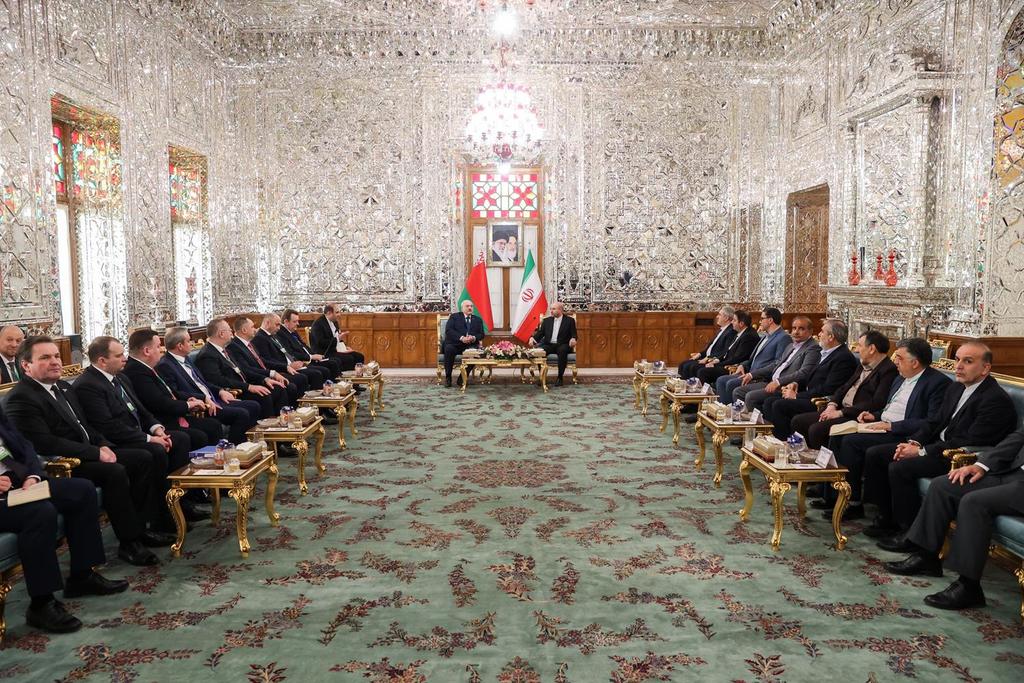
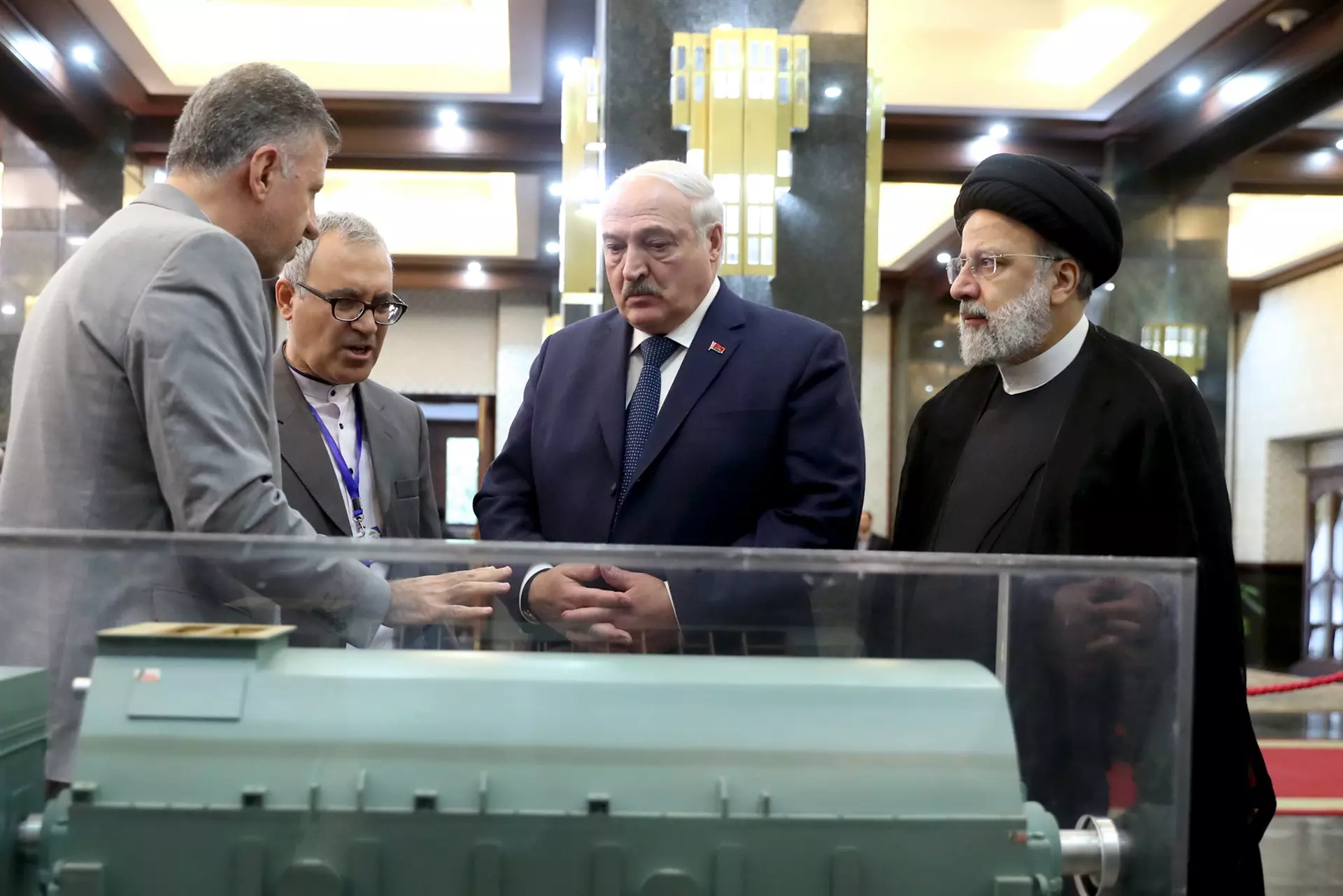
Kukashenko arrived in Tehran on Monday (March 13, 2023) ahead of the 30th anniversary of initiating bilateral ties between Belarus and Iran. His two-day visit was made at an official invitation by his Iranian counterpart.
Both presidents held talks on the sidelines of the 16th summit of the Shanghai Cooperation Organization in Samarkand, Uzbekistan, in September 2022. They underlined on the need for preparing a roadmap to develop bilateral collaborations. The cooperation is in line with both nations’ determination to strengthen economic, trade, transportation, agriculture, culture and art exchanges as prisoners swap and an executive document on the 30th anniversary of establishing diplomatic ties.
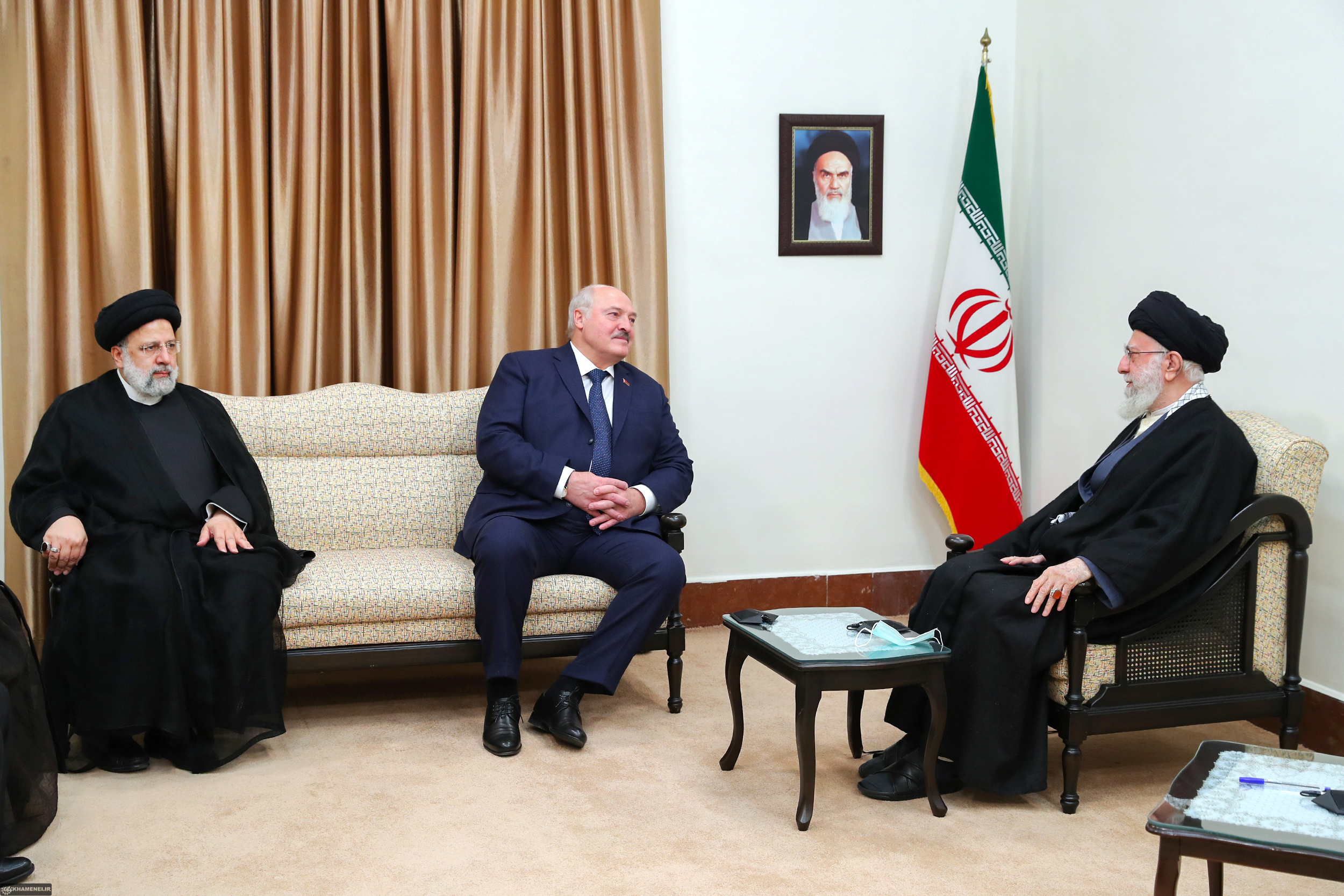
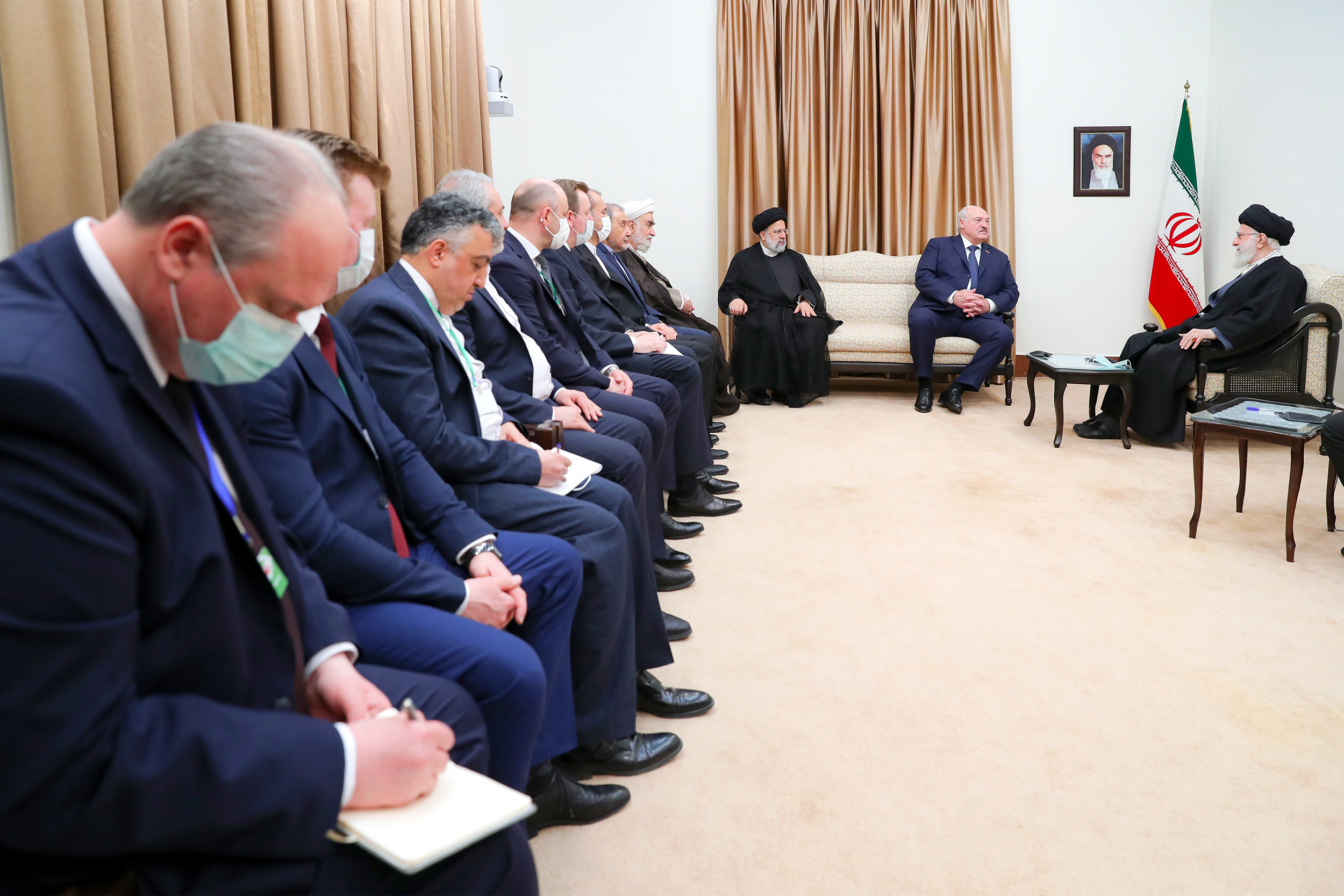
Following the signing ceremony of the MoUs, President Kukashenko along with President Raisi met with Imam Khamenei, when the Supreme Leader stated that the cooperation capacities between the two countries are higher than the current level.
The Supreme Leader underlined that given the determination of both sides to implement agreements, the level of relationship should improve significantly, and that Belarus and Iran enjoy numerous commonalities, including the fact that both nations are facing the bullying sanctions by the US and certain Western states. The countries, which have been targeted by the US-imposed sanctions, should cooperate with each other and create a joint front in order to defuse the sanction policy and we believe that the job can be done, Imam Khamenei noted, adding if those countries that the US imposed sanctions on them use each other’s capacity, the benefit of the cooperation will be abundant for all sides.
The United States started imposing sanctions on Iran from the onset of the victory of the Islamic Revolution, and Washington imposed the ruthless sanctions on the country over past 12 years, the Leader said, noting that the harsh sanctions made Iran understand its own capabilities and internal might; so, during the time when Iran was suffering from the sanctions, the ground was paved for many progresses in the country and Iran could achieve wonderful advances in different arenas, including in science and technology, in medicine and biology, in aerospace, in nuclear technology and nanotech.
According to the Leader, the grounds for cooperation between Belarus and Iran in scientific and technological development as well as in trade and political activities are available at international communities, and in the implementation of the International North–South Transport Corridor along with Russia; thus, both Minsk and Tehran should try to implement it.
The agreements and talks should not be left behind in meetings, but they should be implemented through special follow-up and identified timing, Ayatollah Khamenei said, arguing that spirituality can play the role of a motivator for nations.
Lukashenko, for his part, expressed satisfaction with his meeting with the Supreme Leader, saying that he came to Iran to assure he is determined to open a new page to expand bilateral ties, and that with the support and cooperation by the Iranian president, all agreements will be implemented in due timing and special follow-ups.
Iran achieved wonderful experiences and progresses during the sanction period, and we believe if the embargo circumstance is being used properly, it can be an opportunity for advancement, the Belarusian president said, adding that his goal of the visit to Iran is close acquaintance with Iran’s achievements.
The current hard situation at international arena has uncovered real and unreal friends for us, and we are determined to pursue particular cooperation with real friends, he argued.
Considering the remarks made by the Belarusian and Iranian officials as well as released data by Eastern media outlets, the probable axis of collaborations between Belarus and Iran can include the following points:
-The adoption of joint stances by both countries in the Shanghai Cooperation Organization (SCO) and the Eurasian Economic Union (EAEU), which will be effective to increase economic exchanges between the two nations and other independent states. Imam Khamenei underlined the need for forming an economic-military alliance between anti-Western countries, when he received the Belarusian president. The idea can be proposed at next sessions of the SCO and EAEU, and the member states can pursue a roadmap to form such an alliance.
-The emphasis on Belarus’ usage of the capacity of the International North–South Transport Corridor especially inside Iran’s territory. The corridor can be very helpful for the economy of the East European states, including Belarus, that do not have access to international waters.
-The export of industrial, medical and other equipment from Iran to Belarus. Given the fact that Minsk is still grappling with the negative healthcare aftermaths of 1986 explosion at the Chernobyl Nuclear Power Plant in Ukraine, the Iran-made medical equipment can find appropriate market in Belarus.
-The sale of arms and ammunition such as Iran-made drones and missiles to Belarus. The experience of Russia-Ukraine war has shown the leaders in Belarus and other states, which are suffering from the sanctions imposed by the US and Europe, that the tension between the East and the West fronts can drag them into a battle field. Thus, the Iranian weaponries, which have been tested in different conflicts, can play a key role in guaranteeing their security.
-The import of livestock, grains and chemical fertilizers from Belarus.
Pictures of the meeting of Belarusian President Lukashenko with Iranian officials
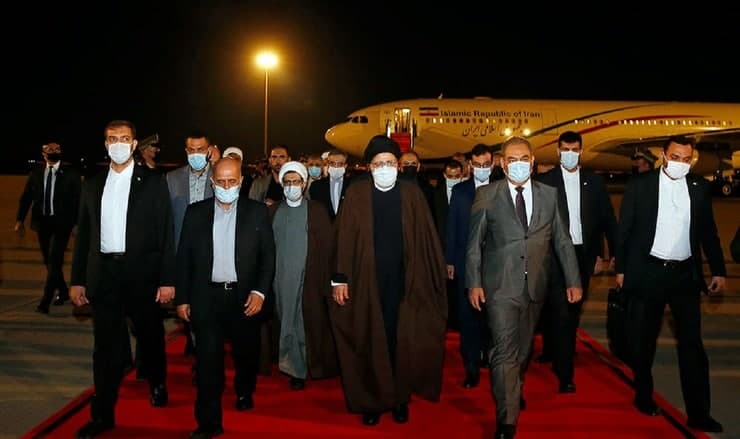
Seyed Ebrahim Raisi was welcomed by Iraqi officials and people during his several-day trip to Iraq after arriving at Baghdad airport, and then attended at the martyrdom site of Haj Qassem Soleimani and Abu Mahdi al-Manhads and their companions near Baghdad Airport and in a speech praising the youth resistance against the United States and other foreign forces in the country said: “The martyrs Soleimani and Abu Mahdi al-Mohandes, with their sacrifices and blood, left security and stability for Iran, Iraq and the region.”
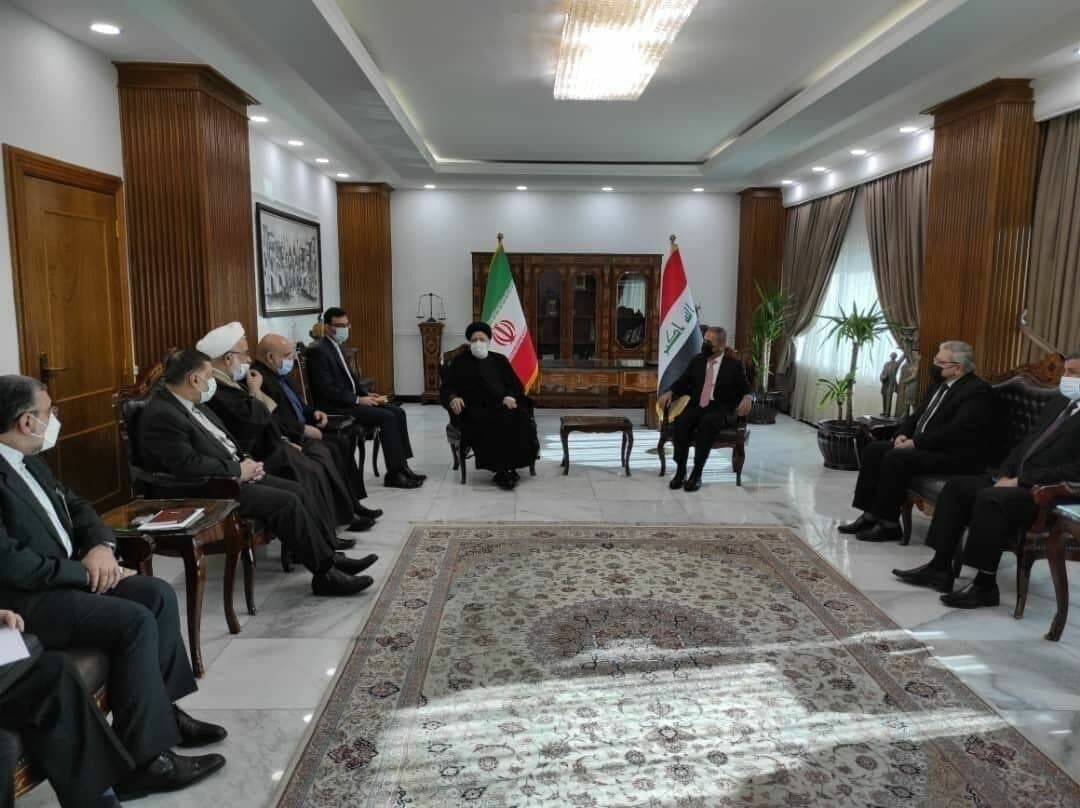
During one of Seyed Ebrahim Raisi’s work plans in Iraq and meeting with the head of the Supreme Judicial Council, a memorandum of understanding was signed on fighting corruption and forming a joint committee to follow up on the legal problems of Iranian and Iraqi citizens. Also in a press conference after this meeting announced that the issue of the assassination of Martyrs Soleimani and al-Muhandis have been investigated. It is worth mentioning that before the visit of Seyed Ebrahim Raisi to Iraq, the head of the judiciary had said that the prosecution of the assassination of Martyr Soleimani is one of the goals of his visit to Iraq.
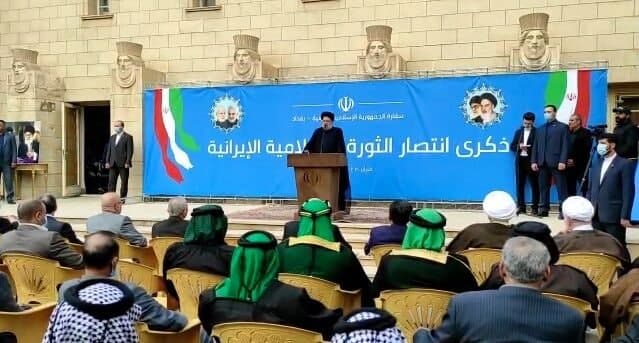
On February 9, Mr. Raisi addressed a ceremony held by the Iranian Embassy in Baghdad to commemorate the anniversary of the victory of the Islamic Revolution of Iran and said: “Cooperation between the two countries to confront the ISIS is a true symbol of empathy and cooperation between the two nations. The bond between the two nations of Iran and Iraq is rooted in the beliefs and civilization of the two countries, and despite the will and efforts of the enemies, the relations between the nation and the government of Iran and Iraq are increasing.The Supreme Leader of the Islamic Revolution has repeatedly said that we think of a strong and independent Iraq.”
The ceremony was attended by Iraqi officials, tribal elders, political and religious figures, and PMU commanders.
On February 10, Seyed Ebrahim Raisi met with Iraqi Prime Minister Mustafa al-Kadhimi to discuss the expansion of relations between the two countries and the increase of cooperation in the judicial field. During this meeting, Mr. Raisi conveyed the message of the Leader of Irn to the Iraqi people and to the Prime Minister of Iraq.