Tag: Warplanes

  • Military Knowledge: Examination Of Prototype Of Yasin Training Jet

    Military Knowledge: Examination Of Prototype Of Yasin Training Jet

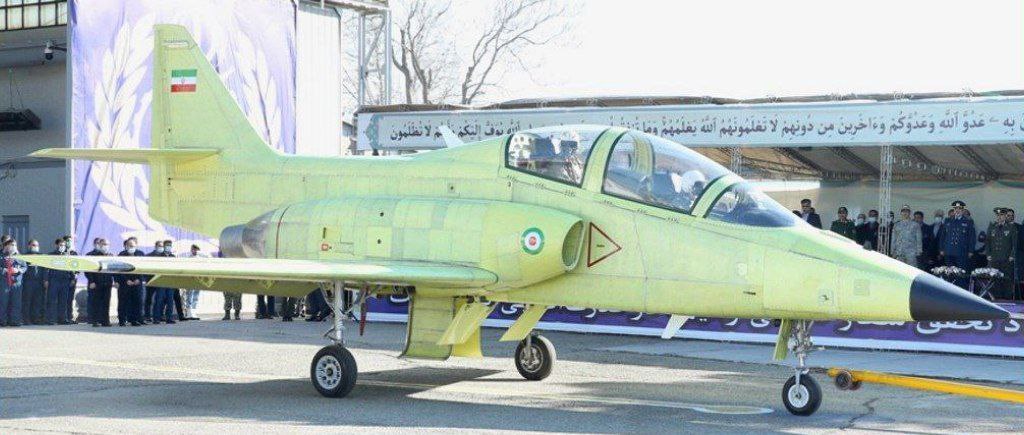
    The prototype production of a fighter jet is the last step before mass production of the same jet. Hence, we examine the prototype of Yasin fighter jet production.

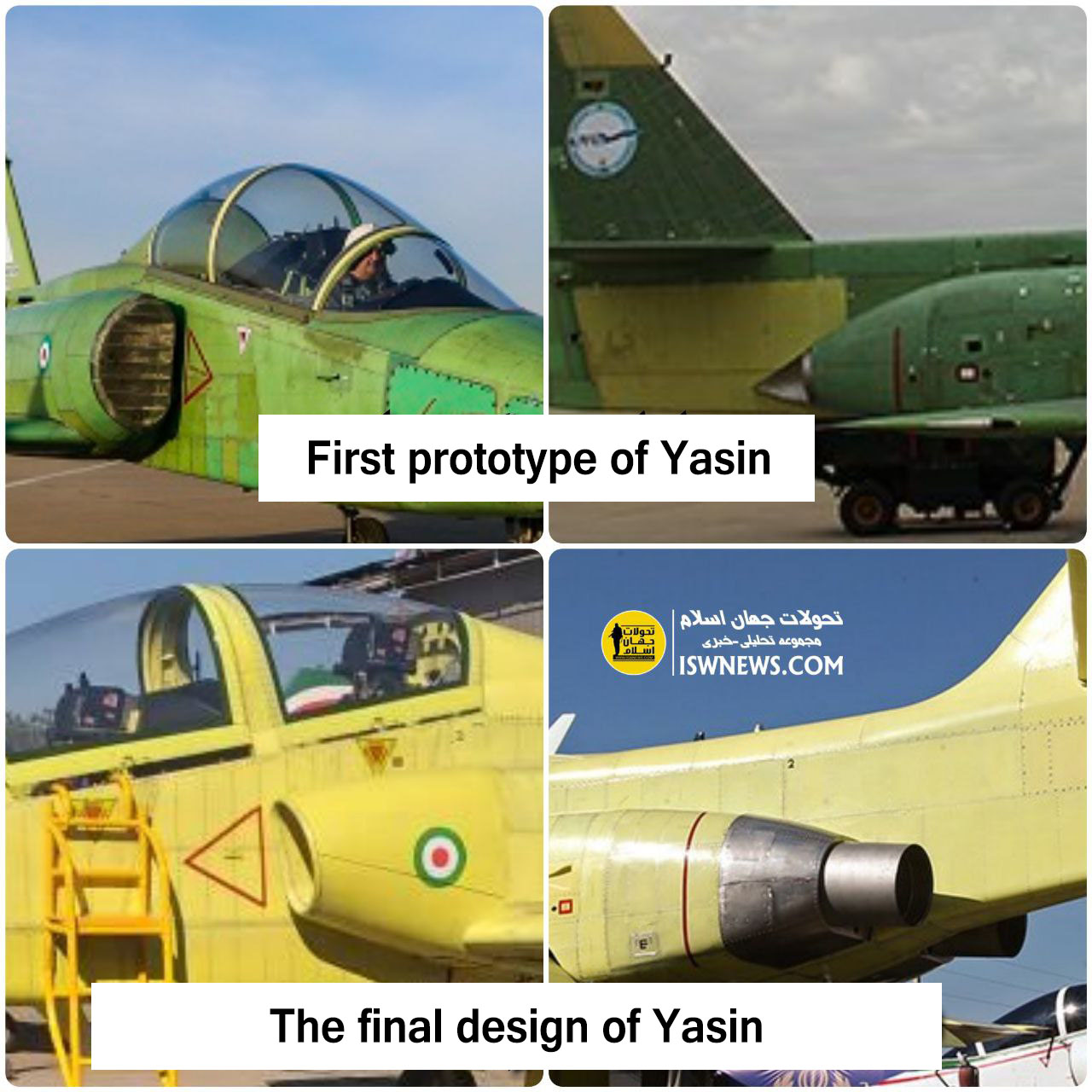
    The examination of the different pictures of the fighter jet that have been published thus far, several transformations in the final prototype of the Yassin fighter jet are obvious. The first change is visible in the training fighter jet’s landing gear.
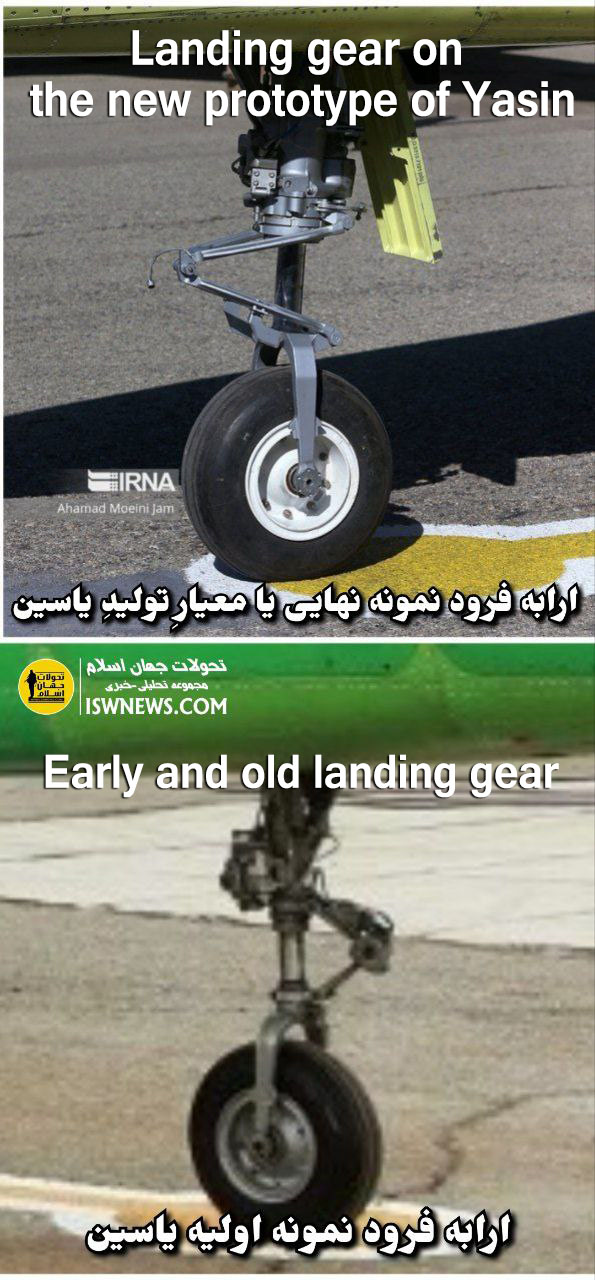
    Change in landing gear
    The above photo is the landing gear Yasin jet in its final design and the below picture shows Yasin fighter in its first type; so, the images indicate appropriately that the front landing gear of the final design has been reinforced and the way it folds is similar to the way that the landing gear of Kowsar fighter jet folds. The position of the landing gear has been transferred from the left side to the middle of the jet.
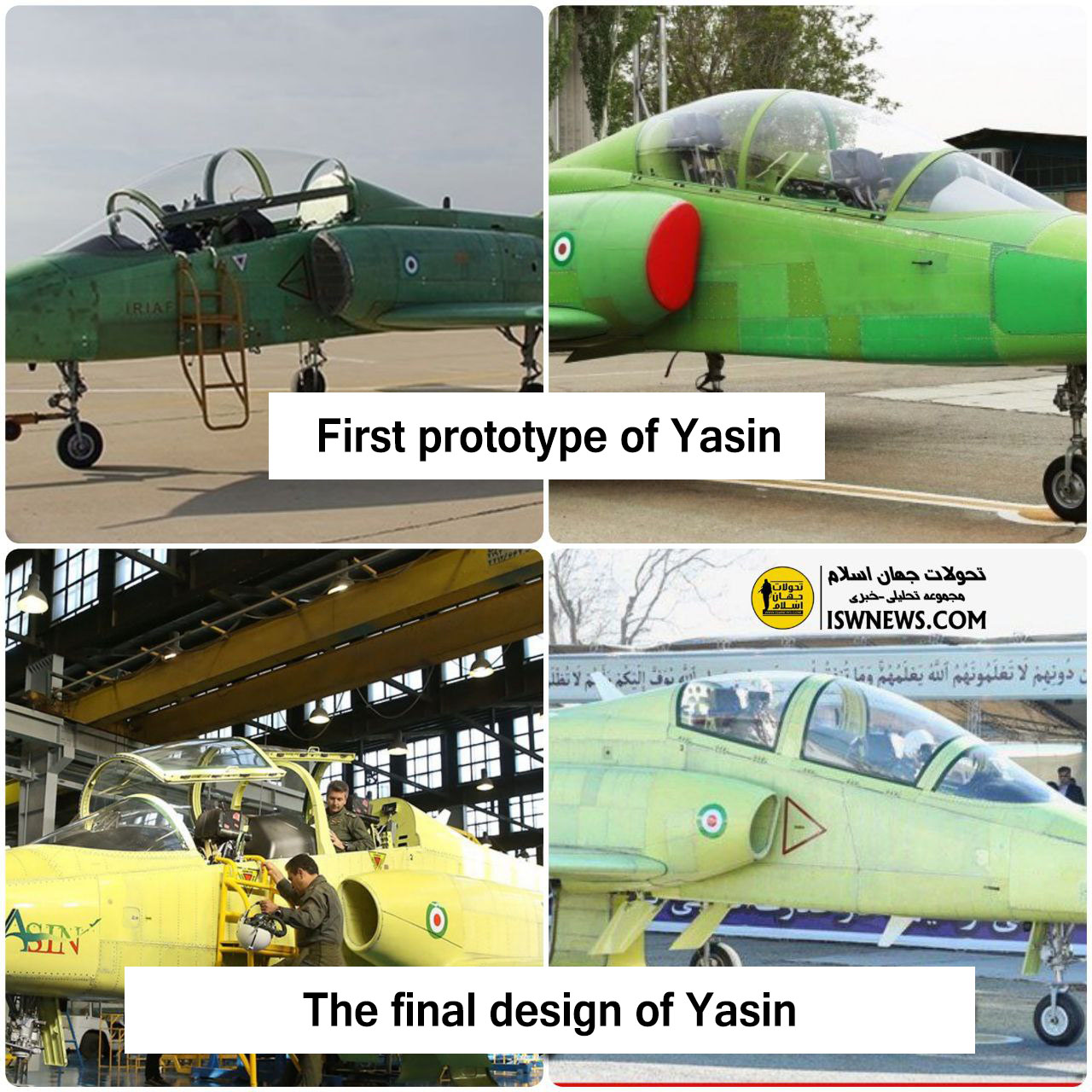
    Change in canopy of fighter jet
    As it can be seen in the photos, the prototype possesses a cabin with a greater arc in comparison to the fuselage of the jet, but in the final design it has an angle, which is such that two pilots are being placed in the cockpit in a stepped way and they enjoy the maximum angle of view. Furthermore, the cockpit doors, which could be opened totally in the prototype, can be opened in two pieces in the final design.
    Changing air intake, exhaust of hot gases in engine
    As it can be seen clearly in the photos, the air intake of the engine has become smaller, which is perhaps linked to shifts in the engine of the fighter jet. Moreover, some changes have been made in the exhaust component of the hot gases of the engine, because its exhaust section is located outside a cover.
    The Iranian engineers also added VHF and UHF antennas, which are being used for secure communications. They also added an air brake under the fuselage and in front of the rear landing gear of the jet that helps reduce the speed of the jet in the landing process.

    Change in tail of the fighter
    The manufacturers of the fighter jet also changed its vertical rudder in order to reduce aircraft dragging, and it seems that they have changed the location of the horizontal rudder as well, and the horizontal rudder is slightly smaller than the prototype.

    We can mention to the following aspects of the training aircraft among other important points:

    In accordance to the photos released of the banner available in the production line of the Yasin combat training fighter jet, its various parts will be manufactured by different organizations in Iran. The cockpit displays are going to be produced by Sairan (Iran Electronics Industries), which was producing cockpit displays for the Kawsar fighter jets in the past.

    The canopy glass and its door, the ejection seat and the landing gears are going to be produced by the Iran Aircraft Manufacturing Industries Corporation. The wings as well as horizontal and vertical rudders will be made by Iran Helicopter Support and Renewal Industries (PANHA). And the radome and the cockpit will be manufactured by the Owj Aviation Industries. The manufacturers of the fuselage and the engine of the jet are not visible because of the angle that the picture is located.
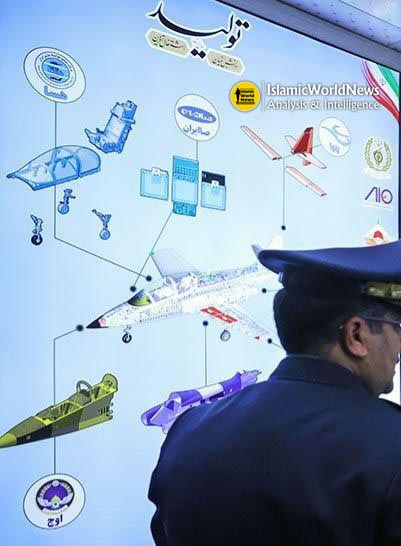
    Various parts of Yasin manufactured by different organizations

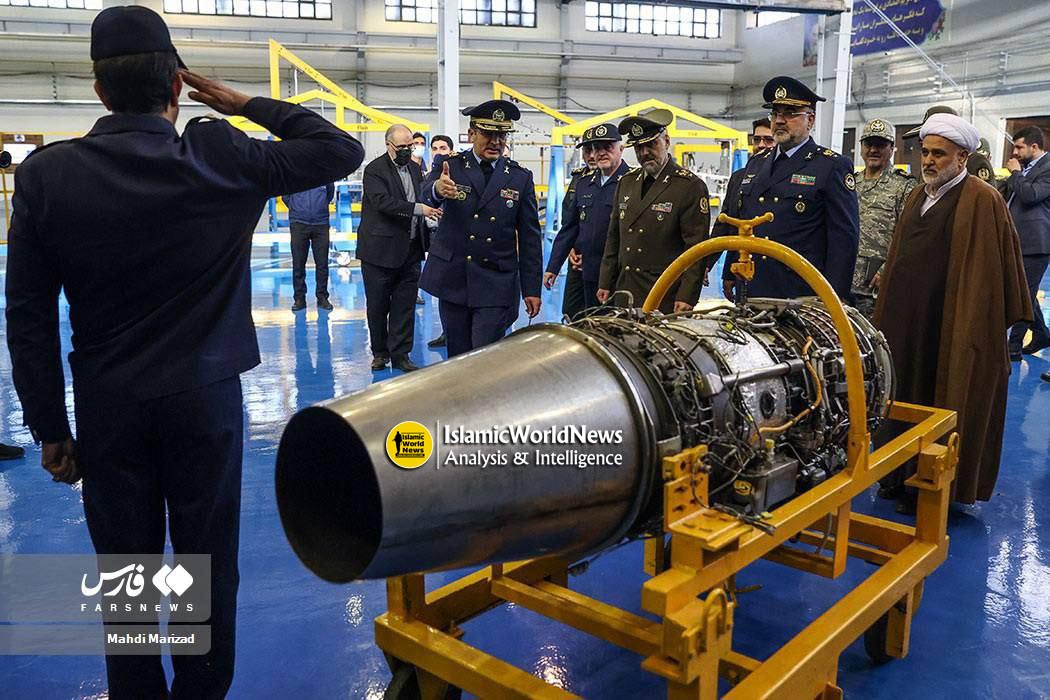
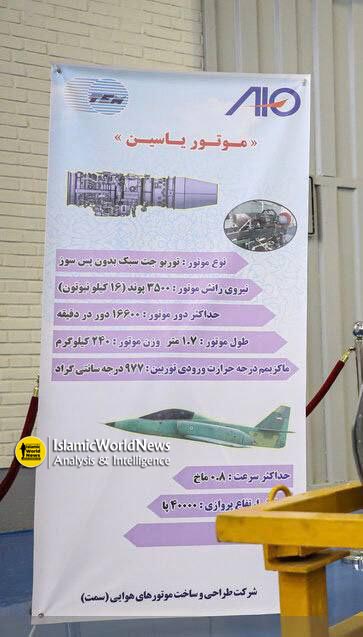
    Given the available pictures of the engine, the Owj Aviation Industries will utilize engines without afterburner for the fighter jet, which is being produced by the Iran Aviation Industries Organization (IAIO). It is known as the Owj-Y engine, which is a light turbojet engine without afterburner, possessing a thrust of 3500 lb-ft equivalent to 16 kilonewtons. The engine possesses a maximum speed of 16,600 rpm and it can provide the Yasin fighter jet with a maximum speed of Mach 0.8 and a maximum altitude of 40k feet.
    Furthermore, a single-seater model of the jet is going to be manufactured for close air support (CAS). The Yasin jet has three spaces, including the central space, which can be applied to carry an external fuel tank and the other two spaces can be utilized to carry arms. In the training prototype of Yasin jet, the two spaces are used for all sorts of training armaments.

    For instance, the Yassin fighter jet can carry and apply arms, including the Yassin advanced precision-guided smart bomb, the Maverick missile, various types of Iranian SDB bombs, and the Shafaq missile for the close air support operations.

    The Yassin fighter jet does not need any radar in order to utilize the weaponries and it can conduct close air support operations to defend ground forces.

    The production of the Yassin fighter jet is considered a step forward concerning the training for Iranian pilots, because they have been using a propeller plane such as Bonanza, and after that they fly a PC7 plane, and it would be better for them to get trained by an advanced fighter jet, when they are accepted in the fighter squadron.

    The fighter jet can meet all requirements of the Iranian air force, including all sorts of training drills and firings. The Yasin fighter can be categorized in the Yak-130 class and it seems to be very essential and functional for the training pilots to fly by using the new generation of fighter jets.

    Read more: Video: Iran unveils Yasin training jet

  • Military Knowledge: Sukhoi Su-34 Fighter-Bomber

    Military Knowledge: Sukhoi Su-34 Fighter-Bomber

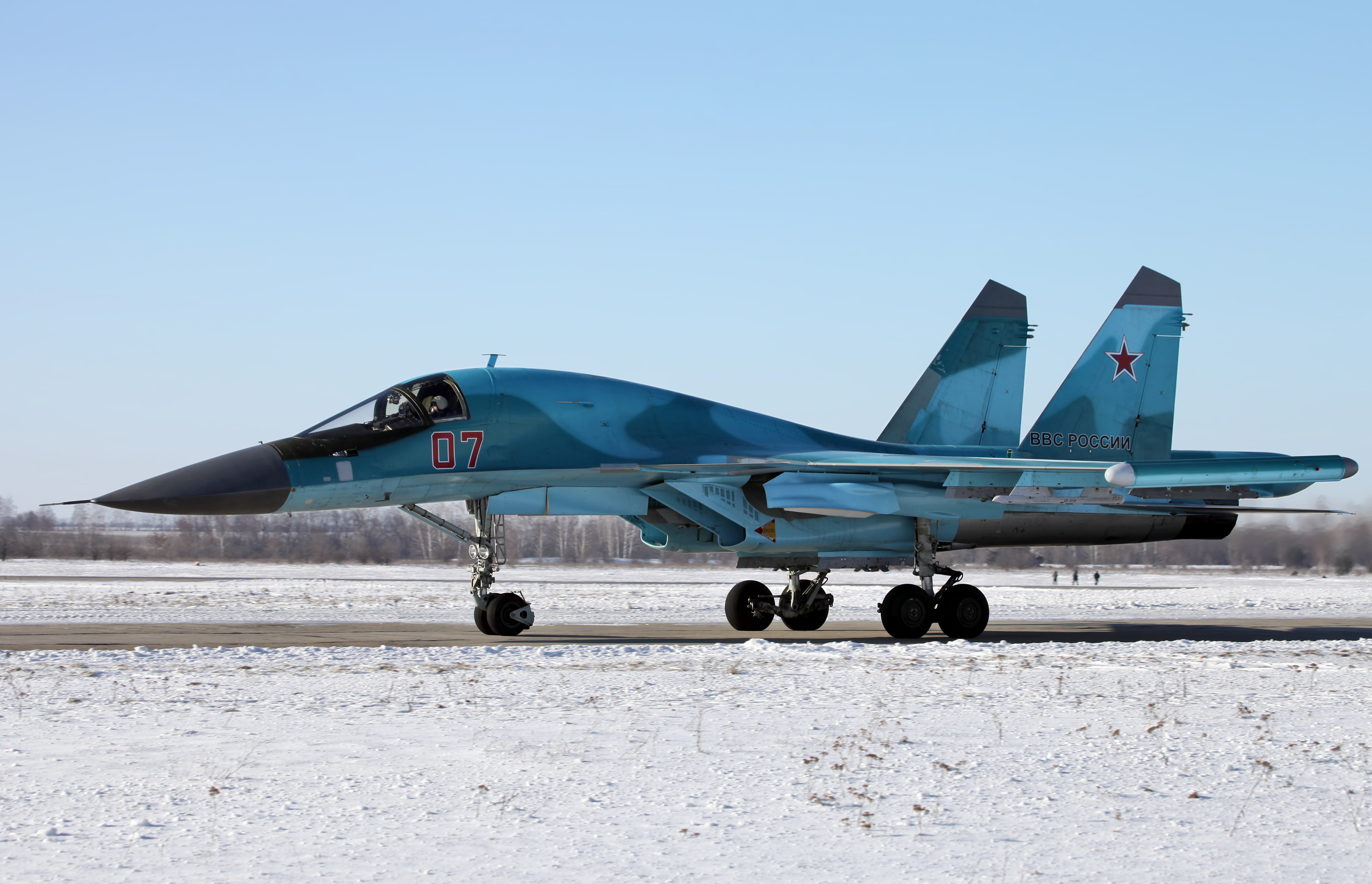
    The Su-34, despite being derived from the Sukhoi Su-27 Flanker, is equipped with a cockpit with two seats next to each other; Due to its different role from other fighters in this family, it does not have the title of Flanker.

    This fighter is primarily designed to attack ground and naval tactical targets and is capable of bombing, attack and air support operations. The fighter is capable of operating in any weather conditions and electronic warfare environments.

    The main purpose of producing the Su-34 fighter is to replace the old Su-24 fighters and Tu-22M3 bombers in the Russian Air Force.

    Su-34 fighter development

    The design and development of the Su-34 fighter has a long history. Sukhoi first began a new design in the mid-1980s to replace the old Su-24 fighters. Next, the Su-27 fighter design was selected, which had a high maneuverability.

    The original design of the Sukhoi 34 was known as the T10KM-2. The T10KM-2 is a Navy-derived version of the Sukhoi Su-27K. The design of the project was known in the Soviet Union as the T-10V, which was introduced in the late 1980s along with the design of the Soviet aircraft carrier Ulyanovsk.

    In 1990, a photo of a prototype fighter landing on a Tbilisi aircraft carrier was released, which Western officials mistakenly identified as a Su-27KU fighter.

    Tbilisi aircraft carrier: Admiral Kuznetsov aircraft carrier was first built under the name Riga, then launched under the name Leonid Brezhnev, then under the name Tbilisi conducted its naval tests and finally, it entered the service under the name of Admiral Kuznetsov.

    Finally, the first flight of the Sukhoi 34 fighter jet was performed on April 13, 1990 by pilot Anatoliy Ivanov.

    This version used a new nose, but the overall structure of the fighter was similar to the Su-27UB.

    In 1992, the Su-27IB (Sukhoi 34 prototype) was unveiled at the MAKS Airshow and refueled from an Il-78 refueling tanker. The aircraft was officially unveiled on February 13, 1992 in Machulishi, Belarus. A year later, the fighter was re-introduced to the public at the MAKS Airshow.

    The first version of this fighter, known as the T10V-2, first flew on September 18, 1993. The initial test version differed in appearance from the original because it was manufactured in Novosibirsk, the production site of the Sukhoi 24 fighter jet.

    The first standard version of the Sukhoi 34 fighter jet flew on December 28, 1994, equipped with the Leninets OKB-designed V004 passive electronically scanned array radar system. This version, because it was different from the original versions, was once again introduced at the 1995 Paris Air Show under the name Su-32FN. This version was designed to serve off the coast of Russia to operate against naval targets. Sukhoi also produced another version called the Su-32MF, but it was canceled due to budget constraints.

    The Russian military currently has two different versions of the Sukhoi 34, one for electronic warfare, equipped with the L700 Tarantul ECM pod, and the other for intelligence, surveillance and reconnaissance operations.

    The modern version of the Sukhoi 34 is known as the Su-34M, which is equipped with a new electro-optical infrared targeting pod, a Kopyo-DL rearward facing radar that can warn the pilots if missiles are approaching, combined with automatic deployment of countermeasures and jamming

    The difference between the two designs of Su-34 and Su-27KUB

    The Su-27IB fighter (prototype Sukhoi 34) and the Su-27KUB, which is a naval training version, are not related to each other and each has a separate design. In appearance, the nose of the Su-27KUB design is quite round, but the nose of the Su-34 (Su-27IB) is like a duck tip.

    Appearance difference between Sukhoi 34 and Sukhoi 27

    Orders and delivery

    The first batch of eight of these fighters was built at the Novosibirsk plant and was ready for delivery in 2004. In 2006, Russia’s defense minister announced the purchase of five Su-34 fighter jets. In late 2008, a contract was signed for the purchase of 32 Sukhoi 34 fighters until 2015.

    According to reports from the Russian Ministry of Defense, by 2015, 70 Sukhoi 34s were to be replaced by 300 Sukhoi 24s, after which the program was canceled and the old Sukhoi 24s were upgraded.

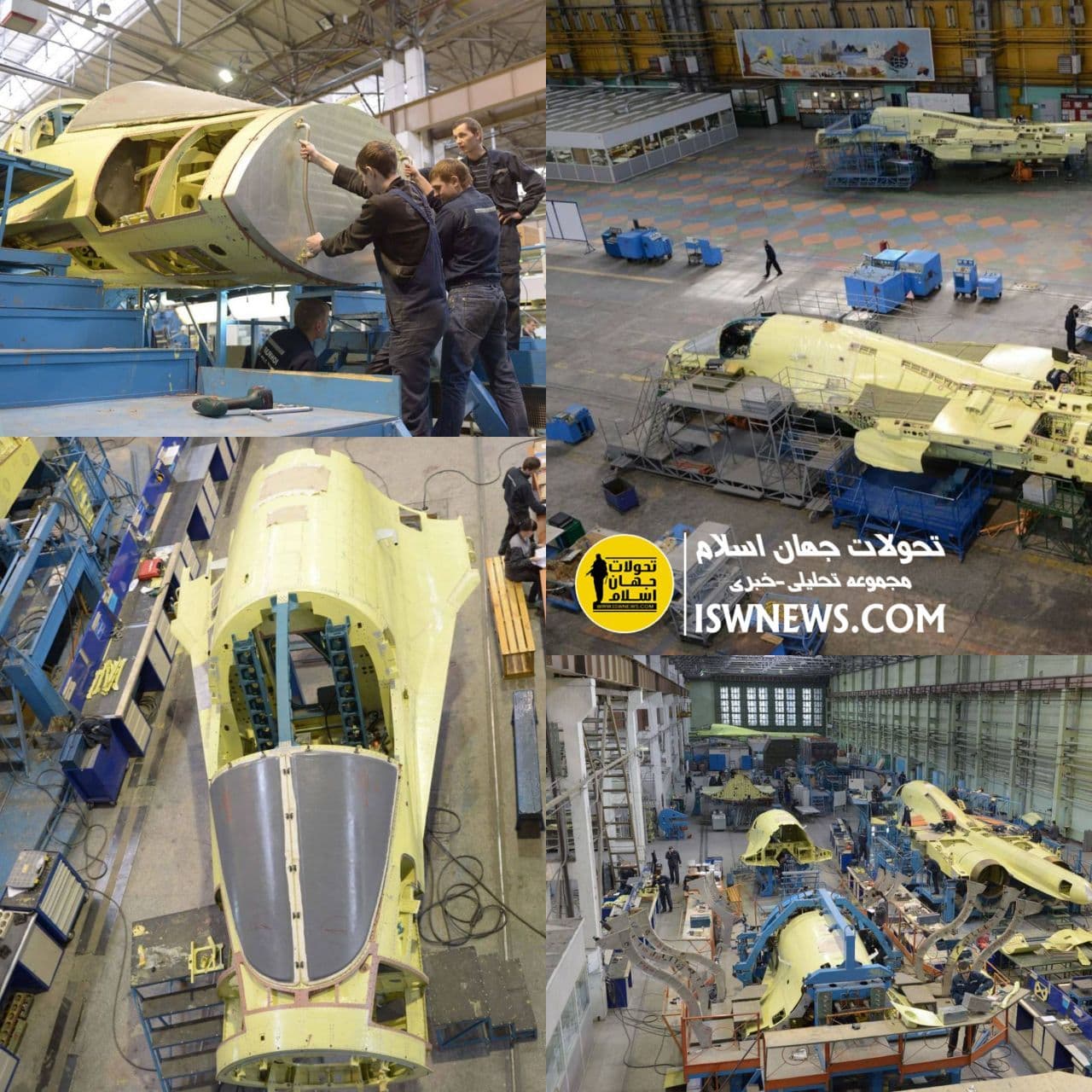
    Production line/assembly of Su-34 fighter

    Su-34 fighter design

    The Sukhoi 34 is similar in structure to the Su-27 and Su-30 in wing, tail and engine nozzles, and similar to the Su-30MKI in the Canards. The engine of this fighter is Saturn AL-31FM1 turbofan, which is also installed on the Su-27SM fighter.

    The operational range of this fighter is 4000 km with one time refueling and it is capable of carrying 8000 kg of all kinds of ammunition and weapons.

    This fighter is also known by the nickname Duckling or Duckbill due to the fact that two pilots are placed next to each other. In the cockpit, the pilot is on the left and the weapons operator is on the right. One of the advantages of this design is that it is not necessary to use duplicate equipment for every pilot.

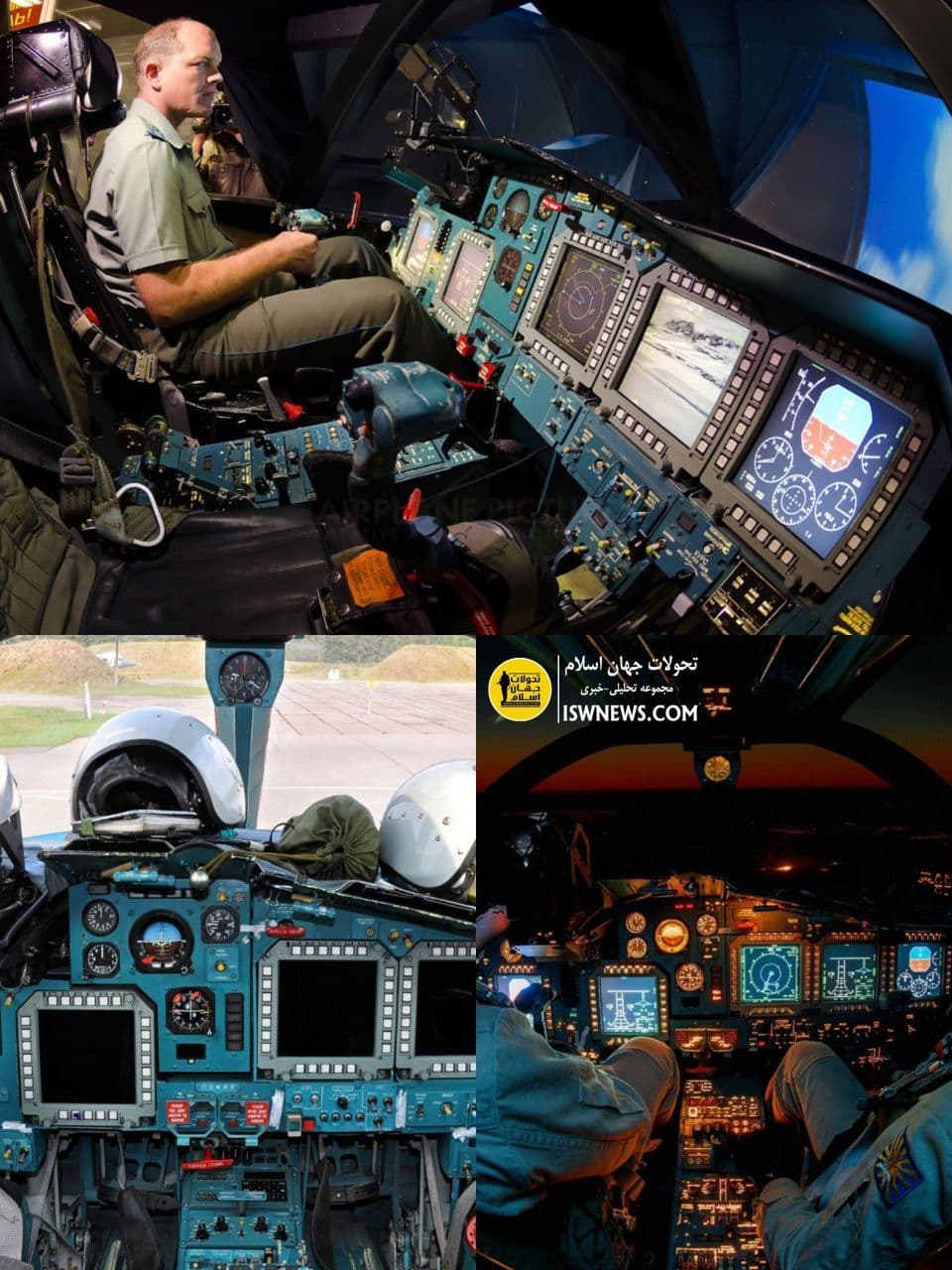
    Su-34 fighter cockpit

    Fighter crews are able to stand and walk inside the cockpit during long missions. Even the size of the cabin is so large that the pilot and operator have the ability to lie down and sleep on the floor. There is also a toilet and a small kitchen behind the crew seats.

    Toilet inside the Su-34 fighter

    The crew enters the fighter through a ladder from under the cockpit. The entire cockpit is covered with 17mm armor to withstand a variety of threats.

    Ladder under the cockpit of the Su-34

    The Su-34 fighter is equipped with the Helmet Mounted Display System (HMDS). HMDS is a device used in aircraft to project information to the pilot’s eyes. It provides the pilot with situation awareness, an enhanced image of the scene and cue weapons systems to the direction their head is pointing.

    Su-34 fighter helmet

    The radar of this fighter is Leninets OKB-designed V004 passive electronically scanned array radar, which has the ability to detect a variety of targets. The detection range of this radar is 200 to 250 km and it has the ability to detect 10 targets simultaneously. It also has the ability to engage with 4 targets simultaneously. In addition to the main radar, a N012 rearward-facing warning radar is used behind the fighter, which has a range of 120 km.

    Video of Su-34 fighter flying, maneuvering, takeoff, landing, firing various missiles, rockets, etc.

    Su-34 fighter-bomber specifications:
    Length: 23.34 m
    Wing length: 14.7 m
    Height: 6.09 m
    Empty weight: 22500 kg
    Gross weight: 45100 kg
    Engine: 2 × Saturn AL-31FM-1 turbofan
    Speed: 2200 km/h
    Range: 1100 km
    Service ceiling: 17,000 meters
    Crew: 2
    Origin: Soviet Union (Russia)
    First flight: 13 April 1990
    Produced: 2006–present
    Hardpoints: 12 × on wing and fuselage with a capacity of 8000 kg

    Su-34 Armament:

    Guns: 1 × 30 mm Gryazev-Shipunov GSh-30-1 autocannon with 180 rounds

    KAB-500KR and KAB-1500KR TV guidance bombs
    KAB-500L and KAB-1500L laser guided bombs
    KAB-500OD guided bombs
    KAB-500S-E satellite guidance bombs
    RBK-500 and SPBE-D cluster bombs
    BETAB-500SHP concrete-piercing bombs
    ODAB-500PM, OFAB-100-120 and OFAB-250-270 free-fall bombs

    80 mm S-8 missiles with a range of 1 to 4.5 km
    122 mm S-13 missiles with a range of 1 to 4 km
    340 mm S-25 rockets

    Vympel R-73 short-range air-to-air missile with a range of 30 km
    All versions of the Vympel R-27 medium-range air-to-air missile with a range of 40 to 170 km
    Vympel NPO R-77 medium-range air-to-air missile with a range of 80 to 200 km

    Kh-29 air-to-surface missile with a range of 10 to 12 km
    Kh-25 air-to-surface missile with a range of 11 to 60 km
    Kh-38 air-to-surface missile with a range of 70 km
    Kh-58 air-to-surface missile with a range of 120 km
    Kh-59 air-to-surface missile with a range of 200 km

    Kh-36 cruise missile with a range of 120 km
    Kh-65SE cruise missile with a range of 600 km
    Kh-SD cruise missile with a range of 300 to 1,900 km

    Kh-31A / AD anti-ship missile with a range of 25 to 105 km
    Kh-41 anti-ship missile with a range of 120 to 240 km
    Kh-35U anti-ship missile with a range of 300 km
    Kh-61 anti-ship missile with a range of 300 to 600 km

    Kh-25MP anti-radar missile with a range of 60 km
    Kh-31P anti-radar missile with a range of 110 km
    Kh-58 anti-radar missile with a range of more than 120 km

    Read more:
    Military Knowledge: Sukhoi Su-27 Multirole Fighter Jet
    Military Knowledge: Sukhoi Su-30 Multirole Fighter Jet
    Military Knowledge: Sukhoi Su-33 Multirole Fighter Jet

    Click to see the full size image

    “Sukhoi Su-34 Fighter-Bomber” collection of posters in Persian, Arabic, Kurdish, Azeri, Russian for Social Media:

    Sources: 1 – 2

  • Military Knowledge: Kowsar Fighter Jet + Images

    Military Knowledge: Kowsar Fighter Jet + Images

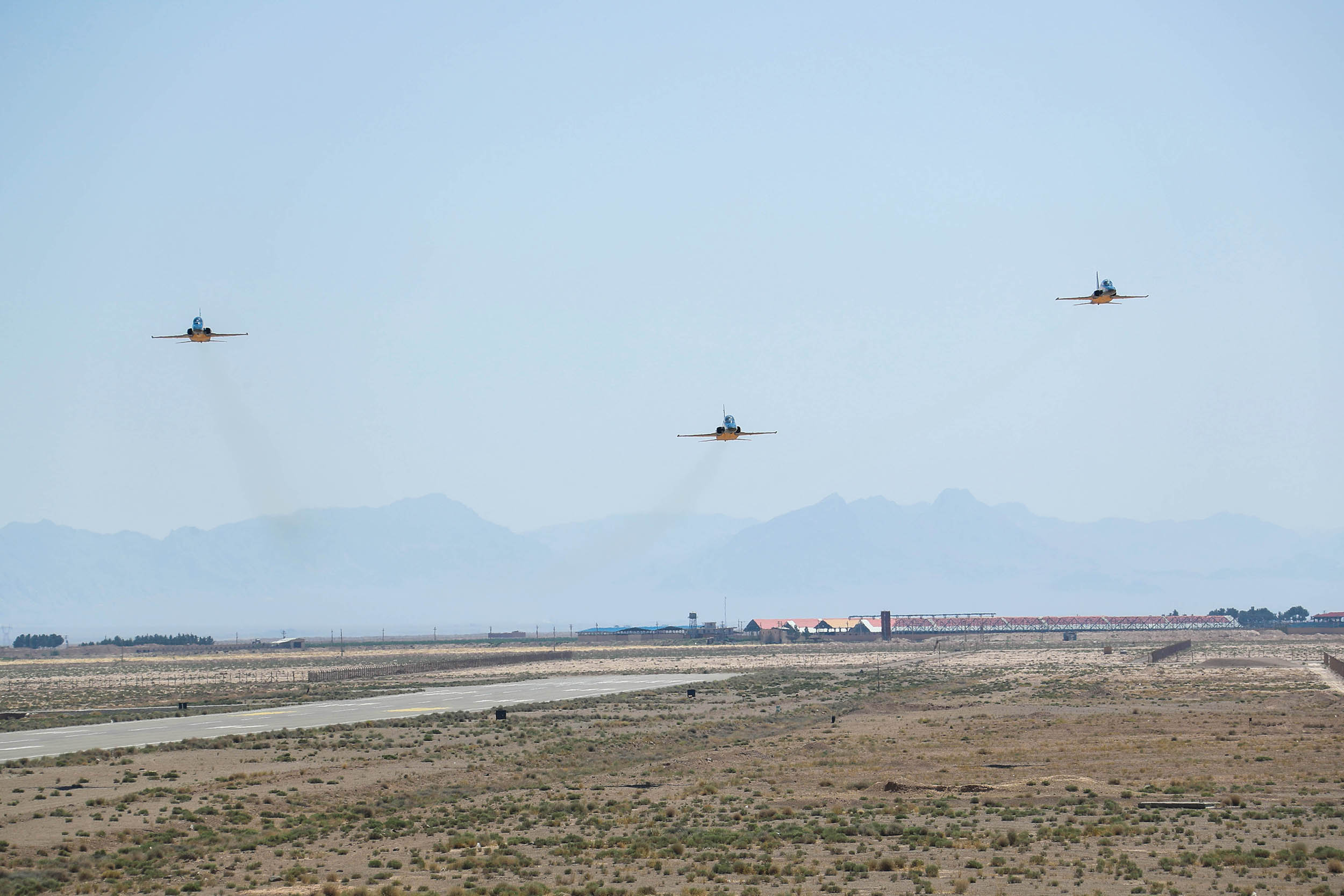
    On June 25, 2020, during an official ceremony, three Kowsar fighter jets were delivered to the Iranian Air Force. Kowsar fighter is made in two types of single cabin and two cabins, the two-cabin type of which, in addition to combat capability, is used to train pilots in the advanced stage.

    This fighter uses a native Iranian turbojet engine called “Owj”. Owj is the first jet engine made in Iran that can fly up to 50,000 feet and can be mounted on a variety of birds with a maximum lift weight of 10 tons. The fighter also uses advanced 4th generation avionics and fire control systems.

    Specifications:
    Specifications:
    – Crew: 2
    – Length: 14.45 meters (47ft 4¾in)
    – Wingspan: 26 feet 8 inches (8.13 meters) – 27 ft 11.875 in (8.53123 m) with wing-tip missiles
    – Height: 4.08 meters (13ft 4½in)
    – Wing area: 17.28 square meters (186 ft²)
    – Empty weight: 4,349 kg (9,558lb)
    – Gross weight: 7,157 kg (15,745lb)
    – Max takeoff weight: 9,312 kg (20,486lb)
    – Powerplant: 2× Owj afterburning turbojet engines (based on J85-GE-21B engine)

    Performance
    – Maximum speed: 1.6 Mach (917kn, 1,060mph, 1,700 km / h)
    – The declared range by the Ministry of Defense: 1100 km (F5-E has a range of 1405 km)
    – Combat radius (20 min reserve): 172 km with 2 Fatir missiles (Iranian Sidewinder model) plus 2400 kg of weapons, with 5 minutes combat at max power at sea level
    – Ferry range: 2900 km with three external fuel tanks
    – Ferry range (20 min reserve: 2000 km drop tanks retained
    – Ferry range (20 min reserve: 2300 km drop tanks jettisoned
    – Service ceiling: 15,800 meters (51,800 ft)
    – Rate of climb: 175 meters per second (34,400 ft / min)
    – Radar: Grifo radar (an Italian radar, Chinese model or its domestic production has been used) with a range of 93 km and the ability to engage with two simultaneous targets.

    Armament
    – Hardpoints: 7 total; 2× wing-tip AAM launch rails, 4× under-wing & 1× under-fuselage pylon stations with a capacity of 3200 kg.
    – Cannon: One 20 mm cannon in the nose
    – Missiles, Rockets and bombs: 2× 250 kg bombs or 5× 450 kg bombs or 2× 900 kg bombs and all kinds of Hydra rocket launchers and its Iranian models and Simorgh cluster bomb and up to 4 Fatir (Sidewinder) air-to-air missiles

    Click to see the full size photo


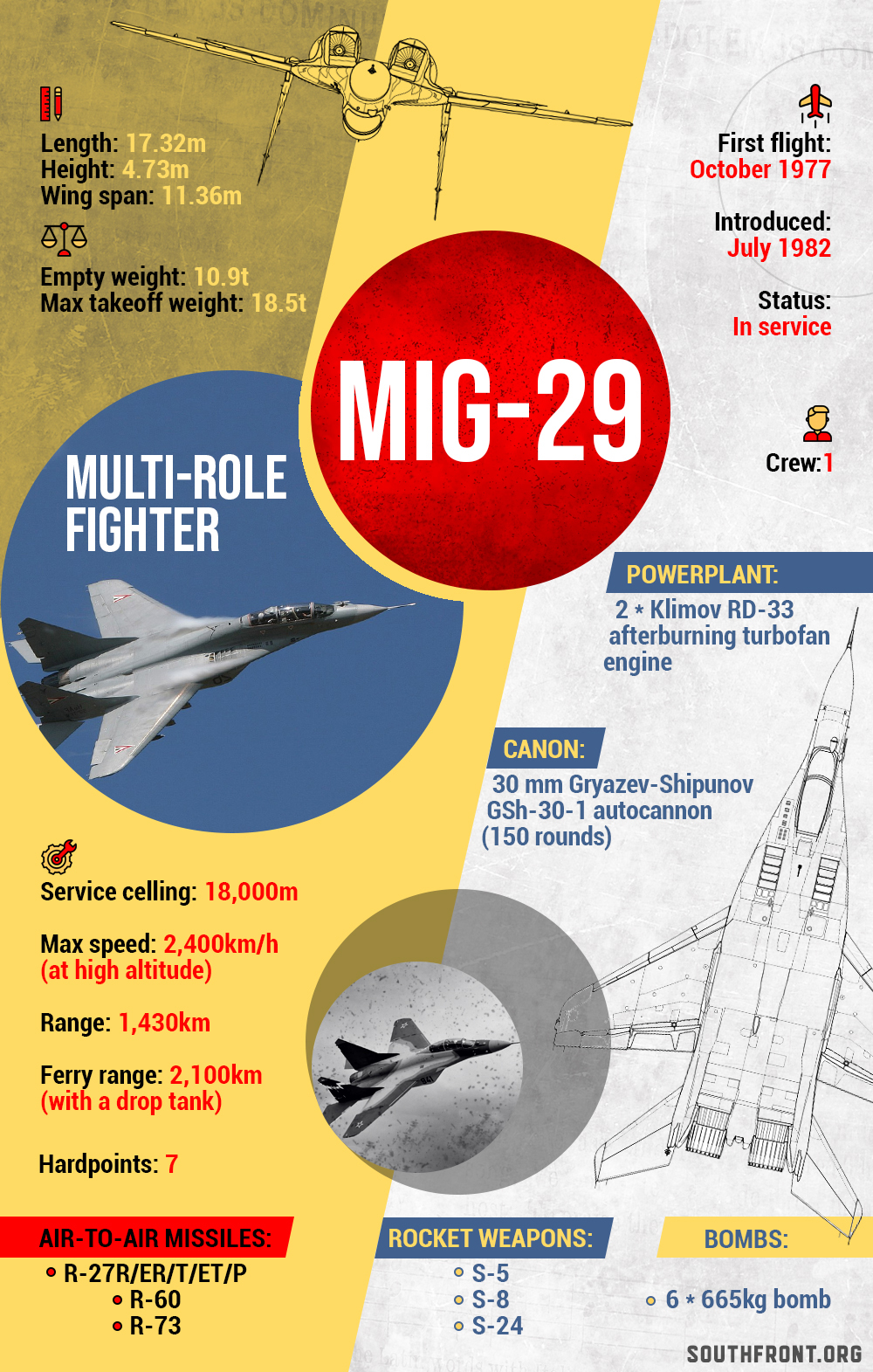
  • Military Knowledge: MiG-29 multirole fighter jet

    Military Knowledge: MiG-29 multirole fighter jet

    Variants

    MiG-29A: Initial production version; entered service in 1983. NATO reporting name is “Fulcrum-A”. MiG-29A is the Initial production model version for Warsaw Pact while the MiG-29B is the downgraded export version for non-Warsaw Pact nations. MiG-29A lacks a nuclear weapon delivery system and has initial production radar, ECM and IFF (no ECM and IFF in MiG-29B).

    MiG-29UB: Twin seat training model. Infra-red sensor mounted only, no radar. NATO reporting code is “Fulcrum-B”. Export variant had downgraded systems similar to MiG-29A.

    MiG-29S: The MiG-29S, given the NATO reporting code “Fulcrum-C”, features flight control system improvements; a total of four new computers provide better stability augmentation and controllability with an increase of 2° in angle of attack (AoA). An improved mechanical-hydraulic flight control system allows for greater control surface deflections. The MiG-29S has a dorsal hump, which led to its nickname “Fatback”, houses the L-203BE Gardenyia-1 ECM system. Improvements to software and processing capabilities enables the tracking of up to 10 targets and the simultaneous engagement of two with the R-77 missile. The MiG-29S also has a limited ground-attack capability.

    MiG-29SE: Export model of MiG-29S with slightly downgraded N-019ME radar with multiple target tracking ability and RVV-AE (R-77 missile) compatibility. Its weapons mix includes R-27T1, R-27ER1 and R-27ET1 medium-range missiles. The aircraft can be fitted with active ECM systems, weapons guidance aids, improved built-in check and training systems. The MiG-29SE can simultaneously engage two air targets.

    MiG-29SM: Similar to the MiG-29S, but with the ability to carry guided air-to-surface missiles and TV- and laser-guided bombs. NATO reporting code is “Fulcrum-C”.

    MiG-29SMT: The MiG-29SMT is an upgrade package for first-generation MiG-29s containing enhancements intended for the MiG-29M variant. Additional fuel tanks in a further enlarged spine provide a maximum flight range of 2,100 km on internal fuel. The cockpit has an enhanced HOTAS design, two 152 × 203 mm (6 × 8-inch) colour liquid crystal MFDs and two smaller monochrome LCDs. The MiG-29A was not designed for an advanced air-to-ground capability, this is substantially improved by the SMT upgrade; features include air-to-ground radar detection and integrated air-to-ground guided weapons. The power plant are upgraded RD-33 ser.3 engines with afterburning thrust rated at 8,300 kgf (81.4 kN) each. The weapons load was increased to 4,500 kg on six underwing and one ventral hardpoints, with similar weapon choices as for the MiG-29M. The upgraded aircraft can also accommodate non-Russian origin avionics and weapons.

    Click to see the full size