
Bagram: The Achilles’ Heel for China and Iran
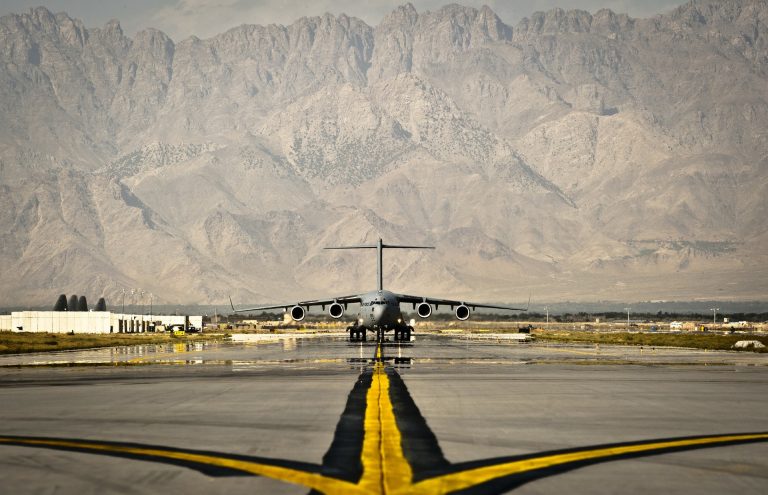
This article explores the U.S. military and security doctrine in West Asia, focusing on the strategic significance of bases like Bagram in Afghanistan. The United States aims to reduce its large-scale military presence and instead rely on air power and special operations forces to achieve its objectives, particularly near the borders of Iran, Russia, and China. Afghanistan, with the Bagram Air Base, offers a key position for rapid and sustained access to these frontier zones. The analysis also examines close U.S.–Israeli cooperation and the “flat terrain” strategy, which emphasizes air dominance and the elimination of defensive obstacles in the region. Ultimately, these strategies are designed to secure military superiority in West Asia and influence global economic and political corridors.
In recent weeks, U.S. officials have repeatedly stressed that the Afghan government must allow American access to Bagram Air Base. Otherwise, the use of military force to seize the base remains a top priority. This insistence has led analysts to question why Washington is so determined to regain control of this facility. The urgency becomes clearer when viewed through the lens of the 2022 U.S. National Security Strategy, which outlines a broad withdrawal of American forces from West Asia. Notably, Donald Trump’s campaign promises included pulling troops out of the region. Yet, despite previous drawdowns, Afghanistan is once again emerging as a key military destination for the United States.
Understanding the U.S. Regional Presence Strategy
Decoding America’s current posture requires close attention to its 2022 national security blueprint, which mandates minimizing troop numbers in West Asia while maximizing effectiveness through elite units, rapid response capabilities, and air superiority. The targeted killings of Osama bin Laden and Abu Bakr al-Baghdadi exemplify this approach: special forces, backed by air support, enter, execute missions, and exit swiftly.
Strategists behind this doctrine have ensured that the new security model doesn’t compromise U.S. national interests. While the approach may seem paradoxical, its core lies in air-based regional presence. In this framework, air power—coordinated with special operations—drives mission success. To maintain this capability, the U.S. must control or build bases in key strategic zones across West Asia.
Unlike the heavy deployments of 2001, the U.S. now avoids mass troop presence, recognizing that regional adversaries are also heavily armed, and larger deployments increase casualty risks. Instead, the U.S. seeks a flexible, mobile, and resilient footprint, relying on multi-purpose military bases supported by air and special forces to maintain influence without overexposure.
Key Characteristics of Strategic Zones for U.S. Military Presence
• The primary feature of these zones is their location at the intersection of multiple national borders. The more neighboring countries a base is near, the greater its strategic value.
• The second feature is the ability to provide rapid and sustained access for U.S. air forces to the borders of national security threats—namely Russia, China, and Iran.
Afghanistan’s Role in U.S. Regional Strategy
Bagram Air Base in Afghanistan embodies both strategic criteria sought by the United States for regional dominance in West Asia. It is a unique facility that enables permanent, rapid, and uninterrupted air force deployment by the U.S. and NATO to the borders of Russia, China, and Iran. America’s presence in Afghanistan resembles applying pressure to the core of a diamond—aiming to fracture it. While other border zones like Jordan, Saudi Arabia, Iraq, and Syria (especially near Al-Qa’im) hold strategic importance, Bagram stands out as the most critical geostrategic location for the U.S. globally.
Bagram is the only site that offers simultaneous access to the borders of Iran, Russia, China, and even India, Pakistan, and all Central Asian nations. The U.S. military seeks the ability to deploy to the edge of these borders at will, with minimal delay, and to penetrate deep into their territories. This strategy envisions a seamless aerial corridor from the western and eastern edges of U.S. territory to the frontiers of China and Russia, without any barriers to fighter jet operations.
Moreover, U.S. air dominance over Afghanistan allows it to maintain a lasting balance in relations among Pakistan, India, and Central Asia. This balance could reshape the design of regional and global corridors, making it nearly impossible to establish any route outside U.S. influence. Such corridors would serve to contain the economies of Iran, China, and Russia, and simplify efforts to undermine them.
Israel’s Role in U.S. Regional Strategy: The “Flat Terrain” Doctrine
Israel effectively functions as an advanced outpost for the United States and NATO in West Asia and North Africa. The security, military, and intelligence strategies of both parties are designed and executed as complementary and overlapping frameworks. Deep, multi-layered cooperation between Washington and Tel Aviv has turned Israel into a regional arm of U.S. geostrategic ambitions, with little divergence in their strategic orientations.
From a geopolitical standpoint, the territorial position of Israel is highly strategic, offering direct access to the borders of Jordan, Syria, Lebanon, Egypt, and Saudi Arabia, and through the Red Sea, a gateway to northern and eastern Africa. Thus, Washington’s unwavering support for Israel is not merely ideological or political—it is a cornerstone of its broader strategy to maintain geographic and military superiority in the heart of the Middle East.
According to the author, Israel is pursuing a “flat terrain” strategy—an aerial version of the scorched-earth doctrine. Its central aim is to eliminate any obstacle to continuous air force presence across West Asia, extending to the borders of China and Russia. The initial phase of this strategy is already visible in Israel’s persistent aerial presence over Lebanon and its readiness to conduct military operations anywhere, anytime.
Under this doctrine, all infrastructure capable of resisting or obstructing U.S. and Israeli air forces in West Asia must be dismantled—starting with Gaza, spreading to Lebanon, and culminating in the destruction of Syria’s military infrastructure near Iran’s borders. Israel’s attacks on Syria’s defense systems and the elimination of any serious resistance are part of this plan, which has effectively granted Israel full control over Syrian airspace.
The Position of Iran and Other Regional States in the U.S.–Israeli Strategic Framework
The presence of large or small countries in West Asia poses no challenge to the U.S.–Israeli regional strategy as long as they do not obstruct its implementation. Therefore, regional states must either align with U.S. policies—like the Arab states and Central Asian countries after the collapse of the Soviet Union—or be consumed by internal crises, unrest, and economic hardship—like Iraq and Syria—rendering them incapable of resisting the strategic agenda. Within this framework, the U.S. Departments of Defense and State are tasked with advancing instability, disruption, and even fragmentation in nations that oppose foreign domination, using both soft and hard power.
During the 12-day war, we witnessed the implementation of a no-fly zone and restricted access along Iran’s western border—a rehearsal for expanding the U.S. regional presence and Israel’s “flat terrain” strategy. The current goal is to extend this tactic to the borders of China and Russia. If successful, the U.S. would consider its strategic objectives fulfilled, and with the combined aerial capabilities of the U.S., Israel, and NATO, dominance over the entire region up to China and Russia would be solidified. However, Iran’s symbolic role in the Middle East—especially at this critical juncture as the world approaches a new global order—remains a major obstacle to the ambitions of Washington and Tel Aviv. Iran today is not only the bastion of resistance in West Asia but also a defensive stronghold against U.S. global hegemony, complicating American access to the borders of China and Russia.
Post–October 7 Military and Security Doctrine Shift
In the past two years, Israel’s strategic approach has blurred the lines between military and intelligence operations. Its air force now possesses the capability to launch air-dropped ballistic munitions with pinpoint accuracy at targets up to 1,000 kilometers away in under 20 minutes. This means specific targets can be struck at precise times with unprecedented speed. The significance of this new operational model becomes clearer when considering that striking a target 1,000 kilometers from Iran, China, or Russia’s borders equates to penetrating deep into their territorial space. This doctrine marks a turning point in the history of warfare, where emerging technologies like artificial intelligence, electronic surveillance, and advanced aerial munitions not only disrupt but erase traditional security and military boundaries.
Previously, a successful assassination or sabotage mission under the security paradigm required years of intelligence gathering, planning, surveillance, espionage, and ultimately bombings or targeted killings—with a high risk of failure. Today, similar operations can be executed under a military paradigm with extraordinary speed and precision. Notable examples include the assassinations of Iranian military and political leaders during the 12-day war, as well as Hezbollah commanders in Beirut and Hamas leaders in Doha, carried out using military assets.
French author Nicholas Blanford, in his book Warriors of God: Inside Hezbollah’s Thirty-Year Struggle Against Israel, recounts a failed Israeli commando assassination attempt in the village of Ansariyeh in southern Lebanon. The operation was thwarted by Hezbollah’s vigilance, resulting in the complete destruction of the Israeli unit. This episode illustrates the difficulty of past intelligence operations—now made significantly easier through modern military technologies.
Cunclusion
The United States’ regional strategy in West Asia is centered on minimizing casualties and costs by avoiding large-scale military deployments and direct wars. Instead, it emphasizes a sustained and rapid presence through strategically located air bases, enabling swift access to the borders of Iran, China, and Russia. This approach aligns closely with Israel’s regional doctrine.
The overarching goal is to dismantle any resistance to U.S. aerial dominance and geopolitical hegemony extending to the frontiers of these rival powers. In the post–October 7 world—where the boundaries between military and intelligence operations have blurred—such an air-centric posture allows the U.S. to penetrate deep into adversarial territories and conduct high-precision targeted operations in under an hour. This marks a significant evolution in modern warfare and reflects a broader ambition to reshape the regional balance of power.
Comment