
Deployment of U.S. Airborne Divisions in Iraqi Kurdistan: A Serious Warning for Iran
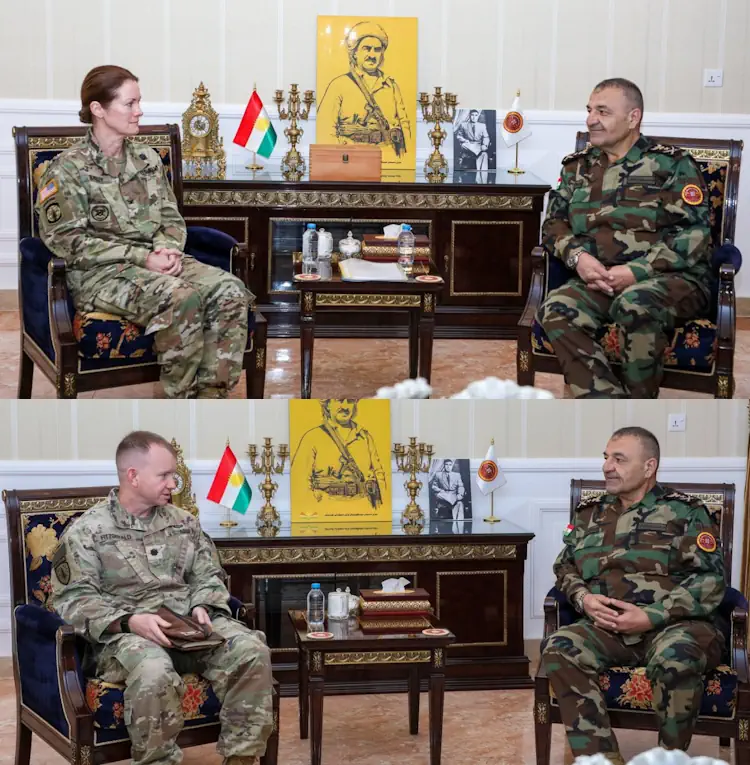
During the recent days, Lt. Gen. Sihad Barzani, Commander of the Peshmerga 1st Support Forces Command, met with Colonel Stephanie Bagley, the US Senior Defense Official, and Colonel Fitzgerald, the Acting Commander of the Coalition Forces in the Kurdistan Region. Reports indicate that American and Kurdish commanders discussed the possible deployment of the 101st Division, 82nd Division, and the 75th Airborne Regiment of the U.S. Army in northern Iraq.
The significance of this meeting lies in the context of the recent 12‑day war, after which speculation has grown about potential heliborne operations by the U.S. and Israel inside Iran—given the failure to achieve objectives through airstrikes alone.
American activity in Iraqi Kurdistan has visibly increased, including visits to border areas with Iran and patrols in mountainous regions alongside Peshmerga commanders. Meanwhile, Iran’s armed forces have conducted military exercises in recent weeks to counter infiltration and heliborne operations, testing air defense systems to strengthen rapid response capabilities against threats to vital facilities, strategic infrastructure, and sensitive sites.
Regional analysts suggest that if long‑range strikes prove insufficient, Washington may consider hybrid options such as limited airborne operations. Although not officially announced, the rise in U.S. heliborne drills and simultaneous Iranian defensive exercises reinforce this speculation. Iran’s anti‑heliborne maneuvers signal preemptive readiness to confront possible threats. Iran’s armed forces have recently conducted military exercises to counter infiltration and heliborne operations, testing air defense systems during these drills.
The 12‑day war demonstrated that long‑range bombardments, despite their intensity, did not fully destroy Iran’s underground infrastructure. Western analysts argue this limited strategic effect could drive complementary scenarios. In this framework, rapid, surprise airborne operations are examined as theoretical alternatives—not aimed at occupation, but at creating strategic disruption.
In such scenarios, potential targets could include missile infrastructure, command centers, and even key specialists in sensitive fields—highlighting the strategic weight of airborne units in U.S. military planning.
Comment