
China Expands Long-Range Air Power with J-16s
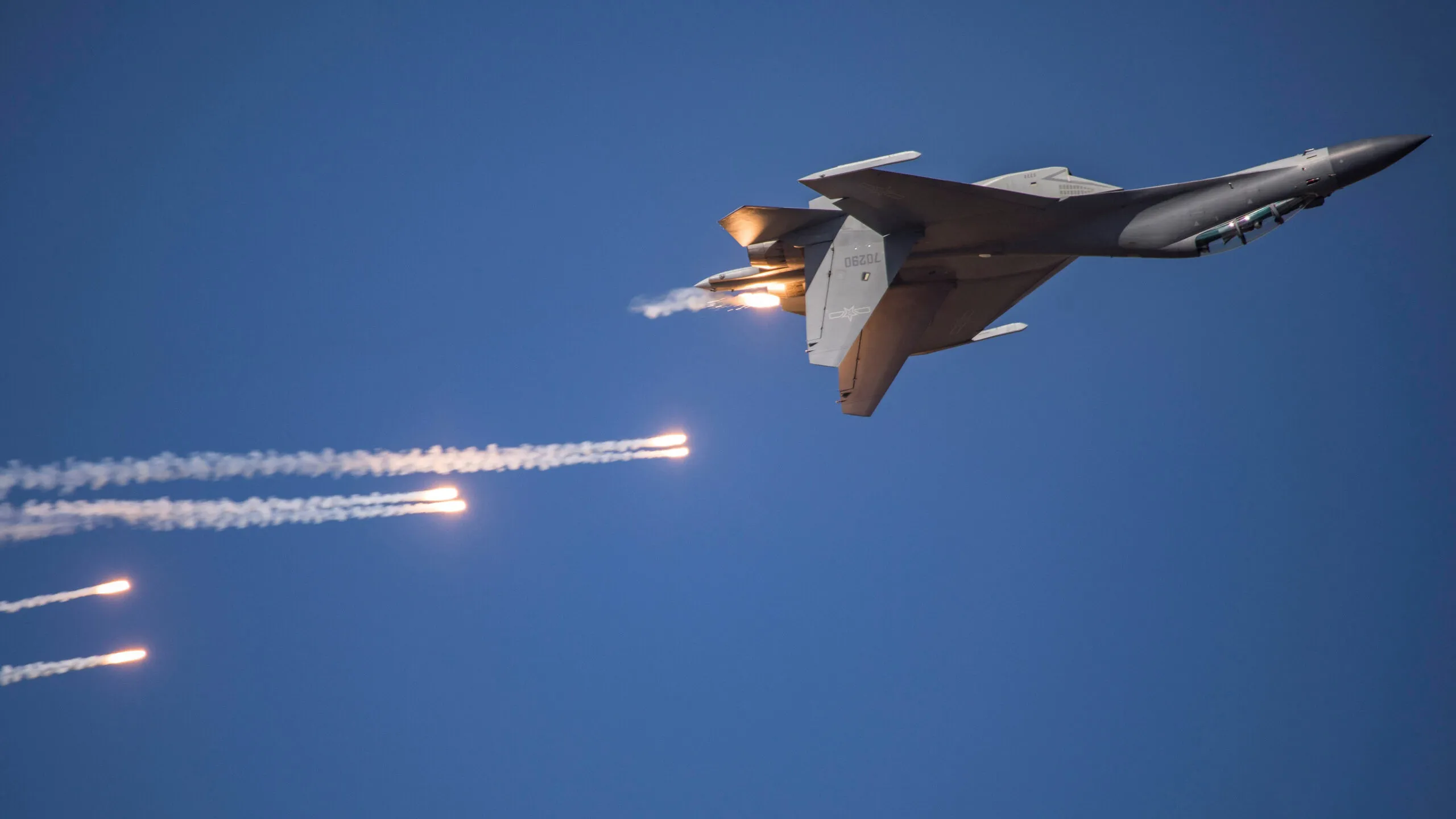
The Chinese Air Force has begun conducting advanced training missions with its J-16 fighter jets, focusing on long-range operations supported by aerial refueling. This capability marks a significant leap in China’s ability to project air power far beyond its coastal boundaries.
Military analysts interpret these exercises as a strategic signal to regional rivals: China is preparing to extend its operational reach deep into the Western Pacific, particularly toward the “Second Island Chain”—a key strategic zone that includes Guam and other U.S.-aligned territories. By enhancing flight range, mission endurance, and reducing reliance on local airbases, China is reshaping its aerial posture.
If paired with upgrades in radar systems, electronic warfare capabilities, and aircraft agility, this development could dramatically boost China’s influence in maritime operations, regional air dominance, and potential engagements beyond its immediate island periphery.
The Shenyang J-16 is a Chinese multirole fighter jet derived from the Shenyang J-11, itself a licensed version of Russia’s Sukhoi Su-27. Its design draws heavily from the Su-30MKK platform. As a 4.5-generation aircraft, the J-16 bridges the capability gap between older 4th-generation fighters and 5th-generation models. It features advanced AESA radar, carries PL-10 and PL-15 air-to-air missiles, and includes a variant optimized for electronic warfare. China currently operates around 450 units of this aircraft.

Comments