
From Airstrikes to Ceasefire: A Summary of the Latest Afghanistan–Pakistan Border Tensions
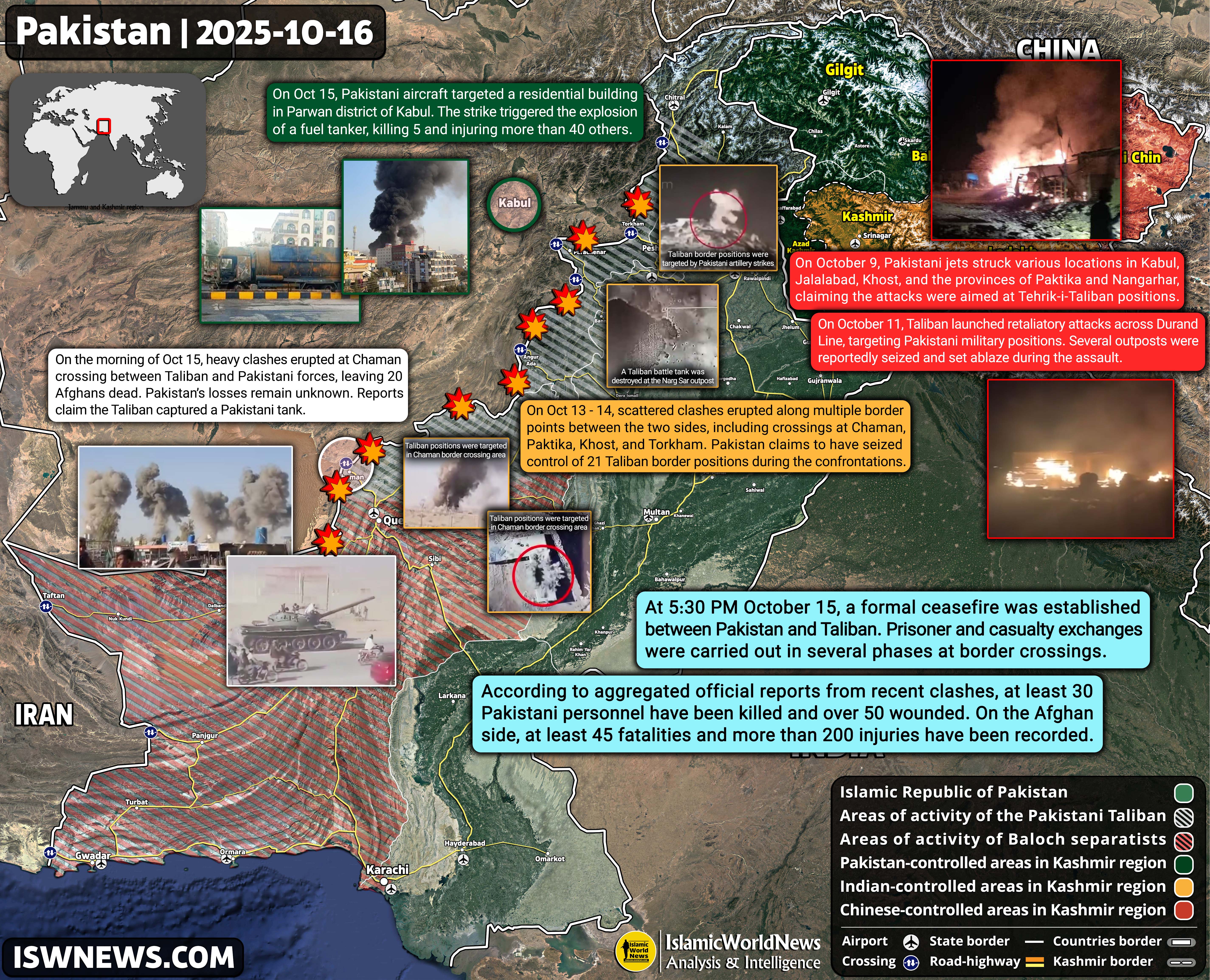
Border clashes between the Pakistani military and Afghan Taliban fighters erupted on October 9, beginning with Pakistani airstrikes on Kabul and later extending to eastern Afghan cities. The fighting was concentrated along the Durand Line, particularly at border crossings and military outposts. Pakistan conducted two air raids on Kabul and several strikes on the border town of Spin Boldak.
According to official figures, at least 30 Pakistanis were killed and over 50 wounded. On the Afghan side, at least 45 fatalities and more than 200 injuries were reported. In response to the escalation, Pakistan suspended all trade with Afghanistan, and border crossings are now open only for returning Afghan migrants expelled from Pakistan.
A partial ceasefire was established on the evening of October 15, with both sides exchanging prisoners and the bodies of the deceased at various border points.
Pakistan claims the conflict stems from the Taliban’s alleged support for Tehrik-i-Taliban Pakistan (TTP) fighters based in eastern Afghanistan. The Taliban, in turn, accuses Pakistan’s intelligence services of training ISIS-affiliated groups and deploying them for terrorist operations in Afghanistan and across the region, including Russia and Iran. While many disputes exist between the two sides, the central issue driving the conflict is mutual accusations of supporting terrorism.

Comments