
U.S. National Security Strategy: Operational Agenda for West Asia and the Resistance Axis
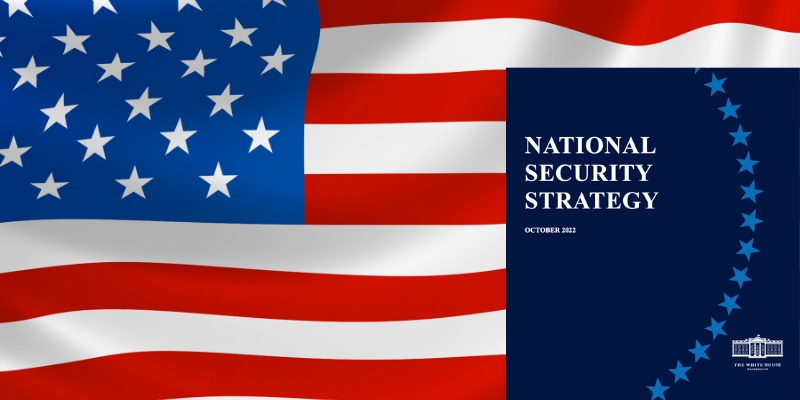
This report, based on the 2022 U.S. National Security Strategy, analyzes how America’s updated security policies influence its military presence and interventions worldwide—especially in West Asia. These policies aim to reduce direct and large-scale U.S. military deployments, favoring limited operations conducted with and through regional partners and groups. From now on, the central theme of U.S. actions will be a “denial strategy.”
After World War II, the United States found itself entering a new phase—emerging as a global power. The decline of Britain, Europe’s devastation, the collapse of the Soviet Union, and the surrender of Germany and Japan reinforced this perception. America’s direct involvement in the war led its leaders to believe that global hegemony and securing U.S. interests required continuous and widespread presence across the globe. This belief drove the U.S. to establish five continental command centers, naval fleets, and numerous military bases from East Asia to Western Europe, marking decades of military and political intervention, unrest, and coups in regions where America maintained active presence.
Following the Soviet Union’s collapse, the U.S. saw no obstacle to its unipolar dominance. This mindset was so strong that American political theorist Francis Fukuyama, in his essay “The End of History and the Last Man,” declared that global civilization had reached its final stage under American-led liberal democracy.
In 2001, under the pretext of fighting terrorism—but with the goal of global control—the U.S. launched a military invasion of Afghanistan. However, the widespread presence of U.S. forces, especially in West Asia, resulted in human, financial, and logistical losses. America’s debt-ridden economy and repeated recessions couldn’t bear such heavy costs. More importantly, human casualties damaged the image of U.S. supremacy. With Iran emerging as a powerful regional actor, the U.S. faced a new reality. The “New Middle East” plan failed due to Iran’s involvement. Resistance groups in West Asia gained access to more effective weapons, which increased U.S. losses in any military conflict. These factors highlighted the need for a new military strategy—one that reduces financial and human costs while safeguarding U.S. interests.
The U.S. National Security Strategy is drafted every four years in both public and classified versions. Although the public version doesn’t contain classified information, it reveals America’s general approach to security and military policy. The 2022 strategy document was released by the White House during President Biden’s term. While the introduction emphasizes America’s global presence to defend democracy, the content includes notable points—particularly the acknowledgment of emerging powers and the anticipated decade-long competition for a new global order. Alongside China and Russia, Iran is also identified as a national security threat to the United States.
In this document, China is identified as the primary geopolitical challenge to the United States. Russia, currently entangled in the war in Ukraine, appears to have been temporarily downgraded from the top of the threat list. This suggests that the Ukraine conflict may remain unresolved, keeping Russia bogged down in a prolonged and uncertain war—even at the cost of Ukraine’s or Europe’s destruction. The document explicitly references NATO’s role (p.17) in managing the war against Russia in Ukraine and affirms continued intelligence, economic, and military support for Kyiv.
Under the chapter titled “Modernizing and Strengthening Our Military” (p.20), the document clearly states that the U.S. will use force to protect its interests. In the same section, China is again cited as the top threat, with Iran listed as the third most serious danger to U.S. interests. The strategy introduces the concept of “integrated deterrence,” which refers to combining military and non-military capabilities—economic, cyber, security, political, and more—to counter national security threats. Yemen, Syria, and Somalia are named as terrorism hubs posing potential risks to the U.S.
One of the document’s key highlights is a shift in America’s global partnership doctrine. It states: “From a U.S.-led strategy supported by partners to a partner-led strategy supported by the U.S.” (p.30), signaling a tactical change in how Washington engages with allies.
In the Middle East section—beginning on page 42—the document bluntly admits that U.S. policy in West Asia over the past two decades relied on force and regime change, though this approach has come at a high cost. The strategy now emphasizes strengthening regional partners, clearly pointing to proxy use of aligned states to advance U.S. interests and boost arms sales to support the American economy. This cooperation framework is built on five principles:
- Partnering with countries that support the U.S.-led global order
- Securing maritime routes in the Strait of Hormuz and Bab al-Mandeb
- Using diplomacy to reduce tensions
- Building integrated security, military, and economic structures in the region
- Promoting human rights and endorsed values
The document also highlights Iran’s destabilizing activities and commits the U.S. to countering them. It stresses efforts to curb Iran’s nuclear program through diplomacy, and if unsuccessful, through the use of force.
One of the most significant elements is the formulation of a “denial strategy”—meaning the U.S. will conduct operations via proxies, regional groups, or partners while denying direct involvement in the actions carried out.
Under the denial strategy, the U.S. acknowledges the need to develop and strengthen infrastructure, logistics, command and control systems, force dispersion, mobility, and partner mobilization. Ultimately, the U.S. military’s presence is defined as reduced and conducted “through and with partners” (p.23). The stated goal is to build a joint force that is lethal, resilient, flexible, survivable, agile, and responsive.
Another key document in this context is the 2022 U.S. National Defense Strategy, published by the Department of Defense. This strategy also identifies China as the primary threat, while Iran—alongside China and Russia—is listed as a serious national security challenge. On page 18, the document emphasizes deterrence against Iranian attacks through cooperation with regional partners.
The State Department’s Joint Regional Strategy for West Asia and North Africa, also released in 2022, places Iran’s persistent influence (p.3), authoritarianism, and erosion of democracy (p.9) at the top of regional threats, alongside China and Russia. The strategy focuses on diplomatic efforts, regional investments, and strengthening partnerships to counter these challenges. The State Department outlines its goals as enhancing regional security, advancing peace in the Middle East, promoting inclusive economic growth, supporting accountable governance and human rights, and accelerating climate-related action.
One notable section of the document highlights humanitarian aid to Gaza—but with the condition that it must align with the security interests of the Israeli regime. This implies that any form of assistance must not compromise Israeli security, and even humanitarian aid will be distributed under the umbrella of Israel’s national security priorities (p.15). Additionally, the strategy promotes investment and engagement with civil society, media, minority groups, LGBTQ+ communities, and others as tools to counter threats in West Asia. These elements serve as mechanisms for influencing the internal affairs of non-aligned states, potentially fueling unrest, civil disobedience, and regime instability.
What stands out across these overlapping documents is that they were all formulated during President Joe Biden’s administration. Key themes include deterrence, partner security, countering Iran and its nuclear ambitions, combating terrorism and extremist groups (including resistance movements), ensuring energy flow and maritime security, and advancing diplomacy and regional agreements. Strategically, however, Donald Trump’s approach shows little deviation from these core policies. His emphasis was on “America First,” reducing long-term military commitments, applying maximum pressure on Iran, promoting regional peace through Arab-Israeli agreements, and reinforcing military strength and deterrence—all within the same strategic framework.
Based on the reviewed documents and field realities, the author suggests that the United States has crafted a new military strategy built around six core principles:
Principle 1 – Limited Force vs. Mass Deployment:
Instead of deploying large numbers of troops, the U.S. now relies on elite special operations teams. These units are tasked with swift, targeted missions: entering professionally, destroying objectives, achieving operational goals, and exiting quickly.
Principle 2 – Dominance of Space, Air, and Drone Forces:
These forces serve as global observers and support for special operations teams. Their role includes identifying and tracking targets, providing close and remote support, and conducting precise, surgical airstrikes rather than broad bombardments.
Principle 3 – Rapid Global Reach:
The U.S. is reducing its number of unnecessary bases and consolidating air, naval, and special forces into fewer, more advanced locations. These bases are strategically placed for quick access to any global hotspot—Jordan, for example, serves as a key location in West Asia.
Principle 4 – Expansion of Global Intelligence Networks:
Effective limited operations and precision strikes require accurate intelligence. This necessitates a global intelligence network, incorporating both human and technical methods.
Principle 5 – Swift Operations Over Large-Scale Engagements:
Using dispersed and consolidated bases, intelligence networks, elite forces, and aerial capabilities, the U.S. now favors pinpoint operations over broad military invasions. The assassinations of Osama bin Laden and Abu Bakr al-Baghdadi exemplify this approach. Large-scale wars like Vietnam, Afghanistan, or Iraq are unlikely to be repeated.
Principle 6 – Proxy Forces and Denial Doctrine:
The U.S. increasingly relies on allied states, proxy forces, and various groups—terrorist or non-terrorist—while maintaining plausible deniability. This reduces American casualties and conceals direct involvement. The U.S. arms these actors to maneuver global interests like a chess master moving pieces.
The symbolic withdrawal from Afghanistan and partial exit from Iraq, targeted strikes on key figures (mostly those opposing U.S. plans), relocation of militants across regions, and continued drone and air operations all reflect this new strategy. The U.S. isn’t truly leaving the region—it’s retracting its overt presence to reduce costs and casualties.
Iran, the resistance front, and independent regional governments must recognize and adapt to this evolving U.S. strategy. The only way to prevent American interference is through complete expulsion. However, regional awareness and strategic foresight remain limited—making Iran’s role increasingly pivotal.
Iran must accelerate efforts to inform and, if necessary, apply force to hasten the U.S.’s global withdrawal. The resistance front—especially in Yemen, Lebanon, and Iraq—must prepare for continued surgical air and commando operations aimed at assassinating leaders and dismantling core capabilities like economic, nuclear, and missile infrastructure.
Israeli actions in targeting regional leaders align with U.S. strategy. In reality, Israel acts as a subcontractor for America’s grand regional plans. Believing in a separation between the U.S. and Israel is a dangerous illusion. Therefore, a serious counter-strategy is urgently needed to halt these operations and shape a future world with Iran as a global power.
Sources:
1- Fukuyama, Francis (1989). “The End Of History?”. The National Interest. 16: 4.
2- https://bidenwhitehouse.archives.gov/wp-content/uploads/2022/10/Biden-Harris-Administrations-National-Security-Strategy-10.2022.pdf
3- https://media.defense.gov/2022/Oct/27/2003103845/-1/-1/1/2022-NATIONAL-DEFENSE-STRATEGY-NPR-MDR.pdf
4- U.S. Department of State & U.S. Agency for International Development. (2022, February). Joint regional strategy: Middle East and North Africa (NEA-ME JRS). U.S. Department of State. https://www.state.gov/wp-content/uploads/2022/02/NEA-ME_JRS_FINAL_Formatted_Public-Version-1.pdf

Comments