
Changing the US Presence in Syria: Details of Military and Logistics Movements at US Bases in Eastern Syria
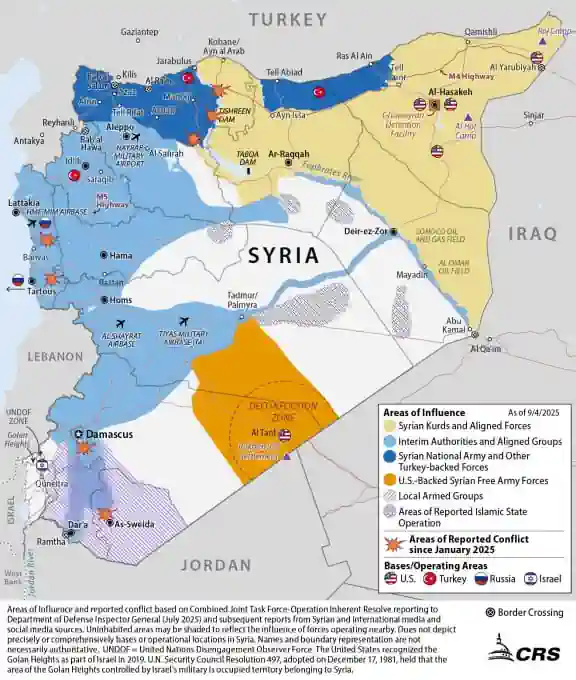
Following recent political and field developments in Syria, the US presence in the northeast has entered a new phase. Although reports since early 2025 indicate a reduction in forces and the evacuation of some bases in Deir Ezzor, field evidence and satellite images suggest this is not a complete withdrawal. Instead, it appears to be a shift and concentration of presence toward the eastern-northeastern corridor of Syria. This change coincides with decreased activity at Deir Ezzor bases and increased infrastructure development at several eastern bases, notably “Qasrak” and “Shaddadi”. The simultaneous trends—waning presence in the west and expansion in the east—raise a key question: What is the true US strategy in Syria? Is it a gradual withdrawal or a reconfiguration for a new phase?
Analysis of satellite images and field reports from early 2025 indicates a shift in US force deployment from dispersal to concentration along the eastern axis. Deir Ezzor bases, once serving as contact points for local threats, have seen reduced activity and the withdrawal of equipment recently. The evacuation of some facilities at CONOCO, Al-Omar, and Green Village initially suggested a potential withdrawal, but later developments suggest otherwise. Current data reveals that Washington is adopting a strategy of “reducing presence and increasing infrastructure depth.” Recent weeks have seen the transfer of equipment, new construction, and convoy movements across multiple eastern bases, indicating a strategic reorganization rather than a withdrawal, effectively shifting the focus of US presence in Syria.
Conceptual Framework
After 2025, the US military presence in Syria has shifted to a new phase that diverges significantly from earlier patterns. Instead of focusing on “territorial dominance” through large bases and extensive field operations, the current strategy emphasizes positional-functional control. In this approach, bases serve not just as military locations but as strategic instruments for blocking geopolitical bottlenecks and influencing the region’s geoeconomic network.In this context, the significance of bases is determined by their role within power chains and strategic routes rather than their size. For example, Qasrak base as a logistical gateway east of the Euphrates and a command post for northeastern Syria, while Al-Tanf is pivotal in disrupting Iran’s land corridor to the Mediterranean. These bases serve as “geopolitical levers,” demonstrating a shift from tactical presence to targeted influence engineering. Each base now functions as a tool for managing regional relations and maintaining strategic balances.
Based on US Congressional reports and Tom Barrack’s speech at the Doha Forum, Syria has shifted from being merely a ongoing crisis to becoming a strategic platform for shaping a new regional order in the Arab East. This shift suggests that the US intends to maintain a presence in Syria to influence emerging power dynamics. Rather than sticking to a purely security-focused approach, the US is redefining its global role as a key actor in the region’s geopolitical and security landscape. This military reorientation represents not only a tactical change but also a move toward establishing a new power framework in West Asia.
The New Map of US Military Presence
The US military presence in Syria has shifted from direct control to managing strategic locations. These bases now serve not just military purposes but act as points within a broader geopolitical network shaping regional dynamics. This section examines three active bases and their contribution to extending US influence in Syria.
Inactive Bases
In 2025, the United States shifted its military focus to strategic and geopolitical areas by closing several key bases in Syria. Bases like Al-Omar and CONOCO, primarily used for energy and surveillance, were transferred to SDF forces. Additionally, Tal Baydar and Wazir bases, closed due to their poor locations and diminished Turkish sensitivities, became part of the new US strategy targeting crucial geopolitical hubs. These actions indicate that the US now aims not only to secure oil resources but also to control strategic positions to influence Syria’s future political and security landscape.
US geopolitical logic
The US presence in Syria, particularly in the northeastern regions, has experienced notable changes driven by security concerns and regional geopolitics, reflecting efforts to shape a new regional order. These changes not only involve scaling back military footprint in certain areas but also show a reinterpretation of America’s role in Syria and the wider region. Strategic American bases in Syria serve as tools of geopolitical influence, impacting the regional power dynamics in Arab East and West Asia. The motivations and geopolitical reasoning behind this realignment of US bases and its presence in Syria are discussed below.
Containing Iran and controlling the land corridor
One of the primary objectives of the United States in Syria is to restrict Iranian influence. The strategic Al-Tanf base, situated at the Syria-Jordan-Iraq border triangle, is seen as crucial to U.S. interests. Since the start of the U.S. presence in Syria, Al-Tanf has been instrumental in blocking Iran’s land corridor and continues to serve this purpose. The goal of maintaining Al-Tanf is to prevent Iran from establishing a land link from Tehran to Beirut, thereby stopping Iran from entering Lebanon and expanding its regional influence. The U.S. presence here acts as a chokepoint for Iran, playing an essential role for the Western alliance and the Zionist regime, especially in hindering Iran’s coordination with resistance forces in Iraq, Syria, and Lebanon.
Maintaining leverage in Syria’s political future
Another objective of the United States in restructuring bases and trimming its military footprint is to utilize the remaining bases as leverage in the Syrian political arena. The 2025 US Congressional Report notes that the US has transformed its military presence into a bargaining tool in political negotiations following the fall of the Assad regime. While justified as efforts against ISIS, this presence primarily aims to be involved in Syria’s reconstruction and to shape its future political and security frameworks in alignment with Washington’s interests. Key bases like Qasr and al-Shaddadi, which serve as strategic contacts with local forces and Syrian Kurds, provide the US with significant influence in post-Assad negotiations.
Managing the relationship with Turkey
Another strategic move for the United States in Syria involves managing its complex relationship with Turkey. By withdrawing from sensitive areas in northern Syria, such as Tal Baydar, the U.S. has lessened Turkey’s sensitivities and improved its security position. Meanwhile, reports emerged in late 2024 and early 2025 about the establishment of a base in Ain al-Arab, which were consistently denied by both American and Turkish sources. Regardless, the U.S. goal of rebuilding the base near the Turkish border can be seen as a deterrent against Türkiye, allowing Washington to influence Turkish policies in northern Syria.
Presence in the future geoeconomic corridors
Among American politicians, Syria is considered a key element in the evolving landscape of the Arab East. At the Doha Forum, Tom Barrack mentioned that the United States is leveraging Syria as a platform to forge a new geopolitical and economic framework. Linking Syria with Lebanon, the Zionist regime, Turkey, and Jordan could influence trade, energy, and transit pathways. These nations, which serve as vital economic and commercial hubs in the region, can be strategically connected through key locations like Qasrak, Al-Shaddadi, and Al-Tanf. This allows the U.S. not only to utilize these networks now but also to steer and reshape them in the future.
Turning Syria into a scene for containing Russia
After the collapse of the old order, the United States sees a chance to restore its influence in the Eastern Mediterranean and Syria. The Syrian bases serve to contain Iranian influence and oppose Russian expansion in the area. By keeping a military presence and enhancing key strategic locations in Syria, the U.S. can better negotiate with Moscow and act as a deterrent to Russian ambitions.
Conclusion
Since 2025, the U.S. has significantly restructured its military presence in Syria, emphasizing key bases in strategic locations. These adjustments aim to curb Iranian influence, especially by severing the Tehran-Beirut land corridor and limiting the resistance axis’s maneuvering capabilities. Bases such as Qasrak, Al-Shaddadi, and Al-Tanf now function as tools for overseeing energy resources, trade routes, and shaping policies in Syria and among regional actors like Turkey. Beyond oil, the U.S. seeks to play a decisive role in Syria’s political landscape and regional power dynamics, using these bases to counter Russian influence. These strategic adjustments enable the U.S. to stay a dominant player, safeguarding its security and shaping a new economic and political order around Syria.

Comments