Author: Mirza

  • Latest Status of the MV Falcon LPG Tanker In Gulf of Aden

    Latest Status of the MV Falcon LPG Tanker In Gulf of Aden

    The ship had 26 crew members onboard. Two were killed in the incident, while the remaining 24 were rescued by the European Union’s naval forces.

    Currently, the Indian warship INS Trikand has taken charge of firefighting operations and has successfully extinguished the blaze aboard the Falcon.

    Unconfirmed Reports: Iranian LPG Tanker MV Falcon Hit Off Yemen Coast

    Claims that the explosion was accidental are inaccurate. Based on visual evidence from the MV Falcon, the vessel was clearly targeted by either a drone or missile. If the cargo was indeed Iranian, the likely perpetrators of the attack are either the United States or Israel. This incident signals the onset of a new maritime conflict—distinct from previous Iran-Israel naval tensions—where the U.S. now appears to be directly involved.

  • Assassination Attempt Targets Brigadier General Adnan Razeeq al-Qamishi in Yemen

    Assassination Attempt Targets Brigadier General Adnan Razeeq al-Qamishi in Yemen

    Local sources differ on the method of the attack. Some report that a roadside bomb was planted along the route of Razeeq’s convoy, while others—citing eyewitness accounts—claim the assault was carried out using an explosive dropped from a quadcopter allegedly operated by Ansar Allah!

    Despite accusations from opposition media blaming Ansar Allah, evidence suggests the attack may have been orchestrated by armed militias of the Islah Party. Over the past month, Islah militants have engaged in fierce confrontations with Tareq Saleh’s forces in Taiz province, including repeated attempts to eliminate his affiliates in areas like al-Turba.

    These militants, reportedly equipped with weaponized drones through ties with Turkey, have conducted similar deadly strikes on other Yemeni fronts.

  • Yemeni Attacks Cripple Israel’s Eilat Port

    Yemeni Attacks Cripple Israel’s Eilat Port

    Since November 2023, commercial vessels have avoided Eilat, causing an 80% drop in port revenue and jeopardizing hundreds of jobs.

    In response, Eilat officials have appealed to the U.S. and Egypt for help, urging guarantees for safe navigation under international agreements. The port’s shutdown has raised concerns over economic security in southern Israel.

    Initially framed as retaliation for Israeli strikes on Gaza, Yemen’s naval campaign has evolved into a potent tool for economic disruption. Eilat’s paralysis signals a shift in Red Sea power dynamics. As a key hub for Asian imports into occupied Palestine, its disruption strains supply chains and could impact prices and resource access. The port’s plea for help also casts doubt on the effectiveness of international maritime coalitions.

  • Latest Developments in the West Bank: Widespread Israeli Raids and Arrests

    Latest Developments in the West Bank: Widespread Israeli Raids and Arrests

    Early this morning, various areas across the West Bank were once again targeted by Israeli military raids, which led to intense clashes and the arrest of several Palestinian citizens.

    Israeli forces simultaneously stormed cities and towns including Nablus, Jenin, Tulkarm, Hebron, Al-Bireh, and occupied Jerusalem. Eyewitnesses reported that soldiers used tear gas and live ammunition against civilians during these operations.

    The Palestinian Red Crescent confirmed that at least 11 Palestinians were injured in Nablus. Clashes erupted in neighborhoods such as Balata and New Askar camps, as well as the Dahiyat Al-Aliya area, where Israeli troops also conducted house searches.

    In Jenin, Israeli forces raided the towns of Anza and Burqin, arresting four young Palestinians. In Tulkarm, they stormed the southern district and the town of Qaffin, detaining a youth named Nazeer Sabah.

    In Al-Bireh, one young man was arrested and his vehicle confiscated. In Hebron, Israeli troops raided Beit Ummar and searched several homes.

    In northwest occupied Jerusalem, Israeli forces attacked the towns of Al-Jib, Al-Jadira, and Beir Nabala, deploying tear gas and creating a tense security atmosphere.

  • Heavy al-Qaeda Attack on Southern Transitional Council Base in al-Mahfad, Yemen

    Heavy al-Qaeda Attack on Southern Transitional Council Base in al-Mahfad, Yemen

    The operation involved two vehicles—one of them a suicide car bomb. Following the explosion, al-Qaeda’s inghimasi (shock) fighters stormed the base and engaged in armed clashes. Five al-Qaeda members were reportedly killed in the firefight.

    Al-Mahfad, though under STC control, remains heavily influenced by al-Qaeda, with many local armed men being former members of the group.

    This marks one of the largest al-Qaeda attacks on STC positions in recent years and represents a significant escalation. After Ansar Allah cleared al-Qaeda from provinces like al-Jawf, al-Bayda, and Marib, the group’s operations have largely shifted toward confronting the STC. Previous attacks were mostly limited to IEDs, bomb-throwing, sniper fire, or drone use—but today’s assault was broader and more coordinated, delivering a serious blow to STC forces.

    The motive behind the attack appears linked to the STC’s recent crackdowns in Abyan and the expulsion of local armed factions from al-Mahfad from its ranks.

  • U.S. National Security Strategy: Operational Agenda for West Asia and the Resistance Axis

    U.S. National Security Strategy: Operational Agenda for West Asia and the Resistance Axis

    After World War II, the United States found itself entering a new phase—emerging as a global power. The decline of Britain, Europe’s devastation, the collapse of the Soviet Union, and the surrender of Germany and Japan reinforced this perception. America’s direct involvement in the war led its leaders to believe that global hegemony and securing U.S. interests required continuous and widespread presence across the globe. This belief drove the U.S. to establish five continental command centers, naval fleets, and numerous military bases from East Asia to Western Europe, marking decades of military and political intervention, unrest, and coups in regions where America maintained active presence.

    Following the Soviet Union’s collapse, the U.S. saw no obstacle to its unipolar dominance. This mindset was so strong that American political theorist Francis Fukuyama, in his essay “The End of History and the Last Man,” declared that global civilization had reached its final stage under American-led liberal democracy.

    In 2001, under the pretext of fighting terrorism—but with the goal of global control—the U.S. launched a military invasion of Afghanistan. However, the widespread presence of U.S. forces, especially in West Asia, resulted in human, financial, and logistical losses. America’s debt-ridden economy and repeated recessions couldn’t bear such heavy costs. More importantly, human casualties damaged the image of U.S. supremacy. With Iran emerging as a powerful regional actor, the U.S. faced a new reality. The “New Middle East” plan failed due to Iran’s involvement. Resistance groups in West Asia gained access to more effective weapons, which increased U.S. losses in any military conflict. These factors highlighted the need for a new military strategy—one that reduces financial and human costs while safeguarding U.S. interests.

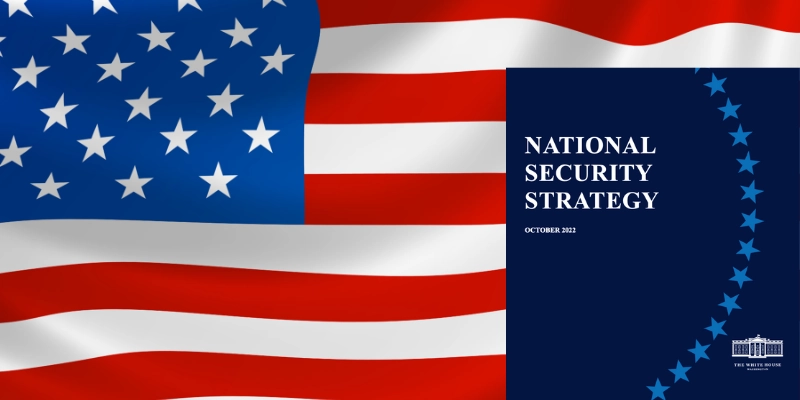
    The U.S. National Security Strategy is drafted every four years in both public and classified versions. Although the public version doesn’t contain classified information, it reveals America’s general approach to security and military policy. The 2022 strategy document was released by the White House during President Biden’s term. While the introduction emphasizes America’s global presence to defend democracy, the content includes notable points—particularly the acknowledgment of emerging powers and the anticipated decade-long competition for a new global order. Alongside China and Russia, Iran is also identified as a national security threat to the United States.

    In this document, China is identified as the primary geopolitical challenge to the United States. Russia, currently entangled in the war in Ukraine, appears to have been temporarily downgraded from the top of the threat list. This suggests that the Ukraine conflict may remain unresolved, keeping Russia bogged down in a prolonged and uncertain war—even at the cost of Ukraine’s or Europe’s destruction. The document explicitly references NATO’s role (p.17) in managing the war against Russia in Ukraine and affirms continued intelligence, economic, and military support for Kyiv.

    Under the chapter titled “Modernizing and Strengthening Our Military” (p.20), the document clearly states that the U.S. will use force to protect its interests. In the same section, China is again cited as the top threat, with Iran listed as the third most serious danger to U.S. interests. The strategy introduces the concept of “integrated deterrence,” which refers to combining military and non-military capabilities—economic, cyber, security, political, and more—to counter national security threats. Yemen, Syria, and Somalia are named as terrorism hubs posing potential risks to the U.S.

    One of the document’s key highlights is a shift in America’s global partnership doctrine. It states: “From a U.S.-led strategy supported by partners to a partner-led strategy supported by the U.S.” (p.30), signaling a tactical change in how Washington engages with allies.

    In the Middle East section—beginning on page 42—the document bluntly admits that U.S. policy in West Asia over the past two decades relied on force and regime change, though this approach has come at a high cost. The strategy now emphasizes strengthening regional partners, clearly pointing to proxy use of aligned states to advance U.S. interests and boost arms sales to support the American economy. This cooperation framework is built on five principles:

    • Partnering with countries that support the U.S.-led global order
    • Securing maritime routes in the Strait of Hormuz and Bab al-Mandeb
    • Using diplomacy to reduce tensions
    • Building integrated security, military, and economic structures in the region
    • Promoting human rights and endorsed values

    The document also highlights Iran’s destabilizing activities and commits the U.S. to countering them. It stresses efforts to curb Iran’s nuclear program through diplomacy, and if unsuccessful, through the use of force.

    One of the most significant elements is the formulation of a “denial strategy”—meaning the U.S. will conduct operations via proxies, regional groups, or partners while denying direct involvement in the actions carried out.

    Under the denial strategy, the U.S. acknowledges the need to develop and strengthen infrastructure, logistics, command and control systems, force dispersion, mobility, and partner mobilization. Ultimately, the U.S. military’s presence is defined as reduced and conducted “through and with partners” (p.23). The stated goal is to build a joint force that is lethal, resilient, flexible, survivable, agile, and responsive.

    Another key document in this context is the 2022 U.S. National Defense Strategy, published by the Department of Defense. This strategy also identifies China as the primary threat, while Iran—alongside China and Russia—is listed as a serious national security challenge. On page 18, the document emphasizes deterrence against Iranian attacks through cooperation with regional partners.

    The State Department’s Joint Regional Strategy for West Asia and North Africa, also released in 2022, places Iran’s persistent influence (p.3), authoritarianism, and erosion of democracy (p.9) at the top of regional threats, alongside China and Russia. The strategy focuses on diplomatic efforts, regional investments, and strengthening partnerships to counter these challenges. The State Department outlines its goals as enhancing regional security, advancing peace in the Middle East, promoting inclusive economic growth, supporting accountable governance and human rights, and accelerating climate-related action.

    One notable section of the document highlights humanitarian aid to Gaza—but with the condition that it must align with the security interests of the Israeli regime. This implies that any form of assistance must not compromise Israeli security, and even humanitarian aid will be distributed under the umbrella of Israel’s national security priorities (p.15). Additionally, the strategy promotes investment and engagement with civil society, media, minority groups, LGBTQ+ communities, and others as tools to counter threats in West Asia. These elements serve as mechanisms for influencing the internal affairs of non-aligned states, potentially fueling unrest, civil disobedience, and regime instability.

    What stands out across these overlapping documents is that they were all formulated during President Joe Biden’s administration. Key themes include deterrence, partner security, countering Iran and its nuclear ambitions, combating terrorism and extremist groups (including resistance movements), ensuring energy flow and maritime security, and advancing diplomacy and regional agreements. Strategically, however, Donald Trump’s approach shows little deviation from these core policies. His emphasis was on “America First,” reducing long-term military commitments, applying maximum pressure on Iran, promoting regional peace through Arab-Israeli agreements, and reinforcing military strength and deterrence—all within the same strategic framework.

    Based on the reviewed documents and field realities, the author suggests that the United States has crafted a new military strategy built around six core principles:

    Principle 1 – Limited Force vs. Mass Deployment:
    Instead of deploying large numbers of troops, the U.S. now relies on elite special operations teams. These units are tasked with swift, targeted missions: entering professionally, destroying objectives, achieving operational goals, and exiting quickly.

    Principle 2 – Dominance of Space, Air, and Drone Forces:
    These forces serve as global observers and support for special operations teams. Their role includes identifying and tracking targets, providing close and remote support, and conducting precise, surgical airstrikes rather than broad bombardments.

    Principle 3 – Rapid Global Reach:
    The U.S. is reducing its number of unnecessary bases and consolidating air, naval, and special forces into fewer, more advanced locations. These bases are strategically placed for quick access to any global hotspot—Jordan, for example, serves as a key location in West Asia.

    Principle 4 – Expansion of Global Intelligence Networks:
    Effective limited operations and precision strikes require accurate intelligence. This necessitates a global intelligence network, incorporating both human and technical methods.

    Principle 5 – Swift Operations Over Large-Scale Engagements:
    Using dispersed and consolidated bases, intelligence networks, elite forces, and aerial capabilities, the U.S. now favors pinpoint operations over broad military invasions. The assassinations of Osama bin Laden and Abu Bakr al-Baghdadi exemplify this approach. Large-scale wars like Vietnam, Afghanistan, or Iraq are unlikely to be repeated.

    Principle 6 – Proxy Forces and Denial Doctrine:
    The U.S. increasingly relies on allied states, proxy forces, and various groups—terrorist or non-terrorist—while maintaining plausible deniability. This reduces American casualties and conceals direct involvement. The U.S. arms these actors to maneuver global interests like a chess master moving pieces.

    The symbolic withdrawal from Afghanistan and partial exit from Iraq, targeted strikes on key figures (mostly those opposing U.S. plans), relocation of militants across regions, and continued drone and air operations all reflect this new strategy. The U.S. isn’t truly leaving the region—it’s retracting its overt presence to reduce costs and casualties.

    Iran, the resistance front, and independent regional governments must recognize and adapt to this evolving U.S. strategy. The only way to prevent American interference is through complete expulsion. However, regional awareness and strategic foresight remain limited—making Iran’s role increasingly pivotal.

    Iran must accelerate efforts to inform and, if necessary, apply force to hasten the U.S.’s global withdrawal. The resistance front—especially in Yemen, Lebanon, and Iraq—must prepare for continued surgical air and commando operations aimed at assassinating leaders and dismantling core capabilities like economic, nuclear, and missile infrastructure.

    Israeli actions in targeting regional leaders align with U.S. strategy. In reality, Israel acts as a subcontractor for America’s grand regional plans. Believing in a separation between the U.S. and Israel is a dangerous illusion. Therefore, a serious counter-strategy is urgently needed to halt these operations and shape a future world with Iran as a global power.

    Sources:
    1- Fukuyama, Francis (1989). “The End Of History?”. The National Interest. 16: 4.
    2- https://bidenwhitehouse.archives.gov/wp-content/uploads/2022/10/Biden-Harris-Administrations-National-Security-Strategy-10.2022.pdf
    3- https://media.defense.gov/2022/Oct/27/2003103845/-1/-1/1/2022-NATIONAL-DEFENSE-STRATEGY-NPR-MDR.pdf
    4- U.S. Department of State & U.S. Agency for International Development. (2022, February). Joint regional strategy: Middle East and North Africa (NEA-ME JRS). U.S. Department of State. https://www.state.gov/wp-content/uploads/2022/02/NEA-ME_JRS_FINAL_Formatted_Public-Version-1.pdf

  • Imam Khamenei: Iran Cannot Be Influenced By Bullying Like Some Other Countries

    Imam Khamenei: Iran Cannot Be Influenced By Bullying Like Some Other Countries

    🇺🇸 On U.S. Claims of Bombing Iran’s Nuclear Industry: Khamenei mocked Trump’s boast about destroying Iran’s nuclear facilities, saying, “Fine, keep dreaming!” He emphasized that while scientists may be targeted, their knowledge cannot be eliminated.

    🇵🇸 On Gaza and U.S. Involvement: He emphasized the U.S. of being the “main accomplice” in the war crimes committed in Gaza, stating that American weapons and support enabled the Israeli military to bombard defenseless civilians.

    💬 Imam Khamenei: “America is undoubtedly a main partner in the war on Gaza. The US President himself admitted it, saying ‘we worked together in Gaza’—even if he hadn’t, it was obvious. Their weapons, their resources, all poured into the hands of the Zionist regime to rain destruction on the defenseless people of Gaza. America is complicit in this crime.”

    ‼️ On Civilian Casualties: Khamenei challenged the U.S. narrative on terrorism, pointing to the deaths of over 20,000 children in Gaza and asking, “Were they terrorists?” He emphasized the U.S. of creating and sustaining groups like ISIS for strategic use.

    💬 Imam Khamenei: “He [Trump] claims to fight terrorism. Over 20,000 children and infants were martyred in these attacks—were they terrorists? No, the real terrorist is America, the one that created ISIS, unleashed it on the region, and still keeps it alive for future use.”

    💬 Imam Khamenei: “America is the terrorist! In the two-year war on Gaza, 70,000 were killed according to official figures. In the twelve-day war on Iran, beyond indiscriminate bombings, over a thousand were martyred—and our scientists were assassinated.”

    ‼️ On Scientific Assassinations: He condemned the assassination of Iranian scientists, asserting that while individuals may be killed, Iran’s scientific progress cannot be stopped.

    ⚛️ On Nuclear Sovereignty: Khamenei questioned America’s authority to dictate Iran’s nuclear rights, calling such interference “illegitimate, inappropriate, and bullying”.

    💬 Imam Khamenei: “Who are you to dictate whether a country can have nuclear capabilities? What gives America the right to interfere in Iran’s nuclear development? These are illegitimate, inappropriate, and bullying interventions.”

    🔊 On U.S. Rhetoric Toward Iran: He dismissed claims of American support for the Iranian people, citing secondary sanctions as direct harm to the nation. He labeled the U.S. as an enemy of the Iranian people, not a friend.

    💬 Imam Khamenei: “He [Trump] says he supports the Iranian people. That’s a lie! The secondary sanctions imposed by America for years have pressured many countries into compliance. These sanctions target the Iranian nation. You are an enemy of the Iranian people—not a friend.”

    ☝️ On Negotiations: Khamenei rejected any deal imposed through coercion, stating that Iran will not accept forced agreements disguised as negotiations. “Iran cannot be influenced by bullying like some other countries,” he said.

  • Two Israeli Soldiers Killed in al-Qassam Attack in Rafah

    Two Israeli Soldiers Killed in al-Qassam Attack in Rafah

    According to Israeli military, Palestinian resistance fighters emerged from a tunnel in Rafah early this morning and targeted a military bulldozer with an RPG, killing two soldiers. Simultaneously, a second vehicle was hit by sniper fire, injuring two more soldiers—one of whom is reported to be in critical condition. Another soldier was wounded later in a separate shooting incident.

    Based on data compiled by Islamic World News, the number of Israeli fatalities since the start of the ground offensive in Gaza has reportedly reached 482. The total number of claimed military deaths since the beginning of the conflict now stands at 920.

  • Latest Israeli Military Movements in Syria’s Quneitra Province – October 19, 2025 (Map)

    Latest Israeli Military Movements in Syria’s Quneitra Province – October 19, 2025 (Map)

    Yesterday, Israeli forces set up a temporary checkpoint on the road connecting the towns of Jabatha al-Khashab and Ofania, inspecting several vehicles and blocking the route for several hours.

    Simultaneously, Israeli engineering units began excavation work in Jabatha al-Khashab, supported by four vehicles and 20 soldiers.

    Local sources also reported that Israeli troops, backed by Merkava tanks, entered the Khan Arnabah–Jabatha al-Khashab road and proceeded to inspect residents in the town of Eastern Samdaniyah.

    In southern Quneitra, a convoy of 10 Israeli military vehicles entered the village of Ruwayhina, establishing a temporary checkpoint near the mosque and inspecting individuals.

    These movements are taking place amid the conspicuous silence of the Jolani government, which has repeatedly stated in interviews that it does not seek confrontation with Israel. This stance has effectively enabled Tel Aviv to expand its military and intelligence footprint deep into Syrian territory. The establishment of checkpoints, entry into border towns, and engineering operations are not merely tactical maneuvers—they signal Israel’s intent to solidify a sustained operational and intelligence presence in southern Syria.

    Click to view full-size image
  • Assassination of Former Prisoner Exchange Mediator in Aleppo

    Assassination of Former Prisoner Exchange Mediator in Aleppo

    Khazami, approximately 55 years old and originally from Maarrat al-Numan in southern Idlib province, was a prominent figure in prisoner exchange negotiations between the former Syrian regime and opposition forces throughout the civil war. One of his most notable roles was mediating the December 26, 2016 exchange deal between the Assad government and Ahrar al-Sham fighters.

    Local sources allege that Khazami had ties to Iran’s Islamic Revolutionary Guard Corps (IRGC). His assassination is believed to be part of a broader pattern of targeted killings against individuals affiliated with the former Syrian regime or resistance-linked figures in Aleppo. Several similar incidents have been reported in recent months.

  • U.S. Military Movements in Palmyra Spark Speculation of New Base in Central Syria

    U.S. Military Movements in Palmyra Spark Speculation of New Base in Central Syria

    Simultaneously, U.S. drones flew over the area, conducting aerial reconnaissance and imaging operations. After the visit and drone activity, the forces returned to the Al-Tanf base in Homs.

    Some Syrian sources suggest that the U.S. may be planning to establish a new military base in Palmyra. This comes despite the American-led coalition already maintaining several active bases in eastern Syria—particularly in Deir ez-Zor and Hasakah—under the pretext of combating ISIS.

  • ISIS Releases Infographic Detailing Recent Operations in Eastern Syria

    ISIS Releases Infographic Detailing Recent Operations in Eastern Syria

    According to the group, it carried out 38 operations—including direct assaults, assassinations, IED attacks, and ambushes—between August 7 and October 16, 2025, targeting Syrian Democratic Forces (SDF) in Deir ez-Zor, Hasakah, and Raqqa provinces.

    The data suggests an average of one attack every two days, highlighting the group’s continued insurgent presence in the region despite territorial losses.

    While these claims remain unverified, they reflect ISIS’s ongoing efforts to project strength and maintain relevance through its media apparatus.