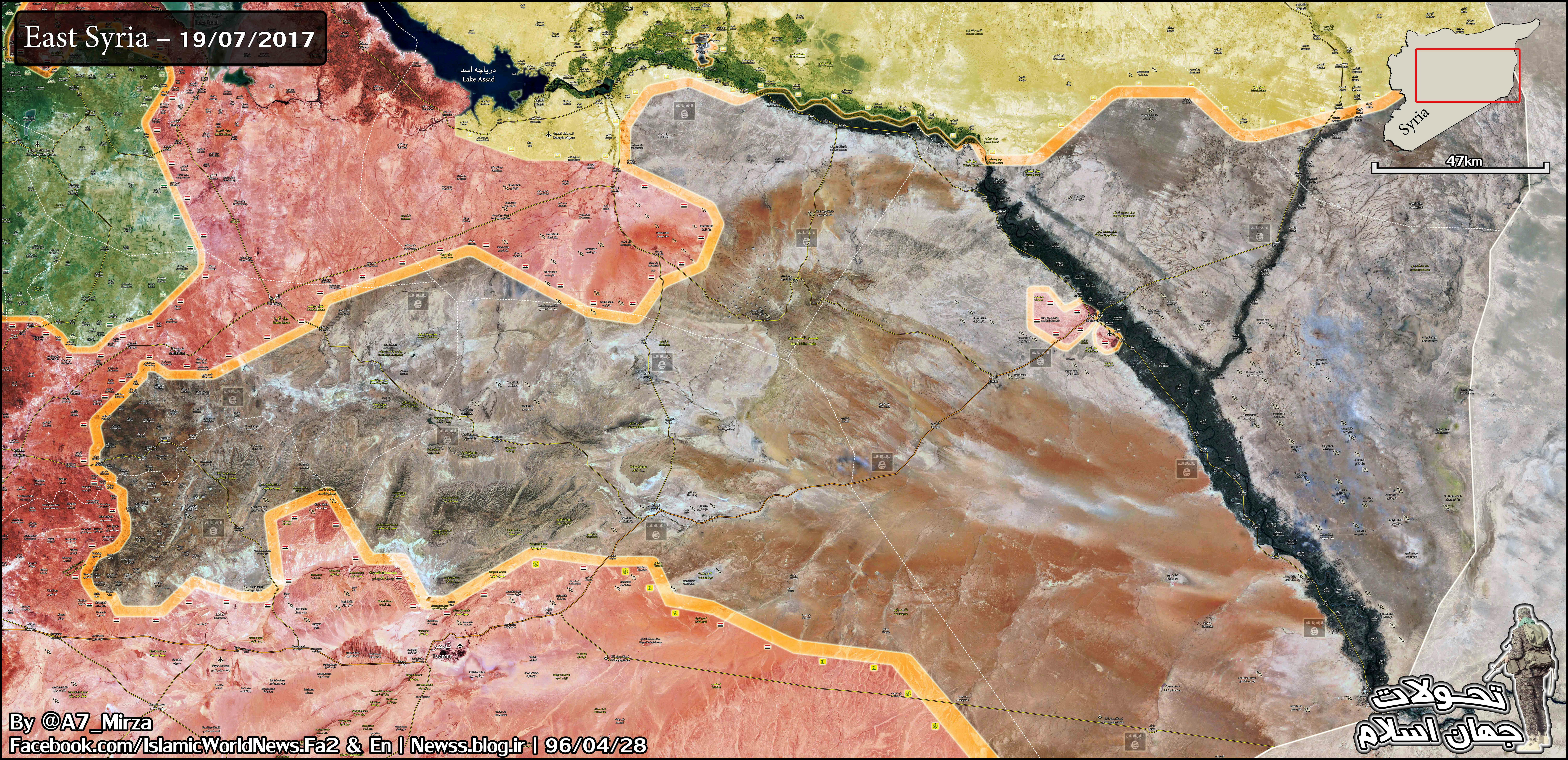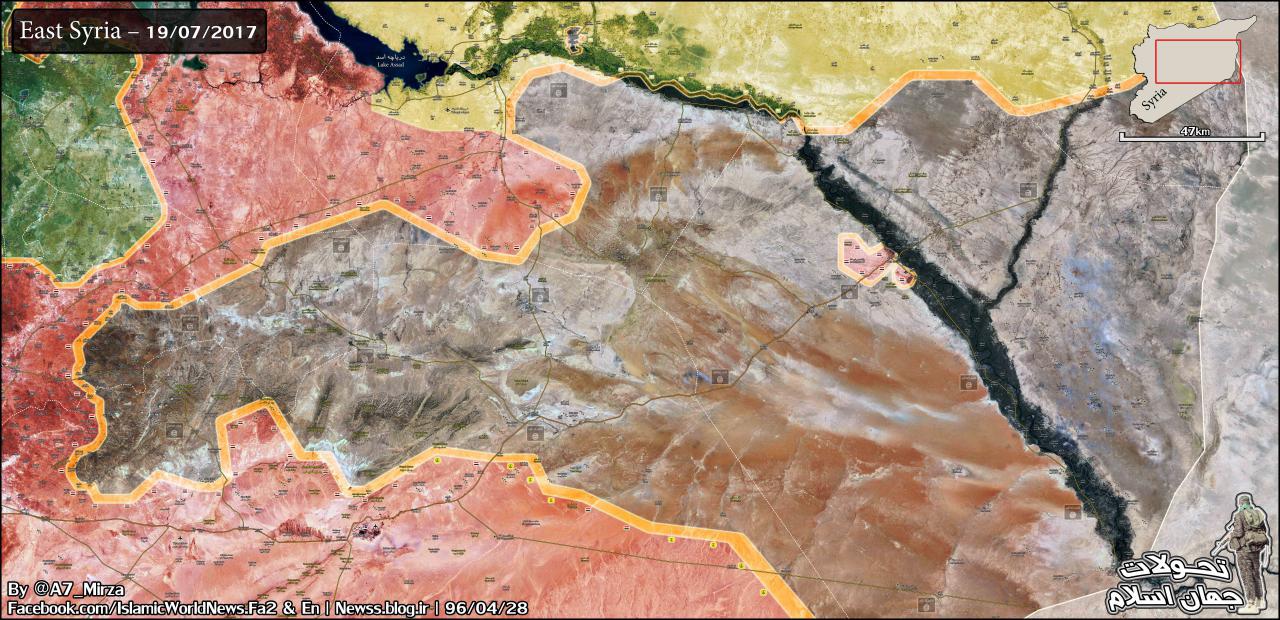
Tiger forces achieved significant gains in south of #Raqqah province lately
HD version : Download
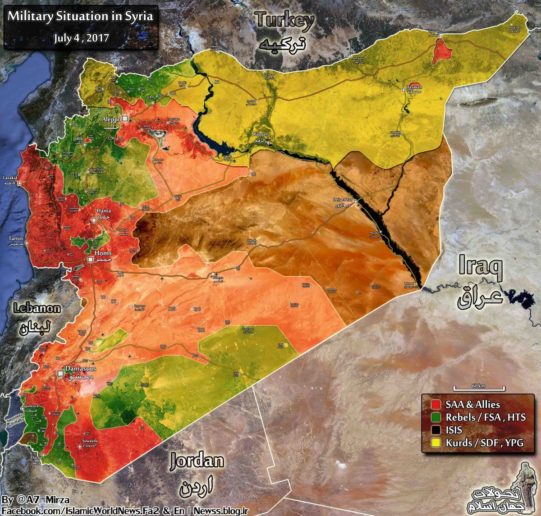
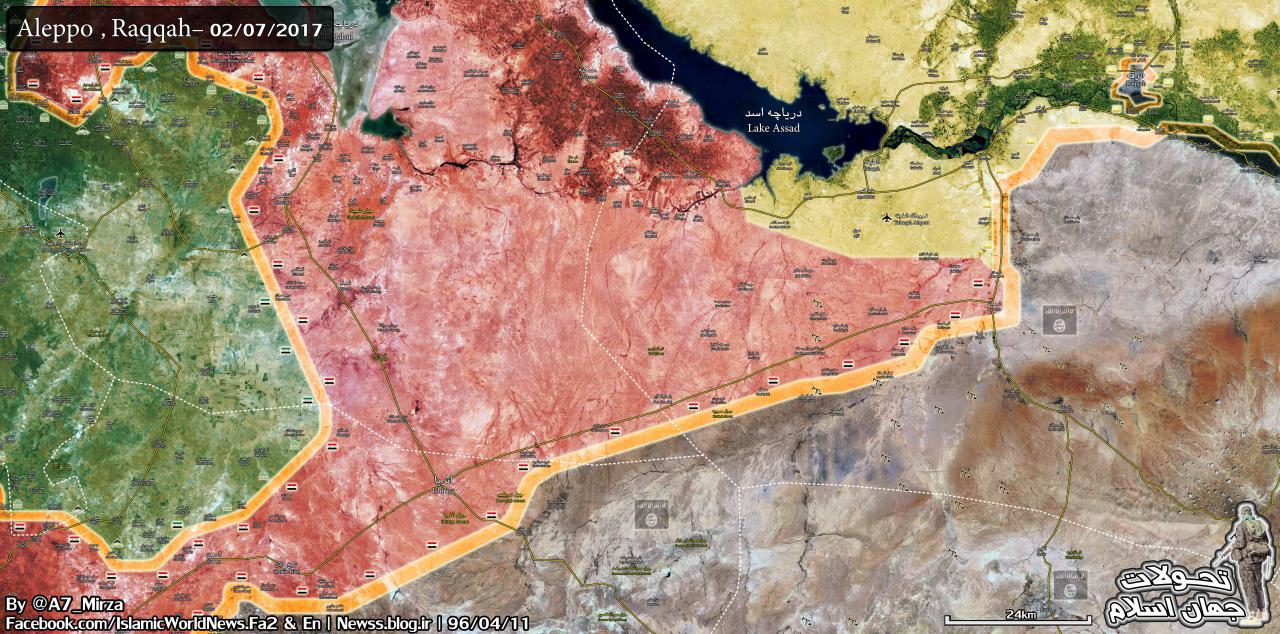
The Syrian Arab Army’s (SAA) recent advances in the Aleppo and Al-Raqqa governorates have paved the way for their forces to wedge the Islamic State (ISIL) terror organization in the central part of the country.
With many units from the Tiger Forces making their way to the key town of Qomhana in the Hama Governorate, the Syrian Arab Army has shifted their attention to this province, as they look to expel both the Islamic State and Al-Qaeda linked rebel factions.
While the northern Hama operations are still on hold, the Syrian Arab Army, alongside the Desert Hawks Brigade (Liwaa Suqour Al-Sahra), is expected to kick-off their offensive in eastern Salamiyah in the coming days.
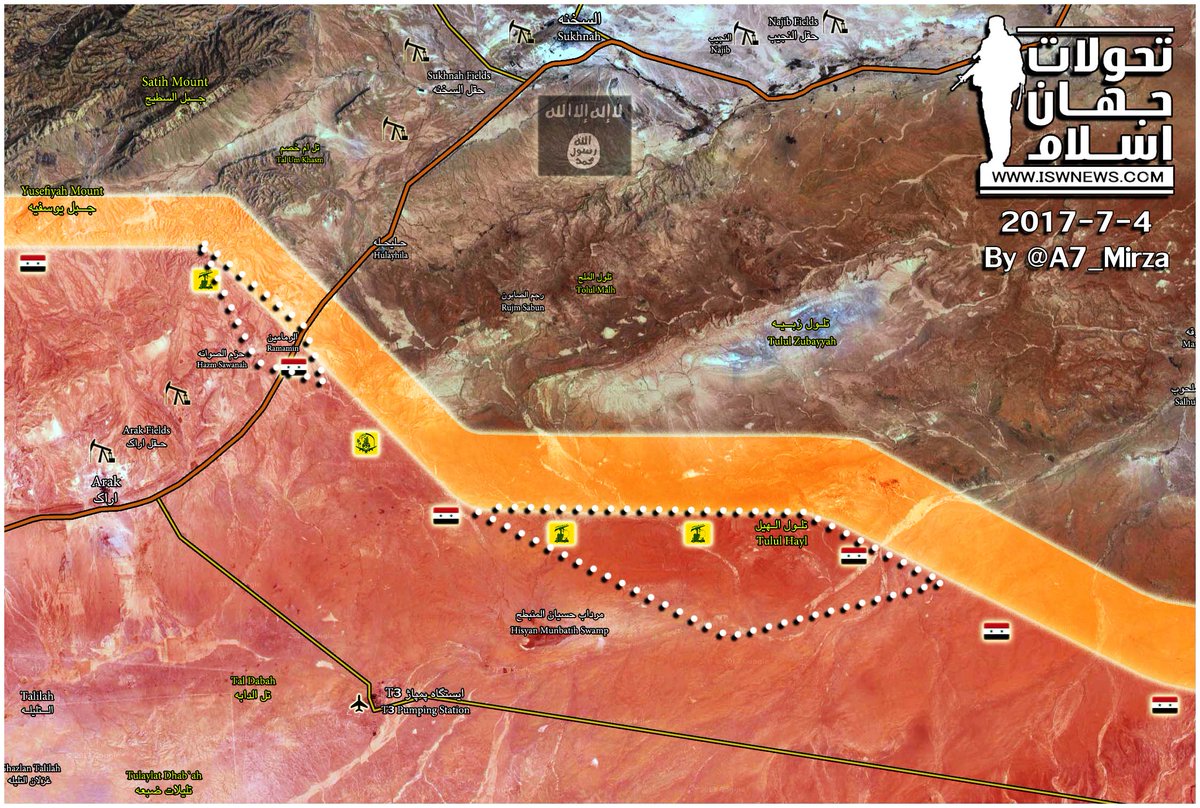
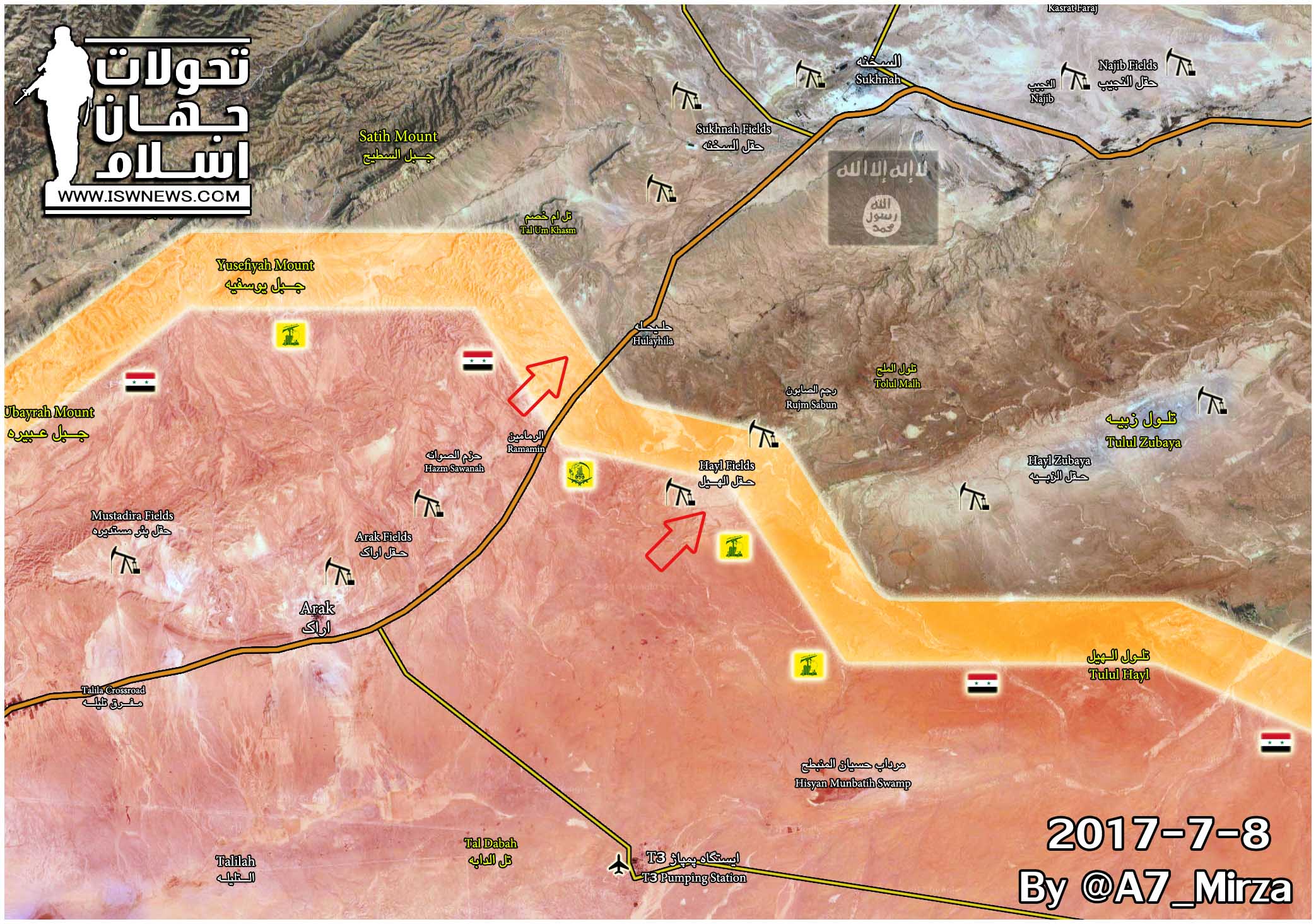
Syrian government forces have liberated the Tulul Hayl area from ISIS and made gains against ISIS near Ramamin in the province of Homs. The Syrian army and its allies, backed up by the Russian Aerospace Forces, are preparing for a major push toward the ISIS-held town of Sukhna at the Palmyra-Deir Ezzor road.
Political discourse is important in media and politics, especially the definitions of the words that we use in discourse.
In Nicaragua v. United States (1984), the International Court of Justice established many principles of international law that apply to the current situation in Syria and I suspect that if this case were tried today with the same judges, it would probably have the same ruling. One aspect aside from the military situation that is quite nuanced is the issue of humanitarian aid.
At issue in Nicaragua was whether humanitarian aid sent to the region during the war was in fact humanitarian aid or soft military aid. What they established was key– they stated that humanitarian aid is defined as aid that follows the general mission of the Red Cross and that is also indiscriminately distributed to civilians in all sides of a conflict. This has remained customary international law and is reflected within the text of the Syrian cessation of hostilities agreement from 2016 which states:
“…humanitarian access should not benefit any particular group over any other, but shall be granted by all sides to all people in need, in full compliance with UNSCR 2254 and international humanitarian law.”
In Nicaragua, the ICJ found that the United States had provided aid to Contra terrorists in soft military aid through USAID, which the Congress deemed to be a neutral agent of humanitarian aid (as per the congressional bill that approved the aid). The problem is that USAID is a subsidiary of the State Department– the Court took this into account in their ruling.
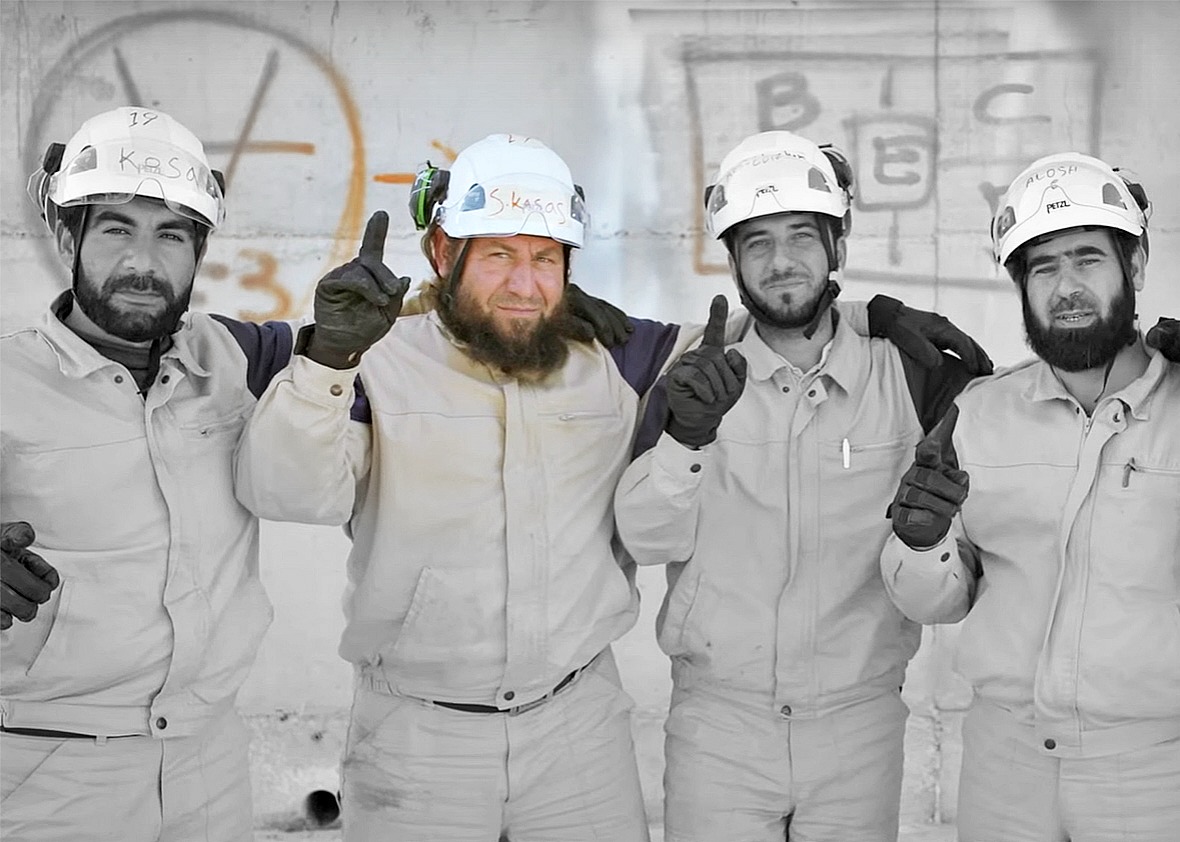
Today, the Syrian White Helmets provide aid within rebel-held areas of Syria. While they may be called independent in a legal sense, they were established under the supervision of a British military contractor and receive funding from various western government agencies including USAID. Sound familiar? While a hypothetical Court may not be able to sufficiently draw the quid pro quo connections to deem the White Helmets an organ of the United States, et al., it is quite evident to anyone who can see what’s going on. If we get past this there is the issue of whether the aid is discriminatory or not. Even within the mainstream it is widely acknowledged that the White Helmets are only operating in rebel-occupied areas of Syria.
Not only are many White Helmet volunteers former (or current) militants, they are hand in hand with militants in an organizational structure and thus could be sufficiently established as an organ of the opposition. Aid distribution from the White Helmets reflects this in every case; if they were a neutral organization, why did they not help the situation in Damascus when millions were facing water insecurity at the hands of rebel groups? Why do they shy away from government-held areas? Because they are not neutral.
If we juxtapose the White Helmets with the Syrian Arab Red Crescent that has been in operation since 1942, that has more than 3 times as many volunteers as the White Helmets, operates all over Syria, is part of the International Federation, and has been accredited by the International Committee of the Red Cross since 1946, then we see that this is an organization that fits the Court’s definition of humanitarian aid. The Red Crescent has even been involved in helping militants relocate, for example in Darayya when militants surrendered to government forces. However, the use of the name “The Syrian Civil Defence” by the White Helmets misleads many in the public arena into believing that they are the only public aid program in Syria and the legitimate one when in fact they are not.
Their goal is to discredit the legitimate government of Syria by framing the government as savage murderers of their own people, and to frame the opposition, with themselves firmly planted in this umbrella, as the saviors of Syria. At this point over 200,000 people have pulled together around 12 million pounds for the Syrian White Helmets which demonstrates the sheer effectiveness of the media discourse surrounding not only this particular organization but of the war in general. However, according to the principles of international law this is not humanitarian aid and violates many of the established agreements to come out of the peace process in Syria.
You can read an extensive two-part analysis on the White Helmets by Max Blumenthal of Alternet here.
Source : Al-Masdar
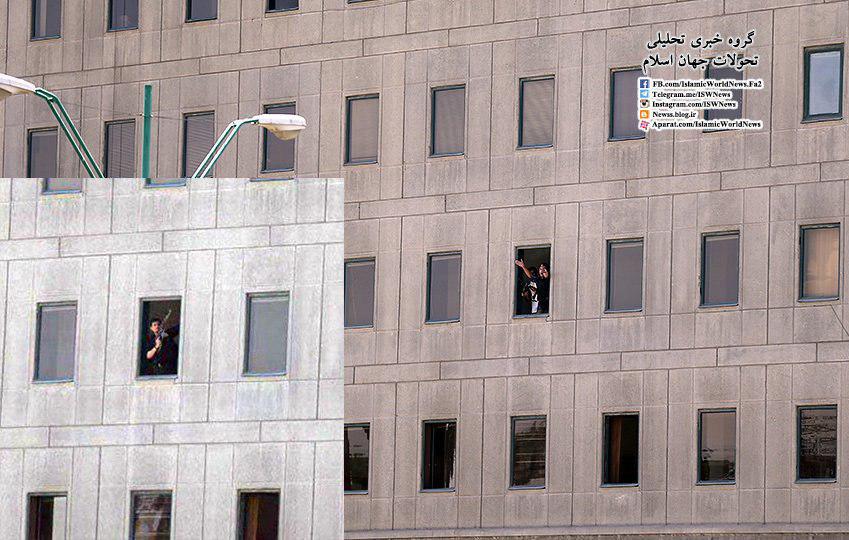
There’s been much talk recently of the motives behind the terrorist attacks that targeted Iran’s parliament and the shrine of Ayatollah Khomeini in Tehran, and there will be much talk in media outlets on those responsible. Despite the fact that ISIS claimed responsibility for this attack, certain ambiguities still exist regarding the operators behind them.
Looking into the previous instances of ISIS’s terrorist attacks around the world, one would conclude that this is not the work of ISIS. Taking the videos that were circulated of the attackers that had been recorded in the days prior to the attacks into question, none of these were circulated in the name of ISIS, nor did they show its banner. Moreover, on the day of the attack, there were no indicators pointing towards ISIS or its black banner.
Saudi Arabia’s Al-Arabiya TV was the first media outlet to broadcast the video sent by the attackers, and after that, ISIS’s Aamaq broadcast that same video, announcing that ISIS claims responsibility for the attack. In reality, the fact that the attackers spoke Arabic in the video would have one think that they are affiliated with ISIS, and it’s easier to believe that ISIS would be behind it.
The question that comes to mind is, if ISIS was not behind these attacks, then why did it claim responsibility for them? In answering this question it must be said that one of ISIS’s goals has always been to showcase itself, and show its capabilities on the international level, performing terrorist attacks around the world to show that it has the ability to perform such actions all over the world, such as its attacks in European countries and elsewhere. Furthermore, ISIS sees Iran as one of its most important enemies, and had threatened to perform terrorist attacks against it time and time again, always failing to perform any attacks on Iranian soil. It so follows that these latest attacks are the best chance for it to make some political gains without putting up any of the costs.
Another question that comes to mind is: who are the true perpetrators of the Tehran attacks then? The “Ansar al-Islam” organization is a radical Sunni organization, active in Iranian and Iraqi Kurdistan, is anti-Iranian, and has deep religious and ethnic differences with the Shia system ruling Iran. It has arranged a number of operations against the Iranian state in the past, and some informed sources have cited them as being behind the Tehran attacks. We will discuss this group’s role in the management and the execution of the attacks as we go along.
Mullah Krekar is one of the well-known Salafi figures of Halabja in Iraqi Kurdistan. He had been a follower of Osama bin Laden in Afghanistan for a number of years and fought alongside him. Upon his return to Halabja he began spreading Salafi Jihadism in Iraqi Kurdistan, founding Ansar al-Islam, which simultaneously fought against Saddam Hussein and the Taliban and Barzani movements. After 9/11, he added fighting the U.S to his agenda.
Abu Musab al-Zarqawi left Afghanistan, settling in Iranian and Iraqi Kurdistan. The members of Ansar al-Islam, who were mostly Sunni Kurds from Iraq and Iran, were placed under his ideological and intellectual tutelage. This is why this organization considers Al-Zarqawi to be its spiritual leader.
During Zarqawi’s stay in Iraq, especially in August 2003, three months after the fall of Saddam Hussein in Iraq, he planned and led the Najaf attacks which resulted in the assassination of Sayyid Mohammad Baqer al-Hakim, the head of the Shia Supreme Council of Iraq on August 29th, in the shrine of Imam Ali, the first Imam of Twelver Shia Muslims. After the incident, he established “Tanzim al-Jihad fi Bilad al-Rafidayn”, Al-Qaeda’s Iraq branch, which eventually came to form ISIS.
Throughout their period of activity, Ansar al-Islam managed to gain great ideological and intellectual influence among Iranian Kurds, leading to the formation of the “Tawhid and Jihad” group. This group, through its commencement of operations since 2011, managed to impose itself as a serious player among Jihadi groups. Furthermore, being the earliest of Salafi Jihadist groups in Iran, it began to spread the ideas of ISIS when the latter revealed itself, and a number of them have gone to fight in Syria and Iraq with ISIS. The group was active in Western Iran and its neighbor Iraq, and enjoyed financial support from some of the region’s wealthier countries whose politics run counter to Iran’s.
Another matter is that anti-Iran groups, apart from their relations with anti-Iran countries, also possess relations with other anti-Iran groups, and cooperate with one another. One of the oldest of these groups is the MEK, which in the post-revolutionary period had many differences with Ayatollah Khomeini, Iran’s then supreme leader, and began fighting the new rule. This organization, in its efforts to combat the Iranian administration, has relations with all anti-Iranian groups, including Ansar al-Islam, and cooperates with them. The MEK enjoys political and social support from the U.S, as well as financial support from Saudi Arabia.
Some informed sources have said almost 50 members of Ansar al-Islam, all of whom are Iranian, Kurdish Sunni Muslims, operate from a base linked to the MOC operations room in Jordan, under the military and operational tutelage of the MEK, and are now ready to launch wide attacks inside Iranian soil.
These sources have also added that the MEK handled the planning of these latest operations, and that Ansar al-Islam executed them on the anniversary of al-Zarqawi’s death. However, because of Iran’s security forces’ grip on Iranian and Iraqi Kurdistan, and their fears of backlash from Iran, Ansar al-Islam decided it was better to conceal their responsibility for these operations, remaining silent, and letting ISIS claim responsibility for them.
It is noticeable that Saudi Arabia’s king, Iran’s traditional opponent in the region, has supported all radical anti-Iran groups, and even political opposition outside of Iran, such as the MEK, both financially and morally. So much so that Prince Turki al-Faysal, the former head of Saudi Intelligence, in his speech before the MEK’s yearly conference in 2016 in Paris, announced Saudi Arabia’s full support of the organization, as well as all anti-Iran groups.
Saudi Arabia will continue to support these groups in the possibility that Iran, a Shia Islamist country, might be weakened or its system of government changed. Saudi Arabia has accused Iran, on a number of occasions, of supporting terrorism and exporting its revolution to other countries, and interfering in the internal affairs of Arab countries. Mohammad bin Salman, the Saudi Minister of Defense and Deputy Crown Prince, has very recently accused Iran of trying to control the entire region, and threatened to create instability and take the war to within Iranian soil. Meanwhile, refuting Saudi claims, Iran’s minister of defense said that if Saudi Arabia should start a war with Iran, nowhere will remain safe in Saudi Arabia but for Mecca and Medina, which are sacred ground. Taking all these factors into question, are the Tehran attacks also a message that the Middle East will be the arena of a military bout between Iran and Saudi Arabia?
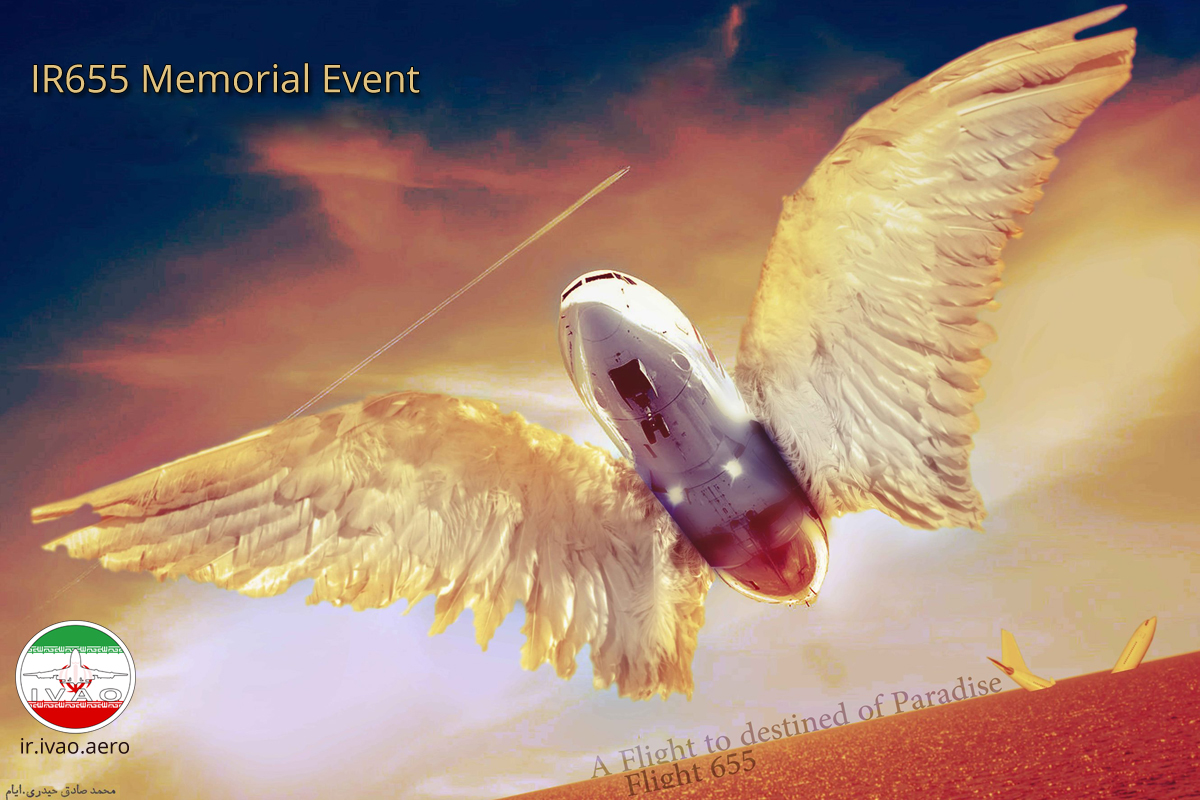
On July 3, 1988, Iran Air Flight 655 (IR655) was shot down by USS Vincennes which led to the loss of life of 290 innocent civilian from six nations including 66 children. There were 38 non-Iranians aboard.
Flight 655, as a commercial flight, operated by Iran Air that flew on a Tehran-Bandar Abbas-Dubai route. While flying in Iranian airspace over Iran’s territorial waters in the Persian Gulf on its usual flight path, it was destroyed by the guided missile cruiser USS Vincennes.
This attack ranks tenth among the deadliest disasters in aviation history, the incident retains the highest death toll of any aviation incident in the Persian Gulf and the highest death toll of any incident involving an Airbus aircraft anywhere in the world.


According to the United States Government, the crew mistakenly identified the Iranian Airbus A300 as an attacking F-14 Tomcat fighter. Contributing to the error was the fact that the aircraft did not respond to several inquiries to change course and did not identify itself clearly as civilian. The Iranian government maintains that Vincennes neglectfully shot down the civilian aircraft. The event produced a great deal of dispute and criticism of the United States. Several analysts have blamed U.S. military commanders and the captain of Vincennes for irresponsible and aggressive behavior in a tense and dangerous environment. The airliner was transmitting an identification friend or foe code for a civilian aircraft, but Captain William C. Rogers III in an interview insisted that he believed the code alone did not mean the aircraft was non-hostile. Captain Rogers described the attack as a self-defense measure to save his ship and the lives of the crew.
While issuing notes of regret over the loss of human life, the U.S. government has, thus far, neither admitted any wrongdoing or responsibility in this disaster, nor apologized, but continues to blame Iranian hostile actions for the event. The crew of the Vincennes were all awarded combat-action.
More than two decades later, the attack continues to pervade Iranian social psychology and fuel the strategic thinking of its military leadership. Many Iranians remember the event with a bitter sense of vulnerability. A foreign government, the United States, which was not in war with them, used brutal and lethal force against Iranian civilians.
For those with a longer memory span, it’s hard to dismiss some of these concerns especially when you recall that the irresponsible behavior of the USS Vincennes commanding officer earned him the Legion of Merits, “a military decoration of the United States armed forces that is awarded for exceptionally meritorious conduct in the performance of outstanding services and achievements.” For many Iranians, this is utterly incomprehensible.
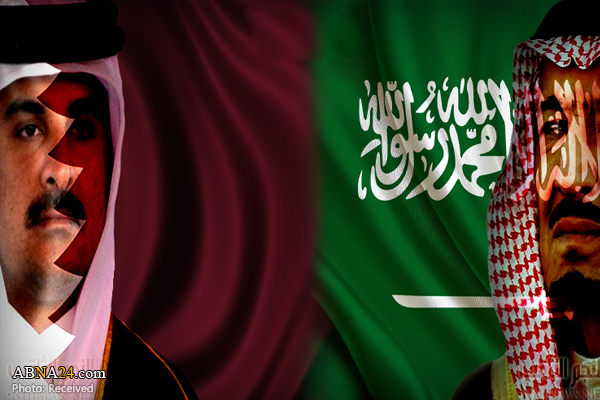
Saudi Arabia, with the bellicose support of President Trump, has launched a diplomatic and partial economic offensive against the ridiculously small state of Qatar and is dragging its allies, the United Arab Emirates in particular, into a potential major headache.
You see the de facto capital of the Emirates is Abu Dhabi which uses Qatari natural gas to generate half of its electricity via the Qatar-Abu Dhabi-Oman pipeline. So if Qatar really felt threatened it would pull the plug, and at least for a month or so, challenge the very survival of Abu Dhabi, for how many Emiratis let alone expats
would be able to last +40c/105f temperatures without electricity?
The Emirates capital city would have to import Liquified Natural Gas (LNG) which it doesn’t have the infrastructure prepared for as well as convert its electrical generators to LNG from natural gas, something that could take over a month to get up and running, no matter the $Billions the Emirates have to throw at the problem.
So the Saudis picking a fight with their long time villains, the Qatari’s, could crash the Emirates economy and put a serious strain on the so called “coalition of the willing”, that is those still committed to the quagmire in Yemen and its assorted crimes, another source of strain between the two allies.
The Emirates hate the Qatari’s, not without reason, and we know that the Emirates foreign legion has been concocting nasty plans against them in league with a pro-Israel PR Hit Squad in the USA. Still, the Emirates are dependent on Qatari gas so the shit could really hit the fan if the young newly crowned Saudi Prince and de facto commander in chief steps over the line and provokes a Qatari response.
Qatar and Iran, the “snake” that the Saudi’s so infamously wanted the CIA to cut the head off of, share the Pars natural gas field under the Persian gulf waters, the 3rd largest such in the world whose exploitation of has made Qatar the worlds largest natural gas exporter. If Qatar gets into a serious fight with Iran, which is what the Saudis are demanding, than the Qatari economy could hit the skids for Qatar only exports 600k barrels of oil a day, not nearly enough to sustain its international and domestic commitments.
Reality is the Emirates have much more serious trade relations with Iran than Qatar. Oman on the other hand, has even closer economic and political ties with its ancient fraternal brothers and sisters in the land of the Persians and the Saudi’s aren’t attacking the Omanis, so why the pissing match with Qatar?
Like I said, this animosity is nothing new just the latest flare up, for back in 2014 the Saudis led a break in diplomatic ties that lasted 8 months, and are now led by a much more hotheaded royal, in his early thirties and up until Trump, it seemed that the USA had abandoned the Saudis in favor of the nuclear deal with Iran, taking regime change off the table and leaving the Arabs on their own.
These have been scary times for the Arabian peninsula tribes, leading to amongst other actions, the Emirates giving the UN Security Council and its sanctions against Eritrea, in other words the USA, the finger by building its new navy base and airfield in Assab, Eritrea.
Qatar and the royal family of Saud, both installed by the British after WW1, have been at each others throats for many years now. We know thanks to Wikileaks the Qatari’s were pushing the Americans to engineer a coup against the Saudis while the house of Saud was trying to restore the grandfather of the present Emir, whose father deposed
his own father in a palace coup and who was forced to abdicate to his son by the Saudis.
The Saudis can’t militarily attack Qatar, not with the largest US military installation in west Asia and everyone knows it. The so called “economic blockade” of Qatar has failed so far with Turkey stepping in to provide everything Qatar needs.
True, the Al Jazeera satelite television channel has been a finger in the eye of the Saudis and Emirates but AJ’s main viewer base in Africa, west and south Asia, over a billion people, is via the two main satellite channels, Arabsat and Nilesat. These free channels can be accessed by anyone for as little as $40 for a satellite dish and receiver and a television. Arabsat is owned by the Saudis and Nilesat by Egypt. They kicked the Iranian Arabic channel off just like the Europeans kicked off Iran’s PressTV from their satellite systems. So why is the anti-Qatar lot allowing Al Jazeera to continue to spew its attacks on them via the big two satellite channels they own?
Why? Its a pissing contest, really, and other than pissing and moaning little of anything in the way of real conflict is going on. Maybe this will change in time but its hard to see the major powers internationally allowing this to get out of hand. The Saudis eventually will to try some face saving “compromise” and Qatar might have to eat some crow, but when all is said and done all of it will amount to little more than a urine stain on the political fabric on the Arabian PeninsulaPeninsulaPeninsulaPen
Source:
http://ahtribune.com/world/north-africa-south-west-asia/saudi-qatar-rift/1748-behind-the-scenes.html