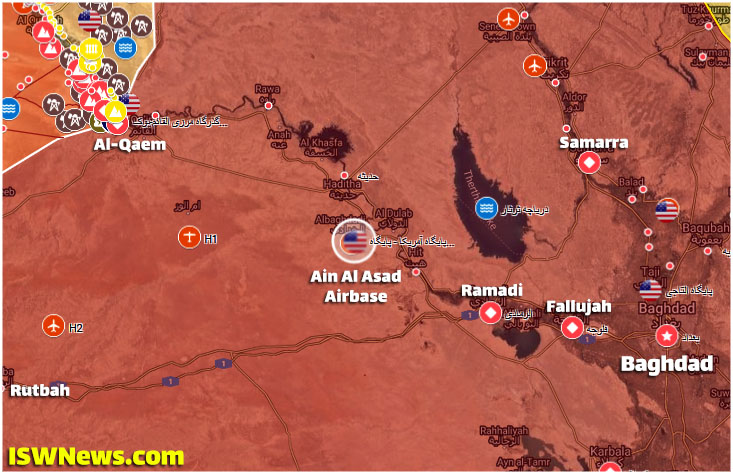
Referring to Baghdad’s shifting approach toward foreign partners, he added that Iraq is moving away from direct foreign troop presence and instead toward memorandums of understanding and security/training agreements with the United States, Britain, and France. He said security across Iraq’s desert regions has reached an advanced level, and revealed a special intelligence operation carried out beyond Iraq’s borders — particularly in Syria — coordinated with Syrian authorities and the U.S.-led coalition, which resulted in the arrest of several wanted militants.
Implementation of the agreement to withdraw U.S. forces and fully transfer Ain al-Asad to Iraqi control marks the beginning of a new phase in Baghdad–Washington security relations. In this phase, Iraq seeks to reduce reliance on foreign troop presence while redefining cooperation around training, intelligence sharing, and technical agreements. The government also hopes to ease domestic sensitivities toward foreign military footprints — while still keeping channels with Western partners open. Yet despite Iraqi forces’ readiness, fully executing the withdrawal presents challenges, as parts of the Iraqi army and counter-terrorism apparatus still depend on U.S. technical, aerial, and intelligence support.
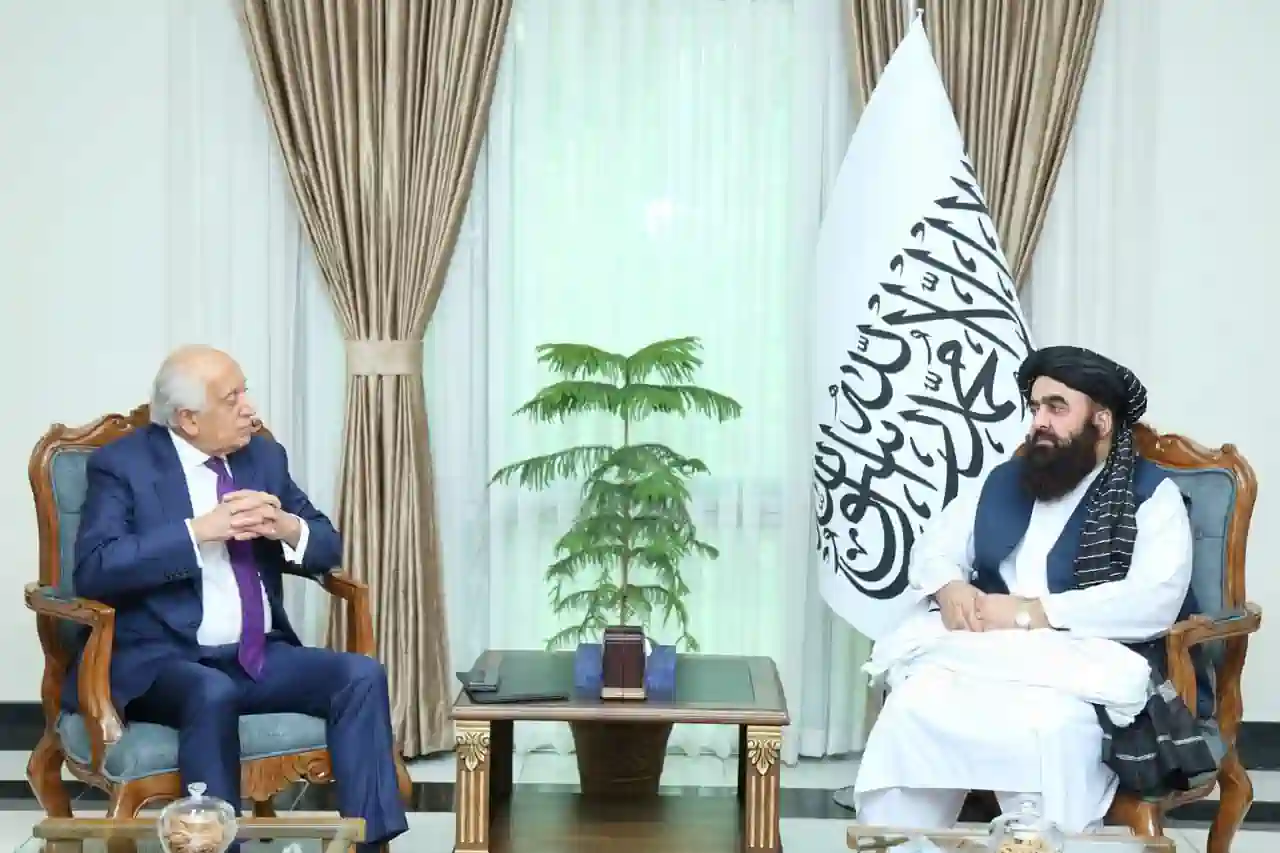
The details and exact purpose of this meeting have not yet been disclosed. Muttaqi, however, stated that cooperation between the Taliban and the U.S. has entered a “new phase”—a phrase left unexplained, fueling speculation about the scope of this engagement.
In previous sessions, discussions mainly focused on the release of American citizens imprisoned in Afghanistan. With that process now completed, analysts suggest that issues such as security, humanitarian aid, and limited economic cooperation—channeled indirectly through international institutions—may be on the agenda, though none of these have been officially confirmed.
Khalilzad has previously traveled to Kabul several times, holding informal talks with Muttaqi about possible pathways for developing Afghanistan–U.S. relations.
On another trip, he was accompanied by Adam Boehler, the U.S. president’s special envoy, meeting with Muttaqi and Taliban deputy for economic affairs Mullah Abdul Ghani Baradar to discuss matters including detainees, the status of foreign nationals, and economic opportunities.
The continuation of these meetings indicates that, even after its military withdrawal, the U.S. is still seeking to maintain political and economic channels with Kabul. Yet these interactions remain conditional, limited in scope, and marked by mutual distrust.
The overall pattern of behavior from both sides suggests a relationship that is neither fully severed nor based on trust, but rather one defined by controlled, interest‑driven engagement. Despite Khalilzad’s mediation efforts to bring security and military issues into the dialogue, the relationship has so far remained confined to economic and diplomatic exchanges.
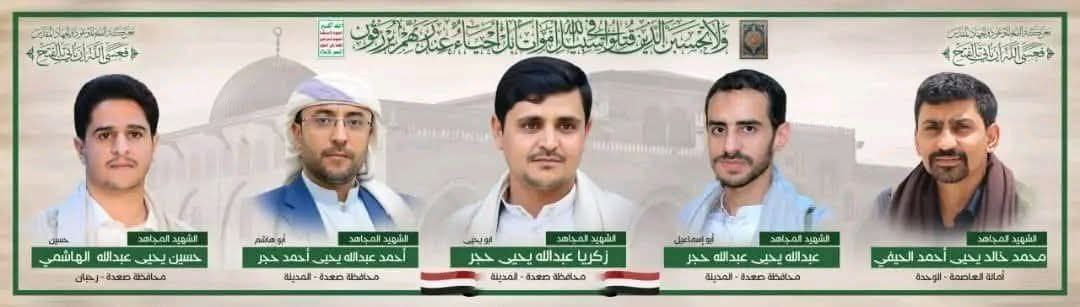
The funeral for Maj. Gen. Zakaria Abdullah Yahya Hajar (Abu Yahya), Brig. Gen. Abdullah Yahya Abdullah Hajar, Brig. Gen. Hussein Yahya Abdullah al‑Hashimi, Brig. Gen. Ahmed Abdullah Yahya Ahmed Hajar, and Mohammed Khaled Yahya Ahmed al‑Haifi will be held at Al‑Shaab Mosque in Sana’a, attended by senior officials of Yemen’s government and military.
Official Yemeni media have not yet released detailed information on their roles or circumstances of martyrdom. However, according to unofficial reports, Maj. Gen. Zakaria Hajar was a specialist in missile and drone systems within Yemen’s Armed Forces and played a role in Yemen’s support operations for Palestine.
He and his men were martyred in a U.S. airstrike in March 2025 targeting the Al‑Jiraf area north of Saada city. Zakaria Hajar’s name, due to his ties with Iran and involvement in Yemen’s missile‑drone program, appears on the alleged terrorist and sanctions lists of Saudi Arabia and the Saudi-backed Yemeni government.
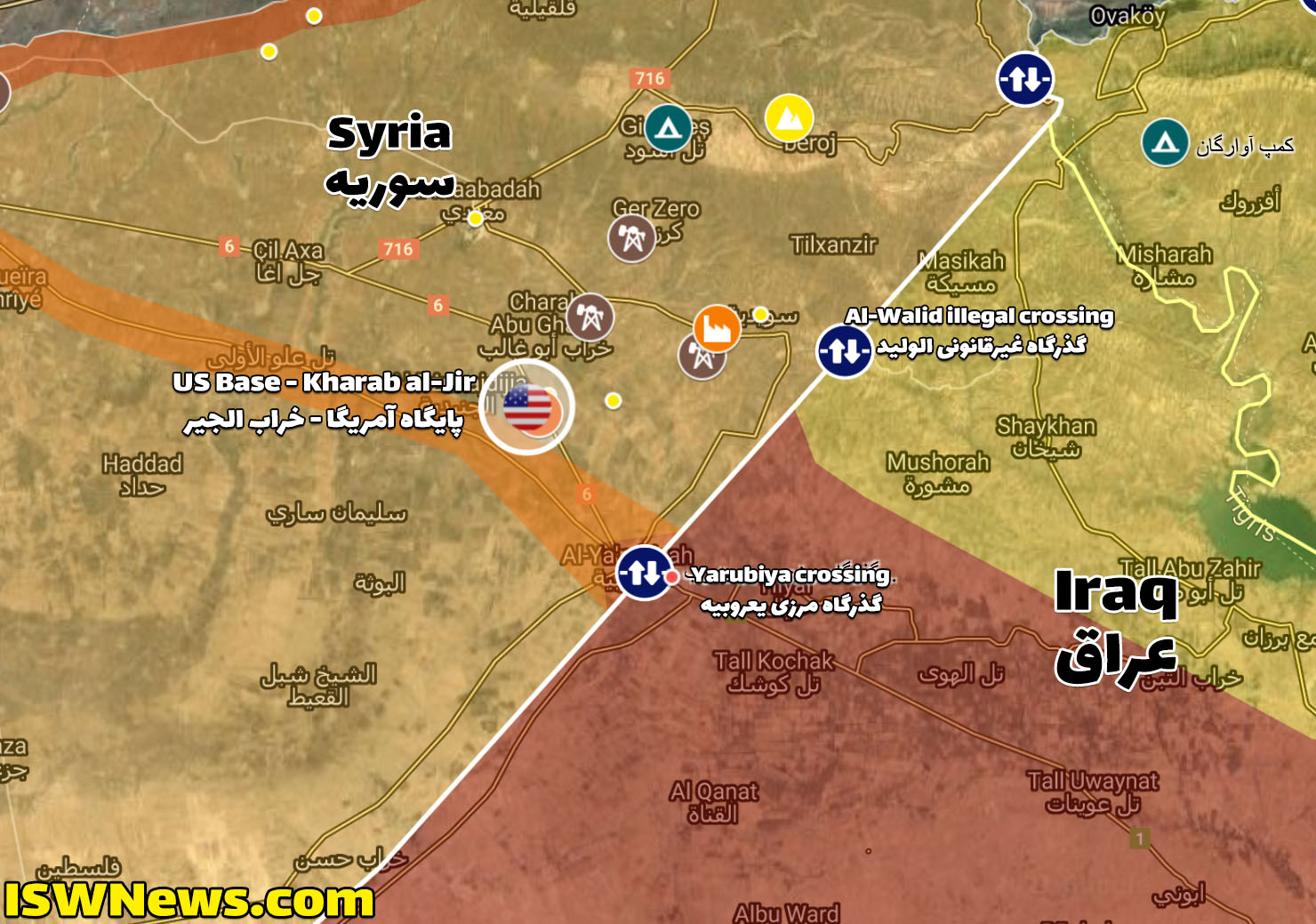
This marks the third U.S. transport aircraft to arrive at Kharab al-Jir within the past 24 hours. Previously, two other transport planes carrying heavy weapons, ammunition, and military vehicles also landed at the base.
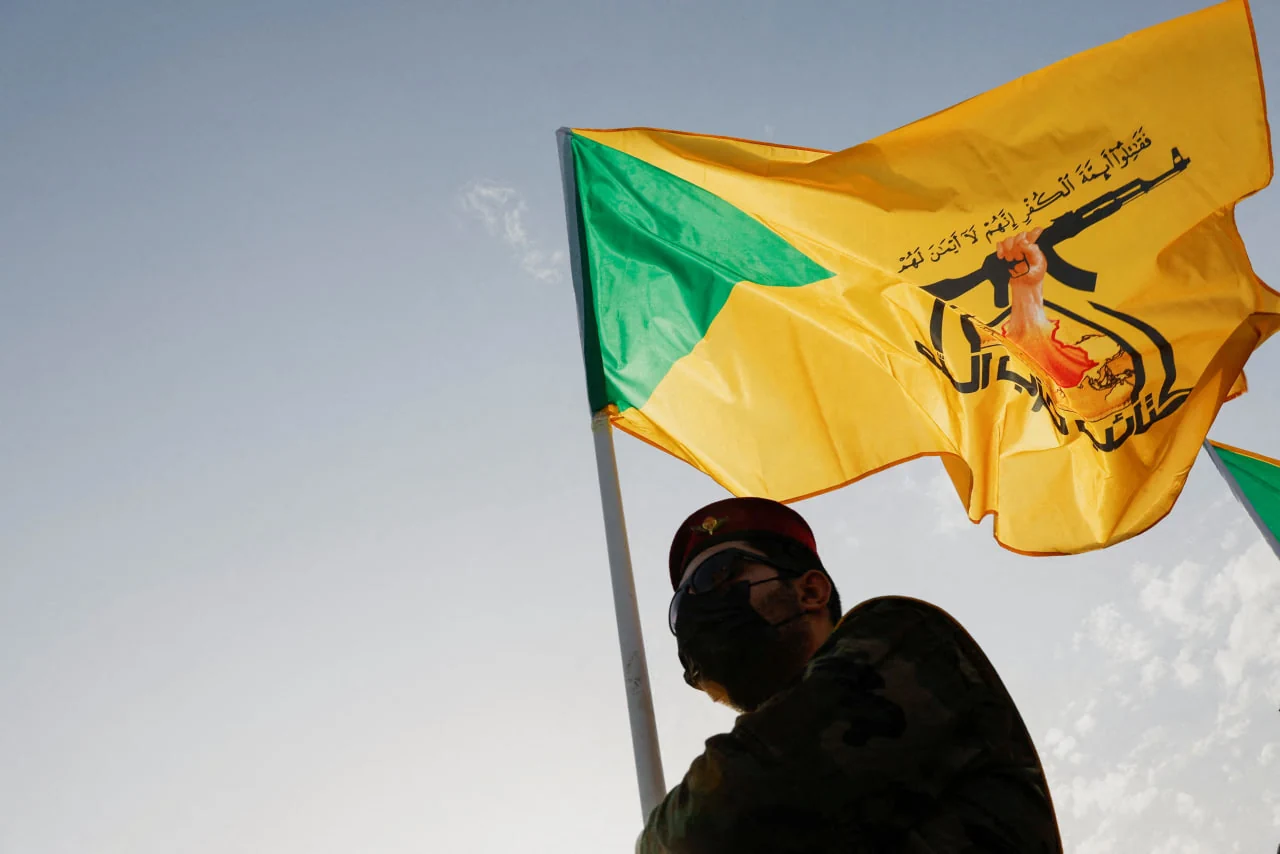
Al‑Askari described Savaya as an “unknown figure” dispatched by Trump to pursue America’s narrow interests amid complex regional circumstances, stressing that the mission serves Washington’s hostile agenda against Iraq.
Addressing the U.S. envoy directly, al‑Askari said: “Iraq is a land where great powers have been defeated, and the U.S. army has been dismantled here. The Iraqi people defeated ISIS, a product of American policy, and will not allow Washington to achieve its goals in this country.”
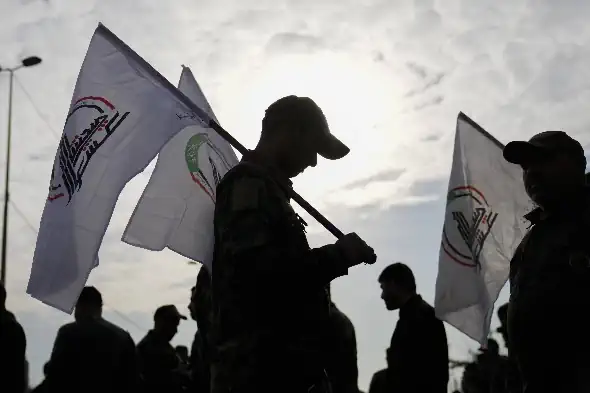
He added that Kataib Hezbollah sees no need to confront the envoy directly, claiming Iraq’s youth are sufficient to thwart his mission. Al‑Askari again warned Iraqi politicians—especially clerics—against any contact with Savaya, insisting that those who do so will be branded by the people as traitors and tools of the U.S. government.
This statement reflects growing sensitivity and concern among Iraqi resistance groups over new U.S. moves in Baghdad. From their perspective, Washington’s appointment of a special envoy is an attempt to rebuild political and security influence in Iraq. By labeling any engagement with the envoy as treason, the Iraqi resistance is signaling its intent to raise the political cost of cooperation with Washington.
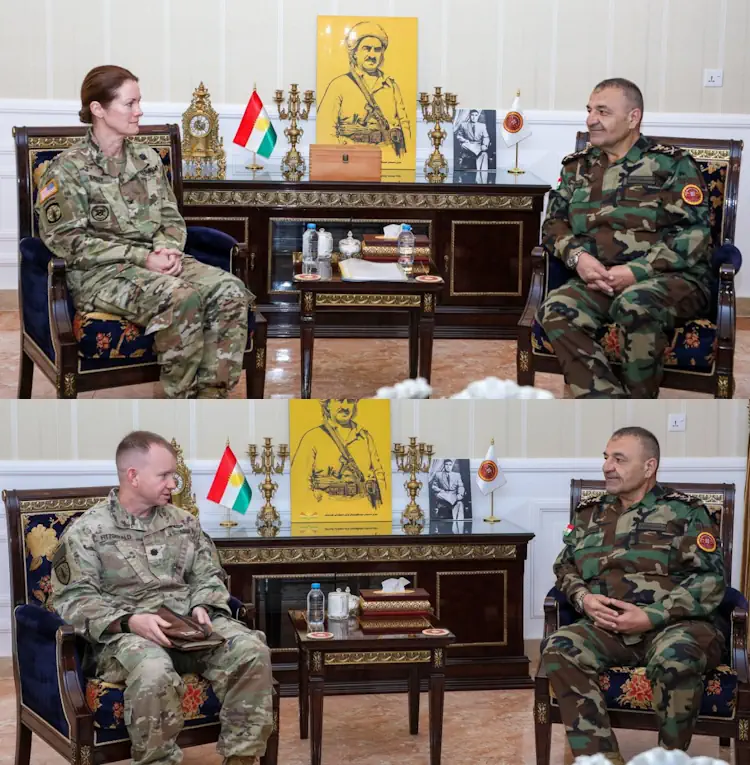
The significance of this meeting lies in the context of the recent 12‑day war, after which speculation has grown about potential heliborne operations by the U.S. and Israel inside Iran—given the failure to achieve objectives through airstrikes alone.
American activity in Iraqi Kurdistan has visibly increased, including visits to border areas with Iran and patrols in mountainous regions alongside Peshmerga commanders. Meanwhile, Iran’s armed forces have conducted military exercises in recent weeks to counter infiltration and heliborne operations, testing air defense systems to strengthen rapid response capabilities against threats to vital facilities, strategic infrastructure, and sensitive sites.
Regional analysts suggest that if long‑range strikes prove insufficient, Washington may consider hybrid options such as limited airborne operations. Although not officially announced, the rise in U.S. heliborne drills and simultaneous Iranian defensive exercises reinforce this speculation. Iran’s anti‑heliborne maneuvers signal preemptive readiness to confront possible threats. Iran’s armed forces have recently conducted military exercises to counter infiltration and heliborne operations, testing air defense systems during these drills.
The 12‑day war demonstrated that long‑range bombardments, despite their intensity, did not fully destroy Iran’s underground infrastructure. Western analysts argue this limited strategic effect could drive complementary scenarios. In this framework, rapid, surprise airborne operations are examined as theoretical alternatives—not aimed at occupation, but at creating strategic disruption.
In such scenarios, potential targets could include missile infrastructure, command centers, and even key specialists in sensitive fields—highlighting the strategic weight of airborne units in U.S. military planning.
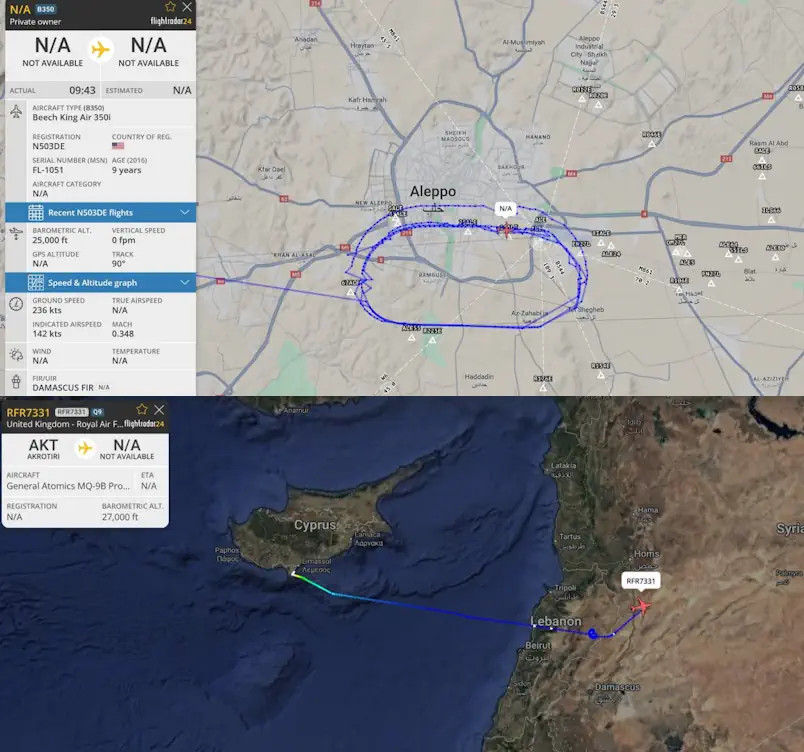
According to air traffic data from Flightradar24 and other sources, an MQ-9B Protector combat drone of the Royal Air Force (RAF) entered the Syrian airspace in the area between the capital, and the central governorate of Homs from Lebanon. The drone took off from RAF Akrotiri in Cyprus.
British drones have been flying over Syria for years as a part of the anti-ISIS coalition led by the U.S. However, their operations were previously limited to the country’s northern and eastern regions.
Soon after the drone was spotted, a Beech King Air 350i with the registration N503DE was detected flying over the city of Aleppo in northern Syria.
This specific aircraft is known to be modified for intelligence gathering. It is owned by Straight Flight, Inc., a subsidiary of Sierra Nevada Corporation, a major U.S. Department of Defense contractor specializing in intelligence, surveillance, and reconnaissance systems and aircraft modifications.
The aircraft has been linked in the past directly to the U.S. Special Operations Command, more known by its acronym USSOCOM.
It reportedly took off from Erbil International Airport in the northern Iraqi semi-autonomous region of Kurdistan, which is known to be a key hub for USSOCOM operations.
These flights, although significant, were not surprising. Last month, Syria joined the U.S.-led coalition. The country’s accession to the coalition came after a landmark meeting on November 10 between the U.S. President Donald Trump and Syrian President Ahmed al-Sharaa at the White House.
In the first joint operation between the two sides, the U.S. Central Command, also known by its acronym CENTCOM, announced on November 30 that its forces located and destroyed more than 15 sites containing ISIS weapons caches in southern Syria in cooperation with government forces.
The U.S. is already planning to further take advantage of this emerging partnership by establishing a military presence at the Mezzeh Air Base, which is located just under four kilometers away from the People’s Palace to the southwest of Damascus.
Since plans for the deployment became known last month, the air base was targeted with rockets twice. The last of the attacks was on October 8. The attacks were likely orchestrated by ISIS, or by radical Islamist elements from the government who are not happy with the decision to join the U.S.-led coalition.
The latest flights could also provoke a reaction, especially if they were followed by any joint operations with the coalition on the ground.
Speculation continues regarding how the attack was carried out and who was behind it. Some believe it was conducted by someone within Syria’s security forces, while others attribute it to ISIS.
U.S. President Donald Trump identified ISIS as the prime suspect and vowed to take “serious revenge” against the group.
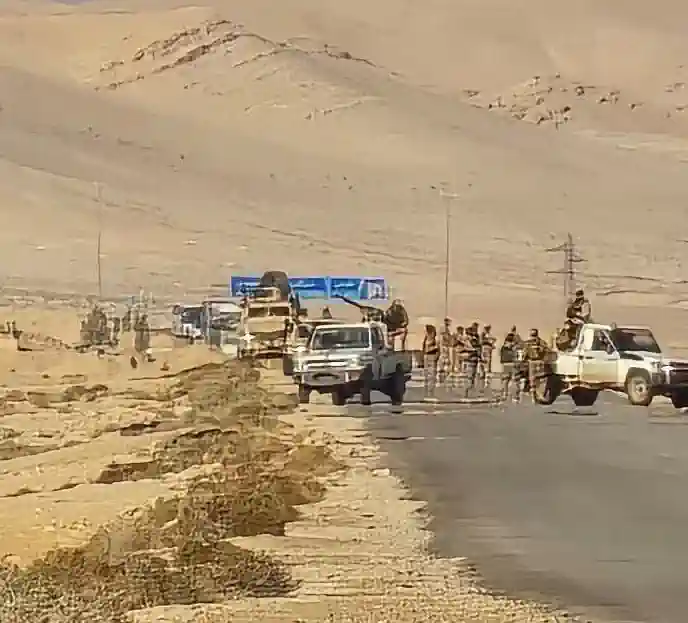
Following the incident, American warplanes flew over Homs province and Palmyra last night. Reports indicate that targets in Deir ez‑Zor and Homs (near Palmyra) were struck by U.S. aircraft.
If ISIS is indeed responsible, this would mark the group’s first direct attack on U.S. forces in the Palmyra region since the rise of the al‑Joulani government.
At the same time, Washington is increasing pressure on the Lebanese army, with Congress reviewing a proposal to reconsider military assistance to the country. The U.S. has also suspended the Lebanese army commander’s visit to Washington, linking any meeting with Joseph Aoun to specific conditions.
These pressures are described as part of Washington’s strategy to reshape the security equation in Lebanon and strengthen the army’s role as an alternative to Hezbollah. However, structural and political obstacles hinder this goal, as Hezbollah’s entrenched position in Lebanon reduces the likelihood of altering the army’s trajectory.
In this context, America’s conditional approach to military aid is not merely a security measure but part of a broader effort to contain Hezbollah and redesign Lebanon’s security order—a strategy whose implementation path remains uncertain.
Al‑Arab Weekly reported that Savaya’s appointment—made without congressional approval—signals Donald Trump’s intent to restore direct control of foreign policy to his inner circle in the White House. This reflects a recurring pattern in his foreign policy: major international decisions bypassing the State Department and pursued through personal and political ties with loyal associates. As seen in direct talks with North Korea’s leader or the Abraham Accords, Trump favors “personal, fast‑track diplomacy” over formal channels. In Iraq, choosing a non‑diplomat close to the president shows his preference for informal but controllable pathways. Savaya thus embodies a model where the president directly manages foreign relations to advance political, security, and electoral goals. His appointment marks the return of Trump’s personalized diplomacy to the Middle East—enhancing Washington’s direct influence but risking the weakening of professional, institutional foreign policy structures.
Redefining Sovereignty in Iraq
In his first official statements, Savaya stressed the need for centralized command and ending the activities of armed groups outside government control—remarks clearly aimed at Hashd al‑Shaabi and Iran‑aligned forces. From Washington’s perspective, curbing these groups is a prerequisite for Baghdad’s “real sovereignty” and future security and economic cooperation. At a deeper level, this policy redefines sovereignty itself: Iraqi independence is framed as alignment with U.S. policies. Analysts argue this is part of Trump’s broader plan to contain Iran from within Iraq’s structures, not through direct confrontation but via reconstruction, investment, and minority support. A symbolic example is the reintegration of the Christian “Nineveh Plains Protection Units” into the army, signaling centralization of power and weakening of non‑state actors. Savaya’s mission can thus be seen as an effort to reconfigure Iraq’s security architecture to serve Western interests—ostensibly strengthening the central government but in practice shifting the balance toward Washington’s preferred order.
Linking Security Policy with Economic Reconstruction
Savaya’s statements place economic recovery on par with security reform. He repeatedly emphasized the need for foreign investment, rebuilding Iraq’s worn‑out infrastructure, and opening the economy to international companies. For Washington, economic development is a prerequisite for political stability and central government authority. Observers note, however, that deeper political and strategic aims lie behind this economic agenda. U.S. reconstruction plans are not merely humanitarian or technical—they are part of a wider policy to redefine Iraq’s role in the regional order and secure American access to its energy resources. Linking reconstruction with Western economic presence ensures continued U.S. political influence while reducing rivals’ roles in energy. Analysts highlight similarities with past U.S. experiences in rebuilding crisis‑stricken states, where investment and infrastructure projects became tools of political and security engineering. With about 11% of global oil reserves, Iraq holds a special place in this strategy. Savaya spoke of “reviving Iraq’s historic role in the region,” suggesting economic engagement as a prelude to “restoring state authority and social trust.” Yet in practice, foreign corporate expansion and concentrated reconstruction projects may reshape Iraq’s economy in ways more aligned with external powers than with national priorities.
Soft Power Through Religious Minorities
Savaya’s appointment carries a clear political message: reasserting U.S. influence in Iraq’s social fabric via religious minorities. He hails from a Chaldean‑Assyrian family rooted in Tal Afar, Nineveh, and maintains close ties with Iraqi Christian diaspora communities in the U.S. Analysts see this as a cultural and social lever in areas once dominated by resistance groups and Iran‑aligned forces. Assyrian media outlets such as Syri Press and Baghdad Tribune framed his appointment as “the return of Iraq’s Christian voice.” In reality, it represents an attempt to build a new social base for Washington’s policies in northern Iraq, particularly in regions where sectarian tension and ethnic divides facilitate external involvement. In this context, the revival of the “Nineveh Plains Protection Units” within the Iraqi army—coinciding with Savaya’s mission—carries symbolic weight. Though presented as enhancing minority security and rebuilding war‑damaged areas, it may in practice foster military and social structures aligned with Western‑oriented currents. Thus, leveraging religious minorities serves not only humanitarian purposes but also as part of America’s soft‑power strategy to re‑embed its political and economic presence in Iraq.
Dual Function of Savaya’s Appointment
The timing of Savaya’s appointment, coinciding with Iraq’s parliamentary elections, adds another dimension. Reports suggest the move aims to exert indirect influence on Iraq’s political landscape, steering it toward coalitions more aligned with Washington’s policies. Savaya’s mission includes mediating among Sunni, Kurdish, and minority groups, encouraging their participation in a U.S.‑backed political framework. While presented as fostering stability and reducing armed groups’ influence, this is part of a broader strategy to reshape Iraq’s power balance so that future government decisions align more closely with Western interests.
Iraq’s Role in the New U.S. Strategy
Regionally, Sawaya’s appointment is seen as part of Trump’s overarching plan to reconfigure Middle Eastern order. Analysts link it to Washington’s efforts to advance normalization between Arab states and Israel. Iraq, with its geographic position between Saudi Arabia, Jordan, the UAE, and the Kurdistan Region, is viewed as a potential connecting hub for America’s allies. Sawaya’s mission thus extends beyond economic cooperation and reconstruction—he is positioned to facilitate Baghdad’s political and security ties with regional coalitions favored by Washington.
In summary, Sawaya’s appointment represents a multi‑layered initiative pursuing political, economic, and symbolic goals simultaneously. Individually, he embodies the use of minority social capital in U.S. policy; politically and security‑wise, he is tasked with limiting armed groups and strengthening central authority; strategically, his mission consolidates Washington’s foothold in Iraq’s economy and energy sector, aligning the country more closely with the Western bloc. His slogan of a “Strong Iraq” reflects a broader ambition: to reintegrate Baghdad into an order designed to secure U.S. and allied interests in the region.
Would you like me to refine this into a policy brief format (executive summary + key implications) or keep it as a long‑form analytical translation?
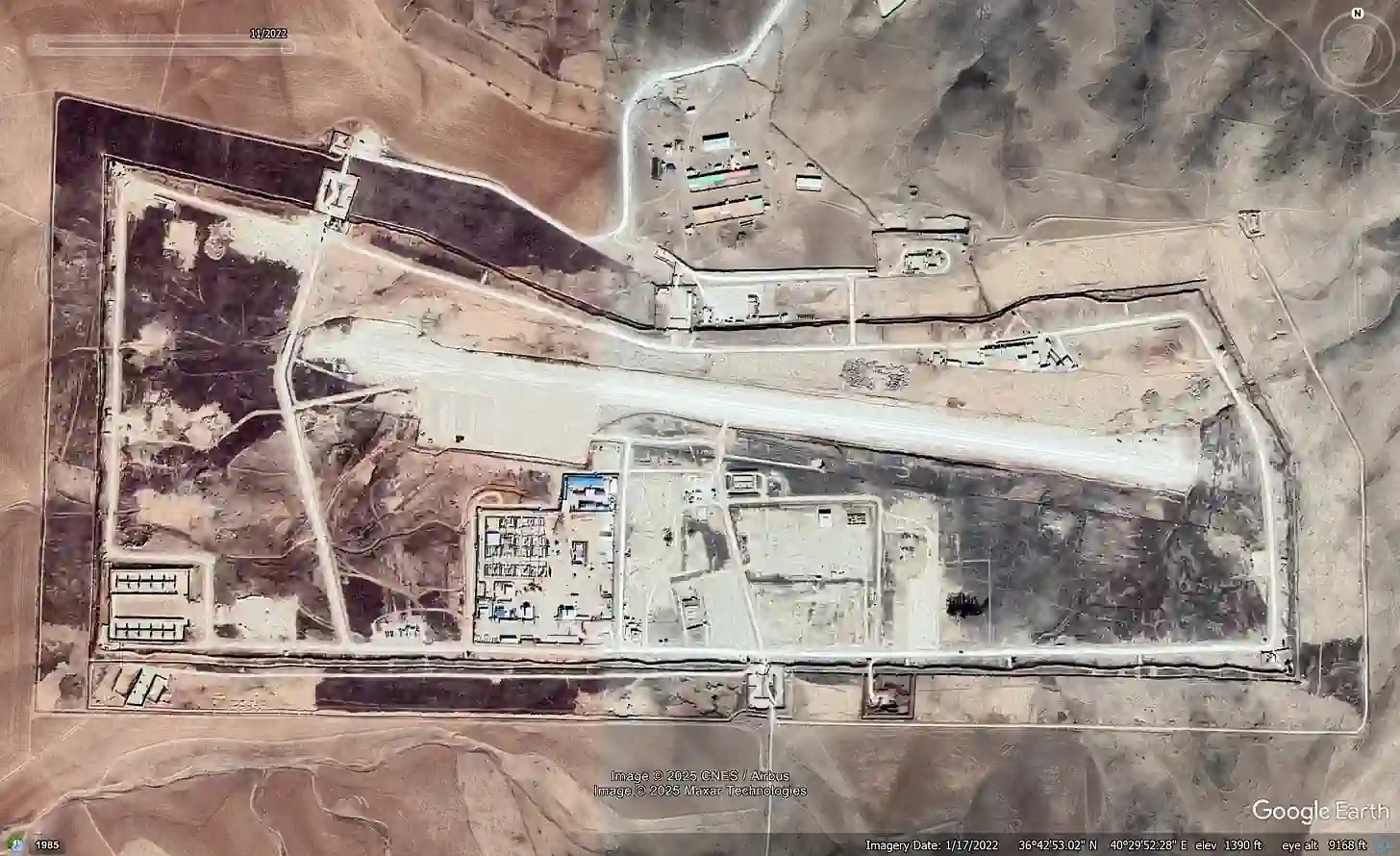
Qasrak Base, located in northern Hasakah province near the town of Tal Tamer, functions as a joint facility between the Global Coalition against ISIS and the Syrian Democratic Forces (SDF). Covering an area of 1.8 square kilometers, the base was constructed in late 2017 and early 2018 on elevated agricultural land. The hill on which the base sits is locally known by the names “Jabal Ghol” and “Jabal Qalayeb.”
The well-equipped Qasrak base on November 6, 2022 (the main logistics section of the base is in the image above) Source: Google Maps and Airbus
Situated at geographic coordinates 36.706242, 40.511955, the Qasrak base lies roughly 30 kilometers from the center of Hasakah city and 33 kilometers from the Turkish border. Its 1.7‑kilometer runway is capable of accommodating military transport and cargo aircraft. As a strategic and logistical hub, Qasrek supports coalition operations in coordination with the Syrian Democratic Forces (SDF) and oversees the main supply routes linking Hasakah and Deir Ezzor.
Right image: Location of Qasrak base from Hasakah; Left image: Location of this base relative to the Turkish borderThe longest runway built by the US in Syria
Significant construction and expansion activities were first observed in early 2025, concentrated across three main sections. The eastern sector saw the most extensive work: land was leveled and covered with concrete at two separate points, likely in preparation for new facilities or warehouses intended for equipment and logistical supplies. The larger site measures approximately 193 by 94 meters, while the smaller one is about 84 by 60 meters.
Scope and dimensions of construction in the eastern part of the base
In addition to satellite imagery, multiple videos have documented the surge of activity at this base, including the movement of vehicles and convoys. The earliest footage, released by the Syrian Observatory for Human Rights (SOHR) in early 2025, showed heavy machinery and bulldozers, described as “expansion operations at the base.” Analysis of visible structures and geographic features further confirmed that the location was indeed the Qasrek base.
Comparing field and satellite images to verify the base’s alleged location
Later, on September 28, 2025, the Syrian Observatory for Human Rights (SOHR) released a video showing military convoys belonging to the Global Coalition moving toward the base. On October 18, 2025, another video depicted several coalition trucks carrying military and logistical equipment along the route from the al‑Walid border crossing toward the base.
A long line of trucks at the Al-Waleed border crossing on the way to the Qasrak base
In addition to ground movements, aerial activity at the base has increased significantly, with military transport aircraft landing on multiple occasions. Compared to previous years, this level of operations is unprecedented; prior to Assad’s fall, the base had only limited air traffic. Notable examples include an American cargo plane documented by SOHR on May 24, 2025, and another coalition transport aircraft recorded on July 23, 2025. Furthermore, on October 18, 2025, Syria Now reported that a large American cargo plane, escorted by helicopters from the Iraqi border, landed at the base. Taken together, these developments indicate that the Global Coalition is actively redeploying forces at Qasrek, likely transforming it into a key military logistics hub in northeastern Syria.
The moment a C-130 transport plane flies over Hasakah and near Qasrak base
Activities in Deir Ezzor
The expansion and intensification of activity has not been limited to the Qasrak base. Parallel, though distinct, developments have also been observed in Deir ez‑Zor—particularly at U.S. bases located in the al‑Omar oil field and the Conoco gas field. Alongside the rapid growth of Qasrak, satellite imagery shows American forces withdrawing from Conoco, al‑Omar, and the base near Green Village on the outskirts of Deir Ezzor.
Photographs taken since early 2025 reveal extensive relocation of equipment and the evacuation of facilities at these sites. Reports first published in May 2025 indicated that the Pentagon intended to transfer forces from al‑Omar and Conoco in Deir ez‑Zor to Qasrek and al‑Shaddadi in Hasakah, thereby reducing the U.S. military presence in the region to fewer than 1,000 troops.
Summary
Satellite imagery shows that between January and October 2025, U.S. forces withdrew from the Conoco, al‑Omar, and Green Village bases in the Deir Ezzor countryside. At the same time, Qasrak base near Hasakah witnessed rapid engineering and logistical expansion from July 2025 onward, including the construction of new facilities and the repeated arrival of supply convoys. These developments appear to have effectively transformed Qasrak into the primary command and supply hub for U.S. forces in northeastern Syria.
He stated: “The United States expects Baghdad to take concrete measures against Iran-backed armed groups, including those operating inside Iraq. We are disappointed by Iraq’s retreat from the asset freeze targeting Hezbollah and the Houthis. Hezbollah and the Houthis pose dangers to both the region and the world, and all countries must ensure their territory is not used by these groups or other Iranian proxies for training, fundraising, acquiring weapons, or carrying out attacks. Washington will continue pressing Iraq to curb the activities of Iran-aligned groups that threaten U.S. and Iraqi interests.”
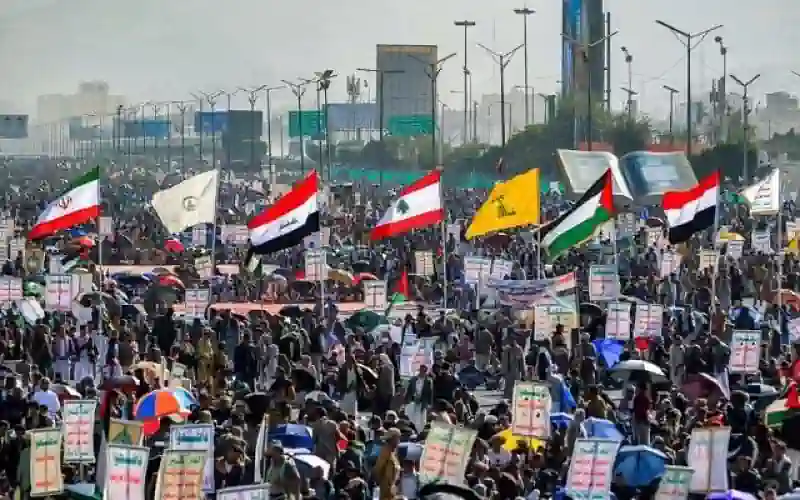
The spokesperson’s frustrated reaction underscores that Washington views Baghdad’s reversal as a setback in its broader campaign to pressure the “Axis of Resistance.” In recent weeks, the U.S. has sought to leverage economic tools and political pressure to compel Iraq to align with its extraterritorial sanctions. Iraq’s change of stance must be understood within the context of domestic complexities and the government’s concern over backlash from political and social factions close to the resistance camp.
Baghdad recognizes that any direct move against Hezbollah or Ansarallah would be perceived by Iraq’s Shiite public opinion and allied armed groups as siding with U.S. policy, potentially destabilizing the country’s internal political and security balance.