Category: Media

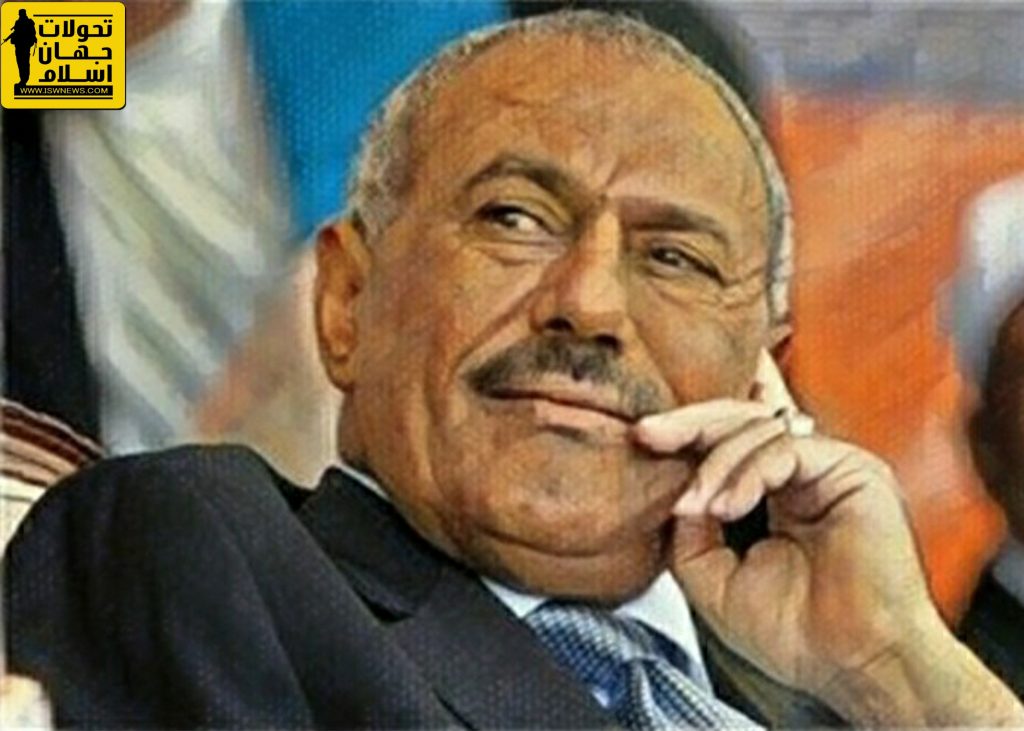
  • Ali Abdullah Saleh with or against AnsarAllah?

    Ali Abdullah Saleh with or against AnsarAllah?

    Arab media a few hours after reporting ceasefire between AnsarAllah and Saleh militia, report news regarding heavy fight between two sides in As Siasi neighborhood in south Sana’a. Saudi media also report that south of Sana’a, airport and governmental buildings are in control of Saleh troops while AnsarAllah denies it. On the other hand, security organizations of Yemen claim that Sana’a is safe and there will be strong answer to any fight in specially in As Siyasi neighborhood.

    AnsarAllah leader in his second talk says: “I thank our honorable brothers in Yemeni General People’s Congress party who did not participate in fights. We asked from militia and Yemeni General People’s Congress party and party’s leader to act responsibly and wisely so why they do not allow?

    We and security organizations are with people and try our best to keep Sana’a safe and secure.

    Disturbing the celebration for holy Prophet birth anniversary was hideous but we neglect it.

    Militia leader’s talk was about inviting to fight, riots and lies and it was an obvious hostility. While we invited everyone to keep Sana’a safe. Words said by Saleh, militia leader, did not lead to Sana’a safety. He was in accordance with enemies. Instead of using your weapons against Yemeni people, use it against enemies.

    Saleh’s talk smells nasty and you do not believe in Yemen Republic! Offensive (Saudi) alliance is happy with your stand and it is same as going back to being hireling and crimes. Saudi alliance statement emphasis the destructive movements of militia in Sana’a. What happened is painful and it is our duty to stop riots and intrigue.”

    In the same sense, officials in Abdrabbuh Mansour Hadi, resigned government of Yemen, support Saleh militia’s movement and ask people to arise against AnsarAllah.


    The following points can be deduced from stands of different sides and news:

    1. The alliance between Saleh and AnsarAllah and other parties is impossible due to Saleh’s stands.
    2. The current situation in Sana’a is similar to events happened in 2012 in Damascus with some differences:

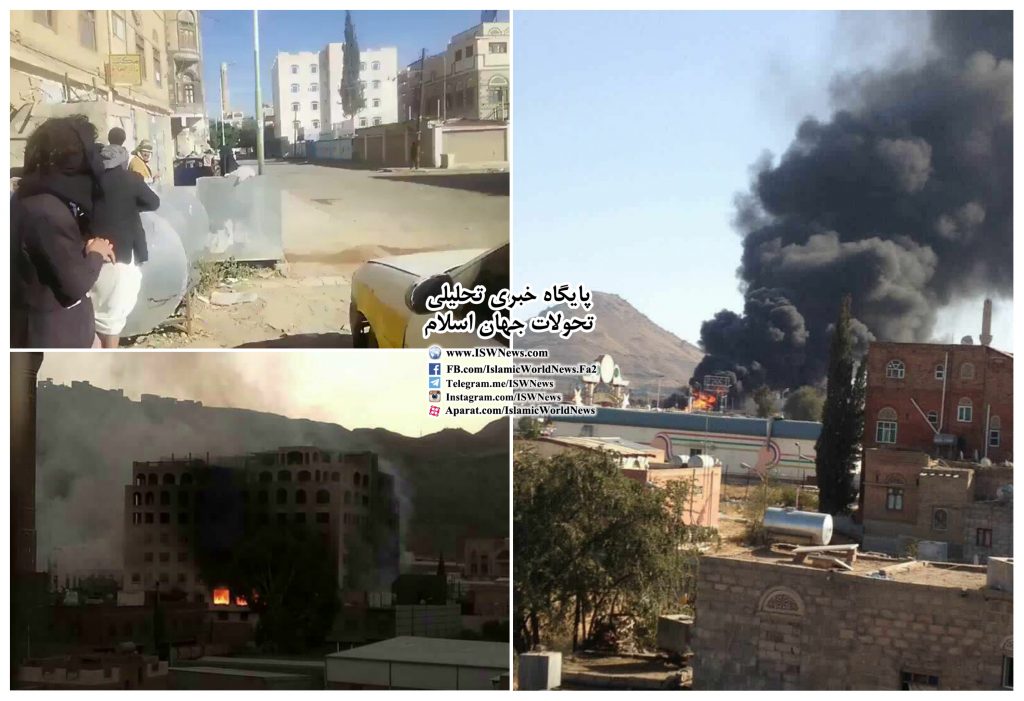
    In Damascus, the political chaos was raised by resignation of prime minister “Riyad Farid Hijab” while Syria was attacked by foreign countries and terrorists. In Yemen, this role is played by Saleh. Fights are still going in Sana’a but controlling of governmental buildings by Saleh cannot be confirmed. (Following images are published by media against AnsarAllah and shows the fight and ruling some places.)

    In fact, media play a big role in this confrontation!

    1. No doubt that if Saleh separates from Yemeni revolution, it has influences on their power against Saudi alliance not in the sense that they will have less troops but in the sense that some of the power should be used inside Yemen to fight Saleh militia to take back control of cities and areas taken by Saleh.
    2. AnsarAllah who believed before about the dependency of Saleh to UAE and Saudi, now have to fight in two fronts. However, Saleh does not have the same power as in 2005 and AnsarAllah have the support of Yemeni people and parties.

    In conclusion, there are three options available for Saleh; one is to change his stands by mediation of Qatar, Yemeni scholars and officials and reunites with AnsarAllah again or joins Saudi alliance which leads him to accept Hadi’s resigned government or in third option, he begins his own movements which reduces his impression in political future of Yemen!

  • Yemen’s Houthi fighters launch missile attack at Abu Dhabi nuclear plant

    Yemen’s Houthi fighters launch missile attack at Abu Dhabi nuclear plant

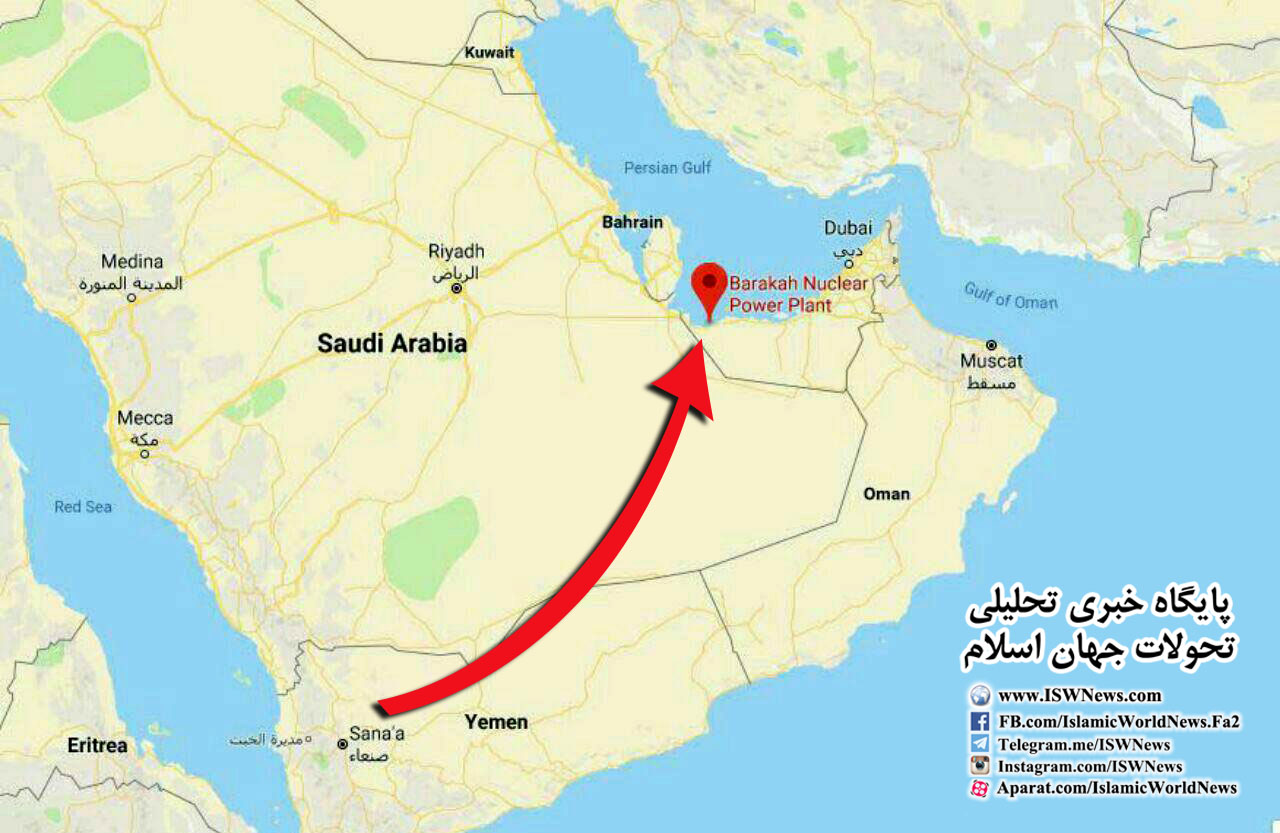
    “The missile force announces the launching of a winged cruise missile … towards the al-Barakah nuclear reactor in Abu Dhabi,” the Houthis’ al-Masirah news website reported on Sunday, without providing further details.

    Yemeni media reported that the cruise missile had successfully hit the Barakah nuclear reactor in Abu Dhabi.

    Yemeni forces regularly fire ballistic missiles at positions inside Saudi Arabia in retaliation for the Saudi-led war on Yemen.

    Back in September, Houthi leader Abdul-Malik al-Houthi warned that the UAE is no longer a safe country as missiles manufactured by the Yemeni group can now hit anywhere in the Arab country.


    The UAE has been a key ally of Saudi Arabia in its military campaign against Yemen, which has killed over 12,000 people since March 2015.

    The Emirati air force has played a significant part in the aerial assaults against Yemen. In addition to deploying its own troops on Yemeni soil, Abu Dhabi has been training pro-Saudi militants fighting on the ground against the Yemeni army and its allied forces.

    The country has also come under scrutiny for running secret prisons in Yemen, where hundreds of inmates suffer mistreatment and torture.

    Saudi Arabia and its allies launched the war in a bid to crush the Houthis and reinstate the former Riyadh-friendly regime, but the kingdom has achieved neither of its goals.

    The protracted Saudi war, which has been accompanied by a land, naval, and aerial blockade, has left over 17 million Yemenis in need of food and caused a cholera epidemic.


    Source

  • Yemen news, Saturday 2nd December 2017

    Yemen news, Saturday 2nd December 2017

    – AbdolMalek Badroddin Houthi, leader of AnsarAllah, today warns about the intrigue in Sana’a today. He mentioned in a TV talk that ”As Saleh mosque or bases of Yemeni General People’s Congress party are not controlled by AnsarAllah’s or military forces.  All the bases of Yemeni General People’s Congress party or residents of its leaders are safe. Militia attack some religious places which is not appropriate and they should strive for the safety of Yemen. Ali Abdullah Saleh, the leader of party, should also be wiser than militia and try to help ending the intrigue. I ask the wise groups to be responsible and help governmental organizations to keep the capital safe and end the riots.

    Any disagreement between AnsarAllah and General People’s Congress can be solved by talking and tribes should act accordingly and not helping the intrigues. If we made mistake, we accept it and we expect the same from the party. Everyone should help government and unite with forces against Saudi alliance.”

    – Ali Abdullah Saleh in his TV talk accuses AnsarAllah’s forces to violate ceasefire and intriguing actions and said: “In the case of ceasefire and ending the siege of Yemen, we are ready to negotiate with neighbours.”

    – Saudi alliance in their statement shortly before, support Ali Abdullah Saleh’s stand and his militia movements against AnsarAllah and call it “people uprising against Al Houthis”.

    – Mohamed Abdus Salam, spokesman of AnsarAllah, denies the news about retreat of AnsarAllah forces from Sana’a and other places and controlling of governmental organizations by Saleh’s forces.

  • Muslims Defeated the “Islamic State”, Israel Is the Big Loser

    Muslims Defeated the “Islamic State”, Israel Is the Big Loser

    Most observers would agree that the United States has directly or indirectly contributed to the creation of most of the international terrorist groups that have been in the news for the past thirty years. The narrative of how Osama bin Laden and what was to become al-Qaeda were initially supported by the U.S., Pakistan and Saudi Arabia to drive the Red Army out of Afghanistan is well known. Washington did so with little regard for broader agendas, including removing the United States out of the Middle East and regime changing the existing secular and religious Arab states in the region.


    When the American supported Holy Warrior Mujahidin were successful beyond their dreams and succeeded in forcing the Soviets to withdraw during 1998-9, a weak Moscow-supported Mohammad Najibullah regime stayed in power, only to be defeated in 1992 by the Taliban, who were one component of the Islamist groups that were being supported by the U.S. and its partners. The Taliban soon demonstrated that they too were not willing to be tools of either Islamabad or Washington and eventually provided al-Qaeda and bin Laden with a home, the casus belli that led to the U.S. attack on Afghanistan after 9/11.


    The U.S. occupation of Iraq followed, based on a similar pretext, i.e. that Saddam Hussein was in league with terrorists and was preparing weapons of mass destruction that threatened the United States. The deliberate dismantling of Iraqi government mechanisms coupled with a collapse in its civil society resulting in extreme sectarianism led many Sunni Iraqis to join the next emerging terrorist group, the Islamic State (IS), also called the Islamic State in Iraq and Syria (ISIS) or Daesh. IS was as surely the product of the American interventionist tactics in Iraq as were al-Qaeda and the Taliban earlier in Afghanistan.


    IS’s appeal was largely due to its recreation of a territorial state, which it dubbed the new Caliphate. It is now facing final defeat at its last remaining enclaves in Iraq and Syria. Soon, it will only be a dark memory in those two countries, a legacy of ruined cities, mass executions, cultural vandalism and torture.


    It is not known if the Islamic State’s leader Abu Bakr al-Baghdadi is still alive, but the group, which proved to be particularly astute in its handling of internet generated propaganda, will certainly live on through radical websites and to an extent through its foreign supporters returning to their home countries to carry out terrorist acts. There were also be places in Africa and Asia where IS will continue to have a physical presence on the ground, to include Sinai and Libya. But, generally speaking, the group will cease to exist, even though one can anticipate that there will be successor organizations that will benefit from the IS example and follow a similar pattern to attract recruits.


    What has changed, however, is the manner in which IS was defeated. The United States helped create al-Qaeda and the Taliban and then played a major role in attempting to destroy them after they ceased to be useful. Washington did indeed play a part in the fighting against IS but it was generally in support of others like the Iraqi Army or Kurdish militias and it did not get seriously engaged due to misgivings about previous interventions and incompatible demands for regime change in Damascus. So IS was defeated by a coalition of Muslim states supported by limited but effective Russian air and sea power, not by some arrangement cobbled together by the United States. Now, the United States, which has lost what little leverage it had to participate at the head table in any discussions to come to a final settlement of the Syrian crisis is desperately seeking to remain relevant by leaving its troops in the area and operating through surrogates.


    But the big loser in the defeat of IS will likely be Israel. The Netanyahu government, whose overall strategy has been to weaken all of its neighbors by bringing about their fragmentation along sectarian and tribal lines, has assisted both IS and al-Qaeda fighters in Syria against that country’s legitimate government and has repeatedly attacked Syrian Army forces. It has been actively supporting Kurdish separatism in Iraq while urging the United States to attack Iran and is now colluding with Saudi Arabia to use both military and economic force to compel the Lebanese government to remove the political arm of Hezbollah from the country’s government and to disarm the group. This has created a crescent of battle-tested governments running from the Caspian Sea to the Mediterranean – Libya, Syria, Iraq and Iran – which now have particularly good reasons to hate the Israelis and their meddling in the region.


    It would be overreach to suggest that the four governments in question will act in unison against Israel because each has particular national interests that will drive its policies, but they certainly will not make any effort to be accommodating to either Israel or to the United States. The four nations are united by the experience of their war against IS, by their largely Shi’a populations, and by their appreciation of the Iranian effort that contributed so greatly to their successes on the battlefield.

    Once again, the United States has intervened in a conflict in the Middle East that was none of its business and, regarding which, no genuine interests were involved. And behind the scenes, Israel was encouraging the unrest for its own reasons. Washington can again walk away from the mess that it has created, but will it? Recent comments from Secretary of Defense James Mattis and from Nikki Haley at the U.N. that the U.S. will keep troops in Syria and will “fight for justice” would suggest that the adults have again left the room. But someday the United States will either have a reality check or run out of manpower and money and will go. Israel will have to stick around and is likely to find itself in a really unfriendly neighborhood.


    Source

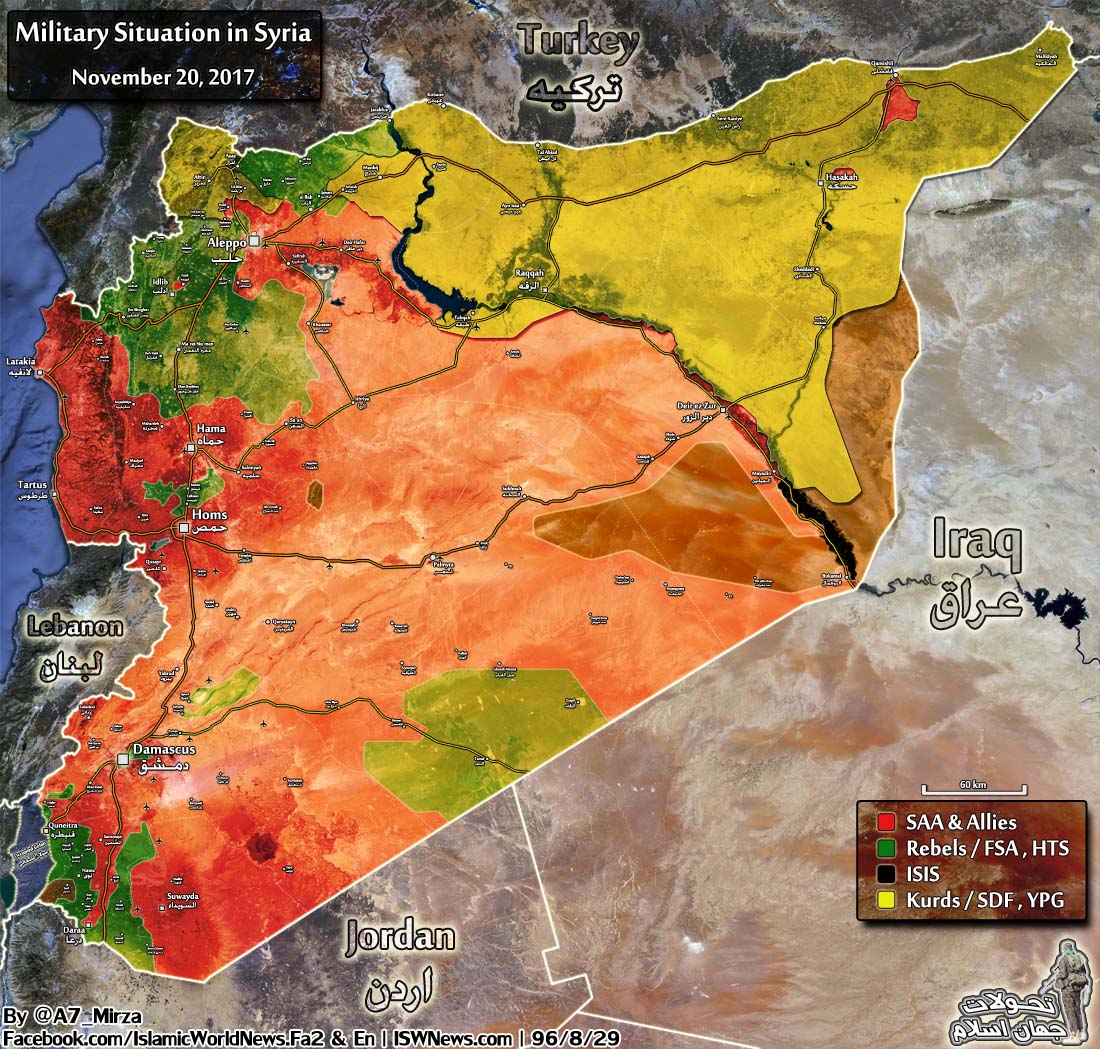
  • Syrian Army Develops Momentum In Southern Aleppo, Liberates More Villages From Hayat Tahrir al-Sham

    Syrian Army Develops Momentum In Southern Aleppo, Liberates More Villages From Hayat Tahrir al-Sham

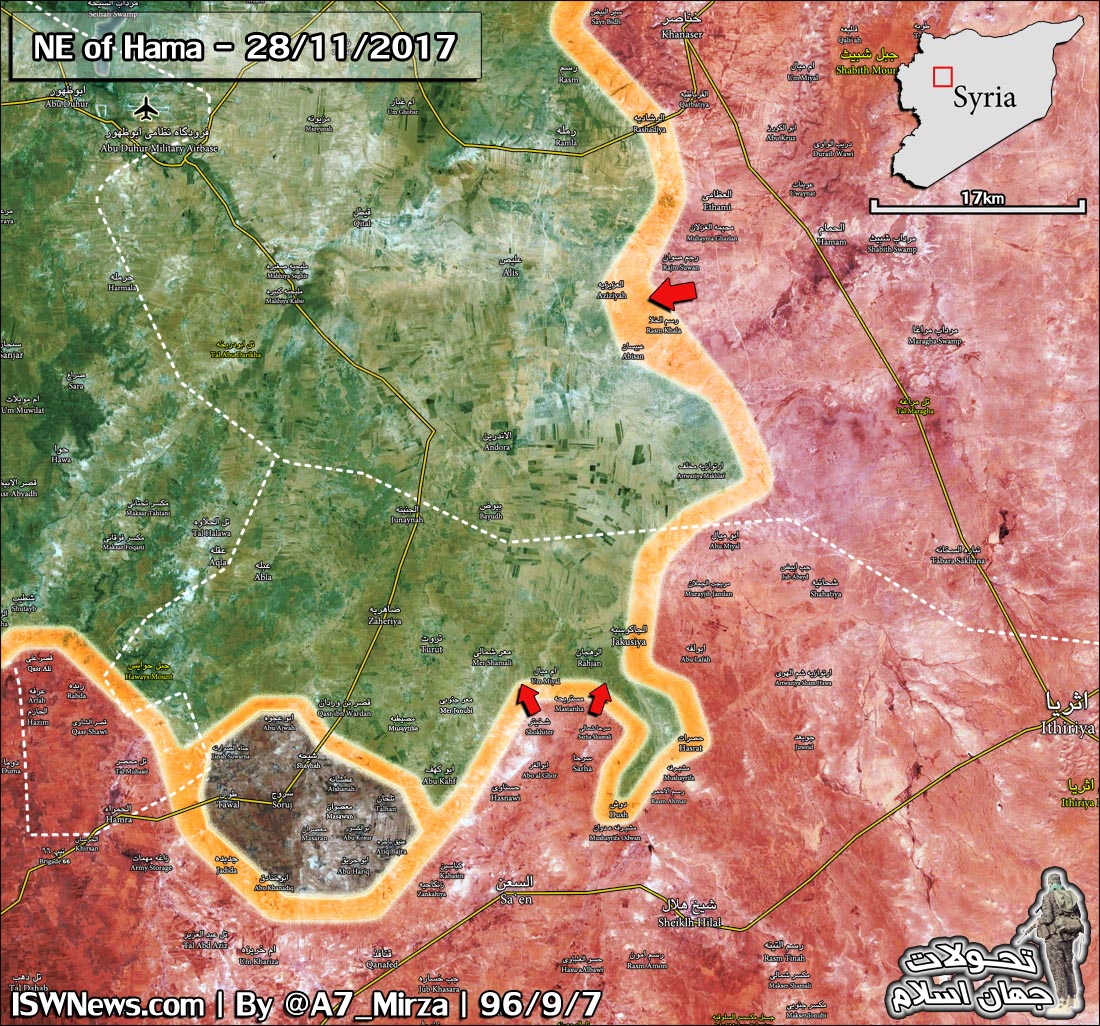
    According to pro-government sources, the SAA and the NDF have liberated the villages of Abisan, Aziziyah and Rasm Khala and repelled an attack of Hayat Tahrir al-Sham (HTS) in the village of Rashadiya.

    Some sources even speculate that the SAA has advanced deeper into the HTS-held area in the direction of Alis, but this still has to be confirmed.

    Meanwhile, clashes are ongoing in northeastern Hama where the SAA and the NDF are storming Um Miyal near the HTS strong point of Rahjan.

    HD MAP


    text by SF

  • Iran Nuclear Program Open to Negotiation as Wasn’t for Defence: IRGC Chief

    Iran Nuclear Program Open to Negotiation as Wasn’t for Defence: IRGC Chief

    French President Emmanuel Macron recently said that a new series of criteria and a new treaty should be negotiated with Iran to stop their ballistic activities in the region.

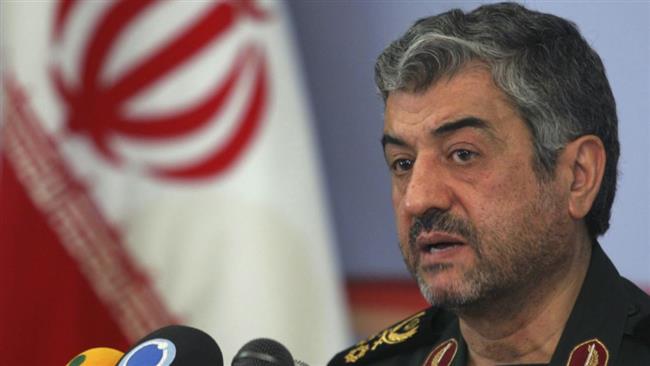
    Speaking to reporters in a press conference on the latest developments in the Middle East on Thursday, the IRGC chief-commander dismissed Macron’s statements, saying such remarks are deeply rooted in his naivety and immaturity.

    General Jafari stressed that Macron will soon understand that his attempts to curb Iran’s missile program will end up in failure.

    “The Islamic Republic of Iran will never sit for negotiation over its missile program. Our government is against any talks over its missile program and the westerners will soon come to this conclusion that their efforts to hold talks with Iran on this issue will never come to fruition,” he was quoted as saying in a Farsi report by Fars News Agency.

    The Iranian top commander went on to say Iran distinguishes between its nuclear and missile program. “Iran accepted to sit for talks over its nuclear program because the program is not part of the country’s defence capability but the missile program is directly interconnected with our security and we view it as non-negotiable.”


    ISIS Reign Over

    He also referred to the complete eradication of ISIS in Iraq and Syria and said, “Today, the ISIS’ reign has come to an end and the terrorists have lost their control over any land, city and village in the region.”

    “This, however, does not mean that the terrorist group has been completely destroyed.”

    According to General Jafari, the sporadic ideological presence of the group will reach different parts of the region and the terrorists backed by the US, Israel and their own leaders, will go to various countries. “This means that the regional states need to prepare themselves for insecurity and suicidal and guerrilla attacks in future.”

    Jafari said the terrorists of ISIS may reorganize themselves in some parts of the region to retake a city but “their attempts are desperate and futile.”

    Elsewhere in his statements, the Iranian commander said no one can claim there would be no further insecurity in the region “because destabilization is among the easiest jobs for the terrorists and we should prepare ourselves for destabilizing measures of the enemy.”


    Lebanon, Israel’s First Target 

    The chief commander of IRGC also referred to Lebanon’s Hezbollah saying the resistance movement’s identity is deeply rooted in its arms. “Hezbollah’s identity is being armed against the sworn enemy of the Lebanese nation that is Israel because Lebanon is Israel’s first target.”

    He once again said any new war in the region will wipe off Israel from the political map of the region and added Israelis have seen parts of Hezbollah’s military capabilities during 33-day and 22-day wars and “the creation of the huge front of resistance during the past years verifies the authenticity of our claims about the future of Israel.”

    According to ja’fari, today all members of resistance front are united with each other and if one member gets involved in any war with Israel, the other members will step into the fray and inflict a heavy defeat on Israel.


    Hope for Lasting Ceasefire in Syria

    The top commander of Islamic Revolution Guards Corps also expressed hope that the recent trilateral meeting between the presidents of Iran, Russia and Turkey could lead to a stable ceasefire in Syria.

    He also said the IRGC and Iranian nation are prepared to contribute to Syria’s reconstruction project and said this is the Syrian government, however, who must decide which states take part in the reconstruction project. “We have already held preliminary talks with the Syrian government in this field and arrangements are underway for Iran’s participation.”


    Mobilization Force, Key Force in Latest Regional Achievements

    Congratulating the Iranian nation on beginning of Basij (Mobilization Force) Week in Iran, Jafari said the voluntary forces played a key role in the recent victories in the region.

    “Many regional countries have been inspired by Basij as well as the 8-year resistance of Iranian nation during Imposed War,” he said.

    Basij was established at the early years of the Islamic Revolution at the order of Late Founder of the Islamic Republic Ayatollah Khomeini.

    “Today, we see that Lebanon’s Hezbollah movement which defends the country against Israel, serves as Lebanon’s Basij,” he said.

    The Iranian commander went on to say, if it was not for Syria’s Basij, the country would have been disintegrated so far and there was no a singly Syria.

    He also referred to the experience of Iraq and said the Popular Mobilization Units, established following the call of top Shia cleric, Ayatollah Sistani for national defence against ISIS, played a key role in the great victories of Iraqi army in its fight against the terrorists.


    ISIS Remains Threat against Islam

    Elsewhere in his statements, the IRGC top commander pointed to the warning issued by the Islamic Revolution Leader Ayatollah Seyyed Ali Khamenei against overlooking enemies new plots and said “as the leader said the latest victory put an end just on the rein of ISIS. ”

    He stressed this does not mean that the group has been completely eradicated. “ISIS remains active in small and underground groups in various countries including Afghanistan. It is a threat to Islam. So, we have put fight against the group at the top of our priorities.”

    Ja’fari said the defeat of ISIS’ rein in the region does not mean the threat against resistance front has ended because “fight against the puppets of the arrogant powers continues.”

    He added though some of the enemies’ plots like the secession vote of Iraqi Kurdistan Region have been foiled but they will not sit idle and “we have to brace ourselves for their further conspiracies.”


    Iran Not after Direct Confrontation with Saudi Arabia

    Ja’fari stressed that Iran is not seeking a direct confrontation with Saudi Arabia. “We view the US and Israel as our main enemies and don’t seek to get involved in any direct war with their puppets.”

    The Iranian military commander went on to say Iran’s self-constrained policies towards Saudi Arabia should be viewed within this context. “We don’t like to get involved in any direct confrontation with Saudi Arabia and our recommendation to them is not to stand in the way of the Islamic Revolution resistance front “otherwise they will be hit by the quivers of our larger wars.”


    Enemies Have to Come to Their Senses

    IRGC chief commander vowed that the Islamic Republic of Iran is capable to crush its enemies. “So, they need to stop their animosity towards the Muslims and come to their senses.”

    He once against congratulated the Iranian nation on the defeat of ISIS rein in Iraq and Syria saying the Basij has always stood behind the Iranian nation in their fight against security plots as well as natural and unnatural plights.

    Ja’fari also referred to the latest statements by Iran’s leader on calling all Iranians from all walks of life a Basiji member and said over one-third of Iranian people are organized as Basij members and those who are not officially registered “can play their key role in various field because Basij is established with the aim of offering services to people.”


    Source

  • Hariri’s Resignation and More Plans for War

    Hariri’s Resignation and More Plans for War

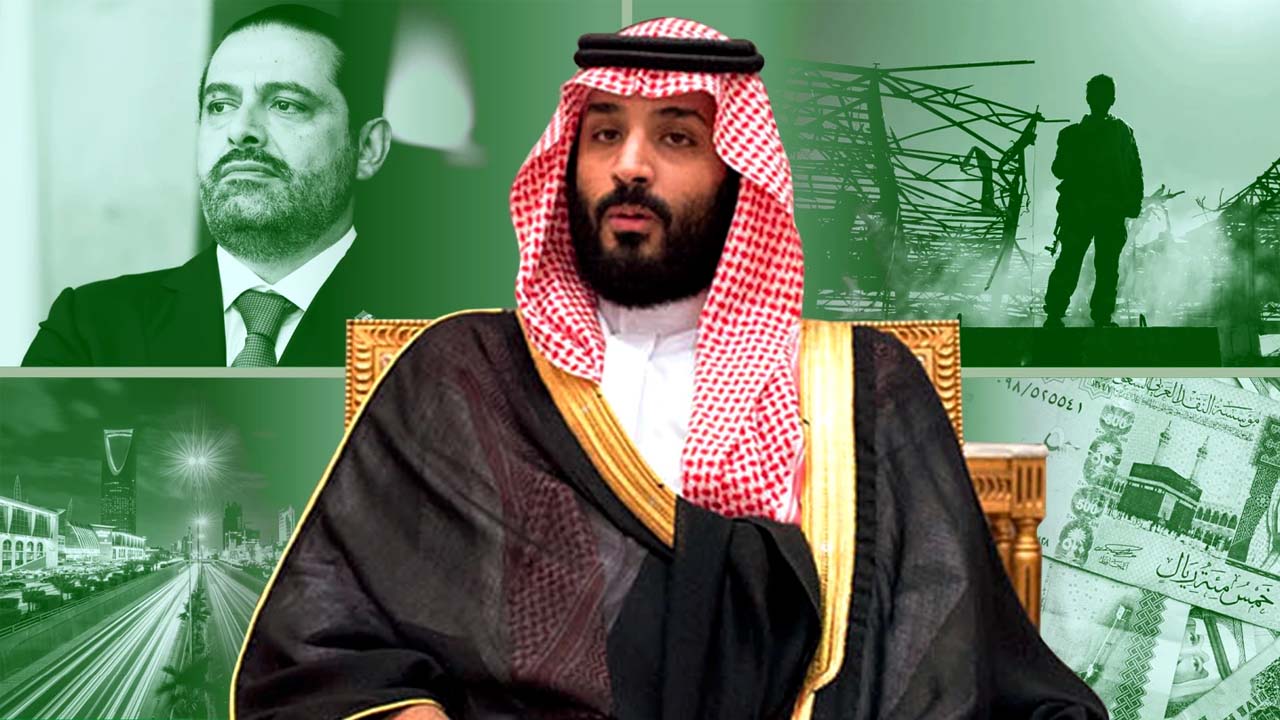
    As Hariri is a Saudi-US asset, the ‘forced’ resignation seems more like the sacking of a company executive who has not lived up to expectations. Told to step out of office Hariri did what he was told, following through by issuing a Saudi-scripted statement accusing Hezbollah and Iran of sowing discord across the region, and talking of a plot to assassinate him.


    In fact, it was Saudi Arabia sowing discord, by blaming Hezbollah and Iran for Hariri’s resignation, with the apparent aim of throwing Lebanon into chaos. Predictably, Netanyahu jumped in immediately, saying the resignation was a call to the ‘international community’ to take action against Iranian aggression but no-one else bought it, not even Lebanon’s Sunni Muslims. Hezbollah reacted calmly and if anyone came out of it badly it was Saudi Arabia. In the Iranian view the removal of Hariri was a plot cooked up by Trump and Crown Prince Muhammad bin Salman.


    Hariri himself did not return to Lebanon where he could have defied the Saudis and resumed his position but moved on to France, where he was welcomed by President Macron at the Elysee Palace. Soon after talking to Hariri, Macron was on the phone to Trump, discussing the Iranian ‘threat’ and how to deal with it. According to Lebanon’s President Michel Aoun, Hariri told him he would return to Beirut by Independence Day, November 22, marking the end of the French mandate. The Lebanese parties, including Hezbollah, still regard Hariri as the country’s Prime Minister so how all of this plays after Hariri’s return will be interesting to see.


    What lies behind all this?

    What is the connection between Hariri’s resignation (forced or otherwise) and the other events running concurrently in Saudi Arabia, namely the arrest of some of the most powerful figures in the kingdom and the confiscation of their assets, estimated at about $800 billion? One has to assume there is a connection. It seems far too much of a coincidence for there not to be one.


    The claim that the purge of the princes was part of an anti-corruption drive is bunk, seeing that corruption is intrinsic to how the Saudi government operates, domestically and in its foreign policy. If corruption is a cover story, why were these princes removed? Could it be their opposition to Saudi Arabia’s policy failures, in Syria and Yemen, and their opposition to what is now clearly being moved from the drawing board to implementation, a war on Iran, involving the US, Israel and Saudi Arabia? They would hardly be alone in seeing Crown Prince Muhamad bin Salman as reckless, foolhardy and lethally dangerous to the stability of the Saudi kingdom: his accession to the throne they would regard, literally, as a crowning act of folly.


    That another war is on the horizon is clear from all the signals coming out of Israel in the past six months. That not just the US but Saudi Arabia will be part of it is obvious. Intermittently, Israel and Saudi Arabia have been pushing for war on Iran for a decade. With the US refusing to bite, to the extent of launching an open military attack, Syria was chosen as the next best target: if the government in Damascus could be destroyed, the strategic alliance between Iran, Syria and Hezbollah would collapse at its central arch. This plan B was partly foiled by the refusal of the UN Security Council, thanks to the vetoes of Russia and China, to sanction an aerial war on Syria along the lines of the assault on Libya. Plan C had to come into effect, reliance on a war of attrition fought by takfiri proxies organised, financed and armed mainly by the US, Saudi Arabia, Qatar, Israel, Britain and France, and coordinated with the assistance of governments ranging from the Balkans to Central Asia. Seven years later Plan C has now ground to a halt. The ‘axis of reaction’ (the US, Israel and Saudi Arabia) has suffered a crushing defeat at the hands of the ‘axis of resistance’ (Iran, Syria and Hezbollah). Russian intervention has been critical, so the victory is Russia’s as well, and a particular humiliation for the US.


    This does not end the list of defeats suffered by the ‘axis of reaction.’ Another severe blow has been suffered through the collapse of the Kurdish drive for independence in northern Iraq. Both the US and Israel have assiduously cultivated the Kurds for decades, seeing northern Iraq as a new strategic centre for military and intelligence operations across the Middle East. The US and British ‘no fly’ zone and ‘safe haven’ initiatives of 1990/91 were the first steps in the planned breakup of an Iraq that no longer suited imperial purposes. The invasion of 2003 and the imposition of a constitution dictated by the US, weakening the authority of the central government, led to Kurdish autonomy which, in time, would have been expected to end in independence and a new base for US/Israeli operations across the Middle East.

    Even the US was against the referendum called by Masoud Barzani: seeing that it was already getting what it wanted, the referendum would be premature and cause more trouble than it was worth.


    This proved to be the case. Turkey and Iran reacted viscerally, ending flights and closing border crossings: the Iraqi army retook Kirkuk and all the territory conquered by the Peshmerga in 2014. Barzani stepped down as president of the KRG: Jalal Talabani, the head of the Patriotic Union of Kurdistan (PUK), had died only recently, leaving the Kurds leaderless and at each other’s throats over who was responsible for this debacle. Iraq is now being reconstituted as a unitary state. The largely Shia Popular Mobilization Forces (PMF) has developed into a powerful annex to the regular army. Moreover, the government in Baghdad has a close working relationship with the government of the Islamic Republic in Tehran.

    The paradox of these defeats is that they increase to a critical level the danger of a new attack by the ‘axis of reaction’ on the ‘axis of resistance.’ Russia, Iran, Syria and Hezbollah cannot be allowed to get away with these victories. The Israeli chief of staff, Gabi Eisenkot, hardly needed to say, as he did recently, that there is ‘complete agreement between us and the Kingdom of Saudi Arabia’ on the question of Iran’s spreading influence across the Middle East, or ‘control’ of the region as he put it. Unable to impose its will on one of the poorest countries in the world, Yemen, Saudi Arabia would be of little help on the front line in a war against dangerous targets such as Hezbollah and Iran. But it has money and according to Hasan Nasrallah, has offered to pay Israel billions of dollars for a new war on Hezbollah.


    As Israel always has the next war on the drawing board, the central question is ‘when’ rather than ‘if’ it will be launched. In recent months it has held some of the largest-scale land and air exercises in its recent history in preparation for a new war on Hezbollah, including training for fighting in tunnels. It has warned repeatedly over the years that the next time around the ‘Dahiyeh strategy’ will be applied across Lebanon and is busy selling the propaganda package that there really is no Lebanon any more but only a Hezbollah enclave controlled by Iran.

    Dahiyeh, of course, is the largely Shia Beirut suburb and urban HQ of Hezbollah that was pulverised from the air in 2006. Given the huge civilian casualties Israel is willing to inflict in the next war, Iran and Syria would be hard pressed to stay out but the moment they intervene, Israel, the US and Saudi Arabia will have their three primal enemies directly in their line of fire. The refusal of the US to withdraw its forces and dismantle its air bases in Syria now that the Islamic State has been ‘defeated’ (if still being used as an American tool) is probably connected with preparation for the coming conflict.

    Israel’s existential struggle in the Middle East since 1948 has now reached the point of crisis. Israel may think it has all the time it needs to completely engorge the West Bank but it does not have such a luxury on the regional front. If Iran is stronger now than before the wars on Iraq and Syria, it will be even stronger in two or three years’ time. It has a large standing army, fought an extremely destructive war against Iraq (1980-89), has been deeply involved at the planning and combat level in the defence of Syria and has built up a large arsenal of locally developed short and long-range missiles.

    By comparison, Israel has not even fought a regular army since 1973: in 2000 it was driven out of Lebanon by a guerrilla force and when it attempted to retrieve lost ground by launching a new war in 2006 its ground troops proved incapable of taking villages even a few kilometres from the armistice line. Its attacks on Gaza have been onslaughts on a largely defenceless civilian population.

    Given that since 1948 its security/insecurity situation has ultimately been based not on diplomacy but on full spectrum military domination from the possession of nuclear weapons down to conventional warfare, Israel cannot allow the current situation of strengthening enemies to continue. Hostile to any kind of diplomatic settlement that would generate a real peace, Israel must go to war. It says it is much stronger and better prepared than in 2006 but so are Hezbollah and Iran. Hezbollah alone has a large stockpile of missiles able to reach any corner of occupied Palestine: Israel’s Iron Dome anti-missile system will stop some of them but not all.

    If it does go to war Israel is certainly going to suffer civilian casualties unprecedented in its history but the politicians and generals around Netanyahu will argue that its existential situation will demand these sacrifices. The US would come in behind Israel, but Russia could not be expected to sit by while its diplomatic alliances and strategic assets in the Middle East are destroyed. The commentator Abd al Bari Atwan has warned that such a war would be the most destructive in the region’s history, developing into a global conflict, and has raised the question of whether Israel, having started it, could survive it. This is a truly apocalyptic scenario.


    As usual the Palestinians find themselves caught in the middle. Mahmud Abbas is being told to go along with the Trump-Kushner-Israel ‘peace initiative’ or else, even by Saudi Arabia. This would involve Abbas publicly sharing the anti-Iranian, anti-Hezbollah and anti-Shia views of the Saudis at a time he is engaged in a reconciliation process with Hamas, which has refused to take a stand against Hezbollah. Furthermore, several of its senior leaders have recently been in Tehran. For the moment all eyes are on Hariri as he returns to Beirut: how will he explain himself, will he resume his position as Prime Minister and on what terms?


    Source