Category: Israel

  • Exploring Israel’s Advanced Detection Technologies: Sense Through The Wall

    Exploring Israel’s Advanced Detection Technologies: Sense Through The Wall

    Life-detection equipment (such as seismic sensors or specialized radars) is typically defined as tools used to locate living victims under rubble following earthquakes or other disasters. These devices can detect:
    • Vibrations (like tapping or scratching)
    • Sounds (such as shouting or breathing)
    • Extremely subtle movements (like heartbeat or respiration)
    However, the focus of this article is on the military application of these technologies in the Israel Defense Forces (IDF), developed by the Israeli company Camero-Tech and sold to military and rescue units around the world.

    About Camero

    Camero Tech LTD logo

    Camero Tech LTD was founded in 2004 in the city of Netanya and is a pioneer in the development and production of imaging systems based on 3D radar technology. The products of this company are widely used by the military and police forces of the Israeli regime, as well as by other military and law enforcement bodies worldwide. All of their systems require approval from the Israeli Ministry of Defense.

    Camero specializes in the development and design of radio-frequency (RF) imaging systems and signal/image processing circuits for “Sense-Through-The-Wall” (STTW) applications. This includes all products in their “Xaver” series.
    The company’s CEO, Amir Beeri, is an experienced electrical engineer who graduated with a master’s degree in electronics from Tel Aviv University in 1986. In 2020, the Zionist regime’s defense giant Elbit Systems acquired Camero. Beeri, a seasoned technologist with military background, has known connections to Unit 8200.

    Camero’s CEO Amir Beeri


    Camero’s systems are widely used by Israeli security forces and their military allies. The deployment of this technology in conflict zones such as Gaza and the West Bank has raised significant ethical concerns.

    Xaver Series Products
    The Xaver series is a diverse collection of advanced through-wall imaging systems that, using portable radar technology, allow military, law enforcement, and rescue forces to detect and track individuals in real-time through walls, doors, and other obstacles. Below is a breakdown of each model.

    1. Xaver 100


    This portable and rugged device enables military, law enforcement, and rescue teams to detect the presence and distance of individuals behind obstacles (like walls) in real-time. This capability enhances tactical decision-making during various operations. By providing accurate and reliable information about the presence of individuals in enclosed spaces, the device significantly improves tactical decisions across different operational scenarios.
    The device uses the same advanced technology found in other systems within this product family. A unique “micropower Ultra-Wideband” (UWB) sensor, which operates on an extremely wide frequency band with minimal energy consumption, ensures reliable detection and unmatched imaging clarity in the industry.

    2. Xaver 400


    This advanced system enables rapid identification of individuals behind walls and obstacles, allowing operational teams to act with full awareness of their surroundings and gain critical mission intelligence.
    The device features a sophisticated system architecture that integrates several cutting-edge technologies:

    • Multi-channel, low-power UWB sensor
    • Algebraic image reconstruction algorithms
    • User-friendly design


    3. Xaver 1000


    This device is the successor to Camero’s Xaver 800 model, which was the world’s first full 3D imaging system. Key features of this model include:

    Ability to differentiate between adults, children, and animals, making it suitable for tactical missions requiring accurate and vital information gathering

    • The first full 3D imaging system in the world
    • Equipped with AI-based smart tracking for live target patterns
    • Real-time 3D imaging through walls, capable of detecting both stationary and moving living objects behind structural barriers
    • Unprecedented resolution of body parts and postures, including sitting, standing, lying down, and height of living targets


    4. Xaver LR40 / LR80

    Xaver LR40


    The radar in this powerful gadget can detect living beings behind walls at distances up to 50 meters—and for the LR80 version, over 100 meters. Optimized for both urban and rural operations, the system collects real-time and critical data on living entities hidden behind obstacles, all while keeping the operator at a safe distance. Additional notable features include:

    • Accurate detection of living beings behind common wall materials
    • Simultaneous detection of both moving and stationary targets
    • Control via a 10-inch touchscreen with an intuitive interface
    • Integrated data recording with playback capability for post-mission review, analysis, and training
    • Proprietary and patented algorithms and signal processing
    • Lightweight and portable for enhanced mobility and operator effectiveness
    • Weight: between 10 and 12 kilograms


    5. XaverNet


    The “XaverNet” system is a rugged wireless tablet that works with Xaver 100 and Xaver 400 systems. It allows users to receive imaging data in real time and remotely control up to four Xaver systems simultaneously. The system includes a Panasonic “ToughPad” tablet, a USB dongle for wireless connectivity, and proprietary software. The software can also run on Windows-based platforms. Using this technology, users can control Xaver systems from a distance of up to 200 meters in line of sight and switch between systems without exposing themselves to the target zone—making operations safer for field teams.
    This network-based system is built on a rugged wireless command and control platform based on the Panasonic FZ-M1 commercial model.

    Key Features

    • Compatible with various Windows-based platforms
    • Supports both Xaver 400 and Xaver 100 systems
    • Data recording capability
    • Wireless communication based on Zigbee protocol (a low-power wireless communication standard for sensor networks and smart devices)
    • Optional tactical housing
    • Capability to mount Xaver systems on unmanned vehicles
    • Weight: between 1 and 1.2 kg
  • Israeli Energy؛ Syria’s Electricity Crisis and Israel’s Gas Resources

    Israeli Energy؛ Syria’s Electricity Crisis and Israel’s Gas Resources

    Even before Assad’s fall, Syria’s power grid was in poor condition, but the decade-long civil war made things much worse. Power plants and transmission lines were severely damaged, and Syria, once an oil exporter, became dependent on imports. Following Assad’s downfall, the flow of Iranian oil—which had previously met Damascus’ energy needs—was halted, and most of the country’s oil resources came under the control of Kurdish-led forces (SDF).

    Omar Shukrouk, Syria’s Minister of Electricity, stated that the country’s oil production capacity in government-controlled areas has dropped from 360,000 barrels per day to just 10,000.

    Although there have been reports of oil supply resuming from Kurdish-controlled areas, the future of this arrangement remains uncertain due to tensions between Turkey and the Kurds, as well as the unclear U.S. policy toward these forces.

    Temporary and Ineffective Solutions
    To escape the current energy crisis, Syrian officials have been offered various solutions:

    1. Use of private generators and solar panels
    Advantages:
    • Can provide localized power for households and small businesses.
    • Solar energy is a sustainable and environmentally friendly option.
    Disadvantages:
    • High cost of purchase and installation, which many Syrians cannot afford.
    • Lack of proper infrastructure for large-scale deployment.
    • Limited electricity generation, especially during seasons with low sunlight.

    2. Import of LPG from Turkey, Azerbaijan, and Jordan
    Advantages:
    • A quick short-term solution to meet some energy demands.
    Disadvantages:
    • Mainly suitable for domestic uses like cooking, with limited impact on electricity generation.
    • High transportation costs and dependency on foreign suppliers reduce sustainability.
    • Limited volume of imported gas does not meet Syria’s wide-scale energy needs.

    3. Use of floating power plant ships
    Advantages:
    • Can generate large amounts of electricity.
    • Quicker deployment compared to building new land-based power plants.
    Disadvantages:
    • Connecting these ships to the domestic power grid can take several months.
    • High operational and fuel supply costs requiring external financial support.
    • Difficulty transmitting electricity from coastal ports like Baniyas and Tartus to inland areas due to extensive damage in the transmission network.

    Overcoming the Crisis with Zionist Gas?
    One option now under consideration is using natural gas from the Israeli regime to supply electricity in Syria. Currently, the Arab Gas Pipeline (AGP), which was originally built in 2003 to deliver Egyptian gas to Jordan, Syria, and Lebanon, is now operating in reverse.

    Instead of transporting gas from Egypt northward, the pipeline now delivers gas from the occupied territories southward into Egypt. This gas is extracted from the Leviathan field off the Israeli coast and sent to Jordan, where it supplies 70 percent of the country’s electricity.

    There is now a proposal to redirect part of this gas, via Jordan and the AGP, to Syria. However, the plan faces not only technical hurdles but also significant political challenges.

    Political Barriers and Operational Challenges
    The Syrian government would find it politically difficult to officially accept gas from Israel, as any open cooperation with Tel Aviv is unacceptable for Damascus. Therefore, officials may label the gas as “Egyptian” or “Jordanian” to minimize domestic and regional backlash.

    In the occupied territories, some hardline factions oppose such a deal as well, arguing that Syria should not be aided. Nonetheless, relative stability in Syria could benefit Israeli security, as a power vacuum in the country enables extremist and militant groups to thrive.

    Another major hurdle is the cost of project. Syria lacks both the infrastructure to transfer the gas and a reliable system to make payments. International energy companies, including Chevron, which has a stake in the Leviathan project, are reluctant to enter contracts without financial guarantees. If Gulf countries such as Saudi Arabia, Qatar, or the UAE agree to finance the project, the chances of its implementation would increase.

    Syria Awaits Major Decisions
    As Syria’s energy crisis worsens by the day, its government is exploring different options. In the coming days, negotiations between Syria and Jordan are expected to take place, and the European Union has announced that it will lift certain energy sanctions on Syria.

    Syria now stands at a major crossroads: it must either continue with temporary and ineffective measures or navigate political and financial obstacles to accept gas that may be labeled “Egyptian,” but originates from elsewhere. In the end, this path may well tie Syria’s future to the broader project of a new Levant.

  • A Struggle to Heal the Wounds: The Israeli Security Doctrine 2025–2026

    A Struggle to Heal the Wounds: The Israeli Security Doctrine 2025–2026

    The Israeli think tank INSS has published an article outlining the 2025–2026 Israeli security doctrine. Within this document, confrontation with Iran stands out as a fundamental issue and a major threat, with the name of Iran appearing nearly 60 times. Prominent elements in the document include: Iran’s nuclear program, the future of the Axis of Resistance, the nature of cooperation with the United States on Iran-related matters, and potential nuclear agreements. Notably, Iran’s relationships with Russia and the Resistance Axis are highlighted as strategic points. The doctrine presents various scenarios, followed by actionable strategies.

    Battlefronts
    In the introduction of the doctrine document, Israel defines its surrounding adversaries and adopts an aggressive, security-driven approach toward regional states. Iran and Syria emerge as primary concerns. Regarding Iran, three potential scenarios are outlined:

    1. A New Iran–U.S. Nuclear Deal: Tel Aviv should not oppose the agreement outright but rather seek a role in shaping it to ensure Tehran is prevented from acquiring nuclear weapons.

    2. Iran Achieves Nuclear Capability: Immediate military action is required, preferably in coordination with the United States.

    3. A Prolonged Stalemate: Continuous economic pressure and covert operations should be applied to weaken Iran steadily.

    One noteworthy feature in this document is the grouping of China, Russia, Iran, and North Korea under the acronym “CRINGE”, portraying them as a united front opposing the liberal-democratic world order. According to Israeli analysis, despite deep ideological differences and conflicting interests, these states are cooperating to challenge Western hegemony. The doctrine paints a dire global picture—dominated by authoritarianism, communism, and rising Islamic sentiment in liberal societies—while warning of rising extremist factions reshaping political landscapes. Ultimately, Iran is described as the leader of the Axis of Resistance, an integrated coalition that seeks Israel’s destruction.

    A Shifting Strategic Environment
    Over a year into a multi-front war, Israel claims it has increased its strategic flexibility and gained greater maneuvering space in the short term. Before assessing Israel’s core national security challenges, the doctrine reviews broader changes in its strategic outlook.

    1. Undermining Iran’s Security Doctrine
    From Israel’s viewpoint, Iran’s military capabilities are insufficient to deter a direct attack, and even reaching nuclear threshold status has not produced the expected deterrence. Israelis believe Iran’s resistance strategy has failed to contain Israel’s actions, and the resistance network is collapsing. The fall of Assad, they argue, has further weakened Iran’s regional strategy, eliminating Syria’s role. In this altered landscape, Iran will struggle to restore Hezbollah’s prior threat level against Tel Aviv.
    Opportunity: Iran is perceived as being at an unprecedented point of weakness, offering Israel expanded freedom of action. This opens opportunities to push for a tougher nuclear deal, reduce Iran’s regional influence, and even pursue military options to halt its nuclear program.
    Threat: If Iran concludes that nuclear threshold status is insufficient for deterrence, it may accelerate its nuclear weapon development, thereby altering the regional balance of power in its favor.

    2. Shifting Regional Power Dynamics

    Opportunity: Advancing the Abraham Accords can curtail Iranian influence. Potential diplomatic moves include: securing Israel’s northern border by leveraging Hezbollah’s weakness, forming a non-aggression pact with a new Syrian government (which may also ease tensions with Turkey), and finalizing normalization with Saudi Arabia. Close coordination with the United States would aid in realizing these goals.

    Threat: Assad’s fall could produce unpredictable consequences, including jeopardizing Israel’s peace treaties with Jordan and Egypt. The emergence of a radical Sunni axis—led by a resurgent Muslim Brotherhood in Syria and beyond—could present a formidable new threat, potentially as dangerous as the former “Ring of Fire” led by Iran.

    Iran’s Nuclear Threat: Three Strategic Scenarios

    1. If an Agreement Is Reached:
    Tel Aviv should actively influence any potential nuclear deal. The agreement must ensure the following:

    A) Immediate Halt to Nuclear Progress
    B) Comprehensive Threat Mitigation:

    • Fissile Material: Caps on uranium enrichment levels and stockpile quantities; dismantling of advanced centrifuges installed after 2018; intrusive and comprehensive inspections.
    • Delivery Systems: Restrictions on ballistic missile range and technology; limits on missile stockpiles; nonproliferation enforcement.
    • Weaponization: Oversight of nuclear research institutions and bans on any weapons-related nuclear activity.

    These steps are deemed essential for safeguarding Israel’s security and preventing Iran’s military nuclear capability.

    2. If No Agreement Is Achieved:
    Israel must ensure stringent enforcement of sanctions and maintain close intelligence and diplomatic ties with the United States. Enriching uranium to 90 percent should be declared a red line that justifies military action—with or without U.S. support. Since Iran aims to outlast the Trump presidency and anticipates policy shifts under a new administration (especially a rollback of maximum pressure), this period should be used to weaken Iran via covert operations, while avoiding visible foreign fingerprints. These actions are considered vital to blocking Iran’s nuclear advancement and preserving Israeli security.

    3. If Iran Builds a Nuclear Weapon:
    This scenario involves Iran withdrawing from the NPT, enriching uranium to 90 percent, and conducting nuclear weapon tests. Israel believes that Iran’s nuclear facilities must be destroyed immediately in response. The U.S. should be urged to issue a decisive warning to Iran before any military action. To prevent a regional arms race and nuclear terrorism, Israel must act decisively. While coordination with the U.S. is essential, Israel’s independent military capabilities must be fully developed to ensure mission success.

    New U.S–Israel Relations: Opportunities and Challenges

    • Opportunities: A second Trump term could strengthen U.S.–Israel relations through appointments of pro-Israel officials. This would provide Israel with greater regional autonomy, bolster deterrence against Iran, and establish a credible military threat to Tehran’s ambitions.
    • Challenges: Rising criticism within the Democratic Party—especially due to Israel’s internal policies—could erode bipartisan U.S. support. Israel must pursue a defense agreement as part of a broader regional strategy to counter isolation efforts. Such an agreement would also enhance deterrence against Iran’s nuclear threat and maintain U.S. military and technological support. Shaping future Memoranda of Understanding (MoU) with Washington to preserve Israel’s qualitative military edge is crucial.

    Economic and Diplomatic Strategies

    To counter Iran’s influence and boost economic ties, Israel must strategically expand its relations with Europe. This may require taking a firmer stance on Russia, while preserving key diplomatic channels. Such a strategy could undermine the Iran–Russia axis and curtail Tehran’s regional clout.

    The Iran–Israel War Doctrine

    According to Israel’s security doctrine, the October 7th attack was the moment when Tel Aviv finally awakened to the nature of the war Iran has been waging against it. The more Israel focused on Iran’s nuclear threat, the less it recognized that Iran’s strategy also hinges—perhaps even more—on its Axis of Resistance as a weapon against Zionism. Although Tehran’s “proxy war” strategy had long been discussed in Israeli defense circles, Tel Aviv failed to develop a suitable strategic or operational response.
    Thus, the October 7th war caused a dual disruption to Israel’s long-standing strategic thinking. The war represents a collision between two visions: one meticulously prepared by Iran’s axis, and the other rooted in Israel’s outdated military conceptions shaped by its belief in “wars with clear endings.” This outdated doctrine failed to address new types of threats. The fact that Israel was caught off guard, despite having prior intelligence, underscores its misjudgment of enemy strategies. The doctrine concludes that the war’s gains and failures must be analyzed through the tension between counterterrorism approaches and military-war theory—two frameworks that are not interchangeable.

  • Yemeni Missile Attack on Ben Gurion Airport

    Yemeni Missile Attack on Ben Gurion Airport

    Brigadier General Yahya Saree stated the operation achieved its goal, causing panic and forcing millions of Israelis to seek shelter. Several flights at Ben Gurion Airport were disrupted and halted.

    He emphasized that Yemen, along with its people, leadership and military, will continue its operations until victory is achieved for the oppressed and hungry children of Palestine. He expressed support for their courageous resistance, highlighting that they have been left alone amid the siege and conflict. Addressing the Palestinian people, he stated, “Your brothers in Yemen stand with you and will exert all their strength to fulfill their religious, Arab, and humanitarian duty.”

    According to information gathered by IWN, this operation marks the 160th strike by the Yemeni army against Israel.

  • The Graphite Controversy: Inside Israel’s Global Spyware Empire

    The Graphite Controversy: Inside Israel’s Global Spyware Empire

    Introduction
    In March 2024 WhatsApp, which is owned by Meta, announced that 90 journalists and members of the public who use the popular messaging app had been targeted by spyware developed by Paragon Solutions, an Israeli company specializing in hacking tools. These journalists and civil society members were notified about the possible compromise of their devices’ security. It remains unclear who was behind the attack. Like other spyware vendors, Paragon’s hacking software is used by government clients, and WhatsApp stated it had been unable to identify which clients ordered the alleged attacks.

    Experts have reported that the attack was of the zero-click type, meaning the targets did not need to click any malicious link for their devices to be infected. WhatsApp has declined to disclose the locations of the affected journalists and civil society members, including whether any of them were based in the United States. Three of the hacking victims were Italian journalists.

    According to reports in The Guardian and Haaretz, Paragon has since severed ties with its clients in Italy, which reportedly included an intelligence agency and a law enforcement organization. Paragon exclusively works with governmental entities. The company’s flagship product, called Graphite, allows users full access to a target’s phone. Paragon claims that the software is intended for criminal investigations. The company is seen as a competitor to the NSO Group, maker of the Pegasus spyware.

    Additionally, Israeli media have reported rumors of Paragon being sold to a U.S. company, which were recently denied by Israel’s Defense Minister following Donald Trump’s return to the White House.

    Paragon Solutions
    Paragon Solutions, founded in 2019 and currently employing 450 personnel, is a cyber company focused on offensive operations and security, utilizing digital intelligence to provide surveillance solutions for smartphones and the internet. The company claims to impose “strict ethical limitations” on itself, restricting data extraction from target devices solely to conversations within messaging apps. Paragon exclusively collaborates with law enforcement and intelligence agencies in what it defines as liberal democracies—a list that includes 39 countries.

    As one of the two leading Israeli offensive cybersecurity firms alongside NSO, Paragon specializes in technologies classified as weapons and requires export approval from Israel’s Ministry of Defense. Unlike NSO, which faced international backlash and was blacklisted by the U.S. government for selling spyware to authoritarian regimes, Paragon was founded with a commitment to operate exclusively within democratic nations. This ethical positioning helped pave the way for future deals.

    Founders and Key Figures
    Among the founders of this cyber company is Ehud Barak, the former Prime Minister of Israel, underscoring Paragon’s prominence and distinct position among other firms in the industry. Some media outlets have even referred to the company as “Ehud Barak’s startup”, highlighting his influence in its establishment. According to the image below, the founders of this Israeli company are identified from right to left in the following order:

    – Ehud Schneorson


    After decades of service in the fields of signals intelligence (SIGINT), cyber operations, and special operations in the occupied territories, he was appointed as the head of Unit 8200, Israel’s elite military intelligence unit. According to Richard Silverstein, commanders in Israel’s Unit 8200are appointed in a highly specific and deliberate manner, alternating between a “khnun” (a Hebrew slang term for a “computer geek” or “tech nerd”) and an individual who rose through the ranks via combat roles. Ehud Schneorson is considered a khnun, whereas his predecessor, Nadav Zafrir, was a combat officer who served in Sayeret Matkal, Israel’s elite special forces unit. This alternating approach, blending technical expertise with combat experience, reflects the military’s effort to strike a balance between technological proficiency and operational capability.

    – Ehud Barak

    Ehud Barak, the former Prime Minister of Israel, has been a prominent figure in the country’s cybersecurity landscape. He played a significant role in the founding of Paragon Solutions, co-establishing the company alongside retired Brigadier General Ehud Schneorson. Barak’s involvement in Paragon has been substantial, and he also holds a stake in the company, underscoring his direct interest and influence in its operations.

    – Idan Nurick

    Idan Nurick is the CEO and co-founder of Paragon Solutions, with a background in medicine and an MBA. He has led several successful companies in the fields of cybersecurity and artificial intelligence, with a proven track record in team leadership, algorithm development, software engineering, and data analysis.
    Nurick founded Cyber Hunters in 2018 and Paragon in 2019, serving as CEO of both. In 2020, he stepped away from Cyber Hunters to focus on Nash and Paragon. He currently serves as a director at Alameda Ventures and a senior executive at Bloomberg Capital. Prior to his current role, he also held a senior leadership position within Paragon. Nurick completed his studies at Tel Aviv University, earning both a master’s degree and an MBA.

    – Liad Avraham
    Liad Avraham, a resident of the occupied territories, is currently the co-founder and Chief Research Officer (CRO) at Paragon Solutions. He brings valuable experience from his previous roles at Paragon and in the Israel Defense Forces (IDF). Avraham holds a Bachelor’s degree in Computer Science from the Open University and possesses advanced skills in hacking iOS and Android operating systems. During his service in the IDF, he served as a team leader and cybersecurity researcher.

    – Igor Bogdalov
    Igor Bogdalov, a lesser-known figure among the founders pictured, is one of the co-founders and serves as Co-Chief Technology Officer (CTO) at Paragon. He earned his Master’s degree from Tel Aviv University.

    Graphite
    As previously mentioned, this spyware infiltrates devices electronically using a zero-click method, the operation of which is explained in detail below. Zero-click attacks are carried out secretly and do not require any direct user interaction or action. These attacks may seem simple because the attacker does not need to trick the user through phishing emails or clicking on malicious links. However, successfully executing these attacks is not easy. A critical aspect of performing a successful zero-click attack is sending a specially crafted piece of data to the target device via wireless communications such as Wi-Fi, NFC, Bluetooth, GSM, or LTE.
    This data is designed to trigger a previously unknown or lesser-known vulnerability in the target device. The vulnerability may exist at the software or hardware level of the device. This data might exploit the vulnerability when processed by the device’s system on chip (SoC), but in most cases, the attacker designs the data to be interpreted by specific applications such as WhatsApp, Telegram, Skype, calling services, or even SMS. Therefore, the attacker carefully crafts this data to be interpretable by such applications. This data can take the following forms:
    • MMS
    • Voicemail
    • Video conferencing sessions
    • Text messages
    • Authentication requests
    • Network packets
    • Phone calls

    Conclusion
    In light of the foregoing detailed discussion, it seems imperative to strengthen the cybersecurity outlook of intelligence agencies with respect to the newest infiltration techniques and the methods for preventing and countering cyberattacks; for failing to recognize the infection of a messaging‑service server application under normal conditions can constitute part of the persistent risk and harm posed by such attacks. Gaining familiarity with and access to the know‑how for producing this type of spyware may, in the future, foster scientific self‑sufficiency—both software‑ and network‑wise, and in certain cases hardware‑wise—within the country’s sensitive institutions as well as among technology firms operating in the realm of social networks. Another matter that acquires significant importance in the wake of these international disclosures is the investigation of the assassination cases of prominent Iranian figures and members of the resistance front in recent years; since the use of messaging apps and social networks—especially domestic platforms such as Eitaa and Baleh—has become commonplace, the hacking of individuals’ accounts grants access to every component of their smartphones, including microphones and geolocation; consequently, the relevant authorities must exercise heightened vigilance.

  • Missile Attack on Ben Gurion Airport

    Missile Attack on Ben Gurion Airport

    The Israeli army claimed to have intercepted the missile. The attack triggered sirens in hundreds of locations across the occupied territories, causing settlers to flee to shelters. Additionally, several flights at Ben Gurion Airport were disrupted.

    In a statement, Brigadier General Yahya Saree paid tribute to the resilient people of Yemen, describing them as loyal, dedicated, and dignified for their historical support of the oppressed Palestinian people and their resistance against enemy dominance over the Islamic nation. He also praised the sacrifice and bravery of the heroic Palestinian fighters in Gaza and the West Bank for their engagement in the struggle against the occupying forces.

    Brigadier General Saree emphasized that the operations of the Yemeni armed forces will continue until the war ends and the siege of Gaza is lifted.

    According to statistics collected by IWN, this operation marks the 155th strike by the Yemeni armed forces against Israeli positions in occupied Palestine.

  • Yemeni Drones Target Israeli Positions in Occupied Palestine

    Yemeni Drones Target Israeli Positions in Occupied Palestine

    In a statement, Brigadier General Yahya Saree, spokesman for the Yemeni armed forces, indicated that this operation was a response to the recent attack by the Israeli army on Hudaydah. He emphasized that the operation aimed to support Palestinian resistance against the Israeli regime.

    He said, the Yemeni army executed a special military operation against Ben Gurion Airport, additional military targets in Tel Aviv, the port of Umm al-Rashrash (Eilat), Ramon Military Airport in southern occupied Palestine, and a significant target in the Ashdod area. The operation successfully achieved its objectives.

    This operation marks the 154th strike conducted by the Yemeni armed forces against the Israeli regime positions.

  • Israeli Army Advanced to within 11 Kilometers of Damascus!

    Israeli Army Advanced to within 11 Kilometers of Damascus!

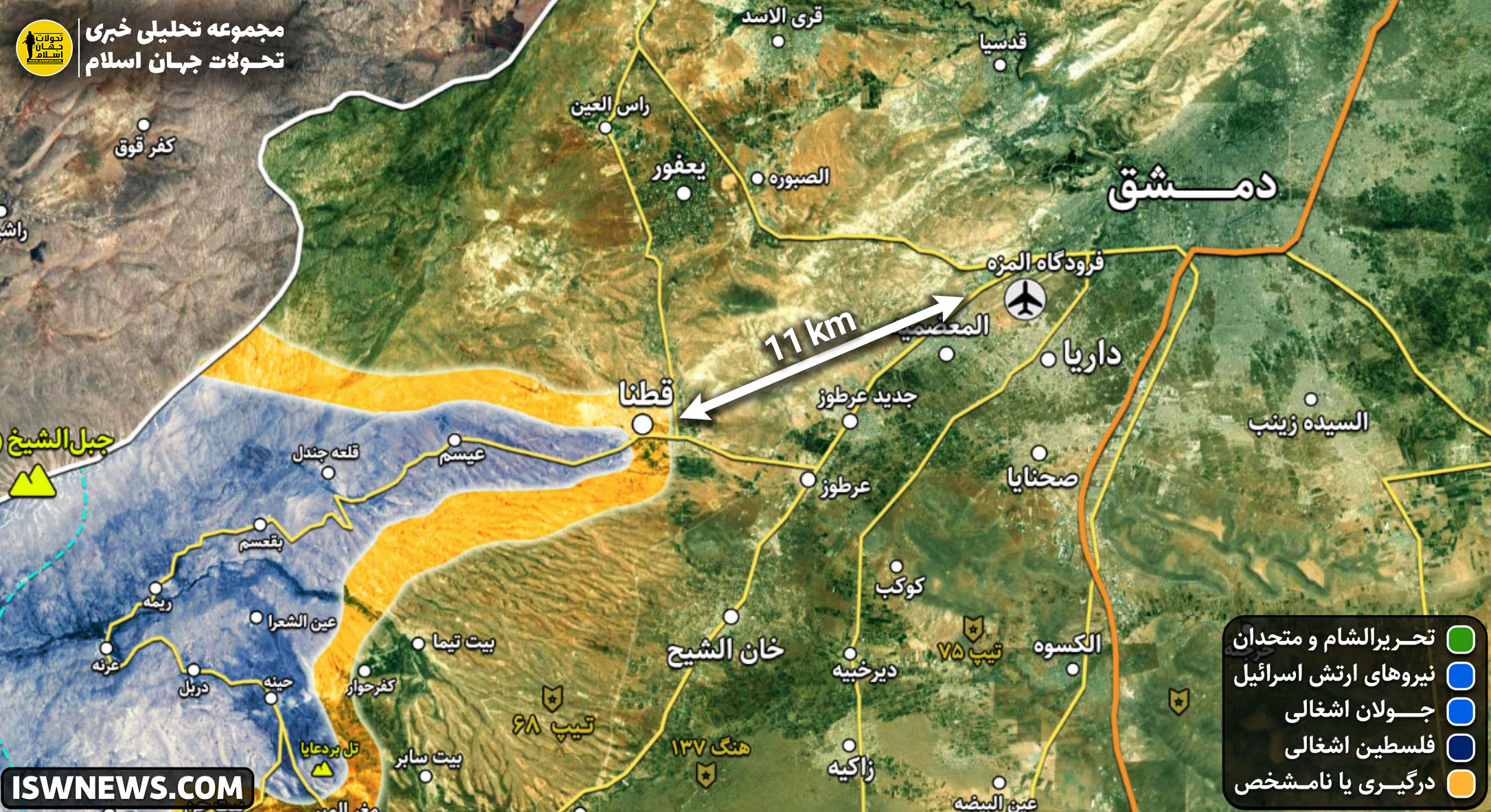
    According to videos that have emerged, an Israeli army convoy consisting of approximately 15 vehicles has reached the outskirts of Qatna.

    In addition to Qatna, Israeli forces have also entered the village of Al-Rafid in Quneitra province. This area has seen security operations and inspections conducted by the Israeli army in recent weeks.

    Despite calls from Syrians to confront the Israeli regime and the threats made by Julani militants, the forces of the new Syrian government have not taken any action to prevent or confront the Israeli army’s movements. The Israeli advance in southern Syria continues amidst the silence of the Julani government.

  • Yemeni Drone Attack on Southern Occupied Palestine

    Yemeni Drone Attack on Southern Occupied Palestine

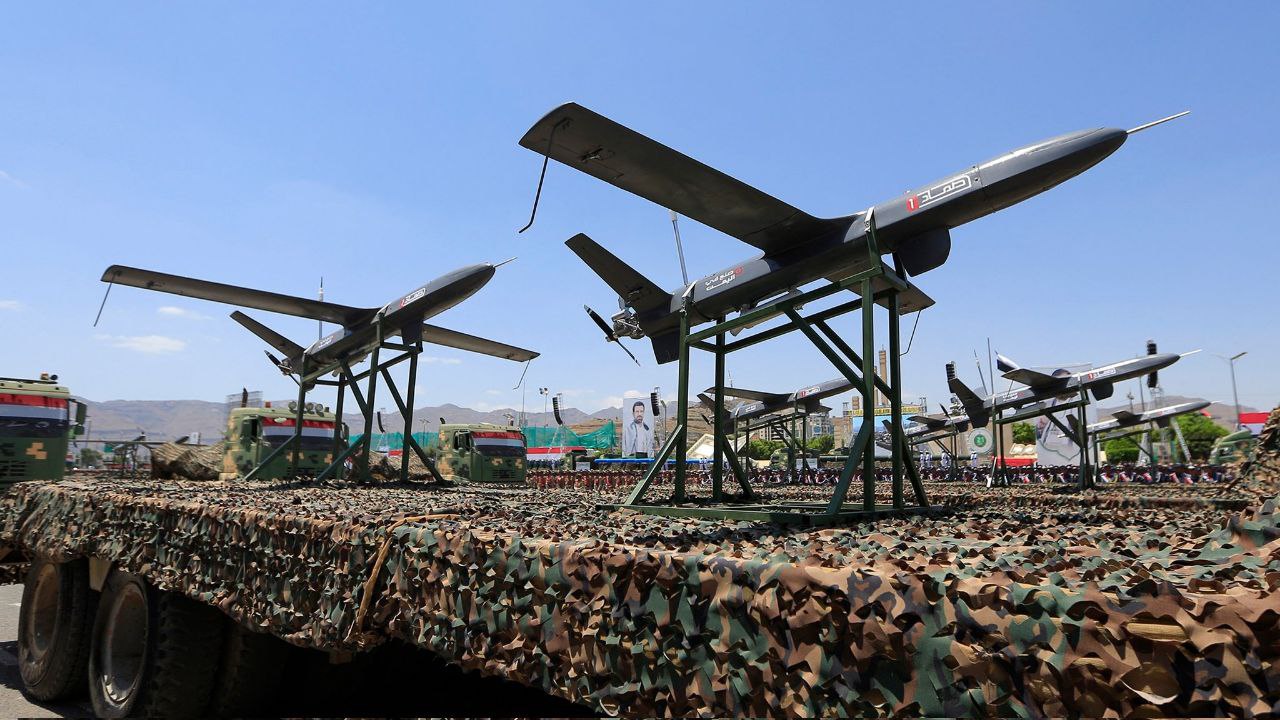
    According to a statement from the Yemeni armed forces, this simultaneous military operation targeted key military sites in southern Palestine. Two of the drones struck important targets in the Negev region, while the third targeted the port of Umm al-Rashrash (Eilat).

    Brigadier General Yahya Saree stated that these operations successfully achieved their objectives by the grace of God. He criticized the silence of the Islamic community regarding the Israeli regime’s actions in the Gaza Strip and emphasized that Yemen is acting within its means and will continue its support operations until the war and siege against Gaza are halted.

    Statistics gathered by Islamic World News indicate that this operation marks the 148th conducted by the Yemeni armed forces against the positions of the Zionist regime in occupied Palestine.

  • Netanyahu orders Israeli army to support Syrian Druze!

    Netanyahu orders Israeli army to support Syrian Druze!

    In a joint statement, they said, “The Israeli army has been instructed to target regime forces and weapons that have been transferred to the Sweida region. The movement of forces and weapons into Sweida contradicts the policy of demilitarizing southern Syria. Israel is committed to protecting the Druze in Syria due to our close alliance with our Druze citizens in northern occupied Palestine and their family and historical ties with the Druze of Syria. We are taking action to prevent the Syrian regime from harming them and to ensure the demilitarization of the area adjacent to our border with Syria.”

    Video
    Video
    Video

    In line with this directive, the Israeli military conducted airstrikes against targets in southern Syria. According to reports, the strikes focused on the Julani forces vehicles, including tanks, personnel carriers, and rocket launchers, as well as communication routes, in an effort to disrupt Julani’s entry into the Sweida region.

    Released videos also show that the Israeli army targeted the Syrian internal security vehicles in Sweida with drone attacks.

  • Three Zionist Soldiers Liquidated in Gaza

    Three Zionist Soldiers Liquidated in Gaza

    According to information gathered by Islamic World News, the number of reported Israeli deaths since the beginning of the ground invasion of Gaza has risen to 461.

    The total number of military casualties, based on claims from the Israeli regime, has reached 895 since the conflict began.

  • Israel Bombed Syrian Military Convoy In Southern Syria

    Israel Bombed Syrian Military Convoy In Southern Syria

    Recent days have seen an escalation in sectarian tensions in Sweida, following an armed attack on a Druze businessman on the Damascus-Sweida road, which was attributed to Arab tribes. In response to this attack, Druze youth have arrested members of Arab tribes, prompting Arab tribes to set up checkpoints.

    Despite calls for calm and non-violence from leaders on both sides, clashes have intensified and spread to various areas, including Maqous, Tha’la Airport, and Sourah Kabeera.

    According to the Syrian MOD, at least 30 people have been killed and more than 100 injured in these confrontations.

    In recent hours, the Julani government had dispatched several tanks to support its forces in the conflict areas of Sweida province that were bombed by Israel.