Category: Israel

  • Scorching Suwayda: Unraveling Sectarian Fragility in Post-Assad Syria

    Scorching Suwayda: Unraveling Sectarian Fragility in Post-Assad Syria

    This delicate balance is now under strain, especially in Syria’s Suwayda province, the heartland of the Druze. Recent clashes with Sunni Bedouin tribes and alleged Israeli interference have deepened mistrust toward Syria’s transitional government. As violence escalates, the Druze—committed to strict traditions and survival—find themselves at the crossroads of regional and international tensions.

    In recent months, Suwayda has seen a surge in violence, sparked by kidnappings and retaliatory attacks between Bedouin tribes and Druze militias. The Damascus-based government deployed forces to contain the unrest, but deep-seated distrust led to armed resistance from Druze fighters. Reports of massacres, looting, and arson—allegedly by pro-government groups like Ahrar al-Sharqiya and Ansar al-Tawhid—have further inflamed tensions. Social media posts and unverified accounts of military raids and civilian killings have raised fears of another sectarian catastrophe.

    Israeli tanks and airstrikes targeting Suwayda and Damascus added fuel to the fire. While Israeli officials claim to protect Druze minorities, many Syrian Druze remain skeptical of Tel Aviv’s intentions.

    Geopolitical Rivalry in Southern Syria

    Turkey and Israel are vying for control over trade routes linking southern Syria to Jordan and the Gulf. Turkey, aligned with Damascus, seeks to expand its influence southward and open new export corridors. Israel, meanwhile, exploits instability to counter Iranian presence and build ties with minorities like the Druze and Kurds. Despite secret talks in Baku to avoid military incidents, ongoing violence in Suwayda and Israeli strikes on Damascus reveal deeper rifts.

    Turkey, with limited military and political leverage, prefers diplomacy and U.S. pressure over direct confrontation, fearing that conflict could derail Syria’s reconstruction and harm its own interests.

    Israel’s Peripheral Doctrine and Arab Fragmentation

    Since its founding, Israel has pursued a “peripheral doctrine”—forging alliances with non-Arab regional powers and exploiting internal divisions in Arab states. Syria, as a populous neighbor with historic ties to Palestine, remains central to this strategy. By strengthening ties with Druze and Kurdish groups, Israel aims to fragment Syria from within. Prime Minister Netanyahu has openly outlined post-Assad goals: blocking Syrian government forces near Damascus, supporting Druze communities, and maintaining control over the Golan Heights.

    This strategy seeks to turn Syria into a failed, unstable state, minimizing threats to Israel. The use of sectarian divisions and minority alliances as tools of control has long been a hallmark of Israeli policy.

    Syria’s Response and Internal Challenges

    Under President Ahmad al-Shara, Syria’s new government has responded cautiously to Israeli aggression, condemning airstrikes and emphasizing territorial integrity. It seeks regional diplomacy—especially with Jordan and Arab states—to counter expansionist threats. However, avoiding direct confrontation may weaken its domestic legitimacy and allow Israel to deepen its influence.

    Effective resistance requires coordinated Arab and international efforts to prevent further collapse and regional instability.

    Expanding Israeli Ambitions

    Israel’s ambitions now extend beyond Syria, targeting the broader periphery—including Iran and Pakistan. Some neoconservative analysts advocate for exploiting ethnic and sectarian divides to destabilize Iran. The Abraham Accords, far from being mere peace deals, serve as instruments to cement Israel’s dominance in regional economics, security, and technology.

    This approach, however, risks backfiring. As Israel’s reach grows, so does regional opposition. Countries like Iran, Turkey, and Pakistan increasingly view Israel not just as a nuisance, but as a direct threat. Military actions in Gaza, Damascus, Beirut, Sanaa, and Tehran have galvanized regional solidarity against Israeli policies.

    History has shown that colonial empires rarely endure. Just as the people of this region once resisted crusaders and imperial powers, they now stand united against Israel’s expansionist doctrine.

    Sources:

    1. https://www.washingtonpost.com/world/2025/07/17/israel-syria-druze-attack/
    2. https://www.theguardian.com/world/2025/jul/18/more-violence-erupts-in-syrias-druze-heartland-as-tribal-groups-reinforce-local-bedouin
    3. https://www.nytimes.com/2025/07/18/world/middleeast/who-are-druse-syria-israel-clashes.html
    4. https://www.washingtoninstitute.org/policy-analysis/pursuing-israel-syria-detente-post-assad
    5. https://www.csis.org/analysis/violence-escalates-israel-intervenes-southern-syria
    6. https://www.middleeasteye.net/opinion/damascus-gaza-israels-doctrine-hegemony-fatal-flaw
    7. https://thecradle.co/articles/battle-in-suwayda-where-israel-and-turkiye-clash-over-syrias-trade-routes
    8. https://www.washingtonpost.com/world/2025/07/17/syria-israel-druze-border/
    9. https://apnews.com/article/druze-syria-religious-sect-2c989a5397c5e04474cef7bd9a37c40b?__cf_chl_rt_tk=5JchtEfIcPtDTbrCoJapZ91RhXRsgmmgiDMqNZE6R4U-1752921424-1.0.1.1-UDWYIzUovSA6IHVMilefEYYS5rD3BmPUa5VuAWNhesw
    10. https://www.middleeasteye.net/news/turkey-doesnt-have-many-options-against-israel-syria
    11. https://thecradle.co/articles/syrian-druze-confront-new-attacks-after-sharaa-declares-suwayda-ceasefire
  • Israeli Navy Raids Sumud Humanitarian Flotilla, Dozens Detained

    Israeli Navy Raids Sumud Humanitarian Flotilla, Dozens Detained

    Despite the blockade, one vessel—Mikono-Albireh—has reportedly entered Gaza’s territorial waters, according to Al Jazeera’s Hassan Masoud.

    The raid has sparked widespread international condemnation, with countries including Iran, Turkey, Pakistan, Colombia, Malaysia, Venezuela, Spain, Australia, the UK, and Brazil denouncing the move as a clear violation of international law. The arrest of humanitarian activists has reignited global solidarity with Gaza, as protests across multiple nations highlight the growing civil resistance to Israel’s siege.

    While the immediate impact may be limited, such actions are shaping a critical shift in public consciousness—especially among younger generations in the West—who are increasingly viewing Zionism through a lens of scrutiny and dissent. These symbolic pressures, though low-cost, carry long-term consequences for Israel’s global image.

  • Israeli Soldier Killed in West Bank Car-Ramming Attack

    Israeli Soldier Killed in West Bank Car-Ramming Attack

    The attack resulted in the death of a paratrooper from the Israeli Army’s 890th Battalion. Akkad was shot and killed by Israeli security forces at the scene.

    Hamas issued a statement praising the operation as a heroic act of resistance, describing it as a response to ongoing genocide in Gaza and Israeli crimes including killings, arrests, settlement expansion, and Judaization efforts in the West Bank and Jerusalem.

    According to Israeli sources, this incident brings the total number of military personnel killed since the start of the conflict to 915.

  • Israeli Minister Calls for Full Control Over Gaza and West Bank

    Israeli Minister Calls for Full Control Over Gaza and West Bank

    Cohen, who has previously voiced strong opposition to the establishment of a Palestinian state, reiterated his stance by declaring that the two-state solution “will never be realized.” He added that Israel will eventually impose sovereignty over the entire West Bank, noting that the only remaining questions are “when and how.”

    These remarks come amid repeated warnings from the international community—particularly Arab and Western nations—about the consequences of continued occupation and illegal settlement expansion in the West Bank.

    Cohen’s statements underscore the lack of support for a two-state solution even within civilian branches of the Israeli government, casting doubt on the viability of international efforts to resolve the Israeli-Palestinian conflict through political means.

  • Yemeni Forces Launch Overnight Missile Strike on Tel Aviv

    Yemeni Forces Launch Overnight Missile Strike on Tel Aviv

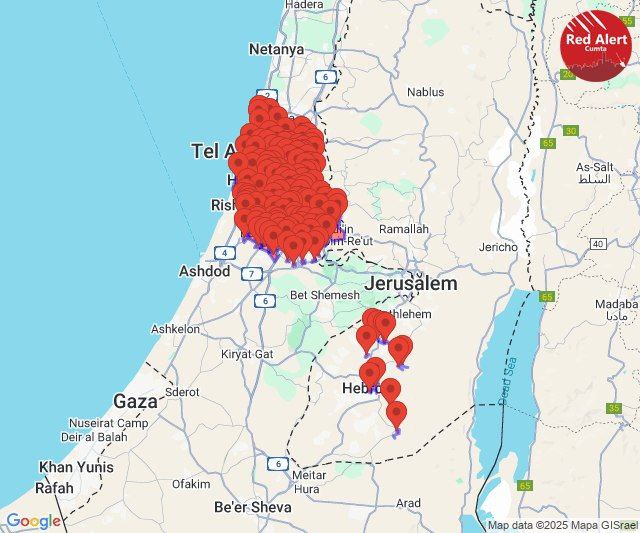
    The Yemeni Armed Forces launched a hypersonic ballistic missile early Monday targeting sensitive sites in Tel Aviv. The missile, identified as the Palestine-2 and equipped with a fragmentation warhead, struck its intended targets as part of Yemen’s continued retaliation against Israeli military war crimes and in support of Palestine.

    Brigadier General Yahya Saree stated, “The operation successfully hit its objectives, prompting millions of settlers to flee to shelters.”

    In a coordinated attack, Yemeni drone units also deployed two suicide UAVs against strategic locations in Eilat (Umm al-Rashrash), marking the 206th and 207th aerial operations by Yemeni forces against Israeli positions in occupied Palestine.

  • Israel–Syria Talks Collapse Over Sovereignty Dispute

    Israel–Syria Talks Collapse Over Sovereignty Dispute

    This isn’t the first time Israel has made such a request. During earlier talks in Paris, Tel Aviv also pushed for the corridor, which Syria firmly opposed. According to Israel Hayom, deep divisions remain over issues like Israeli control of Mount Hermon and the Golan Heights, as well as security guarantees for the Druze minority allied with Israel.

    Previous rounds in Baku, Paris, and London had shown progress, with the U.S. even signaling that a de-escalation deal was within reach. However, the Sweida corridor dispute highlights the persistent strategic challenges facing any agreement.

    Suweida, home to a majority Druze population, holds significant security and social importance for Damascus. Accepting Israel’s proposal could undermine Syria’s political legitimacy. Even if the Sweida issue is set aside, core disagreements over the Golan and Mount Hermon remain major obstacles—issues too complex for short-term diplomacy to resolve.

  • THAAD Redeployment: U.S. Fortifies Israel’s Missile Shield Amid New Israel-Iran War!

    THAAD Redeployment: U.S. Fortifies Israel’s Missile Shield Amid New Israel-Iran War!

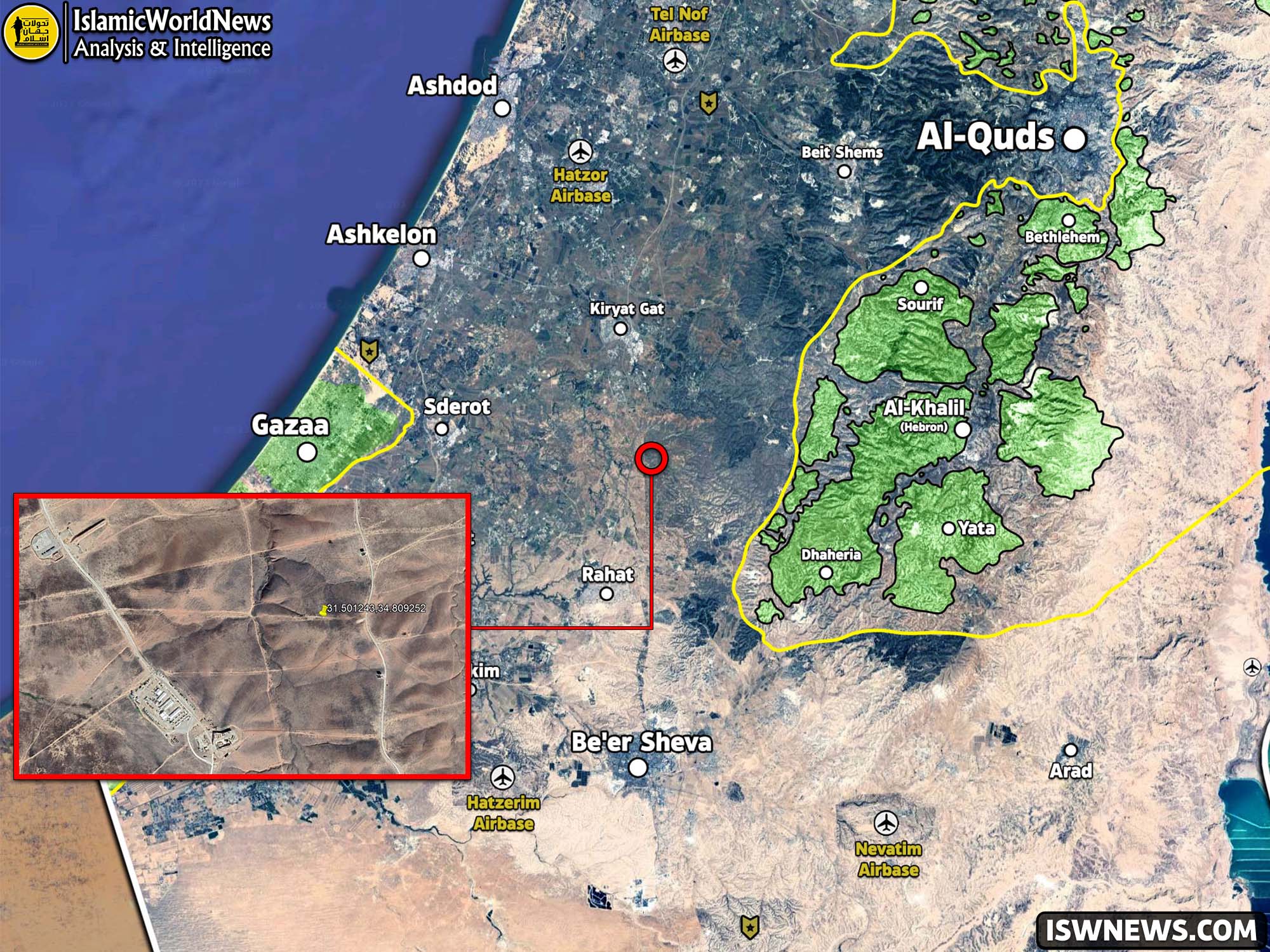
    This development came immediately after the 12-day war between Iran and Israel, which exposed serious shortages in Israel’s missile defense inventory. The urgent need for reinforcement led Tel Aviv to publicly seek upgrades. The transfer of THAAD units and expanded support infrastructure suggest a strategic push to deepen defensive layers and reduce vulnerability to missile threats.

    THAAD units at coordinates 31.501243, 34.809252 in the western outskirts of Hebro

    The site, located at coordinates 31.501243, 34.809252 in the western outskirts of Hebron, lies just 13 kilometers from parts of the West Bank—making it a potential target for Palestinian resistance operations.

    Lessons from the recent war and Israel’s tactics against Iran show that low-cost tools like drones and guided anti-armor weapons can significantly disrupt advanced defense systems. During the 12-day Tehran–Tel Aviv conflict, Israeli-linked operatives inside Iran used drones, quadcopters, and precision-guided munitions to strike missile and air defense systems. If Iran replicates such tactics in the occupied territories, the damage from missile strikes could multiply dramatically!

  • Continuous Yemeni Drone Strikes on Occupied Territories

    Continuous Yemeni Drone Strikes on Occupied Territories

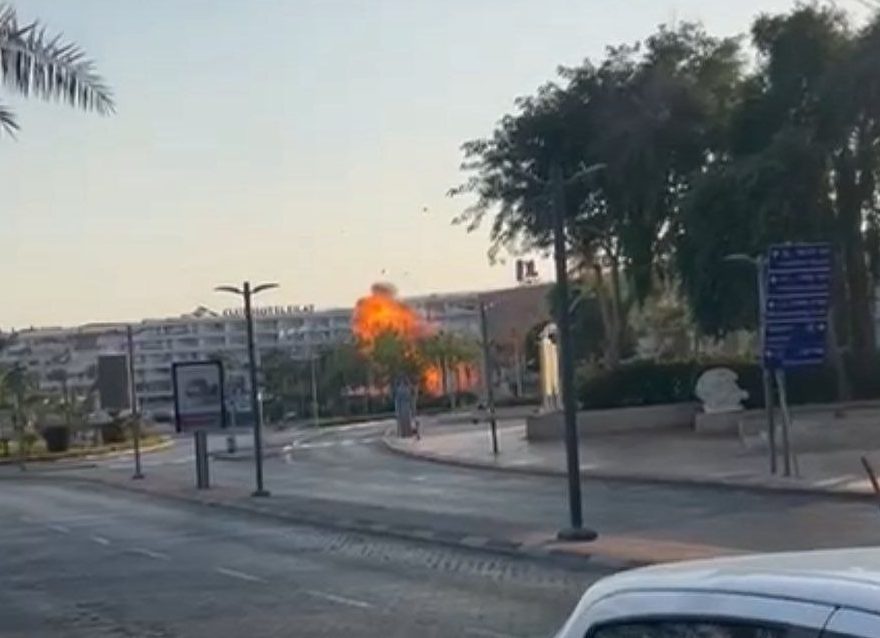
    According to a statement by Brigadier General Yahya Saree, the Yemeni drone force carried out a special military operation using two suicide drones targeting two sites in the Umm al-Rashrash area (Eilat port). The operation reportedly succeeded, with Israeli air defense systems failing to intercept the drones.

    On September 24, 22 Israeli settlers were injured after a Yemeni suicide drone attacked and hit the port of Eilat. The Israeli regime’s air force also issued a statement confirming that an investigation has been launched into the drone strike on the port city of Eilat.

    A Yemeni drone hit near a hotel in Eilat

    Another operation was conducted on September 23, involving multiple suicide drones aimed at targets in Eilat port and Be’er Sheva.

    Based on data from the Islamic World News, these strikes mark the 203rd and 204th aerial operations by Yemeni armed forces against Zionist regime positions in occupied Palestine.

  • Where is the Emirati-Israeli intelligence base on Zuqar Island?

    Where is the Emirati-Israeli intelligence base on Zuqar Island?

    The facilities built on this island include a camp for Emirati forces, a training center for Tareq Saleh’s troops and fighters from the Southern Transitional Council, a 185-meter dock, an advanced maritime radar, an air defense system, and a helipad.

    These installations have recently functioned as an advanced surveillance base against Yemeni armed forces, issuing early warnings to monitor missile and drone launches toward occupied Palestine and targeting ships affiliated with Zionists. The island also has a 2.1 km runway, which is expected to soon receive military cargo and large transport aircraft, possibly even Israeli aircraft.

    Israeli-UAE military base in Zuqar island

    Israel’s use of this island could pose a serious threat and could serve as a launch point for Israeli drones conducting terrorist operations deep inside Yemen.

    Zuqar Island is one of Yemen’s islands in the Red Sea, covering 130 square kilometers and located off the western coast of Al Hudaydah province. Positioned in the middle of the Red Sea, it plays a key role in controlling commercial shipping routes. The island is 29 km from Yemen’s coast, and Yemeni armed forces, operating from Al-Tuhayta, can target it with artillery and destroy the Emirati-Israeli facilities stationed there.

  • Drone Attacks Target “Global Sumud Flotilla” in the Mediterranean (Video)

    Drone Attacks Target “Global Sumud Flotilla” in the Mediterranean (Video)

    The UN Special Rapporteur on Human Rights in Palestine condemned the attacks and called for immediate protective measures for the convoy. The Global Sumud Flotilla also issued a statement warning that the Israeli regime is spreading misleading information to justify military strikes against the humanitarian mission.

    Israel Drone Attacks Target Global Sumud Flotilla in the Mediterranean
    Israel Drone Attacks Target Global Sumud Flotilla in the Mediterranean

    This marks the second attack on the Sumud flotilla in recent days. On the morning of September 8, one of its boats was targeted by an unidentified drone near the port of Sidi Bou Said in Tunisia.

    Drone strikes on a civilian fleet with a humanitarian purpose represent a clear violation of international law and humanitarian principles. Such actions could be classified as war crimes under UN frameworks. The assault on Al-Sumoud is not merely a military act, it sends a political message aimed at deterring international activists working to break the blockade on Gaza.

  • Behind the Scenes of the Julani–Kalin Meeting: From the March 10 Agreement to Israel’s No-Fly Zone Proposal in Southern Syria

    Behind the Scenes of the Julani–Kalin Meeting: From the March 10 Agreement to Israel’s No-Fly Zone Proposal in Southern Syria

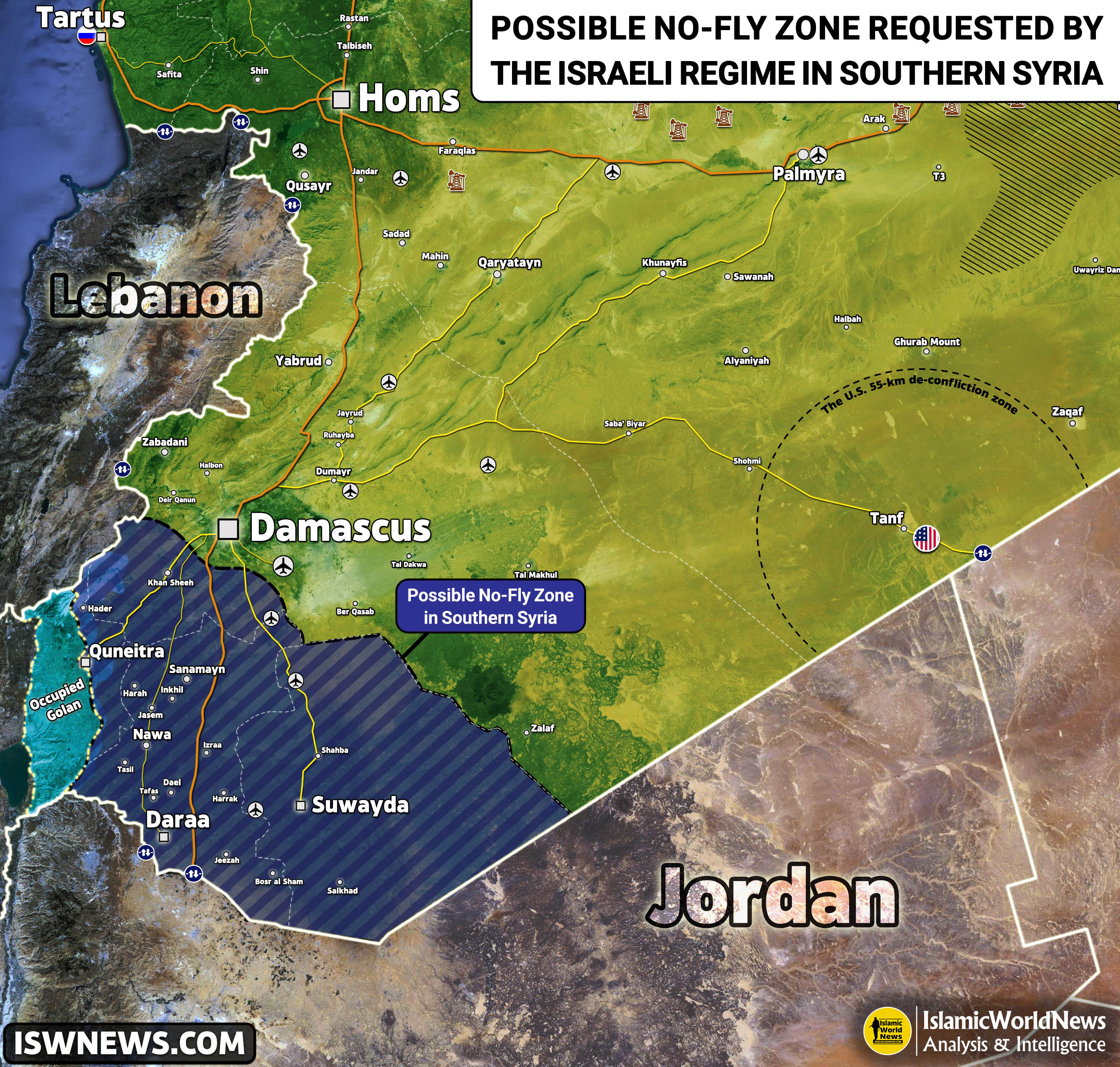
    According to Western sources, Israel has presented Damascus with a new security proposal. The plan includes establishing no-fly zones over parts of southern Syria while preserving an aerial corridor from Syria to Iran. This corridor is strategically vital for Tel Aviv, potentially allowing future airstrikes on Iranian targets. The proposed no-fly zone would cover Suwayda, Daraa, Quneitra, and parts of Damascus. In exchange, Israel would withdraw from some areas it recently occupied in southern Syria—but notably, it refuses to pull back from Mount Hermon.

    Meanwhile, Syria’s new government is expanding its diplomatic outreach, engaging with figures like Tom Barrack, Ayman Safadi, and representatives from Gulf Arab states. These interactions suggest Damascus is working to build a multilayered network of security and political alliances. The goal appears to be reducing international pressure while gaining flexibility in dealing with local forces (such as the SDF) and regional powers like Turkey and Israel. Al-Julani, at the helm of this effort, seems intent on balancing U.S.-Israeli demands with Turkey’s red lines.

    In the context of ongoing tensions between Iran and Israel, Tel Aviv’s proposal for Syrian no-fly zones is part of a broader strategy to secure a reliable aerial corridor toward Iran. The recent collapse of Bashar al-Assad’s regime and the destruction of much of Syria’s air defense systems have made Syrian airspace one of the least risky and most cost-effective routes for Israeli aircraft heading toward Iran’s western borders. Any agreement with Damascus could significantly enhance Israel’s operational capabilities against Iranian targets.

    Possible no-fly zone requested by the Israeli regime in southern Syria

    Another Israeli objective is to minimize the risk of direct confrontation with Turkish air forces. Turkey’s military presence in Syria—especially in air defense—has grown in recent months, increasing the chances of accidental clashes with Israeli jets. By negotiating a no-fly zone with Damascus, Israel aims to unilaterally manage Syrian airspace, impose its terms on both Ankara and Damascus, and reduce the likelihood of unintended military incidents.

    If implemented, this plan would have wide-ranging regional consequences, with Israel standing to gain the most. It would solidify a permanent aerial threat against Iran from the west, restrict Turkey’s operational freedom in Syrian skies, and place Damascus under Israeli dominance. Although the Syrian government may not favor the proposal, the current military realities in southern Syria are pressuring Damascus to accept it.

  • Yemen Responds with Firepower: Drone and Missile Strikes Hit Israeli Targets (Video)

    Yemen Responds with Firepower: Drone and Missile Strikes Hit Israeli Targets (Video)

    According to footage, one drone entered Eilat from the eastern direction of occupied Palestine and struck the Jacob Hotel, causing material damage but no reported casualties.

    Yemen drone struck Jacob hotel in Eilat
    Yemen drone struck Jacob hotel in Eilat

    Brigadier General Yahya Saree announced that Yemen’s missile forces successfully hit a sensitive Israeli military site in Tel Aviv using the hypersonic ballistic missile “Palestine-2.” The strike triggered mass panic, sending millions into shelters and forcing the closure of airspace over occupied territories.

    Simultaneously, Yemen’s drone units carried out two coordinated operations: three drones targeted multiple sites in the Eilat region, while another drone struck a high-value target in Be’er Sheva, southern occupied Palestine. According to Saree, both missions achieved their objectives.

    These attacks mark the 200th to 202nd aerial operations by Yemeni forces against Israeli positions in occupied Palestine.