
This attack underscores the intensifying resistance operations in southern Gaza, where Palestinian fighters continue to confront Israeli forces with guerrilla tactics and improvised explosive devices. As ground incursions deepen, such incidents reflect the growing cost of occupation and the resilience of local defense efforts.
Category: Israel
-

Gaza Still Under Fire: Israeli Brutal Strikes Target Palestinian Civilians
At least 14 Palestinians were martyred and dozens more injured in today’s attacks.
According to local sources, yesterday’s bombardments claimed the lives of at least 98 Palestinians and wounded 385 others. These figures bring the total death toll in Gaza to over 65,062, with more than 165,697 injured.
The unfolding tragedy in Gaza is not just a consequence of military operations, it is a profound humanitarian crisis that demands urgent global attention and moral clarity.
The forced displacement of tens of thousands, the targeting of so-called safe zones, and the collapse of vital infrastructure reveal a deliberate strategy that disregards the sanctity of civilian life. In the face of such suffering, silence is complicity.
The people of Gaza deserve not only protection but justice, dignity, and the right to live free from fear. It is imperative that the international community stands firmly with the oppressed, amplifies their voices, and works toward an immediate end to the violence. Gaza must not be abandoned; it must be defended, supported, and remembered.
-

Operation Gideon’s Chariots II Sparks Humanitarian Crisis in Gaza City
Videos circulating online show Gaza’s exit routes packed with vehicles and crowds of people. Residents are leaving their homes in an effort to escape the intensifying brutal bombardment by Israel.
Gaza’s exit routes packed with vehicles and crowds of people Reports indicate that over 190,000 people have been forcibly displaced. However, due to dire conditions in southern Gaza, including lack of shelter and basic services, some have returned to the city. Allegedly “safe zones” such as Al-Mawasi and Rafah lack essential infrastructure and have themselves been targeted by more than 100 Israeli airstrikes, resulting in the deaths of hundreds of Palestinians.
The unfolding tragedy in Gaza is not merely a consequence of military operations, it is a profound humanitarian crisis that demands urgent global attention and moral clarity. The forced displacement of tens of thousands, the targeting of so-called safe zones, and the collapse of vital infrastructure reveal a deliberate strategy that disregards the sanctity of civilian life. In the face of such suffering, silence is complicity. The people of Gaza deserve not only protection but justice, dignity, and the right to live free from fear. It is imperative that the international community stands firmly with the oppressed, amplifies their voices, and works toward an immediate end to the violence. Gaza must not be abandoned; it must be defended, supported, and remembered.
-

Israel Builds Reinforced Concrete Shelters in Homes to Counter Iranian Missile Threat
Built with reinforced concrete and steel, they are designed to withstand nearby explosions. In peacetime, these rooms can serve as bedrooms, storage spaces, or home offices—but in times of crisis, they become secure havens for residents.
The military is also considering upgrades such as emergency radio communication lines and thicker walls to enhance safety. Moshe Shlomo, head of engineering at Israel’s Home Front Command, emphasized that having such shelters inside homes offers immediate protection when warning sirens go off. Public shelters, he noted, are not always accessible, making in-home safe rooms a necessity.
However, this development carries deeper social and psychological consequences. Turning homes into bunkers signals a shift in Israel’s security paradigm—from relying on military deterrence to seeking refuge behind concrete walls. Over time, this could erode public confidence in the military’s capabilities and widen internal divisions.
This decision to build more shelters is not merely technical—it’s a clear sign that Israel is bracing for another round of conflict with Iran and its allies. The experience of the recent war convinced Tel Aviv that missile and drone threats are too severe to be countered by air defense systems alone.
Israeli officials are also concerned about the psychological toll of future wars. Civilian casualties in recent conflicts have intensified domestic pressure on the government and even triggered reverse migration from the occupied territories. By constructing in-home shelters, Israel hopes to reduce casualties and preserve public trust. In essence, these concrete rooms act as psychological shields to prevent the collapse of social cohesion during wartime.
Still, given the destructive power of Iranian ballistic missiles—capable of leveling several blocks—the real effectiveness of these shelters remains in question.
-

Israel Signals Readiness for New Military Campaigns Against Iran and Yemen
Maj. Gen. Amir Baram, Director General of the Defense Ministry, stated:
“Our recent military operation in Iran ended in a decisive Israeli victory, but further phases are imminent. Iran, feeling deeply humiliated, is rapidly investing in its defense capabilities—unlike Israel, where such decisions take longer to implement.”
Baram emphasized the financial burden of war, including costs for reserve troops, ammunition, and rehabilitation of wounded soldiers. He noted that:
- Each strike on Yemen costs approximately ₪50 million ($15 million)
- Total war expenditures have exceeded ₪205 billion ($61 billion)
- A single Arrow-3 interceptor costs between ₪15–30 million ($4–9 million)
- A failed interception, such as the Iranian missile strike on Bat Yam, can cause up to ₪300 million ($90 million) in damage
To sustain its military edge, Israel is ramping up domestic weapons production and reducing reliance on foreign suppliers. The newly formed council will coordinate efforts across defense, finance, and national security sectors.
Baram also acknowledged that Israel cannot sustain heavy combat on both the Iranian and Yemeni fronts simultaneously. As a result, it will rely on complementary strategies, including covert operations and alliances with local actors. Notably, Israeli operatives have conducted field visits to southern Yemen, and there are signs of renewed activity by remnants of Ali Abdullah Saleh’s network in Marib.
-

How Much is Palestine Worth to Turkey?! Learn More About the Covert Cooperation Between Israel and Turkey
Turkey’s economic and trade cooperation with the Zionist regime is carried out through three main channels: sea, land, and air. These methods are as follows:
— Use of maritime transport and logistics routes:
Oil, construction materials, steel, and more are shipped from Turkish ports to Israeli ports using vessels flying the flags of neutral countries such as Liberia, Panama, etc. According to available data, about 18% of Israel’s essential non-oil goods are supplied by Turkish cargo ships.The maritime route is critical for supplying oil to the Zionist regime. Based on existing information, most of Israel’s oil needs are met by Central Asian countries like Azerbaijan and Kazakhstan via shipping routes that pass through Turkey. Thus, oil from the Caspian Sea is transported by the Baku government in cooperation with Turkey through the Baku–Tbilisi–Ceyhan pipeline into Turkey. Turkish tankers load the oil at Ceyhan port and, upon entering Israeli waters, turn off their AIS tracking systems and deliver the cargo to ports in Haifa, Ashdod, and Ashkelon.
In January of last year, Israel topped the list of oil destinations from Azerbaijan, receiving 523,500 tons of oil worth $297 million.
The Baku-Tbilisi-Ceyhan pipeline, which transports oil from the Caspian Sea to the Mediterranean Sea — Use of hybrid land and air routes:
Trade via this method is conducted through third countries. Goods are likely transported overland from Turkey to Georgia and Azerbaijan, and from there flown to Israel. Azerbaijani logistics companies play a key role in this process. Cargo flights from Baku to Israel are actively ongoing, and it’s likely that Turkish goods are included in these shipments.— Use of Turkish and other Israel-friendly air routes:
Turkish and Israeli airlines may use routes through countries such as Jordan, the UAE, and Greece. Cargo may be labeled “for Oman,” while its actual destination is Tel Aviv.Possible sea and air routes for transporting oil and goods to the Zionist regime Financial transactions are also conducted through intermediary countries. Banks in the UAE and Switzerland facilitate money transfers between Turkey and Israel. Even cryptocurrency transactions may be used to maintain anonymity.
Overall, neither Turkey nor the Zionist regime shows any real intention of fully cutting economic and trade ties. Turkey profits from trade in various sectors, and Israel benefits not only from securing oil and essential goods like textiles and food, but also from Turkey’s potential role in exporting Israeli gas to Europe. Additionally, Israel can use Turkey as a gateway to access Central Asian and Caucasus markets. This is a strategically important issue that economically benefits both sides. In this context, public statements from Turkish and Israeli officials about severing ties are mostly for domestic consumption and global image management. As long as tensions remain “rhetorical,” it’s highly unlikely that the profitable trade between Turkey and Israel will be disrupted.
Economic and trade cooperation between countries—especially Islamic ones—and the Israeli regime prevents pressure from being effectively applied and instead enables the regime to continue its crimes against the Palestinian people and the region. Cutting off these ties is one of the most effective ways to pressure Israel to stop its crimes.
As a regionally influential country, if Turkey truly seeks to end the killing and war against Palestinians and apply pressure on Israel, it must sever its economic, trade, and political relations with the regime. Otherwise, it will be considered a direct and indirect accomplice in the crimes committed by the Israeli regime.
-

Yemen Strikes Back: Hypersonic Missile Targets Tel Aviv And Ramon Airport Amid Rising Tensions
According to Brigadier General Yahya Saree, the missile unit deployed a Palestine-2 hypersonic missile to hit a sensitive site in Tel Aviv. The strike reportedly succeeded, triggering mass panic and sending millions of settlers into shelters.
In a parallel operation, a suicide drone targeted Ramon Airport, located in the northern part of Umm al-Rashrash (Eilat) in southern Israel.
The Yemeni military emphasized that these operations were carried out in support of Palestinian resistance and as a response to Israeli airstrikes on civilian infrastructure in Yemen. They reiterated their commitment to continue attacks until Israel ends its war and blockade on Gaza, and called on Arab and Islamic nations to break their silence and fulfill their responsibilities toward the Palestinian people.
According to data from Islamic World News, these were the 198th and 199th aerial operations by Yemeni forces against Israeli positions in the occupied territories.
Yemen’s military campaign in support of Palestine began on October 19, 2023, targeting Israeli assets both on land and at sea. The campaign escalated with the seizure of the Israeli ship Galaxy Leader and attacks on over 215 Israel-linked vessels in the Red Sea, effectively halting Israeli maritime traffic in the region.
In addition to naval operations, Yemen has carried out over 190 missile and drone strikes on Israeli positions. During confrontations with the US-UK coalition, Yemeni forces reportedly downed three F-18 Super Hornet jets and 22 MQ-9 drones.
-

Israeli Airstrikes on Hudaydah Port in Yemen
The attacks came shortly after a warning to evacuate the port was issued by Avichay Adraee, the Arabic-language spokesperson for the Israeli military. According to Yemeni media, the airstrikes were met with resistance from Yemen’s air defense systems, which prevented some of the jets from completing their missions. Despite this, 12 strikes hit the port’s docks.
Israeli media reported that the operation was a response to missile and drone attacks launched by Yemeni armed forces. The stated objective was to disrupt the port’s operations for several weeks, as Ansar Allah allegedly uses Hudaydah to import Iranian weaponry.
According to analysis by Islamic World News, this marks the 18th Israeli airstrike on Yemen during the current conflict. Previous attacks have targeted civilian infrastructure, including cranes, fuel storage facilities, and service buildings at the port. Hudaydah is a vital hub for essential imports and agricultural exports, playing a key role in Yemen’s fragile economy.
Efforts to repair the damage from earlier strikes were underway with help from local companies, aiming to restore the port’s ability to receive domestic and international ships. However, the latest attacks have delayed reconstruction efforts and intensified economic pressure on Yemen, especially amid ongoing assassinations of government officials.
-

Gaza City Under Siege as Israeli Ground Operation Expands; Ground Phase of Gideon’s Chariots 2 Begins
After weeks of airstrikes and limited advances in the western suburbs of Gaza City, the new ground operation has now entered a more serious phase. At the same time as this phase began, the Israeli army launched a new wave of airstrikes on various areas of Gaza to pave the way for a ground invasion.
The Israeli army emphasized that the ultimate goal is to completely surround Gaza City and to destroy the infrastructure of the resistance groups in the area. The operation is being commanded by General Eyal Zamir, the Chief of Staff of the Israeli Army, personally from the southern headquarters of the regime’s army.
Alongside the operation in Gaza City, the IDF’s 99th Division is conducting operations in the northern Gaza Strip, and the IDF’s Gaza Division is also deployed in the southern Gaza Strip.
The simultaneous deployment of several divisions and tens of thousands of new troops into Gaza City indicates the IDF’s efforts to change the field situation. However, a full siege of Gaza City in such a dense urban area with a large population would involve a war of attrition that could lead to heavy casualties. The expansion of the operation and the mobilization of reserve forces on this scale suggest that the current conflict has reached a critical stage.
-

Israeli Military Intensifies Strikes on Gaza: 14 Palestinians Martyred (Video)
Targets included central Khan Younis in southern Gaza, eastern Deir al-Balah, the Al-Shati refugee camp, areas surrounding the Abed al-Rahman Mosque in Deir al-Balah, the Bani Amer neighborhood in Gaza City’s Al-Daraj district, Al-Bureij refugee camp, Sheikh Radwan, and the northwest outskirts of Gaza City near the Netzarim corridor.
Israeli Military Intensifies Strikes on Gaza Israeli Military Intensifies Strikes on Gaza According to local sources, at least 14 Palestinians were martyred and dozens more injured in today’s attacks.
The previous day saw even heavier casualties, with 34 Palestinians killed and 316 wounded, bringing the total death toll in Gaza to over 64,905, and the number of injured to more than 164,926, as reported by local health authorities.
The strikes have further deepened the humanitarian crisis in Gaza, where infrastructure damage, displacement, and medical shortages continue to worsen.
-

Yemeni Armed Forces Target Israeli Positions with Suicide Drones
According to the statement, three drones targeted Ramon Airport near Eilat, while a fourth struck a military site in the Negev region of southern occupied Palestine.
Data compiled by Islamic World News indicates that this marks the 197th aerial operation by Yemeni forces against Israeli regime targets in occupied Palestine.
-
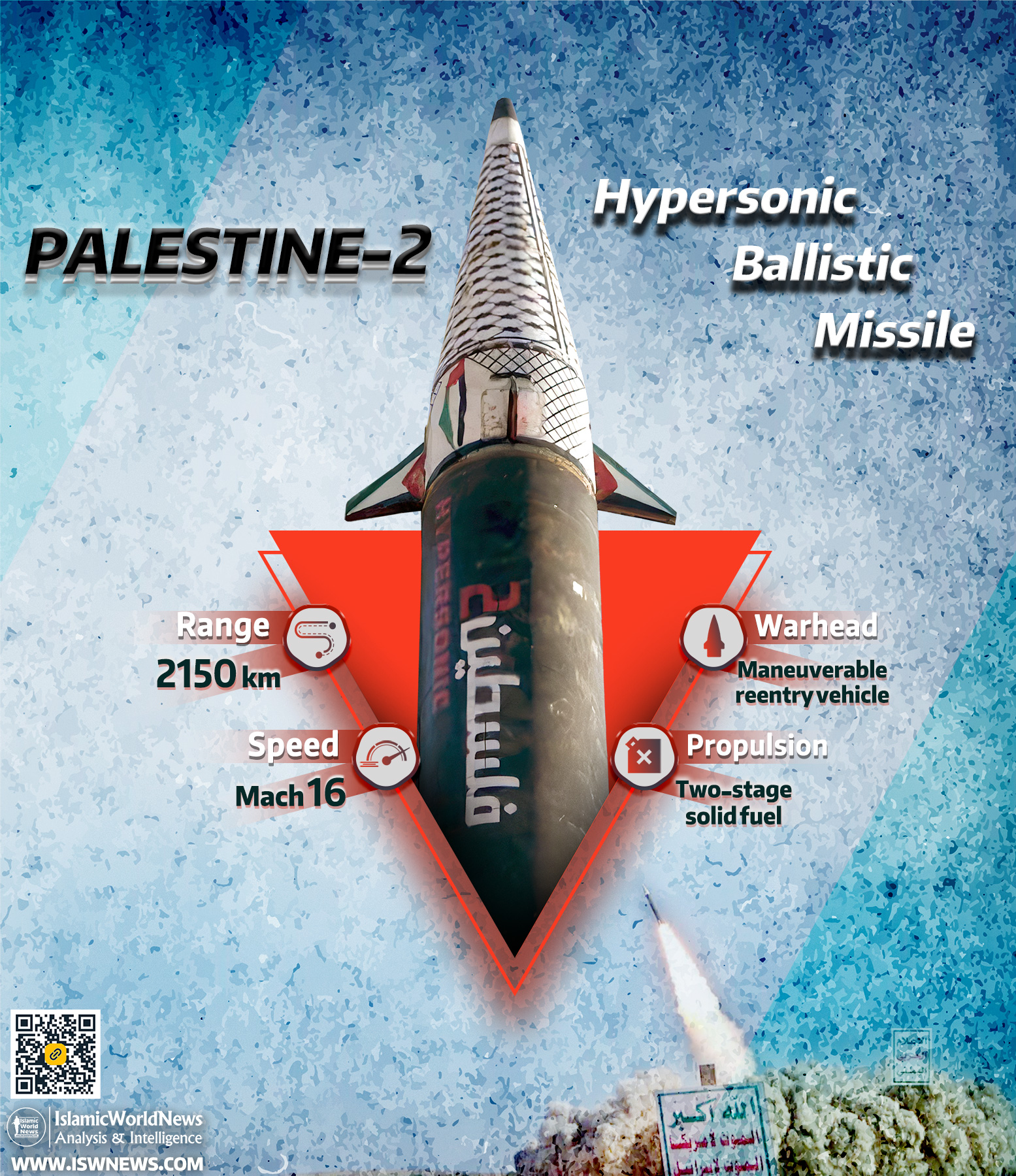
Yemeni Forces Strike Tel Aviv with Hypersonic Missile in Retaliatory Attack (Video)
According to military sources, the strike hit multiple sensitive locations within the city, triggering mass panic and forcing millions of settlers into bomb shelters. Air raid sirens echoed across Tel Aviv as emergency protocols were activated.
Brigadier General Yahya Saree, spokesperson for Yemen’s military, stated that the operation was conducted in direct response to recent Israeli airstrikes on Yemeni territory. He emphasized that the attack was also a show of solidarity with the Palestinian people, describing it as a “successful mission that achieved its intended objectives.”
Yemeni Forces Strike Tel Aviv with Hypersonic Missile Military analysts note that Yemen’s use of cluster warheads has become a hallmark of its missile strategy, delivering not only physical destruction but also straining Israel’s air defense infrastructure. “These types of warheads require Israel to maintain elevated readiness levels, deploying additional personnel and intercept systems,” said one regional expert. “Over time, this leads to fatigue and erosion of defensive capabilities.”
Data from the IWN confirms that this marks the 196th aerial operation by Yemen’s armed forces against Israeli positions in the occupied territories.
The Israeli Defense Forces have yet to release an official statement regarding the extent of the damage or casualties. However, the incident is expected to heighten security concerns and prompt further military responses in an already volatile region.