The UN Special Rapporteur on Human Rights in Palestine condemned the attacks and called for immediate protective measures for the convoy. The Global Sumud Flotilla also issued a statement warning that the Israeli regime is spreading misleading information to justify military strikes against the humanitarian mission.
Israel Drone Attacks Target Global Sumud Flotilla in the MediterraneanIsrael Drone Attacks Target Global Sumud Flotilla in the Mediterranean
This marks the second attack on the Sumud flotilla in recent days. On the morning of September 8, one of its boats was targeted by an unidentified drone near the port of Sidi Bou Said in Tunisia.
Drone strikes on a civilian fleet with a humanitarian purpose represent a clear violation of international law and humanitarian principles. Such actions could be classified as war crimes under UN frameworks. The assault on Al-Sumoud is not merely a military act, it sends a political message aimed at deterring international activists working to break the blockade on Gaza.
The initiative was unveiled during a summit hosted by the Saudi Foreign Ministry in Riyadh, attended by representatives from over 35 countries—including the U.S., UK, Canada, Australia, China, Japan, the European Union, Gulf Arab states, and Yemen’s exiled government.
British Ambassador to Yemen, Abdo Sharif, explained that the goal of this maritime security partnership is to address serious threats such as smuggling and piracy, while also promoting regional stability and safeguarding global trade routes.
Under the ten-year plan, participating nations will provide financial aid and military equipment to enhance the capabilities of Yemen’s coast guard. Saudi Arabia has taken the lead by pledging $4 million in aid, along with a package of training and military gear for the Yemeni forces.
The initiative, titled “Partnership for Yemen’s Maritime Security,” is being spearheaded by Saudi Ambassador Mohammed Al Jaber and British Ambassador Abdo Sharif. Despite broad international participation in the launch event, substantial military and financial support is unlikely to materialize within the current calendar year. However, growing economic pressure from the naval blockade in the Red Sea and Gulf of Aden may eventually compel the EU and other U.S.-Israeli allies to take more decisive action in Yemen.
Over the past two years, the Red Sea and Gulf of Aden have become focal points for Yemeni armed forces targeting commercial and military vessels linked to Israeli, American, and British interests. These operations—carried out in solidarity with the Palestinian cause—have included more than 215 maritime attacks using ballistic missiles, cruise missiles, drones, and explosive-laden unmanned surface vessels.
According to the brigade’s command, which holds formal responsibility for the area’s security, any presence or cooperation with U.S. forces and affiliated entities is categorically rejected. The 12th Brigade emphasized that all its bases operate under the supervision of the Iraqi Prime Minister’s Office and are legally sanctioned.
This obstruction is seen as a clear signal from resistance factions aiming to curtail U.S. operational reach within Iraq. It conveys a practical message: American presence in zones officially controlled by the PMF will not be tolerated. The brigade’s insistence on its legal mandate seeks to frame the move as a state-sanctioned action, distancing it from any perception of rogue behavior. This is a strategic posture, as resistance groups aim to present themselves as integral components of Iraq’s formal security architecture.
The incident marks a direct field-level confrontation with the United States and could escalate tensions between Washington and Iraqi resistance forces, especially amid recent U.S. moves to blacklist several such groups.
On September 16, the U.S. Department of State issued a statement announcing the addition of four Iraqi resistance groups to its list of Foreign Terrorist Organizations. The designated groups include Harakat al-Nujaba, Kata’ib Sayyid al-Shuhada, Harakat Ansar Allah al-Awfiya, and Kata’ib Imam Ali.
Bin Arfaj’s father was a senior al-Qaeda figure in Yemen who was killed in a previous U.S. operation. The affiliation of the two individuals with al-Qaeda has not yet been officially confirmed by the group’s media outlets.
According to Western media data, the U.S. military has carried out over 380 counterterrorism air operations targeting al-Qaeda in Yemen over the past two decades.
It’s worth noting that the Southern Transitional Council and several Yemeni media sources claim that Saudi Arabia is a key supporter of al-Qaeda in Yemen, allegedly aiming to weaken southern factions and prevent their influence from expanding into central regions of the country.
In a formal ceremony, Syrian transitional government Foreign Minister Asaad Hassan al-Shaibani raised the national flag over the Syrian Embassy in Washington. In a brief speech, he described the moment as historic. The event was attended by members of the Syrian-American community.
In a message posted on X (formerly Twitter), al-Shaibani wrote: “After decades of absence, today the flag of the Syrian Arab Republic proudly flies over our embassy in Washington. With pride and dignity, I represent a nation that stood firm and a homeland that never broke. Syria has returned.”
It’s worth noting that during his visit to Washington, the Syrian Foreign Minister met with U.S. Deputy Secretary of State Christopher Landau, several members of Congress, and officials from the U.S. Treasury Department. The discussions focused on bilateral relations, expanding cooperation, and exploring the possibility of lifting sanctions imposed on Damascus.
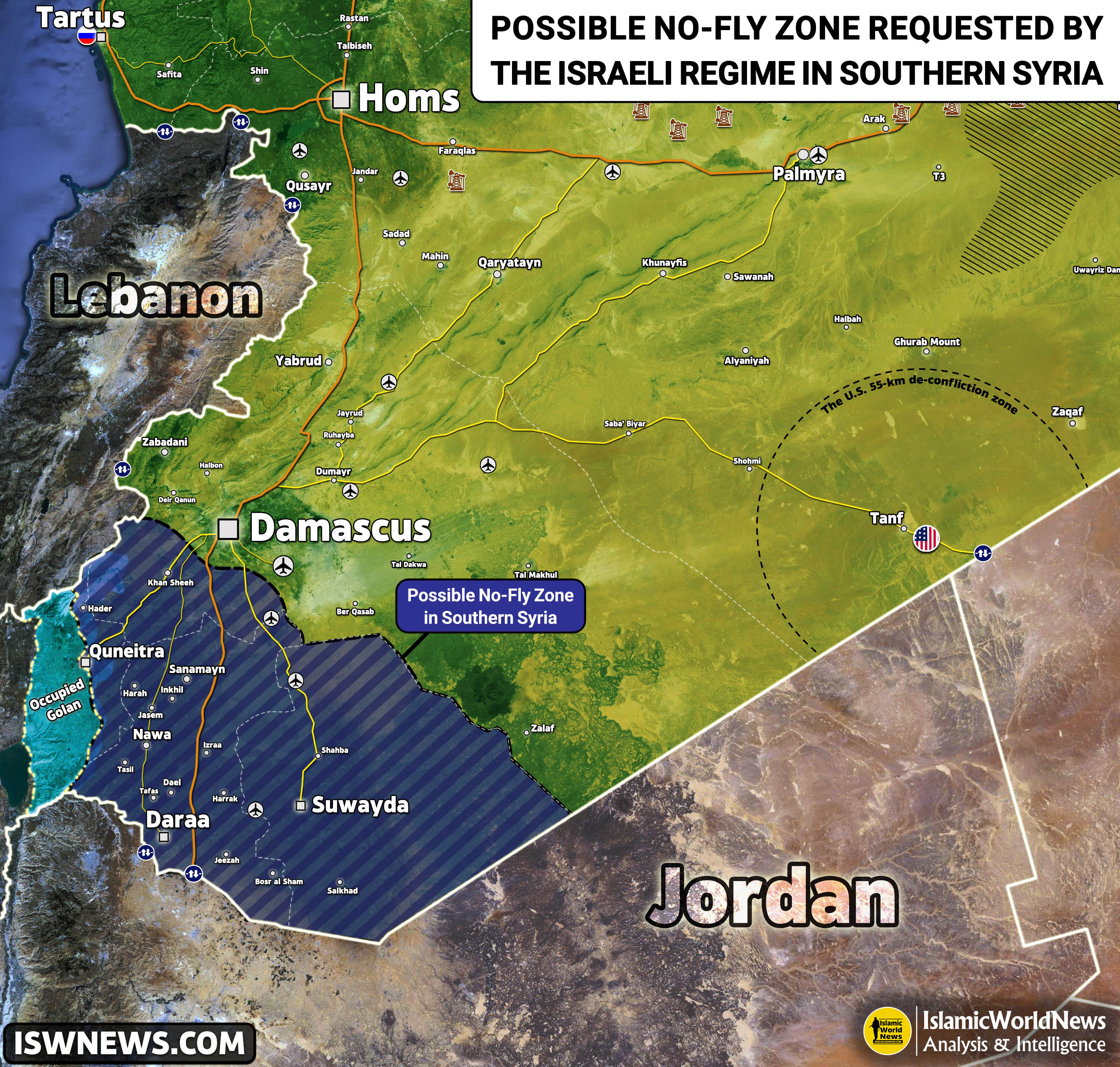
According to Western sources, Israel has presented Damascus with a new security proposal. The plan includes establishing no-fly zones over parts of southern Syria while preserving an aerial corridor from Syria to Iran. This corridor is strategically vital for Tel Aviv, potentially allowing future airstrikes on Iranian targets. The proposed no-fly zone would cover Suwayda, Daraa, Quneitra, and parts of Damascus. In exchange, Israel would withdraw from some areas it recently occupied in southern Syria—but notably, it refuses to pull back from Mount Hermon.
Meanwhile, Syria’s new government is expanding its diplomatic outreach, engaging with figures like Tom Barrack, Ayman Safadi, and representatives from Gulf Arab states. These interactions suggest Damascus is working to build a multilayered network of security and political alliances. The goal appears to be reducing international pressure while gaining flexibility in dealing with local forces (such as the SDF) and regional powers like Turkey and Israel. Al-Julani, at the helm of this effort, seems intent on balancing U.S.-Israeli demands with Turkey’s red lines.
In the context of ongoing tensions between Iran and Israel, Tel Aviv’s proposal for Syrian no-fly zones is part of a broader strategy to secure a reliable aerial corridor toward Iran. The recent collapse of Bashar al-Assad’s regime and the destruction of much of Syria’s air defense systems have made Syrian airspace one of the least risky and most cost-effective routes for Israeli aircraft heading toward Iran’s western borders. Any agreement with Damascus could significantly enhance Israel’s operational capabilities against Iranian targets.
Possible no-fly zone requested by the Israeli regime in southern Syria
Another Israeli objective is to minimize the risk of direct confrontation with Turkish air forces. Turkey’s military presence in Syria—especially in air defense—has grown in recent months, increasing the chances of accidental clashes with Israeli jets. By negotiating a no-fly zone with Damascus, Israel aims to unilaterally manage Syrian airspace, impose its terms on both Ankara and Damascus, and reduce the likelihood of unintended military incidents.
If implemented, this plan would have wide-ranging regional consequences, with Israel standing to gain the most. It would solidify a permanent aerial threat against Iran from the west, restrict Turkey’s operational freedom in Syrian skies, and place Damascus under Israeli dominance. Although the Syrian government may not favor the proposal, the current military realities in southern Syria are pressuring Damascus to accept it.
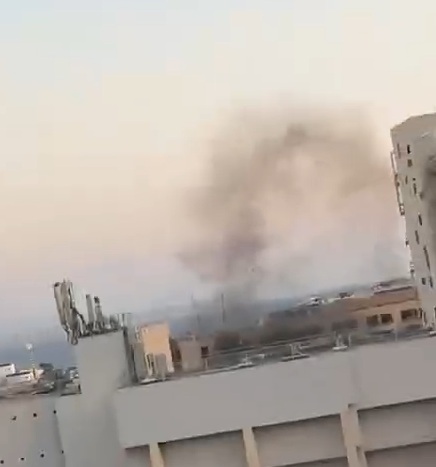
According to footage, one drone entered Eilat from the eastern direction of occupied Palestine and struck the Jacob Hotel, causing material damage but no reported casualties.
Yemen drone struck Jacob hotel in EilatYemen drone struck Jacob hotel in EilatYemen drone struck Jacob hotel in Eilat
Brigadier General Yahya Saree announced that Yemen’s missile forces successfully hit a sensitive Israeli military site in Tel Aviv using the hypersonic ballistic missile “Palestine-2.” The strike triggered mass panic, sending millions into shelters and forcing the closure of airspace over occupied territories.
Simultaneously, Yemen’s drone units carried out two coordinated operations: three drones targeted multiple sites in the Eilat region, while another drone struck a high-value target in Be’er Sheva, southern occupied Palestine. According to Saree, both missions achieved their objectives.
These attacks mark the 200th to 202nd aerial operations by Yemeni forces against Israeli positions in occupied Palestine.
This attack underscores the intensifying resistance operations in southern Gaza, where Palestinian fighters continue to confront Israeli forces with guerrilla tactics and improvised explosive devices. As ground incursions deepen, such incidents reflect the growing cost of occupation and the resilience of local defense efforts.
At least 14 Palestinians were martyred and dozens more injured in today’s attacks.
According to local sources, yesterday’s bombardments claimed the lives of at least 98 Palestinians and wounded 385 others. These figures bring the total death toll in Gaza to over 65,062, with more than 165,697 injured.
The unfolding tragedy in Gaza is not just a consequence of military operations, it is a profound humanitarian crisis that demands urgent global attention and moral clarity.
The forced displacement of tens of thousands, the targeting of so-called safe zones, and the collapse of vital infrastructure reveal a deliberate strategy that disregards the sanctity of civilian life. In the face of such suffering, silence is complicity.
The people of Gaza deserve not only protection but justice, dignity, and the right to live free from fear. It is imperative that the international community stands firmly with the oppressed, amplifies their voices, and works toward an immediate end to the violence. Gaza must not be abandoned; it must be defended, supported, and remembered.
Videos circulating online show Gaza’s exit routes packed with vehicles and crowds of people. Residents are leaving their homes in an effort to escape the intensifying brutal bombardment by Israel.
Gaza’s exit routes packed with vehicles and crowds of people
Reports indicate that over 190,000 people have been forcibly displaced. However, due to dire conditions in southern Gaza, including lack of shelter and basic services, some have returned to the city. Allegedly “safe zones” such as Al-Mawasi and Rafah lack essential infrastructure and have themselves been targeted by more than 100 Israeli airstrikes, resulting in the deaths of hundreds of Palestinians.
The unfolding tragedy in Gaza is not merely a consequence of military operations, it is a profound humanitarian crisis that demands urgent global attention and moral clarity. The forced displacement of tens of thousands, the targeting of so-called safe zones, and the collapse of vital infrastructure reveal a deliberate strategy that disregards the sanctity of civilian life. In the face of such suffering, silence is complicity. The people of Gaza deserve not only protection but justice, dignity, and the right to live free from fear. It is imperative that the international community stands firmly with the oppressed, amplifies their voices, and works toward an immediate end to the violence. Gaza must not be abandoned; it must be defended, supported, and remembered.
The agreement was formalized during Pakistani Prime Minister Shehbaz Sharif’s visit to Riyadh, marking a significant and symbolic step toward deepening bilateral defense ties. It encompasses broad collaboration in defense and security, with a mutual defense clause that binds the two nations to respond collectively to external aggression.
This joint accord reflects a shift in regional dynamics, especially following Israel’s recent attack on Qatar. It signals growing disillusionment among regional leaders with the security guarantees offered by global powers, prompting emerging nations like Saudi Arabia and Pakistan to forge independent security alliances.
Saudi-Pakistani relations have historically been close since Pakistan’s separation from India, with extensive cooperation across political, economic, and military domains. Pakistan’s military has played a pivotal role in training Saudi forces and has been actively involved in Saudi military operations, notably in Yemen. Conversely, Saudi Arabia has supported Pakistan during economic crises through loans and financial aid.
What sets this agreement apart is its formalization of the longstanding relationship into an organized and binding commitment. It strategically aligns both countries against perceived threats from India, Israel, and potentially Iran.
Despite the public announcement of the pact, its detailed provisions remain classified. A key question looms: does the agreement extend to Pakistan’s nuclear capabilities? If so, the regional implications could be profound, potentially reshaping the balance of power across the Middle East and South Asia.
Built with reinforced concrete and steel, they are designed to withstand nearby explosions. In peacetime, these rooms can serve as bedrooms, storage spaces, or home offices—but in times of crisis, they become secure havens for residents.
The military is also considering upgrades such as emergency radio communication lines and thicker walls to enhance safety. Moshe Shlomo, head of engineering at Israel’s Home Front Command, emphasized that having such shelters inside homes offers immediate protection when warning sirens go off. Public shelters, he noted, are not always accessible, making in-home safe rooms a necessity.
However, this development carries deeper social and psychological consequences. Turning homes into bunkers signals a shift in Israel’s security paradigm—from relying on military deterrence to seeking refuge behind concrete walls. Over time, this could erode public confidence in the military’s capabilities and widen internal divisions.
This decision to build more shelters is not merely technical—it’s a clear sign that Israel is bracing for another round of conflict with Iran and its allies. The experience of the recent war convinced Tel Aviv that missile and drone threats are too severe to be countered by air defense systems alone.
Israeli officials are also concerned about the psychological toll of future wars. Civilian casualties in recent conflicts have intensified domestic pressure on the government and even triggered reverse migration from the occupied territories. By constructing in-home shelters, Israel hopes to reduce casualties and preserve public trust. In essence, these concrete rooms act as psychological shields to prevent the collapse of social cohesion during wartime.
Still, given the destructive power of Iranian ballistic missiles—capable of leveling several blocks—the real effectiveness of these shelters remains in question.