Category: West Asia

  • The Confrontational Geometry of the Zionists with the Resistance

    The Confrontational Geometry of the Zionists with the Resistance

    Strategic Reconfiguration
    Despite enduring severe military pressure after the Gaza war, the “Axis of Resistance” not only did not collapse but entered a phase of strategic reconfiguration. The weakening of certain field capabilities—particularly in Hezbollah and the Syrian front—has been offset by strengthening the networked model. By intelligently distributing capacity among actors such as Hashd al-Shaabi and Ansarallah, the costs of confrontation decreased and operational flexibility increased. The use of informal economic and logistical mechanisms also helped maintain operational continuity. Within this framework, the deeper integration of Hamas into the Axis structure led to enhanced cohesion and field synergy. The outcome of these developments has been the formation of an axis that, despite external pressures, evolved from a centralized structure into a multi-layered, recoverable resistance network capable of preserving its strategic initiative.

    Multi-Front Confrontation and Controlled Escalation
    During the Ramadan War, the Axis of Resistance implemented a strategy of “layered pressure” against the Zionist regime and its allies by simultaneously activating the Lebanese, Iraqi, and Yemeni fronts, although the level of coordination among actors was not fully unified. Hezbollah created direct military pressure by firing hundreds of rockets, missiles, and drones and expanding hostilities along the northern borders. Concurrently, Iraqi resistance groups carried out dozens of drone and rocket attacks on American and Zionist-linked targets, drawing the conflict deeper into Iraq, while Ansarallah activated the strategic-economic dimension of the war through missile strikes on southern occupied territories and disrupting shipping in the Red Sea. In response, the regime, relying on air superiority, conducted hundreds of precision strikes on the infrastructure of these actors, attempting to curb their operational capacity. However, both sides’ behavior demonstrated that the conflict remained within a framework of “controlled escalation”: despite the intensity of the attacks, neither moved toward all-out regional war, keeping casualty levels and operational scope within limits that preserved deterrence while preventing a slide into a full-scale conflict.

    The Future of the Axis of Resistance
    In the post-war period, the trajectory of the Axis of Resistance can be formulated within three main scenarios: In the optimistic scenario, the axis, by returning to its flexible, networked logic—rather than relying on vulnerable centralized structures—reconstructs multi-layered deterrence through deepening military, economic, and logistical ties in Iraq, Yemen, and other peripheral arenas, consolidating its position by leveraging the ongoing transition of the international system. In the intermediate scenario, the axis remains within a “crisis management” framework: a certain level of operational cooperation is maintained, but internal limitations of the actors (in Lebanon, Iraq, and Yemen) and regional divisions prevent full strategic cohesion, with the axis operating in a semi-coordinated, reactive mode. In the pessimistic scenario, however, the process of erosion and external pressure leads to divergence, with each group acting based on its own local capacities and the axis’s operational cohesion diminishing. As a result, collective deterrence weakens, and coordinated responses in future crises will no longer be guaranteed.

  • Iran’s Retaliatory Strikes Against U.S. Bases in the Region, June 11

    Iran’s Retaliatory Strikes Against U.S. Bases in the Region, June 11

    The operation involved at least 12 solid-fuel missiles from the Fateh and Kheibar Shekan families, along with dozens of suicide drones. Targets included the U.S. Fifth Fleet headquarters, an early warning radar site, and Shaikh Issa Air Base in Bahrain; Muwaffaq Salti Air Base in Jordan; and Ali Al Salem and Ahmad Al Jaber air bases in Kuwait .

    According to released documentation, the AR-327 early warning radar at Jabal al-Dukhan in Bahrain was precisely struck by an Iranian drone. Footage showing fire at the site confirms the destruction of the early warning radar .

    Furthermore, video and images released from the missile strikes on Jordan’s Muwaffaq Salti Air Base show two large fires at the facility, indicating successful and precise hits on intended targets. Some media also reported that three Jordanian F-16 fighter jets were destroyed as a result of the Iranian attacks.

    Click to view full size poster
  • Iran’s Retaliatory Strikes on US Bases in the Region, June 10

    Iran’s Retaliatory Strikes on US Bases in the Region, June 10

    The targets included the U.S. Fifth Fleet headquarters in Bahrain, the Camp Buehring and Ali Al Salem Air Base in Kuwait, and the Muwaffaq Salti Air Base in Jordan.

    Based on videos released of the attacks, Iranian missiles penetrated multiple defensive layers and successfully struck their targets in Bahrain, Jordan, and Kuwait.

    Click to view full size poster
  • Kata’ib Imam Ali Begins the Process of Transferring Weapons to the Iraqi Government

    Kata’ib Imam Ali Begins the Process of Transferring Weapons to the Iraqi Government

    Emphasizing that the current responsibility requires that weapons be placed in the hands of the state, the resistance group announced the formation of committees to inventory and hand over its equipment under the supervision of the Commander-in-Chief of the Armed Forces.

    This decision follows a meeting of the Shiite Coordination Framework attended by Iraqi Prime Minister Ali Faleh al-Zaydi, during which support was expressed for the plan to monopolize weapons in state hands and to sever the Popular Mobilization Forces’ ties with all political, party, and social frameworks.

    Kata’ib Imam Ali is the third armed Iraqi group, after Asa’ib Ahl al-Haq and Saraya al-Salam, to officially announce the implementation of the process of transferring weapons to the state.

  • Asa’ib Ahl al-Haq Also to Hand Over Its Weapons!

    Asa’ib Ahl al-Haq Also to Hand Over Its Weapons!

    The statement reads that the leadership of Asa’ib Ahl al-Haq, in coordination with the call of the supreme religious authority and in response to the national position of the brothers in the Coordination Framework, and in affirmation of the remarks of Sheikh Qais al-Khazali, Secretary-General of Asa’ib Ahl al-Haq, regarding severing ties with the Hashd al-Shaabi and the state monopoly on weapons, has proceeded to implement this approach by forming a central committee headed by Jawad al-Talibawi and including several members.

    It is worth noting that the process of armed groups disaffiliating from Hashd al-Shaabi and joining the Iraqi Armed Forces began with the dissolution of Saraya al-Salam (the military wing of the Sadrist Movement) under a direct order from Muqtada al-Sadr. Subsequently, two other groups, Kata’ib Imam Ali (AS) and Asa’ib Ahl al-Haq, have also announced their readiness to hand over their weapons and join the Iraqi state.

  • Advancement of the Israeli Regime’s Army North of the Litani River

    Advancement of the Israeli Regime’s Army North of the Litani River

    Currently, Israeli forces are approximately 5 kilometers away from the strategic city of Nabatieh from Arnun.

    Regarding Beaufort Castle: This castle is a historic and tourist site dating back to the Crusader period. The castle overlooks the Litani River and the surrounding areas, and the Zionists will certainly use it against Hezbollah. As previously noted, the Israeli army employs elevated positions such as Beaufort Castle to dominate and control occupied areas in southern Lebanon.

  • Visit of the Israeli Army Chief of Staff to the Northern Front from Behind Protective Nets!

    Visit of the Israeli Army Chief of Staff to the Northern Front from Behind Protective Nets!

    In recent weeks, Hezbollah’s suicide drones and FPVs have inflicted heavy human, financial, and psychological damage on the Zionists. These attacks have not only targeted Israeli military positions and advanced equipment but have also instilled fear and terror among soldiers and residents of the northern areas.

    The killing of several Zionist soldiers and field commanders in southern Lebanon by FPV attacks has severely disrupted Israel’s security calculations. Hezbollah’s ability to penetrate Israeli air defenses and accurately strike moving targets and Israeli positions has forced commanders like Zamir to adopt extreme security measures.

    The change in field tactics, the increased level of protection, and Zamir’s adoption of stringent security measures send a clear message to the Israeli public: The front line of the northern front has become an unsafe zone even for the highest-ranking military commander. This situation has broad strategic implications and indicates that Israel’s aerial deterrence, which it has long prided itself on, has been seriously challenged.

  • Statistics of US-Israeli, European, and Arab aircraft losses in the war with Iran and the Axis of Resistance

    Statistics of US-Israeli, European, and Arab aircraft losses in the war with Iran and the Axis of Resistance

    USA/Israel:

    Iraq, Lebanon, and Yemen Fronts – Including 12 drones, 3 aircraft, and 2 helicopters

    — Two U.S. MQ-9 drones: in Jabal Maraqsha, Abyan Governorate (March 3), the desert of Marib (May 17), and north of Marib city (May 29) – Yemeni Armed Forces
    — One U.S. MQ-9 drone: north of Basra (March 10) – Iraqi Resistance
    — Seven Israeli Hermes 450 drones: Bint Jbeil (March 16), Al-Ayshiyeh region (March 31), Aynatha (April 1), Siddiqin (April 11), Adloun (April 16), Al-Hawsh (April 24), Nabatiyeh (April 30) – Hezbollah
    — One Israeli Hermes 900 drone: southern Lebanon (April 28) – Hezbollah

    — Destruction of a KC-135 refueling aircraft and damage to another KC-135 in western Iraq (March 12) – Iraqi Resistance
    — Destruction or damage to a U.S. UH-60 helicopter at Victoria Air Base, Iraq (March 25) – Iraqi Resistance
    — Iraqi Army Antonov 32 aircraft (March 30) – Iraqi Resistance
    — Destruction or damage to an Israeli helicopter in the Yaroun area of southern Lebanon, type unknown (March 31) – Hezbollah

    Iran Front – Including 174 drones, 9 fighter jets, 8 aircraft, 10 helicopters, and 16 cruise missiles and bombs

    MQ-9 Drone: At least 25 units
    MQ-4C Drone: 1 unit (April 9)
    MQ-1 Drone: 1 unit (April 4)
    RQ-21 Drone: 1 unit (March 30)
    LUCAS Suicide Drone: Undisclosed number
    Hermes 900 Drone: At least 8 units
    Heron Drone: At least 2 units (March 31, April 5)
    Harop Suicide Drone: Undisclosed number
    Arbiter Drone: Undisclosed number

    — Destruction of three U.S. F-15E fighter jets over Kuwait (March 2) – reported as friendly fire
    — Destruction or damage to one F-16 fighter jet in central regions (March 21)
    — Damage to one U.S. F-15E fighter jet over Hormuz Island (March 22)
    — Destruction or damage to one F-35 fighter jet in central Iran (March 19)
    — Destruction or damage to one U.S. F/A-18 Super Hornet fighter jet in southern Iran (March 25)
    — Destruction of one F-15 fighter jet in central Iran (April 1)
    — Destruction of one A-10 fighter jet over the Strait of Hormuz (April 2)

    — Destruction or damage to five KC-135 refueling aircraft at Prince Sultan Air Base in Riyadh, Saudi Arabia (March 1-3)
    — Destruction of one E-3G AWACS aircraft and damage to several KC-135R refueling aircraft at Prince Sultan Air Base (March 27)

    — Damage to one CH-47 helicopter in Kuwait (April 3)
    — Destruction or damage to one Black Hawk helicopter (April 3)
    — Destruction of two C-130 transport aircraft and four MH-6 Little Bird helicopters, south of Isfahan (April 5)
    — Destruction or damage to one CH-47 helicopter at Boeing Base, Kuwait (date unspecified)
    — Destruction or damage to one CH-53 Sea Stallion helicopter at Ali Al Salem Base, Kuwait (date unspecified)

    — Interception and destruction of 15 AGM-158 JASSM stealth cruise missiles or Tomahawk cruise missiles
    — Shooting down one GBU-39 bomb

    European Countries:
    — One Italian Army MQ-9 drone (March 15)

    Arab Countries:
    — UAE Army helicopter, type unknown (March 9)
    — Qatari Army helicopter, type unknown (March 22)
    — Wing Loong drone belonging to Saudi Arabia or the UAE in Shiraz (April 1)
    — Wing Loong drone belonging to Saudi Arabia or the UAE in Bushehr (April 3)

    The statistics presented are based on official announcements and statements by the armed forces of Iran, Iraqi resistance groups, and Lebanon’s Hezbollah, as well as admissions by the United States, the Zionist regime, European, and Arab countries.

  • Latest Updates on Southern Lebanon, May 29 (Map)

    Latest Updates on Southern Lebanon, May 29 (Map)

    Yohmor al-Shaqif and Zotar Front:
    Israeli forces have entered the town of Zotar al-Sharqiyah, located on the northern bank of the Litani River, and are attempting to push toward the strategic hills surrounding Nabatieh—just six kilometers away. The move is aimed at isolating the city, which has been placed under repeated evacuation warnings by the Israeli military.

    — Hezbollah attacked five Israeli Merkava tanks in the town of Yohmor al-Shaqif using three FPV drones, one anti-tank missile, and other weaponry.
    — Hezbollah destroyed an Israeli military vehicle by detonating a bomb along its path in the town of Yahmar al-Shaqif.
    — Hezbollah launched rocket and suicide drone attacks on concentrations of Israeli forces in Yohmor al-Shaqif, as well as rocket strikes on concentrations near the Litani River and eastern Zotar.

    Debin and Marjeyoun Front:
    Israeli forces have advanced toward the town of Debbine, north of Marjeyoun. As usual, the ineffective Lebanese army has withdrawn from a nearby post at the Khiam–Ebl al-Saqi–Debbine triangle, allowing Israeli forces to attack Debin without trouble under the cover of darkness. At the onset of the clashes on this axis, Hezbollah struck a Merkava tank near Debin.

    Israeli warplanes carried out two airstrikes early this morning on the areas of Debin and Balat in the northern outskirts of the town of Marjeyoun. Simultaneously, Israeli army artillery heavily shelled the Al-Khiyam–Marjeyoun road.

    Hadatha Front:
    Hezbollah launched an artillery strike on a concentration of Israeli armored vehicles near the sports stadium in the town of Hadatha, and detonated two roadside bombs along the path of an Israeli military vehicle and a bulldozer heading toward the Al-Barakah area in Hadatha.

    Other Areas:
    — Rocket attacks on concentrations of Israeli forces in the towns of Qantara, Rashaaf, and Al-Bayyadah, as well as the Hadb al-Ajel base.
    — Suicide drone attacks on the occupied Namr al-Jamal base, the Malkiyeh base, the Yiftah barracks, near the town of Netu’a, the Forests of Galilee base in Shomera, and the Shomera base (Khirbet Ma’ar).
    — FPV drone attack on Israeli technical equipment in the town of Al-Bayyadah and on an Iron Dome system platform at the Ras Naqoura base.

  • Iran’s Missile Strike Two Days Ago on U.S. Base in Kuwait Wounded Five American Military Personnel!

    Iran’s Missile Strike Two Days Ago on U.S. Base in Kuwait Wounded Five American Military Personnel!

    The report claims that Kuwait’s air defense system successfully intercepted the missile, but debris from the explosion landed on military installations and caused damage. The most significant damage was serious harm to two MQ-9 drones. Each of these drones is estimated to be worth approximately $30 million.

  • Report No. 37 from the Southern Lebanon Front (Map)

    Report No. 37 from the Southern Lebanon Front (Map)

    According to Hezbollah statements, Israeli concentrations in Wadi Raj and around the Litani River, Tallet al-Khazzan, and the Cultural Complex have been targeted with rocket and artillery fire, as well as FPV drones. Armored vehicles, including four Merkava tanks, two Jackal Humvees, one Namera armored vehicle, and one bulldozer near Bustan Zatam and the eastern areas of Zotar, have been struck by eight FPV drones, while two Merkava tanks were hit with Kornet anti-tank missiles. Armed clashes also took place near the Cultural Complex. After the Lebanese fighters’ valor, the Zionists resorted to bombing the area and deploying incendiary and smoke bombs to cover their soldiers’ retreat. Currently, the Zionists, under air and tank cover, are moving through the eastern and southern areas of Zouatar.

    Israeli fighter jets are providing extensive support for this assault, carrying out airstrikes to eliminate individuals, whether military or civilian. In response, Hezbollah is utilizing all available assets along this axis, attacking Israeli forces with a variety of weapons. Reports of Israeli armored convoys moving toward the town of Mifdoun are untrue.

    The Zionists have no intention of engaging in urban warfare with Hezbollah and are instead attempting to locate their positions and destroy them through airstrikes and artillery. In effect, their tactic is to rapidly traverse open routes and terrain while demolishing urban areas using airstrikes and engineering vehicles. This allows them to pass through southern Lebanese towns in the shortest possible time while avoiding falling into the trap of the resistance’s guerrilla attacks. This tactic also enables them to reach strategic high ground, from which they can monitor occupied areas and prepare for subsequent military operations.

    Under such circumstances, Hezbollah must leverage the geographical conditions to create tactical chokepoints. On this axis, Wadi Raj serves as a crossing point for Israeli forces moving from north of Deir Siryan toward the south of Zouatar, making it an ideal location for Hezbollah’s guerrilla strikes. To thwart the assault on Zouatar, Hezbollah must keep this key point under fire and prevent the movement of armored and engineering convoys north of the Litani River. Otherwise, the 7-kilometer distance from Zouatar to the city of Nabatieh—one of the most important and largest Shiite cities in Lebanon—will be covered in less than a month, and the city will be devastated.

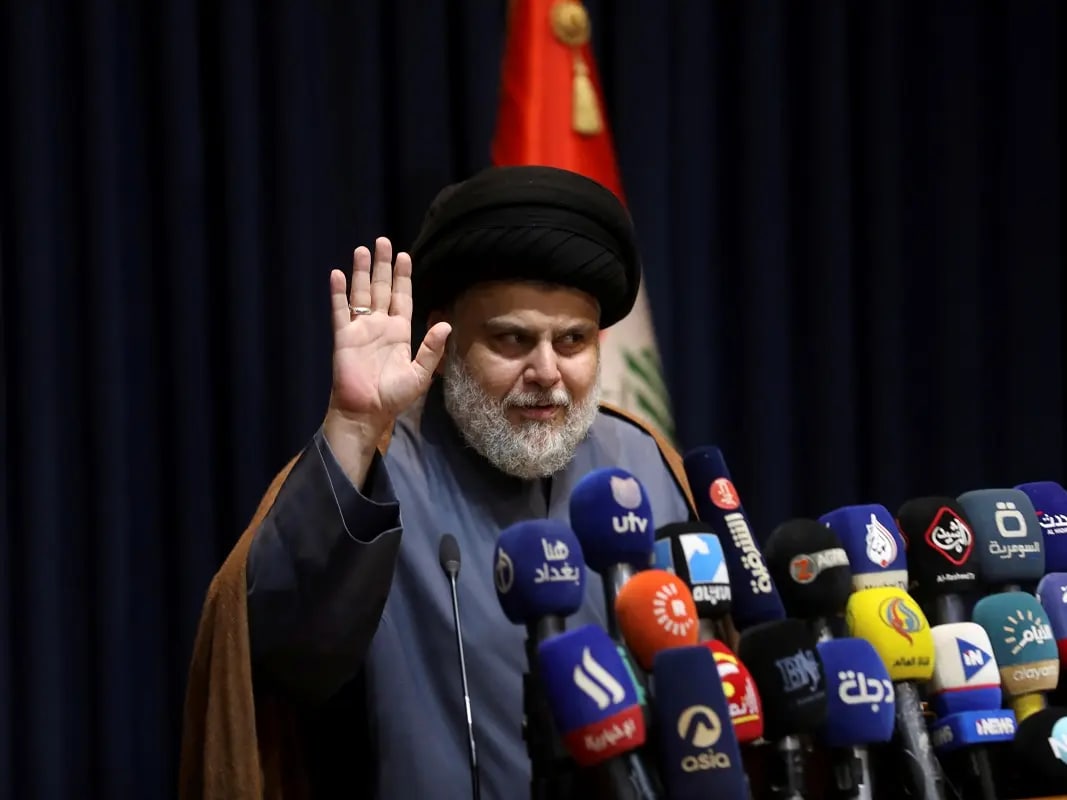
  • Muqtada al-Sadr Orders Official Dissolution of Saraya al-Salam and Integration into Iraqi Armed Forces

    Muqtada al-Sadr Orders Official Dissolution of Saraya al-Salam and Integration into Iraqi Armed Forces

    In a statement addressed to the group’s members, al-Sadr cited the national interest and the need to avert imminent threats facing Iraq as the reasons behind the decision. He emphasized that Saraya al-Salam would henceforth be completely separated from the Sadrist movement and would operate exclusively under official military institutions .

    Al-Sadr also called on other armed groups—particularly those under the umbrella of the Popular Mobilization Forces (PMF)—to follow this approach, urging them to employ their weapons solely within the framework of the state and independent of partisan or sectarian directives .

    The move was immediately welcomed by Ali Faleh al-Zaidi, the Prime Minister and Commander-in-Chief of the Iraqi Armed Forces. The Prime Minister’s office issued a statement praising the decision as an effective step toward consolidating the rule of law, centralizing weapons in the hands of the state, and enhancing national stability and security.