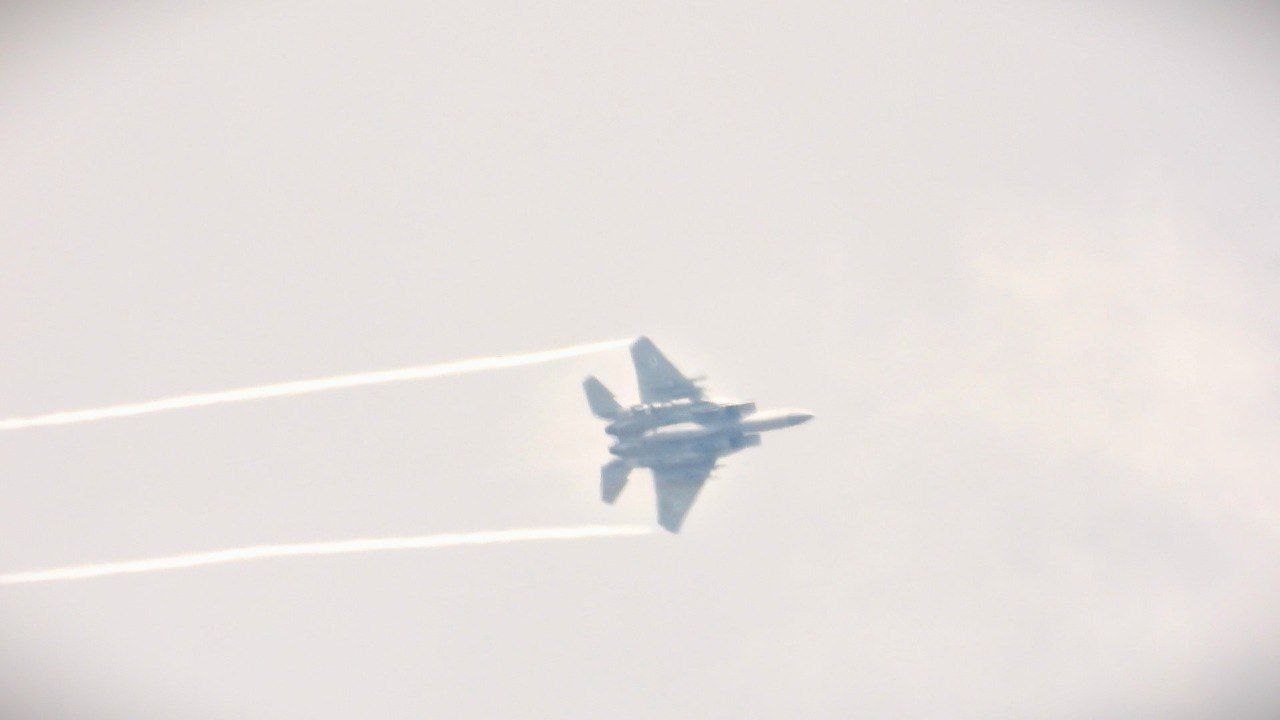
The Israeli regime’s aircraft have bombed the Lebanese resistance movement Hezbollah’s military bases on Syrian soil in at least three air strikes on July 2.
These air raids were carried out in the Homs Governorate, and as a result of these direct strikes several ignitions were reported. No casualties have been reported so far.
Israel airstrike near QusayrIsrael airstrike
A source close to Hezbollah claimed late Friday that Israel conducted air raids on a convoy of trucks entering Lebanon from Syria.
This incident marks the latest in a series of Israeli airstrikes in the border region.
On Friday, the Lebanese resistance movement claimed responsibility for five retaliatory attacks on Israeli military positions in northern occupied Palestine.
Hezbollah’s Secretary General Sayyed Hassan Nasrallah addressed Shukr’s funeral on Friday, warning that Israel and its supporters should expect a decisive response to the recent assassinations.
Since the outbreak of hostilities in October, at least 542 individuals have been martyred on the Lebanese side, predominantly fighters but also including 114 civilians. On the Israeli side, army figures indicate that at least 22 soldiers and 25 settlers have been killed.
According to initial reports in the Israeli media, the attack on southern Beirut was carried out by a combat drone and three missiles were fired at a building. However, the Israeli regime army’s spokesperson said in a statement that the attack was carried out by warplanes.
The Israeli newspaper Yedioth Ahronoth also claimed that the attack was carried out with F-35 fighter jets.
The target of this terrorist attack was Fouad Shukr, with Jihadi name Haj Mohsen, Hezbollah’s number two and an advisor to Sayyed Hassan Nasrallah.
Fouad Shukr and Sayyed Hassan Nasrallah
The latest death toll of attack on southern Beirut is five martyrs, including a woman and two children aged six and ten, and 74 people were wounded.
Israel’s Channel 14 TV reported that a new assessment in Israel indicates that Fuad Shukr was in the building at the time of the attack and was severely injured and killed.
Reuters quoted two unidentified security sources as saying that the body of Hezbollah military commander Fuad Shukr has been found in rubble in the southern suburbs of the Lebanese capital Beirut.
At the same time as the terrorist attack, the cities of Haifa and Tel Aviv spoke of their readiness to face a possible Hezbollah attack. The municipality of the Rishon LeZion settlement on the outskirts of Tel Aviv also announced the reopening of public shelters for fear of a response from Hezbollah.
In an interview with Kan TV, Rui Sharon said: After the Beirut attack, Israel is in a state of alert as to whether Hezbollah will fire rockets at Tel Aviv, Haifa or just the Galilee.
Brigadier General Zvika Haimovich, commander of the Israeli army’s reserve forces, also said: We must prepare for more Hezbollah attacks than before. These attacks can reach 100 to 200 or even 300 rockets at a time.
Hours after the attack, in an official statement, Israeli regime army spokesperson Admiral Daniel Hagari confirmed that the attack by Israeli warplanes in the Beirut suburb led to the martyrdom of Fouad Shukr, alias Haj Mohsen.
According to the Israeli army’s statement, Shukr is Hezbollah’s most senior military commander and head of the Lebanese resistance’s strategic organization. He is considered the right-hand man of Sayyed Hassan Nasrallah and is the main advisor to the secretary general of Hezbollah in the affairs of planning and managing the war.
Fouad Shukr has joined Hezbollah since 1985 and in addition to being a member of Hezbollah’s Central Council and Military Council, he has been leading the battles on the southern Lebanese front since October 8.
Some images of Fuad Shukr
The terrorist attack by Israeli drone in the Beirut suburb is the second terrorist act carried out by the regime in the Lebanese capital after the assassination of Saleh al-Arouri, the deputy head of Hamas’ Political Bureau. The terrorist attack allegedly was in response to a rocket hitting a football field in the town of Majdal Shams, killing 12 residents. The Israeli regime claims that the missile is a type of Falaq-1 rocket and belongs to Hezbollah and is made in Iran.
In the first statement about the Israeli terrorist attack in the Beirut suburb, Hezbollah confirmed the presence of Fouad Shukr at the scene of the attack, stressing that it was waiting for the results of the rescue teams to announce the fate of the great commander in order to make a decision.
Hezbollah’s initial media statement on the Israeli fighter jets attack in the Beirut suburb is as follows:
“As it turned out, the Zionist enemy attacked a residential building in one of the neighborhoods of the southern suburbs of Beirut on Tuesday, which led to the martyrdom of a number of citizens, the wounding of a number of others, and the complete destruction of a number of floors of the building.
At that time, the great commander and fighter, our brother Fouad Shukr (Haj Mohsen), were present in this building.
After the incident, the rescue teams worked hard but slowly to remove the rubble, and the body of this great and dear commander was found from under the rubble after 20 hours of searching.”
Haniyeh’s presence at the ceremony highlighted the close ties between Hamas and Iran, which has been a significant supporter of the Palestinian cause.
Details surrounding the assassination remain still unclear, but sources indicate that it occurred hours after Haniyeh’s participation in the inauguration ceremony in the Iranian capital at 1:45 am July 31.
Haniyeh had been in Tehran to strengthen diplomatic relations and support for Palestinian resistance efforts amid escalating tensions in the region. His participation in Pezeshkian’s inauguration was seen as a gesture of solidarity between Hamas and the Iranian government, showcasing their ongoing collaboration against common adversaries.
The assassination has sparked widespread condemnation from various Palestinian factions and allies, who have called for an immediate investigation. Iranian officials have vowed to uncover the facts behind this heinous act, emphasizing their commitment to supporting the Palestinian struggle.
This incident marks a significant escalation in the already volatile landscape of Middle Eastern politics, raising concerns about potential retaliatory actions from Hamas and its allies.
The Islamic Republic of Iran vowed that Haniyeh’s blood will not go in vain. Lebanon’s Hezbollah, Yemen’s Ansar Allah movement, Iraqi resistance groups plus numerous heads of states and people around the globe reacted to the act of violence, which is blamed on the Israeli regime.
The martyrs included field commander Ahmad Najm Abd al-Zahra (with Jihadi name Abu Hassan), along with Hussein Karim Kazem al-Darraji, Haider Hassan Hussein al-Saadi, and Ali Sadiq Omran al-Moussawi.
An Interior Ministry source in Iraq reported that unidentified drones bombed the Hashd Shaabi military base in Jurf al-Nasr. The al-Jazira Operations Command of the Hashd Shaabi forces later accused the U.S. of conducting three drone strikes on the paramilitary 47th Brigade, resulting in the deaths of the four fighters, including commander Ahmed Najam Abdul-Zahra.
Images of the martyrs
In response, Iraq has held the US-led coalition forces accountable for the repercussions of this assault on the Iraqi paramilitary Hashd Shaabi Forces.
Major General Yahya Rasool, the official spokesman of the Commander-in-Chief of the Armed Forces of Iraq, condemned the US-led coalition’s actions, describing the strike as a heinous crime and blatant aggression that targeted military bases of Iraqi security forces, leading to casualties among Hashd Shaabi members.
Rasool warned that such attacks could severely undermine collaborative security efforts against the ISIS terrorist group in Iraq and Syria, raising the risk of escalating conflicts throughout the region. He further emphasized that Iraq would pursue appropriate legal and diplomatic measures to protect its rights and ensure its security and sovereignty.
Additionally, the Iraqi resistance group Kataib Hezbollah, also known as the Hezbollah Brigades, declared that the US drones were launched from Kuwait and called on the Iraqi government to take decisive action to end the presence of US-led coalition forces, urging lawmakers to adopt a clear stance on expelling American troops from Iraq.
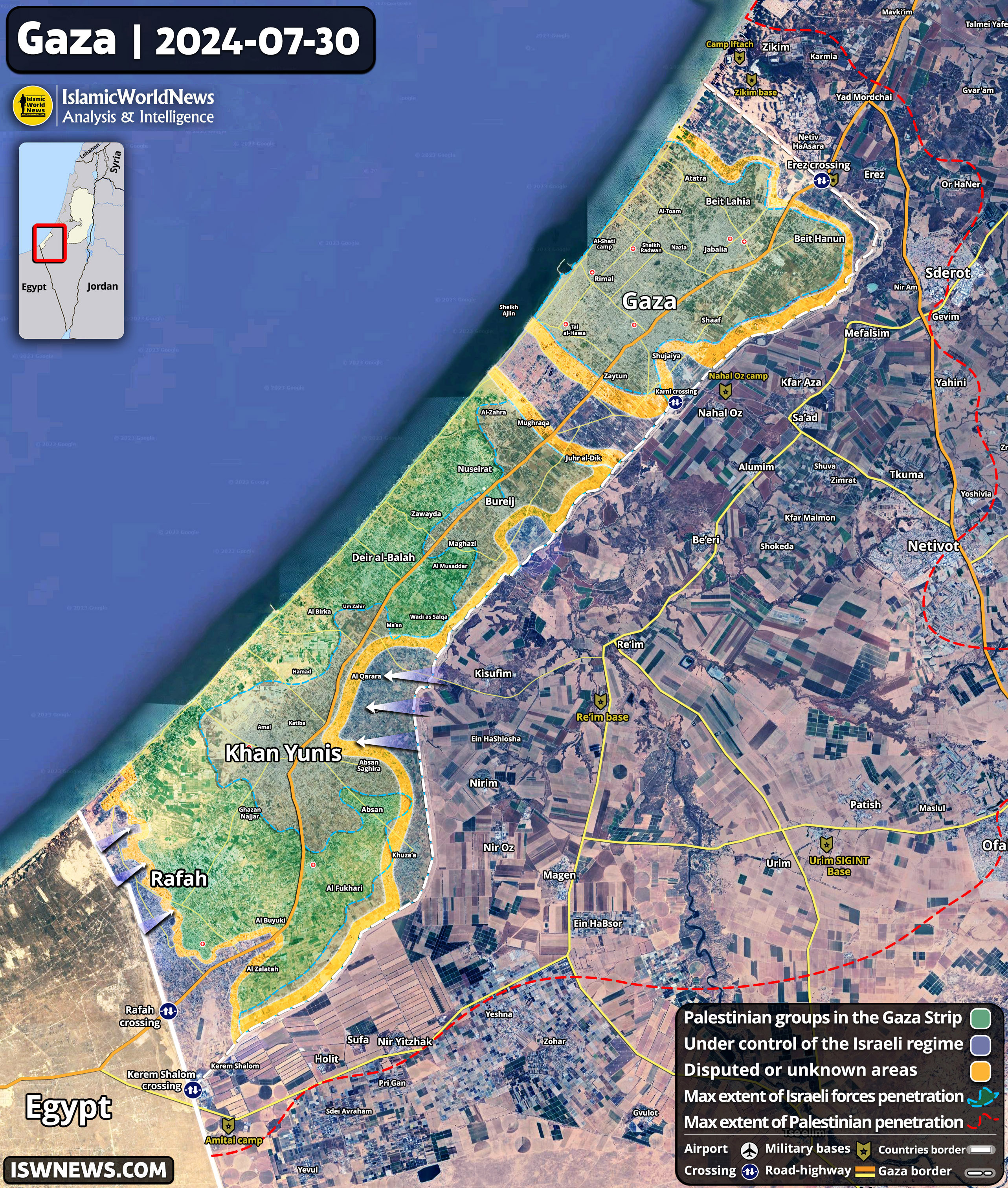
On July 22, the Israeli regime’s military forces launched an operation in Khan Yunis with the aim of preventing the return of the resistance forces to this area.
During the operation, the Israeli military destroyed residential buildings, a cemetery and service facilities using bulldozers and explosives.
According to the Israeli regime’s army, 150 members of the resistance forces were martyred during the operation, several tunnels were destroyed, and some weapons were confiscated. Finally, the Tel Aviv regime’s army announced this morning that the regime’s 98th Paratroopers Division completed its operation in Khan Younis last night.
In this regard, local sources announced that thousands of Palestinians returned to their homes in the city of Khan Yunis on Tuesday after the end of the eight-day operation of the Israeli army.
After the return of the residents and the start of the activities of the Palestinian rescuers, the Gaza media office announced that as a result of the recent operation of the Zionist regime’s army in Khan Younis, at least 255 Palestinians were martyred and more than 300 others were wounded. In addition, 30 people disappeared.
Despite the Israeli army’s withdrawal from Khan Yunis, its forces continue sporadic artillery and air strikes in areas of Khan Yunis and its surrounding areas. In recent hours, the Israeli army has also carried out several reconnaissance operations in the city of Khan Younis, using drones and quadcopters.
The Israeli armed forces are still stationed on the eastern axis of Khan Younis, and it is possible that in the coming weeks, the city of Khan Yunis and its surrounding areas will witness short-term operations by the Israeli regime’s army.
It is worth mentioning that on July 22, local sources reported the advance of the Israeli regime’s army forces on the axis of Abasan Al-Kabira area. During the operation, the Israeli military advanced with air support to the city of Khan Yunis.
On the axis of Rafah, clashes between resistance fighters and Israeli armed forces continue. Clashes and exchanges of fire have been concentrated in the Tal al-Sultan neighborhood of Rafah, and in recent days, the forces of the Izz al-Din Al-Qassam Brigades, Al-Quds Brigades and al-Nasser Salah al-Deen Brigades have organized a series of operations against the Israeli regime’s army on the different axes of the conflict in Rafah, during which several armored vehicles of the Israeli military were destroyed and several Israeli armed forces were killed and wounded.
The attack resulted in a loud blast and a plume of smoke rising above the area, which is a stronghold of the Lebanese resistance movement Hezbollah.
Lebanon’s state-run national news agency reported that an Israeli air strike targeted the area around Hezbollah’s Shura Council in the Haret Hreik neighborhood of the capital.
The Israeli military claimed that the targeted strike was aimed at the commander allegedly responsible for the recent deadly attack in Majdal Shams in the Israeli-occupied Golan Heights, as well as the killing of numerous additional Israelis.
Aftermath of Israeli airstrike in Beirut
This comes after at least 12 people, including children, were killed in a rocket strike on Majdal Shams last week, an attack which Hezbollah has denied responsibility for, but which Israel blamed on the Lebanese Hezbollah.
In response to the Israeli strike, a high-ranking Hezbollah official stated earlier that regardless of the nature of Israel’s actions, Hezbollah would respond.
Israel’s war minister Yoav Gallant also commented on the situation, stating that “Hezbollah crossed the red line” in a social media post following the Israeli military’s claim of responsibility for the strike.
The Israeli regime’s army did not provide details about how the strike was carried out. The situation remains tense, with both sides making strong statements and threats of further retaliation.
Aftermath of Israeli airstrike in Beirut
The National News Agency (NNA), the Lebanese state news agency, reported that a drone carried out the attack by launching three missiles.
Within a short time, following a report from Hezbollah’s Al Manar TV, the Israeli army confirmed that a loud explosion was heard in the southern suburbs of Beirut.
This region, heavily populated and a stronghold of the resistance movement, is located in the Lebanese capital.
The Supreme Leader received both Palestinian officials in Tehran on Tuesday morning.
Ayatollah Khamenei addressed the two officials as saying that the Palestinian people and the residents of Gaza currently hold the most significant flag of Islam, and their resistance has paved the way for the spread of the holy religion.
He further stated that the growing inclination towards Islam at this time reflects the honor and strength of the Palestinian nation’s resistance and the people of Gaza.
The Leader also described the people of Gaza and the West Bank as the key contributors to this resistance’s glory, expressing hope that the almighty God will continue to bless the Palestinians and their resistance fighters.
This meeting took place prior to the inauguration of Masoud Pezeshkian, the newly elected Iranian President. Pezeshkian took the oath of office before Parliament at the Iranian parliament in Tehran on Tuesday afternoon.
Pezeshkian is the ninth president of the Islamic Republic following his victory in the July 5 run-off presidential election.
The inauguration ceremony was attended by over 70 foreign dignitaries and covered by 600 domestic and foreign journalists.
In a meeting on Tuesday with Armenian Prime Minister Nikol Pashinyan and his accompanying delegation, the Supreme Leader of the Islamic Revolution emphasized that the Islamic Republic of Iran’s definitive and consistent policy is to expand relations with its neighbors, especially Armenia.
Imam Khamenei also called for the development of relations and cooperation between the two countries based on defined interests of both nations and regardless of the policies of other states.
Armenian Prime Minister Nikol Pashinyan met with Supreme Leader of the Islamic Revolution
The Leader of the Islamic Revolution went on to say that the Islamic Republic of Iran considers the Zangezur corridor – a concept for a transport corridor which, if implemented, would give Azerbaijan unimpeded access to Nakhchivan Autonomous Republic – to be to the detriment of Armenia; therefore, Iran continues to stand by this position.
Foreigners should not place restrictions on the relations of countries with their neighbors, the Leader stated, arguing that what ensures the security and well-being of countries is reliance on themselves and their close allies, and the actions of some states who come from far away and interfere in the affairs of other nations are to their detriment.
The Armenian Prime Minister, for his part, emphasized that he has repeatedly stated that he does not accept any extra-regional route within his country, describing the relations between the Islamic Republic of Iran and the Republic of Armenia as strategic. The Armenian premier also expressed satisfaction with the expansion and diversification of ties with Iran, underscoring that he gives importance to the continuation of this process.
In another meeting on Tuesday morning, Imam Khamenei received Tajik President Emomali Rahmon and his accompanying delegation.
Tajikistan President Emomali Rahmon met with Supreme Leader of the Islamic Revolution
The Supreme Leader said that Iran’s main policy and priority is to expand relations with the countries of the region, especially states with the same language and common culture, history and religion.
Ayatollah Khamenei further emphasized: The Islamic Republic of Iran is ready to cooperate sincerely with Tajikistan in various fields, as in the past.
The Leader of the Islamic Revolution also called the official visits by authorities of the two nations a basis for the expansion of cooperation and said: The Persian language is one of the important commonalities between Iran, Tajikistan and Afghanistan, and more cooperation should be made to preserve and expand this language and prevent some attempts to isolate the shared language.
The Leader of the Islamic Revolution also noted: There are some opponents who disagree the expansion of relations between Iran and Tajikistan; thus, there must be a plan to confront them.
The President of Tajikistan, for his turn, said: As you said a few years ago, the two countries are linked and we want to expand relations and use the experiences and advances of the Islamic Republic of Iran in the fields of science, health and industry.
The top officials of Armenia and Tajikistan along with their accompanying delegations arrived in Tehran on Tuesday morning in order to take part in the inauguration ceremony of Masoud Pezeshkian, the ninth President of the Islamic Republic of Iran, on Tuesday (July 30) at the Iranian parliament. More than 70 foreign delegations and 600 domestic and foreign journalists attended the inauguration ceremony at 6 p.m. local time.
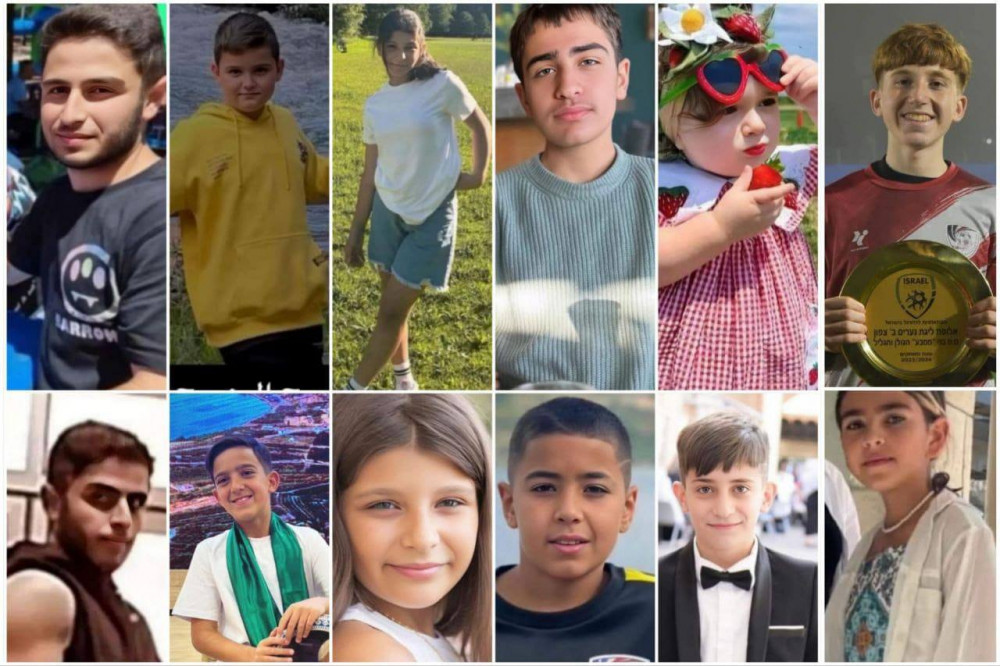
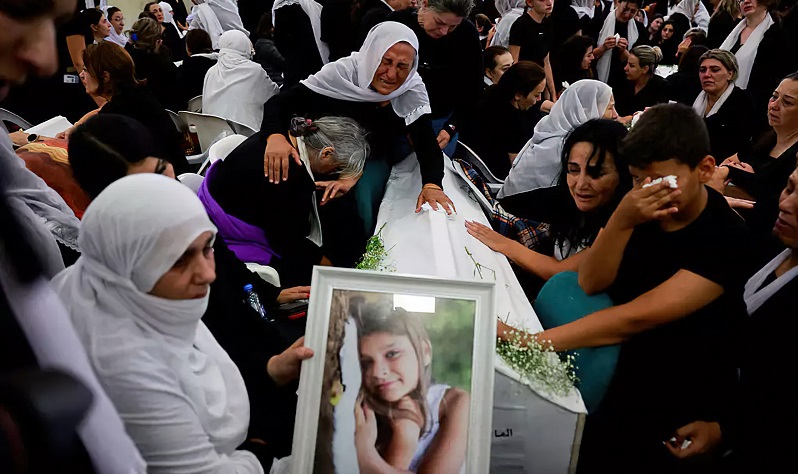
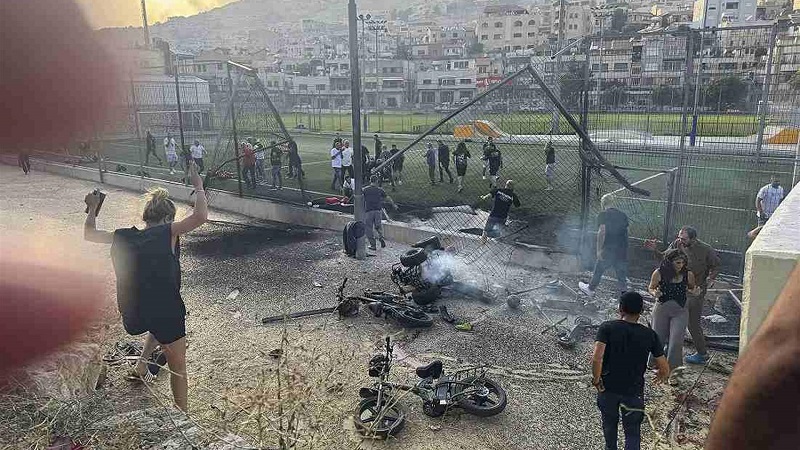
On July 27, a rocket hit a sports field in the city of Majdal al-Shams in the occupied Golan Heights. As a result of this incident, 14 Druze youths lost their lives and more than 35 others were injured. Immediately after the attack, the Israeli government accused the Lebanese Hezbollah. It claimed that the projectile was fired from inside the Lebanese territory and identified the Lebanese resistance as the cause of this attack.
On the other hand, Lebanon’s Hezbollah strongly denied this accusation and stated that the Israeli regime’s claims are false and that Hezbollah did not carry out such an attack.
A rocket hit a sports field in the city of Majdal al-ShamsPictures of Majdal al-Shams martyrs
Majdal al-Shams in the occupied Golan Heights is situated very close to the UN Alpha line and the areas under the control of the Syrian government. Also, the residents of Majdal al-Shams are Druze, and in general, there are no Israeli military targets in this city.
Considering these facts, Hezbollah’s rocket attack on Majdal Al-Shams has no rational or military justification; Thus the occurrence of this incident is faced with serious doubts.
Some experts believe that there is a possibility that this incident is a false flag attack. The Israeli regime is in a tough situation these days and is looking for a way out of these problems.
The war in the Gaza Strip has been going on for more than 10 months. The Israeli regime’s stated objective to “destroy Hamas and the Palestinian resistance groups” since the start of the war in the Gaza Strip has not been achieved, and there is no clear prospect for the end of the war in the Gaza Strip. Israeli prisoners are still in captivity and the Israeli regime is unable to release them. The Israeli regime’s only accomplishment in the Gaza Strip is destruction, genocide, and the loss of 40,000 Palestinian civilians, mostly women and children.
Military situation in Gaza Strip
After the start of Israel’s military invasion of the Gaza Strip, Lebanon’s Hezbollah and the Yemeni army entered the field militarily in support of the Palestinian people.
On the northern front, daily clashes continue between Hezbollah and the Israeli army. Thousands of Israeli settlers have been displaced and almost all the settlements in the north of occupied Palestine have been evacuated and the level of destruction is high.
Missile and drone attacks by the Yemeni army against Israeli targets in the occupied territories are carried out on a daily and weekly basis, and their economic interests, i.e. commercial ships in the Red Sea, the Mediterranean and the Gulf of Aden, are under numerous attacks.
In the West Bank, the security situation is extremely tense after the October 7th attacks and the West Bank is on the brink of explosion!
In Tel Aviv, anti-government demonstrations continue weekly, the political situation is extremely chaotic, and the Israeli government is on the verge of collapse under internal and external pressures.
The Israeli regime is literally “under multiple blows”. All the evidence supports the theory that the rocket attack on Majdal al-Shams is fabricated.
At this stage in the conflict, the Israeli government is in desperate need of a new strategy to escape from its current predicament. The start of a new war against Lebanon is the scenario that Israel needs. With the pretext of a “suspicious attack” in Majdal al-Shams and the beginning of a new war in Lebanon, Israel aims to divert attention from the genocide and its strategic failures in the Gaza Strip and northern front to Lebanese territory.
In any case, all the speculations indicate that the Israeli regime has decided to attack Lebanon. A meeting of Israel’s National Security Commission was held in Tel Aviv and a decision has been made to carry out a massive attack in Lebanon. According to Israel, all targets have been selected but attacks are limited to strategic targets.
Yediot Aharonot newspaper stated that the response will be limited but significant, which includes infrastructure or targets related to Hezbollah.
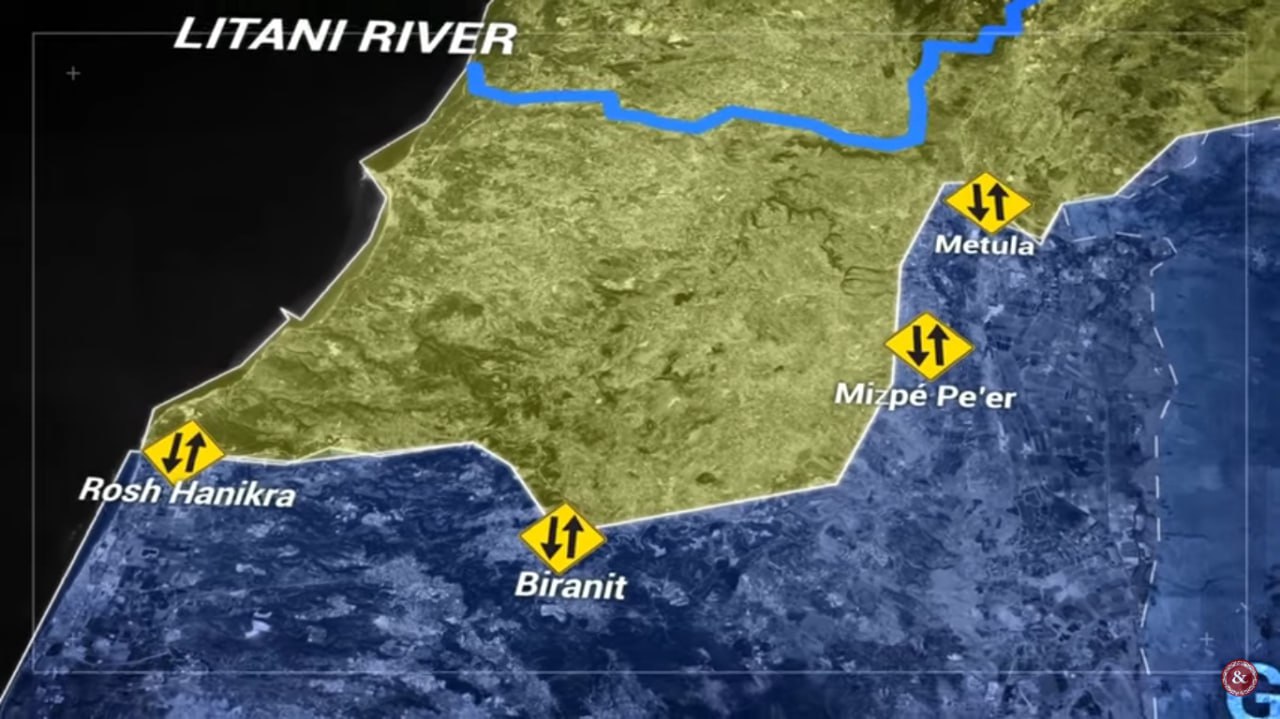
Some Israeli political and military officials talk about military operations to push Hezbollah back behind the Litani River. But the Israeli regime knows very well that it cannot attack Lebanon by land and has to make do with airstrikes.
Litani River in South Lebanon
One of the primary challenges for the Israeli army in conducting a ground invasion of Lebanon is the limited number of passages available for infantry and armored vehicles to enter the country. There are primarily four crossing points for ground forces, many of which are situated in hilly and densely forested areas. The mountainous terrain in southern Lebanon provides Hezbollah with advantageous positions for ambushing the Israeli army.
The 33-day war is a clear example of what is ahead of the Israeli army. The defeat of the armored and infantry forces of the Israeli army in southern Lebanon will be certain.
Yesterday, a Lebanese channel, quoting Hebrew channels, stated that Amos Hochstein, the special adviser and special envoy of the US President in Lebanon, informed the Israeli authorities that any attack on Beirut and Dahiya would be countered by Hezbollah’s attack on Ghosh Dan and Jerusalem.
Lebanon’s Hezbollah has also clearly stated that it will respond to any attack by the Israeli regime on Lebanon with a harsh response.
The Islamic resistance groups in the region have also supported the Lebanese resistance in separate messages and said that in case of any attack by the Israeli regime on Lebanon, military operations against Israel will be intensified.
Even according to reports, some Iraqi resistance groups have stated that they will send troops to southern Lebanon if the war starts in Lebanon.
While diplomatic efforts to prevent war continue, 14 countries have asked their citizens to leave Lebanon or refrain from traveling to it. Lufthansa Airlines and its subsidiaries have suspended flights to/from Beirut until August 5.
In any case, it seems highly unlikely that the start of a new war in Lebanon will assist the Israeli regime in solving its problems. The Israeli regime’s political and war strategies have not changed over the past decades, but the military and regional conditions of Hezbollah in Lebanon have significantly changed, and they are now much more equipped and capable than before.
In other words, Israel may be able to start a new war, but the decision to withdraw from it and the consequences of the war will be beyond Israel’s control. Hezbollah is not as besieged as the Palestinian resistance groups in the Gaza Strip and possesses impressive capabilities to surprise Israel. Perhaps, after the start of the new war, Israel may have to make significant concessions to end the conflict, in contrast to its actions in the Gaza Strip and violation of ceasefire agreements.
According to media reports, the drone attack was carried out at dawn Tuesday from Lebanon.
This marks the Lebanese resistance movement Hezbollah’s second drone attack in the Mediterranean Sea, with the apparent intention of targeting the Israeli regime’s gas fields in the region.
Hezbollah drone destroyed over the Mediterranean Economic Zone
The Israeli regime’s army believes the interception of this drone foiled a potentially devastating attack on the gas field.
Israeli officials have started carrying out investigations into the incident and are on high alert for any further threats from Hezbollah in the region.
In southern Lebanon on early Monday, Israeli drone strikes killed two people and injured five others, targeting both a car and a motorcycle.
Lebanon’s official National News Agency reported that the drone first hit a car on the road between the towns of Mays al-Jabal and Chaqra, causing two injuries.
Aftermath of Israeli airstrike
A subsequent strike on a motorcycle along the same route near Dubayeh Castle resulted in two fatalities and three additional injuries. A child among the injured is in critical condition, according to the news agency.
A child severely injured by Israeli airstrikes
Lebanon’s rescue teams immediately transported the injured to Tebnine Governmental Hospital.
The Israeli regime’s army has not yet released an official statement regarding the attacks, but they follow a pattern of escalating tensions between Israel and Hezbollah forces in southern Lebanon.
As the situation develops, the local population is on high alert, fearing potential reprisals and further military action. The international community continues to closely monitor the events in the region, with calls for restraint from both sides amidst growing concerns of an all-out conflict.
The commander stated that the fight against Houthi (Ansar Allah movement) drones is akin to battling an invisible enemy, and highlighted the intricate nature of the conflict involving advanced drone technology belonging to the Yemeni Armed Forces.
Reflecting on the historical context, the commander remarked that no party has dared to challenge us (the US military) at sea since World War II. This assertion underscores the challenges that the coalition forces are facing when they navigate the current maritime security landscape.
The commander also elaborated on the operational environment in international waters near Yemen, saying that the US-led coalition units have been working in a combat space filled with challenges and dynamics that the Navy has not witnessed in decades.
He pointed out that the preparation for their mission was the longest and most active operation, emphasizing the unique circumstances faced in the Red Sea, where forces had never encountered enemy fire to this extent.
Despite the ongoing deployment of US-UK coalition forces and the European Union naval fleet in the Red Sea and Gulf of Aden, the commander acknowledged that Western military operations in Yemeni waters have not achieved their primary objective of supporting Israeli shipping.
He indicated that the implementation of broader goals, rather than just intercepting missiles and drones, is crucial in this conflict.
Recent battles have seen Yemen’s weapons systems achieving significant successes in strikes, confirming their operational effectiveness.
The Yemeni Armed Forces have carried out numerous attacks on vessels affiliated with Israel or owned by the US and the UK in response to the Israeli genocidal war and siege on Gaza since November 2023. These attacks have taken place in various strategic waterways including the Red Sea, the Gulf of Aden, the Arabian Sea, the Indian Ocean, and the Mediterranean Sea.