Category: West Asia

  • Hamas Reject Israeli Deceitful Ceasefire Negotiation Terms

    Hamas Reject Israeli Deceitful Ceasefire Negotiation Terms

    On August 18, after days of negotiations, the Palestinian Islamic Resistance “Hamas” released a sharp statement, rejecting the terms of the ceasefire negotiations in Doha, the capital of Qatar.

    After the assassination of Hamas leader Ismail Haniyeh in Tehran and Iran’s promise to respond to this assassination, all mediating parties, including the United States, have attempted to end tensions by implementing a ceasefire in the Gaza Strip as soon as possible to reduce and prevent the possibility of an all-out war. According to CNN, Washington has asked Tehran, through mediators, not to attack Israel, as there is a path to a Gaza deal.

    This issue is of great importance for America, especially for President Biden, who is on the eve of the election. According to Axios, citing informed officials, President Joe Biden plans to finalize the Gaza ceasefire and the prisoner release agreement by the end of next week. However, there is still no clear prospect for peace.

    The talks have been ongoing for days, but there is no sign of progress. Today, US Secretary of State Anthony Blinken arrived in Tel Aviv to meet with Israeli officials. Some believe he went to Tel Aviv to put pressure on Netanyahu and soften him in the ceasefire talks.

    In his final statement, Blinken emphasized the urgency of reaching an agreement on Gaza and returning the Israeli prisoners. He stated that this may be the last chance to secure their return, and stressed that it is a critical moment for the ceasefire negotiations in Gaza.

    Although there was no detailed information about the contents of the negotiations until yesterday, the different angles of the story are gradually becoming clear.

    Based on the leaked information, these are some of the details proposed in the Doha ceasefire talks meeting:

    ⁃ The Israeli army will reduce its military presence in the Philadelphia axis (south of Rafah city and the Egyptian border), but will not withdraw from it.
    ⁃ The Palestinian National Authority must take over the management of the Rafah crossing under the supervision of Israel.
    ⁃ The Israeli army will fully monitor and control the refugees who return to the north of the Gaza Strip through the Netzarim Corridor.
    ⁃ A large number of Palestinian prisoners will be deported from the country after their release from prison
    ⁃ Israel’s veto right to refuse the release of at least 100 security prisoners.

    According to the leaked information, it is evident that the Israeli government not only failed to abide by the terms of the previous agreement but also introduced new conditions, making it harder to reach a lasting ceasefire. Under the new terms, Israel intends to maintain control over the Netzarim corridor and other areas in the Gaza Strip, showing no willingness to withdraw from Gaza and offering no significant concessions to the other party.

    On the other hand, the Palestinian resistance movement, Hamas, finally reacted to the non-constructive process of negotiations in Doha by issuing a statement on August 18 and rejecting the negotiations. Hamas believes that Netanyahu and his government are the main obstacles to a ceasefire agreement.

    Hamas’ statement comes as follows:

    “We cooperated with all the efforts made by the mediators in Qatar and Egypt, and showed flexibility concerning all the proposed suggestions to pave the way for reaching an agreement to halt the aggression against our nation as well as to finalize a prisoner swap deal.

    After listening to the mediators’ proposals in the ceasefire talks, it became obvious to us that Israeli Prime Minister Benjamin Netanyahu continues to get in the way of reaching a truce agreement.

    The new suggestions are in line with Netanyahu’s conditions and in the favor of the Zionist regime, especially because these proposals reject a permanent ceasefire and an all-out withdrawal of the Israeli regime’s military forces from the Gaza Strip.

    Netanyahu set new conditions regarding the prisoner swap deal and withdrew from other clauses of the existing proposal in a bid to prevent the finalization of the prisoner swap deal.

    We hold the Israeli prime minister fully responsible for hindering the endeavors made by the mediators as well as creating trouble in the way of achieving the ceasefire agreement and in respect of the lives of Israeli prisoners, who are exposed to the same risk to which the Palestinian people are exposed.

    We reaffirm our commitment to whatever we agreed to on June 2 and call on the mediators to show that they are assuming their responsibility and to force the Israeli foe to implement what has been agreed upon regarding the ceasefire deal.”

    The senior government officials of Egypt, the United States and Qatar will meet again, this time in the Egyptian capital Cairo before the end of this week to reach an agreement according to the terms proposed on Friday. Due to the failure of the Doha negotiations, the fate of the discussions in Cairo is likely doomed.

    It was predictable that the ceasefire talks in Doha would fail. Due to Netanyahu’s challenging political and legal position inside and outside Israel, it’s unlikely that he will accept peace talks. Netanyahu’s political survival is closely linked to achieving a decisive victory in the Gaza Strip. The ongoing war on the northern front, the grave security situation in the West Bank, and the unstable political situation in the government in Tel Aviv have all significantly damaged Israel’s reputation. Tel Aviv is attempting to restore its lost status through any means.

    The mediation efforts by the US, Egypt and Qatar to establish a ceasefire in the Gaza Strip in return for the release of the remaining 110 Israeli captives kicked off several months ago. Following different rounds of indirect talks held in Egypt and Qatar, the warrying sides have yet to reach a deal. The endeavors have not yielded any tangible result because of Netanyahu’s refusal to cease the genocidal war on Gaza.

    The devastating war has left more than 40,000 martyrs and over 92,600 wounded in Gaza. The onslaught has created a dire humanitarian situation which is being deteriorated because of restrictions imposed by the Israeli regime on entry of food and medicine.

  • Israel Keeps On Military Operation In Gaza Strip Amid Ceasefire Talks (Map)

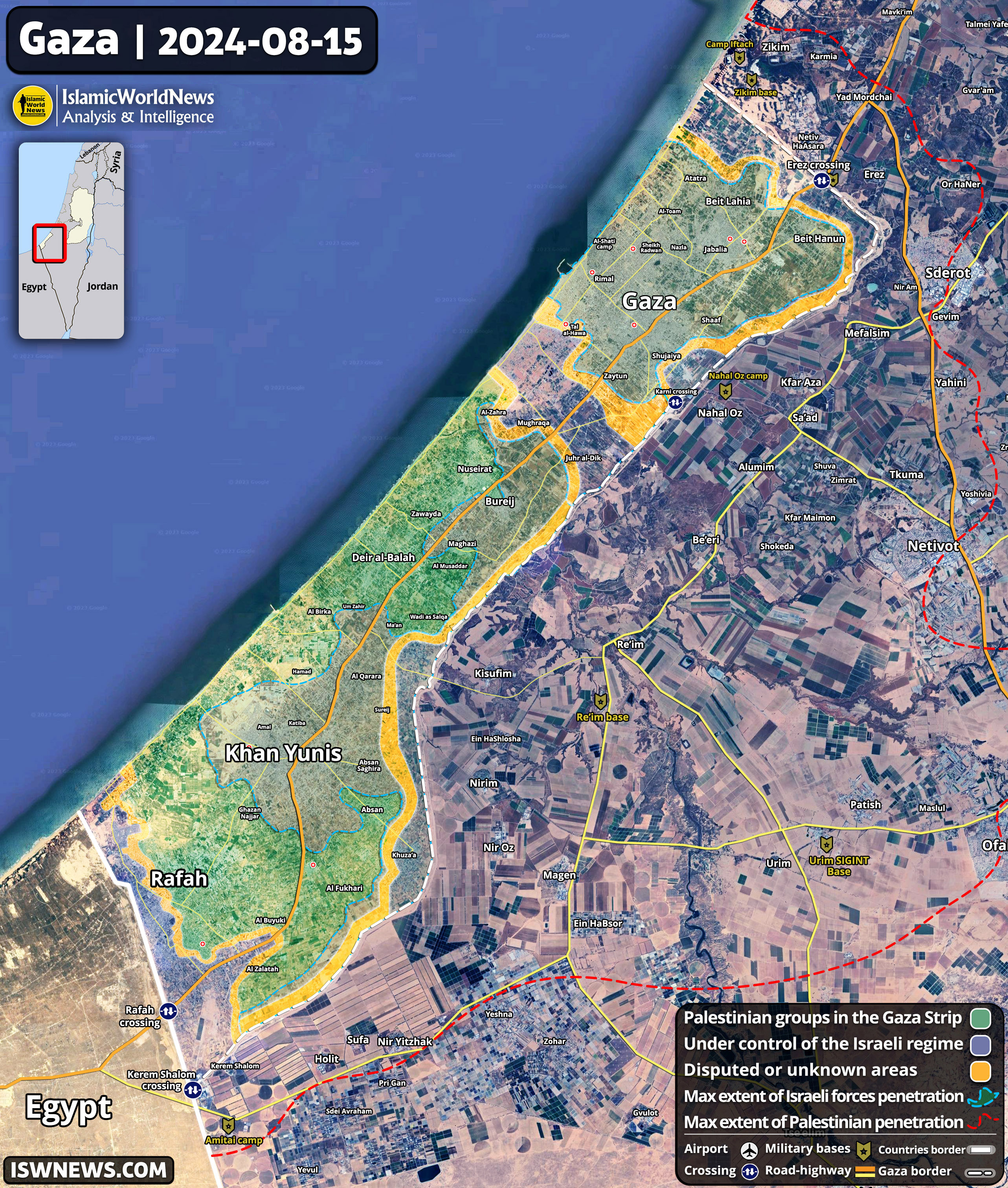
    Israel Keeps On Military Operation In Gaza Strip Amid Ceasefire Talks (Map)

    The Israeli regime’s armed forces have kicked off new military operations in some regions since Saturday, and announced the compulsory evacuation of the areas of Al-Maghazi, Salah al-Din, Al-Farouq and Al-Amal neighborhoods, as well as blocks 973, 974, 978, 979, 1738 to 1745.

    Fierce clashes continued in the areas of Wadi Salqa and al-Qararah, and Israeli military forces advanced from the al-Matahin intersection towards the town of Hamad, north of Khan Younis in southern Gaza over the past 24 hours, and some Israeli tanks are now deployed north of Hamad town.

    Israeli tanks north of Hamad town

    The Israeli regime claimed that its military forces launched the incursion because the Palestinian resistance movement Hamas and other resistance groups fired rockets from that area into the occupied territories of Palestine. However, it seems that the ground operations and the advances on the southern axes of the Gaza Strip, which are coincided with the ceasefire talks and international endeavors to reach a new truce agreement, are aimed at putting more pressure on the Palestinian resistance groups and squeezing more concessions in any possible ceasefire.

    In this respect, some Hebrew-language media outlets claimed that the Israeli cabinet under warmongering Prime Minister Benjamin Netanyahu has ordered the regime’s army to exacerbate the intensity of the fighting in the Gaza Strip in order to enhance the regime’s upper-hand in the negotiations.

    It is worth mentioning that the Israeli regime’s genocidal aggression on the Gaza Strip has left at least 40,099 people martyred and 92,609 wounded.

    Interactive map

    Gaza map
  • Hezbollah, Israel’s Worst Nightmare In Southern Lebanon

    Hezbollah, Israel’s Worst Nightmare In Southern Lebanon

    On July 30, Fuad Shukr, a prominent commander of Hezbollah was assassinated in Beirut by the Israeli regime. The following day, on July 31 in Tehran, Israel assassinated Ismail Haniyeh, the head of the Hamas political office.

    The Israeli newspaper Ma’ariv recently stated in an article that Israel is extremely worried about the infiltration of Hezbollah’s Redwan forces into the Galilee region. Israeli army officers believe that Hezbollah forces, especially Redwan’s elite forces, can infiltrate Israeli settlements or capture Israeli bases.

    Lebanon’s Hezbollah has tens of thousands of trained military personnel. Many believe that Hezbollah forces are stronger than the Lebanese army. In fact, the military wing of Hezbollah is known as the most powerful non-state military force in the world.

    Various military units of Hezbollah are stationed in the southern fronts and other parts of Lebanon. Some of these units include Wahdat Brigade, Aziz Unit, Badr Unit, Khayyam Unit, etc. In general, detailed information about Hezbollah’s military units and charts is not available as the organization never publishes such information.

    However, the Rezwan unit is one of Hezbollah’s most famous and well-known military units. It is considered one of the main elite units of Hezbollah and plays a key role in advancing the goals of the operations. Although the exact number of Rezwan forces has not been announced, estimates indicate that at least 2,500 special forces are active in this unit. Rezwan’s forces have significant combat experience and have participated in past battles in Syria and Qalamoun. The main mission of this group is to infiltrate the territory of Israel, with specific attention to Galilee and northern Israel.

    Redwan forces

    The Rezwan forces are highly skilled and have undergone rigorous training. They are proficient in using anti-tank weapons and explosives. They possess the ability to travel long distances and perform difficult missions in mountainous areas. Additionally, they excel in carrying out secret and sensitive military operations in a thoroughly professional manner.

    Redwan forces are said to be divided into seven- to 10-man squads, each operating independently without constant orders or logistical support from a central command. Their main feature is actually the operational independence given to its commanders, and these commanders are allowed to make quick tactical decisions on the battlefield. They have the speed, flexibility and noteable striking capability that characterizes any military force.

    Yediot Aharonot quoted Israeli security sources as saying, “As long as the Rezwan unit is on the Lebanese border, the residents of the northern settlements who have been evacuated have no hope of returning to their homes.”

    Military operations along the northern borders have led to widespread evacuations of settlements. The Israeli Ministry of Housing and Immigration reports that hundreds of thousands of settlers have left the occupied territories since the start of the war.

    According to the latest reports, more than 250,000 Israeli citizens have been displaced by the war, with some 164,000 ordered or recommended to evacuate with government compensation and nearly 150,000 evacuated without being asked. The number of Israeli refugees increases daily.

    Avichai Stern, mayor of Kiryat Shemona, said that the Israeli settlers’ fear of returning to their homes stems from the images they saw on October 7.

    Lebanon’s Hezbollah has a formidable rocket and missile arsenal in addition to its strong ground forces. According to recent estimates, Hezbollah has 150,000 mortars, rockets, and missiles of varying ranges. Experts consider Hezbollah to be one of the world’s top five missile powers based on this significant arsenal.

    Hezbollah says it has missiles that can target all areas of Israel. Hezbollah is also equipped with drones and anti-tank and anti-ship missiles, many of which were built in Lebanon with Iran’s help or delivered directly from Iran to Lebanon’s Hezbollah.

    Unguided rockets form a major part of Hezbollah’s missile arsenal. Among these rockets, we can mention Burkan, “Fajr” and “Zelzal” rockets.

    For example, Katyusha and Burkan short-range rockets have an explosive payload between 300 and 500 kilograms. The solid fueled Zelzal rockets have a range of about 250-300 km and carry about 400-600 kg of explosives.

    Zelzal rocket
    Burkan rocket

    Due to the mountainous nature of southern Lebanon and the experience of the 2006 war, Hezbollah is widely equipped with anti-tank guided missiles (ATGM). Hezbollah has a wide range of anti-tank missiles in its arsenal. Russian Kornet missiles and various types of Iranian anti-armor missiles such as Toofan and Almas are among Hezbollah’s anti-armor missiles.

    Read more: Lebanon’s Hezbollah Unveils Tharallah Anti-Tank System (Video)

    During the recent war in northern occupied Palestine, Hezbollah has repeatedly targeted the positions of the Israeli army with Almas missiles. Hezbollah has released video clips of ATGM attacks on Israeli military installations and tanks and military vehicles since October 7.

    The release of the video showing these operations has attracted a lot of attention. The Almas missiles are actually the reverse-engineered version of the Israeli Spike anti-armor missiles, which were produced by Iran. Hezbollah has inflicted significant casualties on the Israeli army with these missiles.

    Hezbollah attacks Israel with Almas ATGMs
    Hezbollah attacks Israel with Almas ATGMs
    Almas anti-armor missile

    Read more: Military Knowledge: Almas Missile

    Hezbollah is equipped with a significant number of man-portable air-defense system (MANPADS) missiles. Based on available information, Hezbollah is reported to have air defense missiles, but specific details about these missiles are not readily available. In recent conflicts, Hezbollah successfully used these missiles to shoot down several Israeli drones, including the Hermes 450 and Hermes 900, over southern Lebanon.This was the first time that Hezbollah used these missiles to shoot down drones.

    Another important component of Hezbollah’s missile power is anti-ship missiles. Hezbollah first demonstrated its anti-ship missiles in 2006 when it attacked an Israeli warship 10 miles off the coast of Lebanon, killing four Israelis and damaging the ship.

    According to the available information, Hezbollah has been equipped with a significant number of anti-ship missiles in recent years. The Noor missile, which is the Iranian version of the Chinese C-802 anti-ship missile, is one of these missiles. The Noor missile has a range of up to 170 km. There are also speculations that Hezbollah has acquired the Russian “Yakhont” anti-ship missile, which has a range of up to 300 kilometers.

    Noor missile or Chinese C-802 anti-ship missile

    Hezbollah’s missile capabilities, including anti-ship missiles, have significantly increased due to Iran’s support. This poses a serious threat to Israeli and US warships. Consequently, Israel’s naval power is affected, prompting the country to take different factors into consideration in potential naval confrontations with Hezbollah.

    During the recent war, Hezbollah has repeatedly launched suicide drones towards the bases and positions of the Israeli army. Hezbollah mainly uses Mersad and Ababil suicide drones to target Israeli army positions. These drones are assembled locally. However, due to Iran’s support for the Lebanese resistance, there is a possibility that more advanced Iranian drones such as Shahid-136 are also available to Hezbollah.

    Hezbollah’s Ababil suicide drone
    Iranian Ababil-2 suicide drone

    Read more: Military Knowledge: Ababil-2 Reconnaissance and Suicide Drone

    Since the start of Israel’s military aggression on the Gaza Strip, the Lebanese Islamic Resistance has initiated operations against the Israeli regime in northern Palestine, aiming to divert a portion of Israel’s military might and help the Palestinian resistance in the Gaza Strip. It is estimated that Lebanon’s Hezbollah alone has engaged around half of the Israeli regime’s army in the northern front and has hindered the Israeli army’s complete deployment in the southern front of the Gaza Strip.

    Recently, several drones of Lebanon’s Hezbollah penetrated into the north of occupied Palestine and successfully filmed critical bases in the port of Haifa. This is a major challenge for Israel, which considers itself the high-tech superpower in the region and insists on using drones and other surveillance tools against its enemies near and far.

    The Hezbollah drone operations in Israel are a clear warning to its enemy, indicating that Hezbollah has extensive intelligence on sensitive and vital locations in Israel. Hezbollah is not interested in prolonging the conflict and explicitly seeks an end to the military aggression in the Gaza Strip.

    Nevertheless, Israel continues to ignore Hezbollah’s warnings and insists on continuing military aggression in the Gaza Strip. Therefore, the war between Hezbollah and Israel is about to enter a new phase. All of Hezbollah’s intelligence and technical combat capabilities indicate that in the event of an all-out war on the northern front, Israel will suffer significant and staggering losses.

    Posted on SouthFront

  • Hezbollah Unveil Underground Missile City!

    Hezbollah Unveil Underground Missile City!

    In a new video footage, the Lebanese resistance movement Hezbollah unveiled the Imad-4 underground missile facility (named after Hezbollah’s martyred commander Imad Mughniyeh) and issued a threatening message against the Israeli regime, declaring that the Lebanese movement will definitely respond to the regime’s crimes; although the response has been postponed.

    Hezbollah released the video footage to underline:

    The information on the military facilities of the Lebanese resistance movement is secret and such installations are protected in the face of the Israeli regime’s assaults, and that any pre-emptive strike by the Tel Aviv regime to thwart Hezbollah’s retaliatory attack in response to the assassinations of Hezbollah’s commander Fouad Shukr and Palestinian resistance movement Hamas chief Ismail Haniyeh is doomed to failure.

    The Islamic resistance enjoys a great capability to respond harshly and destructively against the Zionist enemy, and Hezbollah has the tactical ability of the “second strike” as well.

    Hezbollah’s Imad 4 underground facilities in Lebanon

    The Imad-4 tunnel complex is one of the Lebanese resistance movement’s underground and military facilities, and the quantity and details of the location of the tunnel complex is not identified.

    Following the release of this video, Hezbollah repeated that the resistance movement is not frightened by confrontation in Lebanon, but is prepared to fight and defend the Arab country in the case of an escalation of tension and unlimited aggression, especially in the face of the Israeli regime.

  • US Activates Its Defense System In Syrian Hasakah

    US Activates Its Defense System In Syrian Hasakah

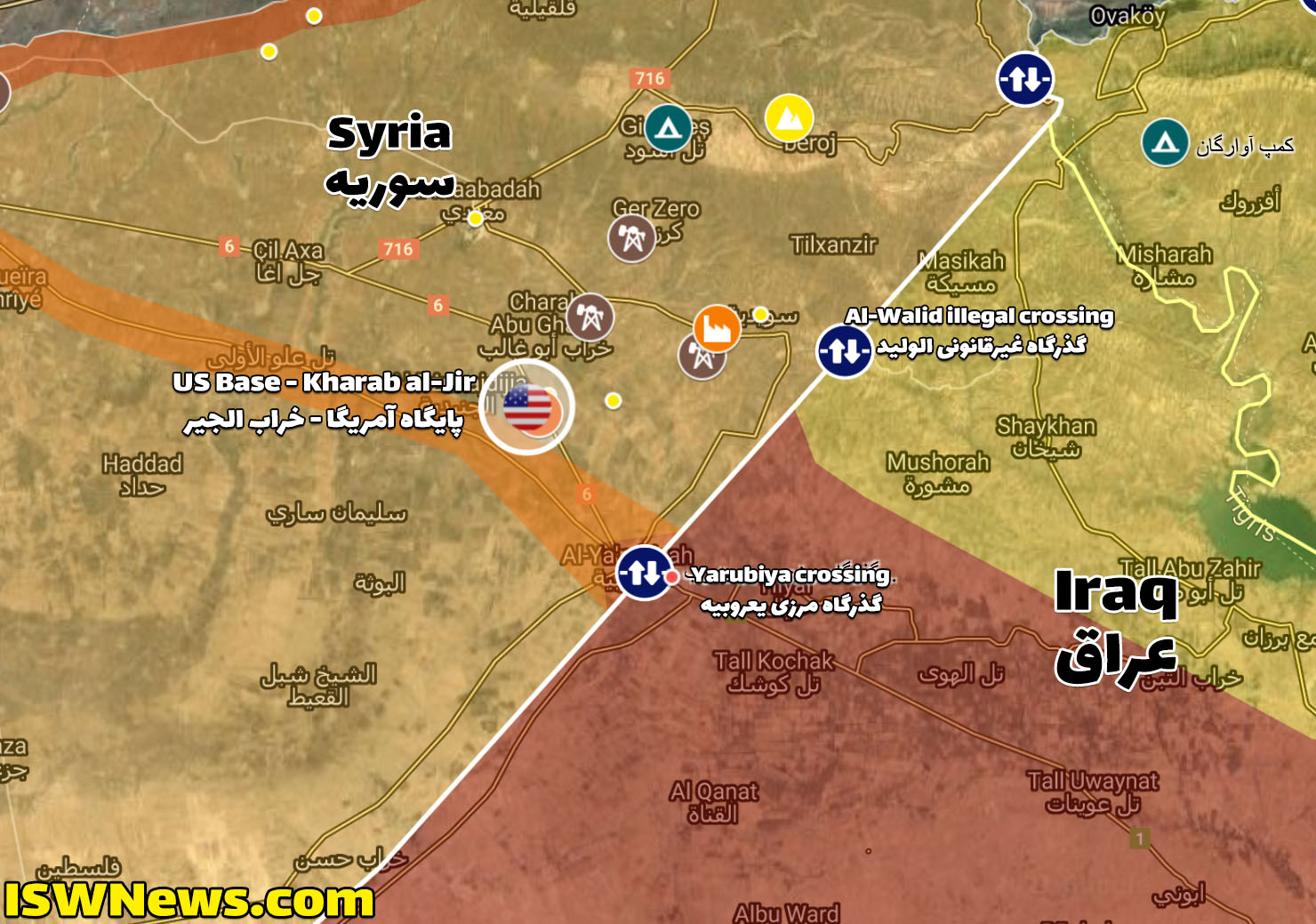
    The Counter Rockets, Artillery and Mortars (C-RAM) defense systems, which have been stationed at a US military base in the Kharab al-Jir village, located five kilometers away from the Yarubiya-Rabiya border crossing in eastern Syria’s Hasakah Governorate, were activated on Wednesday night due to unknown reasons.

    A video footage released by local sources showed one of the C-RAM defense systems firing at unspecified targets in the skies over the Kharab al-Jir village.

    No further details have been published so far, and American officials have not yet commented on this incident. It seems that the C-RAM defense system was activated in order to carry out a military exercise.

    US C-RAM activated in Kharab al-Jir base

    It is worth mentioning that as a result of the escalation of tensions in the West Asia region, the US-led coalition has reinforced its military bases in Syria in recent months, especially in the past weeks and following the strikes made by the Islamic resistance groups, as well as they have transferred several defense systems from Iraq to US bases in eastern parts of Syria.

    The Islamic Resistance in Iraq carries out attacks on the military bases of the US-led coalition in a bid to put pressure on them to stop supporting and equipping the Israeli genocidal war on the Gaza Strip, which has so far left nearly 40,000 Palestinians martyred and over 92,000 others injured.

  • Iran’s IRGC Aerospace Force Advisor Martyred In Syria

    Iran’s IRGC Aerospace Force Advisor Martyred In Syria

    Ahmad-Reza Afshari, a member of the IRGC’s Aerospace Forces who was in Syria to conduct advisory mission, was martyred as a result of injuries sustained by aerial offensive.

    Afshari, who was injured following the airstrike by the invading US-led coalition forces in the friendly Arab country a few weeks ago and was transferred to Iran for medical treatment, was honored to join his martyred comrades on Thursday because of the severity of his injuries.

    Ahmad-Reza Afshari

    In this respect, Head of the Islamic Revolution Guards Corps Major General Hossein Salami issued a message, emphasizing that once again, the IRGC strengthened the pillar of the Islamic Revolution of Iran by dedicating one of its forces, who was also defending the holy shrine in Damascus. Honored member IRGC’s Aerospace Advisory Forces in Syria Colonel Ahmad-Reza Afshari was martyred in consequence of injuries sustained by an air strike. This heavenly companion of Imam al-Hussain (3rd Shia Imam), who was honored to turn into a disabled veteran a few weeks ago flowing an aerial attack by the invading US-led coalition in Syria and was transferred to the Islamic Republic of Iran for medical treatment, joined his companions, who had been martyred, on Thursday due to the severity of his injuries.

    At the end of his message, the IRGC chief stated that I voice my congratulations and offer my condolences over the martyrdom of the praiseworthy martyr, and pray for Almighty God’s Blessings, and wish for the dear martyr to accompany the martyrs of Karbala (the Battle of Karbala was fought on 10 October 680 between the army of the second Umayyad caliph Yazid I and a small army led by Imam Husain (A.S), the grandson of the great Prophet Muhammad); and I pray for his honorable family, relatives and comrades to be able to be patient, strong and steadfast in order to continue the path of martyrdom and jihad based on the tenets of the holy Quran as well as to pursue the way of the glory of Islamic Republic of Iran.

  • The Fruitless War In Gaza; Israel Embraces Iran’s Retaliatory Attacks!

    The Fruitless War In Gaza; Israel Embraces Iran’s Retaliatory Attacks!

    The previous operation lasted for eight days and the Israeli forces penetrated into the city of Khan Yunis again. During that operation, many residential buildings, cemeteries and service facilities were demolished by Israeli bulldozers and explosives. The Israeli army withdrew from the city of Khan Yunis once the operation concluded.

    According to Hebrew sources, the recent operation is carried out with the aim of destroying Hamas forces in Al-Qararah and Wadi al-Salqa. The Israeli military launched the operation after receiving information about the presence of Hamas forces in the area. The operation involves air and artillery support.

    It is highly unlikely that the new Israeli operation in the area will achieve anything significant.

    The nature of guerrilla warfare by resistance groups in the Gaza Strip makes it difficult for the Israeli army to completely stabilize and secure the area. Due to this, the Israeli army has to leave the area after each operation in order to avoid casualties.

    Despite the Israeli army’s efforts to secure areas of Gaza Strip, the extensive network of underground facilities makes this task seem impossible.

    Gaza map

    Fighting continues in the southern Gaza Strip in Rafah city without any significant progress. The military situation in Rafah has not changed much. Israeli forces have not been able to completely clear Rafah after weeks of fighting. Around 65% of the town is currently under Israeli control.

    Fighting still continues in the central areas of Rafah, in Tal al-Sultan, around the Saudi project and in the southern areas of the city.

    The situation in other parts of the Gaza Strip remains unchanged.

    While Israel’s fruitless war in the Gaza Strip continues, the Israeli regime prepares itself to embrace Iran and its allies’ retaliatory attacks!

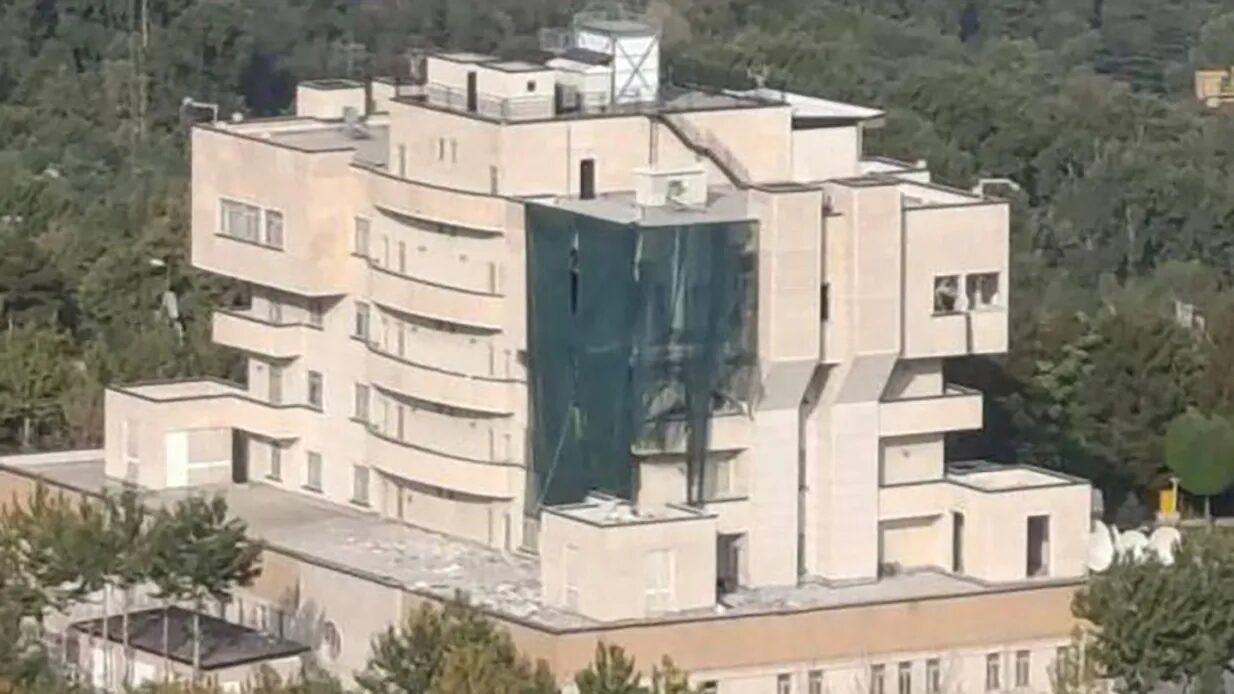
    On July 30, a prominent commander of Hezbollah was assassinated in Beirut by the Israeli regime. The following day, on July 31 in Tehran, another terrorist act took place when Israel assassinated Ismail Haniyeh, the head of the Hamas political office. Ismail Haniyeh was killed in Iran while he was on an official trip to Tehran for the swearing-in ceremony of the new president of Iran, Massoud Pezeshkian.

    The building that was targeted in Tehran

    The supreme leader of Iran, Ali Khamenei has promised that a severe revenge will be taken from the Israeli regime in seeking blood from this terrorist operation.

    Hezbollah’s leader Hassan Nasrallah said that the war against Israel had entered a “new phase” and Israel should expect “rage and revenge.” In addition, the leader of Yemen’s Houthis, Abdul-Malik al-Houthi, vowed that the Israeli escalation will be met with a “military response.”

    It is said that the Iran’s Supreme Leader has ordered a direct strike against Israel and the attack may be carried out jointly with other allies of Tehran, including Hezbollah and the Houthis.

    Since then, the security and military situation in Israel has become very complicated.

    The Israel Defense Forces stated that it is on “high alert” as the country braces for a response to the assassinations of Hezbollah’s military chief Fuad Shukr in the Lebanese capital, Beirut, and Hamas’s leader Ismail Haniyeh in the Iranian capital, Tehran.

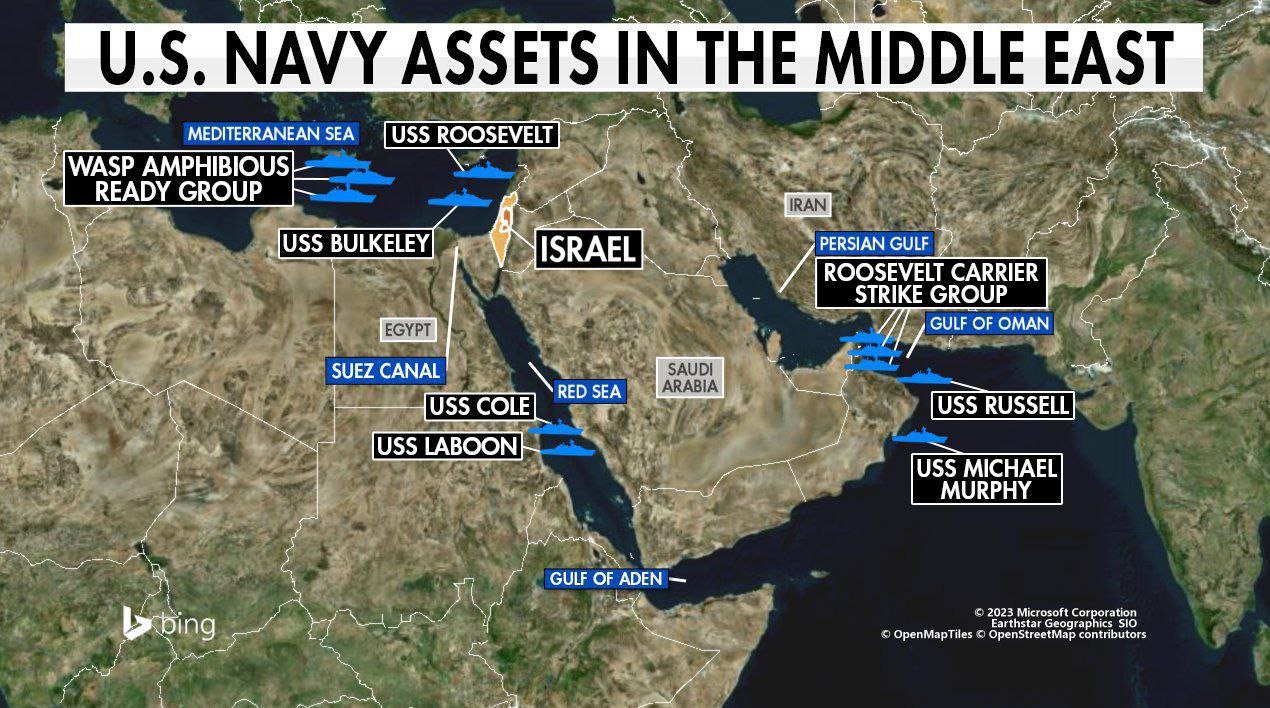
    The US government has deployed additional ships and fighter jets to West Asia in support of Israel. Equipment from US and Israeli allies is also on high alert to defend Israel.

    US Navy assets in the region

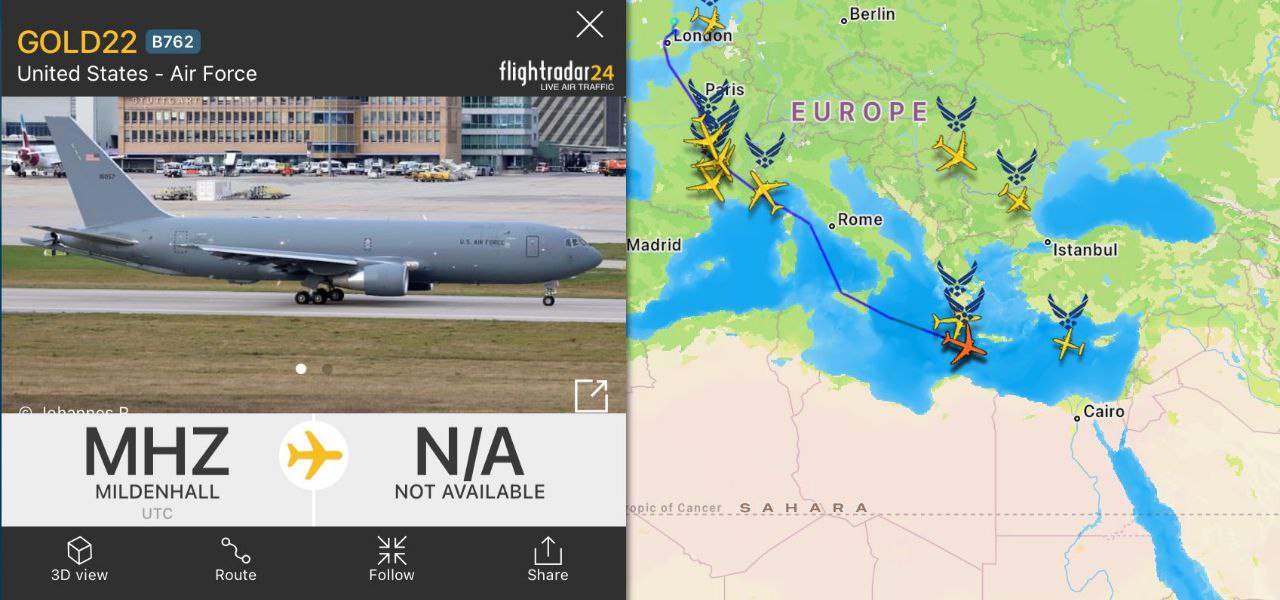
    Last week, the US military sent 12 F-22 fighter jets from Lakenheath Airport in England to one of its bases in West Asia.

    US military sending F-22s and tanker aircraft to the region

    Yesterday, the spokesman of the US Ministry of Defense announced that Lloyd Austin, the US Secretary of Defense had a discussion with Israel’s Defense Minister Yoav Gallant about the country’s defense plans to protect Israel against possible attacks by Iran and its allies.

    Austin emphasized that he has ordered the USS Abraham Lincoln Carrier Strike Group, equipped with F-35C fighters, as well as the USS Georgia (SSGN 729) to be deployed in the Middle East as soon as possible.

    Yoav Gallant reportedly speaks with US Defense Minister Lloyd Austin daily to coordinate and update him on the latest developments.

    On the other hand, Britain and France have asked Iran to refrain from attacking Israel.

    Israel’s allies have used all diplomatic tools and economic pressures and even military threats to dissuade Iran from carrying out a retaliatory attack. Nevertheless, it seems very unlikely that Iran will withdraw from its retaliatory attack.

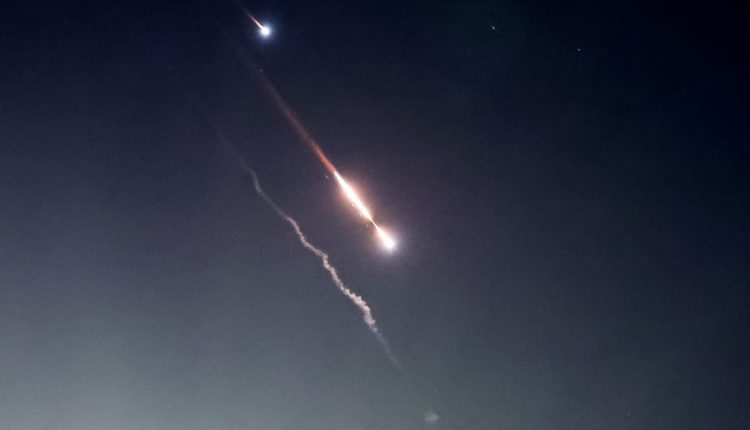
    Last April, the Israeli regime attacked the Iranian embassy in Syria’s Damascus. The attack led to the death of several Iranian military advisers and high-ranking IRGC commanders. In response to this attack, Iran fired dozens of ballistic and cruise missiles and suicide drones at Israeli military targets in the occupied territories.

    The history of Iran’s retaliatory operations shows that this country will attack Israel again. But it seems that this time the attacks will be stronger than before, comprehensive and with the participation of Iran’s regional allies.

    Overall, the Middle East appears to be on the brink of an all-out war as a result of Israel’s recent acts and its ruthless offensive in the Palestinian enclave of the Gaza Strip. Israel’s crime in Gaza may lead to the downfall of this regime or even the destruction of the entire region!

    Posted on SouthFront

  • Turkish Defense Minister Sets Conditions For Troops Withdrawal From Syria!

    Turkish Defense Minister Sets Conditions For Troops Withdrawal From Syria!

    Turkish Defense Minister Yasar Guler announced that Ankara will not negotiate coordination on the withdrawal from Syria before reaching an agreement with the government in Damascus on enacting a new constitution, holding elections, and securing the joint borders.

    If conditions are ripe, Turkish and Syrian officials may hold meetings as part of their joint efforts to normalize ties between the two nations.

    It is worth noting that the aforementioned conditions have been put forward while Turkish authorities, led by Turkiye’s President Recep Tayyip Erdogan, have time and again voiced their desire to normalize relationship with the Damascus government in recent months.

    Earlier, Syria’s President Bashar al-Assad declared the cessation of Turkiye’s support for terrorist groups and a complete withdrawal of Turkish military forces from Syrian territory as conditions for Damascus to normalize ties with Ankara.

    Over 12 years ago, diplomatic relationship between Turkiye and Syria were severed when protest rallies turned into a foreign-backed civil war in the Arab country. Then, Ankara supported armed opposition groups in the northwest of the Arab state with the aim of paving the ground for toppling the Syrian president from power.

  • Palestinian Resistance Movement Urges Mediators To Pursue Ceasefire Talks

    Palestinian Resistance Movement Urges Mediators To Pursue Ceasefire Talks

    As a result of the irreconcilability of the Israeli occupiers in the ceasefire negotiations and the continuation of the massacres that the regime’s military forces commit in the Gaza Strip, the Palestinian Islamic Resistance Movement, Hamas, urged the international mediators to pursue the implementation of the terms agreed upon in the previous talks instead of starting new ones.

    According to the Hamas statement, the Palestinian resistance calls on the mediators in Egypt and Qatar to put forward the terms agreed upon in the July 2 negotiations, and that the onset of new rounds of talks or the proposition of new proposals is only a cover to provide the Zionist regime with the opportunity to continue their aggression in Gaza.

    Hamas took part in several rounds of talks and showed the essential flexibility and positive approach to pursue the interests of the Palestinian people in the prisoner swap deal.

    In this regard, representative of the Hamas movement in Lebanon Osama Hamdan said that it was agreed upon the withdrawal of the Zionist regime’s military forces from the Philadelphia axis in the July 2 negotiations, and we welcomed the suggestion of US President Joe Biden and the resolutions of the United Nations Security Council, but the Israeli regime refuses to accept the proposal and tries to procrastinate.

    It is worth noting that the three mediating countries, including the United States, Qatar, and Egypt, issued a joint statement in the past to call for the return of the Israeli regime and the Hamas movement to the negotiating table.

    So far, the negotiations between Hamas and the Tel Aviv regime, which has been mediated by Egypt and Qatar and with the participation of the United States to pave the way for establishing a ceasefire in the Gaza Strip and the prisoner swap between the two warring sides, have not yielded any tangible result.

    Some Israeli media outlets and analysts blame the Israeli regime’s Prime Minister Benjamin Netanyahu for the failure to implement the potential deal due to the fact that he tries procrastinate the negotiations and add new preconditions in the ceasefire talks.

  • Israel Conducts New Military Operation In Khan Younis

    Israel Conducts New Military Operation In Khan Younis

    This move follows a recent trend of intensified operations in this populated area, as the Israeli military forces received information on the presence of fighters affiliated with the Palestinian resistance movement, Hamas, in this region.

    The 98th Division of the Israeli regime’s army is actively engaged in this operation in Khan Younis city, focusing on the eastern areas of Al-Qarara and Wadi al-Salqa towns.

    The Israeli army has mobilized air support and artillery strikes to enhance the operational maneuver of the ground troops, reflecting the seriousness of the situation.

    This latest assault comes following a previous eight-day campaign that kicked off on July 22, which also targeted Khan Younis city. During the previous operation, the Israeli armed forces caused extensive damage, demolishing residential buildings, a cemetery, and various service facilities using bulldozers and explosives.

    As tensions flare up, the humanitarian implications of the Israeli regime’s military atrocities remain a pressing concern for the Palestinian civilians and international observers alike. The circumstances in Khan Younis are evolving quickly, and the continuation of the Israeli regime’s cruel actions cause catastrophe in this area.

    The Palestinian Health Ministry in Gaza announced on Saturday that Gaza death toll reached 39,790 as the Israeli military forces killed 40 more Palestinians over the past 24 hours. At least 91,702 Palestinians have been wounded in the onslaught on the besieged area since Oct. 7, 2023.

    Click to view full size
  • Top Commander Of IRGC Quds Force Sends Message To New Hamas Chief

    Top Commander Of IRGC Quds Force Sends Message To New Hamas Chief

    Brigadier General Qaani expressed his heartfelt condolences for Haniyeh’s martyrdom, recognizing him as a courageous figure in the Islamic Resistance and a respected leader who promoted unity among Muslims. The Iranian commander wrote in his message to al-Sinwar that those who were mastermind and perpetrators of the assassination of the former Hamas chief in Iran must be punished.

    Qaani’s message is as follows:

    “I offer condolences over the martyrdom General Ismail Haniyeh. Martyr Haniyeh was truly one of the brave leaders of the Islamic Resistance and the appreciated and modest personality who created unity in the Islamic world.

    As the Leader of the Islamic Revolution stated, we consider it our duty to avenge Haniyeh’s blood for this bitter incident inside the Islamic Republic’s territory.

    There is no doubt that the blood of the noble martyr will impact the severity of punishment of the Zionist regime at the hands of the Islamic Republic.

    The heroic jihad of your brothers in the Islamic Resistance will amplify the effect of punishment more than what it was in the past and it will lead to the eradication of the evil phenomenon as soon as possible.

    I express congratulations to all the heroes of Hamas, Gaza, and the Palestinian nation on your election as the leader and jihadi commander, who has a background of being a veteran and honorable figure.

    By electing such a leader, Hamas proved with a different logic that it is handing over the proud flag of Hamas to the figure who has the most influence on the battleground, and who is a fighter in the path of Allah.”

  • US Base Pounded In Syria’s Hasakah

    US Base Pounded In Syria’s Hasakah

    This is the 16th attack on US military positions at Kharab al-Jir base since the start of the war in the Gaza Strip.

    The resistance forces have carried out military operations against the United States and the Israeli regime in response to the genocidal war and siege on Gaza. The resistance groups emphasized that they will continue these attacks to force the Israeli regime and its staunch ally (the US), which supplies the regime with arms and ammunition, to stop killing innocent people in the besieged strip.