In 2015, Israel and Russia agreed to coordinate operations in Syria, which involved direct communication between the Kremlin and the Israeli Prime Minister, as well as between the highest levels of security, including the Russian National Security Council and the Israeli Internal Security Advisor. There was also a direct connection between the Russian Hmeimim base and the Israeli army intelligence department in the occupied Golan.
By seeking close contact with Tel Aviv and establishing a new coordination mechanism, Ankara aims to increase its influence and play a more significant role in Syrian affairs, enhancing its position as a major player in the country’s political landscape.
It is likely that Israel will accept this proposal, using Turkey’s close relations with the Syrian transitional government and militant groups in Syria as a mediator and leverage to manage possible tensions with the militants and to gain strategic advantages in southern Syria against the current and future government in Damascus.
This action occurred amid protests by residents of the occupied areas in southern Syria over the security situation in their towns and villages. Today, a group of residents from the village of Ma’arba traveled to Daraa to discuss the occupation and the Israeli presence in southern Syria with officials from the HTS Military Operations Directorate.
Despite the indifference of Tahrir al-Sham and other militant groups in Syria, the Israeli army continues to advance and inspect border villages without facing significant resistance.
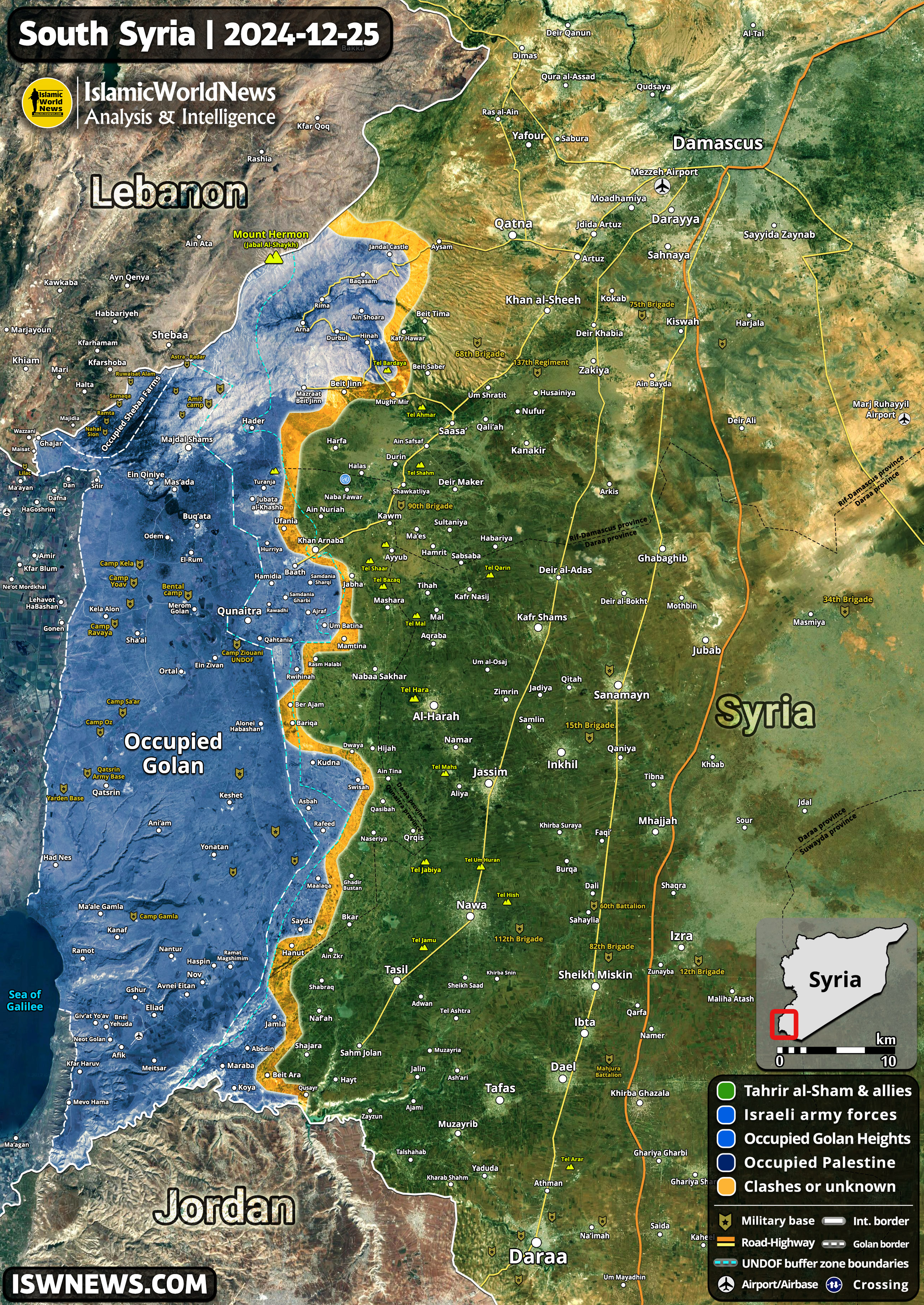
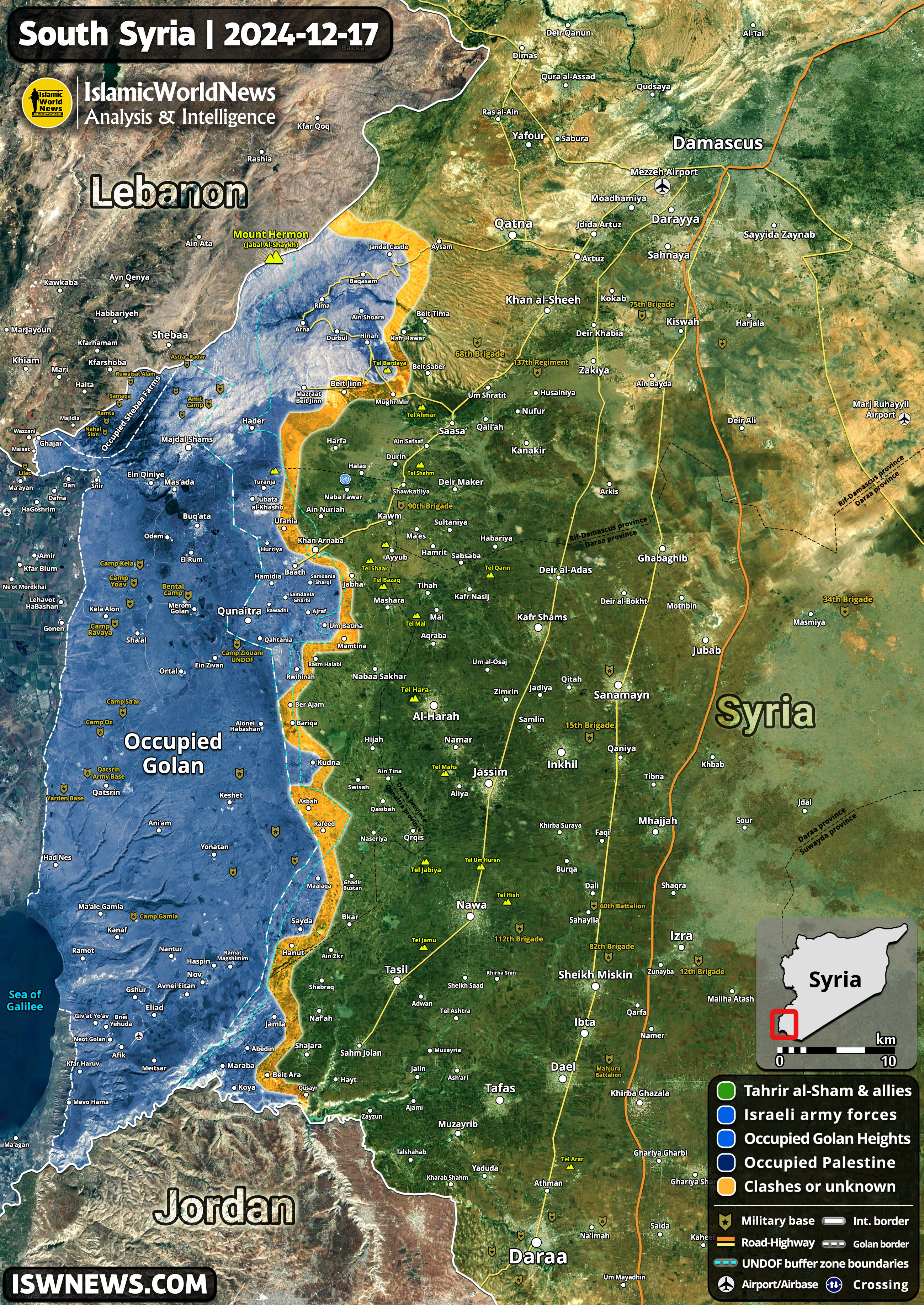
The Israeli regime’s ground operations in Syria began on December 7, following the fall of the central government. Israeli army has so far captured more than 25 towns and villages in the provinces of Quneitra and Rif Dimashq.
The meeting focused on developments in Syria and the necessary measures for ensuring security and stability along the Iraqi-Syrian border.
It is noteworthy that Abu Muhammad al-Julani was sentenced to death by an Iraqi court many years ago for his involvement in various terrorist activities in Iraq; however, Iraqi officials have now chosen to engage with him.
Al-Julani joined al-Qaeda in Iraq in 2003, just weeks before the U.S. invasion of Iraq, and quickly rose through the ranks of the organization. He was arrested by U.S. forces in 2006 and spent more than five years in prison. Al-Julani’s release from prison occurred in 2011, only by chance!! coinciding with the onset of the Syrian war, he formed the terrorist grou Jabhat al-Nusra, the Syrian branch of al-Qaeda after reaching an agreement with Abu Bakr al-Baghdadi.
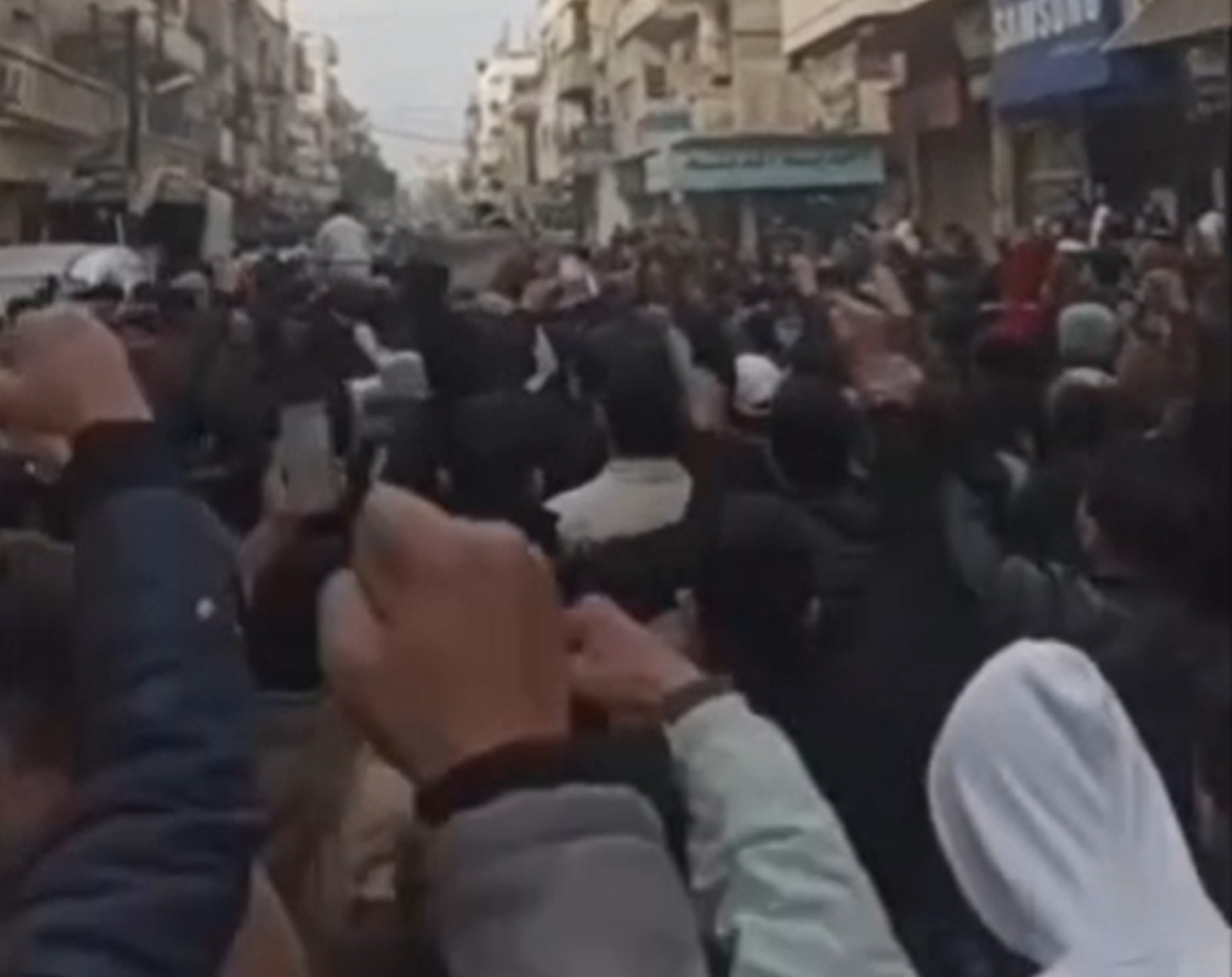
Demonstrations erupted in the provinces of Latakia, Tartus, Homs, Hama, and Damascus, where members of militant groups clashed with protesters and opened fire.
During the protests, demonstrators chanted: “Ya Ali, or Labaik al-Khasibi.”
Alawite demonstration in SyriaAlawite demonstration in SyriaAlawite demonstration in Syria
These demonstrations occur amidst ongoing blind assassinations, attacks on churches, and sacred sites of Christians and other ethnic and religious groups. The transitional government of Turkey-affiliated terrorist groups has not yet managed to establish security and sovereignty in Syria.
In another incident in the same day, 14 HTS affiliated militants were killed in an ambush in Tartus province.
Unknown gunmen ambush Tahrir al-Sham militants in Tartous
The Ministry of Interior of the Syrian transitional government announced that 14 militants affiliated with the government were killed and 10 others were injured in clashes in Tartus province yesterday.
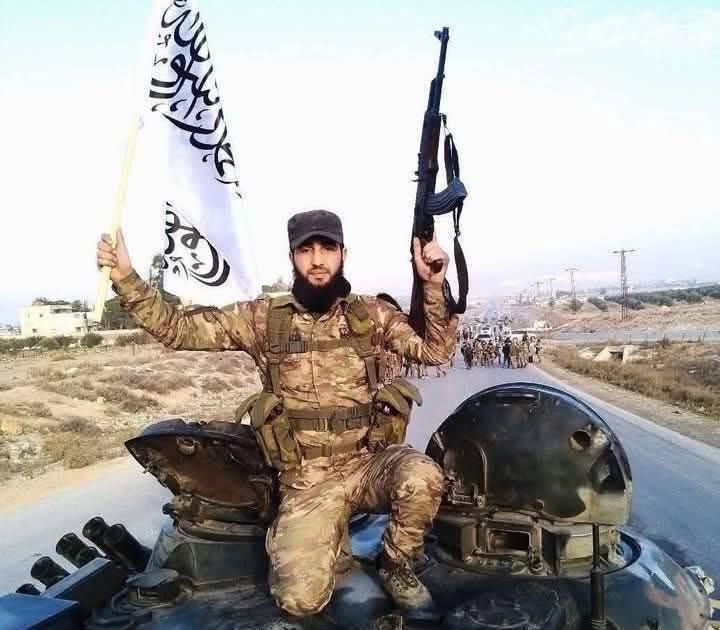
Most of these militants were from terrorist groups, including Tahrir al-Sham, who had been deployed to Tartus to suppress Alawite protests. However, they were ambushed and killed by former Syrian army forces.
Pictures of the deaths of Tahrir al-Sham militants in Tartous
Officials from the Syrian transitional government and local media have accused Iran of being involved in the unrest. Asad Hassan Al-Shaibani, the Minister of the Syrian transitional government, stated in his first address, “Iran must respect the will of the Syrian people, their sovereignty, and security. We warn them against spreading chaos in Syria and hold them responsible for the consequences of their recent statements.”
Typically, the initial statement from a newly elected government’s foreign policy apparatus should focus on issues like territorial integrity, the participation of diverse groups, and the assistance of international organizations and neighboring countries in establishing the government. However, the Turkish-backed government has meaningfully dedicated its first statement to Iran!
Mr. Asad Al-Shaibani has so far had no opinion on the occupation and exploitation of eastern Syria’s resources by the United States, Israeli airstrikes on strategic infrastructure, the occupation of southern Syria, the presence of multinational terrorists from Uyghurs to Chechens and Tajiks, and numerous other security and economic issues.
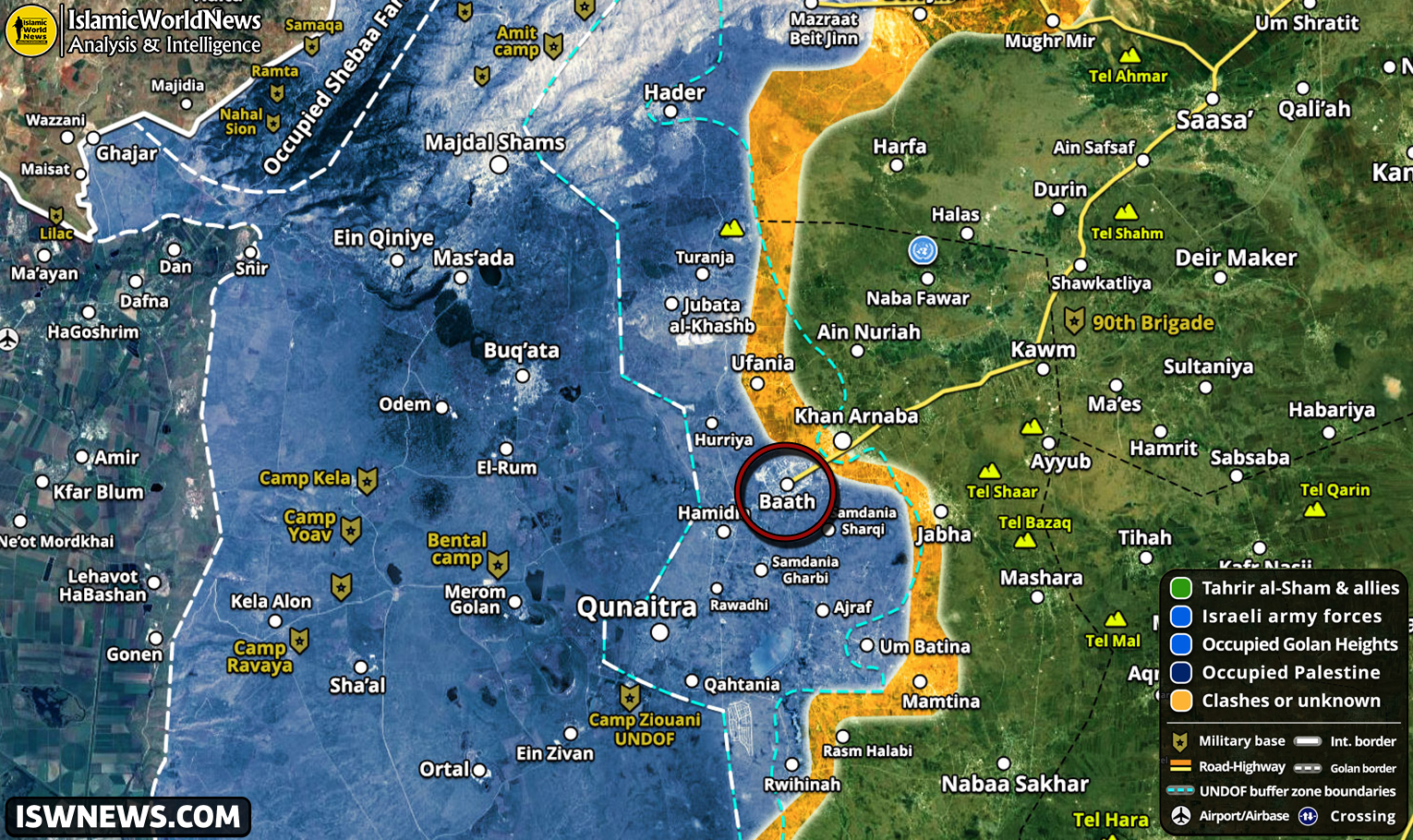
In recent days, the southern Syrian front has seen a halt in Israeli army movements and an increase in popular protests against their occupation in the border areas of Quneitra and Daraa provinces. Despite these protests, Israeli forces continue to establish military outposts and positions in the UNDOF buffer zone and the heights of Mount Hermon.
In its latest actions, the Israeli army has deployed tanks and military vehicles on the outskirts of the Al-Mantara Dam, east of the village of Quneitra. Additionally, Israel has established specific rules, including designated entry and exit times for residents of the villages of Umm Al-Adham and Al-Adnaniyah, which are situated south of the Al-Mantara Dam.
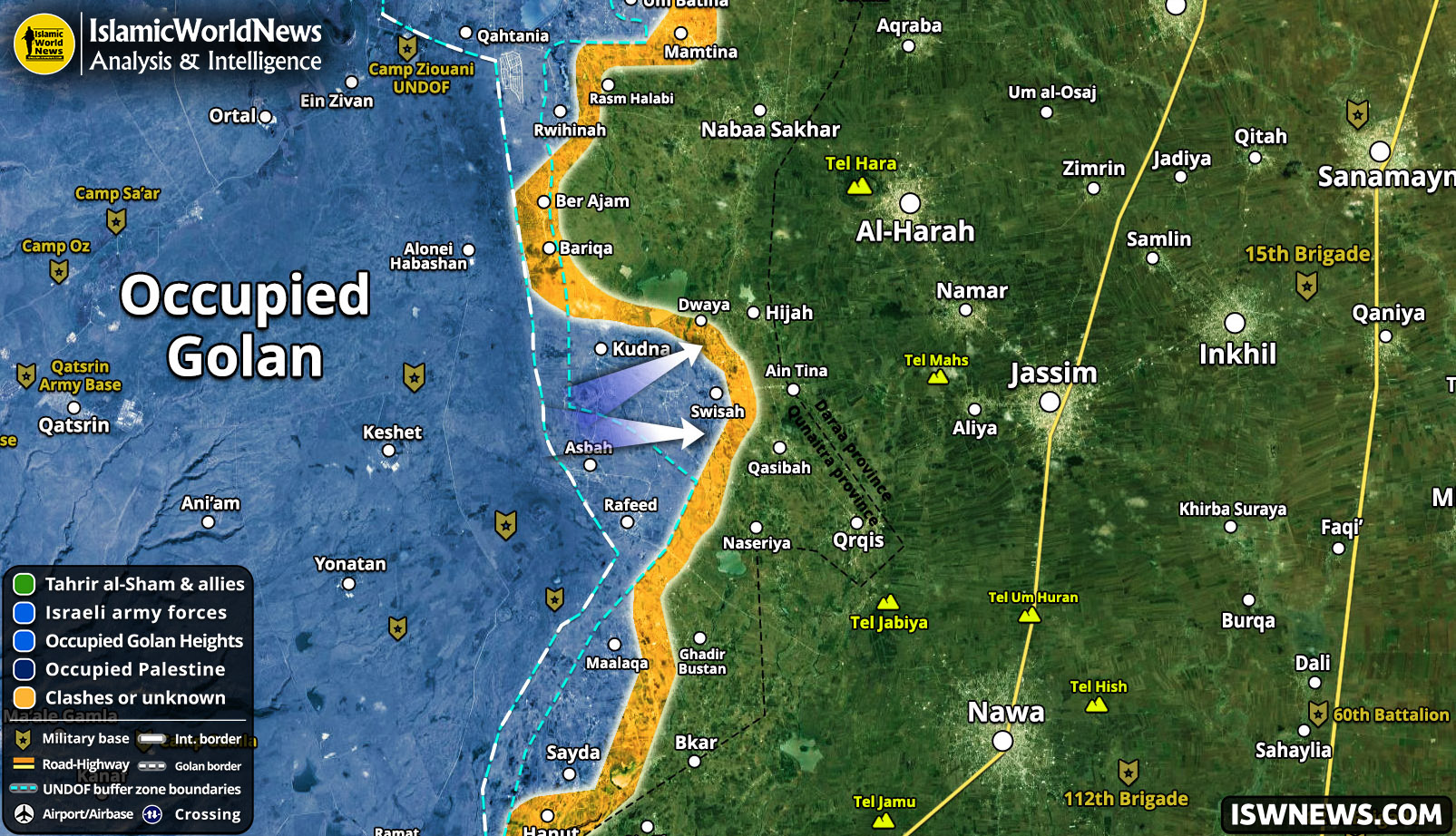
In southern Quneitra province, Israeli forces also entered the villages of Suaysah and Dawayeh. During this occupation, Israeli tanks and soldiers destroyed trees and built embankments in the area.
In response, several residents protested against the embankments constructed by the Israeli army. However, the Zionist forces reacted to the peaceful demonstration by firing bullets and directly targeting several civilians.
Local residents protest against Israeli army near Al-Suwaisa
Israel’s actions in occupying southern Syria indicate that the regime’s officials are ignoring Abu Muhammad al-Julani’s recent statements that the new Syria adheres to the 1974 disengagement agreement and prevents attacks on Israel.
The negative reactions from regional and international parties have not changed Israel’s position. In fact, the US unwavering support for Israel, the ambiguous stance of the Syrian Democratic Forces (SDF) regarding the new Syrian government, and Israel’s advantage in the Palestinian-Lebanese conflict have created a situation in the region that the Zionists deem favorable for further advances in Syria.
Simultaneously with the military movements in southern Syria, the Zionists’ efforts to increase contact with the Druze and Kurds in Syria are noteworthy. The results and details of these consultations will undoubtedly influence Israel’s future actions in Syria.
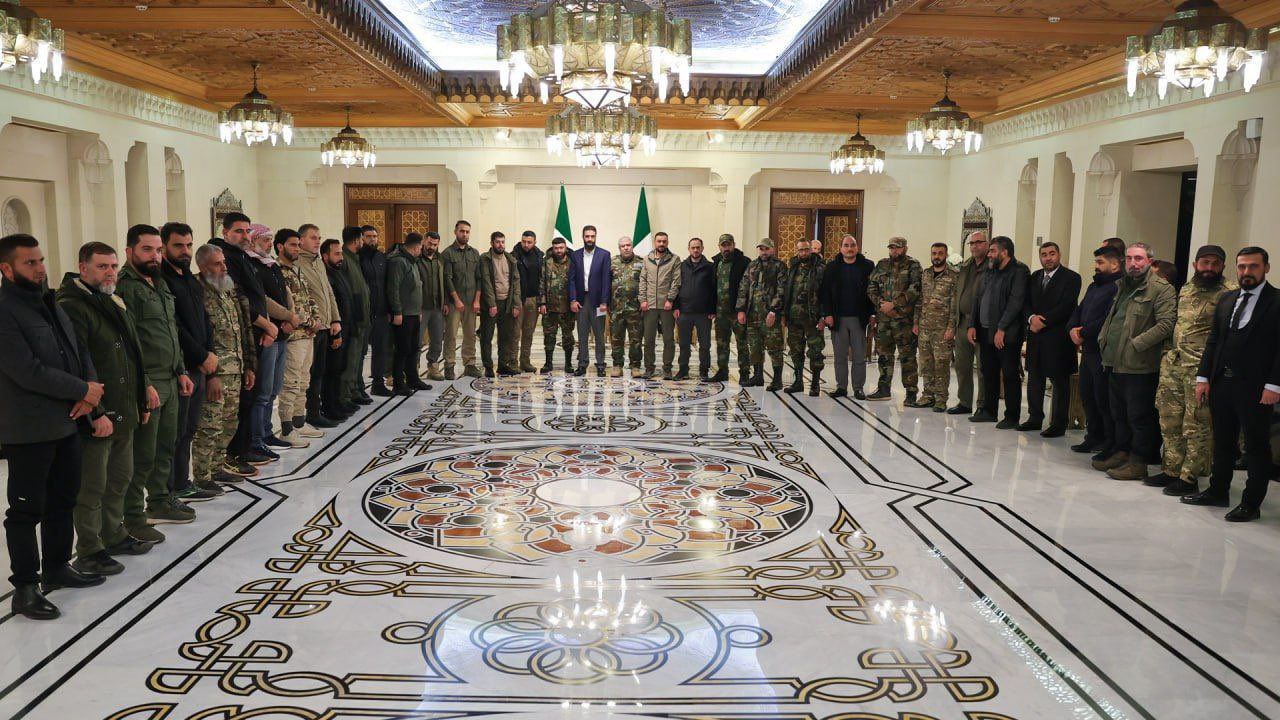
During this meeting, it was decided that the armed groups would disband and surrender their weapons to be incorporated into the structure of the Ministry of Defense of the Syrian transitional government.
The control exerted by the militants of these groups over various regions of Syria, along with their ideological differences, presents significant challenges to the new Syrian government. Recognizing this, al-Julani has opted to dissolve the Syrian armed groups and assimilate them into the Syrian army to mitigate potential internal tensions and conflicts.
This strategy has been somewhat effective in the southern and northern regions of Syria; however, it has not yet made progress concerning the Syrian Democratic Forces (SDF). Consequently, tensions and conflicts in areas like Manbij and Deir Ezzor continue to persist.
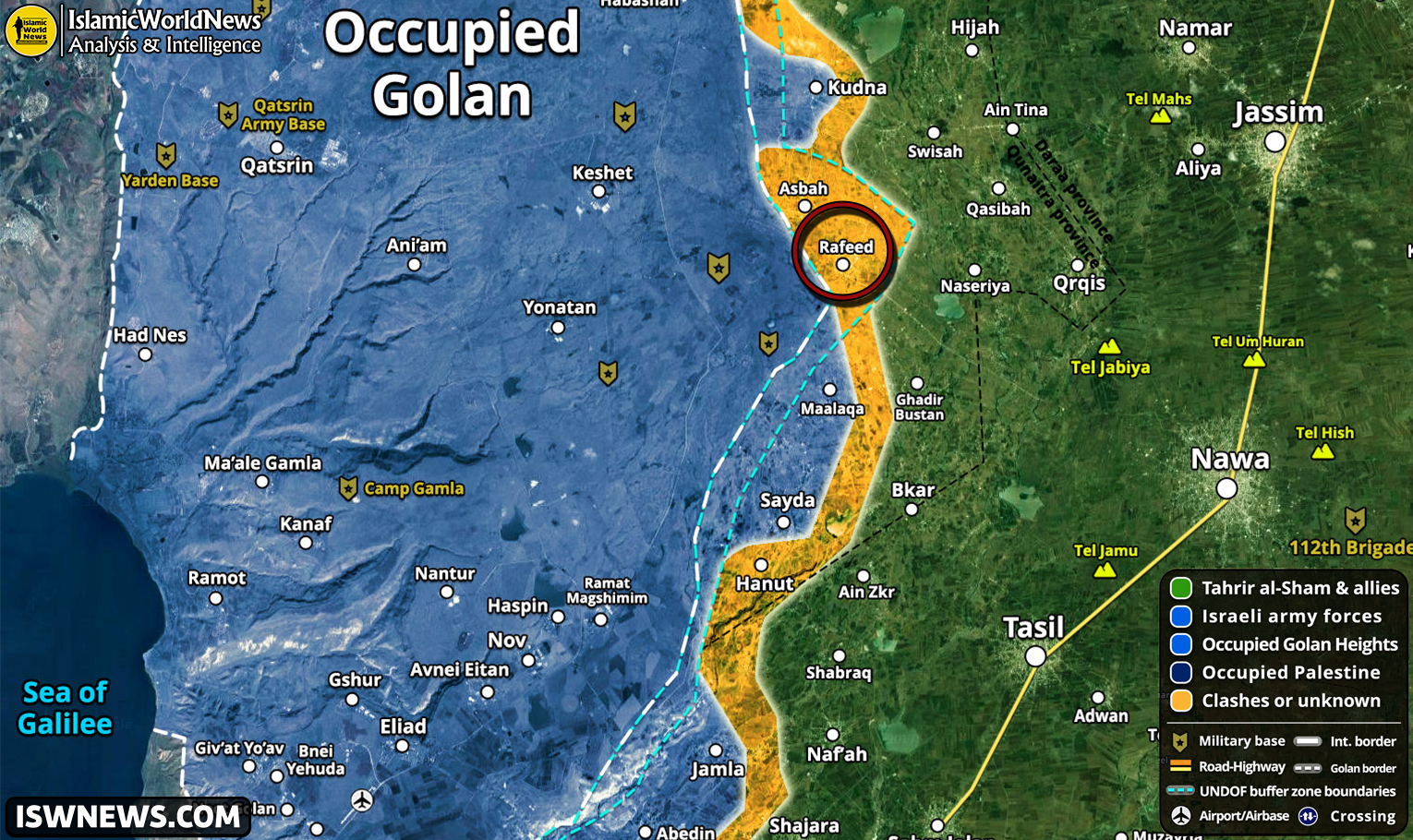
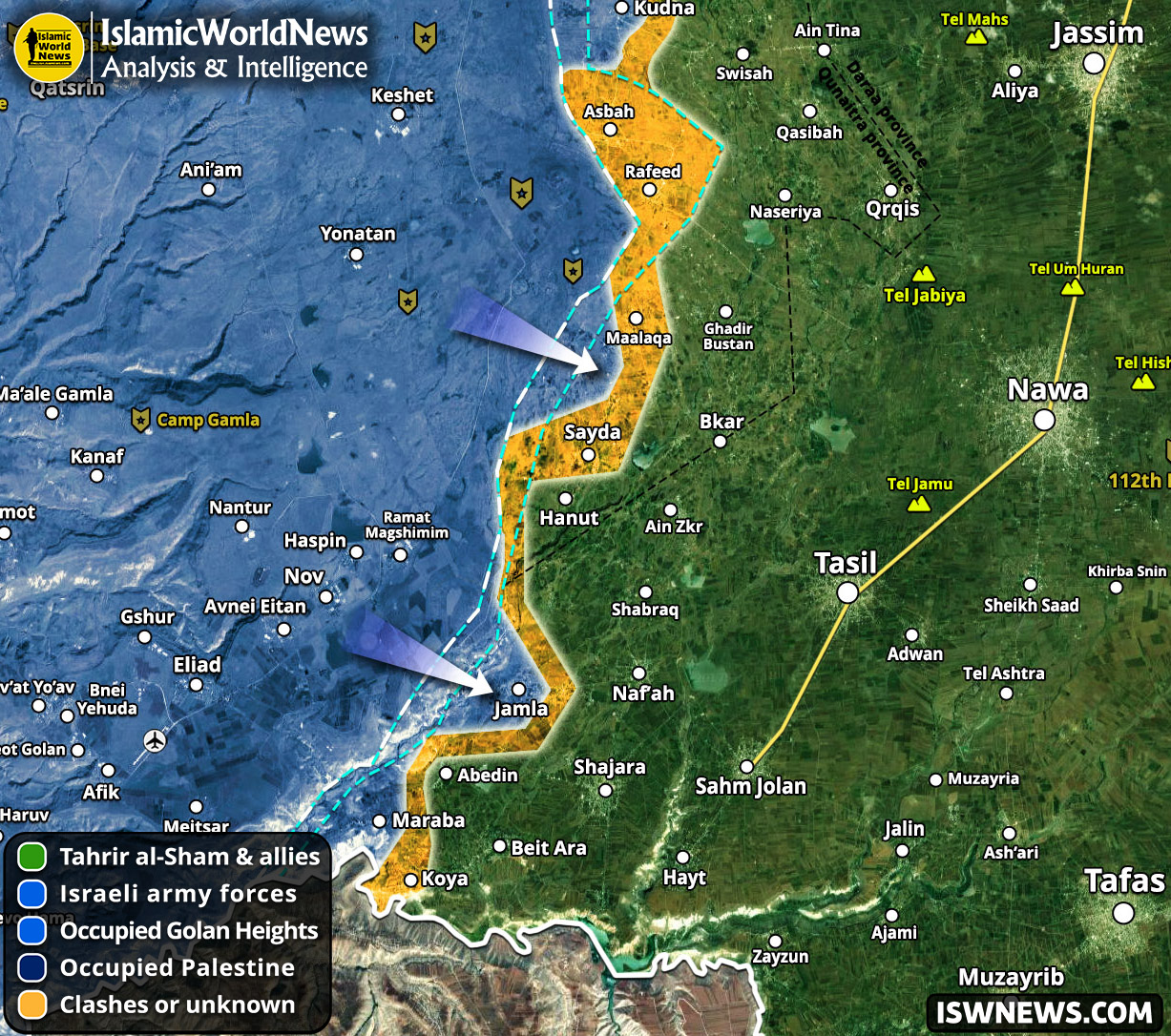
Local sources report that after inspecting several buildings in Rafeed, Israeli forces cut down trees on the outskirts of the outpost and completely destroyed its structure.
Importance of Rafeed Village: Rafeed is a Syrian border village in the Golan Heights, situated in the UNDOF buffer zone between Syria and Israel. It is directly connected by road to Nawa town in Daraa province. The Ghadir Al-Bustan Dam and the villages of Al-Asbah, Ghadir Al-Bustan, and Nasiriyah surround Rafeed and are likely Israel’s next targets in this area.
In its recent statements, the Turkish Ministry of Defense declared, “The groups we support will control the Kurdish areas of northern Syria. There is no agreement for a ceasefire with the Syrian Democratic Forces in northern Syria.”
The Turkish Foreign Minister also urged the new Syrian authorities to address the “problem” posed by the Kurdish forces.
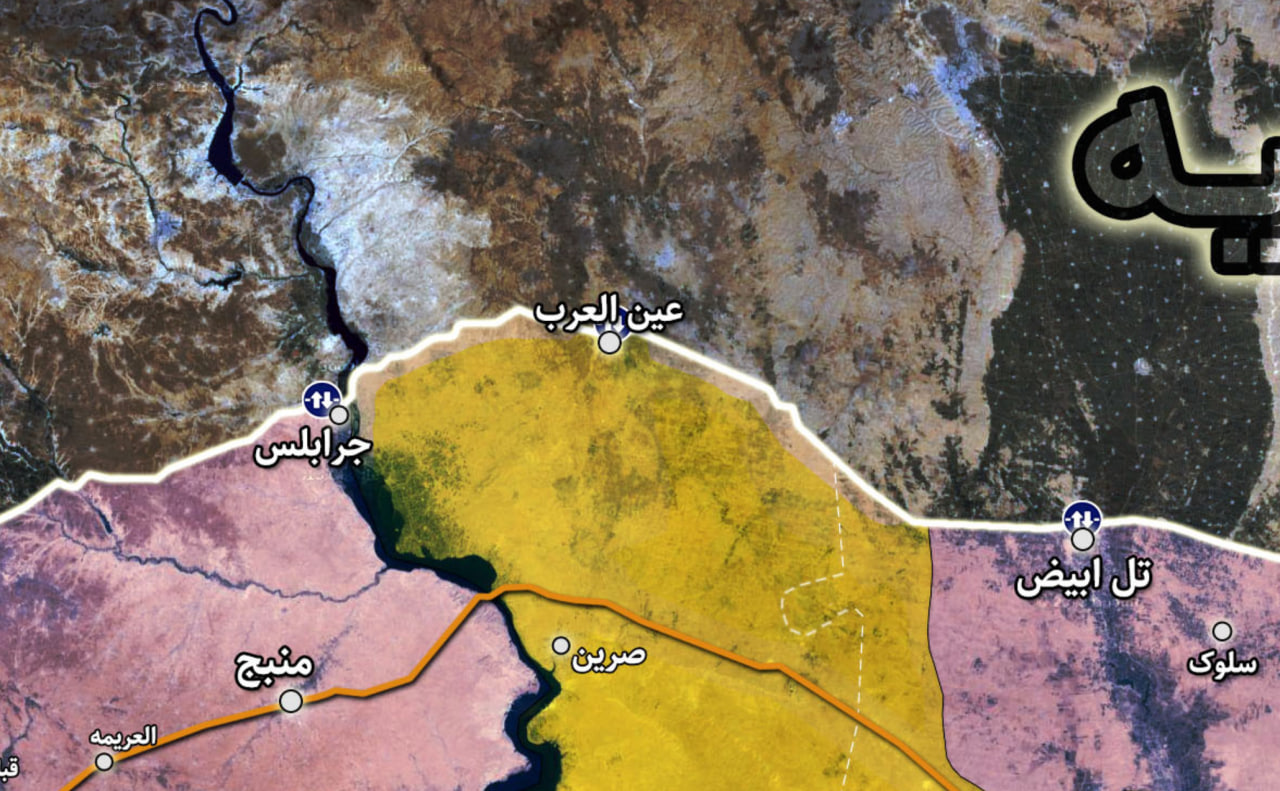
Turkey has rejected the US-proposed ceasefire and, amid rising tensions, has removed part of the concrete wall near the city of Ayn al-Arab (Kobani). There is a possibility that Turkey may launch a direct ground attack on Syrian territory at any moment.
Mazloum Abdi, commander of the Syrian Democratic Forces, has called on the people of Ayn al-Arab to take up arms and resist Turkey.
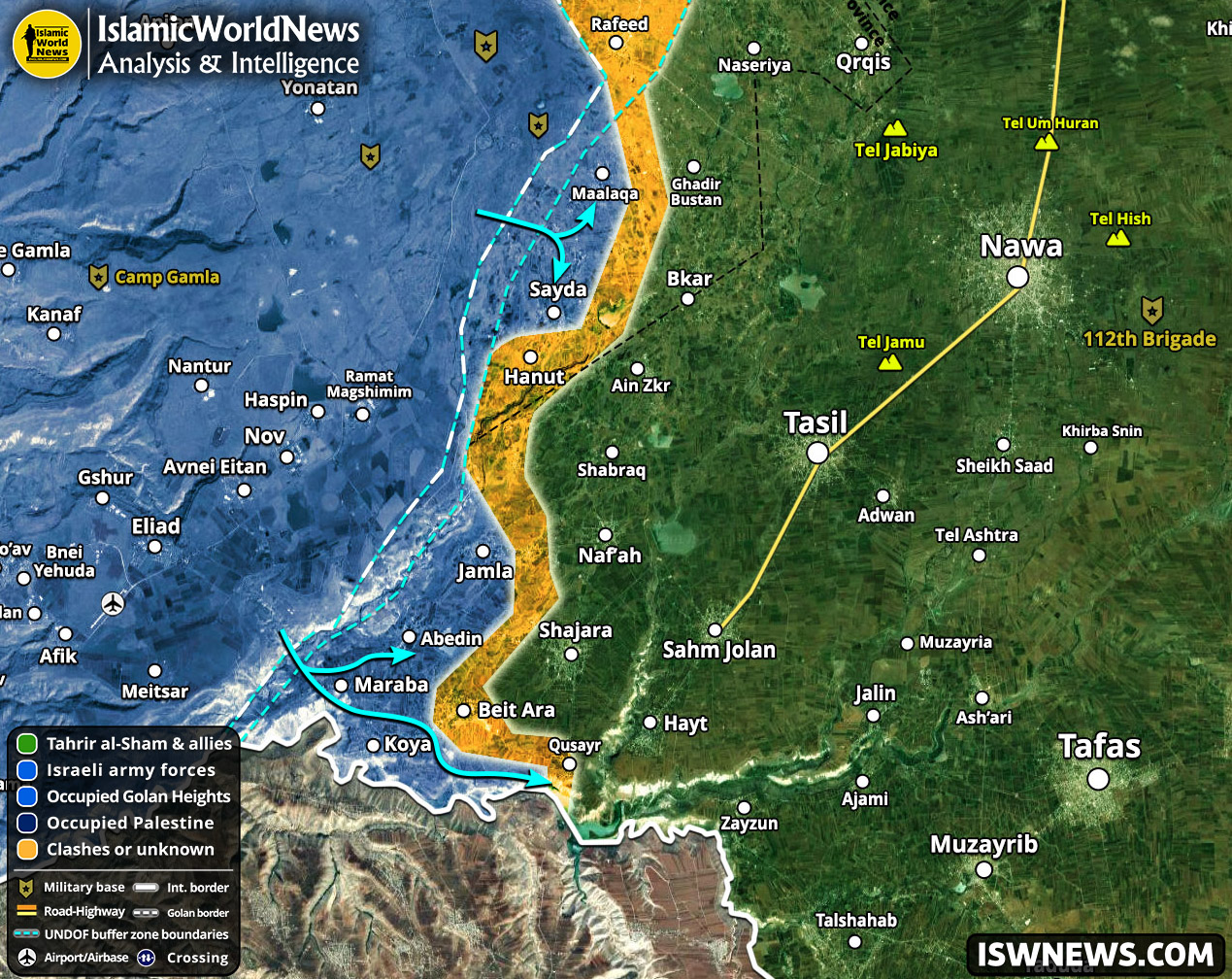
Following warnings from Israel to the sheikhs of Koya and other Syrian border villages to gather and hand over weapons, the Israeli army moved into Abedin and Koya. Local sources report that the Israeli army also advanced towards Al-Qusayr and Al-Wehda Dam on the Jordanian border, capturing these areas.
Israeli forces moved into the villages between Saida and Al-Ma’alqa after deploying tanks in the area. The village of Al-Maqriz, located on the outskirts of Saida, was also captured by Israel.
The Israeli army entered Al-Asbah yesterday but left after inspecting it. Al-Rafid has not yet seen the entry of Israeli forces.
Click to view full size
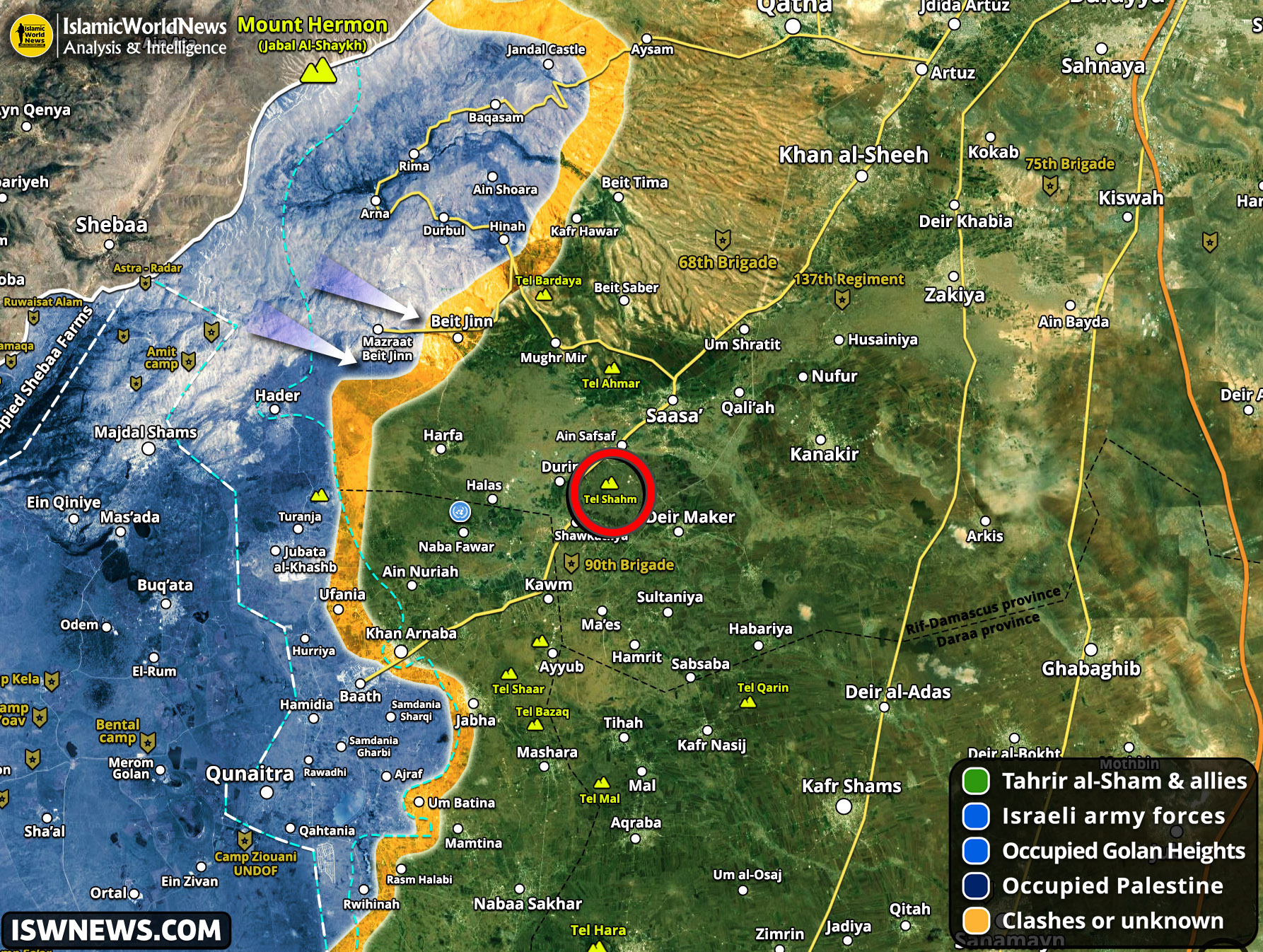
On the Rif-Dimashq front, the Israeli army has not made significant advances south of Jabal al-Sheikh (Hermon). Residents of Beit Jinn have refused to surrender their weapons, leading the Israeli army to withdraw from the surrounding heights to ensure its safety.
No changes have been reported in Khan Arnabeh and other areas of this front.
Despite the indifference of Tahrir al-Sham and other militant groups in Syria, the Israeli army continues to advance and inspect border villages without facing significant resistance.
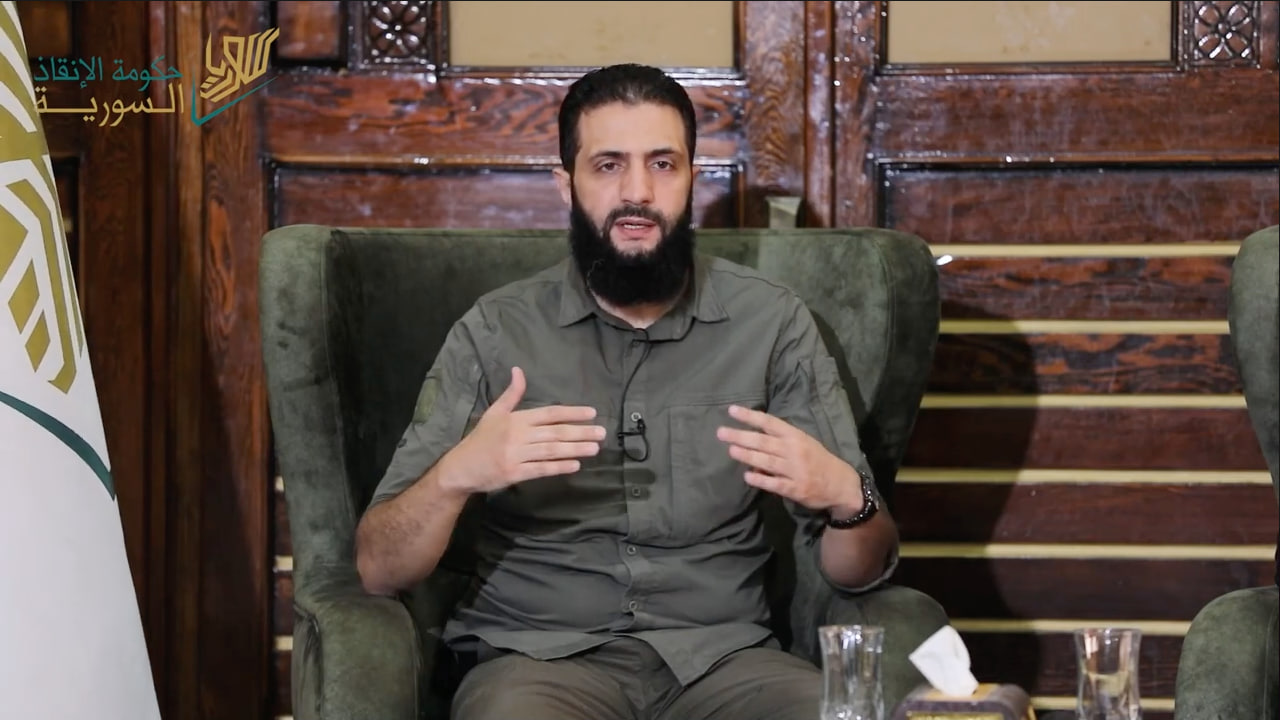
In his latest statements, al-Julani addressed three critical issues in Syria: compulsory service, people’s livelihoods, and the future status of armed groups.
Al-Julani stated, “compulsory service in army will not be mandatory. We will consider increasing salaries by 400 percent in Syria. The first priority in Syria is to rebuild destroyed houses and return refugees. All armed groups will be disbanded, and weapons will be in the hands of the government alone.”
Syrian youth, weary of compulsory service in war conditions, and people burdened by the poor economic situation and very low incomes, have become extremely tired and dissatisfied. Any improvements in these areas will likely encourage the Syrian people and lead to popular acceptance, and al-Julani is well aware of this.
However, the dissolution of all armed groups is a highly controversial issue in Syria. By addressing this and taking steps to implement it, al-Julani and Tahrir al-Sham are taking significant risks. With various armed groups throughout Syria, there is a potential for increased tensions and internal conflicts. Successfully navigating this transition will be crucial for him and the new Syrian government.
Additionally, under UN Resolution 2254, Tahrir al-Sham (formerly Al-Nusra Front) has no place in the future Syrian government. Al-Julani is aware of this and is strategically dissolving or merging previous structures, transitioning from an Islamist jihadist with an al-Qaeda background to a leader and government that is accepted both domestically and internationally.
The Israeli occupation army advancing in the southwestern countryside of Rif Dimashq, has captured the villages of Beit Jinn and Tel Bardaaya.
Contrary to reports, Israeli forces have not yet entered the village of Mughr al-Mir, and the news about establishing an Israeli checkpoint in Tel al-Shahm is not true.
Click to view full size
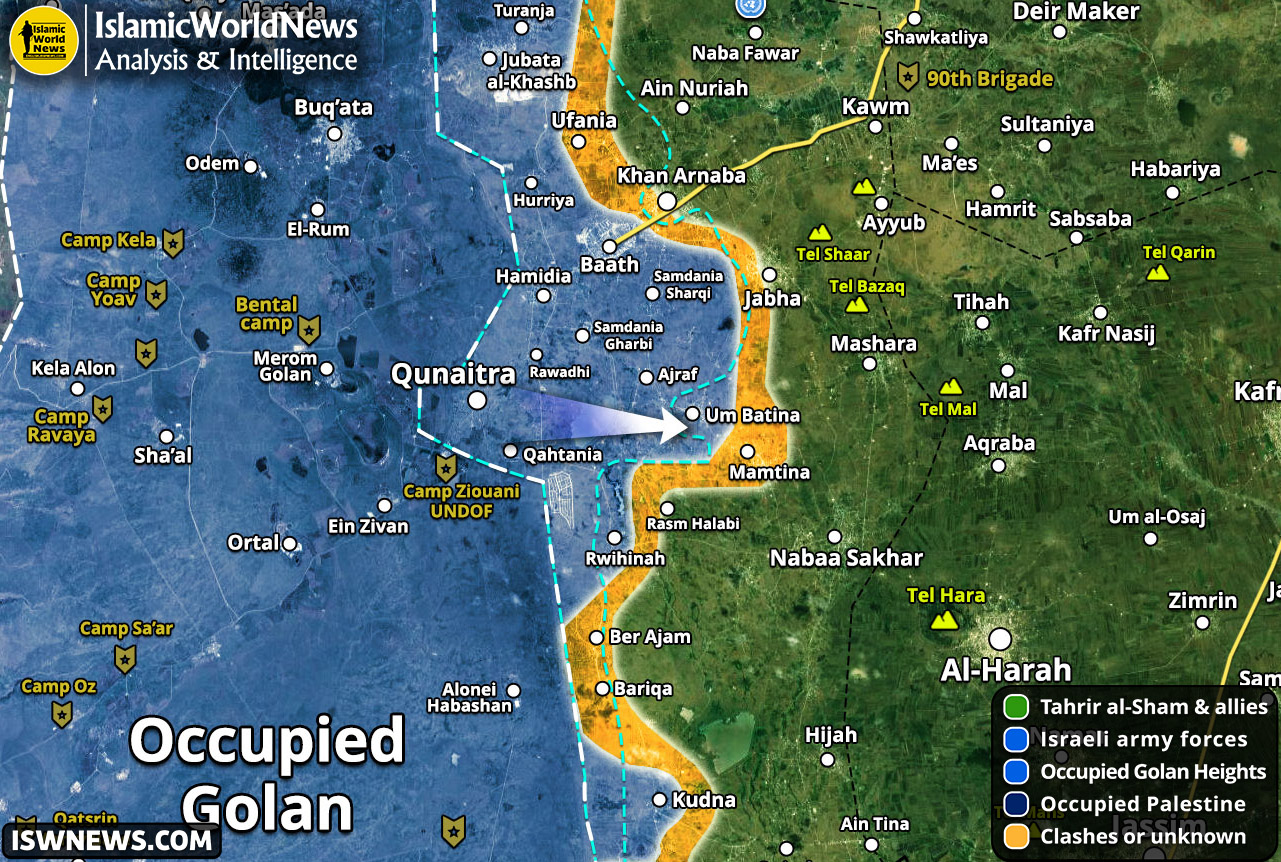
In the eastern axis of Quneitra province, Israeli forces have crossed the buffer zone and the village of Umm Batinah, captured the village of Al-Khalidiyah on the outskirts of Mamatina, and deployed their tanks at the entrance to Mamatina.
Click to view full size
In the south of Daraa and Qunaitra provinces, Israeli tanks have crossed the buffer zone and cut off the road between the villages of Al-Ma’alqa and Saida. Israeli forces have also entered the villages of Jamla and Maaraba.
The Israeli army, broadcasting an audio message through loudspeakers, called on local elders in the village of Koya to prevent armed activities by the locals and to collect the people’s weapons and hand them over to the Israeli military.
According to field reports, the Israeli army has captured Mazraat Beit Jinn in Rif Dimashq province. Israeli forces have also entered the city of Khan Arnabeh, inspecting houses before leaving. There are unconfirmed reports of the Israeli army capturing Tel al-Shahm and establishing a checkpoint there.
In other areas, Israeli tanks have been deployed in the village of Umm Batina and are likely to move towards the eastern regions of Quneitra province in the coming days.
Currently, the 210th Bashan Division, the 510th Sheldag Unit, the 810th Mountain Brigade and the 474th Golani Brigade are conducting ground operations in southern Syria.
The Israeli regime’s ground operations in Syria began on December 7, following the fall of the central government. Israeli army has so far captured at least 20 towns and villages in the provinces of Quneitra and Rif Dimashq.
The Israeli authorities claim that their occupation is temporary!! and their goal is to prevent the spread of insecurity and the formation of threats against Israel in the occupied Golan Heights.