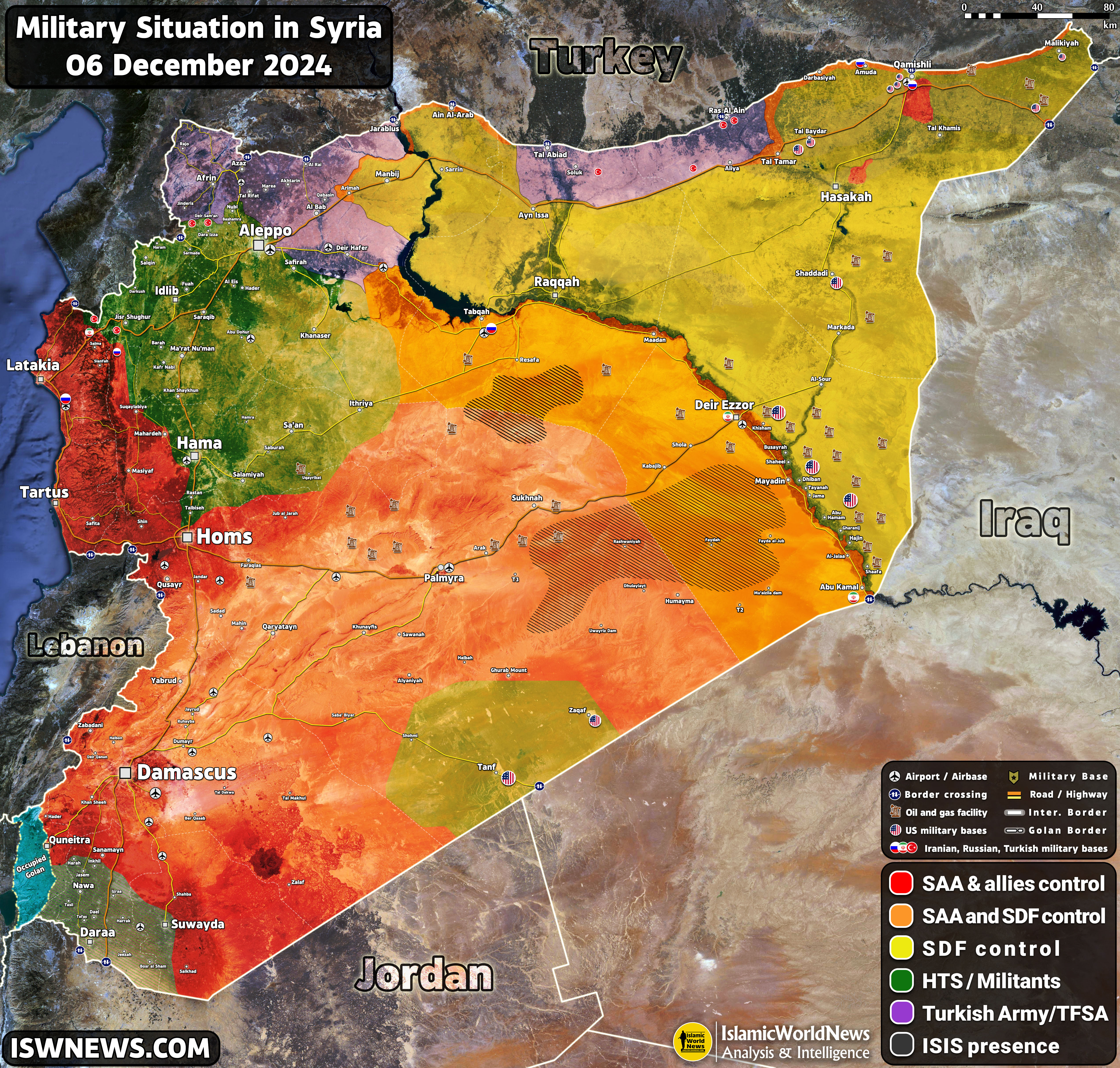
Southern Syria: The situation remains unstable, with many areas in Daraa province falling out of control. The exact lines of control are unclear, but these areas are marked with a light green hatch on the map.
Eastern Syria: Under the agreement between the Syrian army & the Syrian Democratic Forces, SDF forces have been deployed in government-controlled areas in Deir Ezzor and Raqqa provinces. This agreement builds on a previous security arrangement where the SAA forces were deployed along the Turkish border.
Al-Tanf Region: Movements by US-backed militants towards Palmyra have been reported.
Homs: Militants are amassing forces in the northern suburbs but have not yet entered the city. Control of Homs is crucial for the fate of the Syrian government.
In its latest statement, the Syrian army confirmed the withdrawal from Hama city. The Syrian Armed Forces Command announced that after increased clashes, elements of terrorist groups managed to enter Hama city from several axes. Following the terrorists’ entry, the Syrian Armed Forces evacuated the city and retreated outside Hama to protect civilians.
Hama city was one of the main defense lines of the Syrian army in the central belt of Syria against the militants. With the fall of this important defense line, the city of Homs, significant military industries in Masyaf, and the border areas of Syria and Lebanon will be in serious danger. Tahrir al-Sham’s next targets will likely be these areas.
Click to view full size
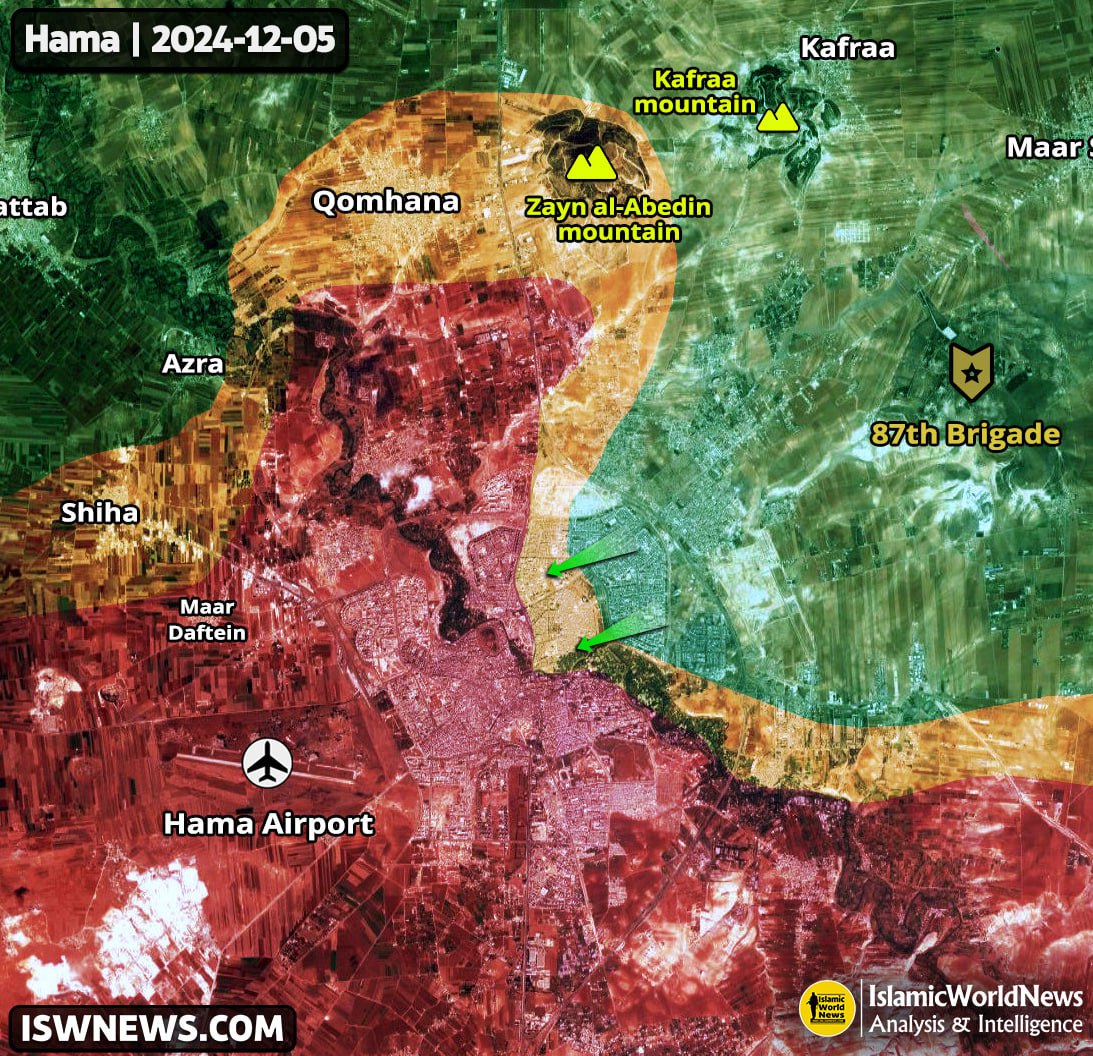
Videos and images released indicate that militants have advanced to Arbaeen Square, near the Al-Tawhid neighborhood and the central prison of Hama, in the city’s industrial area. Reports suggest that the militants have released 3,000 prisoners after taking control of the prison.
According to the Syrian army’s statement, the complete fall of the city is imminent. Consequently, the Syrian army started transferring aircraft from Hama airport to Shayrat airport in Homs province hours ago.
Syrian soldiers stationed in the northern axes of Hama, such as Jabal Zayn al-Abedin and Qomhaneh, should have been evacuated by now.
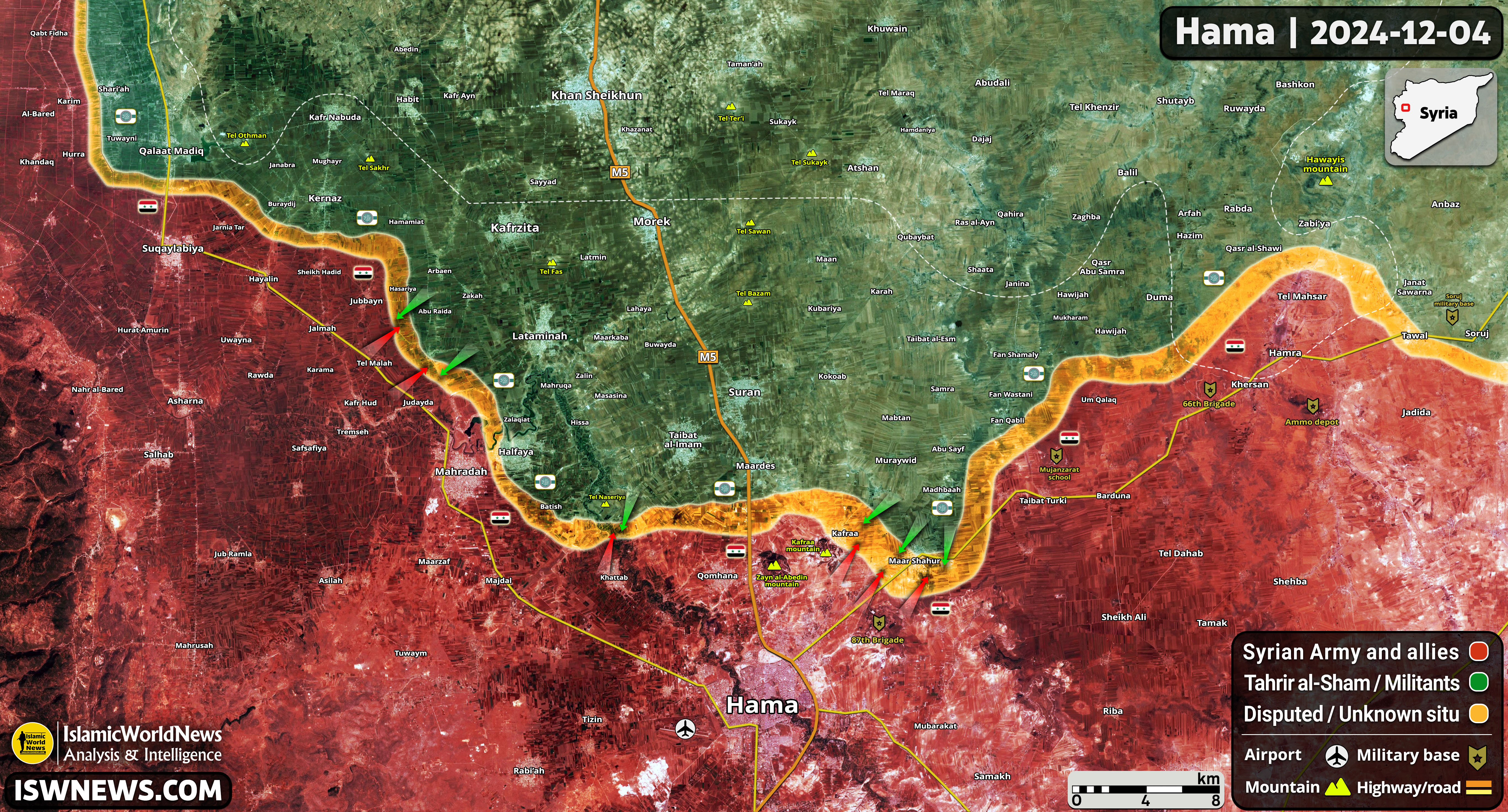
Tahrir al-Sham and the militants of the so-called Fatah al-Mubin operations room have concentrated their attacks on the Jabal Zayn al-Abidin front.
Currently, the most intense clashes are ongoing in Maar Shahur and around Kafraa. The reports that militants have full control over Maar Shahur are inaccurate at this time. Given the Syrian army’s superiority from Jabal Kafraa to the surrounding areas, the village of Kafraa and its surroundings are not under militant control and, at worst, are abandoned by both sides.
Generally, as long as the important heights of Zayn al-Abidin and Kafraa remain under Syrian army control, militants will not be able to advance directly towards the city of Hama or capture Qomhanah.
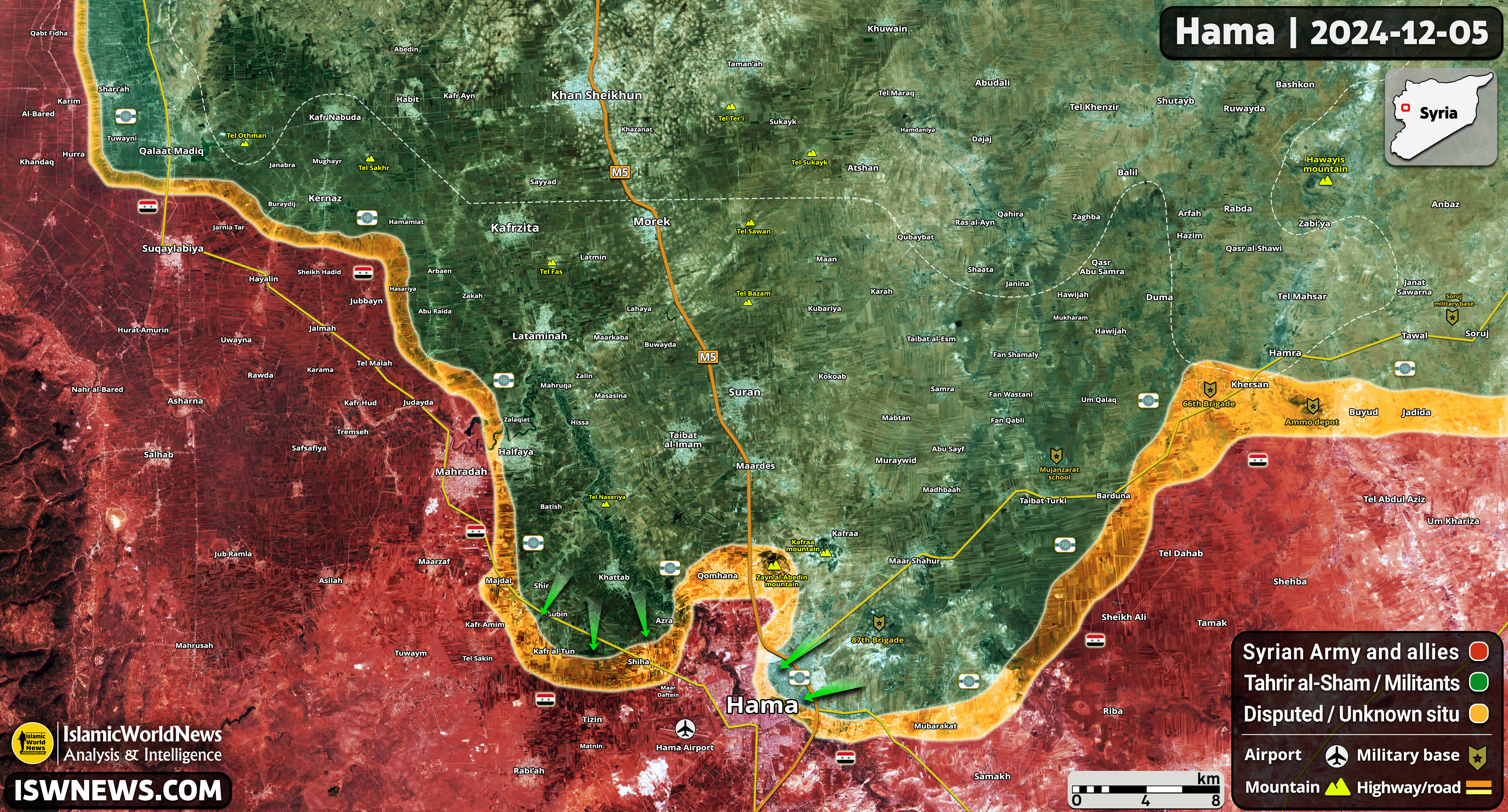
Fighting continues on other fronts, including the Khattab front and north of Mahrada in the Tal Malah and al-Jalmah areas.
A brief overview of the conflict lines in northern Hama shows that the areas under control of the parties have returned to a situation similar to the lines of 2016 and 2017.
The Syrian army has withdrawn from the southern areas of Al-Safira, and militants are also in control of the Khanaser area. The Syrian army has launched counterattacks in this axis.
The Syrian army has lost control of several other areas in the northern suburbs of Hama, including key locations like Qalaat al-Madiq, Latamenah, and Souran. Intense battles are ongoing north of the Taibat al-Imam-Muhradah-Suqylabiya line. The militants’ use of FPV drones has provided them with a significant advantage, resulting in casualties among the Syrian army infantry and damage to armored vehicles.
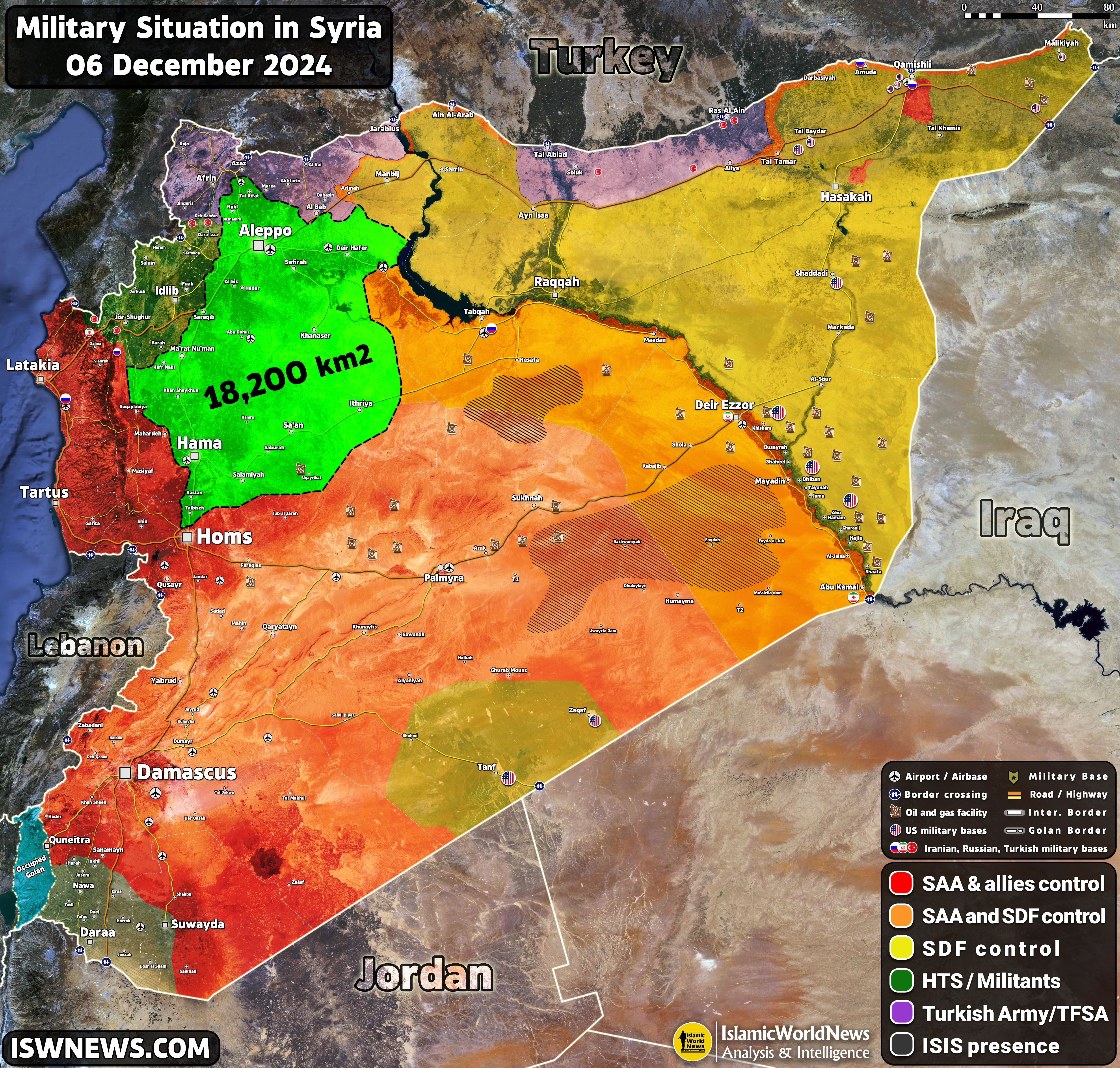
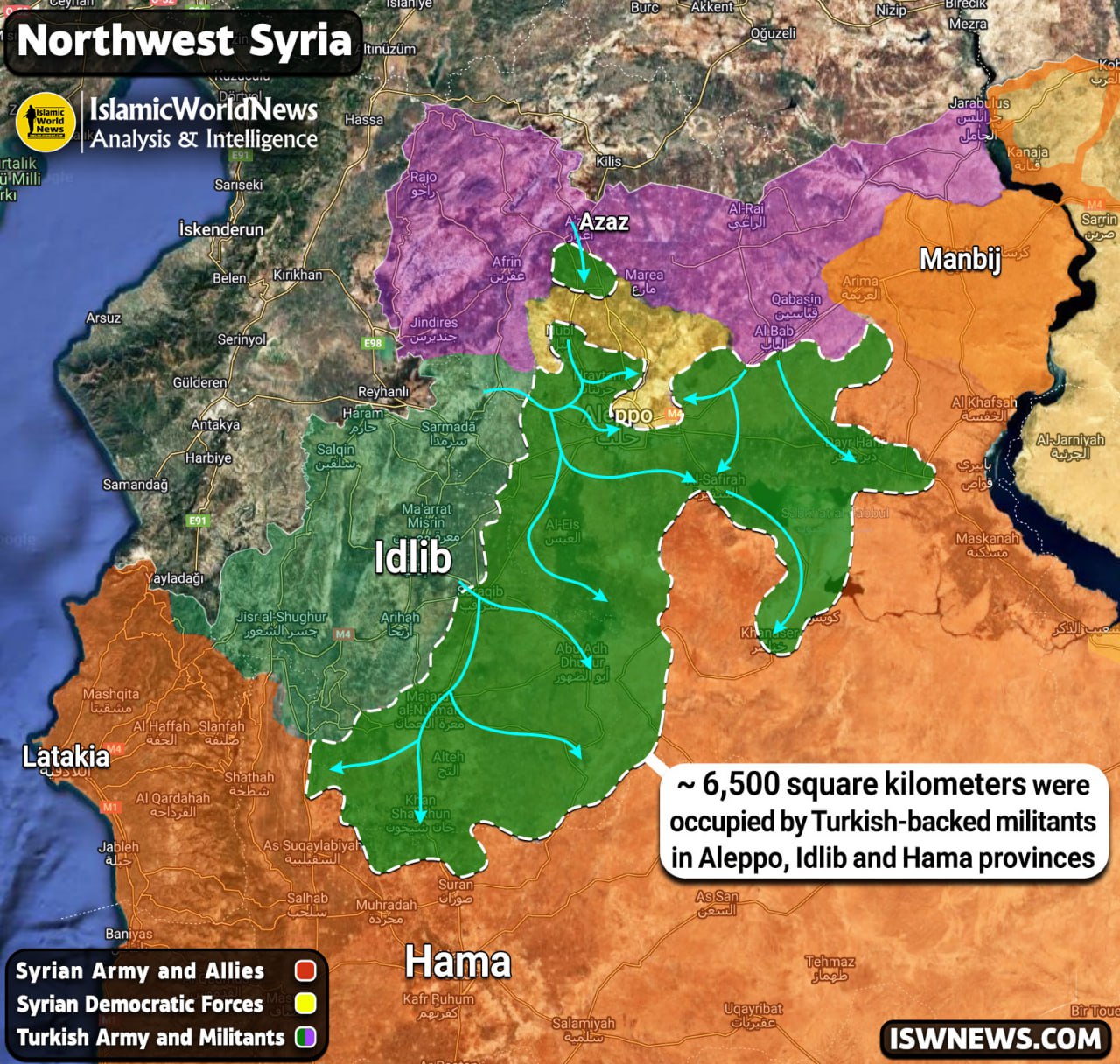
The turquoise blue area represents the territory occupied by the militants in the past 24 hours.
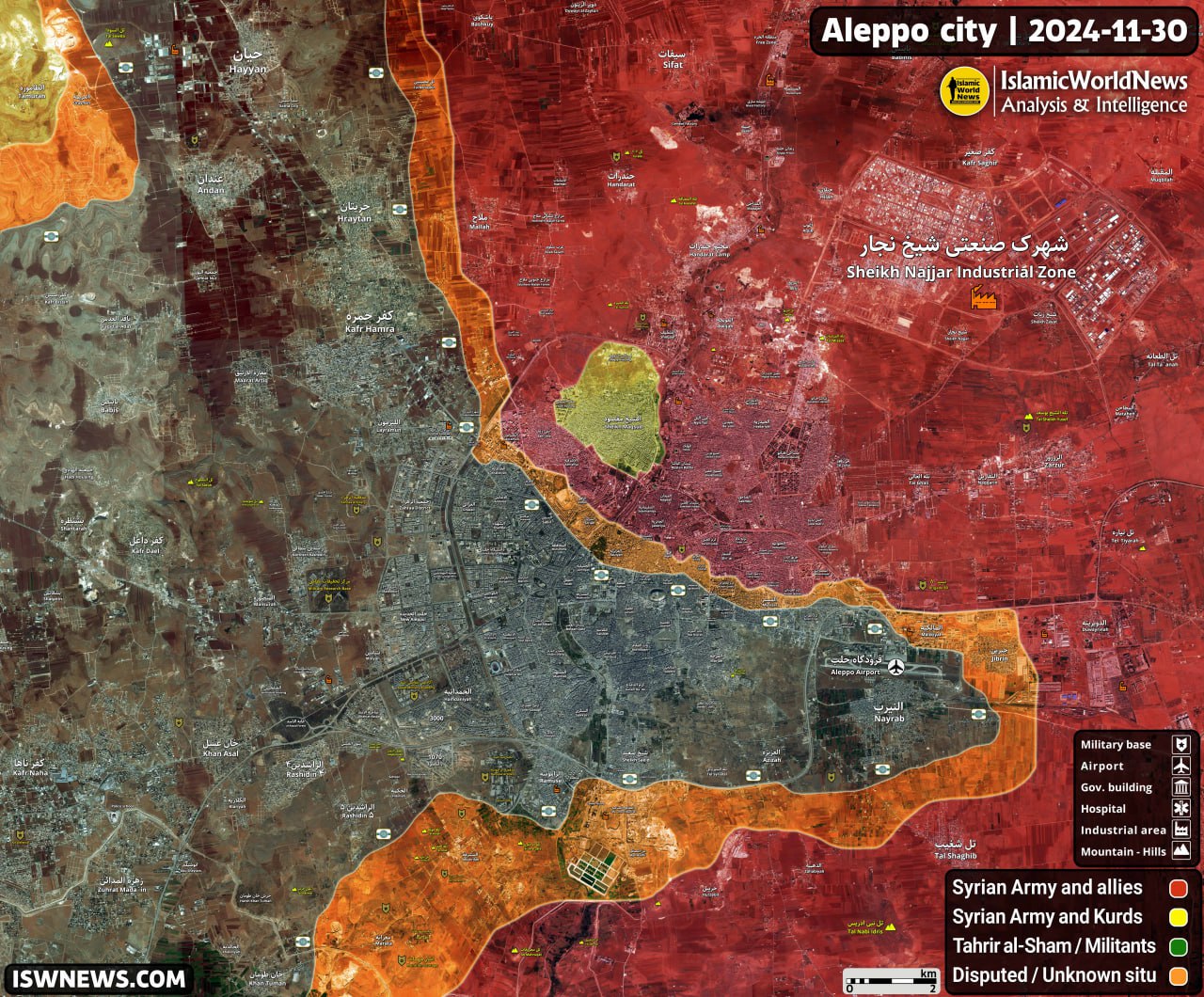
The few remaining SDF forces in Aleppo are evacuating to SDF-controlled areas in Manbij and Raqqa. Some Kurdish residents of Sheikh Maqsoud have chosen to remain in Aleppo rather than leave their homes. Many other residents are in similar situations, preparing to live under the control of various armed groups and terrorists. It is not clear when Aleppo will be retaken…
The northern outskirts of Aleppo and the Shahba area have also been lost, and the militants are clearing these regions.
Al-Safira is under complete militant control and siege. About 3,000 displaced people from Nubl, Al-Zahra and Foa along with the city’s residents are in Al-Safira, awaiting a safe route for evacuation. The situation regarding water, food, and housing for the displaced is critical.
The Syrian defense factories in Safira likely evacuated completely, as the militants have not released videos of any spoils. It seems that evacuation plans were set during the first two days of the invasion.
The northern half of Aleppo city is under the control of Kurdish/SDF forces and a few remaining Syrian army units, while almost half of the Sheikh Najjar industrial zone is controlled by militants.
Reports suggest that the militants have proposed a safe corridor for the Kurds in exchange for evacuating northern Aleppo city and its northern suburbs.
Al-Safira town is either under militant control or completely besieged. The militants have not yet entered the Al-Safira defense factories.
The Khanasir area is under the control of militants.
The militants’ advance in the northern outskirts of Hama city has been stopped in the Kafr Zita-Latmin-Morek triangle. The Syrian army is setting up defensive lines and preparing for counterattacks.
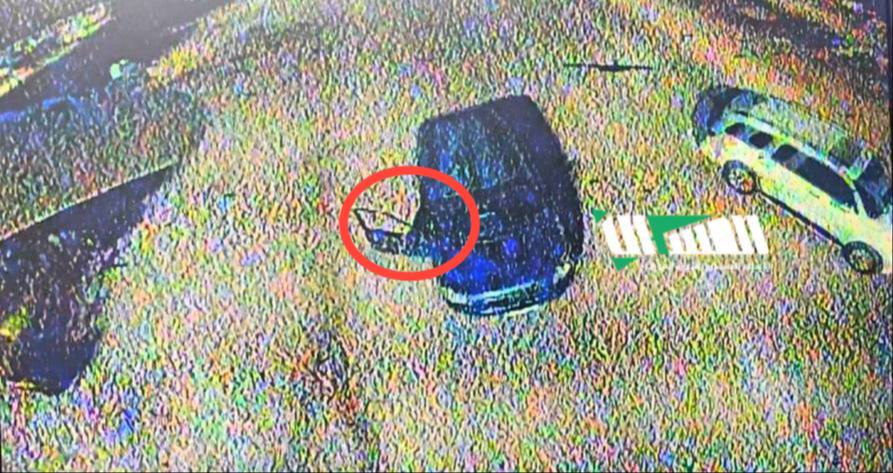
According to some reports, recently, Turkish-backed militants have launched FPV units in Syria with the assistance and training of Ukrainian officers. This development is expected to significantly impact future battles, causing substantial casualties and damage to the Syrian army.
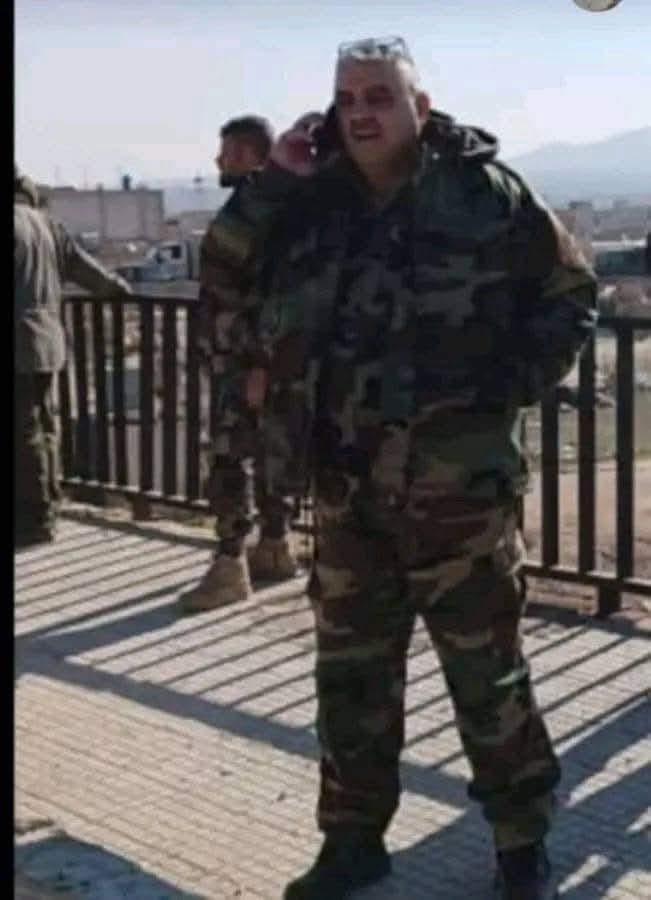
Brigadier General Uday Ghasseh, the commander of Hama’s military security
These drones provide real-time video feedback to the operator, allowing for precise targeting and increased effectiveness in combat situations. The use of such technology has intensified the conflict and highlighted the evolving tactics in the Syrian civil war.
The assassination of Brigadier General Ghasseh is one of the first notable effects of FPVs in the militants’ combat operations in Syria.
Over the past year, the Syrian army, with Russian support, has also begun using FPVs, resulting in significant casualties and damage to militant equipment and personnel.
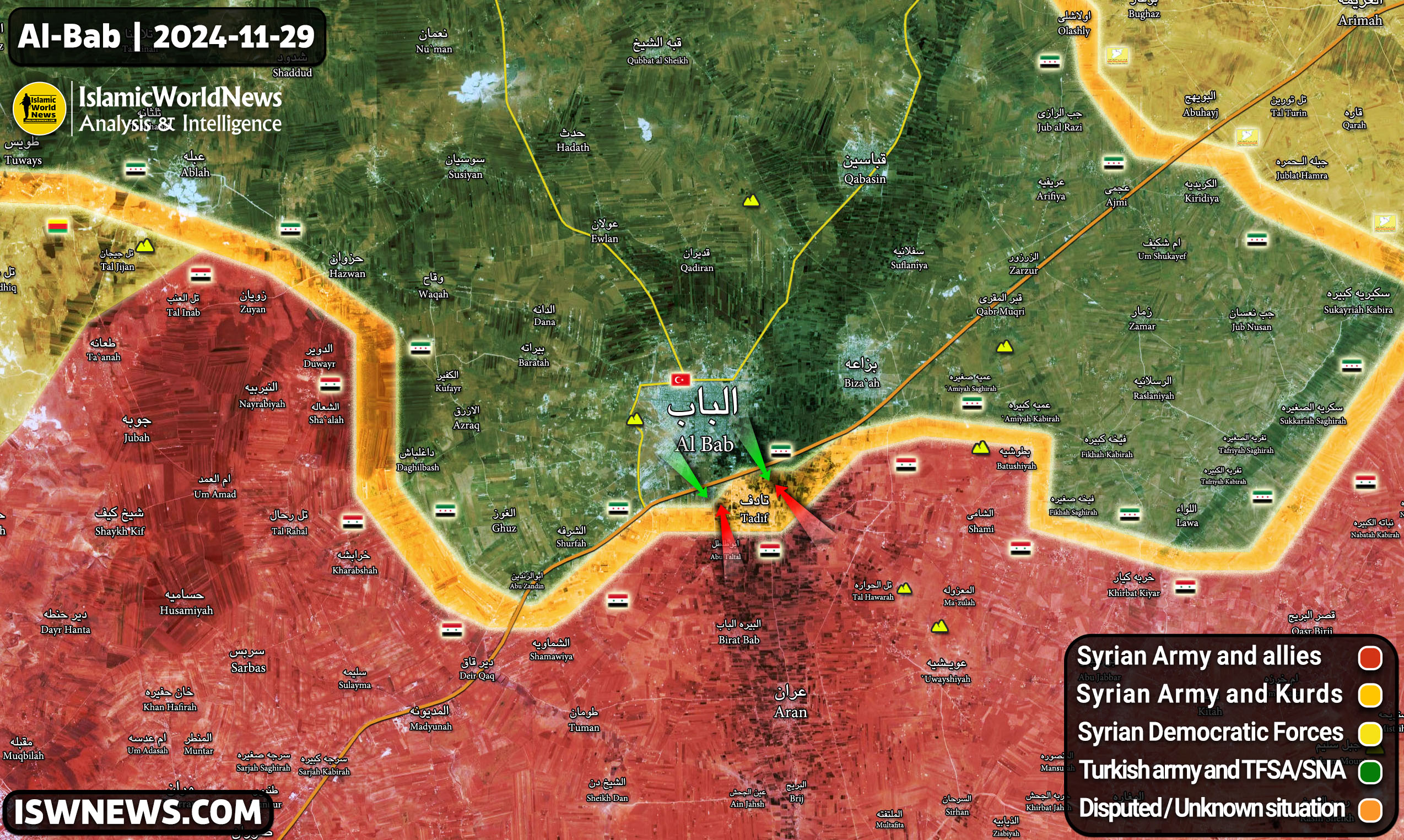
The Syrian army and Syrian Democratic Forces are present in the northern parts of the city.
The situation in Aleppo city remains unstable, and the status of some areas is still unclear. This map is created based on the latest information and will be updated as new details emerge.
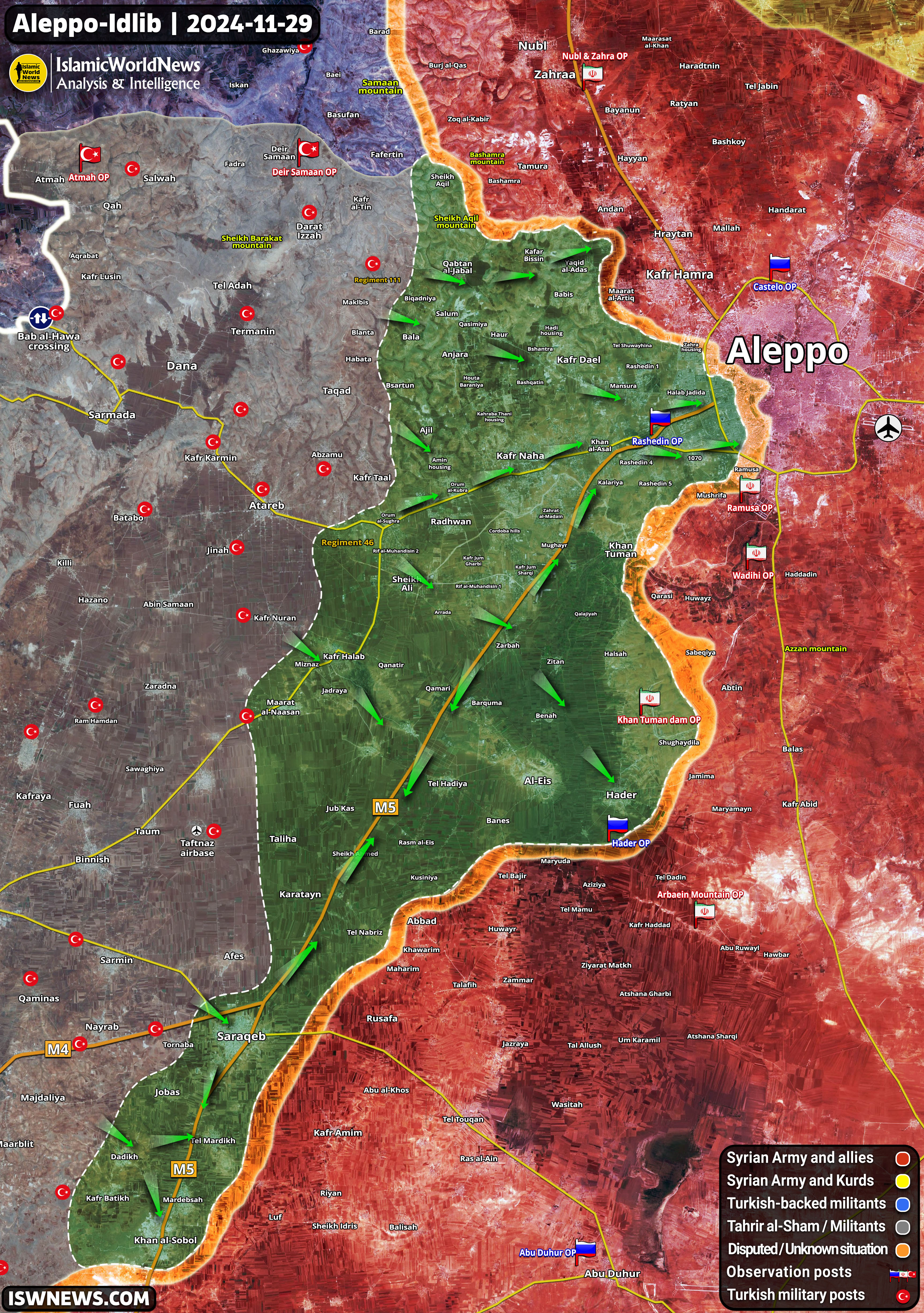
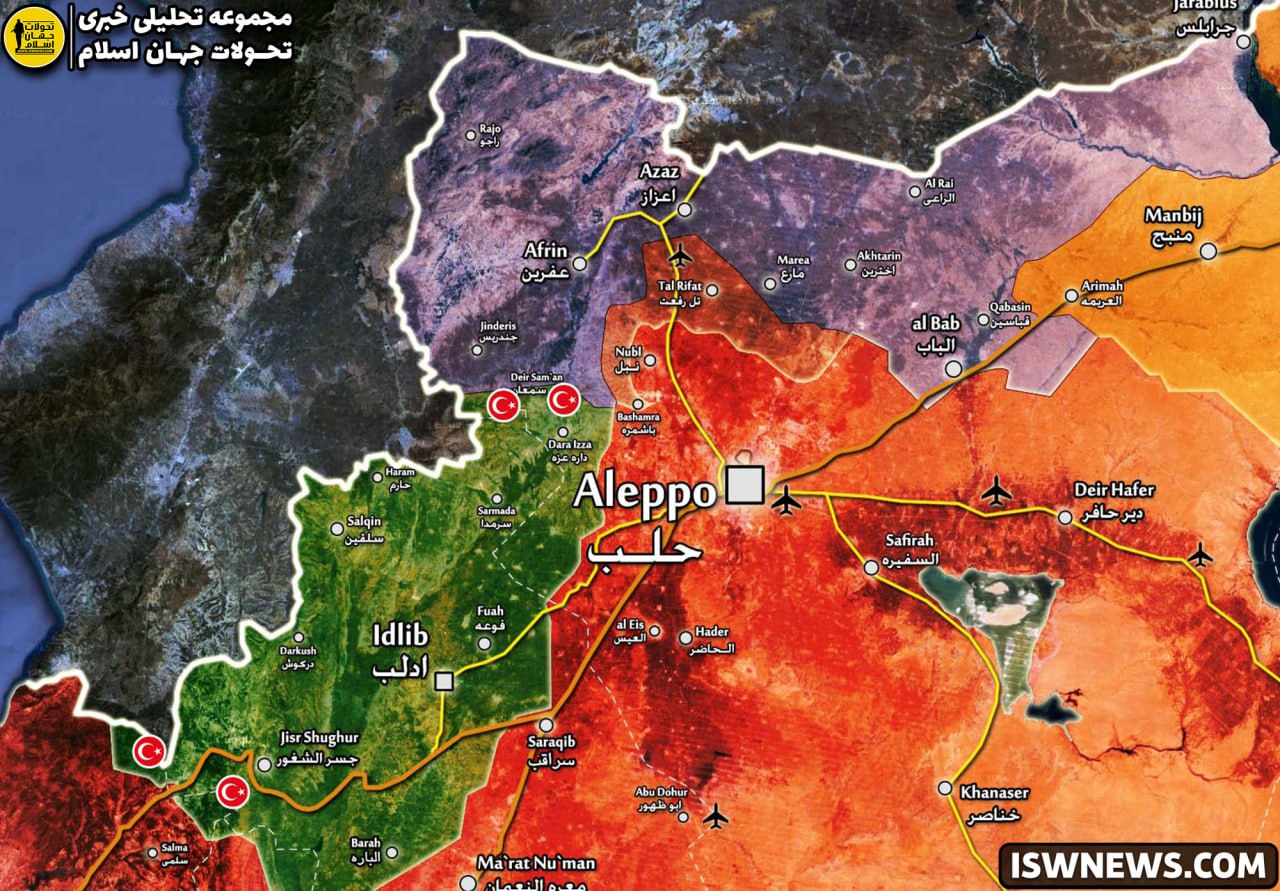
In eastern Idlib, the important town of Saraqib and several surrounding areas have also been captured by militants.
Numerous areas and villages along the Aleppo-Damascus highway (M5) from southwest Aleppo to the Saraqib area have fallen to the militants. Key areas include the village of Hader and the strategic hill of al-Eis.
Click to view full size
The situation within Aleppo city is critical. Militants are advancing through Halab Jadida, Al-Assad Academy, and Project 3000, with reports of their presence in neighborhoods such as Al-Furqan, Al-Adhamiya, Al-Adha’a, Salah al-Din, Al-Sukariya, and even in Al-Kalasah and Al-Firdous and central areas of Aleppo city.
If this trend persists, Aleppo could face total collapse.
On the northern Aleppo axis, the SNA militants have launched an operation to capture the Tal Rifaat area and its surroundings, naming it “Fajr al-Hurriya.” In recent minutes, heavy artillery attacks have targeted northern Aleppo areas, including the town of Nubl.
Residents of the Shiite towns of Nubl and al-Zahra have been warned to be prepared to evacuate due to the increasing clashes and rocket and artillery attacks by the militants.
Yesterday, senior commanders of Syrian National Army also known as Turkish-backed Free Syrian Army met with Turkish representatives in northern Syria. Sources close to the militants claim that the meeting concluded with a decision to launch a new operation against Syrian army forces in northern Aleppo. The militants’ primary objective is to capture the city of Tel Rifaat and its surrounding areas.
Alongside speculations about a new operation in northern Aleppo, local sources have reported the withdrawal of Russian army forces from some of their positions in the Tel Rifaat area, though this cannot be confirmed at this time.
Alleged video of SNA preparing for another operation in northern AleppoAlleged video of SNA preparing for another operation in northern Aleppo
Although there has been no official announcement from militant commanders or their affiliated media regarding the operation in northern Aleppo, released videos show a significant number of troops and equipment being sent to the northern fronts of Aleppo.
If the operation commences in northern Aleppo and the militants succeed in capturing the northern areas, along with other militants advancing in the western and southern suburbs of Aleppo, the security situation in the city will become worrisome.
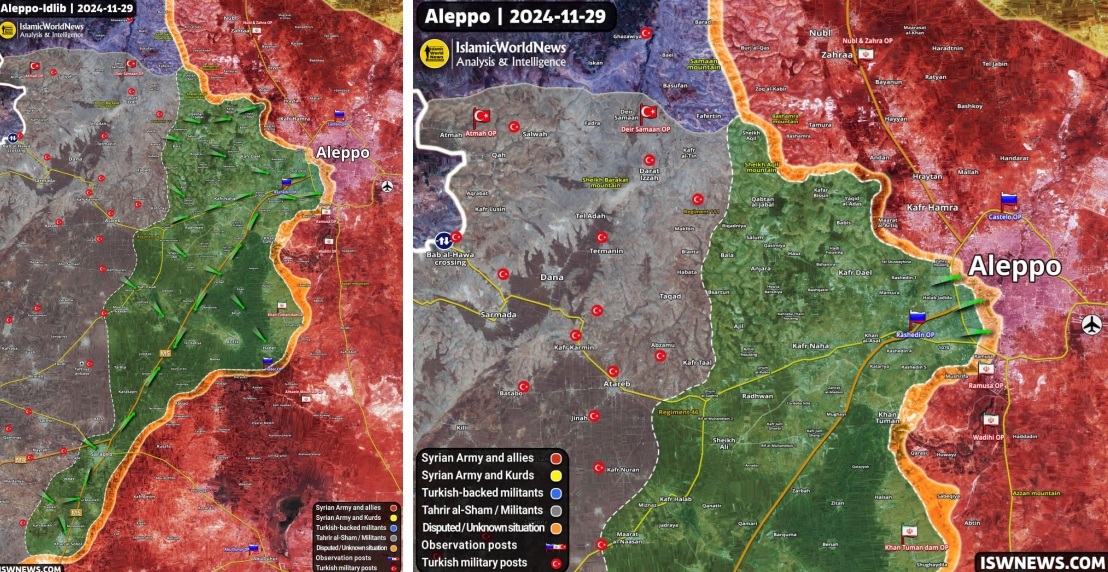
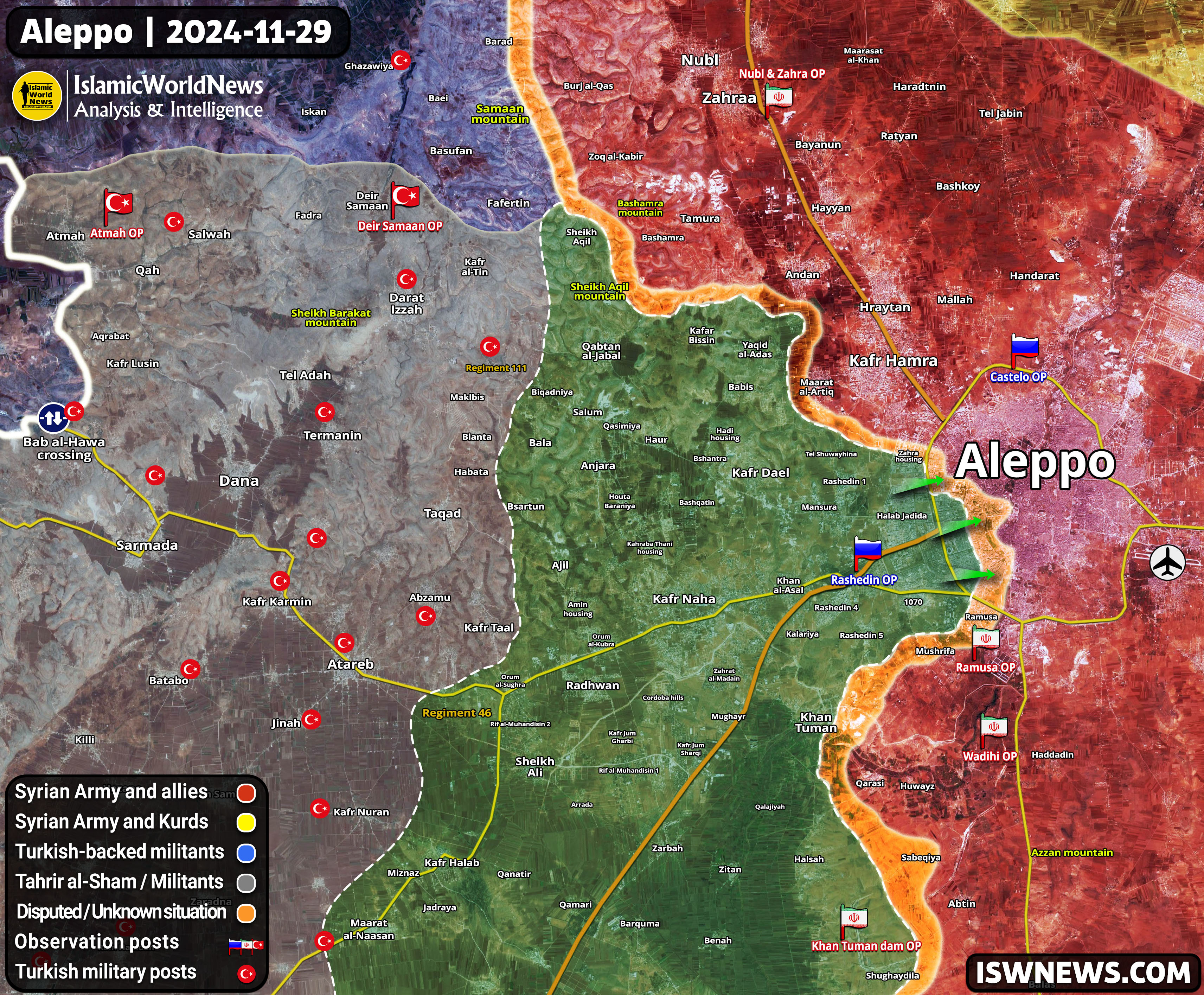
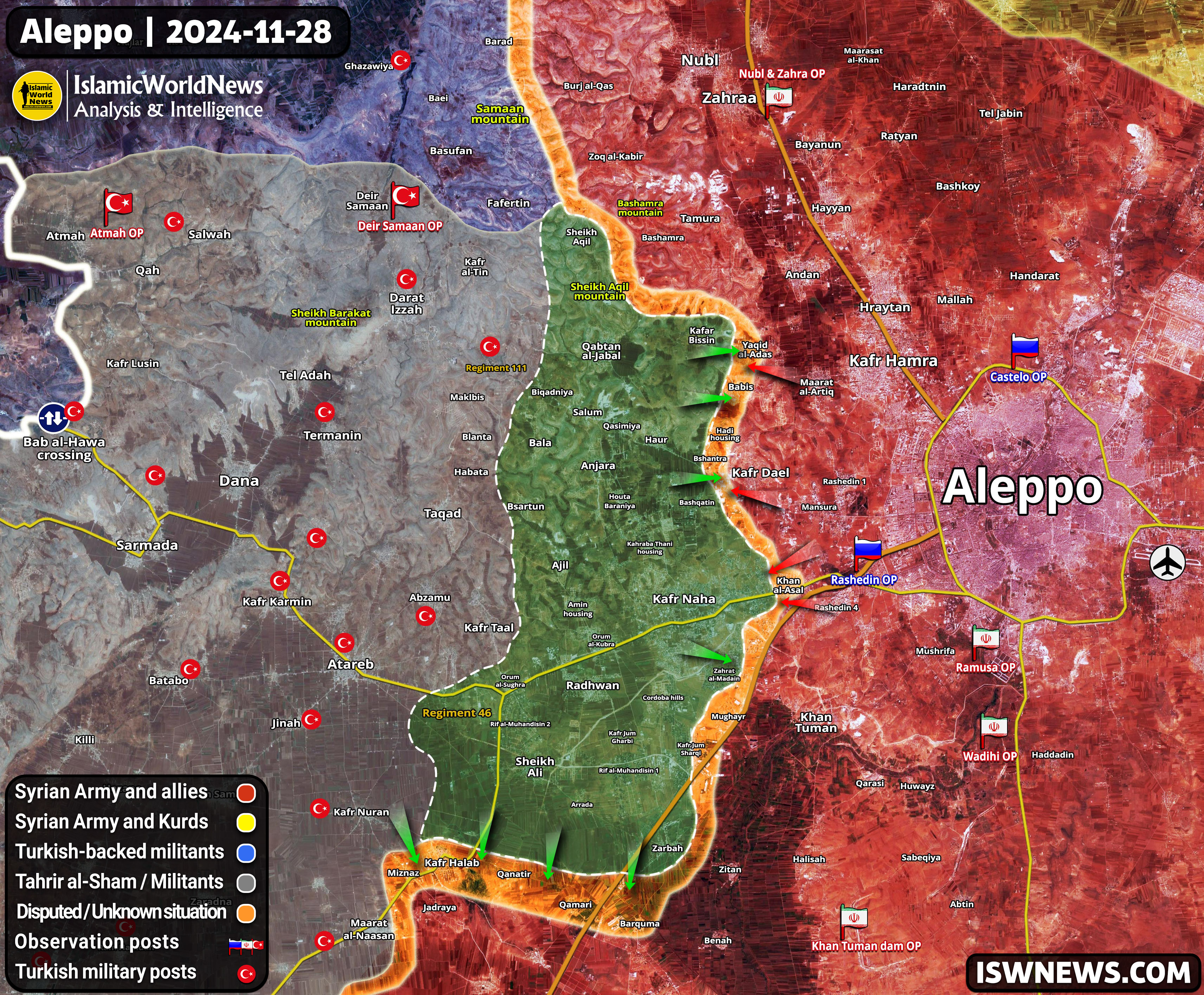
According to the latest information, militants have not only maintained control of the areas they occupied yesterday but have also seized al-Houtah, al-Amin housing, Orum al-Kubra, Orum al-Sughra, al-Radwan housing, Sheikh Ali, Arrada, Kafr Jum, Rif al-Muhandisin 1, and al-Zarba today. They have also entered Khan al-Assal, which is located 3 kilometers from Aleppo city.
With militants entering Al-Zarba and the southern part of the M5 highway, there is a possibility that the areas of Al-Eis and even Khan Touman may also fall.
Based on the most recent field reports, militants are constructing new embankments and barriers after securing the areas they’ve captured.
Meanwhile, the Syrian army is dispatching additional reinforcements to western Aleppo. Notably, the prominent Syrian army commander, Suhail Hassan, has also been deployed to the area, and Syrian army has begun its counterattacks.
It is said that the first counterattack was carried out in Khan al-Assal, and the SAA is now working to clear Khan al-Assal and its surrounding areas of terrorists.
Click to view full size
Fighting persists in Yaqid al-Adas, Babis, Bashantra, and near Kafr Da’el. Militants have taken control of Zuhrat Mada’in. Additionally, reports suggest that Kafr Halab, Miznaz, Barqum, Qanatir, and Qamari have also fallen to the militants following the Syrian army’s retreat.
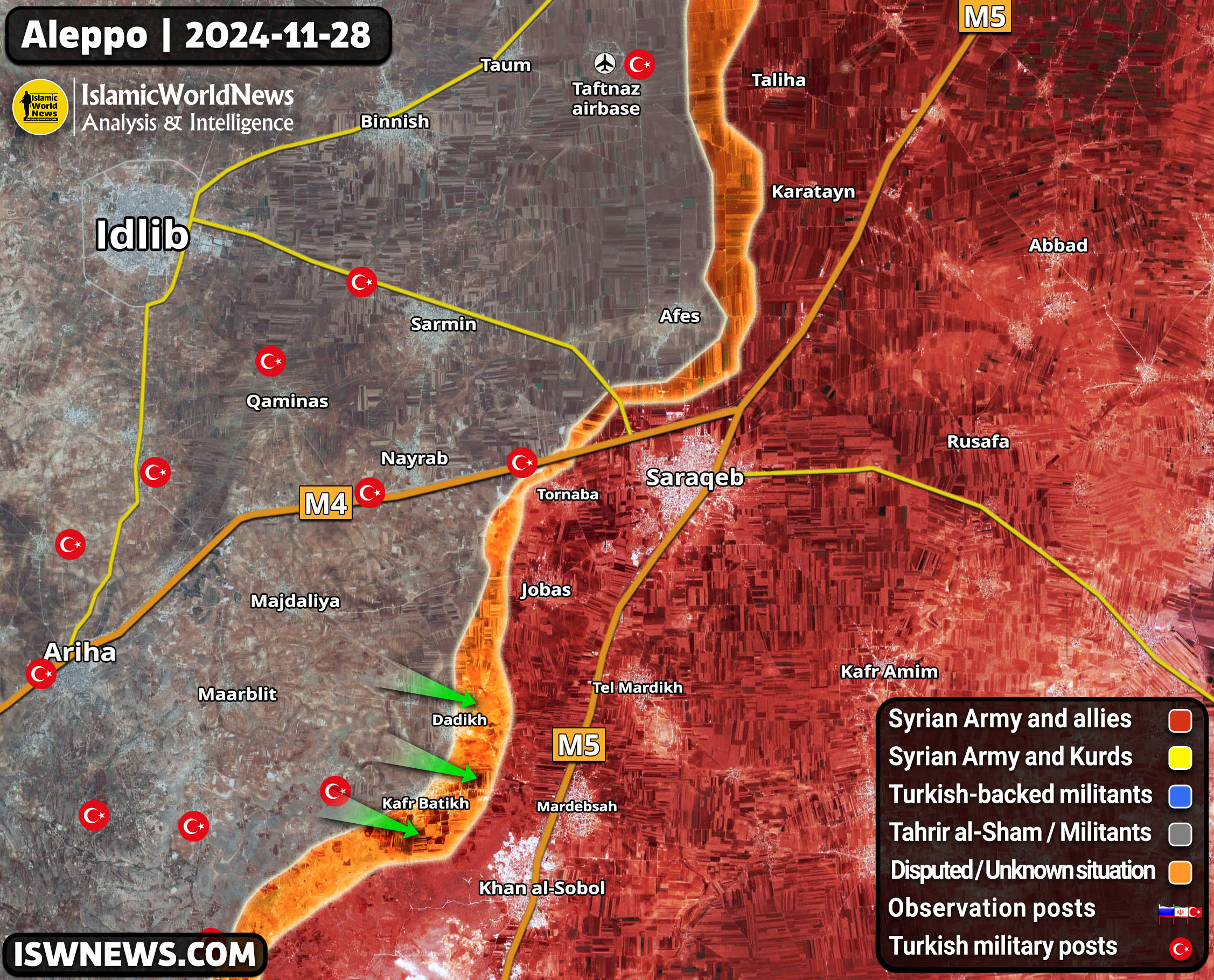
Since the start of the militants’ operations in eastern Idlib, there have been numerous reports of the fall of Saraqib, Jobas, Dadikh, and Kafr Batikh. However, the latest field information indicates that the Syrian army has repelled attacks on Saraqib and Jobas, while Dadikh and Kafr Batikh remain contested.
Following the Syrian army’s withdrawal from Dadikh and Kafr Batikh, militants entered these villages. Clashes continue around these areas, with Syrian army artillery targeting militant movements.