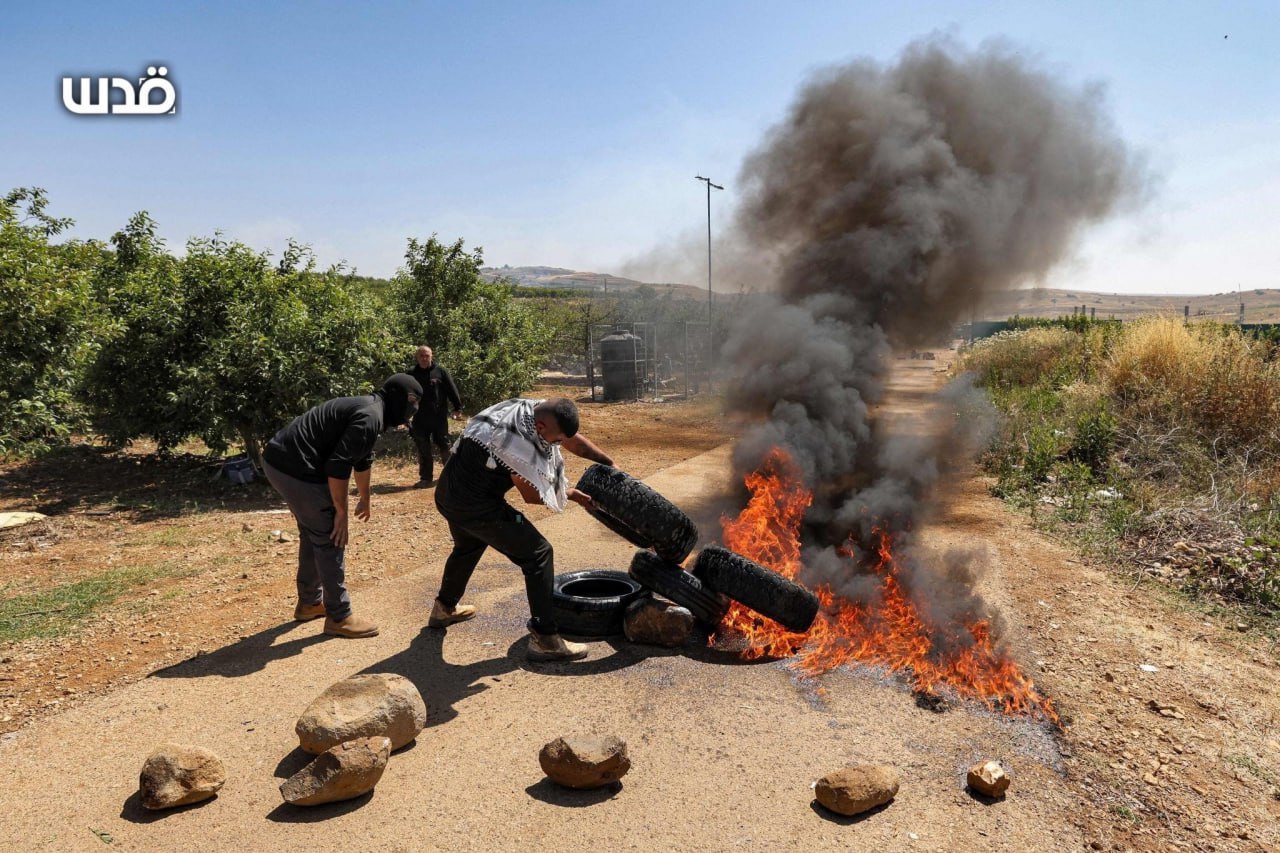
ISWNews Analysis Group – On Tuesday, Israeli armed forces prevented the residents of the Golan Heights from entering their lands in the Al-Hafair district in the east of Masada village, and the occupiers fired tear gas at the locals.
Hundreds of the Golan Heights residents went on strike at the shrine of Abu Dharr al-Ghifari hours ago in order to protest the criminal trespasses by the Israeli forces.
The Israeli army has stationed its military forces to besiege the agricultural areas, where the project dubbed “giant turbines” is to be implemented; and they prevent the owners of the agricultural lands from entering their own farms. The move led to clashes between the residents of the Golan Heights and the Israeli occupiers, and as a result of the skirmishes, dozens were injured.
To address the issue, the Syrian Foreign Ministry praised the positions of Golan Heights residents and their opposition to Israeli occupiers’ plans to seize thousands of hectares of agricultural land in that area under the pretext of installing wind turbines.
The ministry emphasized that the Golan Heights belongs to Syria and Arabs; so, it will remain an integral part of the Syrian Arab Republic, and its return to the country’s territory is definitive.
It is worth mentioning that the Israeli regime has been seizing the lands belonging to the residents of the Golan Heights and even building settlements forcibly for a long time under the pretext of implementing wind turbine projects, which has always been faced with opposition and protests by the Golan Heights residents, because the move violates international resolutions regarding the status of the lands.
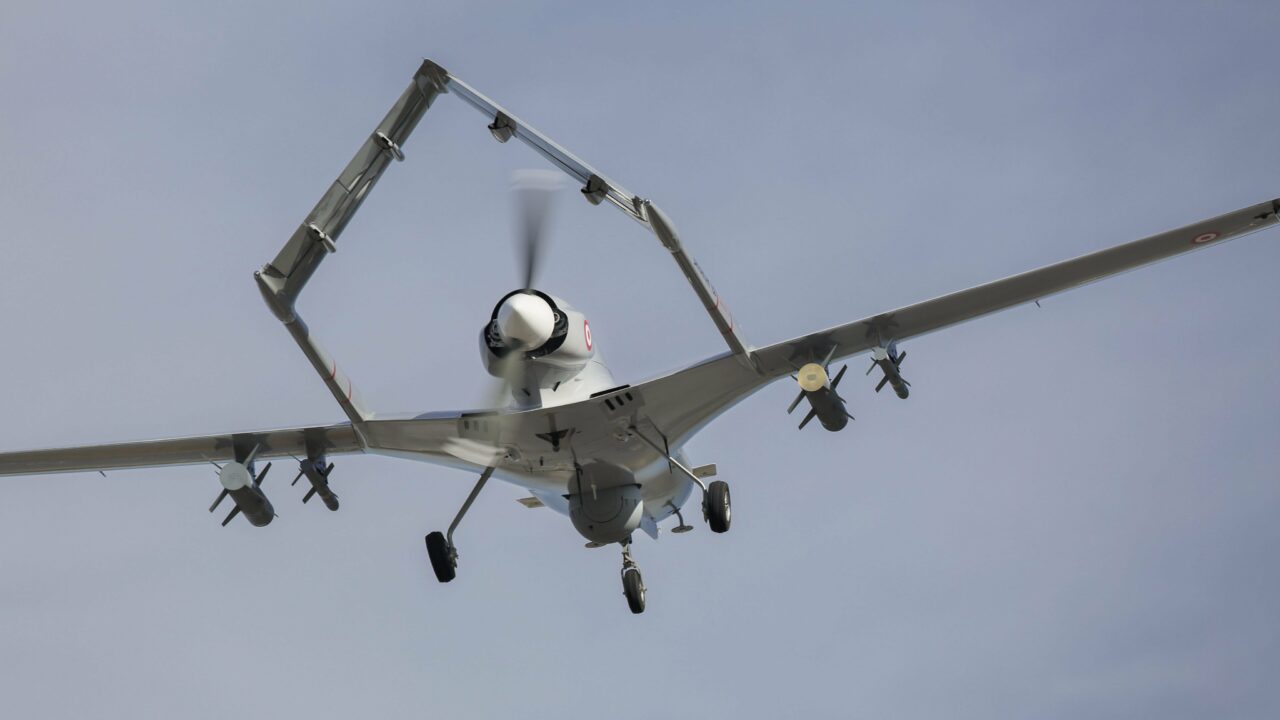
ISWNews Analysis Group – On June 20, the Turkish drones targeted a vehicle belonging to the Syrian Democratic Forces (SDF) near the village of Tal Sha’ir in the suburbs of Qahtaniah in Hasakah province. As a result of this attack, three SDF members, including a field commander named “Yasri Darwish” and “Kabi Shamoun”, his deputy, were killed and another person was wounded. So far, no further details have been released in this regard.
It is worth mentioning that during the last 10 days, the artillery and drone attacks of Turkish army and its militants have increased in the northern regions of Syria. As a result of these attacks, dozens of Syrian Democratic Forces, Syrian army and civilians were killed and wounded.
Considering the rising trend of Turkish attacks on areas under the control of the Syrian Democratic Forces, it is likely that the SDF will organize retaliatory attack against Turkish army bases in Syria or Turkish territory; This type of attack, which is unprecedented, will result in the response of the Turkish armed forces and, as a result, will lead to a grater tensions in northern Syria.
The escalation began on June 11, when a Turkish drone strike killed three fighters of the People’s Protection Units (YPG), the core faction of the SDF, and wounded two others in the northern Aleppo countryside. The faction responded a few hours after the strike with a rocket attack that targeted the Jibreen base area in the Turkish-occupied part of the northern Aleppo countryside as well as the Oncupinar region in southern Turkey.
In the following days, the SDF-linked Hawar News Agency reported 14 Turkish drone strikes and dozens of artillery strikes that targeted the outskirts of the towns of Manbij and Tell Rifaat as well as the southern part of the Afrin area in the northern Aleppo countryside.
The retaliatory Turkish strikes hit residential areas, positions of the SDF as well as posts of the Syrian Arab Army (SAA), which is present in the Kurdish-held part of the northern Aleppo countryside to prevent the Turkish military and its proxies from launching any new ground operations.
The news agency said that by June 15, the strikes had claimed the lives of a total of 21 people, including three fighters of the YPG, eight others from the Manbij Military Council (MMC), an Arab faction of the SDF, as well as nine Syrian soldiers and a civilian.
The strikes also wounded two fighters of the YPG, three from the MMC, six soldiers and at least nine civilians, including two children.
Meanwhile, the Syrian Observatory for Human Rights (SOHR), a London-based pro-opposition monitoring group, reported seven Turkish drone strikes between June 14 and 15. The group said that the strikes killed five Syrian soldiers, six fighters from the MMC and four commanders of the SDF.
The Turkish Ministry of National Defense released footage of the retaliatory strikes on June 15 and claimed that 57 “terrorists” were neutralized. The ministry refers to the fighters of the SDF and its affiliates as “terrorists” and usually uses the term “neutralized” to indicate that the personnel in question were either killed or wounded.
From its side, the Syrian Ministry of Defense has not commented yet on the reports of casualties among its personnel in recent Turkish strikes.
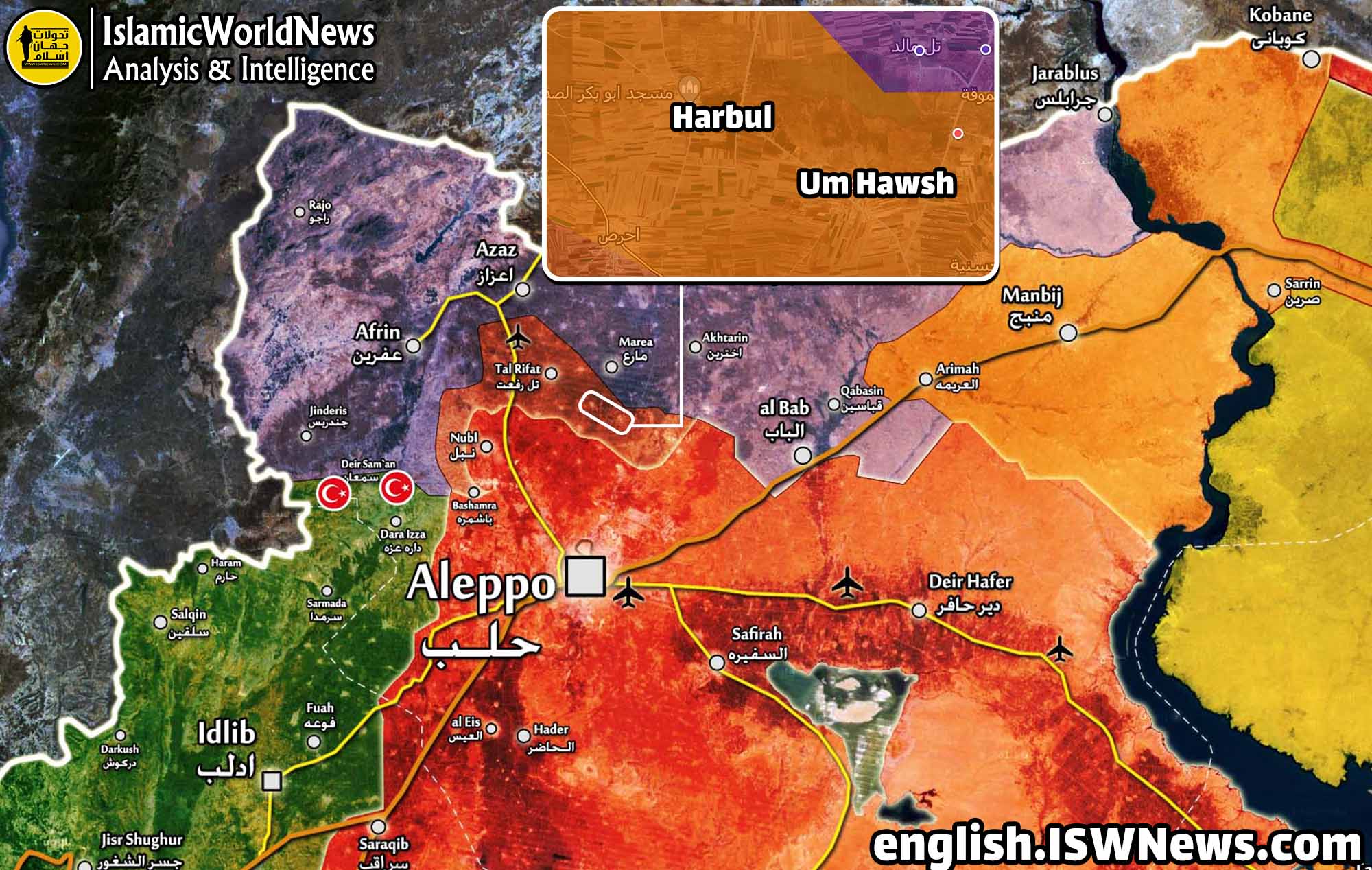
It’s worth noting that on June 12, a Russian service member was killed and several others were wounded when a patrol of the Russian Military Police was hit between the towns of Herbel and Um Hawsh in the northern Aleppo countryside. The SOHR said that the patrol was shelled by the Turkish military. However, Russian sources said that it was targeted with a roadside bomb.
The escalation in the northern Aleppo countryside came as senior diplomats from Russia, Turkey, Iran and Syria are preparing to meet in Astana next week to discuss the normalization process between Ankara and Damascus.
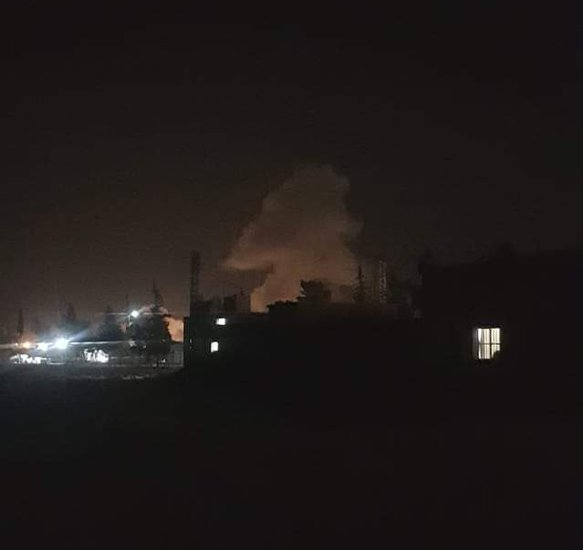
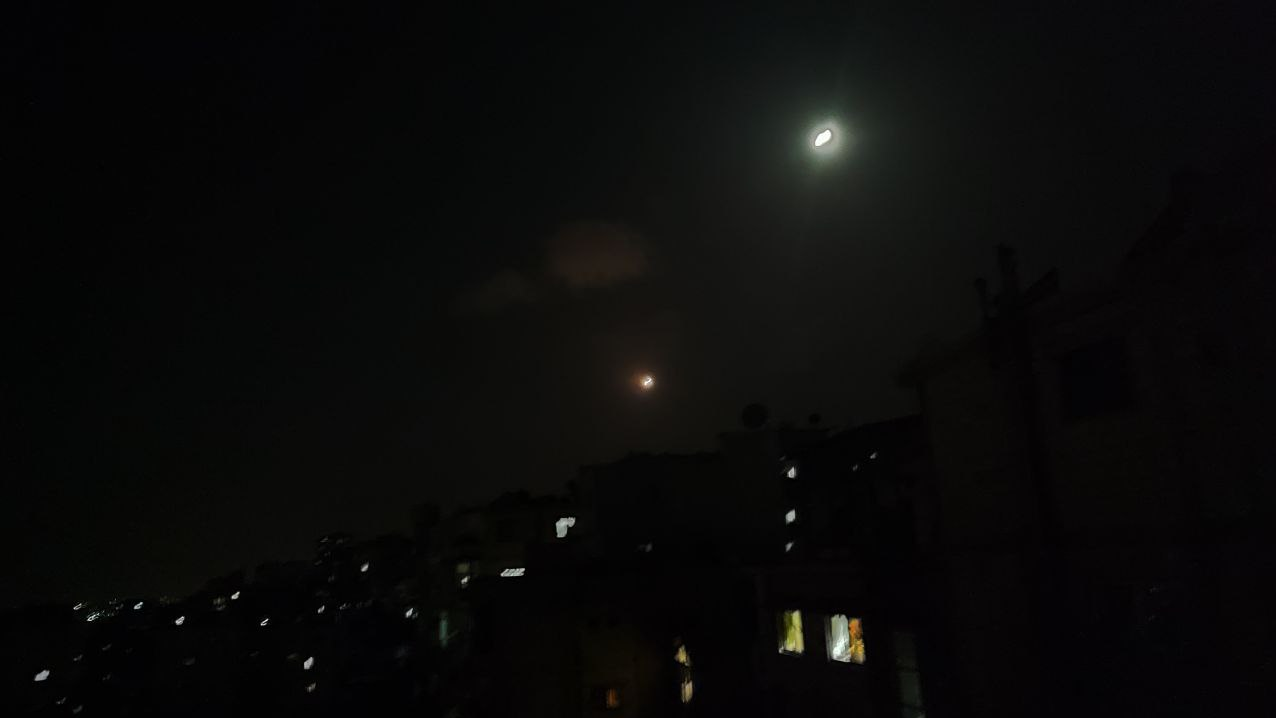
According to a Syrian military source, “At around 01:05 (local time) on Wednesday, the Zionist enemy attacked targets in the suburbs of Damascus with several missiles from the occupied Golan and the air defense systems shot down most of the missiles. This attack resulted in the wounding of a Syrian soldier and material damages.“
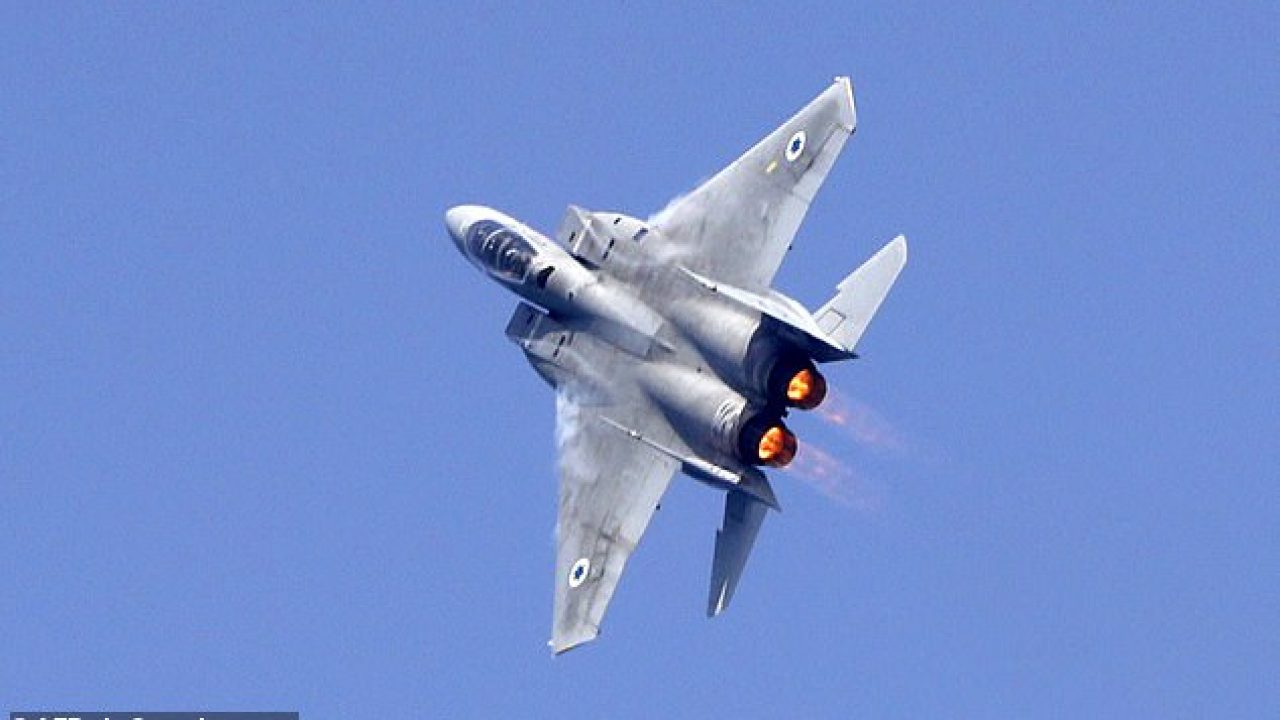
More details in this regard have not been published, but it is said that one of the positions of the Syrian army near the “Al-Kiswah” area has been targeted by Israeli fighter jets.
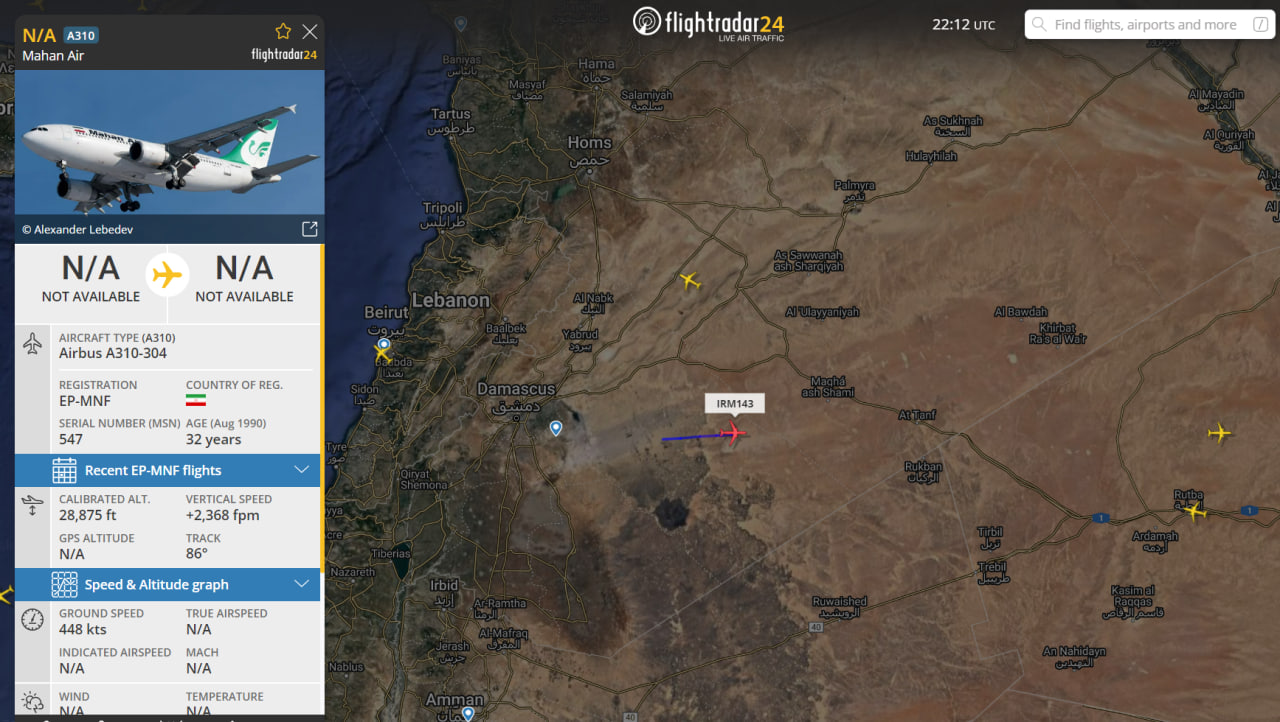
According to IWN‘s research, the air attack on the outskirts of Damascus took place only a few minutes after the Iranian Mahan Air Airbus A310-304 plane took off from the Damascus airport.
Flight and return of Mahan Air to Iran
It is worth mentioning that on May 28, Israeli regime fighter jets attacked targets in the suburbs of Damascus by firing several missiles from the occupied Golan. This attack caused material damage.
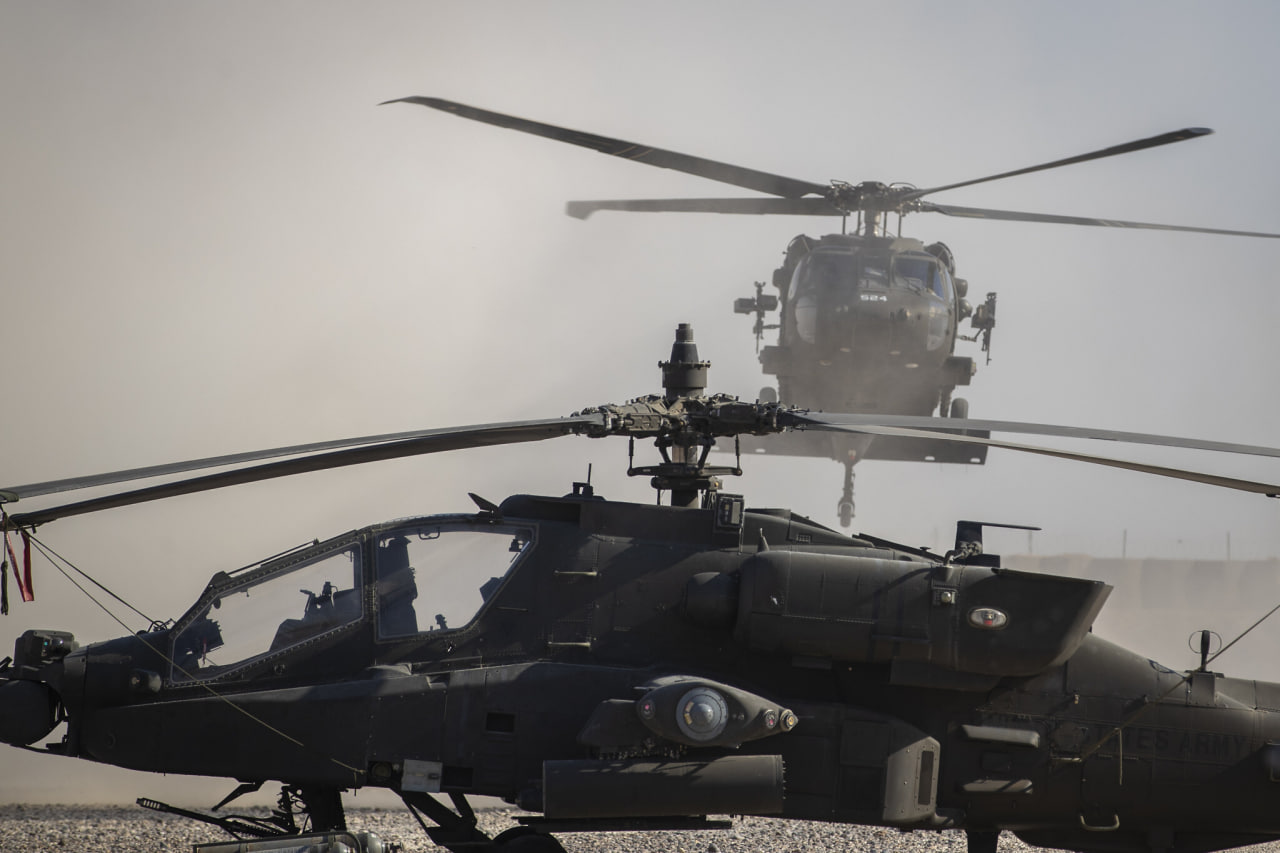
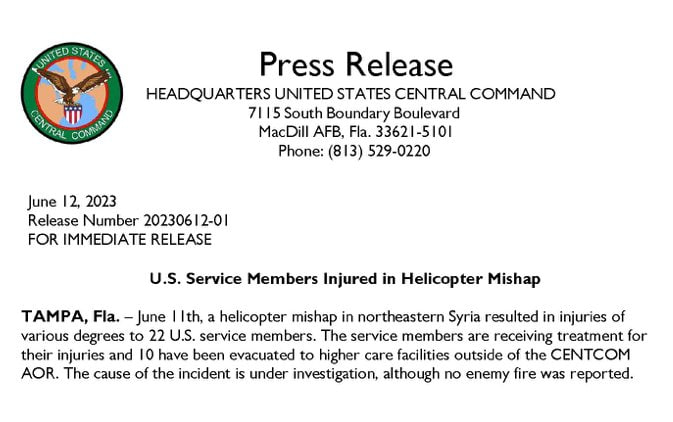
According to the statement, the wounded military forces received medical treatment and 10 out of the injured servicemen were transferred to medical centers and special care units outside the region.
According to the CENTCOM, the reason behind the incident is still under investigation.
There have not been issued any further details on the crash incident. It is worth mentioning that from time to time, the eastern and northeastern regions of Syria witness joint operations by the US military and the so-called Syrian Democratic Forces (SDF) under the pretext of fighting terrorist groups.
Although, the United States military and the SDF forces managed to arrest some of the elements and field commanders of the ISIS terrorist group during joint operations in recent years, terrorist activities and the movements of the ISIS elements continue to happen in the regions.
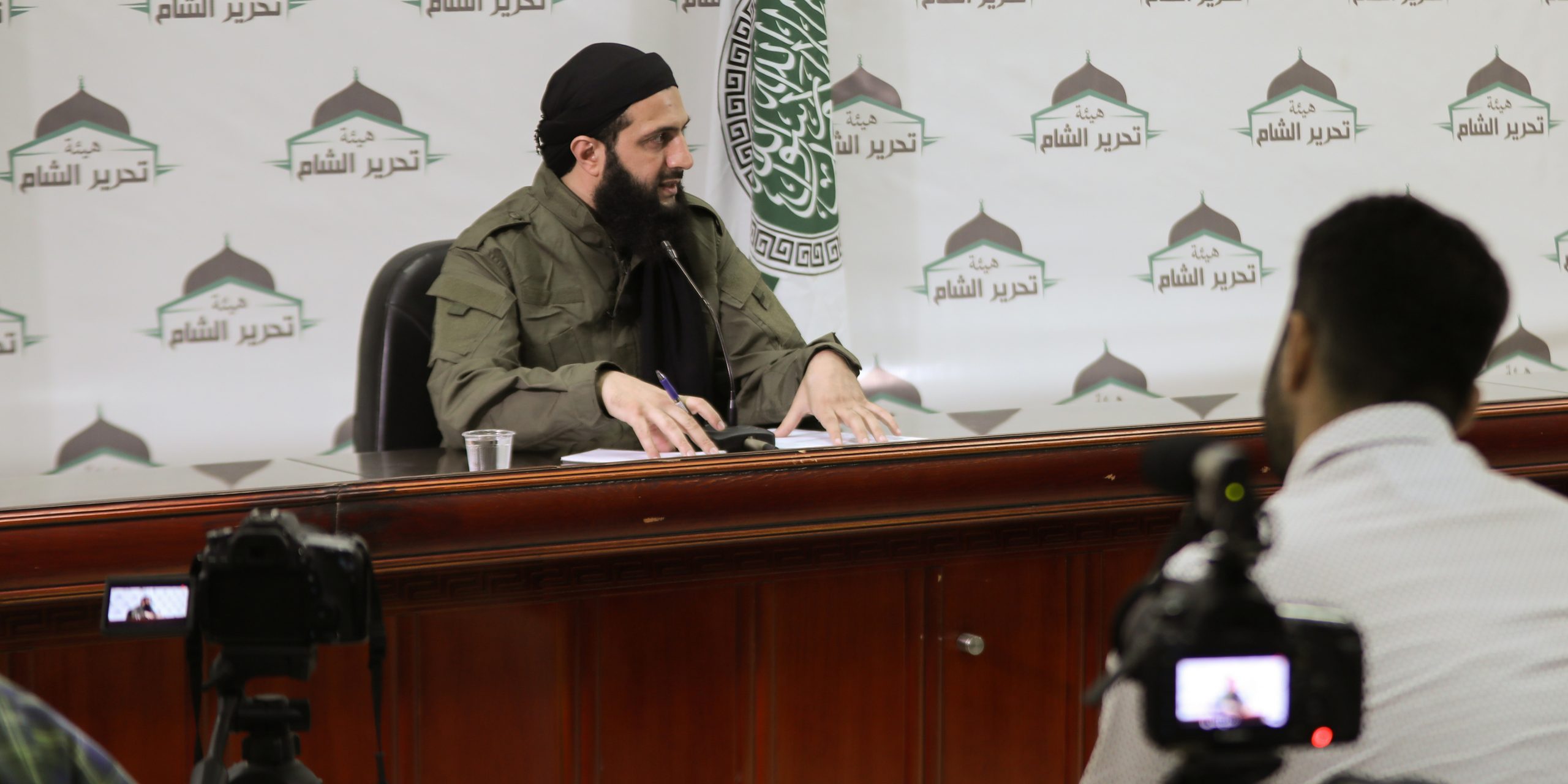
Some political analysts and military experts, who read Abu Mohammad al-Julani’s recent speech, said that the speech is a declaration of existence, and attributed the words to his weak position on the ground.
On May 27, Al-Julani address Aleppo refugees at a conference in Idlib that Aleppo is the gate of Damascus and it will be focused on in one or two years.
A month earlier, al-Julani also addressed Idlib tribal leaders that Hay’at Tahrir al-Sham is not weak and has the power to change the war equation.
The comments of the commander come at a time of serious military and political developments in Syria, including the normalization of Arab states’ relations with Syria, as well as Russia’s ongoing efforts to mediate the normalization of relations between Damascus and Ankara.
Since early June, northwestern Syria has witnessed an escalation of military clashes between Hay’at Tahrir al-Sham and the Syrian army. In the shadow of the confrontations, Russian fighter jets intensified airstrikes against Hay’at Tahrir al-Sham’s positions.
Syrian military expert Brigadier General Ahmad Al-Rahal believes that whatever Al-Julani said about Aleppo is an attempt to divert public opinion.
There is confirmed information about Al-Julani’s meetings and coordination with Director of the National Security Bureau of Syria Ali Mamlouk, Head of Syria’s general intelligence directorate Hossam Louka and Russian military intelligence agents, the expert said, adding that the commander is also not unaware of Russia and Turkiye’s understandings.
He also noted that Al-Julani has realized that the roadmaps changed and it is possible that some areas of Idlib and Aleppo, along with border crossings, will be handed over to the Syrian government based on previous coordination and agreements to remove Al-Julani from the region.
Al-Julani wants to introduce himself as the godfather of the region and behaves as if he is the decision-maker and can control and manage the coordination steering wheel in all these areas, he said.
Al-Rahal added that the changes are in the hands of Russia and Turkiye, and Al-Julani cannot take unilateral action; and that he knows the moment he starts a battle against Russia, it will be his end.
Hossam Al-Baram, a Syrian analyst, opines that Al-Julani’s purpose and Turkey’s messages on Aleppo are clear, which is to find a safe environment for the return of Syrian refugees to areas under their control as well as to expand their territory in new areas, and turn them into an economic hub that helps them put pressure on the Syrian government and maintain their position in talks with Damascus.
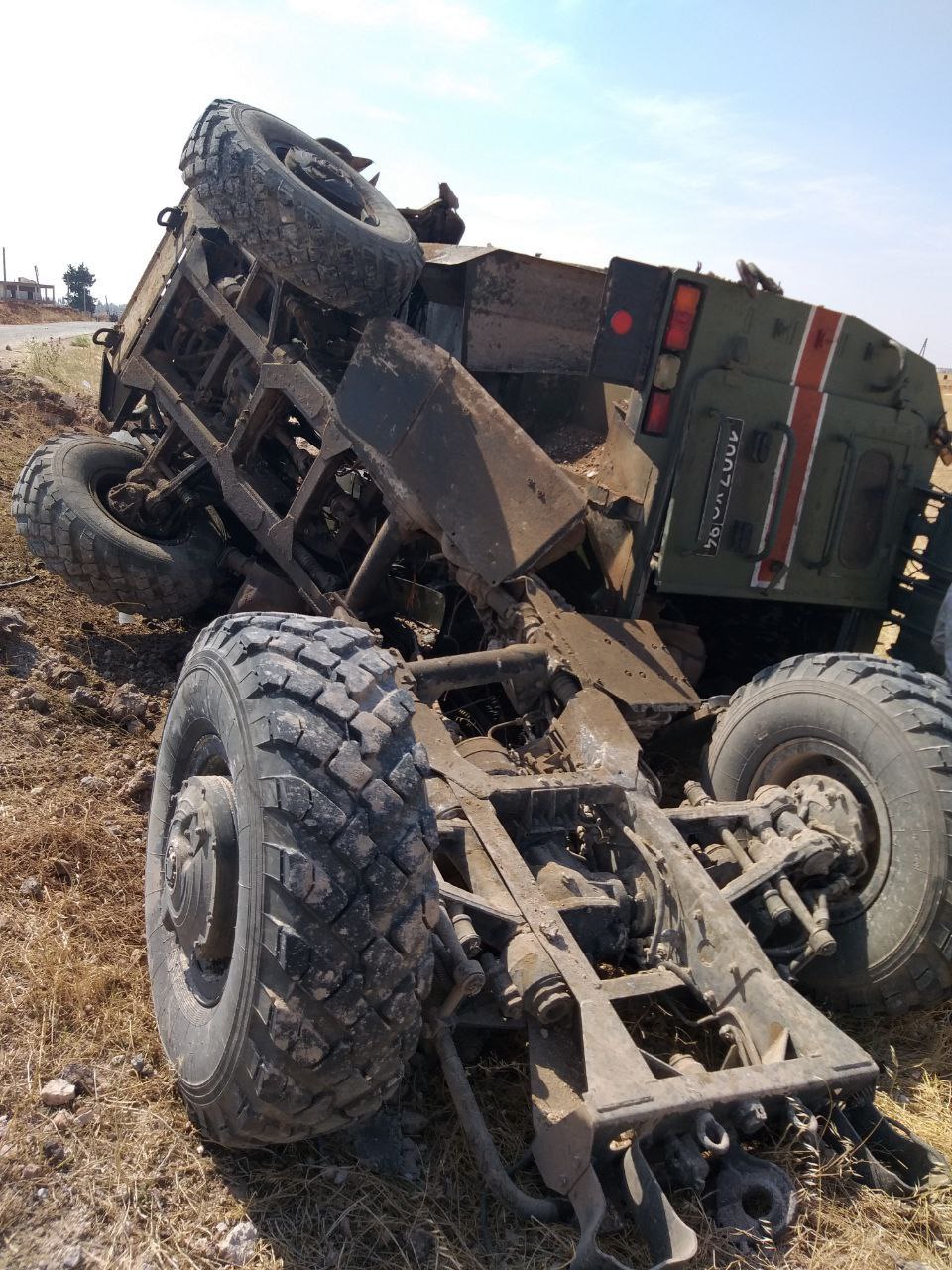
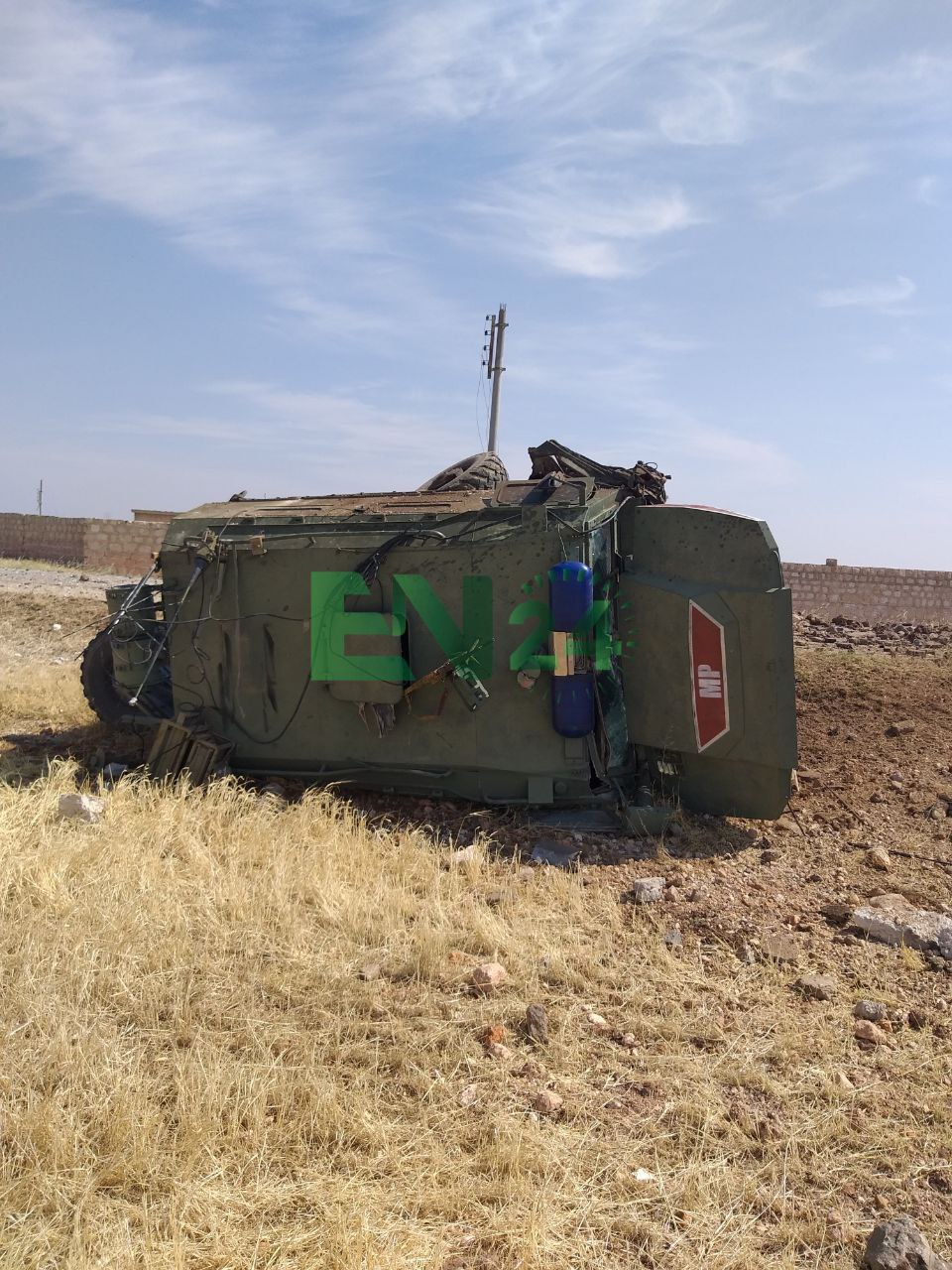
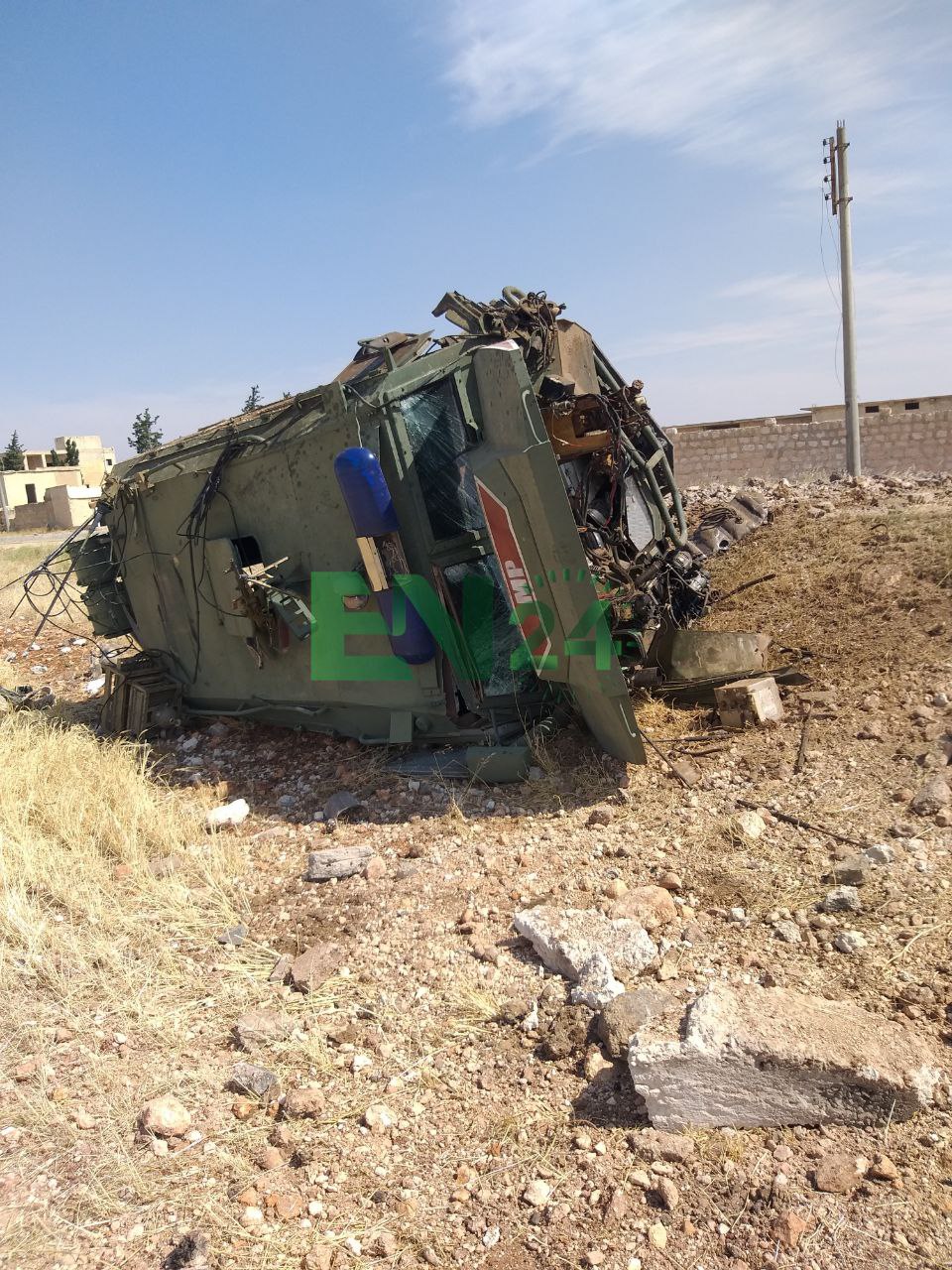
On June 12, Turkish drones targeted a vehicle belonging to the Russian military police on the Harbul-Um Al Housh road near Tal Rifat city in Aleppo province.
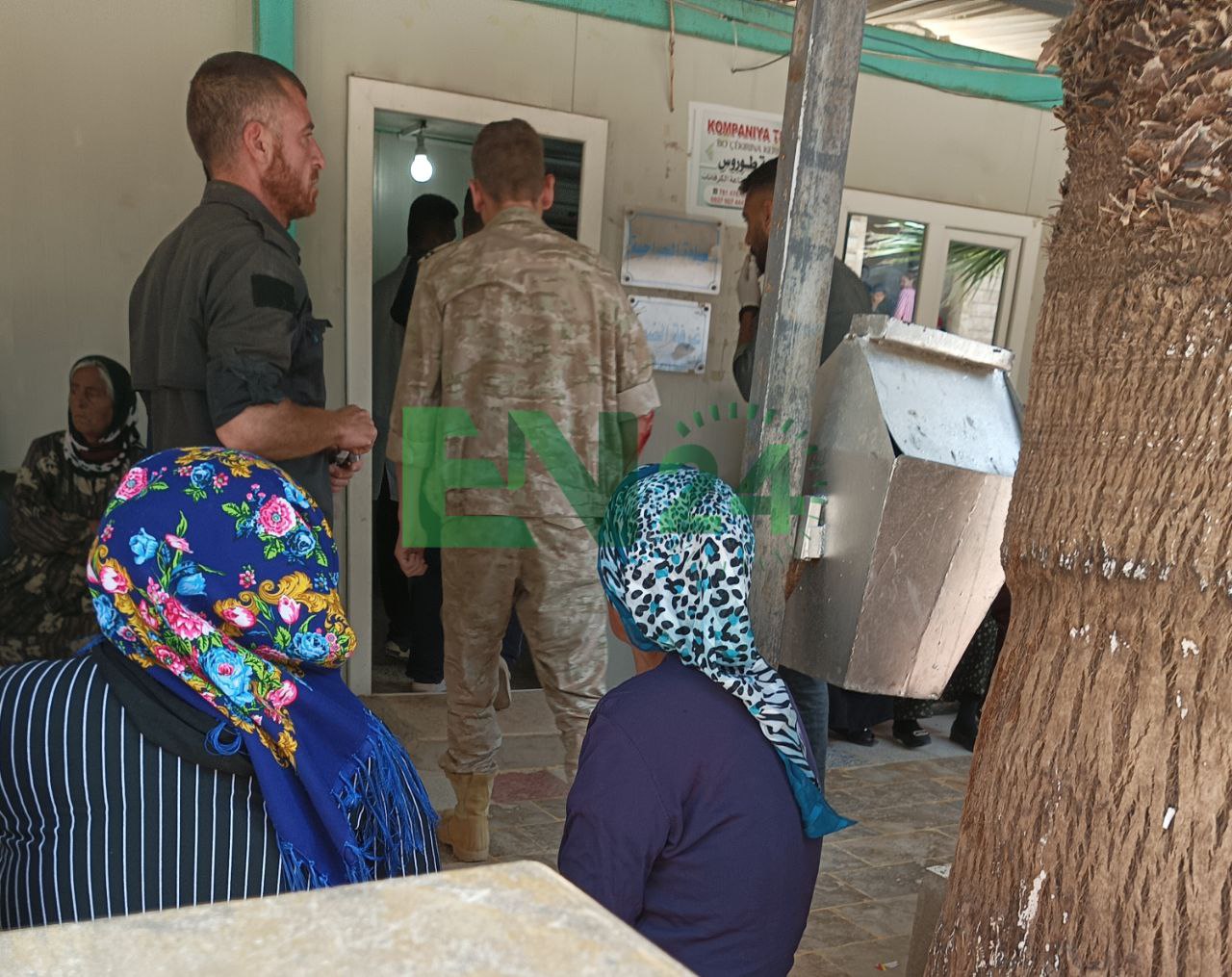
According to local sources, at least one Russian soldier was killed and several others were injured.
The city of Tal Rifat and other villages and areas around it, which are also known as Shahba region, witness almost daily artillery and drone attacks by the Turkish army and its militants.
It is worth noting that on June 10, Turkish drones targeted a vehicle belonging to the Syrian Democratic Forces (SDF) near the village of Maarata near the city of Tal Rifat. During this attack, three SDF members were killed.
Video from the scene of the accidentRussian helicopters flying over the accident site and its surrounding areasRussian helicopters fly over the city of al-Bab in Aleppo province
On June 10, Turkish drones targeted a vehicle belonging to the Syrian Democratic Forces (SDF) near the village of Maarata near the city of Tal Rifat located in the province of Aleppo, Syria, during which several SDF members were killed and wounded.
After the attack, the media close to the Syrian Democratic Forces (SDF) announced “At 16:45 (Saturday) local time, the drones of the Turkish army targeted an area five kilometers north of the city of Aleppo, during which three of Syrian Democratic Forces were killed and two others were wounded.“
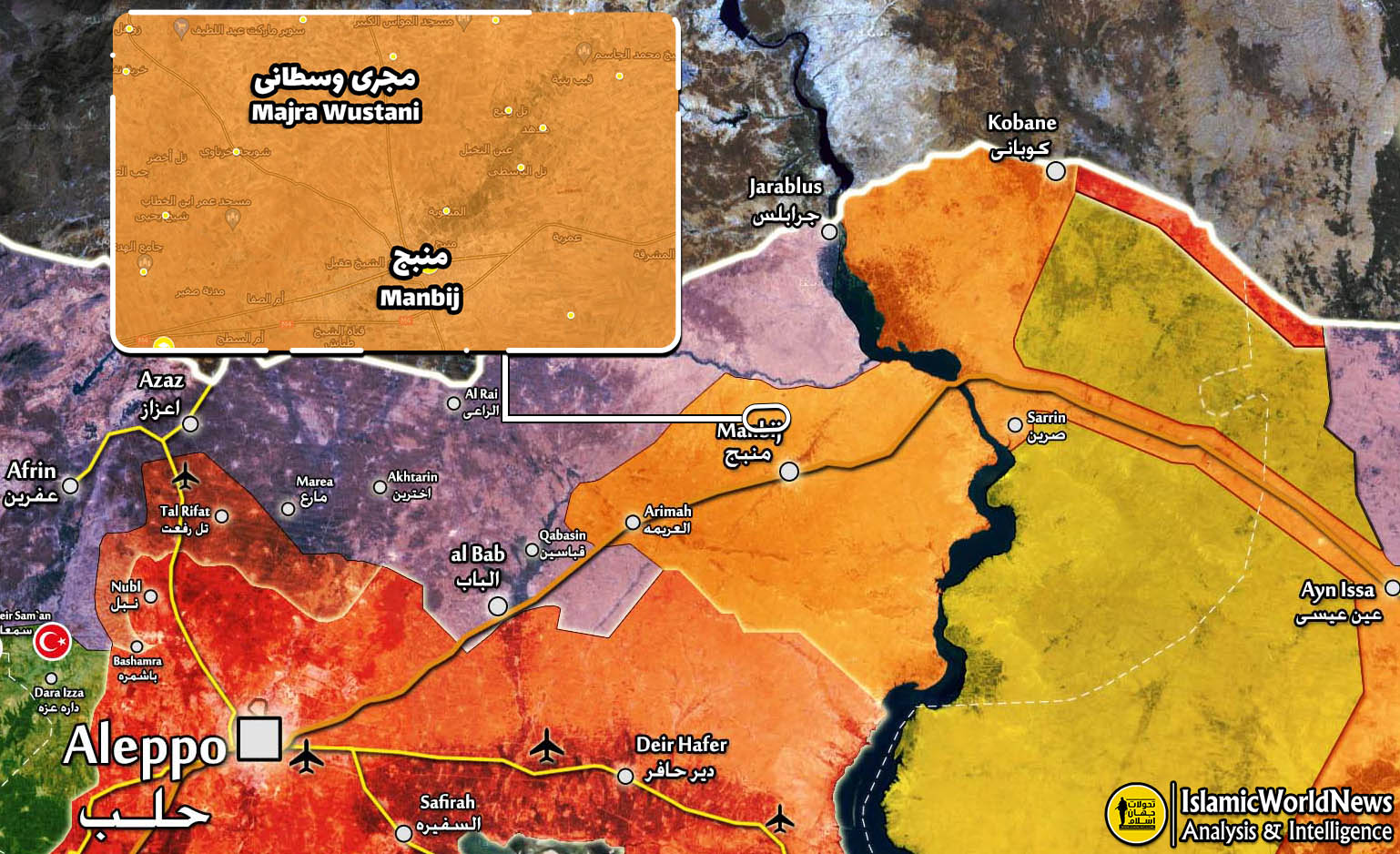
It is worth mentioning that on May 19, Turkish drones targeted a joint headquarters of the Syrian army and the SDF in the village of Majra Wustani in the north of Manbij in Aleppo province. During this attack, four Syrian soldiers were killed and several others were injured.
Oleg Zhuravlev, Deputy Director of the Russian Reconciliation Center in Syria, said during a press conference on June 7 that Syrian and Russian military forces conducted identification and cleansing operations against terrorists in Homs province.
According to Zhuravlev’s statements, as a result of the joint operation between Syrian army units and Russian military personnel, at least 20 terrorists were killed, as much as nine weapons and ammunition depots were destroyed, and 30 terrorist hideouts were demolished.
Russian media reports indicate that this joint identification and cleansing operation by Russian and Syrian forces took place in the north and northeast of Homs province.
It is worth noting that over the past six years, despite ongoing operations by the Syrian army, the Syrian Desert and various parts of Homs province have experienced daily attacks by ISIS terrorists against civilians, facilities and military headquarters.
Furthermore, hundreds of Syrian army forces and allies have been martyred during cleansing operations in the Syrian Desert. However, hidden ISIS cells remain present in these areas and continue to impact the security of some Syrian regions with their terrorist actions.
According to information released by a Syrian military source, the Israeli enemy struck some targets in the outskirts of Damascus with a number of missiles from the occupied Golan Heights around 23:24 p.m. Sunday local time and the Syrian army’s air defense shot down most of the missiles. The attack ended up in some material damages.
Further information has not been released yet, but it is said that the Syrian army’s positions in Hafeir al-Fouqa village in the Al-Tall District of the Rif Dimashq Governorate, which is located in northern Damascus, were targeted in the airstrike by Israeli fighter jets.
This is the first strike by the Israeli regime on the Syrian soil following a five-day war against Palestinian resistance groups during the Thar al-Ahrar operation. It seems that the Israeli regime’s army was reassured that there would be no new confrontation with the Palestinian resistance groups; the Tel Aviv regime focused its attention on Syria.
Thus, it is likely that in the coming days there will be strikes by the Israeli army against targets in Syrian soil due to different reasons, including attacks on centers active in designing and manufacturing missiles as well as drone arsenals and so on.
It should be noted that fighter jets of the Israeli regime’s army also fired some missiles at targets in Aleppo Governorate on May 2, which led to martyrdom of a Syrian soldier and injury of seven others.
Images of Israel’s airstrikes on the outskirts of Damascus
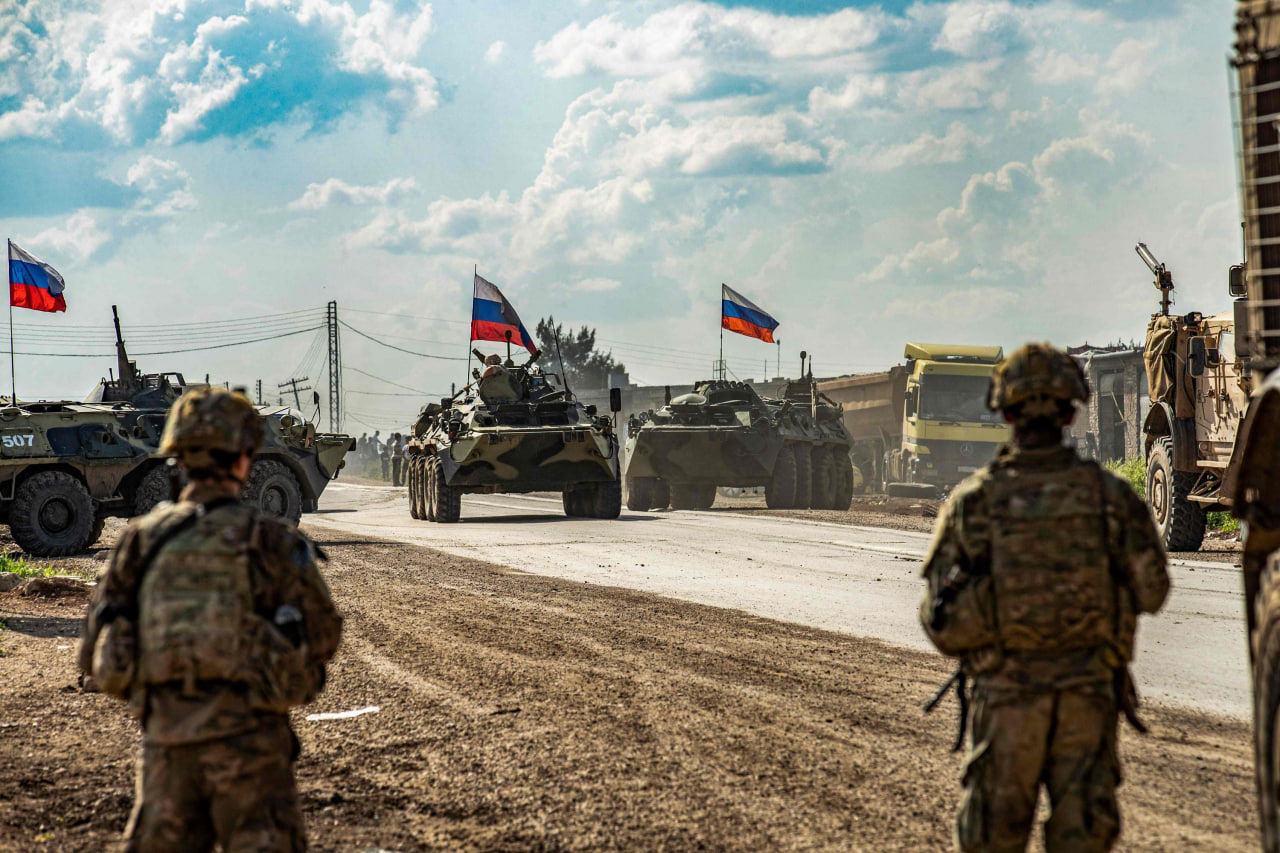
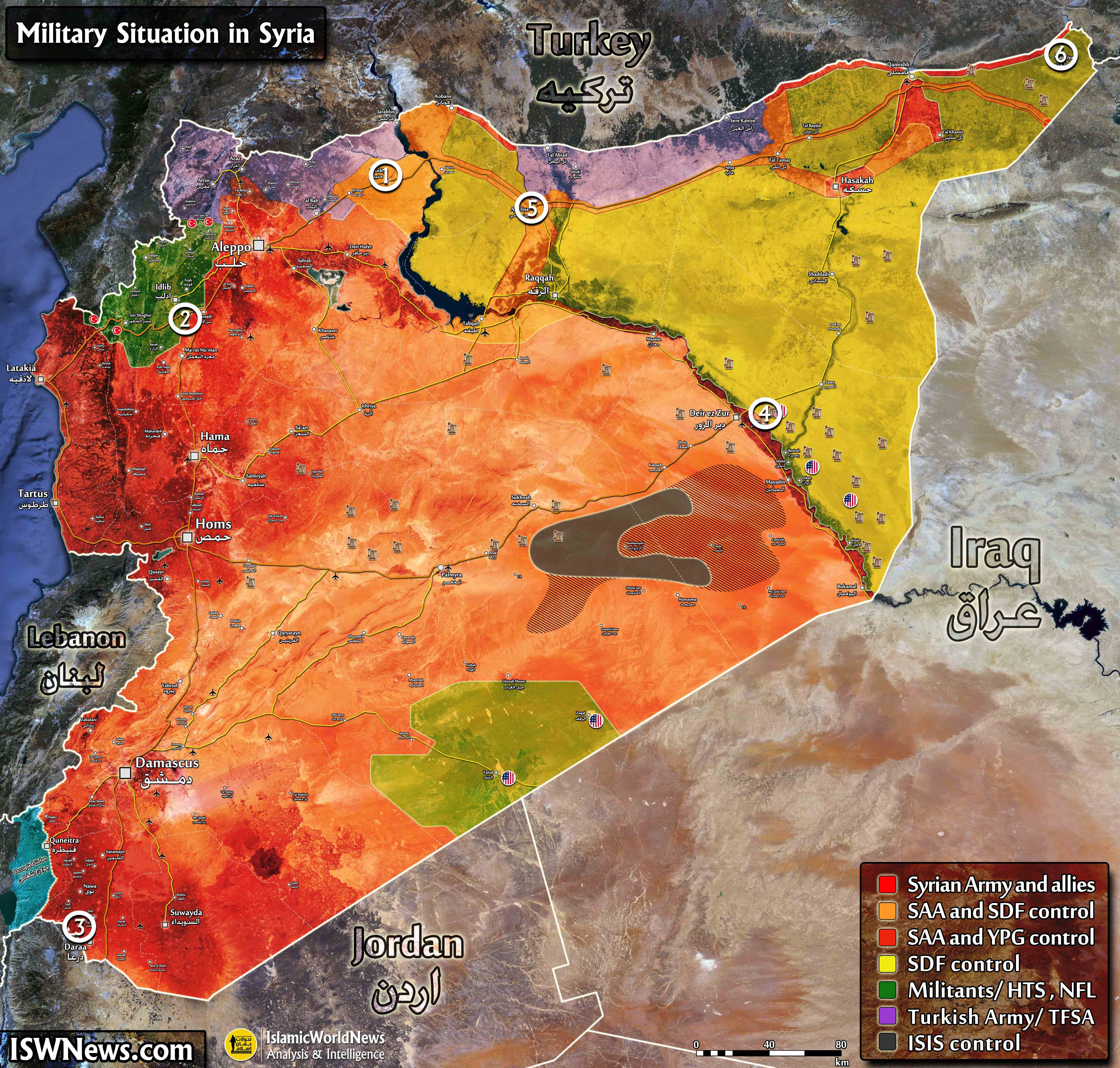
1- Aleppo: – On May 19, Turkish army drones targeted a joint headquarters of the Syrian Army and the Syrian Democratic Forces (SDF) in the village of Majra Wastani in the north of Manbij city in Aleppo Governorate, during which four Syrian soldiers were martyred and several others were wounded. – On May 12, the Syrian Army targeted militants’ positions in the villages of Kafr Taal and Kafr Amma in western countryside of Aleppo with the use of artillery. – On May 22, a joint patrol of the Military Police of Russia and the Turkish Armed Forces was carried out in the western outskirts of the city of Ayn al-Arab (Kobani) in Aleppo Governorate, Syria. This patrol mission is the 138th joint military patrol since the signing of the Russian-Turkish ceasefire agreement regarding northern Syria.
2- Idlib: – On May 22, the Syrian army targeted militants’ positions on the outskirts of San village, which is located in Saraqib Nahiyah in Idlib Governorate, by the use of artillery – On May 20, militants’ positions in the Maarbalit area, which is located in Ariha District of southern Idlib, were targeted by the Syrian army’s artillery attacks. – On May 20, militants’ positions in the Maarbalit area, which is located in Ariha District of southern Idlib, were targeted by the Syrian army’s artillery attacks.
3- Daraa: – On May 19, two civilians were killed by unidentified armed men in Muzayrib town in Daraa Governorate in southern Syria. – On May 6, a judge was martyred by unidentified armed men in Al-Harak city, which is located in southern Syria. – On May 6, one of the former militants was killed by unidentified armed men in Busra al-Harir is a town in southern Syria.
4- Deir ez-Zor: – On May 16, the US-led coalition forces patrolled the village of Al-Azba, northeast of Deir Ezzor.
5- Raqqa: – On May 17, the militants backed by Turkiye targeted the M4 highway and the outskirts of Ayn Issa is a town in the Tell Abyad District of Raqqa Governorate with artillery attacks. – On May 16, the Syrian Democratic Forces (SDF) arrested four ISIS members in two separate security operations in Raqqa Governorate.
6- Al Hasakah: – On May 15, the US-led coalition forces patrolled the outskirts of the Al-Malikiyah city, also known as Derik.
7- Informed sources close to the Al-Fatah al-Mubin or Great Conquest, which is an operations room of the Syrian militant factions, affiliated with Hay’at Tahrir al-Sham, Sunni Islamist political and armed organization involved in the Syrian war, disseminated images of the outcomes of their clashes with the Syrian armed forces during April.
8- On May 3, some 199 displaced Syrian citizens, including 60 children, in Sudan returned to the Syrian capital city Damascus on a flight by the Cham Wings Airlines as part of the process of repatriating the Syrian citizens from the war-torn African country. Previously, other 191 Syrian citizens, including 21 children, were evacuated from Sudan on May 2.
9- On May 7, foreign ministers of Arab states agreed upon Syria’s return to the Arab League during a meeting in Egypt.
10- On May 7, President of Syria Bashar al-Assad held a phone conversation with President of the United Arab Emirates (UAE) Mohammed bin Zayed Al Nahyan after the foreign ministers of the Arab states decided to return Assad’s country to the Arab League.
11- On May 7, Jordanian army fighter jets targeted a workshop in Kharab al-Shahm region, which is located in Daraa Governorate, as well as a house in Al-Shaab area located in As-Suwayda Governorate under the pretext of fighting drug trafficking.
12- On May 9, the Saudi Arabian Foreign Ministry announced in a statement that given the fraternal bond between the Saudi kingdom and Syria and in line with the desire to expand joint Arab activities as well as strengthen security and stability in the region, Riyadh has decided to resume its diplomatic mission in Damascus.
13- On May 10, a quadrilateral meeting of the foreign ministers of Russia, Turkiye, Syria and Iran was held in the Russian capital Moscow to pave the ground for discussing developments in Syria and also resolving differences between Ankara and Damascus. One of the important achievements of the meeting was a session between the foreign ministers of Turkiye and Syria before the start of the Moscow consultation.
14- Ali Mamlouk, Syrian intelligence chief, met with commanders of Turkiye-backed armed groups in Aleppo and held talks with them the process of normalizing relations between Damascus-Ankara.
15- On May 18, Turkish intelligence forces held a secret meeting with members of Hay’at Tahrir al-Sham at a security center located at Bab al-Hawa border crossing near Syria–Turkiye border.
16- On May 18, President of Syria Bashar al-Assad arrived at the King Abdulaziz International Airport in Jeddah city and was received by the Saudi officials. One day after President al-Assad’s arrival in Saudi Arabia, the 32nd summit of the Arab League was held on Friday in Jeddah. Furthermore, according to Saudi media reports, Crown Prince of Saudi Arabia Mohammad bin Salman officially received the Syrian president before the onset of the Arab League summit.
17- On May 19, President Bashar al-Assad met with Mohammad bin Salman on the sidelines of the Arab League summit to discuss some bilateral and regional issues.
Latest military map of Syria – click to view full size
On May 19, the Turkish drones attacked a joint headquarters of the Syrian army and the Syrian Democratic Forces (SDF) in the village of Majra Wustani in north of Manbij city. Four Syrian Army servicemen lost their lives and several others were wounded.
According to local sources, Turkish drones targeted two vehicles parked in front of this headquarters.
Targeted Turkish drone attacks on the northern regions of Syria have increased since 2022. The highest number of this type of attacks was recorded in November 2022. According to a research group based in Syria, the Turkish armed forces carried out at least 130 drone attacks in northeastern Syria in 2022, which is a 46% increase compared to 2021.