Blog

  • Tehran’s Reciprocal Move: Canadian Navy Listed as Terrorist Organization

    Tehran’s Reciprocal Move: Canadian Navy Listed as Terrorist Organization

    Following Canada’s decision to designate Iran’s Islamic Revolutionary Guard Corps (IRGC) as a terrorist entity, Iran’s Foreign Ministry announced a reciprocal measure.

    The statement declared that since Canada labeled the IRGC—an official branch of Iran’s armed forces—as a terrorist group in violation of international law, Iran now recognizes the Canadian Navy as a terrorist organization.

    This step was taken under the principle of reciprocity and Article 7 of Iran’s 2019 law on counter‑measures against countries adopting the U.S. designation of the IRGC as a terrorist organization.

    The Foreign Ministry warned that Canada bears full responsibility for the legal and political consequences of this decision, while Iran reserves the right to take further actions to safeguard its national interests and security.

    Statement by the Iranian Ministry of Foreign Affairs in response to Canada’s illegal action
  • Hamas Officially Confirms the Martyrdom of Abu Ubaida

    Hamas Officially Confirms the Martyrdom of Abu Ubaida

    On August 30, Israeli forces targeted a building in Gaza in an attempt to assassinate Abu Ubaida. The strike killed at least 18 Palestinians, including him, despite the existence of a declared ceasefire at the time.

    Huthaifa Samir Abdullah al‑Kahlout, known as Abu Ubaida, first appeared in 2006 announcing the capture of Gilad Shalit, and for 19 years until his martyrdom served as the charismatic voice of Palestinian resistance.

    In his first address, the new spokesman of al‑Qassam vowed that Israeli attacks on Palestinians will not weaken the will of resistance. He emphasized that alongside sacrifice and heroism, popular mobilization and defensive actions will continue, with the brigades committed to protecting the people and responding to aggression.

    Al‑Qassam also mourned the loss of several commanders martyred in Israeli airstrikes during the ceasefire breach:

    • Mohammad al‑Sanwar, Chief of Staff
    • Mohammad Shabana, Rafah Brigade Commander
    • Hakam al‑Issa, Training Chief
    • Sheikh Raed Saad, Military Industry Head
    • Abu Ubaida (Huthaifa al‑Kahlout Abu Ibrahim), Spokesman

    The new spokesman reaffirmed the continuation of the resistance path and the revival of its spirit within the Palestinian nation.

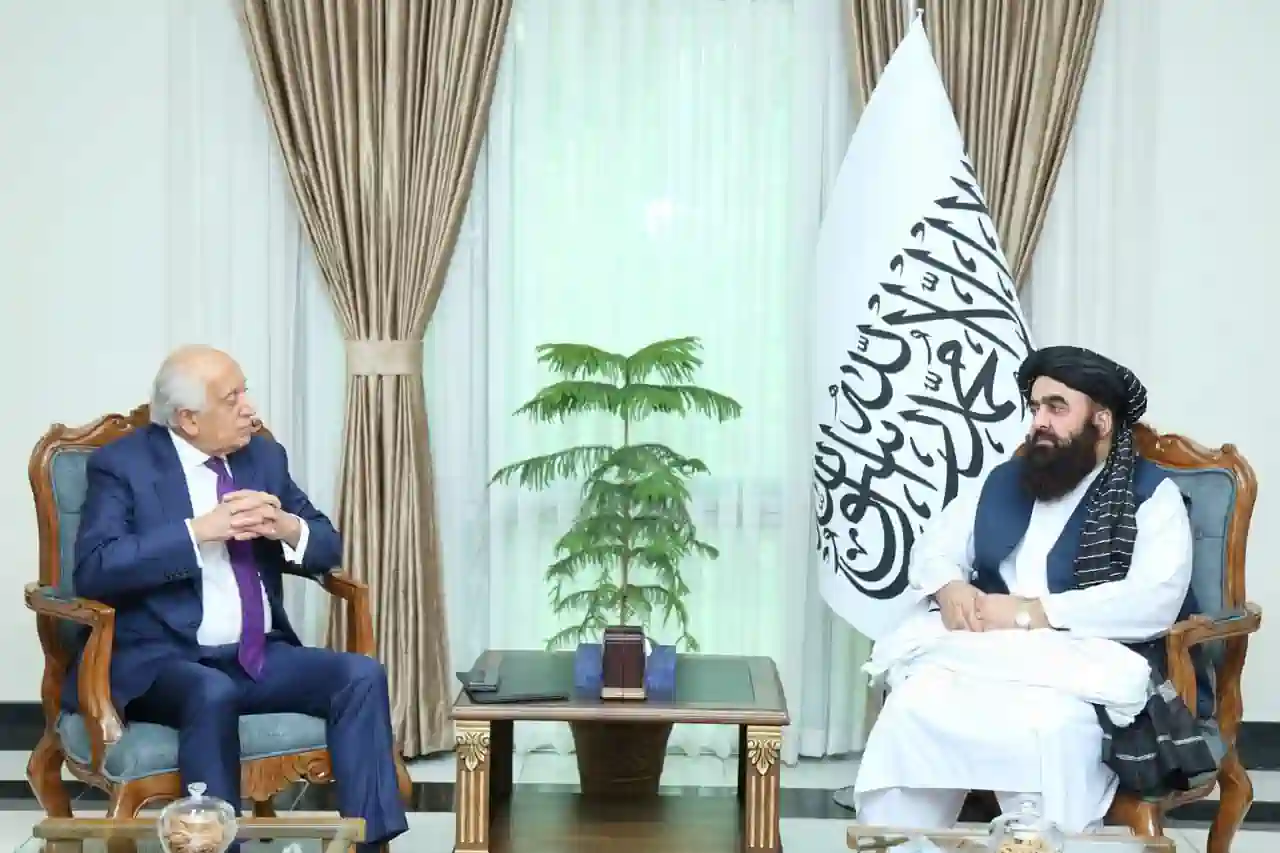
  • Khalilzad’s Return to Kabul: Taliban–U.S. Relations Enter a “New Phase”

    Khalilzad’s Return to Kabul: Taliban–U.S. Relations Enter a “New Phase”

    The details and exact purpose of this meeting have not yet been disclosed. Muttaqi, however, stated that cooperation between the Taliban and the U.S. has entered a “new phase”—a phrase left unexplained, fueling speculation about the scope of this engagement.

    In previous sessions, discussions mainly focused on the release of American citizens imprisoned in Afghanistan. With that process now completed, analysts suggest that issues such as security, humanitarian aid, and limited economic cooperation—channeled indirectly through international institutions—may be on the agenda, though none of these have been officially confirmed.

    Khalilzad has previously traveled to Kabul several times, holding informal talks with Muttaqi about possible pathways for developing Afghanistan–U.S. relations.

    On another trip, he was accompanied by Adam Boehler, the U.S. president’s special envoy, meeting with Muttaqi and Taliban deputy for economic affairs Mullah Abdul Ghani Baradar to discuss matters including detainees, the status of foreign nationals, and economic opportunities.

    The continuation of these meetings indicates that, even after its military withdrawal, the U.S. is still seeking to maintain political and economic channels with Kabul. Yet these interactions remain conditional, limited in scope, and marked by mutual distrust.

    The overall pattern of behavior from both sides suggests a relationship that is neither fully severed nor based on trust, but rather one defined by controlled, interest‑driven engagement. Despite Khalilzad’s mediation efforts to bring security and military issues into the dialogue, the relationship has so far remained confined to economic and diplomatic exchanges.

  • End of the Honeymoon: Yemen’s Exiled Government Breaks with UAE

    End of the Honeymoon: Yemen’s Exiled Government Breaks with UAE

    In his morning statement, al‑Alimi also announced a 72‑hour suspension of air, sea, and land activity across all ports and crossings, except with official authorization from the Saudi‑led coalition command.

    Administrative powers for Hadramaut and al‑Mahra provinces were handed to their governors, who must coordinate with al‑Dara’ al‑Watan forces to take over camps. All military units are instructed to return to their previous positions under Saudi coalition coordination and hand over sites peacefully.

    This declaration signals the end of cooperation between Yemen’s exiled government and the UAE in confronting Ansar Allah, marking a rift within the Saudi‑UAE coalition. The separatist ambitions of the Southern Transitional Council clash with Saudi objectives, as a southern Yemen is seen as a threat to both Saudi and Omani security. With the Beijing agreement between Iran and Saudi Arabia reducing the likelihood of renewed conflict with Ansar Allah, Riyadh appears intent on pursuing its plans in Yemen without the Emiratis, offering no concessions to southern ambitions.

  • Saudi–UAE Rift Surfaces as Mukalla Strike Targets Emirati Military Gear

    Saudi–UAE Rift Surfaces as Mukalla Strike Targets Emirati Military Gear

    The strikes followed a warning message urging civilians to stay away from the port area. The northern parking lot of Mukalla port was hit, with the main objective being recently imported Emirati military vehicles. These vehicles had arrived aboard two cargo ships from Fujairah port to supply fighters of the Southern Transitional Council (STC).

    Brigadier General Turki al‑Maliki, spokesperson for the Saudi‑led coalition, stressed that the transfer of Emirati military equipment to Mukalla port constitutes a clear violation of efforts to reduce tensions, pursue a peaceful solution, and breaches UN Security Council Resolution 2216 (2015).

    This strike marks the first official and overt Saudi action against the STC and its Emirati backers. By escalating their warnings, the Saudis signaled to southern forces and the UAE that they are capable of fighting them if necessary. However, Riyadh’s primary objective in Yemen remains confronting Ansar Allah, with southerners considered allies in that effort. In reality, the alliance in Yemen has been challenged by Emirati moves, while the Saudis remain reluctant to deepen conflict with their long‑time partner.

  • Clashes Continue Between Saudi‑Backed Tribal Coalition and UAE‑Backed Hadhrami Elite Forces

    Clashes Continue Between Saudi‑Backed Tribal Coalition and UAE‑Backed Hadhrami Elite Forces

    Reports indicate at least four members of the Hadrami Elite Forces have been killed in the clashes. (image)

    Saudi warplanes continue conducting airstrikes on open, uninhabited areas as a warning to UAE‑aligned forces, aiming to deter further attacks and advances in Hadramaut.

  • Abduction of Alawite Islamic Council Head in Tartus by Damascus Forces

    Abduction of Alawite Islamic Council Head in Tartus by Damascus Forces

    Local sources also stated that movement in Tartus province has been banned by al‑Joulani’s forces until 7 a.m. Monday. These developments have heightened concerns over rising tensions and insecurity in Alawite‑majority areas of Syria.

  • UAE Backing Separatist Groups in Syria?!

    UAE Backing Separatist Groups in Syria?!

    This allegation follows a report months earlier in Israel’s Yedioth Ahronoth, which stated that the UAE had begun mediating between al‑Joulani’s administration, Israel, and the U.S. The reported aim was to push Damascus into confrontation with Hezbollah in exchange for recognition of al‑Joulani’s legitimacy and extensive economic and military aid.

    If accurate, these reports suggest Syria has become a battleground for Arab rivalries, where tools such as support for local factions, political mediation, and ties with external powers are deployed. The continuation of this dynamic could not only complicate Damascus’s path to consolidation but also cast greater uncertainty over Syria’s political and security future.

  • Talks Between SDF and Damascus to Be Held in Palmyra

    Talks Between SDF and Damascus to Be Held in Palmyra

    Sources close to the Syrian government report that the SDF has expressed initial readiness to withdraw from Raqqa and Deir ez‑Zor, though some commanders remain unwilling to retreat from the contested areas.

    The presence of ISIS detainees in SDF‑controlled territories is cited as the main obstacle to progress in the negotiations.

    Details of the talks will not be made public, as discussions are being held behind closed doors. Given the unresolved challenges, the negotiations are expected to continue until January 4.

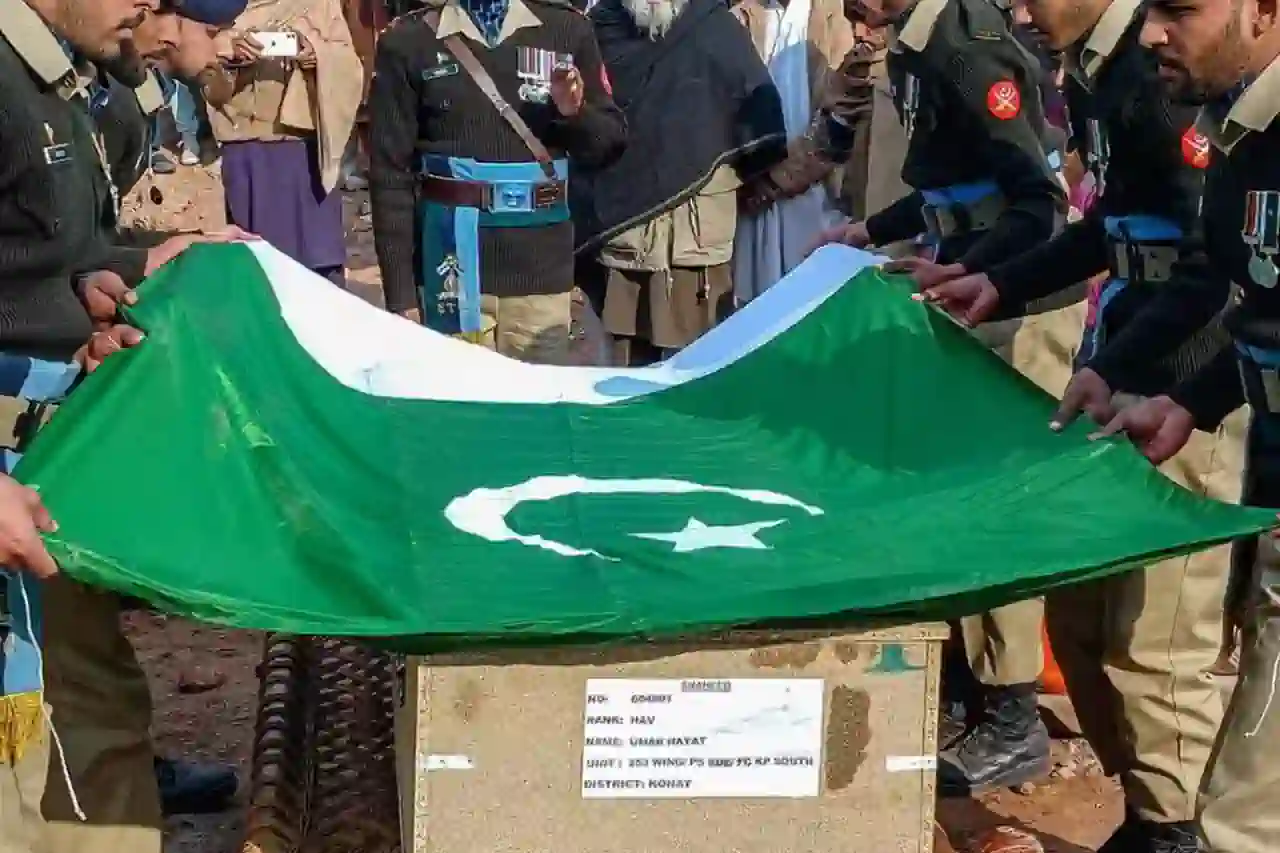
  • Deadliest Year for Pakistan’s Security Forces

    Deadliest Year for Pakistan’s Security Forces

    According to the latest report by the Pakistan Institute for Conflict and Security Studies (PICSS), at least 664 security personnel have been killed this year — a 26% increase compared to 2024. More than 1,000 others were injured, marking a 62% rise from last year.

    The report highlights that intensified clashes are the main cause of these casualties, with the highest losses recorded in Khyber Pakhtunkhwa and Balochistan provinces.

  • Ansar Allah Leader Warns Somaliland Officials: Israeli Presence Will Be Treated as a Military Target

    Ansar Allah Leader Warns Somaliland Officials: Israeli Presence Will Be Treated as a Military Target

    Al‑Houthi stressed that the Islamic Ummah must respond to such actions, warning that negligence would allow Israeli plots to succeed.

    He further cautioned that any Israeli presence in Somalia constitutes a threat to Somalia itself, Yemen, and regional security. Accordingly, he declared that Israeli forces in Somaliland or Puntland would be considered legitimate military targets for Yemen’s armed forces.

    The message represents a direct and serious warning to both Somaliland authorities and Israel, signaling that in any future conflict, Israeli deployments in the region could become targets of Yemeni missile and drone strikes.

  • Syria: Deadly Clashes at Alawite Protests

    Syria: Deadly Clashes at Alawite Protests

    Witnesses say the attackers used live ammunition and melee weapons, with many of the wounded rushed to medical centers. Local sources warn that tensions are escalating and the security situation remains unstable.

    Clashes between Alawite protesters and al‑Joulani’s forces have spread sporadically across Hama, Homs, Tartus, and Latakia provinces. Armored vehicles have been deployed in central Latakia to contain gatherings.

    The protests began yesterday following a call by Sheikh Ghazal, with demonstrators denouncing repression, discrimination, and denial of civil rights. Rallies were held in Jableh and al‑Qardaha (Latakia), al‑Daliyeh and Salhab (Hama), Tartus, Safita, Banias, and al‑Sheikh Badr (Tartus). While protesters declared the gatherings peaceful, footage shows violent clashes and assaults by al‑Joulani’s forces.