Blog

  • Capture of Aden and Abyan by Saudi-backed government forces (Map)

    Capture of Aden and Abyan by Saudi-backed government forces (Map)

    After consecutive defeats of the Southern Transitional Council (STC) in Hadhramaut and Al-Mahra — and their withdrawal without fighting from the Balhaf gas facility and the strategic Marra base in Shabwah — the focus of pro-government forces shifted to southern Yemen. In initial negotiations, local authorities in Abyan agreed to hand over their positions to Al-Dara’ Al-Watan forces. Southern militants and allied tribes have not yet surrendered their positions, but they also have not shown resistance.

    In Aden, government and service facilities — including the Presidential Palace (Al-Ma’ashiq) and Aden Airport — had already been evacuated by STC fighters and handed over to representatives of the government-in-exile. Early this morning, Al-Dara’ Al-Watan forces entered Aden via the coastal road and Al-Anad base, taking control of military and security sites. Elements of the Giants Brigades also assumed control of parts of Aden at the order of the Saudi-led coalition. Their commander, Abu Zarah Al-Muharrami, officially split from the STC yesterday and pledged allegiance to Saudi Defense Minister Khalid bin Salman.

    The Saudi-backed forces captured Aden and Abyan provinces

    The disappearance of Aidarus al-Zoubaidi — head of the Southern Transitional Council — at dawn today, and his failure to travel to Riyadh, has angered the Saudis and escalated tensions between the STC and the government-in-exile. Rashad Al-Alimi has revoked his membership in the Presidential Leadership Council. This situation suggests instability will continue in the occupied regions of Yemen — and it is likely that Al-Dhale and Lahij will soon witness Saudi attacks and further Southern capitulations.

  • Aidarus al-Zoubaidi’s escape to Al-Dhale has angered the Saudis!

    Aidarus al-Zoubaidi’s escape to Al-Dhale has angered the Saudis!

    According to the Saudi-led coalition, the strikes came after the escape of Aidarus al-Zoubaidi — head of the Southern Transitional Council — from Aden, along with the movement of large numbers of STC forces toward Al-Dhalea with armored vehicles and military convoys. They claim al-Zoubaidi skipped his flight to Riyadh and avoided peace talks with the Yemeni government-in-exile, choosing instead to flee and prepare for renewed unrest.

    In response, Rashad al-Alimi revoked al-Zoubaidi’s membership in the Presidential Leadership Council and referred him to the attorney general on charges of forming an armed group and acting against the government.

    There’s little doubt al-Zoubaidi knew what awaited him in Riyadh — and that his fate would be no different from figures like Saad Hariri, Abd Rabbuh Mansur Hadi, and others who ended up under house arrest or worse. That’s why he chose to retreat to his hometown, hoping Southern tribal backing might preserve his power. Yet this bet also seems to be failing: Saudi aircraft are reportedly hunting for his whereabouts, and although he may try to flee to the UAE, current conditions in Aden make escape by air or sea nearly impossible.

  • Syria–Israel Security Talks Resume in Paris

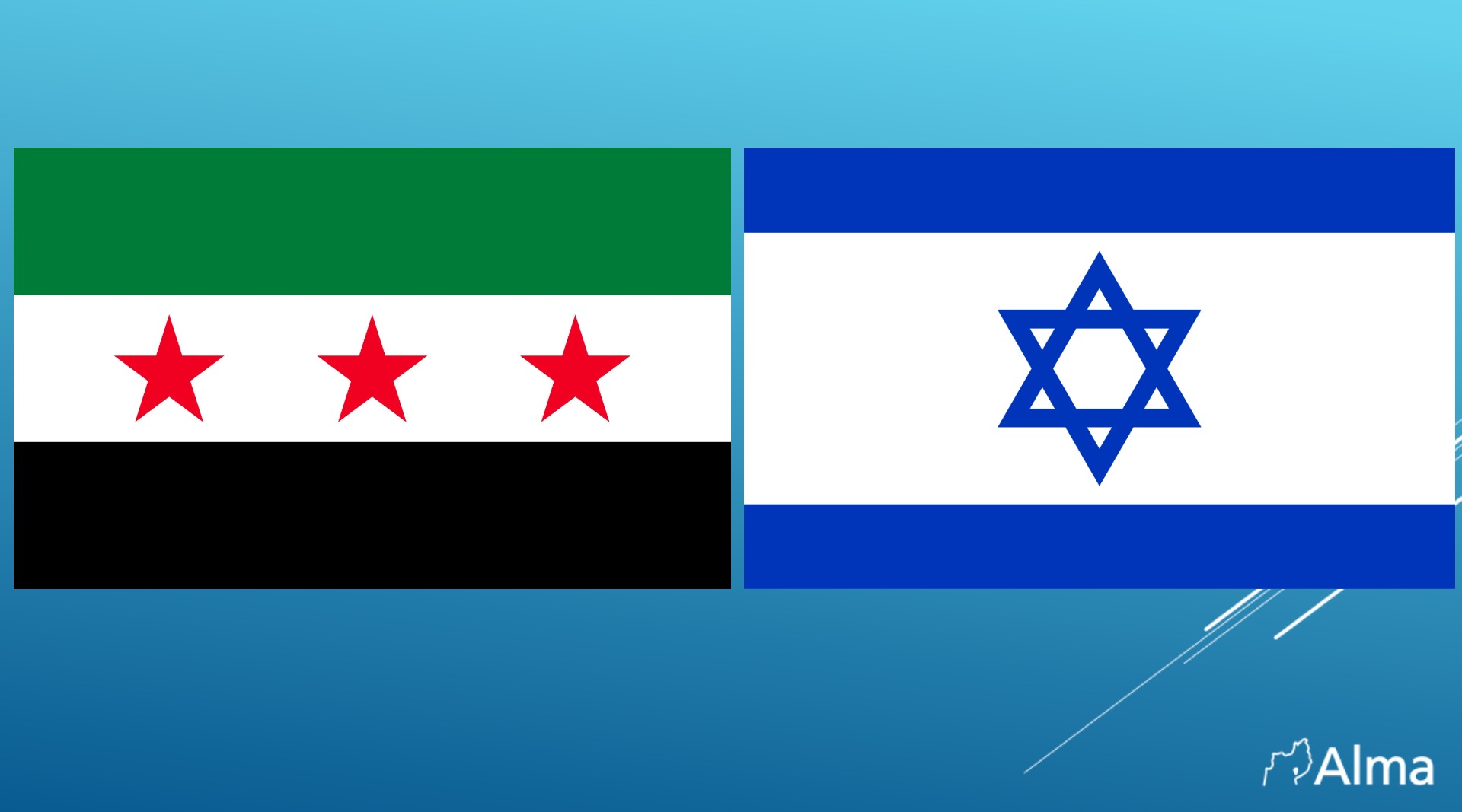
    Syria–Israel Security Talks Resume in Paris

    The Syrian delegation will be led by Foreign Minister Asaad al-Shaibani, while a newly appointed Israeli negotiating team will participate on the other side. This marks the fifth round of talks between the two parties, but the first after a nearly two-month pause caused by deep disagreements and the resignation of Ron Dermer, Israel’s chief negotiator.

    The main goal of these negotiations is to achieve a security agreement that includes the demilitarization of southern Syria and Israel’s withdrawal from areas it occupied following the collapse of Bashar al-Assad’s regime. This renewed effort is being driven directly by the U.S. government. Reports indicate that President Donald Trump is the key figure behind the resumption of talks, with Washington pushing both sides toward an agreement that would secure border stability and potentially pave the way for future normalization of relations. Tom Barrack, the U.S. special envoy for Syrian affairs, is expected to act as mediator.

    The resumption of negotiations follows Trump’s direct request to Benjamin Netanyahu during their late December 2025 meeting. Trump emphasized the need to continue talks to reach a swift agreement, while Netanyahu agreed but insisted on maintaining Israel’s red lines.

  • Sudden Death of Judge in Netanyahu Corruption Case!

    Sudden Death of Judge in Netanyahu Corruption Case!

    Shagai had joined the judiciary in 2007 and was appointed head of the Beersheba District Court in April 2025. Israel’s judiciary described him in a statement as “an outstanding judge, a capable manager, and a beloved figure,” calling his death “a great loss” for the judicial system.

    Judge Beni Shagai was more than just a court administrator. He was a key figure in handling complex corruption cases and played a significant role in the so-called Case 3000, which involved the purchase of submarines and warships from Germany and links to associates of Benjamin Netanyahu. His position meant that his decisions had a direct impact on Israel’s political and judicial landscape.

    His death occurred just as the main hearings in related cases had concluded and final verdicts were approaching. This timing has raised questions and doubts among the public. Under judicial procedure, the death of a presiding judge causes a delay of several months, allowing a new judge to review thousands of pages of documents and evidence. Such delays can effectively benefit defendants in major cases and ease public pressure.

  • Recapture of Hadhramaut and Mahra By the Saudi-backed Government (Map)

    Recapture of Hadhramaut and Mahra By the Saudi-backed Government (Map)

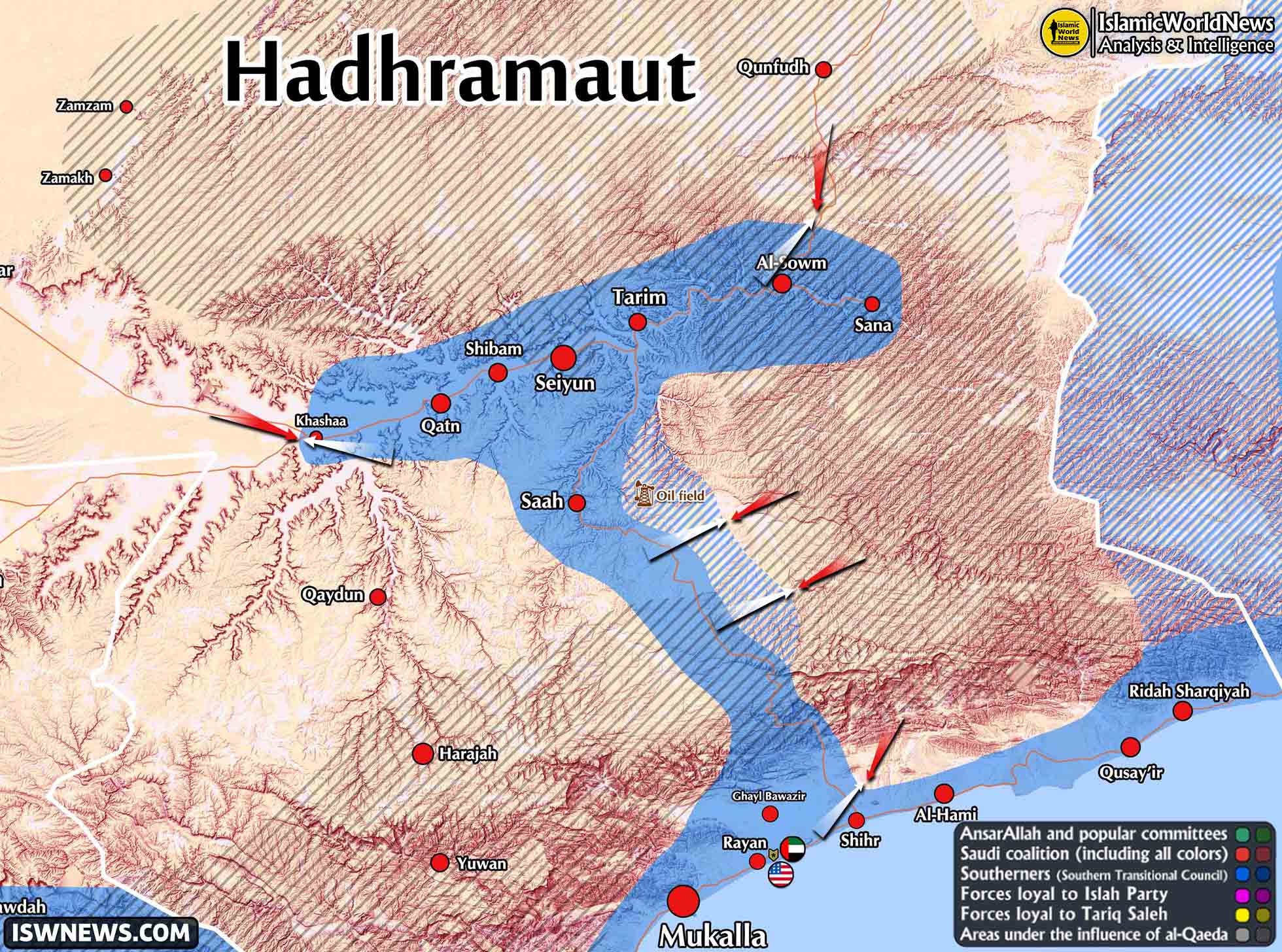
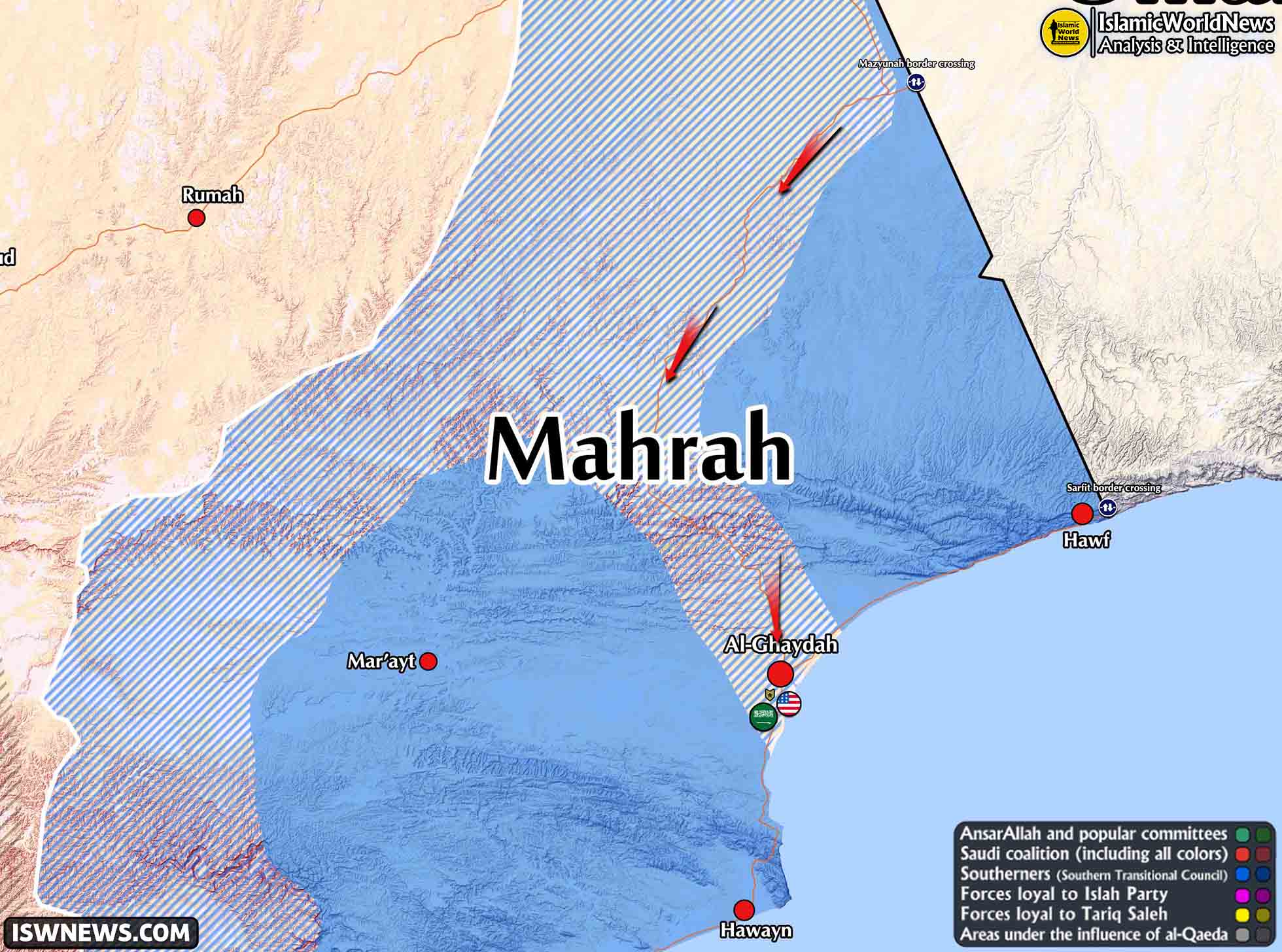
    The operation, involving Al-Dara’ Al-Watan forces, armed tribal groups from Hadhramaut, and fighters from the Islah Party, began on Friday, January 3, with Saudi air support. Starting from the Al-Khasha area, they attacked positions of the Southern Transitional Council and advanced toward Al-Qatn in the Hadhramaut valley. By Saturday morning, Al-Qatn and Shibam had fallen to Al-Dara’ Al-Watan, while Southern forces retreated toward the Hadhramaut coast. By Sunday morning, Seiyun and other central districts of Hadhramaut were under government-in-exile control. The forces then moved to Al-Rayyan airbase (previously used by Emirati forces on the Hadhramaut coast) and, after hours of clashes, seized it from the Southern Transitional Council.

    During these battles, at least 80 Southern fighters and an unspecified number of Saudi-backed troops were killed, with hundreds more wounded. Both sides have yet to release official casualty figures.

    Al-Dera’ Al-Watan forces have since entered Mukalla, the capital of Hadhramaut, without resistance, taking control of all government and military facilities. They also advanced into Al-Mahra province, seizing Al-Ghaydah city and the port of Nishtun. Their objective is to secure Al-Ghaydah’s city and airport, border crossings, and remove Major General Talib Barjash, commander of the Second Military Region (Al-Mahra and Yemen’s southeastern coast), who recently defected to the Southern Transitional Council and rejected the authority of the Presidential Council of the government-in-exile.

    Given the heavy defeat of the Southern Transitional Council in Hadhramaut valley and coastal cities, Al-Mahra is also expected to fall under government-in-exile control soon. Awad bin Al-Wazir Al-Awlaki, governor of Shabwa—previously supportive of Southern forces and backed by the UAE—has now announced cooperation with the Saudi-led coalition to deploy forces in oil-rich areas and military bases.

    Overall, the Southern Transitional Council’s “Promising Future” operation collapsed with the UAE’s withdrawal and Saudi determination. The plan to partition southern Yemen has been sidelined. However, the Saudis have invited the Southern Transitional Council to participate in Yemen’s internal dialogue conference in Riyadh, and the [Persian] Gulf Cooperation Council’s federal plan for Yemen remains on the table. Still, the re-establishment of a separate South Yemen has failed, leaving Aidarus al-Zoubaidi’s efforts fruitless.

    Download high res map

  • Lebanese Security Forces Launch Operation to Detain Assad-era Officials

    Lebanese Security Forces Launch Operation to Detain Assad-era Officials

    At the same time, Khaled al-Ahmad, advisor to Syria’s transitional president, arrived in Beirut to meet with Tarek Mitri. According to informed sources, the purpose of this meeting is to resolve outstanding issues, including the status of detainees and convicts, and to strengthen bilateral cooperation. Finding solutions for unresolved cases—particularly those involving Syrian detainees and convicts and Damascus’s request for their extradition—is on the agenda.

    In this context, Lebanese parliamentary and security sources strongly denied social media reports claiming the presence of Brigadier General Suhail al-Hassan or the establishment of military bases by former Syrian regime forces in the Akkar region, describing them as exaggerated and false. Lebanese security authorities also stated that many of the officers in question, including deputies of Maher al-Assad, are currently residing in Moscow, while others are wanted by Interpol for crimes against civilians. Strict orders have reportedly been issued to Lebanese security agencies to prevent any activities by former Syrian regime forces in Lebanon that could threaten Syria’s security.

  • Unusual Antonov‑124 Flights Between Bahrain and Israel!

    Unusual Antonov‑124 Flights Between Bahrain and Israel!

    According to these records, the cargo plane conducted short stopovers at Nevatim before returning to Isa Air Base. As one of the largest cargo aircraft in the world, the Antonov‑124 is typically used for moving ultra‑heavy or specialized loads. The repetition of such flights in a short span, amid heightened regional tensions, has drawn analysts’ attention to the possibility of major logistical or military transfers.

    The use of military bases like Isa and Nevatim instead of civilian airports strengthens speculation about the sensitive or military nature of the cargo. The brief stopovers suggest rapid, pre‑planned unloading or loading operations. These flights occur at a time when West Asia is facing severe security strains, making any heavy logistical movement appear as covert preparations or behind‑the‑scenes coordination among regional and extra‑regional actors.

    The parallel developments—heavy equipment transfers to Israel via Bahrain and Russia’s logistical support (https://t.me/iswnews_en/16200) to Iran—point to an accelerated balance‑building in the region. Speculation suggests a new round of conflict between Iran and Israel is approaching a critical stage, with both sides arming and equipping themselves through diverse routes and partners: Israel relying on Western and Arab support networks, and Iran strengthening its defenses through strategic cooperation with allies such as Russia.

    Taken together, these movements should be viewed as part of pre‑crisis preparations: a phase in which major players reinforce supply lines, weapons stockpiles, and support capabilities before direct confrontation. In this context, heavy transport flights are no longer mere cargo transfers but clear security signals of an impending flashpoint in the Iran–Israel equation.

  • Coalition Forces to Withdraw From Ain al-Asad Base

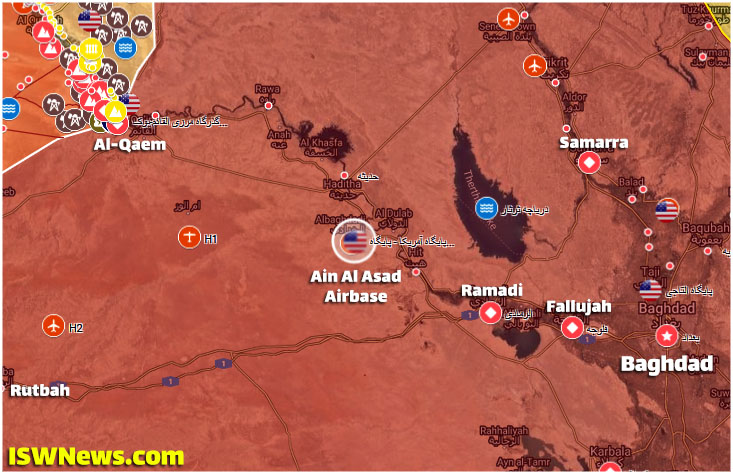
    Coalition Forces to Withdraw From Ain al-Asad Base

    Referring to Baghdad’s shifting approach toward foreign partners, he added that Iraq is moving away from direct foreign troop presence and instead toward memorandums of understanding and security/training agreements with the United States, Britain, and France. He said security across Iraq’s desert regions has reached an advanced level, and revealed a special intelligence operation carried out beyond Iraq’s borders — particularly in Syria — coordinated with Syrian authorities and the U.S.-led coalition, which resulted in the arrest of several wanted militants.

    Implementation of the agreement to withdraw U.S. forces and fully transfer Ain al-Asad to Iraqi control marks the beginning of a new phase in Baghdad–Washington security relations. In this phase, Iraq seeks to reduce reliance on foreign troop presence while redefining cooperation around training, intelligence sharing, and technical agreements. The government also hopes to ease domestic sensitivities toward foreign military footprints — while still keeping channels with Western partners open. Yet despite Iraqi forces’ readiness, fully executing the withdrawal presents challenges, as parts of the Iraqi army and counter-terrorism apparatus still depend on U.S. technical, aerial, and intelligence support.

  • Latest Battlefield Situation After the UAE’s Withdrawal Announcement (Map)

    Latest Battlefield Situation After the UAE’s Withdrawal Announcement (Map)

    According to the latest reports on Yemen’s fronts — broken down by military zones and provinces — the situation is as follows:

    Hadhramaut & Al-Mahra Fronts:
    In Hadhramaut, the front lines in the north remain unchanged, with Al-Khasha‘a serving as the main contact line. The cities of Al-Qatn, Tarim, and Seiyun in Wadi Hadhramaut are still under southern control. Al-Dara‘ Al-Watani (National Shield) forces have redeployed to Ramah and Thamud in the northeastern desert and taken positions along the Yemen–Saudi border, likely preparing to move toward Al-Sawm on the eastern side of Wadi Hadhramaut.

    Hadhramaut map

    Fighting continues between the UAE-backed Hadhrami Elite forces and tribal fighters from the Hadhramaut Tribal Council around Ghayl Bin Yamin, as well as in Wadi Khard and Al-Ays on the Hadhramaut coast. Recently, tribal fighters retook the Nohub base and pushed STC forces back from the outskirts of Wadi Khard and Al-Ays.

    In Al-Mahra, Major General Barjash — commander of the 2nd Military Region — reaffirmed his support for the STC and declared he will not hand over his positions to National Shield forces backed by Saudi Arabia. He also urged civilians to stay away from military sites and installations.

    Al-Mahra situation

    Abyan Front:
    On northern Abyan axes, STC operations against Al-Qaeda elements are progressing slowly and have produced few tangible results. Al-Qaeda cells continue operating covertly. Beyond the integration of rapid-reaction forces from Jishan district, no major shifts have occurred.

    Marib & Al-Jawf Fronts:
    Giants Brigade units have pulled out of Harib and Al-Abdiyah (south of Marib), as well as from the Kitaf and Al-Baqa fronts in northern Saada, redeploying to Hadhramaut and Shabwah. This redeployment has weakened the lines facing Ansar Allah, giving Yemeni resistance fighters an opportunity to resume advances from Harib toward western Shabwah in future clashes.

    No significant changes have been recorded on other fronts, and the Yemeni Armed Forces (aligned with Ansar Allah) continue to observe the ceasefire that has been in place since 2023.

    The UAE’s departure from Yemen marks a major setback and a turning point in the country’s civil war. Key consequences include fractures within the Saudi-Emirati coalition, a severe weakening of the exiled government, the strengthening of Ansar Allah, a growing power vacuum in the south, and the risk of deeper involvement by another outside actor — potentially the United States. The UAE’s separation from the Yemen file amounts to a failure of the “Arab coalition” project; in recent years, Saudi Arabia has lost two principal partners — Qatar and the UAE — in joint operations. Still, it is too early to draw final conclusions, and much remains unclear.

    The UAE’s footprint on strategic Yemeni islands such as Socotra, Abd al-Kuri, Mayun, and others is part of a broader project to control maritime routes through the Gulf of Aden and the Red Sea — reinforced by formal agreements with the exiled government and backed by Western states and Israel.

  • UAE Agrees to Voluntary Withdrawal from Yemen

    UAE Agrees to Voluntary Withdrawal from Yemen

    The ministry confirmed that Emirati forces had been active since 2015 as part of the Arab coalition supporting Yemen’s ousted government. It noted that the UAE formally ended its military presence in 2019 after fulfilling agreed duties, with only limited specialized teams remaining thereafter.

    While the statement formally marks the end of the UAE’s military role in Yemen, Abu Dhabi continues to exert influence over developments in the country’s south and east. Leaders of the Southern Transitional Council sharply criticized Rashad al‑Alimi’s decision, calling it illegitimate. Efforts to pave the way for declaring southern Yemen’s secession remain ongoing, with the UAE awaiting broader international backing before re‑engaging more directly in the Yemeni file.

  • A New Round of IMEC vs Silk Road Fight!

    A New Round of IMEC vs Silk Road Fight!

    This includes the beginning of the process of splitting Syria along religious and national lines into eternally warring enclaves, strengthening relations with the Greeks and Cypriots on anti-Turkish grounds, endless requests to Washington to begin a new round of bombing Iran, assistance in the Libyan and Sudanese crises, and finally, helping the Emirates to seize control of the Gulf of Aden by separating southern Yemen and declaring Somaliland. By creating chaos, the Zionists and the Emirates are attempting to seize seaports and cut off land routes, thereby challenging Chinese plans to develop the Silk Road project (Belt and Road Initiative).

    Belt and Road Initiative

    Separately, it’s worth noting the actions of Saudi Arabia and Russia, which at first glance appear to be pursuing rather contradictory policies. Syria is a case in point. On the one hand, the Russians and Saudis are strengthening their ties with the Tahrir al-Sham regime (it seems the Russians are thus pandering to Trump) and are ready to act as a bridge between the former Syrian al-Qaeda and the Zionists. At the same time, there are reports of Moscow supporting former elements of the Assad government, who are biding their time for a major uprising. In this case, it can be said that the Russians are prepared for a split Syria, with Alawites controlling the country’s coastline.

    This scenario fits in with Zionist plans to limit Turkish and Chinese influence in the Mediterranean. Moscow also favors this option; I recall that after the Russian annexation of Crimea, the Chinese temporarily abandoned all investments in the peninsula. In other words, regardless of how events unfold, Russia is effectively facilitating Syria’s integration into the IMEC, no matter what form it takes. The Russians are not part of the Silk Road or IMEC, but they are contributing specifically to a project related to India and the Zionists. The North-South transport corridor is intended to become a link with the Indian Economic Corridor.

    IMEC

    Saudi Arabia’s top priority is preventing Turkish influence and turning Damascus into a Turkish satellite. The struggle within the Saudi autocracy is already having an impact here, with lobbyists for the Silk Road pitted against supporters of integration into the “Indian Economic Corridor.” The struggle against Turkish influence is not limited to Syria; it is also taking place in Sudan, where Riyadh and Ankara are competing for control of Khartoum. Meanwhile, in Yemen, the Saudis have openly opposed the UAE’s plans, further confirming the deep rift within the Saudi royal family.

    Zionism and its allies make no secret of the fact that Turkey and Iran are the main strategic pillars of the Chinese project, and therefore these two countries should become the primary targets of the Zionist military. But any action is met with resistance, and so Turkey and Iran have begun the process of forming a military-strategic alliance, which will include Pakistan, Iraq, and several other Arab countries.

    I dare say that the parties are preparing for new wars that will not be limited to the area of their own sovereignty, and thus the entire Middle East will be drawn into a series of wars. The beginning of new conflicts, where Zionism acts as the instigators, may occur immediately after if J. D. Vance replaces Trump as head of the United States for various reasons. Let me remind you that his wife is from India, which symbolically reflects Washington’s support for the plans of “Israel”, the UAE and India to build IMEC. Another important factor is that J.D. Vance is a proponent of an isolationist approach in US foreign policy, which means that Zionism will have to act independently, where the US will provide support from a distance.

    In this case, Zionism and its regional allies will take all risks in the name of the fight against the Silk Road, which will lead to the fact that the key figures of the Chinese project will launch the process of forming stable strategic alliances to confront the enemy(IMEC) and regardless of Washington’s reaction, as it was until recently.

  • The Crossroads of Asia and Africa Under Bin Zayed’s Grip

    The Crossroads of Asia and Africa Under Bin Zayed’s Grip

    Introduction

    In recent decades, under Crown Prince and Abu Dhabi ruler Mohammed bin Zayed, the UAE has pursued an assertive and expansionist strategy aimed at extending its political, economic, and military reach from the Gulf to the Horn of Africa. Bin Zayed, a member of the influential Al Nahyan family, is a staunch opponent of political Islam and a strategic ally of the United States. Washington, in turn, has relied on the UAE in its regional policies, particularly in countering Islamist groups and managing crises.

    The UAE’s population is estimated at around 10 million, of which only one million are citizens; the majority are foreign workers. This demographic reality, combined with oil wealth and vast financial resources, has enabled a foreign policy rooted in economic power and regional networking. Exploiting instability and deep divisions in countries such as Ethiopia, Somalia, Sudan, Yemen, and Libya, the UAE has exerted significant influence over local actors—an influence that would have been impossible in the presence of strong, centralized governments.

    Abu Dhabi’s Role in the Horn of Africa Balance

    The UAE’s military interventions in Libya and Sudan exemplify this approach. In these cases, Abu Dhabi backed forces and groups that countered the influence of rivals like Turkey and Qatar. Over the past decade, Emirati foreign policy has relied on exploiting weak state structures, proxy military networks, and financial capacity—a strategy built on “transactional diplomacy” and “targeted interventionism.”

    Internationally, this policy emerged as the U.S. retreated from its role as global liberal hegemon and scaled back military interventions. Between 2009 and 2011, Bin Zayed recognized that the resulting power vacuum in West Asia and the Horn of Africa offered an unprecedented opportunity for his country to assert itself. Aware of the UAE’s demographic and military limitations but financial and logistical strength, he sought to elevate its geopolitical standing through proactive engagement in surrounding regions.

    The outcome was the launch of a hegemonic and expansionist project spanning both sides of the Red Sea—from the Gulf of Aden to the coasts of Sudan and Eritrea. Through massive investments in ports, infrastructure, and logistics networks across Africa, the UAE became one of the continent’s largest port investors. This economic strategy, combined with military and intelligence activities, enabled Abu Dhabi to build a “transnational empire” blending hard and soft power. Additionally, through informal gold trade networks, the UAE has extracted enormous financial gains from Africa, including the smuggling of roughly 400 tons of gold annually. These economic interests are closely tied to Emirati‑linked companies and institutions active in Africa’s port, security, and financial sectors.

    Socotra: UAE’s Expanding Maritime Influence

    Gradual Entrenchment in Socotra

    The UAE’s approach in Socotra illustrates its strategy of incremental influence and consolidation of geostrategic presence. Following the devastation caused by Cyclone Chapala in 2015, Abu Dhabi deployed relief and engineering teams, establishing itself as a humanitarian actor. This foothold soon evolved into the construction of strategic infrastructure, port facilities, and a limited military presence. Over time, Socotra—ecologically and geostrategically significant—became integrated into the UAE’s maritime influence network stretching across the Persian Gulf, the Arabian Sea, and the Red Sea.

    Overall, Emirati foreign policy over the past two decades has combined geopolitical ambition, targeted economic investment, and exploitation of regional instability. Backed by financial resources and international legitimacy, the UAE has achieved influence far beyond its demographic and military weight, extending from the Gulf to the Horn of Africa and reshaping the security architecture around the Red Sea.

    Abd al‑Kuri: A Strategic Outpost

    Located west of Socotra, Abd al‑Kuri island—home to about 500 residents—sits at the mouth of the Gulf of Aden and the Indian Ocean shipping lanes. Its position makes it a vital observation point for vessels entering the Gulf of Aden, and in recent years it has been transformed into a military and logistical hub.

    In November of that year, U.S. Central Command conducted a Red Sea naval exercise with Bahrain, the UAE, and Israel—the first joint drill among Abraham Accords signatories. This marked the beginning of overt military cooperation between Abu Dhabi and Tel Aviv. Defense ties accelerated: Israel’s Elbit Systems signed contracts to supply defense systems to the UAE Air Force, deployed early‑warning radar in Emirati territory, and in February 2023 unveiled a joint unmanned vessel capable of mine detection. By October 2023, construction began on a 2.4‑km runway in Abd al‑Kuri, later expanded into a full military airfield.

    Satellite imagery in March 2024 revealed the phrase “I love the UAE” etched into nearby sand dunes—a symbolic marker of entrenched Emirati presence. By March 2025, the runway was completed, capable of hosting medium and heavy military cargo aircraft such as U.S. C‑130 Hercules, Russian Il‑76 transports, and advanced drones like Israel’s Hermes‑900. Concurrently, the UAE’s state defense conglomerate EDGE Group entered talks with Elbit Systems to expand its drone fleet, underscoring growing synergy between Emirati investment and Israeli technology. Abd al‑Kuri thus emerged not merely as a small island but as a pivotal node in Abu Dhabi’s geostrategic plan to control maritime routes across Bab al‑Mandeb, in coordination with both Washington and Tel Aviv.

    Storm Gathering at Bab al‑Mandeb

    Parallel to developments in Abd al‑Kuri, extensive activity began on Samhah, the smallest inhabited island of the Socotra archipelago. From 2024 to mid‑2025, the UAE built a runway, paved roads, and support facilities. Given the island’s rugged terrain, the airstrip is suited for surveillance missions and limited reconnaissance flights rather than heavy transport. It is optimized for advanced drones like the Hermes‑900, enabling electronic monitoring and maritime patrols. Samhah’s location between the Gulf of Aden and the Arabian Sea makes it ideal for overseeing a chokepoint through which roughly 12% of global trade passes.

    Satellite images from March–April 2025 showed a temporary sand barrier on the island’s western side, likely for drainage and construction support—typical of isolated military projects. During this period, the Yang Star, a Comoros‑flagged landing craft, anchored off Samhah, ferrying engineering equipment and materials between Socotra, Abd al‑Kuri, and Yemeni ports. Other vessels, including Takreem and Mabrouka‑2, regularly connected Socotra, Yemeni coasts, Abd al‑Kuri, and Bosaso in northern Somalia, forming the logistical backbone of the UAE’s maritime influence network in the southern Arabian Sea and Bab al‑Mandeb.

    Mayun: The Critical Node

    While Socotra, Abd al‑Kuri, and Samhah are key points in this network, Mayun (historically Perim) is strategically the most vital. This volcanic island lies at the center of Bab al‑Mandeb, a strait notorious for treacherous currents and reefs, earning the name “Gate of Tears.” It separates Yemen from Eritrea and Djibouti—both hosts to U.S. and Western military bases. Mayun’s strategic importance dates back centuries, serving as a control point for maritime trade even before the Suez Canal opened in 1869.

    In early 2021, reports surfaced of a “mysterious airbase” under construction on Mayun, with no state claiming responsibility. Analysts noted that whoever controls it gains leverage over Bab al‑Mandeb, enabling air operations into Yemen and naval missions across the Red Sea, Gulf of Aden, and East African coasts. Satellite imagery from 2023–2025 showed a 1.85‑km runway along the island’s western shore, surfaced for medium aircraft, large drones, and reconnaissance planes. While little changed in 2023–2024, 2025 images revealed resurfacing and leveling—signs of reactivation and preparation for new missions.

    This evolving network—from Socotra to Mayun—illustrates how the UAE, through incremental infrastructure projects, military cooperation, and logistical integration, has built a layered maritime presence across one of the world’s most strategic chokepoints. It reflects Abu Dhabi’s ambition to secure influence over global trade routes and embed itself in the security architecture of the Red Sea and Arabian Sea.

    UAE’s Power Play Amid Crisis

    The series of moves in the islands of Samhah, Abd al‑Kuri, and Mayun reflects the emergence of an integrated military‑maritime chain along Yemen’s vital southern sea lanes. The United Arab Emirates, leveraging investment, military technology, and newly forged security ties with Israel and Western partners, is consolidating this network to exert stronger control over trade and military routes in the Gulf of Aden and the Red Sea.

    In this context, recent satellite imagery analysis of the Bosaso base in northern Somalia shows that the UAE has deployed critical infrastructure for maritime surveillance and control. At the northern end of the base, a phased‑array radar system has been identified, most likely the GM‑403 model by France’s Thales, with an effective range of over 400 km and the ability to track more than a thousand aerial targets simultaneously—including drones, fighter jets, cruise missiles, and artillery shells. However, intelligence reports and local sources also suggest the possible deployment of the EL/M‑2084 radar system by Israel’s IAI/ELTA, the same system used in the “Iron Dome” air defense network.

    Given the informal security cooperation between Abu Dhabi and Tel Aviv after the Abraham Accords, this possibility is far from unlikely. Geopolitically, the installation of such a system in Bosaso enables the UAE to maintain continuous surveillance over maritime and aerial movements across the Gulf of Aden, Bab al‑Mandeb Strait, and the southern entrance to the Red Sea—an area through which a vital share of global energy and trade flows from East Asia to Europe.

    This development positions Bosaso as a key link in the UAE’s chain of bases in the Horn of Africa and Yemeni islands—including Socotra, Abd al‑Kuri, Samhah, and Mayun. The Bosaso radar thus functions not only as part of a multilayered regional monitoring system but also as the intelligence backbone of Abu Dhabi’s broader plan to control maritime routes across southern Arabia and eastern Africa. This strategy carries a dual nature: on one hand serving “counter‑terrorism and maritime security,” and on the other consolidating Abu Dhabi’s geostrategic dominance in competition with Iran, Turkey, and Qatar in the security landscape of the Arabian Sea and Red Sea.