The operation was carried out by the intelligence unit of Iraq’s Popular Mobilization Forces (PMF), which raided a rented residence in downtown Diwaniyah. Authorities seized maps and photographs documenting strategic sites in both Najaf and Diwaniyah provinces.
The arrest of this network in Diwaniyah—a relatively calm area far from Iraq’s border zones—suggests that Israel is expanding its intelligence operations deeper into Iraqi territory. The strategy appears aimed at establishing surveillance cells in regions with less stringent security oversight, enabling access to data on infrastructure, weapons depots, and supply routes used by resistance groups.
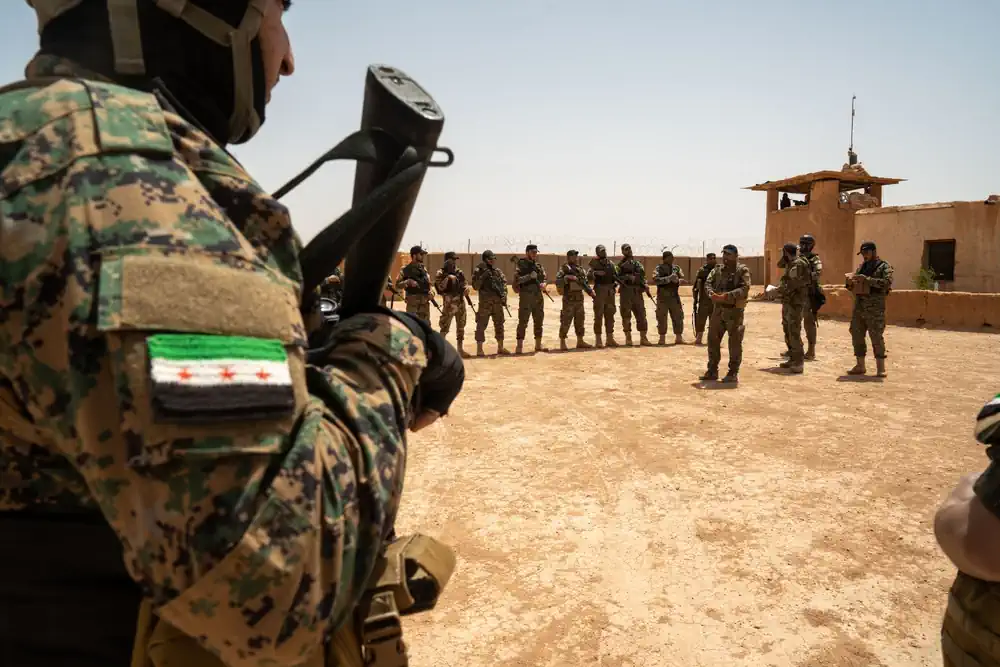
Its new mandate will focus on securing Syria’s desert regions. According to Syrian sources, coordination between the SFA and the U.S.-led coalition will continue uninterrupted, and this structural shift will not affect their joint operations.
The SFA remains stationed at the al-Tanf military base, located at the tri-border area between Syria, Jordan, and Iraq. This base serves as the main command center for the group and also hosts units from the U.S.-led coalition.
Previously, the SFA operated under the command of the 70th Division affiliated with Syria’s Ministry of Defense. Its transfer to the Ministry of Interior signals a shift from a purely military role to a more security and policing-oriented mission. The new assignment in Syria’s desert regions is likely aimed at strengthening the interim government’s control over key transit routes and countering terrorist activity in the eastern deserts. The emphasis on continued coordination with the U.S. coalition confirms that this organizational change was made with Washington’s approval and oversight.
Qari Amjad was a high-ranking member and former deputy leader of the TTP. In November 2022, he was added to the U.S. terrorist list due to his involvement in attacks across Khyber Pakhtunkhwa.
The Pakistani military claims he had been operating from Afghanistan to destabilize Pakistan and had placed a bounty of 5 million rupees on his head.
In addition to these attacks, Israeli military quadcopters targeted the eastern outskirts of Al-Bureij refugee camp in central Gaza.
The southern coastline of the Gaza Strip was also struck by Israeli naval vessels.
This renewed wave of attacks, despite the declared ceasefire, suggests that Tel Aviv is attempting to exert field pressure on resistance groups and gain leverage in future negotiations. Such actions risk completely collapsing the fragile ceasefire process. Moreover, the deliberate destruction of civilian homes and infrastructure in Gaza appears to serve a psychological and deterrent purpose—aimed at instilling fear and discouraging public support for Palestinian resistance movements.
With this escalation, the total number of casualties from the ongoing genocidal war in Gaza has risen to over 68,531 deaths and more than 170,402 injuries.
Following the attacks, the Israeli army announced that the ceasefire in Gaza was reinstated at 10 a.m. today, after a series of extensive strikes throughout the war-torn region.
Children murdered by the renewed Israeli strikes in Gaza
Given Israel’s repeated disregard for ceasefire agreements, the situation in Gaza remains unstable and highly volatile. The pattern suggests that Israel may resume bombings at will, undermining any sense of lasting peace. In reality, the ceasefire appears to be a temporary pause in a cycle of violence, rather than a genuine step toward ending the conflict—with no clear resolution in sight.
The Su-30 project was initiated in the late 1980s by the Sukhoi Aerospace Corporation. The main goal behind designing this fighter was to create an upgraded version of the Su-27 that could not only perform air interception missions but also take part in offensive operations against ground and naval targets. While Su-27 fighters had a decent operational range, the Soviet military was seeking a fighter with extended reach to ensure full coverage of Soviet territory. Thus, the development of the Su-27PU began in 1986, which was considered a more advanced version of the Su-27 and capable of serving both as an interceptor and airborne command post.
The twin-seat Su-27UB was chosen as the design base for the Su-27PU due to its two-seat configuration. The first prototype of this fighter flew on June 6, 1987, and after successful testing, construction of two additional versions commenced. The first full-scale version of the Su-27PU flew on December 31, 1989, at the Irkut facility, and the first of three pre-production models flew on April 14, 1992, officially entering operational service with the Russian Air Force.
Between 1994 and 1996, the first batch of this fighter, consisting of five units, was delivered to the Russian Ministry of Defense, which in the same year renamed the aircraft from Su-27PU to Su-30.
As mentioned earlier, the Su-30 is built on the Su-27 platform and has been transformed into a multirole fighter by adding a two-seat cockpit, advanced avionics systems, aerial refueling capability, and upgraded flight control systems. Its design includes an aerodynamic airframe with movable control surfaces, large air intakes, and twin vertical stabilizers. Production of this fighter has been carried out by Irkut and KnAAPO, and its export variants have been developed in collaboration with purchasing countries. It is worth noting that both companies are subsidiaries of Sukhoi. The internal design of this aircraft incorporates digital fly-by-wire flight controls, threat warning systems, electronic warfare capabilities, and secure communications, enhancing its operational performance in complex environments.
Dimensions and Aerodynamic Features of the Su-30
The Su-30 has a length of 21.9 meters, a wingspan of 14.7 meters, and a height of 6.36 meters. Its empty weight is approximately 17,700 kilograms, and its maximum takeoff weight reaches up to 34,500 kilograms. The aerodynamic design of this fighter—with large wings, movable control surfaces, twin vertical stabilizers, and thrust-vectoring engine nozzles—enables it to perform a wide range of complex and high-intensity aerial maneuvers such as the “Cobra,” “Tail Slide,” and “Flat Spin.”
Su-30 fighter jet performs the Cobra maneuver, a favorite maneuver of Russian fighters
The digital flight control system enhances stability and precision during maneuvers, ensuring reliable performance at high altitudes and high speeds. These features have granted the Su-30 a significant edge in aerial combat, making it exceptionally maneuverable in dogfight scenarios.
Su-30 performing the Low Pass Fly
Engine and Propulsion System of the Su-30
The Su-30 is powered by two Saturn AL-31FL/FP turbofan engines, each capable of generating 12,500 kilograms of thrust. These engines are equipped with thrust-vectoring nozzles, which significantly enhance the aircraft’s maneuverability. The fighter can reach a maximum speed of approximately Mach 2 (2,120 kilometers per hour), and its service ceiling is 17,300 meters.
The Su-30 has a climb rate of approximately 230 meters per second and is capable of flying in harsh conditions and undertaking long-duration missions. Its engines, known for high reliability and ease of maintenance, play a crucial role in the aircraft’s operational success.
Internal and External Fuel Tanks and Maximum Range of the Su-30
The Su-30 is equipped with standard internal fuel tanks holding approximately 9,640 liters, integrated within the fuselage and wings. These tanks are sufficient for medium-range missions, but for long-range operations or extended patrols, the aircraft is also designed to carry external fuel tanks.
This fighter can mount up to three external fuel tanks on pylons beneath the wings and fuselage. Each external tank typically holds around 1,200 liters. With these additional tanks, the aircraft’s operational range increases significantly. Moreover, advanced variants such as the Su-30MKI and Su-30SM are fitted with aerial refueling systems, allowing them to receive fuel mid-flight from tanker aircraft. This capability is especially critical for long-duration missions and operations in remote areas.
The flight range of the Su-30 varies depending on configuration and mission profile. Under standard conditions using only internal fuel, it can fly up to approximately 3,000 kilometers. With external tanks added, this range extends to around 4,500 kilometers. In ferry mode, with aerial refueling, the range can exceed 5,200 kilometers. These figures demonstrate the Su-30’s ability to participate in long-distance missions or maritime patrols without relying on nearby bases.
Radar and Detection Systems of the Su-30
The Su-30 fighter, across its various versions, is equipped with two advanced radar systems that play a critical role in enhancing combat capability, target detection, and weapon guidance. These two radars are the N011M Bars and the Irbis-E, installed respectively in the standard and upgraded variants of the aircraft.
The N011M Bars is a pulse-Doppler radar with a Passive Electronically Scanned Array (PESA) configuration. It is deployed in models such as the Su-30SM (Russia), Su-30SME, Su-30MKI (India), Su-30MKM (Malaysia), and Su-30MKA (Algeria). This radar can detect large aerial targets at distances of up to 350 kilometers, track up to 15 targets simultaneously, and engage 4 targets at once. Its capabilities include ground and sea target detection, surface mapping, digital terrain imaging, and guidance for precision weapons.
N011 Bars radar
The Bars radar is integrated with the fighter’s avionics systems and is capable of countering electronic warfare threats. It is engineered to deliver stable and reliable performance during combined air-to-air and air-to-surface missions. Additionally, by supporting medium- and long-range missiles such as the R-77 and Kh-31, it plays a vital role in enhancing the accuracy and effectiveness of the aircraft’s weapon systems.
Irbis-E Radar – A Leap Toward 4.5-Generation Capabilities
The Irbis-E radar is an upgraded member of the Bars family and is installed in advanced Su-30 variants such as the Su-30SM2, and most notably in the Su-35 fighter. Like its predecessor, it features a Passive Electronically Scanned Array (PESA), but with higher output power and more advanced processors, delivering significantly enhanced performance. The Irbis-E can detect aerial targets at ranges up to 400 kilometers and is capable of tracking up to 30 targets simultaneously while engaging 8 of them at once.
Irbis-E radar
One of the standout features of the Irbis-E radar is its ability to detect low radar cross-section (RCS) targets such as drones, cruise missiles, and stealth aircraft. It maintains stable performance in complex environments with multiple threats and integrates seamlessly with electronic warfare systems and secure communications. Its capabilities in guiding advanced weaponry, precise terrain mapping, and resistance to electronic interference make the Irbis-E one of the most powerful radars installed on 4.5-generation fighters.
OLS-30 Infrared Search and Track System (IRST)
Mounted on the front-right section of the Su-30’s windshield is the OLS-30 infrared search and track system. This IRST unit includes a thermal sensor, a laser rangefinder, and a television camera.
The OLS-30 provides ±60 degrees azimuth coverage with an elevation range of +60 to -10 degrees. It can detect and track enemy aircraft approaching head-on at a distance of 50 kilometers and from the rear at up to 90 kilometers. The laser rangefinder supports targeting for laser-guided weapons up to 3 kilometers for aerial targets and up to 10 kilometers for ground targets.
Additionally, the OLS-30 features two fields of view: a wide mode (20° × 5°) and a narrow mode (3° × 3°), with the latter optimized for precise targeting in both beyond-visual-range (BVR) and within-visual-range (WVR) air combat.
OLS-30 Infrared Search and Track (IRST) system
The Su-30 is also equipped with the SPO-150 radar warning receiver system, designed to detect radar lock signals from enemy aircraft and surface-to-air missiles. Working in conjunction with electronic counter-countermeasure (ECCM) systems, this setup provides the Su-30 with a reliable layer of defensive protection against modern electronic threats.
Avionics and Cockpit of the Su-30
The Su-30 features a two-seat cockpit accommodating both the pilot and co-pilot. Each position is equipped with K-36DM ejection seats. In advanced variants such as the Su-30MKI and Su-30SM, the cockpit includes multiple color LCD multifunction displays (MFDs) that simultaneously present flight data, weapon status, digital maps, and radar information..
Su-30SM at MAKS 2015
The Head-Up Display (HUD) is mounted in front of the pilot and presents critical flight information—such as speed, altitude, angle of attack, target status, and flight path—without requiring the pilot to look down. This HUD is designed for round-the-clock use and remains effective under various weather conditions.
Front and rear cabin views of the Su-30SM
The Su-30’s avionics suite includes satellite navigation systems (GLONASS and GPS), secure communications, and precision weapon guidance capabilities. In certain variants, an optical targeting system (IRST) is also installed, which uses infrared sensors to detect targets without emitting radar signals. This feature is particularly effective in stealth operations and counter-electronic warfare scenarios.
In terms of communications, the aircraft is equipped with encrypted VHF/UHF radios, enabling secure links with ground stations and other aircraft. It also features tactical data transmission systems. Some versions, such as the Su-30MKI, are fitted with data links that allow real-time information sharing with other aircraft and drones, supporting network-centric warfare operations.
Weapons Stations and Armament of the Su-30
The Su-30 is equipped with 12 external hardpoints capable of carrying up to 8,000 kilograms of ordnance. This multirole fighter can deploy a wide range of weaponry, including air-to-air missiles such as the R-77 and R-73, air-to-surface missiles like the Kh-29, Kh-31, and Kh-59, as well as guided and unguided bombs, auxiliary fuel tanks, reconnaissance pods, and electronic warfare equipment. In line with standard Sukhoi fighter configurations, the Su-30 is also fitted with a 30mm GSh-30-1 autocannon mounted on the right side of the fuselage near the cockpit.
12 external Su-30 hardpoints with a weapons carrying capacity of up to 8,000 kgA Royal Malaysian Air Force SU-30MKM fighter jet fires a 30mm GSh-30-1 cannon during the “Ababil 2021” military exercise (Photo by Syairazie Sabiyar)
Variants of the Su-30
The Su-30, considered the second generation of the Flanker family following the Su-27, has been produced in multiple variants, each tailored to meet specific operational requirements. The Su-30MKI variant, developed for India, features French and Israeli avionics, thrust-vectoring engines, and compatibility with Western systems. The Su-30MKK, designed for China, incorporates indigenous systems and is capable of deploying Chinese munitions. The Su-30MKM, built for Malaysia, includes Western avionics and advanced electronic warfare systems. Similarly, the Su-30MKA for Algeria shares many features with the MKI.
It is worth noting that all variants bearing the “MK” suffix are export-oriented models of the Su-30. The abbreviation “MK” stands for Modernizirovannyi Kommercheskiy, meaning “Modern Commercial.”
The Su-30SM variant was specifically developed for the Russian military and is equipped with the Bars-R radar and AL-31FP engines, enabling it to perform combined mission profiles. This diversity of configurations highlights the Su-30 platform’s high adaptability to a wide range of operational demands.
Below we will introduce the different models of this fighter in more detail.
Early Versions of the Su-30 Fighter:
1- Su-30 (Su-27PU): This variant is a modernized version of the Su-27UB, with only five units produced. It was specifically used by Russian air defense forces.
Su-27PU
2- Su-30MK Variant: An export-oriented version of the Su-30M, first introduced in 1993. Export models featured navigation and communication systems developed by India’s HAL corporation. 3- Su-30K Variant: An export version of the Su-30, purchased by the Indian Air Force in the late 1990s. 4- Su-30KI Variant: A proposal by Sukhoi to upgrade older Su-27S fighters. This version was also offered for export to Indonesia, which initially ordered 24 units, but the acquisition was halted in 1997 due to the Asian financial crisis. 5- Su-30KN Variant: An upgrade program for Su-27UB, Su-30, and Su-30K aircraft. Although the project was canceled in Russia, it later evolved into the Su-30M2. Belarus upgraded Indian Su-30K fighters to the Su-30KN standard.
Sukhoi Su-30MK
6- Su-30MKI Variant: This export version was developed for India in collaboration with Hindustan Aeronautics Limited (HAL). It is the first member of the Su-30 family to feature thrust-vectoring engines. Additionally, it is equipped with electronic systems jointly produced by Russia, India, France, and Israel.
Su-30MKI
7- Su-30MKA Variant: An export version developed for Algeria, equipped with Russian and French electronic systems. 8- Su-30MKM Variant: A Russian/Indian derivative of the Su-30MKI, custom-built for the Royal Malaysian Air Force. This variant features thrust-vectoring engines, helmet-mounted displays, French-made laser guidance systems, South African laser warning sensors, a Russian phased-array radar, and advanced electronic warfare systems.
9- Su-30SM Variant:A specialized model of the Su-30MKI, manufactured by Irkut for the Russian Air Force and designated by NATO as Flanker-H. Classified as a 4+ generation fighter, the Su-30SM is equipped with upgraded radar systems, advanced radio communications, IFF (Identification Friend or Foe) systems, modern ejection seats, updated weaponry, and new electronic systems. It uses the N011M Bars radar with a detection range of up to 400 kilometers. Additionally, each wingtip can be fitted with SAP-518 electronic warfare pods.
Su-30SM
10- Su-30SM1/SMD Variant: An upgrade program for Russia’s Su-30SM fighters, featuring the N035 Irbis radar and AL-41F1S engines—both originally developed for the Su-35. This radar can detect an F-15 from distances exceeding 300 kilometers. The upgraded aircraft are capable of carrying and launching a wide array of modern bombs and missiles.
11- Su-30MK2V Variant: A modified version of the Su-30MK2 designed specifically for Vietnam. 12- Su-30SME Variant: An export version of the Su-30SM, first unveiled at the Singapore Airshow in 2016. 13- Su-30MKK Variant: An export model developed for China, also known by its NATO designation Flanker-G. 14- Su-30MK2 Variant: A more advanced version of China’s Su-30MKK, exported to countries like Indonesia and Uganda, featuring upgraded weapons and systems. 15- Su-30MKV Variant: An export version of the Su-30MK2 tailored for Venezuela.
16- Su-30M2 Variant: A derivative of the Su-30MK2, produced by the KnAAPO plant for the Russian Air Force. The first order was placed in 2009, and twenty units were delivered in 2012. Most of these aircraft are primarily used as training platforms.
17- Su-30MK3 Variant: A proposed model equipped with the Zhuk-MSF radar system.
Export Market and Operators of the Su-30
The Su-30 has been exported to 14 countries and remains in active service. Nations operating this fighter include India, China, Algeria, Malaysia, Venezuela, Vietnam, Armenia, Belarus, Indonesia, Kazakhstan, Angola, Uganda, Ethiopia, and Myanmar. Among these, India is the largest operator, with 272 units in service. Following India, Russia operates around 134 aircraft, China has 97 units, and Algeria possesses 59 aircraft. The estimated export price per unit is approximately $47 million.
It is reported that the Su-30 has also been offered to Iran’s armed forces. Speculation about its potential delivery to Iran intensified following the 12-day conflict between Israel and Iran, though no official confirmation has been made.
Key Features of the Su-30 and Its Complementary Role with the Su-35
One of the Su-30’s most notable attributes is its high maneuverability, enabled by thrust-vectoring engines, which give it a significant edge in close-range aerial combat. Its ability to perform air-to-surface missions, reconnaissance, close air support, and long-range interception makes it a truly multirole fighter.
Alongside the more advanced Su-35, the Su-30 serves as a complementary platform. While the Su-35 is designed for air superiority with a more powerful radar and advanced avionics, the Su-30 excels in flexible multirole operations, including support and combined missions. Together, these aircraft can significantly strengthen the defensive capabilities of countries that operate both models.
Thanks to its upgrade potential and adaptability to various systems, the Su-30 remains a top choice for nations seeking to enhance their air power. Paired with advanced fighters like the Su-35, it plays a strategic role in modern air defense structures.
Su-30 Fighter Specifications
Type: Multirole fighter Origin: Russia Design Bureau: Sukhoi Manufacturers: KnAAPO / Irkut Corporation First Flight: December 31, 1989 Production Period: 1992 to present Total Units Built: Over 630 Crew: 2 Length: 21.935 meters Wingspan: 14.7 meters Height: 6.36 meters Empty Weight: 17,700 kg Maximum Takeoff Weight: 34,500 kg Engine Type: Two Saturn AL-31FL/FP afterburning turbofan engines Maximum Speed: 2,120 km/h Combat Radius: 3,000 km Service Ceiling: 17,300 meters
Armament Capabilities of the Su-30:
Cannon: 30mm GSh-30-1 autocannon
External Hardpoints: 12 stations with a total payload capacity of up to 8,000 kg
Organized at the invitation of the Azerbaijani government and backed by European Jewish organizations, this was set to be the first major gathering of European rabbis in a Muslim-majority country—predominantly Shiite. Notably, a previous Jewish conference planned in Baku was also canceled in 2023 following the Al-Aqsa Storm operation against Israel.
The cancellation appears to stem from a combination of security, political, and social factors. It likely reflects regional political pressures, public backlash over Baku’s ties with Tel Aviv, and potential threats targeting Israeli-linked figures in the city.
The abrupt decision to cancel the high-profile event, despite significant investment, signals the Aliyev government’s strategic calculation regarding the risks and regional implications involved.
According to the report, Israeli defense companies—particularly Rafael Advanced Defense Systems and Israel Aerospace Industries—have directly utilized Amazon Web Services (AWS) to support their technological infrastructure. These services played a role in the operational framework of the Israeli military during its campaigns in Gaza.
The exposure of Amazon’s collaboration with Israel’s military underscores a growing trend in the digital age: the blurring of lines between civilian tech industries and military applications. Companies that appear to operate in commercial and technological sectors are increasingly becoming active participants in armed conflicts.
Cloud computing, battlefield data analytics, and artificial intelligence have become integral to both offensive and defensive military strategies. In this context, Amazon has transitioned from a service provider to a direct enabler of Tel Aviv’s war machine.
Putin described the missile as “unique” and “immune to existing defense systems,” adding that the test, conducted alongside recent nuclear drills, sends a clear message: “Russia will never yield to Western pressure over the Ukraine war.”
Valery Gerasimov, Chief of the General Staff of Russian Armed Forces reported to Putin that the Burevestnik missile flew approximately 14,000 km and remained airborne for 15 hrs during its Oct. 21 test. Known by NATO as SSC-X-9 Skyfall, the missile is powered by a nuclear propulsion system and can carry a nuclear warhead.
The test comes amid peak tensions between Russia and the West over the conflict in Ukraine. In response, Trump stated, “We don’t play games with Russia, and they don’t play games with us,” hinting at the possibility of new sanctions against Moscow.
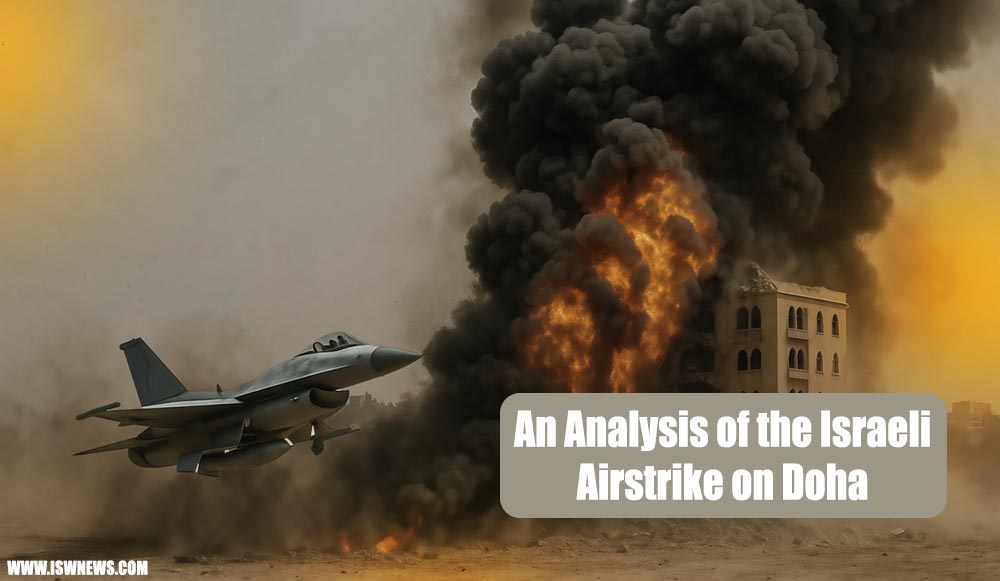
Israeli fighter jets targeted a Hamas leadership gathering in Doha’s West Bay Lagoon, a district known for its embassies and international residential compounds². The attack took place despite Qatar hosting Al Udeid Air Base, the largest U.S. military installation in the Middle East, home to over 10,000 American troops³.
Although the United States condemned the attack at the UN Security Council⁴, its response failed to prevent further escalation. President Donald Trump expressed being “deeply troubled” by the strike, calling it inconsistent with U.S. and Israeli objectives⁵. Nonetheless, his remarks did little to ease the profound sense of insecurity that gripped Qatar.
This incident revealed that despite Qatar’s multibillion-dollar investments in U.S. military infrastructure and its role as a coalition host, the country remains vulnerable to regional threats.
British Refueling Aircraft: Rumor or Reality?
In the hours following the Israeli strike, the presence of a British RAF Voyager KC3 refueling aircraft over Doha sparked speculation about possible UK involvement. Flight tracking data showed the aircraft flying over Qatar from 3 p.m. local time—precisely when explosions were reported⁶.
Some sources claimed the British aircraft may have refueled Israeli jets on their return journey, given the 2,200 km distance between Israel and Qatar, which aligns with the maximum range of Israeli F-35s⁷. However, subsequent investigations revealed the aircraft was conducting its annual “Soaring Falcon” exercise with the Qatari Air Force⁸.
More importantly, the RAF’s “probe and drogue” refueling system is incompatible with the “flying boom” system used by Israeli jets⁹. Defense experts confirmed that even if the UK had intended to assist, refueling would have been technically impossible¹⁰. Nonetheless, some media outlets continue to question whether Israel and the UK were truly uninformed about each other’s actions.
Al Udeid Air Base: Symbol of Dependence or Security Guarantee?
Built in the 1990s with over $1 billion in Qatari funding¹¹, Al Udeid Air Base plays a central role in Qatar’s defense strategy. Hosting the U.S. Central Command (CENTCOM), the base has served as the hub for coalition air operations since 2003, supporting missions in Iraq, Afghanistan, and Syria¹².
Qatar has spent over $8 billion on upgrading the base and plans to invest another $8.4 billion by 2033¹³. Yet the Israeli strike demonstrated that even this massive investment could not guarantee Qatar’s security.
As analysts noted, despite advanced radar systems at Al Udeid, the U.S. either failed—or chose not—to intercept the attack¹⁴. This raised serious questions about the reliability of American security assurances. Some reports indicated that the U.S. operations center in Doha remained “silent” during the strike¹⁵, suggesting either deliberate non-intervention or operational incapacity.
This event has led many experts to question the true value of America’s security umbrella and prompted Qatar to reconsider its defense strategy. The Iranian missile strike on Al Udeid in June 2025 further underscored that the base may not be a shield for Qatar—but rather a strategic target in regional conflicts¹⁶.
Broken Commitments and a Crisis of Trust
Over the past three decades, Qatar has built its security strategy on close cooperation with the United States and the United Kingdom. Since signing its first defense cooperation agreement with the U.S. in 1992¹⁷, Qatar has invested more than $26 billion in Foreign Military Sales (FMS) contracts, making it the second-largest FMS partner globally¹⁸. These deals include advanced air defense systems like Patriot and NASAMS, F-15QA fighter jets, and Apache helicopters¹⁹.
In addition, Qatar has hosted British forces at Al Udeid Air Base and has participated in UK-led military operations against ISIS since 2014²⁰. However, the recent Israeli airstrike revealed that these commitments and investments have failed to deliver real security. As one analyst put it: “Qatar and other regional states have done much to advance U.S. interests, and in return, they expect security guarantees. This attack will shake their trust in that entire formula”²¹.
The lack of effective response from the U.S. and UK underscored the ineffectiveness of Western security assurances against Israeli actions. Some experts now suggest Qatar should reconsider hosting Al Udeid, arguing that the base “creates more political and diplomatic challenges than opportunities”²². This trust deficit could have long-term implications for U.S. security relations across the Gulf.
Structural Flaws in Qatar’s Outsourced Defense Model
With fewer than 300,000 citizens and a military force of just 16,500, Qatar has the smallest army in the Gulf²³. These demographic constraints have made the country heavily reliant on foreign contractors and imported weapons systems. Between 2014 and 2024, Qatar’s defense spending surged by 434%²⁴, yet most of this went toward foreign arms purchases, with limited investment in domestic capabilities.
Defense analysts note that despite acquiring advanced platforms like French Rafales, British Typhoons, and American F-15s, Qatar lacks strategic depth and independent operational capacity²⁵. As senior analyst Anthony Cordesman explains: “Qatar’s training and readiness are solid for such a small force, but the military can only operate at battalion level, with limited combined arms capability and minimal maneuver warfare potential”²⁶.
This dependence on foreign forces became evident during the recent crisis. Qatar’s air defense systems—Patriot and NASAMS—operated by U.S. personnel, failed or were not permitted to respond to the Israeli strike²⁷. Moreover, Qatari fighter jets did not scramble to intercept, highlighting either a lack of operational autonomy or readiness. These shortcomings demonstrate that outsourcing defense without building indigenous capacity cannot guarantee real security.
Alternative Paths: Domestic Investment and Diversifying Partnerships
Unlike Qatar, other Gulf states such as the UAE and Saudi Arabia have pursued different strategies. Through EDGE in the UAE and SAMI in Saudi Arabia, both countries are developing domestic defense industries²⁸. The UAE has increased its local defense production from 2% in 2014 to over 75% of contracts at IDEX 2025²⁹. Saudi Arabia aims to localize 50% of its defense spending by 2030³⁰.
As for diversifying defense partnerships, China has been floated as an option, but with clear limitations. As Qatar’s Prime Minister stated in 2023: “We have a strong defense alliance with the U.S., and our armed forces are built primarily on Western systems, mainly from the U.S. and France”³¹.
Experts argue that China cannot offer a security umbrella comparable to the U.S. or supply the advanced systems Qatar requires³². Nonetheless, investing in domestic defense capabilities could help Qatar achieve greater autonomy in key areas. Building indigenous air defense systems, expanding maintenance and repair industries, and training local specialists could reduce reliance on foreign forces. Strategic partnerships with countries like Turkey—known for its successful defense industry development³³—could also facilitate technology transfer and expertise sharing. This shift would require Qatar to fundamentally rethink its approach—from purchasing security to producing it.
Lessons for the Future of Regional Security
The Israeli airstrike on Qatar in September 2025 served as a wake-up call for all small Gulf states that have built their security strategies around foreign military presence and expensive arms purchases. This incident revealed that even billions of dollars invested in military infrastructure and cutting-edge weapon systems cannot replace indigenous defense capabilities and strategic autonomy. The failure of Qatar’s air defense systems to intercept—or even detect—the Israeli strike³⁴ exposed deep flaws in the country’s defense architecture.
As some analysts have noted, the attack “will have profound implications for how regional states view U.S. security guarantees”³⁵. For Qatar and similar nations, the time has come to reassess their security strategies. This reassessment must include serious investment in domestic defense industries, training of local specialists, and diversification of strategic partnerships.
Moreover, enhancing regional cooperation and establishing joint defense systems with neighboring countries could strengthen deterrence. The key lesson from this event is that real security cannot be bought—it must be built. Qatar and other Gulf states must shift from being mere consumers of foreign arms to becoming producers and developers of their own defense capabilities. This transformation requires political will, long-term investment, and acceptance of the reality that, ultimately, every nation must take responsibility for its own security.
During the visit, U.S. advisors reportedly gathered detailed intelligence on the brigades’ structure, including personnel numbers, combat capabilities, weaponry, and deployment zones along active fronts against Yemeni armed forces.
It appears that the United States is preparing for a possible ground operation aimed at curbing the actions of Yemeni forces against Israel, with plans to utilize UAE-supported factions—particularly the Giants Brigades and loyalists of Tareq Saleh. This strategy has reportedly been under joint consideration by the U.S., UK, and Israel for several months.
Airbus Defence and Space CEO Michael Schoellhorn said negotiations, led by BAE Systems on behalf of the Eurofighter consortium, are progressing well and could conclude soon.
The deal, valued at several billions of euros, would significantly modernize Türkiye’s air force and mark its entry into the “Eurofighter club,” joining users such as the UK, Germany, Italy, Spain, and several Persian Gulf states.
The agreement is seen as a step toward long-term defense cooperation between Türkiye and European partners, amid a broader push by the new German government to expand Europe’s defense capabilities and reduce reliance on the U.S. for security.