The comments were broadcast after Trump’s recent trip to the Middle East, where the U.S. president insolently accused Iran of corruption and some other false claims.
Khamenei’s remarks criticized U.S. foreign policy in the Middle East and affirmed Washington as a destabilizing force. He declared that the United States “must and will leave” the region, emphasizing American support for Israel to “massacring” of Palestinians and others.
Parts of Imam Khamenei’s Speeches
Imam Khamenei said:
“Some of the words expressed during this trip do not deserve a response at all. The level of the remarks is so low that it brings shame to the speaker and the American people! While I have no direct stake in their affairs, we should focus on one or two key points.
Trump claimed he wanted to use power for peace; he lied. He and American officials, through various administrations, have used their power to massacre in Gaza, incite wars wherever possible, and support their own mercenaries. When have they ever used their power to foster peace?
Yes, power can indeed be utilized for peace and security. That is why, despite the enmity of our adversaries, we will continue to strengthen our power and the power of our country every day, God willing. However, the US has not done this. They have used their power to supply the Zionist regime with ten-ton bombs to drop on children in Gaza, on hospitals, and on homes, in Lebanon and wherever they can.
The US President is promoting a model for these Arab countries which, in his own words, suggests they cannot survive without America for even ten days. He stated, ‘If America is not there, they cannot hold themselves for ten days; America will support them.’
In his dealings, behavior, and proposals, he is reiterating and imposing this same model, insisting that they cannot live without America. This model has undoubtedly failed. Thanks to the efforts of the people in the region, America must and will leave this area.
Indeed, in this region, the root cause of corruption, war, and discord is the Zionist regime, which serves as a dangerous, deadly cancerous tumor. This regime must and will be uprooted.”
Additionally, the Yemeni army attacked Lod Airport last night with a Zulfiqar ballistic missile. These strikes caused thousands of Israelis to seek shelter, and flights at Ben Gurion Airport were suspended for about an hour.
The spokesman for the Yemeni armed forces emphasized that these operations against Israel will continue and will not cease until the aggression against Gaza stops and the siege is lifted.
This missile operation against Ben Gurion Airport marks the 116th operation by the Yemeni armed forces against Israeli positions in occupied Palestine.
At the conference, the Hindus presented satellite images of the situation before and after India’s air and missile attacks on Pakistani targets and demonstrated the results of their attacks. These positions are as follows:
1- Chunian Air Defense Radar 2- Pasrur Air Defense Radar 3- Arifwala Air Defense Radar 4- Nur Khan Air Base in Rawalpindi 5- Mushaf Air Base in the south of Sargodha city 6- Rahim Yar Khan Air Base 7- Shahbaz Air Base in Jacobabad 8- Sukkur Air Base 9- Bholari Air Base located between the cities of Hyderabad and Karachi Satellite images of the situation before and after Indian air and missile attacks on Pakistani targets
The Indian Army carried out these attacks using attack aircraft, Brahmos and Scalp supersonic cruise missiles, and ballistic missiles.
Satellite images of the situation before and after Indian air and missile attacks on Pakistani targets
The Indian missile attack on Nur Khan base occurred on May 10. As a result of this attack, a fire and a heavy explosion occurred. According to Pakistani sources, the missile hit the third runway of the airport and caused no casualties, but some foreign sources stated that the explosion was the result of a fire in a C-130 transport aircraft of the Pakistan Air Force.
The Indian army also attacked Shahbaz Air Base on May 10. Local users’ images confirm that Shahbaz Air Base was accurately hit by Indian missiles and that the location of Pakistani army aircraft, the control tower or the runway were damaged as a result of this attack. Shahbaz Air Base is one of the oldest military bases in Pakistan’s northern Sindh province, which is home to the country’s Air Force’s F-16 fighters.
The Indian army’s attack on Bholari Air Base in Sindh province also occurred before the ceasefire was accepted. Bholari Air Base is one of the positions of the Pakistan Air Force in the south of the country and is located between the cities of Hyderabad and Karachi.
Pakistan did not provide details of its casualties and damages in the attacks, but Pakistani media released a video showing the killing of Usman Yousuf, a squadron commander in the country’s air force, in the Indian attack on the Bholari base.
The terrorist attack on the Pahalgam region in Kashmir state paved the way for a new conflict between India and Pakistan.
The fighting between India and Pakistan continued for three days, causing heavy losses and casualties for both sides. Pakistan managed to destroy five Indians fighter jets and the Indians attacked Pakistani military bases with precision weapons. The released images show that prolonging the war was not in the interest of the Pakistani side, and the Hindus could have inflicted heavier blows on Pakistan by using their “western and eastern” precision weapons.
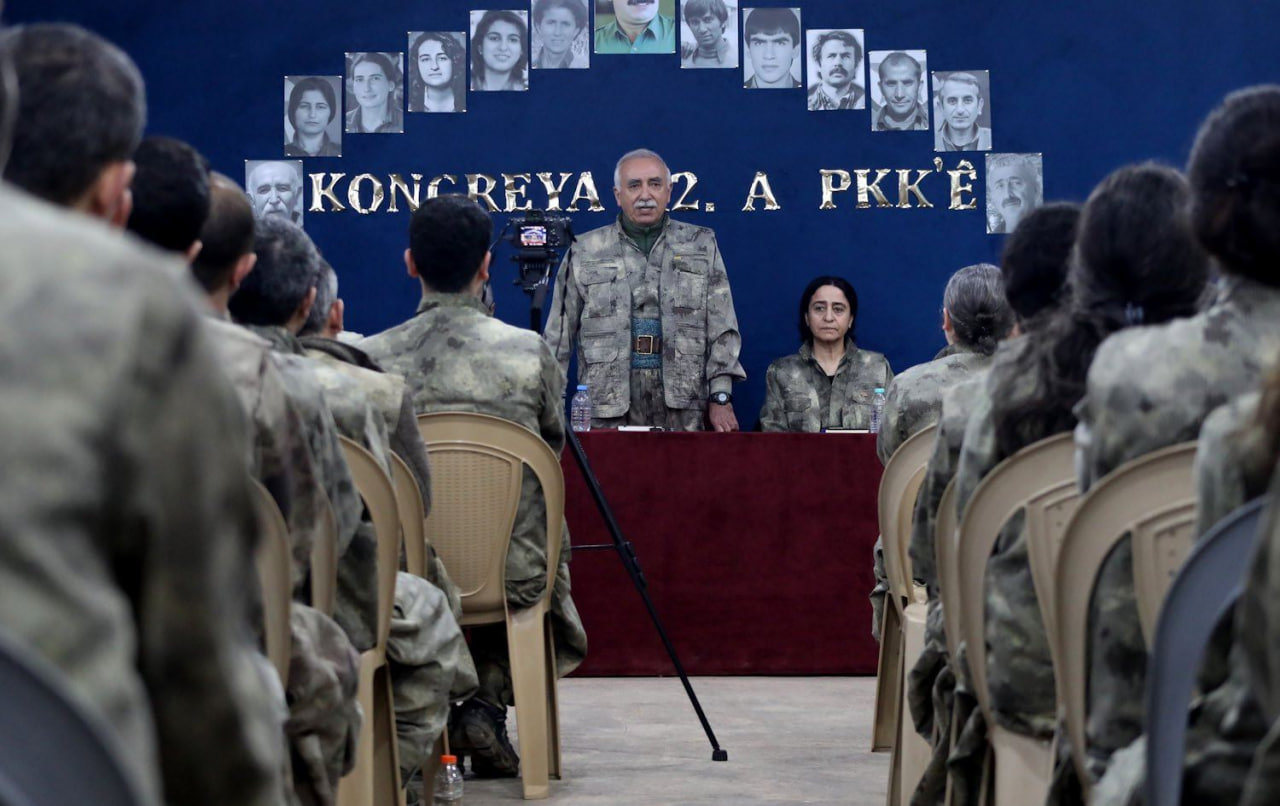
The PKK’s leadership issued resolutions following meetings held between May 5 and 7, which prominently included the announcement that “the Kurdistan Workers’ Party officially declares its dissolution, the end of the armed conflict, and the laying down of arms.”
In their resolutions, the party stated, “We believe that Kurdish political parties will fulfill their duties and responsibilities to develop Kurdish democracy. We will call for the strengthening of Kurdish-Turkish brotherhood.”
Notably, Abdullah Ocalan, the founder of the PKK, issued a statement on February 27, urging PKK forces to lay down their weapons. Following his request, the PKK announced a ceasefire with Turkey just two days later.
History and Activities of the Kurdistan Workers’ Party
The Kurdistan Workers’ Party (PKK) was established in 1978 under the leadership of Abdullah Ocalan. The PKK has been recognized as one of the primary Kurdish armed groups in the region, with the declared goal of achieving greater rights for the Kurdish community in Turkey. The party resorted to armed struggle against the Turkish government in the 1980s.
Abdullah Ocalan was arrested in 1999 and imprisoned on Imrali Island; however, even after his arrest, the PKK continued to play a significant role in developments across Turkish Kurdistan, northern Iraq, and even parts of the Syrian conflict.
Various affiliated groups, including the YPG and PJAK, operate in neighboring countries, further complicating regional interactions regarding the Kurdish issue. The PKK has been designated as a terrorist organization by Iran, the United States, the United Kingdom, Canada, the European Union, and several other countries. According to international organizations, clashes between PKK elements and the Turkish army resulted in the deaths of more than 7,000 soldiers and civilians between 2015 and 2025.
At the onset of the encounter, 10 Pakistani fighter jets were on standby over Pakistan, while 12 Indian fighter jets entered the border region. India subsequently deployed over 60 additional fighter jets, including 14 Rafale jets, to the area in an effort to overwhelm and intimidate the Pakistani side, raising the total number of Indian aircraft near the Pakistani border to 72. In response, Pakistan dispatched 42 fighter jets to counter this move. Ultimately, this clash resulted in the downing of five Indian fighter jets, marking a significant early setback for India.
Infographics presented by the spokesperson of the Pakistan Air Force
In this conflict, Pakistan managed to shoot down five Indian fighter jets, which included three French Rafale fighters, one Sukhoi Su-30, and one MiG-29 fighter jet within the border region.
A critical takeaway from this brief air battle was the seemingly careless and possibly overconfident approach of the Indian Air Force. By flying their jets close to the Pakistani border, India effectively placed them in considerable jeopardy. Conversely, the Pakistani forces, recognizing their limitations compared to India’s capabilities, strategically maintained a safe distance for most of their fighters over Pakistani airspace and skillfully employed PL-15E beyond-visual-range missiles to engage various Indian aircraft. Additionally, Pakistani AWACS made a significant contribution to this air victory for Pakistan.
This operation involved 20 F-15 fighters, supported by refueling and reconnaissance aircraft.
As a result of these airstrikes, 21 civilians have been injured to date.
This marks the sixth airstrike by Israel on Yemen.
Israeli strikes in Hudaydah
Israel claims that the port of Hudaydah serves as a transfer point for Iranian weapons to Yemen, and claims that the Bajil cement factory is a source of income for Ansar Allah, which is allegedly used to construct bases and underground tunnels. However, these claims arise at a time when no Iranian ship has docked at the port of Hudaydah in the past decade, and there is no evidence to support the military use of Yemeni civilian facilities by Ansar Allah. The Yemeni armed forces have clearly stated that the weapons they utilize are domestically manufactured. Additionally, there are no military bases or positions located within commercial, energy, or service facilities. Thus, the claims made by the Israeli army and the American-British coalition have consistently proven to be unfounded.
After remaining silent about the Zionist intervention, declaring its dictatorship for at least four years and committing genocide against the Alawites on the coast, the Syrian regime continues to negatively surprise the intelligent people of the planet. This time, Tahrir al-Sham arrested two prominent figures of the Palestinian Islamic Jihad without giving any explanation.
Observers immediately came up with a number of versions that the main allies of the Zionists, represented by Mahmoud Abbas (head of the Palestinian Authority) and the US Republicans. A video is circulating on the Internet in which US Congressman Corey Mills (one of the Republicans who visited Damascus) stated that the interim leader of Syria, Ahmad al-Sharaa, made it clear that he is ready to establish and maintain strong relations with “Israel”. “The president (Ahmad al-Sharaa) and the leadership have demonstrated their willingness to work with Israel as they seek to stop the Hashd al-Shaabi from moving weapons from Iraq through Syria into Lebanon,” Mills said, adding that al-Sharaa has been “very clear” about his desire to “establish and maintain a strong relationship” with Israel and be a “good neighbor.”
This turn of events is not surprising, since quite recently a former British diplomat warned about the Tahrir al-Sham regime’s intentions to recognize “Israel”, and as for the Palestinian resistance factions, even before the arrest of the Islamic Jihad members, the Hamas members in Syria were taken to Idlib, which looks like some kind of “imprisonment in a fortress”, the rest of the factions of the left and right were simply disarmed and disbanded. Add to this the growing influence of the Saudis and the UAE in the al-Jolani administration, where the issue of open diplomacy between Zionism and the former al-Qaeda of Syria is also regularly discussed. In addition, another protector of the jihadists, the Turks, are also afraid of a conflict with “Israel”.
In fact, the former Jabhat Nusra does not really need intermediaries to move towards “normalizing relations with Israel”, because it is enough to recall the history of secret connections between jihadists and Zionists in Syria to understand how strong this unspoken alliance is. However, the ties between jihadists with the Turks worry the Zionists, but not because of the Erdogan factor, but because of the presence of Turkey itself, as the main link in the Chinese Silk Road, which automatically puts Turkey in the position of an enemy for “Israel”, which has set itself the ambitious task of reviving the Indian Economic Corridor project, which was thrown onto the dusty shelf of history after the Hamas attack on October 7, 2023. But after Trump’s return to the Oval Office, the Zionists, the Saudis-UAE, India and the US Republicans are again trying to revive the “golden road”.
Turkish activity in Syria itself is not a problem for Zionism, but China’s growing weight will force the Turks (regardless of the name of the party in the country’s leadership), at a minimum, to take into account the influence of Iran and at a maximum – to clear the way for the IRGC. The current Jabhat Nusra feels the Turkish game and therefore, half a year after the capture of Damascus, a pro-Saudi lobby has appeared in the environment of the new dictatorship of Syria, as a factor of counterbalance to Ankara. It is no coincidence that a report has emerged about the Syrian dictatorship’s readiness to join the Abrahamic Accords, which are precisely associated with the Saudi-Emirati tandem.
Therefore, the story of the arrest of Islamic Jihad representatives in Syria should be viewed as an anti-Iranian move to please the Zionists. Then, if Tel Aviv reacts positively to the arrest of Islamic Jihad members, it will be Hamas’ turn and, perhaps, even the Syrian Ikhwans. Thus, the al-Jolani regime plans not only to move towards official recognition of Israel, but also to join the Indian corridor. It is not without reason that al-Sharaa insisted on an Emirati component among his “ministers” and is actively looking for an alternative to Chinese technology in the West.
In this story we are not only witnessing the double game of the former Syrian al-Qaeda, which is still balancing between the Turks and the Saudis, and has successfully transformed itself from jihadists with empty threats to “Israel” into Madkhalists striving for normalization. But it is also important how the Zionist occupation is similarly playing a double game, which the terrorist Netanyahu’s cabinet will of course justify as “plan A and plan B”. If plan A was to create the David Corridor, which means the split of Syria, then plan B implies mutual political recognition with the Tahrir al-Sham regime.
Cory MillsMarlin StutzmanUS Representatives Marlin Stutzman and Cory Mills met with Ahmed al-Sharaa in Damascus
In fact, as was said above, it is important for “Israel” to create all the conditions for laying out the Indian corridor and in this context it is not important whether a divided Syria will be part of this project or formally united, but with “former radical sectarians” in power.
The main obstacle to the creation of an alternative to the Silk Road was and remains the Axis of Resistance, to which China has tacitly joined. Therefore, we still have much to see until the liberation of the sacred al-Quds.
Brigadier General Yahya Saree stated that the missile successfully reached its target and that enemy defense systems failed to intercept it.
This operation marks the 98th strikes conducted by the Yemeni army against Israeli positions in occupied Palestine, utilizing ballistic and cruise missiles, as well as suicide drones.
The missile attack on Nevatim Air Base is the fifth conducted by the Yemenis, and when including two operations carried out by the Iranian armed forces—Promise of Truth 1 and 2—it becomes the seventh operation by the Axis of Resistance targeting this significant base.
Nevatim Air Base has been the launch point for many airstrikes in the region and is home to a substantial number of Israeli military aircraft, including F-35 fighters, which have recently been stationed there.
Al-Hudaydah: Six attacks on the Bajel district, four attacks on the Ras Issa area and two attacks on the Ras Issa port.
Saadah: Four attacks on the Takhiya area in Majaz district, one attack on the house of Yemeni tribesmen in the east of the Sahar district.
Sanaa: Bani Matar district, five attacks on the Ninth district.
Al-Mahwit: One attack on the Tuwaila district.
Marib: Seven attacks on the Madghal district.
The US airstrike in the Sahar district resulted in the death of one civilian and injured another. Additionally, a Yemeni civilian was martyred due to the explosion of remnants of American bombs in the Al-Batin area of Al-Jawf province.
During the meeting, Al-Shatri delivered a message from Prime Minister Muhammad Al-Shi’a Al-Sudani, inviting Al-Julani to attend the upcoming Arab League summit in Baghdad.
The discussion focused on strategies for combating terrorism and enhancing security along the border between the two countries. Additionally, they emphasized the importance of expanding trade opportunities and developing economic cooperation between Baghdad and Damascus. The Iraqi delegation expressed its support for Syria’s unity, stability, and national sovereignty.
A significant topic of conversation was the Al-Tanf border crossing. Al-Shatri and Al-Julani agreed on the establishment of a new mechanism to manage the Al-Tanf-Al-Walid border crossing.
Al-Tanf region
It is important to note that the Al-Tanf region has been occupied by American forces for years, housing one of the strategic U.S. bases located in the border triangle of Syria, Iraq, and Jordan. Syrian and Iraqi soldiers are restricted from approaching within a 55-kilometer radius of this base.
Interestingly, following the fall of Bashar al-Assad’s government and the rise of Al-Julani’s leadership, there seems to be a new agreement between Damascus and Washington regarding the management of the Al-Tanf-Al-Walid border crossing. Increasing cooperation through this crossing will likely require consent and approval from the Americans.
During the assault, four gunmen entered the Baisaran Valley meadow, situated approximately 7 km from Pahalgam town. They killed 26 tourists, including one foreign national from Nepal, and wounded 12 others.
This attack is one of the rare instances of violence against Indian tourists and is the most significant terrorist incident in the state of Jammu and Kashmir since the bombing outside the state assembly in October 2001 which killed 35 people.
The attack was claimed by a group known as the Resistance Front (TRF), which India describes as a splinter group of the Pakistan-based Lashkar-e-Taiba terrorist organization and alleges is supported by Pakistan. The issue of “support for terrorism” is a significant point of contention between the two countries. This has been a recurring theme in the statements made by officials from both nations regarding militant groups operating in Pakistan’s Balochistan province and Jammu and Kashmir.
Following the armed attack, Indian Prime Minister Narendra Modi abruptly ended his trip to Saudi Arabia and returned to New Delhi. The Indian government convened a security meeting, and the Foreign Ministry issued a statement advising citizens to refrain from traveling to Pakistan while urging Indian nationals to leave the country as quickly as possible. Moreover, India has intensified tensions with Pakistan and announced the suspension of their longstanding water treaty, which has been in effect since 1960 and during prior conflicts, including the wars of 1965 and 1971.
The Indus Waters Treaty governs the use of water from the Indus River and its five main tributaries: the Jhelum, Chenab, Ravi, Beas, and Sutlej. This agreement, mediated by the World Bank, is crucial for the water supply of both India and Pakistan, with Pakistan’s economy and agriculture heavily reliant on it.
In response to Indian accusations, Pakistani officials have denied any wrongdoing and have accused India of supporting attacks on Pakistani consulates in Afghanistan. They have threatened to respond appropriately to any actions taken by India.
As a result, Pakistan has suspended trade relations with India and has given Indian diplomats until the end of April to leave the country. Additionally, Pakistan has closed its airspace to Indian aircraft and declared that any violations of rights concerning the Indus River will be considered an act of war.
Kashmir is a region in Central Asia that has long been a point of contention among Pakistan, India, and China since World War II and the withdrawal of the British from India. In this context, India and Pakistan have fought several wars over control of the region, and both countries have bolstered their pro-independence movements to claim it.
After Turkey was excluded from the F-35 production and delivery program by the United States, it commenced developing an advanced drone with a phased array radar and artificial intelligence capabilities in 2018 through Baykar.
The Turkish Air Force aimed to purchase between 110 and 120 F-35A CTOL aircraft. However, Turkey’s official order was for only 6 aircraft, of which one, identified as 0001-18, was delivered in Texas, and a Turkish pilot was trained in the United States. Following Turkey’s acquisition of the S-400 missile system, the US Senate passed legislation on June 18, 2018, prohibiting the export of the F-35 fighter to Turkey.
Prior to the US sanctions, the Turkish Ministry of Defense had shown interest in the vertical take-off variant of the F-35. Due to the delivery issues with this fighter, it announced that the Turkish Navy would instead utilize domestically produced unmanned aerial vehicles (UCAVs), such as the Bayraktar TB3, in the short term.
At that time, Turkey was planning to construct a helicopter carrier to support ground operations, which was intended to operate with the F-35B fighter. This vessel is now in service under the name Anadolu and has been adapted to operate the Kızılımla drone.
Kizilelma UAV on the TCG Anadolu
Despite Turkey being removed from the F-35 parts supply and the cancellation of the fighter jet sale, it had been producing key airframe and engine components for the F-35 program until 2022. Capitalizing on the partnership and the technology transferred, Turkey aimed to develop a stealth drone, leveraging most available components.
For the drone’s engine, two Ivchenko-produced turbofan engines, the AI-25TLT and AI-322F, were chosen, with the AI-25TLT powering the prototypes. Engine integration was completed successfully on September 29, 2022, and two months later, on November 20, 2022, the taxi test was also successful.
The Red Apple (Kızılımla) achieved its first successful flight 13 days after the taxi test, on November 3, 2022. Baykar shared a video on March 15, 2025, showcasing the flight test of its newest model, the Kızılımla. The video highlights minor modifications to the Kızılımla when compared to earlier versions.
Video published on March 15, 2025 of the Kızılımla flight test
In October 2024, Baykar President Selçuk Bayraktar announced that mass production of the Kızılımla had begun and that one drone had been produced. The company plans to produce more than 10 units by 2026. Efforts are ongoing to develop and optimize the drone, including its radar and sensors.
Kızılımla’s design:
The Kızılımla drone features a lightweight body made of carbon composite thermoplastic materials and incorporates a stealthy design. It is powered by a Ukrainian turbofan engine. The Kızılımla includes two air intakes positioned on the fuselage’s sides and a trapezoidal wing structure situated at the fuselage’s center.
To enhance maneuverability, two canards are positioned at the drone’s nose. Additionally, it has two vertical rudders arranged in a V-shape at the rear for improved control, while the horizontal rudder at the back has been eliminated.
This drone is equipped with an internal weapon compartment containing two weapon racks, along with three hardpoints under each wing, providing the Kızılımla a total of six hardpoints for ordnance.
An image of the Kizilelma drone showing the general shape of the wings.
The Kizilelma drone serves as both a combat drone (UCAV) and a wingman drone. A wingman drone operates alongside the main fighter jet, equipped with a radar to gather battlefield data before the fighter jet engages. In this role, the wingman drone can sacrifice itself to shield the manned fighter jet from unexpected attacks. Typically, wingman drones are engineered for air-to-air combat, benefiting from stealthy designs.
The Kizilelma drone is built for a variety of missions, including air-to-air combat, strategic strikes, close air support (CAS), suppression of enemy air defenses (SEAD), destruction of enemy air defenses (DEAD), and interception and communication disruption (SIGINT/ELINT).
Additionally, the Kizilelma drone can take off from short runways (LHD) or from drone carriers such as Anadolu and other aircraft carriers.
Video of the Kizilelma drone test next to the Turkish Air Force F-16 fighter jet
Kizilelma’s Engine:
Two types of engines have been introduced for the Kizilelma drone, which, according to the infographic published by Baykar, will be used to build three types of this drone.
Kizilelma Drone Version A: This version is equipped with an AI-25TLT turbofan engine that does not have an afterburner.
Kizilelma Drone Version B: This version features an AI-322F turbofan engine with an afterburner.
Kizilelma Drone Version C: This version is equipped with two AI-322F turbofan engines, both with afterburners.
These three versions will differ in terms of speed, range, and flight altitude. According to the available information, all three types will be developed over time, with Version A still under development.
Infographic published by Baykar Defence
The infographic indicates that the ongoing development project incorporates the AI-25TLT turbofan engine, which does not feature an afterburner. This military engine was initially created by the Ivchenko OKB in Soviet Ukraine and is now manufactured by the Sich company, based in Zaporizhzhia. Beyond the AI-25TLT, Sich also produces engines for aircraft and helicopters, in addition to turbines and industrial gas installations for marine use.
Pictures of the Kizilelma jet engine
The Kizilelma features a camera located beneath its nose and a phased array radar produced by ASELSAN. The specific details of the camera and radar have not been disclosed. Nonetheless, the images available suggest that the camera is seamlessly integrated into the body, helping to minimize the drone’s radar cross-section. Additionally, this drone is equipped with a sophisticated electronic warfare system.
A view of the camera used in the Kizilelma drone on a drone model at the exhibition
This drone appears to incorporate the Israeli-made ADA-O anti-jamming system, which ensures GPS functionality for ground platforms amidst electronic warfare targeting GPS signals. The system is compatible with various armored platforms, vehicles, artillery, and different aerial platforms. Generally, it aims to counter jamming of GNSS on a global scale. It has also been deployed on Israeli Hermes and Eitan drones. This evidence suggests that alongside American technologies utilized in the Ukrainian airframe and engine, an Israeli system was integral to the development of this drone.
Image of the Israeli-made ADA-O system on KizilelmaA picture of the introduction and use of the Israeli-made ADA-O system on a tankClick to see the full-size images
Armament:
The Kizilelma drone is capable of carrying 1.5 tons of ordnance, including laser-guided bombs, TEBER and Lacin precision-guided bombs, Gökdoğan and Bozdoğan air-to-air missiles, and SOM-J, HGK, LGK, and Minyatür Bomba air-to-surface cruise missiles.
Specifications of the Kızılelma multirole combat drone (Kızılelma-A model):
Type: Multi-role combat drone Manufacturer: Baykar Defense Manufacturer: Turkey First flight: 2022 Length: 14.7 m Wingspan: 10 m Height: 3.3 m Engine: One AI-25TLT turbofan engine in Kızılelma-A Two AI-322F turbofan engines in Kızılelma-B Combat Range: 926 km Maximum Speed: 1,100 km/h (Mach 0.9) Cruise speed: 735 km/h (Mach 0.6) Altitude: 45,000 ft (14,000 m) Endurance: 5 hours Maximum takeoff weight: 6,000 kg Weapon payload: 1,500 kg Radar: Active phased array (AESA) Armament: – Two hardpoints in the internal weapons bay and six hardpoints under the wings (three on each wing) Cruise missiles SOM, LAÇİN Kit Guided Freefall Bombs, Turkish Miniature Bombs, GÖKDOĞAN (Shahin) Air-to-Air Missile, and BOZDOĞAN or Merlin Infrared Air-to-Air Missile