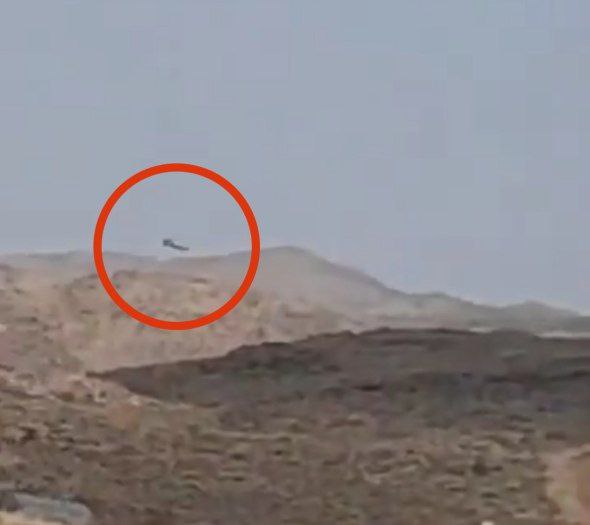
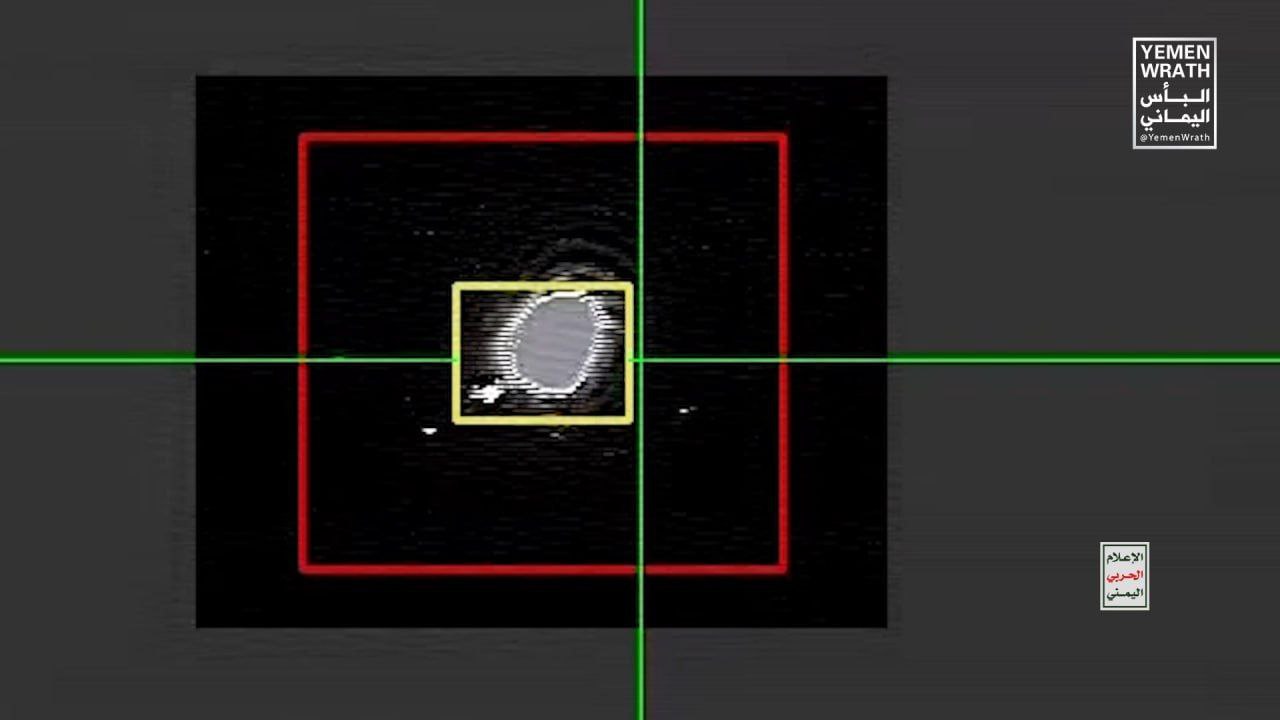
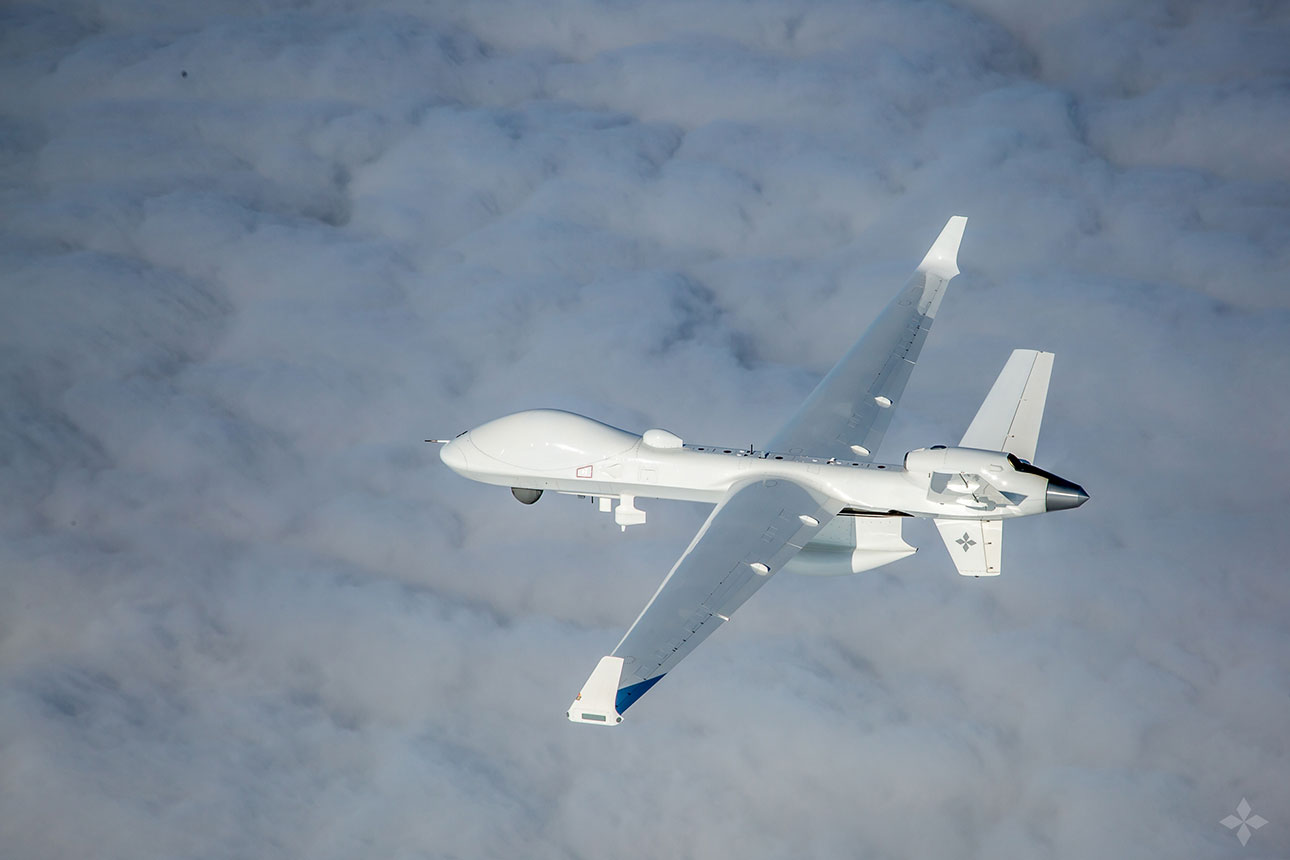
22 out of these 26 drones were eliminated during the Yemeni operation named “Promised Conquest and Holy Jihad,” conducted to support the people and Palestinian resistance.
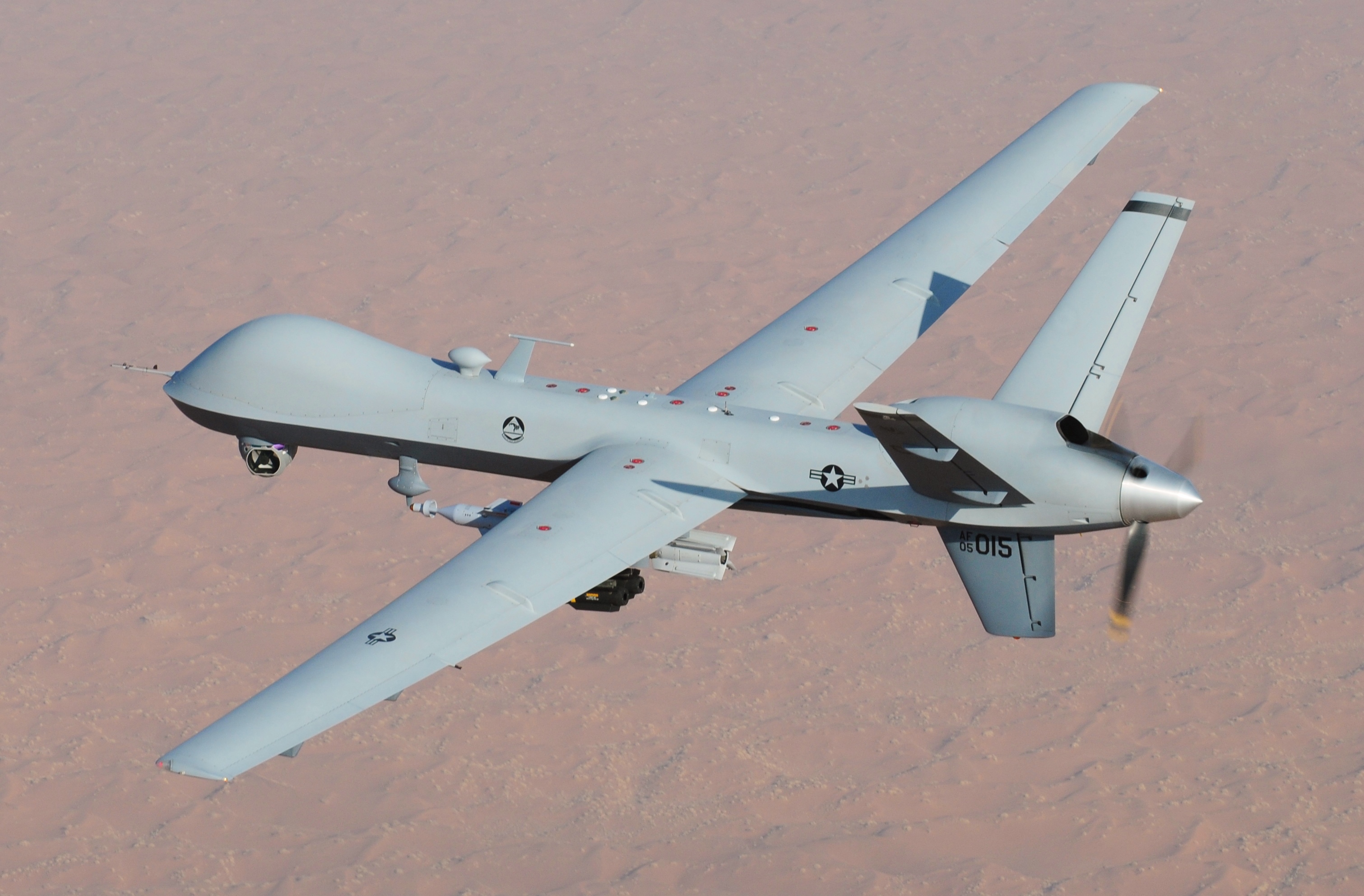
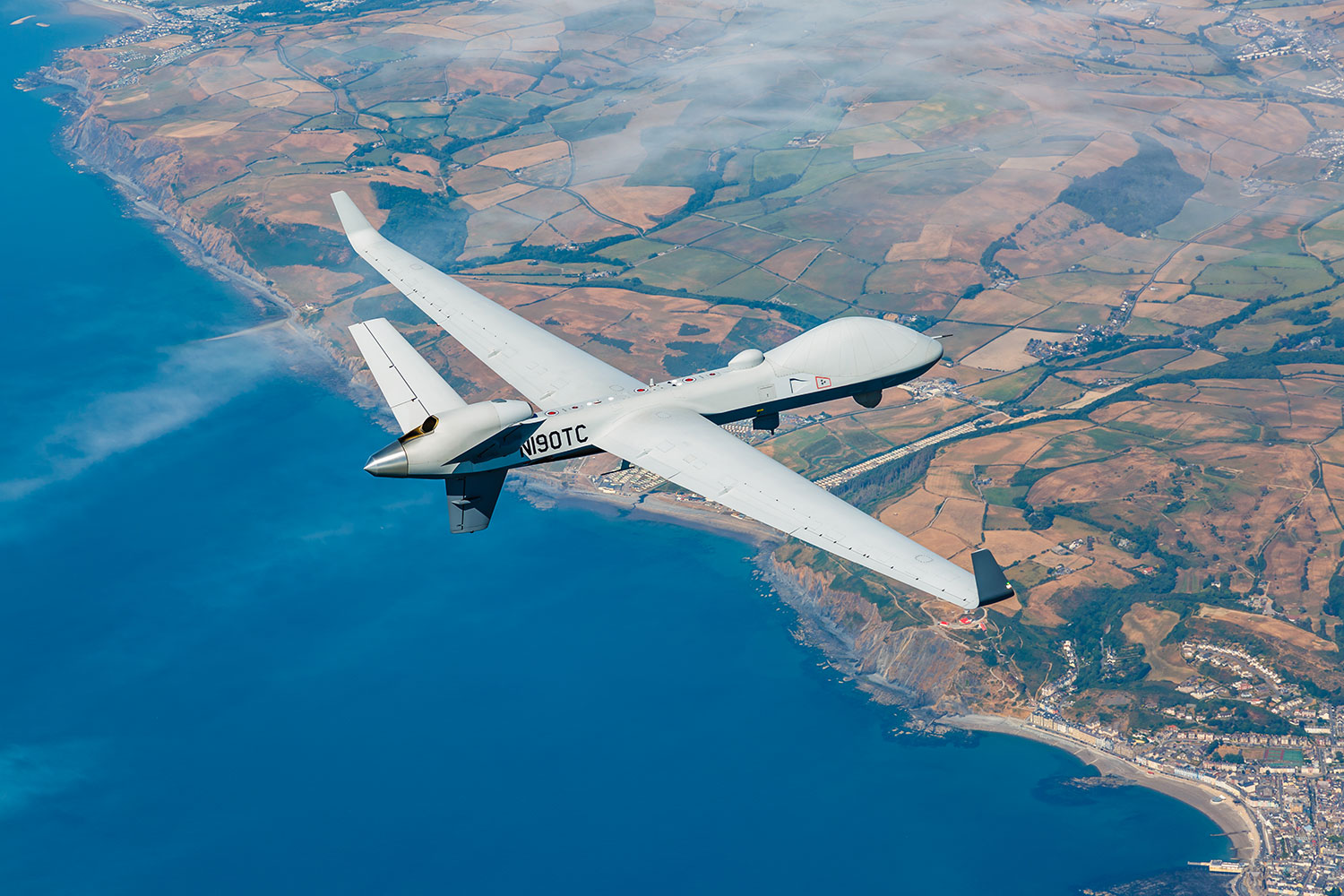
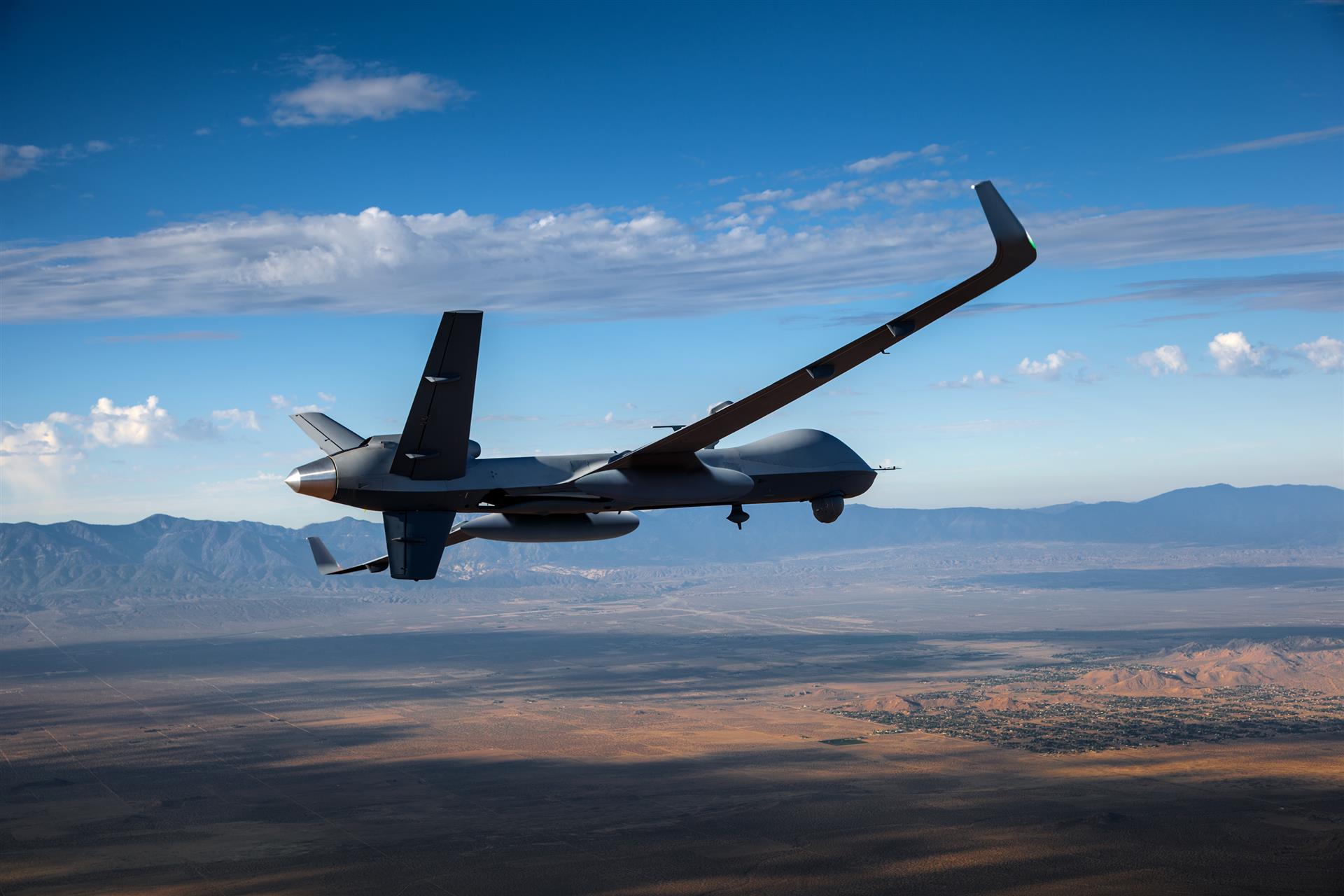
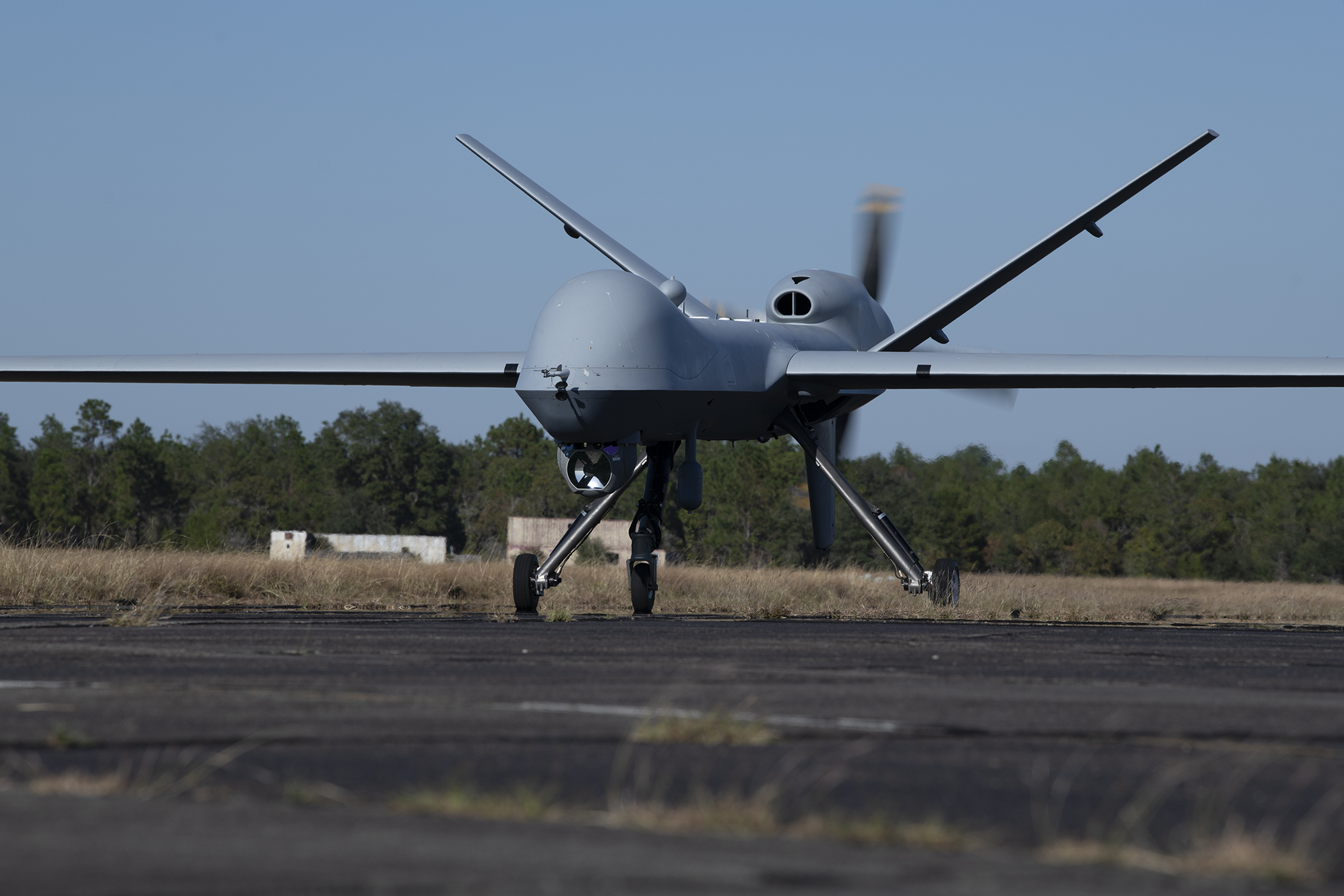
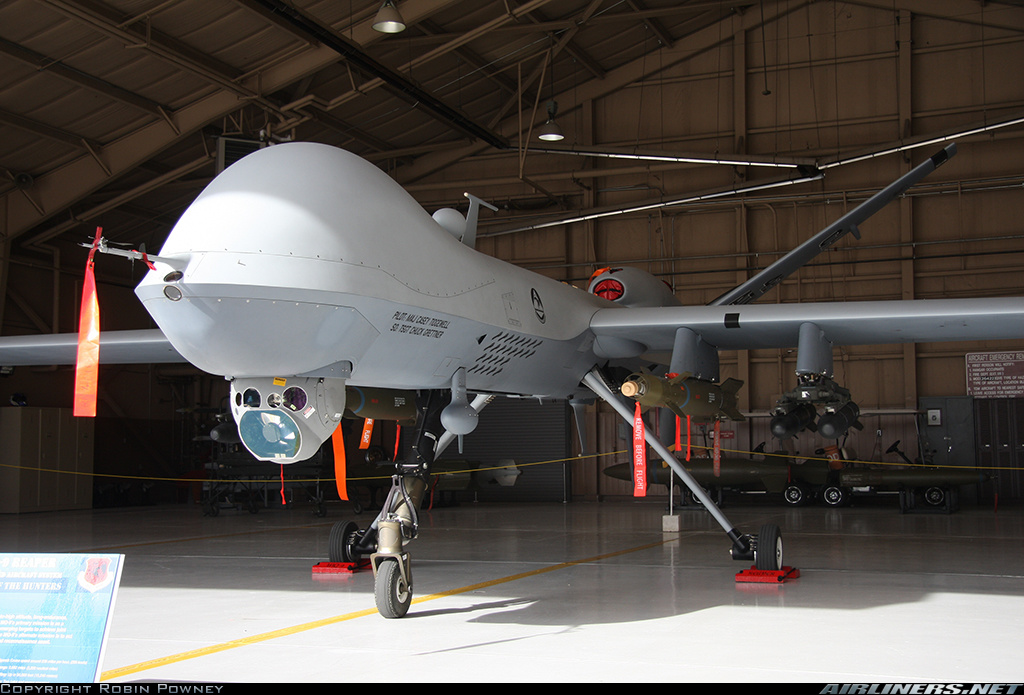
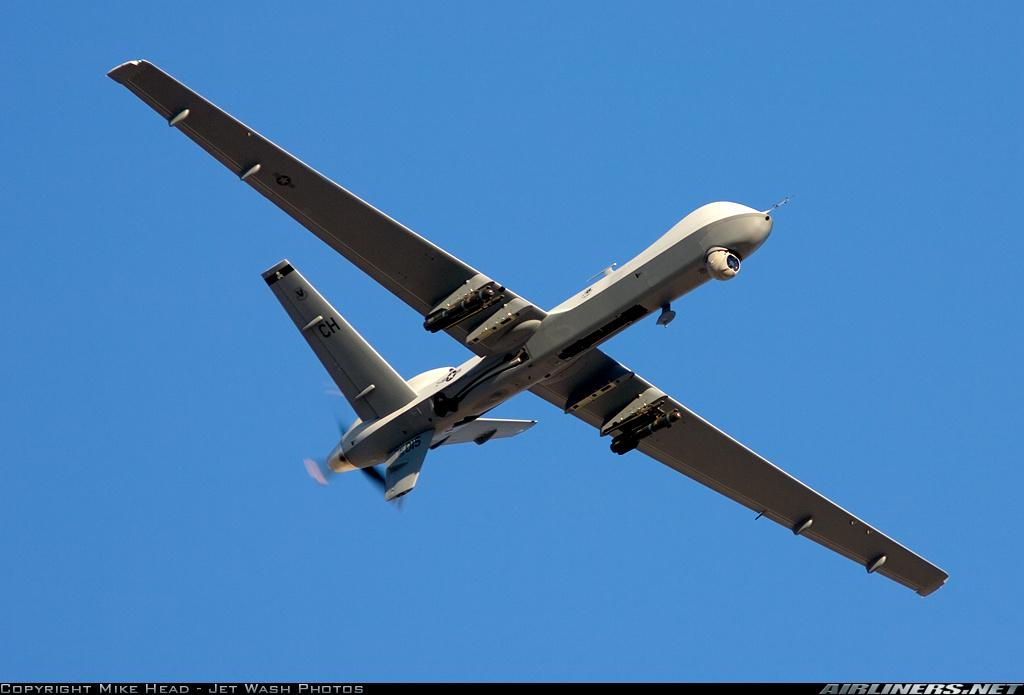
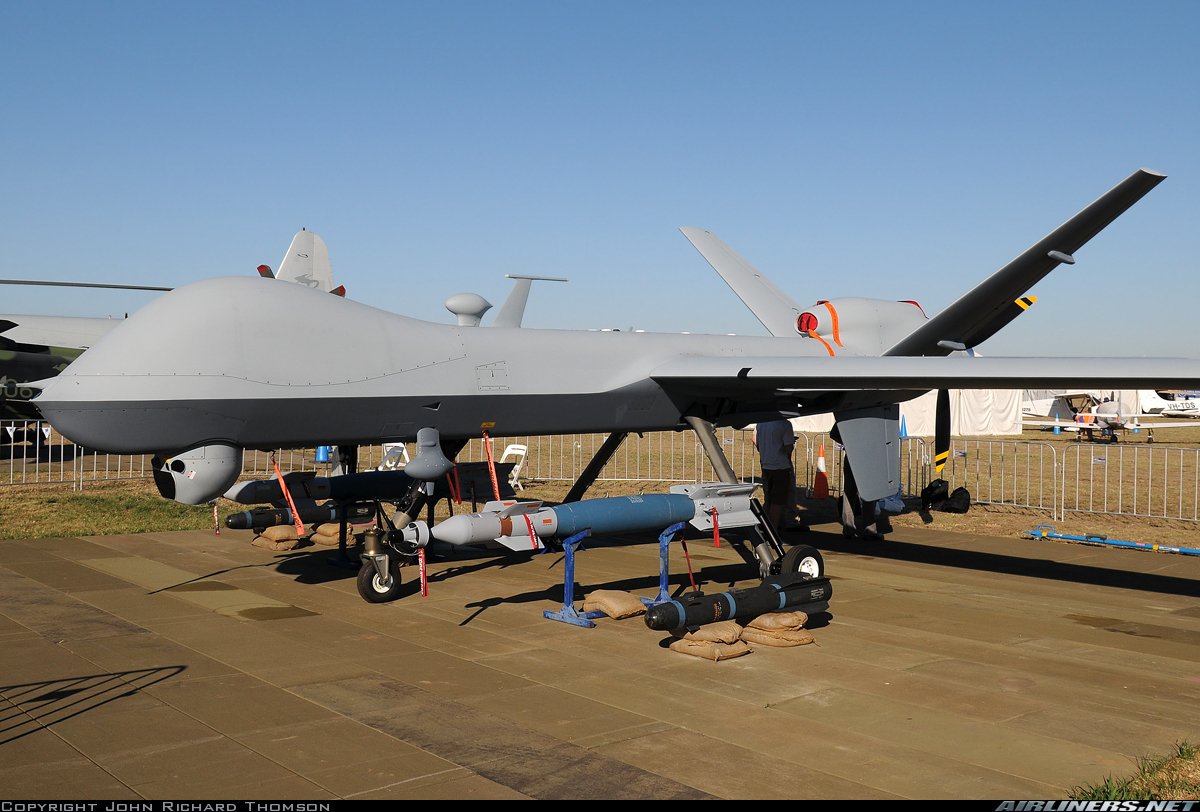
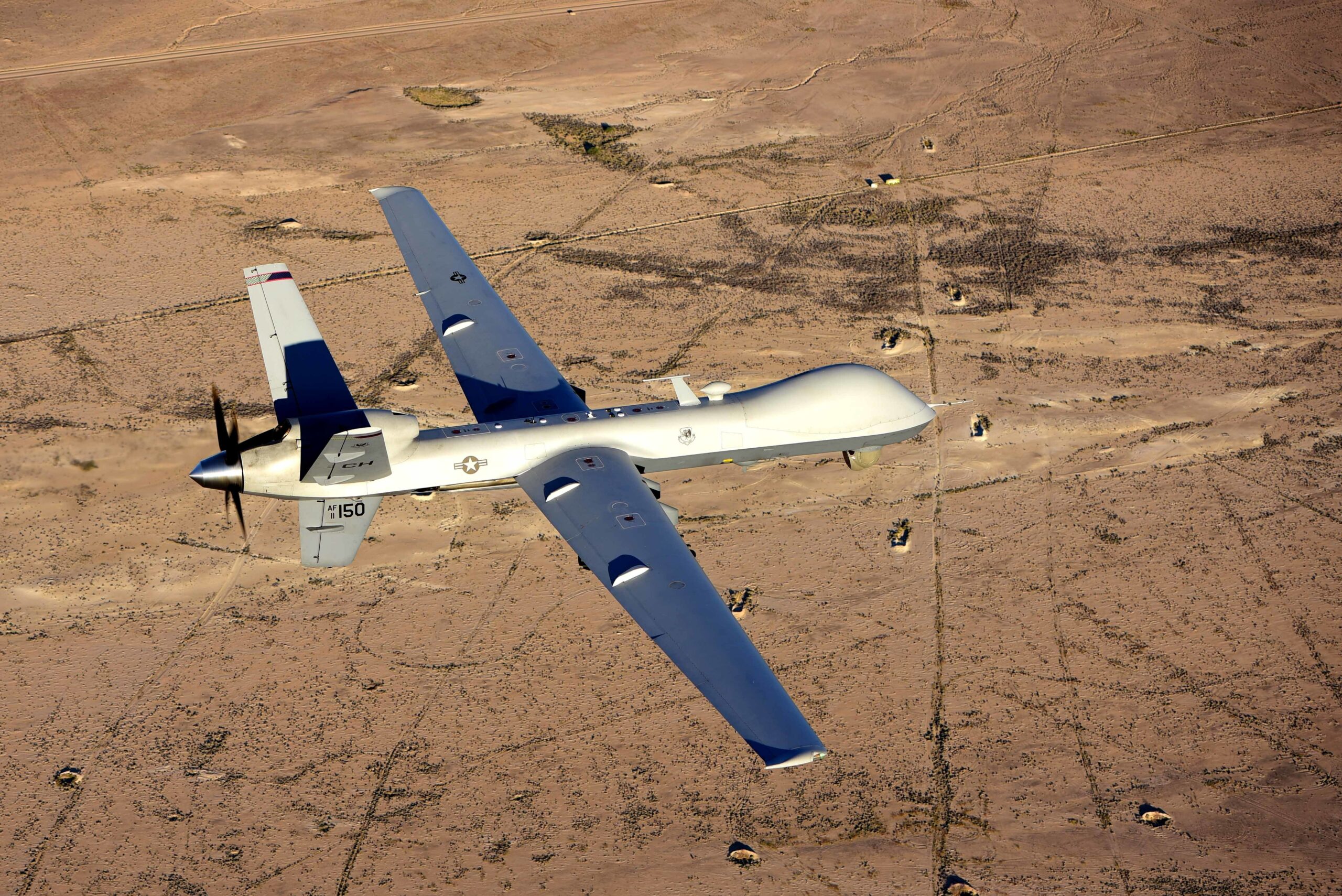
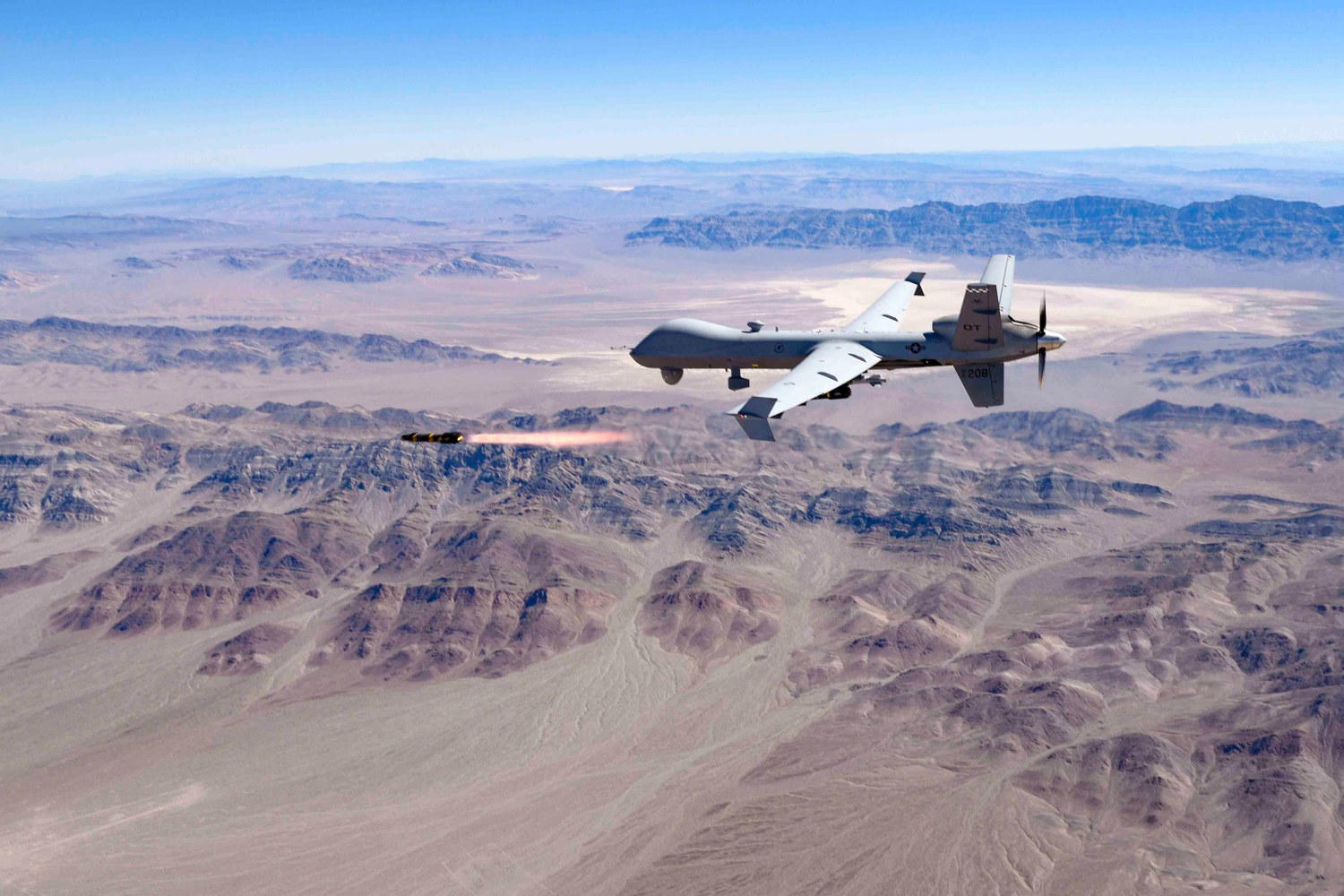
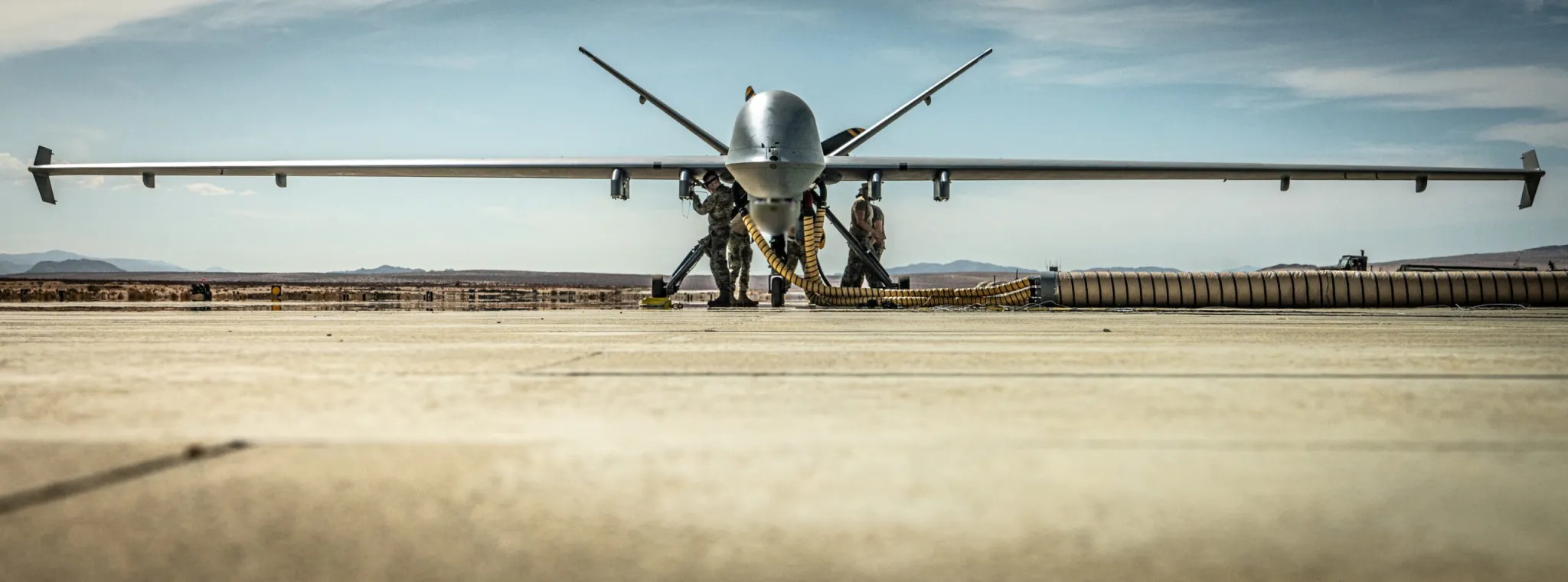
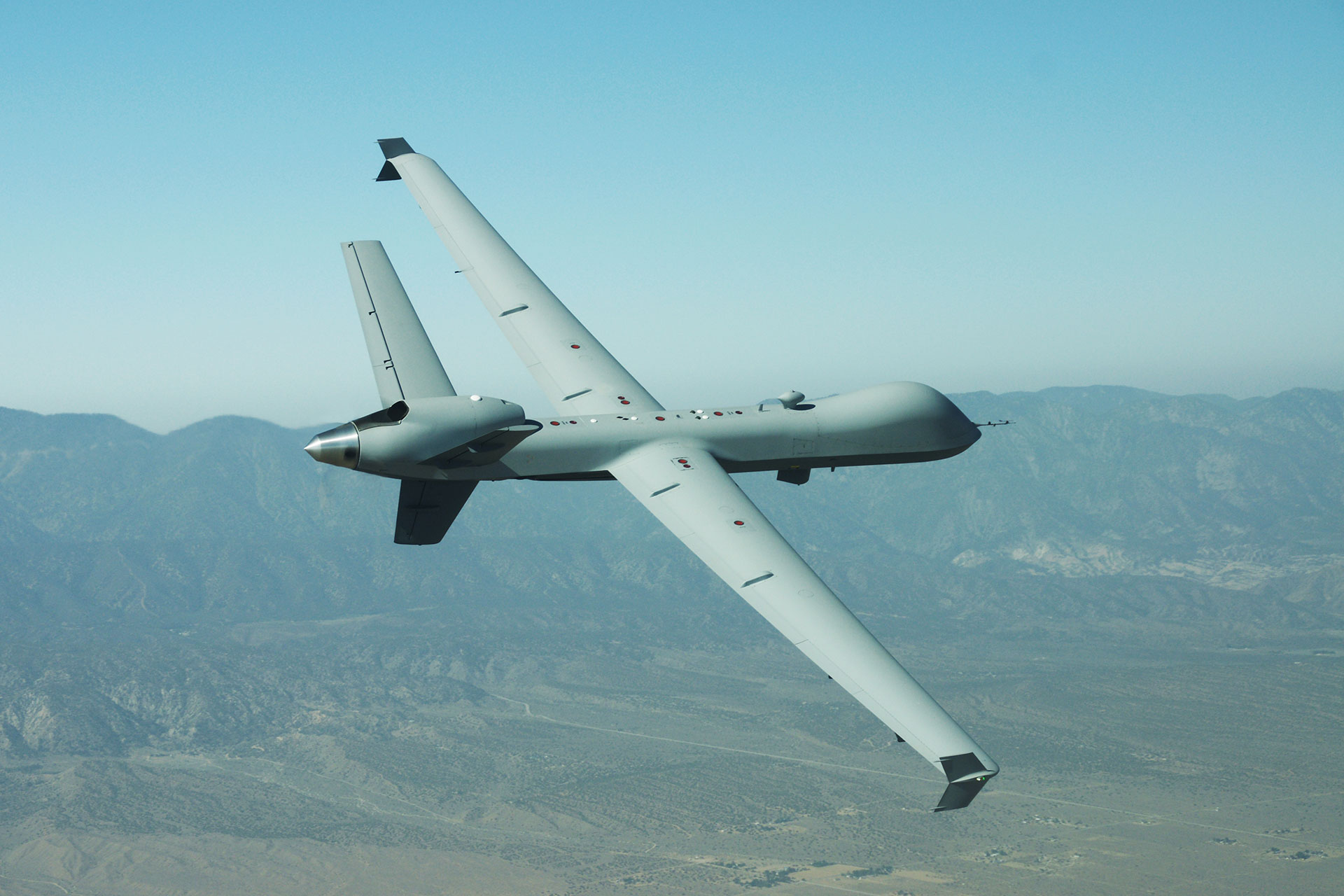
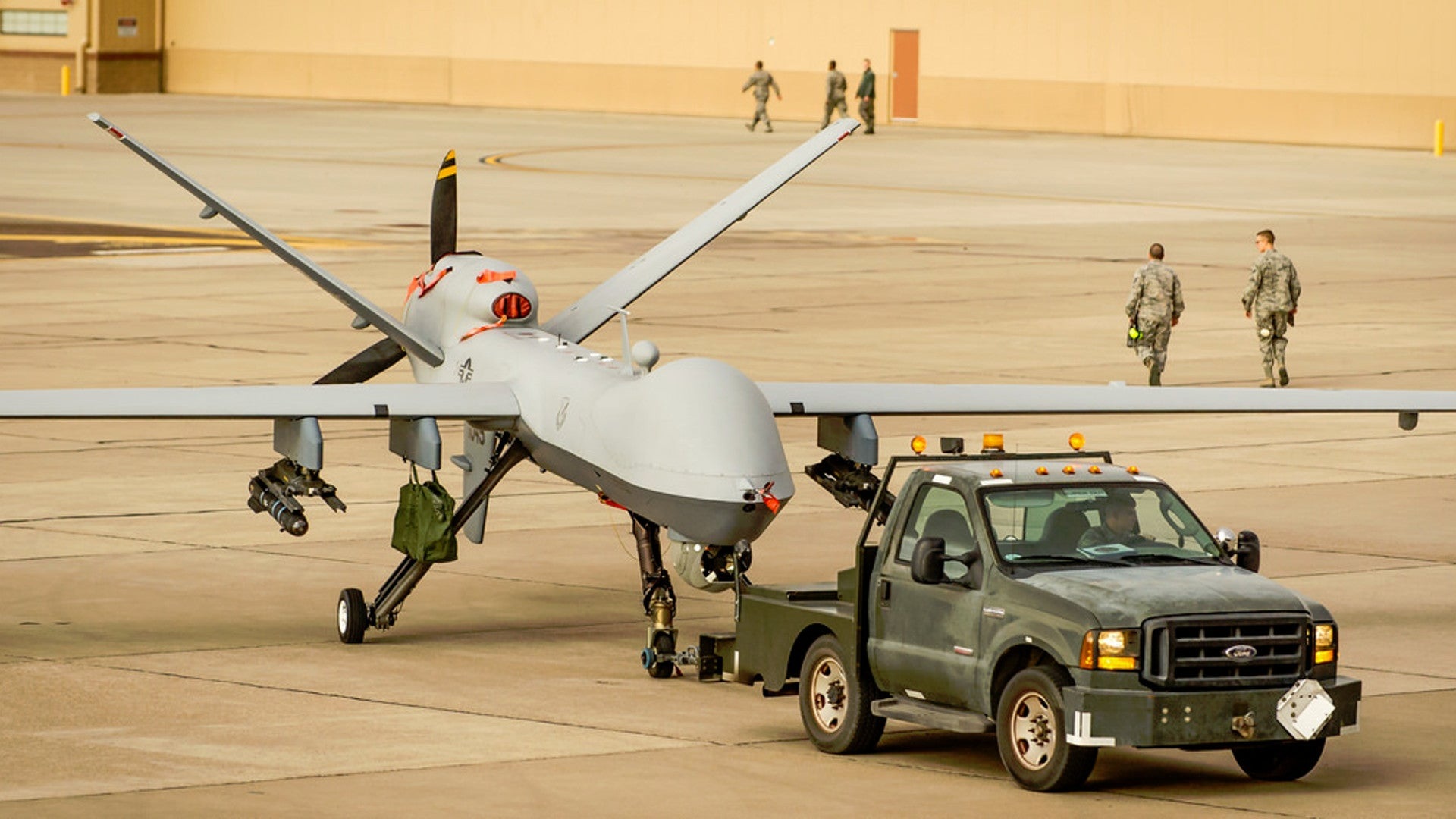
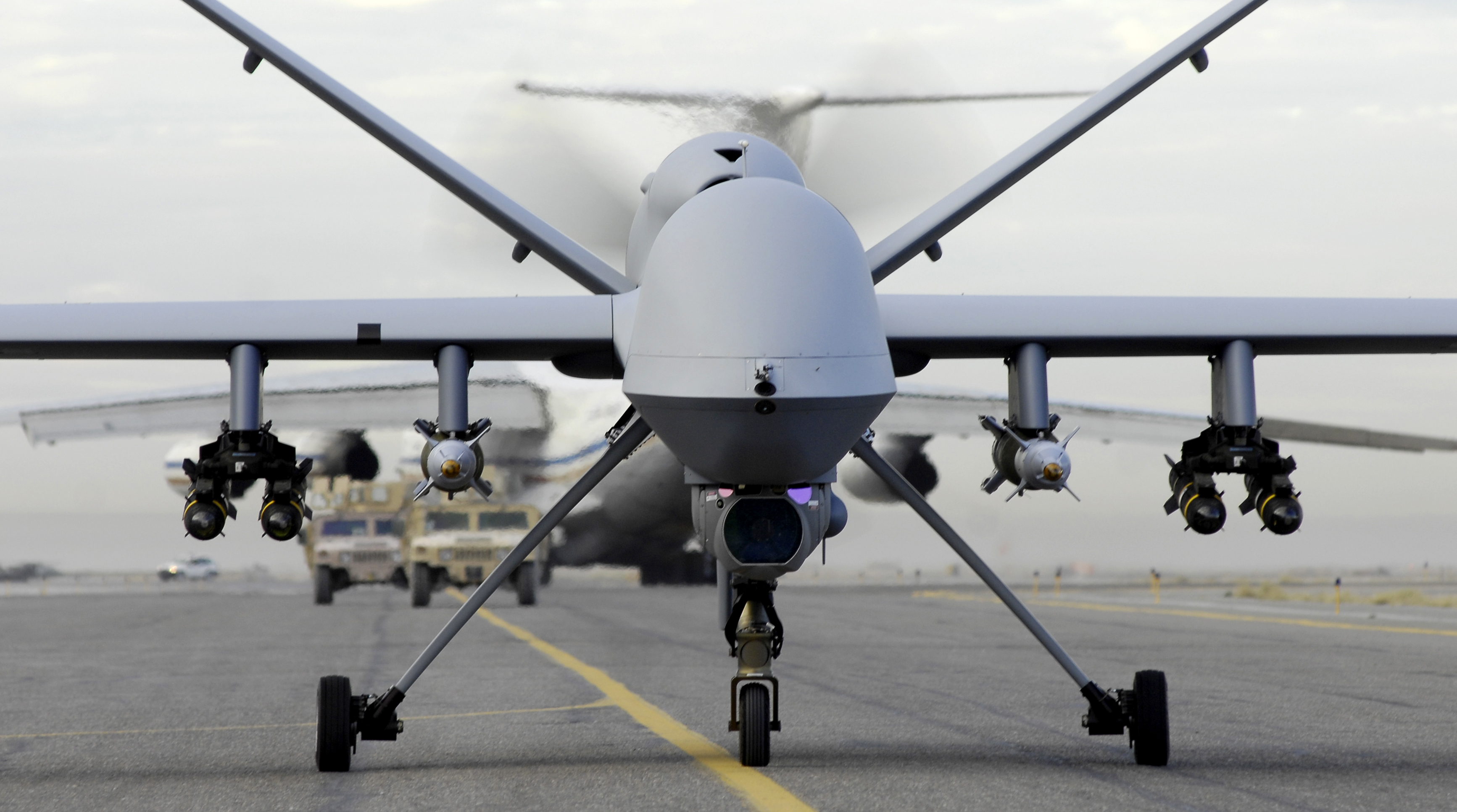
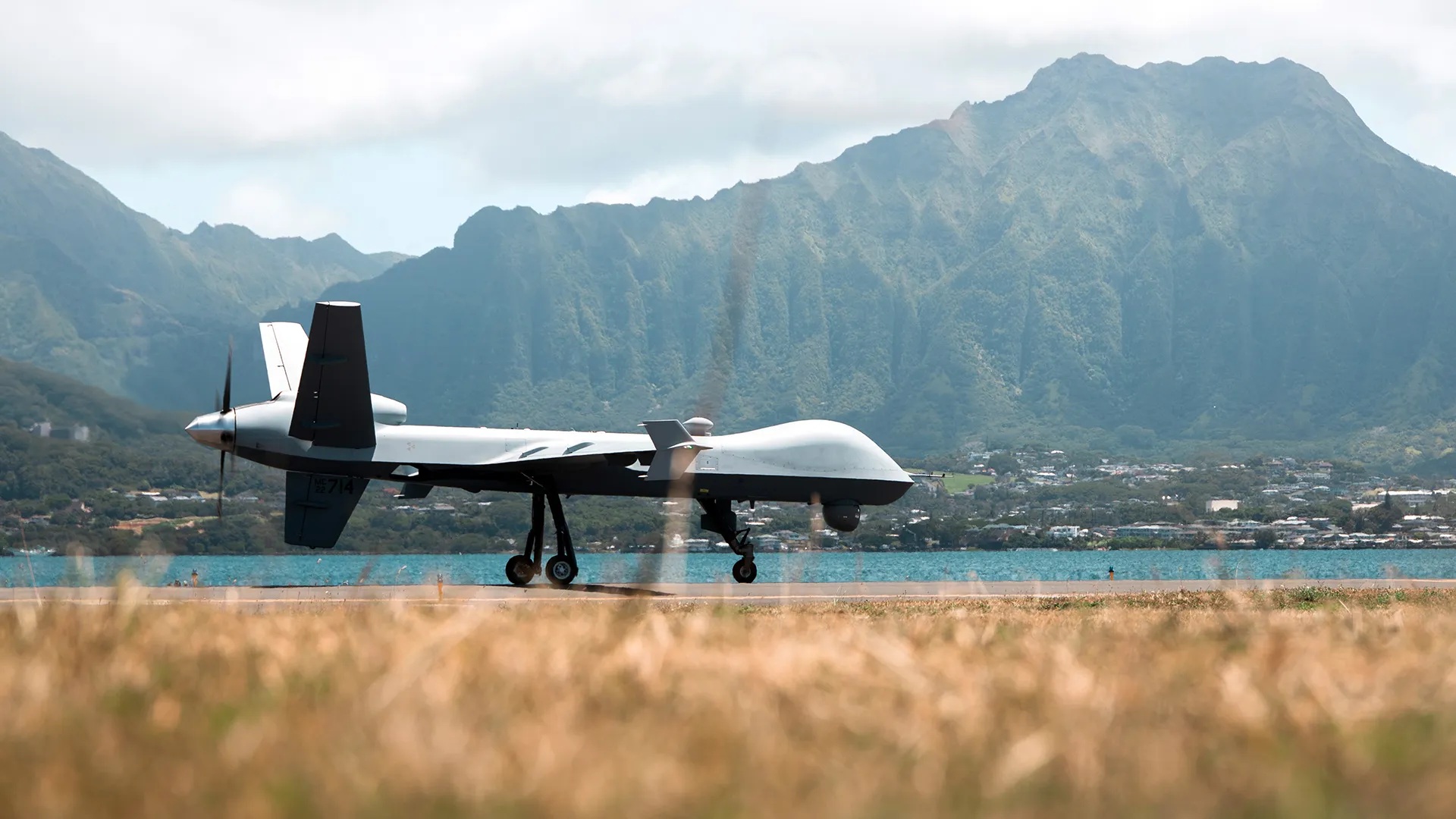
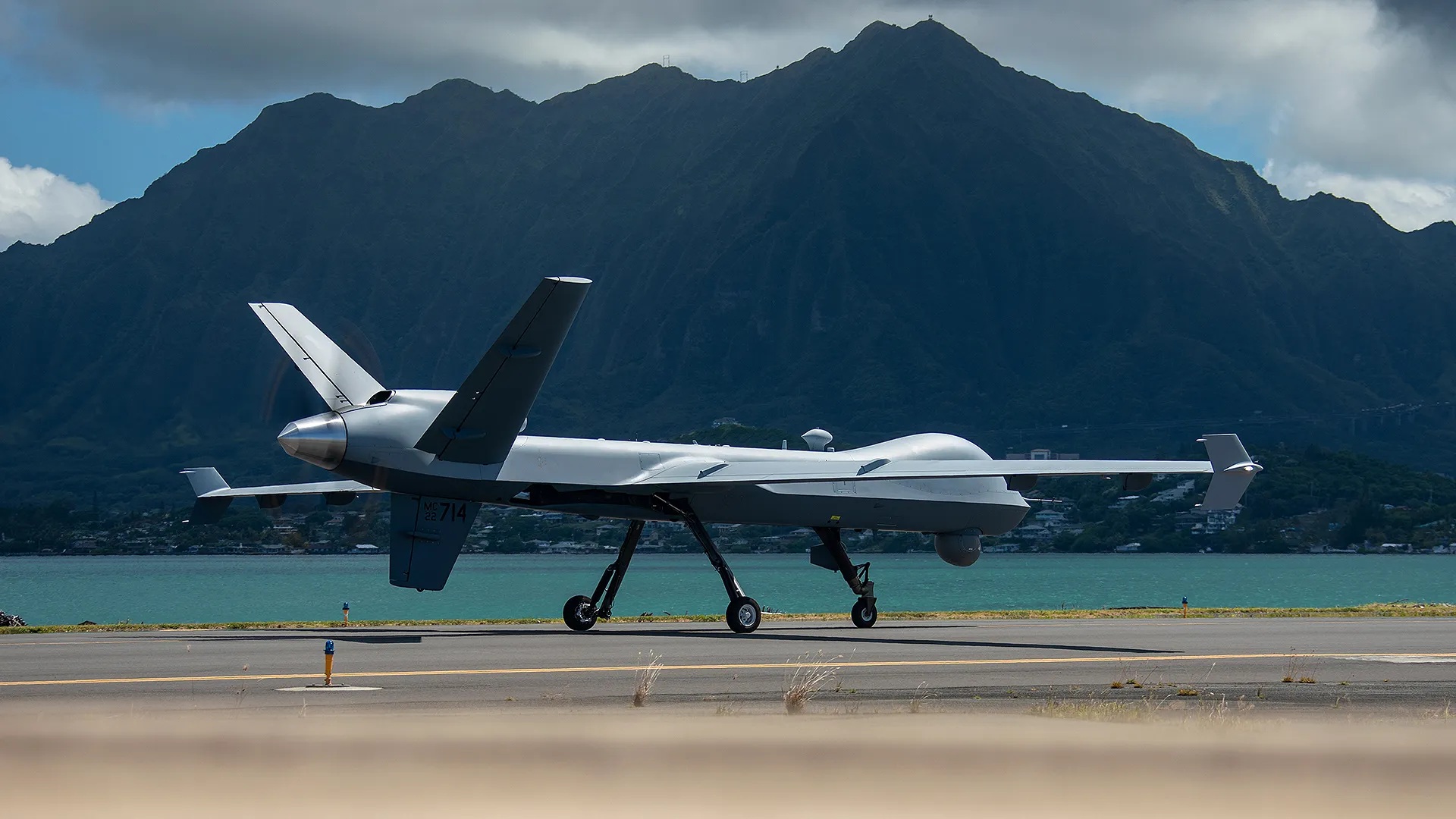
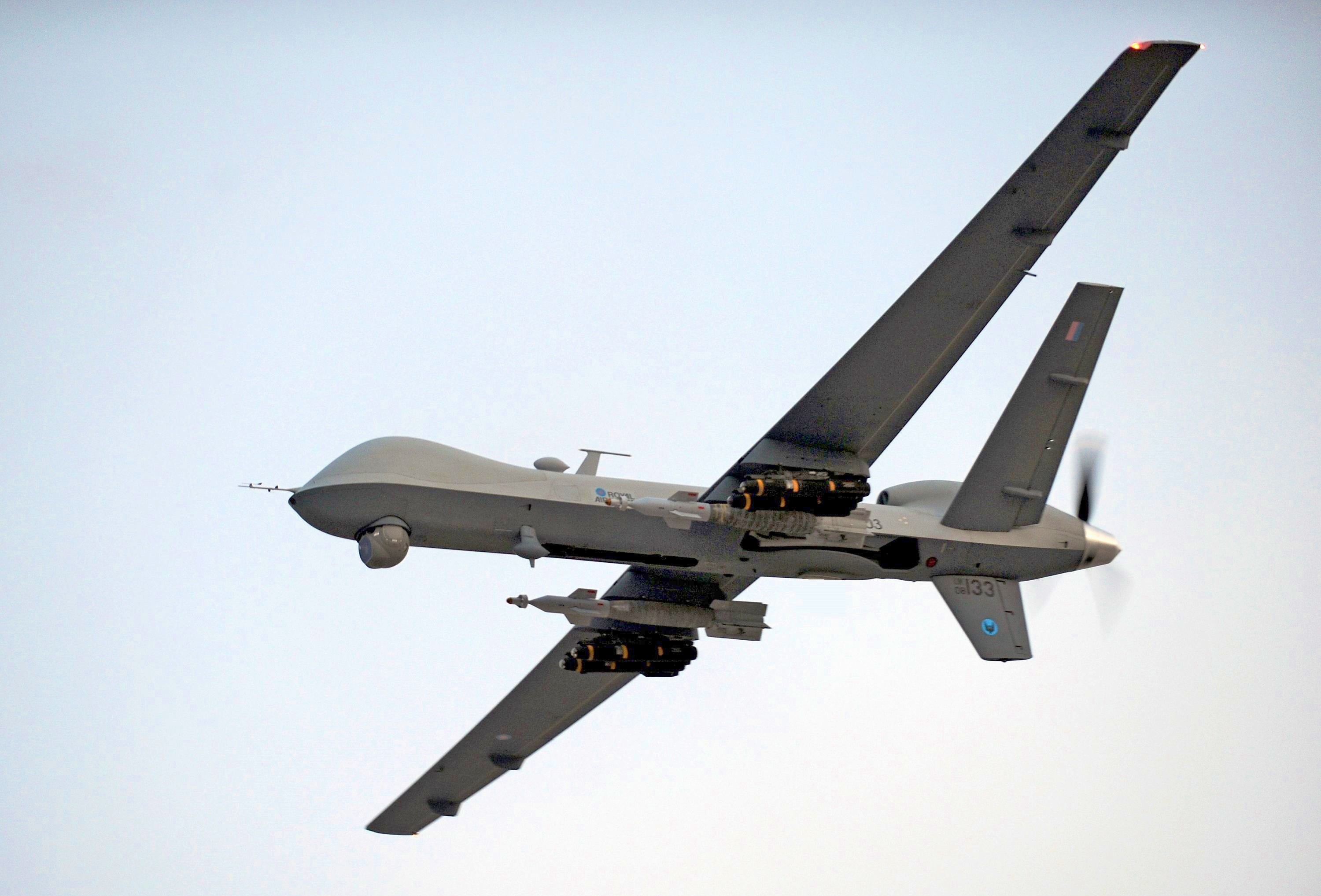
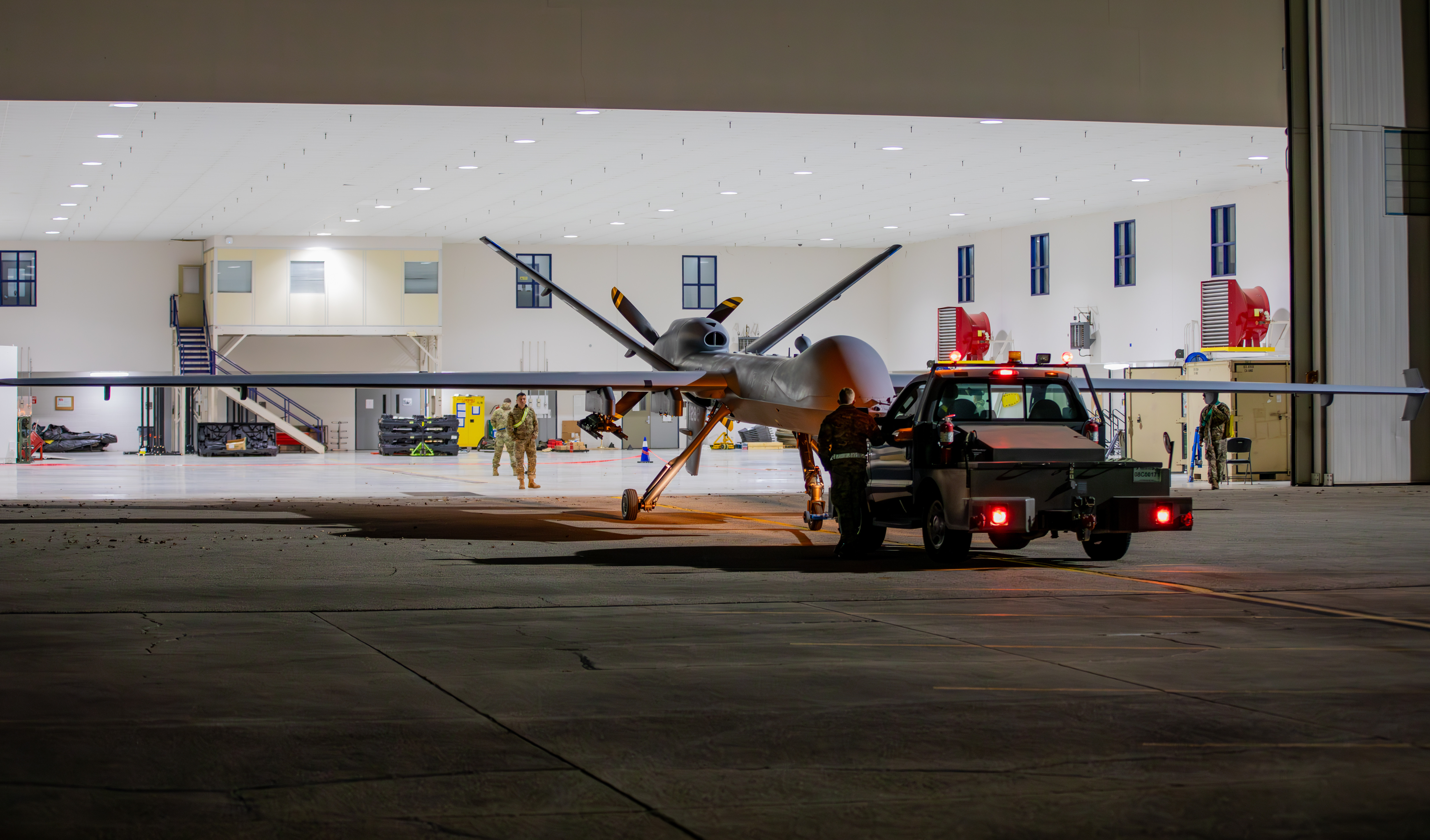
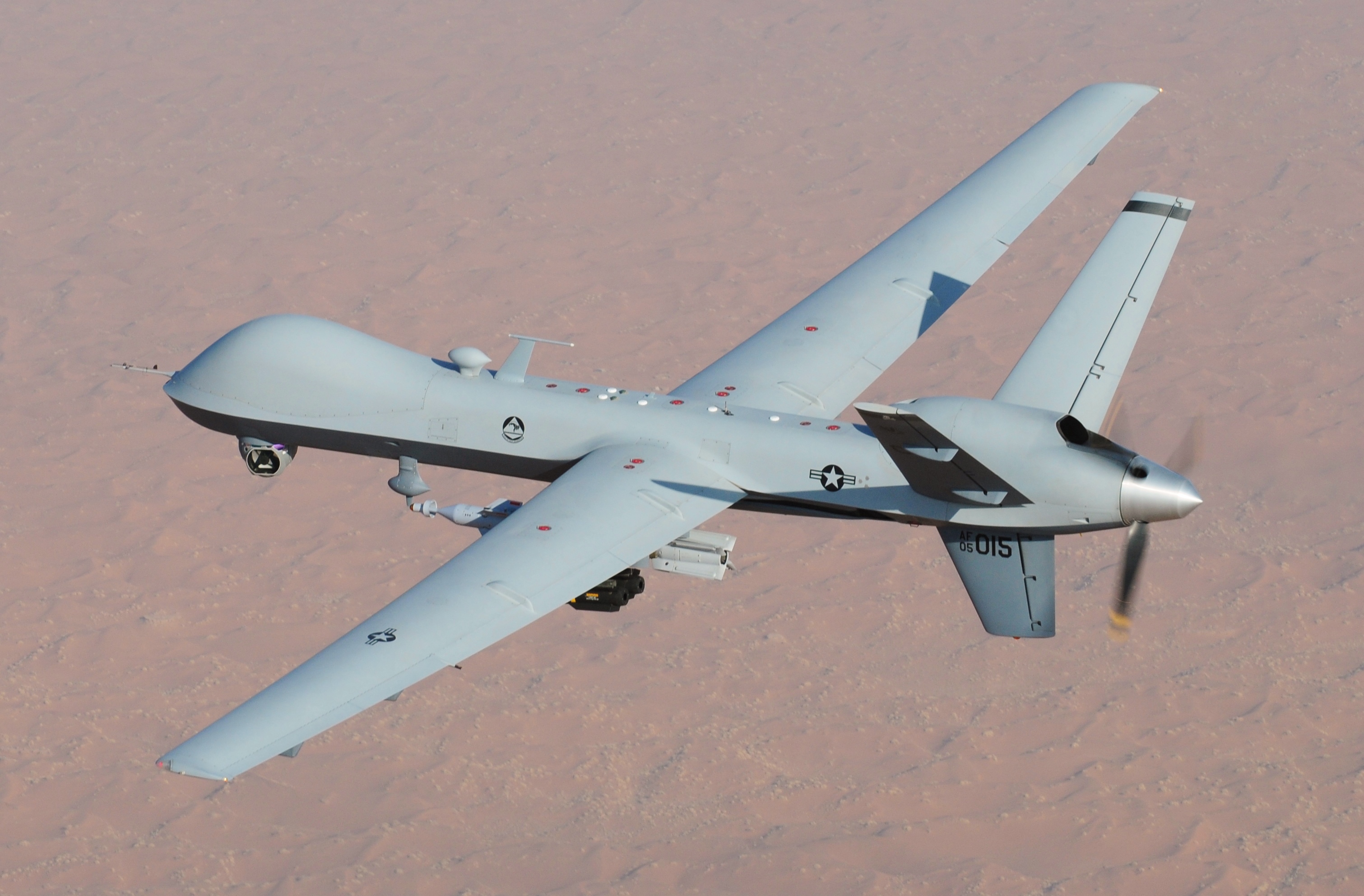
General Atomics MQ-9 Reaper is a versatile and heavy drone used by the US Army for reconnaissance, surveillance, and offensive operations, including assassinations in Iraq, Afghanistan, and Syria since 2001. As of 2023, each MQ-9 drone costs approximately $32 million to produce, resulting in $832 million in damage inflicted by Ansar Allah through the destruction of 26 drones.
The dates and locations of the destroyed MQ-9 drones in Yemen are as follows:
Sanaa, 01 October 2017
Hudaydah, 06 June 2019
Dhamar, 20 August 2019
Marib, 23 March 2021
Hudaydah, 08 November 2023
Hudaydah, 19 February 2024
Saada, 26 April 2024
Marib, 17 May 2024
Al-Bayda, 21 May 2024
Marib, 29 May 2024
Saada, 04 August 2024
Marib, 07 September 2024
Saada, 10 September 2024
Dhamar, 15 September 2024
Saada, 30 September 2024
Al-Jawf, 08 November 2024
Al-Bayda, 28 December 2024
Marib, 31 December 2024
Hudaydah, 03 March 2025
Marib, 31 March 2025
Hudaydah, 03 April 2025
Al-Jawf, 09 April 2025
Hajjah, 13 April 2025
Sanaa, 18 April 2025
Sanaa, 19 April 2025
Hajjah, 22 April 2025
The extensive destruction of reconnaissance-combat drones belonging to the Saudi-American coalition in Yemen stands out as one of the most significant accomplishments of the Yemeni armed forces over a decade-long conflict. Throughout this time, the Yemeni army has downed 118 military aircraft from Saudi Arabia, the UAE, the United States, Jordan, Morocco, and Bahrain, including 29 from the United States.
Since the onset of the Palestine war, the US Army has dispatched numerous MQ-9 drones to Yemen to monitor military installations and equipment, and to carry out assassination missions. However, the Yemeni Army’s air defense forces have successfully disrupted these drone operations in Yemen through their intelligence and persistent efforts.
Yahya Saree, the spokesperson for Yemen’s army, issued a statement declaring,
“In support of the oppressed Palestinian people and their fighters, and in rejection of the genocide being committed by the Israeli enemy, with American support, against our brothers in Gaza, the Yemeni Armed Forces’ missile force carried out a qualitative military operation targeting a vital Zionist enemy target in the occupied Haifa area with a hypersonic ballistic missile. The missile reached its target, thank God, and the interception systems failed to intercept it. It caused a state of fear and panic among the Zionist settlers, as more than two million Zionists headed to shelters. The Yemeni Armed Forces’ unmanned aerial vehicle (UAV) carried out a military operation targeting a vital target in the occupied Yafa region with a Yafa drone. The people of faith and wisdom are waging this battle seeking help from God Almighty, implementing His orders and directives, relying on and trusting in Him. They will not retreat or abandon their religious, moral, and humanitarian duties. With God’s help, they will continue their jihadist path in support of and assistance to the oppressed Palestinian people until the aggression against Gaza stops and the siege is lifted.”
According to released videos, the Yemeni missile struck an unknown location in Haifa region. Also, the Yemeni army used a Yafa suicide drone to attack Tel Aviv.
Yemen’s army missile attack on Haifa
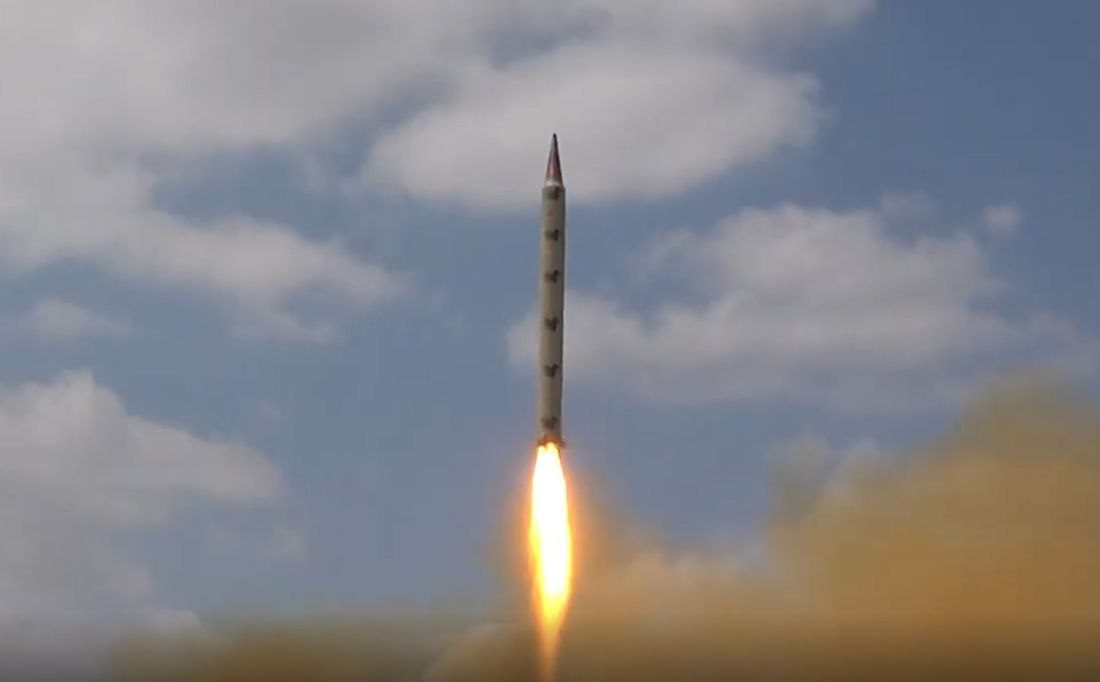
This marks Yemen’s first operation against northern occupied Palestine and is considered the longest-range missile attack by Yemen on Israel to date. If the missile was launched from Saada province towards Haifa, it would have traveled a distance of approximately 1,950 to 2,000 kilometers. It appears that the Yemeni missile forces have extended their range by modifying the Khaybar-Shekan missile, allowing for missile attacks against Israel to reach northern occupied Palestine.
If Ansar Allah continues its missile strikes on northern occupied Palestine, we may see significant impacts on developments in Lebanon and the northern front of occupied Palestine in the coming months. The influence of the Yemeni forces in regional dynamics is growing day by day, and Yemen is proving to be a key player in the conflict, despite having relatively limited weaponry.
Brigadier General Yahya Saree stated that the defense forces of the Yemeni Armed Forces have effectively destroyed another US military MQ-9 drone in the skies of Hajjah province, northwestern Yemen, using a surface-to-air missile. The drone was tracked and shot down while undertaking a hostile operation in Yemeni airspace.
This incident marks the 26th MQ-9 drone downed throughout the Yemeni conflict, with 21 of these drones being downed during the operation aimed at aiding Palestine, titled “Promised Conquest and Holy Jihad. “
This incident marks the 25th MQ-9 drone downed throughout the Yemeni conflict, with 20 of these drones being downed during the operation aimed at aiding Palestine, titled “Promised Conquest and Holy Jihad. “
Video of the moment a US MQ-9 drone crashed in Sanaa province. This drone was probably also destroyed by a 358 or 359 anti-aircraft missile
The loss of these MQ-9s represents a significant cost for the US military, estimated at $800 million.
Since the start of the Yemeni war, the Yemeni Armed Forces have shot down a total of 117 military aircraft from the United States, Saudi Arabia, the UAE, Morocco, Bahrain, and Jordan across various fronts in the country. Of these, 28 aircraft belong to the US military, which includes 25 MQ-9 drones, one F/A-18F fighter jet, one UH-60M helicopter, and one V-22 Osprey helicopter.
The destruction of a significant number of aircraft showcases the defensive capabilities of the Yemeni armed forces. These forces, leveraging the strength of the former Yemeni army and receiving advisory support from the Iranian armed forces, have managed to rebuild their weaponry and expand their power despite the extensive bombardment of Yemeni air defenses by Saudi and US coalition fighter jets.
The details of these attacks are as follows: – Sanaa: 6 airstrikes in the Al-Haffa area of the Al-Sab’een district, 6 airstrikes in the Bani Hashish district, and additional strikes in the Al-Samaa area and other locations within the Arhab district. – Al-Jawf: 4 airstrikes targeting Bart al-Anan, Khab, and al-Sha’af districts. – Saada: 3 airstrikes in the city of Saada.
The number of casualties from the US terrorist airstrike on the port of Ras Issa in northern Hudaydah on April 17 has risen to 80 martyrs, with an additional 150 people wounded.
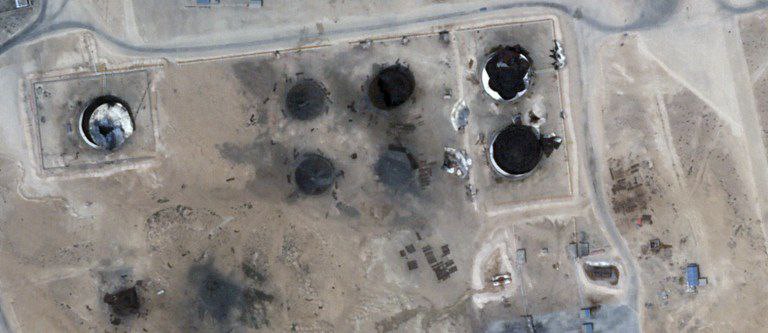
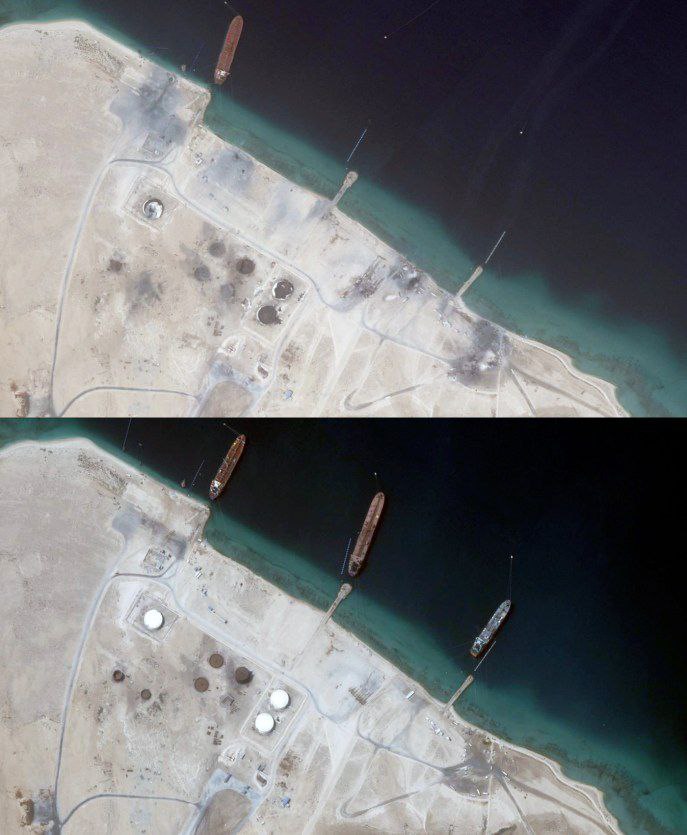
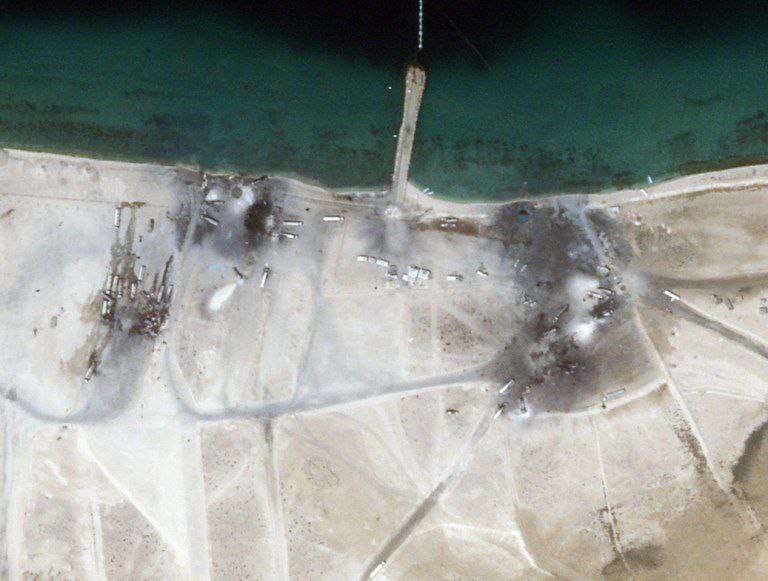
Satellite images released from Ras Issa oil port reveal how US warplanes have targeted oil terminal loading routes, fuel tanks, and fuel tankers with heavy bombs. The US regime is seeking to exert maximum pressure on the Yemeni people by aiming at Yemen’s energy sector.
According to Brigadier General Yahya Saree, a spokesman for the Yemeni Army, the Yemeni missile force attacked a military site near Ben Gurion Airport, on the outskirts of Tel Aviv with a Zulfiqar ballistic missile.
The attack on Ben Gurion Airport triggered alarm sirens across central occupied Palestine, prompting thousands of residents to seek shelter.
Alarm sirens across central occupied Palestine
Additionally, Yemeni missile, drone and naval forces executed a coordinated military operation in the Red Sea and the Arabian Sea against the USS Harry Truman and USS Carl Vinson aircraft carriers, along with other US warships, employing several cruise missiles and suicide drones.
It is important to note that the USS Carl Vinson had just arrived in the region in April.
The attack on the USS Carl Vinson marked the first strike on this aircraft carrier and the 26th operation against the USS Harry Truman. Furthermore, this operation constituted the 203rd and 204th assaults by the Yemeni army against illegal ships associated with Israel, the US, and the UK in the region.
This incident marks the 24th MQ-9 drone downed throughout the Yemeni conflict, with 20 of these drones being downed during the operation aimed at aiding Palestine, titled “Promised Conquest and Holy Jihad. “
AnsarAllah released the moment the MQ-9 drone targeted over the Sanaa province
The loss of these MQ-9s represents a significant cost for the US military, estimated at $736 million.
Ansar Allah has censored footage of the moment the missile strikes the MQ-9 drone to protect details regarding Yemeni weaponry. It is presumed that a 358 or 359 defense missile was used by Yemeni forces to bring down the drone.
It appears that one of the goals behind the massive shipments of weapons and military forces is to set the stage for a major conflict in areas controlled by Ansar Allah in Yemen. Last year, American officials discussed the need for a ground operation along the western coast of Yemen to sever Ansar Allah’s access to the port of Hudaydah and limit their influence in the region. Additionally, Yemeni military exercises have involved practicing both defensive and offensive tactics at sea and on land, with over 1.1 million people and tribal groups in Yemen undergoing military training through a program known as “popular mobilization.”
Recently, there have been indications of US preparations for a ground conflict:
American fighter jets have been conducting airstrikes along the lines of conflict in Yemen, particularly in the western and southern regions of Marib province, the Al-Jawf desert, and to the south of Hudaydah. The primary objective of these attacks is to weaken Ansar Allah’s defense lines in these areas, allowing the forces loyal to the resigned government to advance without significant resistance.
The aircraft carrier USS Carl Vinson has entered the Arabian Sea and was last reported moving toward the Gulf of Aden. It is anticipated that this carrier, in conjunction with the USS Harry S. Truman, will provide air support and execute heavy attacks deep into Ansar Allah positions.
Blue: Main directions of attacks – Black: Secondary directions of attacks
This evidence suggests that a ground battle in Yemen, centered on forces affiliated with the Saudi coalition and supported by US airpower, is imminent. According to the Wall Street Journal, Saudi officials have informed their American counterparts that they will not partake in the operation due to threats posed by Ansar Allah and the severe repercussions of their assaults. Hence, the probability of the Islah Party militants, Home Shield Forces, and other Saudi-affiliated factions participating in ground operations against Ansar Allah is low.
However, field evidence indicates that the United Arab Emirates will be involved in the operation against Ansar Allah. Although Reuters has cited officials from the UAE denying this involvement, their role is evident. They have facilitated communication between officials of the Southern Transitional Council and Tariq Saleh with US forces, providing essential support to prepare these factions. Additionally, the Emirates has deployed an Israeli-made radar at its base in Puntland state, located in northern Somalia, to counter missile and drone attacks from Yemeni armed forces targeting the Gulf of Aden.
Given the direction of the Saudi coalition’s ground assaults in recent years and the current conditions in Yemen, the fronts prioritized for a ground attack include southern Hudaydah, western Marib, the Al-Jawf desert, the western cities of Taiz province, southern Al-Bayda, and Al-Dhale. Both the Yemeni government and Ansar Allah have made necessary preparations for this impending attack. However, support from the US and the Saudi coalition in terms of air and logistical resources could significantly disrupt Yemen’s sea and air communications through Sanaa airport and the port of Hudaydah.
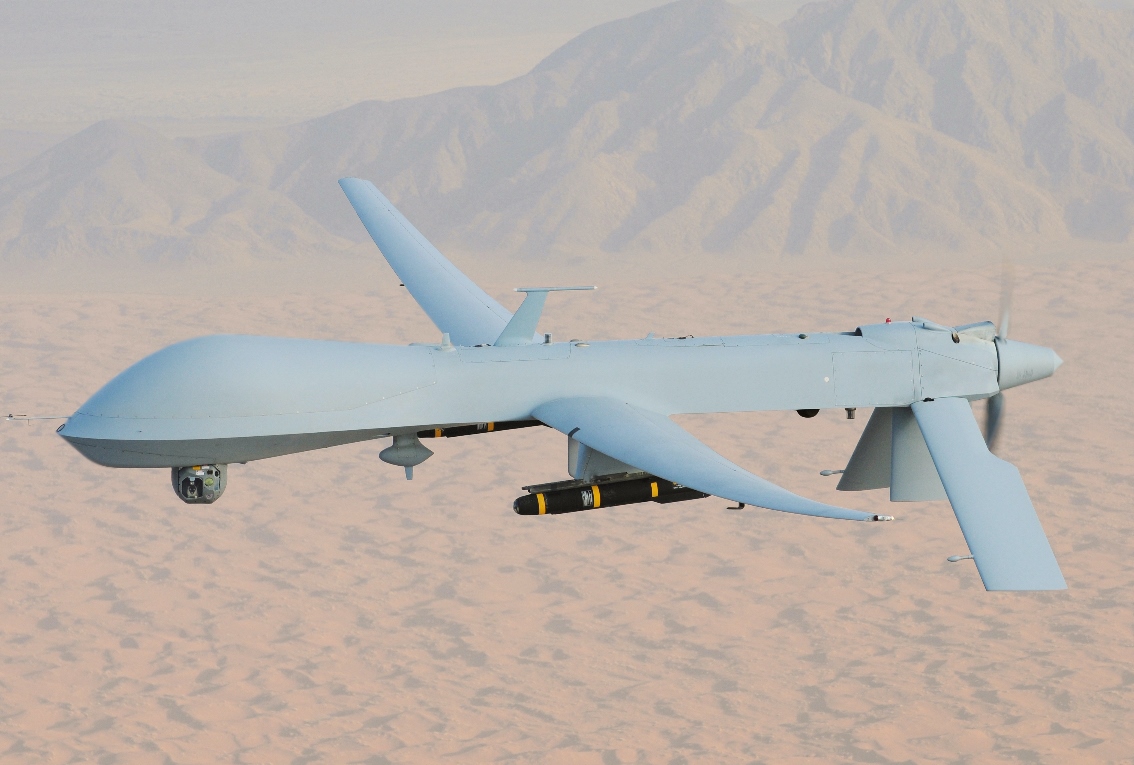
The MQ-9 Reaper drone is the result of the evolution of one of the most successful UAV projects in the United States: the MQ-1 Predator. This project was initially initiated by the American company General Atomics Aeronautical Systems, Inc. (GA-ASI) as a private venture.
In 1998, as the U.S. military’s operational needs expanded to include unmanned systems with greater range, altitude, and payload capacity, GA-ASI engineers began designing a new platform based on the Predator. This new platform, later known as the Predator B, also received financial support from NASA.
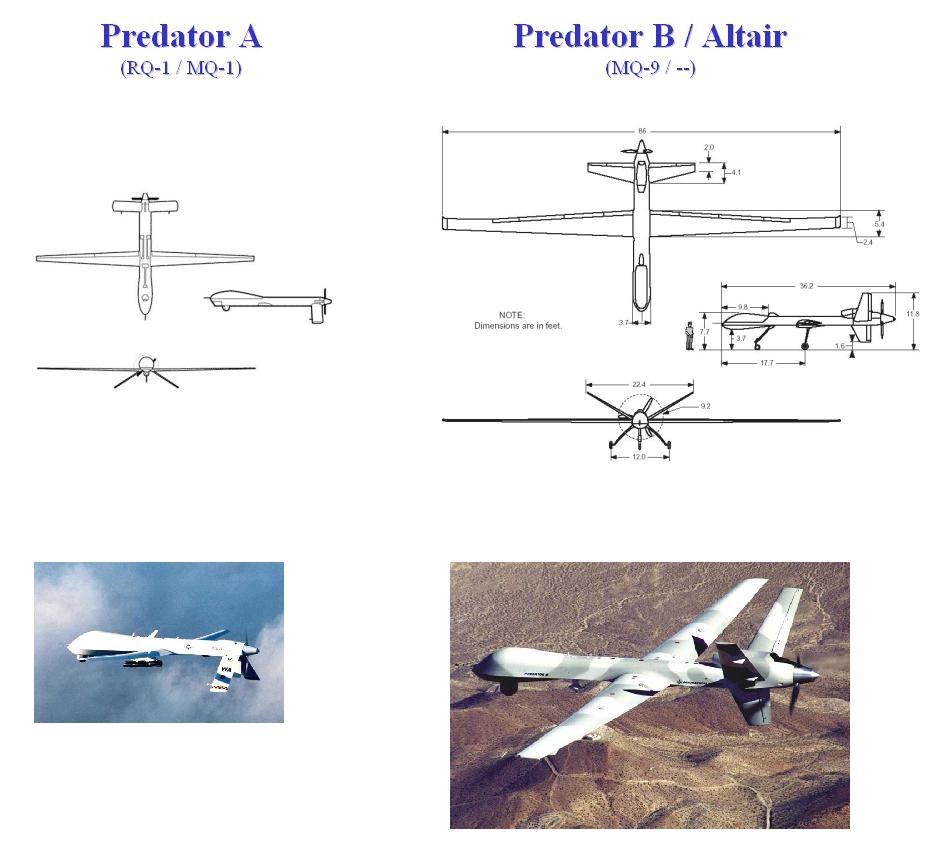
The first flight of the Predator B prototype took place in February 2001. Although the drone appeared similar to the MQ-1 Predator, it was completely redesigned in terms of dimensions, engine power, and body layout. The most significant design change was the introduction of an upward-facing V-shaped tail, which improved flight stability compared to the classic downward-facing tail of the MQ-1 Predator.
During the testing phase, two types of engines were installed on the drone: a Honeywell TPE-331-10T turboprop engine, which provided acceptable performance, and a Williams FJ44-2A turbofan engine, which was eventually discarded due to its high cost and limited efficiency.
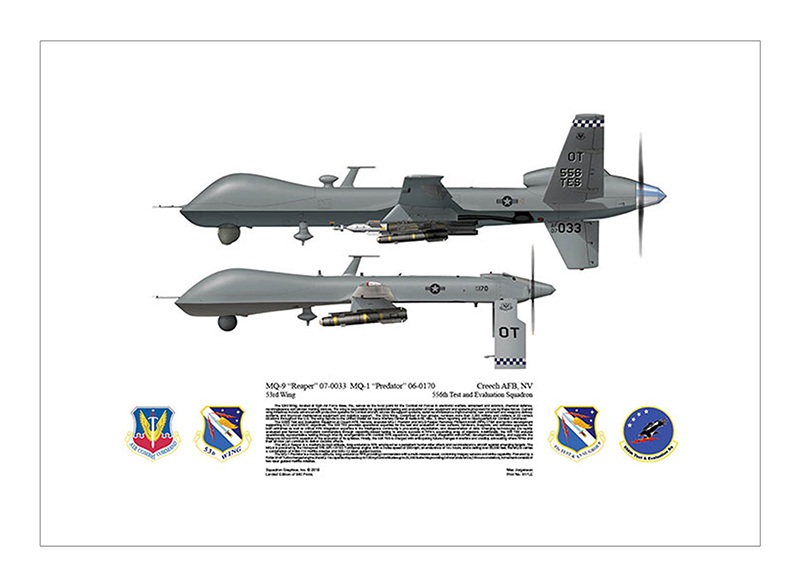
MQ-1 PredatorPredator B drone, also known as MQ-9A ReaperClick to view larger image
In February 2003, the United States Air Force officially joined the project by ordering a turboprop-powered variant, the MQ-9A. They received two prototypes, known as YMQ-9A, for evaluation in testing weapons, reconnaissance capabilities, and maneuverability.
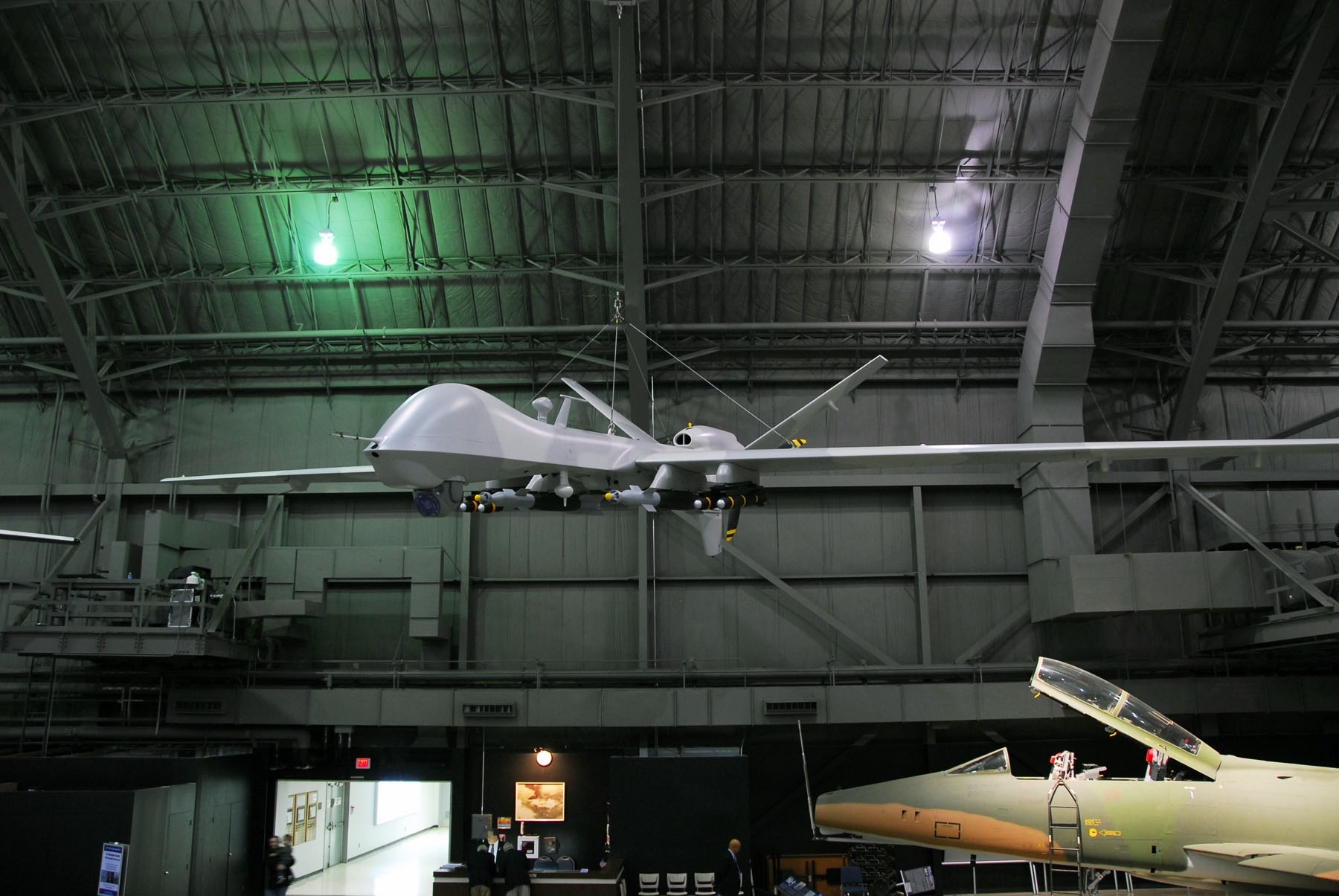
YMQ-9 at the National Museum of the United States Air Force in January 2010
The MQ-9 Reaper was developed for the United States Air Force as a direct response to a Department of Defense (DoD) directive aimed at supporting overseas operations, known as “Overseas Contingency Operations.” In the early 2000s, the rise of asymmetric threats created the need for a drone capable of extensive reconnaissance and surveillance, as well as the ability to target and destroy moving targets in real time with high accuracy.
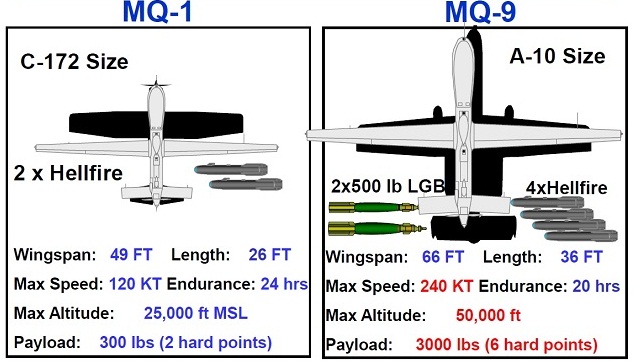
The Reaper far exceeded the operational performance of the MQ-1 Predator. It can fly at altitudes exceeding 15,200 meters (50,000 feet) and has a flight endurance of up to 27 hours. Equipped with advanced systems such as the AN/APY-8 Lynx combined aperture radar and the Raytheon AN/AAS-52(V) MTS multispectral electro-optical system, the Reaper significantly enhanced its reconnaissance and targeting capabilities. Furthermore, the MQ-9A evolved into a fully operational offensive platform, capable of deploying a diverse array of guided weapons.
Comparison of MQ-9 and MQ-1
In 2006, the United States Air Force formally designated the MQ-9A Reaper. The drone commenced operational service in 2007, completing its inaugural combat mission in Afghanistan.
As of 2018, the US Air Force had ordered 366 Reapers from General Atomics, with more than 300 delivered by 2021. The US Air Force plans to retire its MQ-9A fleet by 2035.
Appearance and performance characteristics of the MQ-9 drone:
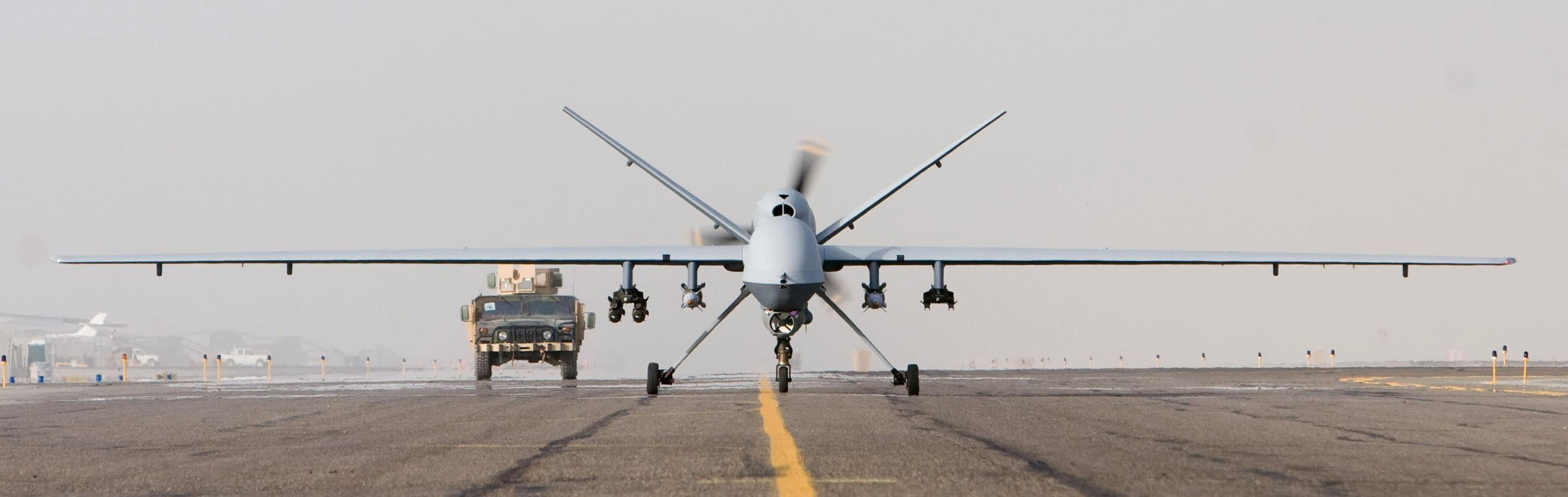
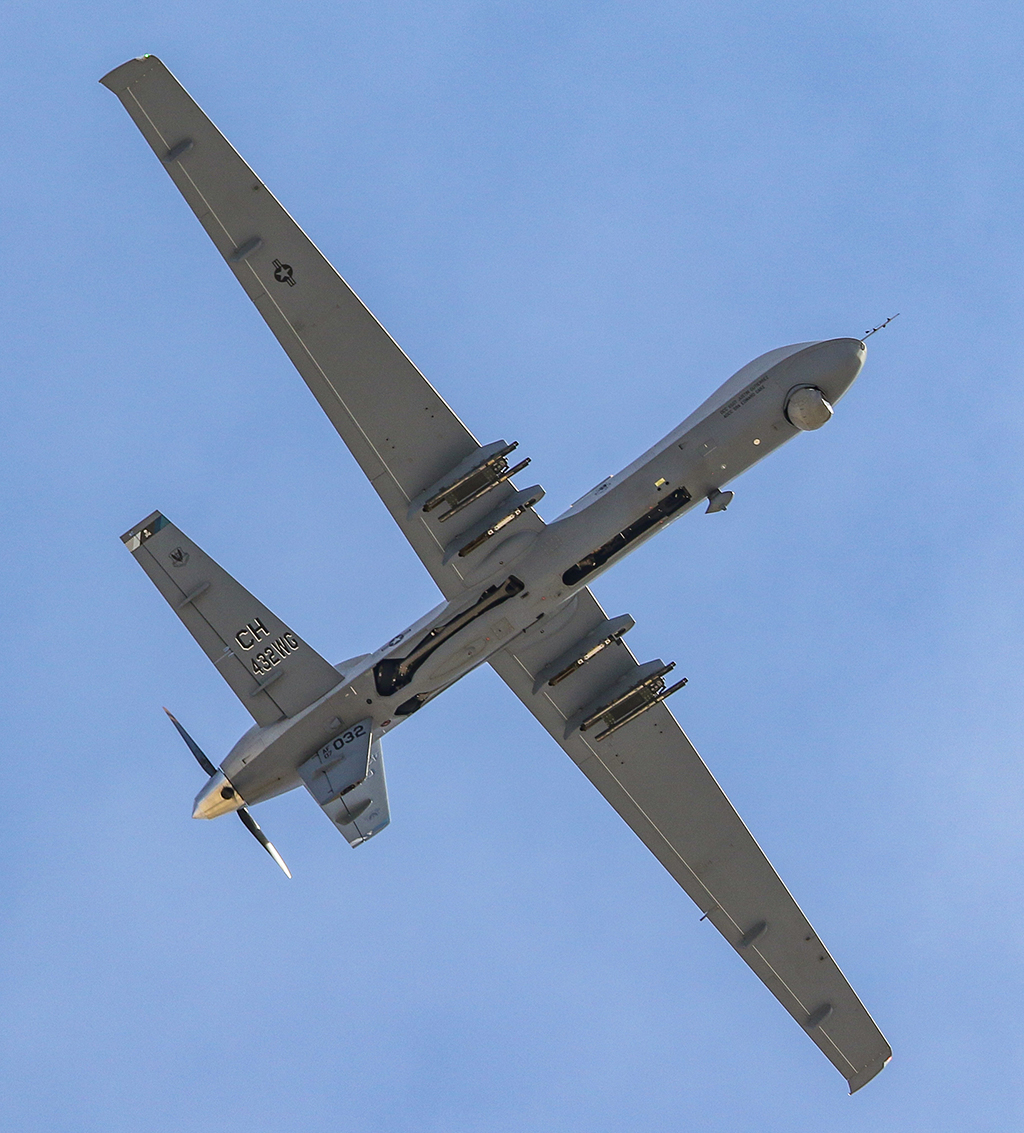
The Reaper measures 11 meters in length, stands 3.8 meters tall, and features a wingspan of 20 meters, making it considerably larger than the MQ-1. It has a base weight of 2,223 kilograms without payload, while its maximum takeoff weight reaches 4,760 kilograms. For the Extended Range (ER) variant, this maximum weight rises to 5,307 kilograms. Additionally, the ER version boasts a fuel capacity of 903 gallons (approximately 6,000 pounds), allowing for extended flight ranges.
A view of an MQ-9 taxiing on a runway in Afghanistan, 2007
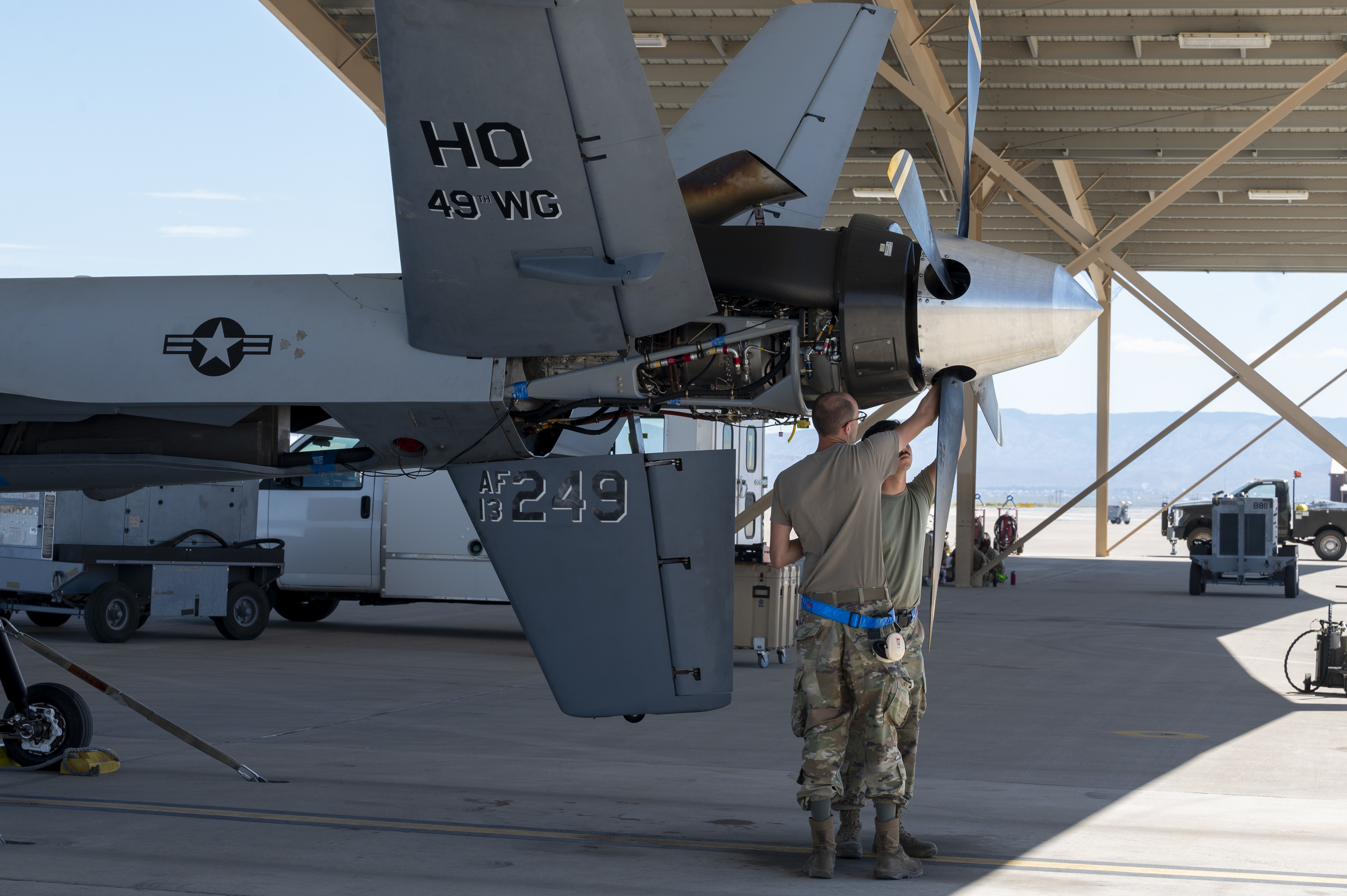
The Reaper uses a Honeywell TPE331-10GD turboprop engine that produces 900 horsepower. This engine allows the drone to reach a maximum speed of 480 km/h, but its typical flight speed is in the range of 280 to 310 km/h.
Honeywell TPE331-10GD turboprop engine
The manufacturer has officially announced that the MQ-9A has a flight endurance of 27 hours and a range of 1,850 km. In 2015, the US Air Force first tested the Extended Range (ER) version of the MQ-9A, which features external fuel tanks mounted under the wings and a more robust landing gear. The ER version boasts a flight endurance of 34 hours and a range of 2,592 km.
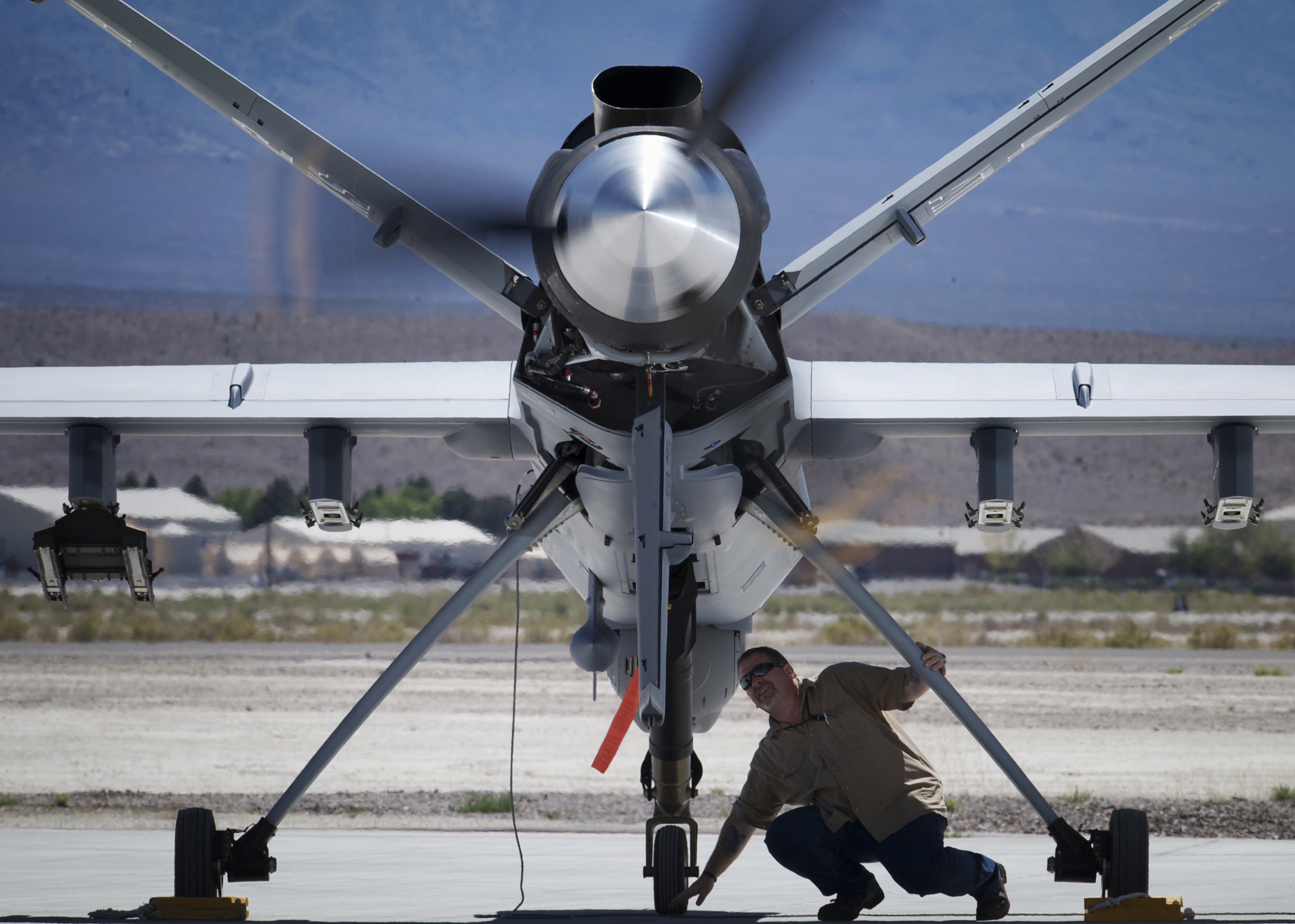
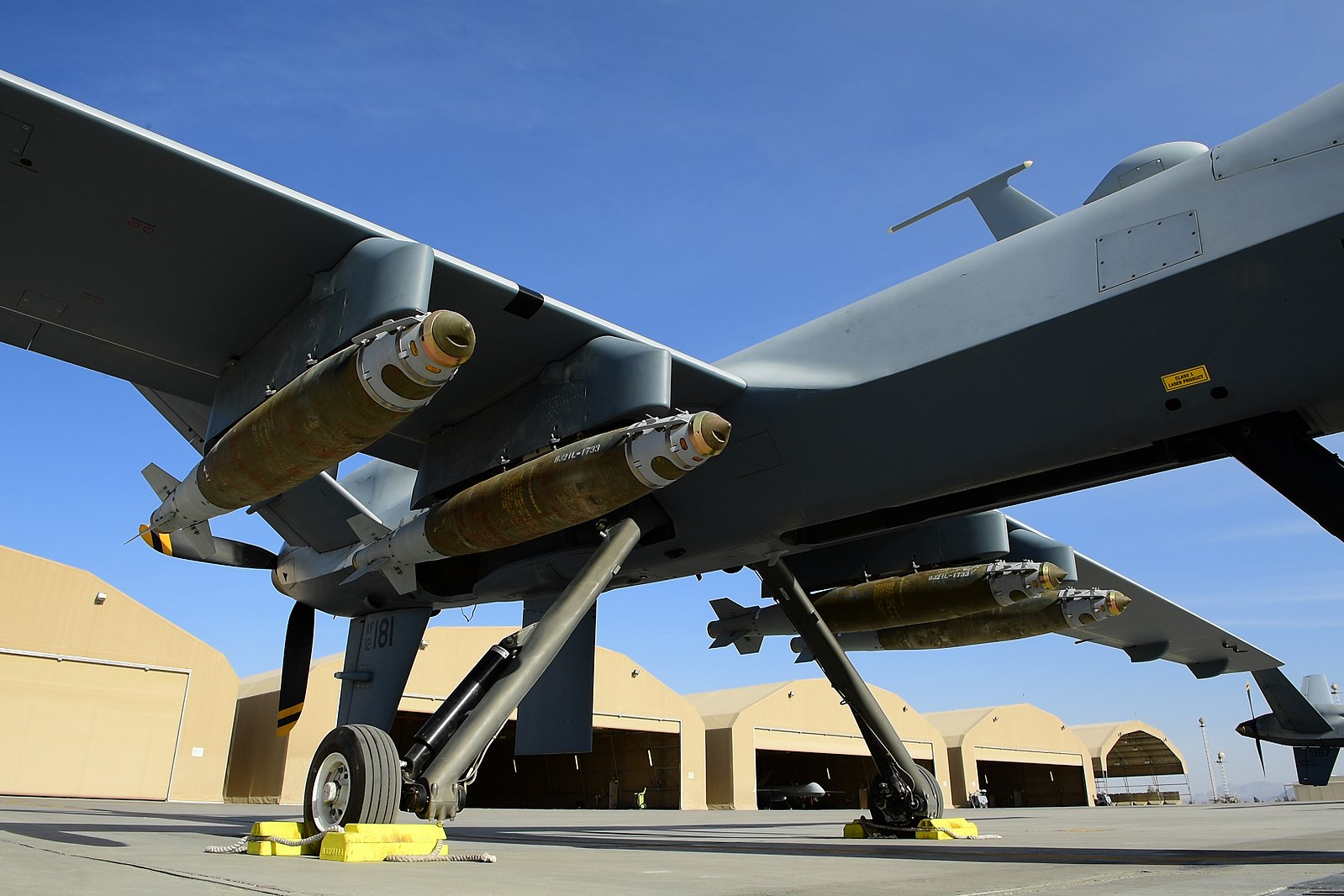
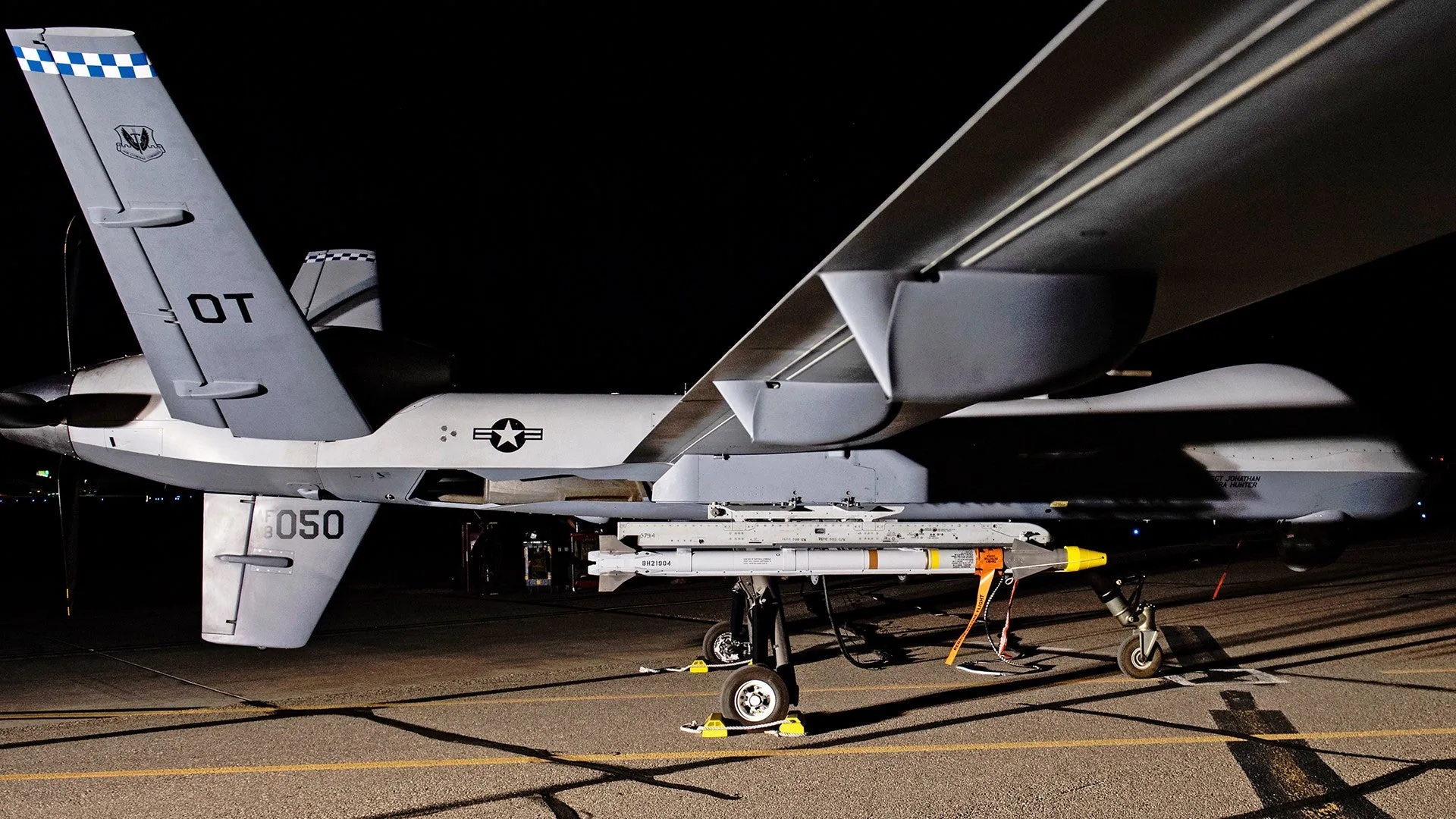
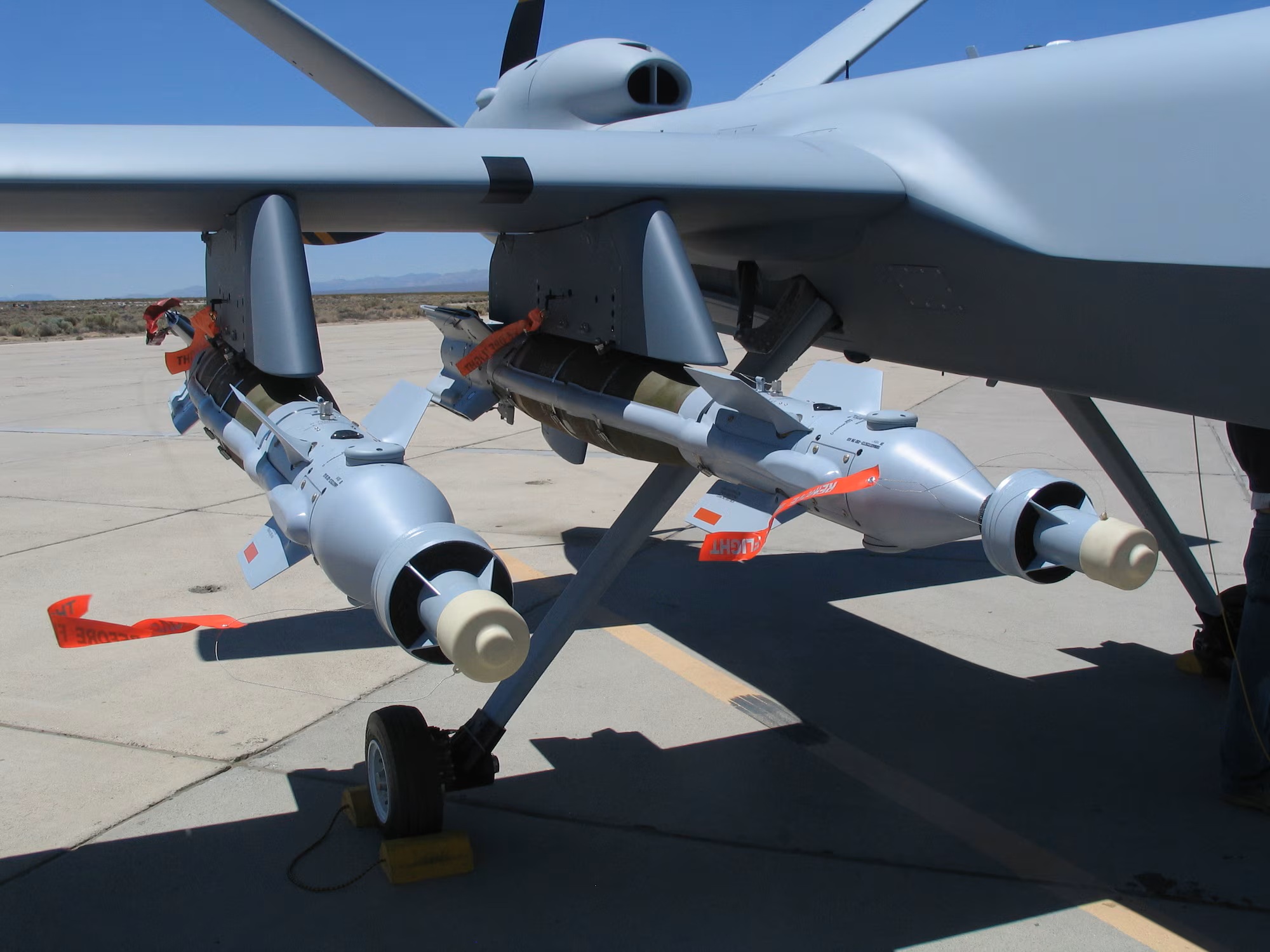
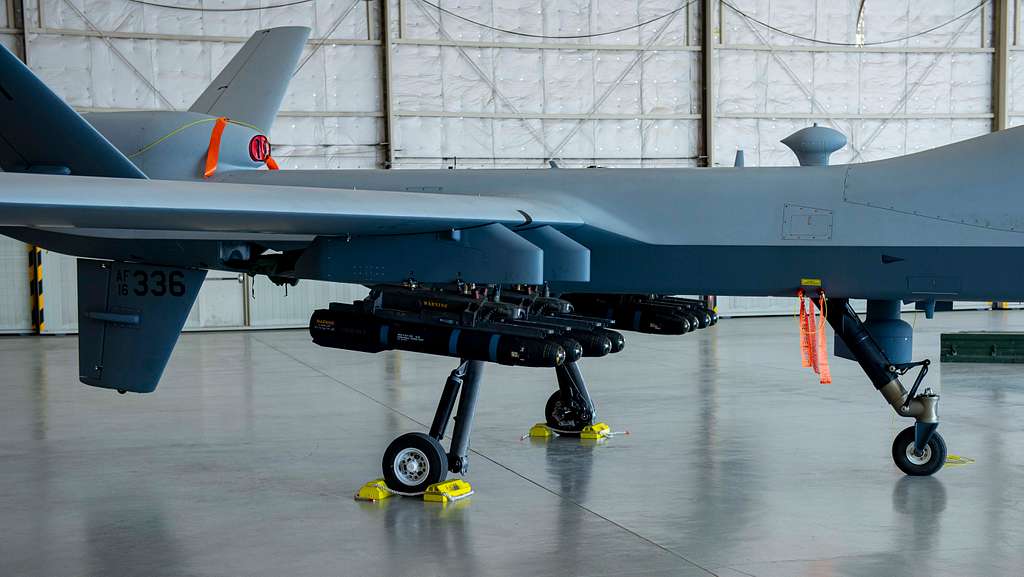
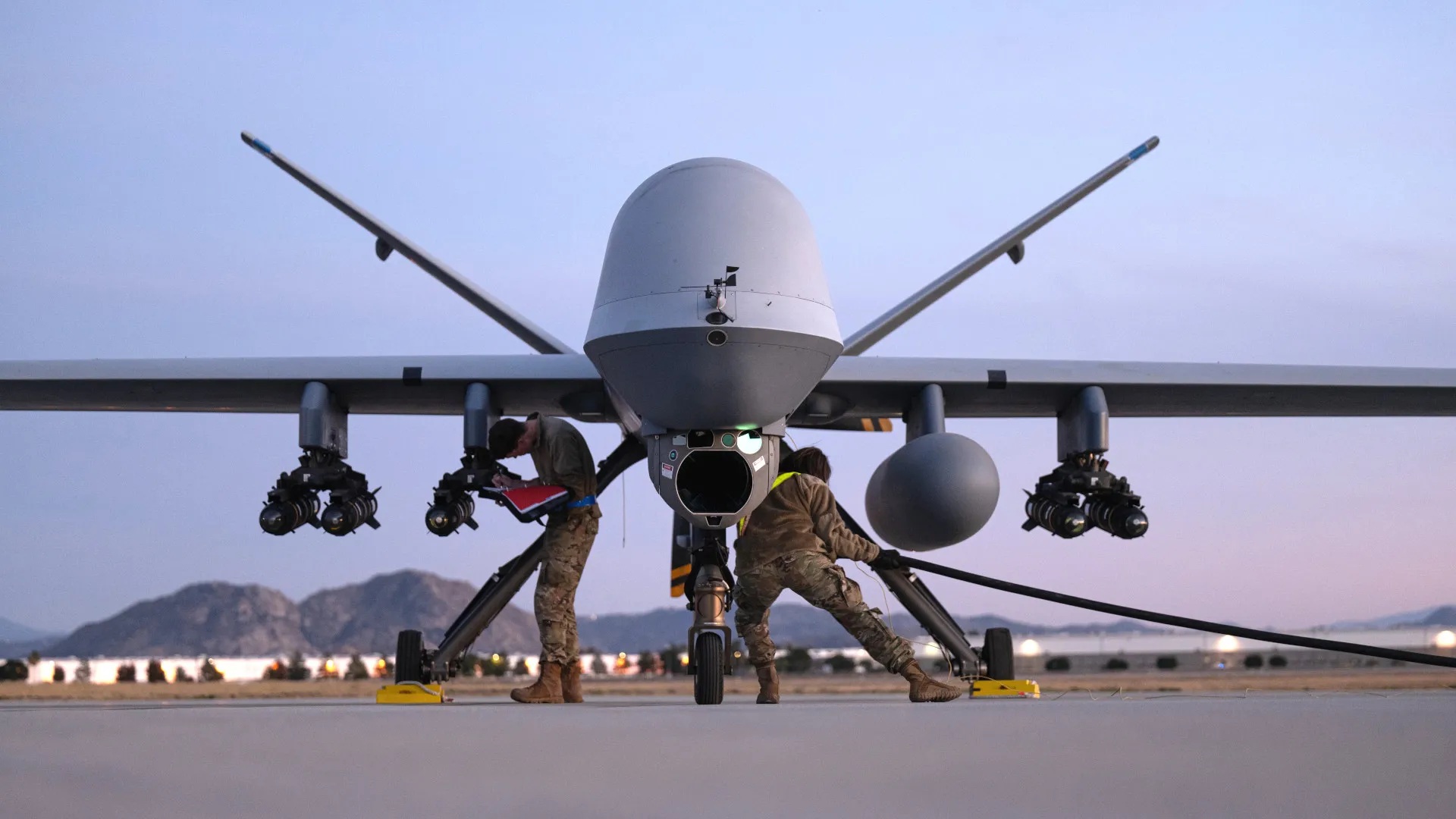
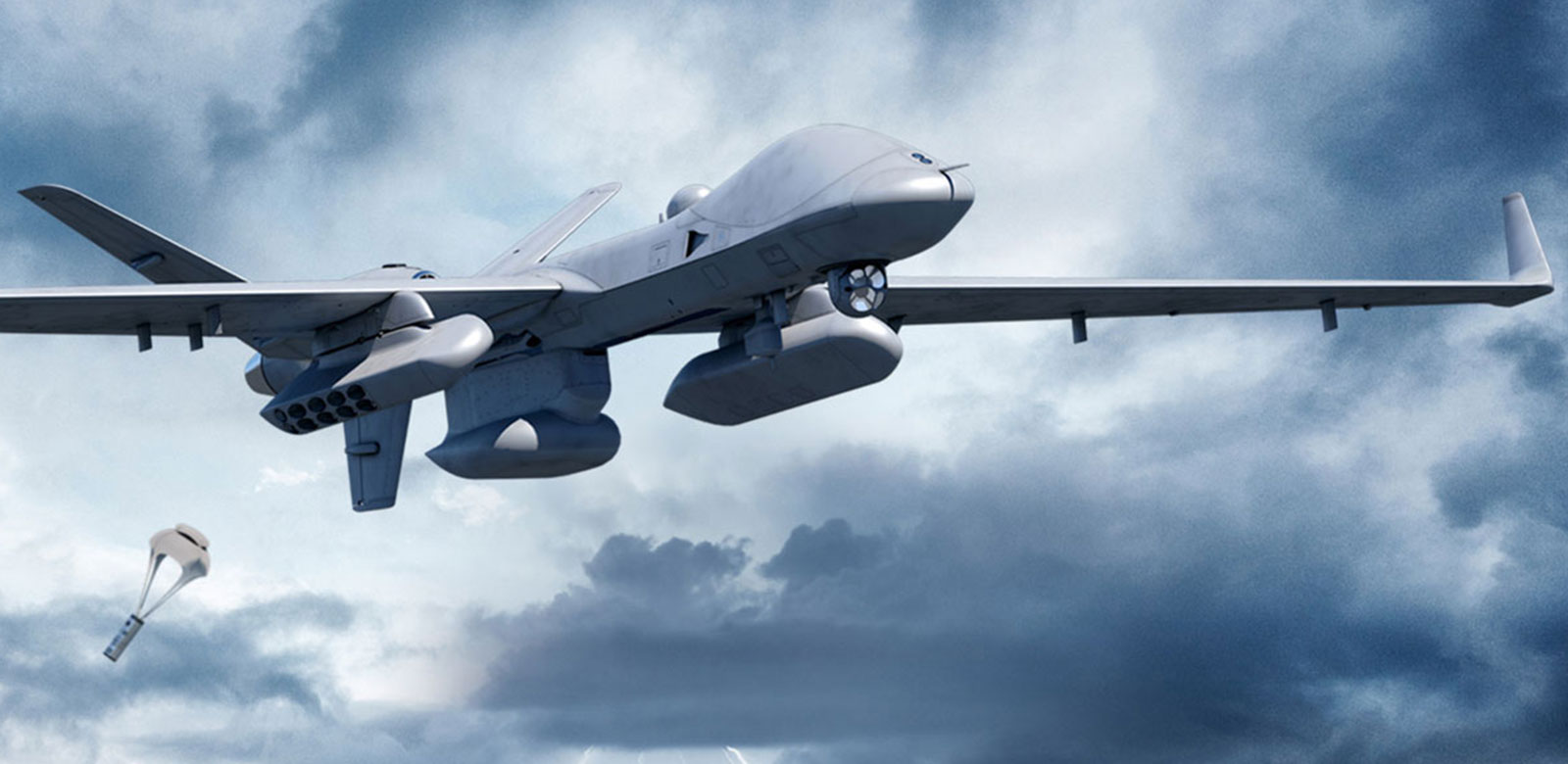
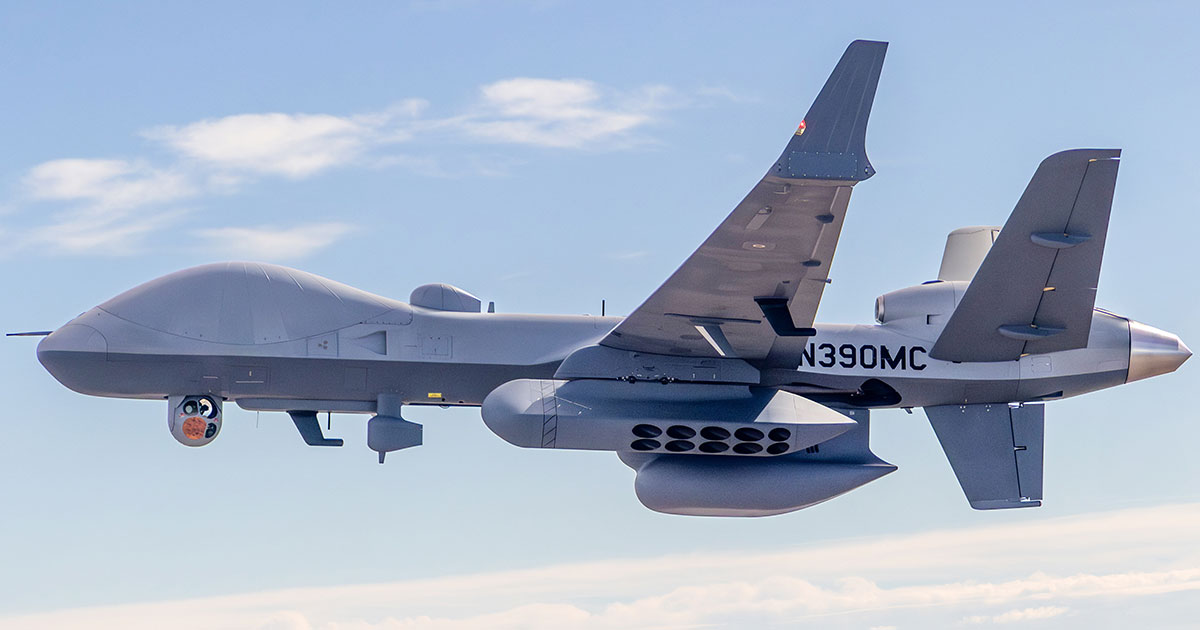
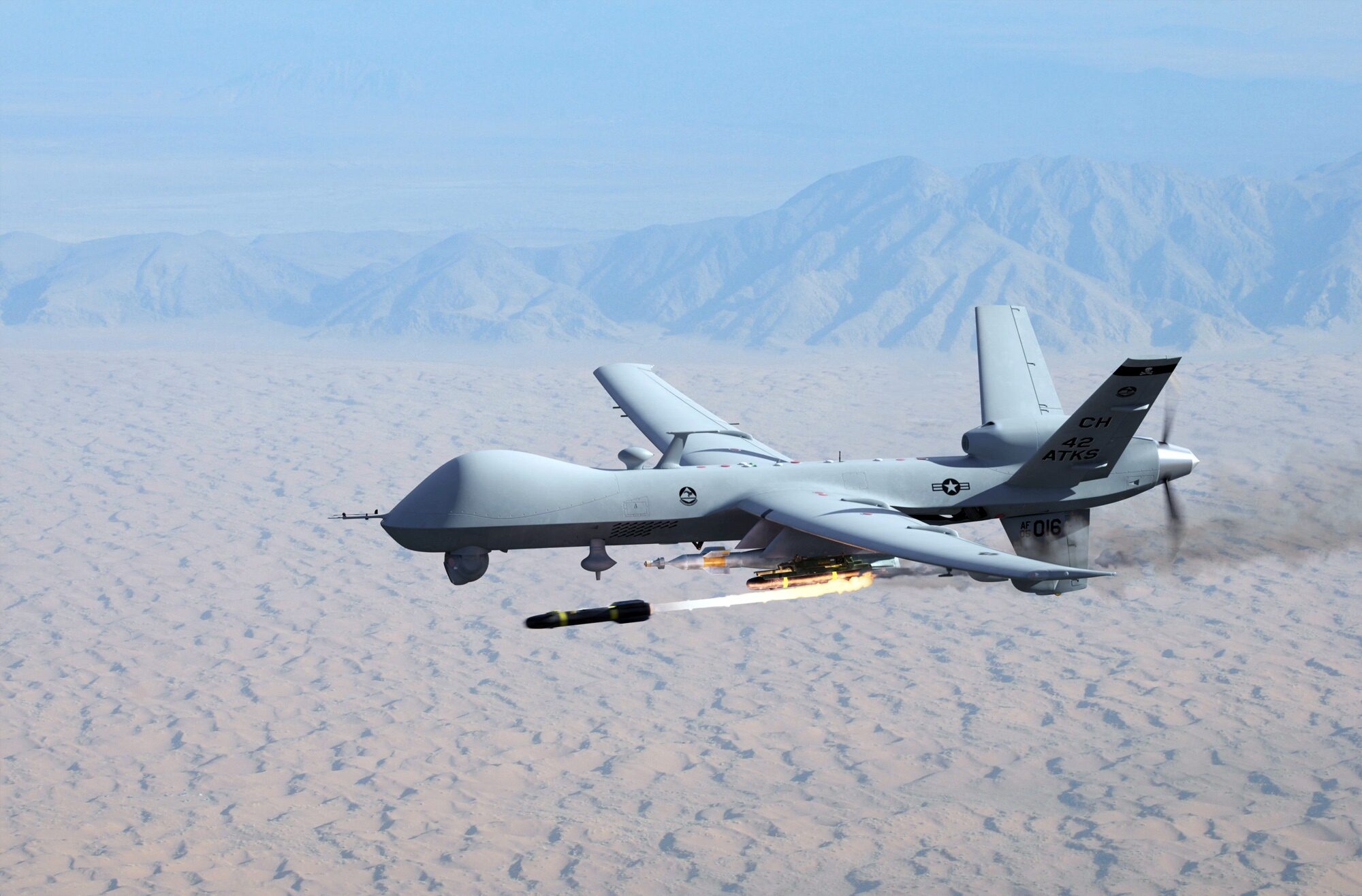
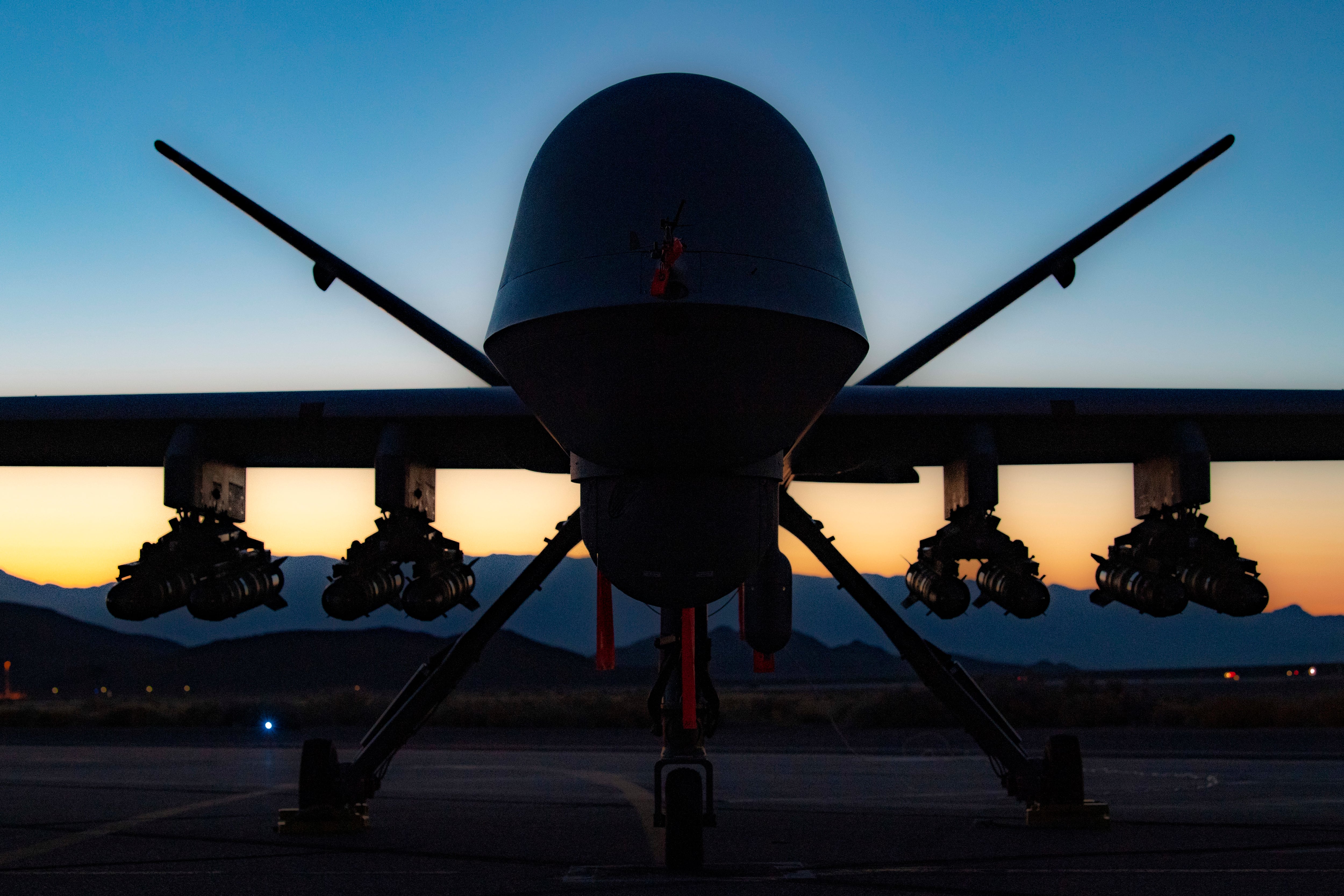
In terms of armament, the MQ-9A is equipped with seven hardpoints and can carry up to 1,361 kg of ordnance. It has a variety of weapons options, including Sidewinder and Stinger air-to-air missiles, Hellfire missiles with a range of 8 to 12 km, GBU-12 Paveway II laser-guided bombs weighing 227 kg, GBU-38 JDAM GPS-guided bombs, and more advanced versions of the GBU-49 and GBU-54 Laser JDAM, which have a range of approximately 15 km.
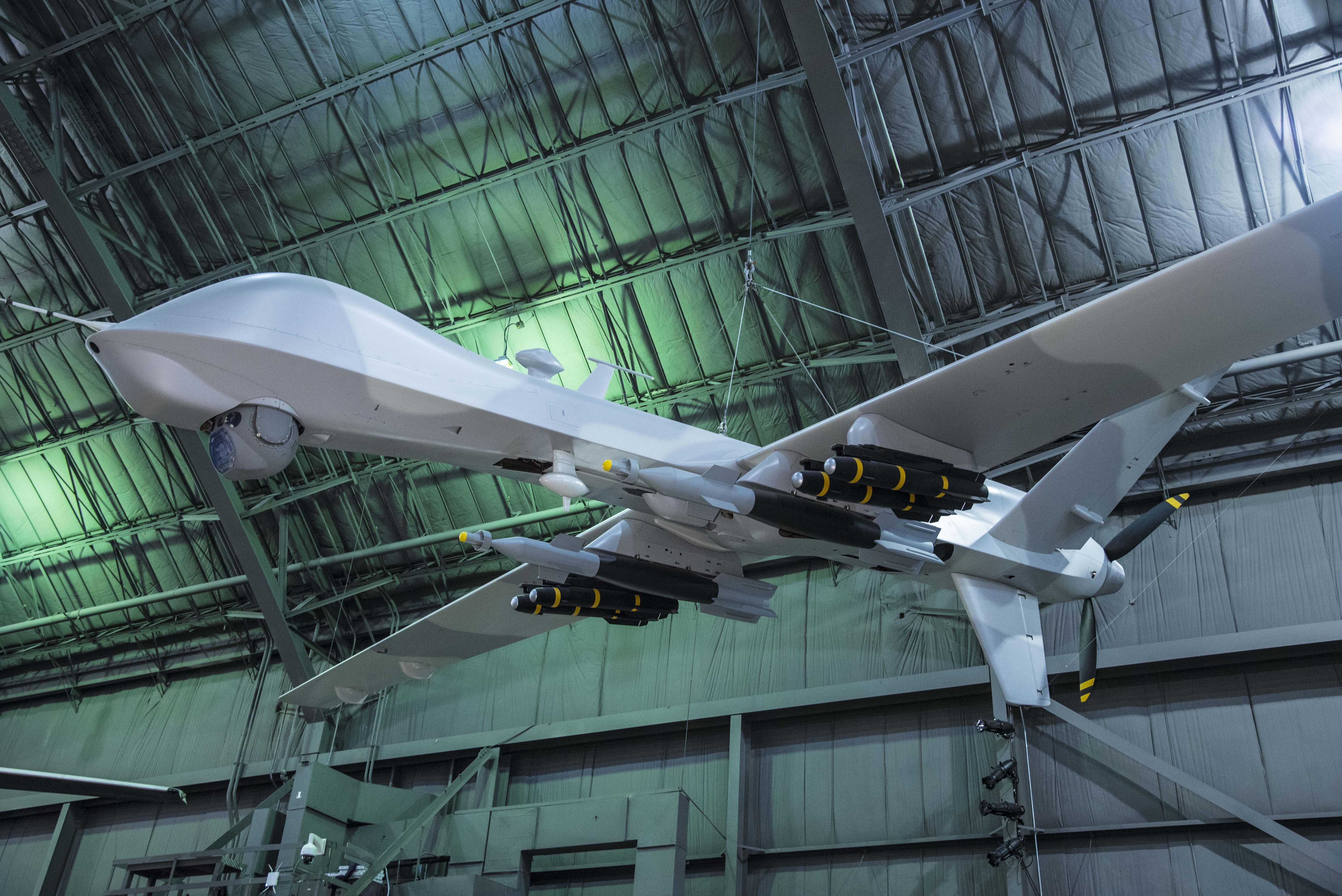
Bottom view of the MQ-9 droneMQ-9 drone equipped with four GBU-38 bombsMQ-9 drone equipped with AIM-9 SidewinderMQ-9 drone equipped with GBU-49B PavewayMQ-9 drone equipped with eight AGM-114 Hellfire bombsMQ-9 drone equipped with AGM-114 Hellfire bombs and an additional fuel tankClick to view larger image
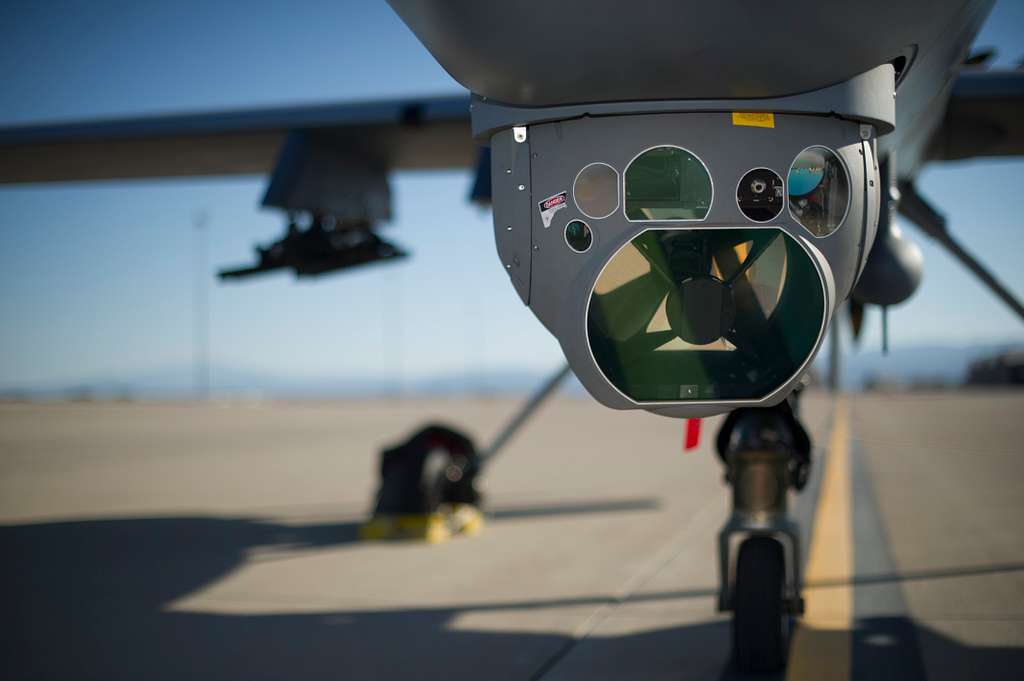
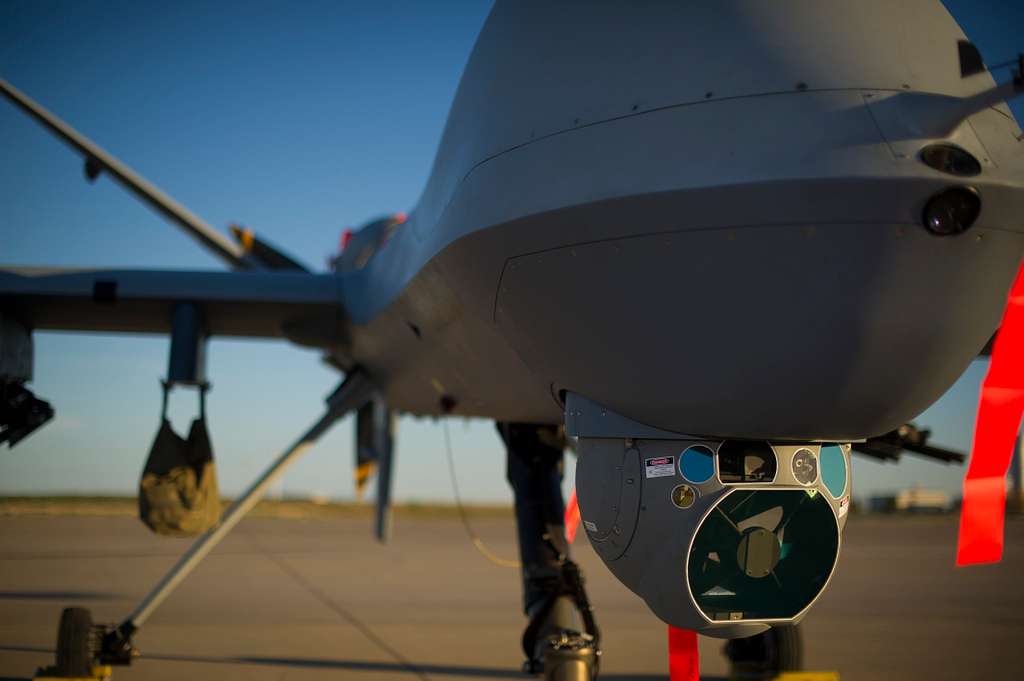
The MQ-9 is equipped with Raytheon’s advanced Multispectral Targeting System-B (MTS-B) electro-optical system, which features an infrared sensor, color and monochrome day vision cameras, short-wave infrared cameras, laser designators, and laser rangefinders.
The system is capable of long-range surveillance, target acquisition, precise tracking of moving targets, range finding, and laser designator for a variety of air-to-surface munitions. In addition to the MQ-9 Reaper, the MTS-B is also used in the U.S. Navy’s MQ-4C unmanned aerial vehicle fleet.
Read more: Military Knowledge: Raytheon’s Multispectral Targeting System-B (MTS-B)
MTS-B electro-optical system
MQ-9 Block 5 drone:
The MQ-9 Block 5 is an enhanced version of the original MQ-9 prototype (Block 1), featuring improved endurance, range, and payload capacity. Key upgrades in the Block 5 model include wing fuel pods, reinforced landing gear, and a four-bladed propeller. It also has enhanced electrical power, more secure communications, and the capability for automatic landing. The MQ-9 Block 5 ER variant has an endurance of 34 hours and a range of 2,592 kilometers. In general, General Atomics is in the process of upgrading its MQ-9 fleet to ER versions.
MQ-9B drone – Introducing other MQ-9 drone models:
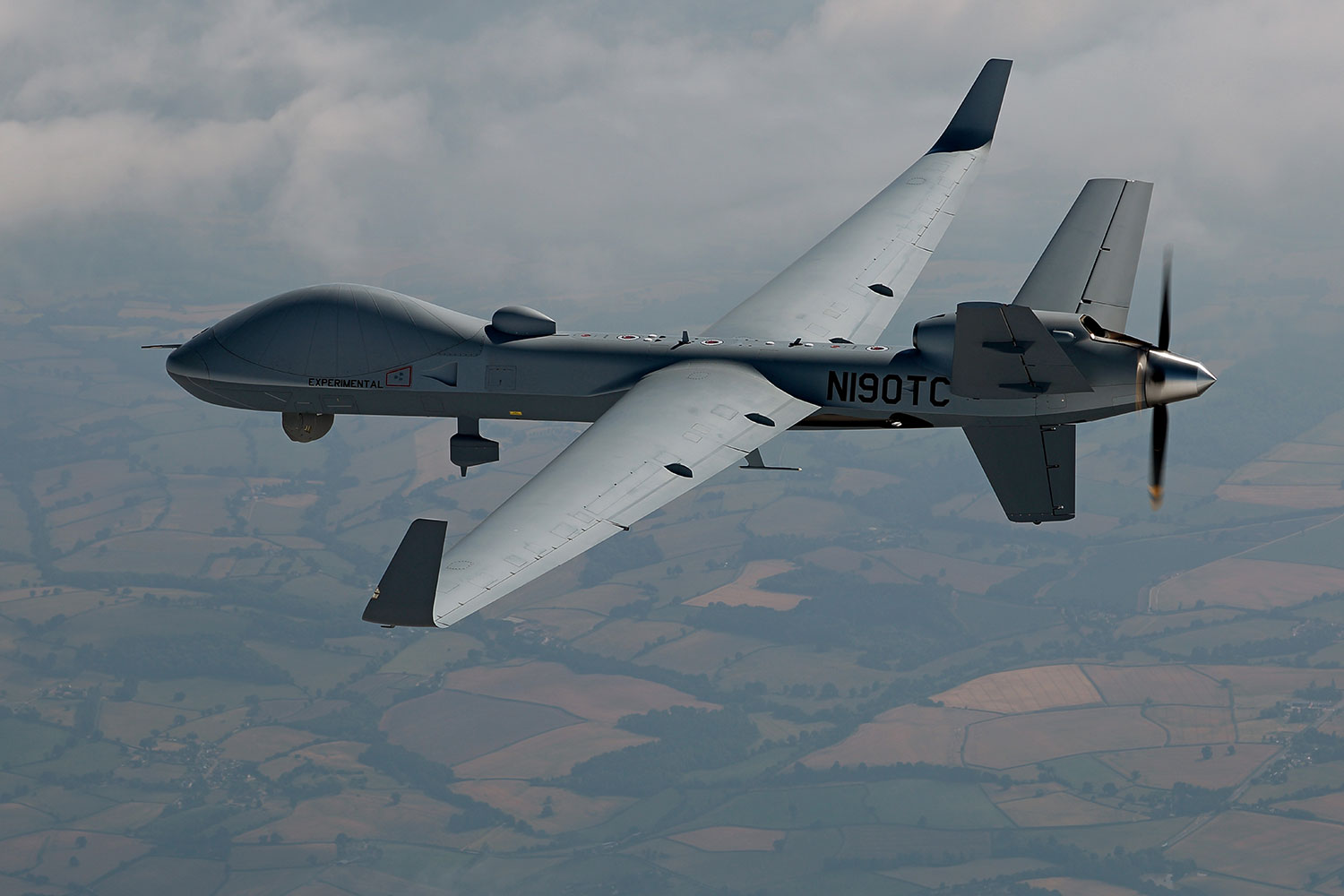
The MQ-9B drone builds on the MQ-9A model and is recognized as the SkyGuardian and SeaGuardian. It is larger and boasts enhanced capabilities compared to the MQ-9A. The MQ-9B’s length measures 11.6 meters, with a wingspan of 24 meters. Its maximum takeoff weight is 5670 kilograms, and it can reach a flight ceiling of 12200 meters. A significant factor in developing the MQ-9B was the need to meet NATO civil aviation regulations, allowing its operation in civilian airspace, whereas the MQ-9A is solely dedicated to military functions.
MQ-9B SkyGuardian: The SkyGuardian, a variant of the MQ-9B, meets European civil aviation regulations. Known as the Certifiable Predator B, it is the first drone certified for use in civilian airspace. Notable features include a 40-hour endurance, a maximum altitude of 12,190 meters, and a 24-meter wingspan. Additionally, the SkyGuardian comes with cutting-edge systems, such as an EO/IR imaging sensor, an anti-icing system, and a TCAS collision avoidance system.
MQ-9B SkyGuardian drone
MQ-9B SeaGuardian: The SeaGuardian, a specialized version of the MQ-9B, is tailored for maritime missions. It boasts an endurance of up to 18 hours (some reports indicate 30 hours) and can operate over a distance of 2,200 km, making it ideal for maritime surveillance and search-and-rescue tasks. A standout feature is the Leonardo Seaspray 7500E V2 AESA radar, capable of detecting maritime targets. Additionally, the drone is outfitted with sophisticated systems for deploying sonobuoys to monitor submarines.
MQ-9B SeaGuardian drone
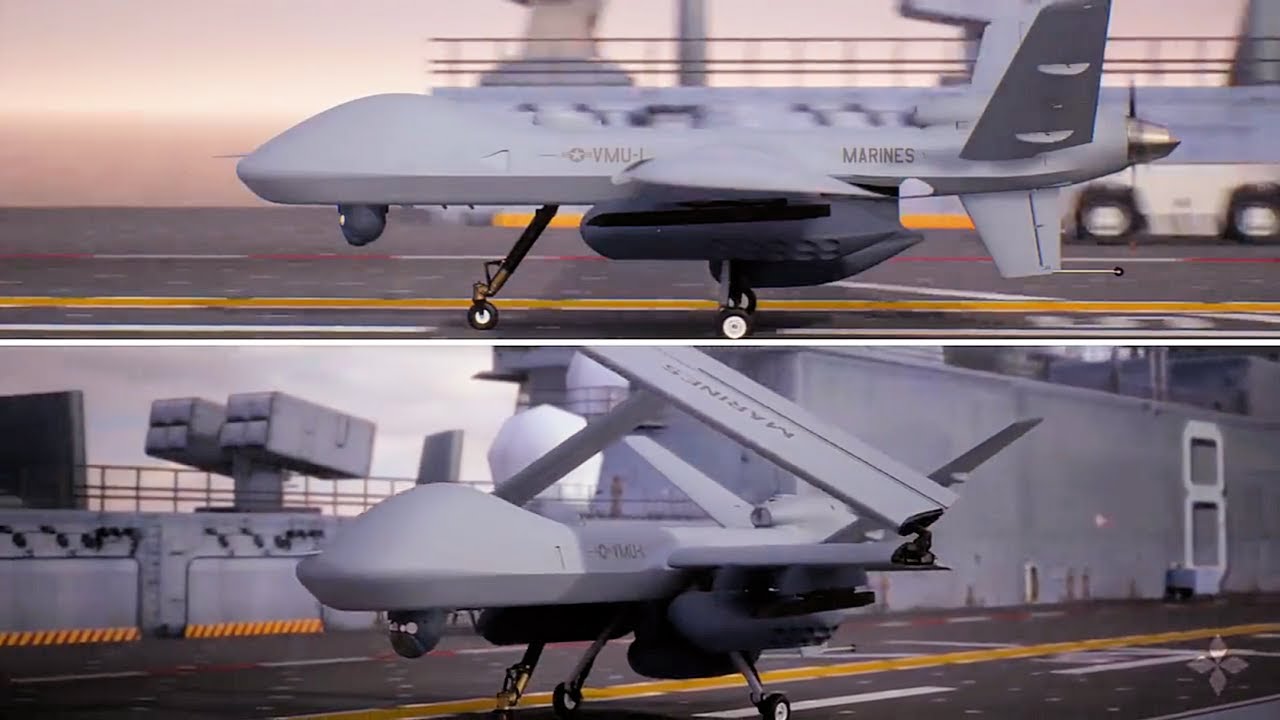
MQ-9B STOL: STOL means “short takeoff and landing.” The MQ-9B STOL can take off and land in challenging environments, including aircraft carriers. General Atomics introduced this concept in 2022. This kit allows for the replacement of wings, tail, and propeller to enhance short takeoff and landing performance.
MQ-9B STOL drone
MQ-9 UAV operational history:
The Reaper drone has primarily conducted its operational activities in the Middle East. Its most significant operation to date was the assassination of Qassem Soleimani, commander of the Quds Force of the Islamic Revolutionary Guard Corps, in Baghdad on January 3, 2020. The United States regime used Hellfire missiles in this operation.
Afghanistan (2007 to 2021): The Reaper’s combat presence was first established in Afghanistan, quickly gaining a reputation as a “hunter” platform. A notable incident occurred on September 13, 2009, when a Reaper that had lost control was shot down by a US F-15E fighter jet to prevent it from entering Tajik airspace. By 2010, Reaper drones were flying more than 33,000 close air support missions annually. Their usage peaked during the withdrawal of US forces in 2021, where they played a key role in supporting evacuation operations.
Iraq and Syria (since 2007): Reaper drones have been extensively utilized in Operation Iraqi Freedom and the fight against ISIS in Operation Inherent Resolve. This includes the 2015 strike on Jihadi John in Raqqa, Syria, using a Hellfire missile. In 2023, as the conflict amongst various factions and the Israel-Hamas war intensified, Reapers carried out the majority of US airstrikes in Syria and were also employed to target Iranian-backed forces.
Yemen: Initially, Reapers were used for reconnaissance missions against Al-Qaeda in the Arabian Peninsula (AQAP). However, following the Ansar Allah operation in Yemen and the overthrow of the Mansour Hadi government, they began to conduct operations against Ansar Allah. The first recorded downing of an MQ-9 occurred in 2017. Reaper missions in Yemen intensified as Ansar Allah ramped up operations in the Red Sea in 2023. From September 2023 to April 2025, Yemeni Ansar Allah shot down at least 19 Reapers (with a total of 23 since 2017), incurring losses collectively estimated at over $595 million. These losses highlight the Reaper’s vulnerability in high-intensity conflict zones.
Gaza (since 2023): Following the onset of the Gaza War in October 2023, Reapers flew unarmed over the Gaza Strip to identify the locations of American hostages during Israeli operations. However, no detailed information is available regarding these operations.
MQ-9 drone users:
United States includes NASA, Air Force, Navy, Marine Corps, Coast Guard, and Department of Homeland Security (US Customs and Border Protection)
United Kingdom – Early versions of the MQ-9A Reaper for surveillance operations in Afghanistan and the Middle East. – Protector RG Mk 1, a more advanced version to replace the MQ-9A, capable of carrying Brimstone 3 missiles and Paveway IV bombs.
Italy – Early versions of the MQ-9A Reaper for surveillance missions in NATO and Libya operations. – MQ-9A Block 5, an upgraded version.
Netherlands – Upgraded version of the MQ-9A Reaper Block V for surveillance and reconnaissance missions
Japan – Maritime version of the MQ-9B SeaGuardian for maritime threat surveillance.
United Arab Emirates – MQ-9B SkyGuardian for border reconnaissance and surveillance missions.
France – MQ-9A Reaper for counterterrorism and reconnaissance operations in Africa and the Middle East.
Spain – MQ-9A Reaper for surveillance and border security operations.
Poland – MQ-9B SkyGuardian version for reconnaissance and surveillance missions.
Morocco – MQ-9B SeaGuardian maritime version for coastal surveillance and border operations.
Taiwan – MQ-9B SkyGuardian version for surveillance and reconnaissance in border areas.
MQ-9A Reaper specifications:
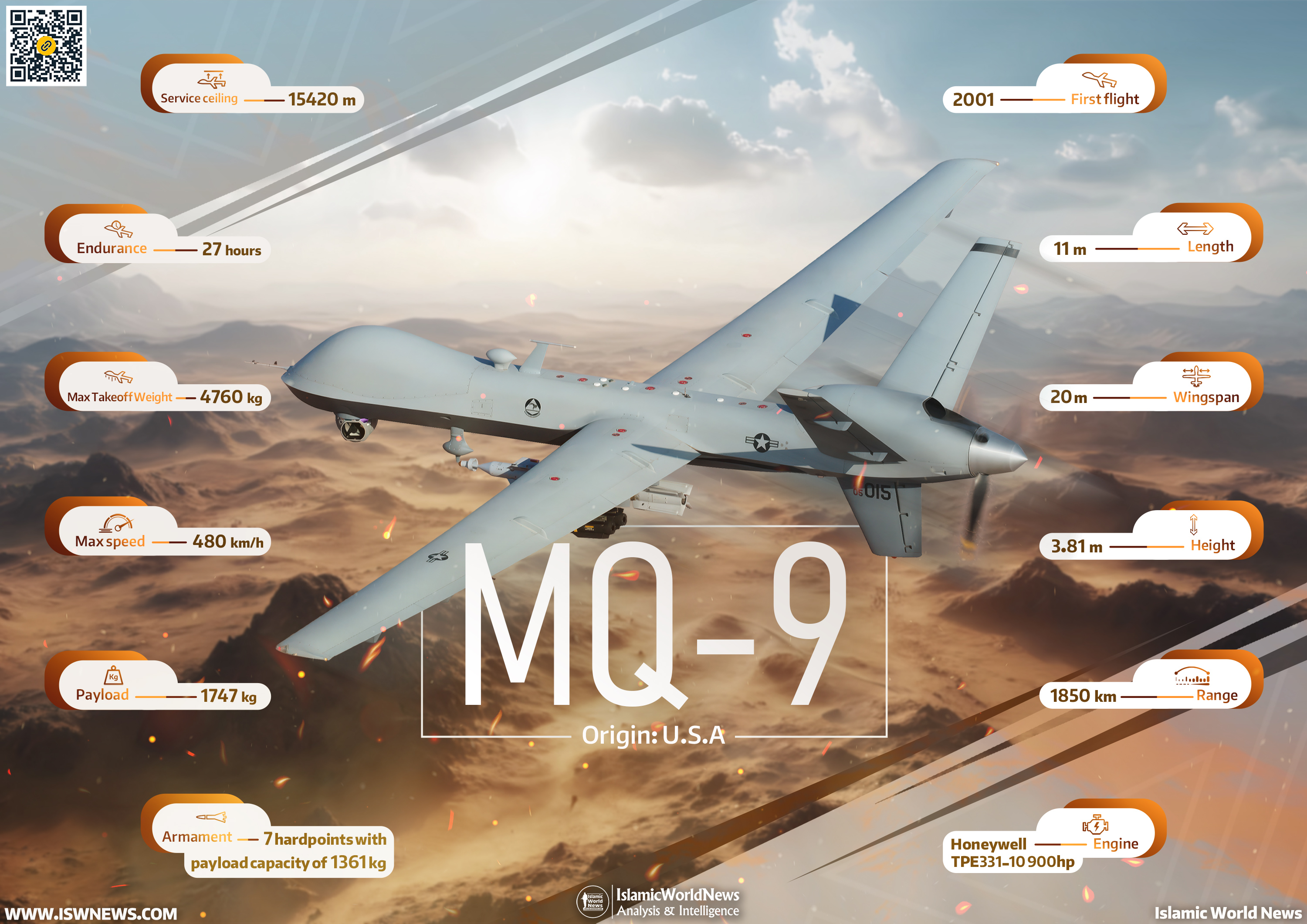
Type: Reconnaissance and Combat Manufacturer: General Atomics Aeronautical Systems Country of Manufacture: United States First Flight: 2001 Length: 11 m Wingspan: 20 m Height: 3.81 m Engine: Honeywell TPE331-10 900 hp Fuel Capacity: 1,800 kg – 2,721 kg in ER version Range: 1,850 km – 2,593 km in ER version Maximum Speed: 480 km/h Service ceiling: 15,420 m (50,000 ft) Endurance: 27 hours – 34 hours in ER version Maximum Takeoff Weight: 4,760 kg – 5,307 kg in ER version Empty Weight: 2,223 kg Payload: 1,747 kg Armament: 7 hardpoints with a capacity to carry 1,361 kg of ammunition
Lebanese President Joseph Aoun indicated that he aims to achieve Hezbollah’s disarmament by 2025. He referred to Iraq’s experience with the Popular Mobilization Forces, stating,
“We will not repeat the experience of the Popular Mobilization Forces by integrating Hezbollah into the army. Furthermore, Hezbollah will not function as an independent unit within the army; their members can join the army after the recruitment period like members of other Lebanese parties.”
Aoun expressed his agreement with Nabih Berri on this matter, stating that the decision to limit weapons to those in the hands of the government has been made. He noted that the process for implementing disarmament should be determined through dialogue with Hezbollah leaders.
Clearly, Joseph Aoun is pursuing the objective of disarming Hezbollah in alignment with the demands of the United States, Israel, Qatar, and Saudi Arabia, claiming that this is a Lebanese demand. However, one must ask: who in Lebanon would want the resistance to surrender and forfeit the weapons that provide protection against Israel?
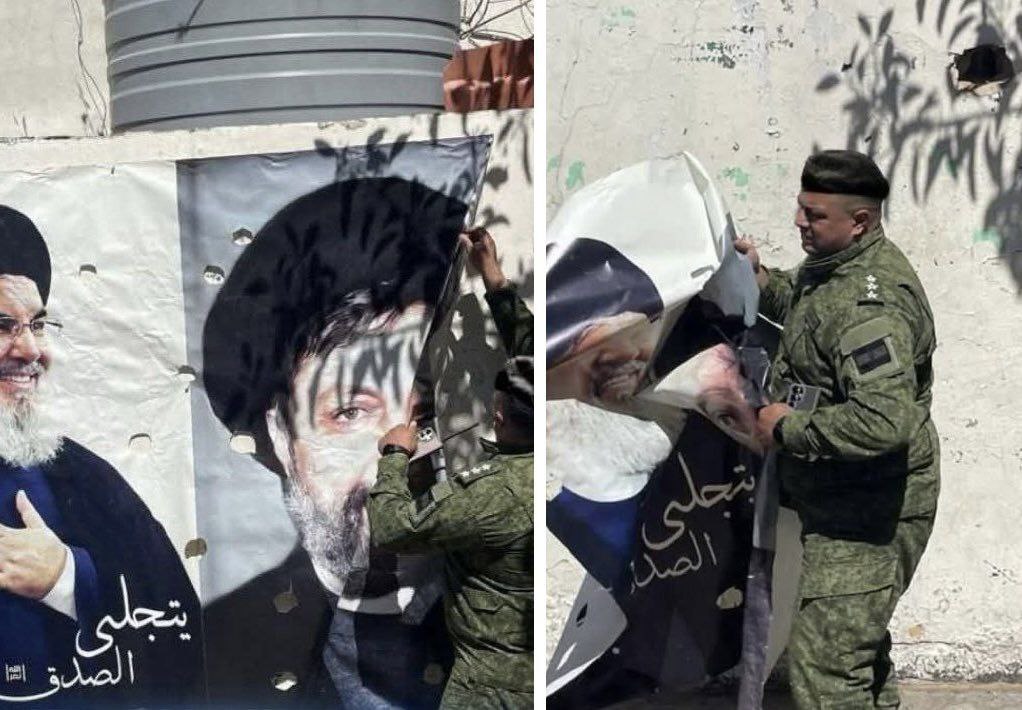
The recent removal of banners honoring the martyred leaders of the resistance—from Sayyed Hassan Nasrallah and Saleh Al-Arouri to Imam Musa Sadr—across the walls and streets of Beirut is one of the smallest consequences of this misguided trend, indicating that more serious repercussions may lie ahead for the resistance.
During a press conference, Khattab stated that, thanks to the extensive efforts of the security forces and the support of the Syrian people, a significant threat to national security was averted.
According to the Interior Minister, the operation was executed based on accurate intelligence and in full coordination with the Syrian Ministry of Defense. No statements have been released by the Ministry of Defense or the presidential office so far.
Anas Khattab described the individuals behind the plot as agents of the former Syrian government but did not provide further details, such as the names of those involved, their military ranks, or the intended timing of the coup.
Khalid bin Salman bin Abdulaziz Al Saud will be the highest-ranking official in the Saudi royal family to visit Iran in recent years.
His visit to Iran these days certainly carries an important message and is considered a very important event. In this meeting, views will definitely be exchanged on the Iran-US negotiations and perhaps solutions will be proposed.
▫️It can also be speculated that Saudi Arabia is worried about the new sedition of the UAE and the US to resume ground operations against Ansarullah in Yemen and is trying to distance itself from this issue. They have tasted the bitter consequences of aggression against Yemen in the past…