Brigadier General Yahya Saree stated that U.S. warships, led by the aircraft carrier USS Harry Truman, have been targeted three times in the Red Sea within the past 24 hours.
The operation was conducted by the missile force, drone force, and navy of the Yemeni armed forces, utilizing several cruise missiles and suicide drones.
The Yemeni army’s operation against the U.S. Navy’s 8th Strike Fleet marks the 19th operation targeting this fleet and the 194th military operation conducted by Yemen against illegal ships.
These attacks were in retaliation for the ongoing airstrikes by U.S. warplanes against Yemen. Yemeni media reports indicate that U.S. warplanes carried out over 16 airstrikes in the provinces of Sanaa and Saada in the past 24 hours.
The details of these attacks are as follows: ▪️ Saada: Five airstrikes on the east of Saada city, four airstrikes on Al Salem district, two airstrikes on Al-Asayed area in Kitaf district, and two airstrikes on Bani Muadh area in Sahar district. ▪️ Sanaa: Three airstrikes on the vicinity of Mount Al-Nabi in Bani Matar district.
Click to view larger
The operation launched by the Yemeni armed forces to support the Palestinian resistance against the Israeli regime began on October 19, 2023. This effort led to the capture of the Israeli ship, Galaxy Leader, and the ongoing missile, drone, and airstrike attacks on over 190 ships linked to Israel. As a result, shipping by Israeli companies through the Red Sea route has been suspended. In addition to these attacks on ships, the Yemeni army has conducted more than 85 missile and drone operations targeting positions held by the Israeli regime in occupied Palestine. Furthermore, an F-18 Super Hornet fighter jet and 19 American MQ-9 drones have been shot down during the Yemeni conflict with the American-British coalition.
The Zhubin, also known as the Fateh, can be described as a mature and efficient product. It was first publicly showcased during a training exercise in 2022 and entered mass production for the Army Ground Forces in 2024.
This drone features a standard aerodynamic design characterized by an elongated dolphin-shaped body, flat trapezoidal wings, and a V-shaped tail. The body length is 120 cm, and each wing measures 70 cm, resulting in a total wingspan of 140 cm.
The wings have a trapezoidal shape, which means their width tapers from the root to the tip. This design is commonly employed to evenly distribute air pressure across the wings and optimize lift. However, the reduction in width on the Zhubin drone is minimal and not immediately noticeable. Additionally, the wings are designed to integrate smoothly with the fuselage at a gentle angle, emphasizing stability at medium speeds. The seamless connection of the wings to the fuselage, likely utilizing “Blended Wing Body” techniques, reduces aerodynamic drag and enhances lift.
Wings in Zhubin drone
The dolphin-shaped design of this drone is based on streamlined principles to minimize both shape resistance and surface friction. The body tapers in diameter toward the rear, contributing to its aerodynamic efficiency. Its soft curves and absence of sharp corners along the body, wings, and tail reflect a commitment to biomimicry.
While we cannot definitively identify the material used for the body, indications such as the type of molding and the smooth surface suggest that it is likely made from carbon fiber or fiberglass composites.
Overall, the Zhubin drone has a relatively low mass of 6.3 kg. This lightweight design enables it to be powered by a low-power electric motor, allowing for flight durations of up to 30 minutes and altitudes of up to 200 meters.
Zhoubin drone
The nose of this drone features a unique quasi-conical and modular design. This design allows for the accommodation of various types of warheads, including penetrating and fragmentation options, since the drone’s nose is where the warhead is located. The Fateh drone is equipped with a 500-gram warhead made up of small fragments, making it effective for targeting unprotected groups of personnel and equipment.
Modular warhead of the Zhubin drone
The Zhubin features a unique launch method. It is launched using a small pneumatic launcher with a metal base. The components of this launcher include a control module, a hollow metal rod, a pressure regulation system, and a gas cylinder. There is an empty space at the bottom of the drone’s body, just below the engine. During the launch, the launcher’s hollow metal rod is inserted into this space, and high-pressure gas is released to provide the necessary propulsion force for the drone’s initial acceleration. The gas is supplied by small, reusable capsules.
Zhubin drone launcher
A special variant of the Zhubin drone has been developed with the capability to be fitted with optical seekers, featuring television lenses in its nose. While specific information about this version’s performance is limited, some visible features include two linear radio antennas and a rotating satellite receiver mounted on top of the fuselage.
The drone operates using an inertial-satellite guidance system, which may result in target destruction accuracy of up to a few meters. In contrast, the television guidance version offers much greater precision by transmitting images directly to the operator. The stated operational range of this drone is approximately 20 kilometers. However, this range is primarily constrained by radio frequency limitations. With an enhanced guidance system, it could potentially achieve a range of over 30 kilometers.
Warhead equipped with optical seeker on a Zhoubin drone
One of the relatively interesting things about the Zhoubin drone was the flight of its prototype from a Fateh-class submarine of the Iranian Navy.
Launch of a Zhubin drone from a Fateh-class submarine
The Zhubin drone shares many similarities with the Warmate drone. In fact, the Zhubin can be regarded as a successful variant of the Polish Warmate, which has had a notable impact in Ukraine. The Warmate is a type of suicide drone featuring an electric motor and a modular warhead. It is designed and manufactured by WB Electronics, a subsidiary of the WB Group.
The drone entered the initial production phase in 2016 and was officially adopted by the Polish Armed Forces in the fall of 2017. The primary purpose of the Warmate is to serve as a lightweight, precise, and flexible weapon for close-quarters operations, emphasizing the identification and targeting of various objectives on the battlefield.
Polish Warmate drone
The Warmate drone has been in development since 2010, with the initial version unveiled in 2014. In 2017, the Polish army placed an order for 10,000 units valued at $20 million. The first batch was delivered in 2018 and was immediately deployed in the Ukrainian campaign starting in 2022. Other known customers for this drone include the United Arab Emirates, India, and South Korea.
Specifications for the Warmate drone include a flight endurance of one hour, an operational range of 30 kilometers, a length of 1.1 meters, and a wingspan of 1.6 meters.
Overall, the Warmate family serves as a strong model for the continued development of the army’s Zhubin family. The Warmate has various versions, including a launch pod with movable wings that can be kept ready for a long time. This version would be suitable for equipping armored and tactical vehicles.
Warmate UAV launch box with folding wings
Conclusion:
Suicide drones, such as the Zhoubin, serve a crucial role on modern battlefields as loitering munitions and offer several advantages for tactical operations. With their lightweight and portable design, these drones can easily be transported by ground forces—two people can carry them in a backpack and quickly prepare them for use on the battlefield. Their low mass and straightforward setup allow for rapid deployment in operational conditions, which is essential for responding to sudden threats.
One of the most significant advantages of the Zhubin drone is its ability to hover over target areas. It can remain airborne for an extended period, identify targets, and attack them with high precision. This feature, combined with the capability to fly in groups, makes the Zhubin particularly effective in destroying moving or concealed targets, such as artillery pieces, bunkers, or concentrations of troops. Additionally, the drone can carry a variety of warheads—including fragmentation, thermobaric, armor-piercing, and explosive warheads—providing great flexibility for different mission requirements.
The cameras mounted on the drone’s nose enable live image transmission to the operator, enhancing detection and targeting accuracy. Ground control systems, using encrypted communication, ensure operational security and allow for real-time mission adjustments or target changes. Moreover, these drones have a lower operational cost compared to guided missiles and can operate in groups, increasing their effectiveness for detection and attacks on the battlefield. Ultimately, these drones are a powerful tool for military forces in both tactical and combat operations, combining accuracy, versatility, and affordability.
Specifications of the Zhubin UAV (Fateh UAV): Origin: Iran Unveiled: 2022 Length: 120 cm Wingspan: 140 cm Engine: Electric Range: 20 km Flight altitude: 200 m Flight duration: 30 minutes Weight: 6.3 kg Warhead weight: 500 g Warhead type: Modular
Zhubin suicide drone (Fateh suicide drone)
A collection of Zhubin posters in Farsi, Russian, Arabic and Hebrew:
Israeli media reported that the Israeli army attacked Hezbollah’s drone storage facility belonging to Unit 127 in the southern suburbs of Beirut.
This morning, two rockets were launched from southern Lebanon toward Israel, landing in open areas. Hezbollah emphasized that they did not fire these rockets. However, the Israeli regime, eager for conflict, used this incident as justification to attack the Lebanese capital after four months of calm.
Israel, which consistently fails to adhere to the ceasefire agreement with Hezbollah and Lebanon, continues to carry out unlimited attacks on Lebanese vehicles and individuals in southern Lebanon, resulting in casualties. On the other hand, the firing of just two rockets by unknown individuals from southern Lebanon—hitting only open areas—has been deemed a violation of the ceasefire agreement by Israel, leading to their assault on the capital of a sovereign nation!
At the beginning of the year, according to the Gregorian calendar, the “Islamic Front of Syria” made itself felt when it claimed responsibility for the shelling of Zionist invaders near Deraa and Quneitra. After the first act of resistance, Zionism and its supporters staged a brainstorming session, trying to understand what the new group of Syrians was like.
The so-called Washington Institute reports on the activities of the Syrian Social Nationalist Party, the Coastal Shield Brigade and the Ghosts of the Spirit resistance forces, which allegedly form the backbone of the Islamic Front of Syria. The conclusions of the Zionists turned out to be far from reality, since in an interview with the Lebanese newspaper Al-Nahar, a representative of the Islamic Front of Syria said that there was only coordination between them and the Coastal Shield brigade, but due to the lack of a unified command within the Alawite group, such cooperation was terminated. The representative of the Islamic Front added that “for us, any party that joins forces with the enemy is no different from him.” This refers to a hint of cooperation between some Alawites and the UAE, which is unacceptable for the “southern resistance”.
The publicists of the aforementioned pseudo-institute claim that Tehran maintains ties with some “victorious rebel groups” of the Syrian opposition. There is nothing surprising here, because the environment of the FSA insurgents has always been extremely fragmented, and Tehran established contact with some groups of the FSA brand during the Astana negotiations on Syria.
Setting aside the opinion of the Neocons, I would like to add that thousands of former soldiers of the Syrian army still remain loyal and have ties with Iran and Hezbollah, the same principle applies to the NDF and LDF forces. Do not forget about the Palestinian factions, such as Hamas, Islamic Jihad, Liwa al-Quds and Aknaf Bait al-Maqdis. It can be concluded that the Islamic Resistance of Syria is a collective image of various groups with a common ideology.
Why will the Islamic Front grow in number? The expansion of the Zionist intervention will be the main reason why some of the southern factions of the FSA themselves will go to meet the Axis of Resistance, which will resemble the fateful meeting between members of Hamas and Hezbollah in southern Lebanon at the turn of the 80s and 90s. Thus, members of the former southern insurgency will join the ranks of the Islamic Resistance. Former members of the NDF and LDF forces of Aleppo, Qamishli and Deir ez-Zor are also waiting in the wings. Regardless of the political future of Syria, the foundation of the anti-Zionist struggle has already been laid and it does not matter what kind of Syria will be (Takfiri dictatorship, democratic republic or fragmented quasi-state), the Islamic Resistance will gain momentum.
With regard to the Zionist intervention, despite all the victorious pathos of the terrorist Netanyahu, the Zionists’ desire to “protect the Druze” and create a permanent corridor to the territories controlled by the SDF may conceal the very trap for the occupiers from Julius Caesar’s phrase – “The greatest enemy will hide where you least look.”
P.S. On March 25, 2025, members of the Syrian Islamic Resistance Front fought against the Zionists in the countryside of Daraa, and Luay Reda Aqla, Ayham Hamdan, Amin Salem Muflih, and Ali Hanis became martyrs. In the future, these and other names will be listed as the first heroes of the resistance who set an example and laid the foundation for the formation of the “revolutionary struggle” against the occupiers.
The Israeli army claims that during the attack, they assassinated Ahmed Adnan Bajijah, one of the commanders of Hezbollah’s Radwan Force.
Ahmed Adnan Bajijah
The Redwan Force is known as Hezbollah’s primary unit for ground combat in southern Lebanon. This trained and specialized group of fighters has conducted thousands of operations over a year and a half of conflict with the Israeli army, inflicting significant damage on border bases. They have shown exceptional resilience during Israel’s ground operations in southern Lebanon, successfully thwarting invasion attempts along the southern Lebanese border strip before the ceasefire.
According to the Lebanese Ministry of Health, the death toll from Israeli attacks on southern Lebanon has reached 106 since the ceasefire agreement was implemented. Hezbollah has remained silent regarding these attacks, and the Lebanese government has not taken action in response to these acts of aggression.
Brigadier General Yahya Saree stated that the Yemeni armed forces targeted Ben Gurion Airport and a military site south of Tel Aviv, launching a Palestine 2 hypersonic ballistic missile and a Zulfiqar missile.
Following the attack, sirens sounded in several Israeli settlements. The Israeli army claims that the missiles were intercepted before entering the airspace of the occupied territories.
Sirens in occupied territories
According to IWN, this missile attack on Israel marks the 86th conducted by the Yemeni army against the positions of the Israeli regime in occupied Palestine. Additionally, the operation against the US Navy’s 8th Fleet is the 18th targeting this fleet and the 193rd military operation carried out by Yemen against illegal ships since the start of the conflict.
In his speech, he emphasized the significance of Palestinian resistance and solidarity, articulating the historical and spiritual connection between Yemen and Palestine. He called for unity among Arab nations to confront oppressive forces and underlined the importance of maintaining cultural and religious ties to support the Palestinian cause.
“If Muslims act seriously and place their faith in God, they can confront the ambitions of the enemy and provide comprehensive support to the Palestinian people and their fighters. Arab countries must take decisive action and adopt a courageous and historic stance to prevent the displacement of Palestinians and reject any normalization of relations with the enemy. If the Islamic nation does not move towards jihad in the path of God against the oppression of Israel and America now, then when will it?”, Sayyid al-Houthi said.
His remarks resonated deeply with the audience, reflecting the ongoing struggles faced by both Yemen and Palestine in their quests for justice and sovereignty.
The targets included key military installations, such as command headquarters, weapons depots, and naval bases, specifically focusing on the Syrian Army’s 110th Brigade headquarters located in Latakia and the important port of Al-Abyad.
Israeli airstrike Latakia region
These aggressions are part of Israel’s ongoing unlawful campaign to undermine military resources of the new Syrian government.
According to reports from media outlets affiliated with militants, initial assessments indicate that there were no reported casualties resulting from the attacks. However, the scale and frequency of these airstrikes have raised concerns about further escalation and the potential for increased regional instability.
— In the Jarban area of the Sanhan district, they executed eight strikes. — Additionally, two airstrikes were conducted at Al-Deilami Air Base, a strategic location used by the Yemeni army. — In the Bani Hashish district, five strikes were performed in the Al-Khadhm and Al-Jumaima areas.
Despite US bombings against Yemen aimed at weakening the Yemeni army’s operations against Israel, these attacks have so far had no impact on the military capabilities of the Yemeni army.
The operation launched by the Yemeni armed forces to support the Palestinian resistance against the Israeli regime began on October 19, 2023. This effort led to the capture of the Israeli ship, Galaxy Leader, and the ongoing missile, drone, and airstrike attacks on over 190 ships linked to Israel. As a result, shipping by Israeli companies through the Red Sea route has been suspended.
In addition to these attacks on ships, the Yemeni army has conducted more than 85 missile and drone operations targeting positions held by the Israeli regime in occupied Palestine. Furthermore, an F-18 Super Hornet fighter jet and 19 American MQ-9 drones have been shot down during the Yemeni conflict with the American-British coalition.
The US military has declared the skies over Diego Garcia island a no-fly zone (NOTAM). This restriction will remain in effect until May 1.
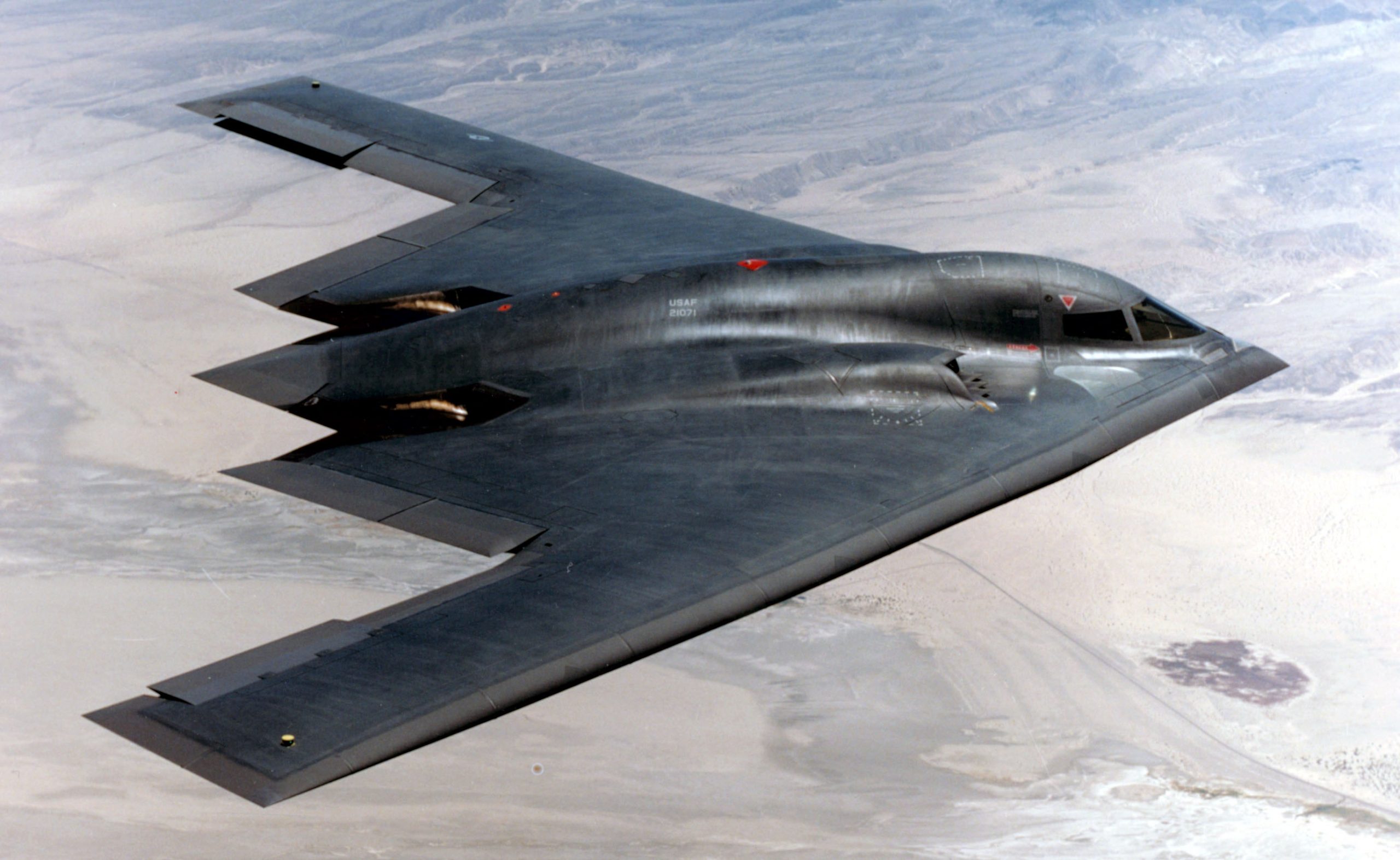
In addition to the deployment of seven B-2 bombers on Diego Garcia Island, the USS Carl Vinson strike group has also transitioned from the western Pacific Ocean to the Arabian Sea, with an expected arrival in early April.
B-2 bombers deployed at Diego Garcia Air Base
Diego Garcia Island is located 3,400 kilometers from Yemen and has served as the primary base for US strategic bombers during previous operations in West Asia and Central Asia.
This deployment aims to intensify airstrikes on Yemen. The current inability and limitations of the US and European naval fleets stationed in the Red Sea, along with the Israeli army’s constraints, have prompted the decision to send B-2s and additional naval forces to the region.
This situation will make it more challenging for Yemeni forces to respond to the escalating US military activities. Consequently, the volume of airstrikes against Yemen is expected to increase.
The increased tensions with the US will make it more difficult for the Yemeni army to respond effectively. In fact, Yemen has limited options for responding to the US. The Yemeni army currently lacks the capability to launch military operations against the Diego Garcia Air Base due to its inadequate weaponry. However, if this base is involved in carrying out attacks against Yemen, the Yemeni forces might consider targeting other US bases in West Asia and Africa.
The Raad family of drones is among the first Iranian unmanned munitions specifically designed for infantry use. These drones feature a standard aerodynamic design similar to other models like the Russian Lancet and the Israeli Hero. With a cylindrical body, two rows of wings, and electric propulsion, along with an electro-optical system integrated into the nose, the Raad drones have a familiar appearance.
Israeli HERO droneRussian LANCET droneRussian LANCET and Israeli HERO drones
After modeling itself on Switchblade drones and developing an indigenous version called Meraj 521, the IRGC Ground Force has now also begun to explore the use of other prominent global models.
Currently, there are no available details regarding this drone, leaving its specifications and capabilities shrouded in mystery.
Raad-2 drone:
The Raad-2 suicide drone features a wingspan of 1.8 meters and a fuselage length of 1.5 meters. It is capable of flying for up to 17 minutes using an electric motor. With a declared operational range of 20 kilometers, the drone can achieve speeds estimated between 60 and 70 kilometers per hour. Additionally, the Raad-2 carries a 5-kilogram warhead, which can be fitted with various types of fragmentation or explosive warheads.
It’s worth mentioning that prior to its official unveiling during the second phase of the Great Prophet-19 exercise in 2025, the Ra’ad-2 suicide drone was informally referred to as the Rezvan drone.
Raad-2 drone
Raad-3 drone:
The Raad-3 drone has a mission similar to that of the Raad-2, but with some enhancements. It features an increased wingspan of approximately 1.85 meters and a slightly larger fuselage measuring about 2 meters in length. These larger dimensions, along with a more powerful engine, likely enable the drone to carry a greater energy storage capacity. As a result, its flight duration has been extended to 40 minutes, and it can now support a warhead weighing up to 12 kilograms.
Raad-3 drone
Despite the fact that the Raad family of drones, which have been produced in three versions so far, all use electric propulsion, their launching method is different.
The Raad-2 UAV features a compact design with retractable wings, enabling efficient storage and launch from a cylindrical chamber. Its wings, each attached by a spring joint, are compressed towards the nose when in the chamber. Upon launch, a rocket booster propels the UAV out of the chamber, and the wings deploy by rotating 90 degrees. This innovative design allows the UAV to be stored and launched from a confined space using a hot gas blast.
The moment the Raad-2 drone launches and exits the cylindrical chamberLaunch of the Ra’ad-2 drone during the Great Prophet-19 exercise in 2025
On the other hand, the box-launching capability of the Raad-2 UAV has enabled the development of multi-launchers for this drone. A specialized multi-purpose launcher has been created for both the Raad-2 and Ghaem-118 UAVs, allowing for the deployment of up to 8 box launchers on Toyota tactical vehicles as well as on the Aras family of vehicles.
Ra’ad-2 multiple launchers on a tactical vehicle
Unlike the Raad-2, the Raad-3 features fixed wings and is launched from a rail with the assistance of a rocket booster. The use of rail launchers to provide initial acceleration for drones is common, utilizing hydraulic, pneumatic, or JATO (Jet-Assisted Take-Off) systems. This approach is seen, for example, in different variants of the Russian Lancet-E and other similar drones.
Raad-3 drone launched from the rail
The Raad family of drones is equipped with an electro-optical system located in the nose, likely a simple and cost-effective type of television camera. This capability allows the drone to transmit images to the operator via radio communication with low latency. Consequently, the operator can use these images to identify the environment or make decisions about targeting specific objectives.
It is expected that Raad drones, similar to their foreign counterparts, will eventually be capable of being outfitted with more advanced and multifunctional electro-optical systems, such as thermal or semi-visible cameras for nighttime operations. However, there is currently no official information confirming this.
Regardless, it is evident that the development of loitering ammunition for infantry and special forces is crucial on modern battlefields.
Raad-3 UAV Electro-Optical System
In modern warfare, mobility has become a fundamental principle in the design of ground combat systems. Enhancing the survivability of weapons on the battlefield—especially against enemy counterfire and other threats—demands agility and rapid movement. In this context, mobile multiple rocket launcher systems (MLRS) and self-propelled guns equipped with automatic loading systems are effective weapons. They enable precise and rapid attacks while allowing for immediate repositioning after each operation. This strategy not only boosts firepower but also decreases the likelihood of detection and destruction by the enemy, which is crucial in dynamic, rapid-response combat scenarios. Thus, the significance of the Ra’ad family of drones can be understood within this framework.
Raad-2 and Raad-3 suicide drones
It is important to note that, in addition to the Raad family of drones, the IRGC Ground Forces also utilize another similar type of drone known as the Saeqeh family. According to available information, this family was produced as a more cost-effective option and comes in three versions.
The Saeqeh-1 drone has a flight endurance of 30 minutes and an operational range of 20 kilometers, with the capacity to carry a 1-kilogram warhead. At least in the Saeqeh-1 version, this family of drones is equipped with only a small fixed forward-looking camera located in the nose.
Saegheh-1 drone
The concurrent development of these two families of drones raises questions about their roles within the IRGC Ground Forces combat organization. One key question is whether these drones can operate in a network-based manner. This would allow an operator to simultaneously control multiple drones, utilizing one Raad family drone for reconnaissance while deploying several Saeqeh drones for attack missions.
Today, loitering munitions have evolved beyond their traditional roles, becoming essential in both offensive and defensive missions, including the suppression of enemy air defenses (SEAD). Recent conflicts in the Middle East and Ukraine have underscored the need for tactical advancements that meet infantry requirements, and this has become a pivotal focus for enhancing combat effectiveness. The Iranian armed forces have keenly recognized this trend, dedicating significant attention to developing new technologies and operational capabilities. Notably, this includes innovations such as the Ra’ad and Sa’eqeh suicide drones from the IRGC Ground Force, showcasing a commitment to advancing military strategies. It’s exciting to see how these developments can shape future operations and strengthen Iraninan defense systems!
The history and evolution of loitering ammunition:
The concept of “loitering” was first introduced in the military field in the early 1980s. It emerged in response to the widespread development of mobile air defense systems in the Soviet Union and, subsequently, in Eastern Bloc countries. Systems like the SAM-6 (SA-6 Gainful) challenged the doctrine of Western air superiority because, unlike traditional fixed defense systems, they were not permanently stationed in one location. Instead, these mobile systems were activated only when a threat arose and then concealed again after completing their mission.
At that time, advanced reconnaissance technologies such as modern drones and imaging satellites with today’s capabilities did not exist. Existing spy planes were limited to the technology available during that era. Consequently, detecting mobile defense systems became one of the most challenging military problems.
SAM6 air defense system mounted on an armored chassis
For this reason, the United States, as one of the two main poles of the Cold War, along with the Zionist regime, which was involved in severe conflicts with Arab countries at that time, sought to develop weapons that could remain in the operational area for an extended period after launch. These weapons were designed to eliminate targets as soon as they were identified, unlike conventional air-launched or cruise missiles.
The roots of this strategy can be traced back to the painful experiences of Israeli forces during the Yom Kippur War, where they faced the Soviet-made defense systems of Syria and Egypt. However, new tactics were quickly implemented during Operation Mole Cricket 19 in 1982, aimed at suppressing Syrian air defenses. In this operation, a significant number of unmanned aerial vehicles were used as bait to provoke ground-based defense systems, creating opportunities for the use of anti-radar weapons.
The successful results of this operation encouraged further investment in drones and loitering munitions throughout the 1980s.
The Harpy drone, which is based on the South African ARD-10 Lark, along with the American Tacit Rainbow anti-radar missile, were some of the earliest weapons to have this capability in the 1980s. These weapons could essentially “scroll” through the sky to identify and destroy targets at the appropriate moment. However, due to the absence of advanced optical sensors, complex image processing algorithms, and limited radio and satellite communications, these weapons relied heavily on anti-radiation seekers.
The ARD-10 Lark drone was developed in the late 1970s on the sidelines of the Bush War.Lark drone’s ability to carry modular warheadsSchematic of the Lark drone roaming the battlefield.The US AGM-136 droneIsraeli Harpy droneClick to view full size
As the 2000s progressed, the limitations of loitering munitions diminished, allowing their role to expand beyond suppressing enemy air defenses (SEAD). The integration of electro-optical systems with advanced image processing and sensors shaped the modern concept of these drones. A notable example is the transformation of the Harpy drone into the Harop. While militaries worldwide began to adopt drones during this period, the focus largely remained on cruise missiles and air-launched weapons. However, this perspective shifted significantly over the following two decades.
Harpy in 1989Harop in 203Click to view full size
The evolution of loitering munitions advanced with the creation of special forces and infantry versions, emphasizing drone miniaturization to reduce mass and occupied space. This allowed for faster transport and deployment by infantry. Traditional aerodynamic designs like delta wings proved less effective, prompting the exploration of unconventional alternatives. During the 2000s, the United States experimented with small-sized battlefield drones through projects like GLUAV, CCLR, and SBIR, which largely met with limited success. However, these efforts culminated in the development of the Switchblade Block-0 drone in 2004.
Besides the Switchblade, the Hero series of drones, developed by Israel’s UVision Industries, was among the earliest operational models in this category. Established in 2011, UVision introduced the innovative X-wing design, which has since become a widely adopted standard across various drone manufacturers.
Hero-30, Hero-120 and Hero-400 drones
Raad drone posters in Farsi, Russian, Arabic and Hebrew:
The Yemeni armed forces have launched missile and drone attacks against US warships, including the aircraft carrier USS Harry Truman, in the Red Sea. Additionally, Yemeni drone units targeted Israeli military installations in Tel Aviv with multiple suicide drones.
In conjunction with these attacks, US military fighter jets have conducted airstrikes on Saada and Imran provinces at least 19 times within the last 24 hours.
These airstrikes include seven on the Sahar district, seven east of Saada city, three on the Al Salem district in Saada province, and two on the Sufyan district in Imran province.
US strikes in Yemen in the past 24 hours
The drone strike on Tel Aviv marks the 85th airstrike by the Yemeni army against Israeli positions in occupied Palestine. The operation against the US fleet is also recognized as the 17th operation against the 8th Strike Fleet and the 192nd Yemeni military operation targeting illegal ships.
The operation launched by the Yemeni armed forces to support the Palestinian resistance against the Israeli regime began on October 19, 2023. This effort led to the capture of the Israeli ship, Galaxy Leader, and the ongoing missile, drone, and airstrike attacks on over 190 ships linked to Israel. As a result, shipping by Israeli companies through the Red Sea route has been suspended. In addition to these attacks on ships, the Yemeni army has conducted more than 85 missile and drone operations targeting positions held by the Israeli regime in occupied Palestine. Furthermore, an F-18 Super Hornet fighter jet and 19 American MQ-9 drones have been shot down during the Yemeni conflict with the American-British coalition.