Tag: al-Kiswah

  • Israeli Airstrikes and Heliborne Operation South of Damascus; Israel Seeks Demilitarization of All Southern Syria!

    Israeli Airstrikes and Heliborne Operation South of Damascus; Israel Seeks Demilitarization of All Southern Syria!

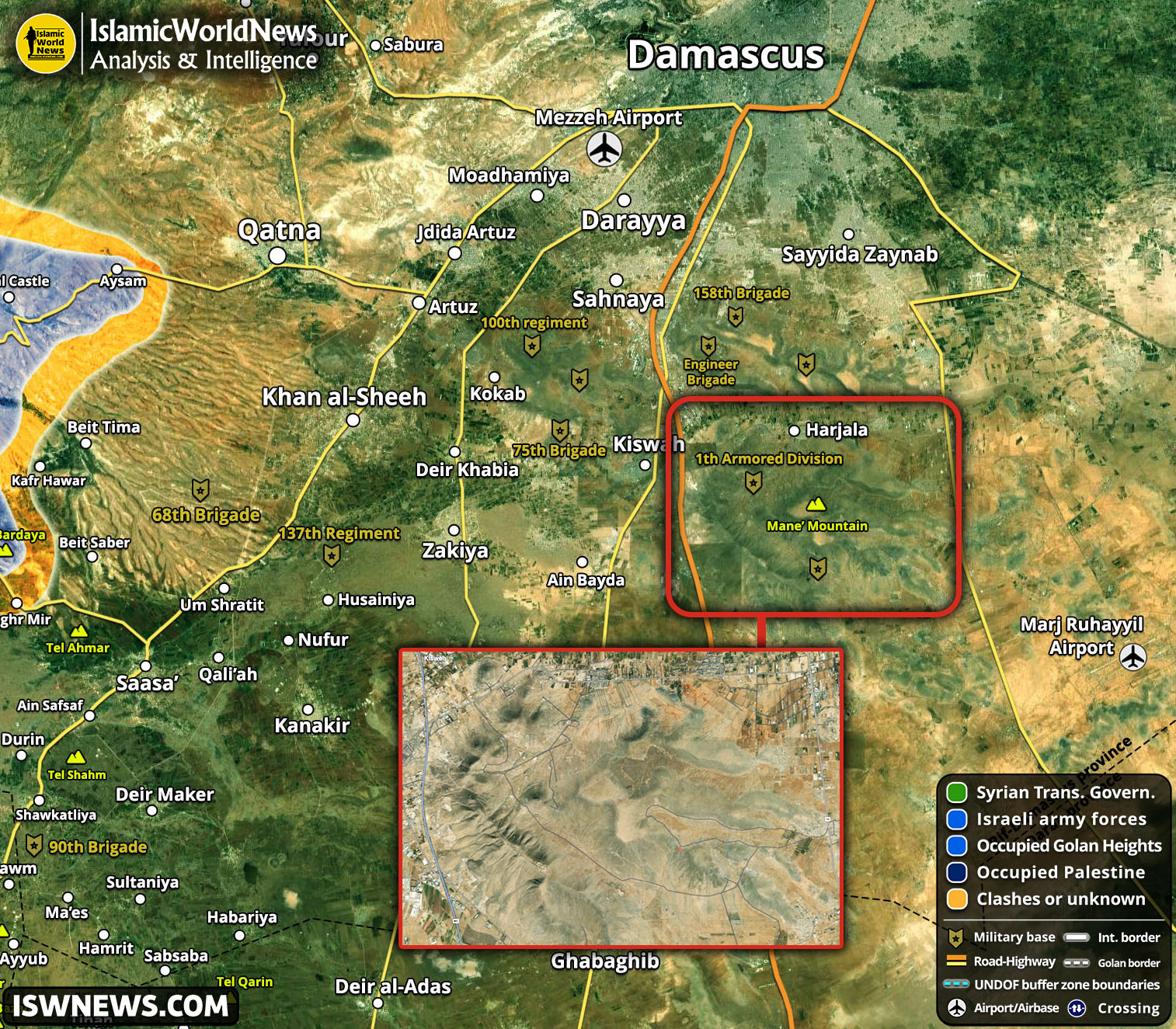
    On August 26, Syrian security forces discovered and seized advanced Israeli surveillance and espionage equipment near Jabal al-Manea and the 1st Armored Division. While attempting to transfer the equipment to the division’s headquarters, they were struck by Israeli airstrikes, resulting in casualties among Syrian soldiers. The strikes continued for 24 hours to prevent reinforcements from reaching the area. Despite the strikes, some Syrian forces managed to destroy parts of the equipment and evacuate the bodies of the fallen.

    Continuing the events, Israeli aircraft again targeted the Al-Kiswah and Jabal al-Mane’ areas multiple times last night and conducted a heliborne operation at the 1st Armored Division base. According to local sources, at least four Israeli helicopters participated. Israeli forces remained in the area for over two hours, though no direct clashes with Syrian troops were reported.

    While details of the operation’s objectives remain undisclosed, it’s believed the recovered surveillance equipment was significant enough to prompt Israel to launch a retrieval mission. Of course, that’s not the whole story; the strategic importance of the military installations in Al-Kiswah and especially Jabal al-Mane suggests broader goals. The sequence of airstrikes, troop deployment, and extended presence indicates Israel is pursuing more than a limited strike.

    The execution of combined operations involving airstrikes, drones, and heliborne assaults deep inside Syrian territory signals a qualitative shift in the Israeli army’s operational tactics. This style of operation was previously carried out in Masyaf during the final phase of Bashar al-Assad’s rule, during which important documents were stolen and part of an underground base was destroyed.

    Overall, the Israeli regime seeks to demilitarize southern Syria and establish a large buffer zone adjacent to the occupied Golan Heights. The fall of the previous government and the rise of a fledgling and weak regime in Damascus presents the best opportunity for Israel to pursue this goal. Through repeated airstrikes and physical occupation of parts of southern Syria, the Zionist regime aims to neutralize the Syrian army’s capabilities and maintain permanent control over potential threats. Although talks between Damascus and Tel Aviv regarding normalization of relations or peaceful coexistence are ongoing, it must be understood that Israel holds the upper hand and considers itself above the need to engage with Syria. Therefore, the regime continues its attacks and efforts to neutralize the Syrian government while simultaneously participating in negotiations, viewing them as an opportunity to extract more concessions and apply greater political pressure.

  • Israeli Drone Strike Near Damascus Leaves Six Syrian Troops Dead

    Israeli Drone Strike Near Damascus Leaves Six Syrian Troops Dead

    A Syrian Defense Ministry official confirmed that the strike hit positions of the Syrian Army’s 44th Division.

    Since the fall of Bashar al-Assad’s regime, Israel has carried out hundreds of air and drone strikes across Syria, targeting military sites and infrastructure. Tel Aviv claims these operations are part of a broader strategy to curb the influence of Iran-backed groups and Hezbollah in the region. Damascus, however, views them as blatant violations of its sovereignty.

    The repeated Israeli strikes reflect a sustained pressure campaign against Syria’s transitional government. This strategy not only weakens Syria’s defensive capabilities but also sends a message to regional actors about Israel’s determination to prevent the deployment of forces aligned with Iran.

    Beyond military casualties, the continuation of these attacks risks escalating humanitarian and security crises along Syria’s borders. The strikes could destabilize the transitional government and delay efforts to rebuild Syria’s security infrastructure—an outcome with serious implications for the broader West Asian security landscape. Notably, these attacks coincide with both public and behind-the-scenes negotiations between Syrian and Israeli officials.

  • Missile attacks to Southern Syria, Israel’s grimace to Hezbollah!

    Missile attacks to Southern Syria, Israel’s grimace to Hezbollah!

    Syrian army officials reported to intercept most of the missiles, however some of them hit the targets and martyred two and injured seven.

    Almost 40 days ago, in a similar attack to al-Kiswah area a Hezbollah member was martyred and after that the southern border of Lebanon was under high tension and Israeli regime army is in full alert scared of Hezbollah retaliation attack.

    Syrian air defense systems intercept one of the missiles

    Israel’s last night attack to Syria one day after Sayyid Hassan Nasrallah, Hezbollah secretary, speech on Ashura day, who said that the Hezbollah is seeking to dictate a new deterrent equation in the area. He said if a number of Hezbollah forces are killed by Israel, the same number will be killed from Israeli forces.
    He said: “We want to prove a point, an equation; When you kill one of our warriors, we kill one of your soldiers, the end! This is the equation. It can’t be that you kill one of us and we just destroy a hill, a base or some metallic equipment! You have the resources of the whole world, you replace it. They can’t deter Israel.”

    In this regard, the new attack by Israeli regime is considered a grimace and impudence to Hezbollah and resistance axis.