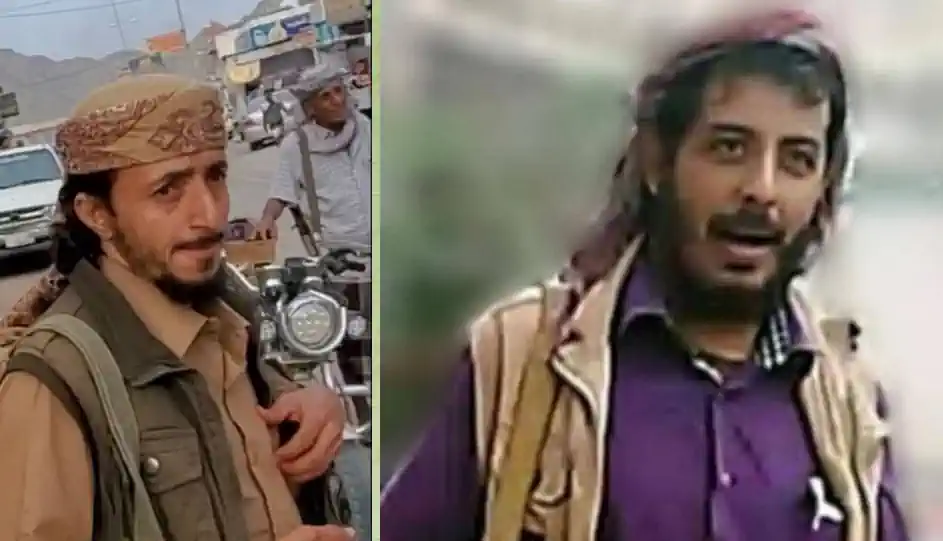
American drones carried out a strike in Marib province, killing two senior figures of the al‑Qaeda terrorist organization.
On the evening of Monday, December 8, U.S. military drones targeted a motorcycle near a farm in the al‑Hadhun area, northeast of Marib city. The attack killed Abu Ubaidah al‑Hadhrami, a field commander of al‑Qaeda, and Anis al‑Hasili, a senior intelligence and security operative of the group.
Al‑Hadhrami was a prominent member of al‑Qaeda’s Yemen branch, known for publishing a booklet titled “Thus We Were Killed in the Name of Jihad” criticizing ISIS actions against al‑Qaeda. In recent months, he had also engaged in activities supporting Gaza. Anis al‑Hasili, meanwhile, was a senior intelligence official within al‑Qaeda and maintained close ties with Mabkhout bin Aboud al‑Sharif, head of the Islah Party organization in Marib.
According to Western media statistics on U.S. airstrikes in Yemen over the past two decades, more than 386 operations have been carried out against al‑Qaeda members in the country.
UPDATE, December 11:
Local sources in Marib report that Abu Ubaidah al‑Hadhrami, a senior al‑Qaeda member, was not killed in the recent U.S. drone strike on the al‑Hadhun area. The individual who was actually killed has been identified as Mohammed Saeed al‑Kazmi, known as al‑Saqi, a field commander of al‑Qaeda from Abyan province. Al‑Kazmi was one of the key figures overseeing al‑Qaeda’s operations and movements in Abyan.
Analysts note that his elimination effectively aided the Southern Transitional Council in consolidating control over Abyan. Meanwhile, the initial reports of al‑Hadhrami’s death appear to have been part of an intelligence tactic—either by Western security agencies or al‑Qaeda itself—intended to mislead and confuse opposing intelligence networks.
American drones targeted a motorcycle near the Bin Mu’ili station in the al-Husoun area of Wadi district, east of Marib, on the evening of December 8. The strike killed Munir Bajali al-Ahdal, also known as Abu al-Hijaa al-Hadidi, a field commander of al-Qaeda, along with one of his companions. The assassination occurred shortly after al-Ahdal left the home of Mabkhout bin Aboud al-Sharif, head of the Islah Party organization in Marib.
According to Western media statistics, over the past two decades the U.S. military has carried out more than 385 air operations against al-Qaeda members across Yemen.
The American drone first dropped a bomb on a house, and minutes later launched a second strike on a civilian car. Both attacks resulted in casualties among civilians as well as the suspected individual.
Based on statistics from Western media regarding U.S. air operations in Yemen over the past two decades, more than 383 strikes have been conducted against al-Qaeda members in the country.
Abu Muhammad al-Sanaani held a key security role within the group’s structure. No photos or detailed information about him have been published online. His only known physical trait was a noticeable limp.
According to Western media statistics, the U.S. military has conducted over 380 aerial operations targeting al-Qaeda members across Yemen over the past two decades.
The operation involved two vehicles—one of them a suicide car bomb. Following the explosion, al-Qaeda’s inghimasi (shock) fighters stormed the base and engaged in armed clashes. Five al-Qaeda members were reportedly killed in the firefight.
Al-Mahfad, though under STC control, remains heavily influenced by al-Qaeda, with many local armed men being former members of the group.
Al-Qaeda Attack on Southern Transitional Council Base in al-Mahfad
This marks one of the largest al-Qaeda attacks on STC positions in recent years and represents a significant escalation. After Ansar Allah cleared al-Qaeda from provinces like al-Jawf, al-Bayda, and Marib, the group’s operations have largely shifted toward confronting the STC. Previous attacks were mostly limited to IEDs, bomb-throwing, sniper fire, or drone use—but today’s assault was broader and more coordinated, delivering a serious blow to STC forces.
The motive behind the attack appears linked to the STC’s recent crackdowns in Abyan and the expulsion of local armed factions from al-Mahfad from its ranks.
Bin Arfaj’s father was a senior al-Qaeda figure in Yemen who was killed in a previous U.S. operation. The affiliation of the two individuals with al-Qaeda has not yet been officially confirmed by the group’s media outlets.
According to Western media data, the U.S. military has carried out over 380 counterterrorism air operations targeting al-Qaeda in Yemen over the past two decades.
It’s worth noting that the Southern Transitional Council and several Yemeni media sources claim that Saudi Arabia is a key supporter of al-Qaeda in Yemen, allegedly aiming to weaken southern factions and prevent their influence from expanding into central regions of the country.
On Friday, January 10, Yemeni government security forces and Ansar Allah’s Intelligence Organization carried out a security operation in the Hanaka Al-Masood area of Qurayshiyah district after identifying ISIS terrorists in Al-Bayda Governorate.
Hanaka Al-Masood, located in the northern part of Radaa city, the center of Qurayshiyah district, had seen ISIS and Al-Qaeda recruit several residents in recent years to carry out terrorist activities in areas under Ansar Allah’s control.
The operation resulted in the deaths of four ISIS terrorists, including Faisal Al-Khabzi, known as Haizom Al-Khabzi, the network’s commander, and his successor, Dhaifullah Al-Masoudi. According to local sources, one ISIS member carried out a suicide attack during a clash with security forces.
In a controversial move, the so-called US Embassy in Yemen condemned the operation, labeling it an attack on innocent civilians and a deprivation of peace and a bright future for the Yemeni people! This statement highlights the US’s apparent support for terrorist elements operating under the guise of ISIS and Al-Qaeda, who act against Yemeni security when necessary.
In 2020 and 2021, Yemeni armed forces launched extensive operations against ISIS and Al-Qaeda positions, as well as forces affiliated with the Saudi coalition in various areas of Al-Bayda province, resulting in the clearing of 3,500 square kilometers of land.
During this phase of the Yemeni war, Ansar Allah was heavily involved in several other fronts, but their dominance, internal power, and cooperation with the tribes allowed them to overcome challenges and completely eliminate the Takfiris from Al-Bayda province.
There is little surprise in what is happening, since even before the fall of the Assad regime, in Idlib, FSA representatives allied with Jabhat Nusra or Hayat Tahrir al-Sham openly expressed sympathy for the Zionists and expect such cooperation to continue in the anti-Iranian direction.
After viewing the screenshots, many readers will ask themselves the question – “the opinion of the marginalized may not reflect the policy of the organization.” This will be the correct train of thought, but here I will ask a counter question – “why did the leaders of Tahrir al-Sham not reject the words and opinions of the marginalized and did not even bother to call for an explanation from the people in that very video (first screenshot)?”
As for the verbal attacks of the so-called Ahmed al-Sharaa against Iran, this foul language has several goals:
1 – to appease the Persian Gulf autocracies so that they start pouring millions of dollars into the emirate of Tahrir al-Sham. 2 – to show himself as a “good guy” in the eyes of the United States and the Zionists. Behavior similar to the late Morsi, who naively believed that such an approach could help him “come to an agreement with the West.” 3 – to maintain his authority in the eyes of the Takfiri international.
The former head of Syrian al-Qaeda understands that there are thousands of fanatics with an anti-Shiite agenda in his ranks, al-Julani himself is the same, but in connection with the need to build a new dictatorship, he understands that it is important for him to be pragmatic. No one will allow him to start a war with Iran, so the leader of Tahrir al-Sham can only verbally agitate against the Islamic Republic to please his electorate.
The ideological inspiration for contacts between Syrian jihadists and Zionism could have come from two sides at once – the US Republicans and the Saudis. The former have long described Tahrir al-Sham as an “important asset”1 of American policy in Syria, while the latter are known for their active movement toward normalizing diplomatic relations with the occupiers of the holy land. Both sides are known for their Iranophobia and hatred of the Ja’fari madhhab2. An important detail is the fact that the so-called “Syrian Foreign Minister” made his first visit to Riyadh.
It is obvious that in the near future various facts of secret cooperation between the Zionists and the former Syrian al-Qaeda will be revealed, and by the way, such cooperation will not be limited to an alliance against Iran and its friends. “Israel” is well aware that inside Syria there are various actors sympathetic to Hamas and even having a similar ideology. Therefore, the Mossad will in every way prevent the Islamic Resistance of Palestine from establishing contact between the “brotherly” Syrian organizations and the Axis of Resistance. In the meantime, the Americans are happy to watch what is happening and claim that “Syria has become a hostile territory for Iran.”3
1 – The former U.S. special envoy to Syria said in an interview excerpt published Friday that Al Qaida’s Syrian offshoot is an “asset” to U.S. strategy in Syria. Ambassador James Jeffrey had told PBS News in March 2021 that the Islamist rebel group Hayat Tahrir al-Sham was “least bad option of the various options on Idlib, and Idlib is one of the most important places in Syria, which is one of the most important places right now in the Middle East.”
2 – In late November 2024, a video emerged of Republican Senator Lindsey Graham making unflattering remarks about Shiite Muslims, accusing Shiite doctrines of “anti-Semitism” and attributing outright lies to Shiites. Graham also pointed to the “need to suppress” Shiites in the Middle East.
3 – In an article published in The Wall Street Journal, Barbara Leaf, US Assistant Secretary of State for Near Eastern Affairs, said Syria has now become “hostile territory” for Iran.
One of the Al-Qaeda-affiliated media outlets, known as Jaysh Al-Malahim Al-Electroni, published an article written by a person called Mulhim Al-Ayyoubi to explain Al-Qaeda’s perspective on Iran.
The author, in this six-page article, denied the existence of any friendly and strategic relationship between Iran and Al-Qaeda, and implicitly attributes the assassination of Iranian diplomats in Mazar-e-Sharif on August 8, 1998, to the Al-Qaeda organization.
The article also considered the kidnapping of several Iranian diplomats in various regions to be the responsibility of the Al-Qaeda organization.
Al-Ayyoubi, whose real or pseudonym is unclear, praised Rigi at the end of the article and claimed that the Al-Qaeda organization supported the Jundallah group, despite the fact that Jundallah had denied any relationship with Al-Qaeda and the Taliban. The author also stated that this was part of Al-Qaeda’s policy to reduce the pressure on organizations affiliated with it.
Al-Ayyoubi further added that Rigi was trained within the ranks of the Al-Qaeda organization in Afghanistan and was directly supported by this organization.
It is worth noting that the Jaysh Al-Malahim Al-Electroni media outlet, which is managed by a person who calls himself Abu Maryam Al-Indonesian, claims to be a cyber-wing affiliated with the Al-Qaeda organization. This media outlet had previously claimed responsibility for disrupting the airport network of several airports in France.
The USS Cole bombing was a suicide attack by al-Qaeda against USS Cole, a guided missile destroyer of the United States Navy, on 12 October 2000, while it was being refueled in Yemen’s Aden harbor. Seventeen US Navy sailors were killed and thirty-seven injured in the deadliest attack against a United States naval vessel since the USS Stark incident in 1987.
After the Al-Qaeda attack on the US ship USS Cole in Aden port, and also the incident of September 11, 2001 in New York City, the then US administration concluded that it should take action against this terrorist group in Yemen as well as Afghanistan.
Following former US president George Bush’s decision to start attacking Al-Qaeda in Yemen, the US military and security agencies in coordination with the then Yemeni government led by Ali Abdullah Saleh began their attacks in this country. These attacks continued after popular protests in Yemen and the downfall of Ali Abdullah Saleh’s government, and after such developments, the eight-year battle between the Ansar Allah movement and the Saudi-led coalition continued.
According to Western media reports, the US has so far carried out 378 attacks, including aerial (by fighter jets and combat drones), missile and ground attacks in this Arab country, which has resulted in the deaths of 1,400 to 1,800 people. So far, a large part of the details and information about these 379 operations have not been published, and the following list has been compiled based on the information available about drone operations that have been reported so far. The operation list is as follows:
1- The US MQ-1 Predator drone attack on the vehicle of al-Qaeda militants in Marib province, November 5, 2002. This attack resulted in the death of six members of al-Qaeda, including the leader Salim Sinan Al-Harethi, known as Abu Ali Al-Harethi (accused of helping to bomb the USS Cole in Aden).
2- The mistaken attack of the American drone on a gathering in Wadi Obayda in Marib province on May 24, 2010. This attack, instead of an al-Qaeda rally, resulted in the death of five people, including Jaber al-Shabwani, the deputy governor of Marib province, who was mediating between the government and the militants. This murder caused the bloodshed of the Shabwani tribes and their conflict with the government forces. They also attacked an oil pipeline in Marib twice.
3- The attack of the American drone on the car of two people suspected of being members of the Al-Qaeda group named Abdullah and Masad Mubarak on May 5, 2011. The aim of this attack was to kill Anwar al-Awlaki, a propaganda member of al-Qaeda, but he was not hit in this attack.
4- The attack of the American fighter jet or drones on the residence of Ali Abdullah Naji al-Harethi, a member of al-Qaeda, and several other suspects, including Ammar Abadah Nasser al-Waili in Zanjibar city on June 3, 2011. Al-Harethi was one of the companions of Abu Musab al-Zarqawi in Iraq and al-Waili was present in the war in Afghanistan and was ordered by Bin Laden to establish a training camp in Saada.
5- The attack of the American fighter jets or drones on a police station in the district of Mudiyah, located in the province of Abyan on July 14, 2011. The media and the Yemeni government at the time reported the casualties of this attack between 6 and 50 dead. Also, on the same day, the American drone targeted the car of Fahad al-Qasso, a senior member of al-Qaeda in Yemen, near the same area, and he survived the attack.
6- The attack of American drones with the participation of Yemeni army fighter jets on Al-Qaeda positions in the areas of Al-Wahda, Al-Amoudi and Al-Khamila in Abyann province on August 1, 2011. As a result of these attacks, 15 militants suspected of being members of Al-Qaeda, including Nasser al-Shadadi, one of the senior members of Al-Qaeda, were killed and 17 others were wounded.
7- American warplanes and drones attack suspected al-Qaeda positions in the outskirts of Zanjibar city in Abyan province on August 24, 2011. This attack killed 30 people and injured 40 others.
8- The American fighter jet attack on a mountain pass in Abyan province on September 21, 2011, which resulted in the death of four Al-Qaeda members. At the same time, seven Al-Qaeda fighters were killed in the coastal city of Shuqra.
9- American drone attack on Anwar al-Awlaki, one of the senior propaganda members of Al-Qaeda in Al-Jawf province on September 30, 2011. In addition to Al-Awlaki, three other people were killed in this attack, including Samir Khan, the American-born editor of Inspire magazine. This attack has been called the first attack in which the US military intentionally attacks its own citizens.
10- American drone attack on al-Qaeda hideouts in the east of Zanjibar, the capital of Abyan province, on October 5, 2011. This attack resulted in the death of five Al-Qaeda members.
11- American fighter jet or drone attack on an unknown mosque in Shabwa province on October 14, 2011. Some American media, quoting the Ministry of Defense of the Yemeni government at the time, claimed that seven Al-Qaeda members were killed in this attack, including Ibrahim Al-Banna, the media officer of Al-Qaeda (Egyptian origin), but this information is not correct, and currently the United States has offered a reward of 5 million to find Al-Banna.
12- In another attack on October 14, 2011, the American drone assassinated the 17-year-old son of Anwar al-Awlaki along with eight other people in Shabwa province.
13- American drone attack on the location of al-Qaeda members in the city of Jaar in Abyan province on December 22, 2011. In this attack, Abdulrahman al-Wahishi, a relative of Nasser al-Wahishi, the leader of al-Qaeda branch in Yemen, was killed along with eight others.
14- American drone attack on the gathering place of Al-Qaeda members near Lowdar city in Abyan province on January 31, 2012. During this attack, 11 al-Qaeda members were killed, including Abdul Moneim al-Fatani, one of the perpetrators of the attack on the USS Cole in October 2000.
15- The American drone attack on al-Qaeda’s hideout near Al-Bayda on March 9, 2012, which led to the death of Abdul Wahab al-Hamiqani, one of the local commanders of al-Qaeda, and 16 others.
16- American drone attack on the gathering of al-Qaeda militants in the city of Jaar in Abyan province between March 9 and 11, 2012. This attack killed 20 people suspected of being members of Al-Qaeda group.
17- American drone attack on Al-Qaeda weapons warehouse in Jaar city, between March 9-11, 2012. Three al-Qaeda members were also killed in this.
18- An American drone attack on a vehicle carrying Al-Qaeda militants in Al-Bayda province on March 14, 2012, which resulted in the death of four Al-Qaeda members.
19- American drone attack on the location of al-Qaeda militants in Lowdar city on April 11, 2012. This attack resulted in 14 deaths.
20- An American drone attack on the residence of Muhammad Saeed Al-Amdeh (Gharib al-Ta’zi), one of the senior members of al-Qaeda, in Al-Samadeh region, between Marib and Al-Jawf provinces on April 22, 2012.
21- American drone attack on the location of Fahd Muhammad Ahmed al-Qasu and another Al-Qaeda member in the south of Shabwah province on May 6, 2012.
22- The attack of an American drone on a wedding ceremony in the Radaa area of Al-Bayda province on December 12, 2013, which led to the death of 15 civilians. The US claims that 9 to 12 Al-Qaeda militants were killed in this attack, and the claim that civilians were killed is not true.
23- American drone attack on a car carrying two Al-Qaeda members in Al-Qatman area of Hadhramout province on January 8, 2014.
24- American drone attack on the car of al-Qaeda militants in Al-Mifaa area in Shabwa province on March 3, 2014. This attack killed three Al-Qaeda members, and it is believed that Mujahid Jaber Saleh al-Shabwani was one of the dead.
25- On April 20 and 21, 2014, American drones attacked al-Qaeda positions in southern Yemen, which, according to the Ministry of Defense of the resigned government of Yemen, led to the death of 22 members of this group.
26- American drone attack on the location of Nasser Abdul Karim Al-Wahishi, one of the leaders of al-Qaeda in Hadhramaut province (probably Al-Mukalla city) on June 12, 2015.
27- The attack of the American fighter or drones on the al-Qaeda camp in the Hajar region of Hadhramaut province on March 22, 2016. This attack led to the death of 40 to 50 members of this group.
28- American drones attacked the government intelligence headquarters in Zanjibar city and other positions of Al-Qaeda members in the areas of Naqeel Al-Haila and Al-Hazan in Abyan province on March 27, 2016. The casualties of al-Qaeda in these attacks have been announced as eight.
29- American fighter or drone attack on al-Qaeda positions in Shabwah province on October 4 and 18, 2016.
30- American fighter or drone attack on the location of Al-Qaeda members in Marib on October 21, 2016. Five Al-Qaeda members were killed in this attack.
31- The attack of American drones on unspecified areas in Al-Bayda province on January 21, 2017, which resulted in the death of three people. This attack was the first US airstrike in Yemen since the beginning of Trump’s presidency. The United States claims that one of the killed people, Abu Anis al-Abi, was one of the field commanders of al-Qaeda and two other members of this group, but local sources called them construction workers.
32- On October 2, 2017, American drones and fighters carried out 30 attacks on al-Qaeda positions in the three provinces of Hadhramaut, Shabwa and Abyan.
33- American drone attack on a car carrying al-Qaeda members in Shabwa province on July 6, 2018. This attack killed seven people.
34- American drone attack on the location of Jamal al-Badawi, one of the agents of the Al-Qaeda attack on the USS Cole in Marib province on January 1, 2019.
35- The attack of three American drones on al-Qaeda positions in Al-Bayda province on June 24, 2019. These attacks led to the death of 5 people suspected of being members of the Al-Qaeda group.
36- The attack of American drones on Jo Al-Nasim area in Wadi Obeidah and an unspecified place in the administration of Obeidah located in Marib province on January 25, 2020. The attack on Obeidah resulted in the death of an unknown person.
37- American drone attack on al-Hazmeh area in Marib province on January 27, 2020. During this attack, Abdullah al-Adani, a member of Al-Qaeda, was killed.
38- An American drone attack on a car at the Al-Qaeda checkpoint in the village of Hassoun al-Mashrif in the administration of Wold Rabi in Al-Bayda province on January 29, 2020. America claims that it killed Qasim Al-Rimi, the leader of al-Qaeda in Yemen, in this attack.
39- American drone attack on the car of al-Qaeda members on the eastern road of Marib on November 13, 2021.
40- American drone attack on the gathering of Al-Qaeda members in a house in Al-Hadba area in the northeast of Marib city on November 30, 2022. This attack led to the death of several people, including Abi al-Khair Abdulwahid al-Najdi, the person in charge of engineering and making explosives of Al-Qaeda group. Also, Hassan al-Hazrami and Ahmad Zaki, other prominent members of al-Qaeda, were also wounded.
41- An American drone attack on a vehicle carrying al-Qaeda militants near the Al-Haira gas station in the Al-Samada region on the Marib-Al-Abar road on January 30, 2023. In this attack, three occupants of the car were killed, including Yasir Abdullah Rashid Al-Amiri from the administration of Wasab Al-Ali in Dhamar province, Hossein Hadbol al-Makni (Hassan al-Hazrami) in charge of making bombs and explosives for al-Qaeda, and his brother Musa Hadbol (Mohed al-Hazrami).
42- American drone attack on a house in Al Jalal area, located in the east of Marib city, on February 26, 2023. This attack led to the death of Hamad bin Hamoud al-Tamimi (Abd al-Aziz al-Adnani), a Sharia official and one of the prominent commanders of al-Qaeda in the Arabian Peninsula, and one of his bodyguards.
43- American drone attack on a bus near Shaqman gas station in Hajba area, located in the south of Marib city on August 30, 2023.
Out of these attacks, one attack was carried out during George W. Bush’s tenure, 185 operations during Barack Obama’s presidency, 188 operations during Donald Trump’s era, and five attacks during the Joseph Biden administration.
It is worth mentioning that the main goal of the US attacks in Yemen was to prevent Al-Qaeda from gaining power in the Arab country. However, these attacks have not had any significant impact on the developments in Yemen, and Al-Qaeda still operates in the governorates of Hadhramaut, Shabwah, and Abyan. In contrast, the operations by Ansar Allah fighters in Saada, the northern governorate of Al-Bayda, Al-Jawf, Marib, and Sanaa have been more effective in combating terrorism in Yemen. Al-Qaeda terrorists’ presence in many of those areas has been eliminated for years.
It should be noted that the decision to use Al-Qaeda terrorists in the war against Ansar Allah was made by Saudi Arabia and the United Arab Emirates (UAE). This shows that the United States had no problem with the decision until the ceasefire between the Saudi-led coalition and Ansar Allah movement was established. Following the developments, they resumed their attacks on Al-Qaeda elements, especially in Marib.
Despite the direct attacks by the US, Al-Qaeda’s activities in Yemen continue, mainly concentrated in the governorates of Hadhramaut, Shabwah, and Abyan. They are heavily engaged in fighting with the militants affiliated to the Southern Transitional Council (STC) in northern Abyan and are trying to recruit more human resources in the Shabwah tribes. They have also disappeared into the desert areas of Hadhramaut. However, unlike their presence and influence in these areas, no area is entirely under their control. This situation has allowed them to maintain their presence in Yemen and keep their Takfiri rivals, especially ISIS, out of competition.
Finally, it should be asserted that unlike southern separatists and other secessionist movements in Yemen, Al-Qaeda has a broader view of this region and aims to control the Arabian Peninsula. However, this issue is limited to threats by their senior officials in speeches and has not yet been practically realized. Perhaps this trend has led the United States to reduce its attention to Al-Qaeda’s presence in Yemen, and their attacks have become more of a security and symbolic measure.
It is believed that Al-Qaeda members lived in this house and were identified and targeted by the US. Later on February 28, local sources stated that during this attack, Hamad bin Hamoud al-Tamimi alias Abdulaziz al-Adnani, a Sharia official and one of the prominent commanders of al-Qaeda in the Arabian Peninsula, along with one of his bodyguards were killed.
Al-Adnani was the one who announced the succession of Khalid Batarfi after the killing of Qasim al-Raymi, the former leader of al-Qaeda in the Arabian Peninsula, and was one of his main supporters to take over this position.
According to available information, Hamad bin Hamoud Al-Tamimi is a citizen of Saudi Arabia and started learning Islamic sciences in 2002. In 2007, he was arrested by the Saudi security forces and imprisoned for five years, and shortly after his release, he was arrested again, but he was seen in Yemen some time later!
A picture of Hamad bin Hamoud al-Tamimi, the religious leader of the Al-Qaeda terrorist group in the Arabian Peninsula
If this attack was carried out by the US, it can be considered the third US drone attack in Marib. In two previous attacks on Marib, America had attacked the residence and car of al-Qaeda members, which had resulted in the death of three prominent members of this group.
The Al-Sahab Institute, which is al-Qaeda’s propaganda arm, has broadcast a fresh video of Ayman al-Zawahiri six months after the US announced the al-Qaeda leader’s death.
In the video named “How to support Palestine”, Al-Zawahiri spoke more than five minutes on the Palestinian issue and encouraged the Palestinian people to continue their battle against the Israeli regime.
Al-Zawahiri also mentioned in the video that the real assistance to the Palestinian cause is that the Muslim nations to inflict harm on the anti-Palestine assailants everywhere in the world. On his opinion, this would be the only way to decrease the Zionists’ pressures on the oppressed people of Palestine.
Al-Zawahiri went on to say that Palestine would be liberated when youths of the Muslim nations strike the interests of Israel and its allies anywhere.
In addition, the al-Qaeda ringleader urged the Palestinian nation to pursue the historical fatwa (decree) by Haj Amin Hussaini on the imposition of ban on the sale of lands to the Jewish people in the Palestinian territories. Moreover, at the end of the video, al-Zawahiri announced that those people who sell their lands to the Israelis would be considered as apostate.
It is interesting that Ayman al-Zawahiri did not mention the fresh strikes by the Palestinian people against some Israeli positions in the occupied lands, and the issue indicates that the video footage was recorded prior to the latest developments in the Palestinian territories. Even though, the al-Qaeda terrorist organization has not formally confirmed Ayman al-Zawahiri’s death so far.
Formal media institutes affiliated to different branches of the al-Qaeda terrorist organization are still expected to issue a statement on their ringleader’s death, and they have not uttered the expression Taqabal Allah (may Allah accept) for Ayman al-Zawahiri thus far that they usually apply for their dead persons.
On July 31, 2022, US President Joseph Biden declared that the American military forces killed Ayman al-Zawahiri in Afghanistan’s capital of Kabul during a drone strike. The United States made the claim in the circumstances that Taliban officials have not formally confirmed the reports on the death of Ayman al-Zawahiri.
It seems to be attention-grabbing that producers of the video used images of the parade and some operations carried out by the Arin al-Aswad group, which has been active in the West Bank for almost a year, in company with a resistance-related anthem called “I am steadfast despite the wounds” at the end of the video footage of Ayman al-Zawahiri’s speech that was circulated by the Al-Sahab Institute, which is considered as the media arm of the Al-Qaeda terrorist organization!