
Tag: Al Saud

  • Al-Qaeda Emir Calls For Overthrowing Al Saud

    Al-Qaeda Emir Calls For Overthrowing Al Saud

    A media company called “Shahid” affiliated to Al-Malham Institute, which is the media tool of the Al Qaeda terrorist group in the Arabian Peninsula, released an 18-minute documentary, in which the group started condemning the performances of the Saudi Arabian government in particular the acts committed by Crown Prince Mohammed bin Salman in the recent years. The documentary attacked the performance Mohammed bin Salman on behalf of both current wring-leader of Al Qaeda Khalid Saeed Batarfi as well as former head of the terrorist group Qasim Rimi, who was murdered, and urged the Saudi people to initiate a revolution and the overthrow of the Al Saud family from power.

    The archive documentary points out to the factors that prove apostasy of Al Saud rulers in particular Mohammed bin Salman on the basis of the viewpoint of the Al Qaeda terrorist group, providing its audience with remarkable statistics of the new period of Al Saud ruling in the form of motion graphics. In the documentary, Al Qaeda terrorist organization censures Mohammad bin Salman’s wish to turn the Land of Revelation into another Dubai, because the group considers the move as an act of blasphemy.

    Some of Muhammad bin Salman’s actions, which in this film are considered the reason for his disbelief and apostasy, are:
    1- War with Islam in the name of fighting extremism and terrorism with the help of secularists and hypocrites.
    2- Helping the enemies of Islam in the East and West and giving up on the main issues of the Islamic world, including the Palestinian issue.
    3- Supporting the policies of the Chinese government in Xinjiang province against Uyghur Muslims.
    4- Supporting the Indian government against Indian Muslims.
    5- Limitless help from western countries.
    6- Ruling by other than what God Almighty has decreed.
    7- Hidden secularism under the skin of Islam.
    8- Setting the groundwork for compromise with Israel in the region.
    9- Supporting Arab rulers with the help of the United Arab Emirates to suppress Islamic nations and movements.
    10- Inciting war in the region and leaving thousands of Muslim victims (almost 9,000 civilians have been killed by Saudi Arabia’s bombings).
    11- Eight years of failure and retreat and inability in the war in Yemen.
    12- Struggle with the Islamic call by executing and imprisoning more than 5,000 scholars, preachers, Mujahideen and tribal reformist sheikhs.
    13- Stopping Islamic rituals and symbols, including the call to prayer in mosques and…
    14- Calling for an apparent Islam acceptable to the West in the name of moderation and creating a center for this purpose.
    15- Suppressing people and suffocating protesting and demanding voices through imprisonment and trials behind closed doors.
    16- Attempting to promote Westernization and to corrupt the society and to deprive the society of Saudi Arabia of its Islamic identity through: Westernizing education in schools and promoting Westernization through the media.
    17- Spreading prostitution by holding music concerts and celebrating polytheistic holidays and film festivals.
    18- Issuing regulations to corrupt women in the society.
    19- Developing tourism and inviting corrupt people to visit Saudi Arabia
    20- Allocating exorbitant expenses to support enemies and extravagance and games and imaginary plans.
    21- Providing billion dollar support to America (citing Trump’s words).
    22- High prices and impoverishment of Saudi society (one out of five people lives below the poverty line).
    23- Saudi youth unemployment.
    24- Destruction of people’s houses and mosques and expulsion of people from their villages and neighborhoods.

    At the end of the film, the passionate words of Qasim al-Raymi, the slain leader of Al-Qaeda in the Arabian Peninsula, and Khalid Batarfi, the current leader of this group, are presented against Al Saud.

    Al Qaeda group in the Arabian Peninsula is a branch of the Al Qaeda terrorist organization, which kicked off its serious actions in countries such as Saudi Arabia and Yemen in 2009. Following the resignation of the then Yemini President Ali Abdullah Saleh and the presidency of his deputy Abdrabbuh Mansur Hadi, the terrorist group started wreaking havoc in a more organized style in Yemen and succeeded in taking full control of some areas in the war-torn country; however, the Ansar Allah movement’s success in taking control of the important cities of Sana’a, Saada and some other areas hindered the Al Qaeda group’s advances; so, the group could deploy its terrorists in some remote regions of Yemen, including the deserts in the east of Yemen as well as the north of Al Bayda Governorate and some other areas. The wring-leaders of the Al Qaeda group enjoy close relationship with different elements in the resigned government of Abdrabbuh Mansour Hadi.
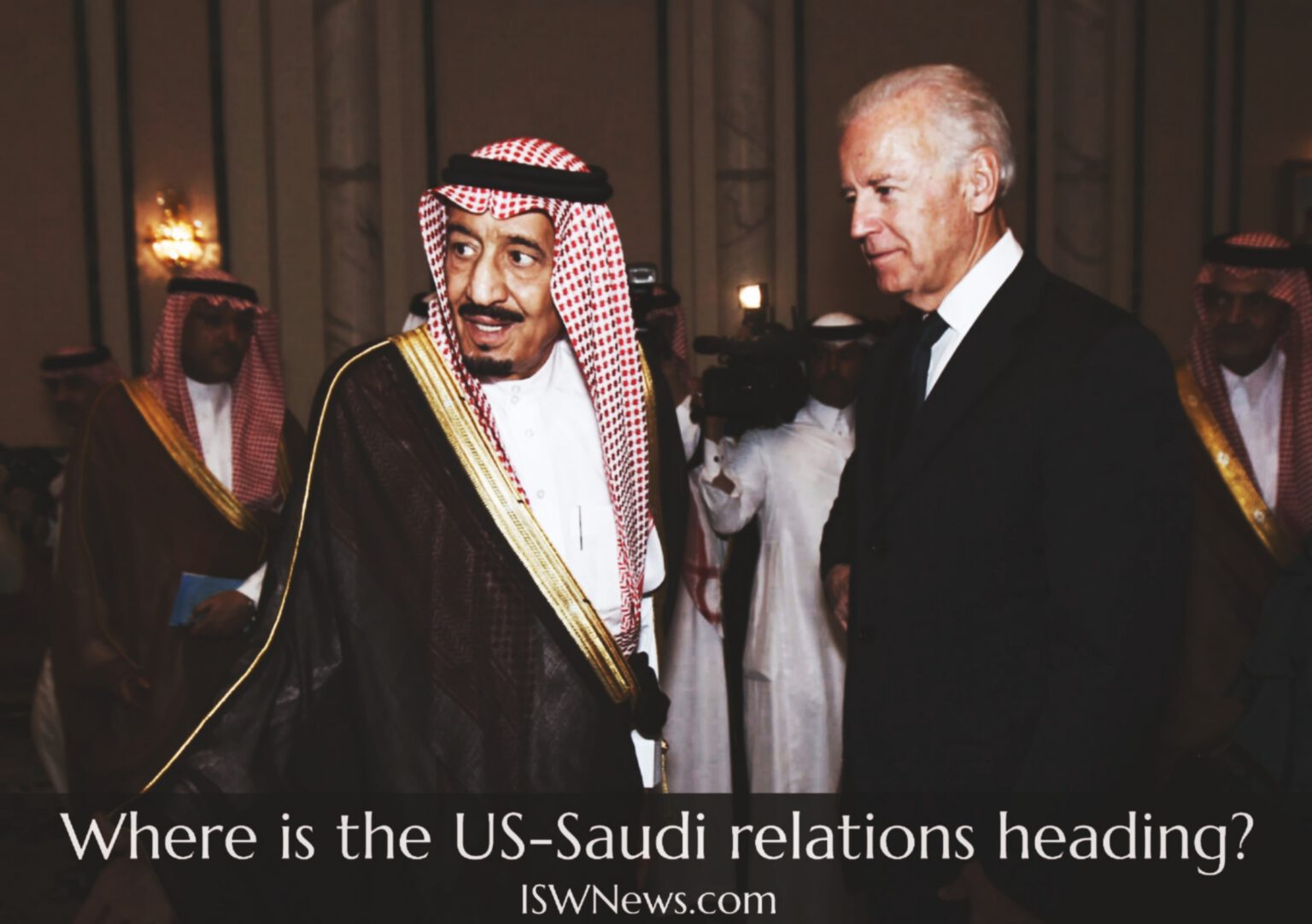

  • Where is the US-Saudi relations heading?

    Where is the US-Saudi relations heading?

    Jamal Khashoggi, a journalist critical of and opposed to the Saudi Crown Prince, went to the Saudi consulate in Istanbul, Turkey, in October 2, 2018 for an administrative job. He was mysteriously killed and his body was never found.

    The CIA blamed bin Salman for the killing after the incident, but the Trump administration, because of secret agreements with the Saudis, never took action against Saudi Crown Prince.
    But new US President Joseph Biden promised to punish Saudi leaders for Khashoggi’s assassination during his campaign, and now, despite the release of a report by the U.S. Director of National Intelligence that Muhammad bin Salman was fully responsible for the assassination, the Saudi Crown Prince was removed from sanctions!
    “We want to hold the Saudis accountable for their human rights abuses,” Biden said. If they want to interact and maintain relations with us, they must respect the human rights framework.
    However, the Biden government’s Treasury Department has so far limited itself to boycotting General Ahmad al-Assiri and Saudi Arabia’s Rapid Intervention Force, issuing the first warning to the Saudis.

    The reasons for Biden’s decision to impose sanctions on the Saudis and to remove Bin Salman from this punishment could be the following:

    1- This creates a vague situation in US-Saudi relations and jeopardizes US interests in Saudi Arabia. In a way, Biden has not canceled Trump’s arms deals with Al Saud for the sake of US economic interests, and has only issued a review order, indicating that Biden intends to take advantage of the Saudis again in this regard. Most of Trump’s contracts with Al Saud will take effect in 2025, and Biden will definitely play with this card in future negotiations with the Saudis.

    2- US officials in both the Trump and Biden administrations considered Saudi Arabia as a vital US partner in the so-called fight against terrorism in the West Asian region and said it was impossible to put them aside. In fact, the United States desperately needs Saudi Arabia to confront Iran and the Islamic resistance.

    3- Biden trying to show that he is a patience man in foreign policy. In a way, it can be said that Biden is following the political siege of Bin Salman in Saudi Arabia with a series of measures such as the apparent lifting of sanctions against Ansar Allah and the embargo on Saudi officials regarding the assassination of Khashoggi.
    US media outlets reported on the content of a telephone conversation between Biden and King Salman on regional issues and the end of the Yemeni war; But White House Public Relations Officer Kate Bedingfield said: “Biden told Saudi King Salman on February 25 that the United States would not tolerate his crown prince behavior.

    Therefore, US pressure for the release of ousted Saudi Crown Prince Mohammed bin Nayef and even his return to the post of Crown Prince is possible. Democratic politicians in the United States also see bin Nayef as a viable option for Saudi Arabia’s crown prince.

    In general, what emerges from the recent development between the Biden administration and Saudi Arabia is that US policy toward the Saudis has changed, but this change only includes the Democrats’ preferred program in the structure of the Saudi government, not the weakening of the Saudis in the region.

  • Revolution in Africa; Power Transfer in Sudan!

    Revolution in Africa; Power Transfer in Sudan!

    Hidden effort of the West in dividing and forming multiple power cores in Islamic World caused the battles to be crucial for different countries.
    In this context, Saudi Coalition after being defeated by Islamic Resistance(Iran, Syria, Iraq, Lebanon and Yemen), tries to confront Qatari axis which seems political and has spread to Algeria, Libya and Sudan.

    Sudan:
    After 4 months of people protesting against Omar al-Bashir Government (from bread and fuel price to participating in war against Yemen), the Army occupying Omar al-Bashir’s Palace and Islamic Movement(close to Omar al-Bashir) and other official buildings, cancelled the Government and Parliament in a statement.
    Sudan Army assigned a military council as head of a two years transition government.
    Sudan was cutting ties with Iran, getting closer to Al Saud and coalescing with them in war against Yemen and AnsarAllah in recent years. On the other hand, negotiating with USA to lift some sanctions which was halted in the next step. They accused US prerequisites and return of the sanctions. The result of these political chaos was army’s coup.

    Algeria:
    Political stance of Abdelaziz Bouteflika was to collaborate with Islamic groups (close to Muslim Brotherhood) which resulted in opposing Saudi stances mainly.

    Algerians set supporting Palestinian as a primary goal, supported Assad in Syrian war, which resulted in not having Muslim Brotherhood in election and unlike most countries do not consider Hezbollah a terrorist group.
    Algeria does not have troops in Saudi Coalition and opposes war against Yemen. They have strong financial ties with Turkey and opposes sanctions of Qatar and has ties with Qatar.
    Algeria accuses Saudi for oil’s unstable price and opposes Saudi in OPEC. So it is obvious Algeria has the potential for Arab Spring and substantial political changes which started by Bouteflika resignation.
    Confrontations between Islamic powers have intensified and leaders of the countries trying to act according to their own interests and sometimes forget about the threat of West against Islamic World.

    Conclusion:
    Abdelaziz Bouteflika resignation after 20 years, General Haftar’s operation to claim Libya and oust the Government of National Accord, and now coup or forced power transfer in Sudan and forcing Omar al-Bashir to resign after 30 years, they all show a new Arab Spring is arising under support of Saudi Arabia and Emirates against Qatar.
    African countries with their rich resources, independent of their political stance, are always interesting to Al Saud and Al Nahyan and we see that Omar al-Bashir after cutting ties with Iran, fighting against Ansar Allah and even having open doors policies and having ties with USA could not hold his power and lost to his mistakes.
    Qatar, Turkey, Tunisia, Palestine, Eritrea and etc. can be future targets for Saudi Coalition changes; the most important of which is gaining power against Islamic Resistance.