History:
The Islamic Republic of Iran, as the first purchaser of the BGM-71 TOW missile in 1971, launched a repair and assembly line for BGM-71TOW and FGM-77A Dragon missiles in cooperation with Emerson Energy Systems and Hughes Missile Systems at the Iran Electronics Industries (IEI). In May 1975, the project of joint production of BGM-71TOW and AGM-65 Maverick missiles were stalled due to disagreements over pricing issue. Following the victory of the Islamic Revolution in 1979, negotiations were completely halted and the United States did not allow technology transfer to the Islamic Republic of Iran.
During the Holy Defense (Iran-Iraq War of 1980 to 1988), the Islamic Republic had a great need for anti-tank missiles to counter the massive armor of the Ba’athist Iraqi army. Iran’s initial inventory of anti-armor missiles was TOW missiles, which was added to by purchasing Malyutka (9M14 Malyutka) missiles from the black market. The Iranian fighters were very satisfied with TOW missiles and they stated a success rate of 95%. Therefore, Iran proceeded to reverse engineer TOW missiles.
The Toophan missile and the experiences gained from this missile were used in the Sadid-1 missile and afterward, this success continued in the Sadid and Ghaem precision-guided bomb families.
Design:
As stated, the Toophan missile is designed and manufactured based on the US-made BGM-71 TOW anti-armor missile. The Toophan anti-armor missile is packaged inside a disposable tube and this tube is loaded onto the launcher at the time of firing. Toophan can be fired from two types of ground-based and air-based missile launchers.
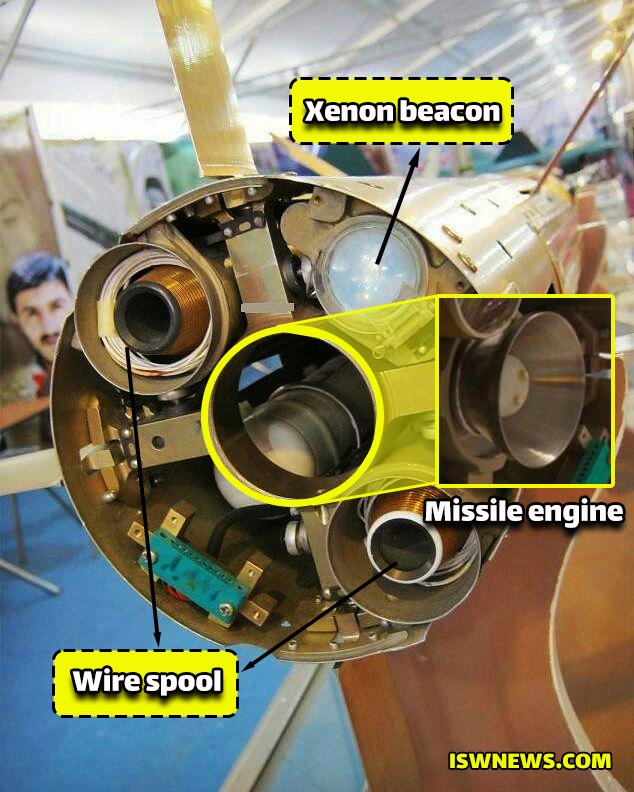
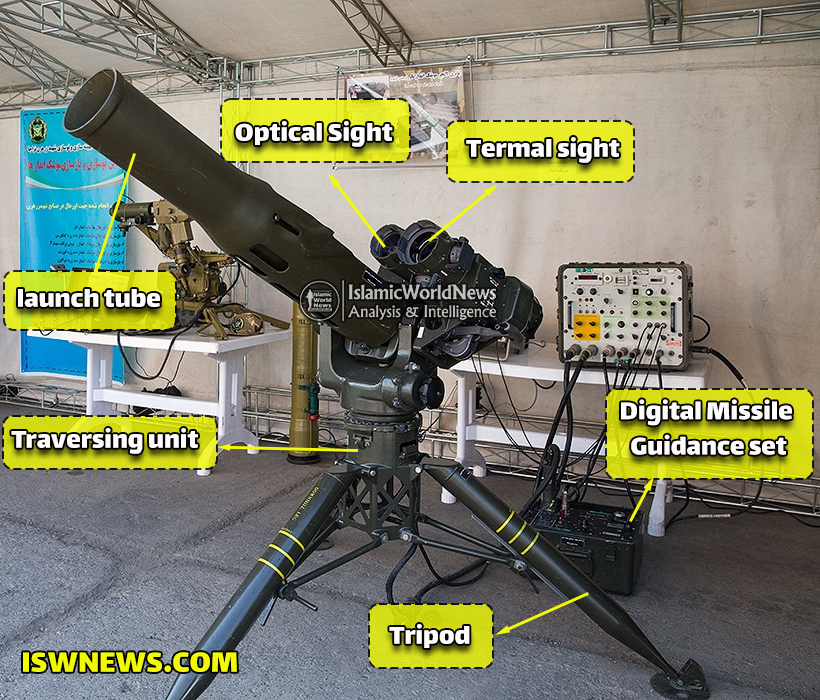
The ground-based missile launcher is installed on various vehicles, armored personnel carriers, tanks and vessels and it consists of a tripod, electro-optic sight, missile-containing tube, and command center. The electro-optic sight consists of two lenses; one for the daytime camera to detect targets during the day and the other for thermal vision to track the xenon lamp at the end of the Toofan missile. The daytime camera can be replaced with a night vision or another thermal camera to detect targets at night as well.
The Toophan anti-armor missile family uses semi-automatic command to line of sight (SACLOS) guidance. In this type of guidance, the operator must keep the camera on the target until the missile hits the target. The presence of a xenon lamp is for determining the position of the missile and in this way, the thermal lens determines the position of the missile and the main camera determines the position of the target and both pieces of information are sent to the control center (Digital Missile Guidance Set-DMGS); then, this center processes the received information. It sends the necessary commands for path correction via wire to the missile and the missile also corrects its path based on those commands.
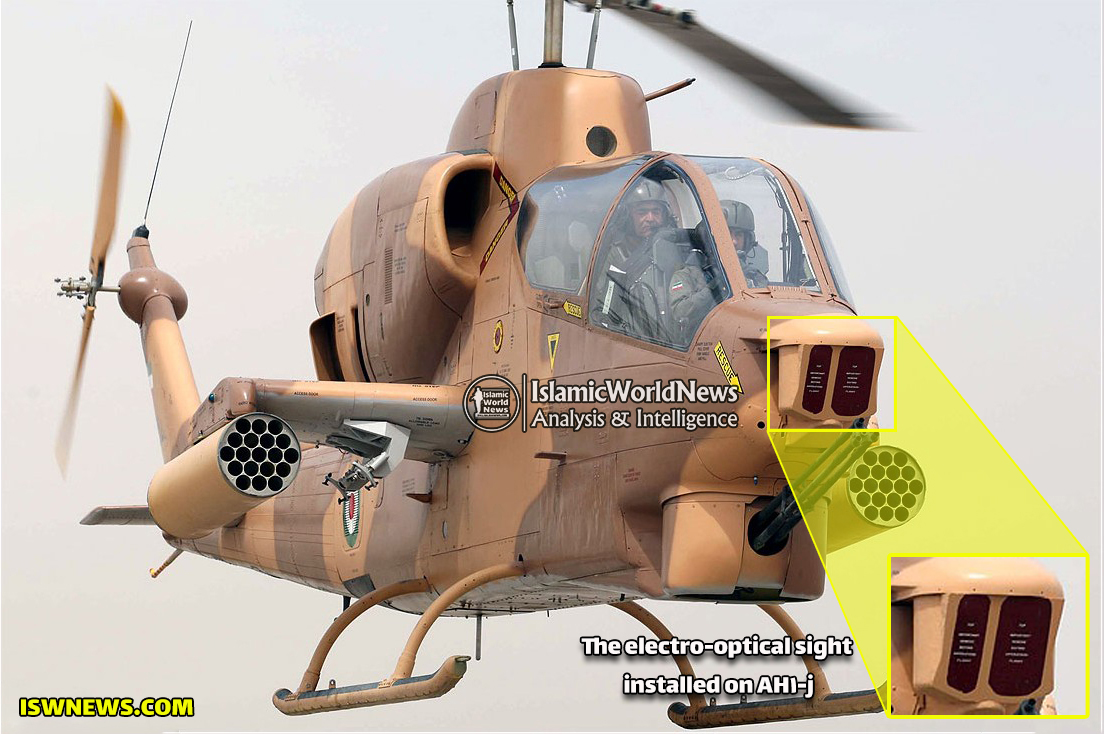
As mentioned, the Toophan missile has an air-based launcher platform. Some AH-1J International helicopters of the Islamic Republic of Iran Air Force have the ability to carry and launch TOW missiles, which are known as Tow-Cobra. This helicopter needs an electro-optic sight called M65 or Telescopic Sight Unit for firing TOW missiles, which has a 13x zoom capacity and is installed in the nose of the helicopter. This sight actually has the same application as an electro-optic sight mounted on a ground tripod. The helicopter’s electro-optic sight first targets and then aims, and also sends information needed for path correction via wire to TOW by tracking missiles. In Iranian Toophan variant, exactly these steps are observed.
Types of Toophan missiles:
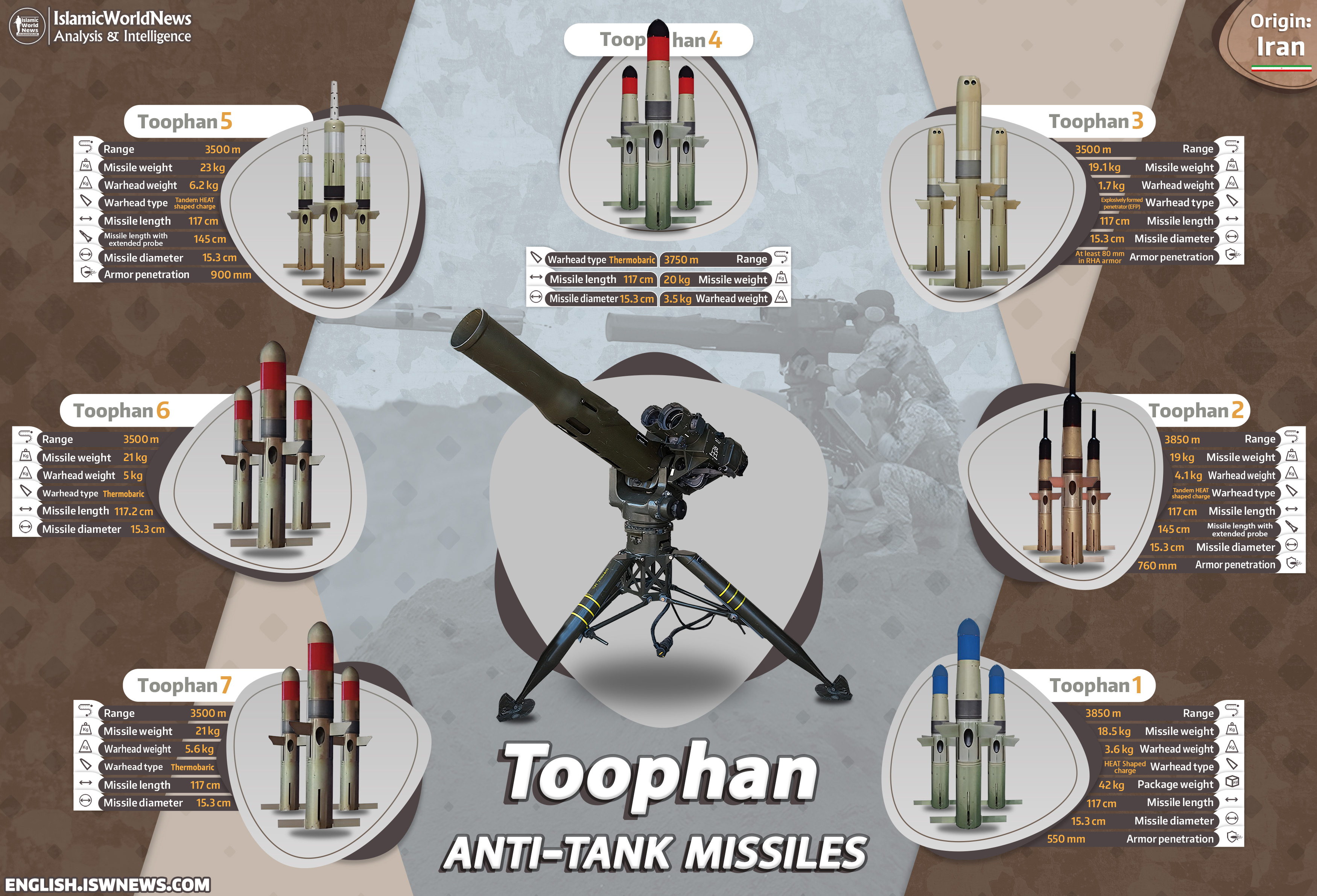
As it has been mentioned above, the Toophan missile family was planned to produce 11 types of missiles in the industries of the Ministry of Defense of the Islamic Republic of Iran, and we managed to find 10 specifications of the missiles, which are being explained underneath. Regarding the eleventh type of Toophan missile, we think it was a heavy upgrade based on the Spike model and the missile was renamed, which we will deal with at the end.
1- Toophan-1 missile:
It is a reverse-engineered BGM-71 TOW version B missile. The US variant has a range of 3,750 km and a penetration rate of 430 mm, while the Iranian Toophan-1 missile has a range of 3,850 km and a penetration rate of 550 mm.
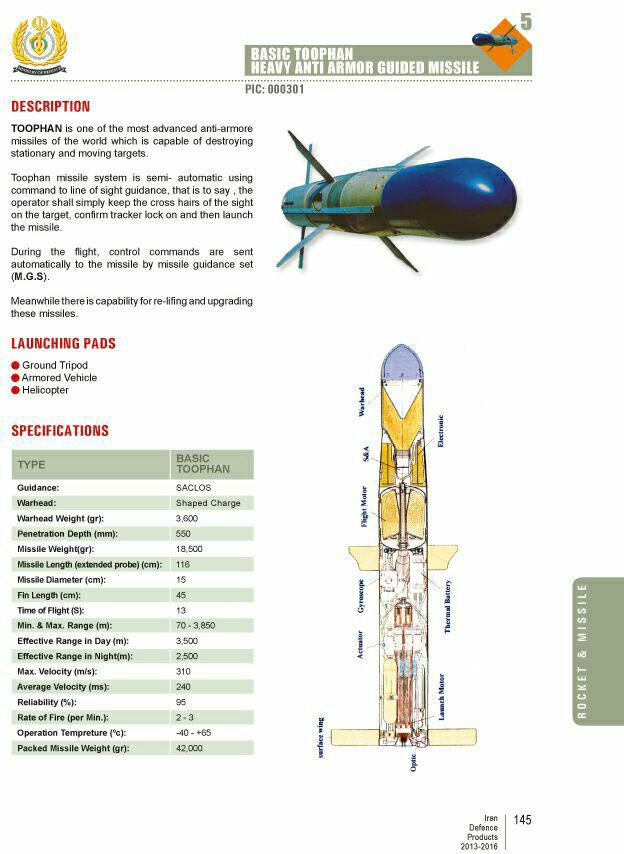
Specifications of Toophan-1 missile:
Maximum range: 3850 meters
Minimum range: 70 meters
Effective range: 3.5 km
Effective range at night: 2.5 km
Missile weight: 18.5 kg
Warhead weight: 3.6 kg
Type of warhead: HEAT shaped-charge
Package weight: 42 kg
Missile length: 117 cm
missile diameter: 15.3 cm
Armor penetration rate: 550 mm
2- Toophan-2 missile:
Toophan-2 was developed with the aim of increasing penetration rate, And by adding a penetrating extended probe and a heavier two-stage warhead, it not only gained the power to penetrate 760 mm rolled armor, but also has the ability to pass through all types of reactive armor. The extended probe in Toophan 2 missile has a small warhead to destroy the reactive armor so that the main warhead engages with the main armor. The extended probe is inside the missile, after firing it comes out of the tube, opens and is placed in its place as the missile head.
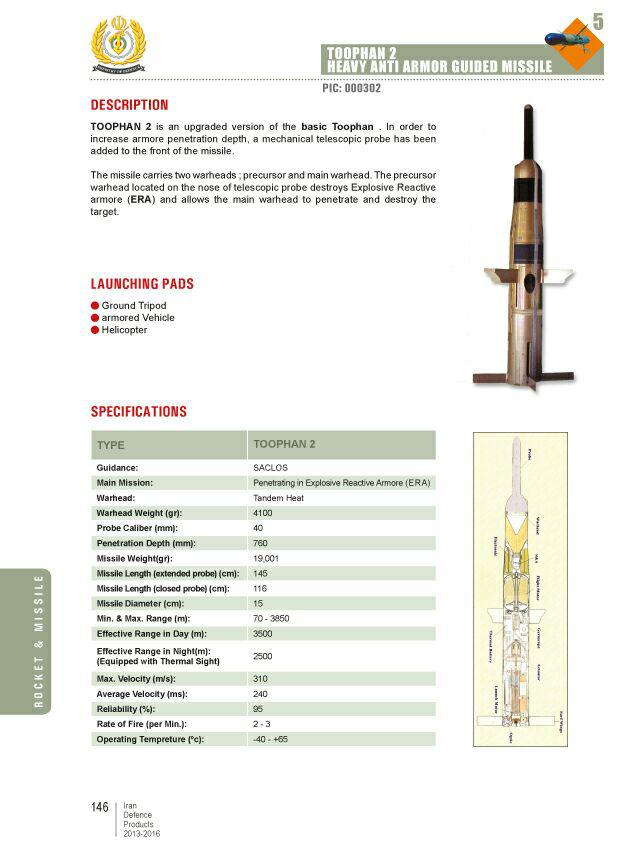
Specifications of Toophan-2 missile:
Maximum range: 3850 meters
Minimum range: 70 meters
Effective range: 3.5 km
Effective range at night: 2.5 km
Missile weight: 19 kg
Warhead weight: 4.1 kg
Type of warhead: Tandem HEAT shaped-charge
Missile length: 117 cm
Length of missile with the extended probe: 145 cm
Missile diameter: 15.3 cm
Armor penetration rate: 760 mm
3- Toophan-2M missile:
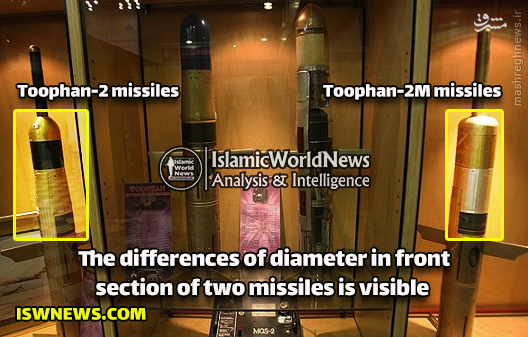
Iran’s defense industry sought to upgrade and develop the Toophan-2 missile, this led to the production of the Toophan-2M variant. This upgraded missile had the ability to penetrate 900 mm of armor. In the overall design of the Toophan-2 missile, the existence of an extended probe and a two-stage warhead has been preserved. The new missile has a larger nose diameter than its previous model due to carrying more explosives.
The specifications of Toophan-2M have not been published in full, but due to its similarity with the Toophan-2 variant, its specifications can be guessed to some extent.
Specifications of Toophan-2M missile:
Maximum range: 3850 meters
Minimum range: 70 meters
Effective range: 3.5 km
Effective range at night: 2.5 km
Missile weight: 21 kg
Warhead weight: 6.1 kg
Type of warhead: Tandem HEAT shaped-charge
Missile length: 117 cm
Length of missile with the extended probe: 145 cm
Missile diameter: 15.3 cm
Armor penetration rate: 900 mm
4- Toophan-3 top attack missile:
Toophan-3 is a special member of the Toophan anti-armor missile family. This missile attacks armored targets from above and attacks the weakest point of tanks. Top Attack anti-armor missiles have two mechanisms, the first type is diving on the target and the second type explodes on top of the target, which Toophan-3 is of the second type.
The Toophan-3 missile flies at a height of 2 to 3 meters above the ground and when it passes over the target, the missile’s sensors detect the target and give the command to detonate the Explosively Formed Penetrator (EFP) warhead. The EFP is a special type of shaped charge that deform a metal plate into a slug or rod shape and accelerate it toward the target.
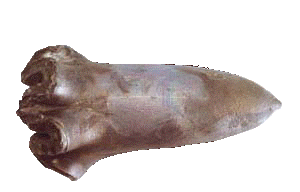
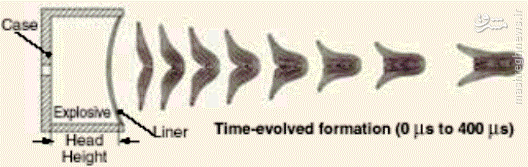
The advantage of using top attack missiles like Toophan-3 is that they can attack targets behind hills or obstacles.
Toophan-3, like other members of the Toophan anti-armor family, uses line-of-sight guidance (SACLOS) and uses wires to transmit course correction information.
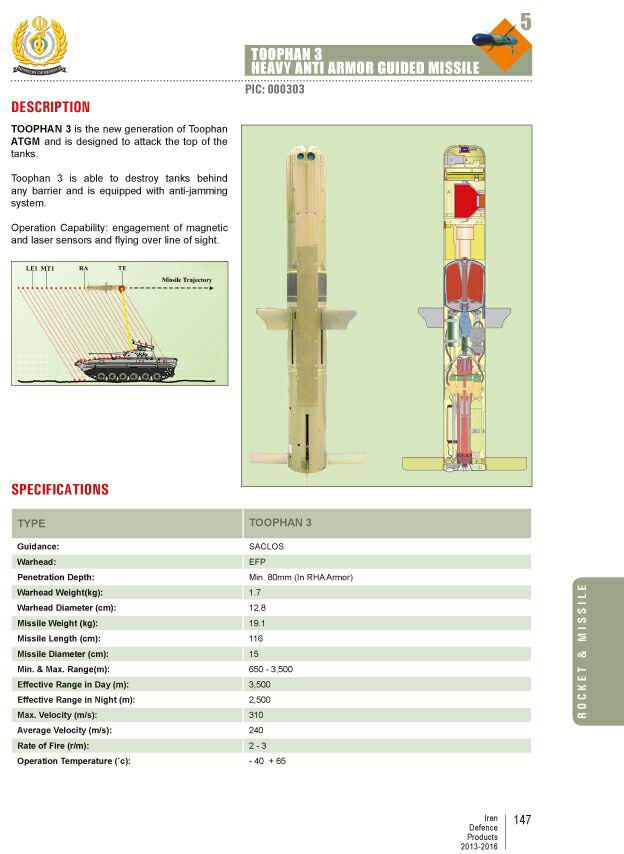
Specifications of Toophan-3 missile:
Maximum range: 3500 meters
Minimum range: 650 meters
Effective range: 3.5 km
Effective range at night: 2.5 km
Missile weight: 19.1 kg
Warhead weight: 1.7 kg
Warhead type: EFP
Missile length: 117 cm
Missile diameter: 15.3 cm
Armor penetration rate: at least 80 mm in armor
5- Toophan-3M top attack missile:
Like the Toophan-3 missile, this missile is a top attack missile and uses the EFP warhead and SACLOS guidance. The range of this variant has increased to 3,750 meters and the minimum penetration power has increased from 80 mm to 150 mm.
Specifications of Toophan-3M missile:
Maximum range: 3750 meters
Minimum range: 100 meters
Effective range: 3.5 km
Effective range at night: 2.5 km
Missile weight: 21.5 kg
Warhead weight: 4 kg
Warhead type: EFP
Missile length: 117 cm
Missile diameter: 15.3 cm
Armor penetration rate : at least 150 mm in armor
6- Toophan-4 missile:
Toophan-4 is the first member of the Toophan anti-armor family that is equipped with a thermobaric warhead. This variant also uses SACLOS method for guidance. Toophan 4 missile was displayed for the first time at the Baghdad Defense Exhibition in 2017.
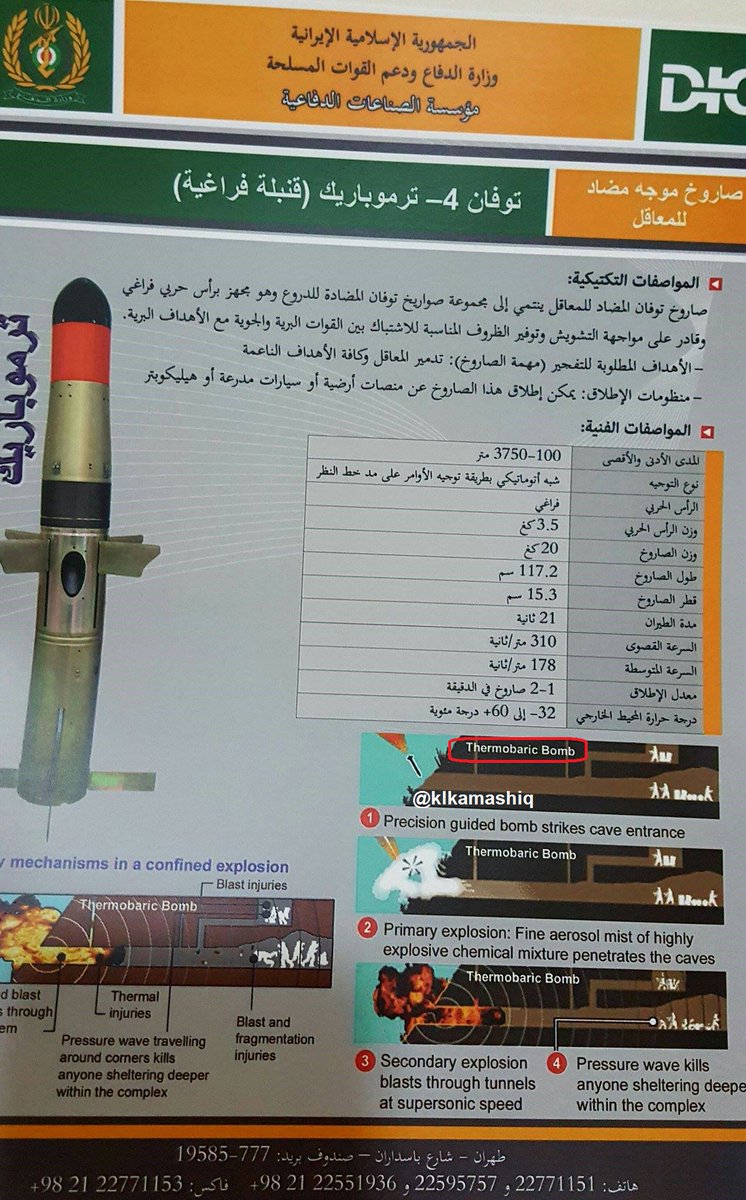
Specifications of Toophan-4 missile:
Maximum range: 3750 meters
Minimum range: 100 meters
Effective range: 3.5 km
Effective range at night: 2.5 km
Missile weight: 20 kg
Warhead weight: 3.5 kg
Warhead type: Thermobaric
Missile length: 117 cm
Missile diameter: 15.3 cm
7- Toophan-5 missile:
Like the Toophan-2 missile, Toophan-5 is designed to penetrate explosive reactive armor (ERA). This missile also has an extended probe containing explosives and a larger warhead to be able to penetrate reactive armor and pass through the main armor. But Toophan-5 uses a type of laser beam riding for guidance.
Another difference between Toophan-5 and previous missiles is that it has three rows of fins, one row is located in the beginning of the missile and near its tip, and the other two rows are placed in the middle and end of the missile like other types of Toophan. The presence of this type of fins makes the missile react faster and make it more stable during flight. It seems that the main reason for using three fin rows is for its type of guidance.
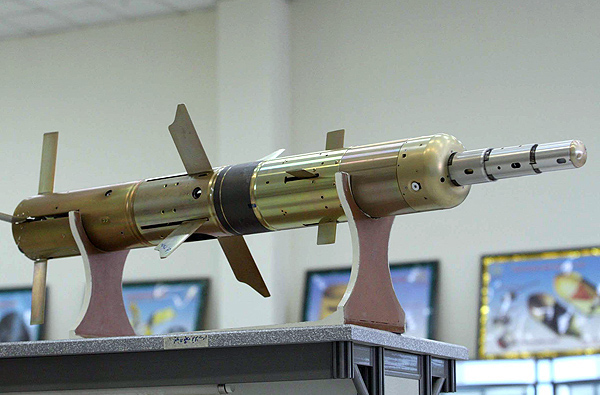
Due to the type of guidance in Toophan-5 missile, a different launcher is used to fire and guide this missile. This launcher uses three types of lenses. One is for the day vision camera, which is used to find targets during the day. The second lens is for the thermal vision camera, which is used for targeting at night or for targeting after a smoke screen. The third lens is intended to shine the laser beam to the end of the missile during flight and guide it towards the target; This beam is irradiated to the center of the target selected by the operator.
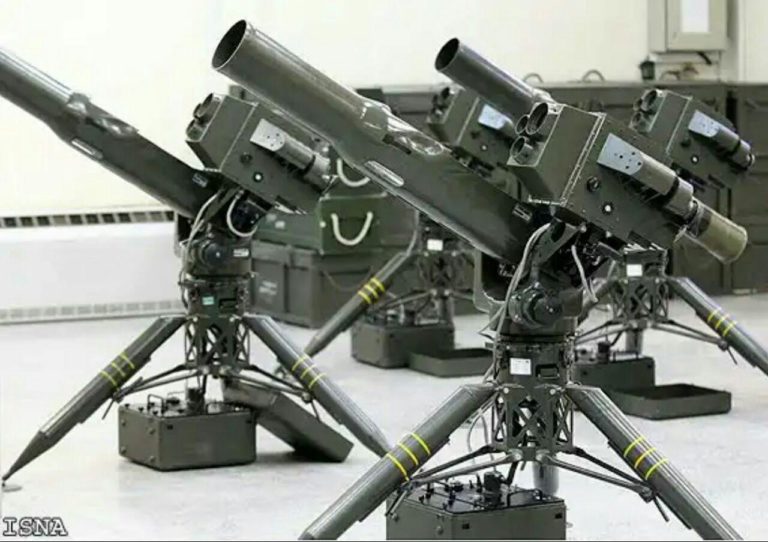
It is worth mentioning that the wire guidance type of Toophan-5 missile was also displayed at the Baghdad International Exhibition in 2017, which indicates that the cheaper version the missile is also in production line.
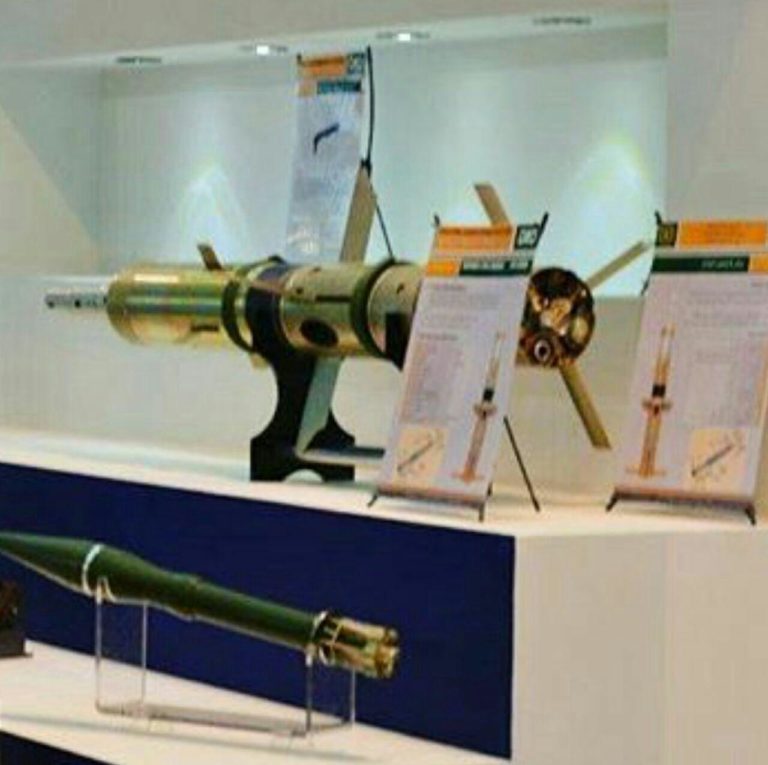
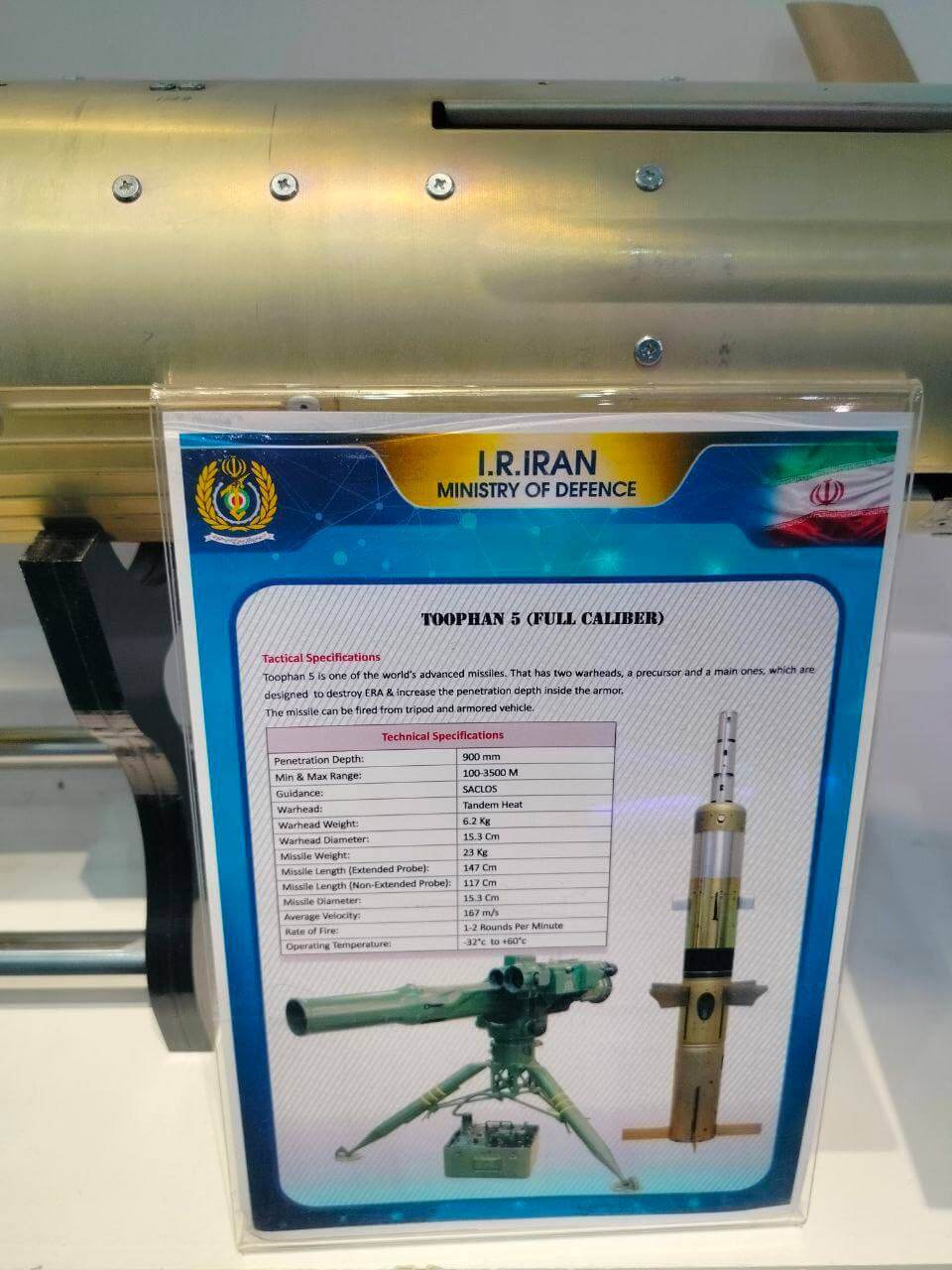
Specifications of Toophan-5 missile:
Maximum range: 3500 meters
Minimum range: 100 meters
Effective range: 3.5 km
Effective range at night: 2.5 km
Missile weight: 23 kg
Warhead weight: 6.2 kg
Type of warhead: Tandem HEAT shaped-charge
Missile length: 117 cm
Length of the missile with the extended probe: 145 cm
Missile diameter: 15.3 cm
Armor penetration: 900 mm
8- Toophan-6 missile:
Toophan-6 was first unveiled at the 2017 Baghdad International Exhibition. Like Toophan-4, this missile uses a thermobaric warhead and wire guidance. Toophan-6 uses a 5 kg warhead, but Toophan-4 uses a 3.5 kg warhead. This missile can be fired from the conventional tripods, all types of vehicles and helicopters.
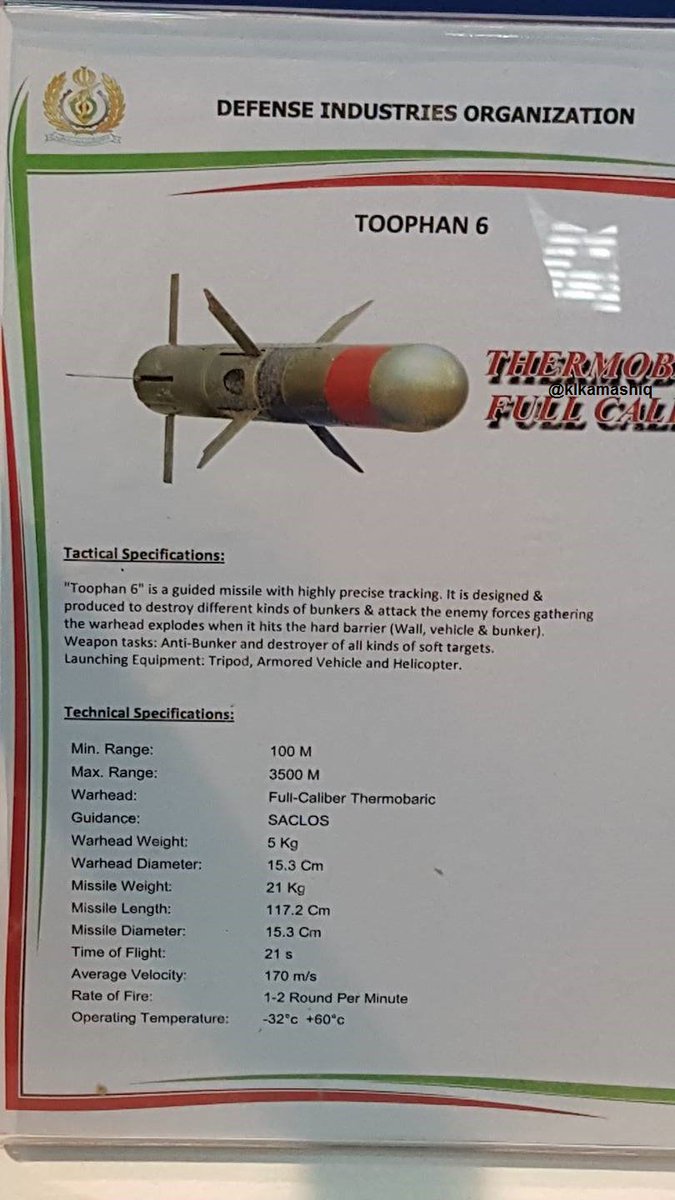
Specifications of Toophan-6 missile:
Maximum range: 3500 meters
Minimum range: 100 meters
Effective range: 3.5 km
Effective range at night: 2.5 km
Missile weight: 21 kg
Warhead weight: 5 kg
Warhead type: Thermobaric
Missile length: 117.2 cm
Missile diameter: 15.3 cm
9- Toophan-7 missile:
Toophan-7 is the third thermobaric member of the Toophan family, which was introduced after Toophan-4 with 3.5 kg and Toophan-6 with 5 kg of explosives. Toophan-7 with a thermobaric warhead and shrapnel fragment capability has 5.6 kg of explosives. The missile uses semi-automatic command-to-line-of-sight (SACLOS) guidance by wire.
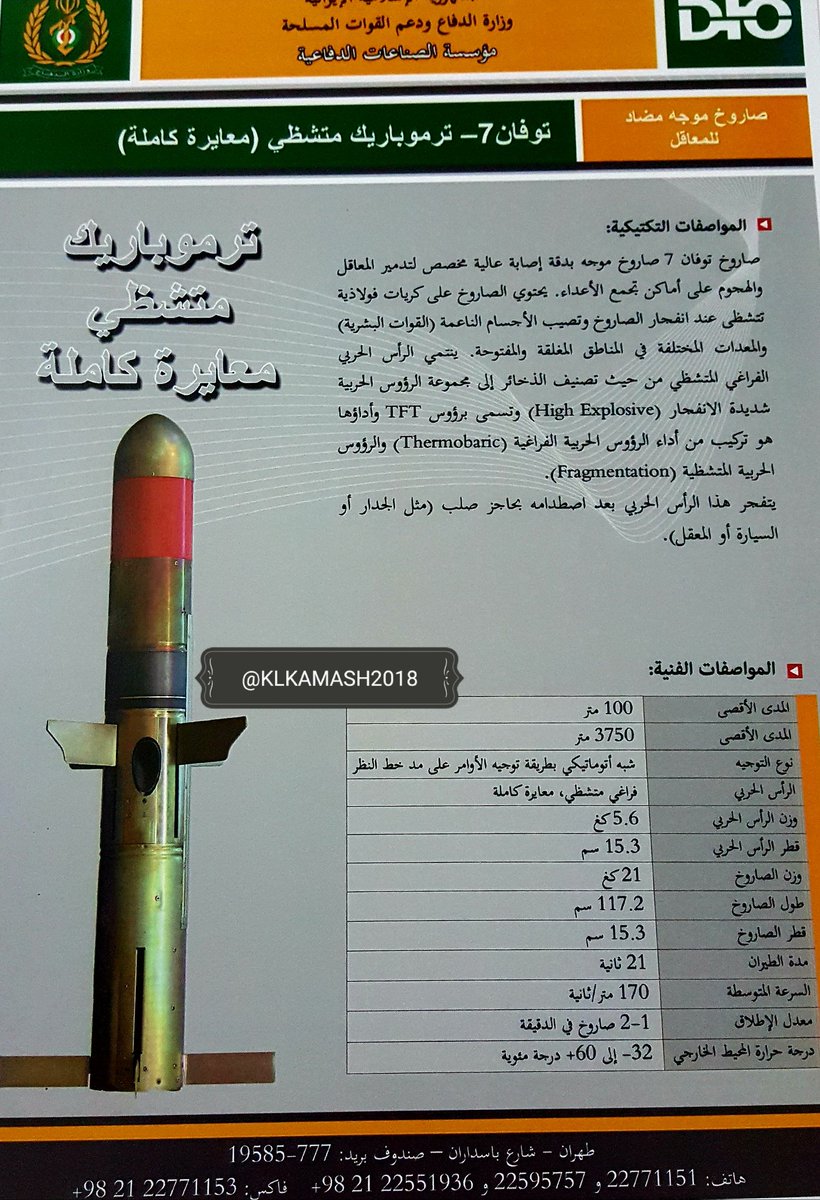
Specifications of Toophan-7 missile:
Maximum range: 3500 meters
Minimum range: 100 meters
Effective range: 3.5 km
Effective range at night: 2.5 km
Missile weight: 21 kg
Warhead weight: 5.6 kg
Warhead type: thermobaric
Missile length: 117 cm
Missile diameter: 15.3 cm
10- Ghaem anti-helicopter missile:
Ghaem or Qaem anti-helicopter missile is a semi-heavy guided missile that is intended for use against UAVs and low flying or stationary helicopters. This missile looks very similar to the Toophan-1 missile and it is difficult to distinguish it.
The exact specifications of this missile have not been revealed, but it is said that it’s a laser-guided missile and is resistant to electronic warfare.
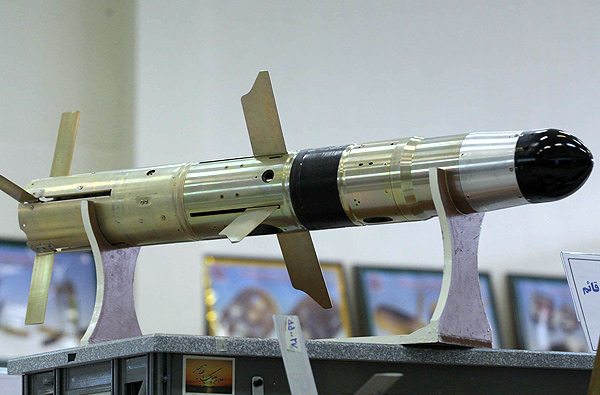
Ghaem-M missile:
This missile, like the Ghaem missile, is an anti-helicopter missile and has the ability to destroy air targets with low speed and low altitude, especially attack helicopters. with the difference that this missile uses several proximity fuses that improve its performance. Also, in this variant, a fragmentation warhead with 500 shrapnels and a weight of 1.7 kg was used. These two changes have been made in order to cause more damage if the missile does not hit the target directly.
In the published images, it seems that the engine gas output in the middle part of the missile has become larger, which indicates the possibility of using a larger engine to reach a range of 6 km. Also, there is a laser beam receiver at the end of the missile, which confirms the laser beam guidance method like Tofan-5 missile. Unfortunately, the altitude of fire is not mentioned in the published information about this missile. But if the altitude of fire is 5 km, it will be able to deal with most drones and helicopters.
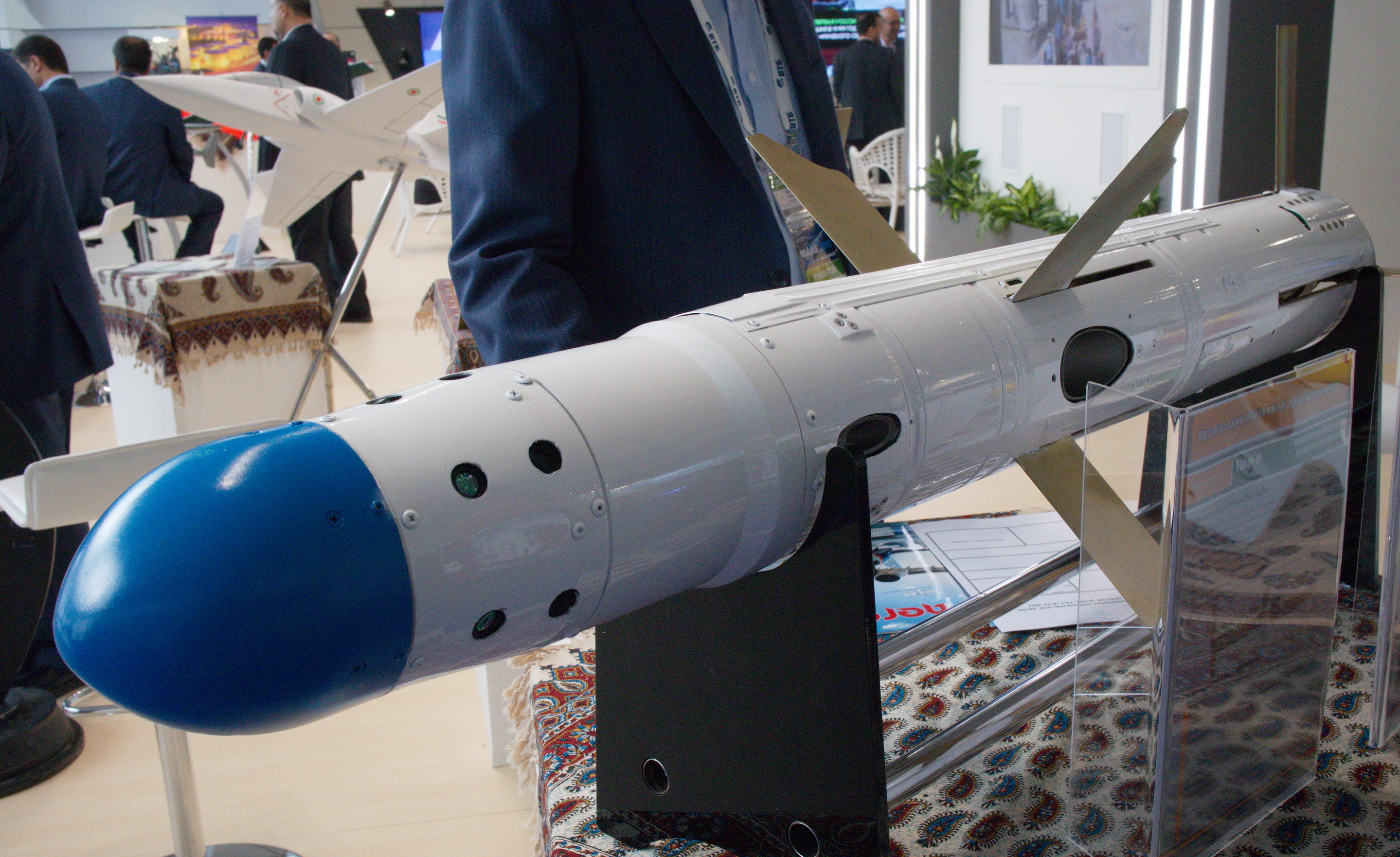
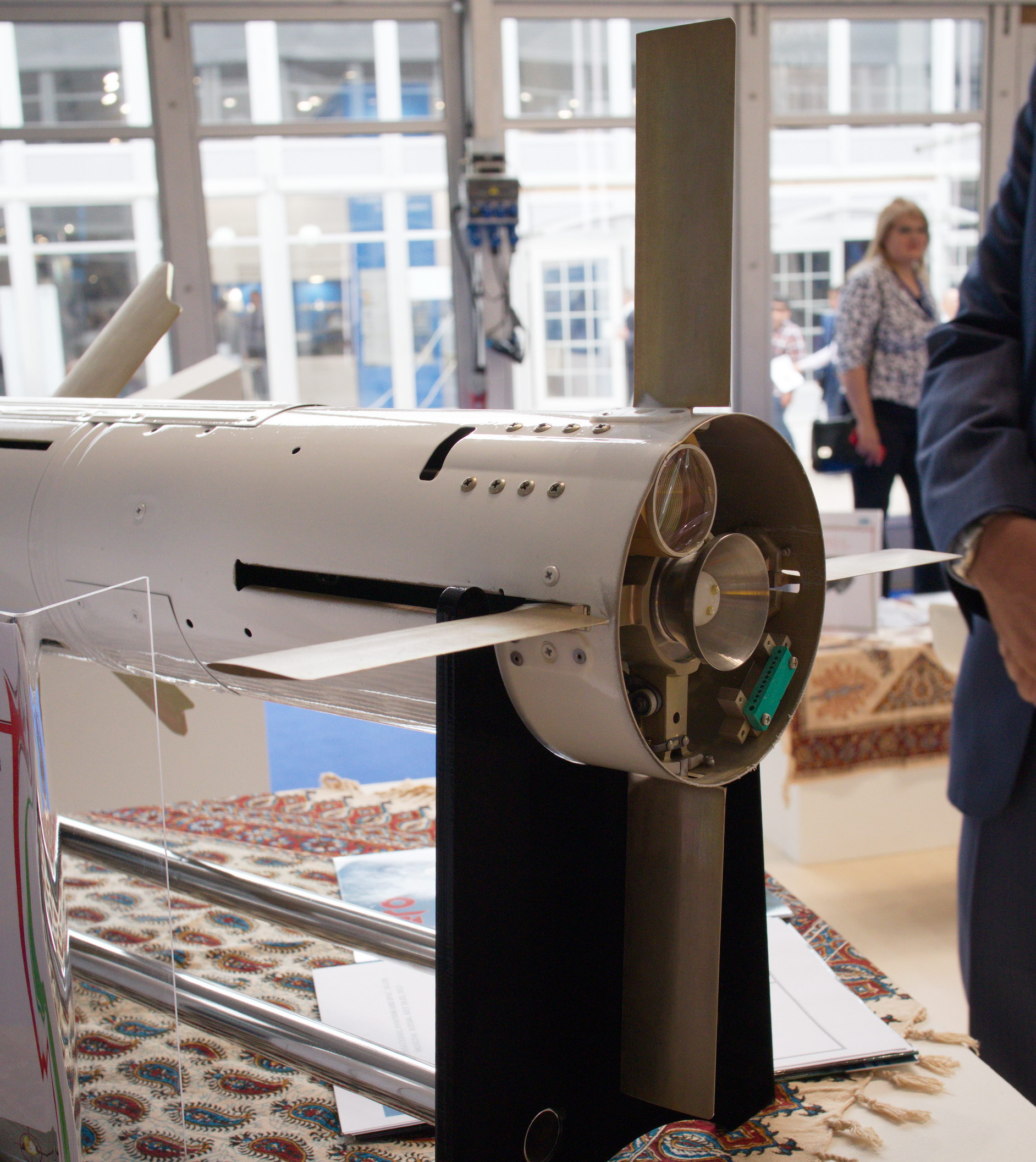
Specifications of Ghaem-M missile:
Maximum range: 6000 meters
Minimum range: 500 meters
Missile weight: 19.5 kg
Warhead weight: 1.7 kg
Type of warhead: Fragmentation (500 shrapnels)
Missile length: 116 cm
Missile diameter: 15.3 cm
Maximum speed: 310 meters per second
Average speed: 240 meters per second
11- Almas anti-tank missile:
Almas missile is an anti-armor missile that has always been considered as an independent category. However, when it comes to looking at the configuration of the Almas anti-tank missile, we will realize the great similarity in the essence of the Almas missile and the Toofan missile. Both Toophan and Almas missiles have two rows of wings and an engine in the middle section, with hot gas from the engine coming out next to the middle wings.
In Almas missile, the middle wings are closed forward while in Toophan missiles these wings are closed backward. In Almas missile, the middle wings have a simple shape, but in Toophan missile, the shape of the middle wings is special.
Almas anti-tank missile is a top-attack missile with fire and forget capability. The guidance method of Almas missile is similar to the first type, using a camera on a tripod, tracking and targeting are accomplished and then the missile is fired towards a target and the missile independently goes towards the target and attacks it from above.
It seems that with the addition of this generation and its very significant changes compared to the base model of Toophan, it was necessary to change its name and end the Toophan missile project.

More images of Toophan ATGMs:
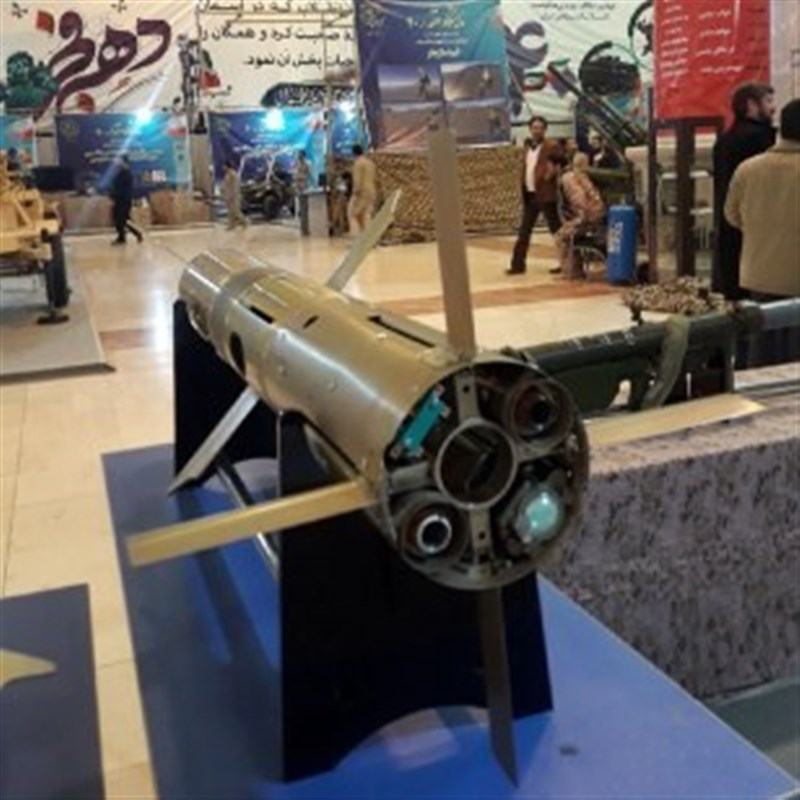
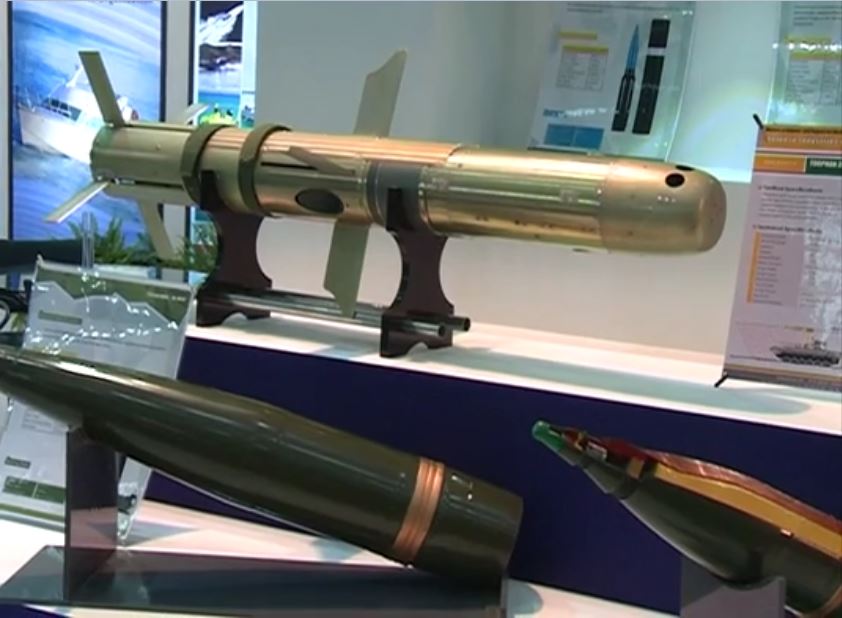
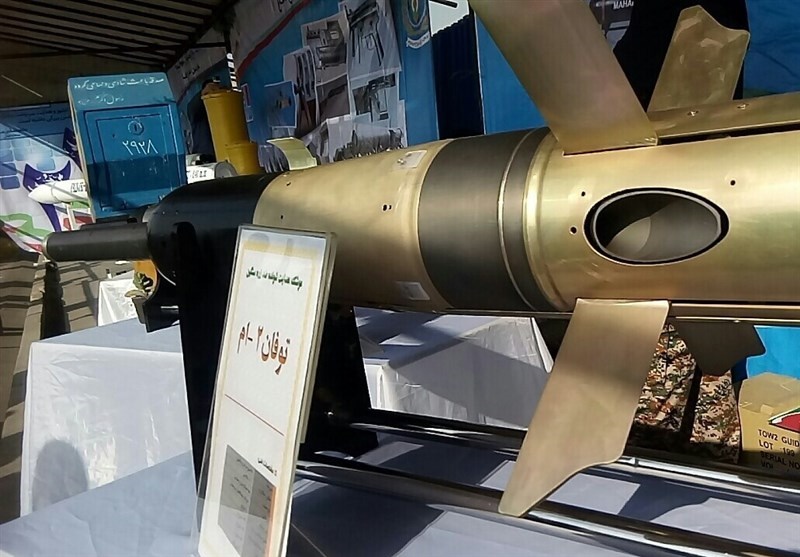
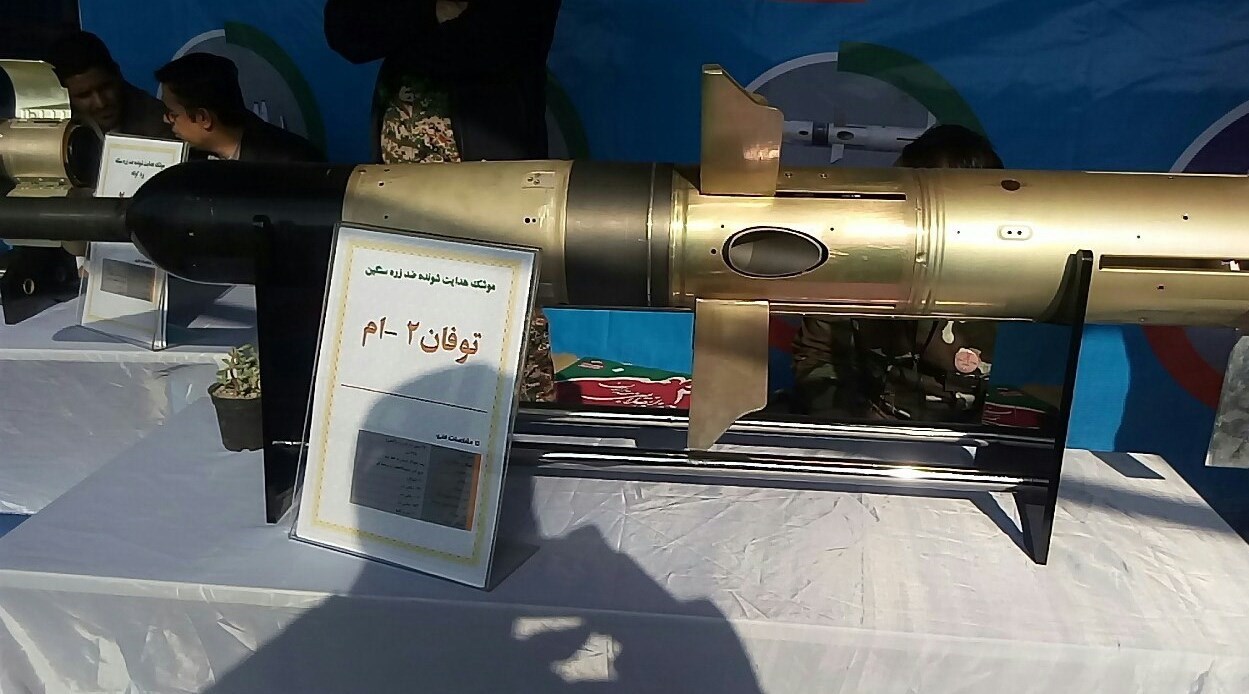
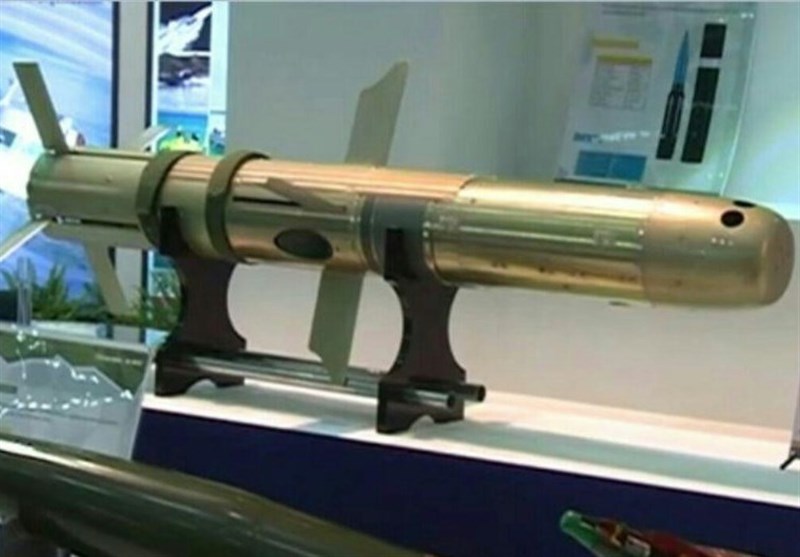
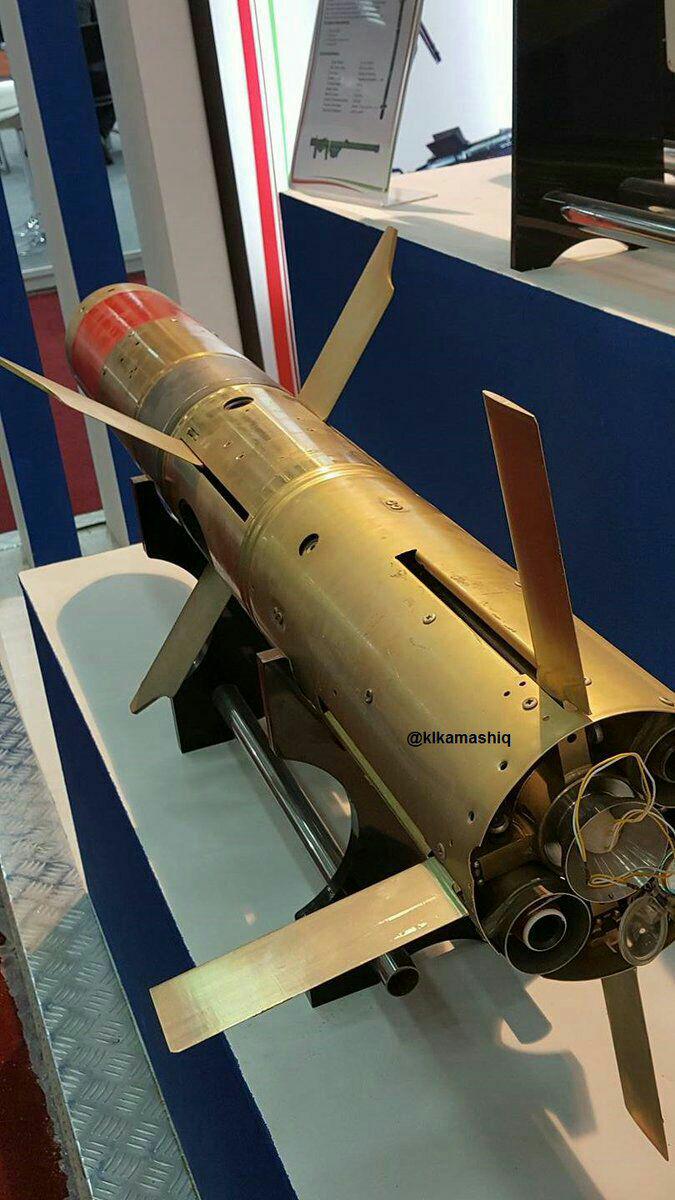
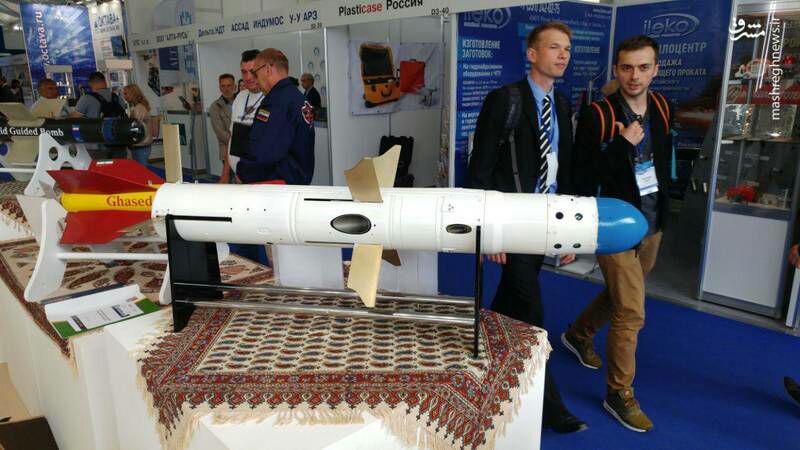
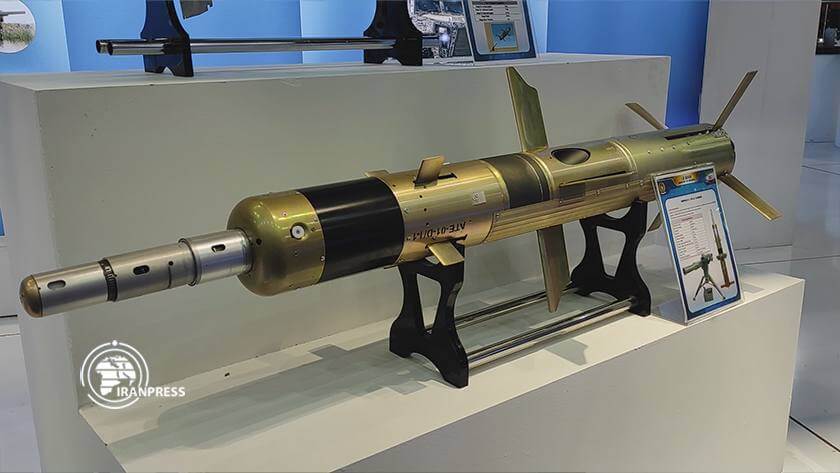

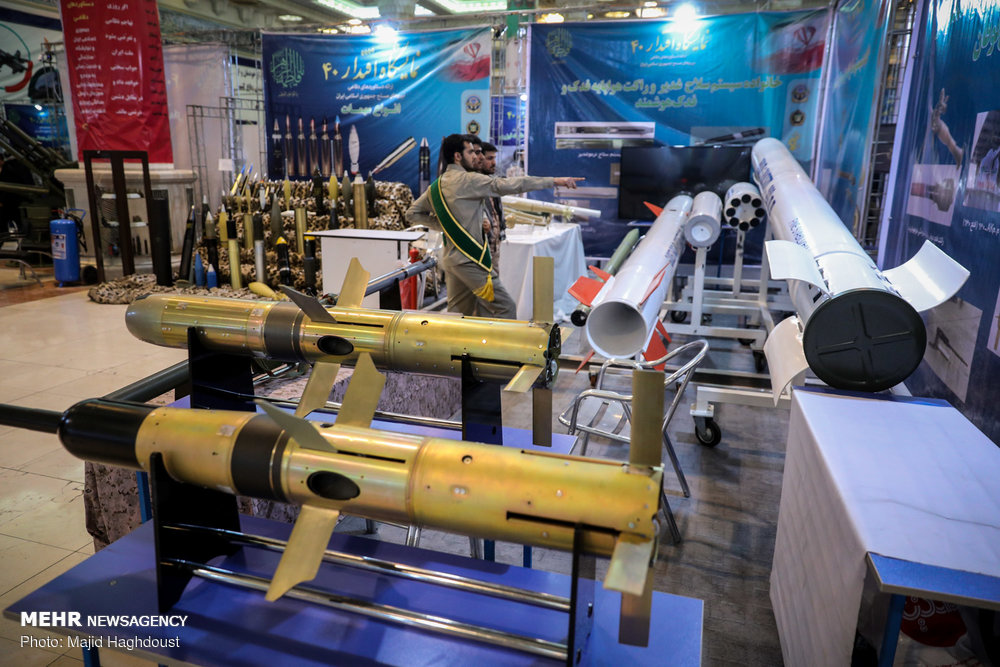
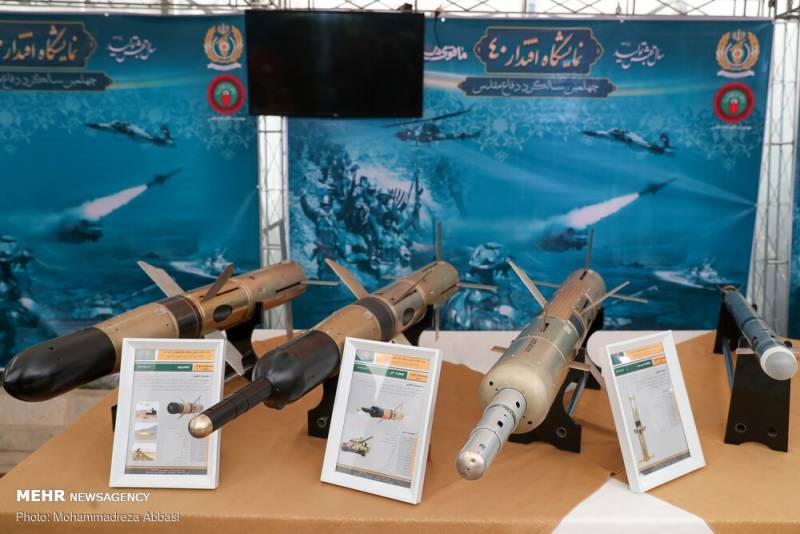
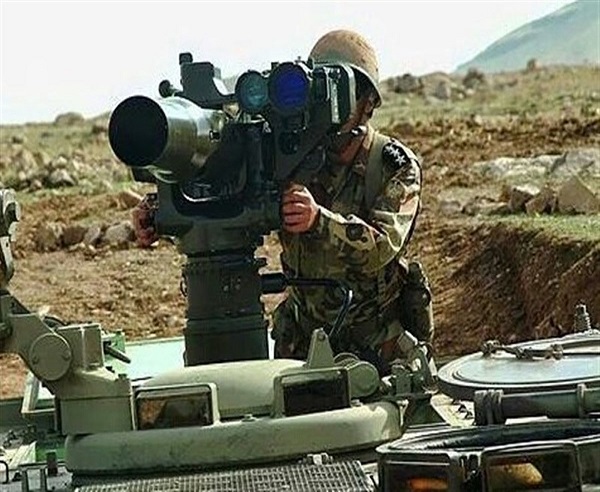
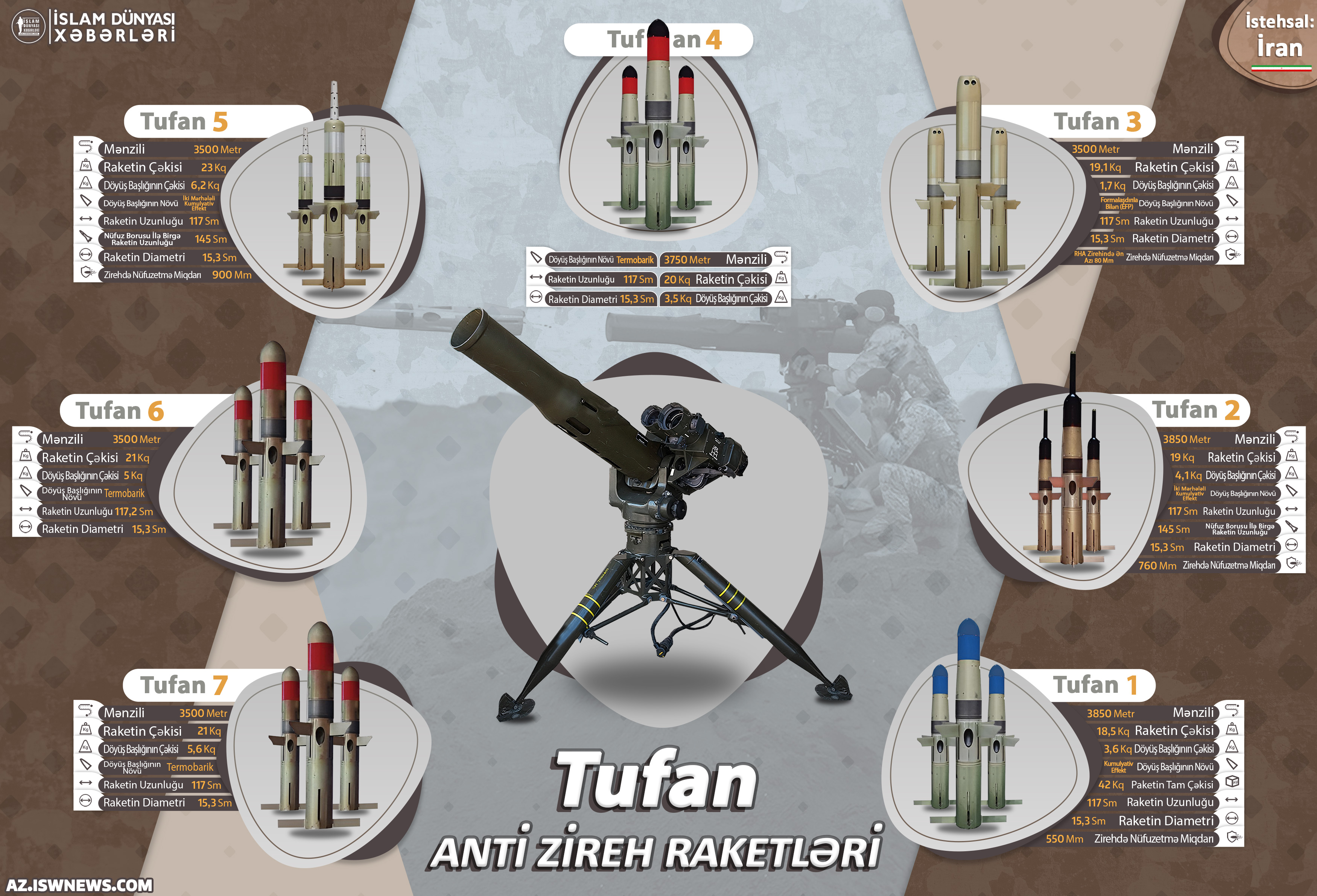
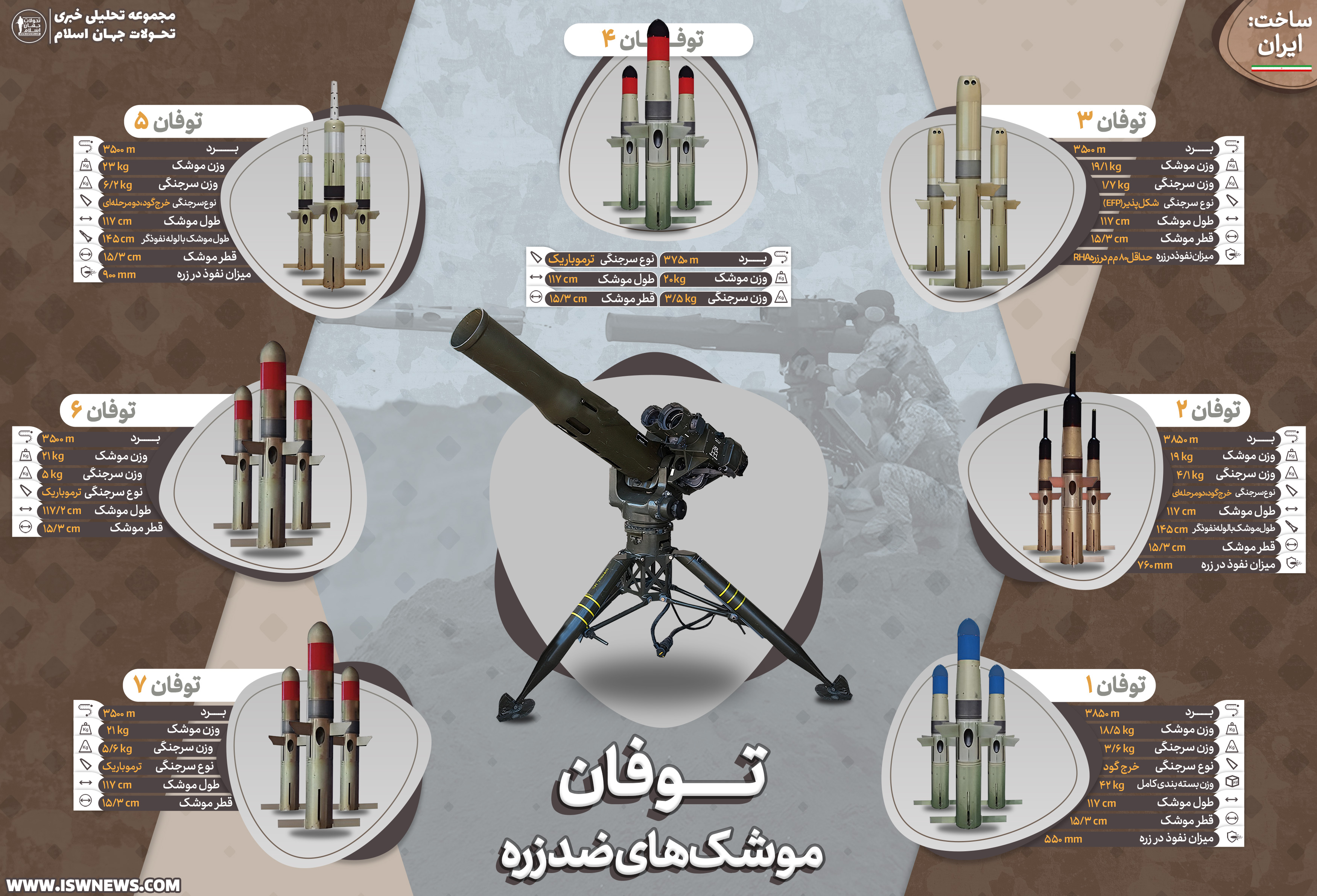
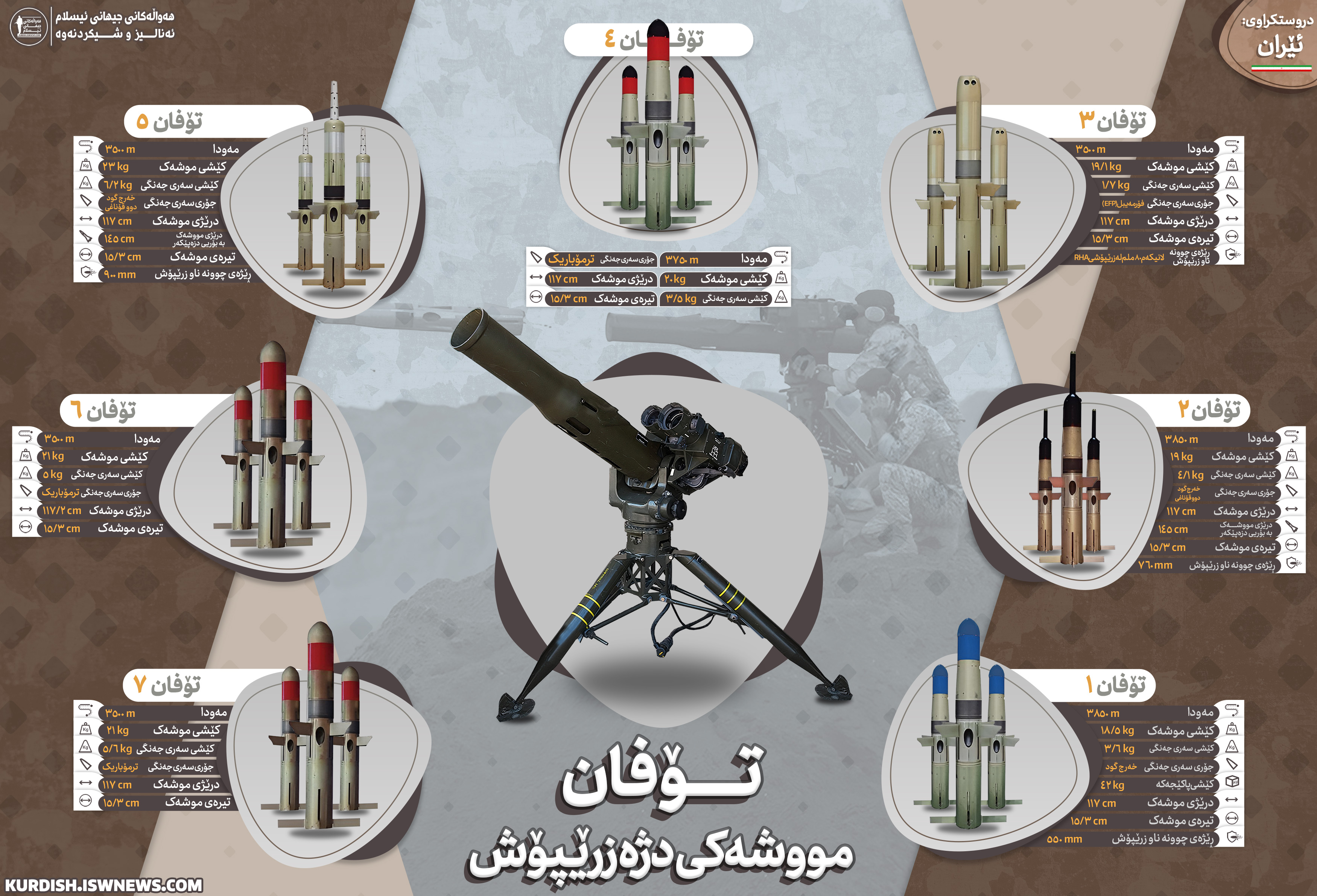
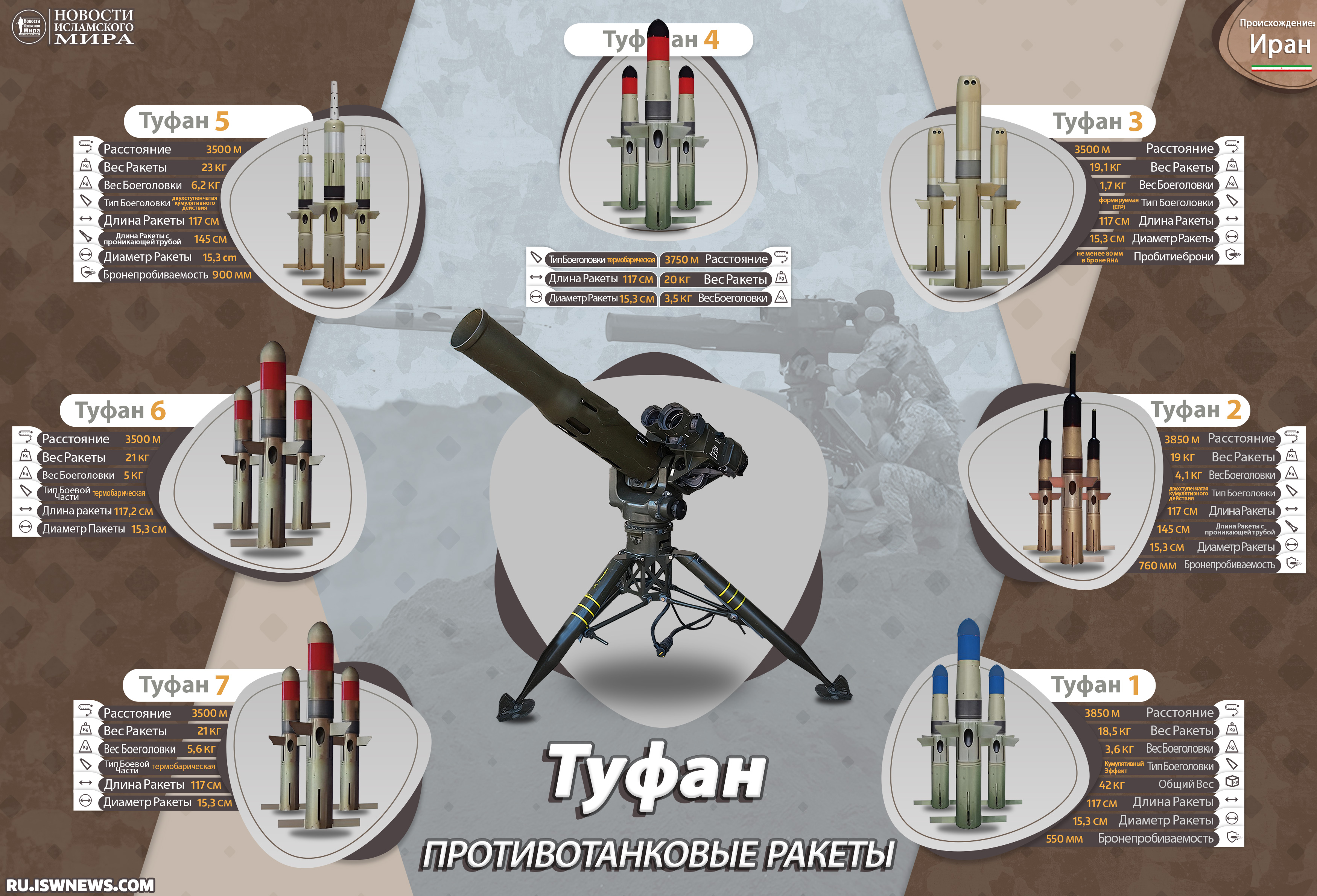
Infographics of Toophan anti-armor missiles in Arabic (صواريخ طوفان المضادة للدروع), Russian (Противотанковые ракеты Туфан), Kurdish, Azeri (Tufan Anti Zireh Raketləri), Persian (موشک ضد زره توفان) and Hebrew (טופאן טילים נגד טנקים):
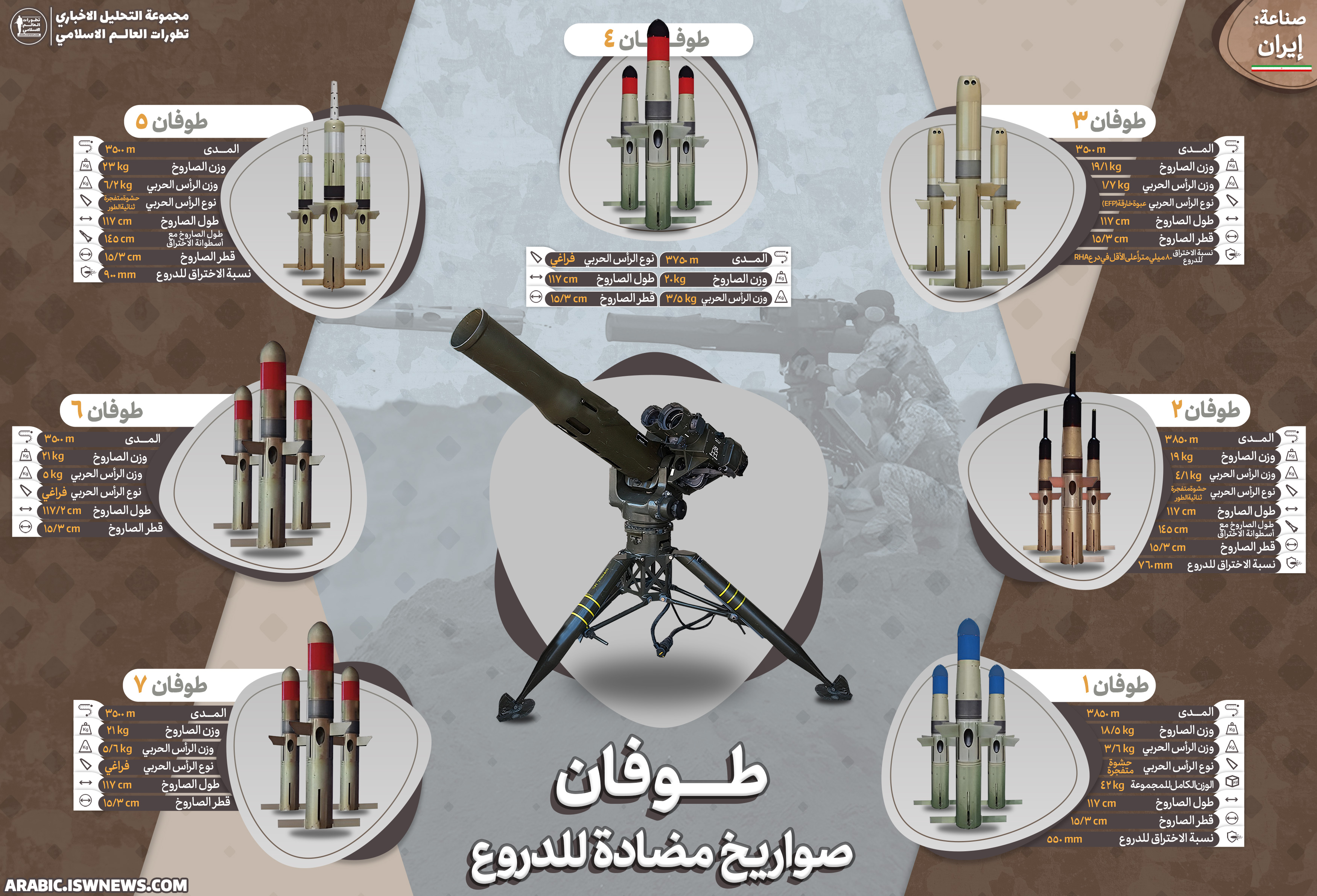

Source:
Toophan
Basic TOOPHAN & TOOPHAN 3-M (Top Attack) | Mindex (mindexcenter.ir)
Iran’s Toophan anti-tank missile and its different types (iranpress.com)
Toophan
Anti-tank Iranian missile systems of the Tufan series (topwar.ru)
Toophan
اعلام رسمی دستیابی ایران به موشک ضد زره با سرجنگی «ترموباریک»


