This agreement was ordered by Abdul-Malik Badreddin al-Houthi, leader of Ansar Allah, and with supervision of Hilal al-Soufi, governor of Hajjah, and finally was signed with presence of Muhamad al-Houthi .
This agreement is an obligation for all tribes to keep the safety and security of the region and tribes should return to the law and government to solve issues between themselves.
Tribes of Kashar district lay in north of Hajjah. Some of Kashar and Hajur tribes rebelled with Saudi coalition assault and engaged with tribes allied to Ansar Allah; but finally Ansar Allah surpassed the intrigue in the region by sending troops.
Tag: Hajur
-
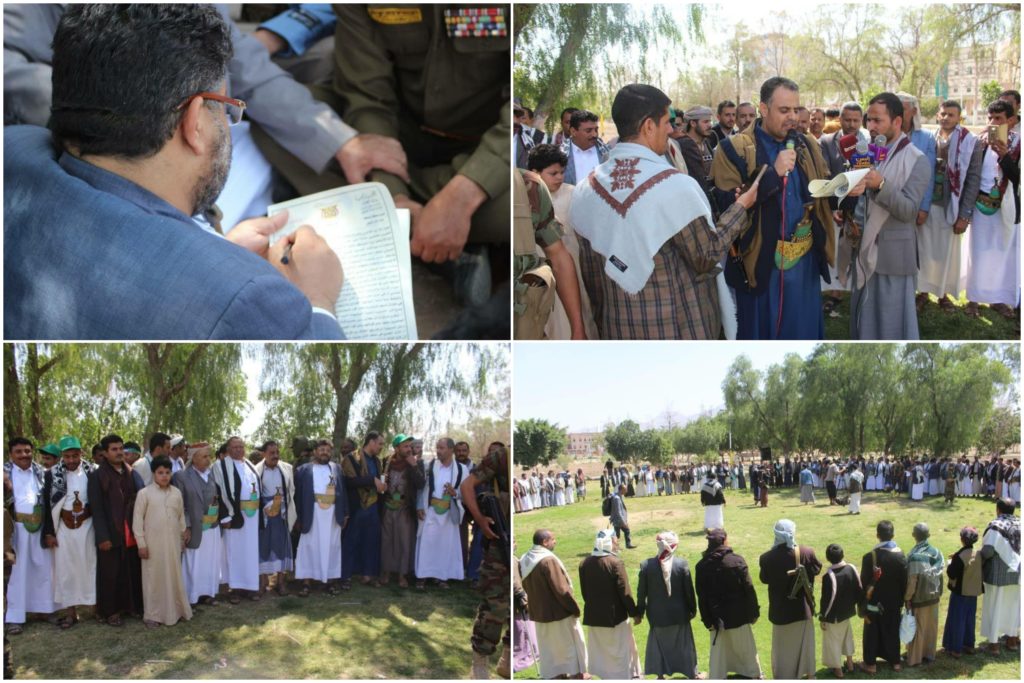
Peace Agreement Between Kashar’s Tribes Under Observation of Ansar Allah
-

Monthly Report on Yemen’s Developments, Eighth Article | Latest Updates on Yemen War after Sweden Agreement
Hajjah:
Hajur tribes (Bani Qimas, Bani Malek, Bani Othman, Bani Saad, Bani Omar, Al Talahiya, Bani Zahir, Zaakirah,etc.) rebellion, which opposed AnsarAllah’s plans before, did not have the courage to rebel due to AnsarAllah’s power and the Coalition distance with the border. But after the Coalition’s advance in northern axis of Hajjah province, the tribes under the Coalition’s stimulation and allurement rebelled in Kushar and Qarah districts and other points in north and east of Hajjah.
After rebellion, AnsarAllah asked other tribes’ chiefs to mediate for a ceasefire but Hajur tribes’ chiefs did not accept and there are engagements in eastern districts of Hajjah (such as Kushar and Qarah) between rebelled tribes and AnsarAllah, People’s Committees and tribes close to AnsarAllah for two months.
AnsarAllah almost controlling the intrigue, reclaimed main roads and 70% of areas from rebelled tribes such as Ubaysah.
In northern front of Hajjah, AnsarAllah grounding Saudi Coalition in northern and western suburbs of Haradh, in eastern front, repelled Saudi Coalition from southwest of Haradh until south of Nar and reclaimed Husnayn, Hayjah, Shabakah mountains, villages Shalila, Majbariya and etc.
More details on Hajur tribes rebellion: Investigating Aspects of Possible Operation by Saudi Coalition in North of Hajjah
Saadah:
Saudi Coalition’s operation in Saadah is continuing in three axes:
1. Northern: which includes Alab to Baqim.
2. Eastern: which includes Al Boqa to Kitaf.
3. Western: which includes Malahit to Marran heights.
In northern front Saudi Coalition could not advance beyond AnsarAllah’s defence in Baqim area and in Kitaf axis the Coalition is grounded in northern heights of Kitaf(Wadi AlBu Jabbar and Rashaha areas) and in Malahit front it is grounded at the foot of Marran heights.
More details on Saadah front: Analyzing Saudi Coalition Operation in Sa’adah + Map
Marib, East of Sanaa and Jawf:
The Coalition’s operation in northeastern of AnsarAllah’s position from east of Saadah to Jawf and Nihm was not successful and there is no significant activities by the Coalition in the axis. There were heavy engagements in Ajasher desert, Maslub, Motun districts and Nihm(north east of Sanaa) and Sirwah(west of Marib)districts and AnsarAllah repelled the Coalition’s attack and reclaimed some points in Sarwah district.
Dhale:
Southern forces (led by Emirates) under the Coalition’s support operated in Juban, Damt and Al Hisha districts against AnsarAllah which resulted in some advances.
Most of tribes in Al Hisha district sending letters to AnsarAllah and Mansoor Hadi announcing being neutral and proposed local governor but their request rejected and there are engagements in northern part of the district and AnsarAllah has lost some points in Al Hisha.In Damt and Juban districts the Coalition’s operation in Haqab(southwest of Damt) and south of Juban was fruitless due to AnsarAllah’s resistance.

Baydha and Taiz:
There is no significant changes in the fronts of these two provinces and only sporadical engagements in Nate, Malajim, Dhi Naem, Qifah(in Bayda) and Wazeiyah, Kadhah axes and northern part of Taiz.
Al Hudaydah:
After Sweden Agreement, al Hudaydah shores are being hit by mainly Saudi Coalition’s rockets and artillery and AnsarAllah’s answer which delayed the incipient of the Agreement implementation.The future of the Agreement is predicted as follows:
1. Continuation of engagement and further violation of the Agreement, which makes its future unknown.
2. Negotiation suspension and UN exit: which results in engagements resume and UN can announce one or north sides as violators of the Agreement or send the case to UN Security Council.
3. Implementing the Agreement: which results in a new wave of engagements in western shore of Yemen (from Hajjah province in north) and other provinces. In the most optimistic case we can observe the establishment of the administration and peace in Yemen which is very unlikely due to some sides’ separationism and cupidity of Saudi Coalition.
More details on Sweden Agreement:Analyzing Yemeni Agreement in Sweden
Answering Key Questions about Yemen War – Part Three
Conclusion:
Considering the trend of Yemen war in the last year, it can be concluded that Yemen war is entering the fifth year while Saudi Coalition is not willing to end the sanguinary war even with multi-billion loss and heavy casualties. AnsarAllah and Saudi family confrontation due to deep-rooted issues ends only when one side is removed.
The future of Sweden Agreement is unpredictable and its implementation can start the best or worst conditions for the war; continuing the war, peace agreeing on other issues and etc.
Sanctions and siege blocked AnsarAllah’s access to secure routes and international aids and subsequently the basic necessities of life which resulted in AnsarAllah’s tightness in politics and society. This is the biggest threat for the government, however AnsarAllah tries to control their lands.
Allies’ treachery, tribes’ rebellion and etc against AnsarAllah shows the difficult current situation and more difficult future situation. -
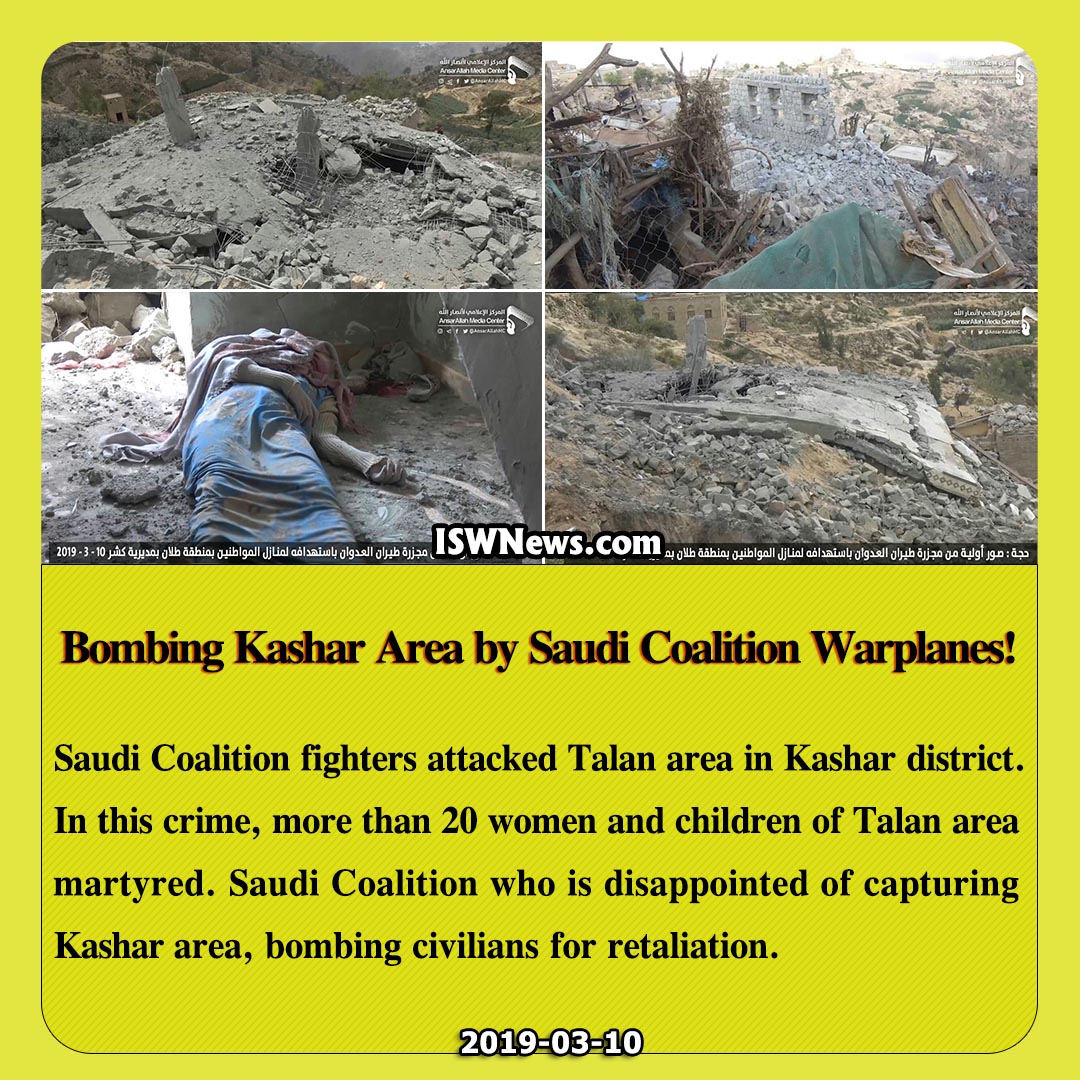
Bombing Kashar Area by Saudi Coalition Warplanes!
In this crime, more than 20 women and children of Talan area martyred. Saudi Coalition who is disappointed of capturing Kashar area, bombing civilians for retaliation.
-
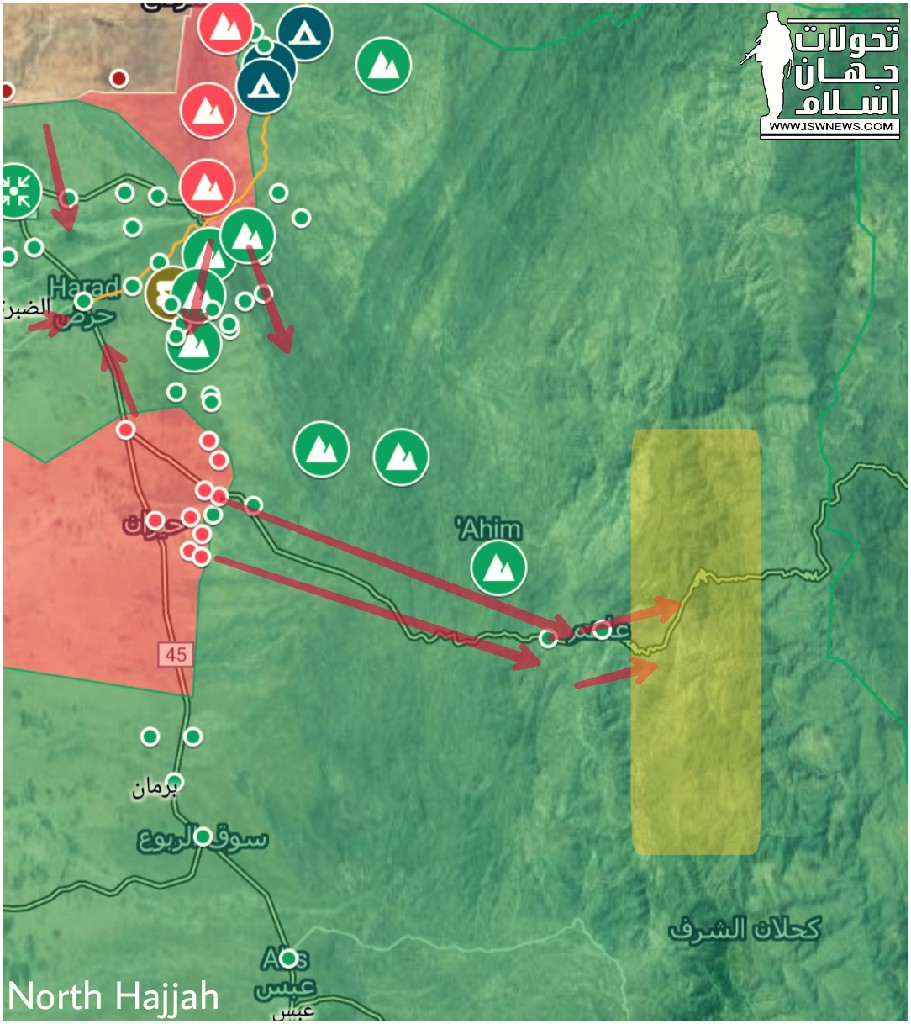
Investigating Aspects of Possible Operation by Saudi Coalition in North of Hajjah
Yesterday, Mansoor Hadi ordered his troops to equip and deploy 8 battalions from Marib, Mahrah, Hadhramaut and etc. provinces to the north of Hajjah front.
Some sources reported that AnsarAllah sends 4 thousand troops to the area to end the rebels.Before that, AnsarAllah asked other tribes of other districts to mediate between them and Hajur tribes but they did not accept it and the engagement between AnsarAllah and People’s Committees on one side and Hajur tribes on the other side are going for more than a month.
Considering the trend of engagements in recent months, Saudi Coalition and Mansoor Hadi did not succeed in Nar and Haradh fronts, so it is unlikely their attack will take place from these axes, but east of Hayran and the road to Ahem to reach Hajur area (yellow rectangle) is an easier route and it is predicted that Saudi Coalition operation main axis is this one.
At the moment, Hayran and Ahem triangle are under control by the Coalition and the direction of possible operation will be Haradh-Ahem road (red arrow).
The future of Hajur area will be one of the following:
1. Defeat and surround to AnsarAllah: which is more likely due to AnsarAllah’s advances and clearing Rahbah, Namarah, Mansourah mount and repelling attacks to Mandala, but if the Coalition front does not reach Hajur.
2. AnsarAllah’s defeat: which is impossible without the Coalition’s ground and areal support. Advancing in Haradh-Ahem axis due to the terrain of the area and AnsarAllah’s resistance will not be easy for the Coalition as well.
3. Ceasefire: which is impossible since they rejected the negotiations and due to the history of engagements in previous years, unless Hajur tribes are disappointed from receiving any support by the Coalition.
Nevertheless, confronting tribe’s rebel is not an easy task for AnsarAllah and these problems in northern fronts are serious threats for AnsarAllah. Since other tribes become bold in rebelling and also it consumes AnsarAllah’s strength.
We have to wait and see after Mansoor Hadi’s intrigue, aerial and maritime assaulting and surrounding by Saudi Coalition, Ali Abdullah Saleh separation, al Hudaydah battle and Baha’i’s intrigue, what is opposing and opportunist tribes’ plans?